“This easing will contribute to swifter spending growth in turn. But it took time for monetary policy to reach consumers as rates went up and it will take time for its effects to ease after rates have come down,” said the report.
“In the near term, many of the adjustments that consumers have made to their spending habits will remain. Households are cutting back where they can, driving less to save on fuel costs, and forgoing costlier restaurant bills.
“Uncertainty over the timing of further interest rate cuts and the upward movement of the unemployment rate will compel many consumers to remain cautious. Consumer price growth will continue to ease in 2024 and 2025. The CPI (Consumer Price Index) will grow by 2.6 per cent in 2024 and 2.1 per cent in 2025. Inflation’s descent will be held up largely by strong price growth for rent and other shelter costs.”
The report said in the near term, gasoline price fluctuations will also play a role in keeping headline inflation higher than the Bank of Canada’s 2.0 per cent target mid-point.
The report said strong population growth will continue to lift overall spending.
“Strong disposable income growth in most provinces in 2024 will give way to an easing back of gains in 2025 as labour markets loosen off. As conditions normalize later through 2028, however, we are expecting to see strongest per capita income performance in British Columbia, Ontario and Manitoba, with annual growth rates of more than 2.5 per cent,” it said.
Key report findings:
• Back online from maintenance shutdowns last year, renewed offshore oil production will vault Newfoundland and Labrador’s real GDP growth to 1.8 per cent in 2024, fastest of the provinces.
• Nova Scotia is seeing a growth push this year, led by population gains, healthy export performance and strong public infrastructure spending.
• Alberta will once again exceed the national average growth rate in 2024, but the gap will narrow. Positive conditions for population and income growth will continue through the forecast period.
• The completion of a trio of major energy projects in British Columbia will cool investment flows this year, but relatively healthy labour markets help power the overall economy later in the forecast period.
• A reining back of immigration inflows will soften Ontario’s economic growth prospects, but ease housing pressures as well. Major public investments in the auto sector will have notable reverberations, but net economic gains are not assured.
• Easing population growth in Prince Edward Island and New Brunswick will depower those economies somewhat in 2024, and investment growth prospects through the next few years are not expected to fill the gap.
• As a prairie economy, Manitoba is benefiting from a balanced economic structure and it should recover well through 2024. Growth fundamentals for later years will be among the best in the country.
• Quebec has some positive investment prospects, but overall growth is held back by slow immigration gains and an aging population.
• Saskatchewan’s economy got off on the wrong foot in early 2024, dragging down the growth forecast for this year, but fundamentals in potash and uranium mining will help yield strong performance in later years.
Of those affected, 22% report these disruptions have had a major impact on their business, which equates to 266,953 SMEs across the country. When public construction projects extend beyond their established timelines, it prolongs the impact of these disruptions. On average, small firms endured 508 days of construction-related disruptions over the past five years, said the national organization.
Emily Boston
“Small businesses face a myriad of issues when local construction projects take place, from traffic congestion and dust and debris, to losing customers and navigating logistical disruptions,” said Emily Boston, Senior Policy Analyst at CFIB and report co-author. “Now, imagine dealing with it for over 500 days! Sadly, this is a reality for too many small businesses across Canada.
“We’re not asking governments to stop upgrading roads or repairing sewers. Public infrastructure projects are important, but when they drag on for years, it’s difficult for businesses to survive in the meantime. A large portion of construction costs can be avoided with better planning, execution, and by giving more consideration to the reality of local businesses.
“All too often it seems as though levels of government punt the responsibilities of construction projects back and forth. There needs to be a clear directive as to who is responsible for the construction mitigation of projects and what mitigation tools will be used. Improving how construction projects are handled would benefit local businesses, municipalities, provincial governments and citizens alike.”
The CFIB said small firms lost on average 22% of their revenues during the most significant construction project affecting them over the past five years and on top of that, spent around $10,000 in extra expenses such as cleaning and repairs.
“While each construction project is unique in its duration, scale and disruptiveness, the most common issues affecting 58% of businesses are traffic congestion, dust, debris, and noise. Customers and staff having trouble accessing their business or finding parking (49%), significant stress (23%) and lack of notice (33%) also impact small businesses in construction zones,” it said.
“Over two-thirds of businesses (68%) say they should be compensated by government when a public construction project has a major impact on their business operations. CFIB urges governments to support small businesses during periods of major construction by establishing comprehensive construction mitigation plans, which include funding to offset costs for impacted businesses, improved planning and communication strategies, and more clarification on how each level of government will be involved. ”
With the ever-evolving landscape of the Canadian economy, franchising has emerged as a vital sector, providing robust opportunities for immigrants seeking to establish themselves and contribute to their new communities, says the CFA.
Ryan Picklyk
Ryan Picklyk, Chair of the CFA Board of Directors and Senior Director of Strategic Partnerships and Franchising for A&W Canada, said for newcomers franchising provides something that a lot of industries can provide.
“And that’s a bit of certainty. It’s a proven model both in terms of the actual case of franchising or industry but also proof of concept. Starting a new business is probably one of the hardest things you can do with so many unknowns,” he said.
“Franchising kind of limits some of those unknowns because it gives newcomers an opportunity to participate in established business concepts and business models and it gives them an opportunity to be in business for themselves but not by themselves.
“I think about our business and some of the many new Canadians that we’ve welcomed to the A&W world, it’s been a great place for them to build wealth for their family, generational wealth in many cases. It’s an industry that I just think is so well suited for newcomers coming into Canada because there’s so many unknowns when you move to a new country. Franchising provides a bit of certainty that they can really rely on when they’re starting a new business.”
The CFA says about one in four businesses (23.7 per cent) are owned by newcomers to Canada, showcasing their entrepreneurial inclination.
“The percentage of immigrant owners who are science, technology, engineering or mathematics (STEM) graduates is considerably higher among newcomers than those business owners from the second and third plus generations, suggesting that the immigrant entrepreneurs have undergone higher levels of education than their Canadian counterparts,” says the Association.
“Franchising offers a structured and supportive business model, which is particularly appealing to immigrant entrepreneurs. Franchising is about being in business for yourself but not by yourself. The support that franchisors provide — including systems, training, guidance, and ongoing support — helps franchisees successfully open and operate their local small businesses, making it an ideal pathway for immigrants looking to start their entrepreneurial journey with a strong foundation and support network in place.”
Photo credit: Pixabay
According to the CFA, Ontario leads in franchise units, accounting for 48 per cent of all operating franchises. However, there is significant potential for growth in other regions, such as the Prairies, the Atlantic, and West Coast markets. Newfoundland and Labrador and P.E.I. are expected to see the largest percentage growth in franchise locations through 2025, it says.
The franchising industry is a cornerstone of the Canadian economy, being the 12th largest industry in the country and the 2nd largest franchise industry in the world. Income from franchising is projected to contribute $120 billion to Canada’s GDP by 2025, with one in 10 Canadians employed directly or indirectly in a franchise system. The average Canadian interacts with three to five franchise locations daily, underscoring the pervasive presence and influence of franchises, adds the CFA.
“Franchising touches so many different business sectors. We like to say at the CFA that franchising is for everyone and a big reason for that is there are so many places where Canadians interact with franchising every day whether they know it or not,” said Picklyk. “So there’s no end of opportunity depending on what education a newcomer comes to Canada with or experience they have. There’s probably a franchising model that suits just about anybody in terms of that skill set that they bring.”
The CFA says franchise categories poised for growth include health and wellness, education, and B2B services. Canadians’ increasing health consciousness and the demand for supplemental education, especially in STEM/STEAM (science, technology, engineering, arts, math) fields, are driving these sectors. B2B franchises, offering digital marketing, IT support, business coaching, and property maintenance, continue to flourish, catering to ongoing business needs.
Retail Insider is streamlining its Canadian retail news from around the web to include a handful of top news stories that can be viewed quickly during the day. Here are the top stories from the past 24 hours.
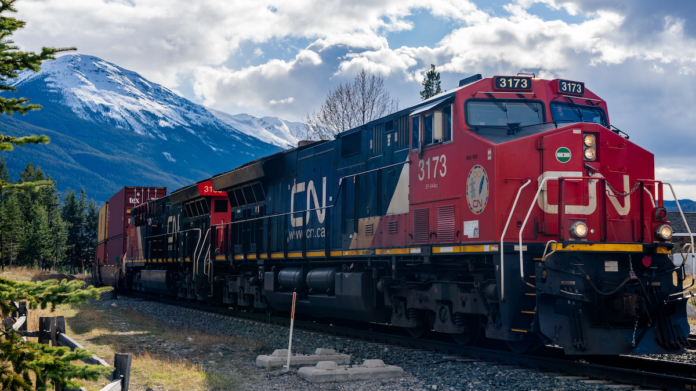
Canadian Pacific Kansas City Ltd. and Canadian National Railway Co., Canada’s two major railways, are facing potential work stoppages that could significantly disrupt supply chains across the country.
The Teamsters Canada Rail Conference has served a 72-hour strike notice to Canadian Pacific Kansas City Ltd. (CPKC), while CN Rail has announced its intention to lock out workers. Both actions are set to take effect at 12:01am Eastern time on Thursday, August 22, unless last-minute agreements are reached.
The potential work stoppages would affect approximately 9,300 workers across both railways, impacting industries that rely heavily on rail transportation for their supply chains. The situation has already led to halted shipments, particularly those requiring temperature-controlled environments such as meat and medicine.
Industry groups have voiced concerns about the potential consequences of a work stoppage, including increased expenses and delayed shipments for manufacturers. The Railway Association of Canada reports that rail lines transport more than $1 billion worth of goods daily, with over half of the country’s exports traveling by rail.
Federal Labour Minister Steven MacKinnon has rejected CN Rail’s request for binding arbitration, emphasizing the need for good-faith negotiations. The union has accused CN of being “willing to jeopardize the Canadian economy, and hold supply chains hostage to improve their bottom line.”
CPKC, for its part, maintains that it is committed to bargaining in good faith and has offered to resolve the matter through binding arbitration. The company is proposing a three-year contract renewal for train and engine workers, with competitive wage increases and maintenance of current work rules. For rail traffic controller workers, CPKC has proposed a renewed agreement with competitive wage increases.
The union, however, claims that CPKC’s actions have forced their hand.
Teamsters Canada Rail Conference President Paul Boucher stated, “We do not take this decision lightly, but CPKC’s reckless actions have forced our hand. By unilaterally locking out our members and changing the terms of the collective agreements, they are stripping our members of essential protections.”
As the deadline approaches, both railway companies are taking steps to prepare for a potential work stoppage. CN Rail has begun barring container imports from U.S. partner railways, while CPKC is moving as much freight as possible before the potential shutdown.
The ongoing negotiations, facilitated by federal mediators, highlight the delicate balance between worker rights and the economic impact of rail transportation in Canada. As the situation unfolds, retailers and manufacturers across the country are closely monitoring developments, aware of the potential ripple effects on their operations and the broader Canadian economy.
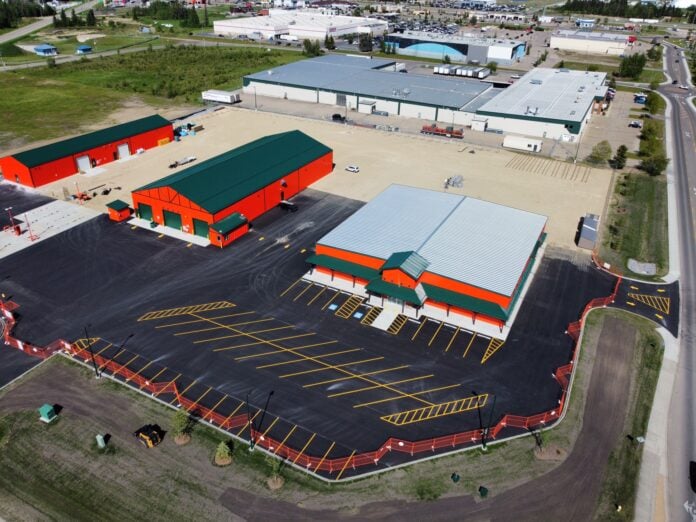
On Friday, the company is opening its newest UFA Farm & Ranch Supply store and Cardlock in Red Deer, Alberta.
Scott Bolton
“We look forward to opening the doors to our newest UFA location in the heart of the Red Deer community and continuing to deliver exceptional customer service that goes above and beyond. It’s what sets our co-operative apart from our competitors. For 63 years, we have served the community of Red Deer, and thanks to the loyalty of our members and customers, we hope to be around for many more years to come,” said Scott Bolton, President & CEO, UFA.
The new location is located in Gasoline Alley West in the southwest corner of the city and easily accessible for drivers traveling either way on the QE2 and those on the west side coming from Highway 2A.
The company has one Farm Store in Red Deer which will close when this one opens on Friday. This new cardlock brings the total number of cardlocks in Red Deer to four. Across Alberta, it has 34 Farm Stores and 115 cardlocks (AB and BC). All the Farm Stores are in Alberta.
“UFA has been a cornerstone in the Red Deer community for decades and unveiled plans for the new location last January. The co-operative has made a significant investment in building the new location because it provides improved accessibility, convenience, and a modern facility, which will provide a best-in-class customer experience. Features of the new location include a new 16,000-square-foot Farm Store with an expansive yard, an on-site chem shed, and a three-bay drive-through warehouse for easy pickup,” said the company.
Kevin Hoppins
“Red Deer has a very special place in UFA’s history. Our original President, James Bower, was from Red Deer, and when we opened the first Red Deer Farm Store in 1961, over 1,500 people came out to celebrate. Fast forward to today, and we choose to continue to invest in the community because we know the contributions and value that the people of central Alberta bring to the agricultural industry and beyond. We are excited about what this investment means for our members and customers in and around this central Alberta community, and we are grateful for their continued support,” said Kevin Hoppins, Board Chair, UFA.
The company said the new Cardlock features state-of-the-art high-speed pumps with clear and dyed fuel, wide lanes, DEF, and Dieselex® Gold, UFA’s exclusive premium diesel offering.
Restaurant concept Jade Yorkville is set to join Toronto’s culinary landscape with its unique fusion of French and Asian cuisines. This innovative establishment, the brainchild of Toronto-based entrepreneur Reza Abedi, will open its doors on August 21 in the city’s upscale Yorkville neighborhood.
Situated at 137 Avenue Road, Jade Yorkville stands out with its striking jade-green porcelain exterior. The restaurant’s design, crafted by Victoria Opacak of All In The Design, offers patrons an immersive experience that begins before they even step inside.
Upon entering, guests are enveloped in a sleek, monochromatic interior dominated by varying shades of jade. The space achieves a delicate balance between elegance and warmth, featuring floor-to-ceiling porcelain, deep green Italian marble adorning the bar, and plush velvet booths with channeled upholstery. Opacak’s vision was to create an intimate and sultry ambiance that complements the culinary offerings without overshadowing them.
“Our goal was to craft a space that speaks to the senses while allowing the food and drink to take center stage,” Opacak explains. “The monochromatic palette creates a harmonious atmosphere, while the interplay of textures and materials adds depth and interest to the dining experience.”
Jade Yorkville’s menu, curated by Executive Chef Hermawan Lay, showcases a blend of French and Asian influences, with dishes designed for shared enjoyment. Patrons can look forward to unique creations such as the Kaizen Toast, featuring foie gras and unagi, and the playfully sophisticated Corn Dog and Caviar. The Uni Bomb, incorporating a duck tea egg, promises a one-of-a-kind flavour journey, while the Jade’s Lobster Cocktail offers an elevated take on a classic favourite.
“Our culinary approach at Jade Yorkville is to present bold, rich flavors that marry French sophistication with the lively essence of Asian cuisine,” Chef Lay said in a statement. “Each dish is crafted to reflect the restaurant’s contemporary spirit while maintaining a refined, elevated dining experience.”
Complementing the innovative menu is an equally impressive beverage program designed by Beverage Director and General Manager Jake Dolgy. The cocktail selection features Asian-inspired flavours fused with French classics and modern influences. Standout offerings include the Lychee Fizz, a refreshing blend of Grey Goose vodka, lychee, and St-Germain, and the Tokyo Godfather, a complex concoction featuring Chivas Regal 12-year-old blended Scotch and umami-rich ingredients like miso and shiitake.
The restaurant has incorporated thoughtful touches such as gold service switches at each booth, allowing guests to signal when they desire service without interrupting their conversations. The restaurant welcomes guests Wednesday through Sunday, with extended hours on Friday and Saturday nights, inviting patrons to experience its unique fusion of cuisines and ambiance well into the evening.
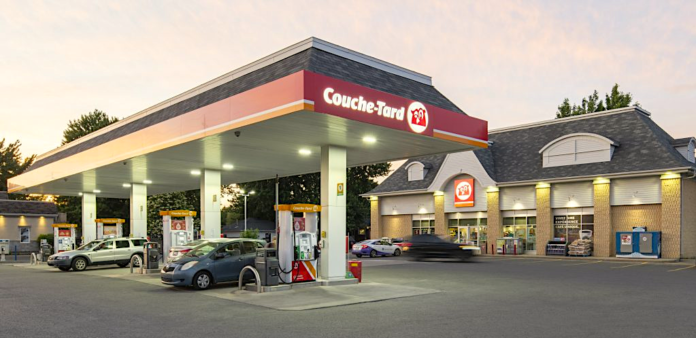
Alimentation Couche-Tard Inc., the Canadian convenience store operator behind brands like Circle K, has set its sights on a transformative acquisition. The Laval, Quebec-based company has made a non-binding offer to acquire Seven & i Holdings Co. Ltd., the Japanese parent company of 7-Eleven, in a deal valued at approximately US$31 billion.
This ambitious move by Couche-Tard marks a significant milestone in its expansion strategy and could potentially create one of the world’s largest convenience store networks. If successful, the merger would bring together more than 100,000 stores worldwide, cementing Couche-Tard’s position as a dominant force in the global retail sector.
The proposal, which Couche-Tard describes as “friendly,” has sent ripples through the retail industry. Seven & i Holdings confirmed receipt of the offer, stating that a special committee of independent directors will conduct a “prompt, careful and comprehensive review” of the proposal. Meanwhile, Couche-Tard emphasized its focus on reaching a mutually beneficial agreement that would serve the interests of both companies’ stakeholders, including customers, employees, franchisees, and shareholders.
The potential acquisition represents a bold step in Couche-Tard’s growth trajectory, which began in 1980 with a single store in Laval. Over the past four decades, the company has expanded aggressively through strategic acquisitions, both domestically and internationally. Notable milestones include the 1999 takeover of Silcorp Ltd., which established Couche-Tard as Canada’s leading convenience store operator, and the acquisition of Statoil Fuel & Retail ASA in 2012, marking its entry into the European market.
Couche-Tard’s expansion strategy has not been limited to traditional convenience stores. The company has shown a willingness to adapt to changing consumer trends, as evidenced by its foray into the cannabis retail sector through a stake in Fire & Flower Holdings Corp. Although this particular venture resulted in losses, it demonstrates Couche-Tard’s readiness to explore new market opportunities.
The proposed acquisition of Seven & i Holdings aligns with Couche-Tard’s long-standing ambition to establish a significant presence in Asia. Founder Alain Bouchard has expressed his desire to enter the Asian market, stating, “One thousand stores is nothing for me. We want to have a foot in Asia with our own money.”
However, the path to completing this mega-deal may not be smooth. Analysts have expressed skepticism about the likelihood of the acquisition coming to fruition, citing potential resistance from Seven & i’s management.
Despite these challenges, the market has responded positively to the news. Seven & i Holdings’ shares surged by approximately 23% in Tokyo following the announcement, while Couche-Tard’s stock experienced a modest 2% decline in mid-day trading.
If successful, this acquisition would mark the largest foreign takeover of a Japanese company and significantly alter the global convenience store landscape.
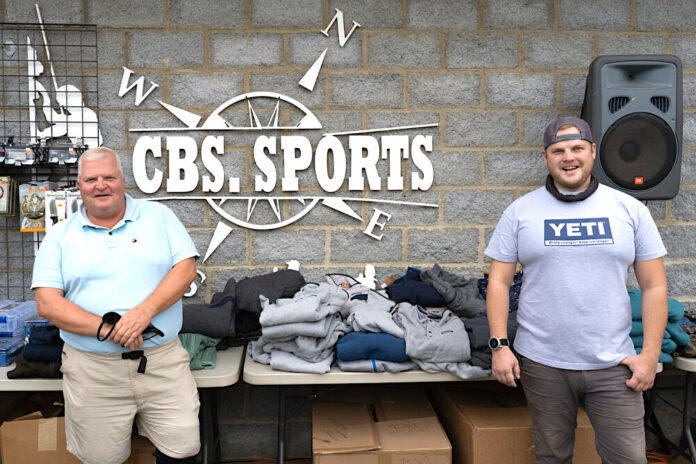
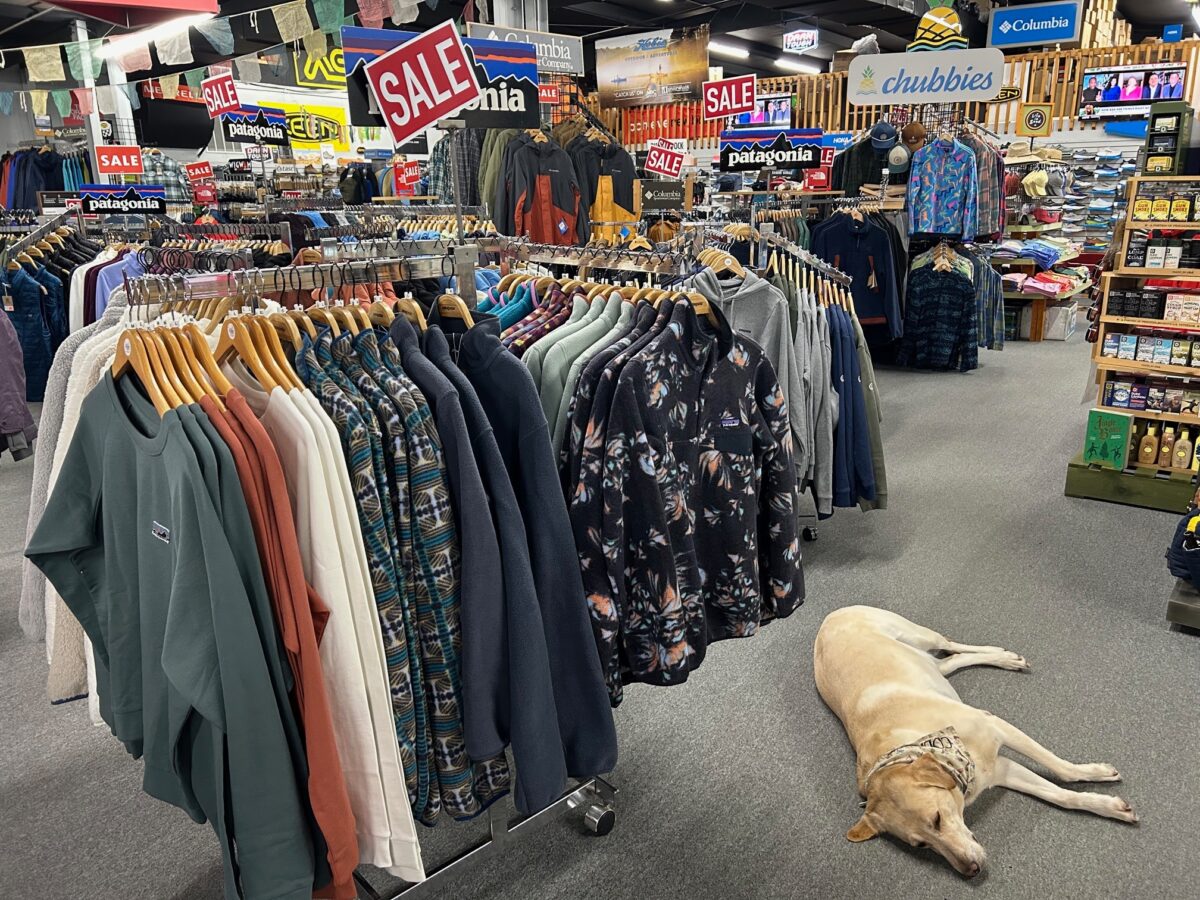
Founder Brian Searcy, left, with son Carson Photo: CBS Sports
US-Based CBS Sports, an outdoor outfitter, has leveraged the solutions offered by Lightspeed Commerce to create a more streamlined and effective retail business.
Carson Searcy, Co-owner of the retailer, says that Lightspeed Commerce has been a game changer for efficiently ordering products for his store.
“I don’t have the budget or the manpower to have someone entering everything in and doing inventory,” Searcy said. “For us, it would be better just to have that person out on the sales floor selling. For me to be in the back doing inventory instead of out selling stuff is completely useless.”
“I can train somebody to enter the orders and can learn how to upload it just as easily. So it takes the job of two people and turns it into one person,” he said.
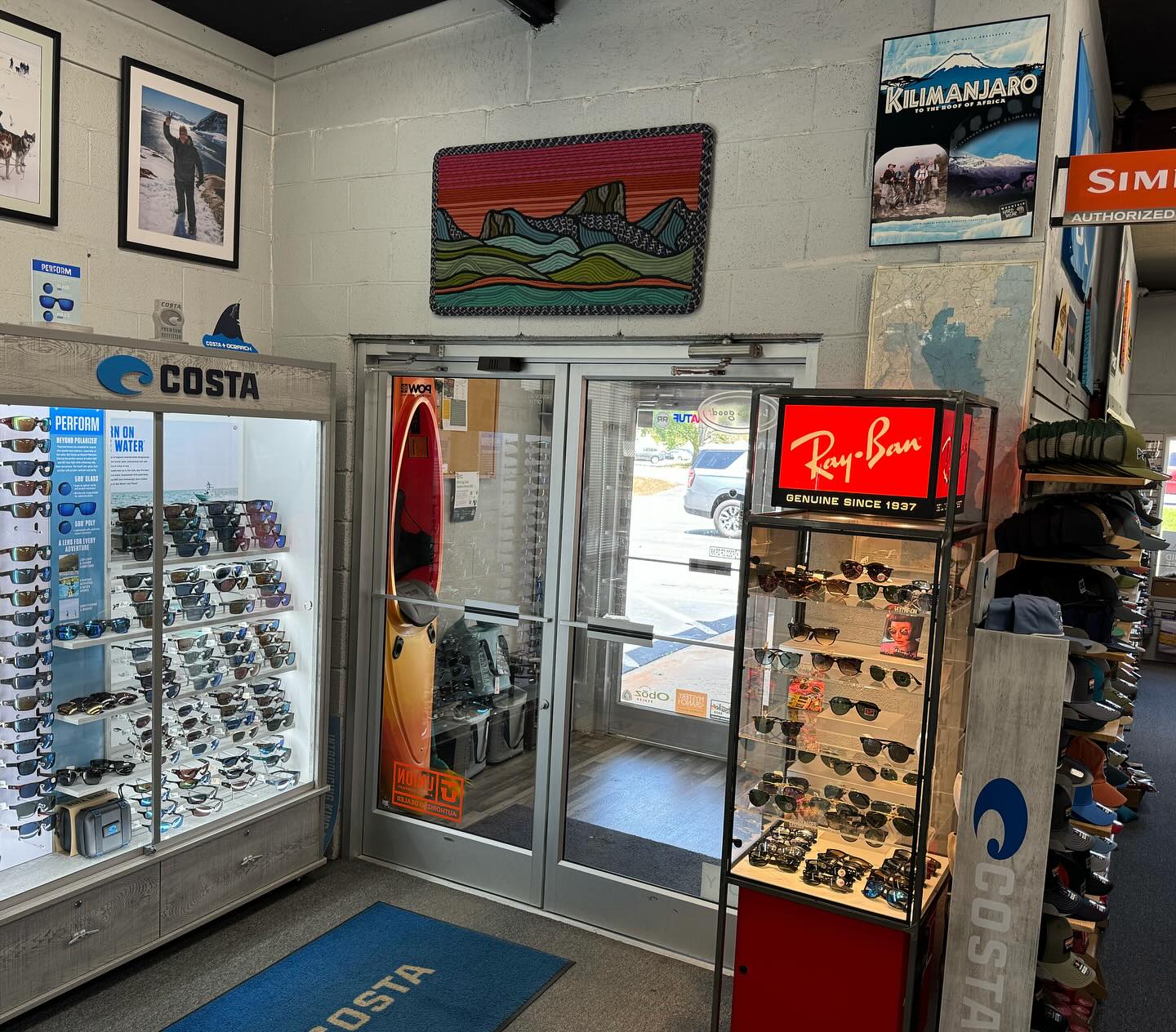
Searcy, Co-owner of CBS Sports and the son of its founder, said the outdoor outfitter has items for sale ranging from footwear to clothing, ski and snowboard in the wintertime, kayaks, canoes, wakeboards in the summer. It has a huge emphasis on footwear with many major brands.
“It’s really what people need to get outdoors, or what they need on their feet,” said Searcy of the company which is based in western North Carolina, in Morganton, about 45 minutes from Asheville in the foothills.
Inside the store. Photo: CBS Sports
“It started in 1985 by my father, Bryan. We’ve been in the same location for 39 years. He started it as more of a team sporting goods business, and it’s morphed into more of an outdoor store rather than team sports. We still do a little bit of soccer and basketball in terms of product, but nothing like what he originally was doing. It’s been a major shift over the past 20 years, I would say.”
CBS Sports has one brick and mortar store of about 10,000 square feet.
“We are looking to get into ecommerce. We originally did ecommerce, and then during COVID, inventory overall, across the board, was so low that we just kept everything in house and stopped ecommerce to just do brick and mortar. And it’s done very, very well for us, because we’re not competing with anyone else.”
In 2021, Searcy said, the retailer looked to bring in a new point of sale system.
“We went from pretty much no point-of-sale system to bring Lightspeed on because of the potential with the NuORDER integration and the integration of ordering through a B2B business, and then immediately having it update into our inventory. So all the SKUs, the UPC’S, everything immediately transferring between the two. That was the major draw,” said Searcy.
“I would say 20 to 25 per cent of our vendors are using NuORDER as their B2B system, so we use NuORDER now to order a year in advance.”
NuORDER is a closed loop B2B trade network by Lightspeed for brands to pass product information and enable ordering for retailers directly within their POS.
Inside the store. Photo: CBS Sports
“When the order is shipped from the vendor that we use through NuORDER, we can click and drop the order into our point of sale without having to manually enter everything in. So what would normally take a couple hours is going to take 10-15 minutes, if not realistically, five minutes,” said Searcy.
Searcy said the company is developing a new website through Lightspeed. CBS Sports uses Lightspeed for payment processing and for inventory payment processing, NuORDER and ecom.
“The biggest thing for us because everything’s streamlined and it’s very user friendly, it saves us a ton of time instead of being in front of the computer or with customers. That was the biggest drawback to ever bring in a point of sale. It was how much are we going to be pulled away from customers and in front of a computer? And for years, the choice was to stay away from this as much as possible because we want to be in front of customers.
“Now we’re spending maybe five per cent of our time and 95 per cent of the time in front of customers. So it’s huge for us, because something that would normally take 100 per cent of our time is only taking five per cent. Time is the most important asset for us. If I’m having to do something on a computer and I can’t walk away from it, somebody comes in, or somebody has a question, that’s a customer, I’m going to have to stop what I’m doing every single time to help that customer. So to be able to do it immediately and very quickly is the most important thing.”
Lightspeed Commerce is a one-stop commerce platform, empowering merchants to provide the best omnichannel experiences.
Founded in Montréal, Canada in 2005, Lightspeed is dual-listed on the New York Stock Exchange and Toronto Stock Exchange. With teams across North America, Europe and Asia Pacific, the company serves retail, hospitality and golf businesses in over 100 countries.
In recent years countless retailers have talked about “getting back to the basics”. We rarely hear explicitly what those basics are, and how they will return to modern operations.
This shouldn’t involve returning to old methods but about innovating those fundamentals to align with the demands of 2025. Doing so allows us to create dynamic stores that resonate with today’s customers and thrive.
The Legacy Tech (Debt) in Our Stores
“I emailed the stores the visual merchandising guidelines with the due date. When the due date came, I manually reviewed our Sharepoint to see what stores uploaded photos to their store folder, and cross-referenced against the stores that didn’t. I then had to send reminders to the stores that didn’t. I then had to check back…” -Director of Retail Operations, 42 Store Apparel Chain (with their shared sentiment below)
It is an all-too-common scenario that plays out in many stores frequently. It’s also only a single example (an in-store merchandising change) within a single retail operations function (visual merchandising). It would be foolish to think these occurrences don’t extend elsewhere.
Countless other examples that involve costly, manual processes across safety and compliance, commerce, training and development, hiring and recruitment, and elsewhere are choking store and associate productivity.
If you’ve been in the retail industry for 15 minutes, you know all too well stores have gotten busier and more complex. The intention with this piece isn’t to provide another ChatGPT-influenced verbal diarrhea whitepaper generically opining about “unified commerce”, “omnichannel experiences”, “focus on the customer”, or “stores are experiences”. We need less retail platitudes and a lot more tangible techniques.
What isn’t always obvious is the human and financial cost of these inefficiencies, and how the aggregate time loss from the visual merchandising example and the like add up.
Let’s look at an example eight-store district; these assumptions have been vetted with global retail operators, many of whom have run internal time studies. Let’s break down the maths:
So you want your stores to drive growth and unlock incremental revenue?
Well, it’s pretty hard when they remain bogged down by the operational inefficiencies and lack of process left unaddressed for the past 20+ years. Especially given what’s happened to stores and retail talent in that same 20+ years.
So no, the legacy “tech” in this conversation isn’t the hairy and complex POS & ERP projects. Rather the legacy tools that were never intended to be retail execution, operational, or communication tools; generic business applications older than most front-line workers today.
This is low-hanging fruit that is crippling store productivity, employee engagement and morale, and customer experience.
We’re looking at you: Email, SMS, basic checklists, single-point solutions, and 1990s Intranets.
Unsure? Have you talked to one of your district managers or store managers recently?
Next, let’s explore the human element and how addressing it can benefit everyone involved.
The Uninspired & Under-Optimized Retail Workforce
“I joined this company because of the product and the brand, but we are so behind on the basics. Had I known how much more difficult my day-to-day would be from my last job, I would have thought twice before leaving. We have no tools, communication is all over the place, and there is so much extra manual work which takes time away from what should be the most important parts of my job.” – New Store Manager 60 Days In
How long will this person stay in their role? And when they leave, will their employer chalk it up to “typical retail employee turnover”, or is this solvable?
Don’t kid yourself, “A-players” want to work with “A-organizations”. They have options; they value their time and their efforts, and they expect their time and efforts to be respected all the same.
They won’t put up with nonsense, and if retailers are unmoved to address the nonsense from their stores- the results are the results.
And this nonsense rears its ugly head in many forms.
A close friend joined a high-end US furniture retailer with over 50 stores twelve months ago. They became a top seller in the store after their first month. They love the product, the customers, and the earning potential, but their store culture is objectively toxic.
The store manager is underdeveloped and has received zero management or leadership training in the past 12 months, and supposedly has never received any. The store visits with the district manager are infrequent, superficial, and procedural at best. As the manager is underdeveloped, the staff lack development, so as one example, customer issues- which can be frequent in furniture- aren’t dealt with proactively which causes immense strain on the already understaffed store. Various staff issues boil over consistently as the root cause is never extinguished.
A good old-fashioned retail dumpster fire. Desperately needing leadership to extinguish the flames. All fixable “4-Wall” issues with the right focus.
You want your stores to drive growth? It’s nearly impossible when they are gasping for air, and handcuffed by inefficiency.
Mind you, these issues aren’t frustrating store system limitations, or waning foot traffic requiring capex, immense creativity, or complex solutions. These costly issues require a teaspoon of focus and a tablespoon of discipline.
So will the aforementioned employee stay much longer in the role?
You guessed it- no! They have been poached by a competitor, and that retailer will now look to replace a professional associate with $1.5MM in YTD revenue and customer relationships. Yeah, but that’s just typical retail employee turnover…
If you review the results of polls and surveys on retail employee turnover, the themes usually involve a lack of training and development, a lack of effective tools, or a lack of support and payroll.
All of these things are true, and can be true at the same time for any given retailer, but in the next chapter, we’ll cover an area that some visionary retail executives are focusing on, and one that many aren’t.
The Rise of the Retail Super App
“You can hold a rock concert and that’s OK. You can hold a ballet and that’s OK. But don’t hold a rock concert and advertise it as a ballet.” – Warren Buffet
Musically, that checks out, but in business software things have changed. As William Gibson said, “The future is already here; it just isn’t evenly distributed.”
Shopify, the dominating backbone of brands both infantile and behemoth is payments, store POS, e-commerce frontend and backend, marketing, fulfillment, capital and more. I wouldn’t bet on their reach getting any smaller- only continuing to expand to additional adjacencies, create more convenience and value to customers, and grow revenue and market share as a result.
WeChat, Asia’s superapp, is all things commerce, communication, productivity, and more. Large global chains forego implementing aspects of store technology adopted in their non-Asian markets due to how sticky and broad the preferred Chinese solution is.
Another macrotrend is the rise of vertical SaaS, software solutions purpose-built for their industry.
So what’s happening in the retail vertical? Tons of consolidation.
Workforce management solutions are getting cozy with the HR & Payroll stack.
The POS (point-of-sale) is becoming the hub for performance analytics, clienteling, traffic, and more.
Visionary retail execs and ambitious vendors have championed this strategy: prioritize and implement solutions that deliver more value across a broader spectrum of capabilities, while (hopefully) reducing customer spend, ensuring improved data quality and less integration lift, while demonstrating massively improved ease of use for end-users through fewer “logins”.
This signals the death of the retail point solution. And some retailers are very focused on it, but it’s not even in the realm of awareness for many.
As an example, the Learning Management System (LMS) is a 30-year-old point solution, offering limited capabilities for today’s workforce, in addition to its archaic authoring formats. This applies to all its derivatives: the Learning Experience Platform (LXP), the LRM, LRS…
But when you talk to most HR and L&D executives evaluating learning solutions, they aren’t aware. The cause isn’t ignorance of the solutions marketplace, it’s ignorance of the actual problems their store teams face.
In my experience meeting with hundreds of retail HR & L&D executives globally, I estimate that 25% at most have tangible retail exposure to front-line roles. Additionally, many of them have spent little – if any time in their stores, where the super-majority of their workforce resides. Combine that with reduced headcount across most retailers in HR & L&D and the knowledge gap becomes wider.
This puts these leaders in a disadvantaged position to evaluate solutions for their valued constituents. They are trying to solve a problem in 2024 with a 2005 level of understanding.
Now my intention isn’t to gang up on HR. Every executive from Ops, IT, Merchandising, and everywhere else needs to become problem-aware, get out of their silos, and align on prioritizing solutions that solve root causes- not symptoms, and vehemently replace what is ineffective.
Implementing a band-aid is for a superficial wound- not for the gaping wounds our stores and store teams are impacted by. Band-aids are tempting, however, as they provide an executive a “win” with minimal career risk and even less effort.
What are band-aids?
Implementing an employee feedback tool when you have zero training infrastructure. Might it help to give your teams what they need first?
Implementing a cheap learning solution, but lacking the internal resources to build meaningful content to train your teams. Hey- at least we implemented something.
Rolling out Sharepoint or a limited equivalent to the entire front-line workforce because it’s convenient for IT. Sure, there are 3 folks in IT, and hundreds (or thousands) across the front-line and multi-site roles, but mission accomplished.
When problem-aware in retail, one recognizes band-aids that address symptoms, but not root causes.
And when one chooses to implement band-aids, it signals clearly to those who are problem-aware (often the front-line and their multi-site leaders) how much their time and contributions are valued, which in turn causes these wounds to become infected, a bacterial dividend that is passed on to customers.
In conclusion, if executing on solving the root causes of the issues in your stores for your employees and customers isn’t a good enough reason, then do it because your competitors are.
There are no retail silver bullets, but there are retail solutions.
Ray Riley is the CEO of Progress Retail, a retail operations and learning platform streamlining how multi-location retail stores train their teams, execute tasks in-store, and communicate across their frontline. Canadian and global retailers such as Pilgrim, Little Words Project, Andrews, True Religion (ZA), Secrets-Shhh, and more leverage Progress Retail to boost store productivity, decrease employee turnover, and run profitable stores.