Home Blog Page 633

The Rise of Vintage Resale Fashion in Canada Amid a Consumers Shift [Video Podcast]

Drop Spot. Photo: Drop Spot Instagram

Craig and David MacMullen, Co-Partner at Drop Spot Vintage discuss the journey of building Drop Spot Vintage, a vintage clothing store in Hamilton, Ontario. They delve into the expansion of the business, including the opening of a second location and a dedicated warehouse for online sales and wholesale. They explore the challenges of sourcing inventory, the types of merchandise available, and the growing demand for sustainable fashion. The conversation highlights the impact of the sustainability movement on the resale market and the future vision of Drop Spot Vintage, including potential new stores and expanding their event brand.

A transcript of the conversation can be found below.

The Interview Series video podcasts by Retail Insider Canada are available through our Retail Insider YouTube Channel where you can subscribe and be notified when new video episodes are available.

If you prefer to listen to the audio version, it is available below:

The Interview Series audio podcasts by Retail Insider Canada are available on Apple Podcasts, Stitcher, TuneIn, Google Play, or through our dedicated RSS feed for Overcast and other podcast players. Also check out our The Weekly audio podcast where Craig and Lee discuss popular content published on Retail Insider which is part of the The Retail Insider Podcast Network.

Transcription

Craig Patterson 0:03
Welcome to the Retail Insider Video Interview Series. I’m your host, Craig Patterson. And we’re joined here today with a special guest, David MacMullen. He’s the co founder of Drop Spot Vintage, based in Hamilton, Ontario. Welcome, David.

David MacMullen 0:16
Hi there, Craig. How are ya?

Craig Patterson 0:18
Excellent. Excellent. Tell me a little bit about your business.

David MacMullen 0:21
I own a vintage clothing store in Hamilton, Ontario. We started a year and a half ago in August. And pretty much since then we’ve done different things to kind of expand the business and like the vintage world, opened up a second store warehouse in the GTA.

Craig Patterson 0:45
How did you get into the business of resale clothing?

David MacMullen 0:47
So my partner, Jacob, and I both started kind of in the sneaker world, or streetwear world and we were reselling stuff like designer hoodies, Jordans stuff like that. Over COVID, there was a big craze on a lot of collector markets, including the vintage clothing market. So naturally, it being clothing similar to what we were already doing with shoes it was a natural crossover. After that, we started selling vintage half-and-half. From there, we were able to just integrate it and we ended up liking it a little bit more which it became fulltime. And shortly after we agreed to just dive into a store to see how it goes. And we took it from there.

Image: Drop Spot Vintage

Craig Patterson 1:42
Oh, my goodness, when did that store open in Hamilton?

David MacMullen 1:44
So that was started August of 2021. So just just coming up on the two year are in a few months.

Craig Patterson 1:55
Now you’ve expanded the operations since then. Correct? You mentioned a warehouse in the GTA, is there a second location as well?

David MacMullen 2:00
Yes, a month ago we opened a second location on the other end of Hamilton. Obviously, Hamilton is growing quickly as well. So we wanted to have that option on the other side of the city. It’s about 25 minutes away from our flagship store. And it’s not as big as our flagship, but it definitely still offers a snippet of what we offer and what we try to do. We also have a warehouse in Toronto, which is dedicated strictly for like our online portion of our business as well as wholesale. It’s very competitive, a lot of other stores are in need of inventory. And we’re fortunate enough to have a team that can source enough inventory that we’re able to offer wholesale deals to other stores across Canada.

Craig Patterson 2:46
Now where does the product come from? Because it must take a lot of merchandise to be able to do this to both in your stores as well as do wholesale.

David MacMullen 2:54
For sure. I’d say for everyone, inventory can come from all over. Some people, on the smaller scales, would be the classic thrifting. I think there’s the delusion vintage stores have like mass thrifting nonstop. In reality, we’re needing to source hundreds of pieces to 1000s of pieces a week, especially for multiple stores plus an online market plus wholesale. So there’s a lot of different ways. Obviously, wholesale is one of buying from people that have access to inventory. In Toronto is one of the fortunate hubs where there’s like a lot of recycling centers where stuff that is going to be shipped overseas, basically to go get sorted. So we’re able to get access into those warehouses and sorted through hundreds of 1000s of pounds a day. And only a very small percentage of that is actually stuff that we’re able to use or resell I guess to certain curation even with things like wholesale and trying to grab like a large scope of different types of items. That’s where majority of it is from us. Not to say that there’s not a lot of other different ways that other sellers find stuff.

Craig Patterson 4:09
And what kind of merchandise do you have? I know you are in the sneaker world do you have for more clothing as well in the stores? Or is it fairly casual?

David MacMullen 4:15
So for us, we opened up very close to McMaster so our whole business model has been more targeted to young adult. Some more casual store, like the street wear type style where it’s more simple things like crews, hoodies, sweaters, fleeces, jackets, pants, T shirts. Nothing typically into that semi formal stage and beyond. It isn’t something that we work in specifically. But obviously in the vintage space there’s people that cover those bases as well.

Craig Patterson 4:47
Amazing how are online sales doing and how was that journey to get online?

David MacMullen 4:51
When we first started the store we thought well everything will put on the floor, why not listed online at same time? And then has twice the chance of selling hypothetically. But what we found was it was almost too much where it’s obviously a lot of time to list vintage clothing. Whereas if you have like a T shirt brand or a sweater brand, where you’re posting up your design, everything’s the same. So you could just, like upload a picture of your shirt, and put the quantity at, let’s say, 100. Versus vintage clothing, everything is completely different. So each piece has to go through the time of measuring it taking proper photos of flaws, descriptions, etc. You want to be very ethical, when you sell stuff, you want people to know exactly what they’re buying. And the process just took a long time we were cross listing stuff. Meaning that something might sell online, and it had already sold in store, we just didn’t have the time to take it down. So that was problematic. For the first year, so we weren’t really selling online, because it was just too much to do both. We were fortunate to expand our team in the last few months that we are able to now basically take a separate inventory, where that’s only for online stuff and our store for only in person shopping. But since we’ve been starting, it’s really great because we’re able to offer merchandise to people who might follow our social media, or are interested in vintage clothing that aren’t local to Hamilton or even local to the GTA or where we do events. So it’s cool to see our items going over to the States, overseas, out west. But it’s been really good. We’re still figuring out that aspect because it has been only a few months. And but we do know like that is a huge portion for a lot of other people’s business models. And we’re just trying to learn and add that to our arsenal as well.

Craig Patterson 6:40
Amazing. Do you find luxury items in there from some of the big names when you’re searching for for product?

David MacMullen 6:45
Yeah. We don’t typically cater to luxury, because we know that’s a designer market is a different market entirely almost. But when you’re going through the amount of inventory we are some definitely sneak through. And because it’s not really our forte, we still like to price it pretty affordable. So it’s almost gives incentives for people to come in. And maybe they’ll find like an authentic Gucci product or a Chanel or something like that. And they get it for a really good price that they couldn’t even find online. If someone that specializes in Designer obviously, they’re going to price things according to market versus because that’s not our forte, we price it pretty cheap. And we’d like to make sure that it’s still authentic if we are gonna price things or we’ll basically brand something as like a bootleg or reprint just so people know what they’re getting.

Craig Patterson 7:39
I’ve gotta come to your store for some Gucci stuff. Generally talking about the resale market for clothing or vintage, where do you see things going? Just in your observation as you’ve been part of this.

David MacMullen 7:53
In Toronto, specifically, the competition definitely has came into play, like I know, during the boom of COVID, where we kind of got into things and hundreds of other people started doing it. Whether that started as like side jobs or full time jobs that they’ve been doing for like 10 years, everybody reaped the benefits of the popularity during COVID. Now the competition is definitely huge as far as the access to things like inventory, like I mentioned, for wholesale that we offered, because it’s not as easy as it used to be even two years ago to find stuff. So I find competition is coming into play. But also just different trends of people are now a lot more open to the idea of secondhand stuff and sustainability. I think a big part of that is because of celebrities, athletes that are also getting into that. So almost like where shopping secondhand might be looked down upon by some prior to this, because it’s almost like oh, you can’t afford the new stuff or whatever. But when you see millionaires wearing secondhand, it’s almost like becoming more acceptable. I think you see on big retailers, they’re almost using vintage inspired like military wear, or other like fashion trends to basically take the secondhand trends that might not be super accessible, like something like military jackets or whatever. The average person sees something that looks like that, you know, Zara or whatever, they’re just going to buy it. So it’s definitely influencing where trends go, as well as upcycling stuff where people are basically even taking items that are secondhand and making them wearable again, those rips or whatever, that they’re sewing stuff back together putting patches and it’s just becoming more acceptable to wear stuff like that and be more creative, I guess, with your outfits using that second hand outlet.

Craig Patterson 9:47
And the sustainability movement is probably going to continue. I mean, that’s just kind of what we’re seeing or hearing in the in terms of trends.

David MacMullen 9:56
I don’t think anyone would complain about vintage. There’s certain opinions on like the vintage selling as a whole. But I think everybody’s happy to see that the sustainability portion of any type of business is being being pushed more.

Craig Patterson 10:11
Right now, do you have a vision for a bit of a longer term vision for drop spot in terms of its operations, any new stores more wholesale accounts? Or tell me a little bit about what you’re thinking about?

David MacMullen 10:22
Yeah, for sure. Wholesale is definitely something that we’d love to offer for other stores, or just other accounts that like to do the vintage stuff. But I think definitely, primarily as a future goal, we want to expand a little bit more definitely another store. At the very minimum, the the notion of even seeing vintage in places like malls now is becoming more and more acceptable, like there’s been vintage stores in Square One and Yorkdale, you still have like even companies that are bigger, like, you know, Holt Renfrew that they have like some sellers that are in there. So I think we definitely would like to capitalize that eventually having a store in a mall. We’re also trying to build our own event brand as well. A lot of people probably in Toronto, would have already seen vintage markets are getting posted everywhere, they’re happening almost every weekend in big cities, not exclusively to Toronto, like out West that’s super popular. In the States as well. So we want to capitalize that just like how we feel that we do with our store. Have a very nice and curated kind of experience for people that are getting into vintage or people that have been enjoying vintage for a while that there’s like a market. Like we mentioned earlier website and online presence, we’re really trying to push that, as well as just the sustainability as a whole. Making that as accessible to people as we can. We have this one partner that we work with, they’re called One Tree Planted where basically every order that we ship out, we also donate to them so that they can plant a tree with each order. So we’re just trying to make sure as we grow, that we’re able to actually keep our roots of being sustainable as we grow type of deal.

Craig Patterson 12:17
I love it. This is so interesting, you know, best of luck with everything. Because as we look at sustainability becoming a key factor of many people’s lives, I think your business is is a good one for clothing at the very least.

David MacMullen 12:27
Yeah, for sure. I’m definitely I think with young people, at least I think it’s definitely reaching more people outside of just young adulthood as well. But it’s really cool to see that’s where the change in the acceptance is just like with young people, and it’s exciting to see like, where am I go from here?

Craig Patterson 12:45
Well, thank you so much. This has been David McMullen. He’s the co founder of Drop Spot Vintage. Thank you for joining us today.

David MacMullen 12:52
My pleasure, man.

Craig Patterson 12:53
And I’m Craig Patterson. I’m the founder and publisher of Retail Insider Media. This is the Retail Insider Video Interview Series. Please subscribe whether or not you’re seeing this on YouTube or listening to this on one of our podcast channels. Take care and bye for now.

Subscribe, Rate, and Review our Retail Insider Podcast!

Follow Craig:

Follow Retail Insider:

Listen & Subscribe:

Share your thoughts!

Drop us a line at Craig@Retail-Insider.com. You can also rate us in Apple Podcasts or recommend us in Overcast to help more people discover the show!

Background Music Credit: Hard Boiled Kevin MacLeod (incompetech.com). Licensed under Creative Commons: By Attribution 3.0 License. http://creativecommons.org/licenses/by/3.0/

Pinterest Emerges as an Essential Social Media Platform for Retailers and Brands in Canada, Say Experts [Feature]

Image: Black Rooster Decor

Pinterest is one social media platform brands should be using more as it’s budget friendly, has an international reach of millions of people, and is easy to use. Kristie Painting, Pinterest Country Manager, Canada and Nina Ber-Donkor, founder of Black Rooster Decor, discuss the benefits of the platform and how brands can use it to improve success.

Kristie Painting

“Pinterest is a wonderful platform for retailers because we have an incredible reach of people, over 460 million people visit Pinterest every month. Consumers are seeking inspiration, making decisions, and seeking discovery – it is perfect for retailers because from the beginning, they are part of the journey,” says Painting. 

Painting says brands can interact with followers on Pinterest by using all of its elements such as pins, videos, visual boards, and can showcase products on a catalog pin to make it shoppable for consumers. Pinterest can work for any brand and has categories under travel, lifestyle, automotive, fashion, interior design, and more.

“Travel is a huge category and automotive does really well on our site, but for a pure retail perspective – fashion, beauty, and home decoration is the most successful on Pinterest. So we get people who are coming to Pinterest to look for inspiration about renovating their homes, do it yourself items, kitchen, cabinetry, and there are also smaller items you can see in furniture decor items,” says Painting. 

Black Rooster Decor on Pinterest 

pinterest.ca/blackrooster

Black Rooster Decor, a furniture store located on Queen Street East, is one brand using Pinterest with successful results as the owner, Nina Ber-Donker, says they have 9,500 followers and receive around 2.3 million views each month. Each product on its website is linked back to its Pinterest account where they create mood boards, share products, and when you click on a product it takes you directly to their website. 

“We get a decent amount of views to our website by people clicking on products on Pinterest – it is free advertising. There is no reason not to be on Pinterest. When I take a look at our analytics, it is now 2 p.m. and I can see we have already had thirteen people from Pinterest go to our website, so thirteen potential customers we just gained from being on Pinterest,” says Ber-Donker.  People on Pinterest are obviously looking for specific things whether it is a recipe, something for their home, for their garden and they are already looking. So Pinterest is organic marketing without you paying for anything,” says Ber-Donker. 

Although Ber-Donker says she can’t know directly which purchases are from people browsing through Pinterest, she does know how many visits they receive. Last month, Black Rooster had 100 visitors from Pinterest to its website and in the past year, Ber-Donker says they have had about 6,000 visitors. With each visit, there is an increased opportunity for someone to purchase a product, share the website with family or friends, or to sign up for its bi-weekly newsletter which can include which sales they are offering. Not every visit will end up with a purchase, but it will increase brand awareness and for free. 

Currently, Ber-Donker says they do not have a Pinterest strategy as their numbers are up; however, as they are expanding to a second location they will start to strategize a plan on how to grow their audience on the platform. 

Pin Perfect 

Image: Black Rooster Decor

For brands to stand out on Pinterest, Painting suggests to invest in photography and to not stick to one format.

“Consider using a lot of different formats. One person might be looking specifically for a standard lamp and it might be a single shot on a white background and it works and resonates with them, but that is not always the case. Another person might really want to look at the full room. So by creating a mix of different products, you are able to reach different types of people,” says Painting. 

Painting also suggests for brands to use a variety of colours, different layouts, and to also explore creating videos as lots of people enjoy scrolling through the watch tab. By broadening your formats on Pinterest, brands will be able to reach as many people as possible. 

An Easier Tool for Consumers

Compared to other social media platforms, Pinterest allows people to scroll through without the hassle of unwanted sponsored content, Ber-Donker says. 

“Lately when I am on social media such as Instagram, I am seeing a lot of things I do not have any interest in. With Pinterest, you find exactly what you are looking for so I think it is a great tool and you are not finding things you are not looking for,” says Ber-Donker. 

This is one task Ber-Donker will be focusing towards – placing everything into categories so followers can see what they are looking for. For example, Ber-Donker says they want to target specifically for the home decor that they supply, lighting, and art and everything will be in specific categories which will make it easier for consumers to find products. 

Consumers can also purchase right on the platform, create mood boards, and can pin items they find. Mood boards allow people to save products they find, designs, recipes, and whatever else they find that peaks their interest. 

Pinterest is a great way for both small and large retailers to create a larger footprint in Canada and internationally and Pinterest offers support to make it easier for both retailers and consumers. 

“We try to make everything as shoppable as possible. That is great for retailers, but also really great for consumers,” says Painting. “There are a lot of different ways we can do that, such as even making the pin itself shoppable. We have lots of opportunities for retailers to use and lots of different tools, such as real time updates for pricing and inventory. Pinterest makes it a seamless journey for consumers to find what they are looking for and for retailers to showcase their products as simply as possible.” 

New Retailers at CF Rideau Centre in Downtown Ottawa to Increase Foot Traffic [Interview]

CF Rideau Centre (Image: Dustin Fuhs)

Ottawa’s CF Rideau Centre, operated by Cadillac Fairview, has added three new retailers to its tenant mix in the heart of Canada’s capital.

Uniqlo, Arc’teryx and Imaginaire are expected to increase traffic to the downtown shopping centre.

“While the retail landscape continues to evolve, one thing that remains constant is Ottawa being a unique and dynamic market for retailers to launch their brands, both regionally and nationally,” said Brian O’Hoski, General Manager of CF Rideau Centre.

“We’re proud of our successful track record of attracting first to market retailers and helping our retail partners succeed, and look forward to building on this positive momentum.

“Bringing an international retailer like Uniqlo to Ottawa gives them an introduction to a new market, people here are familiar (with it) but they have to travel to Montreal or Toronto, and now being in the city is a huge win for us and for the city.”

UNIQLO at CF Rideau Centre (Image: Dustin Fuhs)
CF Rideau Centre (Image: Dustin Fuhs)

The Ottawa shopping centre is about 1.2 million square feet with about 180 stores. O’Hoski said the mall is about 90 per cent leased.

Cadillac Fairview said the Imaginaire store is the first outside of Quebec for the retailer and it will open in the fall. It will be the brand’s seventh store, which offers board games, puzzles, books, pop culture items and collectibles (coins, sport cards, trading cards). Imaginaire will be located on Levels 3 & 4 of the centre and occupy over 20,000 square feet.

Imaginaire Construction Hoarding at CF Rideau Centre (Image: Dustin Fuhs)

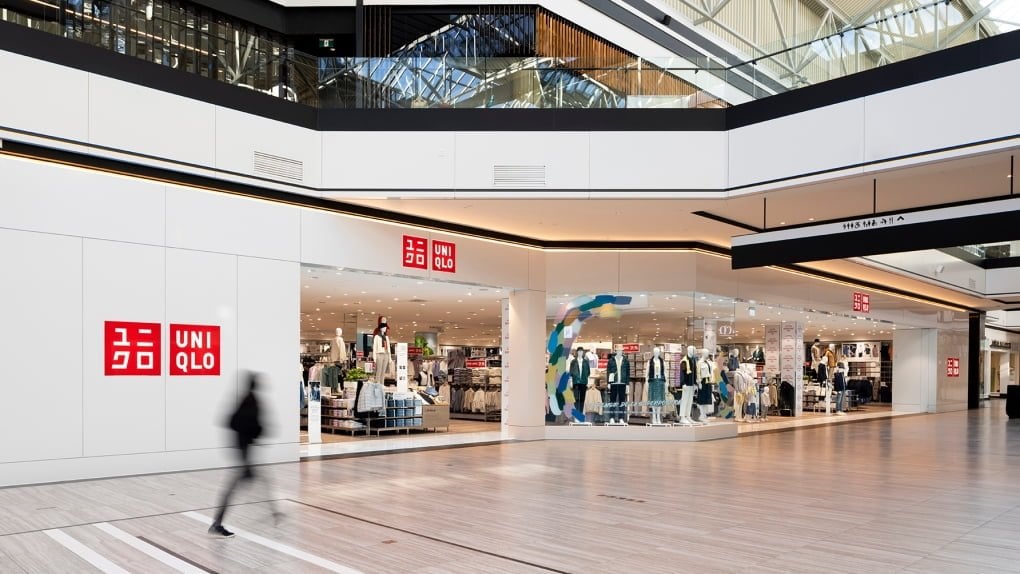
Global retailer Uniqlo made its highly anticipated debut in the Ottawa market this month with a 15,000-square-foot store on the centre’s third floor. The Japanese fashion brand is known for its casualwear and wide selection of graphic tees. The opening at CF Rideau Centre is part of the brand’s five-year expansion plan across North America.

Vancouver-based lifestyle brand Arc’teryx also opened their first location in Ottawa at the centre this past month. The 3,000-square-foot store is located on Level 2 of the centre and features premium activewear and sports equipment for shoppers of all ages.

O’Hoski said Arc’teryx was a quick backfill on a former Nike location which moved within Rideau Centre to another spot which was triple in size. The Uniqlo store is in the former Victoria’s Secret space. The Imaginaire space is unique where “we actually punched in the escalators and an elevator up into the fourth floor. So the retail entrance will be on the third floor of the shopping mall in the expansion but the bulk of their space is actually above in the fourth floor that was formerly a theatre space from a long time ago. It wasn’t being utilized,” he said.

“We had to make a lot of moves to get these big spaces available,” added O’Hoski. “We’re in really good shape and deals are continuing to roll in.”

lululemon at CF Rideau Centre (Image: Dustin Fuhs)
CF Rideau Centre (Image: Dustin Fuhs)
Vacated Nordstrom at CF Rideau Centre (Image: Dustin Fuhs)

The shopping centre is also working on ideas of what to do with the 150,000-square-foot space vacated by the departure of Nordstrom from the Canadian market.

In the past year retailer lululemon also tripled its footprint at the centre.

In December 2022, Cadillac Fairview announced the evolution of CF Rideau Centre with the commencement of construction of the Rideau Registry residences, a 288-unit residential rental building integrated with the shopping centre.

Wholly owned by the Ontario Teachers’ Pension Plan, CF manages more than $42 billion of assets across the Americas and the United Kingdom, with further expansion planned into Europe and Asia. Internationally, CF invests in communities with like-minded partners, including Stanhope in the UK, Lincoln Property Company in the U.S., and Multiplan in Brazil.

The company’s Canadian portfolio comprises 68 landmark properties, including the Toronto-Dominion Centre, CF Toronto Eaton Centre, Tour Deloitte, CF Carrefour Laval, CF Chinook Centre and CF Pacific Centre. 

Cadillac Fairview’s first residential rental project in Canada, The Rideau Registry, is a 288-unit building seamlessly integrated with CF Rideau Centre, Ottawa’s largest and busiest shopping mall. (CNW Group/Cadillac Fairview Corporation Limited)
The Rideau Registry Construction at CF Rideau Centre (Image: Dustin Fuhs)
Rideau Street in Ottawa, Ontario (Image: Dustin Fuhs)
CF Rideau Centre (Image: Dustin Fuhs)

CF Rideau Centre is located in the heart of downtown Ottawa, minutes walking distance to the popular Byward Market, pedestrian-friendly Sparks Street, the Chateau Laurier Hotel and the Parliament buildings.

Every major city in Canada these days has been facing challenges with their downtowns with issues around safety, drugs and homelessness a major topic of discussion. Ottawa is no exception.

“Ottawa I think is no different than our other major markets that we operate in. The government worker in the past has offered so much stability in terms of their employment levels and their work and with them being a little later on the return to work we’re a little behind in terms of traffic,” said O’Hoski.

“I think that’s kind of stirring up or popping up what you’re seeing in terms of the social unrest and the homelessness and drug use. We’ve been having to make some (security) changes and updates and do things a little differently to ensure the safety and security of our centre and our shoppers and our tenants. But nobody’s got the answer for this. We’re looking around at ways of fixing these issues and returning downtown to its glory.”

CF Rideau Centre (Image: Dustin Fuhs)

Upscale Boutique/Spa Concept ‘Etiket’ Embarks on Expansion with Toronto Location and Plans for Further Growth Across Canada

Etiket Boutique in Montreal (Image: Etiket)

Etiket, a Montreal based boutique and spa, has expanded and renovated its Montreal location, is going to open its first location in Toronto, and has plans to expand in Canada.

The spa, which opened twelve years ago, is known for its luxury skincare treatments, beauty, fragrances, and has world-class spa treatments.

Simon Tooley

“Skincare treatments, fragrance, make-up – all in one location. There is really nobody like us,” says Simon Tooley, the Founder and President of Etiket. “Over the years we have evolved and although there are similar places, there is still nobody that wraps it all up like we do and when we started we were really the first to do it.”

The Montreal spa, located at 1826 Sherbrooke Street West, was originally 1,400 square feet and has been expanded to 3,300 square feet. The new renovated space was designed by Alexandre Blazys and Benoit Gerard of BlazysGerard and includes two new treatment rooms, four in total. The new space also allows for new areas to solely focus on make-up, skincare, fragrances, and also has a new reception desk.

“We were bursting at the seams in terms of our skincare and we just couldn’t handle it all and now we have a much bigger space. We have two dedicated areas for makeup, which we never had before and then I think one of the biggest things for us is expanding our fragrance to be about 1,000 square feet. So there is no one like us in Canada that does what we do when it comes to fragrance, we do niche brands from all over the world and we really take people on a journey.”

Etiket Boutique in Montreal (Image: Etiket)

Etiket offers a variety of services including SkinCeuticals treatments, HydraFacial treatments, Oxygen Treatments, Environ Facials, Pai Skincare Facials, body treatments, and makeup application. The renovated Montreal location also has four treatment rooms, where one is focused on Tata Harper treatment – “one of only three in the world.”

“We talk a lot about selfcare, but that is what our customers come to – they want a holistic approach. So we start them in the treatment room and then continue with our skincare. We are one of three spas in the world that do Tata Harper treatments, so that is a spa room dedicated and designed by Tata just for us.”

In terms of fragrances, Etiket offers forty different perfumes from all over the world such as Creed, Parfums de Marly, and Maison Francis Kurkdjian.

“When I first launched our fragrance section, everyone thought I was crazy. Since then, we have become a destination for perfume aficionados from across the country. Our skincare customers also love that they can explore the world of scent while they shop for their essentials. Finding a fragrance is a very personal journey, and we approach it with the same care and expertise as do our clients’ skincare needs. Shopping for perfume at Etiket is an adventure unlike anything else.”

Etiket Boutique in Montreal (Image: Etiket)

To go beyond just offering spa and skin treatments, Etiket takes the time to teach its customers about skincare routines, fragrances, and teaches how to apply makeup. Tooley says they do this because the team wants to prioritize helping customers reach their end goals.

Etiket also offers a unique loyalty program which allows consumers to gain points for rewards, free shipping over $75, and fifteen percent off on your birthday. The more you spend, the higher reward the consumer receives as it has four different program options. The retail industry is starting to see a new shift of in-house loyalty programs offering personalized rewards like this one to consumers across Canada.

New Toronto Location Coming Soon and Future Growth

Etiket Rendering at The Well (Image: Etiket)

After looking for a location in the city for years, Tooley says Etiket will be opening its second and largest store in The Well, which will hopefully be opening this upcoming November.

Etiket will be on the second level of The Well and will be 6,500 square feet. The space is designed by Montreal’s SAJO to provide a unique retail experience not seen before. The space, like Montreal, will be both a store and a spa.

Etiket Rendering at The Well (Image: Etiket)

As the space is much larger than Montreal’s location, this new space will have six different treatment rooms including one by Dr. Barbara Sturm which will be the first in Canada and another Tata Harper treatment room which will be the fourth in the world after the one at Etiket in Montreal. Along with the services offered at the Montreal location, the location at The Well will offer customers new services.

“We are all about building relationships, and to be in a regular mall has no interest to me at all. But within this environment where we know we have people living upstairs from us or people who are there working on a day-to-day basis, it allows us to continue with our manifestation which is really creating that bond.”

Tooley says in terms of expansion, he is looking at possibly opening four more locations within the next five years. The focus would be to add another location in Toronto and then focus out West such as Vancouver and Calgary.

Ali Fieder Baker, Vice President at commercial real estate firm Avison Young is handling Etiket’s Canadian real estate needs.

Online Experience & New App

In addition to the in-store shopping, spa services, and skincare treatments, Etiket also offers online shopping with shipping throughout Canada. Luckily for people in Montreal, Tooley says they are working on a same day delivery system and are looking to offer the service in Toronto as well once the new location opens.

Etiket also has upgraded its app as it switched to Shopify last year. The app allows consumers to easily browse products, shop, and order.

“We want to be the Canadian destination for beauty. There is really nobody else who is doing this across the country and that is where we would like to go. Relaunching our app is a big part of our business and we just want to make it easier for consumers who are looking to replenish their skincare products.”

Additional Images from the Montreal Boutique

Etiket Boutique in Montreal (Image: Etiket)

Increasing Retail Monopoly Power Poses a Threat to Canada’s Post-Pandemic Economic Recovery [Op-Ed]

Sobeys (Image: Nejmark Architect)

Canada is currently grappling with a significant economic issue: market concentration. A select few corporations dominate key sectors, leading to reduced competition, rising prices and limited purchase options for consumers.

Canada’s grocery industry is a prime example of this. A recent report from the Competition Bureau found that a lack of competition in the grocery sector is resulting in higher food prices.

The grocery industry is dominated by five major players — Loblaws, Metro, Empire (the owner of Sobeys), Walmart and Costco. These five companies account for over three-quarters of all food sales in Canada.

The Bureau recommended four policies to encourage competition in the sector. These include establishing a grocery innovation strategy, encouraging new independent and international players, introducing legislation for consistent unit pricing and limiting property controls.

While independent grocery chains could be a viable alternative, they don’t occupy as large a presence of the market as they do in other countries. The Canadian grocery market is heavily concentrated and limits the ability of independent chains to compete by forcing them to purchase their products from larger chains.

History of monopolies

Hudson’s Bay at CF Toronto Eaton Centre – Photo by Dustin Fuhs

Canada’s economy has historically been marked by notable monopolies, thanks to its vast geographical expanse and relatively sparse population.

Entities like the Hudson’s Bay Company and Canadian Pacific Railway company played significant roles in the country’s development. This largely happened out of concern that domestic companies would be overwhelmed by American competitors unless they grew significantly.

Recent trends indicate this phenomenon is not only persisting, but intensifying. While Sobeys, Loblaws, Metro, Costco and Walmart dominate over 60 per cent of the grocery sector, Bell, Rogers and Telus command about 89 per cent of the wireless telecommunications market.

The concentration of power extends beyond these sectors. The banking industry in Canada is dominated by six banks — the Royal Bank of Canada, TD Bank, Scotiabank, the Bank of Montreal, CIBC and National Bank, which collectively control about 93 per cent of the industry.

Similarly, the beer market is largely controlled by two multinational giants, Anheuser-Busch InBev and Molson Coors.

And the Canadian telecommunications industry is still reeling from the recent merger between two of the industry’s giants, Rogers Communications and Shaw Communications. The implications of this deal are far-reaching.

The Rogers-Shaw merger

The Rogers-Shaw merger’s final approval came with 21 enforceable conditions Rogers and Videotron must adhere to, aimed at bolstering competition and reducing costs for customers.

The merger’s approval depended on Shaw selling its Freedom Mobile business to Quebecor’s Videotron. If Rogers breaches its conditions, it must pay up to $1 billion in damages. Videotron could be subject to $200 million in penalties if it fails to meet its commitments.

Innovation, Science and Industry Minister François-Philippe Champagne holds up a contract between the telecoms and the federal government as he speaks at a news conference about the Rogers-Shaw merger on Parliament Hill in Ottawa on March 31, 2023. THE CANADIAN PRESS/ Patrick Doyle

Despite these conditions, some remain skeptical about the impact of the merger on competition in Canada’s telecommunications sector.

Some critics have argued the merger may lead to higher prices for consumers and less innovation. Carleton University political economy professor Dwayne Winseck warned it could lead to a “tight oligopoly on steroids.”

On the flip side, other experts believe the merger could benefit consumers by accelerating the rollout of 5G networks and improving infrastructure and services, particularly in rural areas.

However, these benefits could be offset by the potential for higher prices and less competition. The merger could lead to a dominant market share in Ontario, reducing competition and potentially leading to higher internet prices.

This is particularly concerning, given Ontario’s average monthly price of home internet services is already higher than the national average. This situation underscores the need for a revamp of Canada’s competition laws.

Loopholes in competition law

The merger has sparked controversy because it exploited weaknesses in Canada’s anti-monopoly law, the Competition Act, to push the deal through.

The Competition Act has been criticized for failing to prevent acquisitions that allow large firms to eliminate competitive threats and solidify their dominance.

As Canada’s competition watchdog, the Competition Bureau can review mergers to determine if they will be harmful to competition. But since its introduction in 1986, the bureau has only challenged 18 mergers and has never won a challenge on final judgment.

The law also has a high bar for intervention in a merger, often favouring negotiated agreements that include concessions or remedies that address some of the competition concerns, but not necessarily all.

The Competition Commissioner, Matthew Boswell, believes the existing competition laws are inadequate. Boswell has been hamstrung by legal loopholes and unable to prevent anti-competitive mergers, like the Rogers-Shaw deal, from happening.

Challenges and opportunities

Along with rising consumer prices, limited purchase options and intensifying competition, the growth of monopolies in Canada has led to a host of other issues.

Monopolies have the potential to stifle innovation — a key driver of economic growth, as a lack of competition tends to dampen innovative efforts. Productivity growth, which is crucial for improving living standards, is also under threat, as monopolies can create an environment less conducive to efficiency and progress.

As Canada embarks on its post-pandemic economic recovery, policymakers must ensure economic resilience and inclusiveness while preventing existing monopoly issues from worsening.

At the same time, there is an opportunity to reshape the economic landscape to encourage competition and foster innovation, benefiting everyone involved in the market.

This journey towards a more prosperous future will require rigorous scrutiny of developments like the proposed Rogers-Shaw merger and the wisdom to navigate the interplay of monopolies, competition and the broader economy.

By Garros Gong, Ph.D. Student in Management Science, University of Waterloo

This article is republished from The Conversation under a Creative Commons license. Read the original article.

Kelowna’s ‘The Chopped Leaf’ Ramps Up Canadian Expansion With New Franchising Opportunities and Menu Offerings [Interview]

The Chopped Leaf in Heritage Valley, Edmonton (Image: The Chopped Leaf)

Kelowna-based The Chopped Leaf, which opened its first location in the BC city in 2007, continues to grow its footprint in Canada with plans to expand through franchising opportunities.

It’s also continually evolving its menu offering.

The brand was founded by Blair Stevens and his wife Karla.

The Chopped Leaf at Strathcona Town Centre (Image: The Chopped Leaf)

The healthy eating chain is currently expanding aggressively and looking for new franchisees across Canada with 30 new restaurants planned to open this year.

Recent openings included Winnipeg, Manitoba; Barrie, Ontario; and the chain’s first drive-thru in Grand Prairie, Alberta. Expansion is focused in Ontario, Manitoba and Atlantic Canada, with franchise opportunities also available in BC, Alberta, Saskatchewan and Quebec.

“Canadians are actively looking to eat healthy, and feel good after they eat, which is what we offer,” said Blair Stevens, President and Founder of The Chopped Leaf. “As we expand across Canada, we are looking for franchisees who believe in the importance of a healthy lifestyle and the power of healthy eating.”

The Chopped Leaf, owned and managed by Innovative Food Brands, is focusing on Ontario, Manitoba and Atlantic Canada and locations are franchisee-owned and operated.

The Chopped Leaf recently introduced their new Shake-A-Bowls, encouraging customers to experience the joy of shaking their own salad or bowl right after it’s been freshly made. 

In this video interview, Blair Stevens discusses how The Chopped Leaf came into being, its evolving menu, expansion plans and what today’s consumer is looking for in the food sector.

The Video Interview Series by Retail Insider is available on YouTube.

Connect with Mario Toneguzzi, a veteran of the media industry for more than 40 years and named in 2021 a Top Ten Business Journalist in the world and the only Canadian – to learn how you can tell your story, share your message and amplify it to a wide audience. He is Senior News Editor with Retail Insider and owner of Mario Toneguzzi Communications Inc. and can be reached at mdtoneguzzi@gmail.com.

Like, Share and Subscribe to Mario Toneguzzi on YouTube!

Follow Mario:

Also check out the other series offered by Retail Insider, including The Weekly podcast and The Interview Series, which are both available on Apple Podcasts, Stitcher, TuneIn, Google Podcasts, or through our dedicated RSS feed for Simplecast and other podcast players.

Follow Retail Insider:

Share your thoughts!

Food Retailer Marché Leo’s Plans Expansion with 3 Toronto Store Openings, Including Waterfront Flagship [Interview]

Marché Leo’s North York (Image: Marché Leo’s)

Marché Leo’s, a growing food and grocery retailer, is scheduled to open three new locations in Toronto – in the Corktown, Waterfront and Dundas areas.

Mona Randhawa, Director, Sales & Marketing, said the company’s mission is to bring people together through tradition – offering fresh produce, local Ontario roasted coffee, sustainable meats, everyday grocery, and a wide variety of family friendly meals.

“Our foods pay homage to traditional food culture with emphasis on old world quality and rich flavours. We’re the place you go to when you want homemade in small batch from quality ingredients. We look for quality alternatives across the board, and aim to create a full-service market experience with access to local artisans, craft foods, truly fresh meal solutions, and nostalgic products that play an important role in everyday living and wellness,” she said.

It opened its first store in the Davisville community in 2011. Today, it has four locations – two regular stores in North York and Kitchener and two express stores in Atrium on Bay and Eglinton in Toronto. 

Marché Leo’s Marketplace on Eglinton Avenue East (Image: Marché Leo’s)
Future Marché Leo’s at 475 Front Street East in the Canary District (Image: Dustin Fuhs)

This year the company is working on two new locations and some renovations at two of its existing locations – Eglinton and North York.

Its location at 475 Front St E (Canary District) is intended to open during the Fall. Then shortly after that is the launch at 4208 Dundas St W (Etobicoke). The company’s flagship location on the Waterfront at Merchant’s Wharf is expected to open Summer 2024 in about 40,000 square feet with its largest market kitchen – including a number of food installations and ample seating for locals to mingle while their meals are prepared fresh.

“We have already begun to branch outside of the GTA into smaller markets with success. There’s something to be said about the support in close-knit communities and we enjoy being a part of their plans for urbanization. We have always been very involved in the communities we operate through local events, food banks, sponsorship, and other joint initiatives,” said Randhawa.

Bayside Village Leasing Plan (Image: First Capital REIT)

Future Marché Leo’s at 90 Merchants’ Wharf in Bayside Village on the Waterfront (Image: Dustin Fuhs)
Future Marché Leo’s at 90 Merchants’ Wharf in Bayside Village on the Waterfront (Rendering: Marché Leo’s)
Bayside Village Rendering (Image: First Capital REIT)

“Whether it’s a Sunday night store concert or a fundraiser for charity, we take pride in being a piece of the community and we will continue to stay engaged and connected. As of recent, we are building up our online community to do the same, providing more value to our people and sharing more of what connects them.

“We are putting more focus on opening medium and larger scale store formats, to keep up with the needs of the modern household, and ensure they have access to the foods they want. We hope to create a destination where families frequent. Where you can not only get your household essentials, but you can discover and engage with new flavours, products, and other locals.

“We don’t have plans to go outside of Ontario in the short term. We have received some interest from other regions and the sky is really the limit. But I’d say we have our work cut out here being in the largest Canadian market.”

Marché Leo’s Kitchener (Image: Downtown Kitchener)

Key features of a Marché Leo’s include:

  • Over 10,000 products including a full assortment of grocery from local regions, Canada and around the world;
  • Demonstrations for new-to-market and trendy products;
  • Quality meats with a variety of local and health options, and signature house-crafted deli preparations; like its Oktoberfest and Jalapeño Cheddar sausages;
  • A large variety of fresh Grab & Go and takeout meals made from scratch daily;
  • A self-serve hot meal and salad buffet station; which has been a lunch time hit;
  • Stone-oven pizzas, sandwiches, and other chef-inspired cook ups from the market kitchen;
  • A fresh gelato and sorbet counter with seasonal flavours; such as Sicilian Blood Orange or Crème Egg around Easter;
  • A craft coffee bar with local Ontario roasted bird-friendly beans;
  • The Cheesecake Factory cakes, local treats, fresh baked goods and pastries; and 
  • Select locations also carry imported and locally-crafted beers, wines and non-alcoholic beverages.

“Our signature house preparations are developed around North American and internationally inspired foods. We are getting to appreciate cuisines and palates from around the world, heirloom recipes and foods with some value and history. It’s been fun getting to be a part of that and sharing it with our community,” said Randhawa.

The concept began as a gourmet grocery store offering a variety of chef-inspired meals, high quality meats and artisan products from Canada and around the world that were not exactly common at grocery stores at the time. 

“It’s always exciting when we get interest from customers across the country for a product that they can’t seem to get their hands on. It’s a sign there’s room for growth and people are still looking for more accessibility when it comes to food. We do our best to understand our customer and are building up to have what they’re looking for under one roof,” she added.

How Gender Mannequins is Transforming Retail Displays in Canada

Shape Collection, image supplied

Gender Mannequins is transforming retail displays, making them come alive with style and expertise.

Since 1997, Gender Mannequins has been supplying mannequins to retail stores across Canada including some of the biggest names in the industry as well as specialized boutiques and shops of all sizes.

Leif Anderson, CEO of the company his parents founded, says mannequins have always been used as a tool for sales in retail. It’s a well-known fact that clothing properly displayed on a mannequin will increase the sale of that product by 20 to 40 per cent.

“Mannequins are a fantastic way to sell products, and with the options available today, they have a chance to do so much more. They are an integral part of any fashion brand, and given the chance, they can really affect a brand’s in-store visual impact,” he says.

“Mannequins are more than just a general feeling in a store; they become something clients can really identify with and establish a long-term connection. They tell a complete story of what the brand represents, conveying inclusivity and diversity, and showing commitment to a greener future. Most importantly, mannequins sell products.” Gender Mannequins is the go-to resource for retailers seeking answers to their interior and window display questions. Its esteemed clientele includes renowned brands such as Andrews, Aubainerie, Giant Tiger, Harley Davidson Canada, Hudson’s Bay Company, Henry Singer, Lilianne Lingerie, Body and Beach, Lole, Matt and Nat, Quartz, Reitmans, La Maison Simons, Sporting Life, Team Town Sports, Tip Top, Eclipse, La Canadienne, Pseudio, Stag Shop, and many more.

Casual Male mannequins with diversity, image supplied.

“We tend to customize our products for the clients,” says Anderson. “Each client has a different need in terms of what they need for visual. We build the mannequins based on what our clients need.”

At a basic level, a mannequin is a life-sized human form used in-store to showcase merchandise in order to increase sales. They are often perceived as simple bodies that involve dressing and accessorizing and, apart from this, do not tend to have separate characteristics.

Anderson says they are an iconic presence in retail and one of the simplest and most effective ways to inspire the customer to buy product.

Custom hanging torso, image supplied

He says mannequins allow new product, sales and hot trends to be featured visually in an instant. In addition, mannequins also work in window displays and can be used to lure clients into the store by displaying the store’s best and finest merchandise.

“Today, they have evolved beyond static objects to become something that can add real value to the message of a brand and highlight store design to heighten the customer shopping experience. Mannequins, from a retailer’s perspective become the face of the brand they represent. More and more, retailers are challenging what a typical mannequin is to distinguish themselves. Some might not consider mannequins terribly significant, but they are. Brands that “get it” make hefty investments to design custom mannequins that effortlessly illustrate their brand story and image. In today’s retail environment, it’s the details that matter. Luckily with mannequins, the possibilities are endless,” says Anderson.

Elite Collection, image supplied.

Gender Mannequins, using today’s 3D printing technology and digitalization, can create a customized mannequin in a quick and affordable way. The company, which uses a factory in China to make the mannequins, says new plant-based materials available for making mannequins have a considerably less carbon footprint than a decade ago. Some creative solutions include mixing material with recycled material to create beautiful looks that are not only unique but show the client visually a brand’s commitment to a greener future.

Grace Collection, image supplied.

The company also offers a range of alternative sizes and inclusive mannequin heads featuring different ethnicities that can be used across all its mannequin collections. It believes that representation matters, and by providing mannequin heads that reflect various ethnic backgrounds, it empowers its customers to create inclusive and relatable displays. By embracing diversity in visual merchandising, it celebrates the richness of different cultures and fosters a sense of belonging for all shoppers. “A mannequin has the power of making your clothes look as good as it needs to be and, in some cases, even better,” say Anderson.

“There’s a big difference between a mannequin from Ali Baba and the ones you get from us. It comes down to quality and design. Picture your retail store as a beautifully crafted kitchen. You’ve invested time and resources into exquisite countertops, a tasteful flooring, and stunning cupboards. Now, would you want to undermine the overall design and aesthetic appeal by placing a subpar, cheap oven in it? Probably not. Instead, you’d want the best oven that seamlessly integrates with the kitchen’s ambiance and your design choices, right? It’s no different with a mannequin. A mannequin can communicate your brand. It can make your clothes pop, it can make your clothes sell.”

The company is based in Montreal but has agents in Toronto and Vancouver.

For more information on Gender Mannequins, visit gendermannequins.ca

*****

Retail Insider worked with Gender Mannequins on this story. For more info, email craig@retail-insider-com

Zellers to Open 21 Pop-ups in Hudson’s Bay Stores in Canada, Aiming to Shape Future Retail Strategy

Zellers at Hudson's Bay Ottawa Rideau (Image: Dustin Fuhs)

Zellers is opening 21 pop-ups within Hudson’s Bay stores by August 11, spanning five provinces and almost all in new markets.

As well, the brand will open its next full store experience within a Bay store in the Bramalea City Centre in September.

Currently, the retailer has one pop-up operating at the Queen Street location in Toronto and 25 store-in-store locations operating in Canada.

Sophia Hwang-Judiesch

“Pop-ups are a key ingredient in our expansion strategy, allowing us to explore and test in new markets, gather valuable customer insights, and fine-tune our offering before establishing larger format store locations,” said  Sophia Hwang-Judiesch, President of Hudson’s Bay in a statement.

“Our customers are very much part of our growth process, and together we will shape the future of Zellers, building a shopping experience that truly connects with communities across Canada.”

Zellers at St Laurent Shopping Centre in Ottawa (Image: Dustin Fuhs)

The company said pop-up footprints will vary from store to store, ranging from 1,000 to 2,800 square feet (with the exception of Queen Street in Toronto) depending on location. Zellers stores within Hudson’s Bay range from 8,000 to 10,000 square feet. The Bramalea store will be just under 10,000 square feet.

The company said the pop-ups serve as strategic market tests to determine future Zellers store locations.

George Minakakis, CEO, Inception Retail Group, and author of The New Bricks & Mortar: Future Proofing Retail, said he remains skeptical of Zellers as a strategy. 

George Minakakis

“This was, after all, a forgotten failed brand. It’s not like Overstock buying Bed Bath and Beyond at a fire sale while there is still brand recognition. If you want to revitalize Hudson Bay as Canada’s department store, this is not the approach I would have taken,” he said.

“Hudson Bay and Zellers may have a historical connection but never reflected the same customer base.  Nostalgia is not a long-term strategy.  On the other hand, if Hudson Bay is going to change its whole value proposition, then it may fit.  This would then acknowledge that Hudson Bay, as we know it, is no longer viable and must change. 

“Of course, the pop-up strategy is not now new. It means temporary to me.  We’ve seen other department stores with shop-in-shops and they switch brands frequently.  From a branding perspective, I would never have called it “Zellers.” It simply tells me you want to compete against Walmart. Unless there is an outside chance you were going to rebrand some of these Bay locations to Zellers completely, I might be sold on this tactic. But I don’t see how damaging Hudson Bay’s image makes sense. And there is still a Trade Mark case pending over the Zellers brand.”  

Zellers at Hudson’s Bay Ottawa Rideau (Image: Dustin Fuhs)

Showcasing a curated assortment of quality, value and design-led Zellers merchandise, the pop-ups deliver a delightful bite-sized taste of Zellers. Moreover, the pop-up model provides a unique opportunity for Canadians to actively demonstrate where they would like to see the next Zellers store open, it said. 

Liza Amlani

“I am really happy to hear that Zellers is leveraging customer insights to learn what the customer wants from a product assortment perspective. The pop-ups are meant for exactly this. My only challenge with the Zellers rollout is the sub-par customer experience that is tied to The Bay,” said Liza Amlani, Principal and Founder of the Retail Strategy Group and The Merchant Life. 

“The Bay stores have their own challenges – from the lack of sales associates to archaic fixtures and signage. The entire store needs an update. Having Zellers pop-ups in The Bay stores makes it seem like HBC is grasping at straws to increase footfall with something new and shiny. Investment needs to be made to the in store experience in order to keep customers coming back.”

Doug Stephens, Founder of the Retail Prophet, said that regrettably he didn’t have much in the way of a positive take on Zellers.

Doug Stephens

“In fact, having visited one of the Zeller’s locations in St Catharines earlier this year, I honestly felt that in over 30 years of retail, I’ve never seen such an embarrassing retail launch,” he said. 

“The concept was dropped into the entrance area of a dilapidated store, with broken fixtures, stained carpets, terrible lighting, stock-outs and holes in their inventory and nothing in the way of storytelling or customer experience.  It was cringe-worthy to say the least. I can’t speak for all locations (existing or planned) but if they’re anything like the one I visited, they need to rethink the idea entirely.  If the Zellers brand wasn’t already dead, HBC seems intent on doing their best to kill it.”
Zellers at Hudson’s Bay CF Toronto Eaton Centre (Image: Dustin Fuhs)

Zellers is popping up at Hudson’s Bay stores in:

British Columbia

  • Langley Willowbrook Mall
  • Nanaimo Woodgrove Centre
  • Penticton Cherry Lane Shopping Centre
  • Prince George Parkwood Place
  • Victoria Bay Centre

Alberta

  • Lethbridge Centre Mall
  • Red Deer Bower Place
  • St. Albert Centre

Saskatchewan

  • Regina Cornwall Centre

Ontario

  • Windsor Devonshire Mall
  • Kitchener Fairview Park
  • Barrie Georgian Mall
  • Burlington Mapleview Centre
  • Oshawa Centre
  • Pickering Town Centre
  • Place D’Orléans
  • Newmarket Upper Canada Mall

Quebec

  • Brossard Champlain Mall
  • La Salle Carrefour Angrignon
  • Rockland Centre
  • St- Bruno Les Promenades