Annie MacInnis, Executive Director of the Kensington Business Improvement Area
Annie MacInnis has been Executive Director of the Kensington BIA (Business Improvement Area) in Calgary for more than 20 years.
She is retiring from her role.
MacInnis says BIA’s play an important role in the success of local businesses across Canada.
Annie MacInnis, Executive Director of the Kensington Business Improvement Area
The Kensington Business Improvement Area (BIA) is responsible for the beautification, event planning and marketing of the shopping district and is financed through a portion of business taxes from our member businesses. The BIA role, as defined by the City of Calgary, is to:
Enhance the economic development of an area through promotion and marketing.
Improve the physical environment of public spaces in commercial areas.
Develop, improve and maintain public parking.
Work collaboratively with The City in delivery of municipal services in their zones.
Advocate for policies and practices that support economic vitality in their zones.
Its current Strategic Plan
Branding and marketing initiatives
Events planning
Membership engagement
Development of new revenue streams
City Liaison and City stakeholder participation on several committees
Website expansion and new technology implementation
Italian luxury brand Gucci has opened its first standalone store in Quebec at Montreal’s Royalmount development. Spanning over 8,700 square feet, it marks a new design for the brand led by Gucci’s new creative director.
Located on the ‘luxury row’ at Royalmount, Gucci’s new store offers a wide selection of products, including men’s and women’s handbags, accessories, shoes, and ready-to-wear collections. Exotic and precious skins are carried in Quebec for the first time, including a set of black crocodile men’s bags brought in especially for the Royalmount opening (one duffle bag is priced at $90,000), and even a crocodile backgammon set. The boutique also features items from Gucci Beautym and the Gucci Valigeria travel collection, and a range of home and pet items.
Gucci at Royalmount in Montreal. Photo: Gucci Gucci at Royalmount in Montreal. Photo: Gucci
A striking brushed stainless steel and marble façade elegantly frames the Gucci logo. The interior features optical marble flooring that draws inspiration from antique historical designs. The store’s clean lines and understated palette are meant to evoke a refined look, according to Gucci. It’s a new concept for Gucci under new creative director Sabato De Sarno in North America — similar designs were recently showcased in Gucci’s Milan and London stores.
Inside, the store showcases a mix of built-in displays that resemble walk-in closets, designed to enhance the shopping experience. Custom stainless steel racks hold various product categories, while the space features high-end Italian furnishings from renowned designers like Cassina, B&B, and Minotti.
Gucci at Royalmount in Montreal. Photo: GucciGucci at Royalmount in Montreal. Photo: Gucci
Colour is an important part of the experience — vibrant hues of rosso ancora, acid green, and acid yellow in the furniture reflect the contemporary aesthetic of Gucci’s Creative Director, creating a cohesive and engaging atmosphere that pairs with the latest collections.
The new store highlights Gucci’s dedication to sustainability. In line with the brand’s global efforts, the location was designed following LEED guidelines to ensure energy efficiency, reflecting Royalmount’s commitment to becoming a 100% carbon-neutral mixed-use development. This sustainable approach also aligns with Royalmount’s broader vision, which includes being one of the largest LEED Gold retail projects in Canada.
Design-build firm SAJO brought the Gucci space to life, with construction recently completed on the beautiful new store.
Gucci at Royalmount in Montreal. Photo: Gucci Gucci at Royalmount in Montreal. Photo: Gucci
Gucci’s other retail presence in Montreal includes a concession presence at Holt Renfrew Ogilvy in the city’s downtown core. The Holt Renfrew Ogilvy store features a main floor Gucci boutique for handbags and accessories, while upstairs ready-to-wear concessions carry women’s and men’s clothing.
The opening of Gucci’s first Quebec boutique adds to the brand’s growing presence in Canada. The luxury house operates several standalone boutiques across major Canadian cities:
Toronto: Gucci has two stores in the city, including its flagship at 130 Bloor Street West and a large ‘world of’ concession in Holt Renfrew at the Yorkdale Shopping Centre. Gucci also has a concession presence downtown at Holt Renfrew.
Vancouver: Gucci’s Vancouver location is situated at the Fairmont Hotel Vancouver, offering a comprehensive range of products in a recently expanded space. Gucci also has a concession presence downtown at Holt Renfrew.
Calgary: A boutique inside Holt Renfrew at The CORE Shopping Centre brings the Gucci experience to Alberta.
Gucci at Royalmount in Montreal. Photo: Gucci Gucci at Royalmount in Montreal. Photo: Gucci
The report, which analyzes over 21.7 billion retail payment transactions amounting to $11.9 trillion in 2023, highlights an overall growth in payment volume and the increasing adoption of digital payment methods across Canada. The data reflects a 6% rise in transaction volume and a modest 1% increase in transaction value compared to the previous year, emphasizing Canadians’ preference for more convenient and tech-driven payment options.
According to the report, digital payments now make up an overwhelming 86% of total payment volume, with contactless payments accounting for 53% of transactions in 2023. Meanwhile, cash usage, though still declining in the long term, saw an unexpected increase in 2023, with a 15% rise in transaction volume compared to 2022.
Susan Hawkins, President and CEO of Payments Canada, said, “This is an exciting time for payment innovation in Canada, fuelled by Canadians’ desire for payment options that make their lives easier,” Hawkins noted. “Evolving technologies, regulations, and the modernization of our payment systems will continue to expand the options available to consumers and businesses alike.”
Photo: iStock
Key Trends in Payment Methods
Among the notable findings, credit and debit cards maintained their dominance, representing 63% of total payment volume in 2023, with credit cards accounting for 33% and debit cards for 30%. Meanwhile, prepaid cards emerged as the fastest-growing payment option, seeing a 10% rise in transaction value. Canadians increasingly prefer prepaid cards for quick payments, loyalty rewards, and spending control.
Online transfers such as Interac e-Transfers and PayPal continue to gain traction, particularly in business payments, where they have now surpassed cheques in volume for the first time. In terms of growth, online transfers saw a 14% increase in volume and a 20% increase in value, solidifying their role as a preferred method for both personal and business transactions.
Interestingly, despite the rise of digital options, cash still holds a significant place in the Canadian payment ecosystem. Cash transaction volume increased by 15% year-over-year, even as its overall share of transactions continues to decline. Nearly half of Canadians (49%) reported frequent cash use in 2023, though the average cash transaction value fell slightly to $26.
E-commerce and Mobile Payments Surge
E-commerce continues to be a critical growth area in the Canadian market. Online purchases totalled $71.6 billion in 2023, representing 5.7% of all retail sales—up 5.5% from the previous year. Top categories for online purchases included clothing, restaurants, fast food, and electronics, while travel and entertainment saw notable growth as pandemic restrictions fully lifted.
Another area of significant growth was the use of wearables and smart devices for payments. In 2023, wearables such as fitness trackers and smartwatches were used for 44 million transactions, worth a total of $1.1 billion. Mobile contactless payments, including tap-to-pay via smartphones, increased by 42%, now making up 23% of all contactless payments.
For the first time, more than one in ten Canadians (13%) reported using smart home devices or social media platforms to make purchases, highlighting a growing trend toward integrating payments into everyday technology. Platforms such as Amazon Alexa, Google Home, and even social media sites like Instagram and Facebook have seen an increase in transaction activity.
International Money Transfers and Generative AI Adoption
One of the standout findings in the report was the sharp rise in international money transfers. One in five Canadians (20%) sent money abroad in 2023, a 33% increase from 2022. The average transaction value for these payments was $1,125. Despite this growth, high transaction fees and hidden charges remain significant pain points for many Canadians sending money internationally.
In addition, the report highlights the growing interest in generative artificial intelligence (GenAI) among Canadian businesses. Nearly half (49%) of businesses plan to implement GenAI to enhance operational efficiency, particularly in areas like fraud detection, automated payment processing, and personalized customer experiences.
Canadians’ Mixed Views on Cashless Society and Cryptocurrency
Despite the surge in digital payment methods, the report reveals that a majority of Canadians (55%) are not ready to go fully cashless. Additionally, there is growing interest in a potential digital Canadian dollar, with 36% of respondents expressing interest, although 30% remain opposed to the concept.
The report also sheds light on the state of cryptocurrency ownership in Canada. In 2023, only 10% of Canadians held cryptocurrency, down from 13% in 2022. The decline may be attributed to ongoing market volatility and regulatory uncertainty, though the primary drivers for holding cryptocurrency remain speculative investment and the potential for higher returns compared to traditional savings.
Jon Purther, Director of Research at Payments Canada, remarked, “Canadians have made it clear that when it comes to payments, convenience, efficiency, security, privacy, and low cost are vital to them. While we continue to see payment innovation in a digital era, Canadians also want access to legacy payment options due to their ease of use and dependability.”
Karrot is a trusted and verified neighbourhood-focused hyperlocal buy and sell platform
Second-hand marketplaces have become an increasingly favourable way to save money.
The 2024 Canadian Second-Hand Sentiment Survey found that more than 84 per cent of Canadians say cost savings is the biggest motivator when it comes to choosing second-hand shopping.
70 per cent of Canadians say they shop on second-hand marketplaces, and one-in-four say they shop for second-hand items monthly.
84 per cent of Canadians say cost savings is the biggest motivator for choosing second-hand over new items. Canadians ages 18-34 being most likely to shop second-hand to save money (93 per cent). Canadians 35-54 (83 per cent), and 55+ (78 per cent).
Holiday shopping trend
55 per centof Canadians are considering or are planning to shop on second-hand marketplaces during the upcoming holiday season. Those aged 18-54 being most likely (63 per cent).
Robert Kim, CEO of Karrot North America.
“At Karrot we are committed to bridging the gap between online and local communities,” said Robert Kim, CEO of Karrot North America. “These findings not only reinforce our mission but also highlight the increasing popularity of second-hand shopping as Canadian families are facing extremely difficult cost of living increases and are looking for alternatives.”
Founded in 2015 in Korea by Danggeun, Karrot connects neighbours to build closely-knit local communities. Now available in most cities across Canada, Karrot is a trusted and verified neighbourhood-focused hyperlocal buy and sell platform on a mission to bridge the gap between online and local communities. With over 1 million users in Canada, Karrot creates meaningful neighbourhood connections and fosters trust within communities, redefining local commerce and community engagement. Karrot currently operates in more than 560 regions across four countries: Canada, the US, the UK, and Japan.
Retail Insider is streamlining its Canadian retail news from around the web to include a handful of top news stories that can be viewed quickly during the day. Here are the top stories from the past 24 hours.
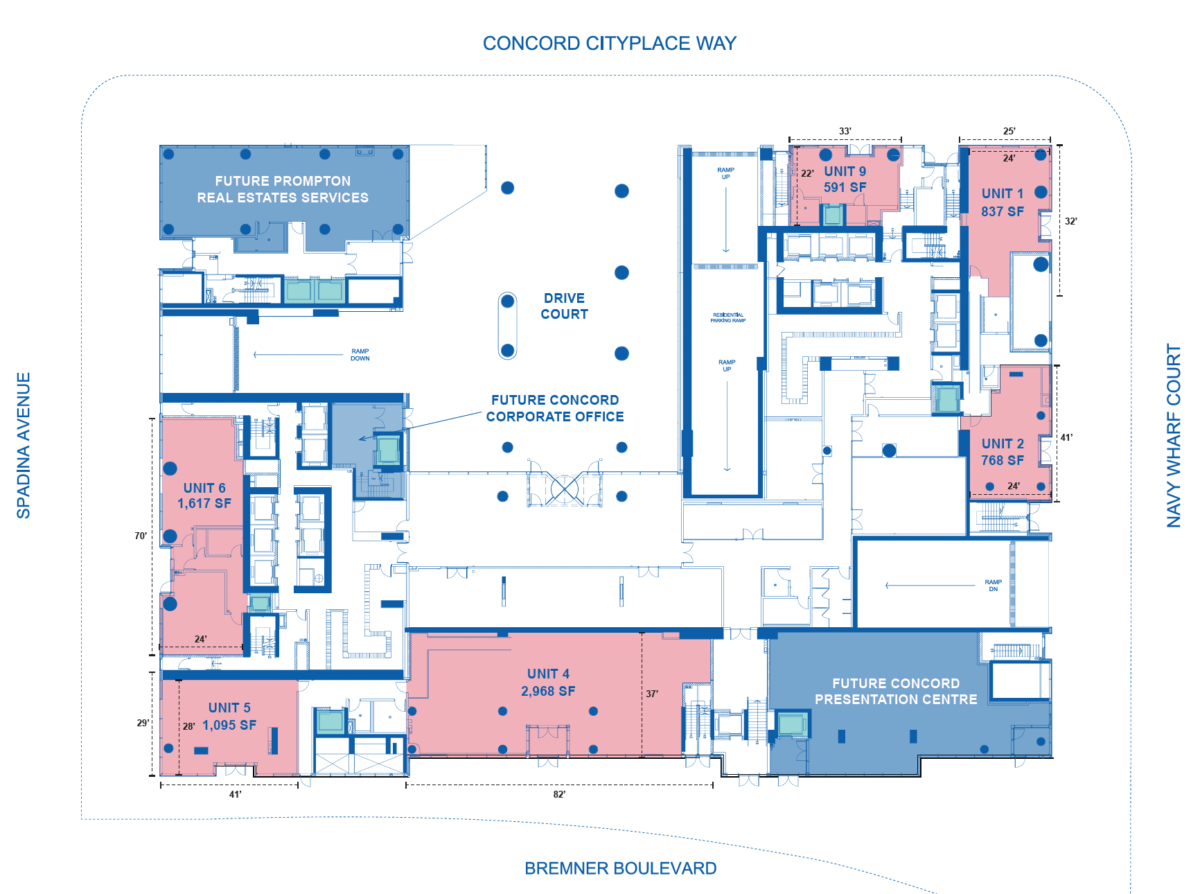
Concord Canada House, the final addition to the Concord CityPlace community in downtown Toronto, is now offering retail spaces for lease. Situated at the intersection of Spadina Avenue and Bremner Boulevard, the premier development features over 12,000 square feet of prime retail space across eight units.
Concord Canada House’s retail is located at the base of two iconic residential towers standing 79 and 81 stories tall. The retail units range in size from 591 to 2,968 square feet, with options for configurable layouts with flexibility. The spaces feature ceiling heights up to 21 feet, and retail frontages 22 feet up to 100 feet, with the opportunity to combine certain units.
Concord Canada House in Toronto. Rendering: Concord
The development will provide ample visibility and versatility for prospective tenants. The busy area features high-density residential towers housing thousands of residents. Concord Canada House itself will be notable with its towers featuring an illuminated maple leaf design, the largest of its kind in Canada, that will become a landmark for the city.
Isaac Chan, VP of Sales and Marketing at Concord Adex, said that Concord Canada House’s retail spaces have been designed to complement the upscale residential development. He noted that the surrounding community has been going through intensive transformation, including the addition of The WELL.
Concord Canada House in Toronto. Rendering: Concord
Concord is looking to establish and preserve a unified look across the retail facade of Concord Canada House, including signage and other best practices for retail space. All retail units will also have an optional patio space, providing an opportunity to animate the retail facade and create a year-round unified visual impact. Chan said that Concord will work with tenant partners on build-outs. “We are looking for unique tenants that will complement one another,” he said.
Chan noted that there will be a host of amenities offered at Concord Canada House, including dedicated underground commercial parking equipped with electric vehicle charging stations, a touchless carwash, and car-share spaces. Offering such amenities for a commercial development is rare in the city.
Concord Canada House in Toronto. Rendering: ConcordDedicated underground commercial parking equipped with electric vehicle charging stations, a touchless carwash, and car-share spaces. Rendering via Concord
The development is meant to be something of a jewel in the crown for the CityPlace development, according to Chan. Concord Adex has developed CityPlace over the past two decades into a neighbourhood featuring thousands of residents in a high-rise community that also features schools, parks and other amenities, as well as a mix of retail to serve the area. More than 32,000 people live within a kilometre of Concord Canada House, and there will be more in the future with new developments.
Concord Canada House is positioned near iconic landmarks such as the CN Tower, Rogers Centre, and Ripley’s Aquarium, and is within walking distance of Toronto’s Entertainment and Financial Districts. This prime location ensures high foot traffic and accessibility, making it an ideal spot for upscale retail businesses.
Concord CityPlace in Toronto. Image: ConcordProposed lease plan for commercial spaces at Concord Canada House in Toronto. Image: Concord
The development’s strategic location also offers easy access to the Gardiner Expressway and Toronto’s extensive transit system, including Union Station.
With anticipated occupancy slated for 2025, the pre-leasing phase is now open, providing an opportunity for businesses to secure a spot in a remarkable Toronto development. Concord says it will provide ongoing support and fit-outs for its tenants, ensuring a seamless transition and optimal setup for retail operations.
Interested parties are encouraged to contact Anna Truong or Andrew Spears at Concord Adex Corp. for leasing inquiries at:
After 33 years of championing sustainable retail in Edmonton, Earth’s General Store has officially closed its doors. The store, a key fixture on Whyte Avenue since 1991, was known for its wide range of eco-friendly products, including bulk refillables, organic foods, fair trade goods, and reusable containers.
Despite a strong community presence and efforts to save it through crowdfunding, the store announced its closure in late September.
Founded by environmental advocate Michael Kalmanovitch, Earth’s General Store was more than just a retail outlet—it was a hub for eco-conscious living. Kalmanovitch opened the shop at a time when terms like “zero waste” and “fair trade” were still novel concepts in Edmonton.
Over the years, Earth’s General Store built a loyal customer base among the city’s environmentally conscious shoppers, offering products that aligned with sustainable values and reducing plastic waste.
In 2010, Kalmanovitch moved the store to a larger location at 9605 – 82 Avenue to accommodate its expanding inventory. This allowed the store to offer a broader selection of organic foods, bulk household products, and green living essentials. Earth’s General Store prided itself on being Edmonton’s premiere zero-waste retailer, offering over 475 bulk items and eliminating single-use plastics from its operations.
Photo: Earth’s General Store
Despite its success on Whyte Avenue, Earth’s General Store faced financial challenges over the years, particularly with the opening of a second location downtown in 2014. The downtown store struggled due to high overhead costs, and after three years of operating at a loss, Kalmanovitch made the difficult decision to close it in 2017. The Whyte Avenue store continued to serve the community but was not immune to rising costs and shifts in the retail landscape.
On September 20, the store officially announced its closure, citing financial difficulties that had become insurmountable. Kalmanovitch and his team held a farewell celebration for customers on September 22, after holding a GoFundMe campaign. The fundraising effort garnered significant support from the community, but it ultimately fell short of securing the long-term financial stability needed to keep the store open.
In a final social media post, Earth’s General Store announced it had ceased operations: “Despite the incredible support from our customers and the wider Edmonton community, we were unable to secure the funds needed in the time required to continue.” The store also confirmed that all donations from the crowdfunding campaign would be returned to donors.
Earth’s General Store leaves behind a legacy of environmental activism and ethical consumerism in Edmonton. Kalmanovitch, who has been a vocal advocate for sustainable living, used the store not only to sell products but also to raise awareness about issues like climate change, fair trade, and zero-waste living.
Deserres at Alex Nihon in Montreal. Photo: Alex Nihon
The Renaud-Bray Group, a dominant force in Canada’s book and cultural retail landscape, has announced the acquisition of DeSerres, a family-owned Canadian leader in art supplies.
The acquisition includes DeSerres’ 28 stores across Quebec, Ontario, Nova Scotia, and British Columbia, its website deserres.ca, and its subsidiaries, Cadres Verbec, which specializes in framing, and Lamarche Importation, a distributor of stationery products.
Founded in 1908, DeSerres has been a fixture of Canadian creativity for more than a century, led by three generations of the DeSerres family. Over the years, it has evolved from a hardware store to a specialized retailer of art supplies, thanks to the strategic leadership of Marc DeSerres, who has been at the helm since 1975. Today, DeSerres is synonymous with art, DIY, and craft supplies, boasting a wide range of products for artists, hobbyists, and professionals alike.
“We salute the hard work and vision of Marc DeSerres, a passionate ambassador of the arts,” said Blaise Renaud, President of the Renaud-Bray Group. “Marc has been instrumental in reinventing the business over the decades, and we are honoured to carry forward his legacy.”
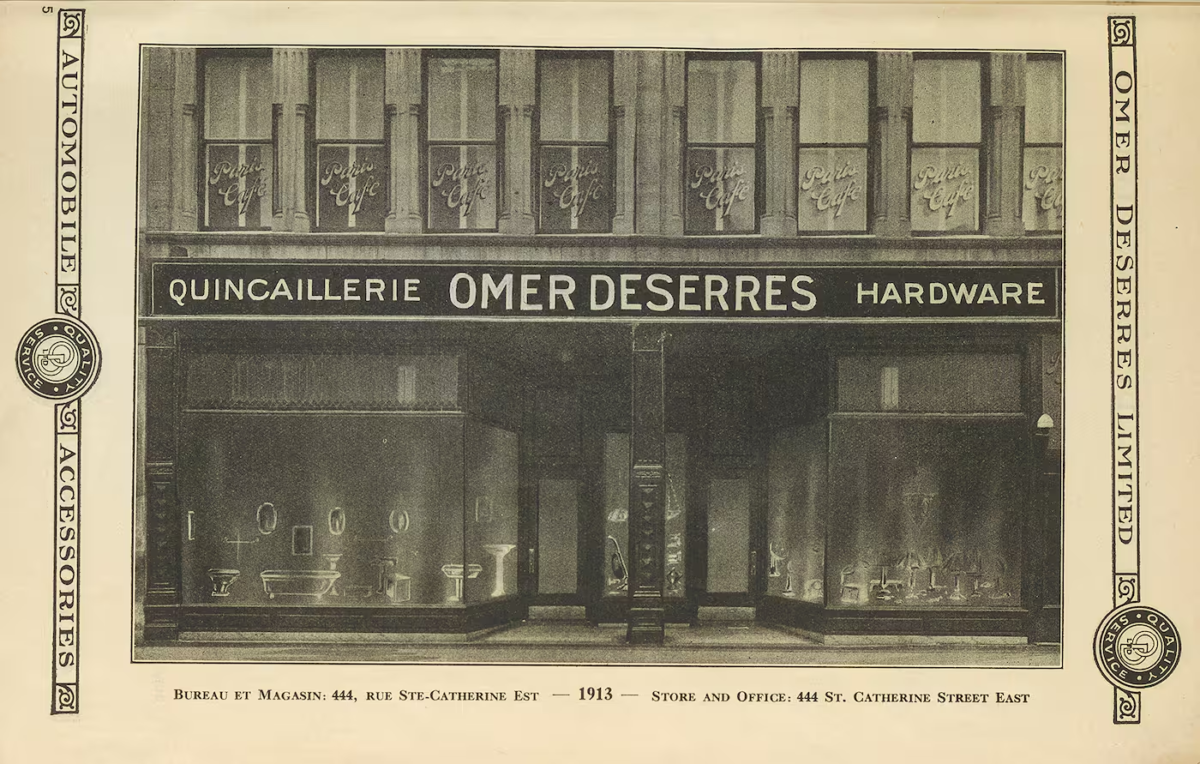
Omer Deserres’ first store
For Marc DeSerres, the decision to sell the company was not made lightly. “It’s time for me to hand over the reins, and I’m confident that Renaud-Bray, along with our dedicated employees, suppliers, and partners, will continue to inspire creativity across the country,” DeSerres said. His leadership helped the brand expand its footprint beyond Quebec and become a nationally recognized name in the Canadian retail space.
Blaise Renaud expressed excitement about the future, noting the strong synergies between Renaud-Bray and DeSerres. “Both of our companies share a deep connection to Quebec and the cultural world, and we are thrilled to continue fostering creativity throughout the province and beyond.”
DeSerres: A Century of Creativity
DeSerres began as a small hardware store in Montreal, founded by Omer DeSerres in 1908. It wasn’t until Omer’s son Roger took over that the company shifted its focus toward creative supplies, marking a strategic transformation that would cement its place in the world of art and craft retail. This shift was further solidified when Marc DeSerres, representing the third generation, took the reins in 1975 and fully committed to the arts and crafts direction. Under Marc’s leadership, the company expanded its presence across Canada, with stores in major urban centers and a robust online platform.
DeSerres has become known for its extensive selection of products catering to everyone from novice crafters to professional artists. The retailer offers everything from paints, brushes, and canvases to stationery, kids’ craft kits, and framing services. DeSerres’ impact on the creative community is undeniable, having supported countless Canadian artists, makers, and art students for decades.
Renaud-Bray store. Photo: Trip Advisor
Renaud-Bray: A Cultural Powerhouse
Renaud-Bray Group, founded in 1965 by Pierre Renaud, has grown from a single bookstore on Saint-Denis Street in Montreal into the largest French-language bookstore chain in North America. The company expanded under the leadership of Pierre’s son, Blaise Renaud, who took over as President and led the acquisition of other cultural retail brands. Today, Renaud-Bray includes Archambault stores, which specialize in books, music, and electronics; Griffon toy shops, a Quebec-based chain offering high-quality educational toys; and Prologue and Pierre Belvédère, two prominent distributors of books and cultural goods.
Renaud-Bray has been instrumental in promoting Quebec culture, especially in the realm of French-language literature. The company’s bookstores serve as community hubs, supporting local authors and cultural events. With 91 retail locations across Quebec and a significant online presence, Renaud-Bray has cemented its place as a key player in Canada’s cultural landscape.
In recent years, Renaud-Bray has embraced digital transformation, launching multiple transactional websites and enhancing its e-commerce capabilities. The company’s blend of traditional retail and digital innovation has earned it the title of one of Canada’s Best Managed Companies since 2023.
A Shared Vision for the Future
The acquisition of DeSerres strengthens Renaud-Bray’s position in the cultural and creative sectors, creating new opportunities for growth and innovation. Both brands share a deep commitment to fostering creativity, supporting the arts, and celebrating Quebec’s rich cultural heritage. The integration of DeSerres into the Renaud-Bray Group is expected to be seamless, with both companies continuing to operate under their established brand names while benefiting from shared resources and expertise.
Looking ahead, the Renaud-Bray Group says it plans to further enhance its offerings in the art and creative sectors, leveraging DeSerres’ expertise to expand product lines and services. Customers can expect to see continued investment in both in-store and online experiences, ensuring that the legacy of both brands continues to flourish.
Global lifestyle brand MINISO has opened its new Vancouver flagship store at CF Richmond Centre in Richmond, British Columbia.
In a news release, the company said the launch of another pink-themed store underscores MINISO’s growing presence in Canada as it advances on its mission to bring more joyful shopping experiences to a wider audience across the country through more innovative designs, dreamy atmospheres, and expanded IP product sections.
MINISO opens in the heart of Richmond
“Located in the heart of Richmond with direct access to major transportation routes, the 3,500-square-foot MINISO store sits conveniently on the first floor of the CF Richmond Centre, near H&M and Shoppers. The new flagship brings MINISO to a prime location, offering a vibrant shopping environment and joyful experiences in one of the city’s busiest retail hubs,” it said.
“MINISO fans can explore a wide selection of around 3000 SKUs, offering everything they need for daily life, as well as products they love, such as blind boxes, plushies, cosmetics, stationery, and household items. The flagship store features a curated selection of popular products, along with exclusive collaborations with famous IPs such as Disney, Sanrio, and newly launched series like BT21, Chiikawa, and Zanmang Loopy. New beauty launches from beauty brands including Black Rouge, Into You, MilleFee, and Canmake further enrich the store’s offering, ensuring the store has something for everyone.”
The new flagship features MINISO’s beloved products including IP collaborations with Disney, Sanrio, BT21, Chiikawa and more. (Photo Credit: MINISO)
As MINISO’s first pink-themed store in B.C., the Vancouver flagship reflects the brand’s dedication to creating fun and memorable shopping experiences, added the retailer.
“The store’s soft pink hues and playful neon elements set the stage for a visually captivating environment, drawing customers into a whimsical world that feels fresh, inviting, and effortlessly joyful. With installations such as a pink Ferris wheel, pink blind box station, and an interactive makeup area, the store invites customers to explore and engage in an immersive, dynamic setting. The store’s unique design and product variety make it a must-visit destination for Vancouver shoppers,” it said.
Key step in strategic Canadian expansion
“This flagship marks a key step in MINISO’s strategic expansion across Canada as it brought another well-design store to the community. The recently opened Sherway store, which also marked the debut of the Chiikawa collection and introduced a new pink-themed store design for the first time in Canada, and other new stores such as CF Fairview Mall and CF Lime Ridge Mall in Ontario, exemplify the brand’s fresh, innovative design approach, bringing more joy to shopping. With around 10 new stores opened earlier in the year, the brand plans to open up more new stores across the country in 2024, including a new themed store at Eaton Centre and additional locations in major malls across Quebec. With its unique IP collaborations and focus on customer engagement, MINISO continues to distinguish itself as a leader in the global lifestyle retail space,” explained the retailer, which opened its first store in China in 2013.
“Looking ahead, MINISO remains dedicated to further growing its footprint both in Canada and globally, bringing engaging, design-led, joyful shopping experiences to even more customers worldwide.”
Small business owners continue to face challenges (Photo credit: RDNE Stock project)
Today marks the beginning of Small Business Month in Canada and the Canadian Federation of Independent Business is kicking off a campaign to thank and celebrate the entrepreneurs who power the national economy despite mounting challenges.
While conditions over the past six months appear to be improving, one in four enterprises are still reporting they are in poor health, explained the CFIB.
In fact, more than half of owners (53 per cent) would not advise someone to start a business right now. Most cite difficulty keeping up with the cost of operating (89 per cent), the high tax burden (72 per cent), stress about the economy (76 per cent), and excessive government paperwork (62 per cent) as the main reasons behind their belief that now is not a good time to start a new venture.
Ryan Mallough, CFIB’s vice-president of legislative affairs for Ontario
“It’s getting harder and harder to run, let alone start, a business. From coast to coast, we’re seeing longtime, iconic places that have been in business for decades fold under the pressures of high costs and reduced demand,” said Ryan Mallough, CFIB’s vice-president of legislative affairs for Ontario. “Our communities are built on the success of these local businesses. It’s important to celebrate the entrepreneurial spirit and the people who take the risks to keep our communities thriving.
“If we want to boost our lagging productivity, create more jobs, and keep our local economies vibrant, we need to do more to support small businesses. Governments have a big role in this, but as citizens we can all do our part to uplift small business owners.”
On Tuesday, the CFIB launched its Big Thank You Contest where Canadians can win big while thanking their favourite small businesses.
Big Thank You Contest launched for Small Business Month
The Big Thank You Contest is presented by CFIB with support from Scotiabank, Interac Corp. (Interac), and Chase. Consumers can enter weekly draws by visitingSmallBusinessEveryDay.caand leaving a thank-you note to their favourite small Canadian business.
Emily Boston, CFIB’s senior policy analyst
“Every time you spend a dollar at a small business or locally-owned franchise, 66 cents is recirculated into the local economy. In this way, we’re all tied to our local small businesses’ success,” said Emily Boston, CFIB’s senior policy analyst. “Starting a small business is a leap of faith— saying thank you is the least we can do for those who have taken that leap.”
The winners— one supporter and the place they thanked— are announced every week.
Entrants can win a cash prize of $750 to shop locally and a Big Thank You gift box full of small business products. The winning enterprise they thank will also receive a cash prize of $2,000, a Big Thank You box, and a one-year CFIB membership.
Owners can download CFIB’s digital toolkits, which include printable posters and customizable social images, to promote the contest and local shopping.
The CFIB is Canada’s largest association of small and medium-sized businesses with 97,000 members across every industry and region.
Meanwhile, the CFIB also announced Tuesday it welcomes news from the federal government on several important changes that will reduce some of the host of cost pressures facing Canadian small business owners.
These announcements follow many months of CFIB’s advocacy work and over 31,000 signed petitions from small business owners on these issues, it said.
Here’s the organization’s comments on those issues:
Dan Kelly, CFIB President
On carbon tax “CFIB is relieved to learn the federal government will return the $2.5 billion small business share of carbon tax revenue that has been stuck in Ottawa for the past five years,” said Dan Kelly, CFIB president. “It’s good news that this money will be returned to small businesses by direct deposit or cheque before the end of the year. These are not trivial amounts of money. For example, a company with 10 employees in Alberta will receive nearly $6,000 in carbon tax rebates, a 25-person company in Saskatchewan will receive nearly $29,000, a 50-person business in Manitoba will receive $24,000 and a 100-person employer in Ontario will get $40,000.”
Rebates will be based on the number of T4s issued by an employer, including those issued to the business owner, their family, part-time, and seasonal workers, as well as for positions that turn over. Smaller rebates will be received by SMEs in all four Atlantic provinces as they have paid the federal carbon tax for only one year. Only incorporated firms (CCPCs) with between 1-499 employees will be eligible.
CFIB is pleased that the federal government has extended the deadline to December 31, 2024, for those who have not yet filed their 2023 corporate income taxes.
While CFIB welcomes the federal government delivering on its commitment to return a portion of carbon tax revenues to small businesses, the vast majority of small firms (83%) now oppose the carbon tax. CFIB will continue to call on all political parties to scrap the carbon tax at the earliest possibility.
On credit card fee reductions As of October 19, 2024, the cost of accepting credit cards will be reduced by an average of 27% for small businesses processing less than $300,000 in annual Visa sales and $175,000 in Mastercard sales. Small firms will qualify for a 0.95% average interchange rate for in-store sales and a 0.1% cut in ecommerce fees.
“Most small firms should see savings of between $300 and $400 for every $100,000 in Visa sales and $200 for every $100,000 in annual Mastercard sales,” Kelly added. CFIB estimates that over 60% of its 97,000 members will qualify for the savings.
“CFIB will be closely monitoring all credit card processors to ensure the full value of the savings is passed on to the small businesses counting on this relief,” Kelly said. “We are pleased that the federal government has made this expectation very clear, and we will be working with Minister Freeland, Visa and Mastercard to ensure card processors do not try to keep the savings intended for small firms.”
CFIB will also encourage the industry to regularly review and increase the thresholds to allow more small firms to qualify for the savings.
On the Code of Conduct for the Payment Card Industry Today’s revisions to the Code are a positive step in improving fairness in the payments industry for small firms, including an improved process around timelines and expectations for complaints and better protection around contracted bundles.
“Updates to the Code will provide greater clarity and help businesses understand what rates they will pay. These changes have been a long time coming and will lead to a better balance of market power between small firms and industry giants,” Kelly added.