Retail Insider is streamlining its Canadian retail news from around the web to include a handful of top news stories that can be viewed quickly during the day. Here are the top stories from the past 24 hours.
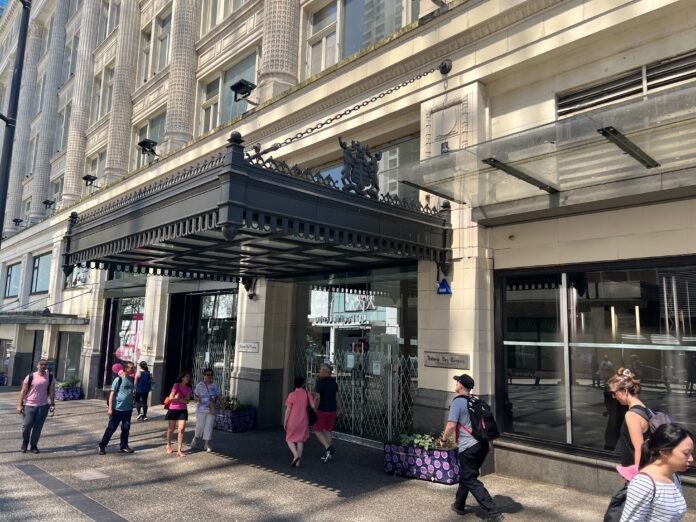
Outside the temporarily shuttered Hudson's Bay store in downtown Vancouver, July 2024. Photo: Lee Rivett
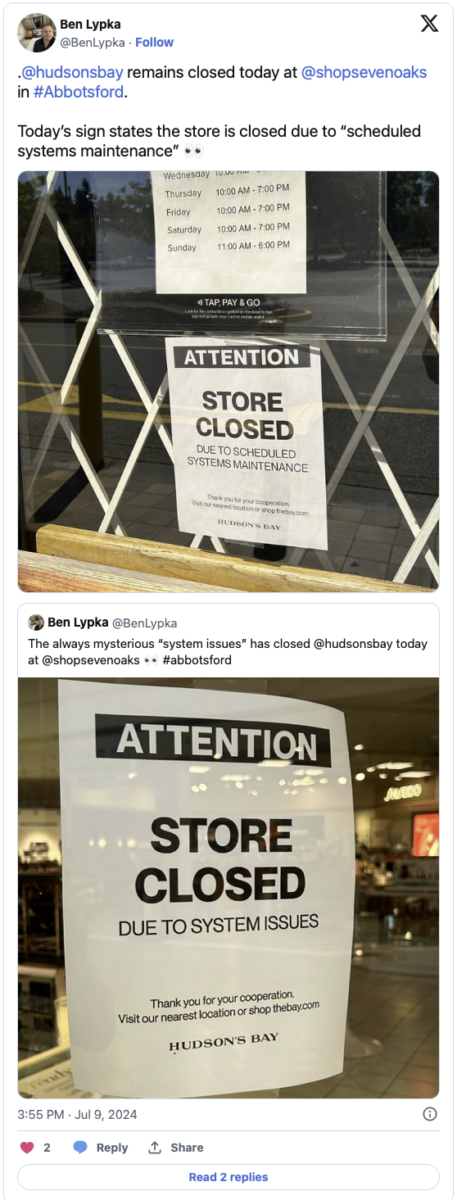
Various Hudson’s Bay department stores in Canada are closed this week due to HVAC issues, coinciding with a heatwave that made temperatures in some stores unbearable. Hudson’s Bay has not been forthcoming on why stores have been closing temporarily over the past several months, following other issues in stores such as non-functioning escalators and a lack of centralized music.
For at least a couple of months, readers have been emailing Retail Insider about Hudson’s Bay stores being shut temporarily due to systems issues in stores, and a search on Reddit shows that the issue has persisted at least since May of this year. This week there have been various news reports about Bay stores being closed due to a lack of air conditioning.
Some readers have been so concerned as to ask if Hudson’s Bay will be going out of business as a result — the retailer has also had issues with its shipping and deliveries, including the fact that Hudson’s Bay currently does not deliver orders to the Northwest Territories, for example. Visitors to Hudson’s Bay stores that are actually open this week could find a lack of operational escalators, elevators and music depending on the location, and consumers are noticing.
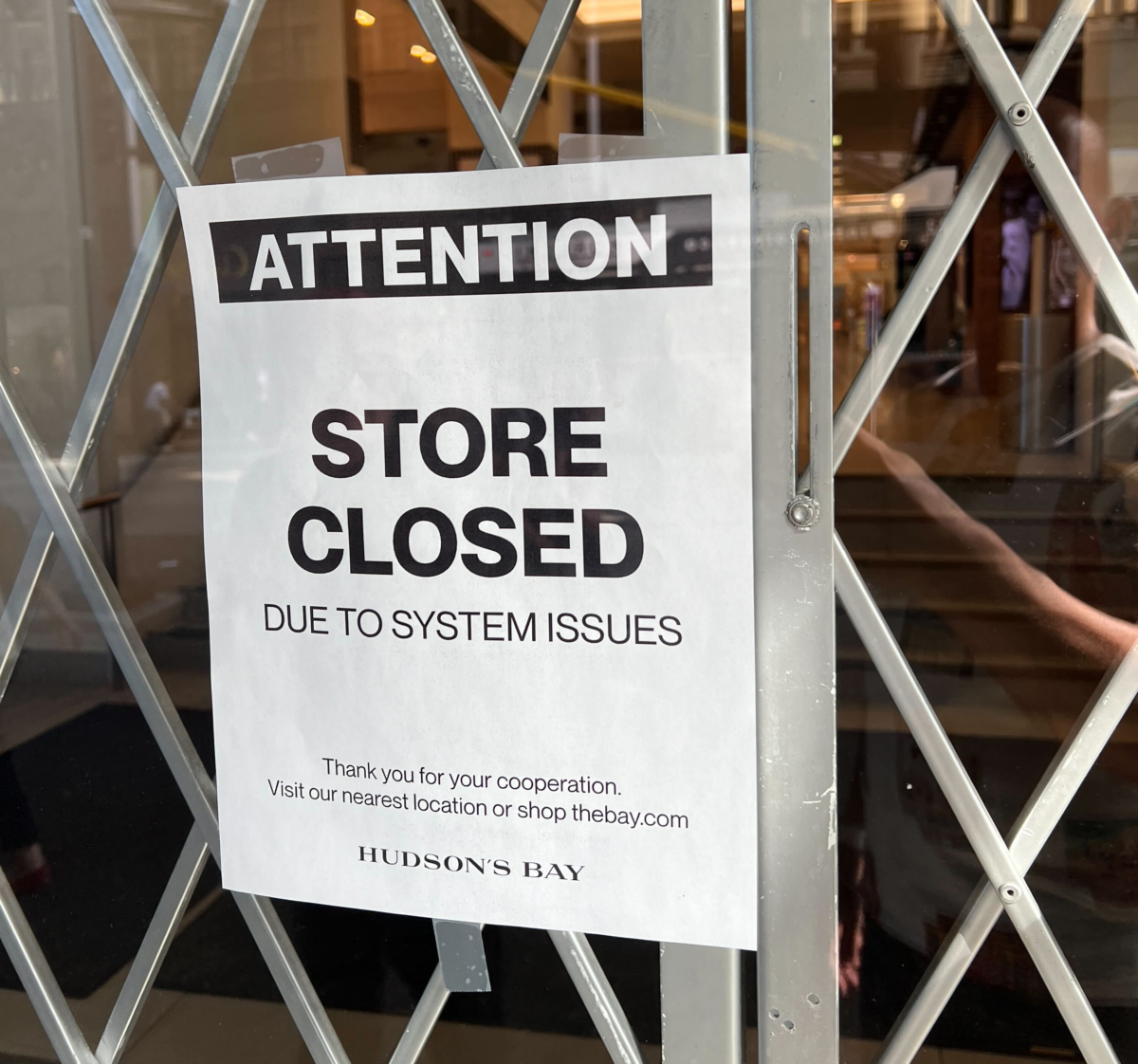
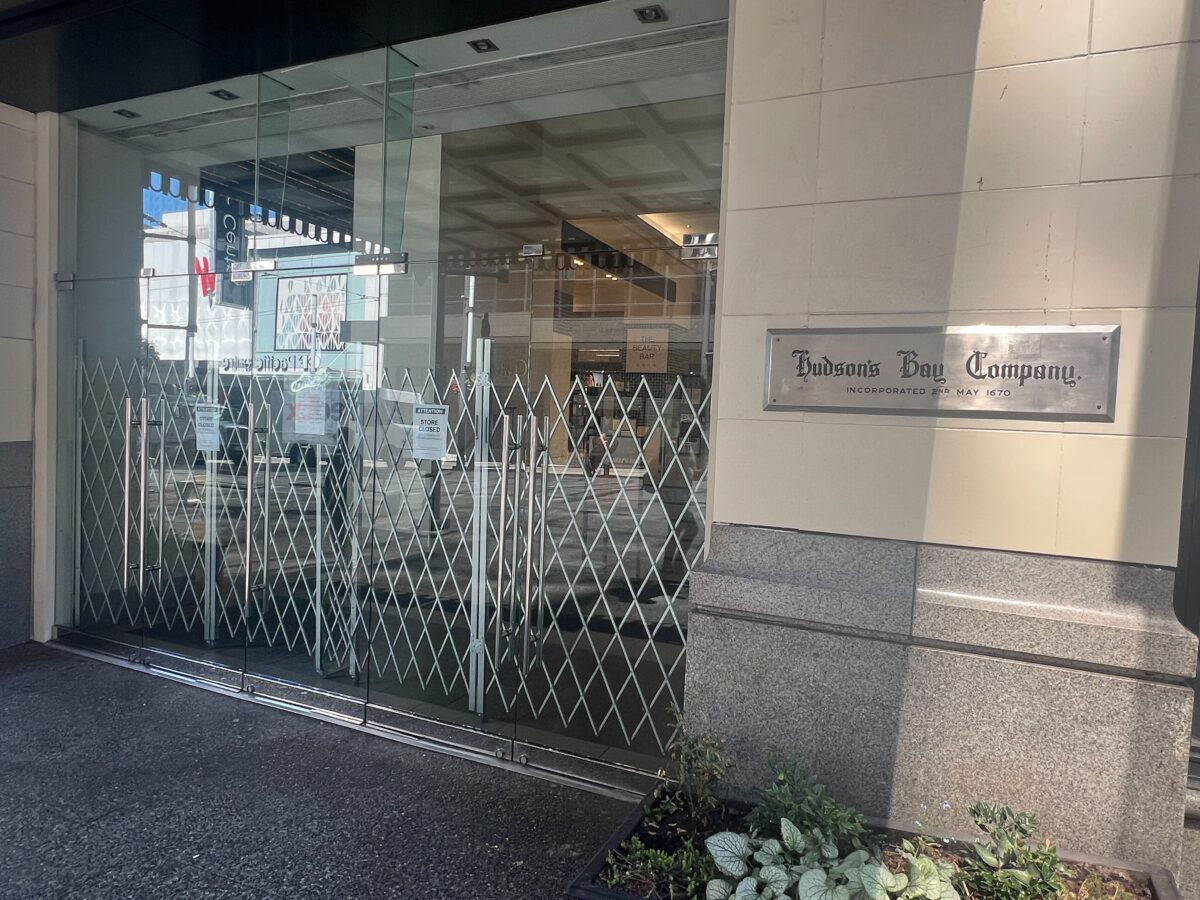
Sign on the door of the flagship Hudson’s Bay store at 674 Granville St. in downtown Vancouver. Photo: Lee RivettShuttered doors of the flagship Hudson’s Bay store at 674 Granville St. in downtown Vancouver. Photo: Lee Rivett
Retail Insider reached out by phone to Hudson’s Bay to learn why these issues have persisted for months, and the retailer’s head of corporate communications, Tiffany Bourré, sent back a canned statement that was also sent to other news publications this week.
Tiffany Bourré, VP of Communications, Hudson’s Bay
“The current heatwave has caused strain on HVAC systems in certain Hudson’s Bay locations. We are working to address as quickly as possible. The comfort and wellbeing of customers and associates remains our top priority.” – Tiffany Bourré
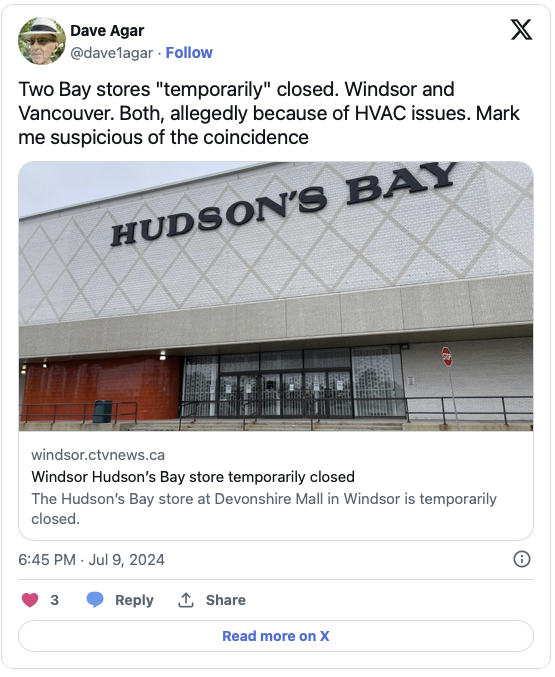
Various Hudson’s Bay stores have been closed in Canada this week, including stores in downtown Victoria, downtown Vancouver, Park Royal in West Vancouver, Coquitlam Centre, Abbotsford, Prince George, Red Deer, and Windsor Ontario. Over the past few weeks Bay stores at Square One in Mississauga have been closed due to HVAC issues, along with Woodbine Mall in Toronto and in Newmarket, Ontario, among others.
The closure of multiple Bay locations due to HVAC issues is a significant topic of discussion across Canada as a result, and it’s speculated that Hudson’s Bay may have not paid for maintenance of its cooling systems which are now failing. Various vendors owed money by Hudson’s Bay have reached out to Retail Insider with information for months as well, indicating a pattern of delinquent payments at a time when the Hudson’s Bay Company is announcing its acquisition of US-based luxury retailer Neiman Marcus.
As part of the Neiman Marcus acquisition, the Hudson’s Bay Company stated in a press release that the Canadian Hudson’s Bay department stores and Canadian business would become separate from Saks Global upon closing of the transaction. With that, there would be “significantly reduced leverage and enhanced liquidity” for Canada’s Hudson’s Bay. The release went on to say that the Canadian business “will be well positioned to support future growth,” without providing further details.
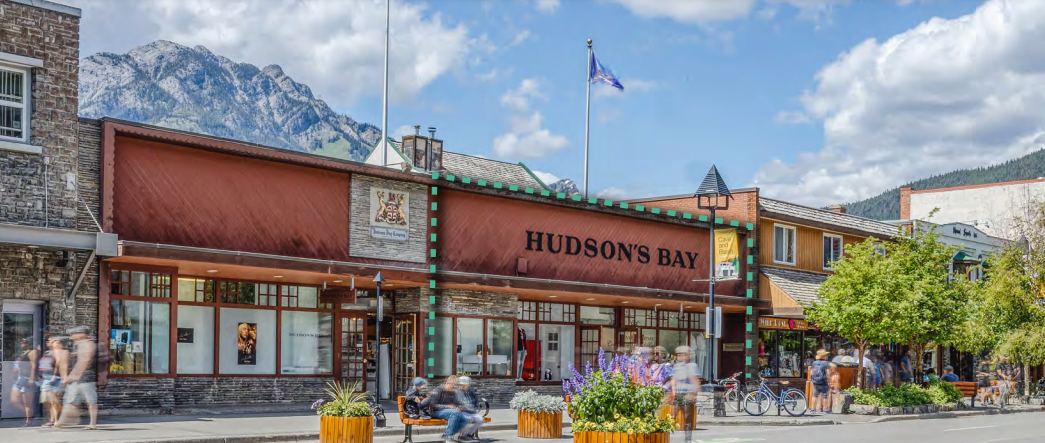
Shuttered Hudson’s Bay store in Banff, AB. Photo: Avison Young
Sources have said that only about a quarter of Hudson’s Bay’s roughly 80 remaining Canadian stores are profitable, leading to a question about the future of some locations. The announced “new liquidity” means that Hudson’s Bay could have money to fix outdated technology, repair HVAC, escalators and other fixtures, and otherwise update stores — although one questions if there will be a return on such an investment, particularly as Canadians increasingly are turned off shopping at Hudson’s Bay locations which in many cases are in need of upgrading to create a positive customer experience.
Vendor relationships will also have to be fixed, following a pattern of late payments which will likely impact the retailer following any new cash injection from its parent company after the formation of Saks Global.
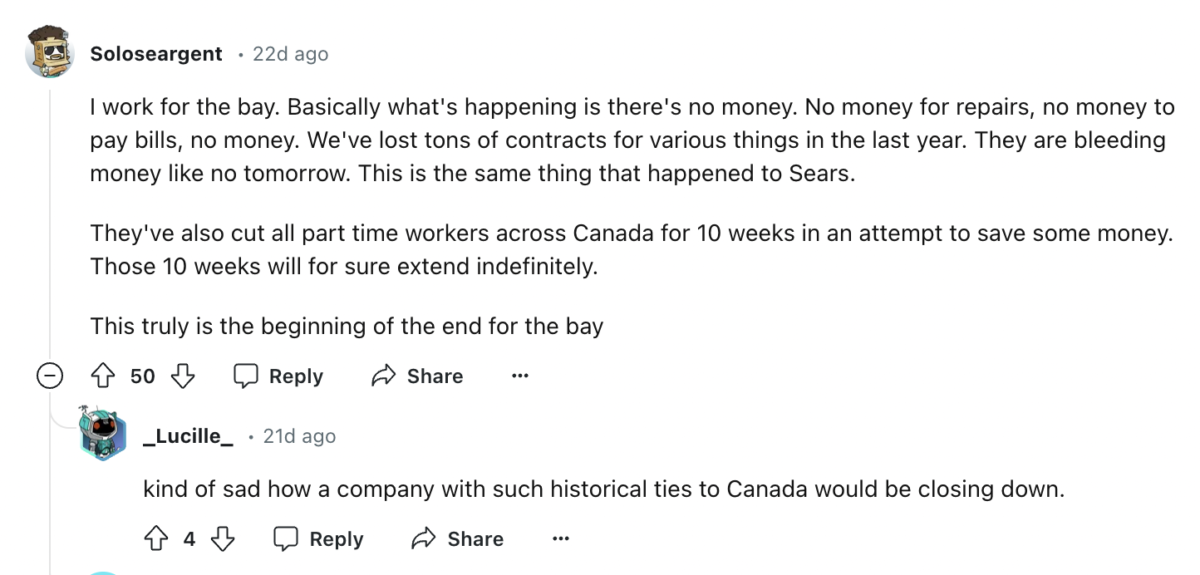
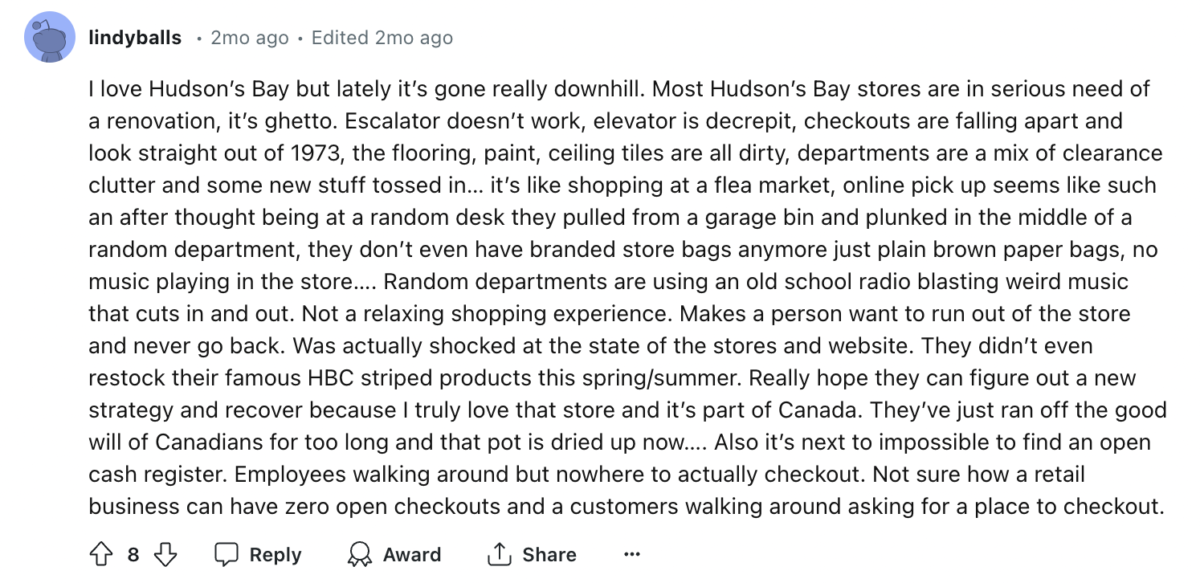
A Reddit user claiming to be a Bay store employee discusses their interpretation of the situation, followed by a comment from another Reddit user. Click image for full Reddit thread.
The future of Hudson’s Bay’s Canadian stores is uncertain and there’s a possibility that the chain could be sold post-Saks Global — various Bay stores have closed in recent years, including three downtown locations (Winnipeg, Edmonton, Toronto Bloor Street) along with other units in Montreal at Les Jardins Dorval, in Burnaby BC at the Lougheed Town Centre, and on Banff Avenue in downtown Banff, Alberta. We know that in 2025 Hudson’s Bay will close stores in Burlington Ontario and in downtown Regina, Saskatchewan. The cost to renovate the remaining Hudson’s Bay stores to an acceptable standard could be cost prohibitive.
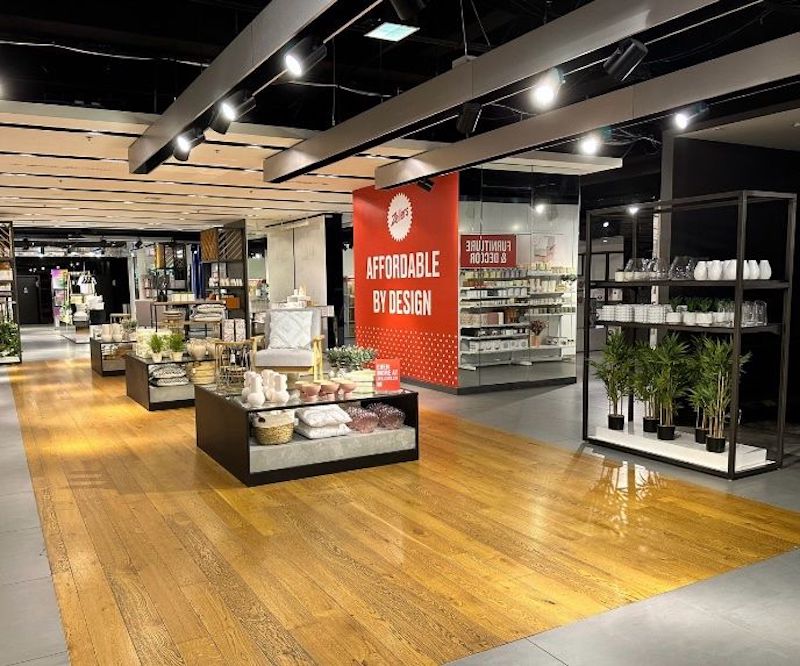
Expanded 28,000 sf Zellers shop on the lower level of Hudson’s Bay Vancouver. Photo: Brahm KornbluthReddit comment regarding the condition of Hudson’s Bay stores — Reddit is full of similar comments from people across Canada. Click image to read full Reddit thread.
Hudson’s Bay also began expanding its Zellers 2.0 concept stores within Hudson’s Bay last year, which insiders have said has generally been unsuccessful beyond some initial hype around the relaunch and some food trucks. One small bright spot is in downtown Vancouver, where the Zellers shop-in-store was recently expanded to 28,000 square feet making it the largest Zellers in existence by far — shoppers will be able to visit it again when the downtown Vancouver Hudson’s Bay flagship store reopens, whenever that will be.
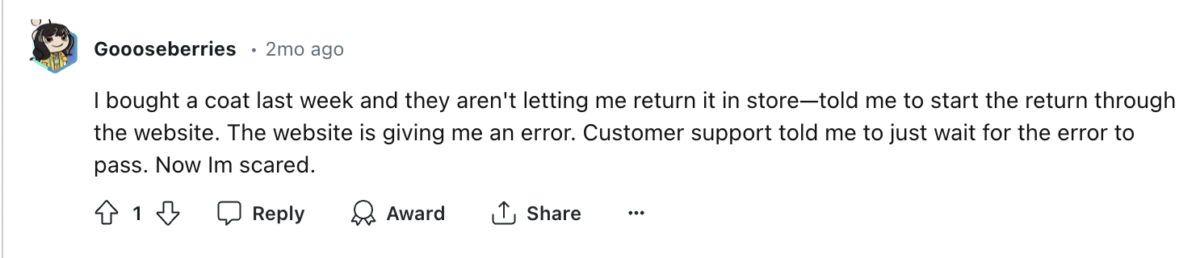
Reddit post, indicating issues around Hudson’s Bay’s e-commerce — and there are many posts similar. Click image for full Reddit thread.
Hudson’s Bay will ultimately have an uphill battle in the coming years to gain consumer traffic as Millennials and GenZ shift spending from department stores to speciality retailers including online — the overall relevance of Hudson’s Bay is less so with so many shopping options in Canada. Retail Insider will continue to report on Hudson’s Bay and what’s happening as the Saks Global partnership solidifies in the US.
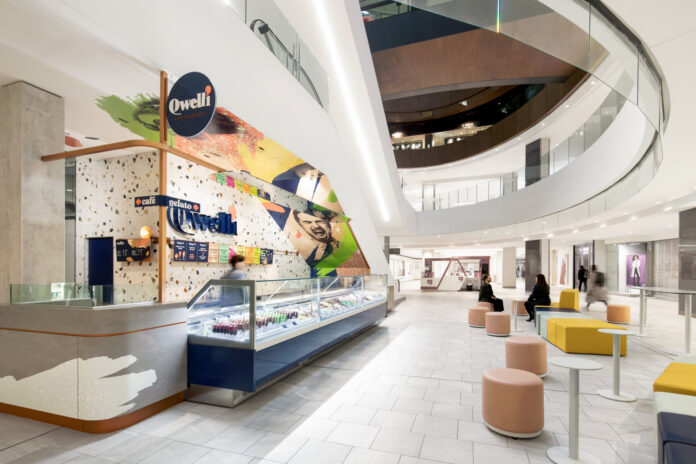
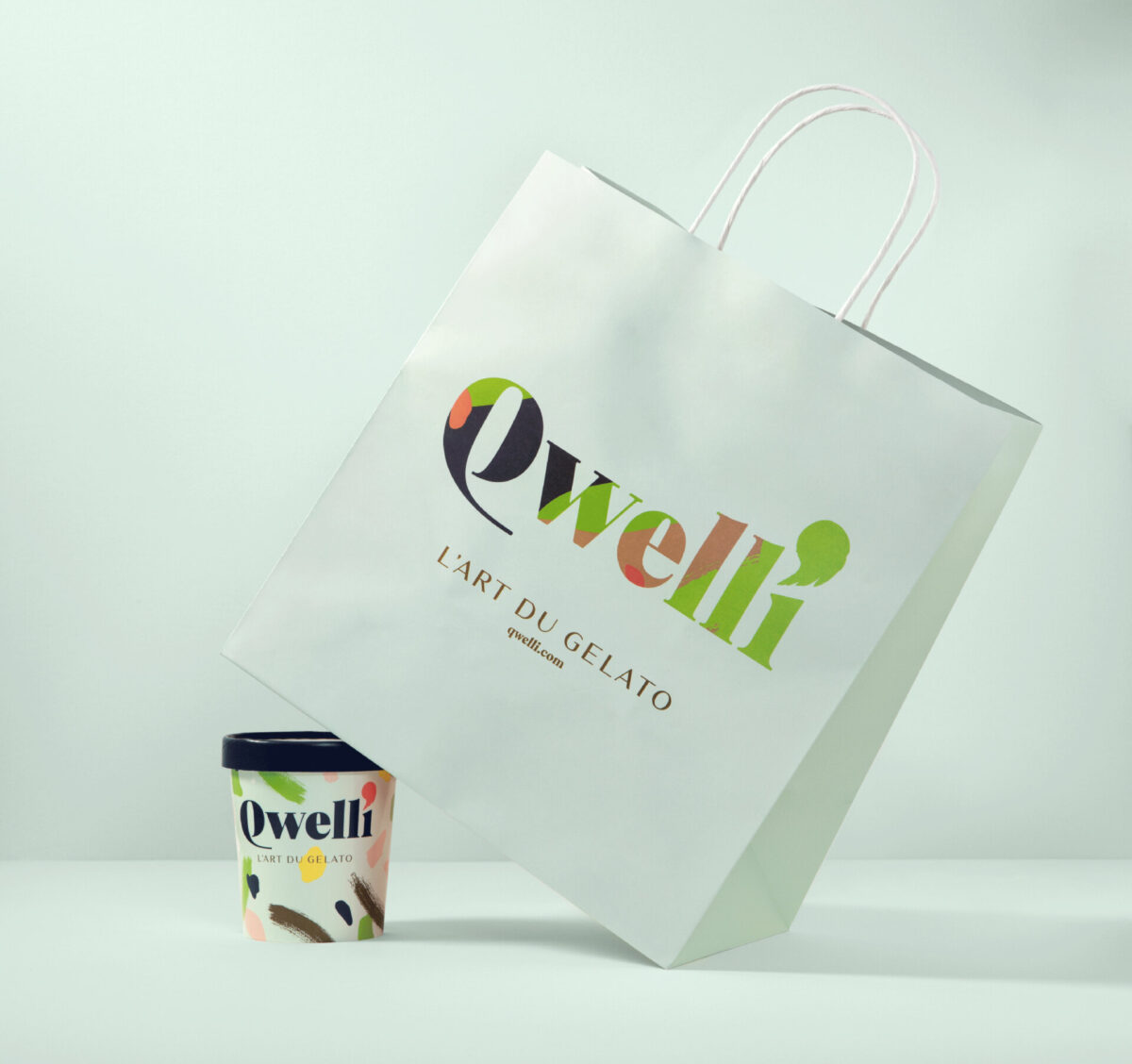
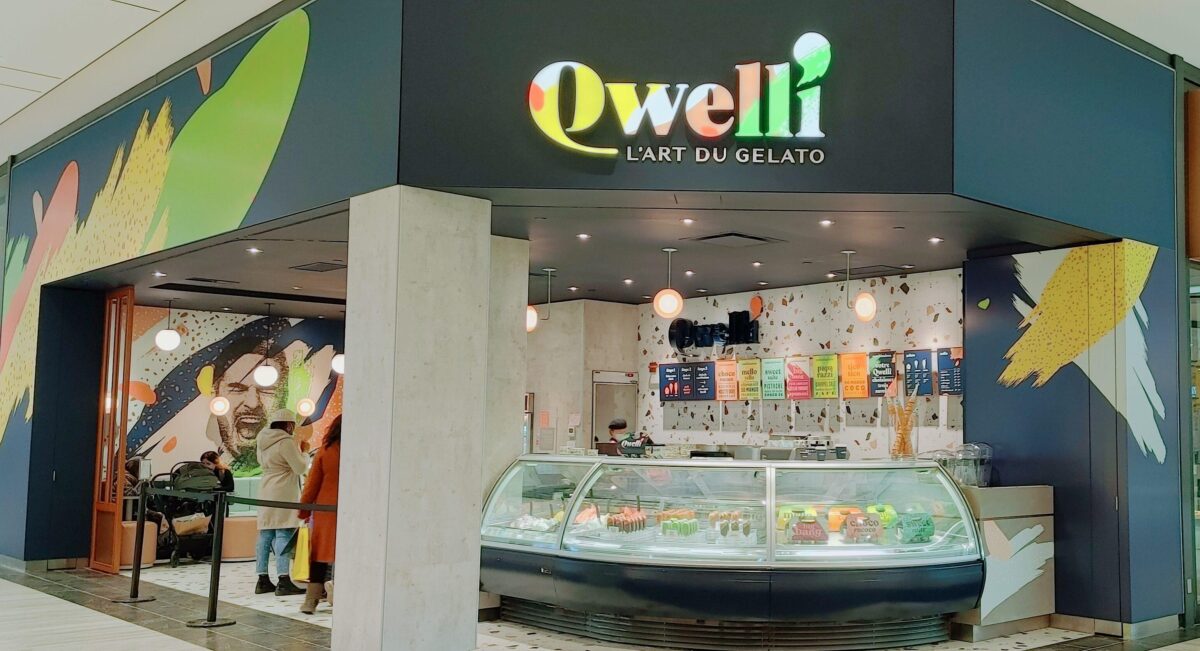
Qwelli at Montreal Eaton Centre (Image: Adrien Williams)
The Montreal-based gelato brand Qwelli has its roots going back to 1987 with the acquisition of an ice cream shop in Chomedey.
Today, the company has 11 locations and is poised for growth, looking to expand by several stores in the next few years and partnering with franchise owners.
Jean-Francois Beetz, Chairman and CEO of Qwelli, said the family-owned business was started by his parents.
“My sisters and I and my cousin grew up in the business,” said Beetz. “It’s been a lifelong project we’ve been working on.”
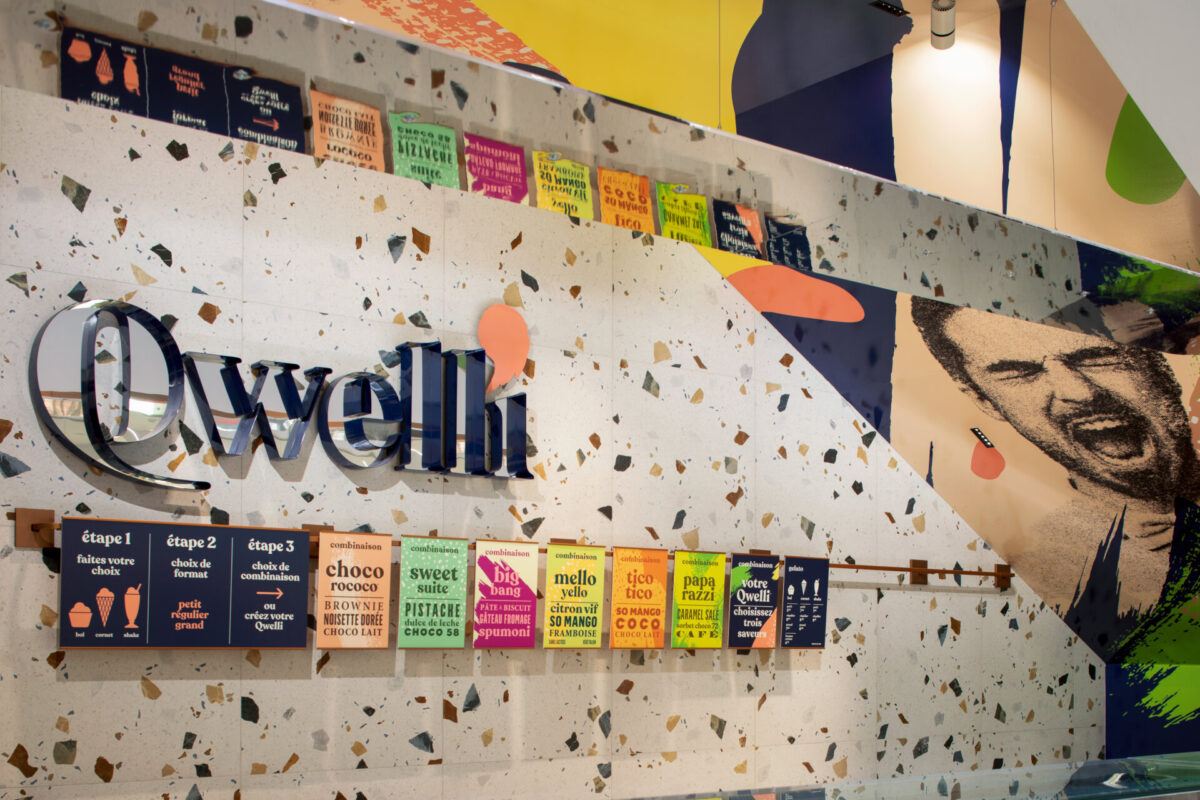
Qwelli at Montreal Eaton Centre (Image: Adrien Williams)Qwelli (Image: Caroline Reumont)
After its inception, the company manufactured gelato in 2003 for the first time. In 2010, it opened its first factory and in 2012 the transfer of ownership took place to a new generation.
“My sisters and I worked on finding ways to improve the business, improve the concept . . . The main thing that happened in the last few years is that my sister and I, the second generation, took over, although my dad is still working with us, and we quickly realized in the early 2000s that gelato was the king of desserts, the high end in the frozen dessert industry,” said Beetz.
“So we moved from ice cream to gelato almost 25 years ago . . . There’s a lot of differences between ice cream and gelato. We mastered it over the years. We’re artists. So we took it to another level. We’re experts in gelato but we’re really artists of gelato. We took the brand that used to be called Paysanne Gelato at the time and we’ve tried to evolve the brand, the products, the business model.”
“It’s been truly a pleasure working alongside the Beetz family and having been privy to their continued evolution and growth. When it comes to authentic gelato, they are best in class and this next step milestone in their development will allow more Canadians to discover what we’ve already known,” said Roula Bchara, Managing Partner, Business Development of Oakmount.
“We are currently looking for open-air locations ranging from 800-1,200 square feet. These locations must have the ability to house outdoor seating and should be located near commercial arteries with residential housing nearby and with neighbouring food and entertainment.
“We are actively looking for opportunities within the greater Montreal region and have identified specific regions and zones. We invite everyone to reach out to us for further information or to add themselves to our mailing list to receive our flyers.”
Qwelli Fairview Pointe-Claire (Image: Qwelli)
Beetz said the company opened its new production facility in 2020 and with the rebrand it makes Qwelli ready to move on to the next step which is the expansion.
Currently there are 10 stores open. The 11th store will open in mid-August in Royalmount in Montreal. All the stores are in Quebec.
“But we’re looking into the Ontario market and maybe more,” said Beetz.
“We’re really not trying to fix a number . . . Within the next two to three years we definitely want to go up to 25, 30 maybe. But it’s always going to depend on the quality of the location. Right now everything is corporate owned but we’re opening the market for franchisee partners to join with us. It’s going to help us grow but we’re still going to be looking at quality locations and this is mostly going to be the trigger for the growth, the speed at which we’re going to grow.
“We’re already negotiating right now with many locations so we’re confident that we’re going to be able to reach these numbers within the next two to three years.”
Simon's Impact and Global Retail Trends in Canadian Shopping Landscape [Video Interview]
Craig and Liza Amlani, Principal and Founder of Retail Strategy Group, discuss the arrival of La Maison Simons in downtown Toronto and its potential impact on the retail landscape. They explore how the new stores at Yonge and Dundas will influence shopping habits, tourism, and local retail dynamics. Simons’ diverse product assortment, combining private labels and luxury goods, is expected to attract a wide range of customers and drive significant sales.
The conversation also touches on the broader retail trends, emphasizing the importance of physical stores in enhancing customer experience and loyalty. Amlani highlights the role of visual merchandising and knowledgeable sales associates in creating memorable shopping experiences. They also discuss the importance of data-driven insights in tailoring product assortments to meet customer needs, as demonstrated by Simon’s strategic approach.
Additionally, Patterson and Amlani delve into the global shopping phenomenon, with a particular focus on Shein’s IPO and its implications for the fashion industry. They discuss the environmental impact of fast fashion and the growing consumer awareness around sustainability. The conversation underscores the need for retailers to balance product quality, customer experience, and ethical practices in today’s competitive market.
Episode Sponsor:
Salesforce – Turn today’s shopping trends into tomorrow’s retail success. Visit Salesforce to see the global insights from Salesforce to boost your bottom line.
Featured during this interview:
Liza Amlani, Principal and Founder of Retail Strategy Group
If you prefer to listen to the audio version, it is available below:
The Interview Series audio podcasts by Retail Insider Canada are available on Apple Podcasts, Stitcher, TuneIn, Google Play, or through our dedicated RSS feed for Overcast and other podcast players. Also check out our The Weekly audio podcast where Craig and Lee discuss popular content published on Retail Insider which is part of the The Retail Insider Podcast Network.
Subscribe, Rate, and Review our Retail Insider Podcast!
Drop us a line at Craig@Retail-Insider.com. You can also rate us in Apple Podcasts or recommend us in Overcast to help more people discover the show!
Background Music Credit: Hard Boiled Kevin MacLeod (incompetech.com). Licensed under Creative Commons: By Attribution 3.0 License. http://creativecommons.org/licenses/by/3.0/
Retail Insider is streamlining its Canadian retail news from around the web to include a handful of top news stories that can be viewed quickly during the day. Here are the top stories from the past 24 hours.
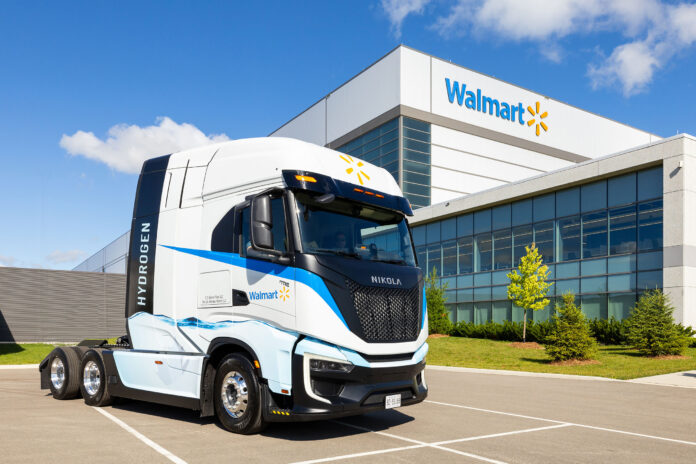
Walmart Canada has become the first major retailer in Canada to introduce a hydrogen fuel cell electric semi-truck.
The truck is operational in the Mississauga, Ontario area as the company continues its journey towards the goal of having a 100 per cent alternatively-powered fleet.
Gonzalo Gebara
“We’re proud to be introducing Walmart Canada’s first hydrogen fuel cell electric vehicle as a major milestone on our journey to becoming a regenerative company,” said Gonzalo Gebara, president and CEO, Walmart Canada, in a statement. “This is a first for a retailer in Canada and is an example of how we will continue to push forward, embrace new technology and spark change within the industry.”
Operating with zero tailpipe emissions, the Nikola Hydrogen Fuel Cell EV Class 8 tractor has a range of about 800 kilometres and on average can avoid 97 metric tons of CO2 tailpipe emissions annually according to the manufacturer. According to Nikola, Walmart Canada is also the first retail fleet to operate one of these trucks in North America.
Image: Walmart
Lillo Puma, Vice President of Transportation for Walmart Canada, said the truck will travel shorter distances at first and the company anticipates it will be deployed throughout southern Ontario, bringing goods from the distribution centres to the stores.
“It’s very similar in size and scale of other trucks we have in our fleet, which is just standard for the industry,” said Puma.
Walmart said the Nikola hydrogen fuel cell electric semi-truck carries high-pressure gaseous hydrogen onboard in specialized tanks, similar to how a conventional truck carries diesel. The hydrogen then runs through the fuel cell stack, which is converted to electricity by combining it with oxygen, with water vapor as the only byproduct. This electric power is transferred to the high-voltage power-net, which can charge the on-board batteries, and transfer power to the pavement via an e-axle with integrated electric motors.
This first hydrogen FCEV was sourced by Etobicoke, Ontario-based ITD Industries Inc., an industry-leading transportation solutions provider, and will be deployed in Ontario for longer-haul trips.
“This is very exciting. We have a very ambitious journey towards a 100 per cent alternatively-powered fleet. This truck is another introduction to the great work that we’re doing,” said Puma.
“Earlier in the year in British Columbia we launched our three Freightliner eCascadia semi-trucks. Those are our EV-powered trucks and this is adding to our ambition of wanting to having 100 per cent alternatively-powered fleet.”
Stephen Girsky
Steve Girsky, Nikola President and CEO, said the collaboration with Walmart Canada, a brand committed to a more sustainable future, aligns perfectly with its mission to drive innovation and environmental responsibility in the transportation industry.
“This achievement underscores our shared vision for a zero emissions future and the positive impact we can make together for our communities and the planet overall,” he said.
Puma said the latest development for the retailer is an example of how it wants to push forward, embrace new technology and spark change in the industry.
“And that’s really what we’re most excited about,” he said.
Puma said safety is a top priority at Walmart. All drivers go through a rigorous training course. Every new vehicle, regardless of what type, or fuel, requires a full, extensive training package for the company’s drivers so they can understand all the particulars of the vehicle.
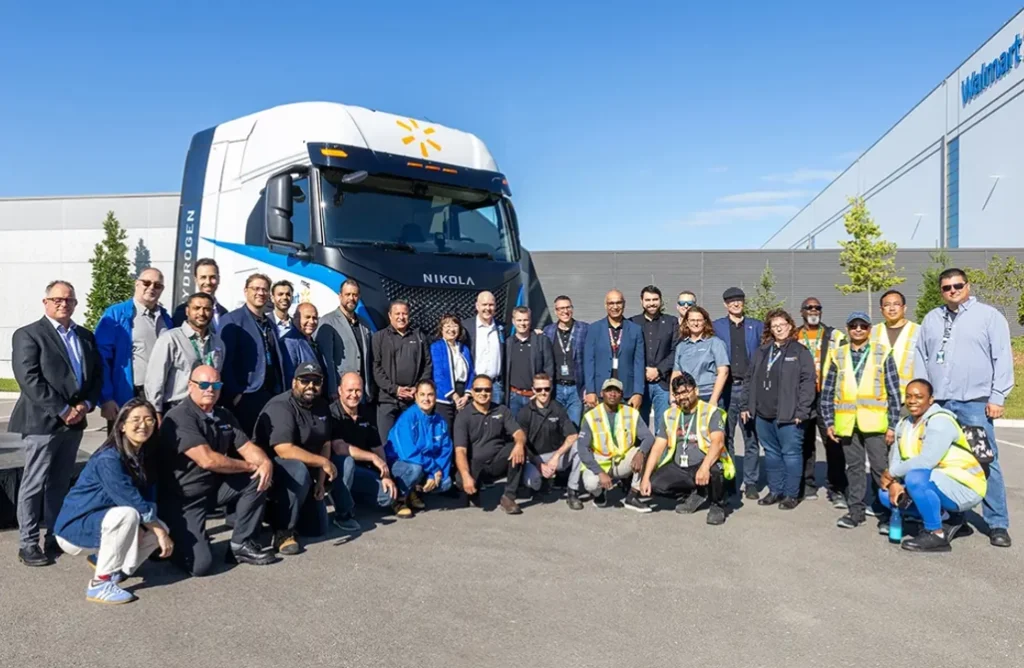
Image: Walmart
Stephen Lecce, Ontario’s Minister of Energy and Electrification, said the province is rapidly building out Ontario’s hydrogen economy with new production projects that are going to help forward-looking businesses across the province transition to hydrogen vehicles and reduce their emissions.
Stephen Lecce
According to Natural Resources Canada, hydrogen is the simplest, lightest and most abundant element on earth, has the highest energy per unit of any fuel and plays a critical role in working towards a carbon-neutral future.
*Assumes replacement of one Class 8 diesel truck with an avg. 6.5 MPG, 62,169 annual miles traveled. Uses 2024 U.S. EPA emission factors and specified averages.
The EV trucks are operating out of the retailer’s grocery distribution centre in Surrey, BC.
The use of these vehicles will help to prevent the use of more than 100,000 litres of fuel each year, said Walmart.
The Freightliner eCascadia is an all-electric, zero-emissions semi-truck that can travel approximately 400 kilometers from just one charge. At Walmart, these trucks will each be used to travel approximately 110,000 kilometres annually. Designed with innovative safety technology and ergonomic seating, these vehicles are built to keep roads safe and drivers comfortable.
Walmart Canada operates a chain of more than 400 stores nationwide serving 1.5 million customers each day.
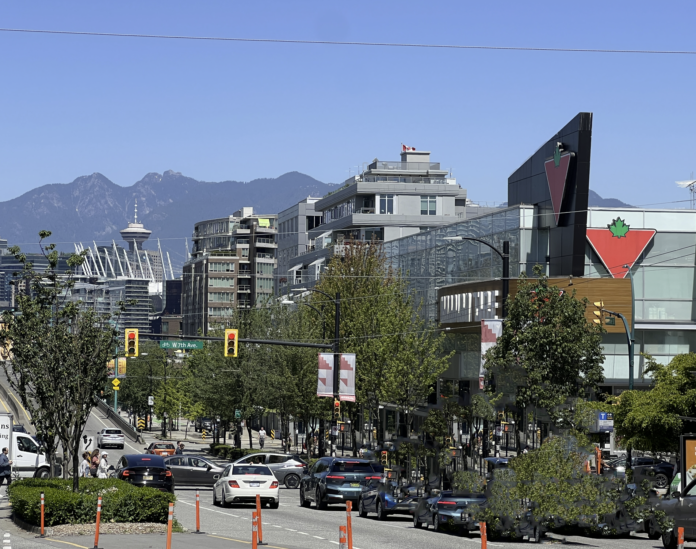
Cambie at 7th Avenue in Vancouver (Image: Lee Rivett)
The Vancouver retail market is seeing increased demand even with economic uncertainty. Limited availability and rising rents are driving retailers to secure leases quickly, says a new market report by commercial real estate firm JLL.
Although retail sales have decelerated, some growth is expected in 2024, supported by a growing local tech sector and resilient consumer spending. Transit ridership, the opening of new concepts at Amazon’s The Post, and the rapid recovery of tourism continue to support the recovery of downtown Vancouver, added the report.
Trevor Thomas
Trevor Thomas, Senior Vice President with JLL, said the retail market in Vancouver continues to be very resilient and the outlook is positive.
“I read some stats the other day that the downtown and suburban office vacancy rates continue to fall – 10 and eight per cent respectively. The ridership on public transportation is one of the highest in all the major cities which tells us that more and more people are out and about which of course bodes well for retail in general,” said Thomas.
“Vancouverites definitely tend to spend. It’s a very diverse population and retailers are not blind to that, know the market well and have some of the highest sales in their portfolios in Vancouver.”
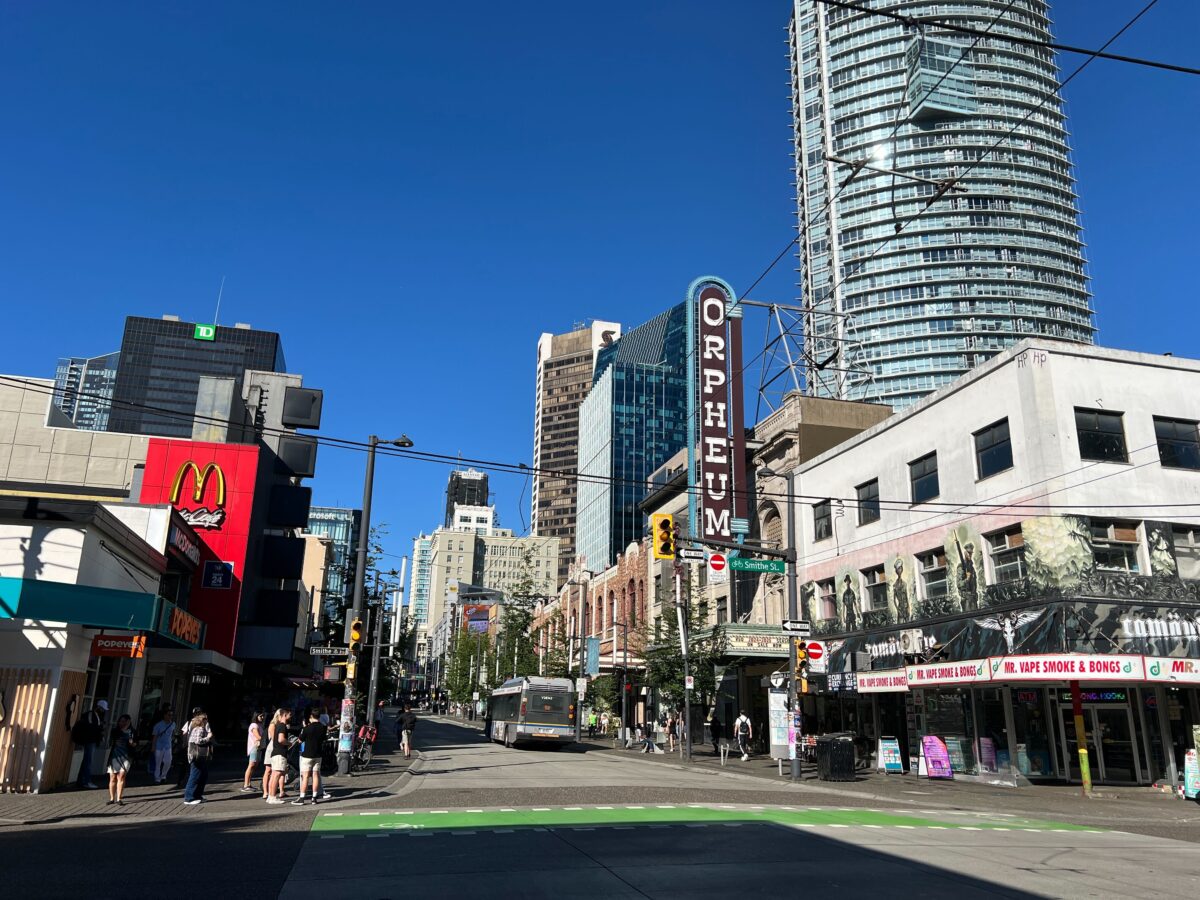
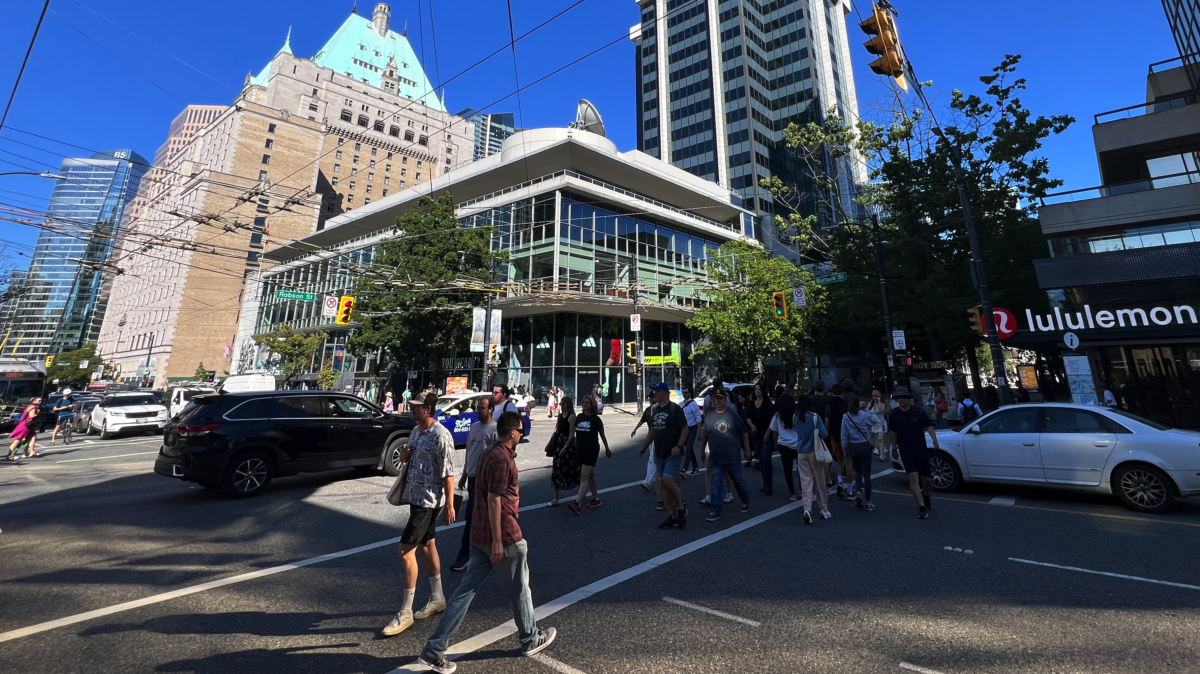
Downtown Vancouver on Granville Street. Photo: Lee Rivett.800 Robson Plaza and šxʷƛ̓ənəq Xwtl’e7énḵ Square in downtown Vancouver. Photo: Lee Rivett.
Tourism is back too.
“The city is vibrant. The cruise ships are back. The weather’s improved. Overall I think everything is going as well as it could for Vancouver right now,” added Thomas.
“One thing that I’m noticing also one of the trends is while athleisure has always dominated the retail trends for the last few years, I think this is starting to cool off a little bit and we’re starting to see a shift towards the aspirational category, given lots of tourists and activity in the market. It’s their time to shine.
“Demand is still outpacing supply . . . Retail continues to be resilient. Landlords are still expecting growth in leasing activity this year. However, retailers are a little bit more conscious because both operating costs and profitability remain a concern with all these rising costs. So I think it’s safe to assume that the lease rates are starting to stabilize a little bit after accelerating growth over the last few years.”
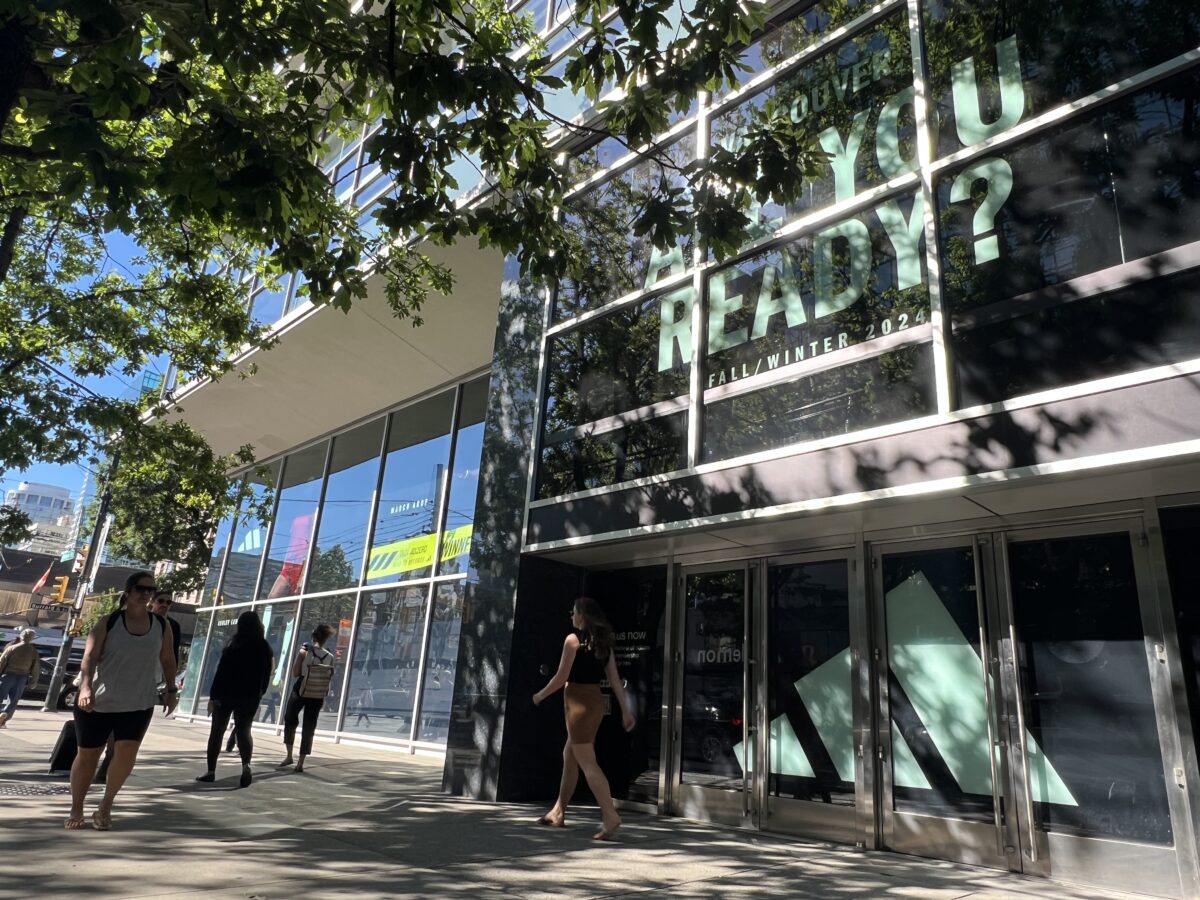
Future Adidas Store in downtown Vancouver. Photo: Lee Rivett.
Check out the latest Yaletown views in downtown Vancouver at the SideSignal Collective.
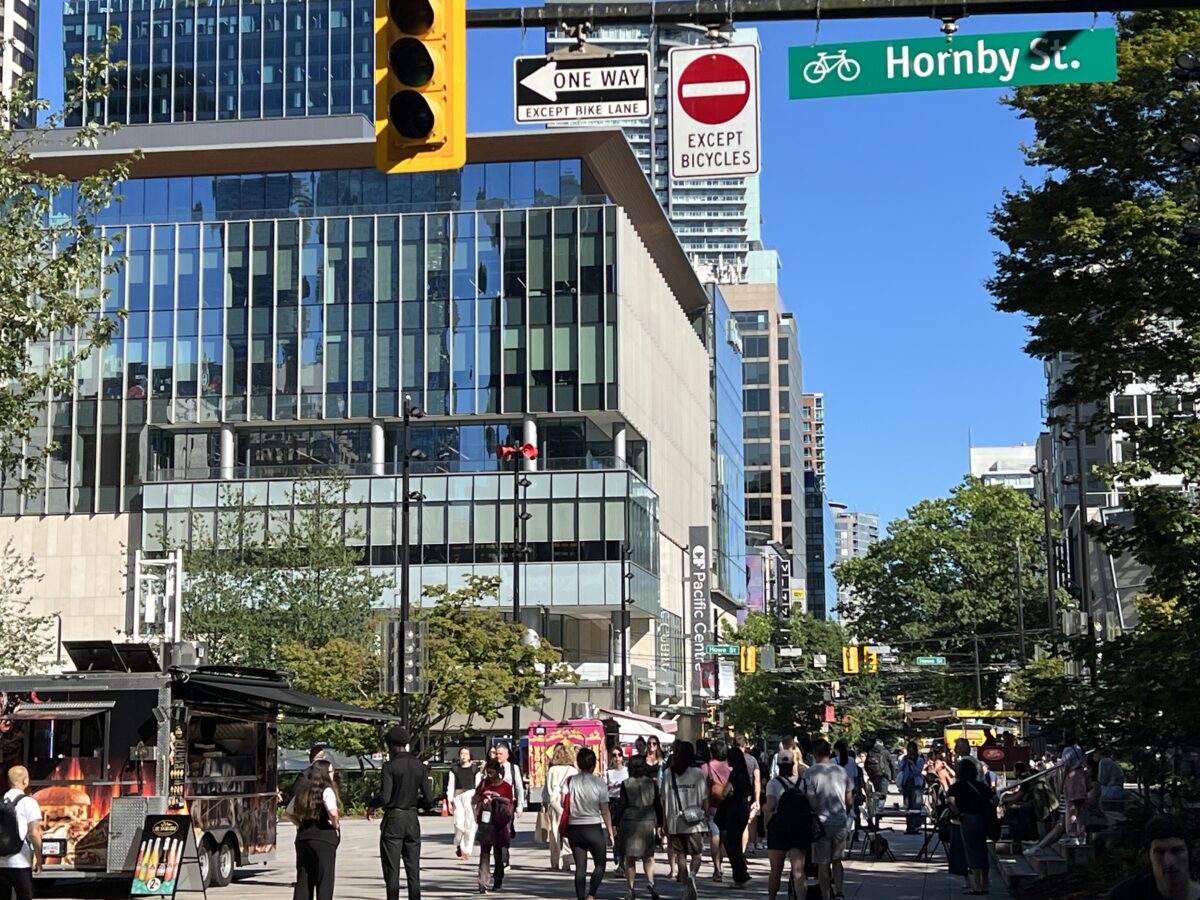
Robson and Burrard Street in downtown Vancouver. Photo: Lee Rivett.
The Vancouver retail leasing market has been thriving, with significant rental growth over the past five years. Demand for retail space has outpaced supply, as evidenced by increased net absorption in 2023, said the JLL report.
“However, leasing volumes have gradually declined since their peak in 2022 as retailers face a softer outlook for consumer spending and a scarcity of premium spaces,” said JLL.
“Vancouver remains an important hub for Canadian-based and international businesses. Retailers in the athletic, outdoor, and fashion sectors – including Adidas, JD Sports, Kit & Ace, and Esprit – have made expansion announcements. Sustained demand has driven rental growth, but more recently inflation and rising property taxes have also been contributing factors, as landlords pass these additional costs on to tenants.
“Construction activity has focused on the redevelopment of malls. The 1.2 million square foot Oakridge Park is scheduled for completion in spring 2025 and will feature a luxury component and the second Time Out Market in Canada.”
Vancouver Retail Spring 2024 (Image: JLL)
While most space absorption has concentrated in general retail and neighbourhood centres, mixed-use retail spaces should see a significant increase in absorption, said JLL.
“Vancouver’s retail market is performing well, marked by limited availability and surging rents. Sustained demand is prompting retailers to secure leases quickly, and limited new construction activity is expected to keep the market tight,” explained the report.
“Despite the deceleration of retail sales growth and a softer housing sector, Vancouver’s retail market remains in demand due to its fast-recovering downtown area and a flourishing local tech sector. The opening announcements of The Post in the downtown area and Oakridge Park in the suburbs are expected to sustain the market’s momentum.
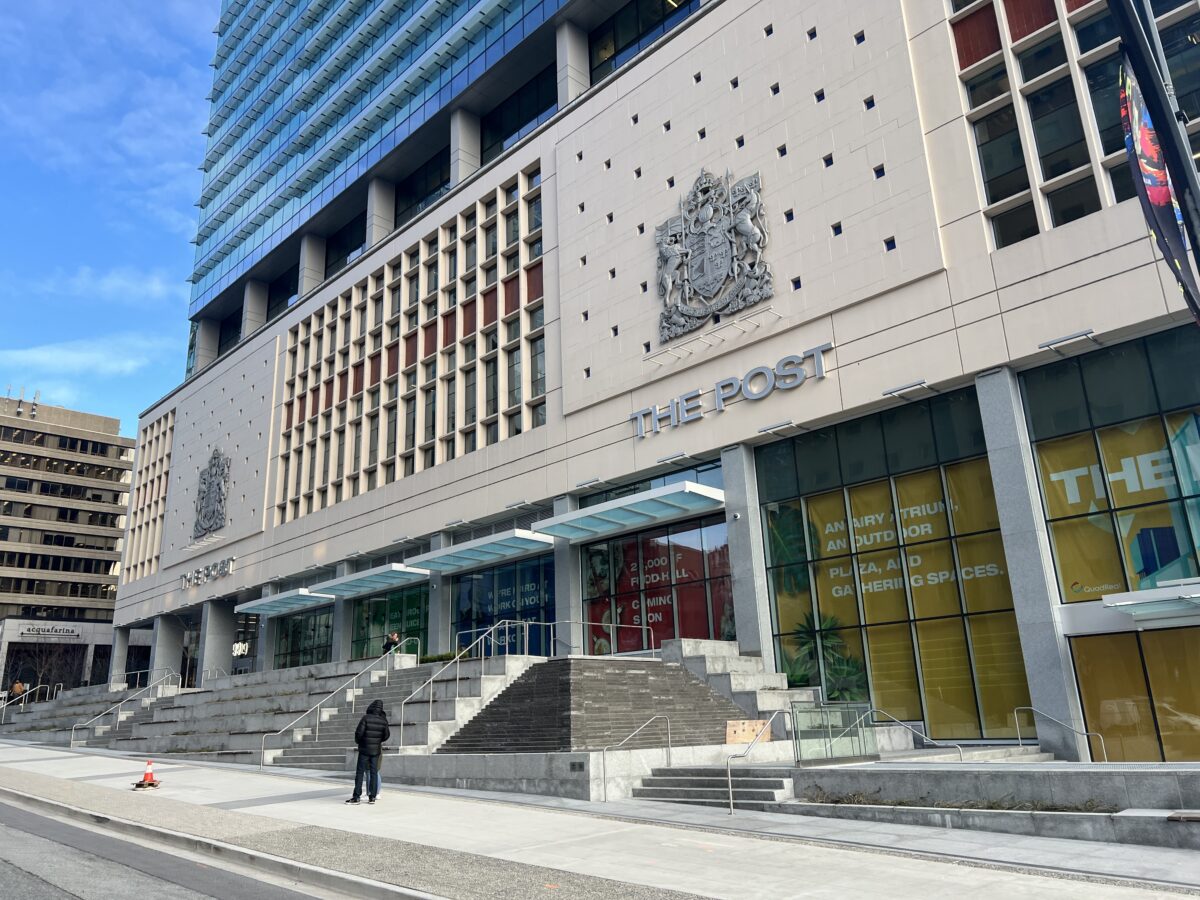
The Post in downtown Vancouver. Photo: Lee Rivett. Oakridge Park in Vancouver under construction. Photo: Lee Rivett.
Looking ahead, the long-term prospects for Vancouver’s retail real estate market remain strong. The city’s high number of immigrants and its role as a hub for international retail concepts contribute to the positive outlook.”
The report said retail sales in Vancouver have shown a downward trend in recent years, although some real growth is predicted for 2024. While home improvement, home furnishings, and jewelry are out of favour, an appetite for electronics, shoes, and clothing has emerged.
“A weaker housing market has softened the economic outlook for Vancouver, but prospects for consumer spending remain positive. The city benefits from an influx of immigrants, a recent boom in the local technology sector, and positive prospects for employment growth,” said JLL.
“Full-service and limited-service restaurants have outperformed retail goods and are expected to continue growing, but at a decelerated rate in the single digits. This suggests that dining experiences remain relatively strong despite an overall retail-sales deceleration.”
By Martin Svensson, Director, Retail Sales at Pinterest Canada
While summer sales sizzle, savvy marketers are already setting their sights on the holidays. That’s because consumers — especially Pinterest users — are already thinking about decking the halls.
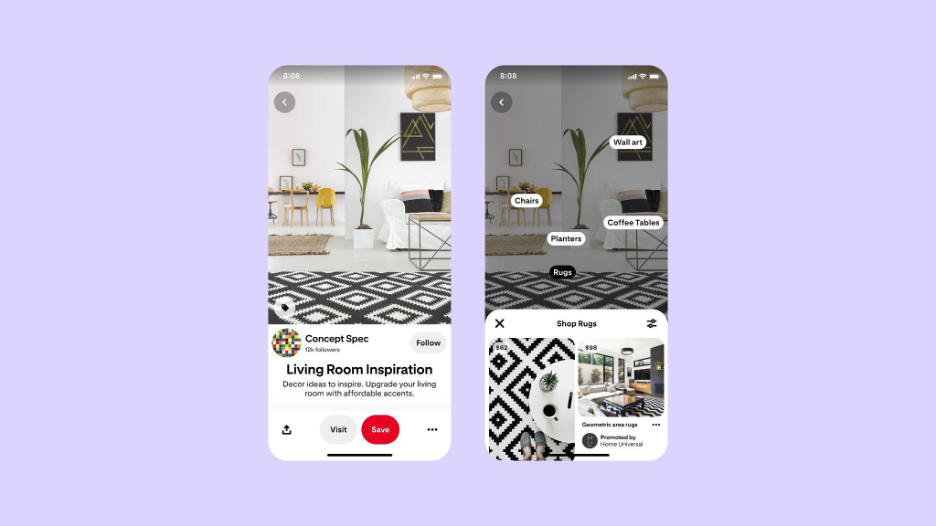
Many people see Pinterest as the central hub to all their holiday plans. Pinterest users come to the platform months before special events and moments to find inspiration, save ideas, and start shopping. With enhanced ad products, performance capabilities, and seamless shopping, brands can connect with this audience who are looking to shop and open to new ideas to drive significant holiday sales. Because Pinterest isn’t just a platform for inspiration; it’s where holiday shopping begins.
Performance on Pinterest
Pinterest’s ROI for marketers stems from its user bases’ unique mindset and their shopping behaviours. Pinterest users aren’t just avid planners. They also spend significantly more during the holidays — over 40% more than users on other social platforms1. This presents a golden opportunity to connect with high-intent shoppers with disposable income who are looking for products to purchase.
Since launching new performance ad tools, Pinterest saw a 50% year-over-year increase in clicks on and saves of buyable items2 which indicating more than ever that users aren’t just browsing. They’re actively making purchase decisions, making Pinterest a prime target for effective holiday marketing.
Success stories — from inspiration to checkout
From in-store to ecommerce, last holiday season many brands witnessed Pinterest’s effectiveness in turning inspiration into action. Since Pinterest users are planners, advertisers are finding the most success with extended campaigns that start early and run through the holiday season. For example, Toys“R”Us Canada kicked off their Pinterest holiday campaign early in 2023, to get a head start on reaching holiday shoppers on Pinterest. The result? An increase in online sales and a 2x increase in in-store visits—suggesting Pinterest’s ability to turn digital ads into foot traffic3.
Another holiday success story is Urban Outfitters, which took the opportunity in 2023 to curate a holiday shopping experience on Pinterest. Showcasing their “stocking stuffers” led to a curated part of the brand’s online gift shop. And targeted fashion ads transformed the platform into a virtual department store window, enticing users to explore a holiday fashion collection that Urban Outfitters had put together. The results were strong: They saw a 2.4x increase in outbound clicks and a 57% decrease in cost per click4.
What works best on Pinterest
Pinterest’s magic lies in its ability to connect inspiration and action, creating a seamless path to purchase. By “nudging” users down the funnel with relevant ads that feel like helpful suggestions, Pinterest transforms the start of an idea into a tangible buying decision.
Pinterest has an ability to personalize each user’s experience, ensuring that users are consistently presented with items that align with their interests. This tailored experience guides shoppers from initial discovery (“Ooh, I love that look!”) to adding items to their cart with ease, making it a powerful tool for driving holiday sales.
Pinterest means performance
But it’s not just about inspiration. Pinterest is a powerhouse for performance marketing, and the numbers prove it. A recent study revealed that weekly Pinterest users rank it as the #1 most helpful platform for planning their 2024 winter holidays, with over 93% claiming it’s nearly twice as helpful as other sites and apps for holiday decision-making. This is not by accident. Pinterest has heavily invested in expanding its performance toolkit, empowering businesses to drive conversions and measure results with precision. Key features like the Pinterest Conversions API, direct links, Mobile deep links, and enhanced campaign tracking have yielded impressive results for advertisers, like a 28% increase in conversions and up to a 96% increase in traffic for its advertisers5.
If you’re looking to elevate your holiday marketing strategy, Pinterest could be the answer. The platform’s proven ability to drive sales, reach new customers, and outperform the competition is backed by data. To get started, explore the Pinterest Holiday Hub – your one-stop shop for resources, insights, and best practices to maximize your holiday campaigns.
Martin Svensson is a director of sales at Pinterest Canada leading the retail vertical. Prior to Pinterest, Martin spent 10 years at Google working on a mix of media sales teams. Before Google, Martin led an ecommerce startup, where he learned first-hand the challenges retail leaders face. Originally from Malmo, Sweden, Martin now calls Toronto home.
(1) Talkshoppe, US, 2024 Winter Holidays, January 2024, study commissioned by Pinterest, Winter holiday household decision makers with holiday purchases, Weekly Pinterest users (compared to weekly users of other social platforms).
(2) Pinterest Internal Data as of June 2023 | Note: Comparing Q2’23 vs. Q2’22.
(3) Foursquare x Pinterest, Toys“R”Us, Q4 Holiday Foot Traffic Lift Study Results (Dec 2023), Canada
(4) Pinterest internal data, US, 2023.
(5) Pinterest internal analysis, Global, Sep 2022, advertisers adopting the API for Conversions compared to using only the Pinterest tag.
*****
Partner content. To work with Retail Insider, contact Craig Patterson at advertising@retail-insider.com
Retail Insider is streamlining its Canadian retail news from around the web to include a handful of top news stories that can be viewed quickly during the day. Here are the top stories from the past 24 hours.
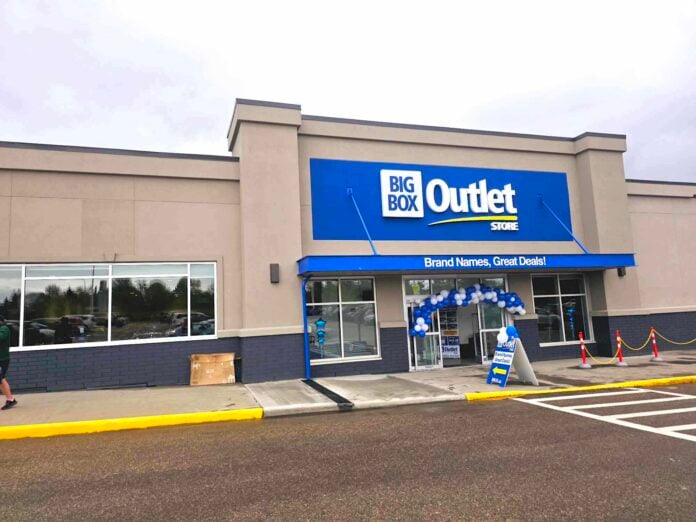
Big Box Outlet store at Sherwood Park Mall in Sherwood Park, Alberta. Photo: Christa Patterson
Big Box Outlet Store, Western Canada’s leading liquidator, is continuing to expand its retail footprint.
Jeff Driedger
Jeff Driedger, President of the company, said the brand just opened its 19th location in Sherwood Park, Alberta.
“We have our 20th under construction right now in Lethbridge. It will be opening later in the summer,” he said.
“In just over a year, we’ve gone from 11 to soon to be 20 locations.”
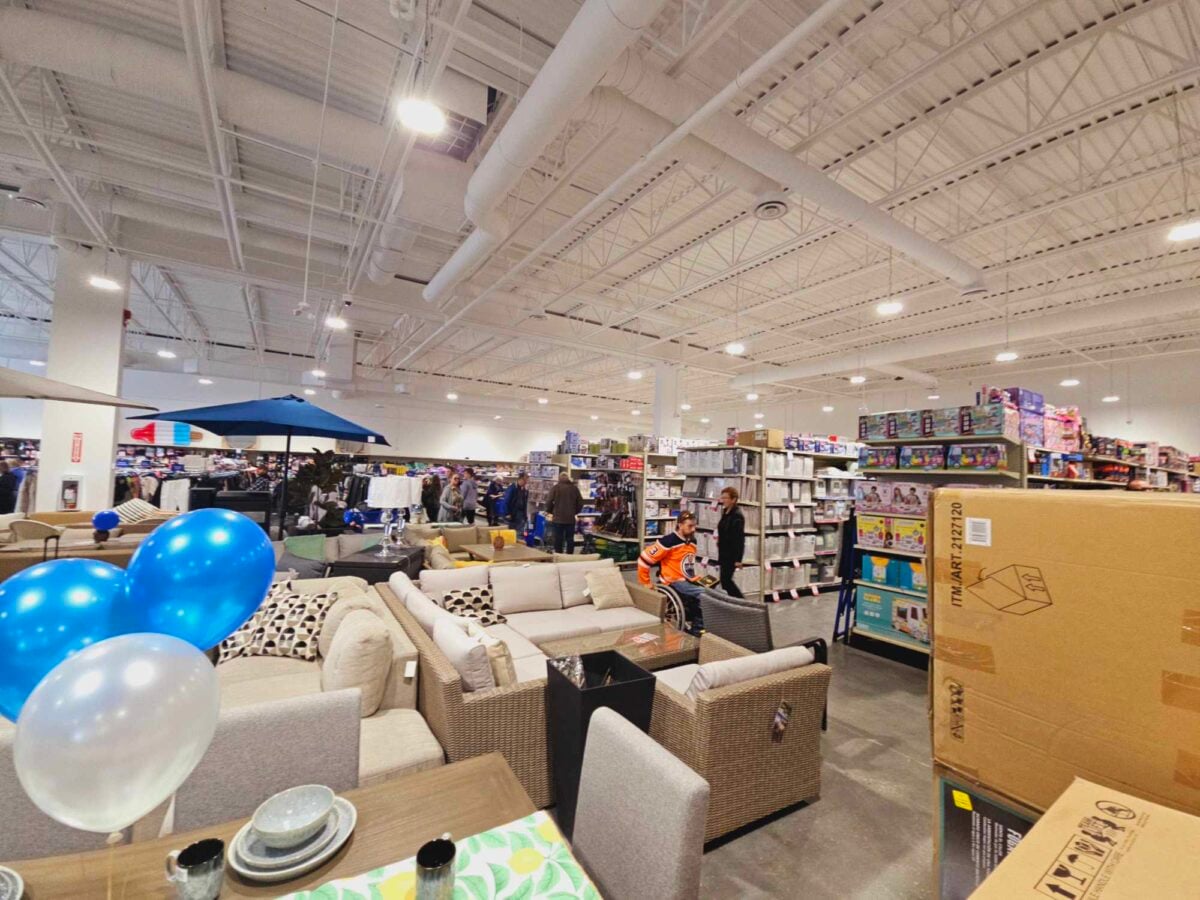
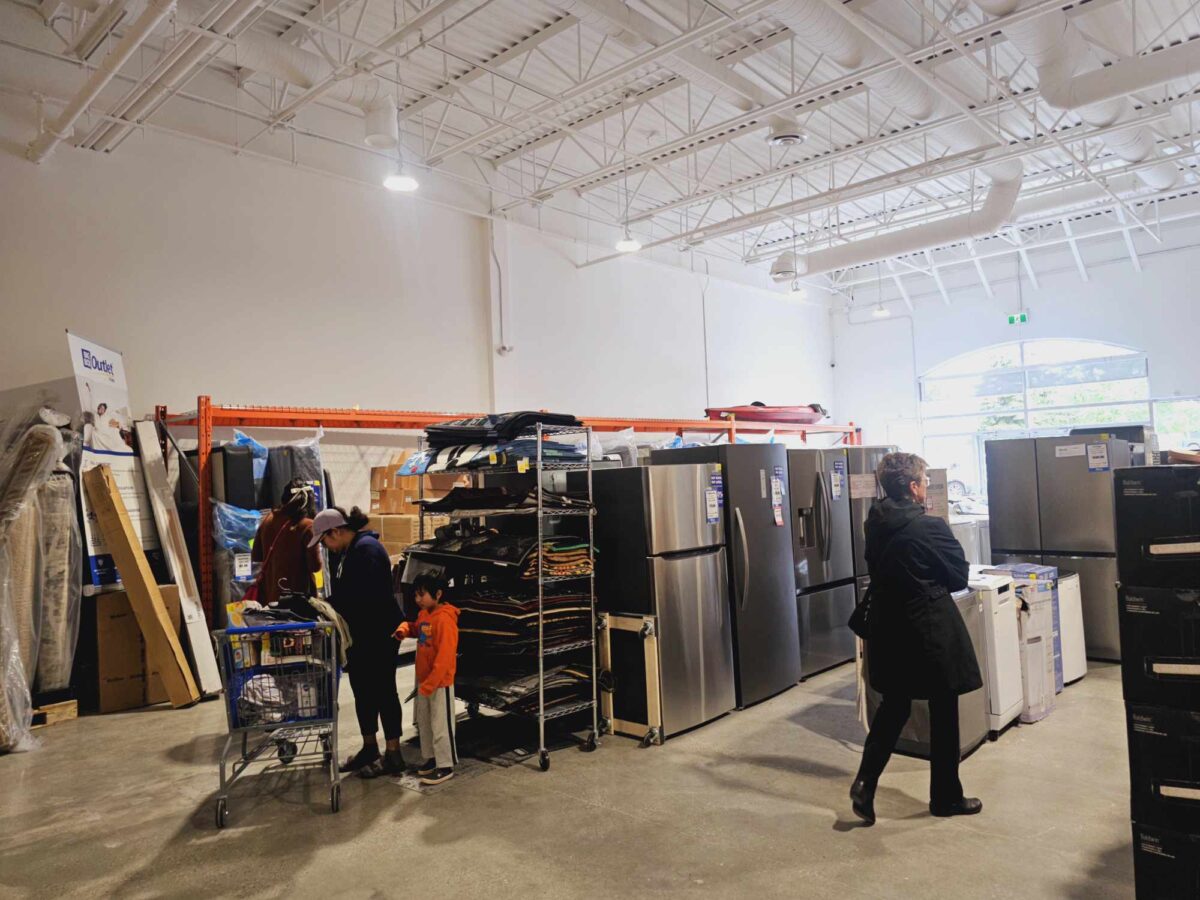
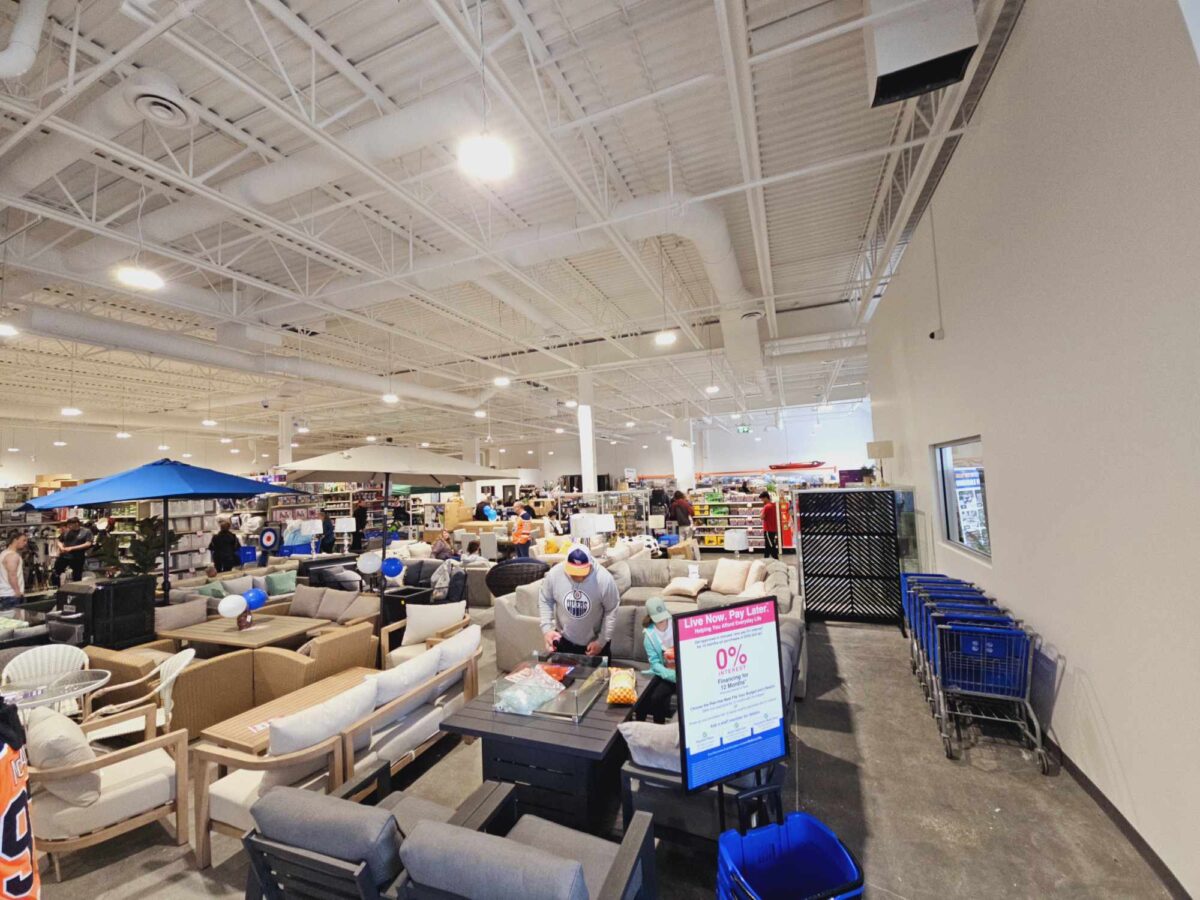
Inside the Big Box Outlet store at Sherwood Park Mall in Sherwood Park, Alberta. Photo: Christa Patterson
All locations are in Alberta and British Columbia.
“A lot of those expansion locations have been in Alberta. We’ve opened five new locations in Alberta. We’ve been opening stores in BC as well. We opened three new locations in BC during that time.
“We’re talking to a few landlords. We’ll see what happens. We want to continue to grow. We think eventually there’s room in the market for 40 locations for us in Western Canada and eventually we want to be a national player.”
The company has its head office in Abbotsford, BC.
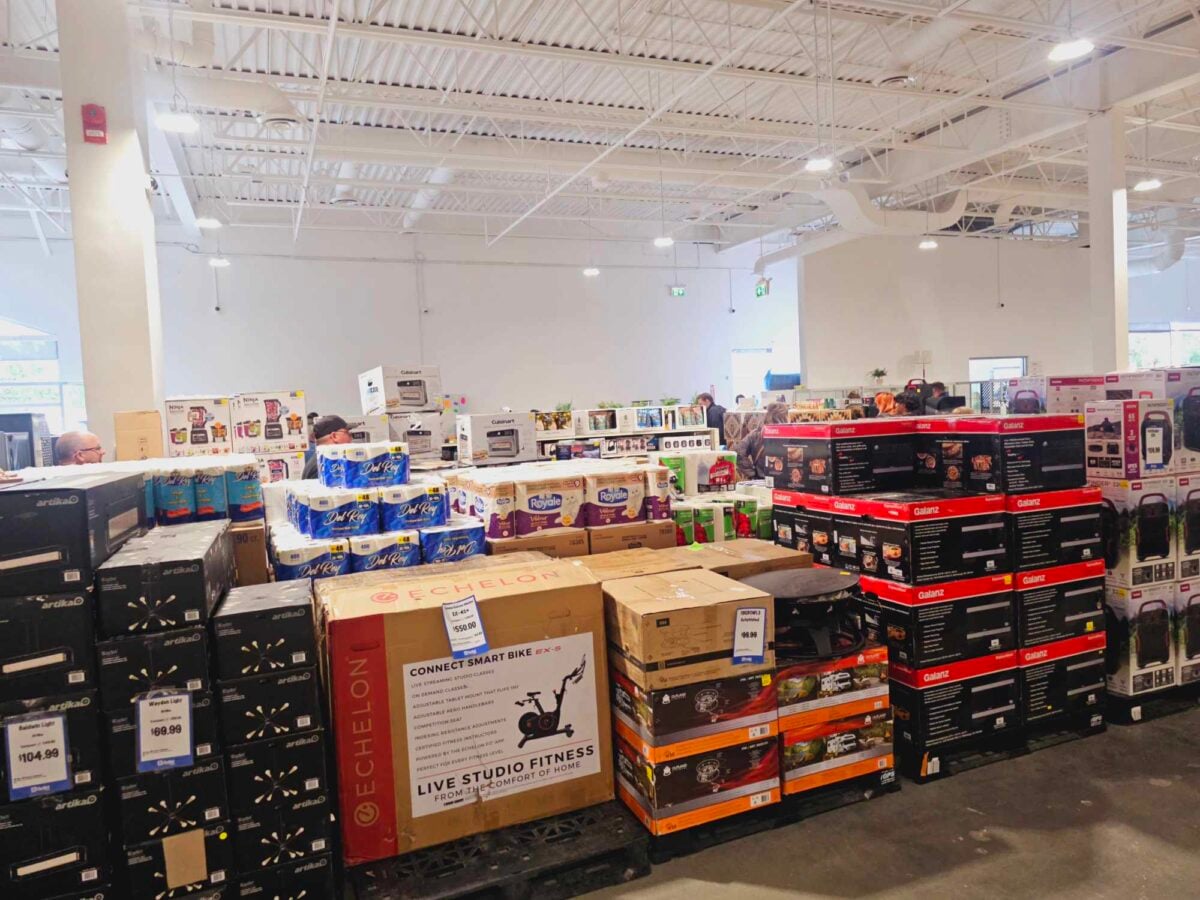
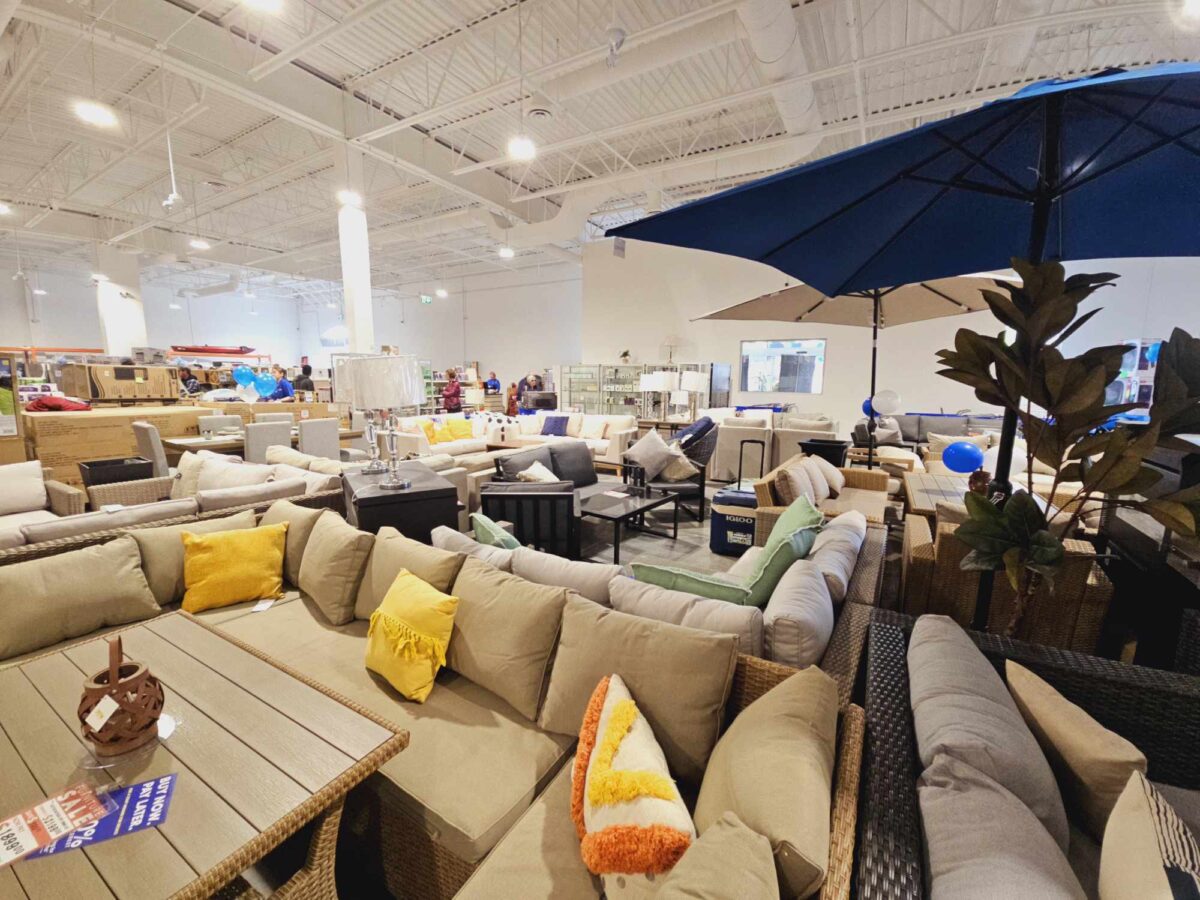
Inside the Big Box Outlet store at Sherwood Park Mall in Sherwood Park, Alberta. Photo: Christa Patterson Inside the Big Box Outlet store at Sherwood Park Mall in Sherwood Park, Alberta. Photo: Christa Patterson
The typical size of a store is 15,000 to 20,000 square feet. Some stores are a little bit smaller and some a little bit larger.
The first store opened 39 years ago.
“We grew slowly for a bit and have taken off in the last year or so,” said Driedger.
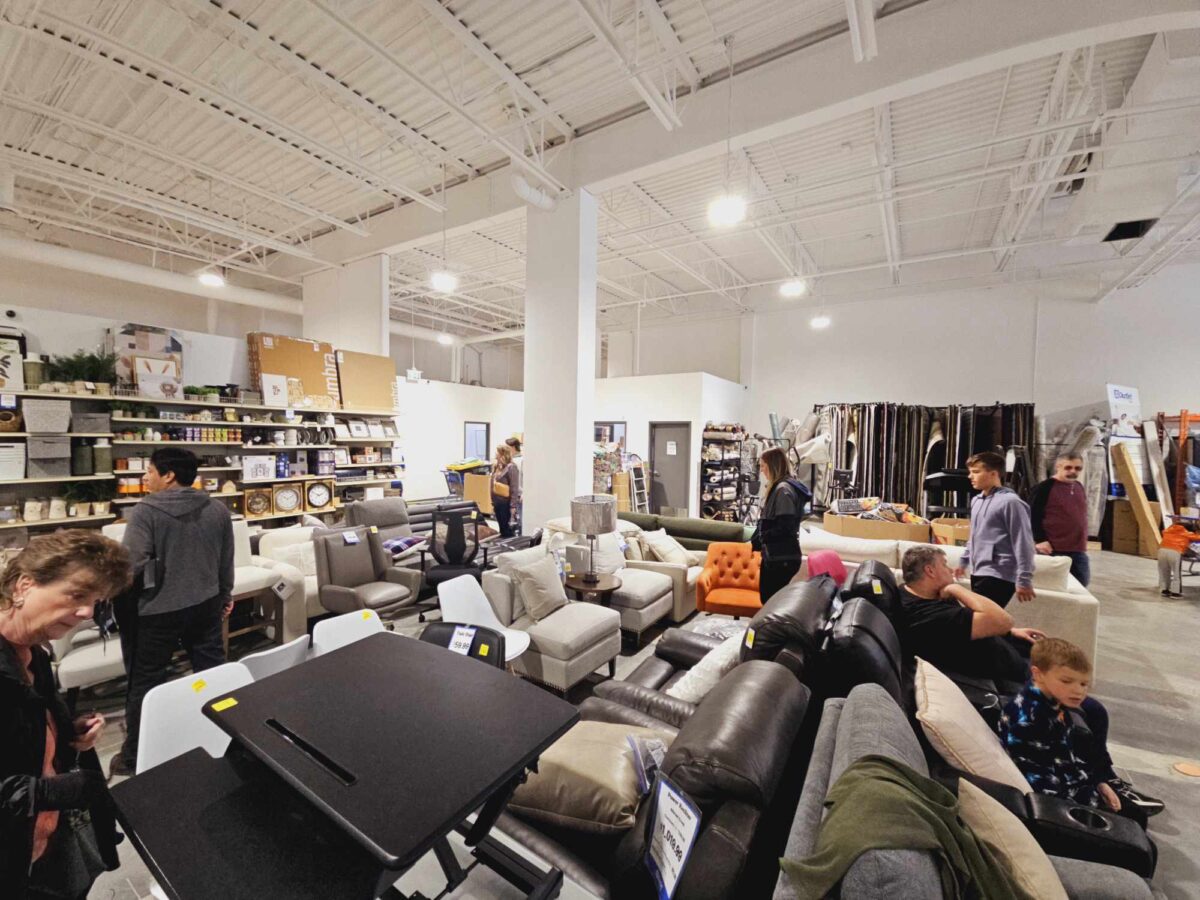
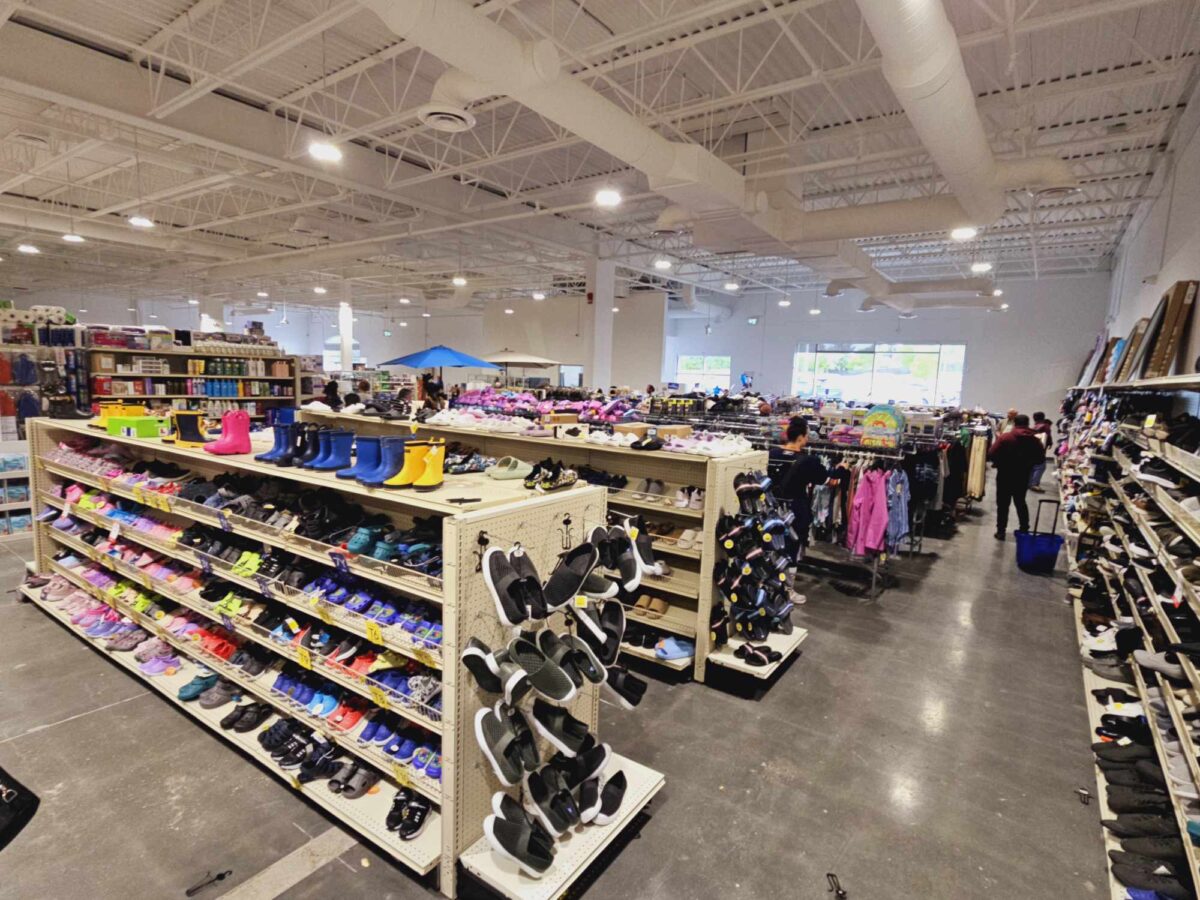
Big Box Outlet Store offers a wide range of products from around the world, including new, manufacturer-direct, seasonal closeout, refurbished, and open-box items. Its selection includes electronics, fashion, outdoor gear, hardware, kitchenware, appliances, furniture, and even groceries.
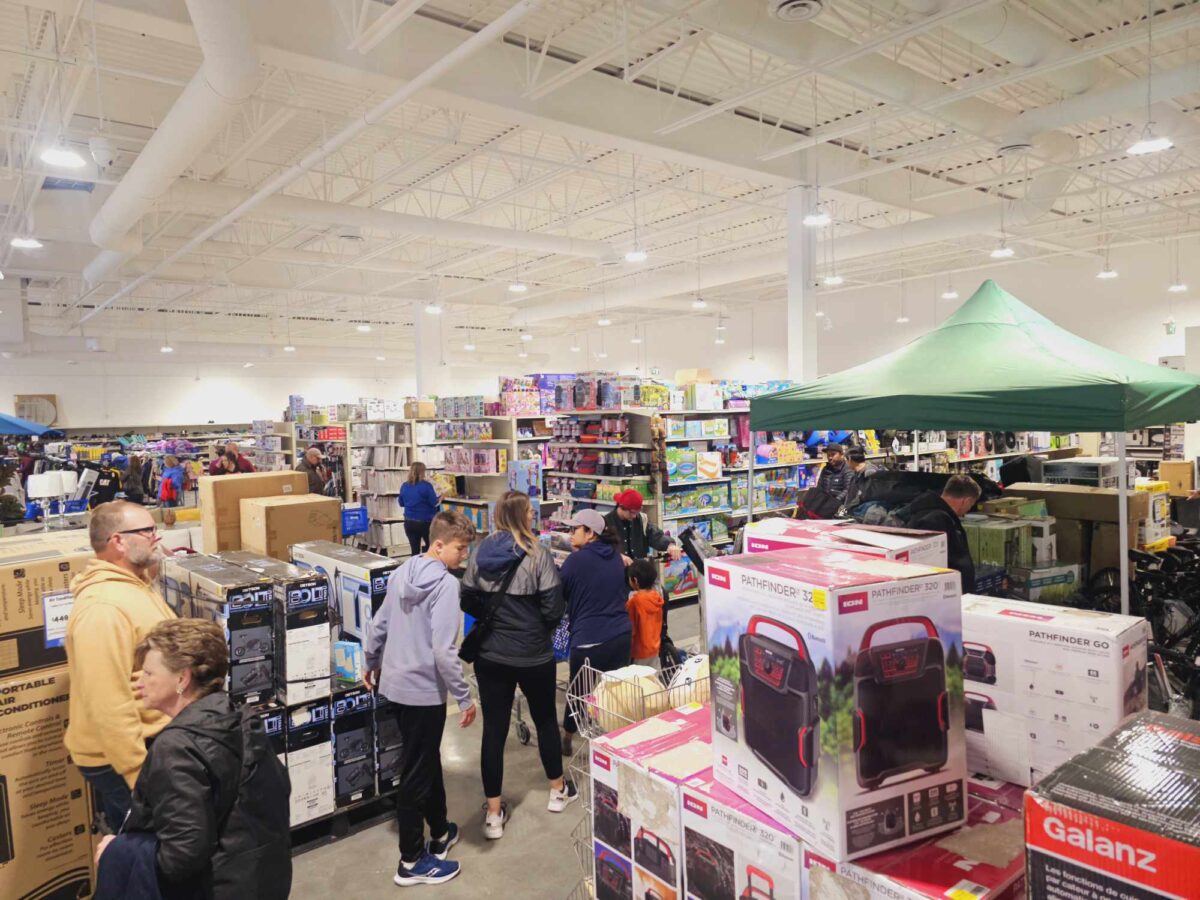
Inside the Big Box Outlet store at Sherwood Park Mall in Sherwood Park, Alberta. Photo: Christa Patterson Inside the Big Box Outlet store at Sherwood Park Mall in Sherwood Park, Alberta. Photo: Christa Patterson
Formally known as MTF Price Matters, Big Box Outlet Store has been family-owned by the Funk’s since 1985. The core of the brand has kept focus ever since on finding brand name items through its reverse logistics purchasing channels, in order to sell products to customers at heavily discounted prices.
“Our mission is to help people afford everyday life,” said Driedger. “And we think particularly in this economic cycle people’s budgets are stretched, they’ve seen inflationary pricing have a big impact on their pocketbooks and they’re looking to save some money. And we’re part of that solution. We really do believe in that mission and that is what kind of excites us to grow our company.
“Generally speaking we do better in suburban locations than urban locations. Part of that is the size of the location that we’re looking for as well. They tend to be more prevalent in suburban locations but a lot of our customer base would be families and so in those areas where families tend to live, those suburban areas. But we serve a pretty diverse customer group overall.
“Sometimes it’s difficult for people to understand what it is that we do because we’re a discounter but you will find brands in our stores. So you’re not necessarily what you might see in a Dollar Store or you might see in a liquidator. You really will find brand name products at better prices. We sell almost 50 categories, everything from grocery to furniture to large appliances, outdoor recreation gear. If you look at our assortment, it’s really quite unique.”
Inside the Big Box Outlet store at Sherwood Park Mall in Sherwood Park, Alberta. Photo: Christa Patterson Inside the Big Box Outlet store at Sherwood Park Mall in Sherwood Park, Alberta. Photo: Christa Patterson Inside the Big Box Outlet store at Sherwood Park Mall in Sherwood Park, Alberta. Photo: Christa Patterson