Home Blog Page 649

Anatomy of a Leader: Dan Kelly, President and CEO, Canadian Federation of Independent Business (CFIB)

Anatomy of a Leader: Dan Kelly, President and CEO, Canadian Federation of Independent Business (CFIB)

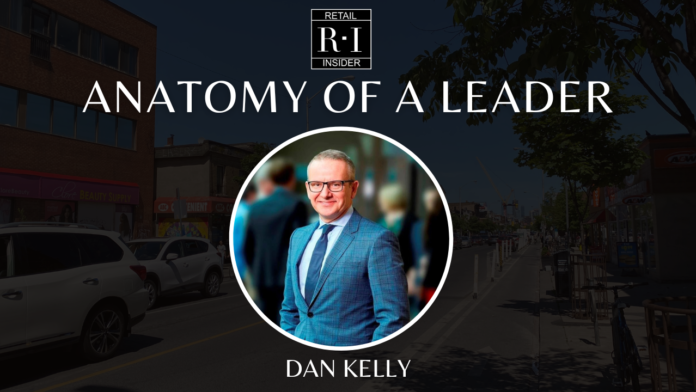
As President and CEO of the Canadian Federation of Independent Business, Dan Kelly often finds himself in the media spotlight commenting on all sorts of issues relating to the small business community in the country.

He’s probably done 5,000 to 10,000 media interviews over the course of his 30-year career with the CFIB. During the pandemic alone, he was averaging about 2,000 interviews a year. 

“I recall those early days, even though I was working from home, I was probably doing interviews, back to back interviews, almost the entire day just trying to explain to the public just how serious the pandemic restrictions were imposing costs on small business,” said Kelly. 
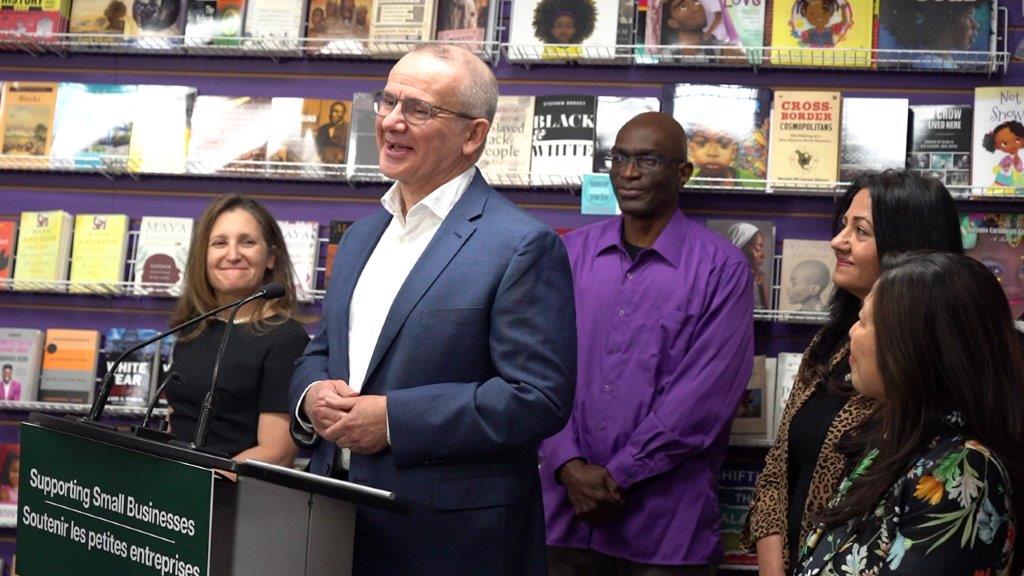
Image: Dan Kelly

But being in the spotlight can be challenging.

“You do have to develop a thick skin. And I will say when I started this job I sure didn’t have one. I took it all very, very seriously. One of the things that helps though is I take my job seriously but don’t take myself seriously,” he said. “So if anyone looks at my Twitter or X feed, they will see just loads and loads of attacks, sometimes on small business, sometimes on CFIB and occasionally on me.

“I don’t take myself seriously and I think that helps. During the pandemic, I had lots of criticism on both sides of the equation . . . I had just some vicious, vicious comments and those ones I’ve got to admit I try to tune out. Luckily, my son who is now 15, he laughs them off whenever I get a death threat or anything else. That does happen . . . I had a couple of death threats myself and those don’t feel good.”

Kelly was born in Winnipeg and lived in Manitoba for the first 30 years of his life. He has a Bachelor of Commerce degree from the University of Manitoba.

“I had always hoped that I would have a career in the foreign service at one point or work internationally. Right after university I went and lived in Japan for a year teaching English, but with a goal of trying to get some international experience and that’s proven to be useful as I’ve been used by the Government of Canada a few times to promote the free trade agreements that we have with various countries. So I’ve often given speeches now over the last several years especially around the Canada/EU agreement. I was a fairly regular speaker overseas to promote the benefits of that both to business in general and to small and medium sized companies specifically,” he said.
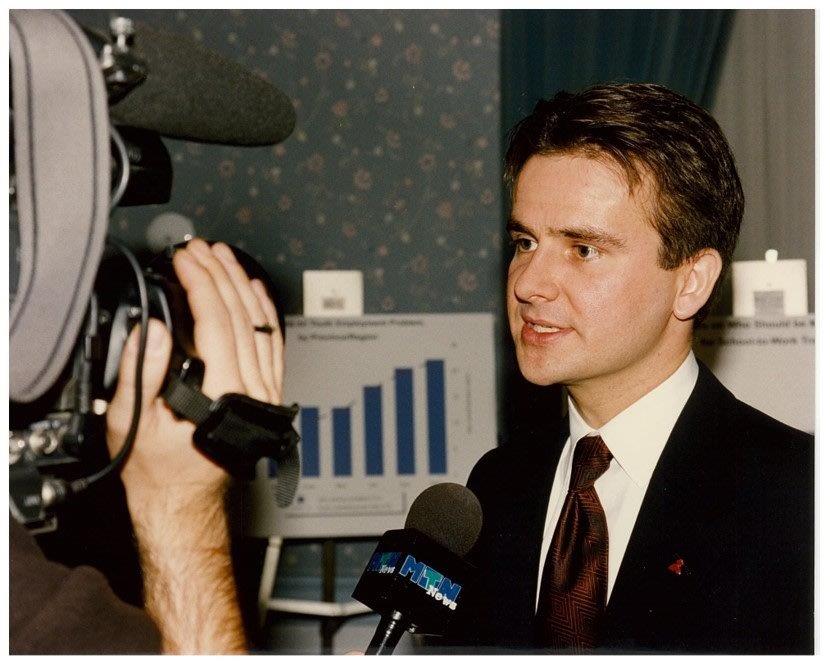
Image: Dan Kelly

During university Kelly was heavily involved in politics which was right around the time of the free trade debate. After writing a couple of papers about free trade, he became a believer in the importance of Canada/U.S. free trade. It was a hot debate in the late 1980s with two very distinct sides on that. He got involved in supporting the agreement and the federal election campaign with the free trade debate at the centre.

“So I started to get involved in politics not because of a big desire to get involved in politics but because of a particular issue I felt quite passionate about,” said Kelly. 

After that election campaign, he became involved in a provincial election.

“It was really at that stage that my political views on the importance of business and having a greater voice really began,” said Kelly. “Right after our provincial election I was just finishing up university I was offered a job to go and work for the Premier of Manitoba (Gary Filmon). I thought that was a pretty cool opportunity, one that I shouldn’t pass up.”

Kelly worked as a policy analyst/advisor for about three years in the Premier’s office. At that stage, he began to see the inner workings of government but also the importance of connecting to the business community. At that time he had some meetings with the CFIB while he was working within the Premier’s office.
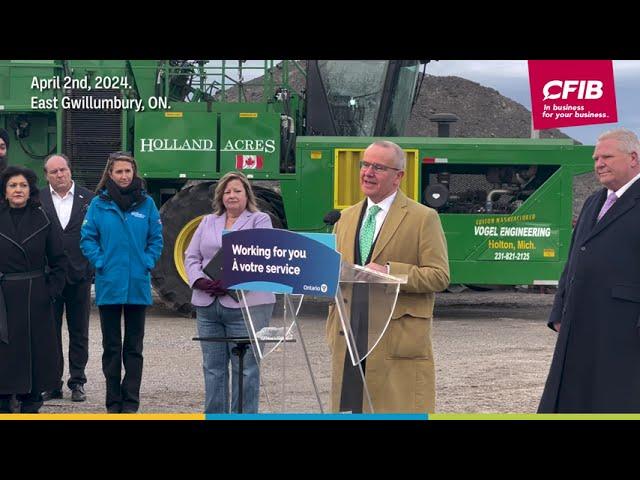
Image: Dan Kelly / CFIB

That connection eventually led to a job with the CFIB, starting in a junior position as a policy analyst in the Winnipeg office. He has been with the CFIB for the past 30 years. In 2012, after a variety of roles and experiences with the organization, he became its President. Today, the organization has close to 100,000 members across the country. The organization has 400 staff which makes it one of the largest not for profit advocacy groups in Canada.

“One of the reasons we have so many long serving staff at the Federation is because it is one of those jobs where you can go home every day feeling super proud of what you do, that you’re making a contribution, not just to the well being of the organization to which you work but in the betterment of society. And I truly believe that if we can help small and medium size businesses individually and collectively, making it a little bit easier, a little less complicated or a little bit less expensive in some way, we are not just adding value to that business but we’re adding value for employees and for society more broadly,” explained Kelly.

“Supporting small businesses is such a noble goal . . . That’s really been my life’s work and it’s work that I feel super passionate about, just as passionately about today. We’ve made a lot of positive strides but there still is so much heavy lifting left to do to help support and protect small and medium size businesses across the country.

“This is not the job for the faint of heart. You have to bite your tongue pretty hard. You also have to speak your mind fairly plainly. One of the things I think CFIB does very well is it speaks to power very sincerely. We don’t try to be antagonistic. We try to go into every relationship with every political party, every politician with fresh eyes. But at the same time we will be sharply critical. We will call a spade a spade and go after a minister, go after a party if they’re doing stupid things. But on the same day we can then be there working with a government or a party to support them on files which they’re making good progress.”

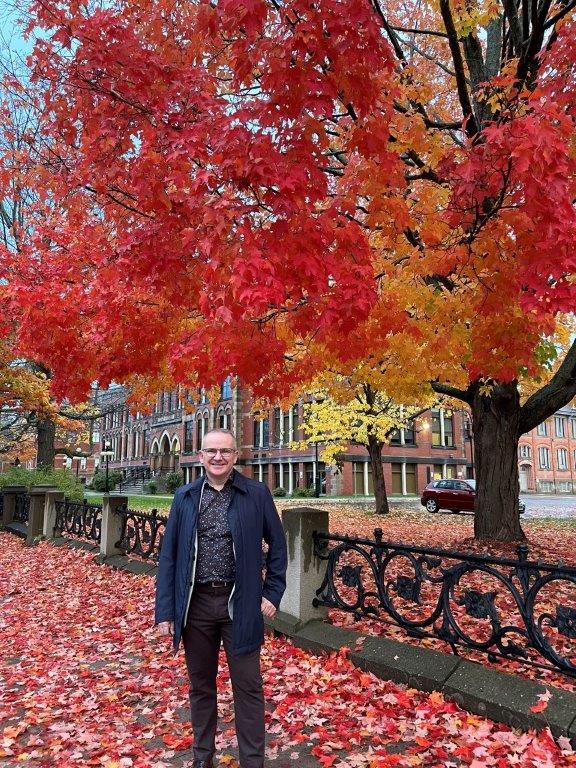
Politics has been part of Kelly’s life for a very long time. He enjoys working with politicians of different political stripes, finding it intellectually stimulating. But one of the things he doesn’t like is when politicians are so locked into their perspective that they reject even a discussion with someone who may not see it the same way as them.

To relax, Kelly spends a lot of time with his son and watching baseball. He enjoys spending time with his family and traveling as well. Kelly has a fairly big property despite the fact that he lives in a densely populated city like Toronto.

“I spend a lot of time in my backyard, tending to my garden, doing all the landscaping and work myself and that is a good stress reliever. In my job right now, there are very few things that I can actually accomplish and put away in a day or two. Whereas you go to work in the yard and you can actually on Saturday afternoon make some headway and actually see some progress in real time. That doesn’t happen in the lobbying world so I do find it satisfying to scratch another itch.”
Nike Flagship to Open at CF Toronto Eaton Centre as Cadillac Fairview Fully Tenants Former Nordstrom Space 

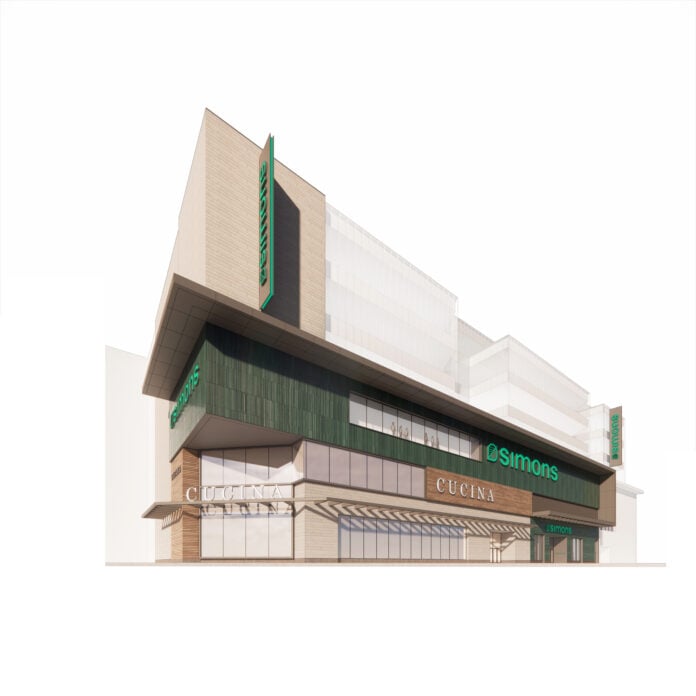
Future La Maison Simons, Eataly and Nike at CF Toronto Eaton Centre. Image supplied

Cadillac Fairview announced that the former Nordstrom space at CF Toronto Eaton Centre in downtown Toronto has been fully leased, after Nordstrom exited the space (and the country) last year. Nike will open a flagship in part of the former Nordstrom space, joining La Maison Simons which was also announced as a tenant this morning, and Eataly which Retail Insider announced last week. 

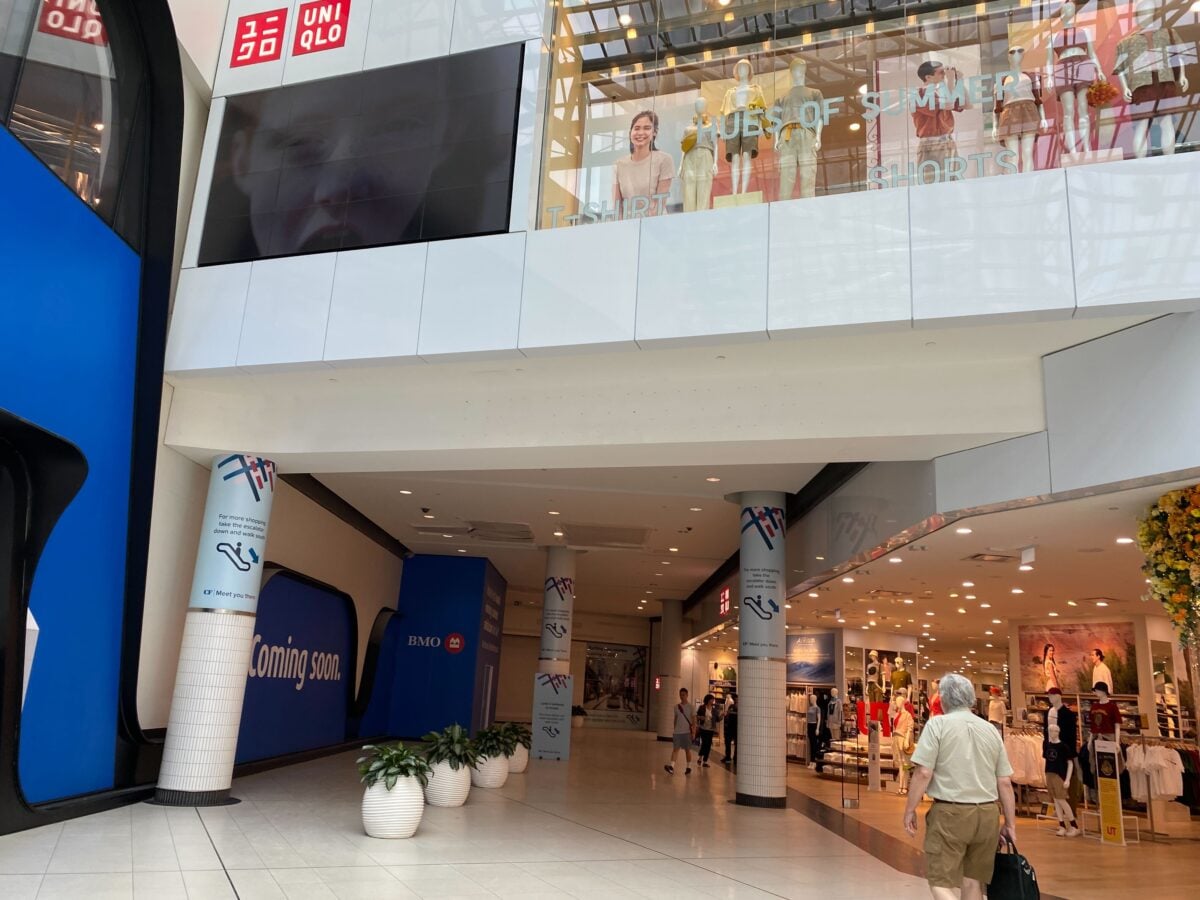
The CF Toronto Eaton Centre Nike store will span 18,000 square feet over two floors, and will be located along a new interior corridor that will be created on the main level of the 213,000 square foot former Nordstrom store. Across the hall, Eataly and La Maison Simons will both have a presence with entrances. 

Nike will have some space on the second floor of the former Nordstrom, along with Eataly and Simons which according to Simons CEO Bernard Leblanc, will have a small presence on that level (Simons will occupy much of the 90,000 square foot third floor of the former Nordstrom store). 

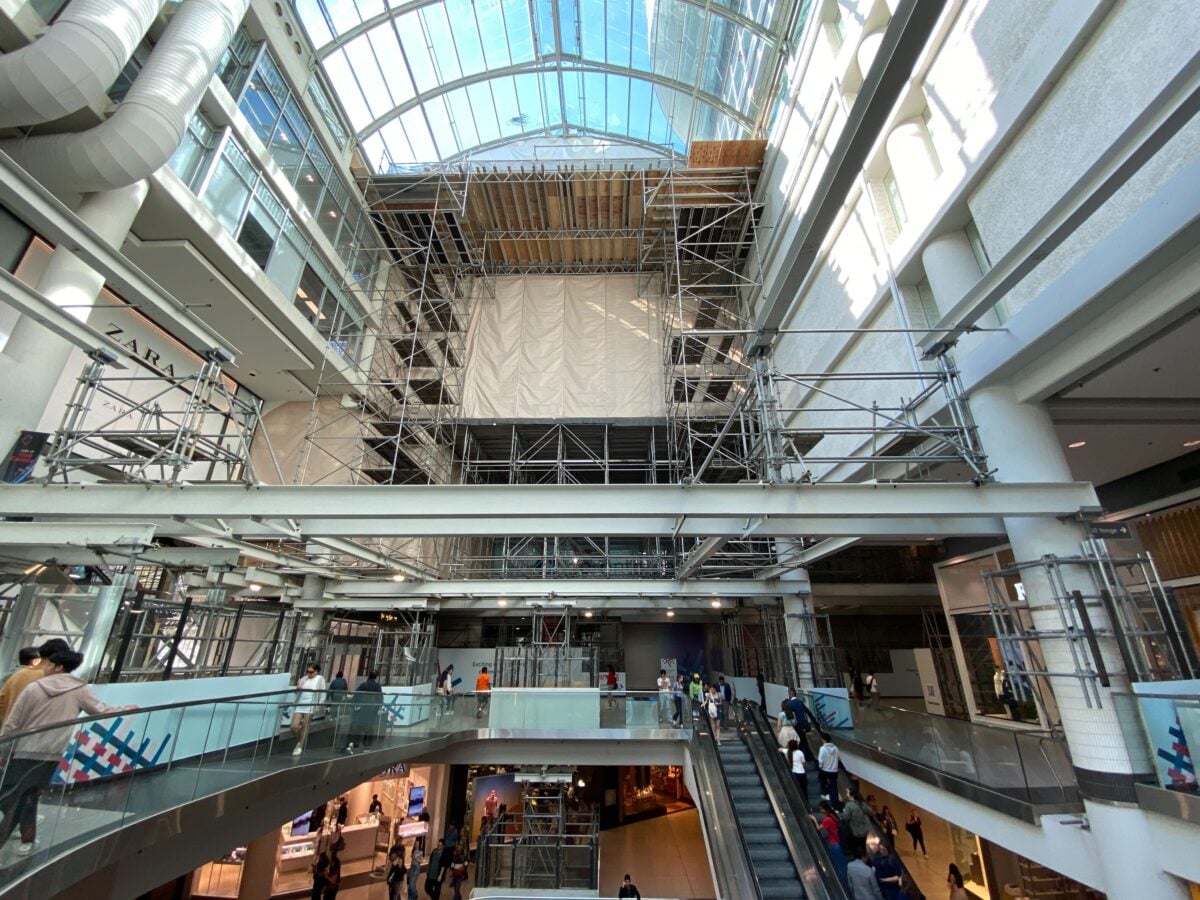
Former north entrance to Nordstrom at CF Toronto Eaton Centre — a new hallway through the main level of Nordstrom will be part of a retail mix that will welcome Nike, La Maison Simons, and Eataly. Photo: Dustin Fuhs
Former south mall entrance to Nordstrom at CF Toronto Eaton Centre — Nike will have a presence to the left of a new hallway, with Eataly to be on the right. Photo: Dustin Fuhs

The flagship Nike store will replace a smaller location at CF Toronto Eaton Centre that opened several years ago on Level 1, which spans 5,370 square feet. Israel-based Fox Group, under its ‘Retailors’ division, is the licensee for Nike in Canada. Retail Insider announced in February of this year that Nike will also be opening a 17,000 two-level storefront at 1 Bloor Street East in downtown Toronto next year. 

As reported last week, Eataly’s location at CF Toronto Eaton Centre will open next year, and will occupy part of the former Nordstrom space in the mall. According to renderings, Eataly will have a presence at street level facing Yonge Street, as well as on the second level of the former Nordstrom. Eataly has not yet released details on the size of its CF Toronto Eaton Centre location though on Thursday morning, sources were saying it will be about 25,000 square feet — somewhat smaller than the 55,000 location at the Manulife Centre that opened in November of 2019.

“At Cadillac Fairview, nothing is more important than creating a world-class shopping experience for our guests and we’re thrilled to welcome these exciting  clients to our flagship shopping centre in the heart of downtown Toronto,” said Sal Iacono, CEO at Cadillac Fairview in a statement. 

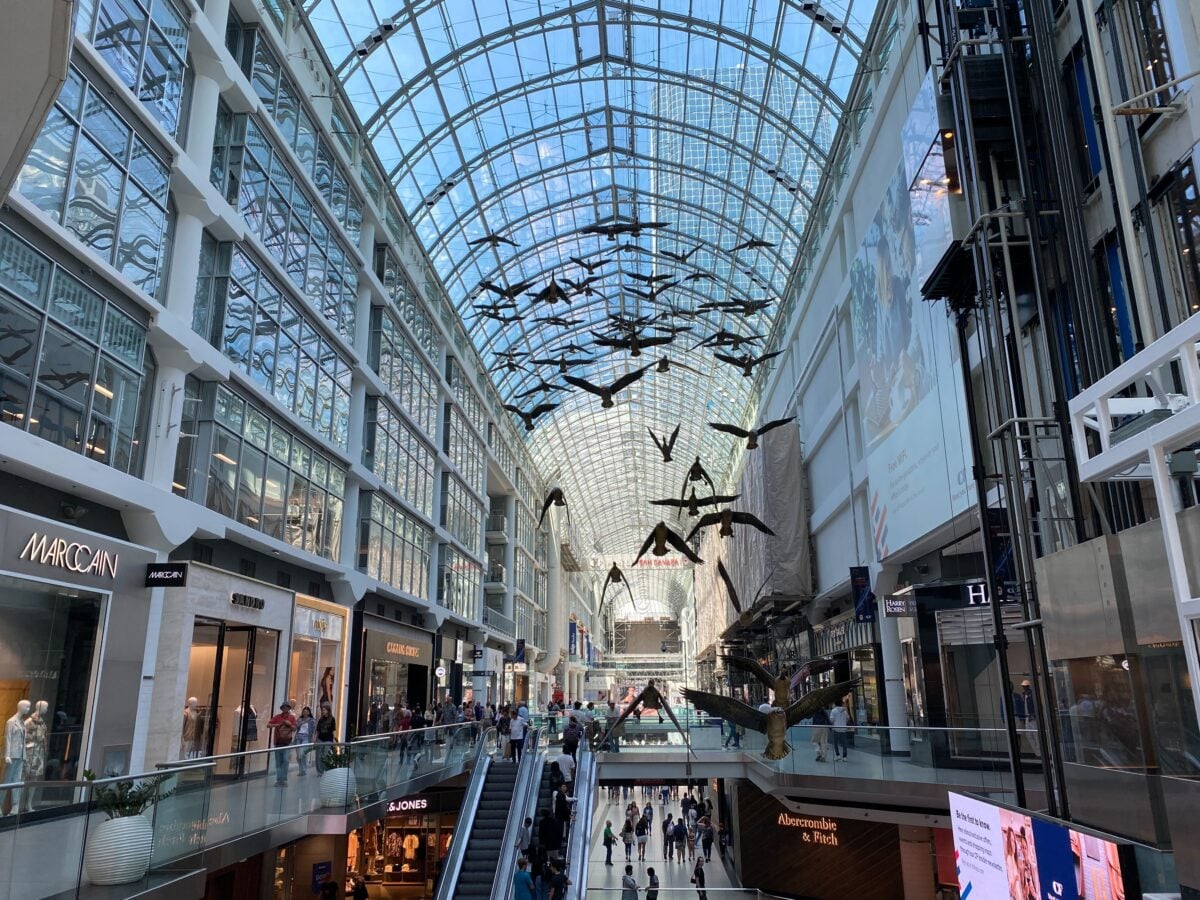
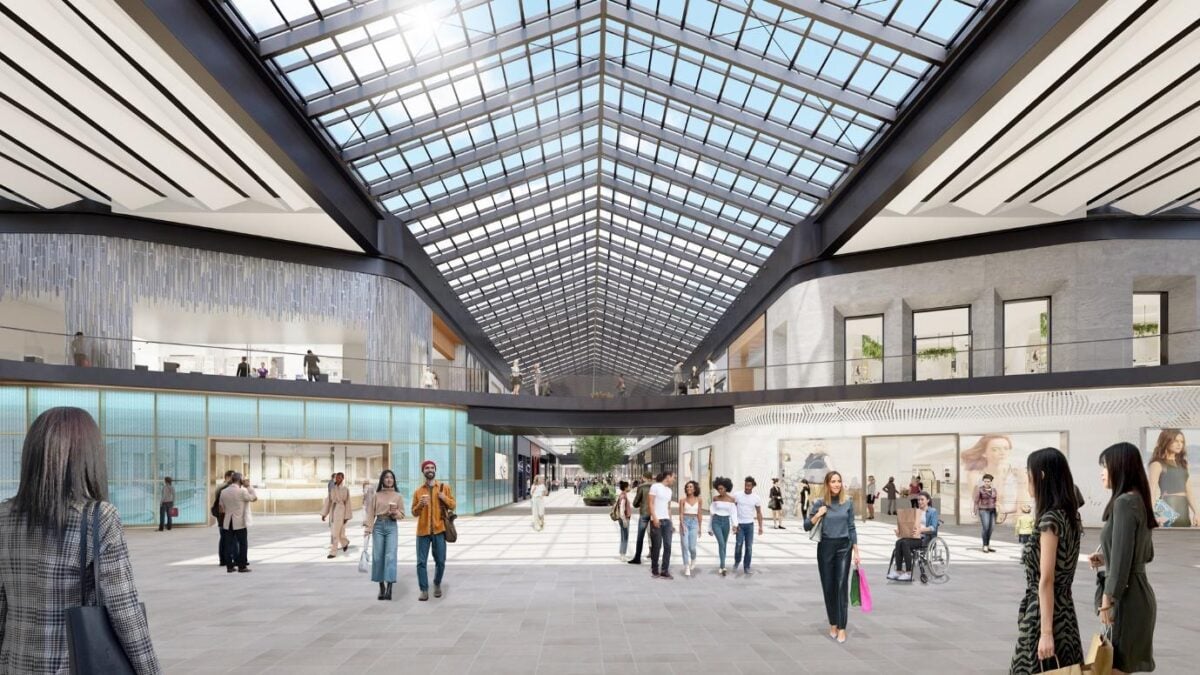
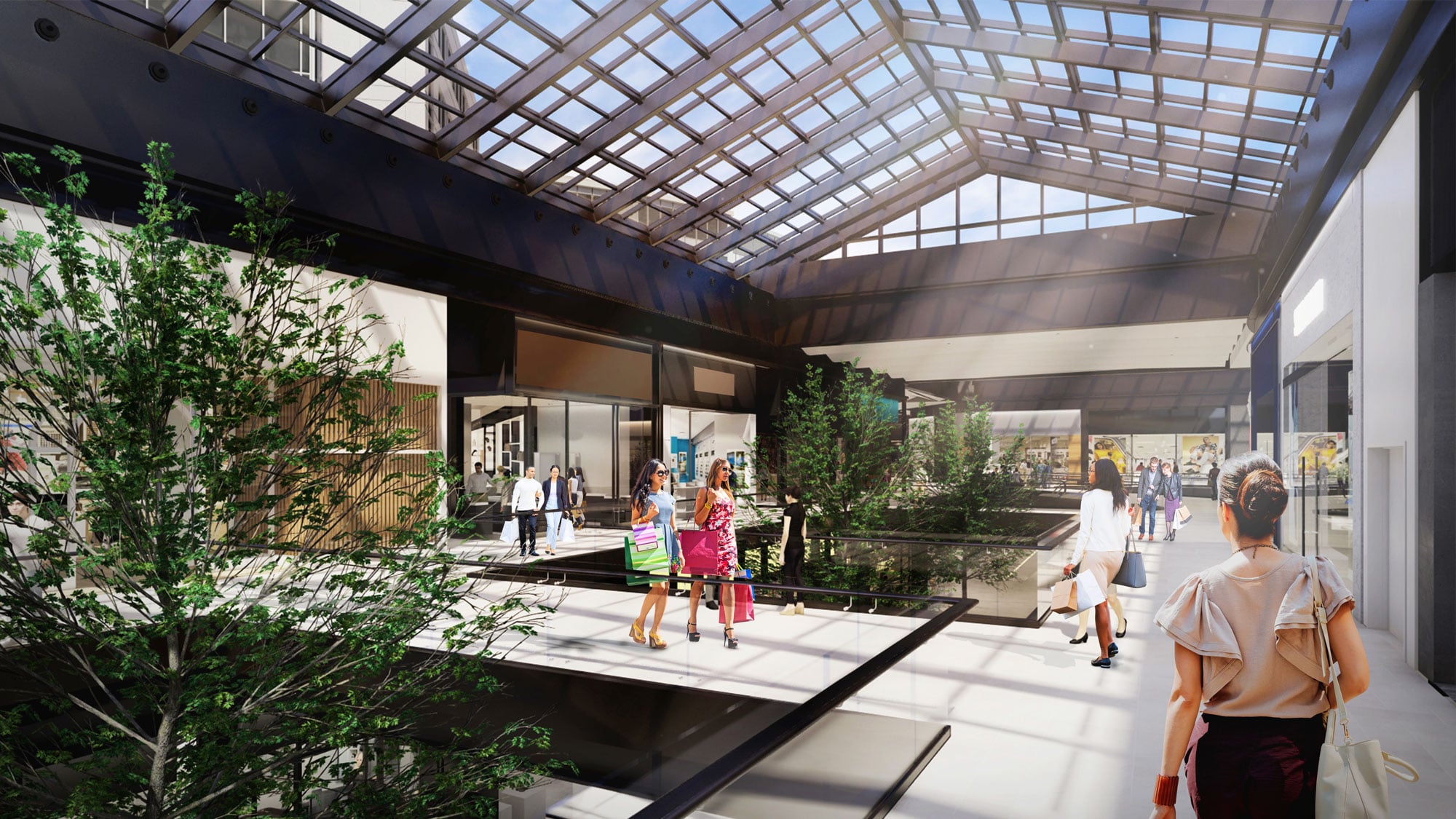
Updated glass galleria at CF Toronto Eaton Centre. Photo: Dustin Fuhs
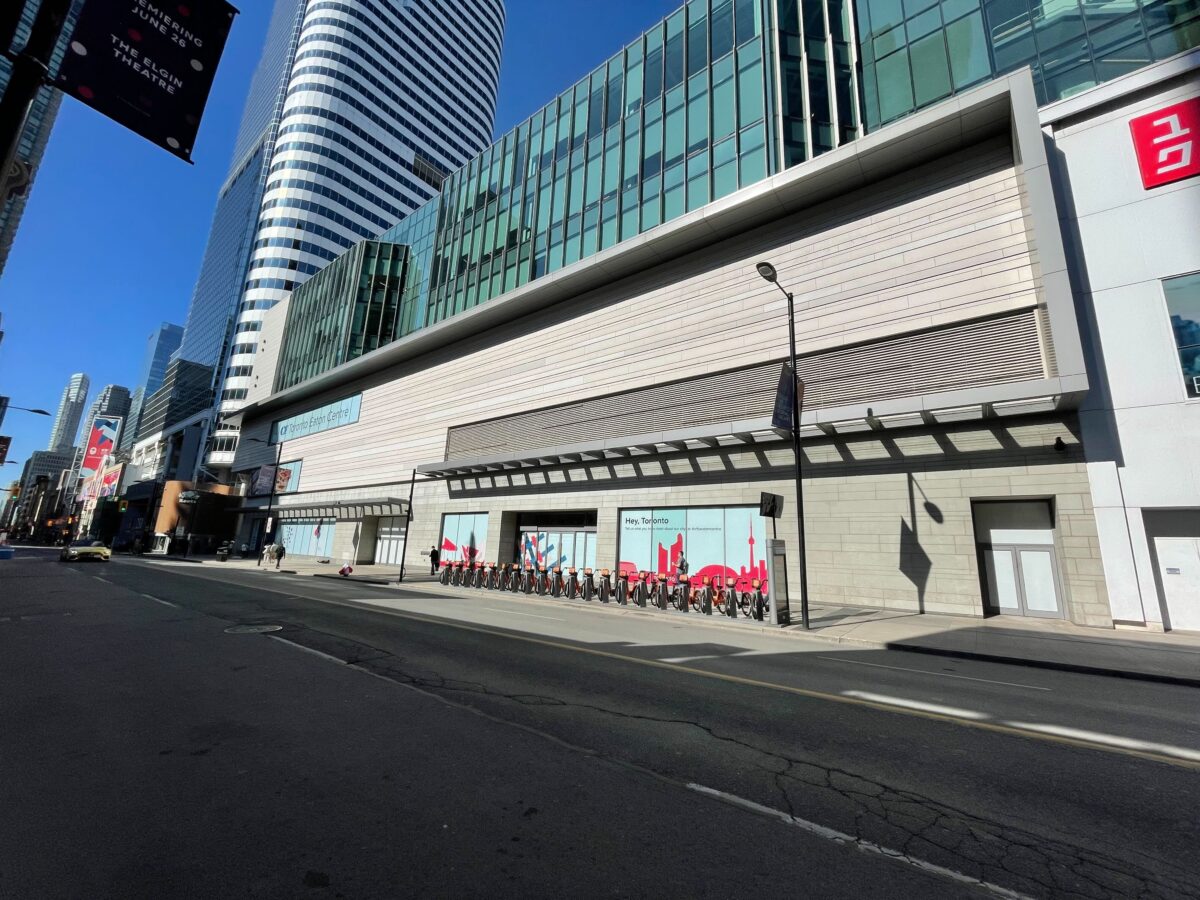
Exterior of the former Nordstrom at CF Toronto Eaton Centre. Photo: Dustin Fuhs

“Much like fashion trends, our shopping centre is constantly evolving to suit the needs of our shoppers and we’re proud to redefine the retail landscape in downtown Toronto with these exciting additions,” said Sheila Jennings, General Manager, CF Toronto Eaton Centre in a statement. 

Cadillac Fairview has invested more than $1.6 billion into CF Toronto Eaton Centre since 2010, including acquiring the massive Hudson’s Bay building and adjacent 401 Bay St. office tower in 2014 for $650 million. That paved the way for Saks Fifth Avenue to open within the Hudson’s Bay building in early 2016. 

Other notable investments by Cadillac Fairview in CF Toronto Eaton Centre included the redevelopment of 290 Yonge Street, and the revitalization of the centre’s galleria skylight roof. The south section of the roof was completed in the spring of 2023 and was updated with the latest materials and technologies to improve its long-term energy efficiency and sustainability. The second phase of the project includes roof enhancements above the North Court as well as improvements to elevators and the addition of three new staircases, expected to be completed in late 2024.

Former Nordstrom at CF Toronto Eaton Centre. Photo: Dustin Fuhs
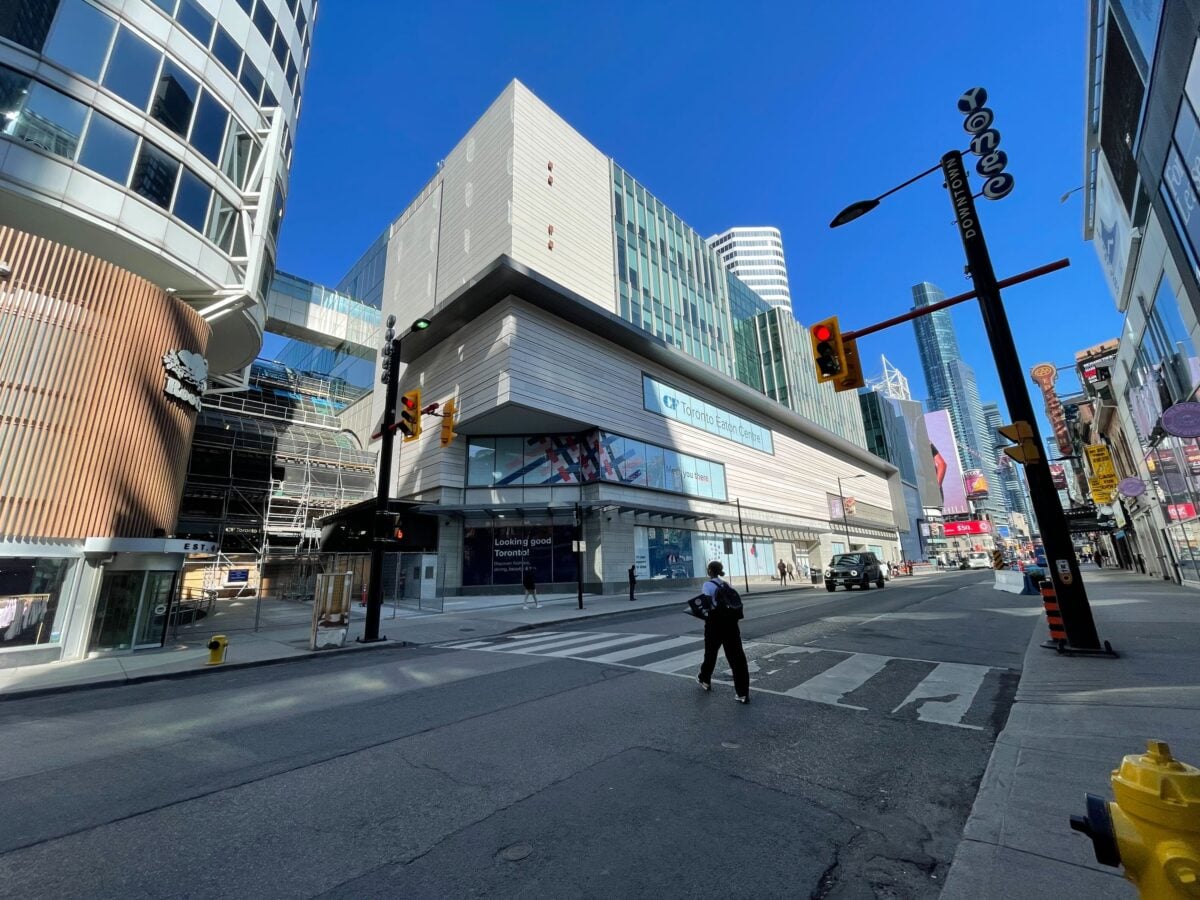
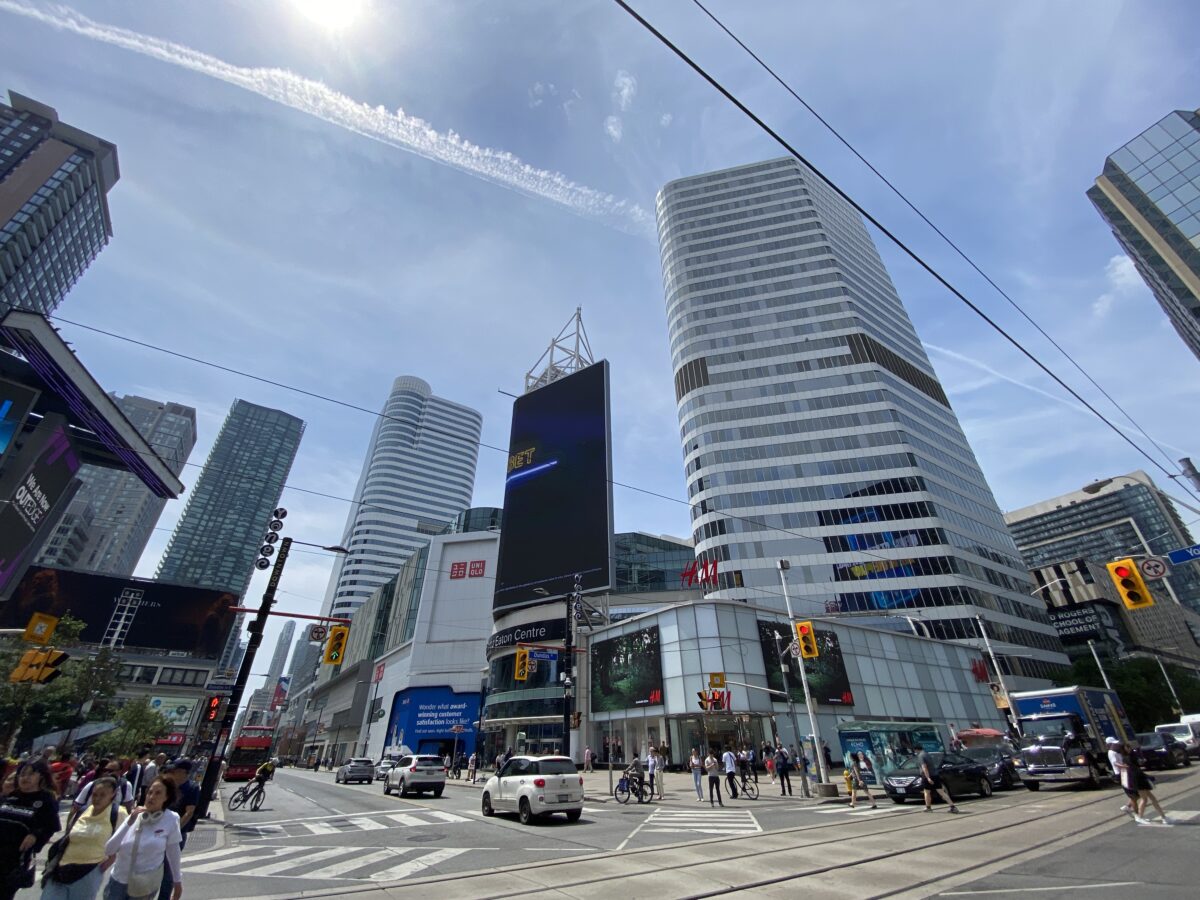
Photo taken from Dundas and Yonge streets south to CF Toronto Eaton Centre. Photo: Dustin Fuhs

Cadillac Fairview recently unveiled its Queen’s Cross Food Hall, a chef-driven culinary concept by Oliver & Bonacini. Located at the south end of the mall’s lower level, the 19,000 square foot space features 13 unique food stalls, two rotating pop-up stalls (Craig’s Cookies is currently one of them), a stylish bar and café, and seating for about 300 guests.

BMO bank will open a 21,000 square foot branch to the north of Simons in a retail space formerly occupied by a Samsung store — it will be part of BMO Place at 33 Dundas Street which features offices for the bank.

CF Toronto Eaton Centre ranked as the second-most productive shopping centre in terms of sales per square foot by ICSC’s 2023 Canadian mall study, which was reported recently in Retail Insider. The busy downtown Toronto shopping centre, with more than 50 million annual visitors, saw sales per square foot of $1,457 in 2023, being second only to Toronto’s Yorkdale Shopping Centre.  

La Maison Simons to Open Stores at CF Toronto Eaton Centre and Yorkdale in Former Nordstrom Spaces 

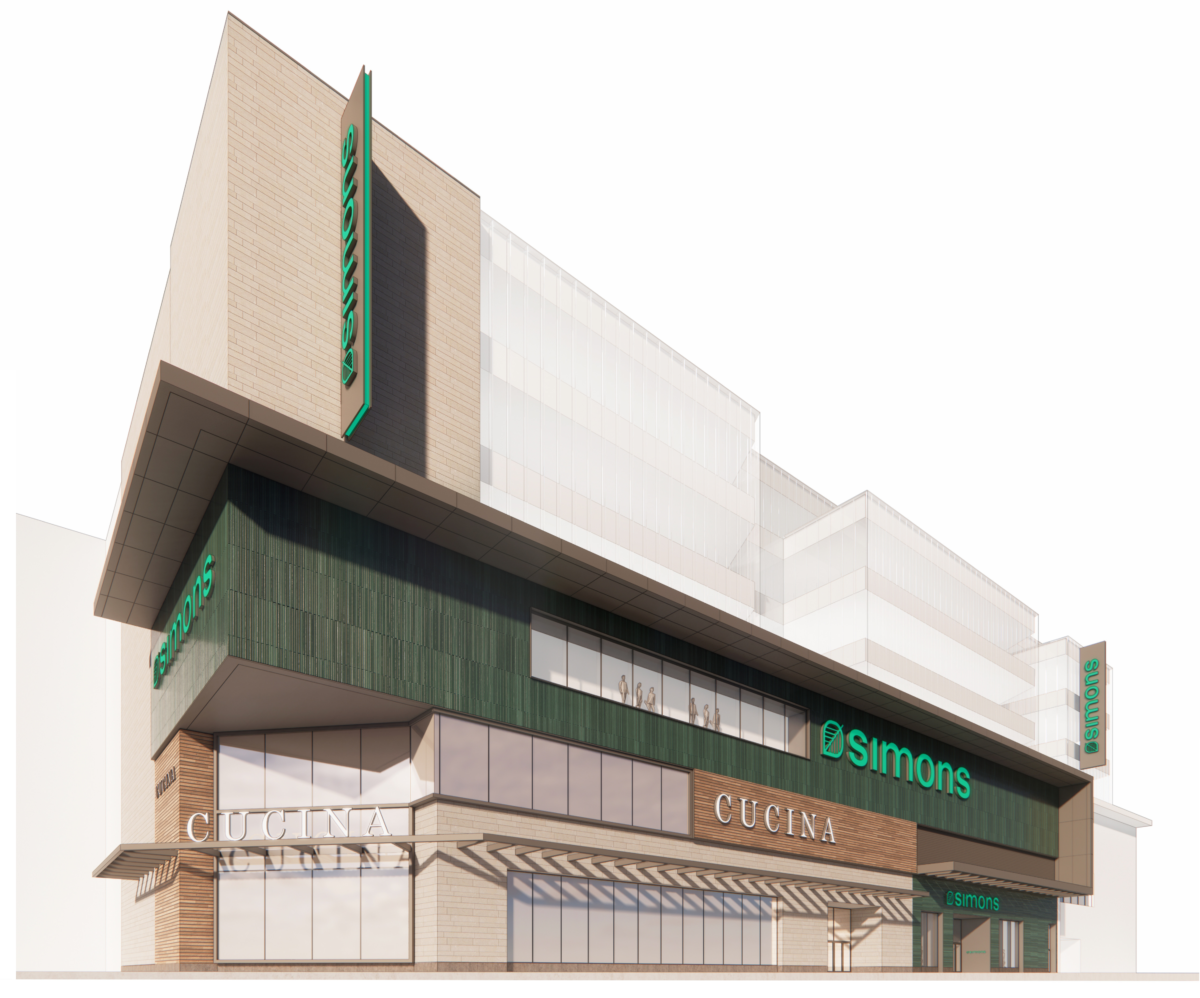
Rendering of the future Yorkdale La Maison Simons store in Toronto. Image supplied

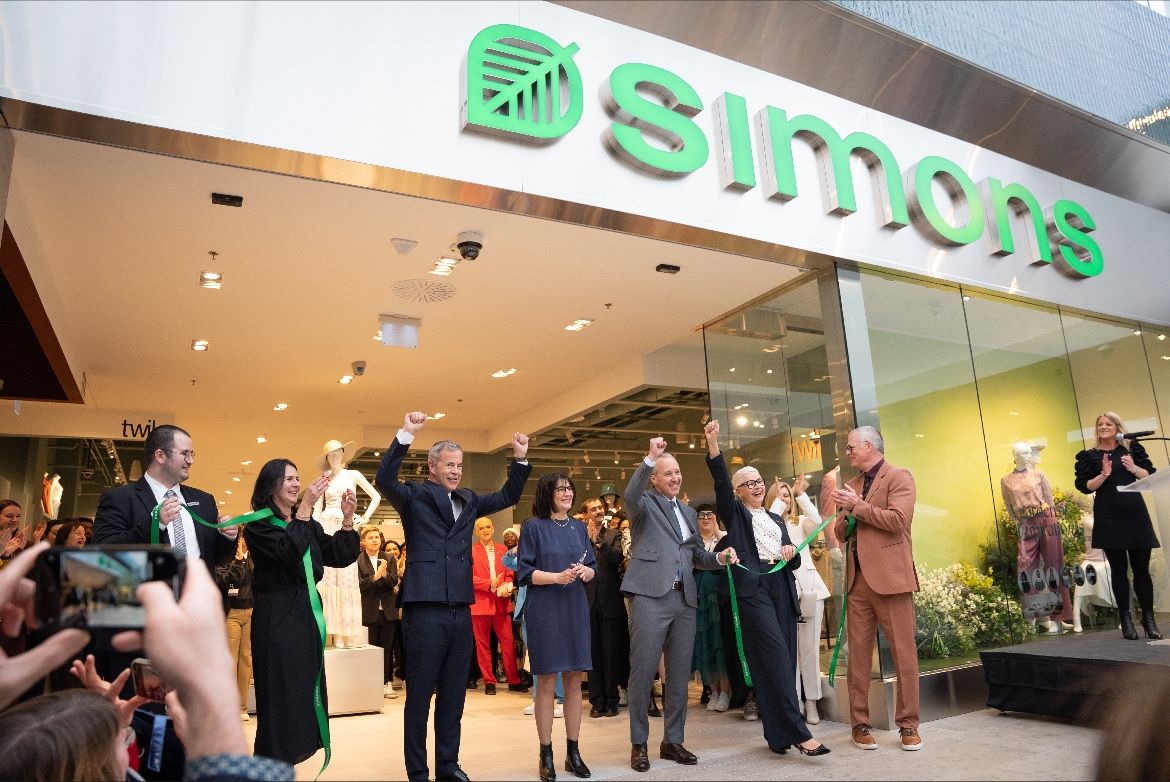
Quebec City-based retailer La Maison Simons has announced that it will open two stores in Toronto in the fall of 2025. One will be downtown at the CF Toronto Eaton Centre and the other at the Yorkdale Shopping Centre. It’s part of a $75 million investment by Simons that will see the retailer further penetrate the Canadian market with a presence in the largest and wealthiest city in the country. 

Bernard Leblanc

Bernard Leblanc, CEO of Simons, said that the lease deals to open the two Toronto stores were “decades in the making”, and that the opportunity to finally open in those malls was made possible following Nordstrom’s exit from Canada. The large retail boxes with expansive floor plates became available following Nordstrom’s closure last year, providing landlords the opportunity to secure Simons and other retailers as a tenants.  

The CF Toronto Eaton Centre La Maison Simons store will span about 110,000 square feet over three levels, featuring local art and unique architectural designs by Lemay Michaud and Gensler Design. Leblanc said in an interview that the store’s access points will include a street entrance on Yonge Street as well as access from within a new corridor in the mall, which will run through the former 223,000 square foot Nordstrom store that once occupied the space. Simons will also occupy a small portion of the 63,800 square foot second floor of the Nordstrom space, with most of the remainder to be occupied by Eataly, which will measure about 25,000 square feet over two floors. Most of the 90,000 square foot third floor of the former Nordstrom will be occupied by Simons, as well as some new storage space for landlord Cadillac Fairview. 

A two level Nike flagship store spanning about 18,000 square feet will open in the remainder of the former Nordstrom space. SAJO is the design-build firm that will be responsible for the construction.

Rendering of the future La Maison Simons and Eataly at CF Toronto Eaton Centre. Image supplied

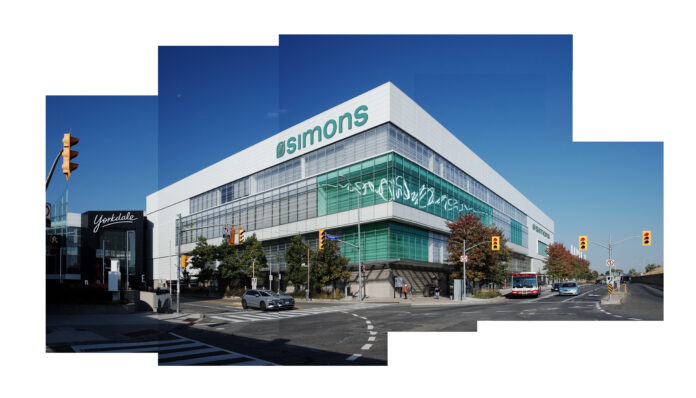
The Yorkdale La Maison Simons store will span about 118,000 square feet, and will also feature unique artwork and architectural designs by Lemay Michaud and Gensler. Simons will occupy the first two levels of the former Nordstrom store, which had expansive floor plates exceeding 60,000 square feet each. It’s not yet known what landlord Oxford Properties will do with the third level of the former Nordstrom space. Leblanc said that “sun” will be a central theme to the Yorkdale store, which makes sense — the purpose-built 188,000 square foot Nordstrom box features walls of glass including on its south-facing facade, which means the Yorkdale Simons store has the opportunity to be flooded by sunlight depending on its design. 

Leblanc said that the design of both stores is now in the works, with details to come — Simons stores feature unique and often whimsical interiors, such as dressing rooms that look like outhouses and deer heads with antlers covered in fabric. Each Simons store also features at least one key piece of large artwork, and Simons has yet to decide what will be installed in the two new Toronto stores. 

Both stores will offer the full range of Simons merchandise, which includes fashions for men and women, kid’s, home goods, footwear, bags, accessories and other items. About 70% of the product in Simons stores is private, made under various labels including the names of the departments in the stores. That includes Twik and La Contemporaine for women, and Le 31 and Djab for men. 

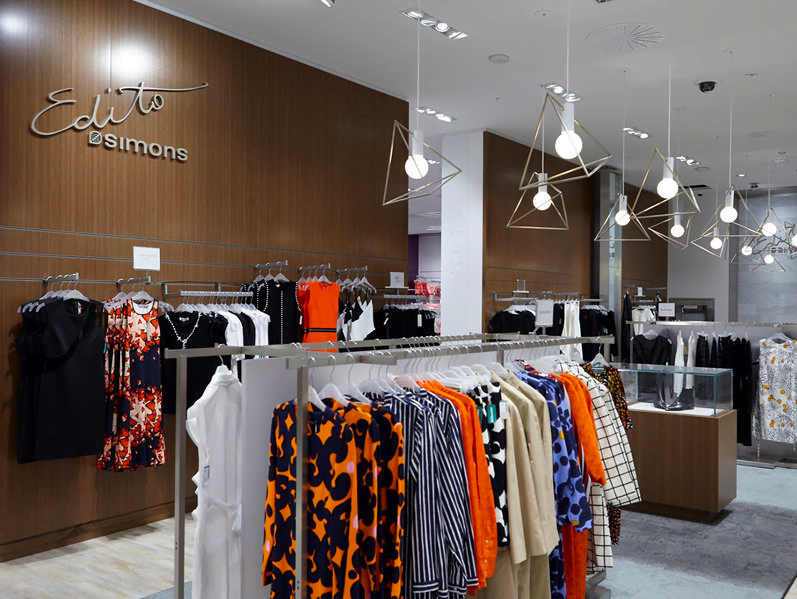
Edito by Simons (Image: Simons)

Both the CF Toronto Eaton Centre and Yorkdale Simons stores will also feature separate designer ‘Edito’ departments for women and men, which feature a range of pricey luxury brands that can be far more costly than Simons’ relatively affordable private labels. Brands in Simons’ Edito department include names such as Balmain, Chloé, DSquared2, Emporio Armani, Erdem, Helmut Lang, JW Anderson, Jacquemus, Marni, Moschino, Rick Owens, Vivienne Westwood, Yohji Yamamoto and others. The selection of brands at Edito departments in Simons varies store-to-store, and Leblanc said it’s not yet determined which brands will be carried in the CF Toronto Eaton Centre and Yorkdale Simons locations. 

The Toronto stores could become the top-selling locations for the company, with La Maison Simons estimating that sales at the two locations could be in the $100 million range combined — currently Simons’ total annual sales are in excess of $650 million, with two thirds of those (about $430 million) being in its 17 physical stores and the remainder being online. Currently the top-selling Simons stores in the chain are the Place Ste-Foy (Quebec City) and downtown Montreal flagships. 

Simons says it’s spending more than $75 million to build the new Toronto stores, which will create about 400 jobs. While the investment is significant, so is the expected return — with the sales projections of the two Toronto stores, physical retail sales are expected to rise to over half a billion dollars annually after they open next year. 

Simons Halifax Shopping Centre (Image: Nic Takushi / David Sobey Retailing Centre)

Toronto was specifically targeted, according to Leblanc, because it’s the second largest online market in Canada for Simons. The Toronto area was vastly under-served by La Maison Simons, with just one store at Square One in Mississauga. The Montreal market, which is smaller and less affluent than Toronto, is home to five productive Simons stores, he noted. The Square One store also saw a 3% increase in sales in its fiscal year — and while the store has helped somewhat to increase brand awareness for Simons in the GTA, its location was too remote for most who live in the region and frequent other malls. 

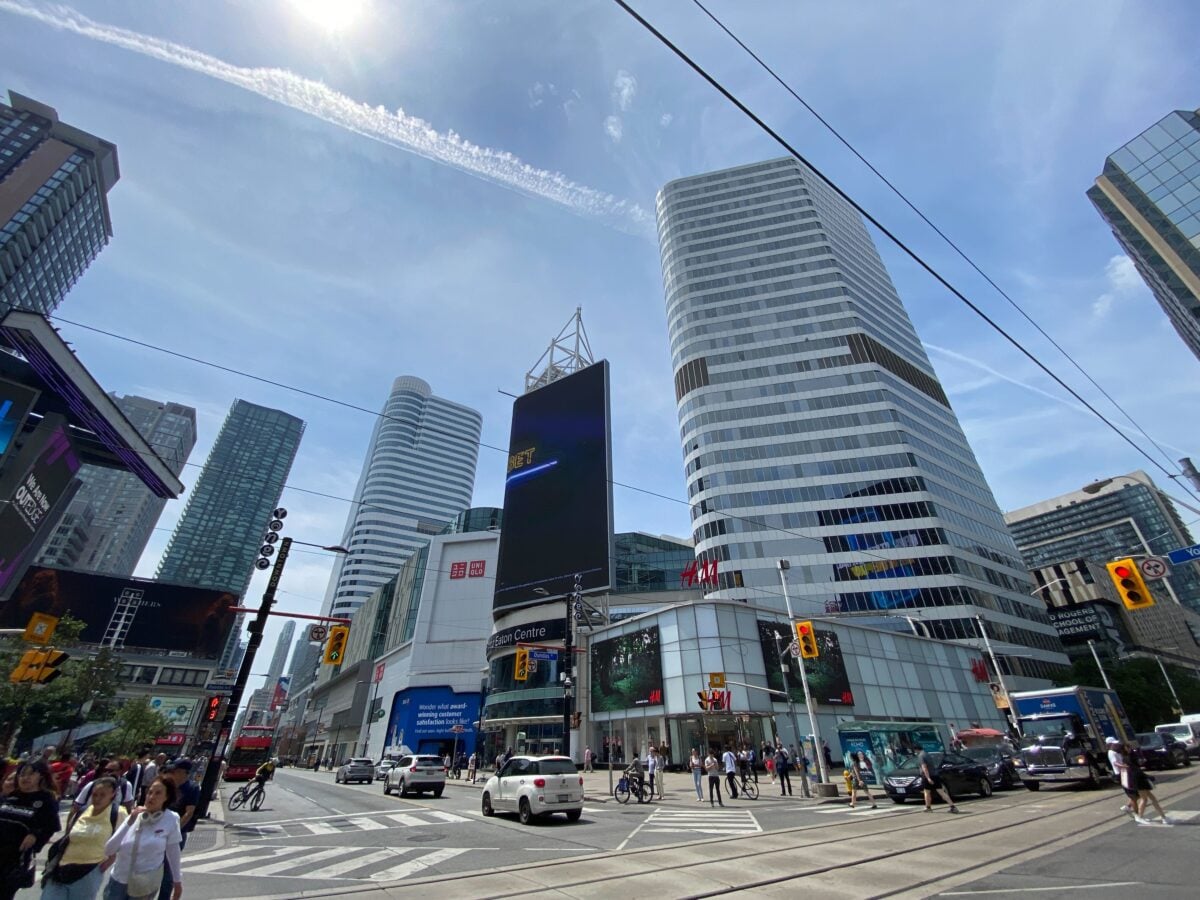
CF Toronto Eaton Centre is possibly the busiest shopping centre in the world, with over 50 million annual visitors and a location in the heart of busy downtown Toronto. The complex is located on subway and streetcar lines and is adjacent to sometimes chaotic Dundas Square, which was recently rebranded as Sankofa Square (a name that the majority of Torontonians seem to dislike). CF Toronto Eaton Centre recently ranked second in the 2023 Top 25 Malls by Sales Per Square Foot in Canada, with a productivity number of $1,457 per square foot for reporting retailers. The massive centre was originally anchored by an 800,000 square foot Eaton’s store, which operated there from 1977 until 1999, and then Sears Canada until Cadillac Fairview bought back the space in 2012 to convert into Nordstrom and office uses. 

Yorkdale isn’t nearly as busy as CF Toronto Eaton Centre, though it sees millions of visitors a year and boasted sales per square foot of $2,402 in 2023, according to the same ICSC study. The mall is a powerhouse of big-name and luxury brands, with the largest single clustering of standalone luxury stores in the country. Landlord Oxford Properties has invested heavily into the shopping centre, including recent updates to its food court and the construction of a luxury wing which involved relocating various retailers in the mall’s centre run. 

CF Toronto Eaton Centre (Image: Dustin Fuhs)

The Toronto Simons stores will be the 18th and 19th locations for the retailer. In March of 2024, La Maison Simons unveiled a store at the Halifax Shopping Centre in Halifax, which Leblanc noted brought the chain “truly coast-to-coast”. Over the past five years, Simons have invested hundreds of millions of dollars into its operations, including opening a store in the Montreal suburb of Pointe-Claire in May of 2022, and investment into an automated fulfilment centre in Quebec City. 

La Maison Simons was founded in 1840, and it wasn’t until 12 years ago that the retailer expanded outside of Quebec. In October of 2012, Simons opened at West Edmonton Mall, kicking off a national expansion for the retailer that saw it open stores in various major markets. That included Park Royal in West Vancouver (2015), Square One in Mississauga (2016), CF Rideau Centre in downtown Ottawa (2016), The CORE in downtown Calgary (2017), Londonderry Mall in Edmonton (2017), and most recently in Halifax. 

During that same expansion period, Simons expanded within Quebec with stores at Galeries d’Anjou in Montreal (2013), Promenades Gatineau near Ottawa (2015), Galeries de la Capitale in Quebec City (2018), and CF Fairview Pointe-Claire (2022). They joined existing stores in Quebec that include the company headquarters and retail space in Old Quebec, and stores in Ste-Foy, downtown Montreal, Sherbrooke, St-Bruno, and Laval. 

Simons Head Office in Quebec (Image: Simons)

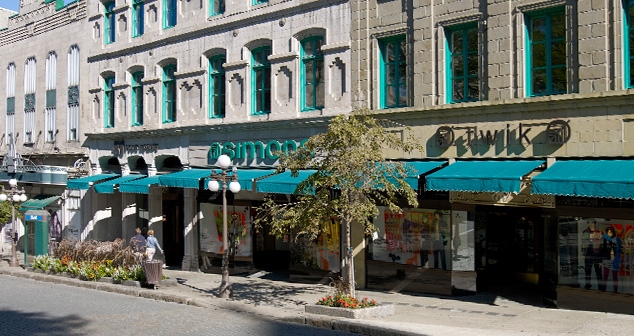
Bernard Leblanc said that it was a privilege to work out of the Old Quebec offices, where Simons has had a store and offices since 1870. The Old Quebec Simons store is still popular and features unique architecture in a heritage space. 

Last year when Retail Insider first broke the news of Nordstrom’s exit from Canada, we also speculated that La Maison Simons could replace some of the retail space being vacated by the Seattle-based retailer. Leblanc said that this early speculation by us and others didn’t factor heavily into negotiations with Cadillac Fairview and Oxford Properties, both of which wanted Simons as tenants following Nordstrom’s Canadian exit. Simons had actually been speaking to both landlords years before, and had intended to open stores at both malls but at the time, deals did not materialize. 

That includes in 2015, when Simons’ then CEO Peter Simons told the Montreal Gazette that the retailer would open Toronto stores at Yorkdale and Scarborough Town Centre. Neither deal materialized at the time, with Simons instead opening stores in other markets. Several years ago Peter Simons told Retail Insider in an interview that CF Toronto Eaton Centre was specifically a target for a Simons store at some point, as well. 

Leblanc wouldn’t confirm rumours that La Maison Simons would open a downtown Vancouver store in part of the 230,000 square foot three-level Nordstrom building that was once home to an Eaton’s store. Sources had told Retail Insider that there was a possibility that La Maison Simons could take part of the former Nordstrom space at CF Pacific Centre, along with other retailers. We’ll follow up on this story when we learn more.  

Wild Fork Expands Canadian Presence with Third Location, Eyes Future Growth Nationwide [Interviews]

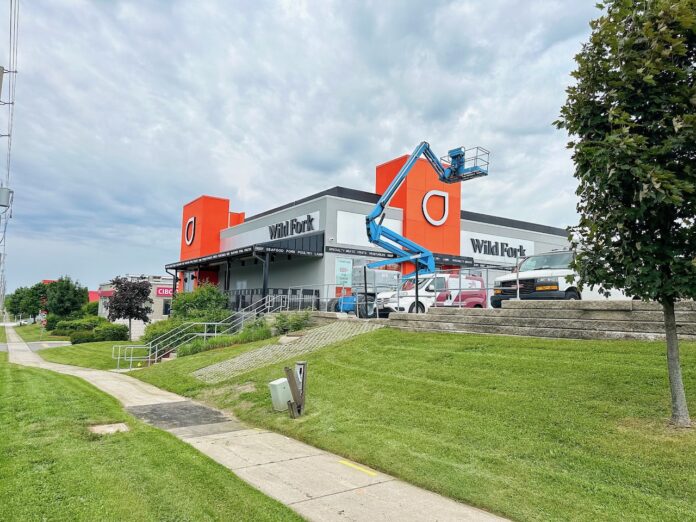
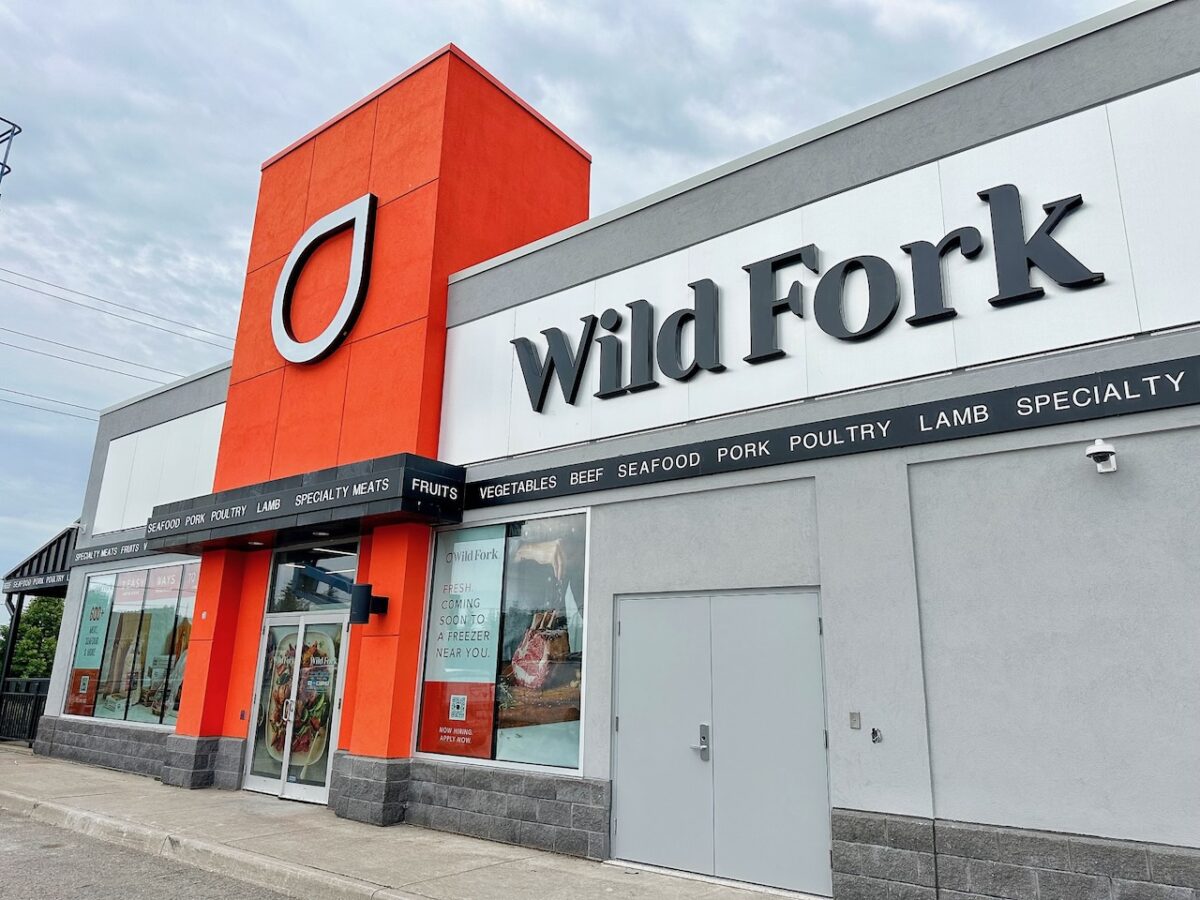
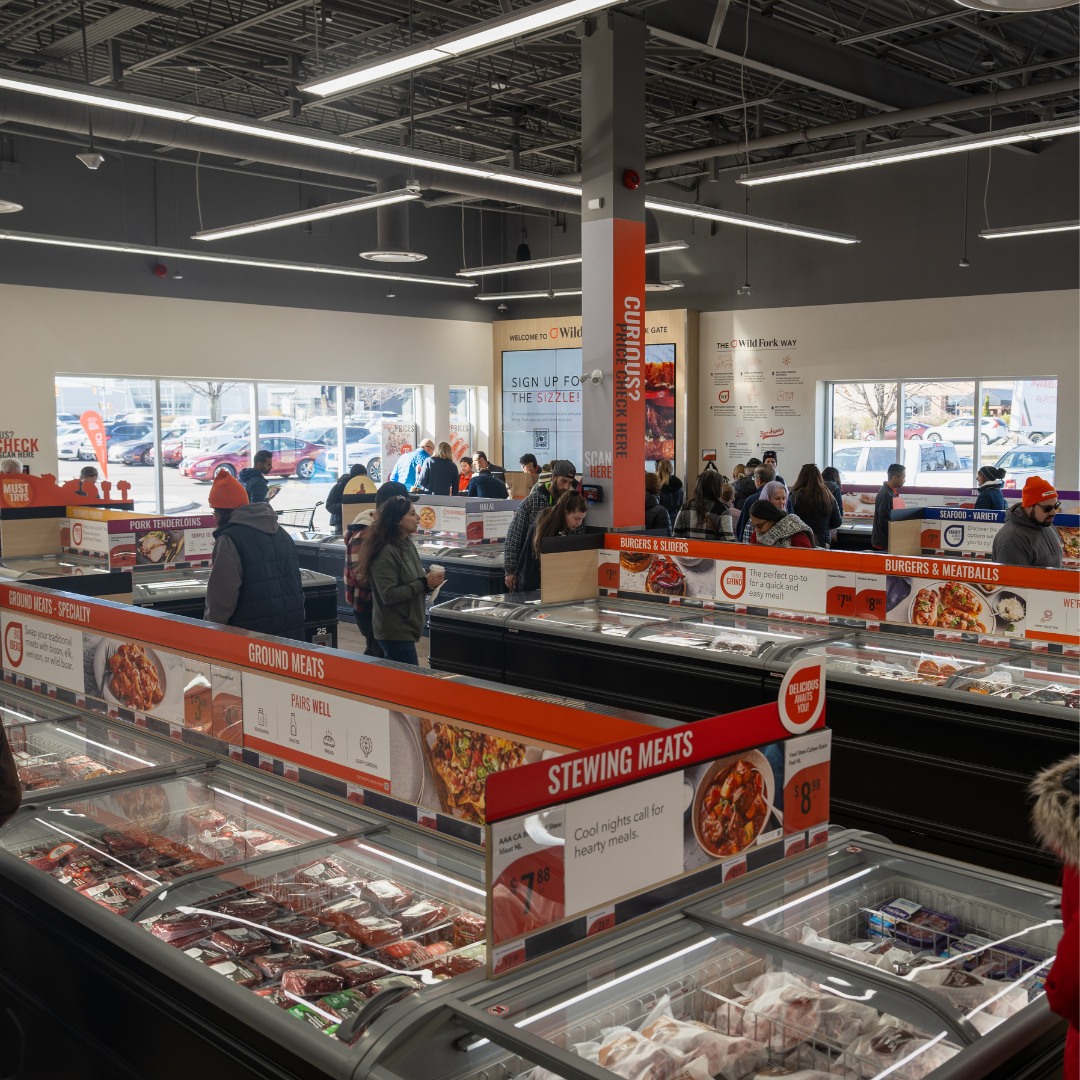
Wild Fork Ancaster, Ontario (Image: Wild Fork)

Innovative food company Wild Fork continues to expand its retail footprint in Canada with plans for significant growth in the future.

The brand is set to open its third location June 10 in Ancaster, Ontario. 

Elle Mejia-Pierce

Elle Mejia-Pierce, Real Estate Lead at Wild Fork, said the company has 44 stores in the United States with another 15 slated to open before the end of the year.

The brand launched in Canada as an online business servicing the Greater Toronto Area with same day delivery. The first retail store opened a year ago in Whitby, Ontario. The second store opened in Oakville, Ontario in November.

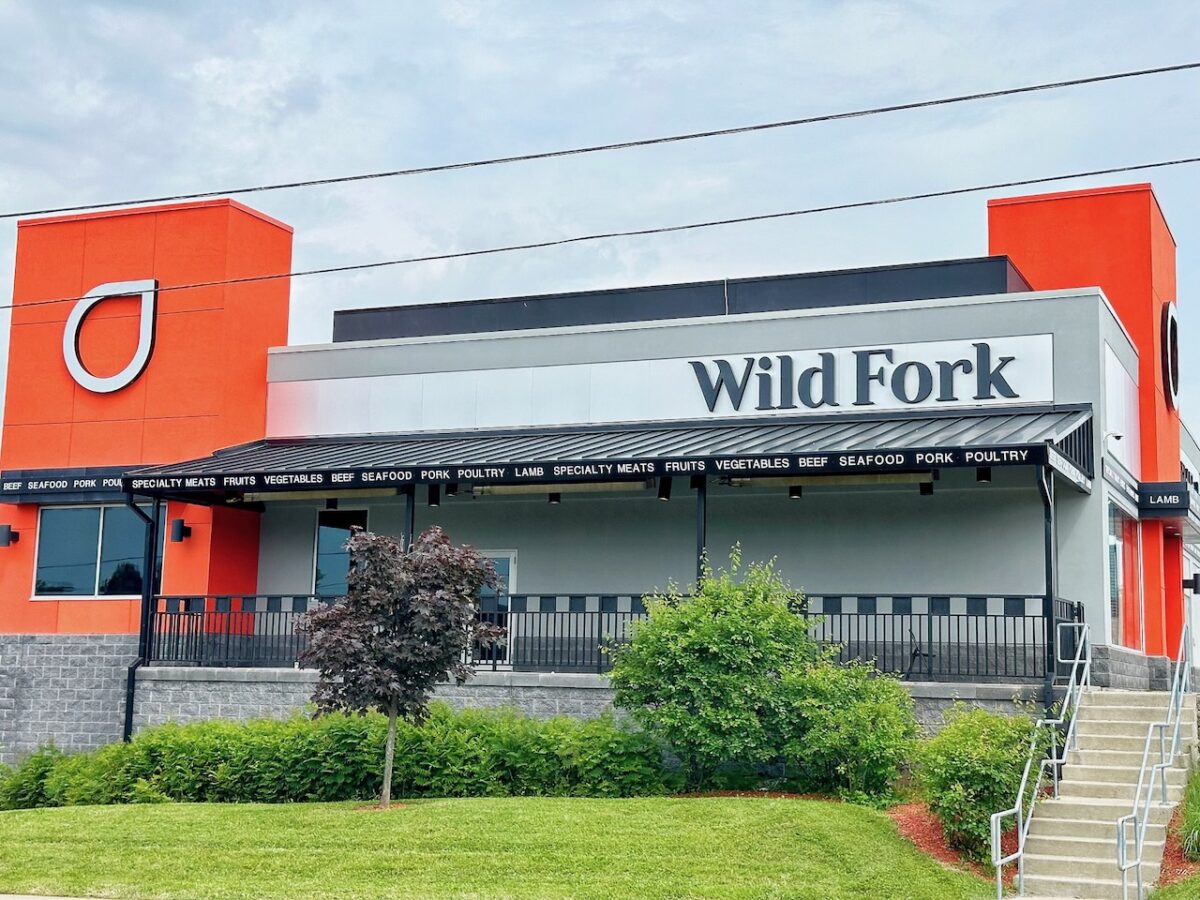
Wild Fork Ancaster, Ontario (Image: Wild Fork)

Mejia-Pierce said the sweet spot for stores is about 4,000 square feet. But the Oakville and Ancaster stores have significantly larger footprints with just under 7,000 square feet in each.

“Eventually we’re going to be expanding all across Canada. So the play after Ontario will be out West in B.C. and Alberta but that’s probably more a three to five year plan. Right now, I’m really concentrating on Ontario and in the GTA (Greater Toronto Area) market. So the two stores that we have slated opening up next year are both in London and in Newmarket,” she said.

Locations have been a challenge for the company.

“I like streetfront retail. I like streetfront corner retail. In Ontario, typically those pads have been reserved for banks and for restaurants. Finding the access that we need in terms of our shipping, being able to actually get our products into the stores, has been a challenge. New builds have worked favourably for us because we can build in those features where we need them,” said Mejia-Pierce. “But we like the corner streetfront retail. We prefer to be end caps if we are going to be not in a standalone building. 

“I try to stay away from inline although our Whitby store is inline and is doing quite well for us.”
Ali Baker, Principal and Vice President at commercial real estate firm Avison Young is handling Wild Fork’s Canadian real estate needs.

Wild Fork Ancaster, Ontario (Image: Wild Fork)

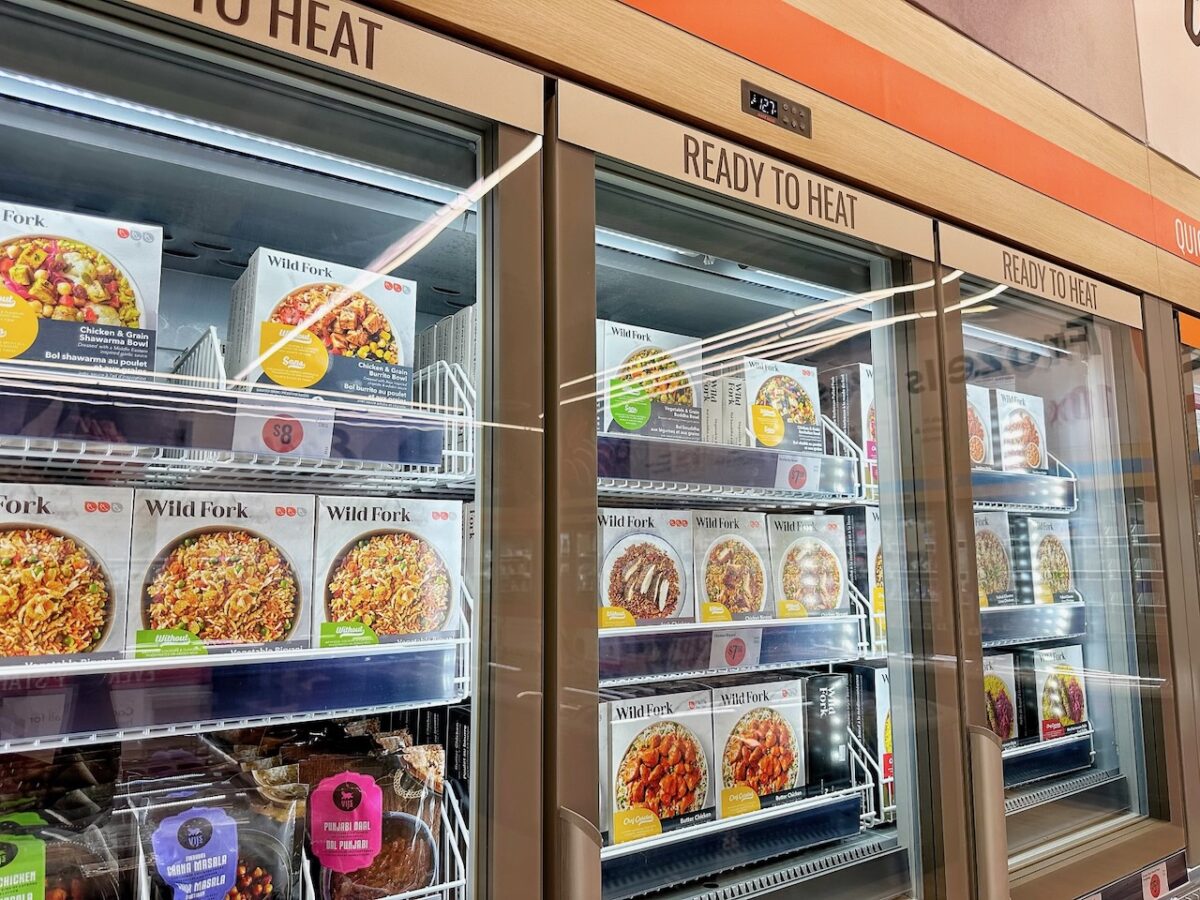
Mejia-Pierce said when the brand opened its retail store it had only about 450 SKUs but now the brand is north of 600 SKUs and working its way up towards 1,000.

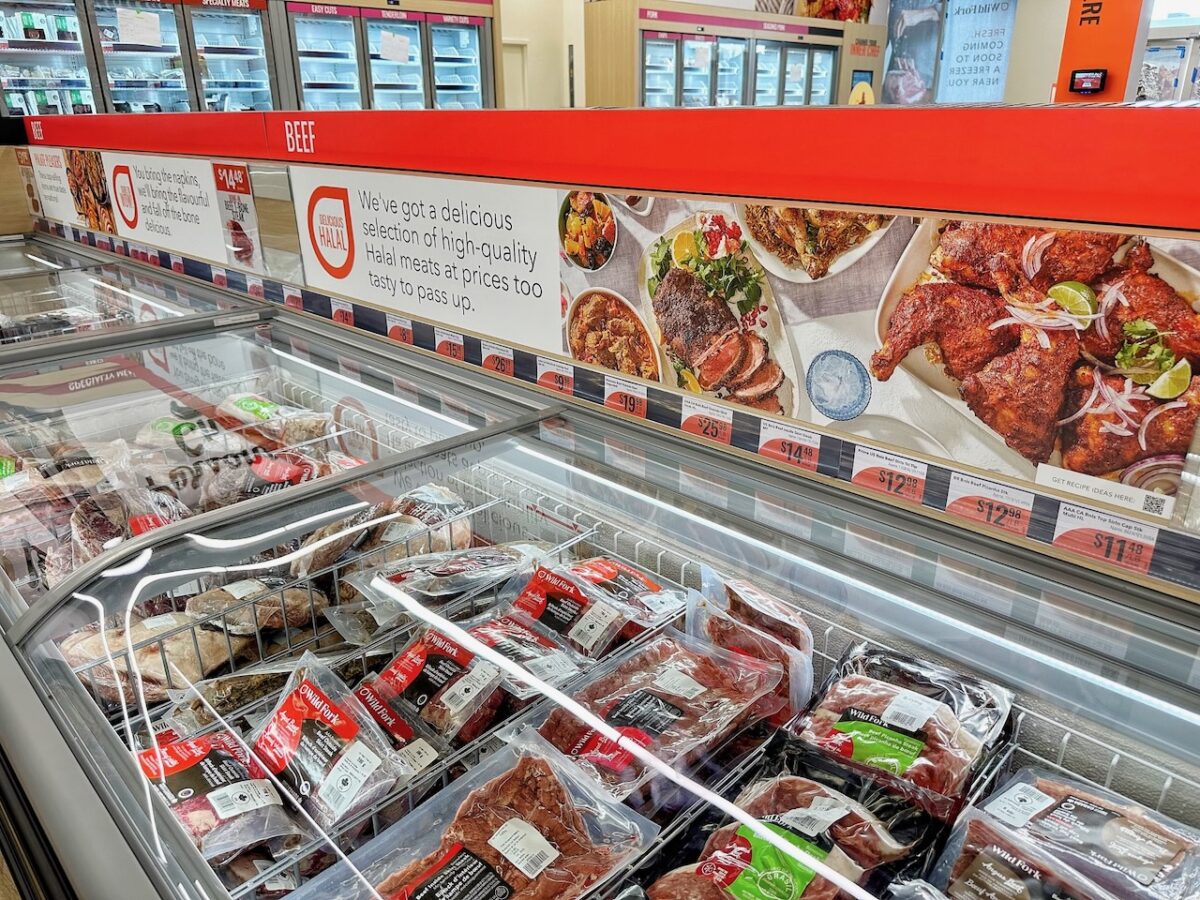
“We’re very, very protein heavy. We’re a protein store. Everything is frozen. We have probably the largest depth of SKUs in protein that you’ll find in any retailer. We’re pretty democratic. Everything from your ground meats, your ground beef, and your more economical meat choices to your Wagyu steaks you can get in our stores. And a lot of the exotic meats as well. So we’ve got bison and we’ve got elk and we’ve got venison. We’ve got a really great seafood depth as well,” she said. 
“Then we have the ancillary items. Our frozen fruits and our desserts. Really trying to make it easier for the consumers to be able to plan a full meal when they come into our stores.”

Mejia-Pierce said the online business remains a strong part of the company.

“I have 26 prime markets that I want to make sure that we’re in within the next three years in Ontario before we start making the move out West. Just trying to position ourselves in communities where probably not hitting every major intersection but making sure we have enough of a presence in the GTA and in the surrounding markets so that we penetrate the markets so that the brand name becomes recognizable,” she said.

“We find once we get a customer through the door there they are our customer. It’s kind of a no-brainer. But there’s only so much marketing that you can do. The online space is such a noisy space that having that physical brick and mortar store to be a banner in these communities is what’s going to be the most important. 

“So I’d like to see us inching up towards 30 stores in the next three years . . . We’re really excited about the Ancaster opening. We are filling up our pipeline for 2025 and even going into 2026 with these new builds as well and really just trying to meet our customer where they are and give them their options for their online shopping, give them their options for their in-store shopping and making it a really great experience and a cost-effective experience.

“One of the things we’re trying to get across in the market is that we are not a premium brand. We’re a very democratic brand. So whether you’re shopping for your day to day items for your family and picking up your ground meats and your chicken breasts and you’re just regular staples every week or whether you’re planning an all-out dinner party and you want to go all out with Wagyu steaks and lobster and whatever else it is you want to pick up, we really do run the gamut in our stores. A lot of people look at us as a premium brand and we really are an everyday brand.”

STACKT Market Secures 10-Year Lease Extension in Toronto, Unveils Venture to Empower 11,000 Canadian Small Businesses [Interview]

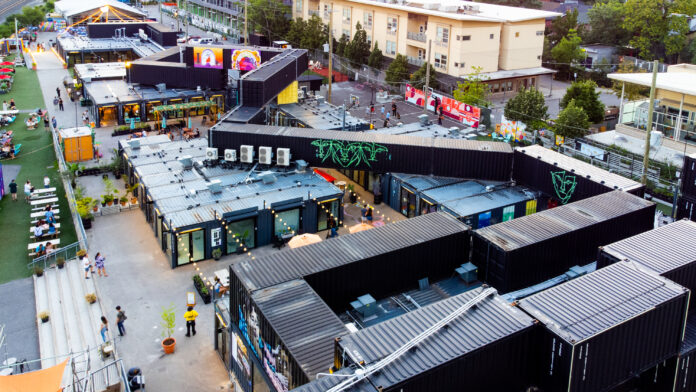
Image: STACKT Market

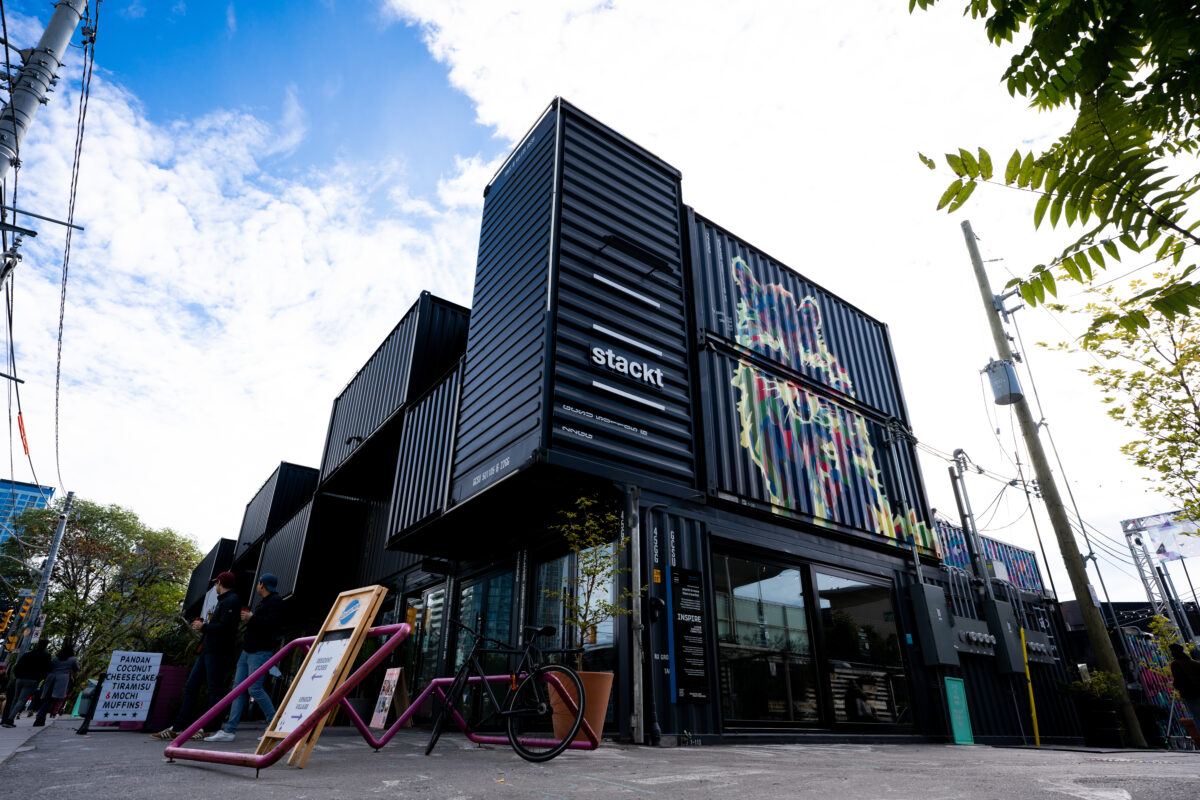
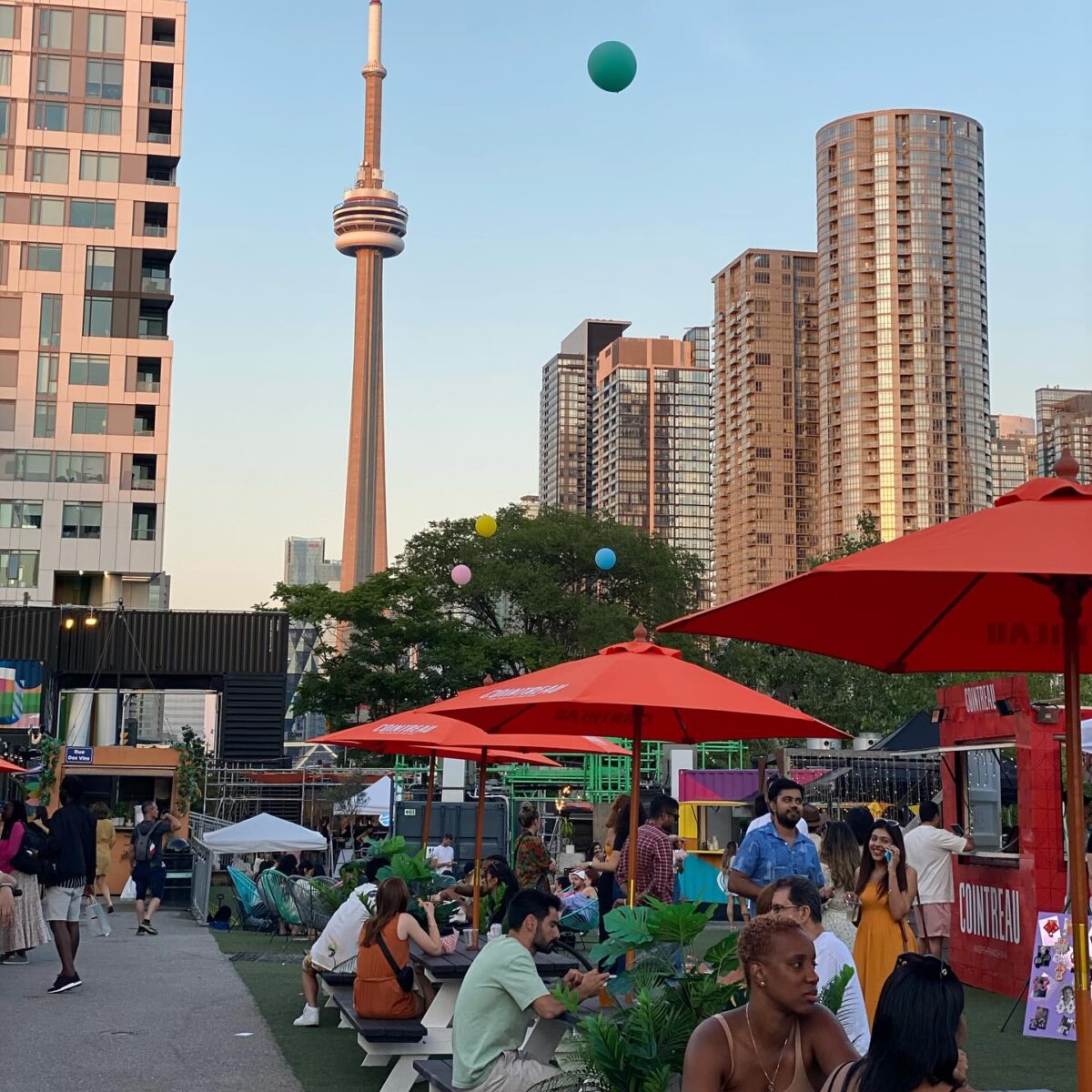
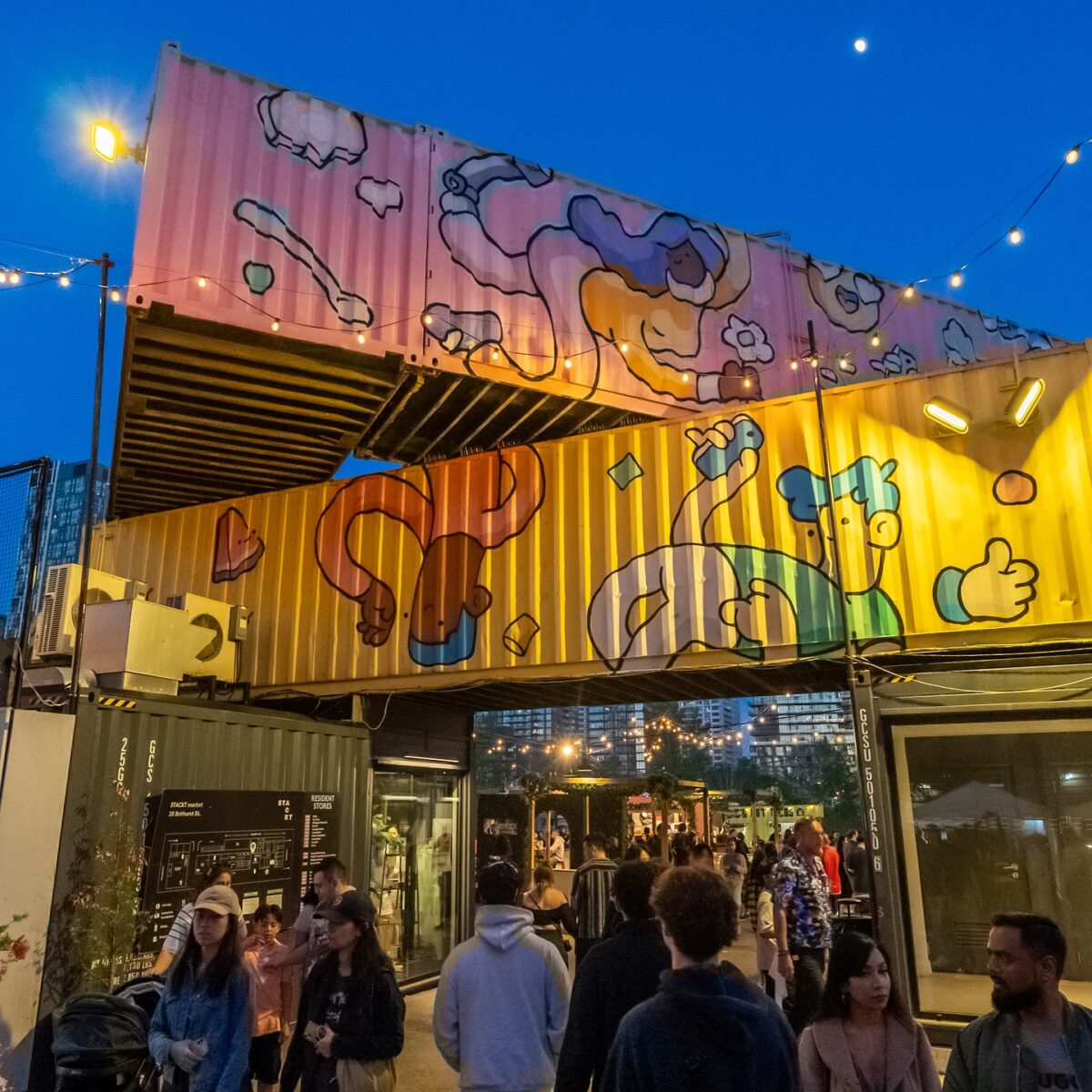
STACKT, North America’s largest shipping container market established in 2019, has signed a new 10+-year lease extension with the City of Toronto for its site at Bathurst and Front and the concept is also launching its new STACKTˣ which is a venture to help accelerate small businesses across Canada.

Matt Rubinoff

“We are thrilled to continue our relationship with the City of Toronto,” said Matt Rubinoff, Founder and President of STACKT. “In Toronto, STACKT market began as a unique concept and has evolved into an impactful ecosystem where people and businesses can connect and grow. 

“We have created a community here in Toronto, and this lease extension proves our ongoing commitment to fostering opportunities for creativity and growth. We are excited about the extension and to bring this energy across Canada this year.”

Image: STACKT market

Rubinoff said the lease extension signals the commitment of continued support for Canadian businesses, innovative retail concepts and community-driven public spaces.

STACKT creates award-winning and innovative ecosystems that drive a new way of thinking. From large-scale public spaces to satellite pop-ups, STACKT designs concepts that provide inspiration, opportunity and connection. The community is made up of innovators, creators, collaborators, and consumers alike. STACKT’s award-winning Toronto flagship, STACKT market, animates 100,000 square feet with art, retail, events and public space. The dynamic space shifts alongside the brands and experiences within it. 

“(The lease extension) obviously shows the commitment and support from the City of Toronto and a big one for us as we can plan into the future now. It’s been typically shorter term leases that we’ve been doing in the past since its inception in 2019,” said Rubinoff.

“We support brands, small businesses, culture, innovation and everything through there. There’s several different components to the property. It’s the size of a city block in downtown Toronto at Front and Bathurst. 100,000 square feet. And there’s a mix of different uses throughout the site. There is a retail component to it. We work with everything from emerging businesses and small businesses in there, right through to the larger bigger brands that may come and do something innovative and test new concepts.

“We have event spaces that are on site. We have consistent programming, community programming that we’re doing through the site. And even have an industrial component with it as we’ve got a brewery on site.”

STACKT’s flagship location in Toronto has hosted over 3,000 businesses in Canada since its inception in 2019. Renowned brands such as Endy, Sonos, Makeway, Inkbox and Monos had their Canadian in-store debut at STACKT market. STACKT continues to foster the value when intersecting community and commerce, creating over 10,000 jobs, hosting over 1,800 events since inception and in turn driving over five million visitors to its Toronto flagship location.

Rubinoff said on average about 30 businesses are operating at the site.

“But part of the nature of STACKT and ever-revolving in what we do to help both small business and large business is there’s a lot of short-term leases we offer to these brands and because of that there’s quite a bit of turnover in there,” he said. 

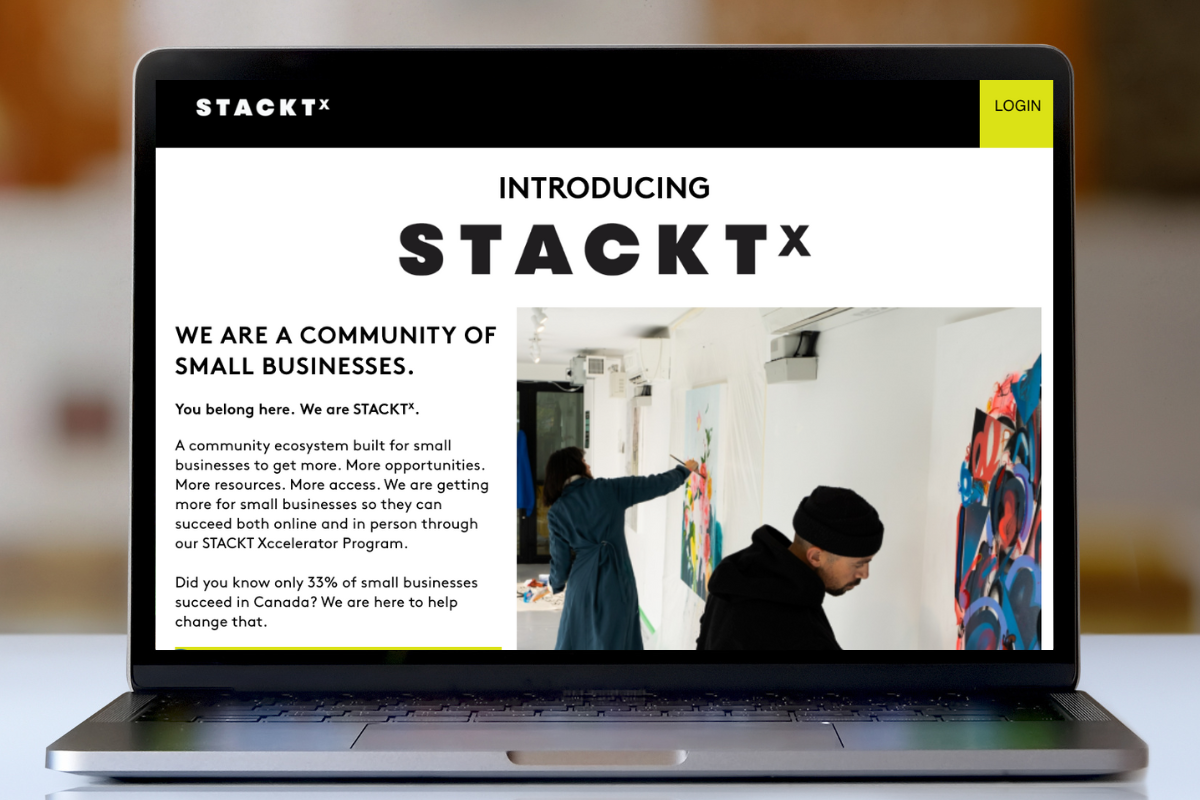
Image: Stacktx

The new  STACKTˣ  concept will provide small businesses with resources and tools, community-driven partnerships and physical retail opportunities. 

STACKTˣ will open its first expansion location in Ottawa on June 13 in the Byward Market, followed by Vancouver and Calgary locations. These prime retail locations and digital resources will support over 11,000 small businesses across Canada in the first year and continue STACKT’s legacy as the leading incubator for small businesses nationwide.

The Vancouver and Calgary locations are set to open later in the summer. Those specific locations have not been announced yet.

“STACKTˣ is a platform built for small businesses and it’s so they can get more from opportunities, resources, access, things that they need so they can succeed both online and in person,” said Rubinoff. 

“With the 3,000 businesses we’ve hosted since inception, we witness some of the challenges that a lot of these small businesses are seeing from a lack of resources, access to capital, no historical data or limited opportunities that they have. So we looked at this and we said the path needs to change and we need to change that in order to get a different outcome on this piece.

“Our goal is to take the learnings of what we have for the past five years at the flagship and launch this dedicated platform for small businesses so that they can get more out of their business journey. It too just like the flagship will be ever-evolving and ever-changing so that it aligns with these realities of what the environments are around them, everything from the market, the economy, the industry, consumer preferences. A number of different things there. All of that will obviously need to come into play but we’re going to provide this opportunity for them.”

The digital component provides resources for business owners. There will also be workshops. There is also a physical component with space for one business at a time. 

“We’ve designed a very specific modular retail unit that we’re going to be placing in really high foot traffic, premium locations in these cities to provide obviously amazing exposure and awareness and foot traffic for these brands,” explained Rubinoff. “It’s a grant program. So it’s free of charge to all these businesses that want to participate and they get access to this unit with a whole bunch of other things that we layer in from a support side . . . They get an opportunity to go out and test physical retail which has been a key piece to this.”

STACKTˣ will be giving away over 48 grants within their new pop-up locations in Ottawa, Calgary and Vancouver each offering a one-month free lease. The STACKTˣ Storefront Grant is an opportunity for small businesses to test out a retail storefront, engage with new and existing customers and learn key insights that can be applied for future growth.

Tiffany & Co. to Open Flagship Store at Iconic Bloor and Bay Intersection in Toronto [Exclusive] 

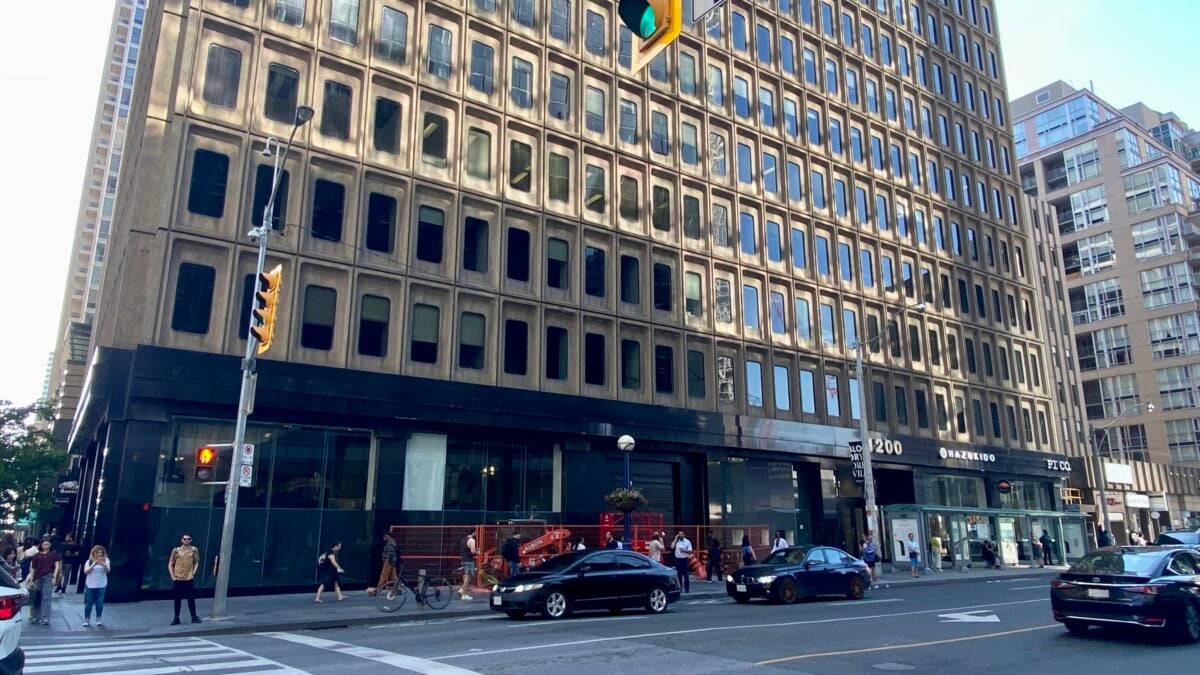
Future Tiffany & Co. store at 1200 Bay Street/66 Bloor Street West in Toronto. Photo: Craig Patterson

US-based luxury brand Tiffany & Co. is relocating its Canadian flagship on Bloor Street in Toronto to a corner location in a notable building nearby. The new two-level Tiffany store will feature 24-foot ceilings on its second level with the opportunity to rebrand the entire building. 

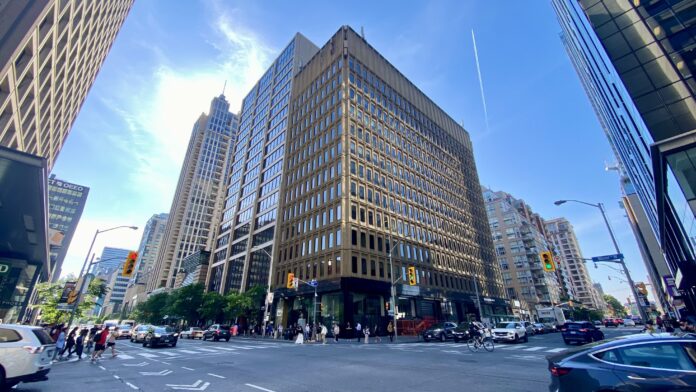
The new Toronto Tiffany store will occupy much of the base of the 1200 Bay Street building, which includes a retail address of 66 Bloor Street West for the main-floor retail that once housed Davids Footwear. Tiffany & Co. will occupy about 6,000 square feet on the street level, leaving two existing foodservice tenants that will continue to occupy spaces in the building facing Bay Street. 

Upstairs, Tiffany & Co. will occupy a dramatic 9,000 square foot retail space on the second floor with 24 foot ceilings, made possible by removing the third floor of the office building to create one retail level. Tiffany will also have the option in the future to possibly expand its Canadian offices to the fourth floor of 1200 Bay Street. 

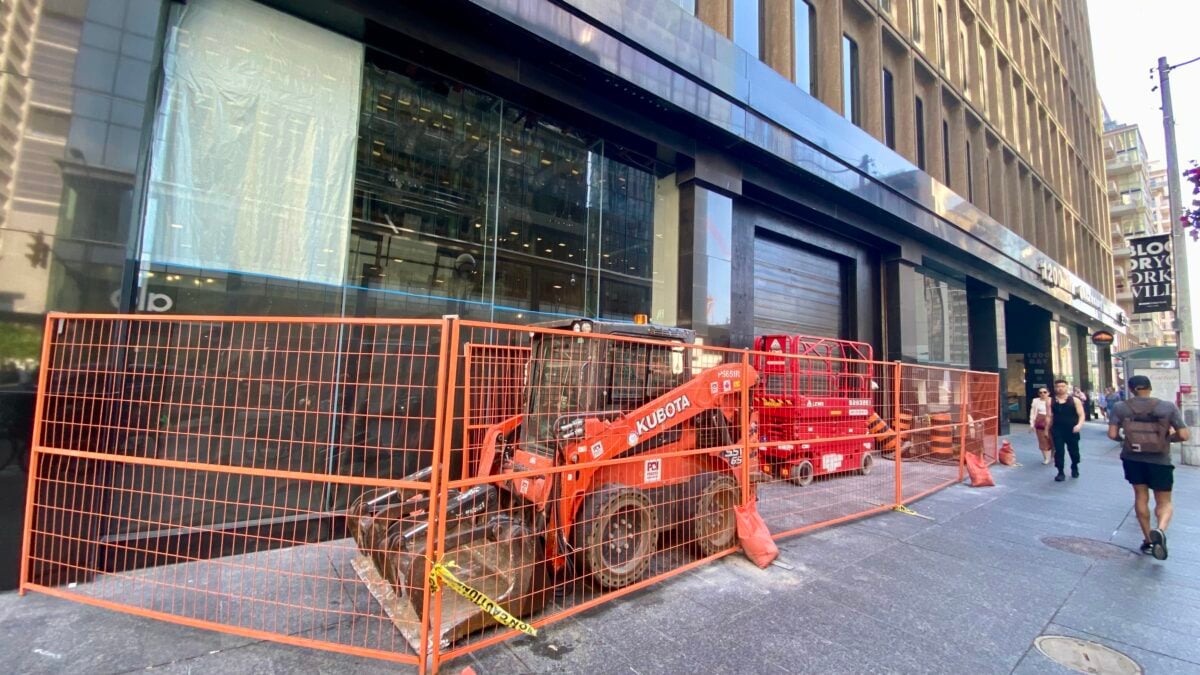
A complicated construction project: facade modifications ahead of building a new two-level Tiffany & Co. flagship store at 1200 Bay Street in Toronto, made possible by joining levels 2 and 3 of the office tower above (by removing the third floor) to create a retail floor with high ceilings. Photo: Craig Patterson
A view further out of the new Tiffany & Co. flagship store at 1200 Bay Street/66 Bloor St. W. in Toronto. Photo: Craig Patterson

Tiffany & Co. will have naming rights to the building as part of the lease deal, including the potential to add branding to the top of the building’s south, east and north elevations. The building will be painted a new colour, while the lower level of the building will see new cladding for retail tenant Tiffany. 

The 1200 Bay Street building is owned by ProWinko Canada and The Kroonenberg Groep, who bought the property in 2016. The 12-storey 100,000 square foot building was built in 1966, and had been proposed for demolition with a previous proposal for an 87-storey tower on the site prior to Tiffany’s lease deal. 

The 1200 Bay building is currently occupied by multiple office and retail tenants. During the pandemic, Hakim Optical leased the former Davids Footwear space at 66 Bloor Street West, where it operated a store until its closure last month. An adjacent retail space facing Bloor Street was once occupied by Davids-owned Capezio, which subsequently became a pop-up store for a skincare brand. The main floor of 1200 Bay Street also houses Japanese pastry concept Hazukido and pizza concept Pi-Co, both of which will be staying. 

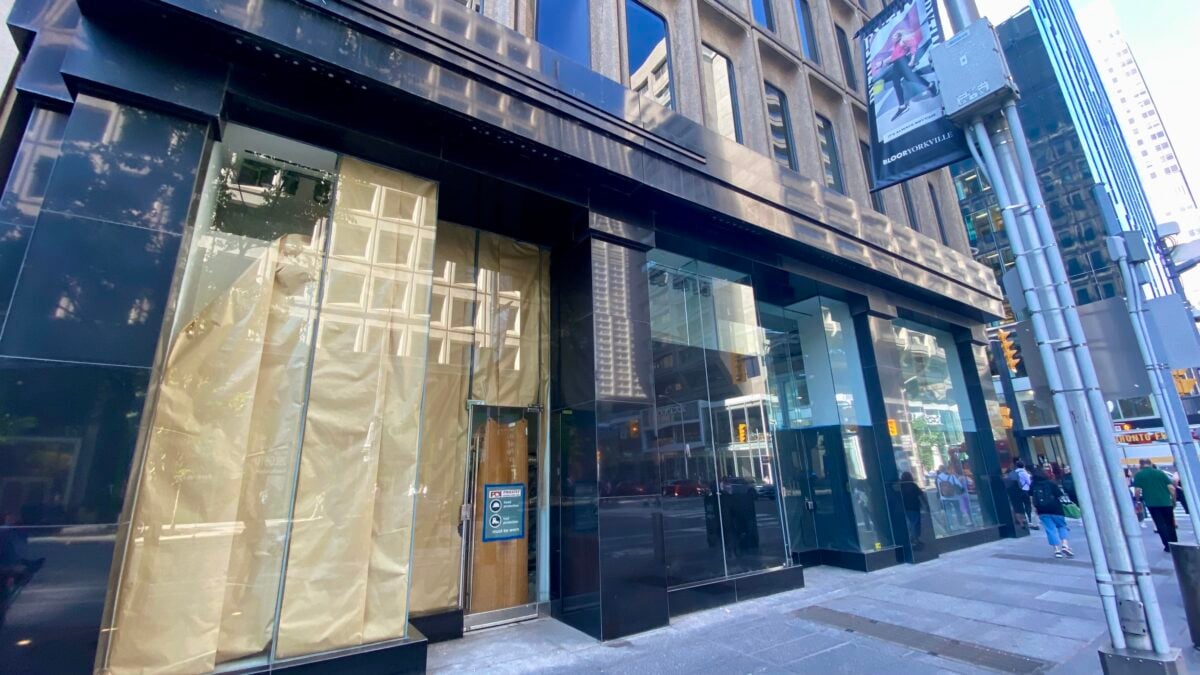
Bloor Street facade of the future Tiffany & Co. store at 1200 Bay Street/66 Bloor Street West in Toronto. Photo: Craig Patterson
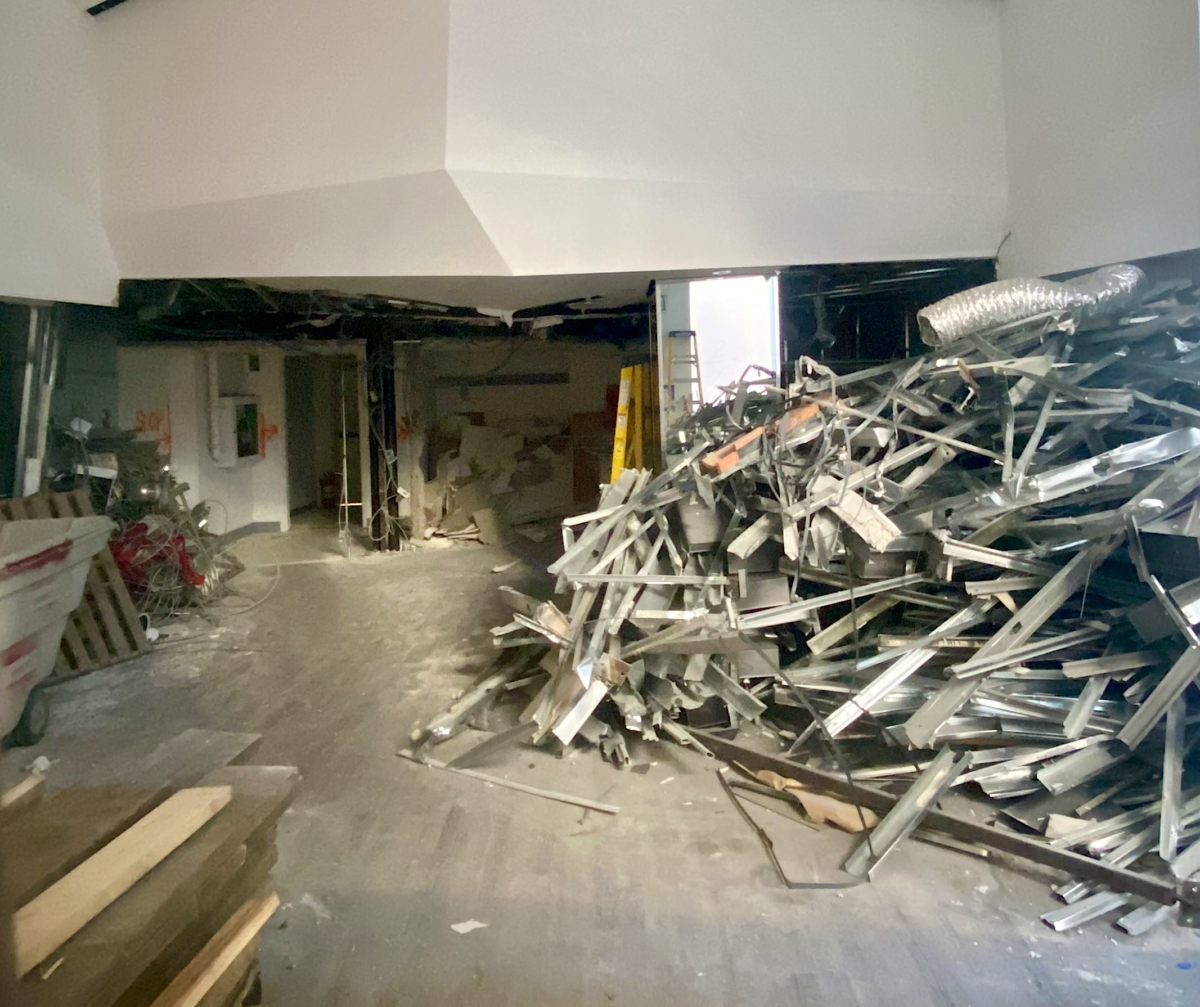
Demolition work has begun inside the former Davids Footwear/Capezio space at 66 Bloor St. West/1200 Bay Street in Toronto. Photo: Craig Patterson

The upper levels of 1200 Bay Street currently house office tenants, some of which have already relocated for Tiffany’s arrival in the building. That includes the Bloor-Yorkville BIA, which relocated its offices months ago across the street to 77 Bloor Street West. 

The Tiffany announcement is an exciting one, marking the move of luxury retail to the prominent corner of Bloor Street West and Bay Street. In April of 2019, Birks CEO Jean Christophe Bedos said that the corner was “the best retail location in all of Canada”, with his company operating a Birks flagship store diagonally across the intersection at the Manulife Centre. The intersection also features Canada’s first Alo Yoga store that opened in September of 2022 at the northeast corner, as well as a TD Bank at the southwest corner at the base of the 77 Bloor Street W. office tower. Bloor Street is seeing an unprecedented number of luxury brands opening flagship store locations along a key stretch near Avenue Road. 

Tiffany & Co. currently operates a 9,700 square foot store spanning two levels at 150 Bloor Street West. The store features a street-level of about 3,000 square feet and a second level spanning nearly 7,000 square feet. The store opened in September of 2013 in a building owned by Spain-based Pontegadea. 

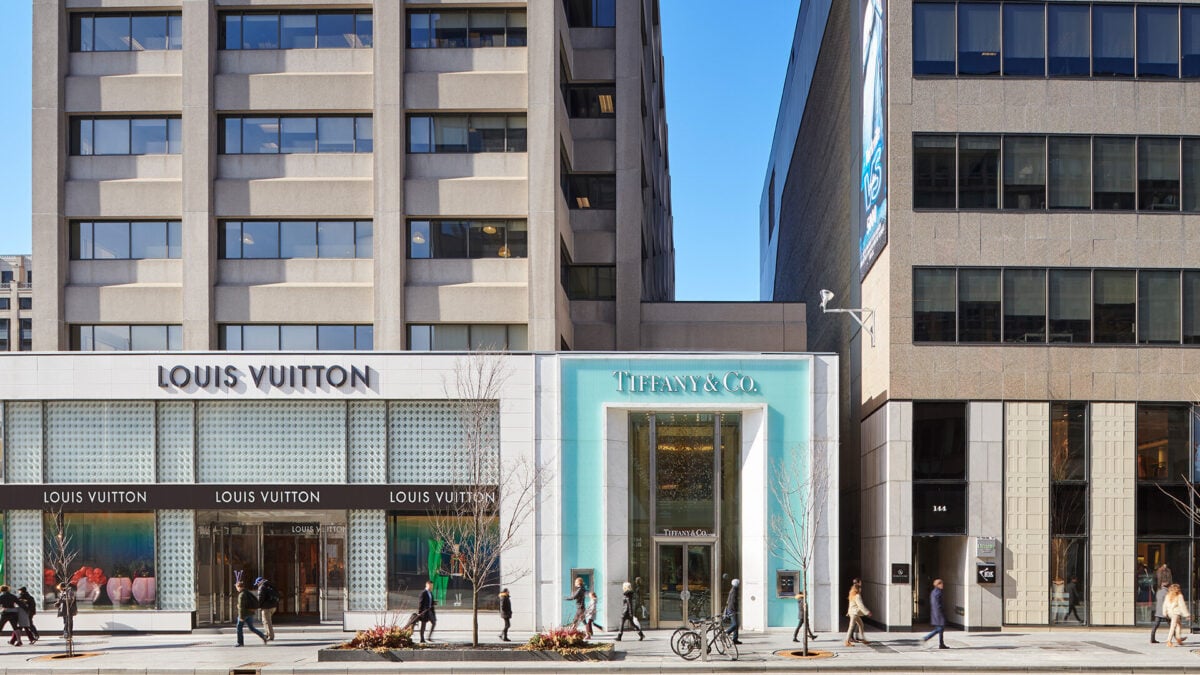
Current Tiffany & Co. store at 150 Bloor Street West — the store opened in 2013 and replaced a store that operated for 22 years prior at 85 Bloor St. West. Photo: One Yorkville Commercial
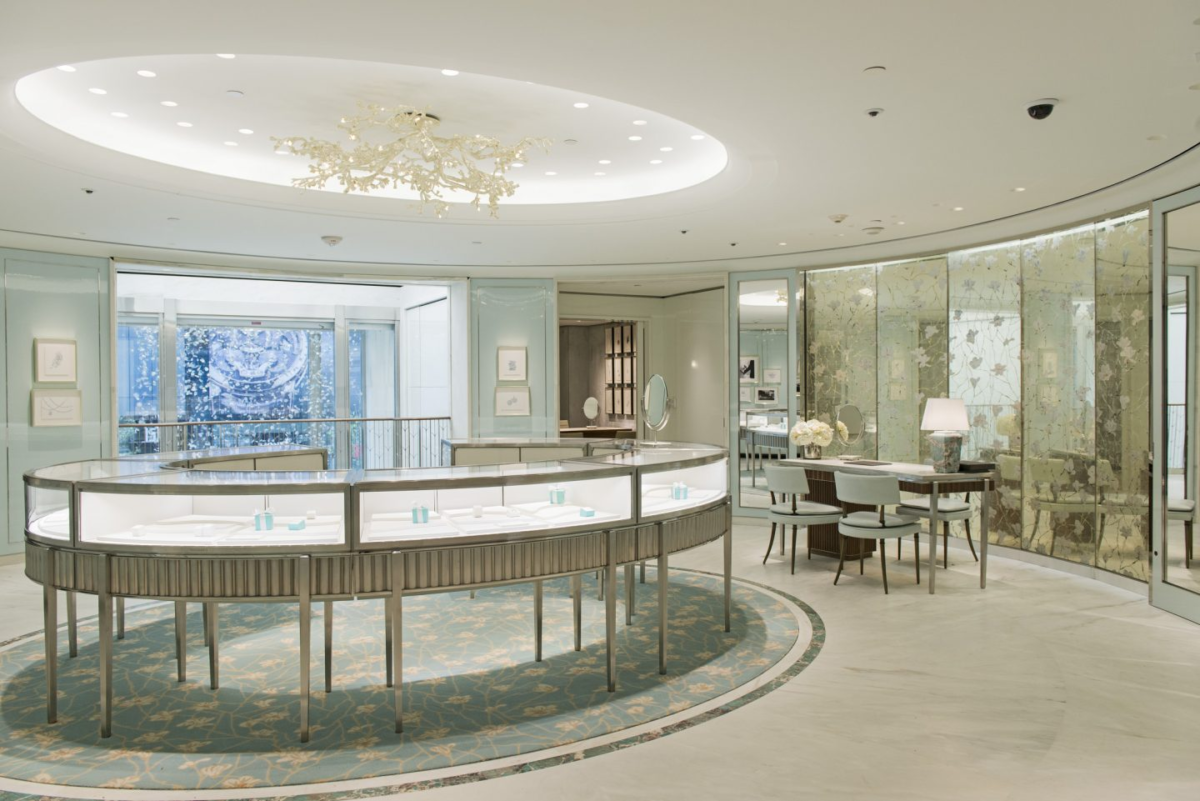
Inside Tiffany & Co. at 150 Bloor St. W. in Toronto. Photo: A Side of Style

The 150 Bloor Tiffany store replaced a four-level 13,450 square foot Tiffany location that operated for about 22 years at 85 Bloor Street West. That store was the first for Tiffany & Co. in Canada when it opened in 1991. The retail space is currently occupied by a COS store, which will eventually be demolished for a tower redevelopment of the block. 

In Canada, Tiffany & Co. also operates standalone stores in Vancouver at 723 Burrard Street as well as at West Edmonton Mall in Edmonton, CF Chinook Centre in Calgary, Yorkdale Shopping Centre in Toronto, CF Sherway Gardens in Toronto, CF Rideau Centre in Ottawa, and at the Ritz Carlton Hotel on Sherbrooke Street West in downtown Montreal. Tiffany also operates concessions in Holt Renfrew stores in Vancouver, Calgary, Mississauga and at Holt Renfrew Ogilvy in Montreal. 

The Yorkdale Tiffany & Co. store is currently being overhauled with a major renovation and expansion. The 6,085 square foot store that opened in 2009 will grow by taking an additional 2,240 square feet previously occupied by luxury brand Jimmy Choo (which is relocating in the mall). Tiffany & Co. has relocated to a standalone pop-up space at Yorkdale, and it also recently opened a small concession space at Yorkdale’s Holt Renfrew store — both will operate until the newly renovated and larger Tiffany store reopens.

There was recently an announcement of a new Tiffany store at Royalmount opening in August. The brand will also return to the Oakridge Park development in Vancouver in 2025 when the overhauled Oakridge Centre reopens in a mixed-use format. 

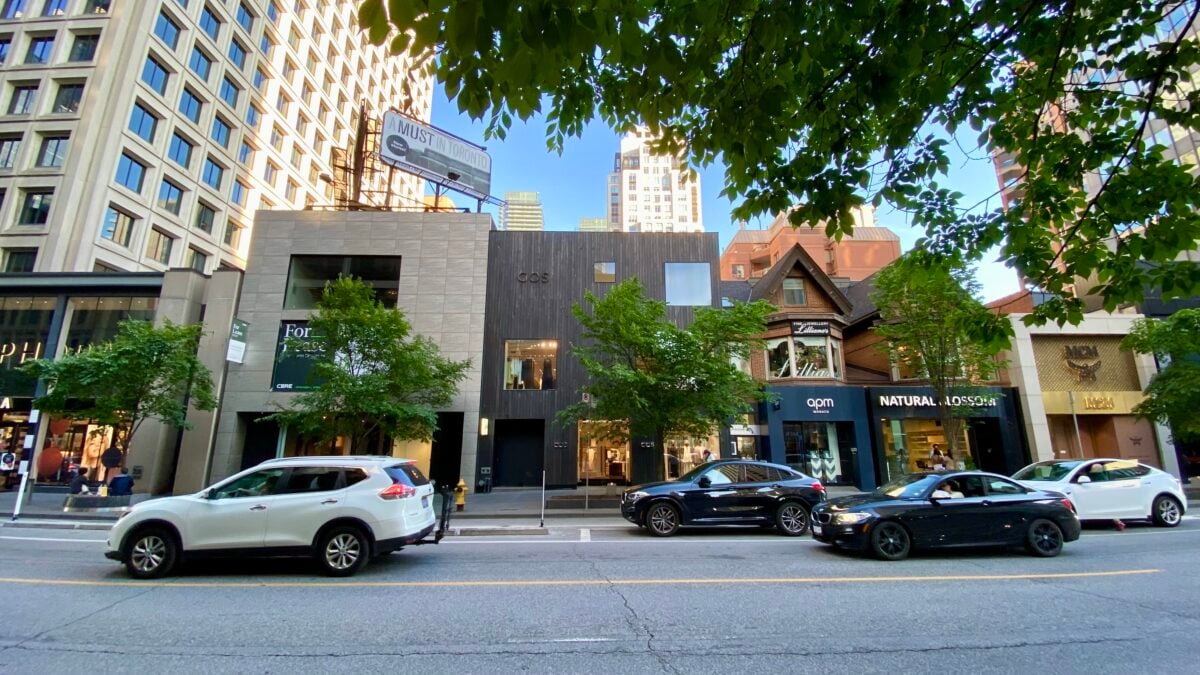
Former Tiffany & Co. (1991-2013) and Current COS at 85 Bloor Street West in Toronto (Image: Craig Patterson)
Former Tiffany & Co. store at 85 Bloor St. W. in Toronto in 2005. Photo: Gregor Shaw.

Vancouver was the second Canadian city that Tiffany & Co. expanded into in 1993 when it opened a 700 square foot boutique at Holt Renfrew. Tiffany subsequently expanded into Holt Renfrew’s Montreal and Calgary stores in the 1990s with shop-in-stores. The brand has since grown substantially with a mix of standalone locations and concessions — a similar mix seen globally in other countries where Tiffany & Co. has a presence. LVMH acquired Tiffany & Co. in early 2021 for USD $15.8 billion.

We’ll follow up on this article when Tiffany & Co. opens its new Bloor Street flagship store, and will update readers when we learn of what will replace its current storefront at 150 Bloor St. W.

PLUS Closes 7 of 8 Stores, Including Yorkdale Flagship, Amid Economic Pressures

PLUS Square One (Image: PLUS)

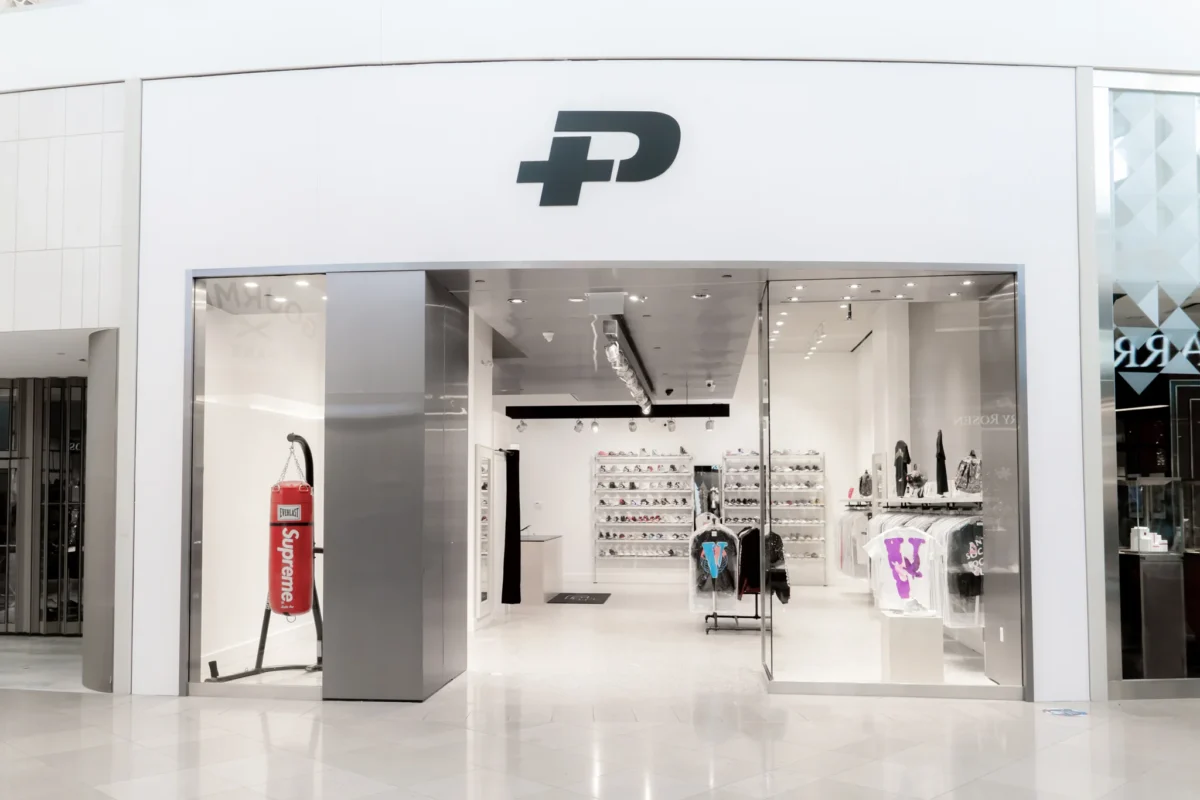
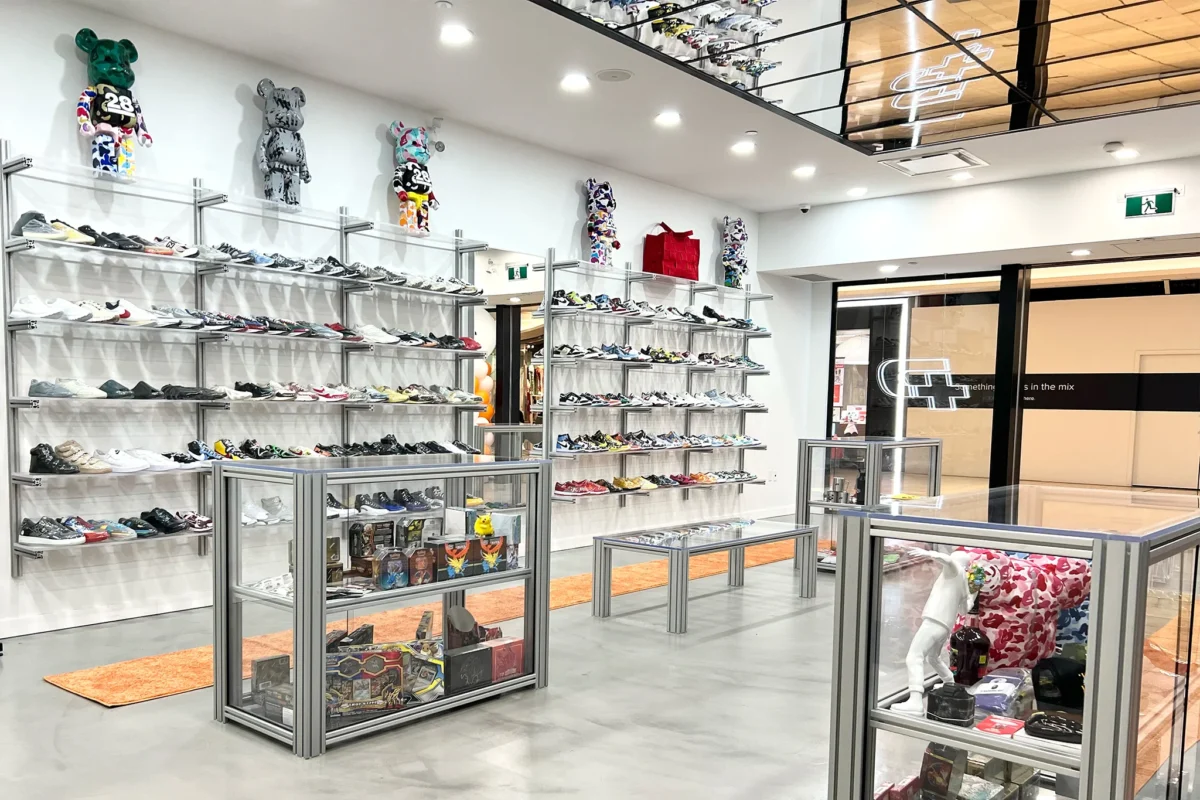
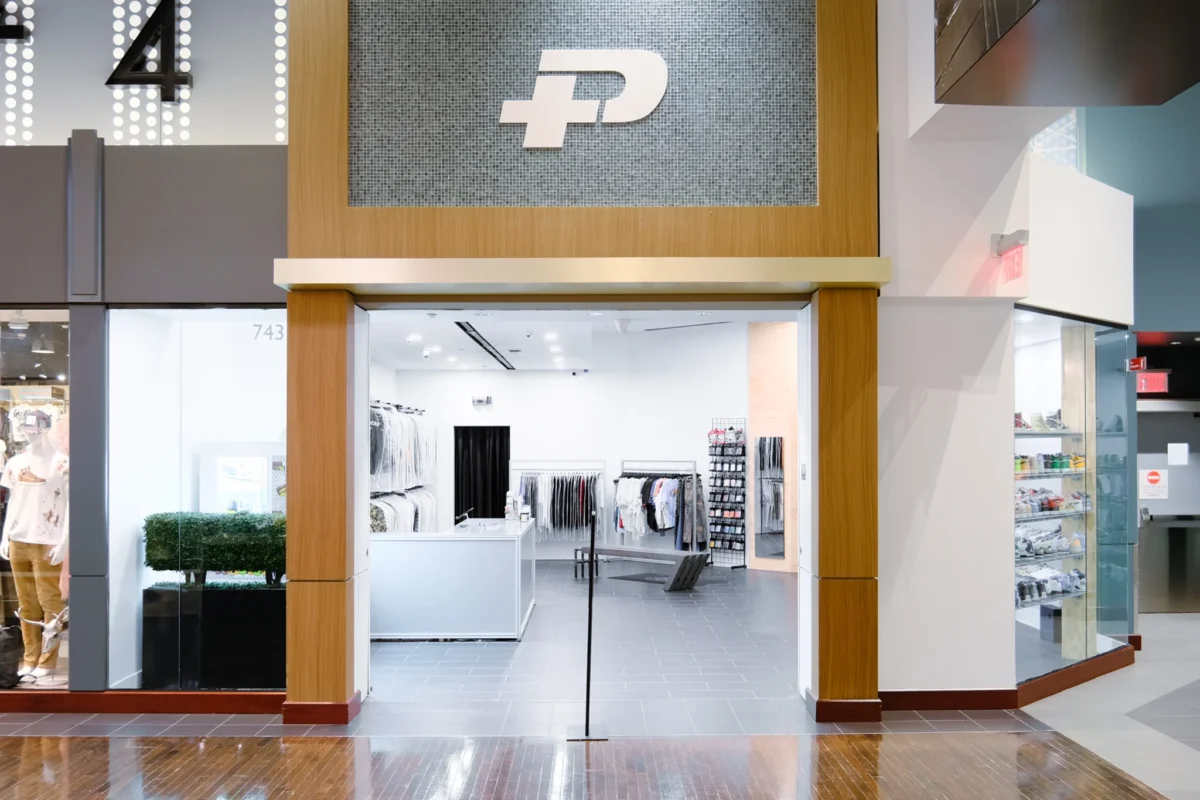
Just a few months after opening a new flagship store at the Yorkdale Shopping Centre in Toronto, PLUS, Canada’s luxury streetwear shop, is closing seven of its eight locations, including the flagship, and consolidating all operations to its store at the Square One Shopping Centre in Toronto.

In a statement, Ibrahim Itani, the company’s CEO, said the brand is proudly still operating and servicing its customers at its Square One location and online and that it intends to continue to do so. 

“After seven incredible years of building PLUS into Canada’s largest retailer of exclusive sneakers, streetwear, and collectibles, we find ourselves at a turning point. Due to a series of unforeseen circumstances, we have had to close our recently reopened flagship store at Yorkdale. This development, paired with the major global economic downturn created a trickle down effect on our business. As a result we made the difficult decision to close seven of our eight locations, and consolidate all our brick and mortar operations to Square One.

“To everyone who has walked through our doors, shared in our passion, and helped us build this incredible community, thank you. Your support and energy have been the cornerstone of our success. We also want to reinforce what we all know to be true, PLUS has always been more than a store. PLUS is a community of People Like Us, and we are deeply grateful for all the memories we have shared together thus far.

“From our first location in Gastown, Vancouver, to opening locations across the top shopping centres across the country, our journey has always been led by a team that does not shy away from challenges. This new one ahead of us will be no different for our capable team. We are committed to navigating this period and ensuring PLUS continues to serve you better.”

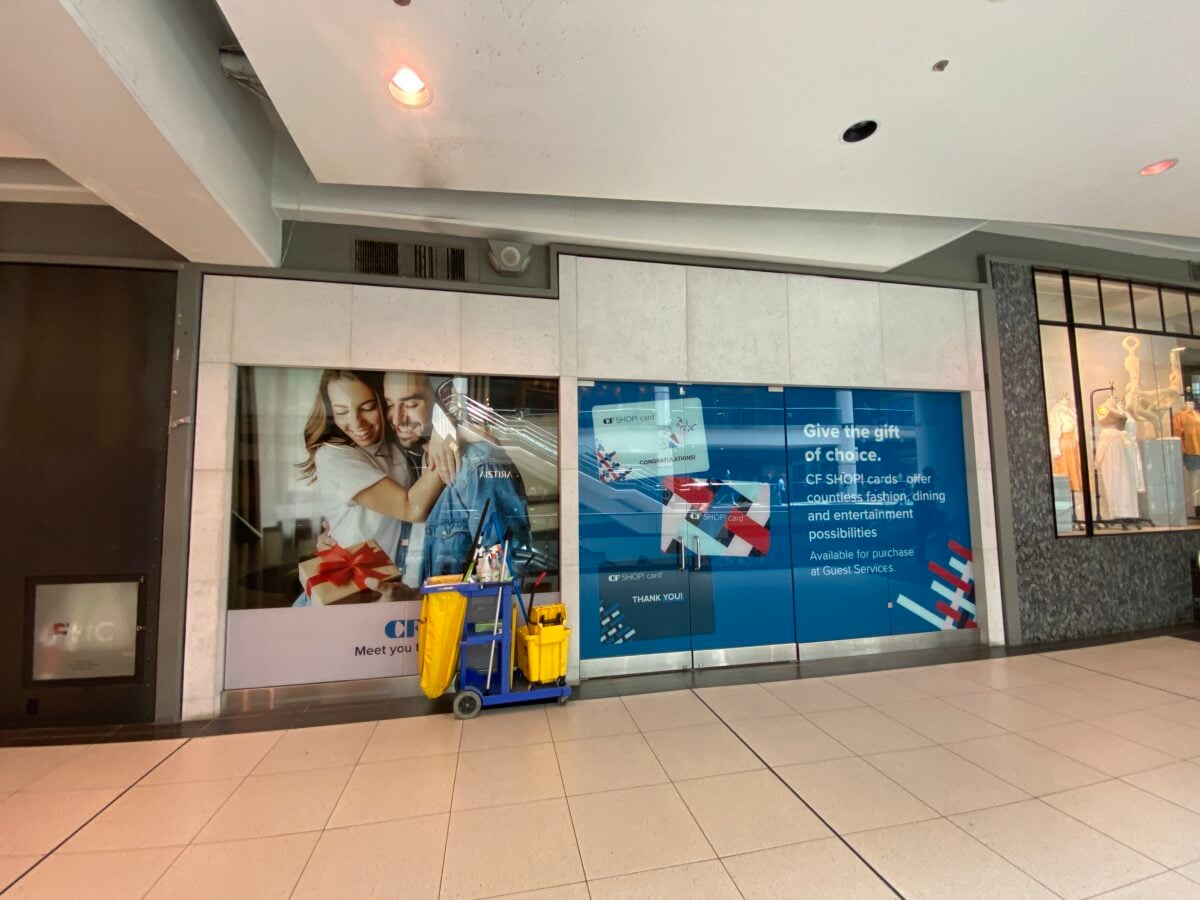
Shuttered PLUS at CF Toronto Eaton Centre (Image: Dustin Fuhs)

In March, the brand announced it was opening a flagship store at Yorkdale. The company’s first location in Ontario was a temporary store in Yorkdale in 2019. The most recent Yorkdale store was the brand’s largest store of its eight locations in Canada.

One retail industry expert said many retailers were given attractive rent deals during COVID which have likely expired, and profitability is now impossible.

“This segment (streetwear + collectible) boomed during the pandemic, but macroeconomic conditions are causing a pullback,” said the expert.

Graham Heuman, Retail Insights Lead for the J.C. Williams Group, said the concept isn’t particularly proprietary, especially in the GTA where sneaker and streetwear resale shops are abundant. 

Graham Heuman

“Additionally, they face constant competition from major e-commerce players like StockX, Grailed, and GOAT, which likely dominate the market share. These multinational businesses attract a wider audience and the seller likely stands to make more from the sale,” he said. “The value of the products they sell is highly volatile, as they are sold at ‘market value’ and rely heavily on hype. Unlike traditional retail, where pricing at MSRP gives consumers assurance of paying the standard cost, these items are priced based on scarcity rather than quality, price, or value.”

Heuman speculated on two things.

“They may have capitalized on lower retail rents following the pandemic by signing short-term leases. It’s possible that their physical stores served more as marketing tools than anything else. With a robust online store that has lower overhead costs, this could be an integral part of their overall strategy,” he said. 

“Inventory may have always been a challenge for them. Relying primarily on a model of buying from the public makes it difficult to maintain eight stores with consistent inventory.”

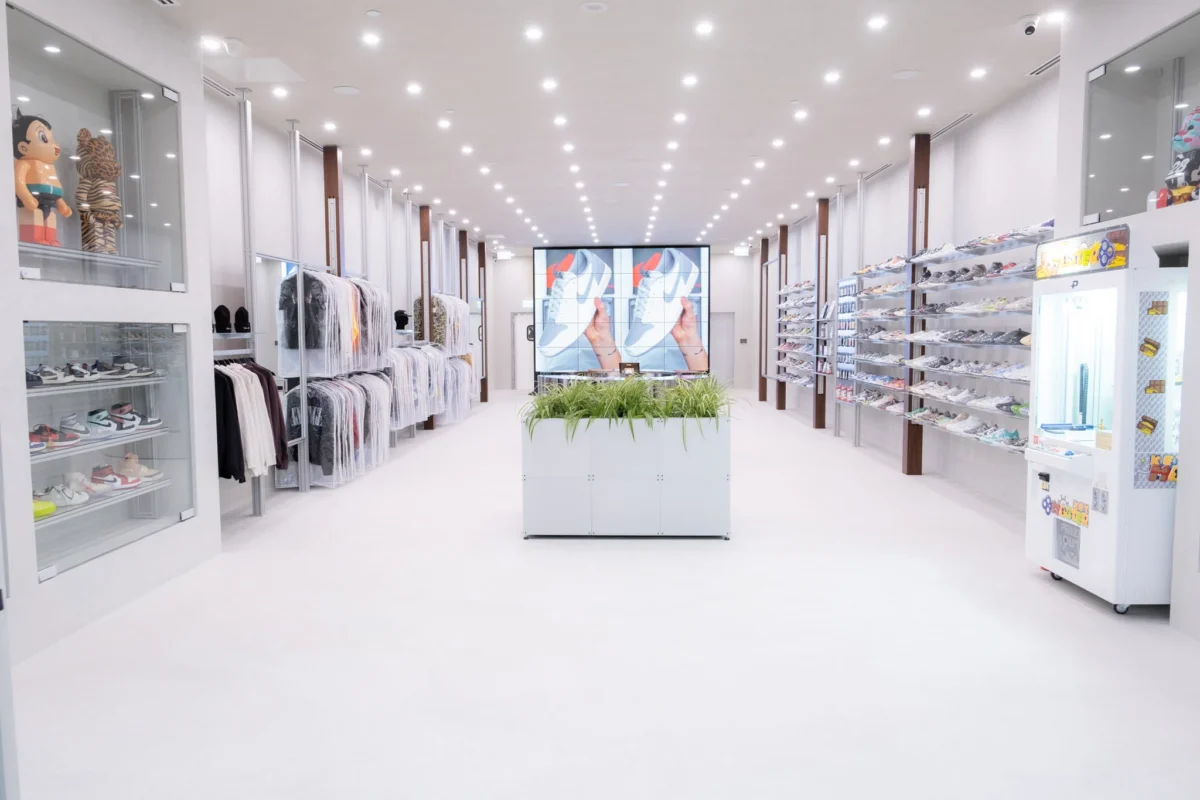
Former PLUS at Yorkdale Shopping Centre (Image: PLUS)
Former PLUS CF Sherway Gardens (Image: PLUS)

Bruce Winder, Retail Analyst and Author, said he was saddened to hear about the significant downsizing of PLUS streetwear. 

Bruce Winder

“Without knowing the details of the financial arrangements of the company, one can only speculate that they expanded at a very tough time economically.  With consumers cutting back on discretionary purchases, it is not hard to imagine how their assortment of highly priced streetwear and collectibles produced assumed lackluster sales of late,” he said.

“I think the magnitude of the brand’s downsize and the timing of the Yorkdale store closing not long after opening raises questions regarding capital budgeting processes at the company. Hard lessons learned for potential future expansion plans. I wish them well as they navigate these tough times. Hopefully their connection to their core customer remains and allows them to survive until consumer spending on luxury streetwear picks up again.”

Liza Amlani

Liza Amlani, Principal/Founder, Retail Strategy Group, and Co-Founder, The Merchant Life, discussed the latest developments.

“Although it’s sad to see PLUS close doors, I believe it was inevitable. They scaled too quickly and in a niche category. There is an element of exclusivity and a treasure hunt that comes with selling the latest releases and collectibles. The air of exclusivity can get lost if anyone in a Canadian mall can access the products. PLUS should have had 2-3 stores and carried the rest of their inventory online.”

Doug Stephens

Doug Stephens, Founder of Retail Prophet, said: “Trading on an old sports adage . . . Timing isn’t everything in fashion. It’s the only thing. And there are many in the fashion editorial space who believe the high-end sneaker and streetwear movements’ time is coming to an end. Even the late streetwear guru Virgil Abloh was saying as early as 2020 that he believed streetwear was approaching its sunset. Couple that reality with the backdrop of economic uncertainty in the Canadian economy and it makes for a pretty toxic mix for high-end streetwear retail.”

PLUS CF Pacific Centre (Image: PLUS)

George Minakakis, CEO, Inception Retail Group, said even the most well-crafted strategies and admired brands can face unexpected challenges in retail. 

George Minakakis

“Despite its strong community engagement and reputation for quality, PLUS has found itself at a crucial turning point, perhaps at an end-game juncture. What we are seeing here is the fragility in retail that plagues many in the industry. The growth was not sustainable, and the fault lines were very vulnerable,” he said. 

“The economy is being impacted by inflation and higher interest rates, which is impacting consumer spending. Economic instability often leads to tighter budgets, causing consumers to prioritize essential purchases over luxury items like high-end sneakers and streetwear. Consolidating to one location and continuing to operate their online platform tells us consumers are not buying. 

“Seven stores in seven years is not overexpansion. Unless you have misread the tea leaves regarding market appeal, revenue expectations can dry up quickly, and blaming the economy is easy but not necessarily accurate. In essence, it is overexpansion with the wrong positioning. Relying too heavily on a niche market is risky. When you look at their assortments, they are selling and competing with large brands that have their own branded shops and sell through many other channels where their products can be purchased. I’ve learned over the years that Vancouver isn’t Toronto anymore than New York is LA. This is a cautionary tale of being overly optimistic that a brand’s vision and merchandising practices can be translated into all consumer markets. It simply isn’t the real world. The more specialized or niche it gets, the riskier the landscape.”

PLUS Vaughan Mills (Image: PLUS)

Minakakis said that in his view the brand has run into fiscal challenges, otherwise, you wouldn’t close stores. 

“Without more transparent information, it’s difficult to say what the real problem is. However, it is a safe assumption that most of this is revenue-related, as such PLUS cannot keep up with its operating expenses nor able to take share from its established sportswear competitors,” he added.

Royalmount in Montreal Announces Major Art Initiative Ahead of August Opening

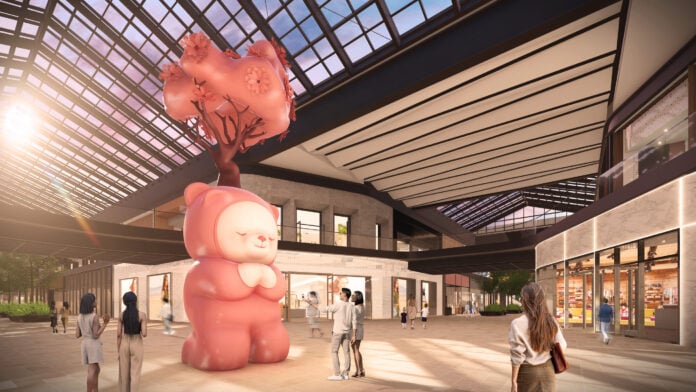
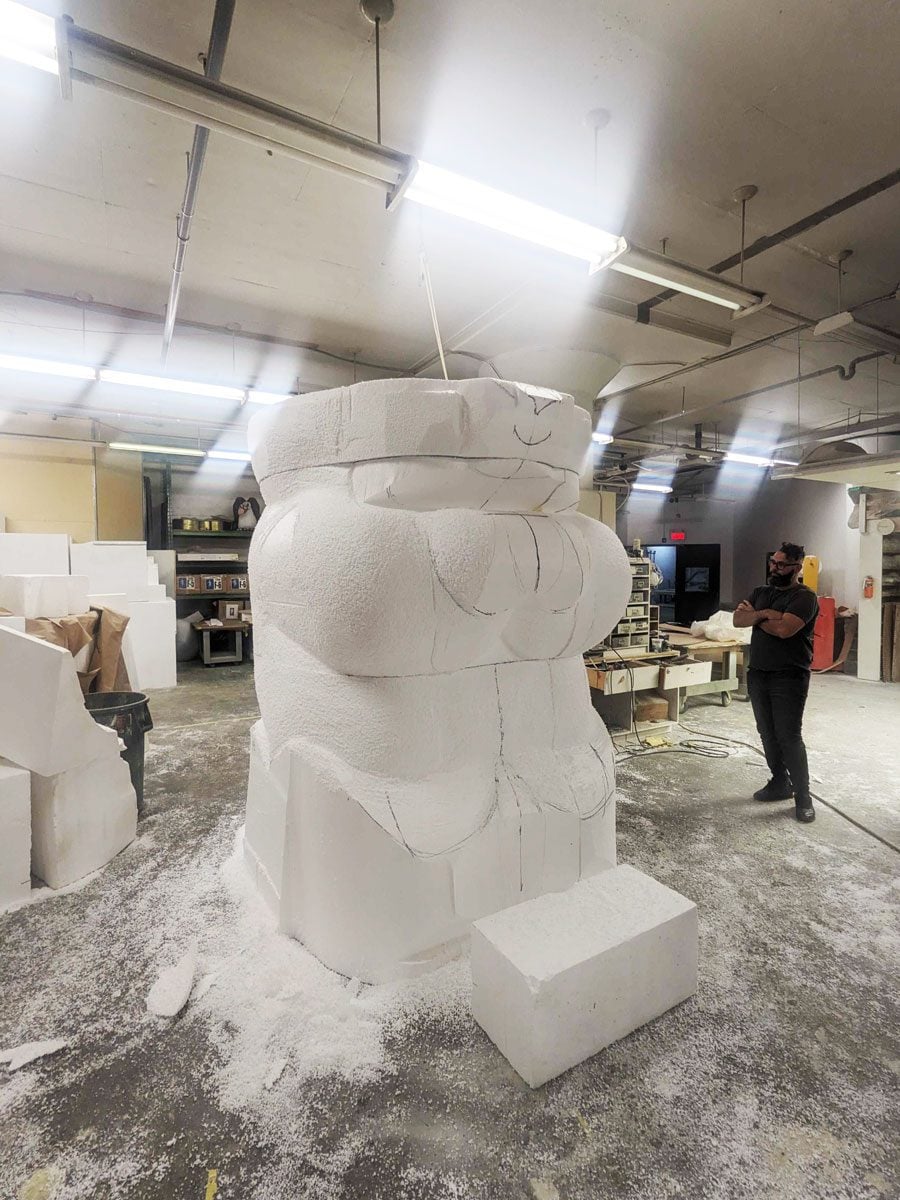
Royalmount rendering - Chun Hua Catherine Dong “Wishing Bear” (CNW Group/Royalmount)

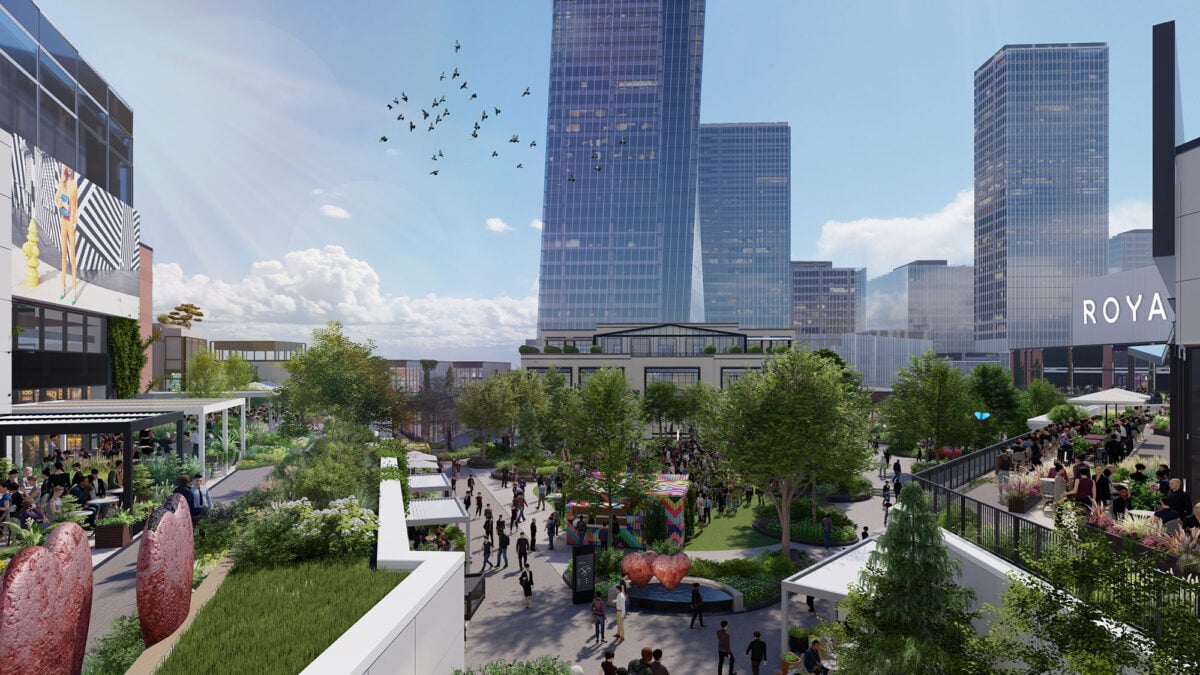
Ahead of its scheduled grand opening on August 15 of this year, developer Carbonleo has announced an initiative that will see artwork permanently placed in the retail component of Royalmount. A total of 15 works of art from 17 artists will be showcased, as part of an effort to heighten the visitor experience and further differentiate the centre from competitors. 

Carbonleo says that the artists are among the “boldest local and international artists of our time”, creating a unique aesthetic and wide-ranging visual experience for guests.      

Andrew Lutfy

“The art walk speaks to Royalmount’s unifying essence. We want to celebrate art, democratize it, and open it for everyone to discover,” said Andrew Lutfy, CEO of Carbonleo and co-owner of Royalmount in a statement. “People should be inspired by, enjoy, and be moved by the works of artists from here and elsewhere. By making human connections the driving force behind our initiatives, we look forward to offering the community an evolving visual experience.”

“An open-air museum visitors will find enriching, that will kindle their curiosity, their emotions, and spark discovery.”

(Left) CHIAOZZA Garden at Coachella – Photography by Colin Douglas Gray and (Right) Bivouac by Collectif Escargo

The large original art pieces will be stationed in various areas of Royalmount when it opens — the works’ titles will be unveiled this summer. To keep things fresh, Carbonleo says that additional art pieces will be added on an ongoing basis to further enrich the experience. 

The art walk was made possible by a collaboration with MASSIVart, which is well-known in Montreal’s art community, to make this unprecedented art walk happen.

Claire Tousignant

“This is an incredible initiative, and thanks to Royalmount’s bold vision, we were able to bring together the most inspiring talent, both local and global, to design an art walk like no other in Montreal,” said Claire Tousignant, a partner at MASSIVart in charge of overseeing the art walk initiative. “This collection of powerfully arresting works will stimulate social connections, and together they will form an inspiring gathering place. This is how public art is at its most effective, where art and the reaction it generates meet.” 

Participating artists were asked to create a series of works around the theme of Unexpected Horizons. The art walk will showcase works by Hanna Barczyk (Montreal), Nicole Beno (Toronto), Bikismo (Puerto Rico), Chiaozza (New York), Cooke-Sasseville (Quebec), Chun Hua Catherine Dong (Montreal), Collectif Escargo (Montreal), Isidro Ferrer (Spain), Cristina Mejías (Spain), Drew Merritt (Los Angeles), Zéh Palito (Brazil), Matthias Pliessnig (Rhode Island), Soft Lab (New York) and Ara Thorose (New York). 

MASSIVart is also working jointly with LNDMRK and Art Souterrain to bring the art walk to fruition.

The art work will create a unique and interesting visual element to the shopping centre, which will be unlike anything in the region. The art work is part of an effort to enhance the overall visitor experience to Royalmount, with a goal of bringing in shoppers and having them return. Royalmount will compete with the downtown core as well as a handful of suburban shopping centres for customers, with Royalmount’s differentiation including its newness, brand-focused tenant mix and a range of attractions. 

Royalmount’s art initiative is also likely an attempt to attract a monied visitor to the shopping centre, which will feature a roster of luxury brands not found elsewhere in Quebec. Luxury brands will cluster along a central corridor on the main floor of the shopping centre component of Royalmount, with art work located in central areas that will be visible from some of the big-brand stores. In November of 2022, Royalmount announced a roster of luxury brands secured for the retail centre that include Louis Vuitton, Tiffany & Co., and Gucci, as well as French contemporary brands Sandro and Maje. In June of 2023, Royalmount announced further luxury brands including Saint Laurent, Versace, Jimmy Choo, David Yurman and TAG Heuer — all of which will be the first standalone locations for the Montreal market.

Rendering of the luxury wing at Royalmount — Tiffany & Co. will be in the unit with the light blue facade, with Louis Vuitton across from it. Rendering: Carbonleo
Royalmount (Image: CarbonLeo)

In June of 2023, several Montreal-based brands were announced to be opening stores at Royalmount. They include Acuité Visuelle, Aldo, Arc’teryx, Bikini Village, Browns Shoes, Dynamite, Garage, Influenceu, Judith & Charles, La Canadienne, La Vie en Rose, Mackage, Moose Knuckles and Rudsak.

Other brands released by Carbonleo for publication include US-based Michael Kors — owned by the same parent company as Versace and Jimmy Choo. In April, newly announced retailers at Royalmount include Moncler, Longchamp, Veronica Beard, Anine Bing, Roche Bobois and Canada Goose, Zara, Nike, Mango, H&M, Alo Yoga, and Sephora. 

Royalmount (Rendering: Carbonleo)
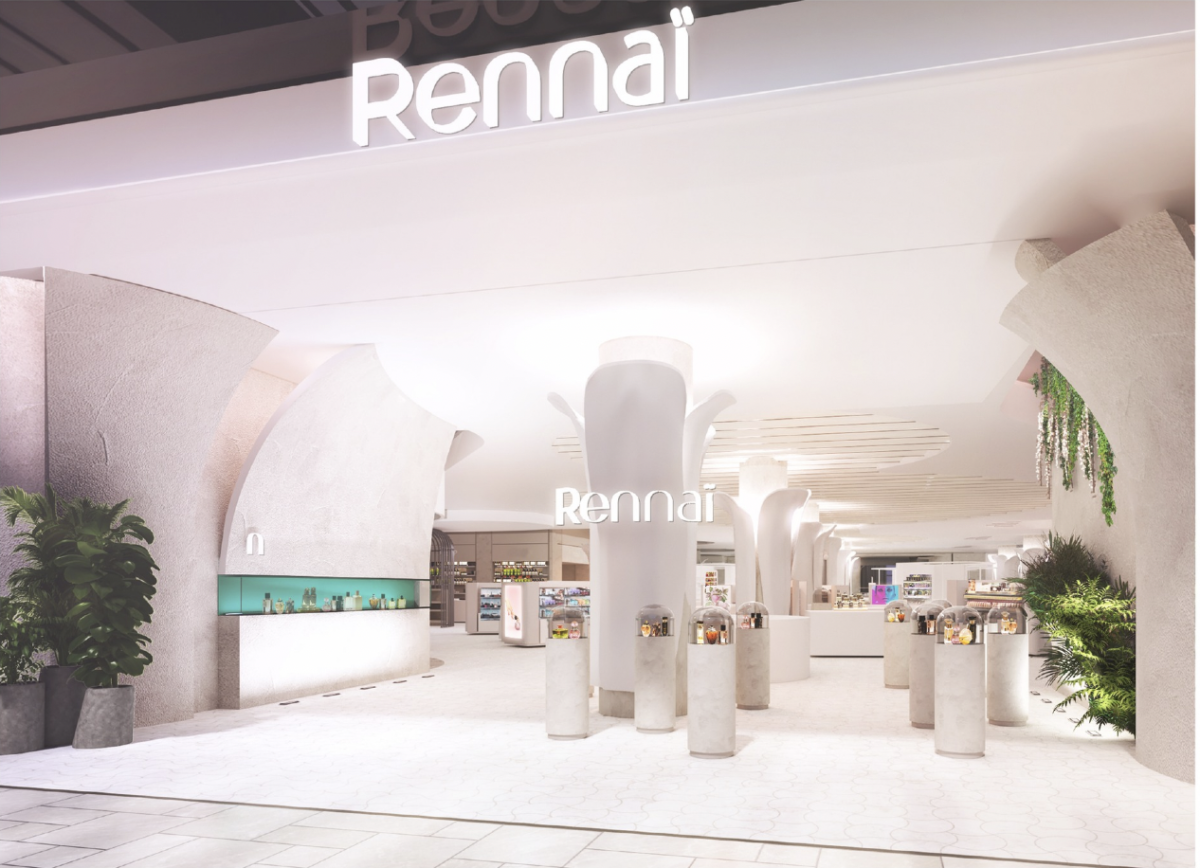
Rendering of the new Rennai beauty hall at Royalmount. Image supplied.

Previous larger-format retailer announcements include home furnishings retailer RH (occupying about 46,000 square feet) and Rennaï, a beauty hall concept spanning about 36,000 square feet housing a retail presence for various leading brands.

In April, as well, details on a newly announced food hall were released.  Le Fou Fou, which will span about 35,000 square feet and be run by MTB Collective. The European-style food hall will have 12 distinct culinary offerings including catering plus four bars with indoor/outdoor dining that seats over 900 guests. It’s described as being Montreal’s first food hall to combine top-tier talent, hi-touch technology and programming all year round.

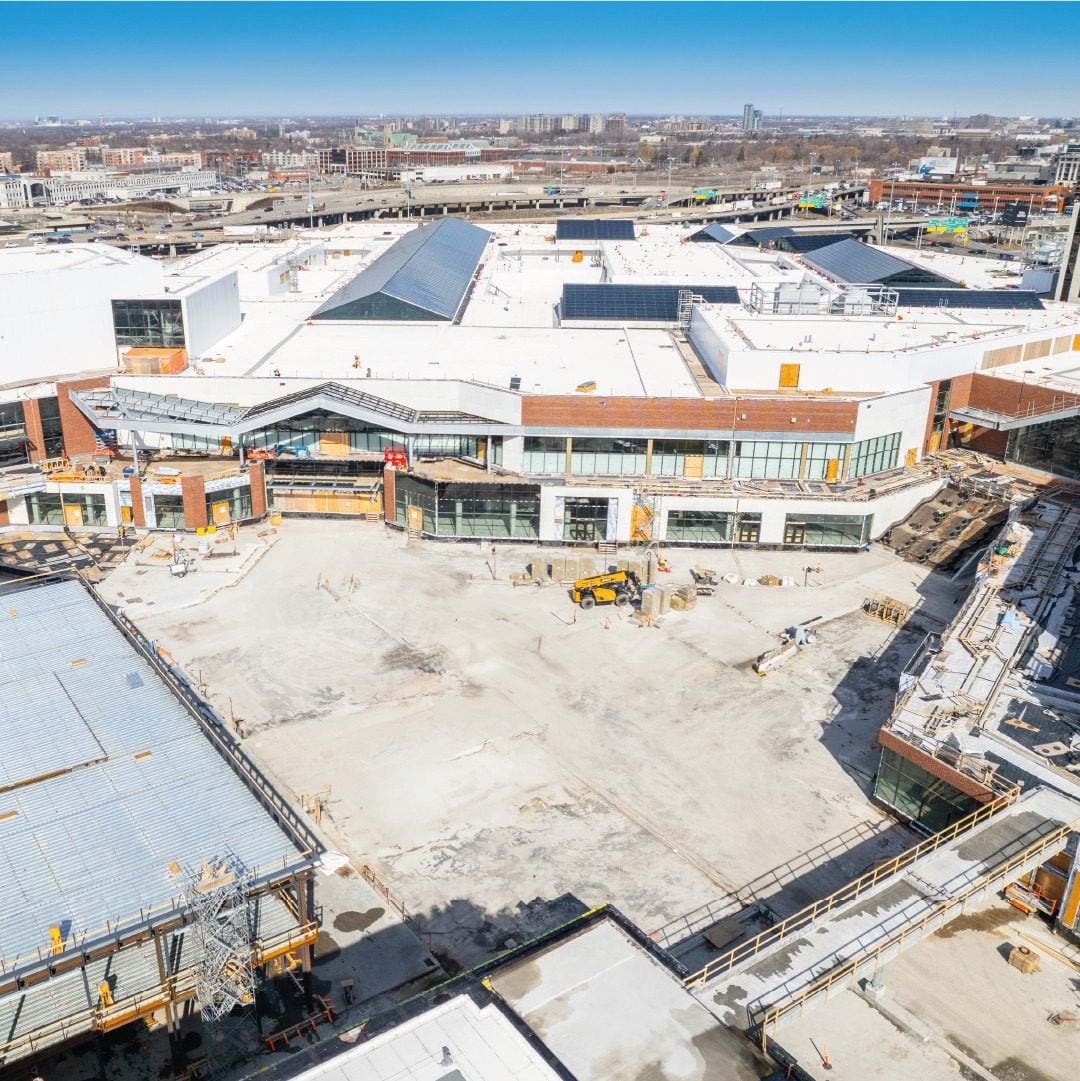
The $7 billion Royalmount development, set to open in August of 2024, will be the largest  project of its kind in Canadian history, according to Carbonleo. The project has been under construction since before the pandemic and in the spring of 2019 Retail Insider attended the ground-breaking of Royalmount which at the time was a former industrial site with construction equipment preparing to begin building the complex.

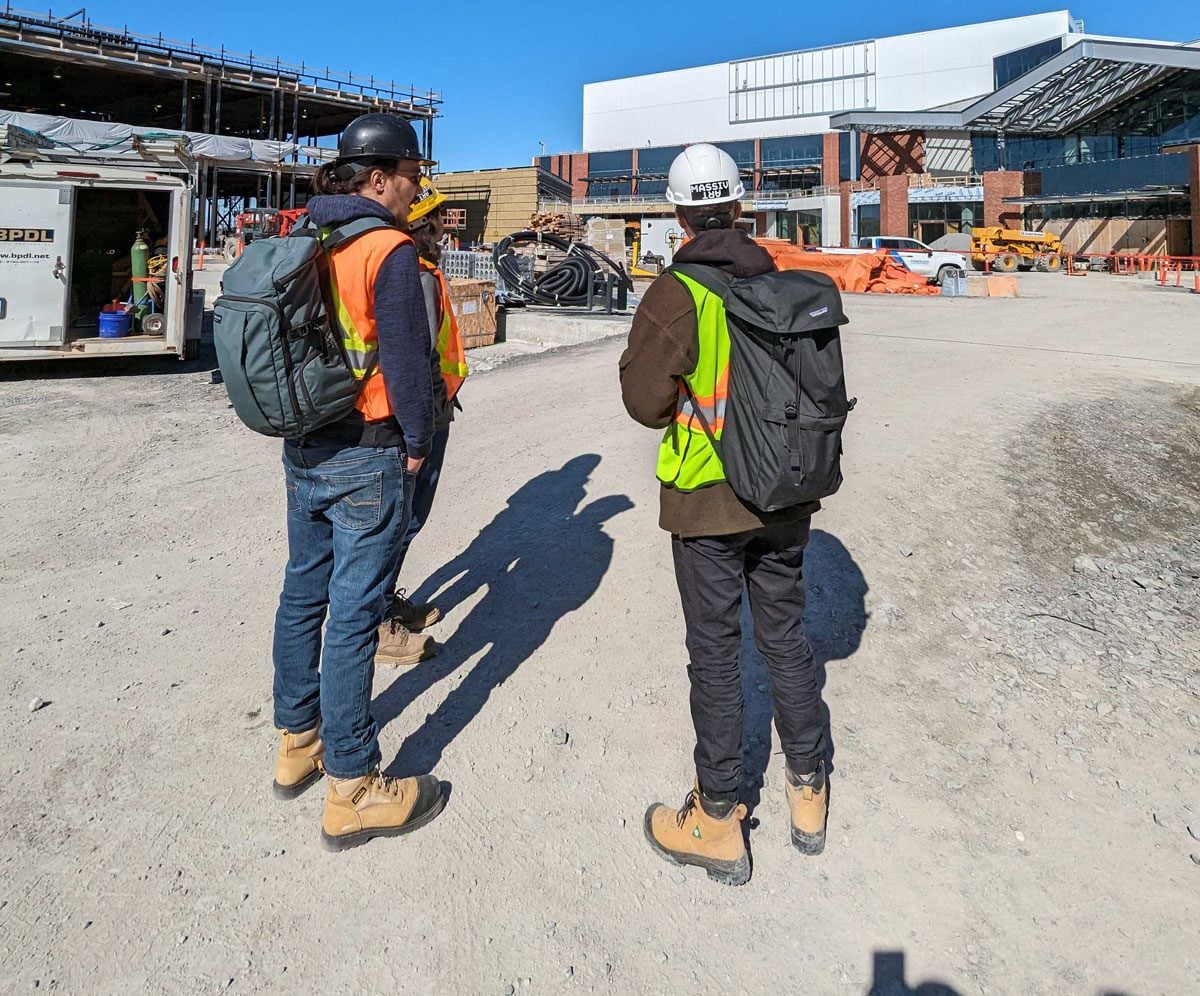
On Location at Royalmount (Image: MASSIVart)
Image: Carbonleo

Royalmount’s first phase will include an 824,000 square foot two-level retail and lifestyle complex, which will be the first 100% carbon-neutral mixed-use development in the Americas and the largest LEED Gold retail project in Canada. Previously announced components include an aquarium and Cineplex, which will bring premium cinemas and The Rec Room entertainment concept to Royalmount.

The privately-funded Royalmount project is being developed in partnership with investor L Catterton, an investment arm of LVMH. The development will include a mix of experiences and will also be home to a three-kilometre linear park called Le Champ Libre, along with an outdoor public plaza.

Carbonleo is a privately owned, Quebec-based real estate development and management company. Founded in 2012, the company has more than 170 employees and counts several major projects to its credit, including Quartier DIX30 and the Four Seasons Montreal Hotel and Private Residences.