Retail Insider is streamlining its Canadian retail news from around the web to include a handful of top news stories that can be viewed quickly during the day. Here are the top stories from the past 24 hours.
But her professional journey didn’t initially begin in the business world.
Huckle was born and raised in Toronto. She went originally to school for nursing.
“That is what I did originally and then I moved on and started at Shoppers Drug Mart and became a pharmacy technician and from there I spent almost 25 years between Shoppers Drug Mart and Loblaw,” she said.
“Over that time I went back to university and got an MBA at Rotman School of Management (University of Toronto) and then a few years later I got a Master of Finance at Queen’s (University) at the Smith School of Business.”
Image: Rachel Huckle
Huckle said timing played a large role in her decision to go from nursing into the business world.
“My mom is a nurse and she’s 82 years old and she’s still working in downtown Toronto at St. Michael’s Hospital. She loves it. It’s her purpose. She works in hemodialysis, renal transplant area. And she does infusions for them and she does some administrative research stuff for them,” she said.
“She’s a dynamite. Feisty. Four foot 11. I think that’s where my first foray came from. I was inspired by seeing what she did. I think in my heart of hearts I’m a nurturer by nature and she is as well. So I went down that path.
“And then I was walking by a Shoppers Drug Mart and they had an opening for a pharmacy technician. I thought well let’s see. I had the medication background from nursing. So that’s where it started. I got the job and never looked back. Loved it. Did so many great things and learned so much going through that company.”
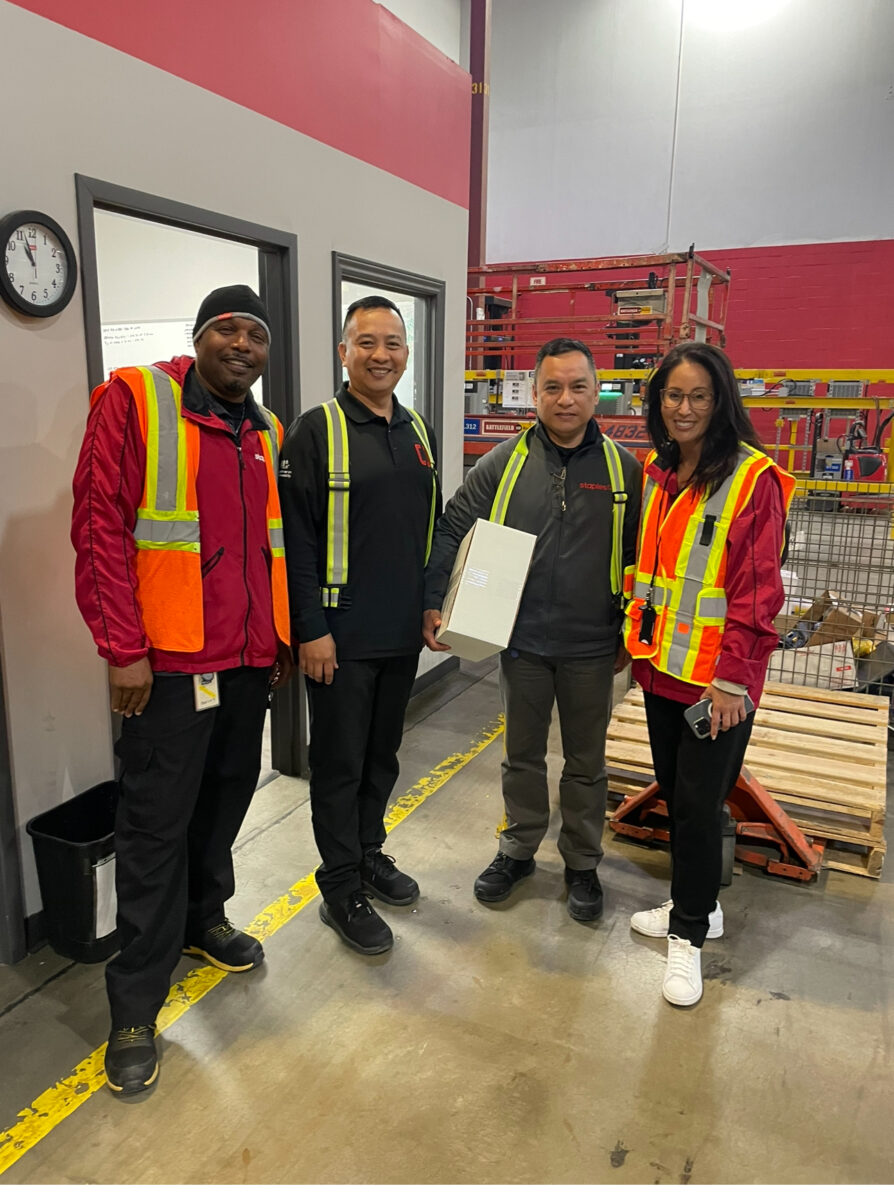
Image: Rachel Huckle
Earlier this year, Huckle was appointed CEO of Staples to oversee the brand’s roughly 300 stores, its digital and services business, and Staples Professional, Canada’s leading B2B business.
Prior to that, Huckle was the company’s Chief Retail Officer and President and Chief Operating Officer.
She has played a pivotal role in its transformation to The Working and Learning Company. Under her guidance, Staples has expanded its products and services to provide more value and selection for consumers, grown its business-to-businesses offerings serving Canadian businesses of all sizes, and forged important strategic partnerships that have significantly enhanced the business.
She came to Staples in 2019 after being Senior Vice President of Merchandising for Loblaw Companies. Prior to that, she had been Senior Vice President, Health and Wellness, for Shoppers.
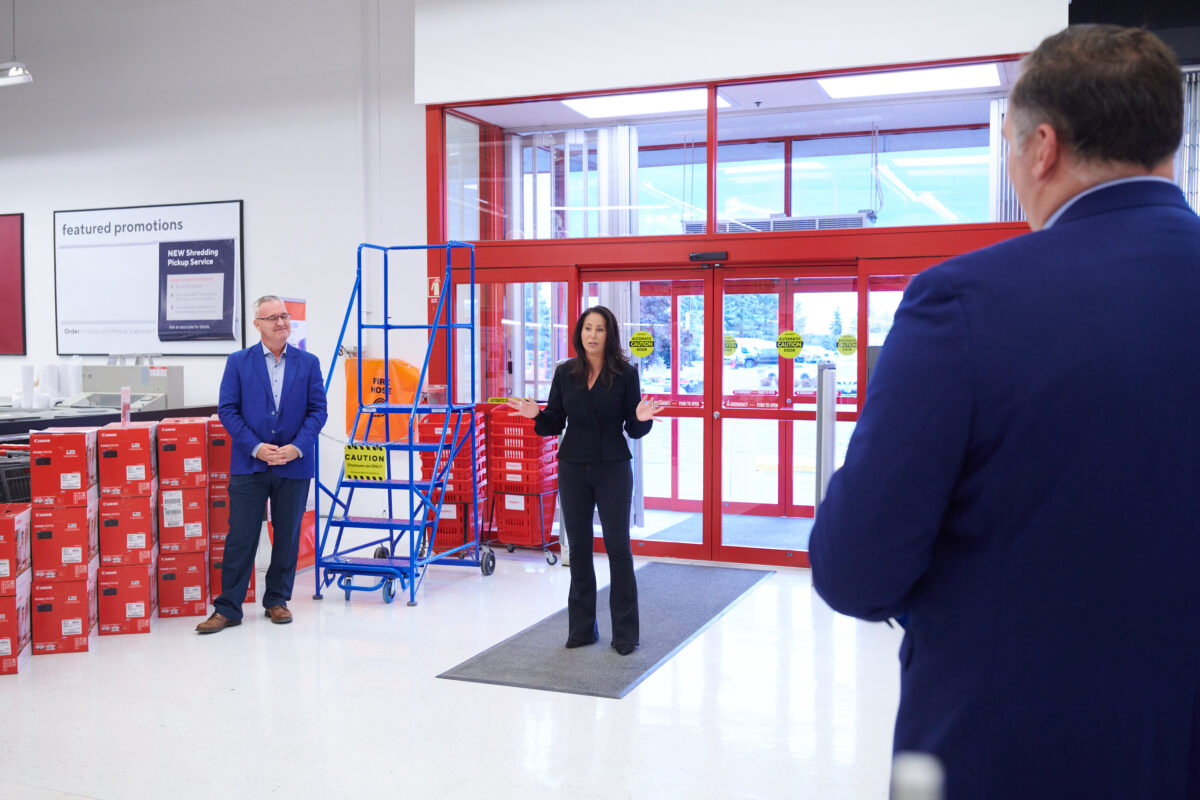
Image: Rachel Huckle
Huckle blends astute business acumen with accounting and store-level experience to drive dynamic strategies for business growth and bottom line profitability. She expertly wields comprehensive understanding of overall corporate strategy to execute corporate action plans at all levels.
She is recognized for authentic leadership, strong communication, and interpersonal talents, which are leveraged to cultivate a high performing culture, centered on core values, and collaborative working relationships with associate store owners, front line managers, colleagues, direct reports, and senior executives.
She describes herself as an impartial, objective and future-focused leader with an innovative and consultative approach to problem solving.
What did she like about the business world to make the transition from nursing?
“I think it came down to the leadership aspect. I think early days when I was a pharmacy technician I saw a lot of leaders come and go,” explained Huckle. “I didn’t always understand or appreciate their impact. And I realized at that time one of the things I wanted to do was to have impact so that any other person in the store who was in my shoes previously didn’t feel like I had impact or didn’t care.
“And so it actually influenced how I lead because when I go to stores I make the time to go and talk to as many people as I can. I make the time to ask them what’s bringing them joy or what’s working and what can we do better. Try to make sure they feel seen and heard. I don’t know if it’s perception or reality but at the time I may not have felt like I was seen or heard. So I think that inspired me to want to pursue the more business aspect and leadership side of things.
“And then I realized that maybe I could do it well if I was given the chance and started to get in there and loved it. Loved the variety of things I got to do from early days of asset protection, inventory management and accounting to leading programs to bring Optimum and PC Plus together to create PC Optimum to building digital apps to launching new store concepts and working with different firms to learn about customer centric thinking. Loved it and realized you can be bold and do some incredible things to have impact in the business and people.”
Image: Rachel Huckle
Huckle said so much of the retail sector appeals to her.
“Retail’s a great career. If you like fast-paced, if you love to see impact immediately, sometimes you do things in work and careers and it could take months, years to unfold, here you can all see with immediacy, there’s some longer tent poles, but by and large you can see impact almost immediately,” she said.
“And I will tell you, on the Staples’ front what’s great is we’re not just retail. We have a massive wholesale B2B business. We have a massive sales force. We have an online channel. We have a store channel. We have four digital platforms . . . The robustness of what you can get out of retail from strategy to financial acumen to leadership to innovation, it’s pretty cool.”
In her time outside of work, Huckle said she loves to spend time with her Peloton, trying to keep as fit as she can.
“I have four dogs and they’re all little guys but they are good for the soul and they’re very sweet animals. They give me a lot of joy. I like to take them out. I try to get in at least 10,000 steps a day. Sometimes I hit that number, sometimes I’m a little shy. I have a beautiful son. He is turning 30 years old this year and he just got engaged so he’s excited and planning all his big future plans.
“I’ve got family and travel from time to time and I like to read.”
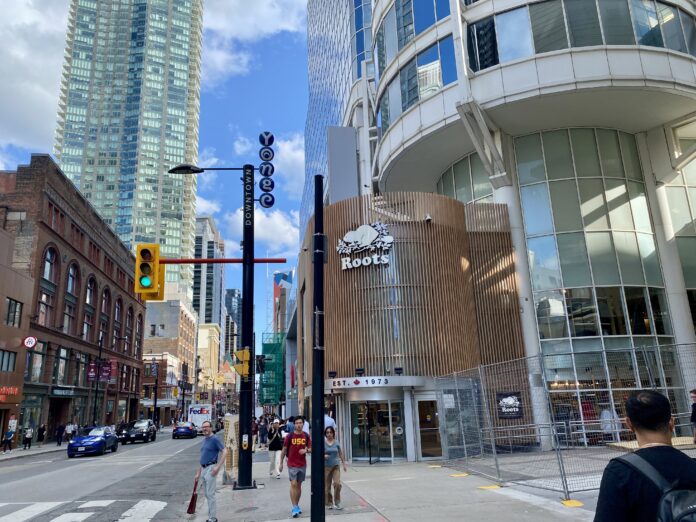
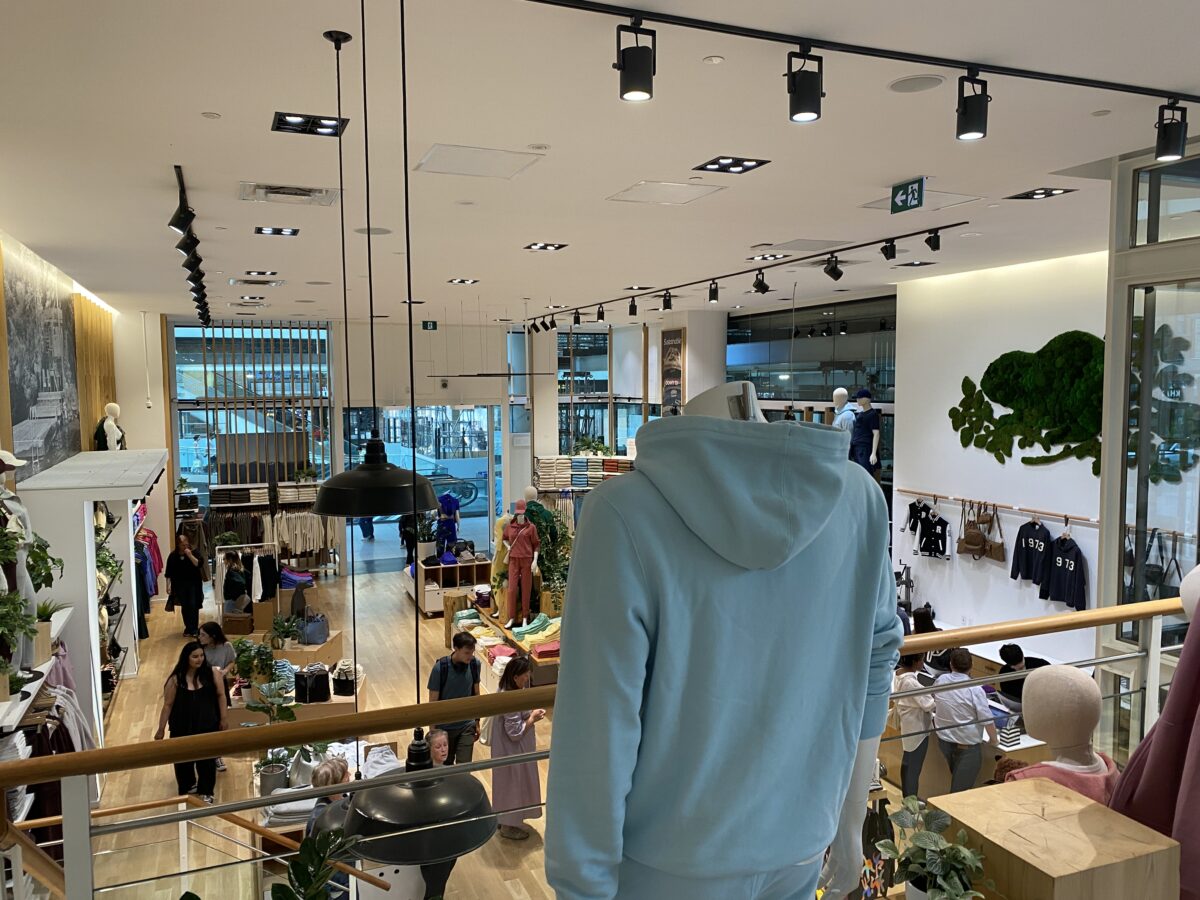
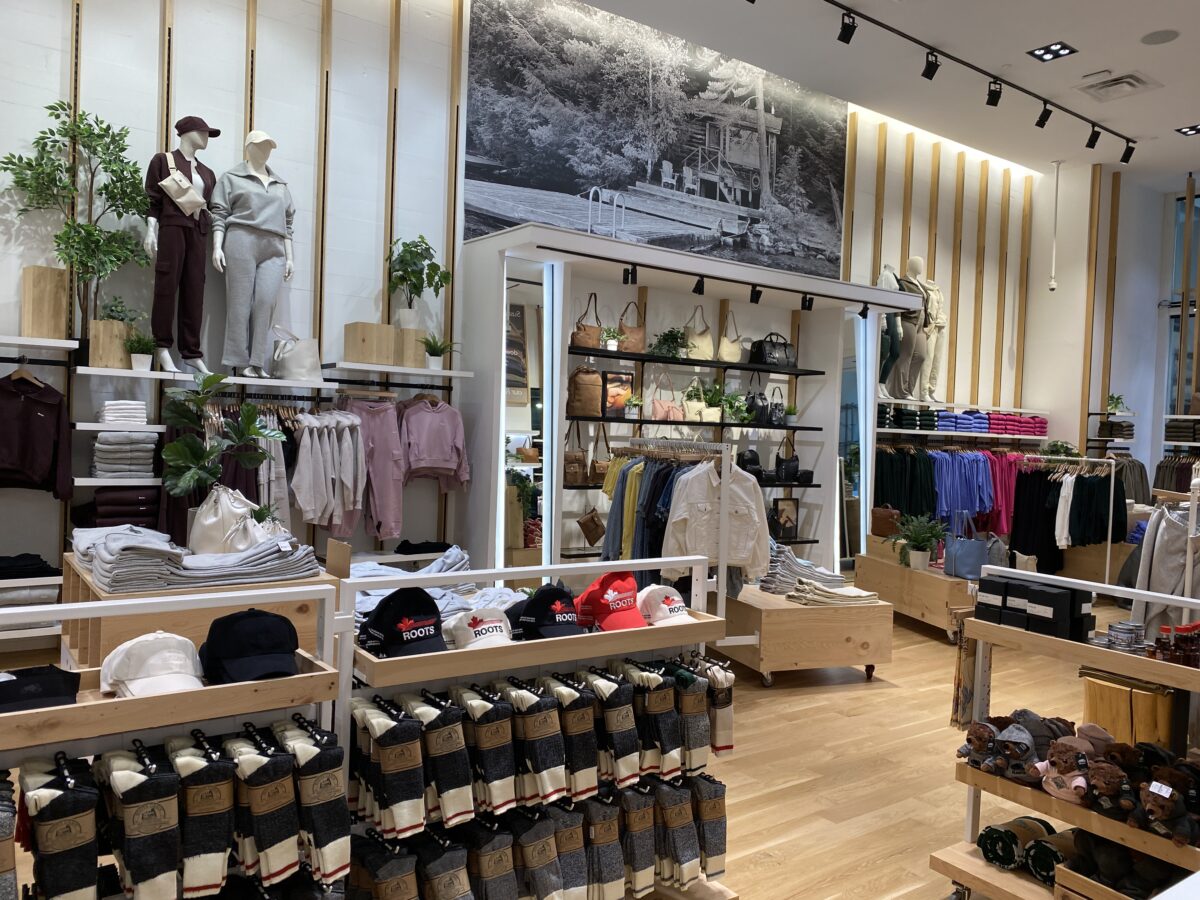
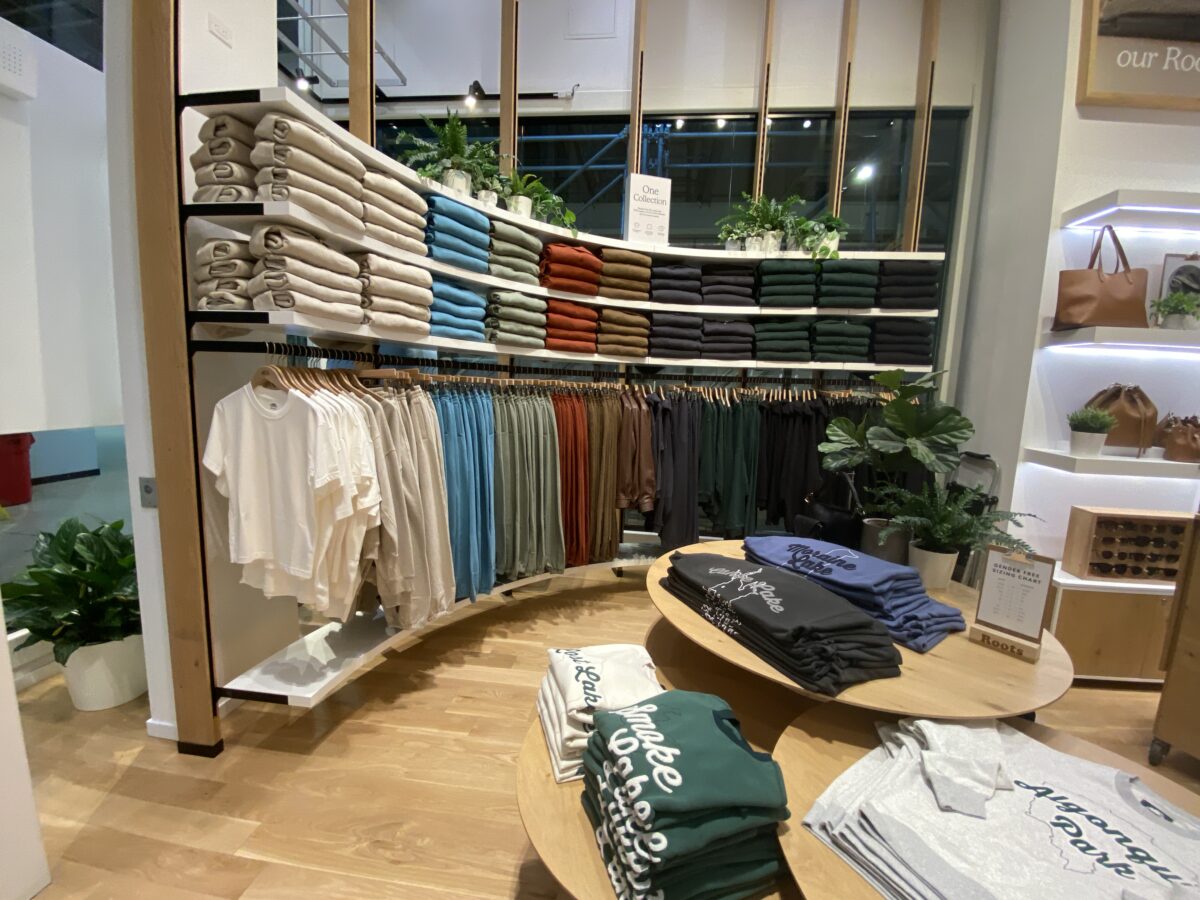
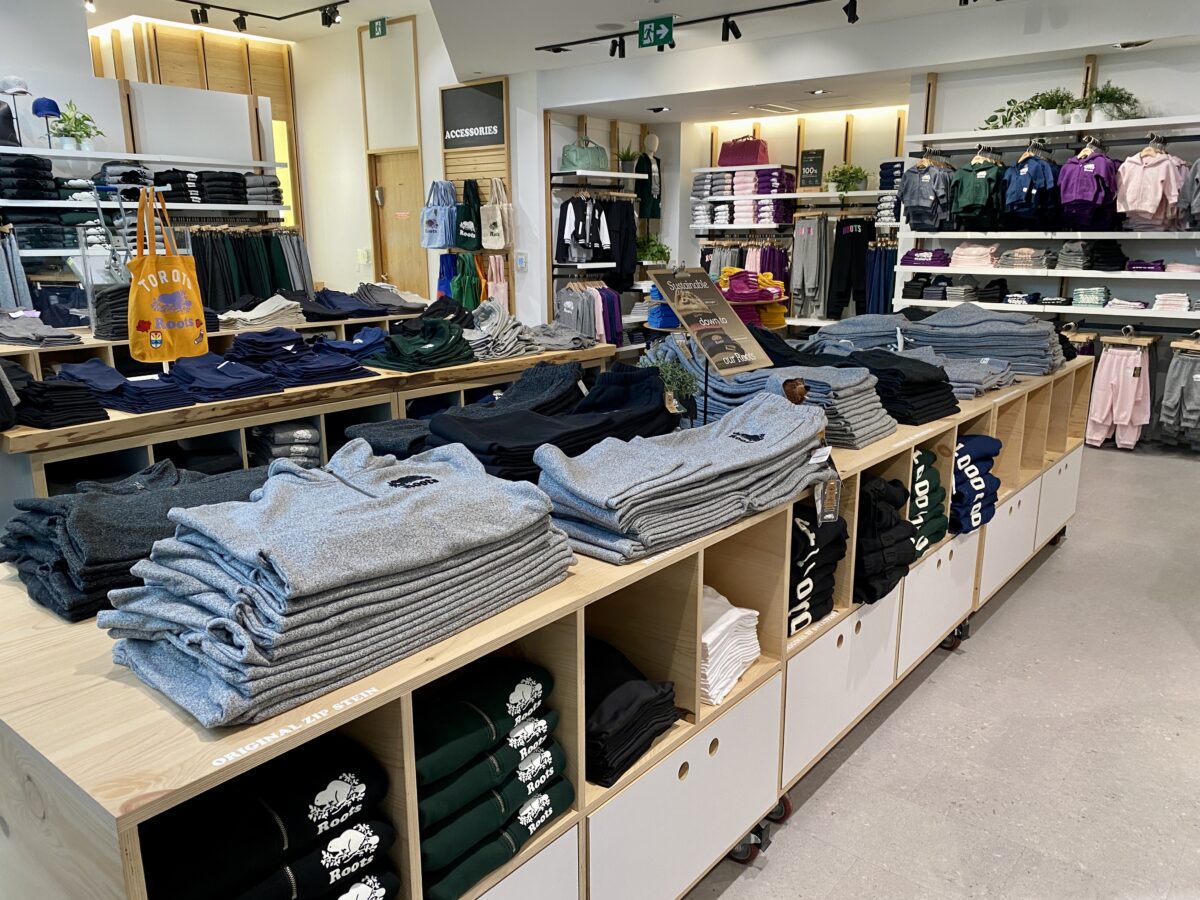
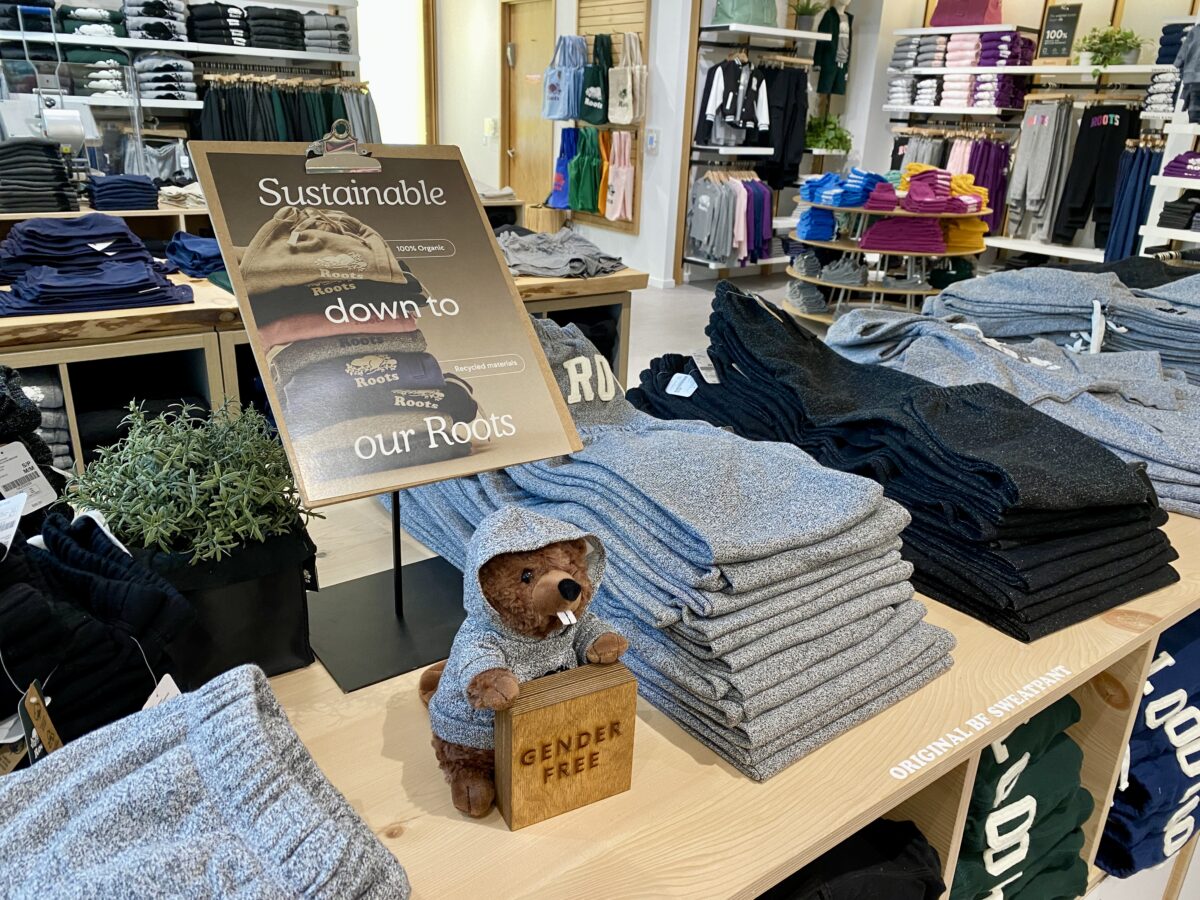
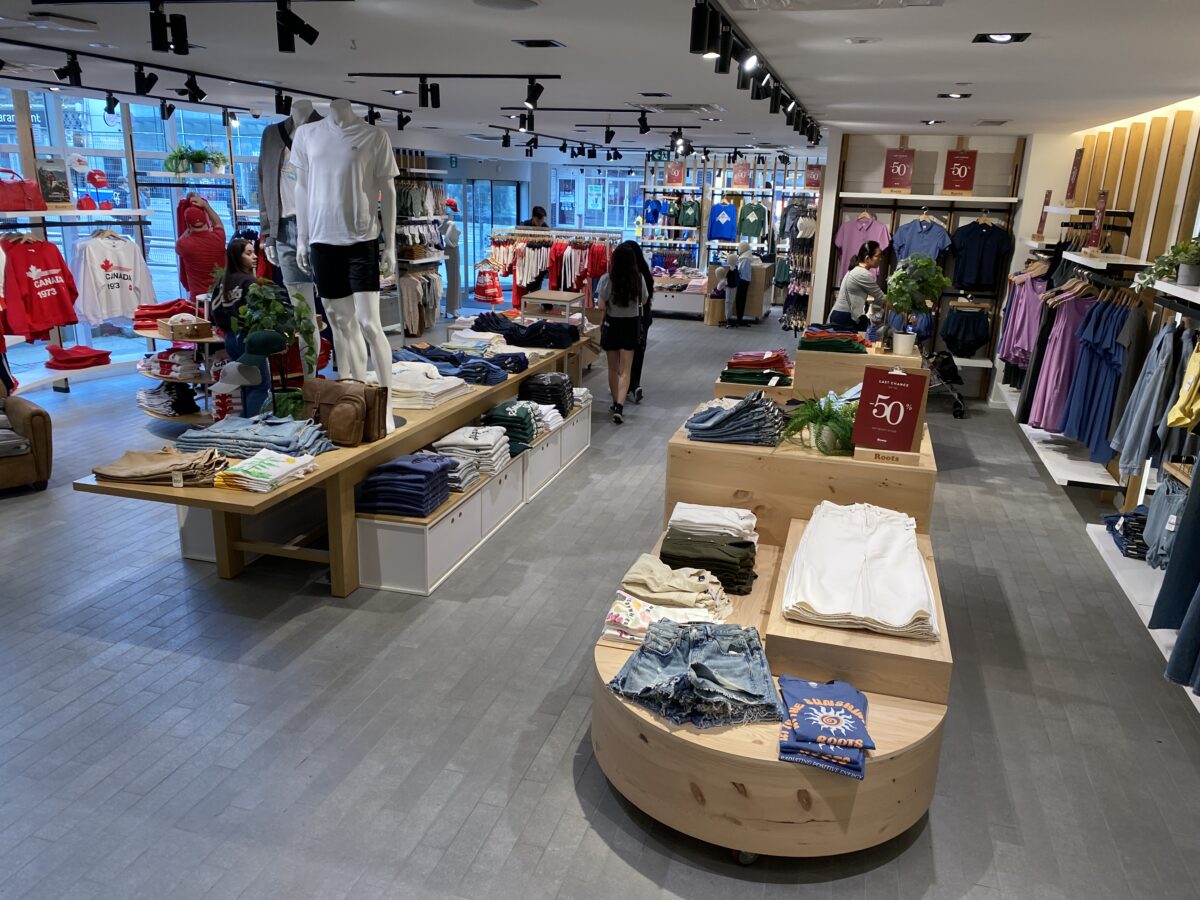
Roots at CF Toronto Eaton Centre (Image: Dustin Fuhs)
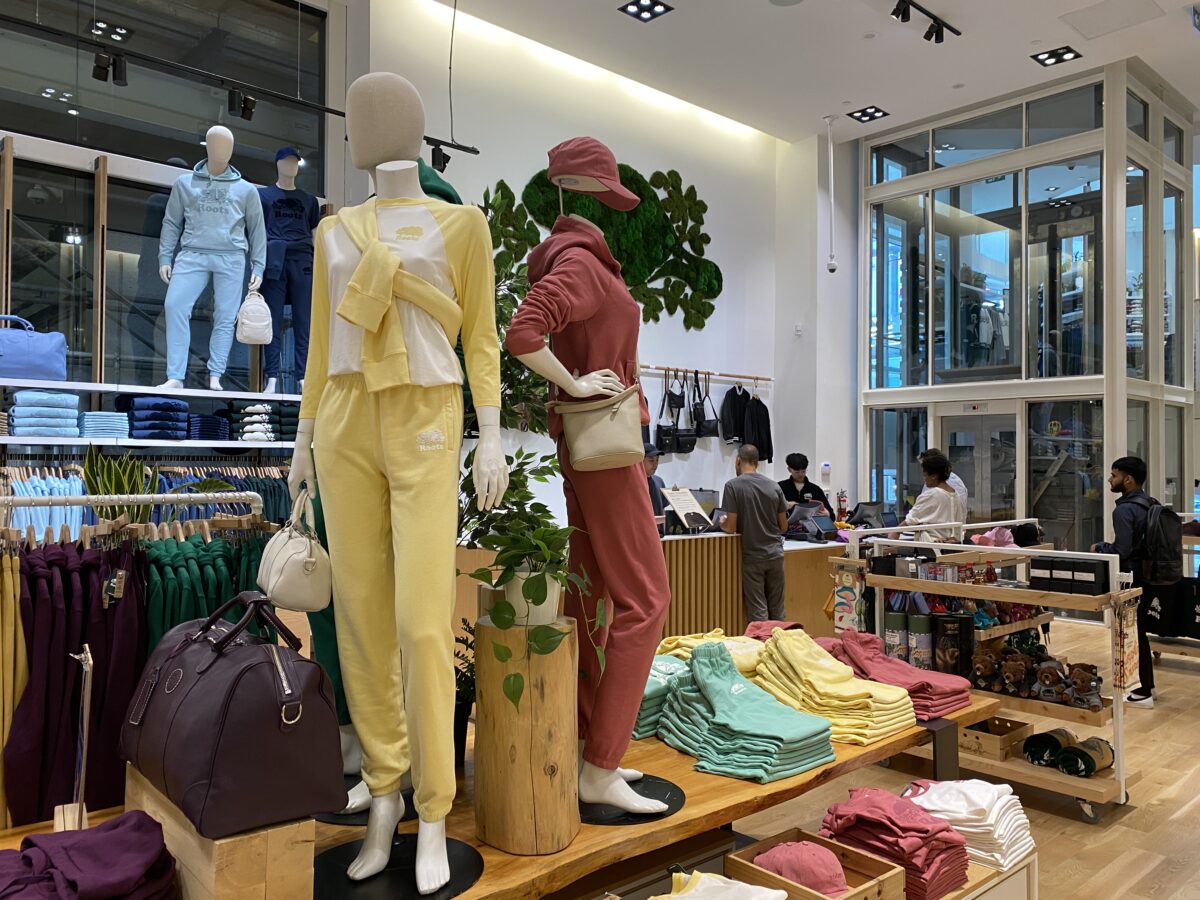
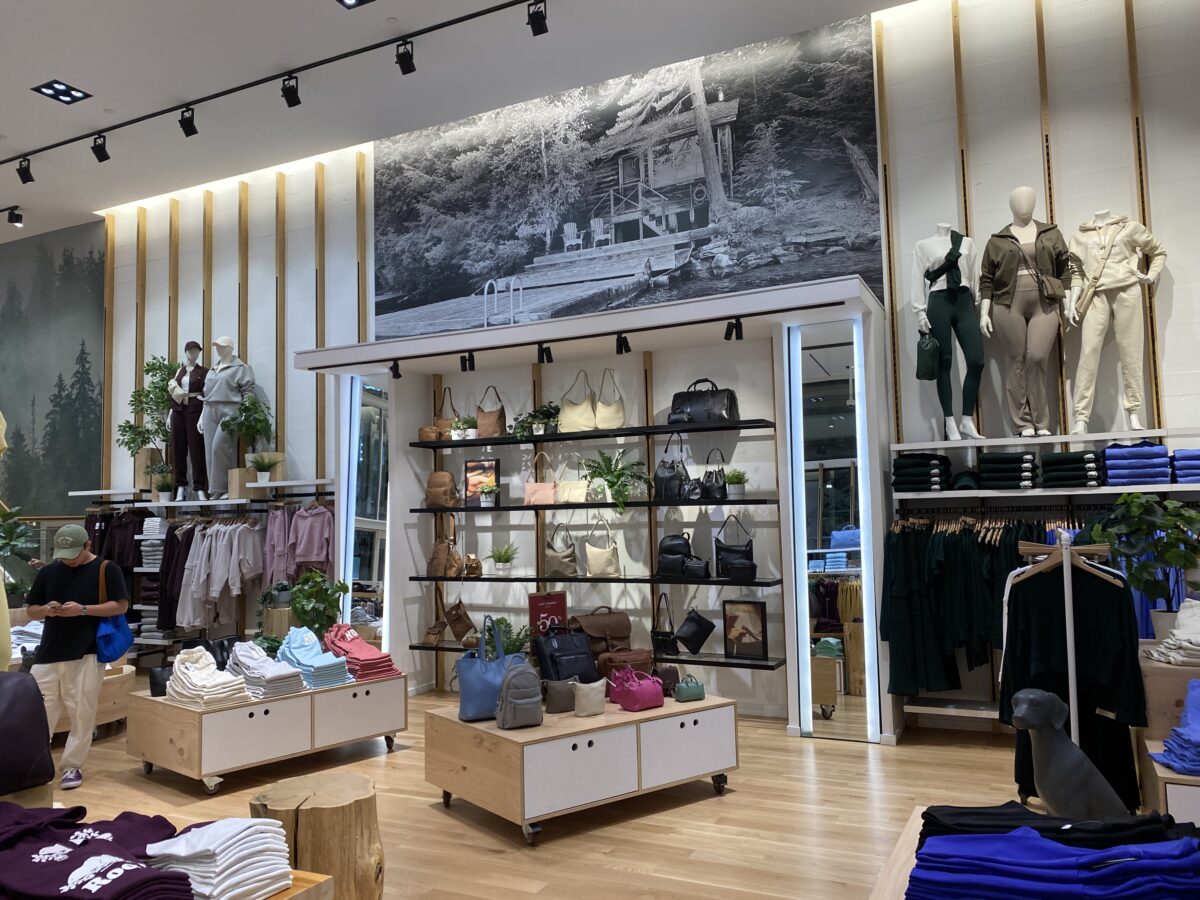
Iconic Canadian brand Roots recently completed a renovation to its CF Toronto Eaton Centre store in downtown Toronto, which will be a prototype for new and renovated stores moving forward. The updated Toronto ‘Roots Central’ store features a fresh interior and a non-gendered product assortment layout.
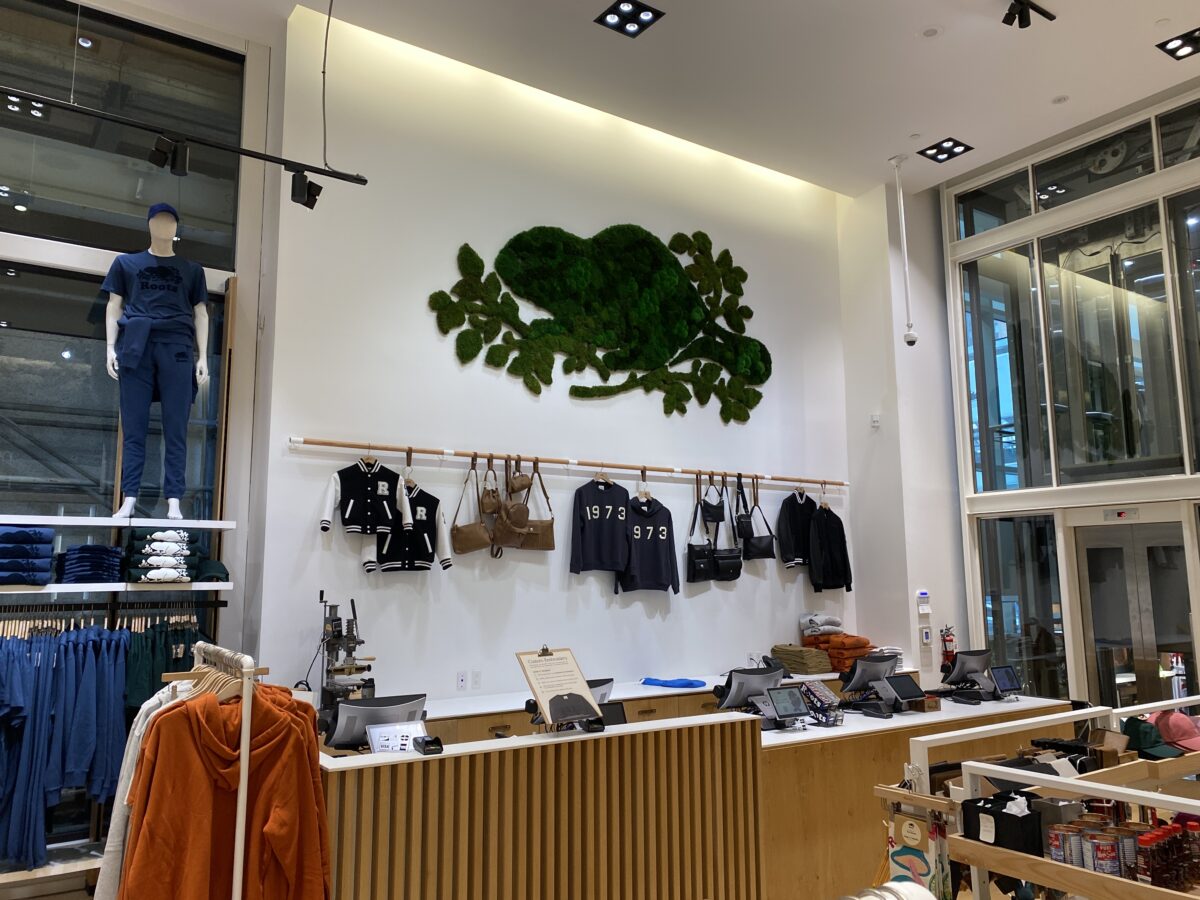
Construction of the store took about three months, beginning in February of 2024 and being completed in May. Final pieces were recently installed in the updated space, including a moss beaver on one of the walls of the store.
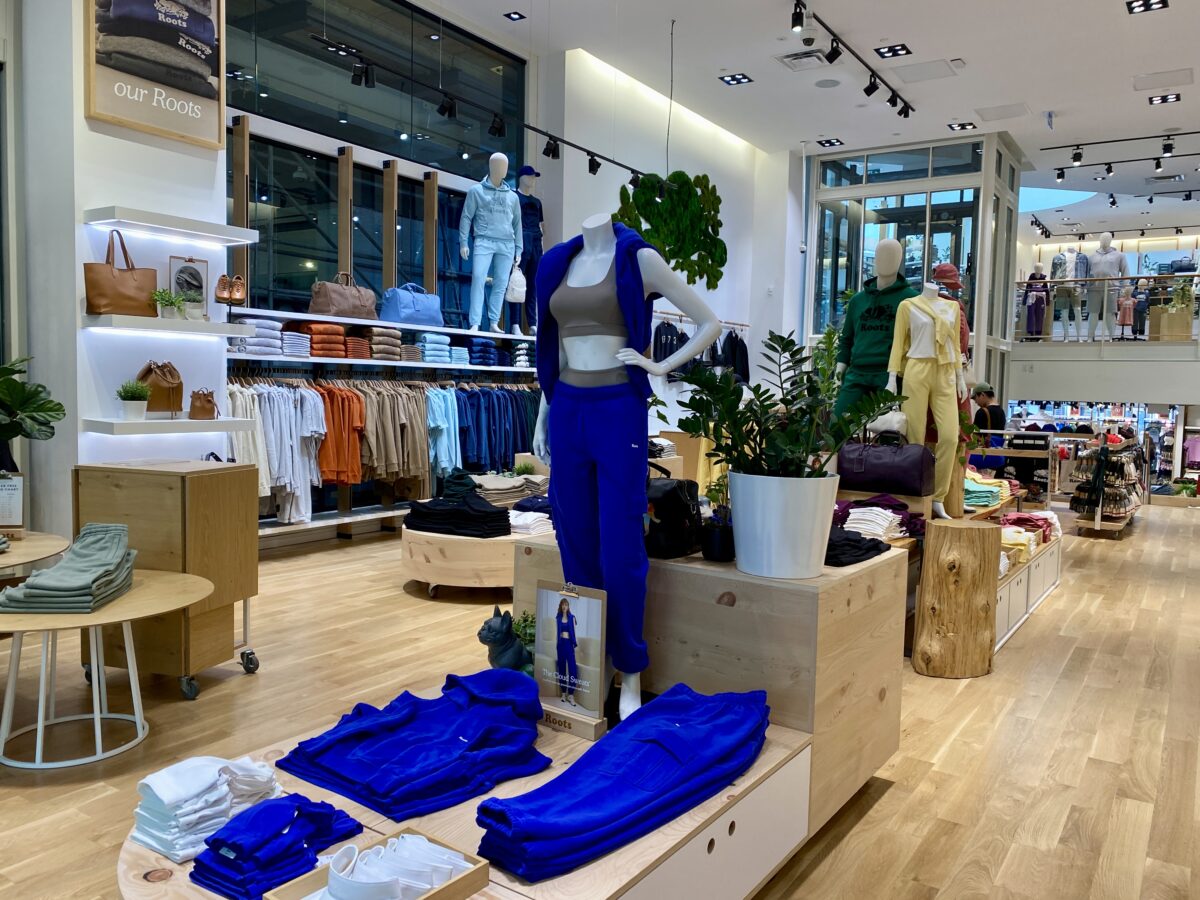
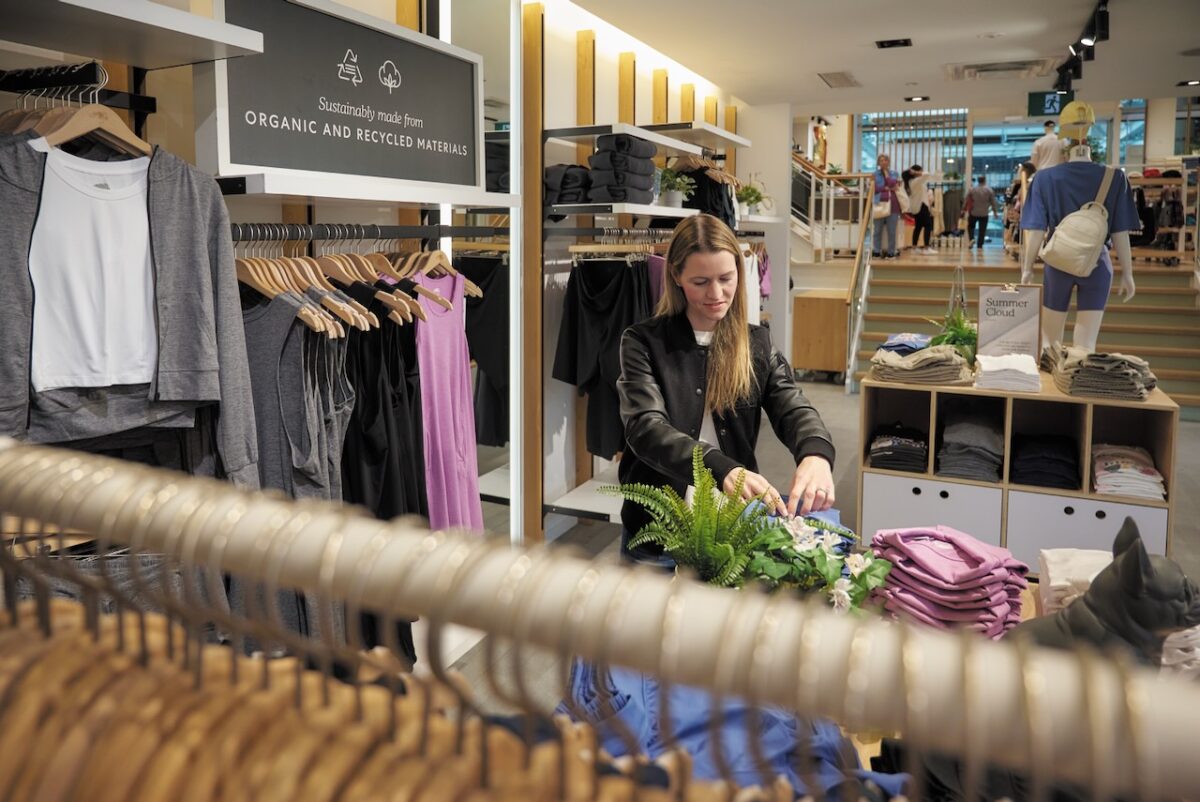
White walls and a mix of wood give the store an airy feel, including a mixture of Eastern Canada hemlock wood on the floor fixtures and white oak (on the existing floor and cash desk) that were refinished and/or refurbished. All of the millwork was done locally, and fixtures were made specifically for the store.
Roots at CF Toronto Eaton Centre (Image: Dustin Fuhs)Roots at CF Toronto Eaton Centre (Image: Dustin Fuhs)Roots at CF Toronto Eaton Centre (Image: Dustin Fuhs)Meghan Roach (Image: Roots)
The moss beaver on one of the walls of the store was made in Toronto by Vancouver-based ByNature Design — the all-natural moss beaver is shaped in the iconic Roots logo that has become known worldwide.
CEO Meghan Roach told Retail Insider that in recognizing inclusivity and how consumers already cross-shopped the store, Roots created a new product layout for the CF Toronto Eaton Centre location that is not gendered — rather, product is displayed by collection. That includes a dedicated area on the second level for the brand’s iconic sweats across genders, and various other areas in the store including new product launches near the front mall entrance.
Roots at CF Toronto Eaton Centre (Image: Dustin Fuhs)Roots at CF Toronto Eaton Centre (Image: Dustin Fuhs)Roots at CF Toronto Eaton Centre (Image: Dustin Fuhs)
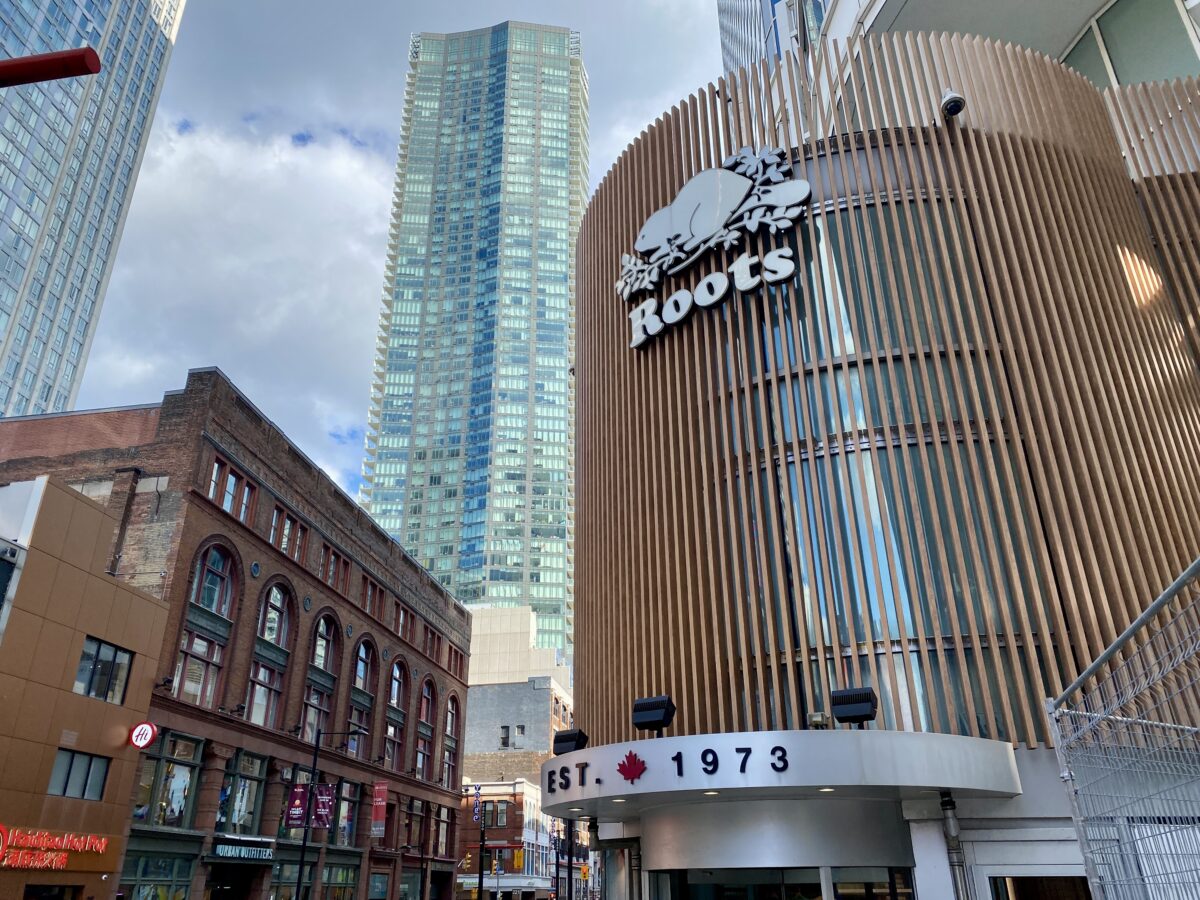
The CF Toronto Eaton Centre Roots flagship store, branded ‘Roots Central’, spans three split levels with 7,665 square feet of space. Roots opened the location in 1998, marking 25 years in the same location (its first store in the mall opened in 1986). The CF Toronto Eaton Centre store features a doorway onto Yonge Street in addition to its mall entrance, and also features ample natural light from East-facing windows towards Yonge Street and Dundas Square. The ceiling heights on the main level of the store are 18 feet, while the upper level boasts 22-foot ceilings which create a feeling of volume.
Meghan Roach said that the retailer’s new store design is meant to embrace inclusivity, while reflecting the heritage of the brand. She said that Roots will also be using the store design moving forward for new locations, including one that will open this fall on Robson Street in Vancouver, and any future renovations of existing locations.
Additional Photos of Roots at CF Toronto Eaton Centre
Roots at CF Toronto Eaton Centre (Image: Dustin Fuhs)Roots at CF Toronto Eaton Centre (Image: Dustin Fuhs)Roots at CF Toronto Eaton Centre (Image: Dustin Fuhs)Roots at CF Toronto Eaton Centre (Image: Dustin Fuhs)Roots at CF Toronto Eaton Centre (Image: Dustin Fuhs)Roots at CF Toronto Eaton Centre (Image: Dustin Fuhs)Roots at CF Toronto Eaton Centre (Image: Dustin Fuhs)
The fashion industry is often an enthusiastic adopter of new technologies. (Shutterstock)
Fashion is a dynamic business. Most apparel brands make at least two to four collections per year. While selling current seasonal collections, brands plan for the next ones at least a year in advance, identifying market trends and materials. The selling window is around three months, and unsold inventories represent financial loss.
Fast fashion companies introduce new lines even more frequently, reducing the amount of time needed to design, produce and market new items.
Tech and fashion
The fashion industry is familiar with experimenting with technological frontiers. Some of the most significant technological breakthroughs are laser cutting, computer-aided design and more recently, the use of 3D printing in early 2010.
Fashion companies also use blockchains for product authentication, traceability and digital IDs, including those integrated by LVMH/Louis Vuitton, product authentication and traceability.
Additionally, companies have incorporated augmented reality into marketing and retail strategies to create immersive and interactive customer experiences.
Generative AI could become a game-changer for the fashion industry, adding between US$150 and US$250 billion to operating profits within three to five years. While the fashion sector has only started integrating AI, the opportunities and challenges it presents are evident across all business processes.
Generative AI could help fashion companies improve their processes, bring their products to the market faster, sell more efficiently and improve customer experience. Generative AI could also support product development by analyzing large social media and runway show datasets to identify emerging fashion trends.
Estée Lauder Companies and Microsoft have teamed up to open an in-house AI innovation lab for identifying and responding to trends, informing product development and improving customer experiences.
Designers could use AI to visualize different materials and patterns based on past consumer preferences. For example, the Tommy Hilfiger Corporation is collaborating with IBM and the Fashion Institute of Technology in New York on the Reimagine Retail project, which uses AI to analyze consumer data and design new fashion collections.
Designers can also convert sketches and mood boards into 3D designs and 3D print them to speed up prototyping. Iris van Herpen, a Dutch fashion designer, used AI to imagine and execute the visuals of her fall/winter 2023 collection.NOWNESS looks at Dutch designer Iris van Herpen’s imaginative uses of AI.
AI and sustainability
AI helps in creating more sustainable fashion practices by optimizing the use of resources, recycling materials and reducing waste through more precise manufacturing processes and efficient supply chain and inventory management. For example, H&M uses AI to improve its recycling processes, sort and categorize garments for recycling and promote a circular fashion economy.
AI can improve operations and supply chain processes by optimizing inventory management, predicting sales based on historical data, and reducing overstock and stock-outs. Brands like Zara and H&M already use AI to control supply chains, promoting sustainability by optimizing stock levels and reducing waste. Zara also introduced AI and robotics into their retail stores to speed up online order pick-ups.
AI-powered virtual try-on solutions allow customers to see how clothes will look on them without physically trying them, enhancing the online shopping experience and reducing return rates. Virtual try-ons are already a reality in digital companies, such as prescription eyewear retailer Warby Parker and Amazon.
Another example is Modiface, acquired by French multinational personal care company L’Oréal in 2018, which provides AR-based virtual try-ons for makeup and fashion accessories.
Virtual try-ons help buyers make decisions and reduce returns. (Shutterstock)
Effective campaigning
AI can also deliver customized customer experiences. Some brands, such as Reebok and Versace, invite their customers to use AI tools to design products inspired by the brand’s feel and look.
AI-powered tools can help marketing teams target and maximize the impact of their communication campaigns, potentially reducing marketing costs.
The fashion business includes everything from small companies to global chains, haute couture to ready-to-wear, mass market and fast fashion. Each brand must understand where AI could generate value for their business without diluting their brand identity.
The biggest challenge, however, is to avoid homogenization. Generative AI should not replace human creativity but create new spaces and processes.
Fashion companies should be prepared to manage the associated risks with new technologies, particularly regarding intellectual property, creative rights and brand reputation. One of the primary issues is the potential infringement of intellectual property related to training data.
GenAI models are trained on vast design datasets, often containing copyrighted works. This can lead to legal disputes over originality and ownership. A related risk is bias and fairness in generative-AI systems, which may present reputational challenges for brands that rely on the technology.
The ambiguity surrounding creative rights in the age of AI is another concern. It’s challenging to determine who holds the creative rights to a design, whether it’s the designer who conceptualized the idea, the developer who built the AI or the AI itself. This ambiguity can dilute the authenticity of a brand’s creative expression, potentially harming its reputation if consumers perceive the brand as less innovative or authentic.
Retail Insider is streamlining its Canadian retail news from around the web to include a handful of top news stories that can be viewed quickly during the day. Here are the top stories from the past 24 hours.
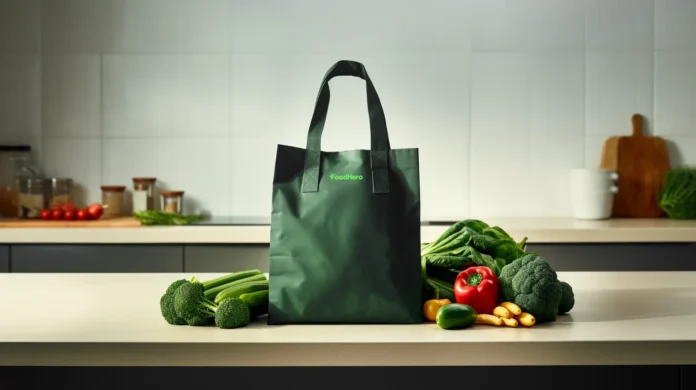
Montreal-based app FoodHero, with a goal of reducing food waste, has partnered with Empire Company Limited to significantly expand its reach into new regions of the country including Ontario, Atlantic Canada and Western Canada.
Jonathan Defoy
Jonathan Defoy, CEO of FoodHero, originally got the idea for the concept in 2016. The first store it partnered with was an IGA in Montreal in May 2019.
“The vision originally, the mission, it’s always been about saving food, so reducing food waste,” he said. “When I got the idea originally, it struck me as I was watching a documentary on food waste, and I saw those horrific, numbers about how much food is wasted. And so I had been a tech entrepreneur for almost a quarter of a century already. At the time I, like, literally, all the strings kind of got magically attached together in my head.
“And I was like, okay, that’s what I want to do next. So it came to me very clearly that what I was able to build and what I wanted to build would be a B to B to C marketplace, where on one end we would have the supply from those grocery stores, maybe eventually, restaurants, farms. Pretty much everywhere where food is wasted, and would build a platform, as they say in tech lingo, mobile first and mobile only, and that was my original vision.
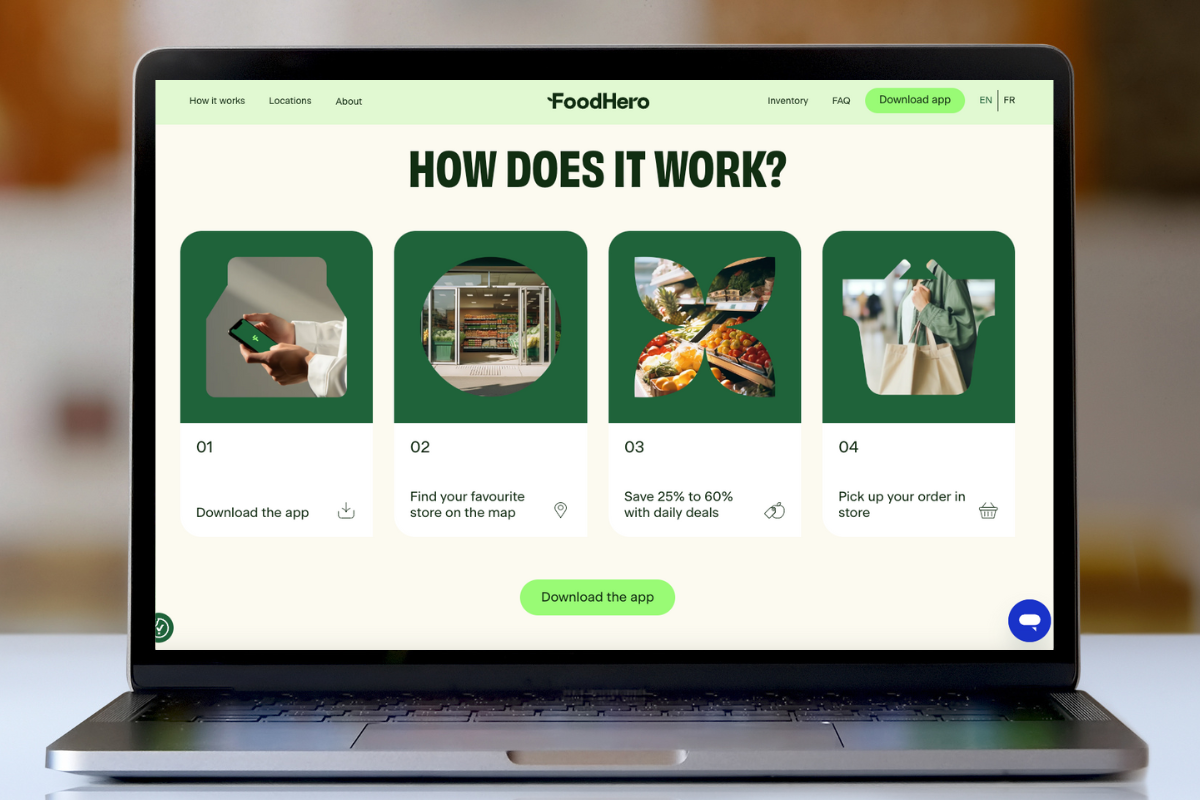
“So it was clear to me that I wanted a mobile app, just for the convenience, but also to be able for the consumer to localize, identify the stores around him or her that are currently offering food. So on one end you have the supply. On the other end you have the consumers, even small businesses sometimes that are looking for discounts, important discounts on food, and we’re the platform in between. So basically, from a retailer perspective, we’re providing a very complete technology solution that’s comprised of, obviously, connecting their back end to our solution so that we’re able to access in real time the inventory that they could be losing, and all the tools that they need to operate the solution. And on the consumer end, a simple mobile application where you basically, you shop on the app, you buy on the app, and you go pick up your order at the store, or stores where you decided to shop.”
FoodHeroImage: FoodHero
Through this national expansion, Canadians will gain access to deep discounts on surplus food at over 500 participating stores across Ontario, Atlantic Canada and Western Canada. The user-friendly FoodHero app connects consumers to local participating stores offering 50 per cent discounts in English Canada and up to 60 per cent in Quebec on select items. Since its launch in Quebec in 2019, the app has seen substantial growth, with over one million downloads and 100,000 active customers shopping at approximately 500 participating retailers in Quebec.
“Cost of living alongside the escalating issue of food waste are top of mind for Canadians,” said Defoy. “FoodHero connects customers with local grocery stores offering significant markdowns on products to prevent them from ending up in landfills. Our partnership with Empire Company Limited allows us to further our mission of combating food waste while offering Canadians enhanced value on their groceries.”
Image: FoodHero
Items available on the FoodHero app range from bakery, meat and prepared food to dry goods. With a consistent selection of items, customers can easily select from the available products and schedule a pickup time. The app also tracks the weight of products saved from landfills and estimates the associated reduction in CO2 emissions.
Kristi Lalach
“As a company committed to sustainability, we’re excited to be partnering with FoodHero, a Canadian success story fighting against food waste. This partnership supports our commitment to reducing food waste, ensuring more food reaches family tables instead of landfills,” said Kristi Lalach, SVP Legal and Sustainability, Empire Company Limited.
Defoy said the concept is now coast to coast in every province.
“This was supposed to happen in 2020, 2021, in the original agreements that we signed, but because of the pandemic, it really derailed our plans, but it’s okay. We never gave up, and we’re extremely happy to be able to bring that to all Canadians now, because it’s been very, very popular in Quebec, and we’ve, over the years, we’d have fellow Canadian citizens that were like, when is it going to be available?
“So we’re almost at 1,100 stores now . . . We would love to (expand), but for now, we’re obviously really, really focused on making sure that we are going to be as successful as possible with this launch . . . More, more to come, for sure, we’re open for business. But it’s a huge piece of cake that we’re starting to eat today because, you know, it’s six different chains. It took us one full year of very hard work to be there today. So the fun starts now.”
Empire Company Limited (TSX: EMP.A) is a Canadian company headquartered in Stellarton, Nova Scotia. Empire’s key businesses are food retailing, through wholly-owned subsidiary Sobeys Inc., and related real estate. With approximately $30.7 billion in annualized sales and $16.8 billion in assets, Empire and its subsidiaries, franchisees and affiliates employ approximately 128,000 people.
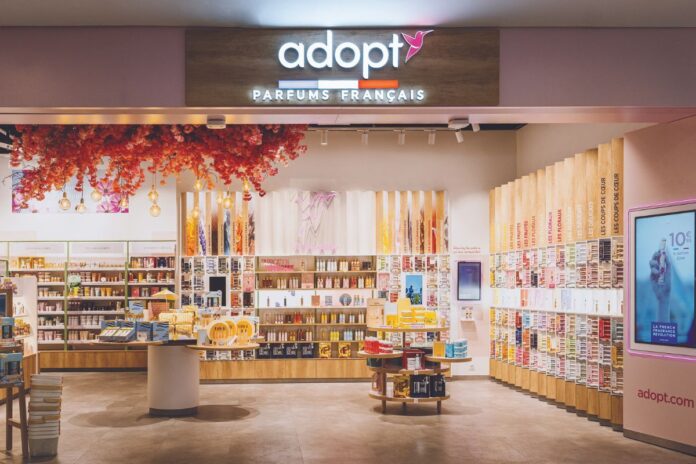
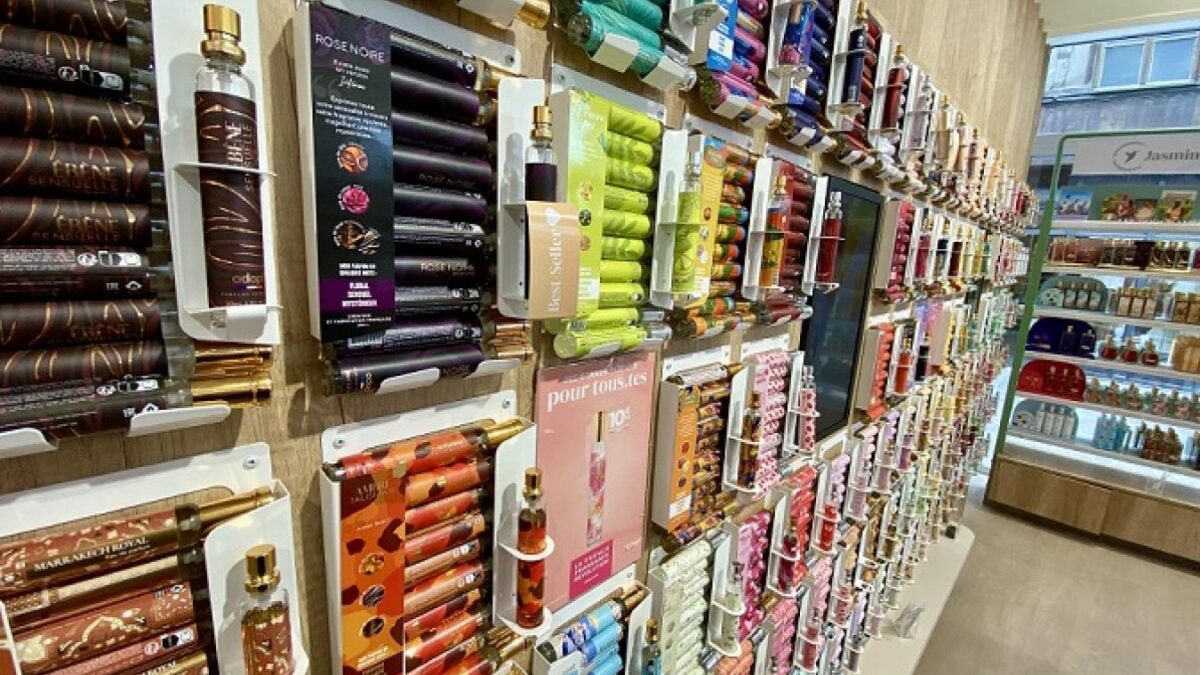
Adopt, the vibrant retail concept from France that focuses on fine fragrances and related accessories for the masses, is getting ready to make its debut in Canada with three locations.
Tony Flanz, of Montreal-based real estate firm Think Retail, has been working with the Adopt brand and its plans to expand into Canada.
Tony Flanz
Flanz said Adopt has just completed agreements to open in Quebec at Carrefour Laval, Galeries d’Anjou and Place Ste-Foy. The stores — 616 square feet, 629 square feet and 536 square feet — are set to open in September.
“This, however, is just the beginning. Thereafter, Adopt aims to open at least five additional Quebec locations in 2025, followed by expansion into Ontario in 2025/2026. It’s an exciting time for this global brand,” explained Flanz.
He said the additional Quebec locations will be around the province. Flanz and his team are looking for regional and super regional malls for the brand – mostly super regional.
Image: Adopt
Flanz said expansion into Ontario could be as early as the fourth quarter of 2025 in Toronto or Ottawa.
“Once we get into Ontario the initial focus will be on the GTA (Greater Toronto Area),” he added.
The potential is for between 35 to 40 locations in Canada.
“Founded in France in 1986 by perfumer Dominique Monlun, the Adopt is about choice, accessibility and reinvention. With fun and chic stores in more than 40 countries, Adopt is fresh and engaging—much like its target audience,” said Flanz.
“The Adopt range features more than 100 original, joyful, feminine, masculine or mixed eaux de parfums, all made in a beautiful historical production site in Cestas, near Bordeaux. Rather than embracing a single signature scent, the Adopt ethos is to have multiple fragrances for all of life’s moods and moments, from every day to formal and seasonal.”
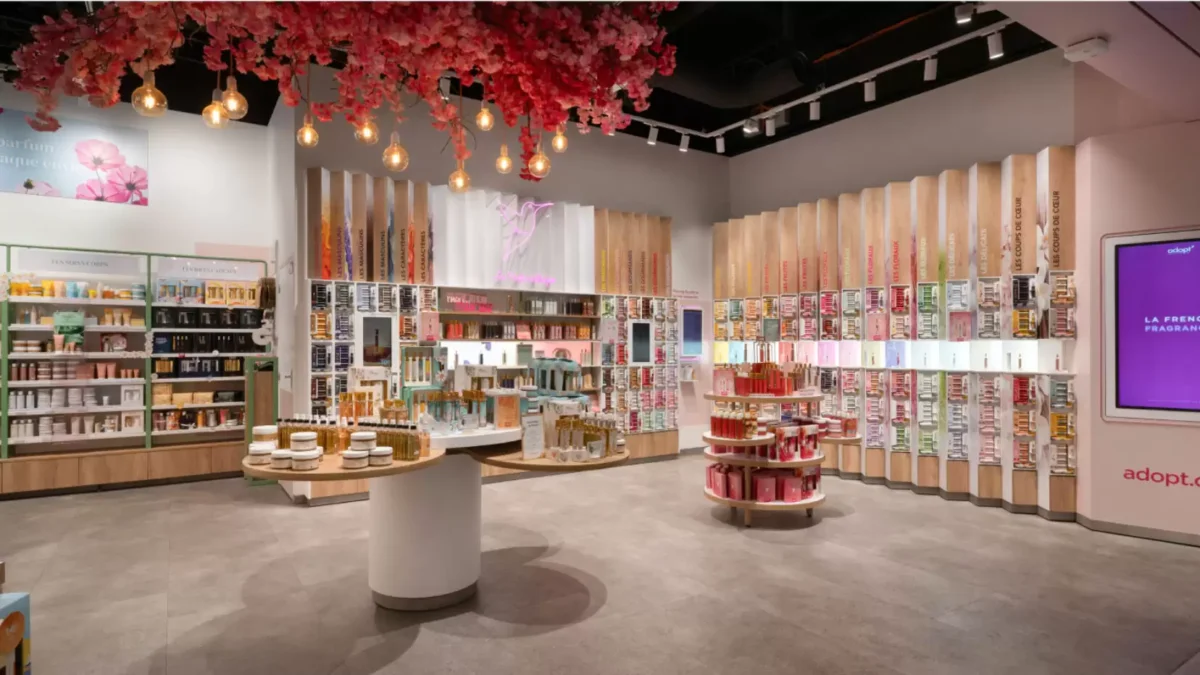
Flanz said adopt stores also feature complementary items, such as sprays, body creams, candles and essential oils infused with its array of scents, so that customers can immerse themselves in their favourite fragrances. In addition, Adopt offers a range of skincare products for the face, from serums and moisturizers to lip balms and cleansers.
He said the stores are designed with a modern vibe, and the branding is electric, with packaging that appeals to all generations: The average customer is aged 34, with 37 per cent ages 18 to 25, 42 per cent ages 26 to 45 and 21 per cent over 45 years.
“The brand offers something for all tastes and lifestyles. In addition, products put people and planet first, with a multi-pillar commitment to sustainability practices throughout the value chain, natural ingredients, organic ranges and eco-friendly packaging,” he said.
“A regular on the pages of fashion and beauty magazines, as well as the feeds of social media influencers, Adopt is a proven concept with a strong global footprint and following.”
Image: Adopt
Flanz said ideal spaces are 500 to 800 square feet in enclosed malls and along busy high streets.
In a previous interview with Retail Insider, Marcel Rinaldy, President of Groupe 3M, who will be the Canadian partner/developer of the brand, said:
“We are convinced that there is a huge potential in the Canadian population – open minded people with a French culture, knowing that the fine fragrances are coming from France.
“Adopt makes the revolution in the perfume universe. Adopt is making the French Fragrance Revolution! The brand offers high quality perfumes at very accessible prices. It also distributes cosmetics, body care, skin care and home care.
“Adopt is unique. It proposes the wider range of the market with more than 150 fragrances of high quality 100 per cent made in France, created by the greatest perfumers, at an accessible price for all and respecting our planet.”
The brand has more than 180 stores in metropolitan France with more than 50 locations in overseas territories such as French West Indies, Reunion Island, Mayotte, Mauritius, Madagascar, Seychelles, New Caledonia, Tahiti, Saint-Martin. It is also in more than 40 countries with 2,600 points of sale as a wholesaler in places like department stores.
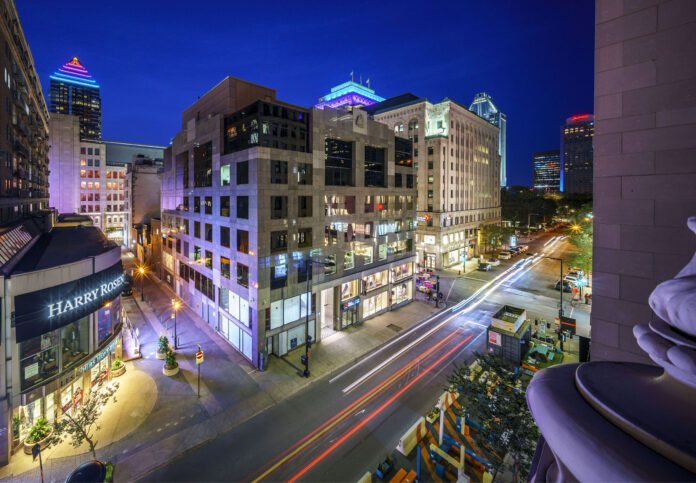
The Marine Building at 1411 Peel Street (at Ste-Catherine) in Montreal. Photo supplied
Downtown Montreal is seeing a resurgence as foot traffic returns and new initiatives to increase vibrancy in the area are implemented. Included are Sainte-Catherine Street and Peel Streets, which are seeing significant infrastructure updates. At the heart of it all is a notable Class A boutique office building, the Marine Building, with office space available for lease.
The City of Montreal is investing heavily into the downtown with the goal to make it cleaner and more accessible, and to bring more life into the area. Several months ago, Mayor Valerie Plante announced a $1.8 billion initiative to keep downtown Montreal culturally vibrant and economically attractive. There’s increased foot traffic with increased transit ridership and a return to work in offices. Tourism has also grown significantly — in 2023, Montreal saw 15% more overseas visitors than in 2019, and air passenger traffic is now surpassing 2019 levels. And Sainte-Catherine Street has been seeing updates which is transforming the public realm.
The intersection of Sainte-Catherine and Peel Street is centre ice for the City of Montreal, which is also implementing a major capital project on the north-south Peel Street. That includes a promenade spanning 2.5 kilometres with 11 themed stations and an audio guide where visitors can learn about the indigenous history in the area. More than $100 million is being spent on Peel Street with work planned into 2027, creating wider sidewalks and bike paths to improve the public realm.
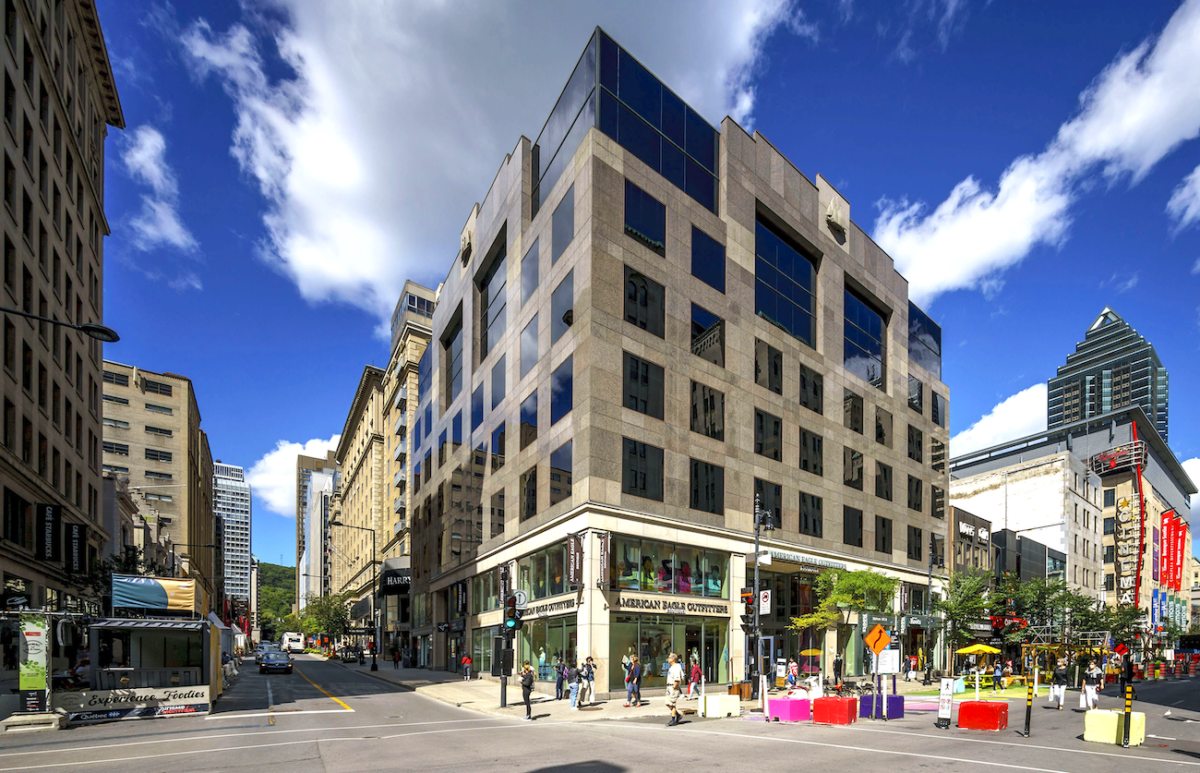
The Marine Building at 1411 Peel Street in Montreal, and its corner retail space at 1035 Sainte-Catherine St. W. Photo supplied.
At the northeast corner of Sainte-Catherine Street and Peel Street is the Marine Building, which features five floors of boutique Class A office space above three levels of retail at its base. The prominent building was constructed in 1989 by entrepreneur Sheldon Mintzberg, who still maintains his offices there as owner and CEO of the Marine Group.
The Marine Building at 1411 Peel Street stands on the site of two smaller buildings that occupied the site and were built in the early 1900s. The 1980s was a boom time for Montreal with various commercial complexes having been added to the downtown core. Mintzberg invested heavily into the Marine Building as part of a legacy to the city. High-quality materials were used both on the exterior and interior of the prominent building.
Office space at the Marine Building at 1411 Peel Street in Montreal. Photo supplied.
The Marine Building has several opportunities to lease boutique office space, with each floor spanning less than 10,000 square feet of leasable space. Space currently available includes:
Office lobby of the Marine Building at 1411 Peel Street in Montreal. Photo supplied.Unique light show as part of the art in the office lobby of the Marine Building at 1411 Peel Street in Montreal. Photo supplied.
The office space is beautifully renovated, and the building’s lobby was also recently renovated with escalators and marble walls and flooring, as well as unique artwork.
The Marine Building is connected directly to downtown Montreal’s underground pedestrian walkway system that spans most of the downtown Montreal area that includes indoor access to an atrium and the STM Metro system (Peel Station) as well as the new REM system, which will be operational within a year. Numerous parking lots are located nearby and 1035 Sainte-Catherine itself has its own parking facility that is connected to the Underground City.
Retail Insider will be reporting further on what’s happening in downtown Montreal. And for those interested in leasing office space at the Marine Building at Sainte-Catherine and Peel, contact Kyle Mintzberg at:
Retail Insider is streamlining its Canadian retail news from around the web to include a handful of top news stories that can be viewed quickly during the day. Here are the top stories from the past 24 hours.
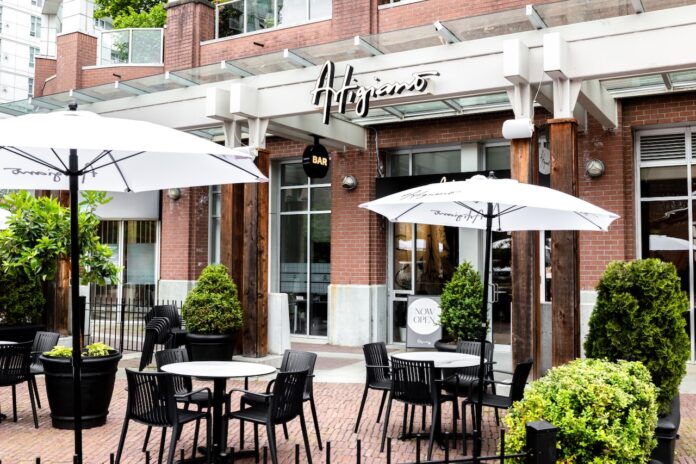
Artigiano has opened a new flagship location in Vancouver under a new concept and has plans to expand. The brand’s new concept includes an evening program starting at 4pm where it will provide food and drinks to fill a gap in Vancouver’s evening dining scene.
Dean Shillington
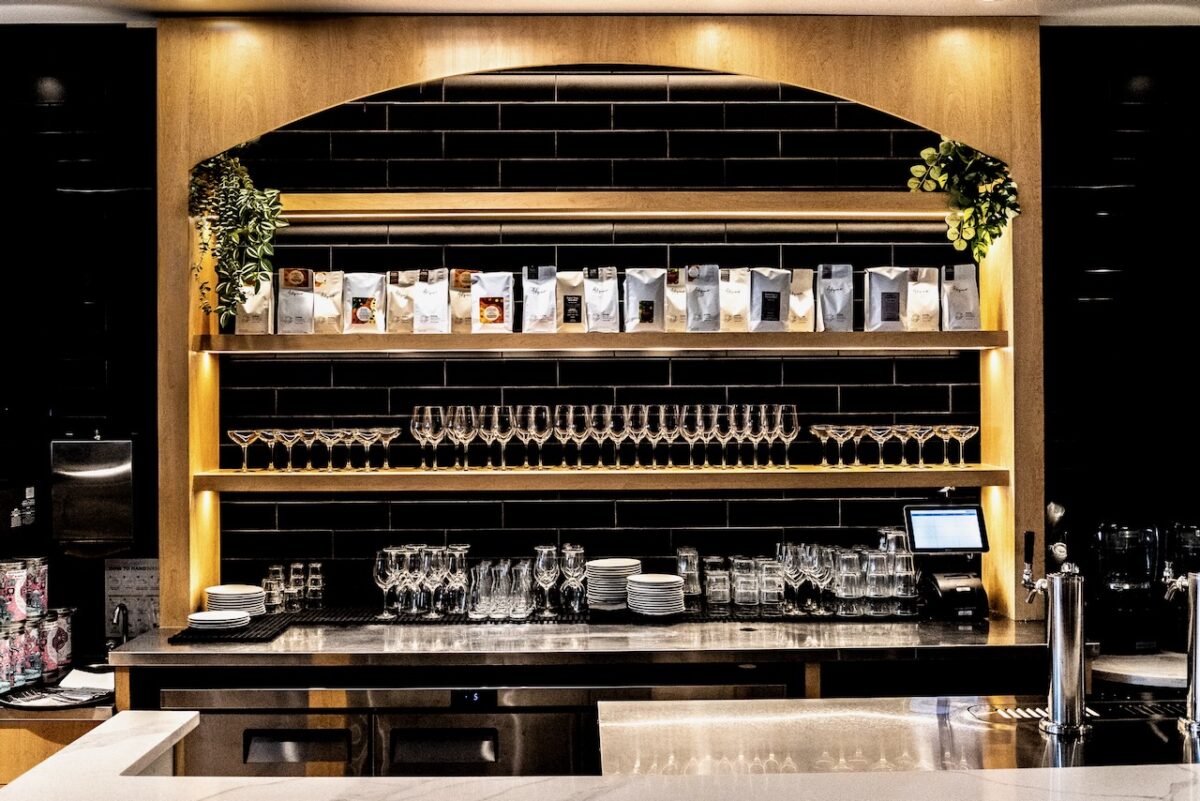
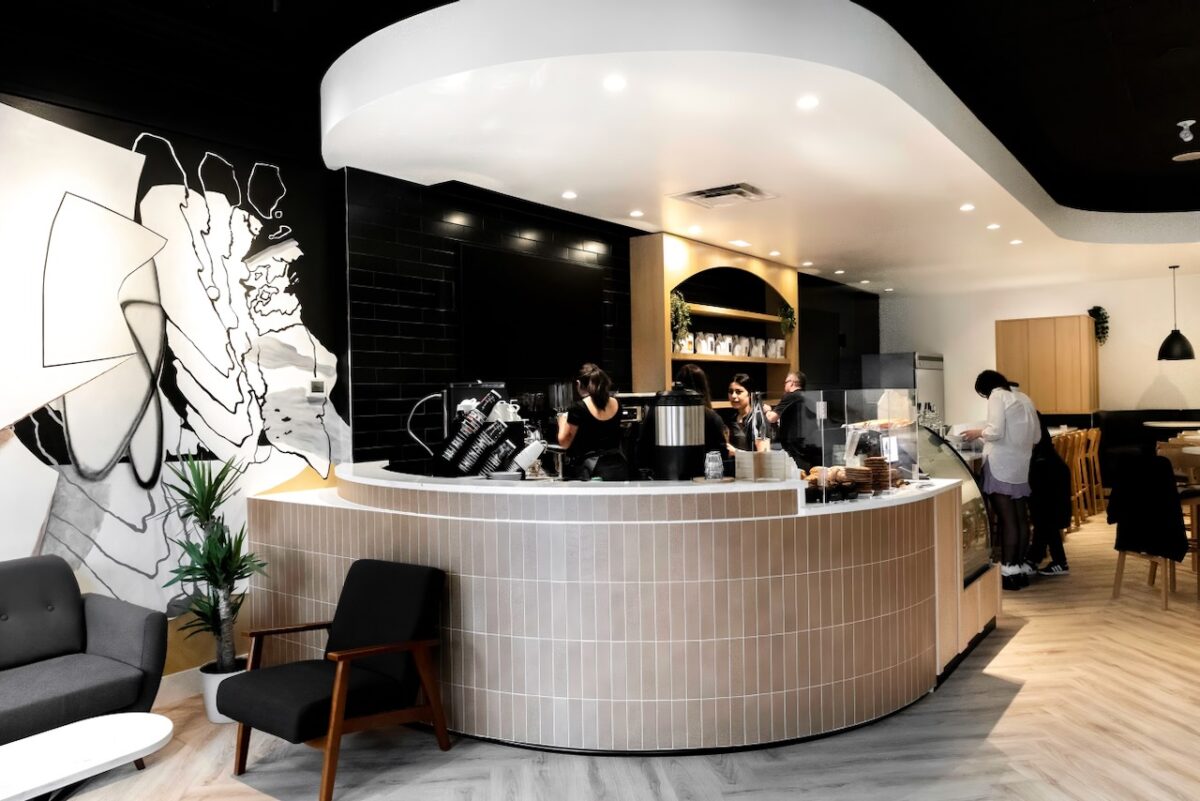
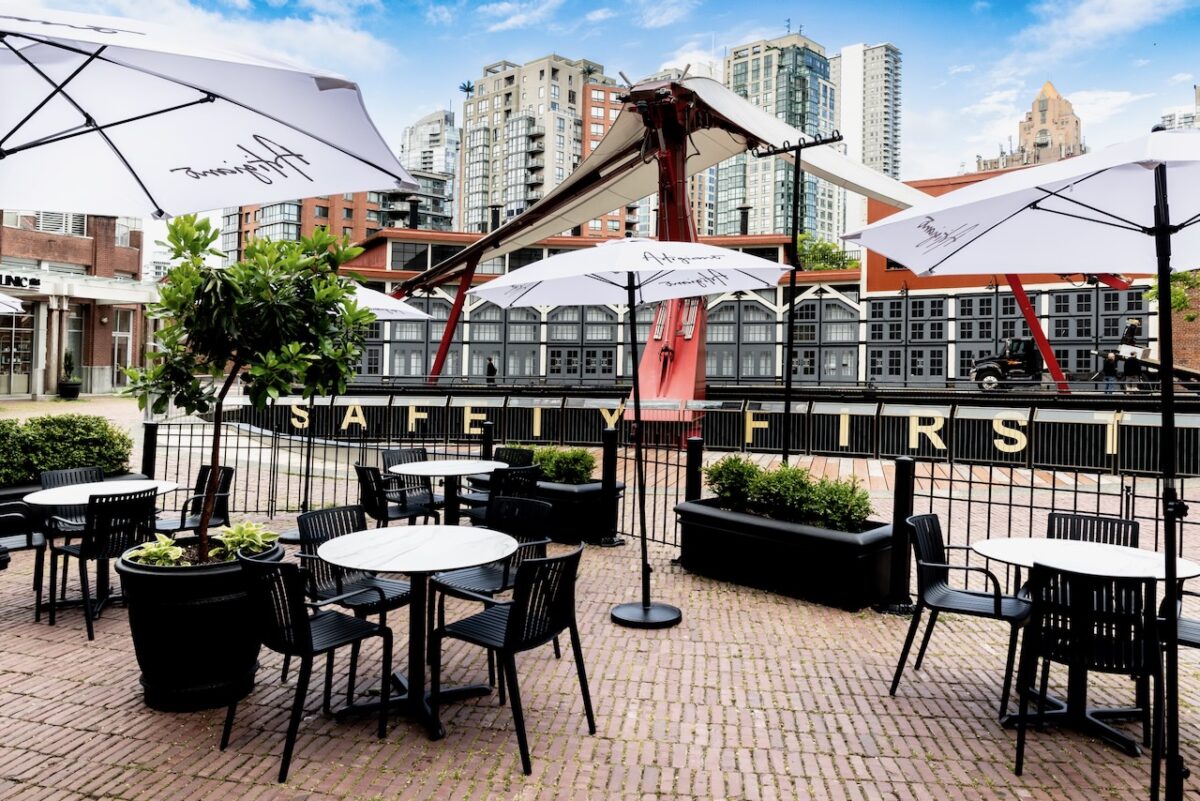
The new Vancouver flagship is in Yaletown as it was chosen to reestablish Artigiano’s presence in this area of the city. This location will be the first to include the new Artigiano bar evening concept, offering both daytime cafe service and will transform into a European inspired bar at 4pm. The Yaletown location allows the brand to showcase its coffee program, food offerings, and the new evening experience all in one place.
“This is the future of Artigiano, and Yaletown is the perfect location to kickstart this exciting new direction for the brand. We wanted to ensure that we channeled an Italian aperitivo atmosphere with great drinks, light snacks, and a fun ambiance for our guests to enjoy right in the heart of their city. We can’t wait to welcome everyone to enjoy a daytime coffee or an evening drink,” says Dean Shillington, president and owner of Artigiano.
Artigiano Yaletown (Image: Artigiano)
“With the evening concept, at 4pm it turns into a European inspired aperitivo bar. We feature hand-rolled pizzas, small plates and desserts, with a selection of specialty cocktails and Italian wines with all bottles being 50 per cent off daily between four to six pm. Our signature cocktails include the espresso martini and negronis made with Artigiano private reserve espresso, the Aperol Spritz, and a smooth Earl Grey Sour made with our organic tea.”
Local support – murals and live music
Artigiano Yaletown (Image: Artigiano)
As part of its rebranding, Shillington says the brand will also be supporting local artists by showcasing live music and entertainment.
“As part of our rebrand, we do these murals in each of our cafes to really be inspired by the local community around it, and we always use local artists to go do these murals. Our cups now feature these murals too, showcasing the local art done in each of our cafes. We believe this truly adds to our space and also highlights local talent. I like talking about this as it showcases the local artists and programs we have to try and raise funds for local artists.” “At the same time with this bar concept, we are tapping into live music and entertainment as much as possible. So as we go forward, I look forward to getting more involved in the music community as well, giving them another stage to showcase their talent to our customers.”
This new approach allows Artigiano to support the local art scene while creating a unique atmosphere that reflects each community it’s in.
Check out the latest Yaletown views in downtown Vancouver at the SideSignal Collective.
Expansion plans moving forward
Artigiano Yaletown (Image: Artigiano
“Our goal this year is to add five new locations for the system, so Yaletown is the first of those with more coming in the second half of the year. We have been working hard to revitalize the brand in the Vancouver market. We are expanding into the Lower Mainland quite aggressively, and we have locations on Vancouver Island and Calgary, with plans to go beyond our provinces over the coming 12 months.”
Shillington says there will be three program variations: A purely cafe program where the cafe will have a focus on coffee and food offerings, Artigiano bar concept such as the new Yaletown location, and a partial bar concept where it will be offering a mix of daytime cafe and evening bar services.
“When I first purchased the brand four or five years ago, it seemed like an obvious opportunity to us to build our loyal customers, something different, and something that we felt was going to be a good alignment. The folks who come to us over the years are less likely to be looking for a club scene – they want to have a very chill environment to go to and enjoy some live music, go somewhere in the community that feels more likely, and have some good food. We really saw an important opportunity for us and we just don’t see anything like it.”