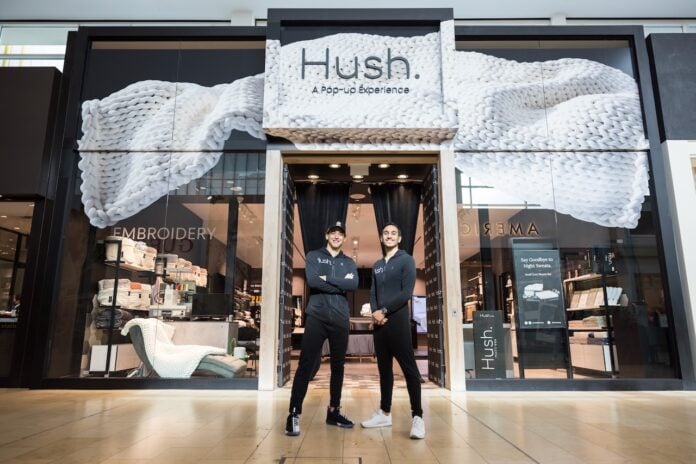
Craig and Aaron Spivak discuss the journey of Hush, from the brand’s inception as an innovative solution to a successful sleep company offering a wide range of functional and comfortable bedding products. They discuss Hush’s experiences with pop-up stores, distribution strategies, and plans for the future.
A transcript of the conversation can be found below.
The Interview Series video podcasts by Retail Insider Canada are available through our Retail Insider YouTube Channel where you can subscribe and be notified when new video episodes are available.
If you prefer to listen to the audio version, it is available below:
The Interview Series audio podcasts by Retail Insider Canada are available on Apple Podcasts, Stitcher, TuneIn, Google Play, or through our dedicated RSS feed for Overcast and other podcast players. Also check out our The Weekly audio podcast where Craig and Lee discuss popular content published on Retail Insider which is part of the The Retail Insider Podcast Network.
Featured during this interview:
- Aaron Spivak, Co-Founder of Hush.
- Hush.
Transcription
Craig Patterson 0:03
Welcome to the Retail Insider Video Interview series. I’m your host, Craig Patterson. And we’re joined here today with a special guest. This is Aaron Spivak. He’s the co-founder of Hush Blankets. Welcome, Aaron.
Aaron Spivak 0:15
Thank you for having me.
Craig Patterson 0:17
Tell us a bit about hush blankets and how it got started.
Aaron Spivak 0:19
As we started in January 2018 with the simple idea that we can create an innovation through iteration we saw tremendous demand weighted blankets. In fact, there was 300,000 searches a month. We bought every available option on the internet. It wasn’t that many at the time. They were too small, they were impossible to wash. To warm. The beads would fall to one side, there was sound like a rain stick in your bed. And we said “Well, a lot of people want the solution and the beautiful therapy and a deep sleep and a weighted blanked could provide. But what was available wasn’t really there yet. So we went on we develop a hush blanket which solves all those problems. And we quickly became one of the world’s largest selling weighted blankets and quickly had the largest catalog in the world weights from five pounds to 35 pounds. And obviously since then, we’ve developed fabrics that keep you cold. We’ve launched pillows and sheets and mattresses and beds and really developed ourselves into a fully functional sleep company that provides aesthetics but also functional bedding that is comfortable, cozy, soft, but also keeps you cool throughout the night.
Craig Patterson 1:33
Oh wow. Now in terms of getting started with this, what was your background before you co founded Hush?
Aaron Spivak 1:39
So before Hush, and a little bit before that I was I played hockey for 20 years as a typical Canadian. And while I was in school, I launched a cold pressed juice shop with my brothers and my mom. This was early 2013. And we launched that literally out of the basement of our house. It actually still exists until today and it has 11 locations in the cities and my brothers and my mom right they do a fantastic job. I got my first taste of like real I was always entrepreneurial lemonade stand window cleaner kid when I was like my first taste of really building something before Hush.
Craig Patterson 2:17
Oh, amazing. We got the hockey part in common but a little further than I did. I stopped around University. So that was that was a long time ago. You got an award top 30 under 30?
Aaron Spivak 2:30
Yeah, Forbes 30 under 30. With co founder Leo and I were nominated/chosen to under that category for marketing and ecommerce in 2021 which was a bit of an accomplishment. I mean, for us, it’s something that as an entrepreneur that you know about because you see it every year but you don’t actually know like how to get into it. Are they just going to choose me and does anyone even care? To be recognized for something that you’re working on by a third party establishment like Forbes, which is world renowned. Was was awesome, to be honest.
Craig Patterson 3:09
Hush was on Dragon’s Den, I think it was?
Aaron Spivak 3:12
Yeah, in 2019. We went on Dragon’s Den in the 14th season of the show and had an incredible episode that did wonders for our business. And we were able to show the world what we’re made out to showcase our giveback program where we donate one in every 10 of anything that we sell, which is over a million dollars of products every single year to various charities throughout Toronto, Canada, and now you’ve been the US. So it’s was awesome to kind of put ourselves out there for the first time on Dragon’s Den. We very fortunate that the episode went in a good way because we’ve all seen those crazy ones. And it was a good experience for sure.
Craig Patterson 3:51
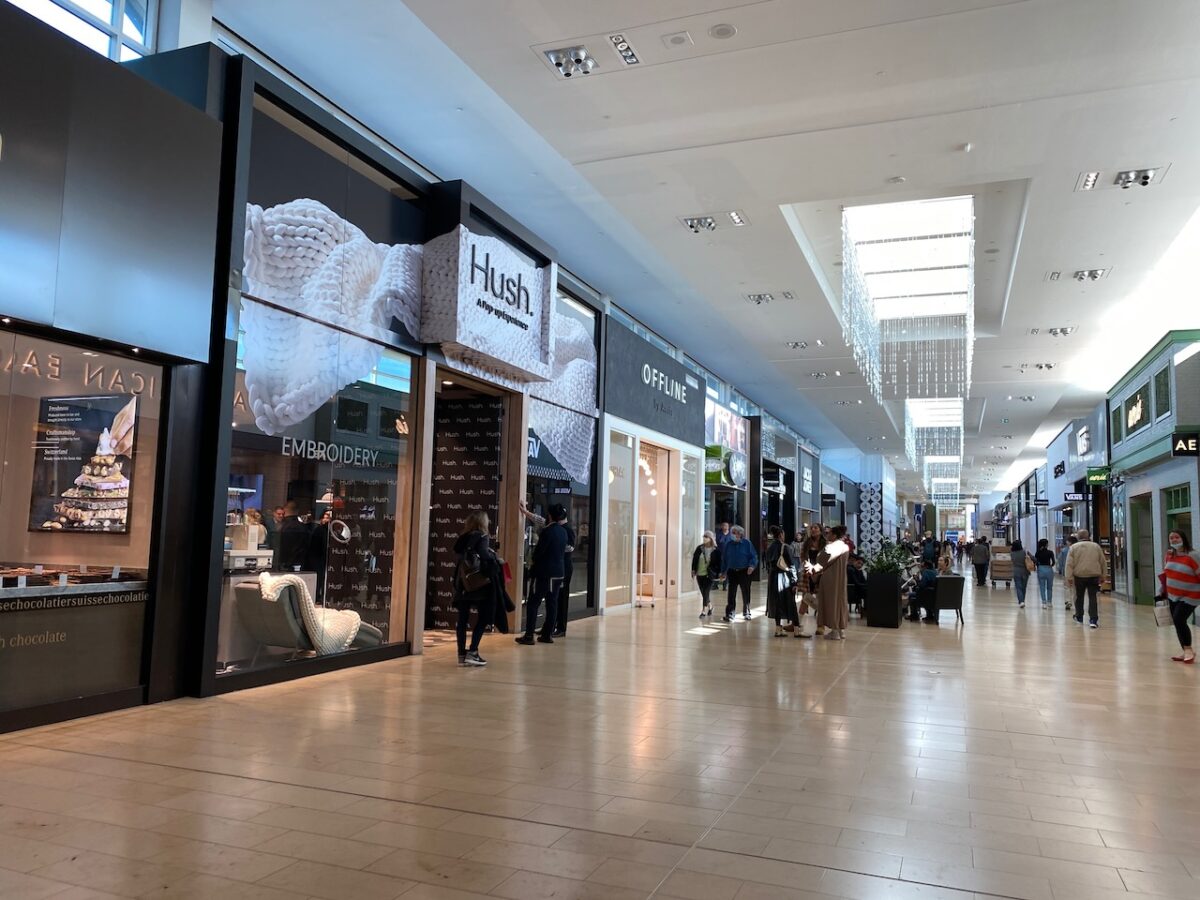
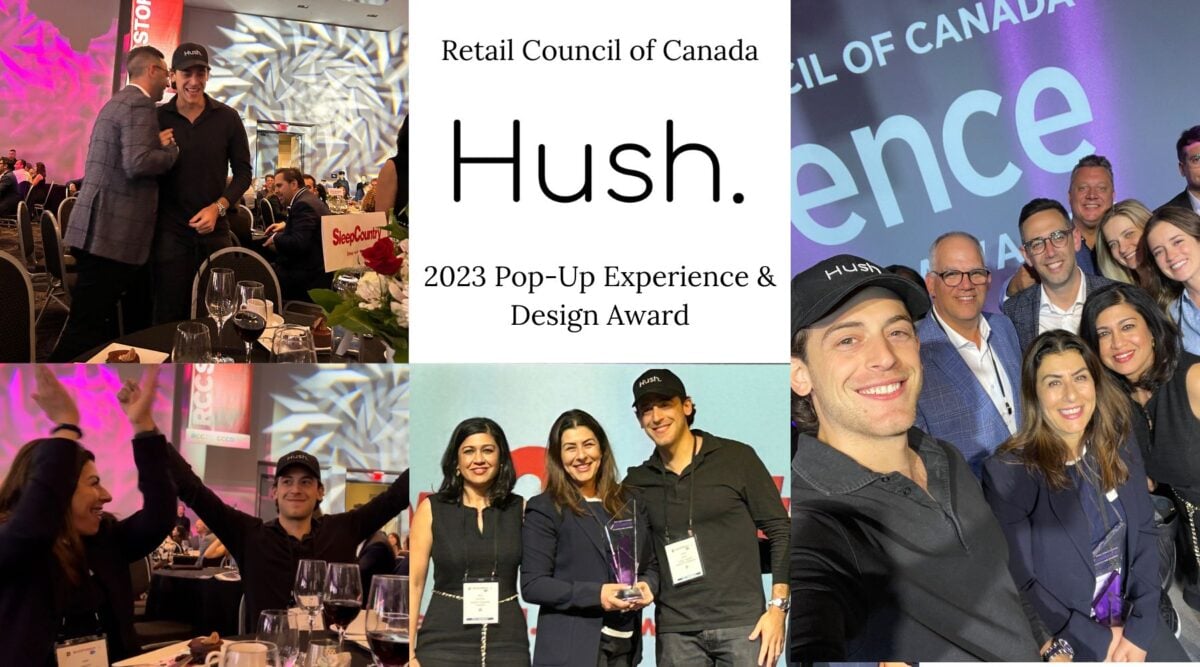
Oh, yeah. Now, we did an article in Retail Insider about how specifically a pop up retail location that you had at the Yorkdale Shopping Centre, which subsequently won an award. Can you tell us a little bit about that store and how things went?
Aaron Spivak 4:07
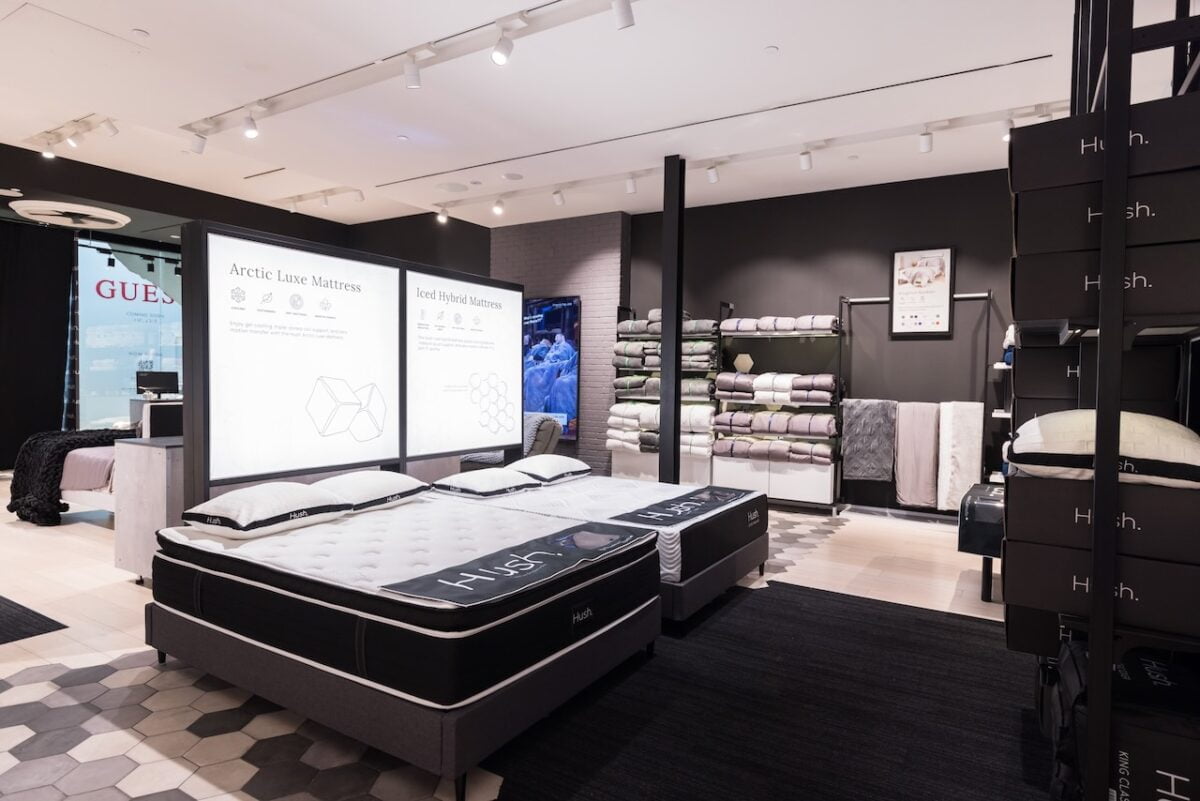
One thing we’ve always wanted was that we’ve got a half a million customers and every single person that ever purchased a Hush anything had to put their money up first before they can feel it. And of course they have 100 day trial and a super easy return procedure but like still you still have to buy a picture online, and then hope that it delivers. It was always something we wanted to do is to give people the opportunity to experience the product before buying it. And what better place to do it than Yorkdale Mall, something that is virtually impossible to get into let alone as a brand that doesn’t have any pre existing stores and let alone in the busiest time of the year which was November and December. We had a lot of things fall into place for that to happen. But the one thing we didn’t have was the keys that early, we only had 27 days to from the day, we got the keys to launching our first ever store, let alone a store in Yorkdale Mall. And we were literally building and organizing the store up until hours before we we opened it. It was a very stressful day, but ended up being an incredible execution with 10s of 1000s of people that eventually visited us. And something we wish was a permanent thing by the end of it. But it’s something that we want to continue to do as we develop the brand and give people opportunities to experience the products in different ways. Throughout our journey.
Craig Patterson 5:43
Amazing. Amazing. What did the store include? I think it was a bit experiential.
Aaron Spivak 5:49
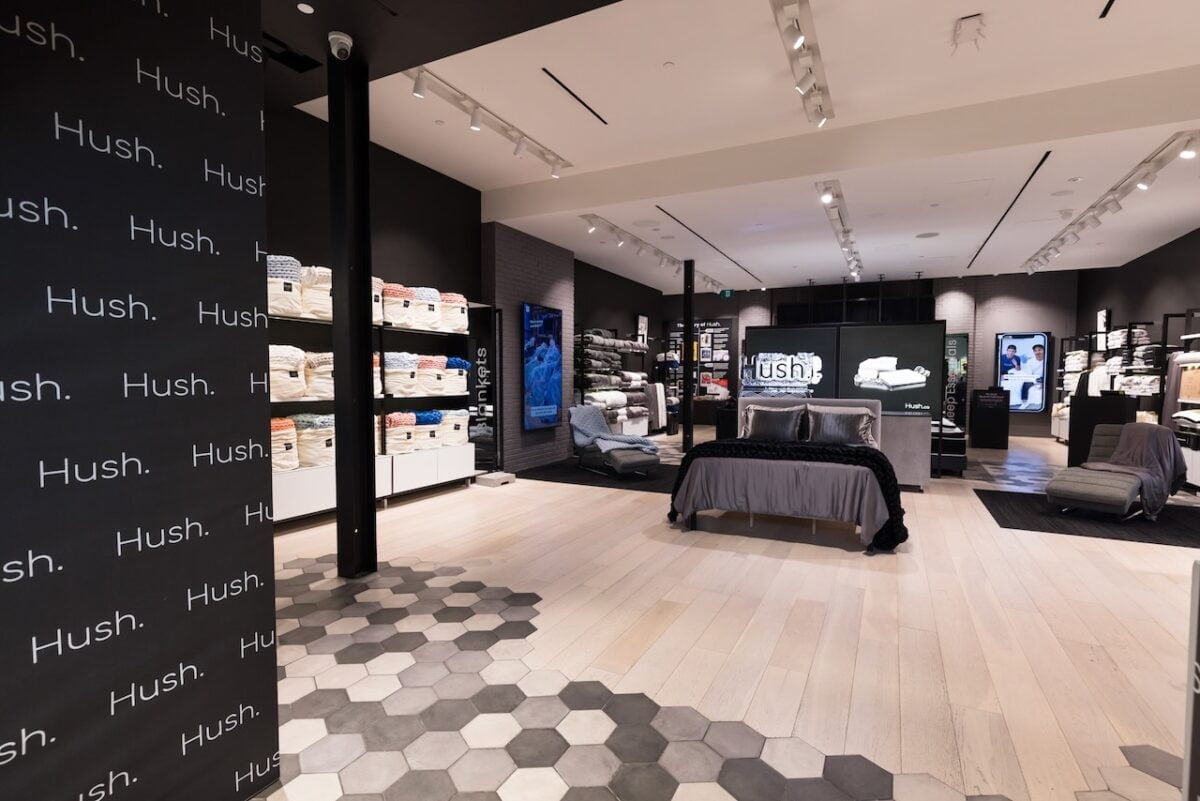
We had multiple loungers that when people were able to just experience the products within the store, whether it be the weighted blanket, whether it be like a pair of sheets, or a pillow bed mattresses where people can try out a layout on. Then we had this thing we called the blackout room, which is a room in the black in the back of the store that had all of our products on it. So it was mattress was bed frame sheets with blankets, pillows, and eyemask. And then we had a three minute meditation that people would then put headphones on the ears blackout mask to go into total Zen meditation was something that we created that would also not only guide them through a meditation, but guide them through the products and ways to feel the differences. Because you might feel the sensation of the cooling mattress, the cooling sheets, the softness of the pillow mold into your head, you might also experience the benefits of a weighted blanket, which is deep touch presser stimulation, the weight on your body, and how do I feel that like. All in three minutes, and we had over 4000 people try this experience, which is way more than we thought. We thought okay, you know, everyone’s gonna want to try it on day one, and no one’s ever gonna want to try it again. But I mean, obviously, there was a peak in day one, but there was people every day that would come in, and they would try it. And it was really cool. Because one thing we wanted was not just to sell, we wanted to also have something for people that wanted to check us out. Who are you guys, I’ve never seen the brand before. We wanted an opportunity to interact with them beyond just trying to sell a product.
Craig Patterson 7:16
And do you think that blackout room drove sales at this pop up location?
Aaron Spivak 7:21
Definitely, I think almost majority of people that would try that and actually finish the meditation. So they really bought into the idea of being still for three minutes, which is very difficult when you’re walking around a mall, there’s just so many things going on. Would always leave with either something or a really high intent to purchase something. And because we’re an online brand, there’s a tremendous amount of people that would go home now solidify their decision of what they want. And then they would purchase it online and we would deliver it to their house for free.
Craig Patterson 7:50
Excellent, excellent. Lets talk about inventory in the store. Because we spoke we were at the Retail Council Canada conference, that’s where I met you in person. And you were saying that some stuff had sold out and that you didn’t expect it to sell out so quickly. Can you tell us a little bit how sales were this Yorkdale location.
Aaron Spivak 8:05
Yeah, I mean, the sales were fantastic. And you know, opening up our first store, the inventory management in the store is way different than online. And and you only have so much storage in the back and you don’t quite know what you’re gonna sell. And some days you sell through so much at once you and then you replenish that like crazy next day you sells through so much of the other. But, you know, we brought our micro grab, we brought two products, actually, to the store that we’d never sold anywhere else, which was our knitted blanket, which is available now everywhere, which is quickly becoming the most popular weighted blanket. And we had our microgravity duvet which was our NASA technology that we infused into a duvet. So you can choose to be cold or hot by just flipping over your duvet. And this was a very experiential product because you can literally put your hand on the top hand on the bottom and feel the cold and feel the neutral. It was like wow. And we brought a couple of 100 of them was not available anywhere else. We had no marketing support it we’ve never even spoke about this product. And it flew and it’s sold out just a handful of days. And we were stuck because we did not expect anyone to buy something I’ve never even heard of before. But it was also cool to see the difference between online and in person is you can really have a unique shopping experience in person. Even if it’s not the exact same online so many of us feel like whatever’s online has to be in stored and whatever’s in store has to be online it has to be the same all the time we were able to actually give people a unique experience and a unique offering in the store that definitely resonated with them and now we sell it online of course and it’s obviously an incredible product online but it was all came from that initial unforeseen demand and store.
Craig Patterson 9:50
Interesting now you were saying that you’re thinking of doing more of these physical store pop up activations? What would that future store experience be? Do you see any learnings or anything You might want to do a little bit differently or add to or tell me a bit about what you would envision for a future pop up.
Aaron Spivak 10:05
Yeah, I think we definitely want to have more time, things 28 days is like, you have to factor in electrical and painting like there’s just not enough time. But if we were to have more time be able to plan, I would loved to have had an opportunity for when you visited the store. But you know, have more of an opportunity for flow. And for our store was very split like friend and back. So you either kind of hung out on the front and were interested in the accessories or you hung out in the back and interested in the mattress, the experience. And it was done like that for a reason. Because a lot of the Hush customers is an accessory base customer and the do do obviously enjoy the mattresses, but it’s not the forefront of the brand. So that’s kind of the way we organize the store. Because a lot of things were fixed, we had to work with what we had. But in a perfect state. What we love is to create a flow. And an experiential flow is you know, you come in typical people go right, where they just love to go right. And we would drive almost like a circle, you’d come in and you would come out from the other side. And we would set up our registers differently. Because we had iPad registers, it was very difficult for us to like have a designated checkout area, it was kind of like anywhere. So you could be like entering the store. And it could be someone checking out like right in front of you. And then you can be halfway through your maze, it could be someone checking out halfway through. And we really wanted an area where people can just in the future check out. We had our like embroidery station, which was fantastic. It was totally free. So anyone who bought a pillow and a pillowcase. They were able to embroider theirs right in front of the store. So there’s sort of things that we just loved about it. But I think moving forward keep a lot of those things experiential, the blackout room, the embroidery station, but we we create a little bit of a flow where there was no one impeding in your way. There was no sale happening in front of you, you’re able to actually even with someone or unassisted walk through the store experience everything has has to offer. And even if you leave without purchasing anything, you understand who we are, what we stand for, and what our products feel like.
Craig Patterson 12:09
Yeah, because that pop up could drive sales in the future online. If a person goes in they become educated on the on what Hush is. Now, Sleep Country had acquired – was it all of Hush?
Aaron Spivak 12:23
It is all of Hush but it’s broken up into components. They acquired just over half the business that will acquire the rest over 36 months.
Craig Patterson 12:33
Okay, okay. Excellent. Yeah, now with Sleep Country – they’ve got partnerships with retailers like WalMart at Indigo. Is Hush going to become part of that as well as it will it be profiled or carried in physical spaces like say Walmart, indigo or other retailers, or even sleep country stores?
Aaron Spivak 12:49
Yes, I mean, Hush is in 2500 stores right now are there TJ Maxx, Marshalls, Bloomingdale’s, Macy’s, Nordstrom in the US. And then a handful of smaller chains all throughout. So we have the kind of our own distribution program, not within Sleep Country. But there’s, you know, I always tell people, there’s nothing like having the resources to pull on when we need it. And Sleep Country’s a 27-year old business with close to 300 locations. And for the most part, I mean, everyone in the country knows their jingle. I mean, they have such a strong brand. And they’ve built such a really a beautiful business over the course of a couple of decades, or almost three decades. So for us – a young, up and coming very disruptive, new brand in the space, we get to keep our mojo and do our own thing and go into stores that we see best fit and makes sense for us. But in the back of our mind, we always get to pull on on certain resources if we need if we need help with a distribution if we need help with a packaging, like whatever we need. It’s there for us, which is like a superpower. But in terms of when we’re going into a soup country store. I mean, I would hope so I would I would love to be in a Sleep Country store. I mean, those type of decisions aren’t up to us. But you know, for us, it’s always about building the brand and finding experiences really serving our customers. And I know a lot of people say that but we actually go as far above and beyond to deliver for the people that support us.
Craig Patterson 14:31
Now a lot of brands are going direct to consumer, you know, some of them well let’s use say Nike as an example. You could get Nike shoes perhaps in a DSW or or you know, in a multi brand retailer but now they’re opening their own stores and in some cases pulling back on wholesale. Where do you see that moving with with with hush and just even generally in the industry?
Aaron Spivak 14:51
I mean, I think if you peel back the onion a little bit it’s all about margin and and there’s some brands that the wholesale margin is just perfect. And it makes sense. And that’s the model that you want to run in scale, that is serve your wholesale retailers in a brand like Nike that has such a big brand dominance. They don’t necessarily need third party distribution, they can really house it all themselves, or they can, you know, play in the world of different collections for different areas of the business. You know, I went to a outlet store the other day that had Nike and the other shoe for like $80, you know, maybe the Nike store is only selling $250 Plus, and it’s always the newest and greatest and the brightest, and the you know, the sexiest shoe, so there’s ways to develop different channels within the brands. I think it’s always more difficult for a younger brand like us to do that, you know, and it’s always important to build the foundation first. And there’s a, you know, building our core product line and building who we are what we stand for, to the point where eventually, yeah, it could be like a Nike and be like, Hey, we have this collection that’s maybe lower price and sells in these retailers and this collection that’s maybe higher price and sells exclusively in our stores. But I think there’s many ways for brands to get creative. But it’s the key word is brands, it’s where the brand is, is it mature enough? Does it have enough of a pull and what’s the goal and for us, the goal is to spread the brand as much, as much as possible, get into as many people’s beds as we can. And distribution through wholesale channels, as long along with growing through channels is for us the best way to do that.
Craig Patterson 16:33
Terrific, terrific now, not necessarily to do with Hush specifically. But you’ve revived a bit of a newsletter and a blog, you want to talk a bit about that. And you’ve talked about being a leader, you’ve got all kinds of interesting stuff in there, I subscribed.
Aaron Spivak 16:45
That’s awesome. Appreciate that. I mean, I’ve always, I’ve always used to sound like internal letters, notes, like paragraphs to friends, colleagues, people just kind of updating and, you know, I started doing it, and I stopped, I started doing it to, you know, maybe a group of 10 or so people and one of them reached out to me, he’s like, I started looking forward to this message and you stop what’s going on, I’m gonna let them know I do this tantalizing I don’t need to do this, I don’t see anyone sees value. And I started to take a different perspective. And you know, what we’re up to, might be a value might be interesting, might be cool for anybody. And for us, it’s about telling the story and sharing as much as possible. It’s almost like a diary, in a sense. And it’s an update on, on what we’re doing what I’m doing. And I’m starting to like it. And it’s it’s really cool and fun to share the good, bad and the ugly of what goes on. In our life, I find so much of what we see online is curated. It’s like, you know, if I go on LinkedIn, it’s only the best news ever. And if I go here, and if I go on Instagram, it’s the prettiest picture that you have. And if I go on Twitter, it’s like the most thought provoking thing you can possibly say. And it’s like, well, people want to know what’s actually going on. I mean, like, we hear this and if you know, you go on the news, always bad stuff. So like we we know what we’re getting, let’s let’s peel back the onion. So I try to do that with my newsletter, and I appreciate you subscribing and it’s a work in progress. I think this is going to eventually continue to evolve.
Craig Patterson 18:20
Great, we should put a link in the show notes for this as well if anyone else wants to subscribe to it. And and then one final question. I was thinking of strapping on the skates again, just more recreationally I’m about I think 20 years older than you are. I mean, you know may not look it but I think I’m playing hockey again. Getting out there doing that.
Aaron Spivak 18:39
I love to play pickup like you know, I I always tell people like there’s nothing for me at least the only thing in the world where I’m actually not only not on my phone, but not even think if I do yoga, I’m not on my phone, but I’m kind of thinking you know, when I’m on the ice I’m only thinking about the head there’s nothing can pull me away from just this game. And I don’t even think about phone I think when nothing else. And it’s like I put that helmet on and I’m gladiator going to war and it’s it’s it’s a feeling that as only hockey players really know but it’s it’s something that that’s why I continue to play pickup and as I try to get out there as much as possible, because it’s the feeling that you just can’t replace.
Craig Patterson 19:25
Amazing, amazing. I totally get it. It puts you it puts you in the moment, right? It’s it puts you in a zone, you can’t really think of anything else you might get hit by a puck or a person. Well, thank you so much for joining us today. This has been really informative. I love talking to entrepreneurs, people who’ve won awards for their stores. So thank you for joining us. This is Aaron Spivak of a co founder of Hush blankets. Thank you.
Aaron Spivak 19:48
Thank you so much.
Craig Patterson 19:50
I’m Craig Patterson. I’m the founder and publisher of Retail Insider, as well as CEO of Retail Insider Media limited which includes Retail Insider the magazine. Thank you so much everyone today for another are watching this on our YouTube channel or listening to it on our podcast channel. Be sure to subscribe. Take care and bye for now.
Subscribe, Rate, and Review our Retail Insider Podcast!
Follow Craig:
- LinkedIn: www.linkedin.com/in/CraigPattersonToronto
- Instagram: @craig_patterson_toronto
- Twitter: @RI_EIC
Follow Retail Insider:
- LinkedIn: www.linkedin.com/company/Retail-Insider
- Facebook: https://www.facebook.com/RetailInsider/
- Twitter: @RetailInsider_
- Instagram: @Retail_Insider_Canada
Listen & Subscribe:
Share your thoughts!


Drop us a line at Craig@Retail-Insider.com. You can also rate us in Apple Podcasts or recommend us in Overcast to help more people discover the show!
Background Music Credit: Hard Boiled Kevin MacLeod (incompetech.com). Licensed under Creative Commons: By Attribution 3.0 License. http://creativecommons.org/licenses/by/3.0/