135 - 100 Sunrise Ave, Toronto, ON (Image: RE/MAX)
Continued strength in the e-commerce retail space is fueling a huge demand across Canada for industrial real estate to keep up with the demand.
“The overall strength of the Canadian economy continues to propel massive expansion in commercial markets across the country in 2022,” said Christopher Alexander, President, RE/MAX Canada. “What began as heightened demand for industrial space to accommodate a growing e-commerce platform during the pandemic has blossomed into a full-blown distribution and logistics network that encompasses millions of square feet in markets across the country. Recent volatility in the stock markets has also prompted a shift to greater investment in the commercial segment as investors look to real estate as a hedge against inflation.”
Christopher Alexander
The RE/MAX Canada 2022 Commercial Real Estate Report said institutional and private investors remain exceptionally active in the commercial market across the country, spurring demand for industrial/office/retail product on a large-scale basis.
“Extensive portfolios are a primary target, especially those containing 10 or more properties. Spillover from activity in major centres is also serving to bolster smaller, secondary markets, where affordable price points, in relative terms, prove attractive, especially as savvy investors anticipate future needs and potential, given urban sprawl, density, population growth, pricing and inventory trends,” said the report.
7 – 421 Nugget Avenue, Toronto, ON (Image: Marcus & Millichap)
“While retail is making a comeback in prime neighbourhoods, the return of foot traffic should have a positive impact on the market moving forward. Revitalization of older retail spaces and malls is underway to enhance the shopper experience and influence the return to in-person shopping. This, in turn, is attracting tenants. The sector is expected to continue to strengthen as markets move past former pandemic constraints and more favourable conditions emerge to support retail growth.
“RE/MAX Canada has found that cannabis outlets are largely over-represented in most major Canadian centres. As the industry amalgamates, there could be an influx of retail inventory returned to the market over the next 12 to 18 months.”
The report said retail is on the rebound in 75 per cent of major Canadian markets (9/12), with strong emphasis on prime locations in neighbourhood microcosms. The trend has been identified in Vancouver, Edmonton, Calgary, Saskatoon, Regina, Winnipeg, Hamilton-Burlington-Niagara, Toronto and Ottawa.
3313 9 Street Southeast, Calgary, AB (Image: NAI Advent)
Elton Ash
Elton Ash, Executive Vice President, RE/MAX Canada, said the retail sector is driven by consumer demand and confidence.
“Retail is being driven by strong consumer demand which is a result of coming out of the pandemic and people feeling more confident with the easing of restrictions. It all leads to this. There’s a sense of better buy now before prices get higher because combined with all of this is there’s more cash in Canadians’ pockets than has ever been. The savings rates are at record highs,” said Ash. “So there’s this underlying desire to take advantage of where things are at and this need to make up for lost time. Pent-up demand.
“Right now, the strength of the commercial market is in industrial warehousing and then multi-family. What’s driving that is retail distribution requirements. It’s looking positive to continue with the demand to stay strong. But I say that cautiously because we’re at this point right now where we don’t know how effective the Bank of Canada is going to be in trying to deal with inflation and slowing an overheated economy. What will that do to warehouse distribution? But there’s pent-up demand and I think there’s a shortage that has to be met and that will continue at least in the short term.”
Ash said suburbia is leading the trend when it comes to retail space.
“When you get out of the downtown cores and into the strip malls, smaller neighbourhood malls and that type of thing, there’s a real demand there,” said Ash. “Interestingly enough as we found in our report, cannabis is overbuilt. We were predicting that a while ago. With that aside, the rest of retail is very strong and foot traffic is building again from where it was two years ago this very time which was totally zero. We were all shuttered in our homes. We’re returning to pre-pandemic and I think pent-up demand will take us past that pre-pandemic level so it’s looking very positive.”
The world around us is changing. Precipitated by impacts of the COVID-19 global pandemic, a number of trends are serving to transform how people live their daily lives. Highlighted predominantly by an accelerated digitization of the environment around us, the ways in which we communicate and share information has been altered. It’s also changed the way consumers like to engage with their favourite brands, increasing their shopping expectations. For retailers operating across the country, it means becoming more nimble and agile and honing the capacity to quickly shift and pivot in order to respond effectively in the face of disruption and changing market conditions. In fact, it’s an ability that Nora Gulesserian, President at Moneysworth & Best Quality Shoe Care, says is critical toward ensuring the continued growth and success of any brand during these difficult times.
“There’s been so much disruption within the industry over the course of the past couple of years,” says Gulesserian. “Just about every department throughout the entire retail organization has been impacted, from pressures being placed on store and area managers who are dealing with a shortage of store staff, to the uncertainty that currently surrounds the retail supply chain, and everything in between. It’s been an incredibly challenging time. However, it’s also been a time during which some lessons have been learned. Retailers everywhere have been forced to reassess their operations and the way they do things in order to find efficiencies and mitigate risks. It’s more important today than ever before to stay ahead of the curve with respect to addressing challenges and discovering opportunities for your business. To do this, retailers have got to explore and leverage innovative technologies, taking their business to the next level.”
Centralized data and information
Image: Moneysworth & Best Quality Shoe Care
To help Moneysworth & Best Quality Shoe Care achieve this target, it implemented and began using Microsoft Dynamics 365 Business Central at head office. Gulesserian says that for the nearly 40-year-old Canadian-owned and operated family-run business with 22 franchise locations in British Columbia, Ontario and Quebec, the introduction of the business management solution was a game-changer. Designed with the needs of small- and medium-sized businesses in mind, Business Central offers a number of tools that support the automation and streamlining of a number of business processes, helping business owners overcome challenges, more easily identify opportunities and free up their time to develop strategy. However, what’s most impressive about the suite of solutions, says Gulesserian, is the way in which it centralizes business information and data, eliminating the need to draw reports and figures from multiple sources.
“Business Central integrates seamlessly into the Microsoft suite of programs, which makes it incredibly easy to use and navigate,” she says. “The fact that it includes continuous updates and features to drive effective and efficient workflows has allowed us to tighten our operation in areas, reducing costs. And, because people can access the system locally and remotely removes the need for them to physically be at their desk to leverage it. One of the greatest advantages of Business Central, however, is the fact that it’s maintained within a single database for all of the necessary and relevant information on items, customers and vendors. And, with financial statements at the tips of our fingers, we’re able to drill down to the granular level and capture insights that we never could have otherwise, informing business decisions and strategy.”
Simplifying the business
The catalyst behind Moneysworth & Best Quality Shoe Care’s decision to explore Microsoft 365 Business central was its need to meet a specialized electronic data interchange requirement (EDI). And, in its quest to discover a solution while working with EDI service provider and Microsoft Business Central Partner, VOX Ism, it was suggested that they reach out to the leading technology provider. The company was immediately impressed by the customizable and adaptable suite of options that have been built in order to meet the needs of today’s small- and medium-sized businesses. Enabling retailers to better manage their finances, manufacturing, sales, shipping, project management, services, and more, Business Central removes much from guesswork out of day-to-day operations. According to Sherief Ibrahim, General Manager of Business Applications at Microsoft Canada, it unburdens business owners and their teams, allowing them to focus on execution.
“When you’re a small business owner, you tend to wear a lot of hats,” he says. “Business Central covers a wide gamut of business processes that small- and medium-sized businesses have to worry about. In essence, it’s a cloud solution that helps pull data together from different sources, informing decision-making and allowing merchants the flexibility to manage their business in real-time. It makes communication with customers easier and more effective, enabling the ability to pull customer data in an instant. It’s a solution that goes a long way toward simplifying the retail business, eliminating the need to interface with multiple applications. In addition, because of the access to the centralized data, siloes within organizations are removed, allowing team members to more easily share information and insights that will benefit the operation.”
Bringing data to life
Image: Moneysworth & Best Quality Shoe Care
In addition to the use of Business Central, Microsoft also offers its ground-breaking Power BI – a solution which easily integrates with the Microsoft stack, equipping retailers and their teams with the ability to discover insights hidden in their data that they wouldn’t have otherwise. Power BI is a solution that Ibrahim describes as extraordinary with respect to the potential that it presents its user, providing retailers with the opportunity to begin predicting and forecasting like they never have before, benefitting their business immensely.
“Business Central is the solution that helps retailers manage their businesses more effectively, providing them with a real-time view into their performance through the generation of data and information,” he explains. “But where that data and information really starts to come to life is through the use of Power BI. And because it, too, is highly customizable, presenting concise and meaningful visualizations, business owners are able to leverage the solution to pull all of the data together to make informed decisions, like what to stock, what to buy and which customers to spend more time with. The artificial intelligence capabilities within the solution make it incredibly useful in making sense of your data and putting it to work for your business.”
Predictive and insightful
Driven by the predictive qualities of artificial intelligence technology, Power BI allows all departments and team members within a business to access custom and static reports that can be used to identify challenges and areas to optimize as well as opportunities for growth. It’s been leveraged by Moneysworth & Best Quality Shoe Care, in conjunction with Business Central, to help it do just that. According to the company’s President, it’s been significantly impactful on the business, helping to not only manage and inform business decisions, but to assess and evaluate performance of staff with substantially greater accuracy and understanding.
“Thanks to the ability of Power BI with respect to visualizing data, it helped management realize that a particular staff member who appeared to be ‘underperforming’ was actually going above and beyond their responsibilities by resolving issues and helping others within their team, something that was not evident by just monitoring productivity using dated traditional methods,” she explains. “This was a real eye opener for the entire team and helped to further solidify the position of the individual within the company and their team. It’s too easy to conclude that someone is underperforming. With data to back up staff productivity, it helps to slice and dice other metrics to benchmark with. You can’t fix what you can’t see. Power BI reports have helped open our eyes and ultimately improve our staff experience within their working environment.
Increased efficiency and performance
Gulesserian goes on to explain that the company currently leverages over 20 Power BI reports that are accessed by its purchasing, sales, production, receiving, order planning and processing and management teams. She says that there have been numerous other discoveries similar to the example she provides, adding that they have all resulted in the uncovering of multiple efficiencies and enhanced team performance. And, they are results that Microsoft’s Ibrahim says are facilitated by the power inherent in the solutions the technology leader provides its clients, adding that, in light of the recent challenges faced by the industry and the digitization of its expanding ecosystem, there isn’t a better time for merchants to begin harnessing their potential than now.
“Many retailers are perhaps a little hesitant to invest in this type of platform, fearing that there will be extensive employee training involved and requiring them to have new business flows and processes. But the fact of the matter is that with this type of technology, retailers can be up and running in just months. It’s been designed to be extremely intuitive and easy to use with lots of training available. Merchants don’t need to wait for that compelling moment that makes them feel as though they’re required to make the investment. By doing so now, they ensure that their business becomes exponentially more agile, efficient and productive, increasing their competitiveness and success, enabling them to get ahead of the digital curve.”
For more information on how Microsoft 365 Business can help grow your business, visit Microsoft Dynamics 365 and get in touch.
*Retail Insider partnered with Microsoft for this article. For more information, contact: craig@retail-insider.com
A unique pop-up retail space for cereal brand Shreddies launched this week in Toronto and it’s a first in the world for Post Consumer Brands. The pop-up is a cheeky nod to the hundreds of cannabis dispensaries that have opened in Toronto since legalization in 2018.
Located at 311A Queen Street West, the Shreddies Wheat Dispensary provides the opportunity for visitors to sample a variety of whole-wheat Shreddies strains. Samples are free.
“Over the past few years, hundreds of cannabis stores have popped up all over the city. You can pretty much find a dispensary on every street corner,” said Amy Bernstein, Senior Brand Manager at Post Consumer Brands Canada.
Photo: Supplied
“We wanted to introduce Torontonians to a dispensary unlike any other – one that would help fuel their day. That’s why we’re so excited to launch the first-ever wheat dispensary. There is no actual cannabis involved – just the 100% whole-wheat goodness of Shreddies breakfast cereal. What better way to discover the ultimate edible than through a delicious bowl of Shreddies?”
The Queen Street pop-up opened on the morning of Thursday, June 9 and will remain open until Sunday, June 12. It will relaunch again from Thursday, June 16 to Sunday, June 19. Opening hours are from 7:20am to 6:00pm.
The idea of the pop-up was to create consumer engagement as well as brand awareness. On the pop-up’s website, visitors are encouraged to try different “strains” of Shreddies cereal including the brand’s original cereal as well as varieties including honey, brown sugar and granola and even the opportunity to sample a hybrid mix of the three.
Photo: Shreddies Wheat Dispensary
Photo: Shreddies Wheat Dispensary
Photo: Shreddies Wheat Dispensary
Pop-up retail activations became commonplace in Toronto and the rest of Canada several years before the COVID-19 pandemic. Temporary in-person activations to create buzz were halted due to pandemic shutdowns, and now that things are getting back to normal we’re starting to see more pop-ups again as consumers are more comfortable with face-to-face physical experiences.
Vacant spaces in cities in Canada means there are opportunities for more pop-ups in the short-term. Brokers are saying however that leasing activity is picking up across the country, which means more long-terms leases are expected as things get back to normalcy as we head into the summer.
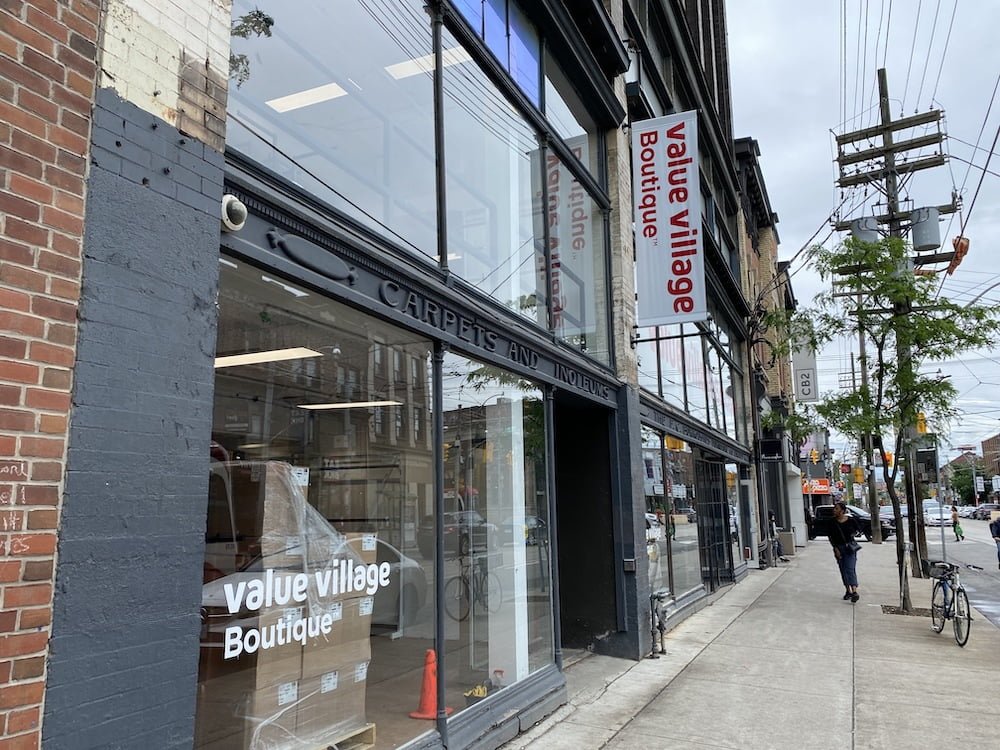
639 Queen St. W., photo: Dustin Fuhs on June 9, 2022
US-based Second-hand retail chain Value Village will be opening two storefronts in downtown Toronto this summer, introducing the new urban Value Village Boutique concept to the Canadian market.
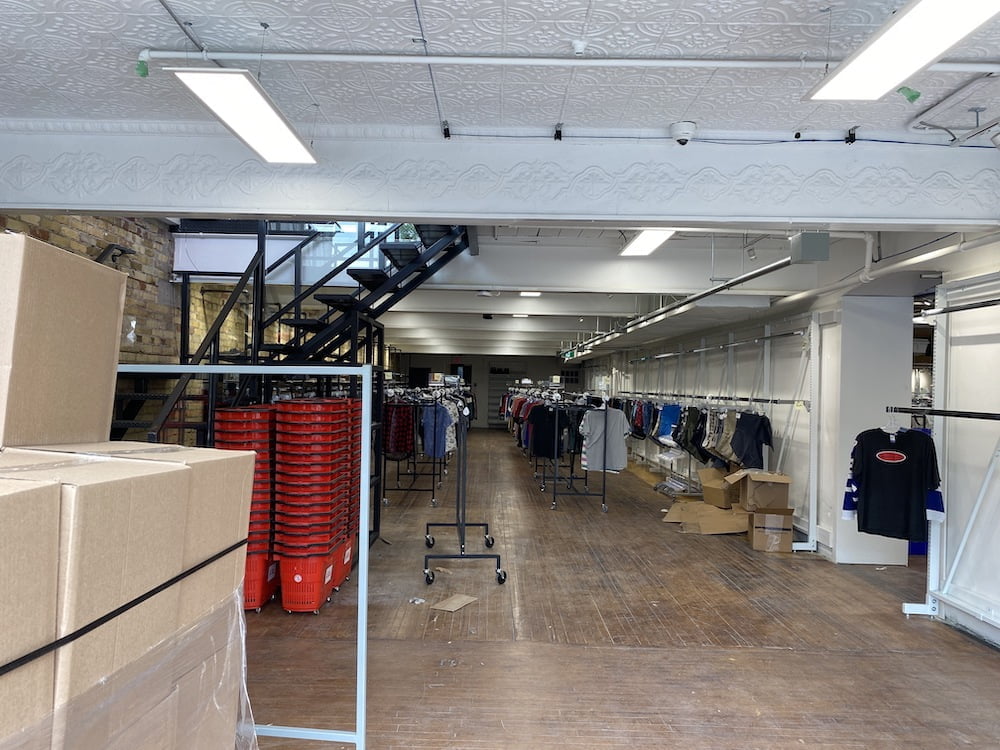
Signage is already up for a storefront set to open soon in the Burroughes Building at 639 Queen Street West in Toronto. The building was completed in 1910 and was the flagship location for the F.C. Burroughes Furniture Company Limited and more recently, housed an independent furniture and design company called DesignRepublic. The new soon-to-open Value Village Boutique will feature a broad glass facade in a storefront that for several years has been used as a pop-up space. A CB2 furniture store is located next to the new Value Village Boutique.
Click image for interactive Google Map Inside the soon-to-open Queen Street Value Village Boutique on June 9, 2022. Photo: Dustin FuhsClick image for interactive Google MapFormer Rexall store at Bloor St. W. and Brunswick in Toronto’s Annex area. Photo: JLL
A second Value Village will open after construction is finished in the former Brunswick House at 481 Bloor Street West between Spadina and Bathurst Streets in Toronto’s Annex area. Prior to being leased by Value Village, the building housed a Rexall grocery store that opened in the spring of 2017. And before that, the building had been home to a dive bar called The Brunswick which was popular with university students in the area. The building is 145 years old and the main floor spans almost 7,500 square feet.
Value Village applied for the Canadian Trademark for the Value Village Boutique name in July of 2021 in anticipation of a store expansion.
The move to open Value Village stores in downtown Toronto follows the announcement of the closure of a store near the corner of Bloor and Lansdowne Streets in Toronto — the large format standalone store will be demolished for a residential condominium project.
In years past, downtown Toronto has been home to other second-hand retailers such as Goodwill and Salvation Army, and high rents have led to most shuttering. It remains to be seen if pricing in the two new downtown Toronto Value Village stores will be higher than a typical suburban location, given the high lease rates in Toronto’s core. Prices are set in individual stores and a recent increase in prices in some Value Village locations has led to complaints from consumers.
See below for more photos by Dustin Fuhs of the soon-to-open Queen Street Value Village.
The soon-to-open Queen Street Value Village Boutique on June 9, 2022. Photo: Dustin Fuhs
Retail Insider is streamlining its Canadian retail news from around the web to include a handful of top news stories that can be viewed quickly during the day. Here are the top stories from the past 24 hours.
In this age of digitization or, at least, digital acceleration, it’s easy for some to start making assumptions about the world around them. Driven by the ways in which communication and the transfer of information is evolving, some technology devices, like smartphones, seem necessary to own and use, becoming almost ubiquitous in our daily lives. For business owners, the same truth applies. It’s obvious that they need to be where their customers are gathering to engage, explore and shop. And, given the recent shift in consumer preferences and behaviour toward online channels, it’s just as easy for merchants to determine that they need an online store in order to reach more customers and increase sales. However, according to David Nagy, digital pioneer and Founder of eCommerce Canada, there are some considerations that need to be made before investing time, money and effort into building your ecommerce presence.
“Most retail businesses are online today,” he says. “If they weren’t before the onset of the pandemic, they most certainly are now. The digitization of everything and store closures associated with the pandemic, along with consumer shopping behaviour that shifted somewhat away from physical brick-and-mortar stores toward online channels, precipitated an obvious spike in ecommerce sales over the course of the past couple years, as well as the idea in the minds of most merchants that they have to be selling online today in order to grow their business. And, although that may be true to an extent, there are a number of different paths that businesses can take to become a success online. And, there are a host of considerations that need to be made before investing anything into digitizing a business.”
Expansion of ecosystem
All-too-often, Nagy says, small- and medium-sized businesses that are without the resources of the bigger players in the industry tend to rush into investing in digital tools that are, in the end, not likely to benefit their operations, improve efficiencies or enhance the customer experience. They are usually investments made in haste as a result of a fear of getting left behind or missing out on the online boon. However, in order to optimize their digital efforts and capitalize on the opportunities that are available to them through ecommerce, explains Nagy, merchants have got to define their online business. To do this most effectively, he says that a thorough understanding of the brand and its consumer have got to be developed and leveraged.
“Business owners have got to understand that establishing an ecommerce presence doesn’t simply mean putting your products online and waiting for the sales to start happening,” he asserts. “When a business puts their products or services online it represents an extension of the ecosystem of channels by which their consumers can shop and engage with them. It also represents a massive step toward creating a truly omnichannel offering. So, in order to most effectively begin to build out the digital components of that ecosystem, merchants have to make sure they have a really good understanding of their brand and the experience it offers consumers. And, they need to also possess a deep awareness of their consumer and the experiences that they seek from their brand. Without this knowledge, any investment into digitization of the business would be done without the proper considerations being made.”
Understanding your customer
Nagy goes on to explain that the digital layer of a merchants’ ecosystem could include multiple channels that offer a number of different options concerning product delivery and transfer. Merchants can sell product directly from their website, utilize social media platforms to showcase and move inventory, sell through a third-party marketplace, or develop a strategy that involves some or all of these tactics. In addition, merchants may offer their consumers home delivery, the ability to purchase online and pick it up in the store, purchase in-store and receive the product at their home or order online for curbside pickup. They are channel and service options that are helping merchants enhance the experiences that they offer customers, says Nagy, reiterating the need to understand the value that the brand provides for consumers.
“Defining the brand helps merchants determine which direction they want to go, which path toward ecommerce success they’ll need to follow,” he says. “Combined with knowledge of their customer allows merchants to better understand which channels are going to be most beneficial for them to leverage. You can’t be everywhere at once. Where are your customers frequenting online? How do they like to engage with your brand? How do they like to shop? Knowing the answers to these questions is a great place for merchants to start plotting out exactly what tools and channels will be included within the digital component of their ecosystem, how it interacts with the other tools and channels and what adjustments might be required by the business in order to accommodate these new additions.”
One step at a time
When it comes to the building and execution of a digital strategy for the business, Nagy stresses the importance of doing so with the consumer’s needs and preferences at the core of development. This will go a long way, he says, toward guiding and directing the formation of a digital roadmap for the business to work toward. He explains that, supported by customer data, anything that the merchant has access to and can make sense of, the roadmap and ecosystem can evolve and adapt, informed by changes in behaviour. However, he adds that merchants don’t need to build out the entire digital portion of their ecosystem in one day, suggesting that it’s a work in progress that will likely take a few years to build and hone before achieving the levels of success and growth that merchants crave.
“There’s no question about the fact that it’s absolutely necessary to be online as a business today. But, it’s just as necessary to understand the ecosystem that your building, the reason you’re building it and the consumer you’re building it for. For most small- and medium-sized businesses out there, developing an online presence and reaping success from it is really a journey that requires merchants to take things one step at a time. Identify areas where you know enhancements can be made and place your focus there. And, above all, make sure that the ecosystem you’re building allows for an easy, convenient and consistent experience within which customers can effortlessly traverse from one channel to another throughout their shopping journey. It’s what they’re looking for from their favourite brands. And it’s up to the brands to deliver.”
For information about the ways in which eCommerce Canada can help your business compete in a digital world, visit ecommercecanada.ca
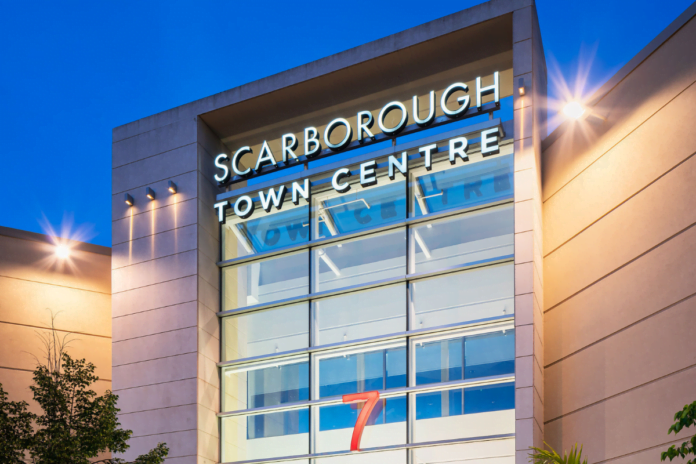
The Scarborough Town Centre is redeveloping more than 140,000 square feet of retail space to accommodate three new, large-format retailers including Decathlon, the French sporting goods retailer.
The redeveloped space has been vacant for a few years since retail giant Sears closed its doors.
Thien Nguyen
“Scarborough Town Centre is located at the heart of a vibrant and growing community and serves as a gathering place for people to shop, dine, work and be entertained. Oxford’s goal is to create a best-in-class retail experience, and this investment in STC paired with major retailer openings at the centre indicates a commitment to the region. This redevelopment is about connecting people with great places and with brands they know and love,” said Thien Nguyen, General Manager at Scarborough Town Centre.
Scarborough Town Centre is the largest regional shopping centre in the eastern Greater Toronto Area, with more than 200 shops and services and 1.6 million square feet of retail space. Ranked as one of the top 20 performing shopping centres in Canada, Scarborough Town Centre sees about 20 million shoppers per year. Located at HWY 401, between Brimley Road and McCowan Road. Scarborough Town Centre is managed by Oxford Properties Group and owned by AIMCo and Omers Realty.
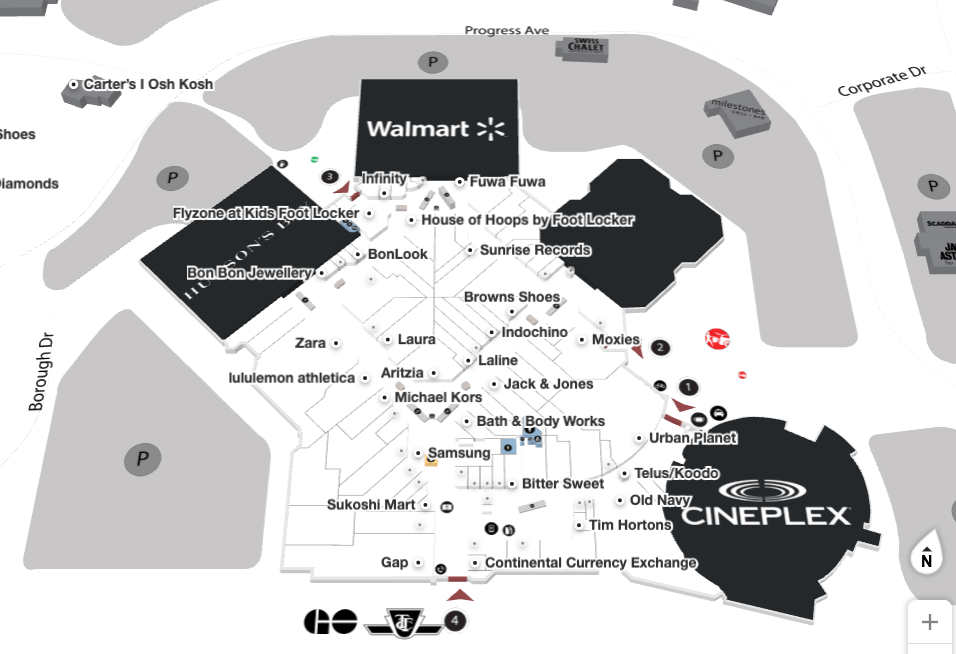
CLICK IMAGE FOR INTERACTIVE SCARBOROUGH TOWN CENTRE MALL MAP
Nguyen said Decathlon is the only confirmed key tenant at this time for the redeveloped space. The sporting goods retailer will occupy about 46,000 square feet of space that will feature extensive inventory and experiential zones, along with programming and activities making it a community sports hub.
She said Decathlon is expected to occupy the space in the fall of next year.
“There’s another tenant that we’re hoping to secure and one large non-major as well. The leases haven’t been signed yet but we’re hoping for all of the three tenants to align and open by October 2023,” added Nguyen.
“It’s the former Sears space and we haven’t done anything with the space since Sears closed four or five years ago. Last year during the pandemic we were fortunate enough to work with the City of Toronto to open a vaccine clinic on the second level.”
The overall space is on three levels in a 230,000-square foot box. Nguyen said the shopping centre has not figured out what it wants to do with the vacant space of about 60,000 square feet on the third level.
Former Sears Location at Scarborough Town Centre (Image: Oxford)
“It might just be storage because the shopping centre is limited on storage for the other retailers. So it might not be converted to retail space,” she added.
A pop-up Decathlon store opened in late May on the lower level of the shopping centre near Shopper’s Court and it features top-selling products and offers shoppers an idea of what to expect to see at the permanent location next year.
“At Decathlon, we’re passionate about making sports more accessible to all by offering quality products at affordable prices,” said Nicolas Larose, Store Leader, Decathlon. “We’re so thrilled to be introducing the Scarborough community to our brand with this new pop-up store in such an excellent location. We look forward to becoming a destination for all sports enthusiasts in the area, and we can’t wait to open our flagship location soon at STC.”
Decathlon Pop-up at STC (Image: Decathlon)Image: Decathlon Canada at Scarborough Town Centre (Linkedin)
Nguyen said the centre is underserved in that category and given the demographics of the primary market around Scarborough Town Centre it will just amplify its retail offering in being able to bring the retailer to the community.
She said the first week of Decathlon’s pop-up store was very successful with lineups of people.
Decathlon has more than 1,600 stores in over 60 countries around the world. It designs, manufactures, tests, and sells apparel and equipment for over 65 different sports. Currently, there are 11 Decathlon stores in Canada. Oberfeld Snowcap represents Decathlon in Canada and negotiated the Canadian leases including the new Scarborough store.
Patties Express at CF Toronto Eaton Centre (Image: Dustin Fuhs)
No matter what time of day you walk into a Patties Express location in Toronto you’ll get Jamaican patties that are fresh and hot.
It’s one of the reasons for the brand’s success, said General Manager Aziz Mostafa, as the company looks to expand its footprint over the next few months.
Patties Express first started in 2014 at Yonge and Elm Streets in Toronto. Today it has three locations – the Square One Shopping Centre in Mississauga, the Upper Canada Mall in Newmarket and in The PATH at 65 Queen St. West in downtown Toronto. The Elm Street location in Toronto shut down for a new condo development on the property.
Mostafa said it will open three more locations by the end of this year – the CF Toronto Eaton Centre, Commerce Court and Union Station.
He said CF Toronto Eaton Centre is expected to open in August.
Image: Patties Express
“We run a simple operation. We sell Jamaican patties, cold drinks and Coco bread. We focus on quality product, customer service and trying not to waste people’s time as much as possible. People have meetings to attend and lunch breaks that don’t last forever. Every customer should be in and out of the store as quickly as possible” said Mostafa.
“There was never an intent to include a seating area back when we conceptualized the business. When we started Patties Express at Elm Street, the idea was to incorporate Patties Express into the customers day to day activities as opposed to how can they take time off to sit at our space for a while to eat”
Aziz Mostafa
“We’re just taking it slow and steady right now in discovering opportunities that fit into what we would like for the business and it’s future. A lot of the opportunities we have right now grew organic through people reaching out to us while visiting our stores and starting conversations. That’s really how the Eaton Centre deal came about as well; one of our customers, Ivolyn, put us in touch with some people she knew over at Cadillac Fairview and the rest was history.”
Mostafa said Jamaican patties in Toronto have always been a staple of food for snacking. People buy dozens of them, or half dozens, to take to their offices to share with co-workers. It’s a quick snack or a lunch.
Image: Patties Express
Image: Patties Express
“When we were opening our first store, we wanted to tackle things that were possibly missing in the market. After finding out what those things were, it was a matter of simplifying our operation and separating ourself from the crowd.”
Patties Express at Thomson Building in Downtown Toronto (Image: Dustin Fuhs)
“For me personally, I always make sure the product is as good as promised. When people come in and have a conversation, I always remember that conversation and where we left off, next time they pass by we continue with that conversation. The customers come in and talk to me about pretty much everything. There’s a genuine care and attention expressed on the job and I enjoy it more than anything. I guess that could also be part of the package for some people, they come for the food and the connection we built.”
“The product is always fresh and it comes out fresh every 20 minutes. There’s not a time of day when you’re going to get it not hot and fresh. We make it fresh daily at our bakery and bake it fresh throughout the day. Even if you come by during the last five minutes before closing you’re still going to get the same fresh product as if it was five minutes into opening”
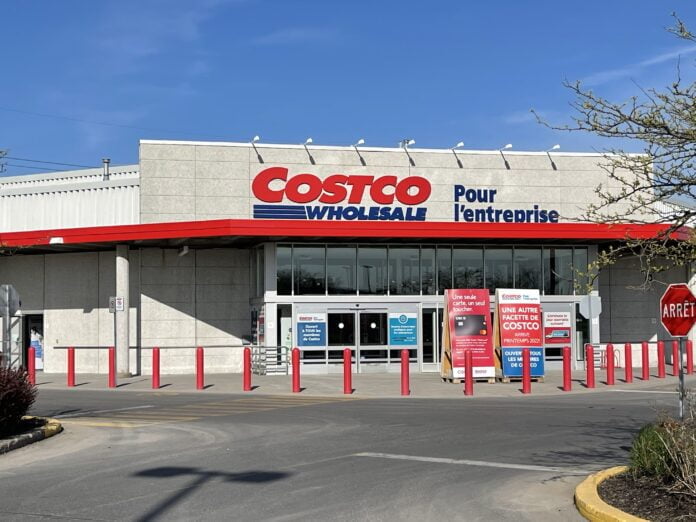
The 134,000 square-foot facility is located at 7373 Rue Bombardier and offers more than 3,000 products, which have been curated to appeal to the local businesses in the Quebec market.
“We are thrilled to open our doors and offer this new service, which will better respond to the needs of local business owners,” said Marc-André Bally, Senior Vice-President, Costco Wholesale Eastern Canada. “The Costco Business Centre concept is already a resounding success in Quebec and across the country, and we look forward to extending the same benefits to more businesses in Quebec. We hope we will bring many new consumers to discover the benefits of a Costco membership.”
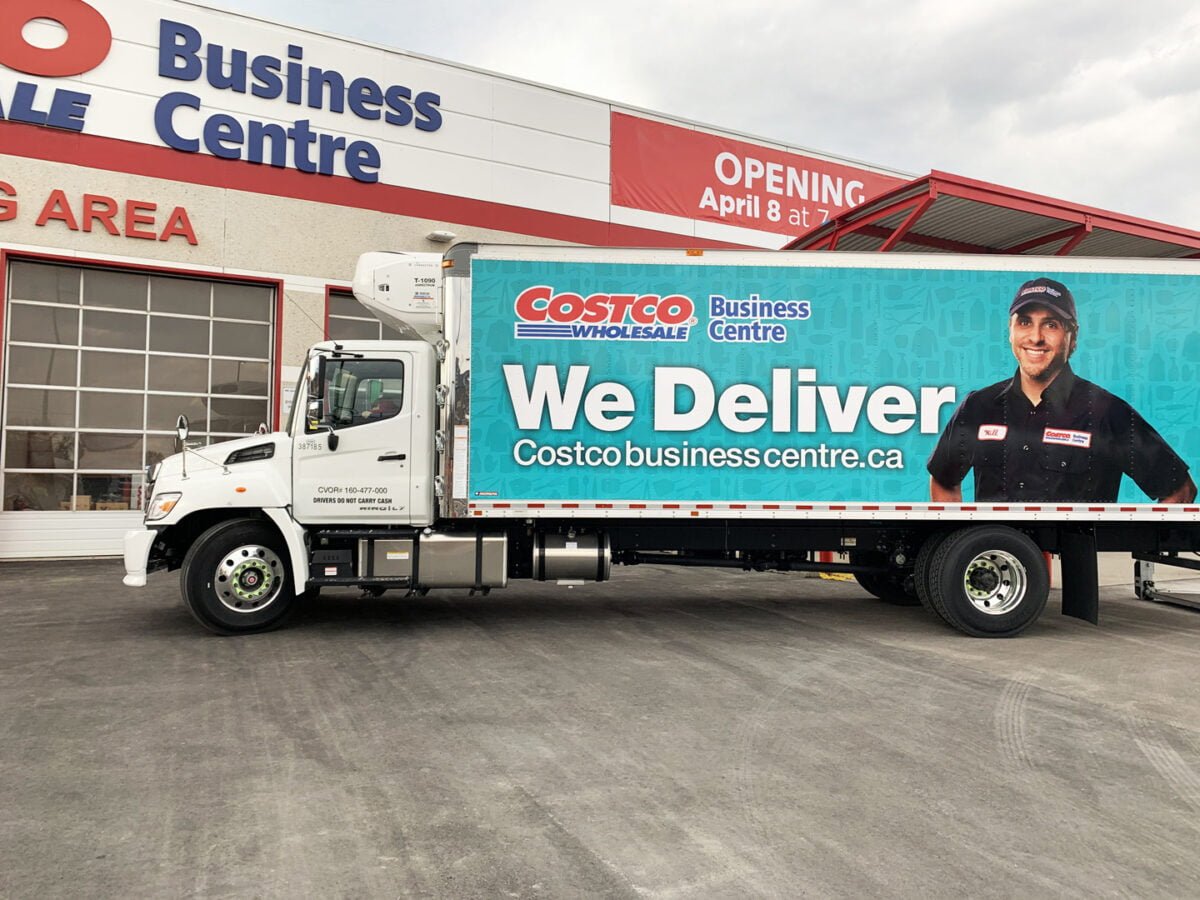
This new business centre is the sixth of its kind in the Canadian market and continues the national expansion of the concept. The first location opened in Toronto’s Scarborough area in March 2017, followed by Saint-Hubert Quebec in September 2020, and Ottawa, Edmonton and St. Catharines last spring.
Costco Business Centre in St. Catharines. Photo: Costco
“Costco members will find our product offering to be unique, while always offering great value,” said Louis Santillo, General Manager of the new Business Centre. “This convenient and spacious location will present a vastly different selection of business merchandise – at prices that only Costco Wholesale can offer and with the added bonus of white-glove, next- day delivery service.”
The brand provided a full breakdown of the location, which “offers more than 3,000 high-quality items, targeted at restaurants, convenience/grocery stores and offices – from bulk food items, commercial kitchen wares and cleaning supplies, to office furniture, coffee needs and everything in between. Examples include 16-litre jars of canola oil, a variety of large format packages (up to 25 kilograms) of flour and sugar, 36-kilogram Parmigiano wheels, 10-kilogram jars of peanut butter and 18.9-litre containers of maple syrup. Other exclusive items include commercial meat slicers, mixers and food processors.”
The warehouses are open to members only, with an annual fee of $60 for a Business Membership or $60 for a Gold Star Membership.
Costco Wholesale currently operates 831 warehouses worldwide and 106 across Canada, employing more than 43,000 employees. The first Quebec location opened in Saint-Laurent in 1986, expanding to employ more than 8,800 in the province.
Retail Insider is streamlining its Canadian retail news from around the web to include a handful of top news stories that can be viewed quickly during the day. Here are the top stories from the past 24 hours.