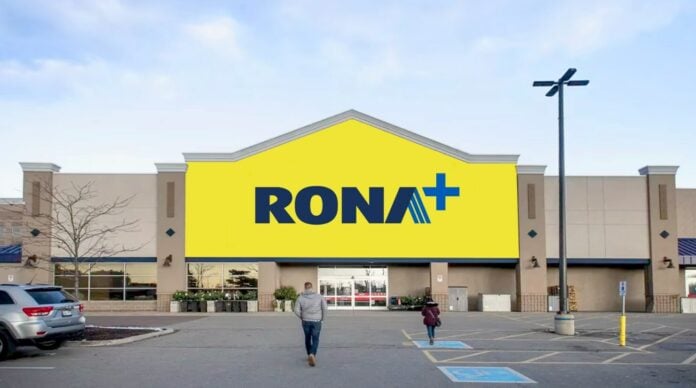
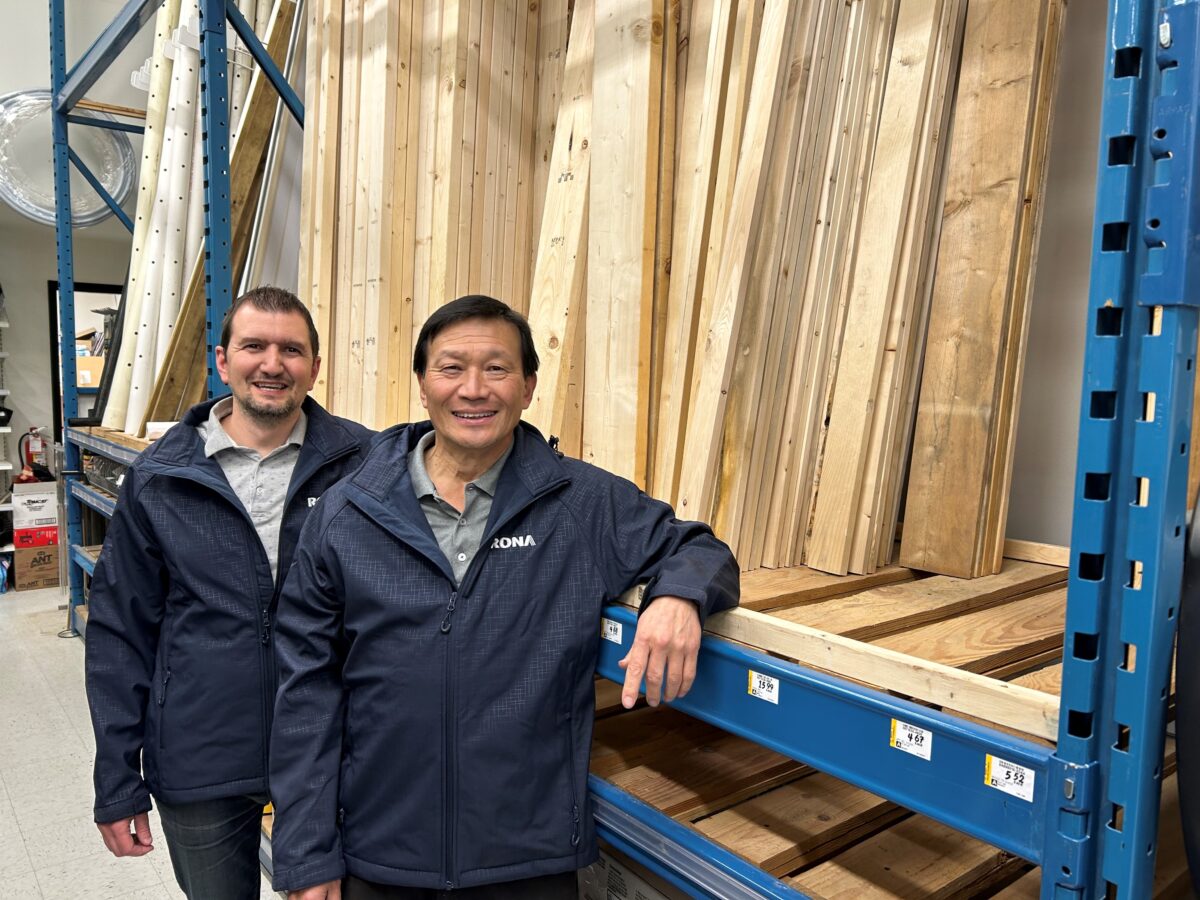
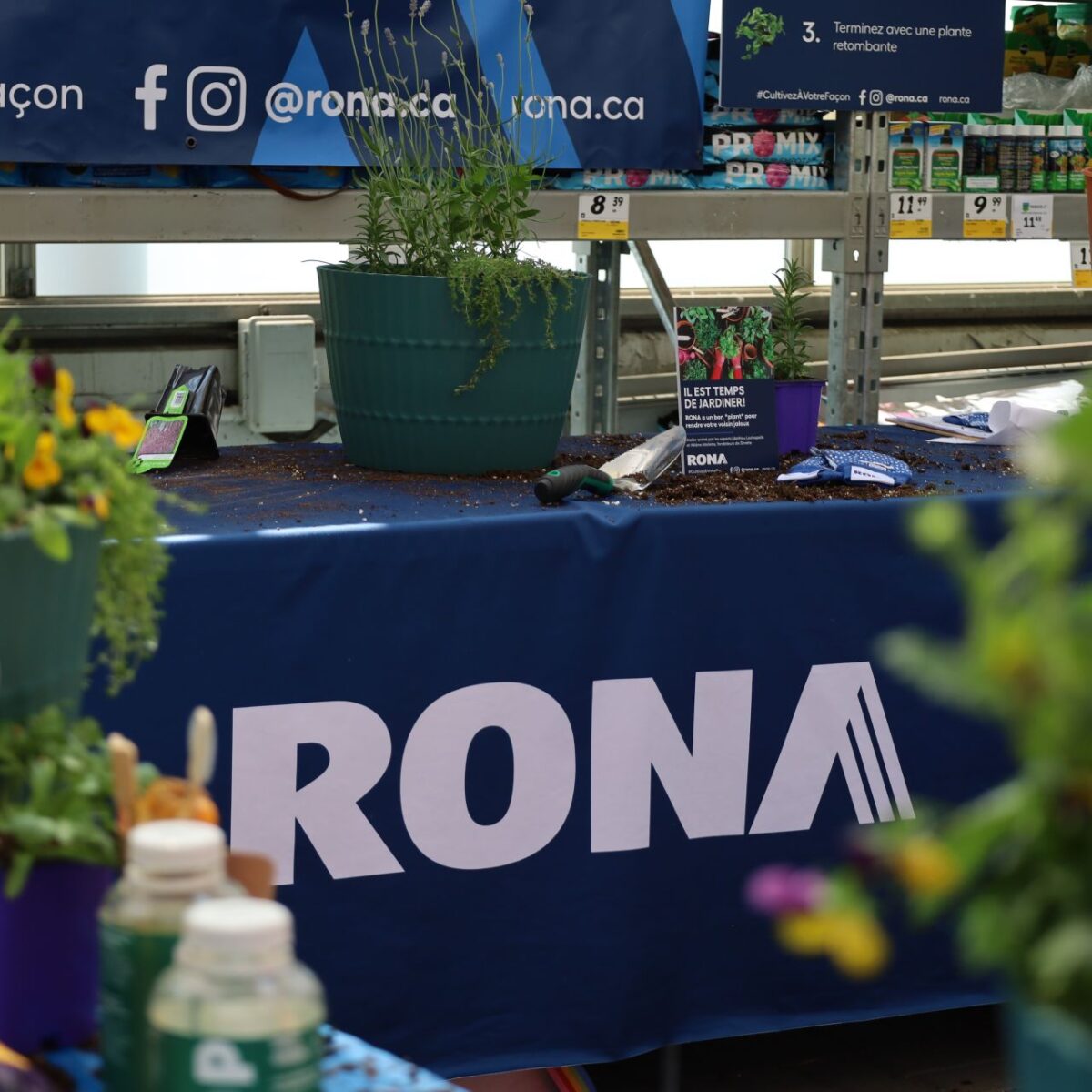
RONA, one of Canada’s biggest home improvement retailers, has announced it will be converting 10 Lowe’s stores in July to a new banner called RONA+.
Catherine Laporte
“This is an important step in our vision for the future of RONA,” said Catherine Laporte, Vice-President, Marketing at RONA, in a statement. “With these conversions, we are making a significant investment and renewing our commitment to the RONA brand. The new RONA+ banner is the first step in a wider plan aimed at redefining how Canadians shop for home improvement, creating new opportunities to improve how we serve them.
“This news is positive for all our stakeholders, including RONA’s employees, affiliated dealers, vendors, customers and the communities in which RONA’s operates. For close to 85 years now, RONA has been a household name standing for great service, exciting product and brand assortments, good value, and a strong sense of community. We want to build on that and create momentum for this beloved Canadian-operated brand. We recently redefined the mission of the RONA Foundation, which plays an essential role in the vision we have for the future of RONA, a leader that not only challenges and improves how the industry serves Canadians, but who also shows up in meaningful ways to support communities across the country.”
RONA, which is based in Boucherville, Quebec, operates or services approximately 450 corporate and independent affiliate dealer stores in a number of complementary formats under different banners, which included, Lowe’s, RONA, Réno-Dépôt and Dick’s Lumber.
RONA recently announced it is simplifying its organizational structure to strengthen its position on the market and be more efficient and that translates into the elimination of 500 positions.
“The organization firmly believes that its transition plan aimed at positioning RONA as the leader of the Canadian home improvement industry will support its viability and benefit stakeholders in the long run,” said the retailer.
“Decisions like these are never taken lightly as they impact the organization’s employees and their families. Employees affected by this change will be supported throughout this transition. The company’s head office will remain in Boucherville, on the South Shore of Montréal.”
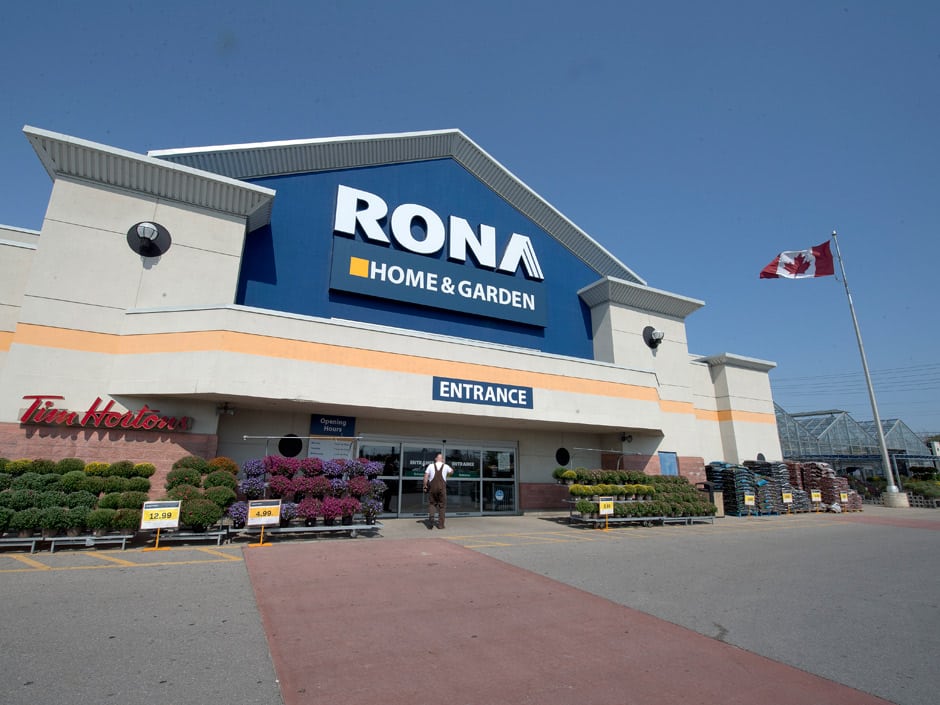
RONA Markham (Image: Wikipedia)
It also announced the appointment of Andrew Iacobucci to the role of Chief Executive Officer. Prior to joining RONA, he was Executive Vice President and Chief Commercial Officer at US Foods, a leading US food distribution company.
Garry Senecal, who occupied the role of Interim CEO, has agreed to stay with RONA until the end of the year to ensure a smooth transition.
RONA also recently announced it had opened its first urban-style store in the Greater Vancouver Area in Walnut Grove in Langley, BC.
It is partnering with T & T Hardware Group owners Al Tsuchyia and Michael Trentalance in its affiliated dealer network. For RONA, the new urban style format continues to grow for the brand with more growth planned in the future.
RONA was founded in Quebec in 1939. The company said the conversion of Lowe’s stores to RONA+ will start at the end of July and take place over several months. The first 10 Lowe’s stores to be converted are all located in Ontario:
Lowe’s Ancaster
Lowe’s Brantford
Lowe’s Cambridge
Lowe’s Hamilton
Lowe’s Kitchener
Lowe’s Niagara Falls
Lowe’s Sarnia
Lowe’s Waterloo
Lowe’s Windsor
Lowe’s Windsor East
The company said all converted stores will remain open during the conversions, guarantees offered by Lowe’s will be honoured, gift cards will still be accepted and private brands will remain in the stores’ offering.
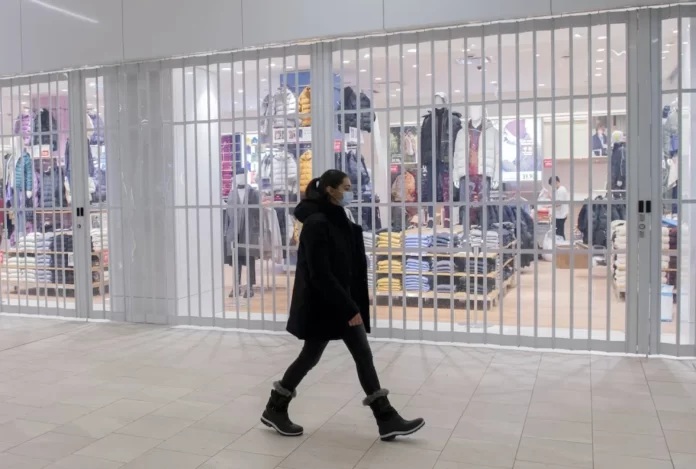
A woman walks by a closed store in a shopping mall in Montréal, in January 2022, during the COVID-19 pandemic. THE CANADIAN PRESS/Graham Hughes
The retail industry has experienced major upheavals over the past few years due to the rise of online retailing and the decline of shopping malls. One retail sector that has been hit especially hard is department stores.
The challenges faced by retailers were made even worse by the COVID-19 pandemic. Retailers and department stores struggled to stay afloat during lockdowns. To survive the tough retail environment, they needed to be both resilient and innovative.
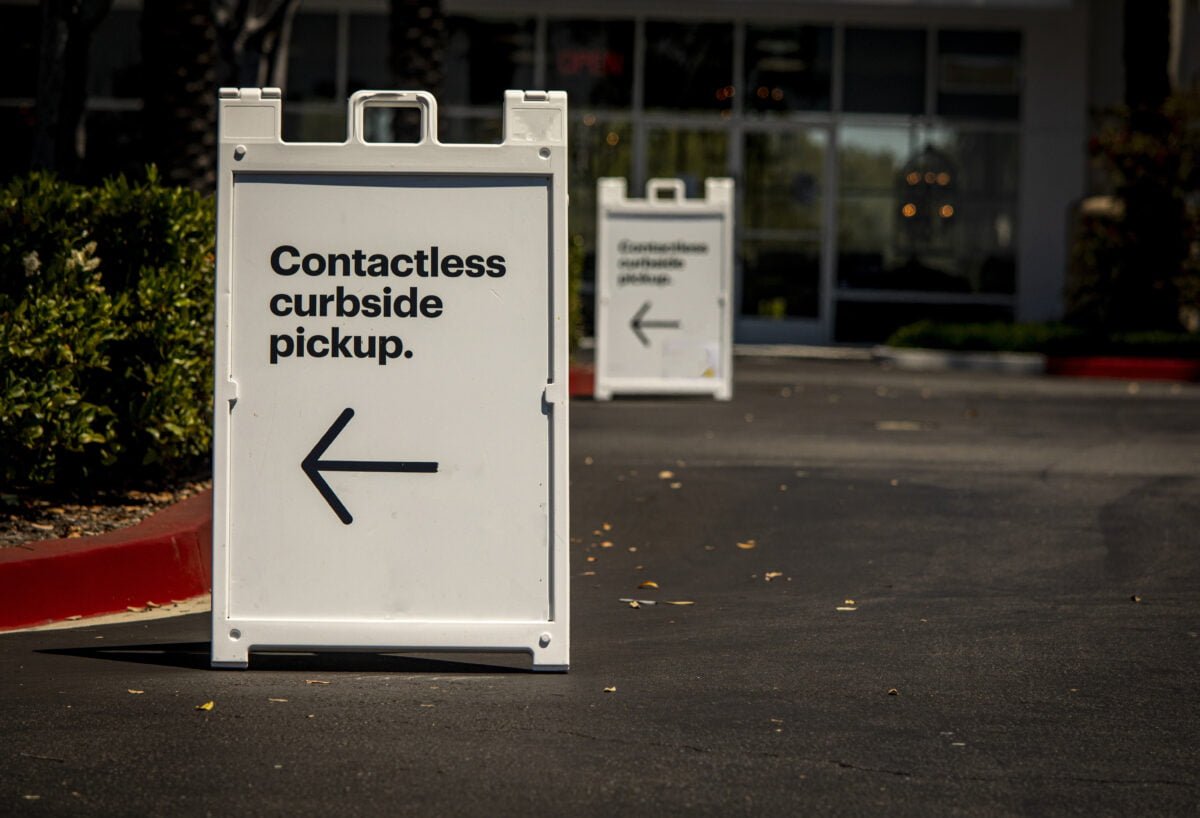
Sign advertising contactless curbside pickup at retail store parking lot
The first strategy was the use of curbside pickup. This allowed customers to shop safely and conveniently by ordering online and collecting their purchases outside physical stores.
In addition, another similar strategy — buying online and picking an item up in-store — was widely used prior to the pandemic, but the additional safety of parking lot deliveries made curbside pickup a welcome option for shoppers.
This strategy did more than just uphold operations during the pandemic — it also underscored the importance of prioritizing customers and their safety in the face of adversity.
Giving customers more time to return an item — sometimes even up to a year — gave customers more time to test out items and return the ones they didn’t want.
Like curbside pickup, longer product return windows were also used prior to the pandemic, but health and safety restrictions accelerated its use.
Virtual try-on technology
Virtual try-on technology allows customers to test items virtually before committing to a purchase. (Shutterstock)
A third approach — the use of virtual try-on technology — helped retailers survive lockdowns and could also prove to be valuable in the long run.
This technology allowed customers to “try on” items virtually before committing to a purchase, either online or in-store. Customers were able to try on products from their homes, like clothing or jewellery, using their camera-equipped devices, reducing the need for physical store visits and dressing room usage.
Our research found that the impact of try-on technologies on department store sales was highest when COVID-19 restrictions were low.
The closure of physical stores and safety concerns greatly accelerated the adoption and use of this technology. It not only boosted sales for apparel items, but also unlocked opportunities for a wider range of product offerings, like apps that let you virtually test out furniture or makeup at home.
These department stores were able to retain customer trust and loyalty by offering alternative shopping options and flexible return policies. This demonstrates the importance of prioritizing customers and being prepared to adapt to evolving consumer behaviours.
The future of retail
The narrative of department stores during the pandemic was one of adaptability and the pursuit of innovation. The lessons gathered during the pandemic will continue to shape department store strategies and guide their transformation in the future.
By leveraging their unique strengths — such as having a wide range of products, a brand history and customer relationships — department stores can re-imagine their role in the retail ecosystem and reignite consumer interest.
As the retail landscape continues to evolve, department stores have the opportunity to reclaim their relevance by capitalizing on their strengths and staying attuned to emerging consumer trends.
The journey ahead may be challenging, but with strategic foresight and a commitment to innovation, department stores could still thrive in this new era of retail.
By Xiaodan Pan, Associate Professor, John Molson School of Business, Concordia University, Martin Dresner
Professor, Logistics, Business and Public Policy, University of Maryland and Ruifeng Wang, PhD Student in Supply Chain Management, University of Maryland.
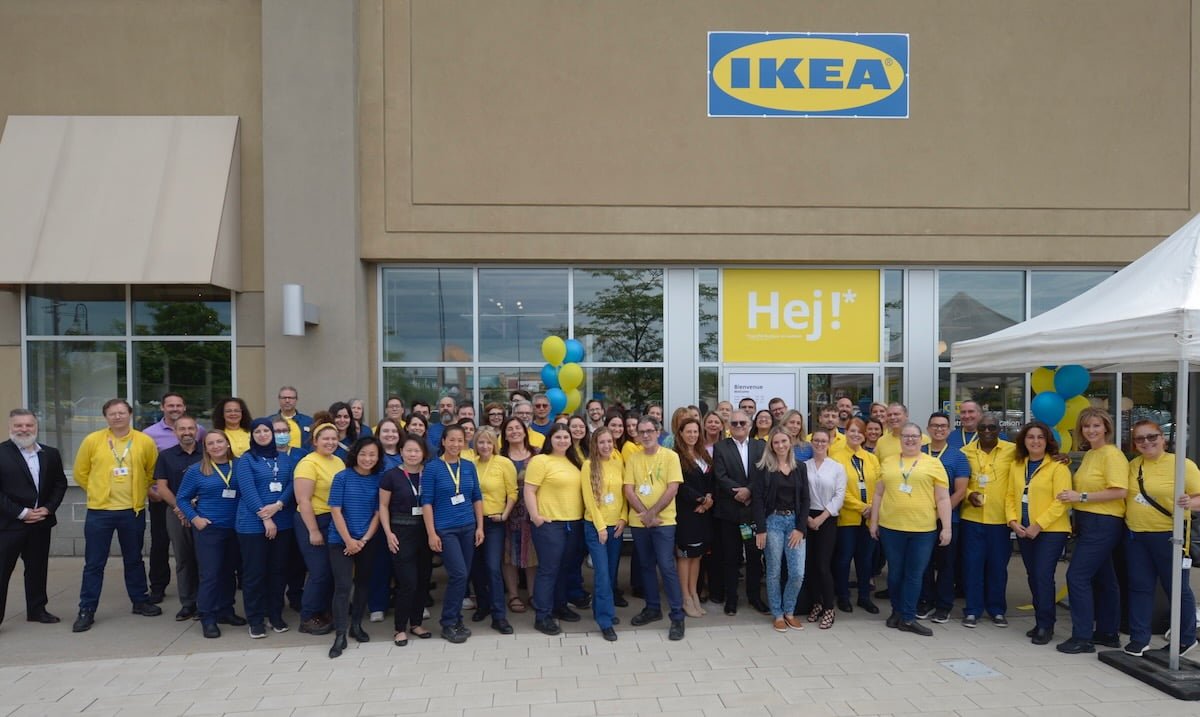
IKEA Canada announces plans to expand fulfillment capabilities in the Greater Vancouver and Toronto Areas with investments of more than $400 million. (CNW Group/IKEA Canada)
IKEA Canada is expanding its investment in omnichannel with more than $400 million dedicated to expanding the retailer’s fulfillment capacities in the Greater Vancouver and Toronto Areas.
Geoffrey Macdonald
“At IKEA, we are always looking for ways to optimize our operations to better meet our customers’ need for convenience and speed, while continuing to help fulfill their aspirations for a better life at home,” said Geoffrey Macdonald, CFO, IKEA Canada, in a statement.
“We are focused on further transforming and developing our fulfillment networks in key markets across the country to ensure that our products are available to customers whenever, wherever, and however they choose to shop with us.”
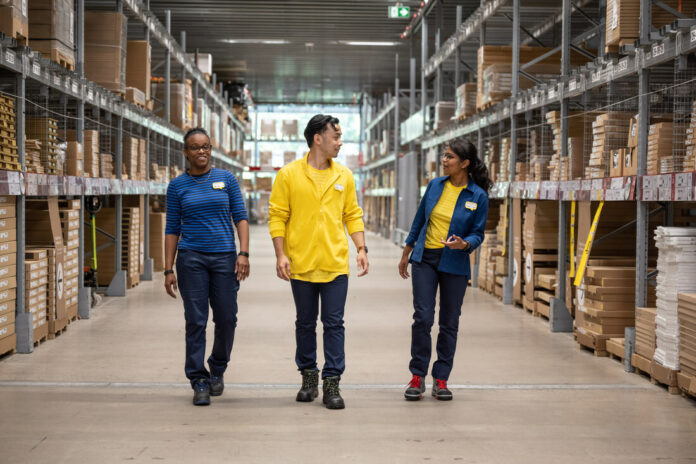
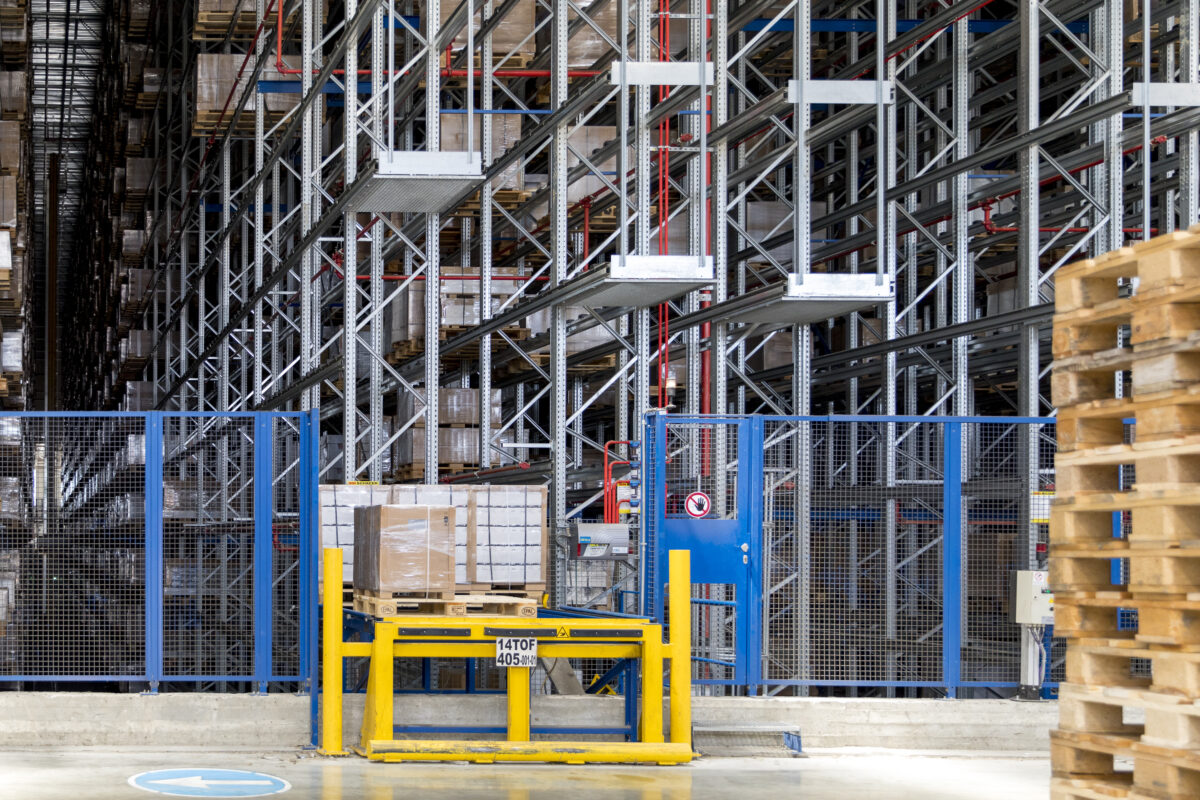
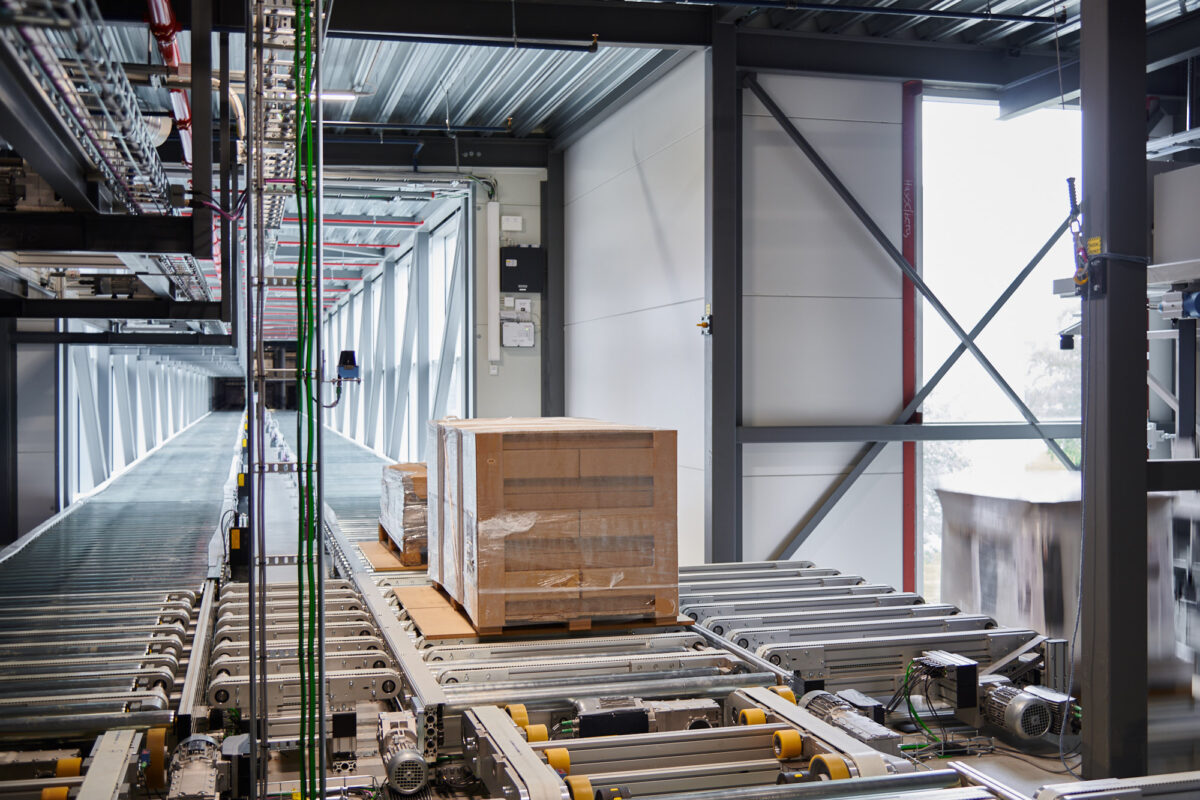
Image: IKEA CanadaImage: IKEA Canada
In the Greater Vancouver Area, IKEA Canada said it aims to expand fulfillment capabilities at IKEA Richmond. Should the expansion project be approved, upon completion, the expanded IKEA Richmond store will provide customers with enhanced click and collect and locker pickup services, while supporting truck, parcel, and collection point delivery throughout the Greater Vancouver market. Expansion plans have been developed in alignment with the brand’s climate-positive ambitions, and the new facility will help support short and stable lead times to customers while reducing costs and supporting market growth.
In the Greater Toronto Area, IKEA Canada said it intends to build a new Customer Distribution Centre in Hamilton, Ontario in 2025 that will support expansion throughout southwestern Ontario. IKEA Etobicoke and IKEA Vaughan will also undergo expansions by 2025 to strengthen their store fulfillment capabilities and further enable the company to keep in-demand products available and delivery times as short as possible, while also supporting future growth in the market.
“This omnichannel transformation includes introducing new ways to shop, enhancements to existing store experiences, strengthened digital capabilities and services, along with optimized fulfillment networks to ensure that regardless of when, where or how customers choose to shop, their experience is integrated and seamless,” said the company.
“Renowned worldwide for its large-format stores boasting home furnishing inspirations and solutions where customers can shop and return home with their purchases in-hand, today customers can also shop the brand’s affordable and sustainable products and solutions digitally through IKEA.ca and the shoppable IKEA app. Further, customers can choose to receive their purchases through a variety of pickup and delivery services that best suit their needs and budget.”
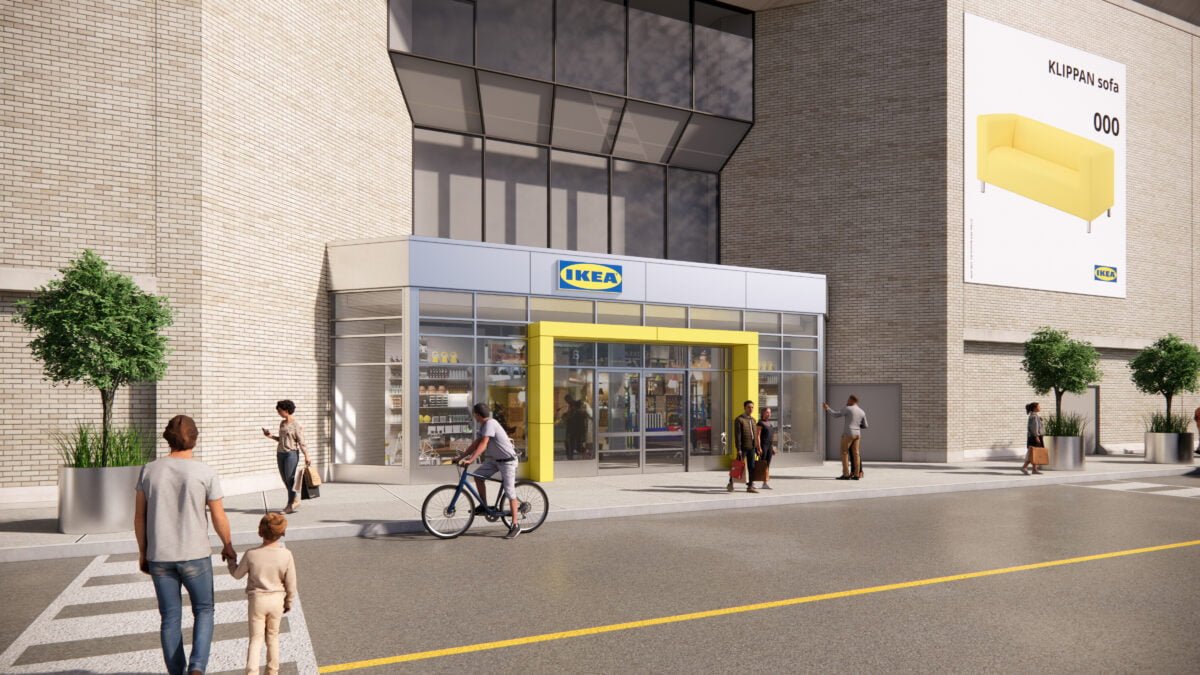
IKEA Pick and Order Point Boisbriand (Image: IKEA Canada)IKEA Scarborough Town Centre Rendering (Image: IKEA)
IKEA Canada continues to expand its diverse network of customer meeting points including Plan and order points now open in Boisbriand and Brossard, QC as well as Kitchener, ON, Canada’s first city-centre store in downtown Toronto, and the highly anticipated small-format store at Scarborough Town Centre.
Founded in 1943 in Sweden, IKEA is a leading home furnishing retailer. IKEA Canada is part of Ingka Group which operates 389 IKEA stores in 32 countries, including 14 in Canada. Last year, IKEA Canada welcomed 21.2 million visitors to its stores and 236 million visitors to IKEA.ca.
“At a time when customers want fast and affordable home deliveries, having a network of stores with logistics capabilities close to where our customers live is a huge advantage both for our customers and our planet. As fulfillment hubs, our stores can handle home deliveries for items bought at the store and orders placed online and through our Customer Support Centre, Plan and order points and Design studios. By fully realizing the potential of our stores, it will allow us to meet our customers with speed in a more sustainable way. To achieve this, the IKEA Ottawa store added automation that allows for efficiencies in picking customers’ orders. By having more products stored onsite and readily available instead of being shipped from our Distribution Centre, we can reduce lead times to our Ottawa customers along with our carbon footprint,” said the company in its annual report.
“To ensure that our products are available for customers when they choose to shop with us, we are continuing our journey to expand and develop our fulfillment network. We want to ensure that we meet our customers with a seamless omnichannel shopping experience that is delivered with convenience and speed. In our four Central Fulfillment units, we added technology that creates customized boxes to fit the size of a customer’s online order. Our co-workers can pack boxes faster because they require less “paper filler” which reduces the amount of packaging by up to 20 per cent. This is another way we’re reducing our carbon footprint. And to better serve our customers in eastern Canada with improved product availability, we have invested in constructing a new Distribution Centre and Customer Distribution Centre in Beauharnois, QC.”
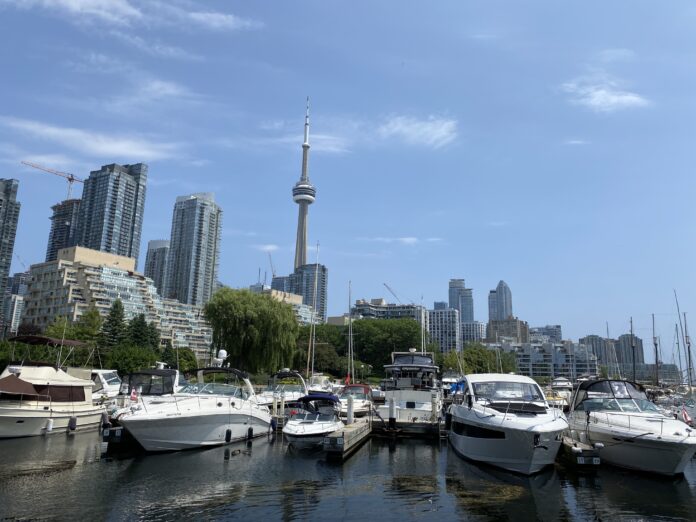
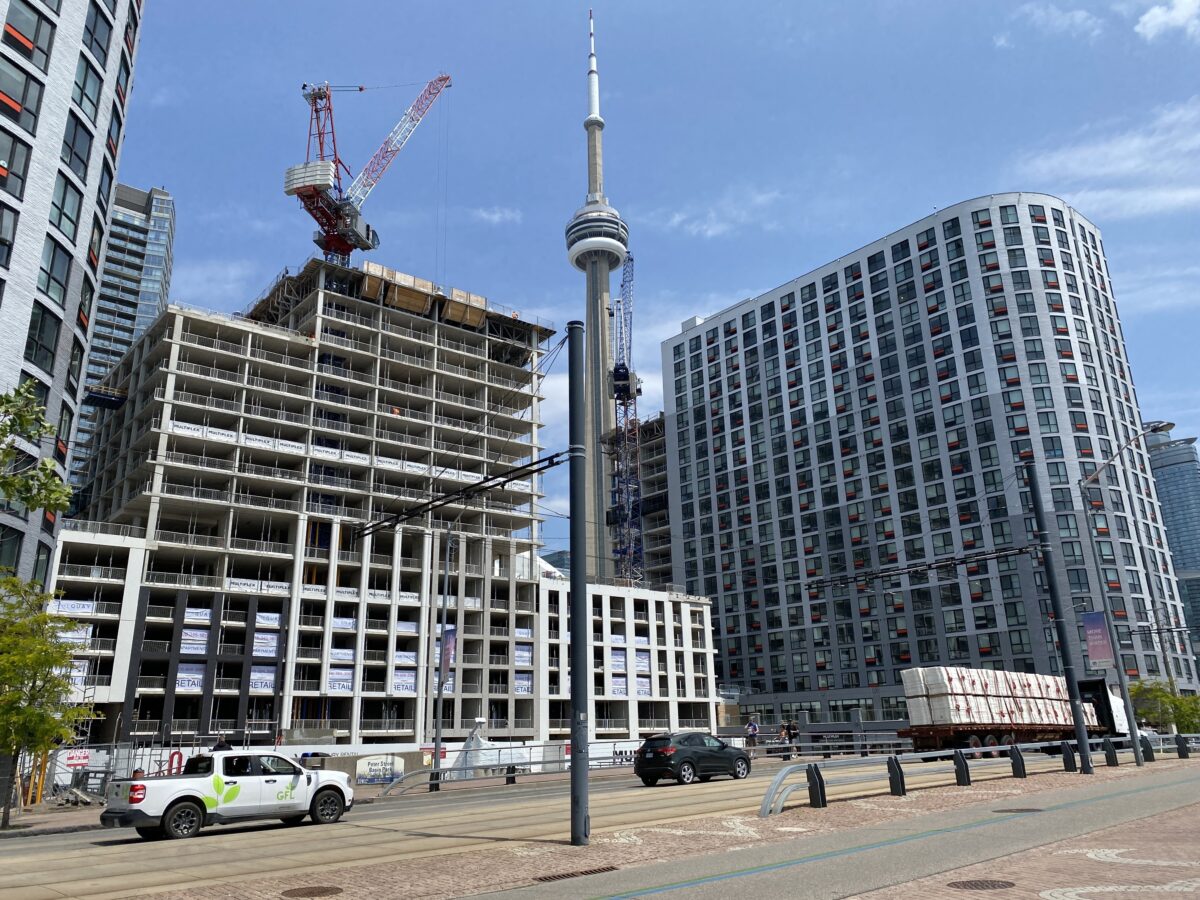
Toronto Waterfront from Marina Quay West (Image: Dustin Fuhs)
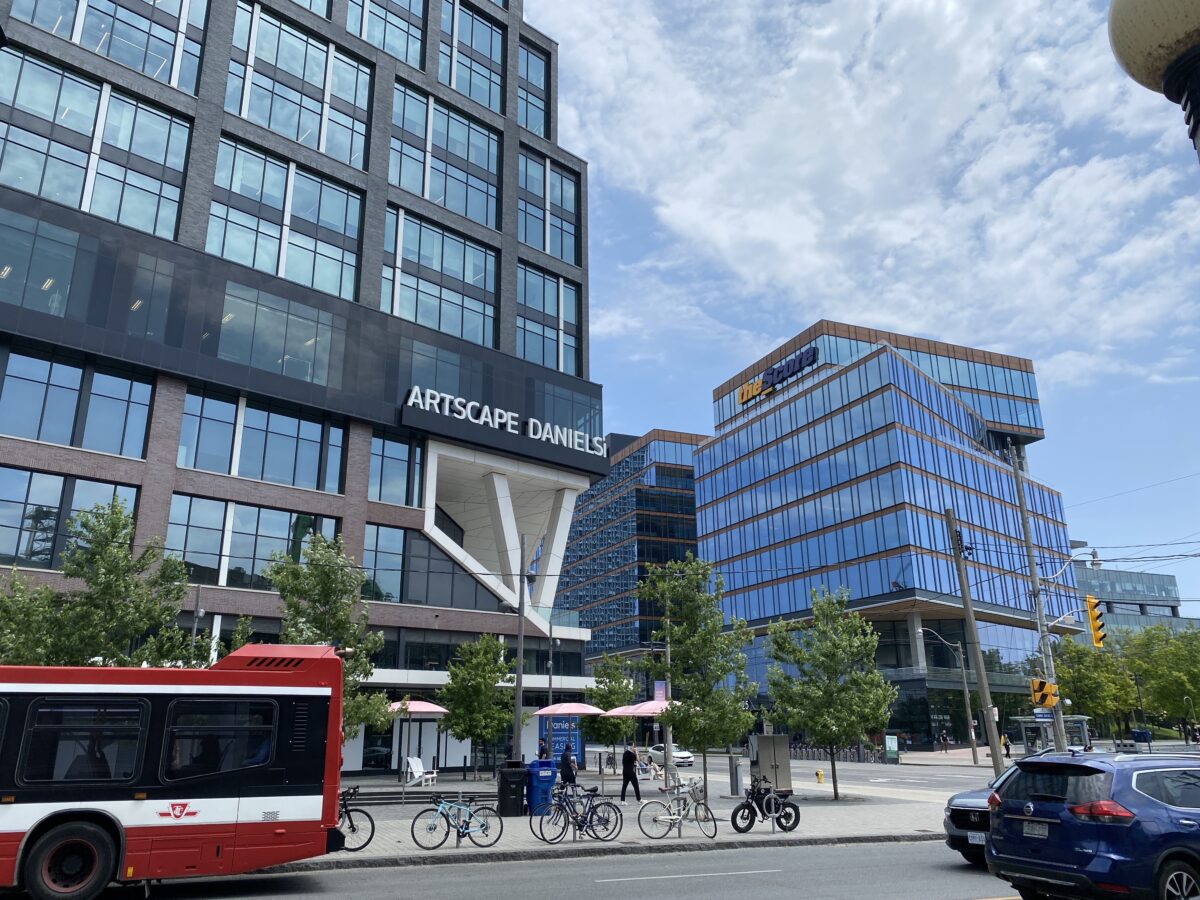
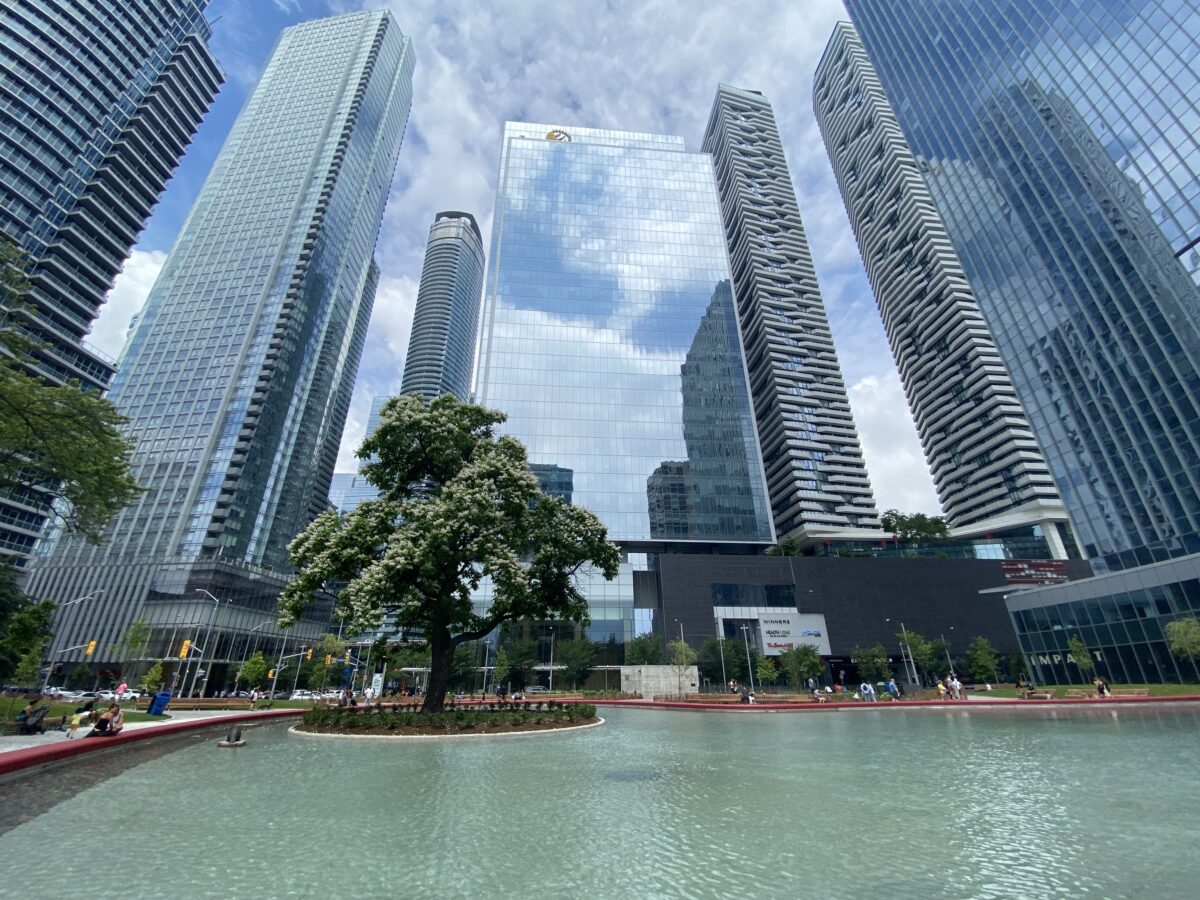
The Toronto waterfront is always continuing to evolve and improve its image by adding new condominiums, shopping spaces, and more interactive spaces.
Michael Wolfe, the Director of Development of Waterfront Toronto, and Tim Kocur, the Executive Director at the Toronto Waterfront BIA, discuss what is next for the waterfront, including new projects and a possible move to make it a year round destination.
New Developments
Parliament Slip and Bayside Developments (Image: Dustin Fuhs)
Tim Kocur
As for new developments along the waterfront, Kocur says there are several on the go including the Quayside development and Bayside Development – both projects will bring residential and retail spaces along the waterfront.
Quayside is going to be a mixed-use development which will include residential units and retail spaces. Wolfe says there will be approximately 300,000 square feet of non-residential space which breaks down into 100k for institutional, 100k for office spaces, and approximately 100k for retail and community spaces.
Michael Wolfe
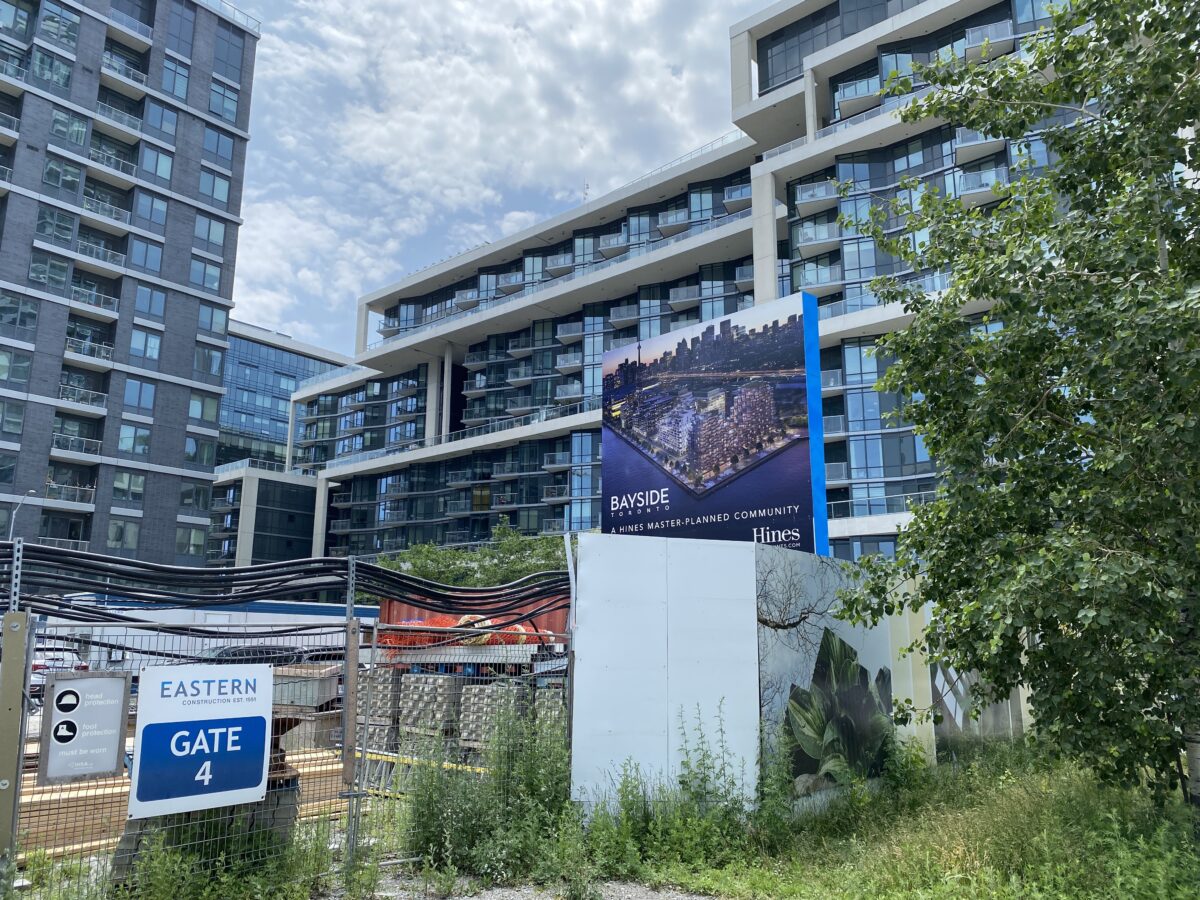
Bayside, Kocur says, will also be a place where people can “work, live, and play.” The development is located south of Queens Quay and will be the next destination for people to check out at the waterfront as it will be mixed-use. The development will have around 2 million square feet of mixed-use residential, retail, and community spaces and in that will have approximately 1,800 new residential units.
Bayside Construction on Toronto’s Waterfront (Image: Dustin Fuhs)
In addition to building developments, Kocur and Wolfe say the Toronto waterfront is also working on the Parliament Slip, located at East Bayfront, which will bring more people to the waterfront year round as it will have all season activities. The size will be 1.67 hectares and once completed, it will be a place where people can come down to swim, see performances, will have floating restaurants, and will complement the waterfront developments surrounding it.
More of the waterfront developments can be located on the Waterfront Toronto website.
Going Forward, What Retails Would Work Best?
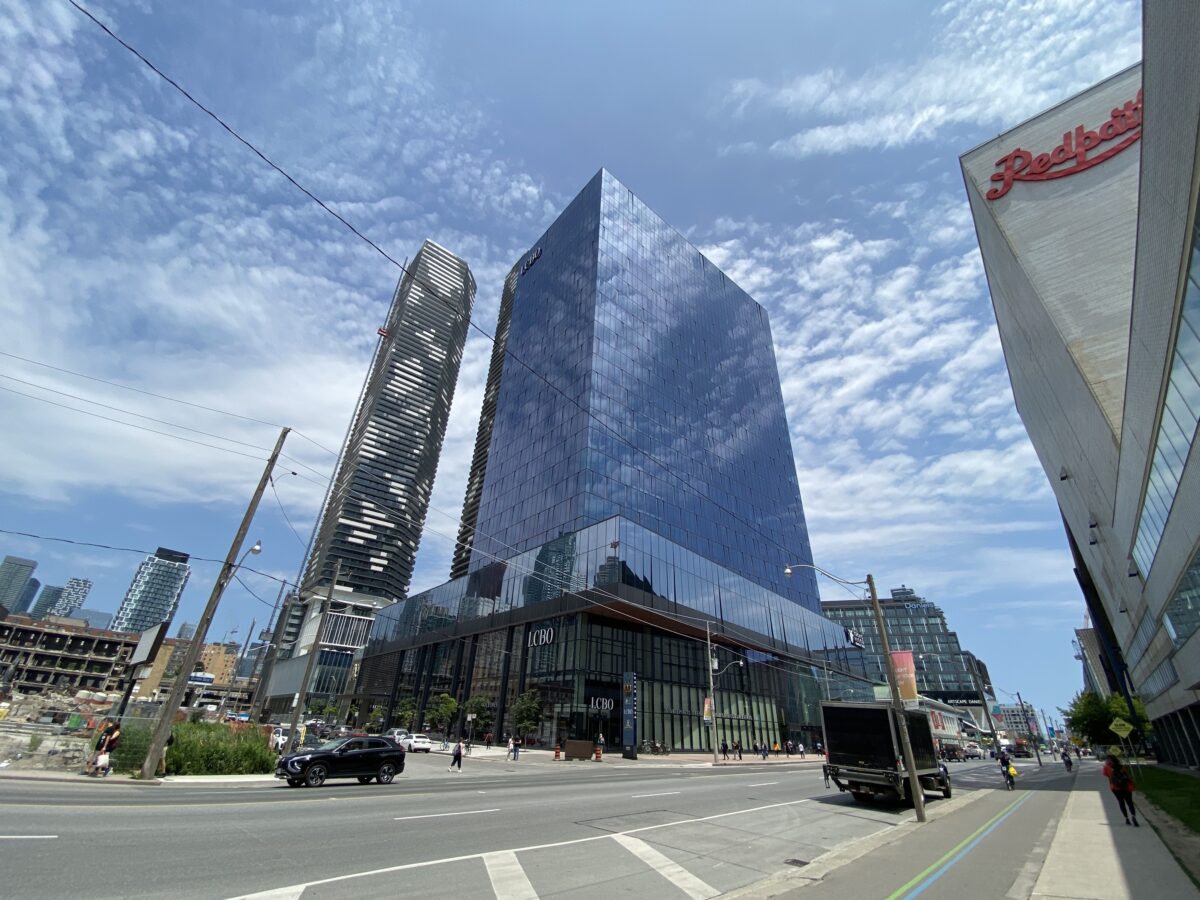
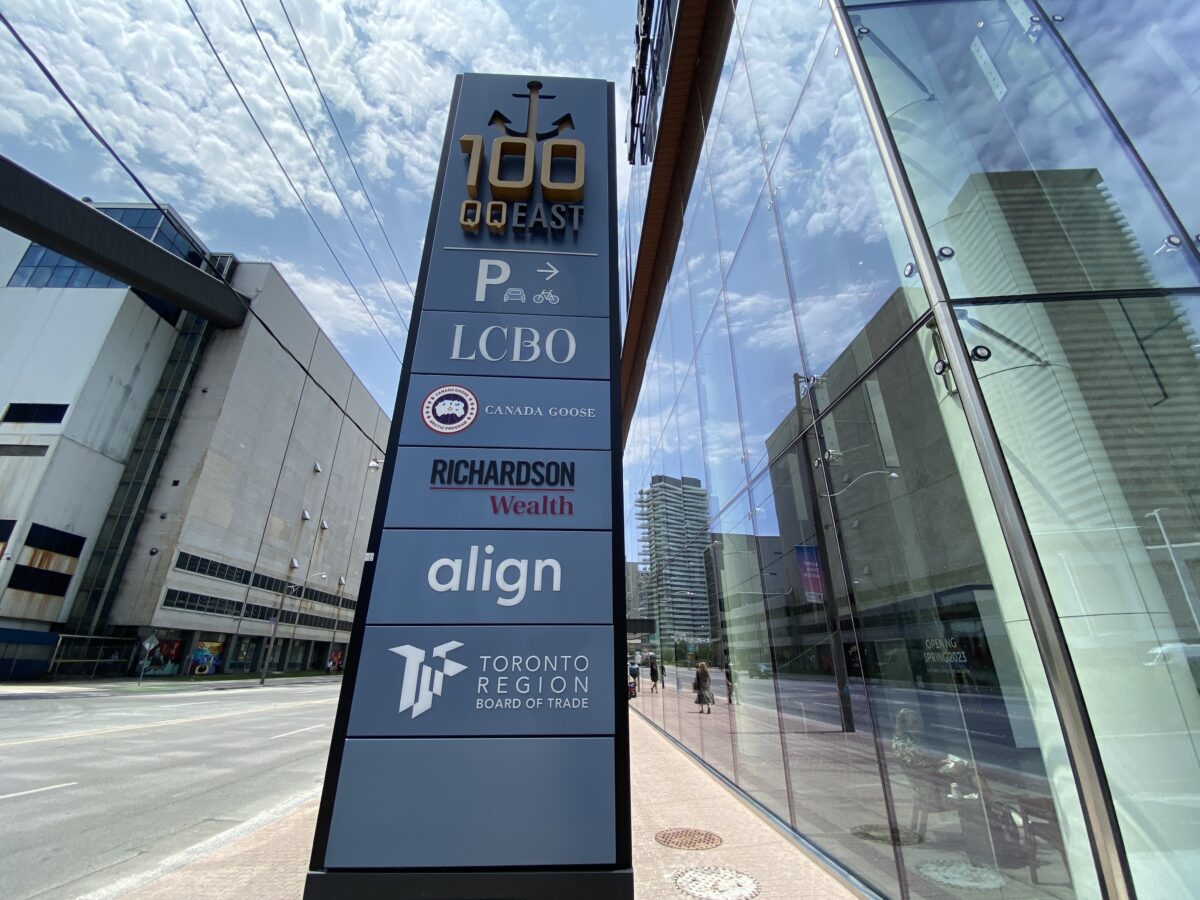
100 Queens Quay at Sugar Wharf (Image: Dustin Fuhs)100 Queens Quay at Sugar Wharf (Image: Dustin Fuhs)
Wolfe and Kocur say the main demographic at the waterfront is between twenty and forty years old and focus and spend more on food and lifestyle than across the city.
“The demographics in the waterfront are a little different than the city average. People at the Toronto waterfront tend to be younger and tend to spend more time on food, fitness, and wellbeing. People here generally walk to work as a lot of people live and work in the same area and why they live at the waterfront, and based on the ages, we have a lot of singles rather than families,” says Wolfe. “So I think in terms of retailers, we are targeting some various fitness retailers and various food options. We will have to see what makes sense, but we are hoping that we can fill spaces with a very diverse collection.”
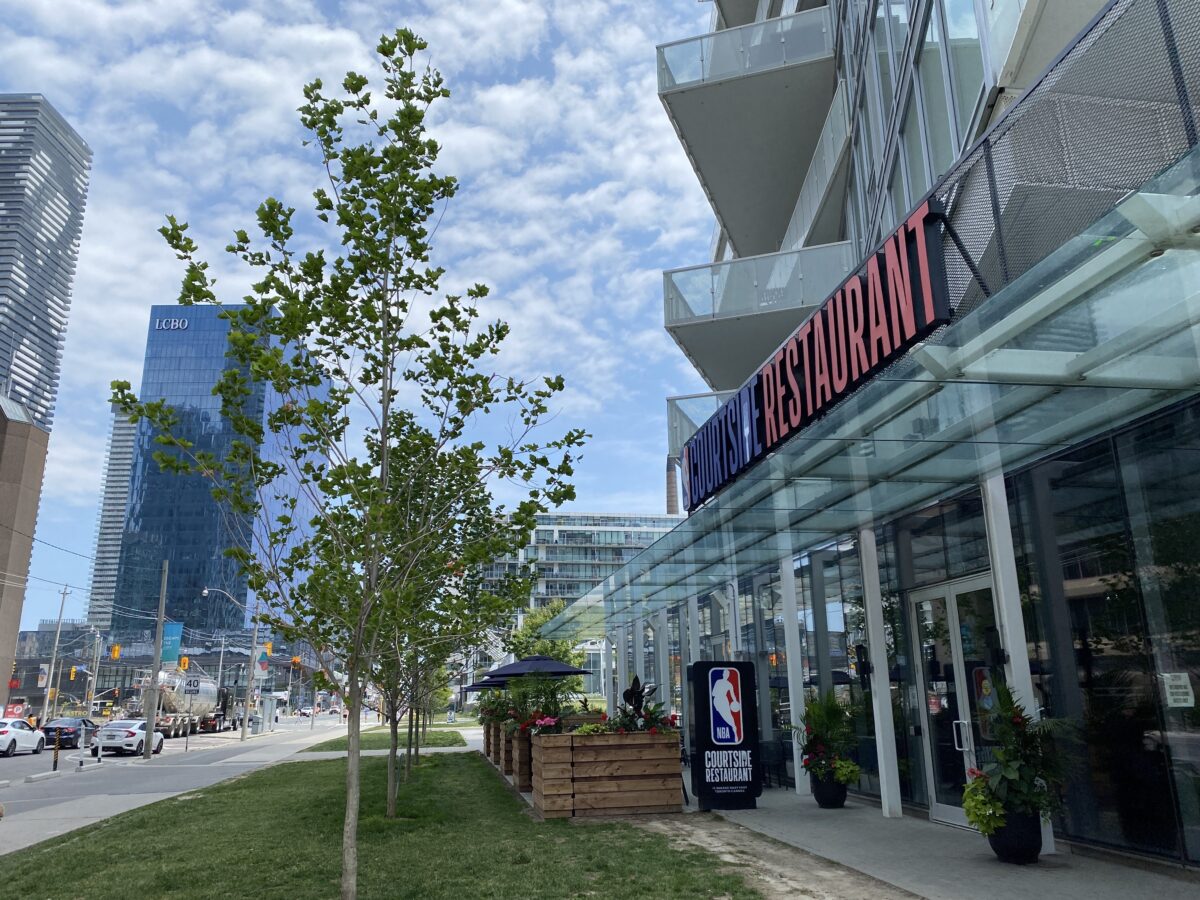
NBA Courtside Restaurant at Pier 27 The Tower On The Lake (Image: Dustin Fuhs)
Wolfe says since the waterfront will probably look a bit different in about twenty years from now, they are looking to also have flexible retailers such as pop-ups, local, and destination retailers.
“What works on day one might be a little different than what works ten years from now, so we are trying to create flexibility so those things can be shifted because I think we are trying to create a presence here that is a little different than the rest of the city. So we are trying to get a diverse mix at the waterfront,” says Wolfe.
Seasonal to Year Round
Corner of Lower Jarvis at Queens Quay East (Image: Dustin Fuhs)
One of the main challenges Wolfe says he sees on the waterfront is that it is seasonal – something he would like to change.
“The general struggle right now is that right now the waterfront is a bit seasonal. So there is just a lot more activity in the summer months than the winter months. This is one of the things we will be working on and kind of thinking about how we can activate and what we can bring down there to try and draw people to the waterfront all year round,” says Wolfe.
The Toronto waterfront is not the only one with this challenge as the Halifax waterfront BIA has also noted that they are also working on making the Halifax waterfront a year round destination as well. Both cities will do this by bringing more retailers and activities to the area, Wolfe says making the waterfront a year round destination will take time and will start working on the project later on.
“I don’t think it is something we will address in the next year, but later and we are thinking about what active spaces to bring down to the waterfront to draw people down, not just in the summer but also in the winter, Winter activations can create both foot traffic down there that will spill over to retailers, but also just to remind people that this is a place to visit and there are things to do in the winter months even if it is not necessarily top of mind,” says Wolfe.
Another challenge Wolfe says is construction as it disrupts the flow of the waterfront and sometimes blocks access, but the improvements and developments will make the waterfront an “incredibly attractive location in the coming years, but it is a work in progress,” says Wolfe. The ongoing construction, Wolfe says, makes tension around the areas, especially for retailers, as it is not a selling point; however, despite this Wolfe says he is seeing an increased number of retailers to the area.
The Quay Rental Towers at 370 Queens Quay West (Image: Dustin Fuhs)Aqualina at Bayside and George Brown College: Limberlost Place (Image: Dustin Fuhs)
As challenges come and go, Kocur says the main focus for the BIA is to support businesses on the waterfront.
“We don’t try and change direction for the waterfront, we are more about making sure we are giving feedback, support, and assistance wherever we can to make sure everyone is working together and make sure the developments are on track to being completed. So we try not to get in the way, we just provide our feedback and nudge the waterfront in the right direction businesses would like them to go in,” says Koncur.
This summer, locals and tourists can expect various summer activities including Smorsgasburg, a food market which will bring a diversity of food vendors from across the city and will run for several weekends over the summer, the Underpass Park Farmers Market, and there will be several live music events to draw people to the waterfront.
Love Park at York Street and Queens Quay West (Image: Dustin Fuhs)
RONA, one of Canada’s leading home improvement retailers, has opened its first urban-style store in the Greater Vancouver Area in Walnut Grove in Langley, BC.
RONA, operating or servicing some 450 corporate and affiliated stores under different banners, is partnering with T & T Hardware Group owners Al Tsuchyia and Michael Trentalance in its affiliated dealer network.
Tsuchyia and Trentalance, two former RONA employees, have rebranded their previous Ace Hardware store into the first RONA urban-style store in the Greater Vancouver Area.
“We know really well the strength of the RONA brand and its efficient distribution network. RONA has a diverse retail offering, so it’s the perfect banner to bring our vision to life,” says Trentalance.
Michael Trentalance and Al Tsuchyia (Image: Rona)
Tsuchyia said the store is being expanded from its current 5,500 square feet to about 7,000 square feet.
“We realized the community we’re in needed a lot more. So then we started expanding it and expanding it. We’ve been expanding our building supply stuff,” he said, of the store which originally began primarily as a hardware store about four years ago.
“When we first opened up with Ace, we were part of RONA/Lowe’s and we were getting most of our stuff, 95 per cent of our stuff we’d buy through the RONA/Lowe’s network. Then Lowe’s got rid of the Ace part and sold it to Peavey Mart. So we were getting our supplies through them but we were kind of struggling all along because Peavey Mart’s more of I guess farm supply. So they didn’t have much hardware. And for us for the building material, it was non-existent. So we would have to source all that stuff ourselves.”
The new affiliation with RONA was a natural progression.
RONA store in Anjou (Image: RONA)
For RONA, the new urban style format continues to grow for the brand with more growth planned in the future.
Jean-Sébastien Lamoureux
Jean-Sebastien Lamoureux, Senior Vice President of RONA affiliates, wholesale, and public affairs, said the company has a handful of these stores in the Montreal area.
He said the company has been looking to expand the concept in the West in urban centres.
“What we’ve been focusing on in the last couple of years is more on the rural side of things. We do have relationships with dealers on the island of Montreal which would be close to . . . the geography (of Walnut Grove) serving the types of customers they’re serving,” said Lamoureux. “We feel that for those types of dealers RONA offers a very unique toolbox for them to succeed and be able to grow in their market.
“Our ability from an online perspective to support our dealers with this is a major, major traction for dealers in more urban regions because people are able to order whatever they want online and pick up in store close to their neighbourhood. It’s unrealistic to have a big box close to all Canadians and that’s where we feel having those types of dealers, wearing the RONA banner, is a plus for us. So that’s why we’re very happy to say it was our first one in the Vancouver region but it’s a format that does exist in the island of Montreal and in some other major cities in the country. But something quite frankly we want to push way more in the future.
“We think we have the most compelling offer for those types of stores in the country and we want to be at the forefront of this in the future.”
Image: Rona
Lamoureux said a big box store is typically about 100,000 square feet and more.
“We look at what’s going on in the country and we’re going to be very aggressive approaching some of those dealers just to share with them the compelling offer that RONA has for that type of store,” he said. “We envision that’s something that’s going to become more and more appealing in the future because you need that proximity store right next to that neighbourhood.
“And those stores, their markets can be counted by blocks, not by kilometres. That’s the place you want to go when something’s missing instead of driving a long way. That’s where we think there’s a great opportunity first and foremost for any dealers who would have a store like that but also for us is to have the most compelling offer . . . That’s where we think we can differentiate ourselves from the competition.”
Meanwhile, RONA recently annouced it is simplifying its organizational structure to strengthen its position on the market and be more efficient and that translates into the elimination of 500 positions.
“The organization firmly believes that its transition plan aimed at positioning RONA as the leader of the Canadian home improvement industry will support its viability and benefit stakeholders in the long run,” said the retailer.
“Decisions like these are never taken lightly as they impact the organization’s employees and their families. Employees affected by this change will be supported throughout this transition. The company’s head office will remain in Boucherville, on the South Shore of Montréal.”
Andrew Iacobucci
It also announced the appointment of Andrew Iacobucci to the role of Chief Executive Officer. Prior to joining RONA, he was Executive Vice President and Chief Commercial Officer at US Foods, a leading US food distribution company.
Garry Senecal, who occupied the role of Interim CEO, has agreed to stay with RONA until the end of the year to ensure a smooth transition.
Samsung Canada has partnered with Code Ninjas in the Greater Toronto Area to launch ‘Galaxy Builders’, an interactive learning experience to encourage coding for young Canadians.
Youth, between the ages of 5 and 14, are invited to attend free coding workshops where they can learn how to code and create an interstellar digital Galaxy and test their innovations using Samsung Galaxy devices at select Samsung Experience Stores and Code Ninja locations across the GTA.
Raj Doshi
“As the digital landscape continues to evolve, computer coding skills are more important than ever and we’re proud to work with Code Ninjas to empower Gen Alpha coders to unlock their potential to learn with Samsung Galaxy technology,” said Raj Doshi, Head of Mobile Business at Samsung Electronics Canada. “Equipped with our Galaxy mobile devices, these digital experiences not only give youth the opportunity to learn a key digital skillset, but also provide them with a space to unleash their imagination and bring their worlds to life.”
“As our future generation of leaders, Code Ninjas believes that there’s never been a more exciting time to advance our culture – starting with our youngest ones,” said Sapan Jot, owner of Code Ninjas South Etobicoke in Toronto. “Every kid deserves the chance to unlock their innate, unlimited capacity to learn, and coding helps nurture key skills such as teamwork, problem solving, and critical thinking. We’re thrilled to work with Samsung Canada to provide seamless coding experiences and expose even more youth to these skillsets.”
Image: Samsung
Using the Code Ninjas curriculum catered for youth, the activations will be equipped with Samsung Galaxy Tab S8 Ultra, Galaxy Z Fold4 and Galaxy S23 Ultra devices. The Android open source platform paired with the intuitive usability of Galaxy devices makes learning how to code more accessible to anyone. With Code Ninjas instructors on hand providing step-by-step lessons, participants will build their own personalized constellation using code on an easy-to-use software app that allows them to adjust parameters such as number of stars, colours, planets, and rate of pulsation.
The Samsung-created Galaxy Builders camp will be available to participants at Code Ninjas locations in Etobicoke North, Etobicoke South and Leaside on June 10, June 17, June 24, and July 8, 2023. These locations will also be integrating Samsung Galaxy technology, including the Galaxy Tab S8 Ultra, Galaxy S23 Ultra and Galaxy Z Fold4, into the existing camp curriculum from June 1, 2023.
The Galaxy Builders workshops will also be hosted at Samsung Experience Stores on the following dates:
CF Sherway Gardens from July 8 to July 9.
CF Toronto Eaton Centre from July 15 to July 16.
Parents and guardians looking to bring their youth to participate in these workshops can register on the following site, www.samsung.com/ca/galaxybuilders.
Image: Samsung.ca
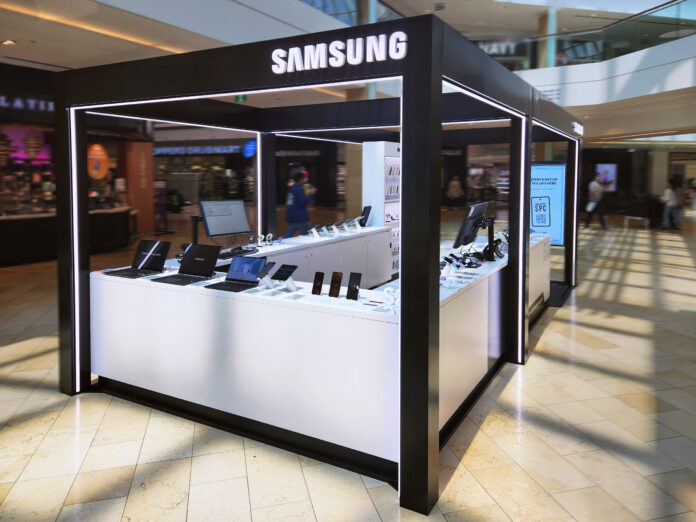
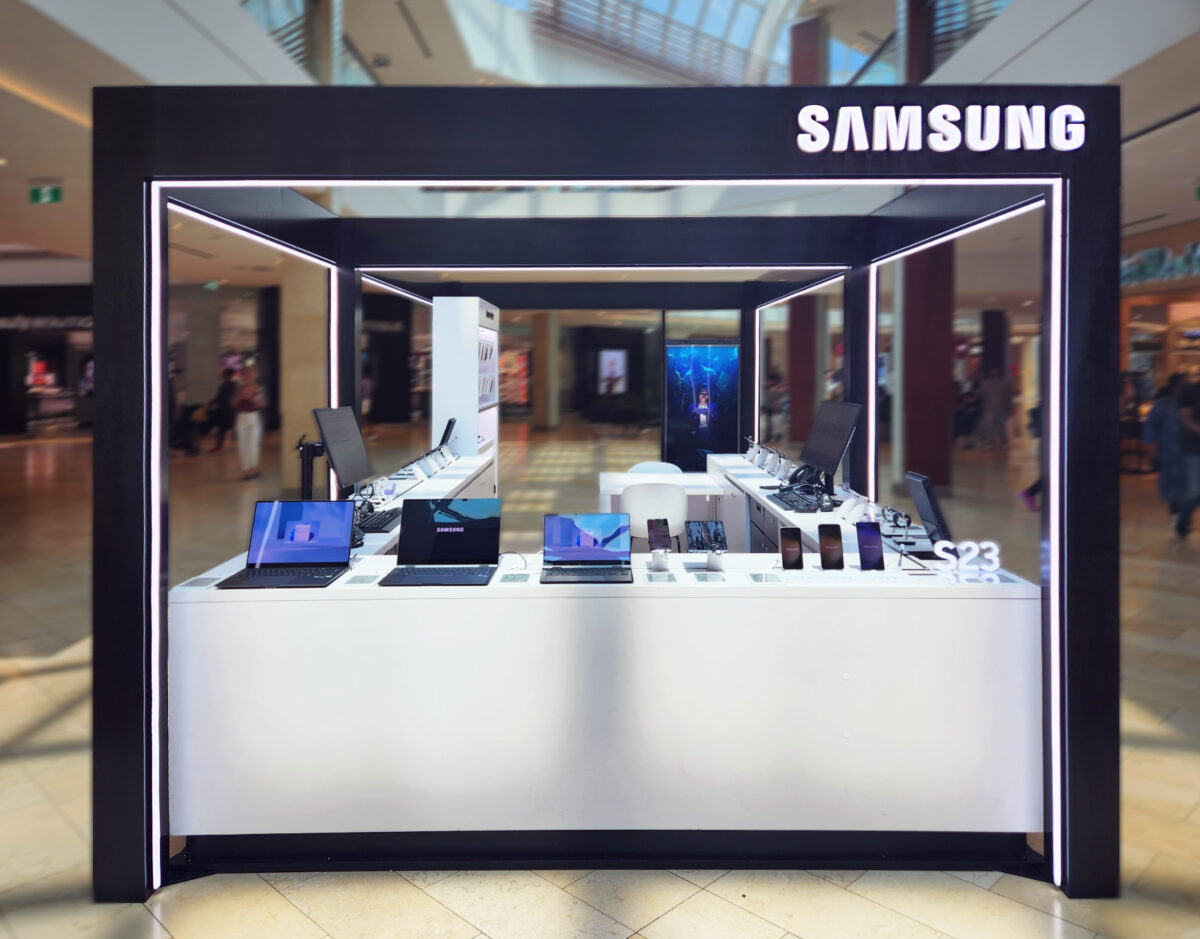
Krista Collinson, Head of Direct to Consumer and Retail Excellence, Samsung, said the company has nine Samsung Experience Stores located in Canada’s biggest and busiest shopping destinations across the country, including Toronto, Montreal, Edmonton, Burnaby, and more.
Krista Collinson
“We also continue to look for expansion opportunities in other cities across Canada. In each community, we are proud to offer consumers a chance to experience the latest Samsung products, and receive tips, guidance and support from our Samsung experts onsite,” she said.
Its two newest locations are the Square One Shopping Centre in Mississauga and Bramalea City Centre Mall in Brampton.
“As part of Samsung Canada’s retail strategy, we’re constantly updating and evolving our retail footprint designs and locations to effectively service our existing and potential customers,” said Collinson.
“Square One and Bramalea City Centre are top shopping destinations in Mississauga and Brampton, which are both growing markets. Our two new locations are designed to invite consumers to conveniently discover our connected device ecosystem hands-on and encourage connections with our knowledgeable staff.
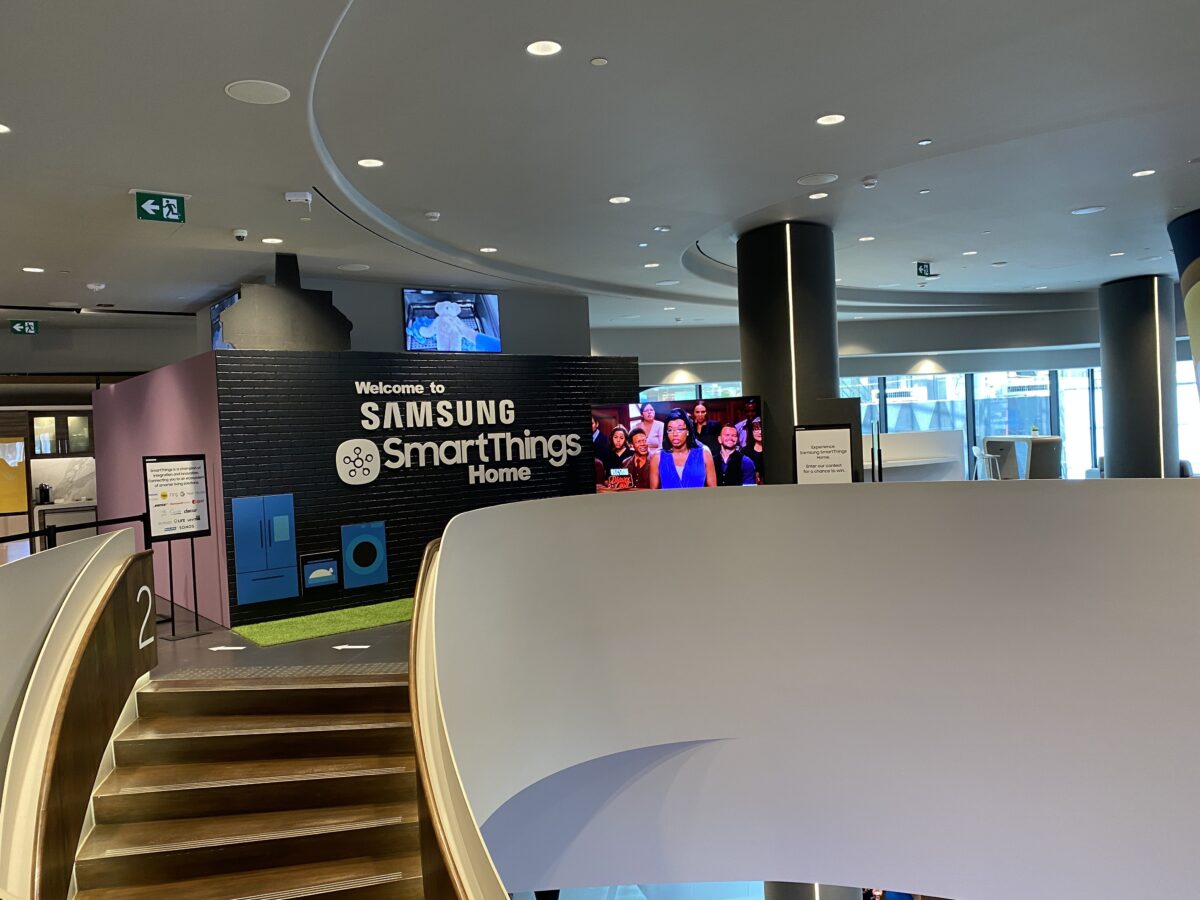
Samsung SmartThings Home at CF Toronto Eaton Centre (Image: Dustin Fuhs)Samsung SmartThings Home at CF Toronto Eaton Centre (Image: Dustin Fuhs)
“A Samsung Experience Store (SES) is a physical and immersive consumer experience for guests to try our latest products hands-on. Customers can see, touch, and feel products to understand how they can seamlessly integrate technology into their lifestyle and receive expert guidance and service support from our team. Stores offer a seamless online-offline shopping experience to meet the needs of Samsung Customers. Many of our SES locations also host unique in-store events to showcase our new innovations in real-life scenarios.
“Currently we are running several photography workshops featuring the Galaxy S23 Ultra at our SES locations in Montreal and Burnaby. We’ve also partnered with Code Ninjas on a program called ‘Galaxy Builders’ to encourage coding amongst young Canadians – with upcoming classes at our SES Yorkdale and Sherway locations. And, our SES location at the Toronto Eaton Centre features a new SmartThings Connected Home Experience, which showcases the possibilities of a Samsung connected world.”
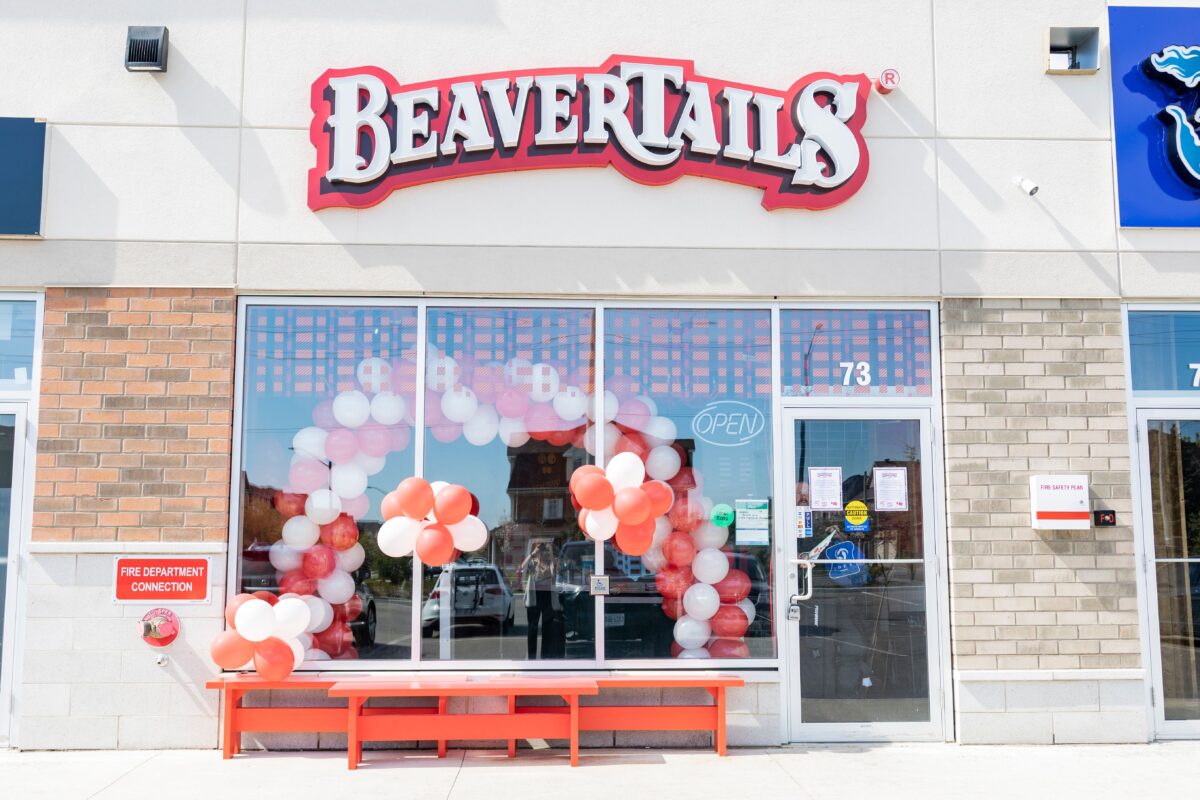
BeaverTails Queen Street South, Mississauga (Image: BeaverTails)
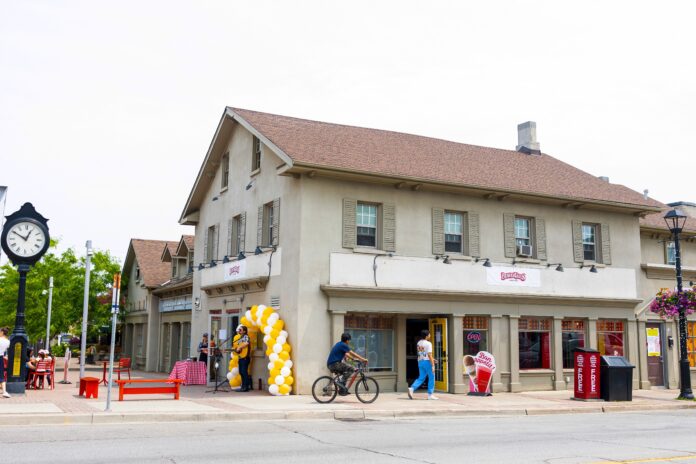
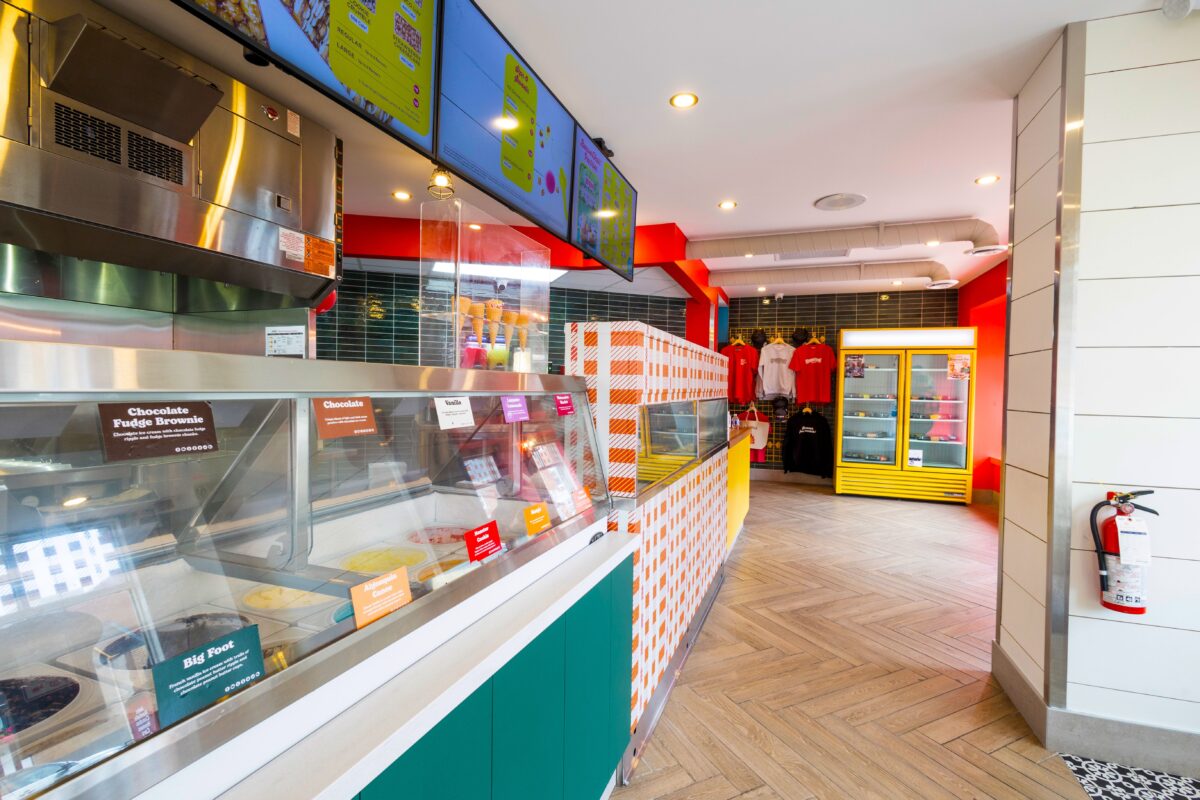
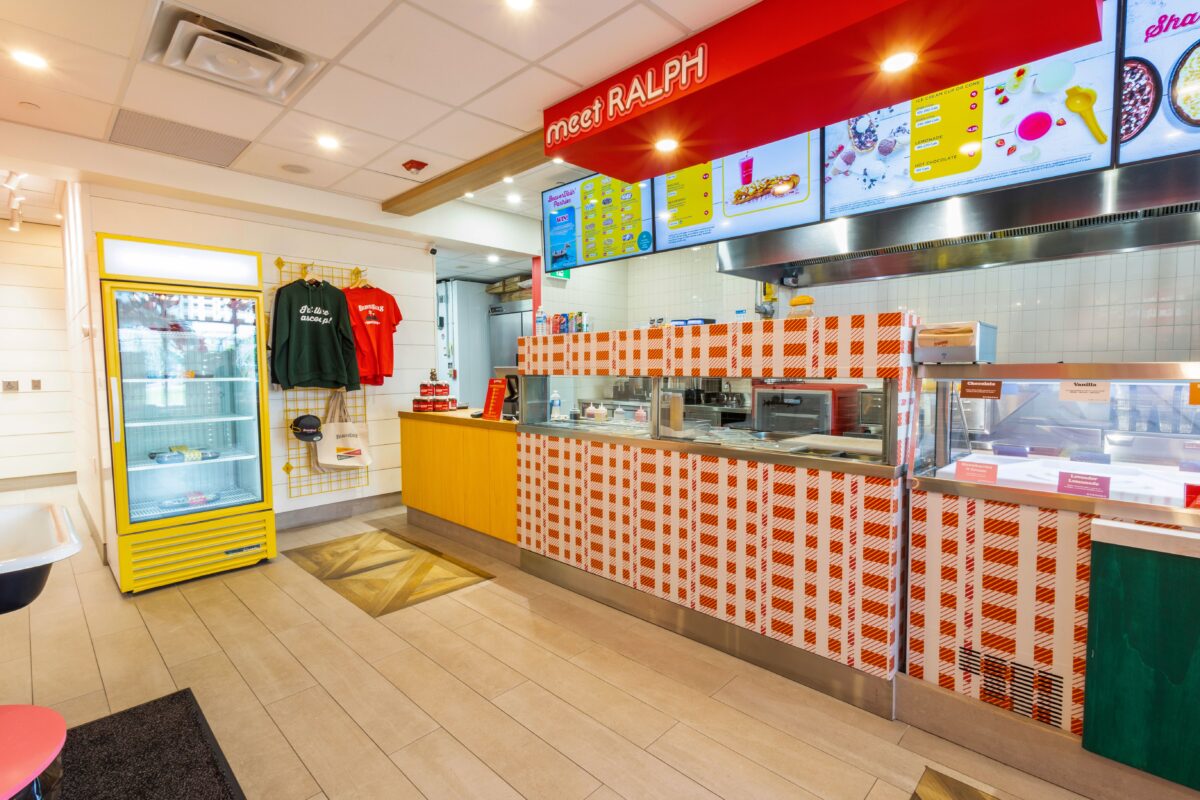
BeaverTails continues to aggressively expand its brand across Canada with new locations opening and more to come.
Recently, the maker of unique pastries, opened six new locations in the Greater Toronto Area – two in Mississauga, one in Halton Hills, one in Milton, one in Burlington and one in Kitchener-Waterloo.
“The western GTA and Kitchener-Waterloo are some of the most dynamic regions in Canada. They are fast-growing and prosperous but retain their identities and charm. Expanding our presence within this thriving region was an obvious strategic decision and we are proud to be a part of these vibrant communities,” said Pino Di Ioia, CEO, BeaverTails.
BeaverTails Queen Street South, Mississauga (Image: BeaverTails)
Pino Di Ioia
Today, there are 196 BeaverTails points-of-sale in four countries.
Di Ioia said five or six more stores are expected to open before the end of this year including in Whistler, BC, “which is way overdue to construction delays,” and on Calgary’s busy 17th Avenue S.W. high street near Mount Royal Village. The two stores are opening soon. The company is also opening a new location in White Rock, BC., near Vancouver.
He said a recent location opened in Charlesbourg around Quebec City.
“In our opinion, Canada is 350 (locations),” said Di Ioia of the potential number of locations eventually in the country. “So we still have a long way to go. And the reality is there is, as much as 200 sounds like a big number, we always remind people about a third are mobile trailers. About another third are amusement parks.
“So in fact we don’t have much brick and mortar. These series that we are opening – 10 stores – all of these are brick and mortar. Those are our home runs. Our classic stores. When you look at places like Charlesbourg or Mississauga, the 350 seems very conservative for Canada.”
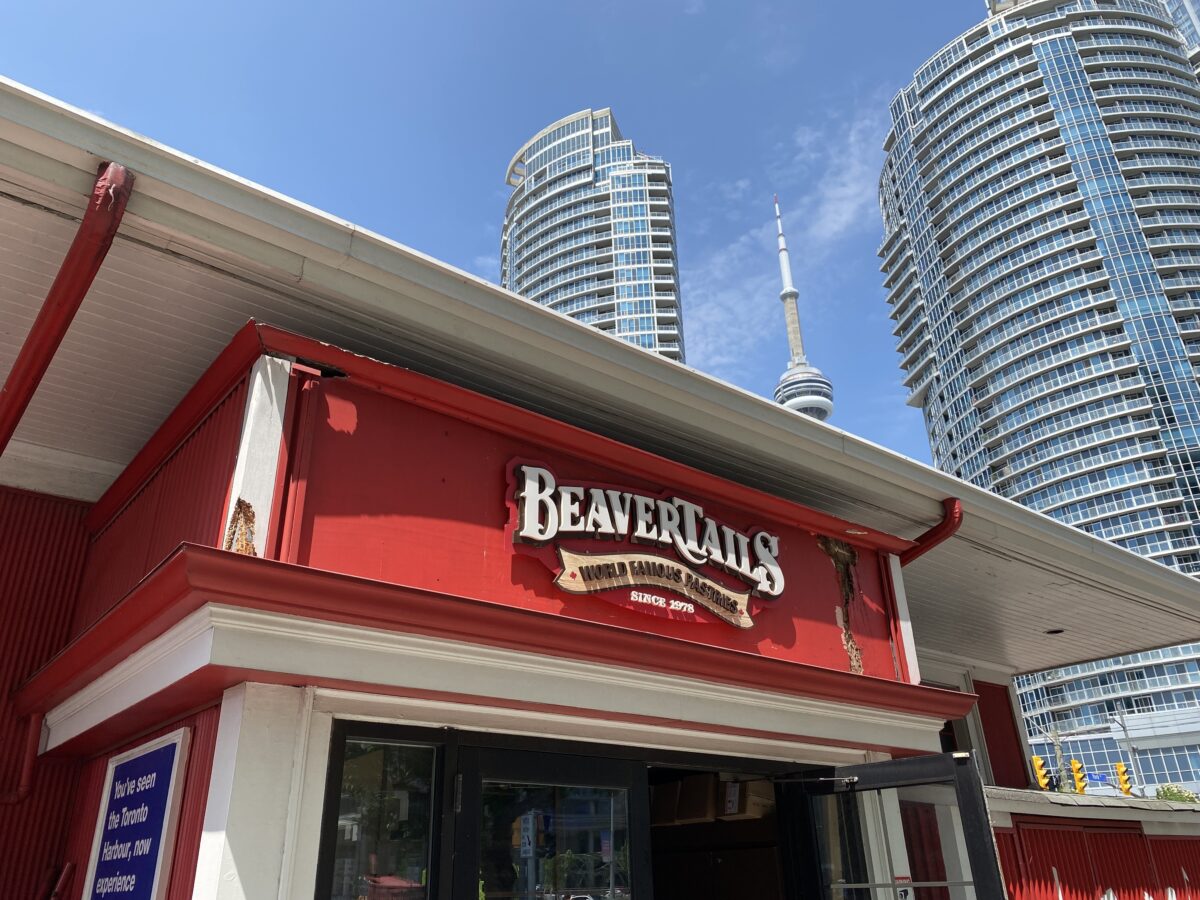
BeaverTails at Kitchener Waterloo Boardwalk (Image: BeaverTails)BeaverTails Toronto Waterfront – 145 Queens Quay W (Image: Dustin Fuhs)
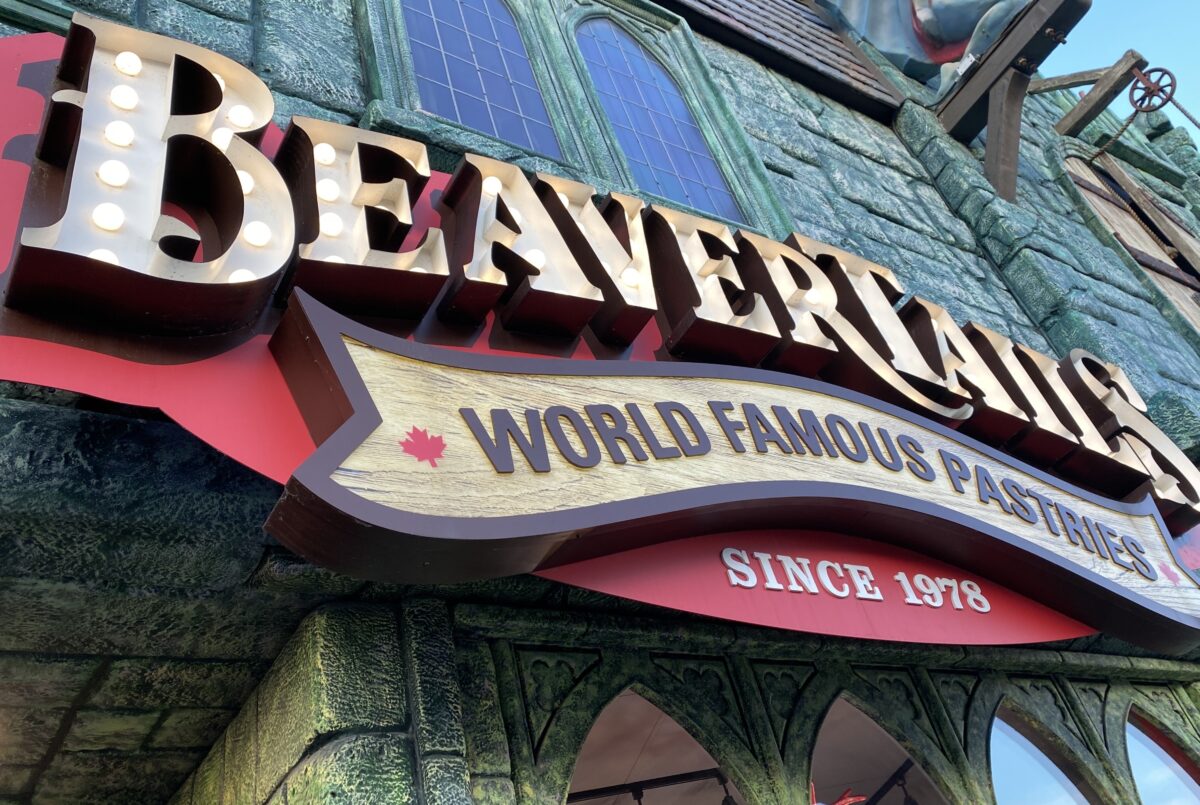
Based on an old family recipe, BeaverTails pastries are a Canadian icon – a unique and delicious treat. Served hot and topped with numerous choices, including cinnamon and sugar, chocolate hazelnut spread, Reese’s Pieces and peanut butter, BeaverTails pastries aim to satisfy indulgences of all tastes.
Grant and Pam Hooker began serving the BeaverTails artisanal pastry in 1978 at the Killaloe Fair, just west of Ottawa.
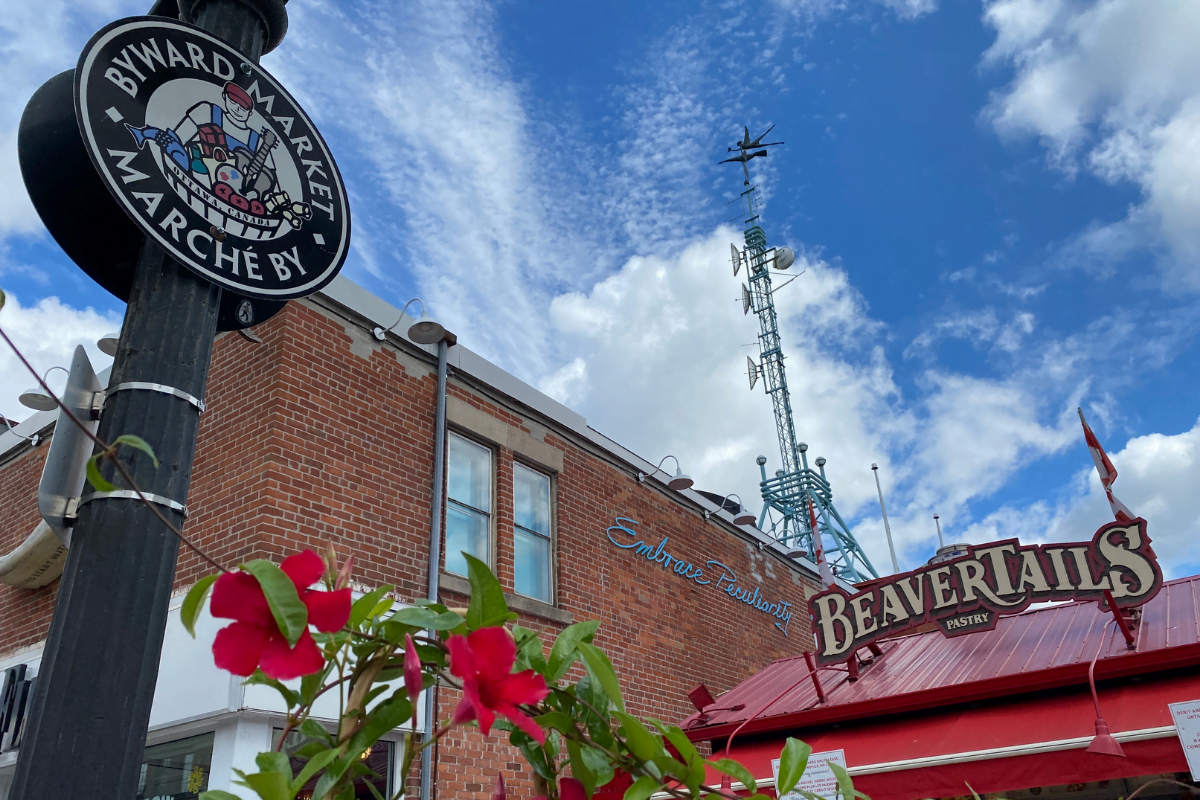
Today the brand is known internationally with intense interest sparked after U.S. President Barack Obama visited Ottawa’s Byward Market in February 2009 and indulged in the iconic treat.
“The brand is just continuing to be established,” said Di Ioia. “We used to think we’re becoming mature. I guess at 45 years we’re not mature any more – we’re north of that. But the brand just keeps getting known more and more.
“We’re doing more and more to keep the brand relevant and fresh. So whether it’s our ice cream program or our poutines or our BEAVER BITES® and our take home product, there’s more there that satisfies not necessarily more day parts like traditional competitors would talk about because for us really the snack industry is afternoon and after supper. Not that we don’t have a breakfast, lunch and dinner.”
BeaverTails Erin Mills
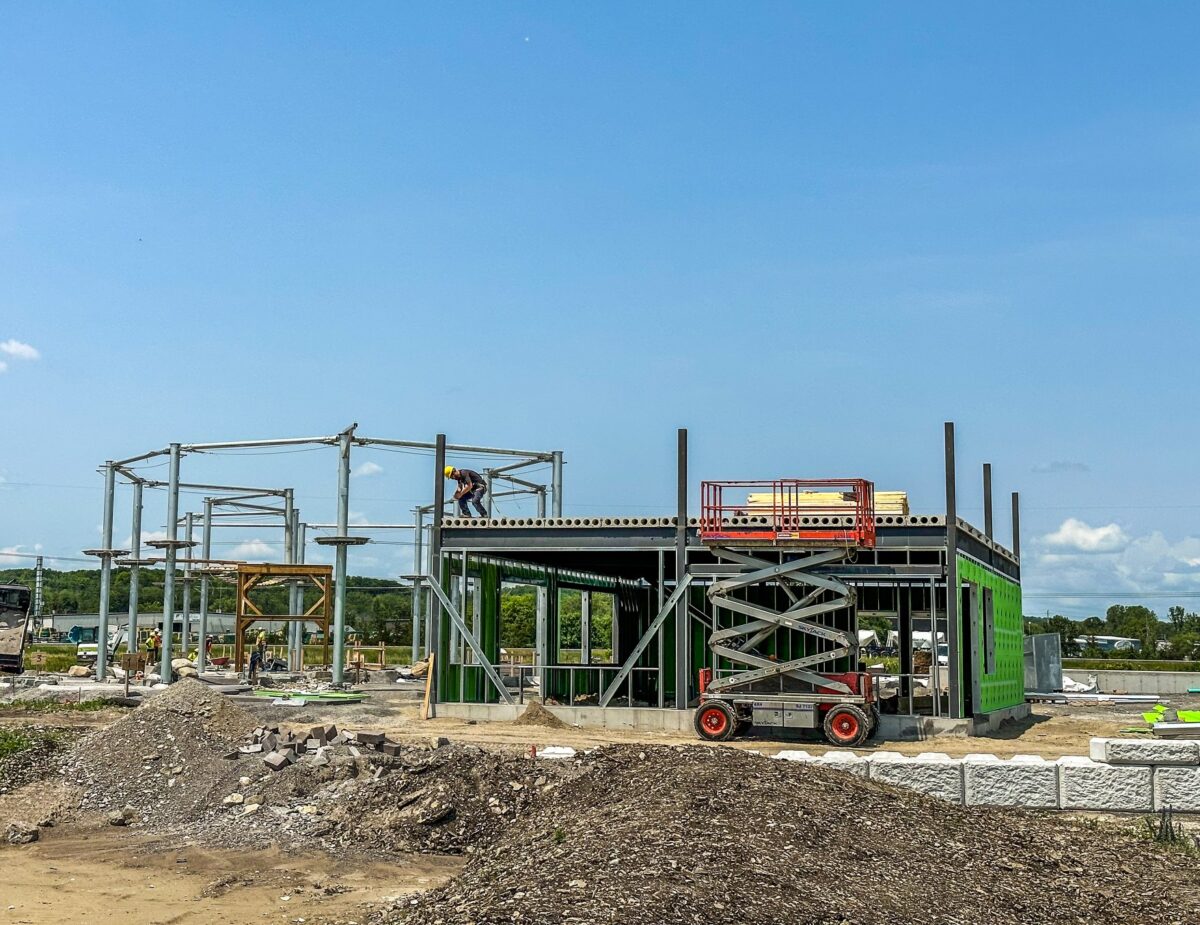
(Image: BeaverTails)BeaverTails Trenton, Ontario Construction (Image: BeaverTails)
The number one consideration for new locations is pedestrian traffic, said Di Ioia.
“When you are used to the tourist zones, the pedestrian was given. You’re not going to go to Blue Mountain (Ontario) and not get pedestrians. You’re not going to go to Whistler and not get pedestrians. It comes as part and parcel of the reality,” he said.
“But now as we expand further afield when you look at places like White Rock of course it’s the beach and there’s lots of pedestrians. But you look at 17th Avenue in Calgary. Why did we choose that? Because there’s a pedestrian zone there.”
BeaverTails Niagara Falls (Image: Dustin Fuhs)BeaverTails in Byward Market in Ottawa (Photo: Dustin Fuhs)
BeaverTails began its strategy of opening ‘community’ shops’ – new locations principally in suburban retail plazas – in early 2020. Now, it is making the BeaverTails experience more accessible to people in residential neighbourhoods.
“Building on 45 of years of history, we work hard to keep the BeaverTails brand relevant and appealing to our customers,” said Di Ioia. “Most recently, our ‘community’ shop approach is intended to bring the BeaverTails magic to where our customers live, work and shop.”
BeaverTails ‘destination’ shops, including Grouse Mountain, Banff Avenue, Toronto Waterfront, Mont Tremblant and Cavendish Beach represent the company’s heritage and remain central to its brand. The experience of enjoying BeaverTails treats is often associated with a vacation or an outdoor activity.
“Some Canadians are losing faith in the capitalistic nature of our food economy, which is why some are asking for a windfall tax or even broader food price regulation. While we should not forget why food companies exist, grocers should also engage with Canadians with the intent to foster trust, and Loblaw’s new receipt checking policy is not a step in the right direction.”
Loblaw’s Receipt Checking is Wrong
Currently, many households are grappling with the rising cost of living. According to a recent report by Community Food Centres Canada, the poverty rate among working-age single adults in Canada is three times higher than the national average. Alarmingly, nearly a quarter of working single adults live below the poverty line. This concerning statistic indicates that a significant portion of the population is facing financial hardship. Many Canadians are personally experiencing or know someone who is struggling compared to just a year ago.
The increasing expenses of shelter and food, which are fundamental necessities of life, are placing a significant financial burden on many Canadians. Approximately 45 percent of mortgage holders have variable rates, directly impacted by the Bank of Canada’s efforts to combat inflation. For instance, if an individual has a $300,000 mortgage spread over 25 years, they are currently paying over $7,000 annually just to maintain their home. As more Canadians renew their mortgages, the number of individuals experiencing increased mortgage payments will inevitably rise. Furthermore, rents across the country are also on the rise, further exacerbating the financial strain on individuals. These escalating costs create a substantial financial burden. In terms of grocery expenses, purchasing the same quantity of food as compared to the previous year would require an average of over $1,100 more. Consequently, individuals would need to allocate over $8,000 to maintain the same quality of life.
Given the difficulty in reducing shelter expenses unless through relocation or shared accommodations, many Canadians are forced to cut back on their food expenditures. Despite inflation, most Canadians are spending less on food. This shift is so significant that many are quick to blame food companies. There is a growing sentiment that food should be free or that food prices should be regulated, which is understandable. As faith in the capitalistic nature of our food economy diminishes, some individuals even propose imposing windfall taxes to discourage companies from excessive profits. However, while these ideas may be intriguing, they are likely to lead to even worse scenarios for Canadians.
Some Canadians, academics, and political leaders have lost sight of the primary purpose of food companies. These companies must generate profits in order to fulfill their mission and continue operating. Profit generation is essential. The debate surrounding how much profit food companies should be permitted to generate has been intensely discussed in recent months. Striking the delicate balance between profit-making and maintaining a food-secure market is unique to the food sector and sets it apart from other industries.
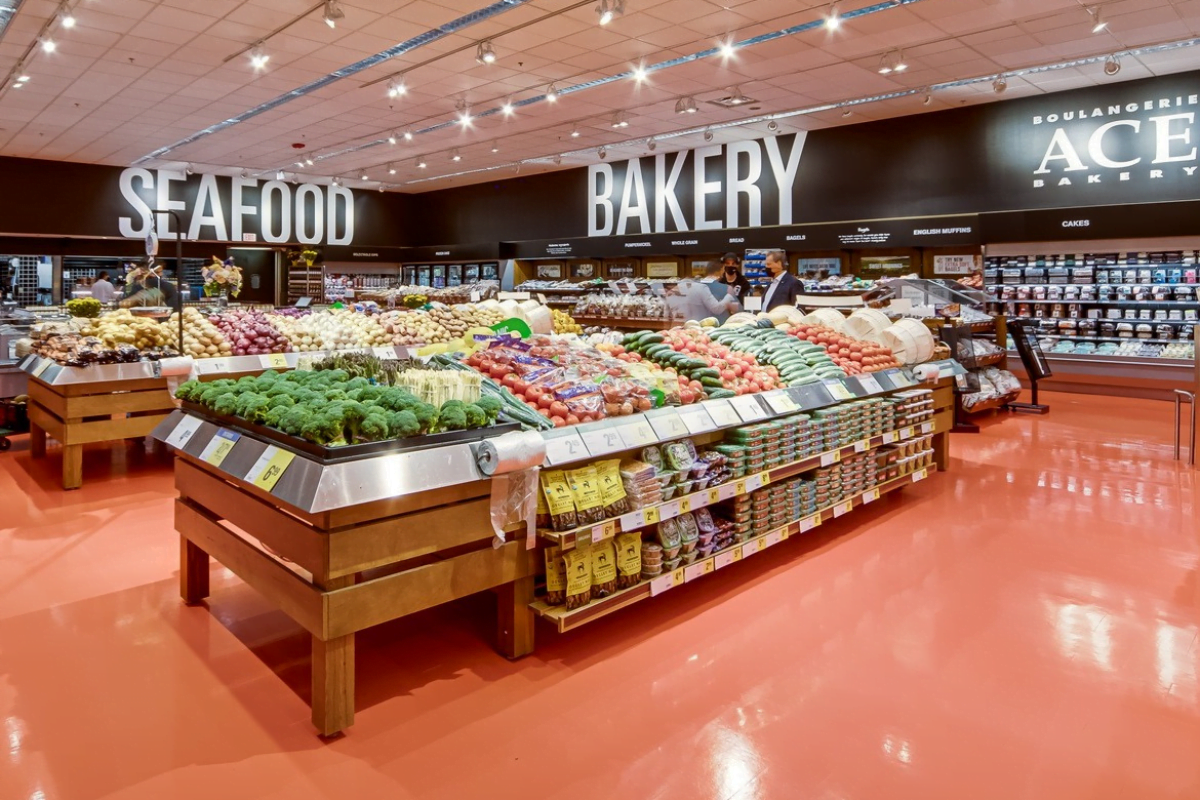
Loblaw at 301 Moore Avenue in Toronto (Image: Loblaw)
Food companies are established to leverage the advantages that size and expertise bring, primarily to enhance efficiency on a large scale. Not everyone has the ability to hunt, fish, cook, process, and so on. While it may be theoretically possible for everyone to engage in these activities, efficiency is not guaranteed.
The concept of the experience curve aptly demonstrates that as a food company expands, it accumulates greater experience and achieves improved performance, particularly in terms of cost-effectiveness. This surpasses what individuals or small communities can achieve. Large-scale farmers, for example, excel in their craft due to the experience curve. Companies also exhibit remarkable adaptability, enabling them to navigate sudden market shifts caused by climate change, labor disputes, or other socio-technological disruptions. By relying on food companies with an innovative mindset, food systems can enhance their resilience, a perspective that many Canadians have overlooked.
However, numerous market failures have been observed over the years, encompassing various issues such as the manipulation of bread prices, the imposition of “black-out” periods, the exploitation of low-paid employees, the timing of corporate bonuses, the exercise of supply chain bullying by certain grocers, and the remarkable volatility of food prices. While the proposition of making food free or implementing a windfall tax may seem tempting, it is unlikely to effectively address any of these problems. Instead, a more robust and authoritative Competition Bureau, in conjunction with the establishment of a Grocer Code of Conduct, holds greater potential for success in enhancing accountability within the food industry. While challenges will inevitably persist, the elimination of abusive practices within the supply chain and towards consumers is certain to contribute to their mitigation.
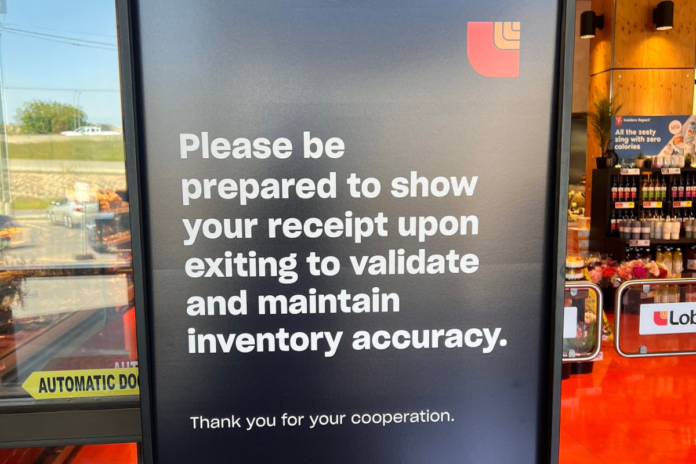
And abuse can be quite real for consumers. For instance, Loblaws recently implemented receipt verification in numerous stores across the country without providing a rationale for this decision. In contrast, Costco has been practicing receipt verification for several years as a means of validating memberships. However, it is worth noting that Costco’s approach differs, as they verify receipts for all customers. Randomly inspecting grocery receipts as customers exit stores is not conducive to fostering a social contract that can build trust between Canadians and the food industry.
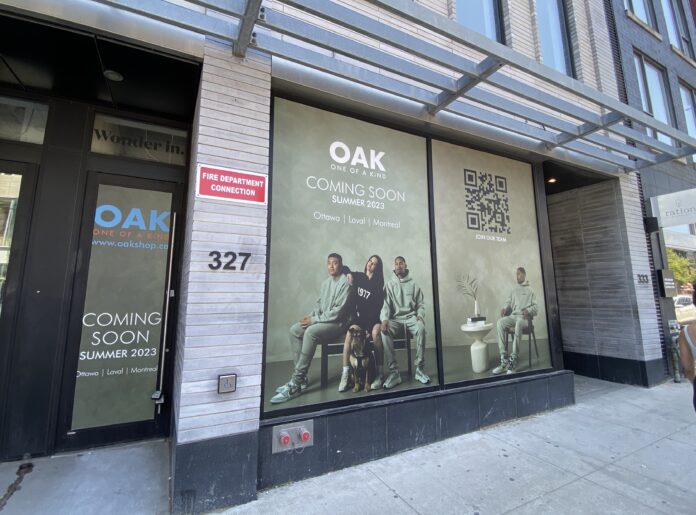
Future OAK One of a Kind at 333 Queen Street West in Toronto (Image: Dustin Fuhs)
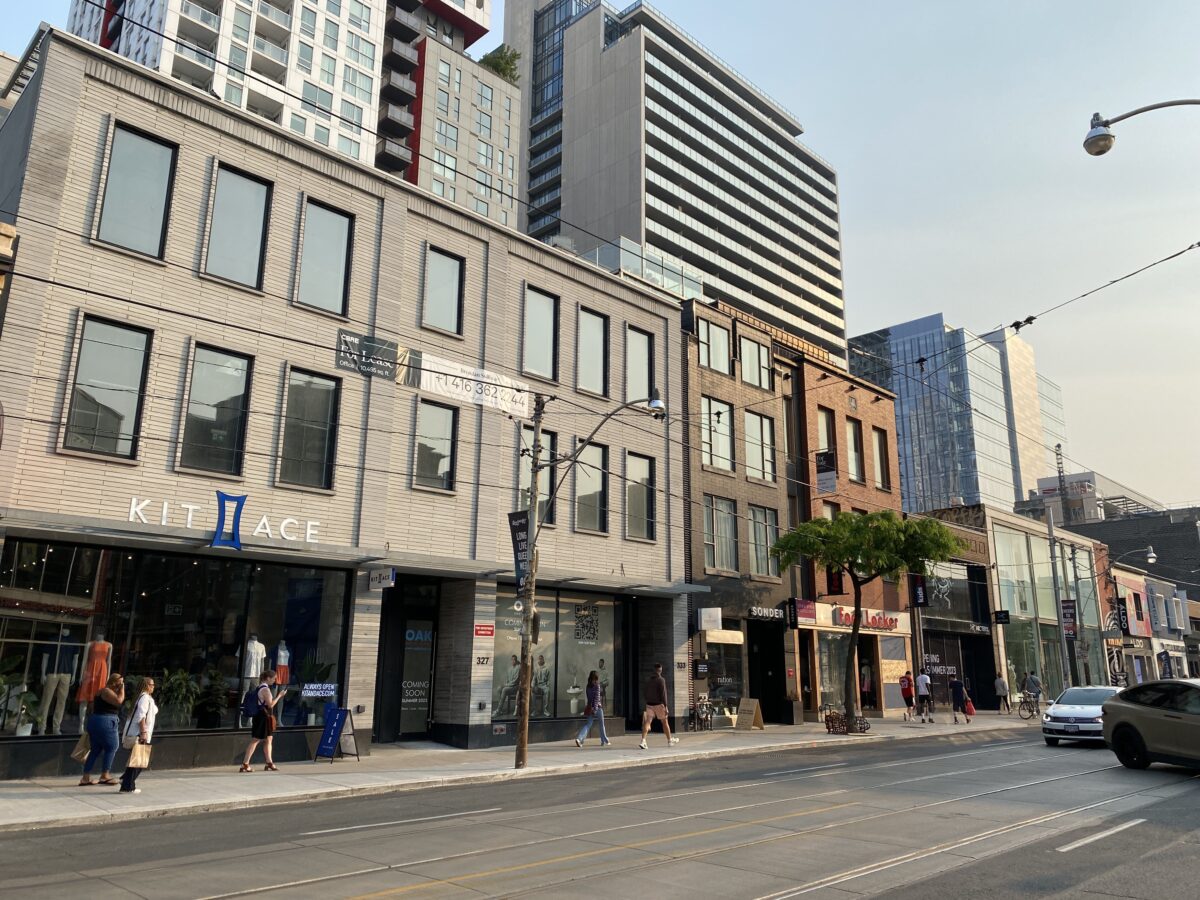
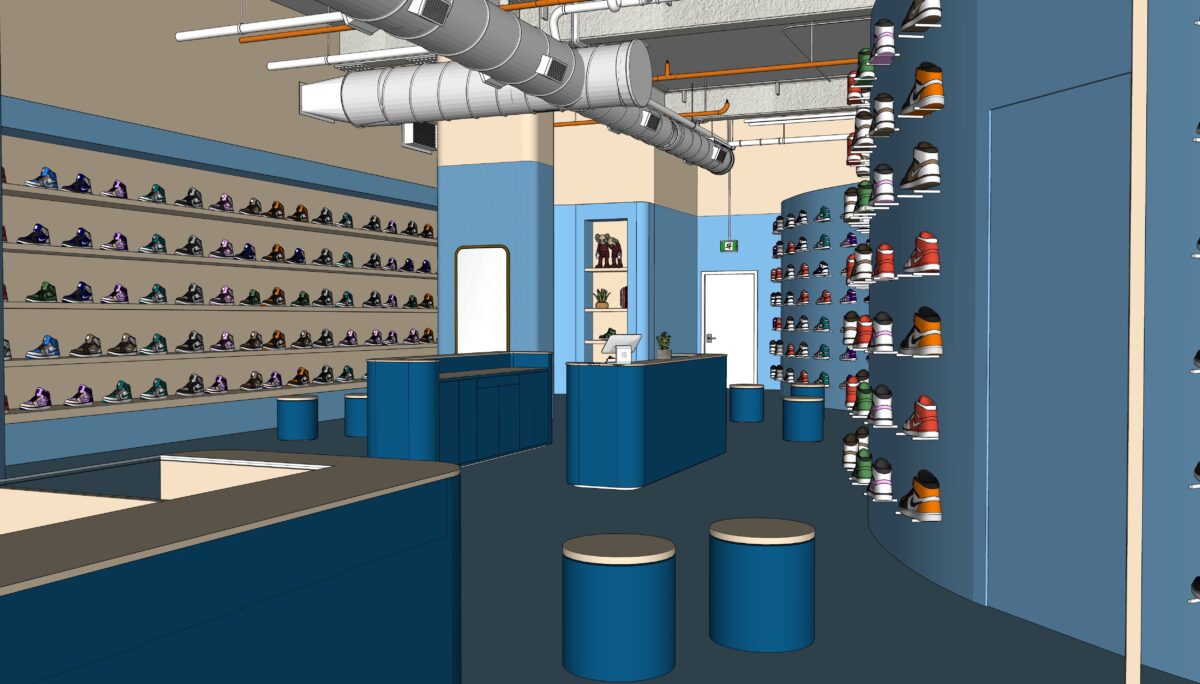
ONE OF A KIND, also known as OAK, which began as a resale boutique for footwear, is expanding its retail footprint with plans to open a new concept, flagship store this summer on Queen Street West in Toronto.
Franco Benalia, one of the brand’s founders, said the new store, its fourth, will be about 2,500 square feet.
“This is our biggest location to date and it’s probably one of the biggest sneaker stores in Canada,” he said.
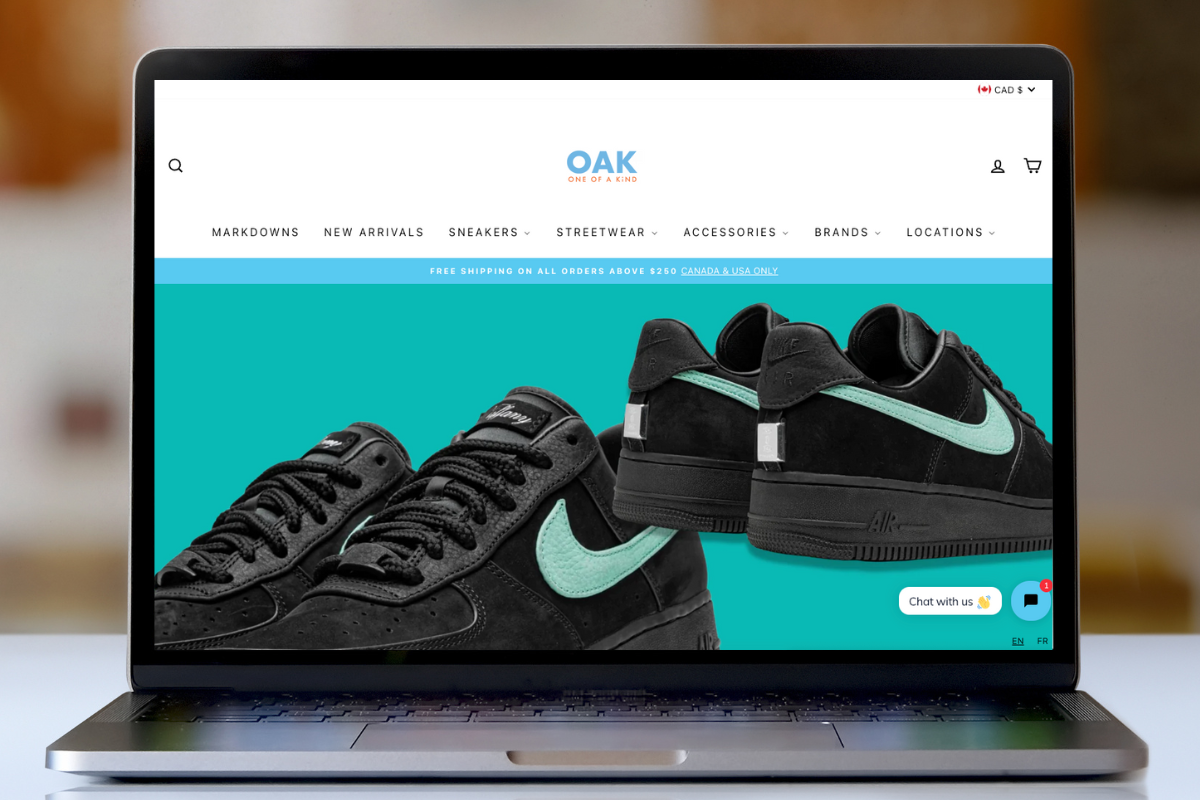
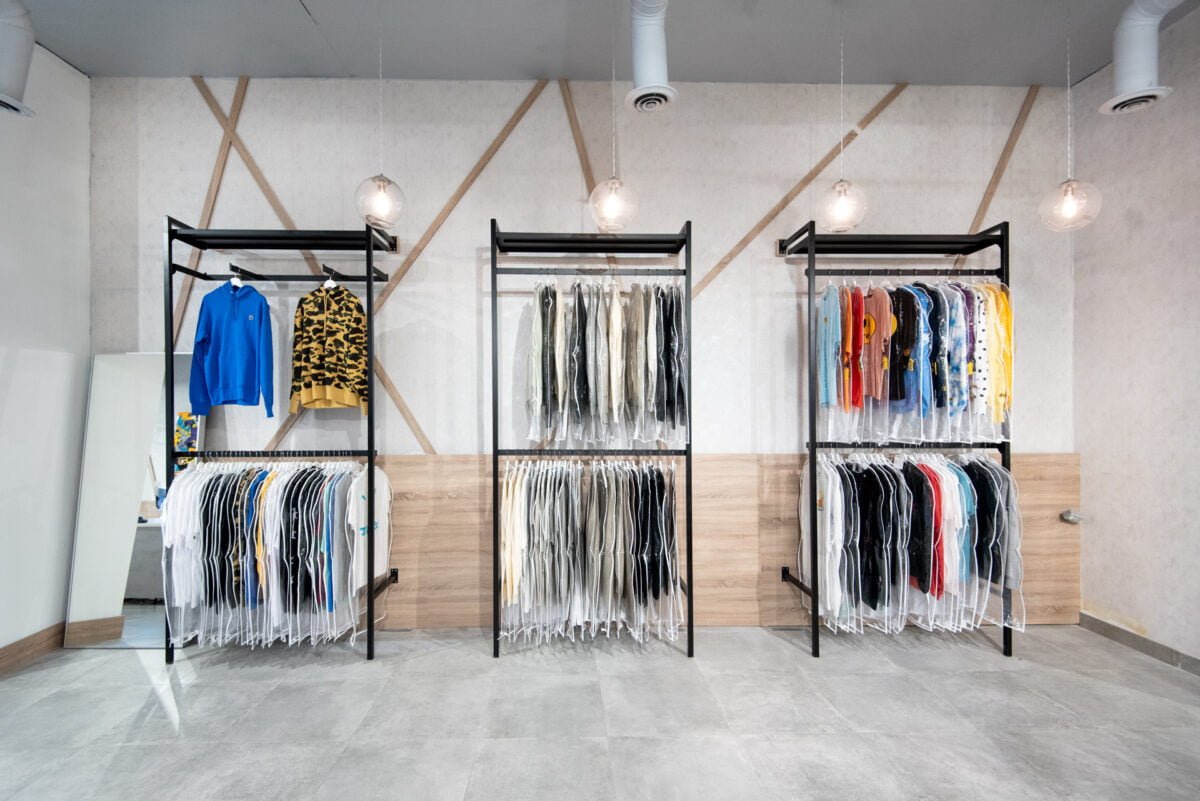
“Before, our brand was associated with being sneaker, streetwear re-sellers. However, our brand really has developed more into a one-stop shop for anything that’s currently trending in the market. Moreover, we do focus on sneakers and streetwear but our brand is also going to introduce its own private label soon which we’ve been getting a lot of requests and demands from our community through our social networks.
“We went through a whole redesign, a whole restructuring in terms of the brand itself.”
Future ONE OF A KIND at 333 Queen Street West in Toronto (Image: Dustin Fuhs)OAKShop Queen Street (Rendering: SB Architecture)
Before, the brand was referred to as OAKSHOP. Now it’s using the moniker OAK or ONE OF A KIND.
The brand has two locations on Montreal area street fronts – in Westmount and in Laval – and a location just down the street from CF Rideau Centre in Ottawa.
The first store in Montreal opened February 2020.
“We still only focus on exclusive products. Prior, we didn’t have the widest range in variety and brands whereas now we have a much larger catalog. We’ll sell toy collectables, designer items, vintage designer handbags and more high ticket items typically whereas before it was primarily streetwear and sneakers,” said Benalia.
“The decision to open in Toronto was pretty straightforward because we also run an e-commerce website and we noted a great majority of our customers are actually from Toronto. So over the last year we’ve been getting countless requests from people about opening in Toronto. Based on the demand from our community as well as the data provided on the amount of interest we have in Toronto, it was almost a no-brainer to install our flagship location there.
“Toronto is one of the biggest consumers of retail goods in Canada. So logically for us that was the next step.”
Image: oakshop.caOAK Shop Ottawa (Image: OAK One of a Kind)
Benalia said the Toronto store will be used to elevate the brand in general and introduce new concepts through it.
“We invested a lot of time and money into the design element of the store that embodied the brand. It’s really unique when it comes down to the colours we’ve chosen, the finishes and the details. It really equates to being an elevated experience and a place where customers can come in and share the same passion for the fashion trending products, sneakers, collectables, art, and anything in that realm. We’re hoping to use that space to become the main community hub in Toronto,” he said.
“For us, expansion is going to come more from introducing our private label, introducing our own product and incorporating those within the mix that complement the sneakers and streetwear very well. After Toronto, we’re always pondering about expansion but for us the expansion after Toronto is really going to come on our online, e-commerce.”
Benalia owns the business with Andrew Rusnac.
“It’s a funny story about how we met to start the brand. Since I was 16, I was kind of doing this without a storefront. Building my own clientele online. I would line up at every single sneaker release to collect pairs and I would also go to sneaker conventions in Toronto, Vancouver, all over Canada,” said Benalia in a previous Retail Insider story.
“We did a few deals online and then I met my partner as he was finishing school. He wanted to do something different. We both had a crazy passion for sneakers and realized we had a great opportunity to create a renowned brand. He took the next plane ticket to Montreal and stayed the week. In this time we plotted the brand concept and created a proper business plan. Next thing you know he moved to Montreal and we launched our company.”
“We are scaling at a rapid rate and we are beefing up our back end team. You’re going to really see the brand explode within this year.”
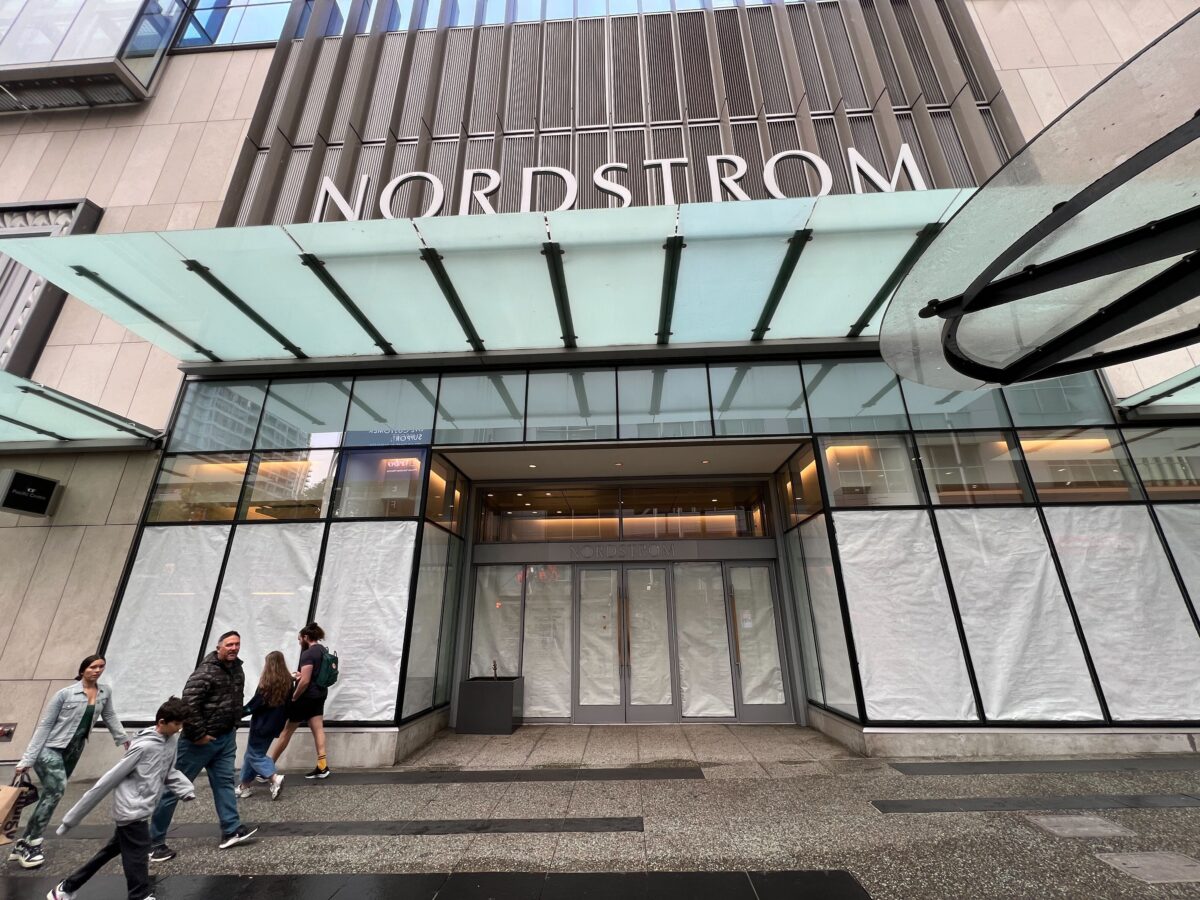
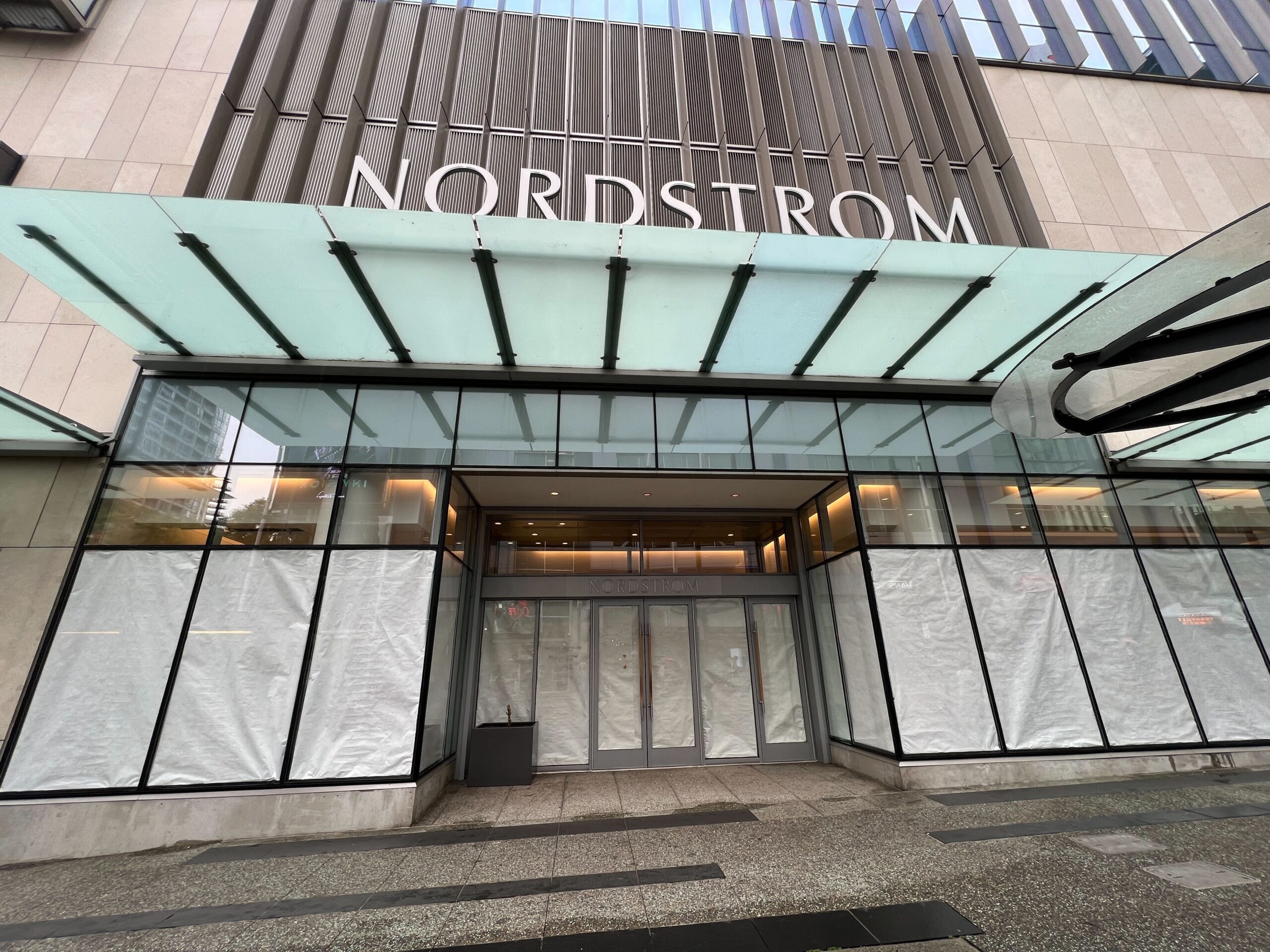
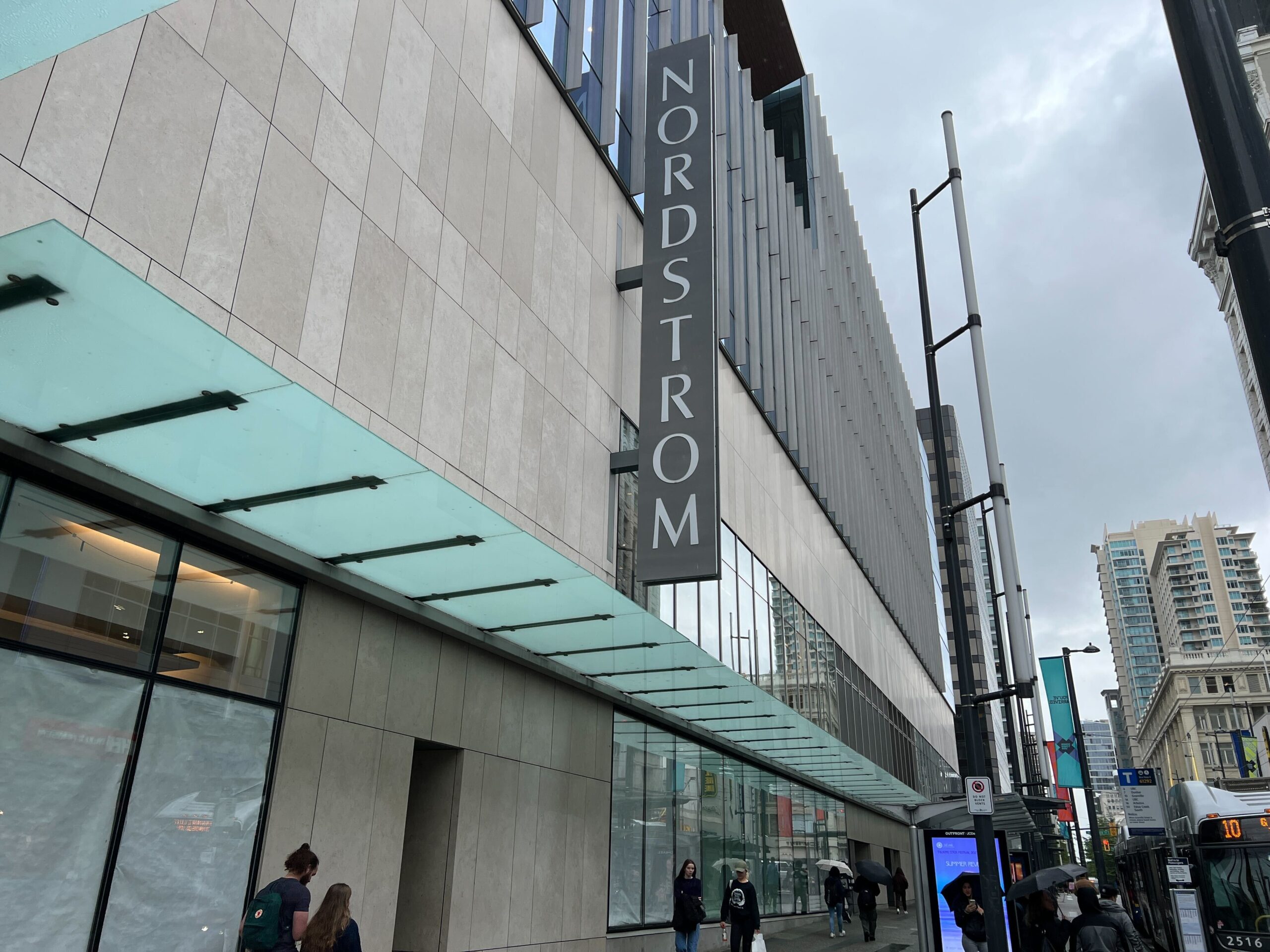
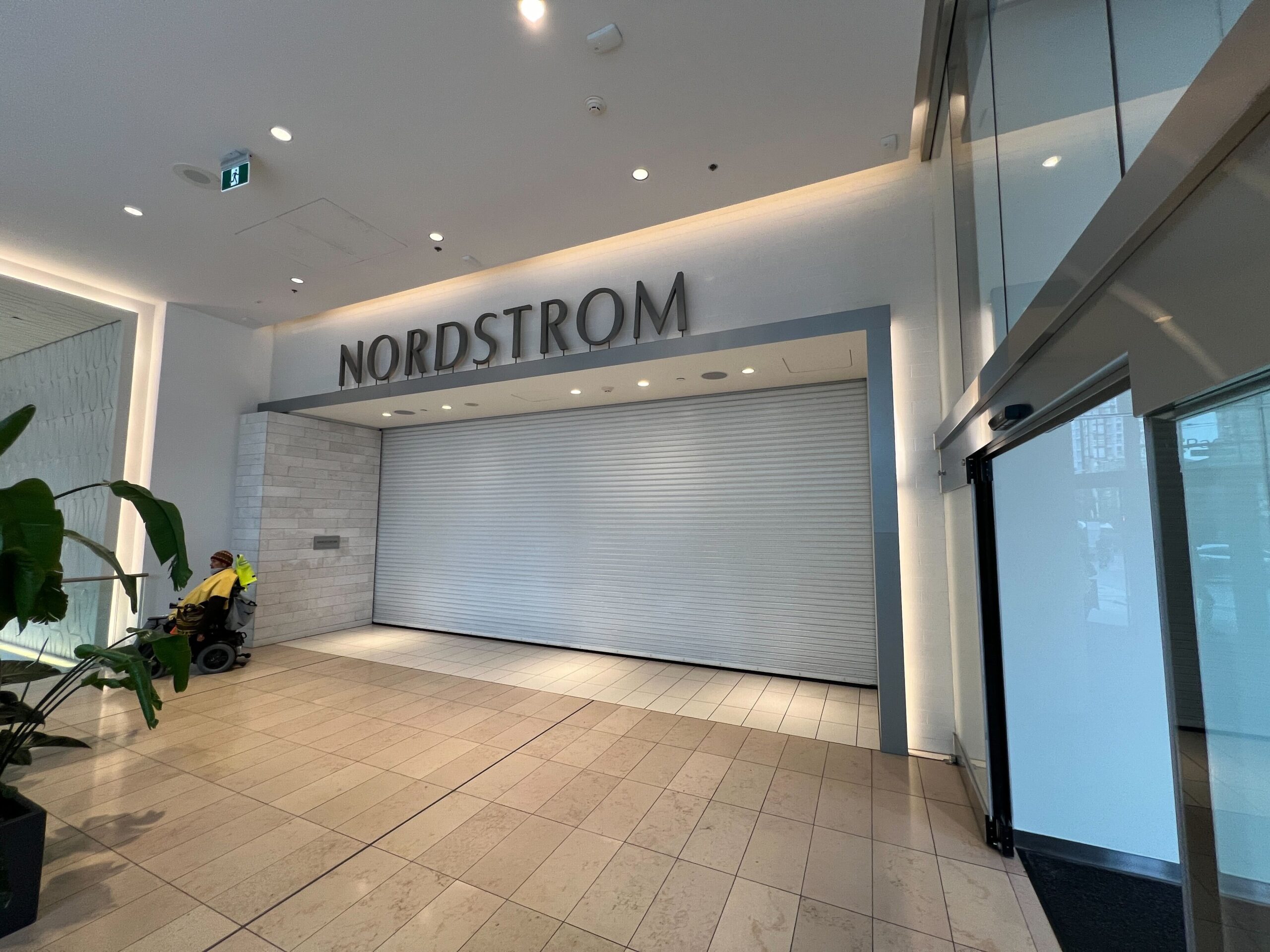
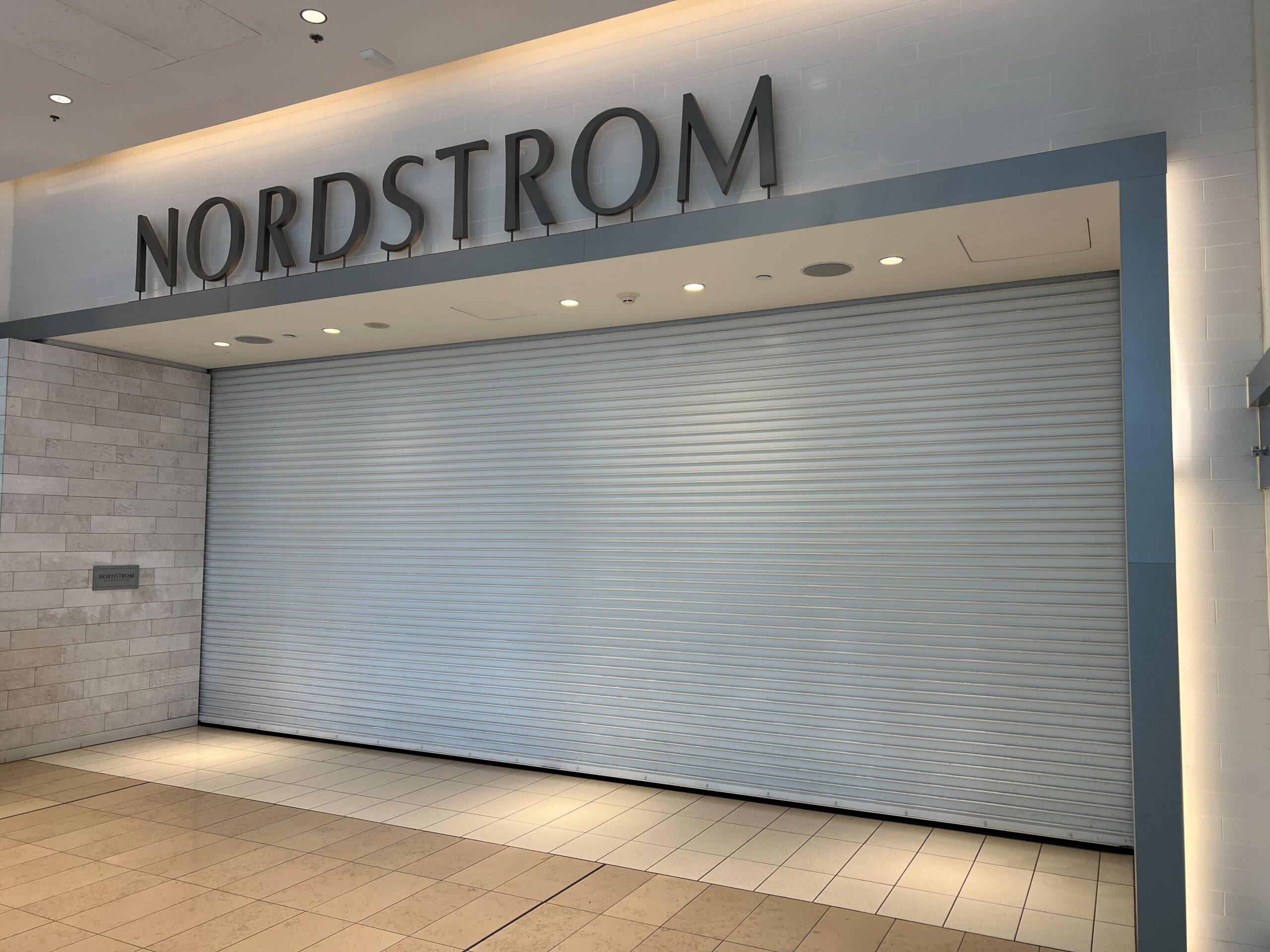
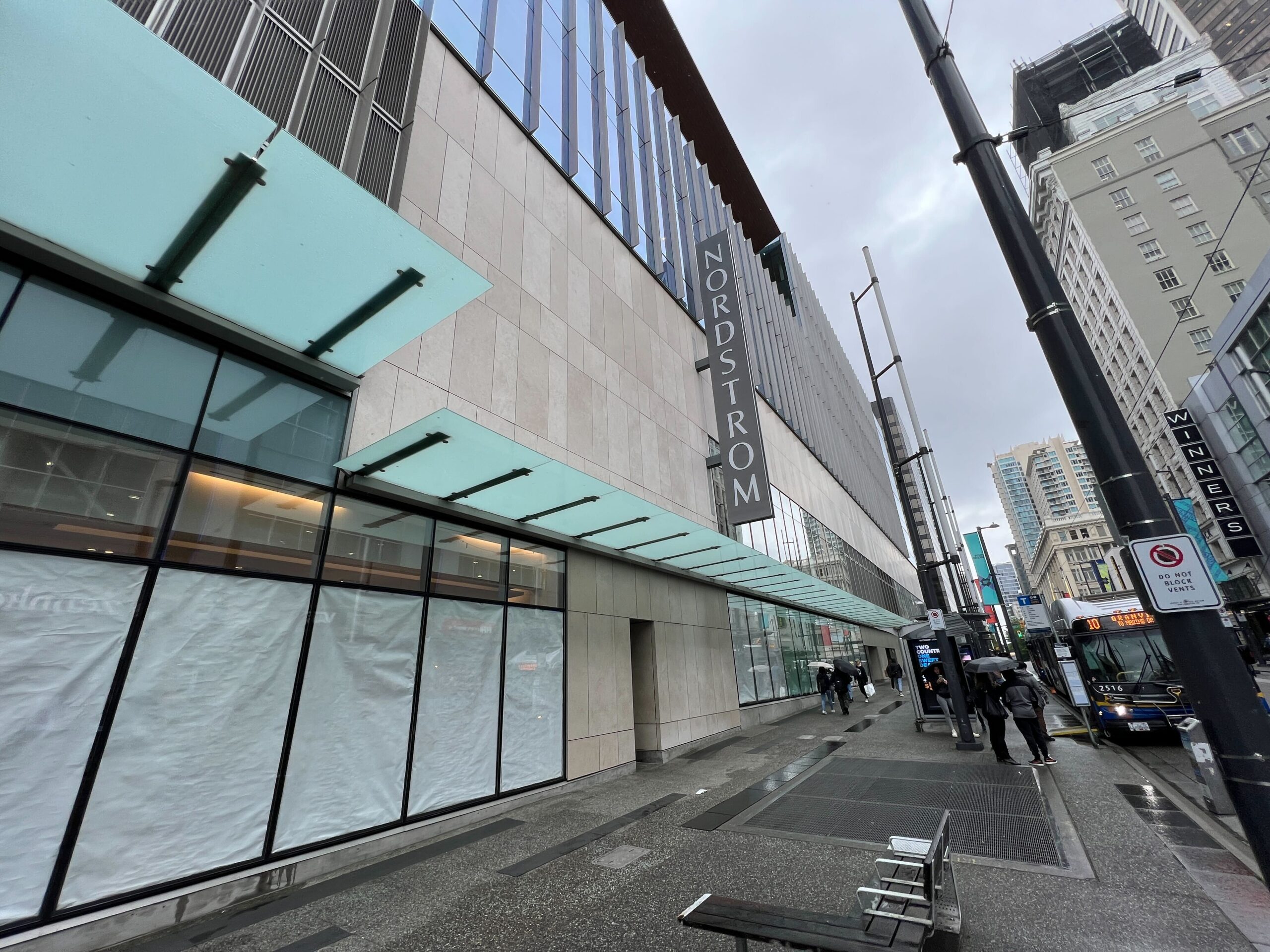
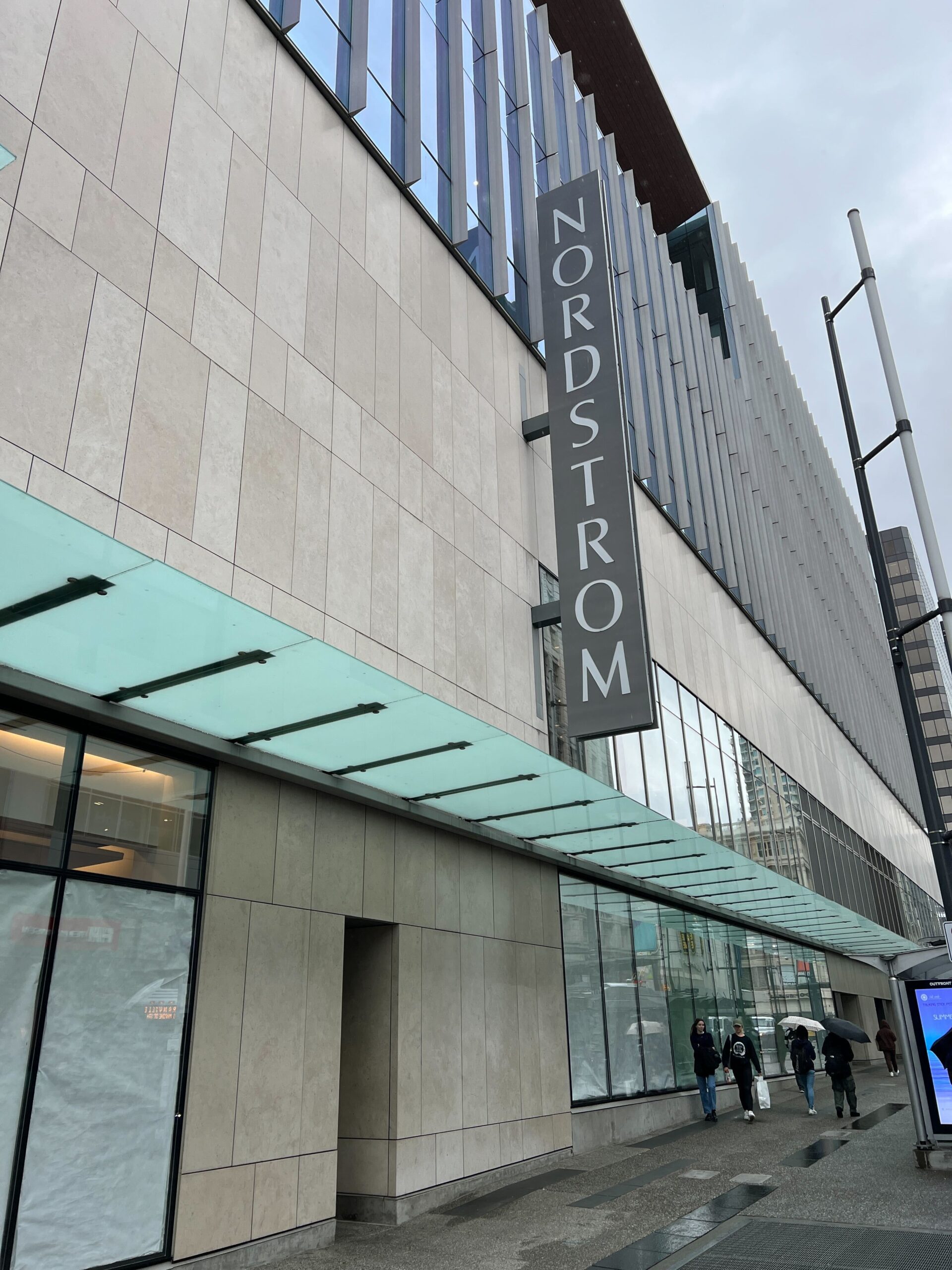
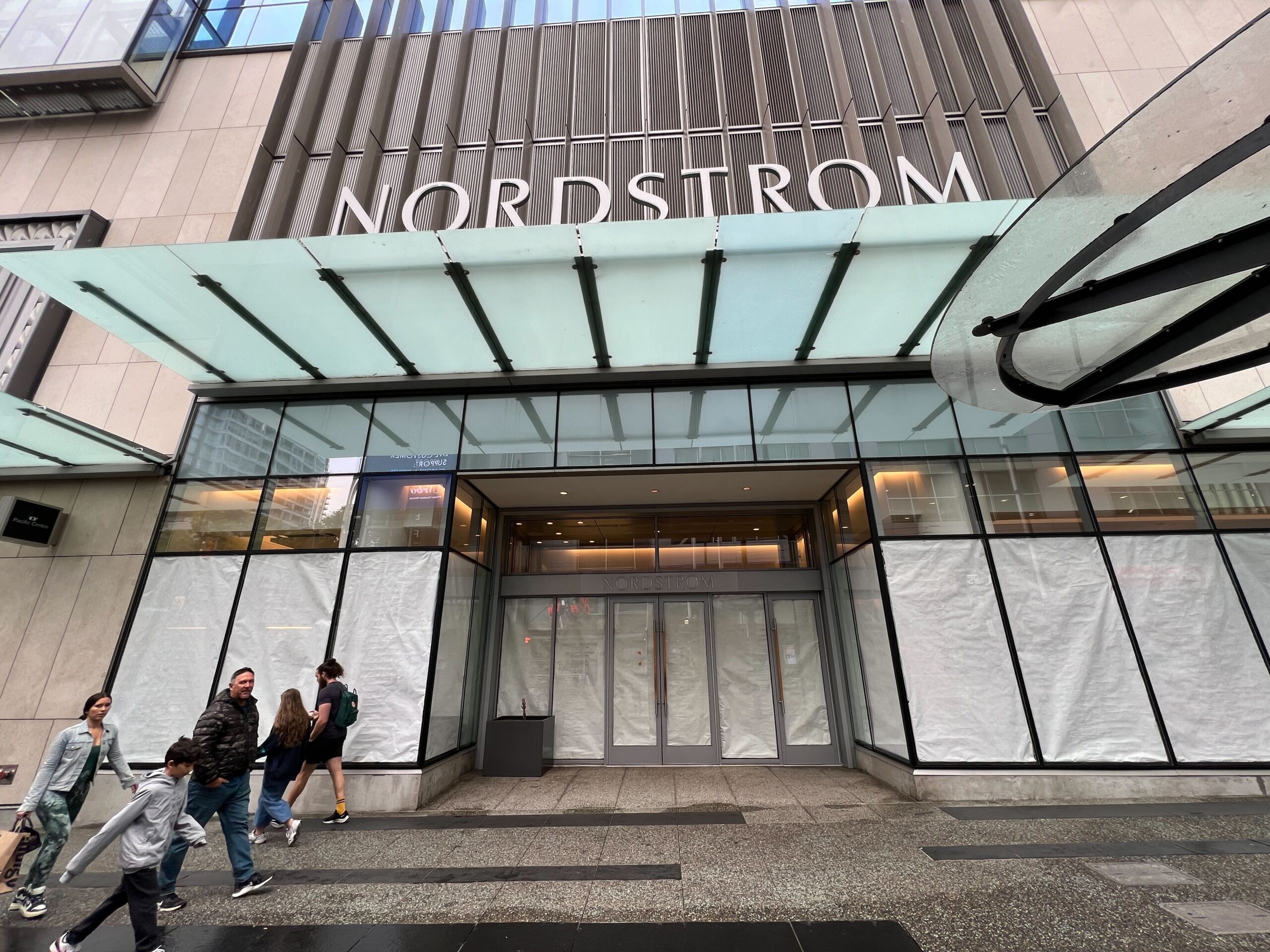
A Shuttered Nordstrom at CF Pacific Centre (Image: Dustin Fuhs)
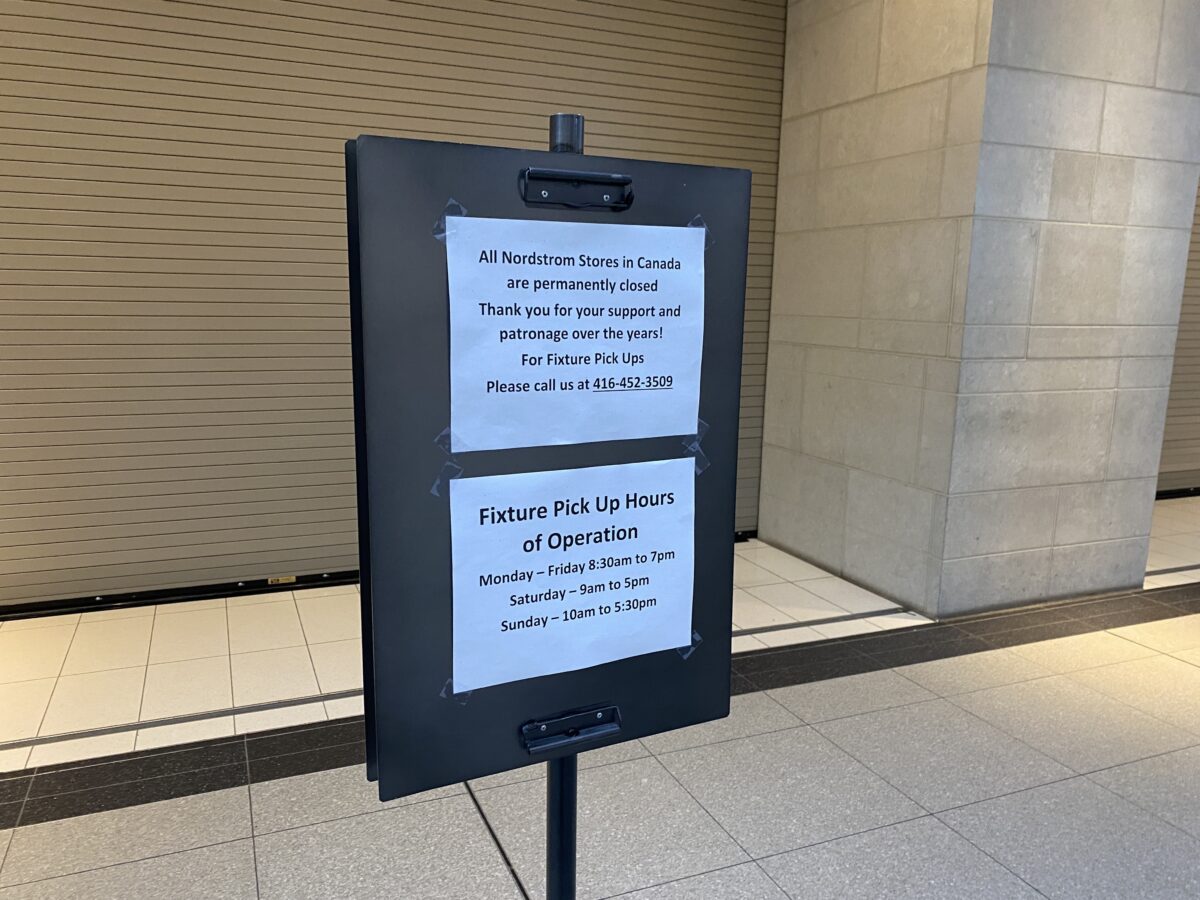
Craig and Lee discuss the final exit of Nordstrom from Canada after almost 8 years, including the smashing of fixtures by staff in Vancouver during liquidation, challenges Nordstrom had in Canada, speculation on future of old Nordstrom locations and an American Nordstrom discussion.
The Weekly podcast part of theThe Retail Insider Podcast Network by Retail Insider Canada and is available on Apple Podcasts, Stitcher, TuneIn, Google Play, or through our dedicated RSS feed for Overcast and other podcast players.
Announcer 0:00 This is a Retail Insider Podcast. You’re listening to “The Weekly”.
Lee Rivett 0:08 Welcome to this week’s episode of “The Weekly” by Retail Insider. I’m Lee Rivett and I’m joined with the owner and publisher of Retail Insider Media, Craig Patterson, to discuss this week’s most read articles on retail-insider.com. So thanks for joining me, Craig.
Craig Patterson 0:22 Hello, everyone.
Lee Rivett 0:23 Now for this podcast, we wanted to do one final acknowledgement of Nordstrom as it took its final gasp of air in the Canadian marketplace over this last week. Now media has been flooding our news feeds with a range of opinions on the exit of Nordstrom as the chain unwound its 10 years of operations in Canada. Now, its death march began back in March 2023. As it announced it was going to shutter its Canadian operations. But then things got promptly ‘real’ as it pulled the plug on the website at that point. So next up was the seven “off price” are “discounted” stores called “Nordstrom Rack”, which shuttered in mid May, leaving the six full price stores, called simply “Nordstrom”, to hold liquidation sales to offload as much product before closing last week. So now we’ve crossed that finish line and the final remnants of Nordstrom – being these full price stores – have closed across Canada. So Craig, to recap, yes, it’s 10 years ago, and 2014 Where Calgary opened up the first full price store. And then it popped up in Vancouver, Toronto and Ottawa. So a lot of Canadians have seen and shopped at these stores. So now – 10 years later and it’s now shuttered – what’s your thoughts, Craig?
Craig Patterson 1:33 Well, goodness me. Yes, Nordstrom has officially vacated the Canadian market in terms of having stores. Last week, oh my goodness – I think it was in Daily Hive and probably other social media – there were some really startling videos of employees at Nordstrom smashing the heck out of fixtures. In the store. It was a bit of a farewell
Lee Rivett 1:55 Well, and for me, it just triggered like the Vancouver Riots back in the day around the Olympics. But yeah, the optics of that was not so great for me.
Craig Patterson 2:02 It seemed fitting and it was also really brutal to see.
Lee Rivett 2:05 Yeah. Like Sledgehammers.
Craig Patterson 2:07 Rather shocking. And it was just jarring. I put it on on the Retail Insider Instagram pages as a repost. And people were reacting with shocked comments and whatnot. And I agree. That’s why I posted it on there.
Lee Rivett 2:21 There’s a lot of context that people didn’t have. When you take a look at the Vancouver riot people just wanted to break stuff just to ‘break stuff’ or ‘steal stuff’. This was not the case for that. There is likely a reason or rationale as to why people were breaking things with sledgehammers.
Craig Patterson 2:36 Now, retailers, in some cases do have to actually destroy certain things just at the end of these sorts of situations.
Lee Rivett 2:42 Yeah, and we don’t have any internal memo from Nordstrom confirming the suspicion but it would make sense that you have branded fixtures and shelving – that they would have to be destroyed.
Craig Patterson 2:51 This has happened in the past. So when Disney had originally left Canada over a decade ago, and then left more recently during the pandemic as well – I don’t know about the second time in terms of things being destroyed in terms of fixtures and whatnot from the store as well as perhaps some product. Nevertheless, the just the optics of the people with sledgehammers bashing things to pieces in the store was just quite a shock.
Shuttered Nordstrom at CF Pacific Centre (Image: Lee Rivett)
Lee Rivett 3:16 When will you take a look at the downtown Vancouver “Nordstrom” full price store – it was a Sears Canada before. They spent a whole lot of time and effort to bring it up to the current “look and feel” of the full price Nordstrom. It was beautiful. So it was shocking to me to see sledgehammers going to a store like that because at the end of the day, it just was sad and kind of a waste.
Craig Patterson 3:38 So about 10 weeks ago, I posted a personal Instagram story as well. We had been at Yorkdale with JC Williams Group and I just I had this moment we walked through the Yorkdale Nordstrom store and I thought this is a nice looking store. It’s well built. It’s It looks beautiful. What an incredible waste. And I did put out a bit of a message that was slightly scathing. I just said Nordstrom was leaving Canada with its tail between its legs. And this is an embarrassment. I don’t think that Nordstrom put in a ‘full effort’ in Canada to be a great retailer. It put an ‘OK effort’, I think – the stores overall were pretty decent, but I think some were in the wrong locations. And I think that they didn’t bring the right brands in. And we know over the years as some of these brands have been secured by retailers such as Holt Renfrew and Hudson’s Bay. But nevertheless, what did Nordstrom have to offer to Canadian consumers that wasn’t already available in the market?
Lee Rivett 4:33 Yeah, and I think that you could get all the brands that were at Nordstrom at other locations.
Craig Patterson 4:37 And that’s a problem. If you think about if – I’ll call it a department store though I don’t know if Nordstrom could be technically called a department store – but at this point, we can go online and buy the same stuff. We can go to the brand stores that are individually say in the same mall and buy that stuff. Whether or not that’s Nike or whether or not that’s you know, Chanel cosmetics or whether or not that’s a pair of On running shoes. These are all things that we can get somewhere else within Nordstrom stores. Not many of the brands that were at Nordstrom were not available elsewhere.
Lee Rivett 5:10 And there’s exceptions to that too. Like Delvaux was a Belgian brand of like handbags and wallets inside of leather goods. They were in the Vancouver and Toronto full price Nordstroms as well. So now that they’ve all shuttered, I went into the Holt Renfrew in downtown Vancouver and was able to talk to their new concession that just opened up there.
Craig Patterson 5:32 And then I spoke to Jody Wolf, who I asked to run through Yorkdale as I didn’t have a chance to get up there on time, and Jodie said, there’s no Delvaux at Holt Renfrew there. So it looks like just Vancouver for now has it but remains to be seen. That was one of very few brands you could only get at Nordstrom in Canada, and I don’t know how well the brand was doing. So I think it probably would do better at Holt Renfrew anyways, because Holt Renfrew gets a wealthier shopper.
Lee Rivett 5:54 And that’s the feeling I got from the downtown Vancouver full fledged Nordstrom as well. But I’ve never been to the American Nordstrom stores. So how are they different from the Canadian variants?
Craig Patterson 6:04 I think Nordstrom was a little bit different than the American stores. I was in Las Vegas recently. I got to go to a Nordstrom store there. One thing I thought was interesting about the American’s Nordstrom stores is they seem to be dropping some designer brands. They don’t have as many as they had before. This was an issue in Canada as well. But the former creative director that had left Nordstrom, Jeffrey, who also had a store there he I think he had a lot of relationships with brands and now that there’s a new person that’s come in to replace him, I think they’re gonna start building some of those relationships again. So you’ll see some more designer brands.
Lee Rivett 6:34 And besides brands, how’s the overall company doing in the United States?
Craig Patterson 6:38 San Francisco market is finished for Nordstrom, which is a little bit shocking. They’ve announced that they’re going to be closing their downtown San Francisco store. Sales have absolutely tanked. It’s also tanked in the shopping center, with Westfield defaulting on its mortgage and handing over the keys to its lender to basically take over the operations of the Westfield, San Francisco shopping center. I don’t know how Bloomingdale’s feels about that. But this is quite a time for them. But anyways, that’s sort of a sidetrack here, but Nordstrom, the United States overall, is a pretty decent retailer. Not to say that the Canadian operations were bad, but I think they were a little bit different. I also miss having a piano player at Nordstrom, but that’s for older people that might remember this, being a part of the stores.
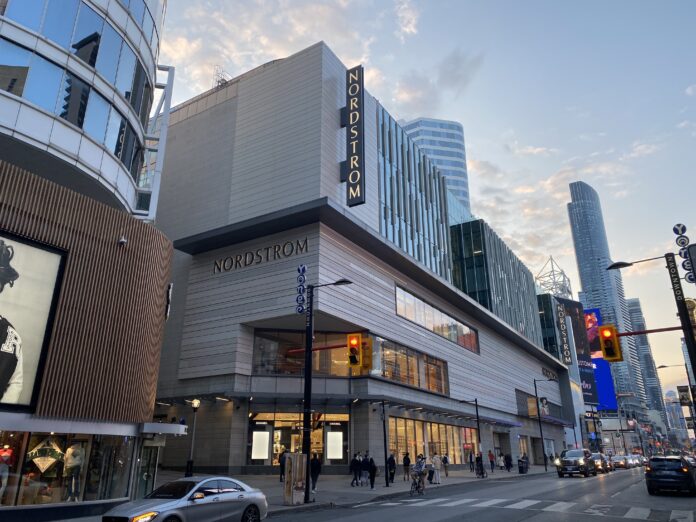
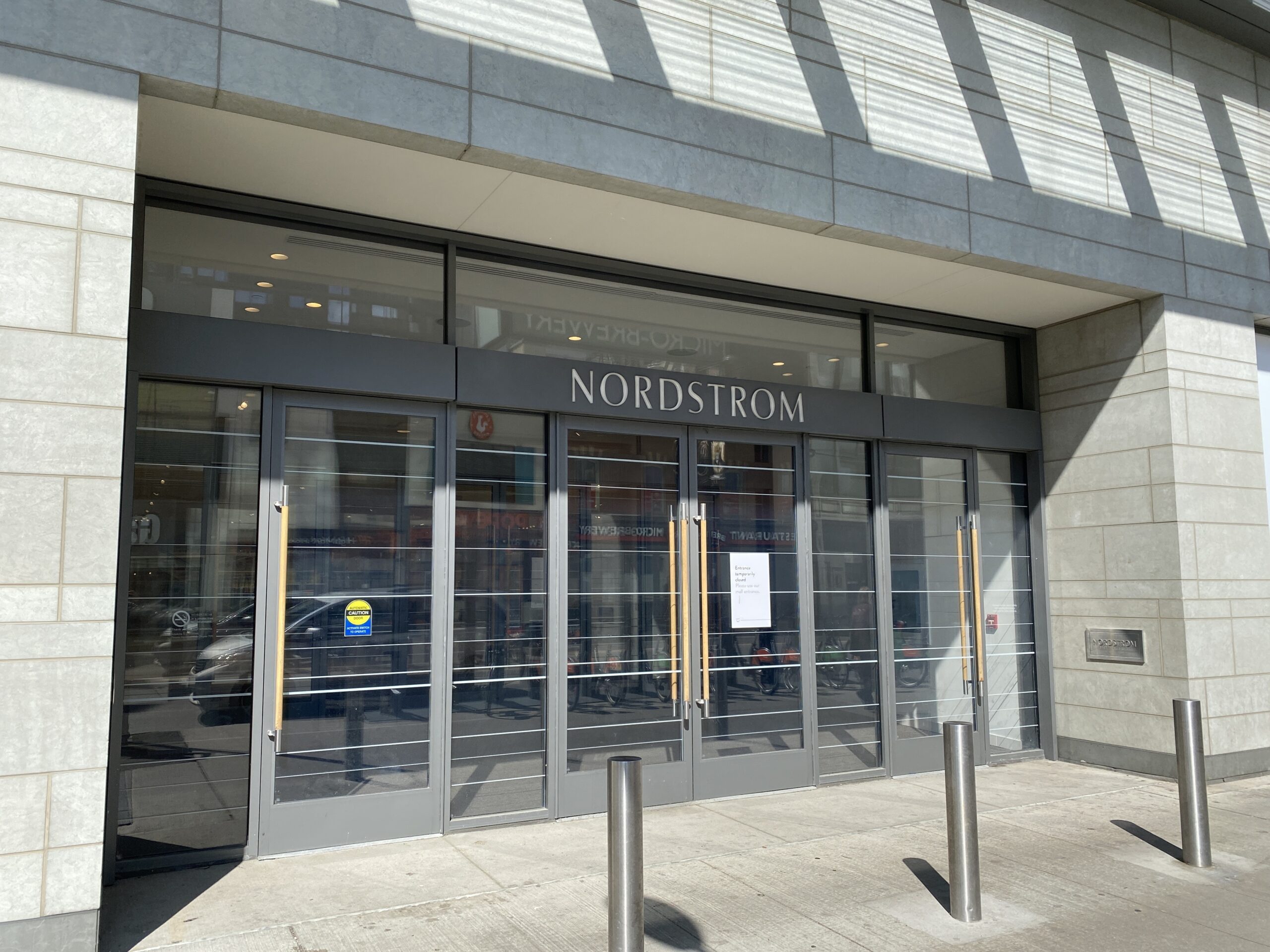
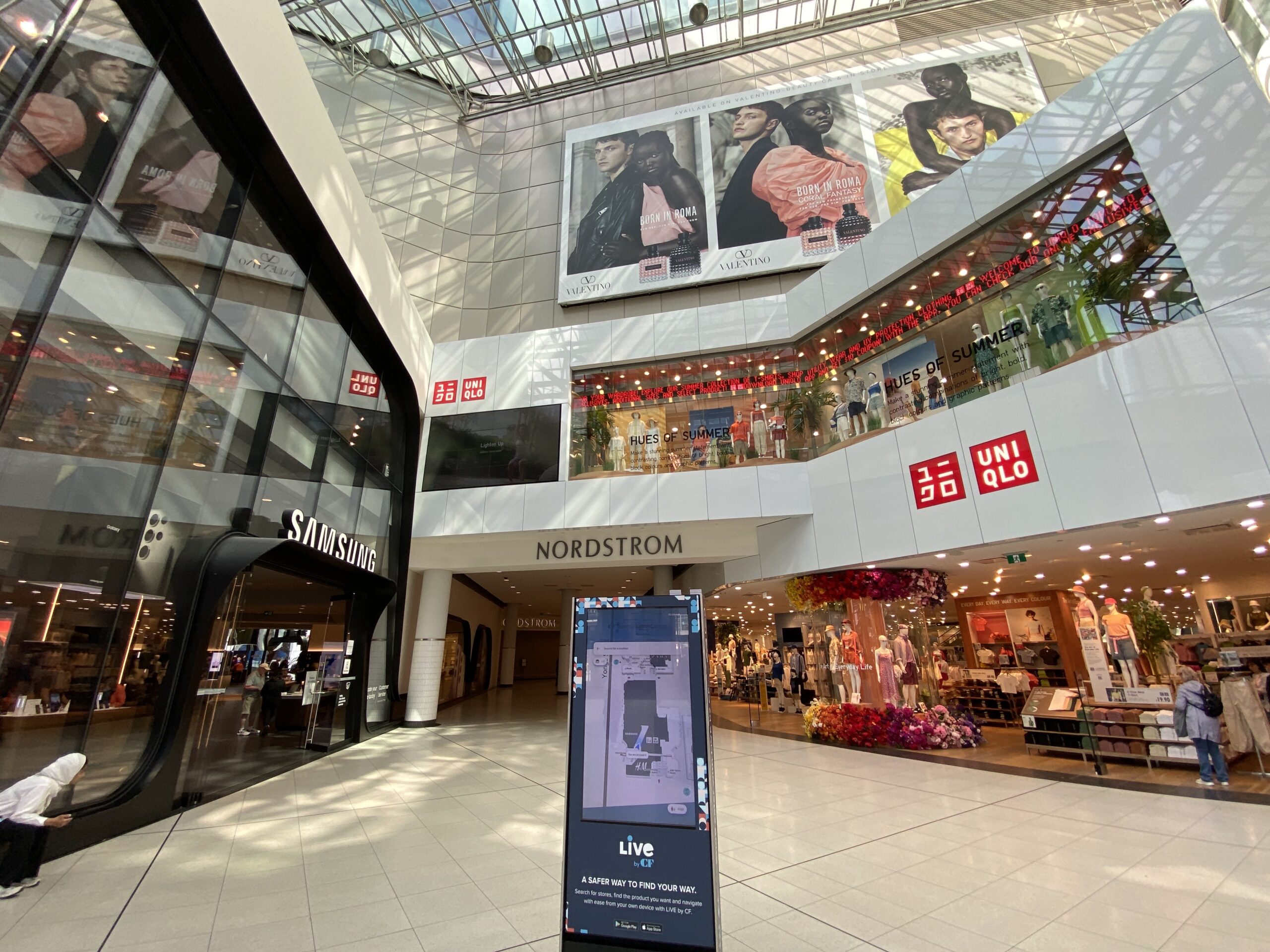
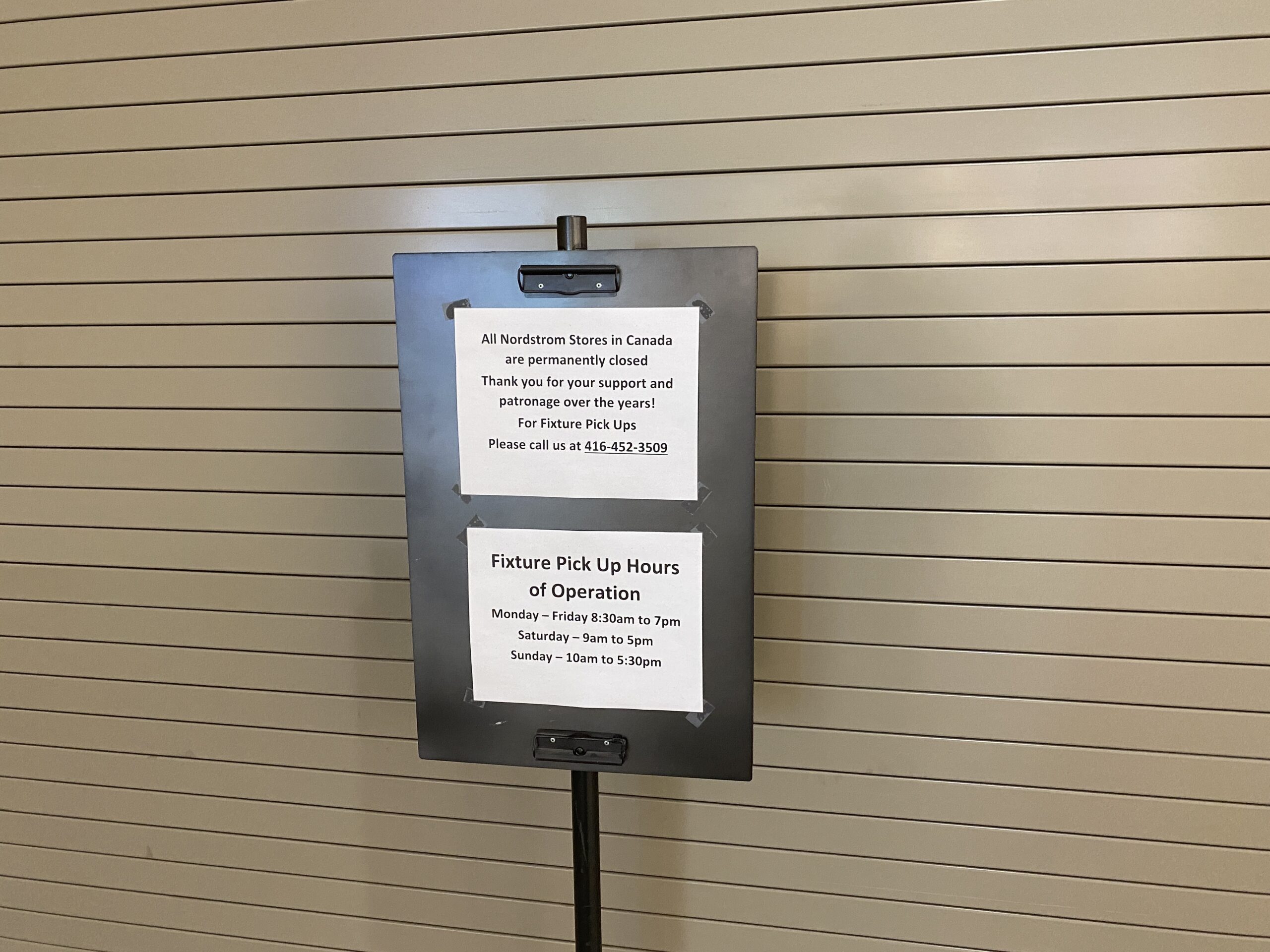
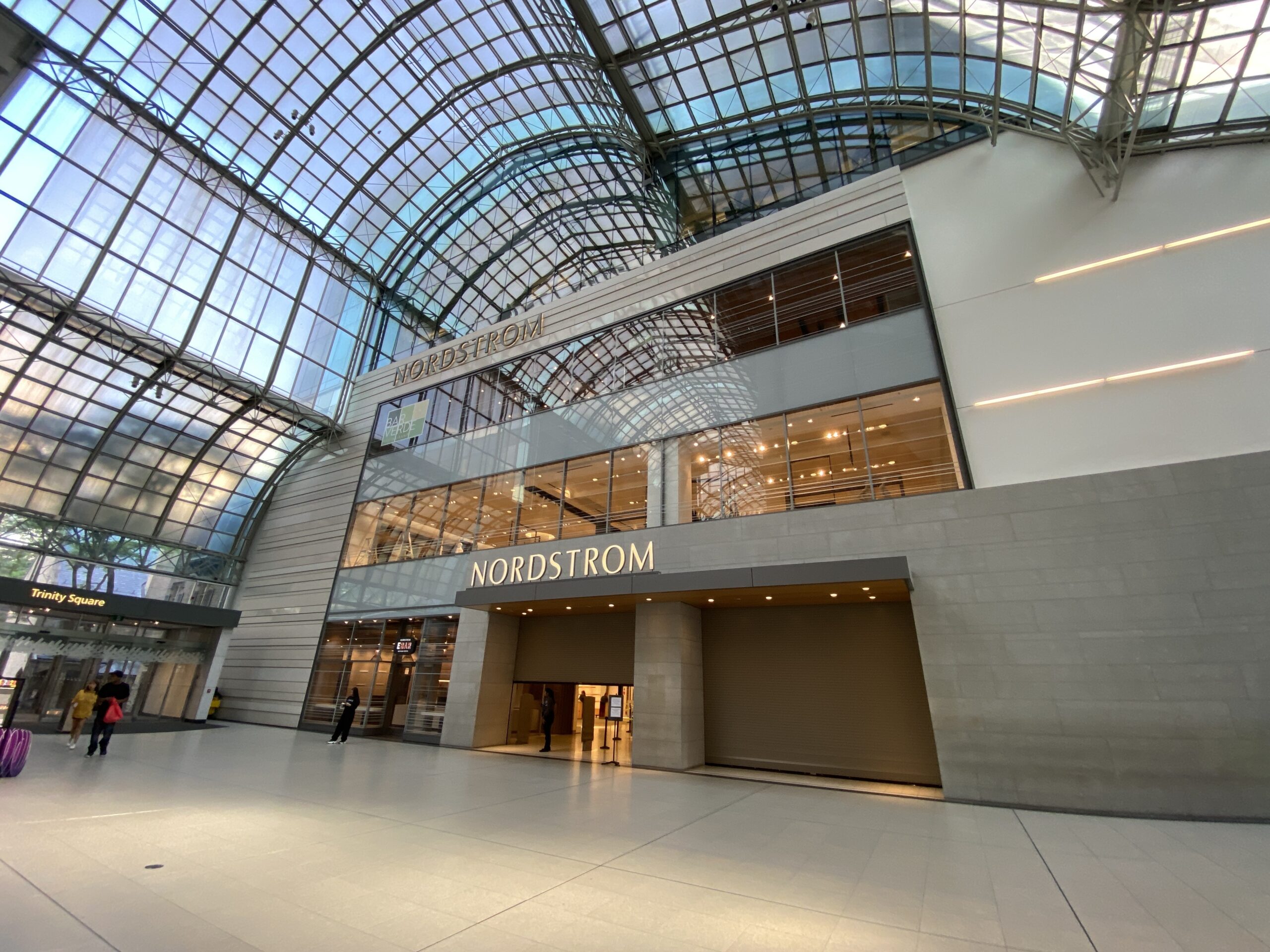
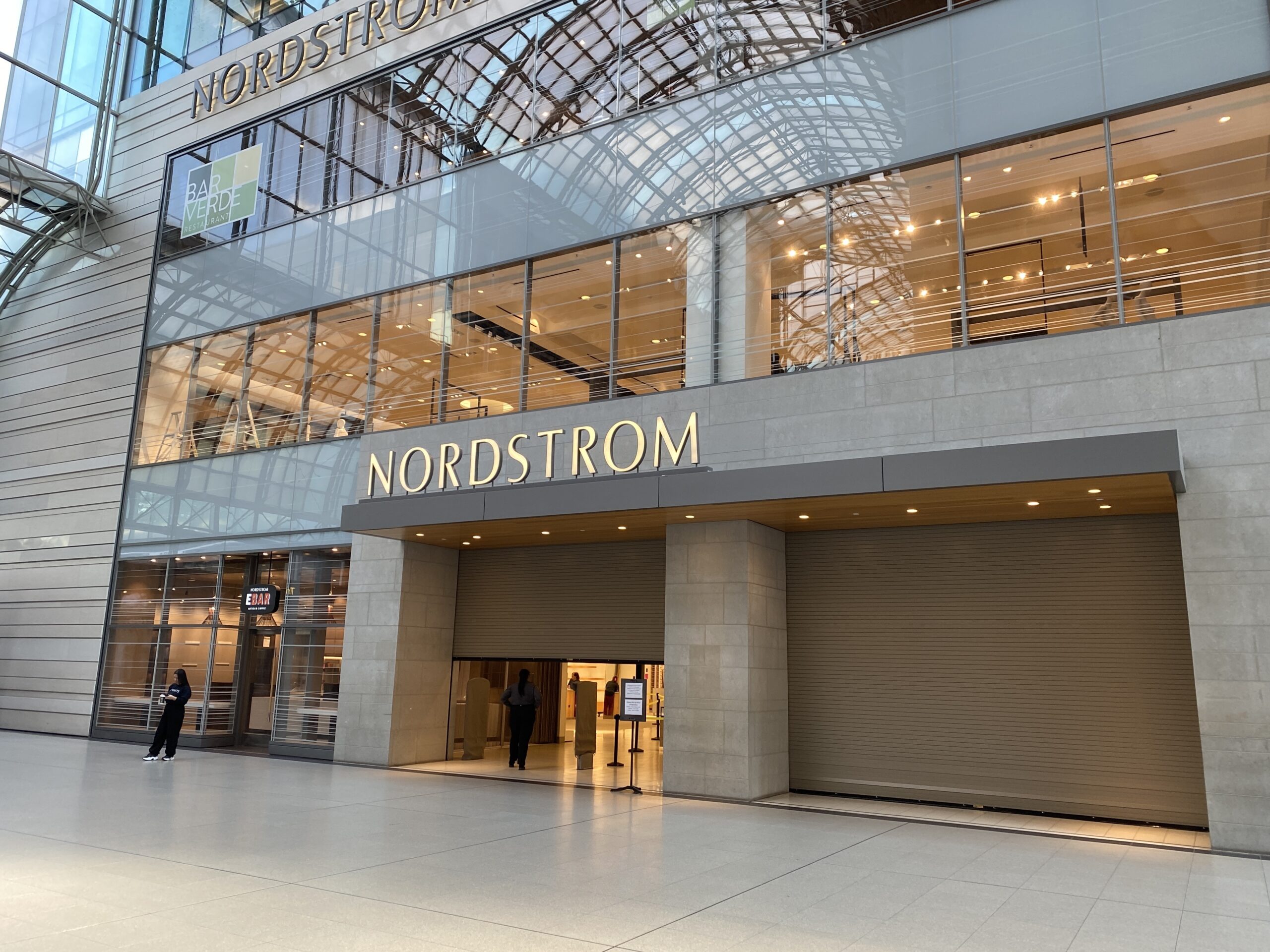
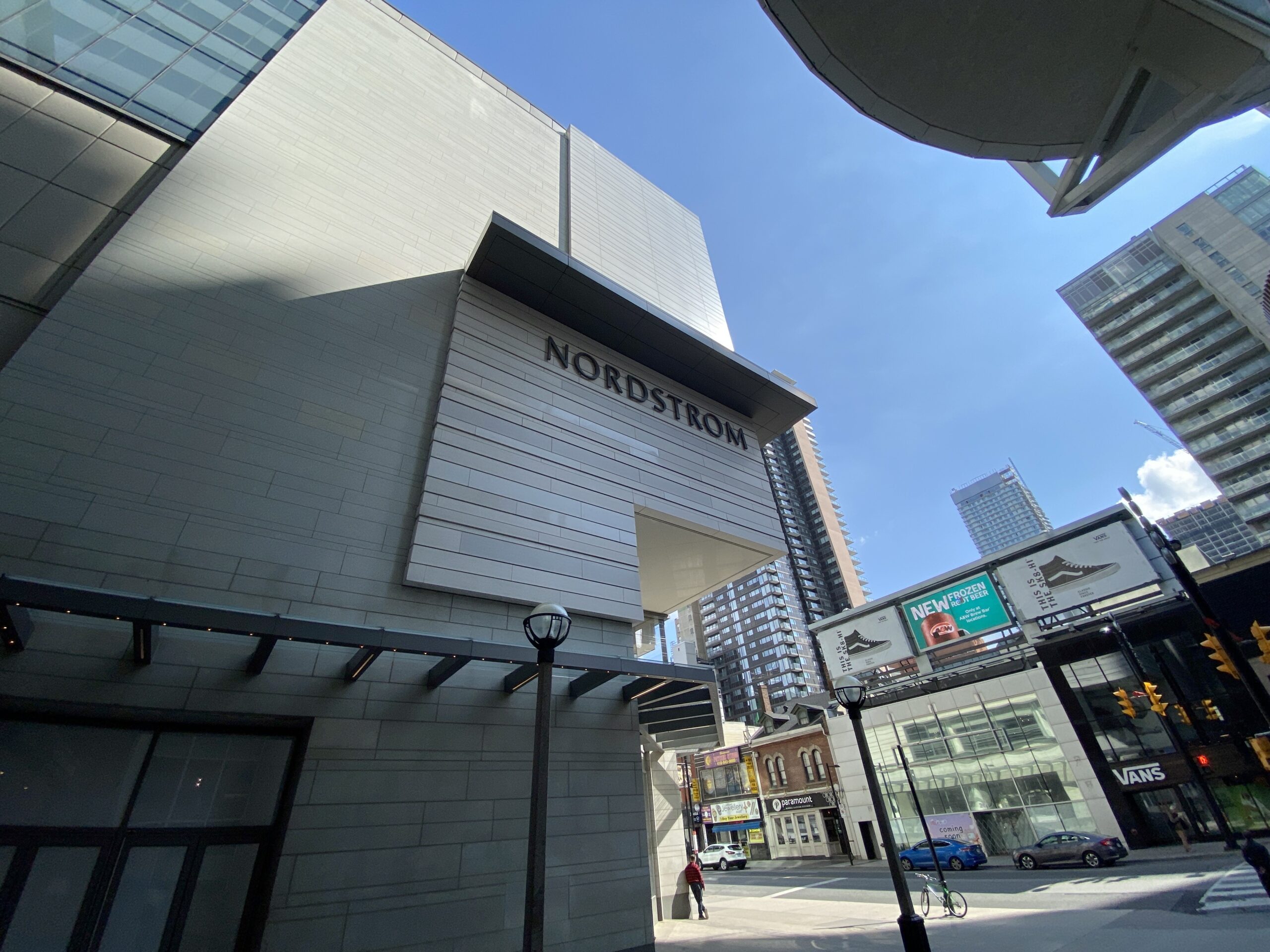
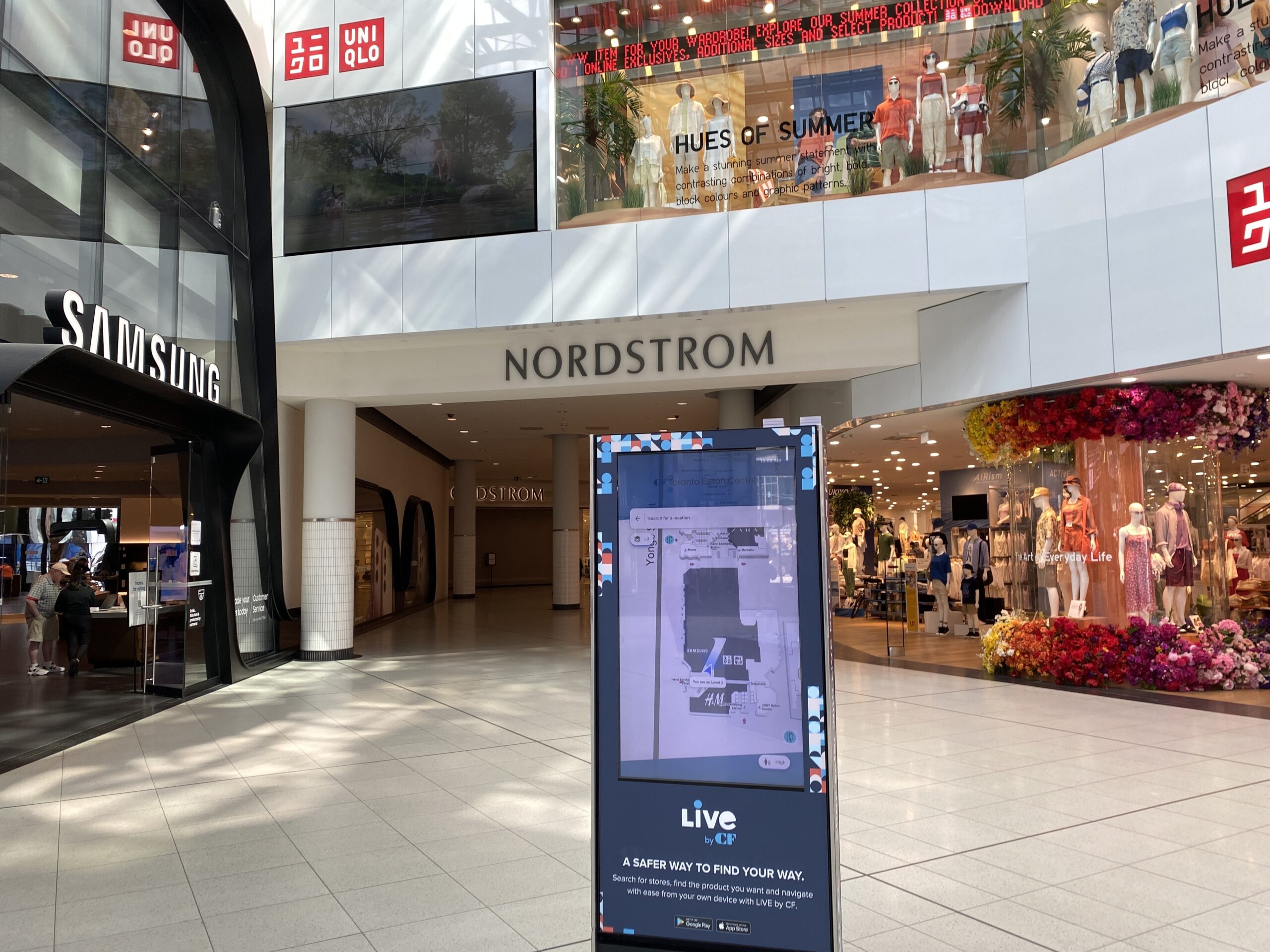
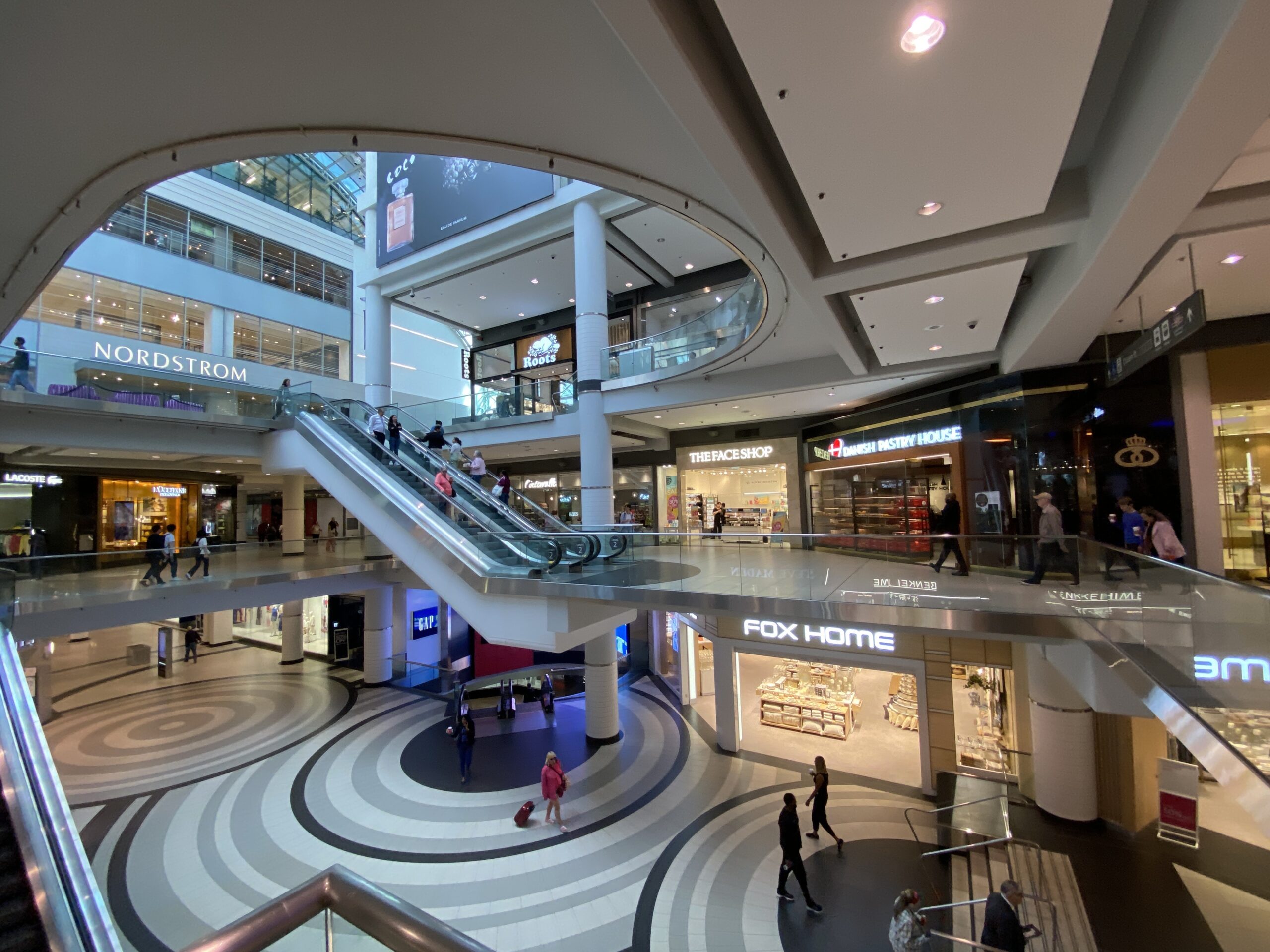
Closed Nordstrom at CF Toronto Eaton Centre (Image: Dustin Fuhs)
Lee Rivett 7:22 Now that Nordstrom, Canada has completed its exit, it’s done, everything is closed. What are you finding is the sentiment in the Canadian marketplace now that it’s closed?
Craig Patterson 7:33 I will say that I have spoken to some Nordstrom shoppers in Canada who are actually sad to see it go. Because they had sales associates that would put stuff aside for them and say, “This might fit you. This might look good on you.” and some Canadians had establish these relationships with some of these brands. That’s really too bad. I mean, they’re gonna have to find other places to shop.
Lee Rivett 7:52 And where do you think they’re going to do?
Craig Patterson 7:53 They’ll be able to do it. I mean, there’s brands out there, and maybe they’ll go online. There were brands in Nordstrom that have websites and also have standalone stores in Canada and are available in other retailers. So people will be able to find these brands. It’s going to happen, it’s just a matter of locating it, but it won’t be at Nordstrom anymore. And will people shop on the Nordstrom American website, and do you know customs over to Canada? I highly doubt it. Maybe a few but probably not that many, maybe some people from Vancouver will go down to the Seattle store to shop because they were doing that before Nordstrom entered the Canadian market anyways.
Lee Rivett 8:27 Now that Canadians are looking at Nordstrom Canada in our rearview mirrors, there was a lot of speculation on what the void of Nordstrom Canada would leave behind in the Canadian retail marketplace. So, in your opinion, there’s been quite a bit of time that Nordstrom Canada hasn’t really effectively been here, right, like liquidation sales doesn’t really count as fully operating in Canada. So are you seeing any early indicators on what the Canadian economy or retail environment is doing as a result of this departure?
Craig Patterson 9:01 We may see some headwinds for retail in Canada. And this would have probably hit Nordstrom before its closing. And I think it’s going to probably continue to hit retailers that are not catering to that top luxury market. If you look at where things have gone with inflation, and you look at where the cost of living has gone, just generally, you look at real estate prices whether or not a person is renting a home or looking to buy it with interest rates going up with rents going up with the cost of food going up a lot of consumers out there that may have been aspirational and we’re looking at buying certain goods – or even more expensive goods or even just mid price goods – have stopped shopping. And this is a huge concern for retail. I knew that our real estate prices were going to bite us in the ass eventually here in Canada because you look at a place like Texas where you can buy a home for a reasonable price and the salaries are actually pretty high and the taxes are not terrible on top of that to people that can afford to buy more stuff. So Americans generally have a better/higher buying power than Canadians. We look like a prosperous country. We have all kinds of great retail our malls are doing so much better overall than in the United States. And I think retail here is thriving. And It shocks me because Americans have more money. They say, “Well, yeah, Canadians like to buy things on sale and whatnot” I don’t think it’s because we’re more pragmatic. I think it’s because we have to because we’re broke. Because our housing is so damn expensive, and things have gotten so expensive. You go to Loblaws and what Dustin posted a photo of two bags of chips for $9. And they would have been a buck 99 Before the pandemic. I mean, we’re getting gouged. I don’t care what Sylvan Charlebois says, But, you know, these grocery stores are absolutely gouging us because I went to Whole Foods, and I paid three bucks less for a huge thing of iced coffee than I would have at Loblaws. So we are getting gouged at these stores. There’s no question there. I should probably do a separate podcast on this because it does piss me off a bit.
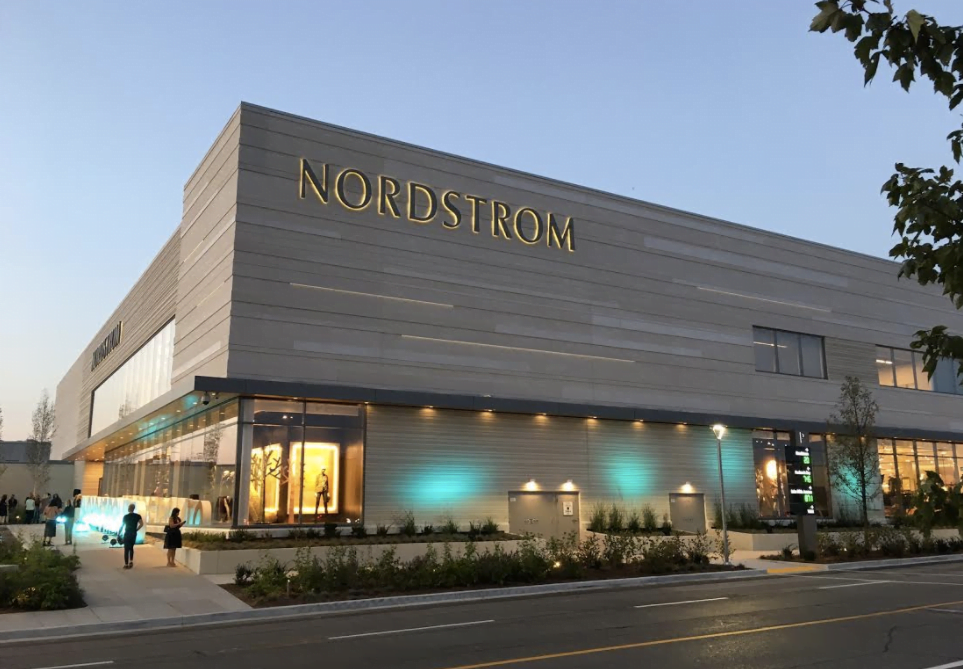
CF Sherway Gardens Nordstrom (Image: Nordstrom)
Lee Rivett 10:50 On what do you think is going to happen with these Nordstrom box stores? Like we talked about it before? But let’s have you had any more time to think about that?
Craig Patterson 10:57 That’s a good question. I mean, I don’t have a lot of insight or, or I don’t have a lot of insight into this right now other than what I think I did. I’ve done TV and radio discussing this for a few months now. But my expectation – and we even did a podcast on this – is that the Nordstrom Rack stores will probably be pretty easy to be picked up by retailers. The Young and Bloor locations probably going to go to some big brands that we all know. I’m not saying I know which one I’m just saying it’ll probably be a household name or something because they can afford the rent and it’s a big spot. So you might see a big something in there. That’s like a big Nike flagship store. And I’m totally just making that up. That is not in any way anything that I’ve even heard of being negotiated. So that’s why I’m saying it but look at a good place for a Nike flagship store by the way, if anybody’s there brokering that deal.
The other Nordstrom Rack stores, they’ve run between 30,000 and 40,000 square feet, typically here in Canada. They might go to a boutique grocery store, maybe a Sport Check might open it, that’s not going to be hard. It’s these bigger Nordstrom stores that are spanning anywhere from about 140,000 square feet to about 230,000 square feet. Those are gonna have to be filled. La Maison Simons may have an opportunity to go into some of these boxes. I don’t know if Simon’s has the money to do it, but you never know. In downtown these, these boxes could be split up. I’m thinking primarily Toronto and Vancouver, but it costs millions and millions of dollars to do that. In Vancouver at the CF Pacific Center, you’ve got a Nordstrom store. There’s fire stairs, there’s components to this old Eatons building, which are going to be quite challenging to have to repurpose if they want to turn this into a shopping mall. So we’ll see I don’t know what’s gonna happen there. But hey, I mean Cadillac, Fairview lost a lot of money with this Nordstrom situation here. Five of those six department stores were in Cadillac Fairview malls – one is an Oxford mall being Yorkdale. So Cadillac, Fairview of sure is going to want to somehow recoup as much as they can on this disaster of Norstrom leaving think that our landlords up here in Canada are generally in a better shape than what we’re seeing in the United States. Our real estate is more valuable typically in the cities here. We have less retail space per person. If this happened in the United States. I’d be more worried – if I was American doing this report.
Lee Rivett 12:05 Do you have anything to kind of wrap up and final thoughts here?
Craig Patterson 13:18 I also optimistic and I think that we’re going to see some interesting stuff happen in Canada over the next few years. I don’t think this is an end of the world situation. I think it’s a matter of adapting and doing something new. But it’ll be interesting to watch. So really, what we’ll do is we’ll keep our ear to the ground, see what we can hear. And eventually we’ll be reporting on what’s going to be replacing these Nordstrom stores. Be it the full sized ones as well as Nordstrom Rack so it’s going to be an interesting and exciting time to be reporting here at Retail Insider, as it always is.
Lee Rivett 13:46 Thank you very much for going through this with me. It’s again, it’s the farewell to Nordstrom pretty much so. But otherwise talk to you next week.
Craig Patterson 13:52 Thank you so much, Lee, and thank you so much everyone for listening. Take care and bye for now.
Subscribe, Rate, and Review our Retail Insider Podcast!
Drop us a line at Craig@Retail-Insider.com. You can also rate us in Apple Podcasts or recommend us in Overcast to help more people discover the show!
Background Music Credit: Hard Boiled Kevin MacLeod (incompetech.com). Licensed under Creative Commons: By Attribution 3.0 License. http://creativecommons.org/licenses/by/3.0/
Nordstrom Canada at CF Pacific Centre
1 of 7
Shuttered Nordstrom at CF Pacific Centre (Image: Lee Rivett)
Shuttered Nordstrom at CF Pacific Centre
Shuttered Nordstrom at CF Pacific Centre (Image: Lee Rivett)
Shuttered Nordstrom at CF Pacific Centre
Shuttered Nordstrom at CF Pacific Centre (Image: Lee Rivett)
Shuttered Nordstrom at CF Pacific Centre
Shuttered Nordstrom at CF Pacific Centre (Image: Lee Rivett)
Shuttered Nordstrom at CF Pacific Centre
Shuttered Nordstrom at CF Pacific Centre (Image: Lee Rivett)
Shuttered Nordstrom at CF Pacific Centre
Shuttered Nordstrom at CF Pacific Centre (Image: Lee Rivett)
Shuttered Nordstrom at CF Pacific Centre
Shuttered Nordstrom at CF Pacific Centre (Image: Lee Rivett)
Shuttered Nordstrom at CF Pacific Centre
Nordstrom Canada at CF Toronto Eaton Centre
1 of 9
Closed Nordstrom Canada at CF Toronto Eaton Centre (Image: Dustin Fuhs)
Closed Nordstrom Canada at CF Toronto Eaton Centre
Closed Nordstrom Canada at CF Toronto Eaton Centre (Image: Dustin Fuhs)
Closed Nordstrom Canada at CF Toronto Eaton Centre
Closed Nordstrom Canada at CF Toronto Eaton Centre (Image: Dustin Fuhs)
Closed Nordstrom Canada at CF Toronto Eaton Centre
Closed Nordstrom Canada at CF Toronto Eaton Centre (Image: Dustin Fuhs)
Closed Nordstrom Canada at CF Toronto Eaton Centre
Closed Nordstrom Canada at CF Toronto Eaton Centre (Image: Dustin Fuhs)
Closed Nordstrom Canada at CF Toronto Eaton Centre
Closed Nordstrom Canada at CF Toronto Eaton Centre (Image: Dustin Fuhs)
Closed Nordstrom Canada at CF Toronto Eaton Centre
Closed Nordstrom Canada at CF Toronto Eaton Centre (Image: Dustin Fuhs)
Closed Nordstrom Canada at CF Toronto Eaton Centre
Closed Nordstrom Canada at CF Toronto Eaton Centre (Image: Dustin Fuhs)
Closed Nordstrom Canada at CF Toronto Eaton Centre
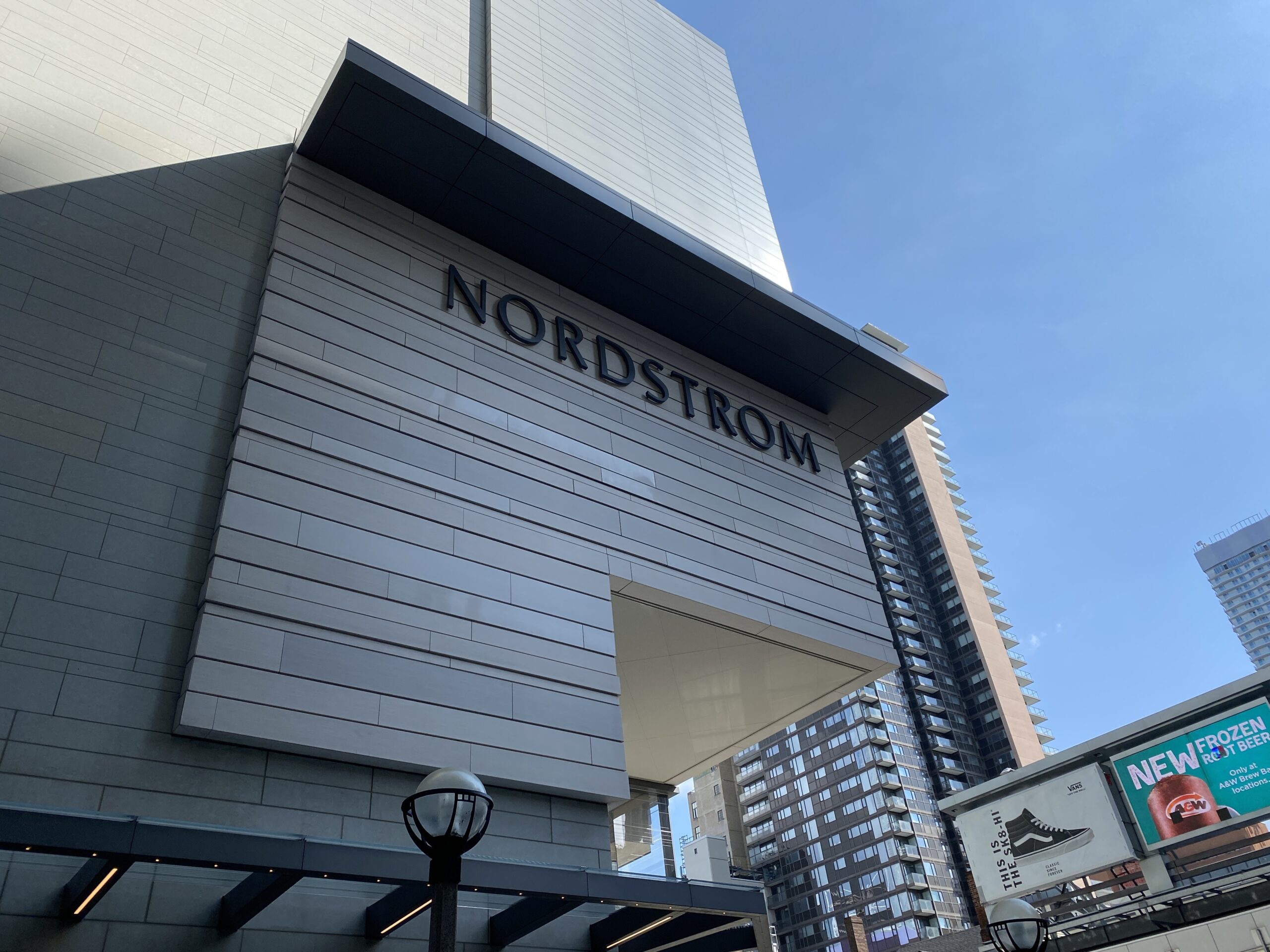
CF Toronto Eaton Centre with Shuttered Nordstrom Canada (Image: Dustin Fuhs)
CF Toronto Eaton Centre with Shuttered Nordstrom Canada