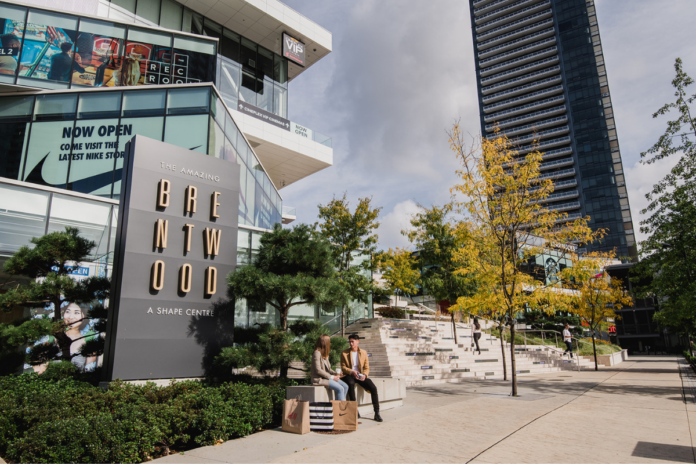
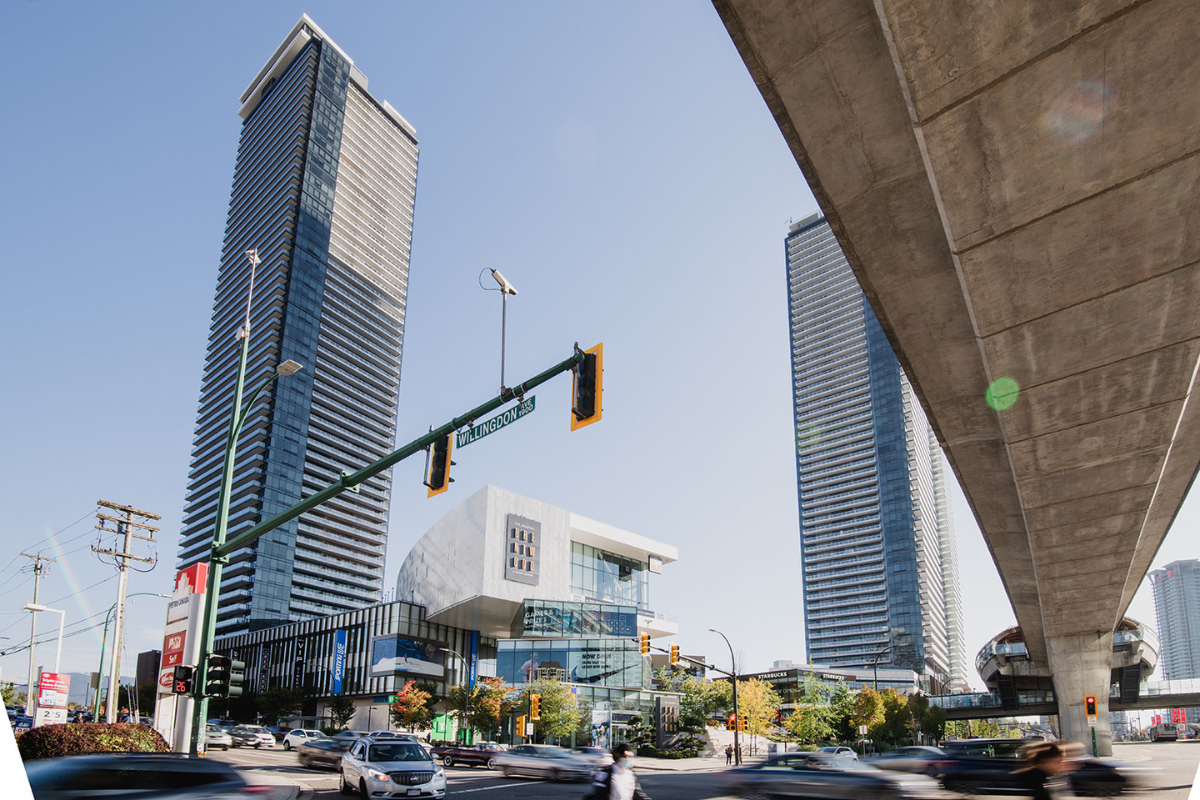
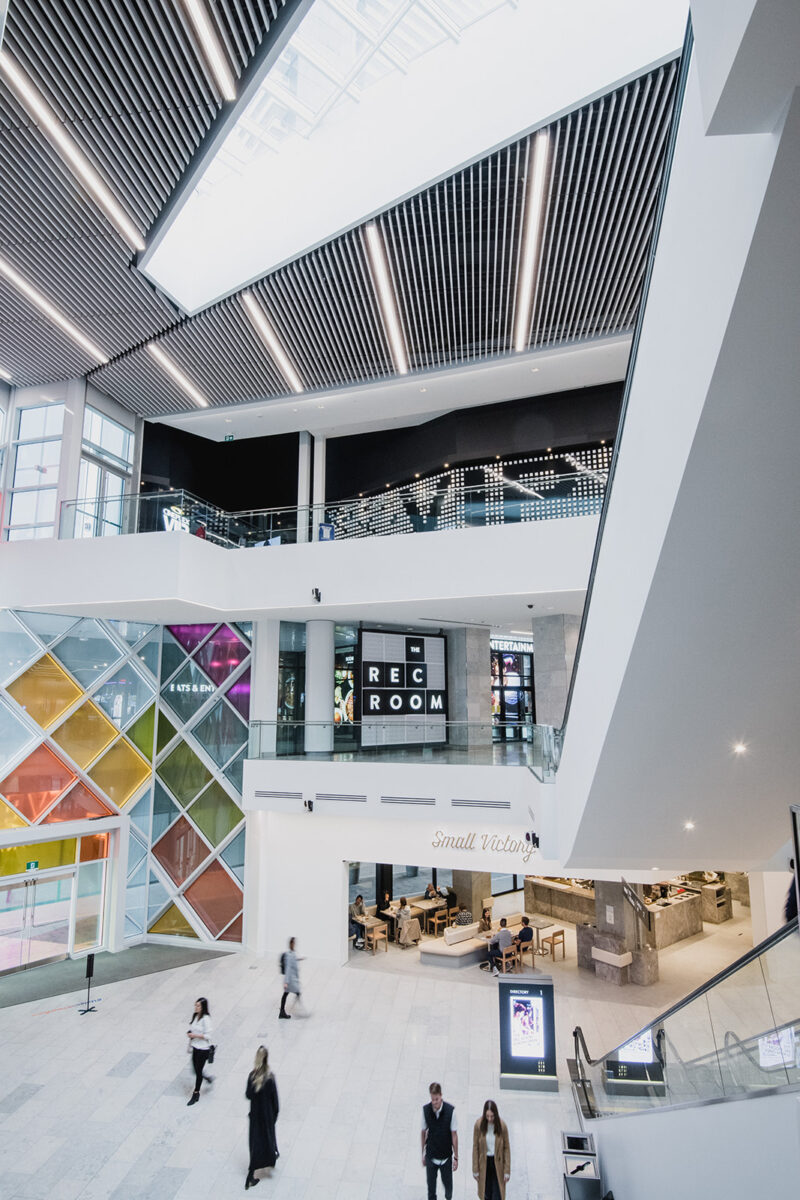
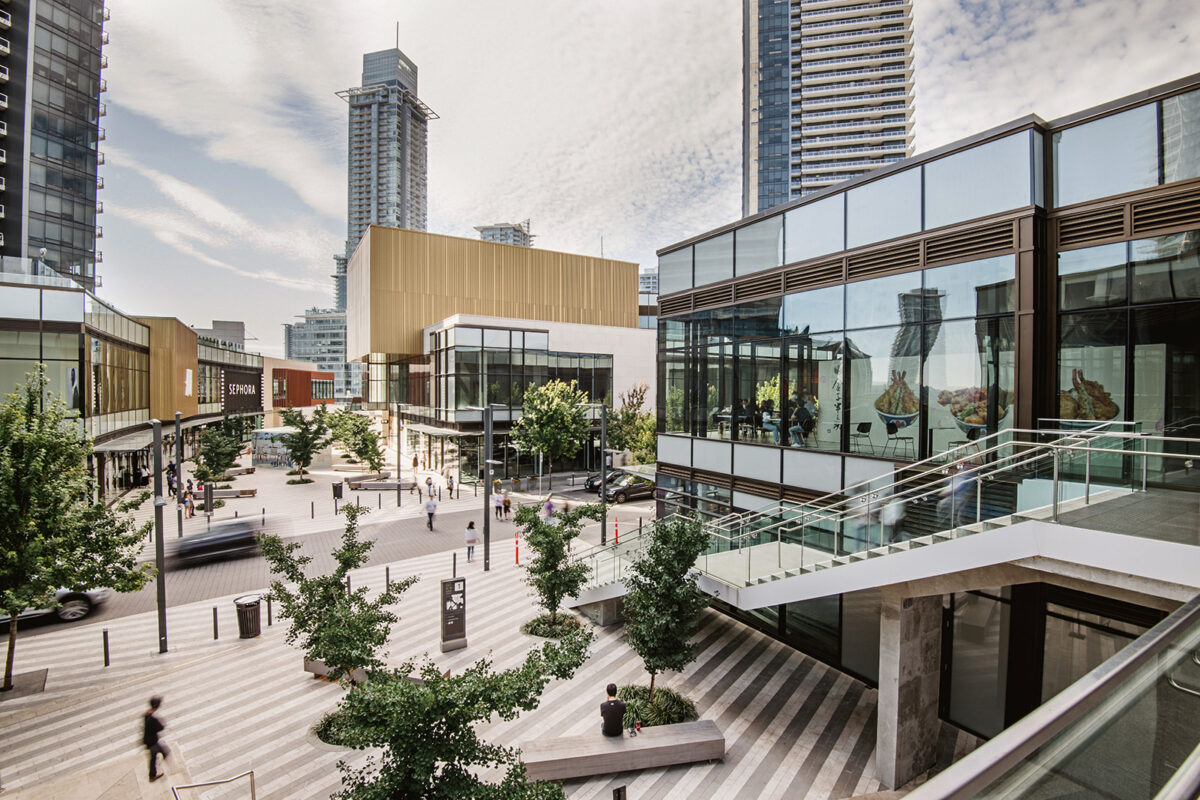
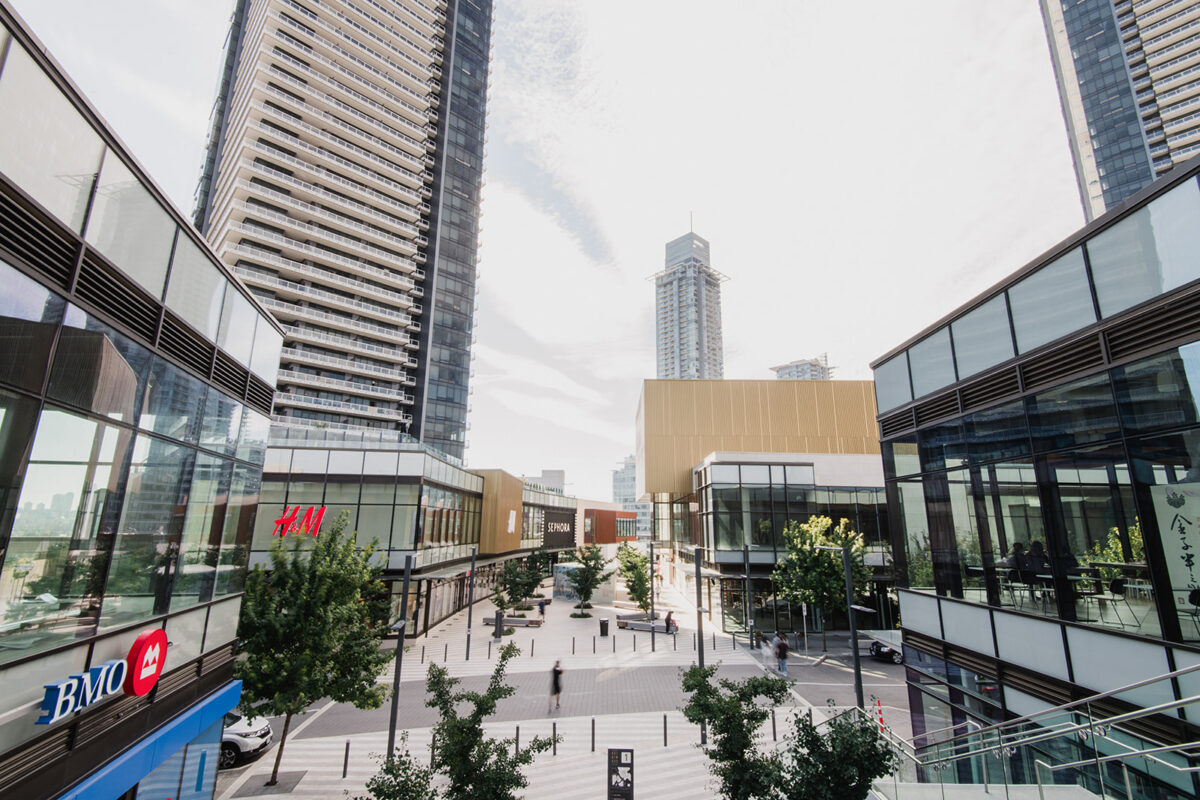
The Amazing Brentwood, a co-venture by Shape Properties, Healthcare of Ontario Pension Plan and L Catterton Real Estate, continues to develop into a one-of-a-kind urban gathering place, reflecting the vibe of Metro Vancouver’s global community, creating a diverse and compelling retail tenant mix.
When the project is complete, it will comprise just over one million square feet of retail as well as several residential towers and thousands of new homes in Burnaby’s Brentwood neighbourhood. It is one of British Columbia’s largest, master-planned, mixed-used developments featuring world-class shops, restaurants, public plazas, entertainment.
Maria Holly
“What was important for our retail mix was to make the offering unique,” said Maria Holly, Senior Vice President, Retail for Shape. “We do have a very large shopping centre five kilometres east of us, Metrotown, 1.7 million square feet.
“What we need to do here is curate something unique and also that would fit into our master plan with our residential development. We did some carefully curated mix of first-to-market retailers and those included Sporting Life. They opened in 2019. They’re 44,000 square feet. Still the only Sporting Life in BC. LL Bean opened at 12,000 square feet and still the only one in BC. Suitsupply out of Amsterdam is under construction fast and furious and they’re opening in August in about 6,000 square feet and it will be the only one in Metro Vancouver.
“We did a large H&M, 30,000 square feet. They put in an H&M Home component of 7,000 square feet. And it is also the only one in Metro Vancouver. We did the first Rec Room in BC. It is 44,000 square feet and right now the sales ranking for Rec Room amongst the other Rec Rooms across Canada this is the number two Rec Room, the first one being downtown Toronto.”
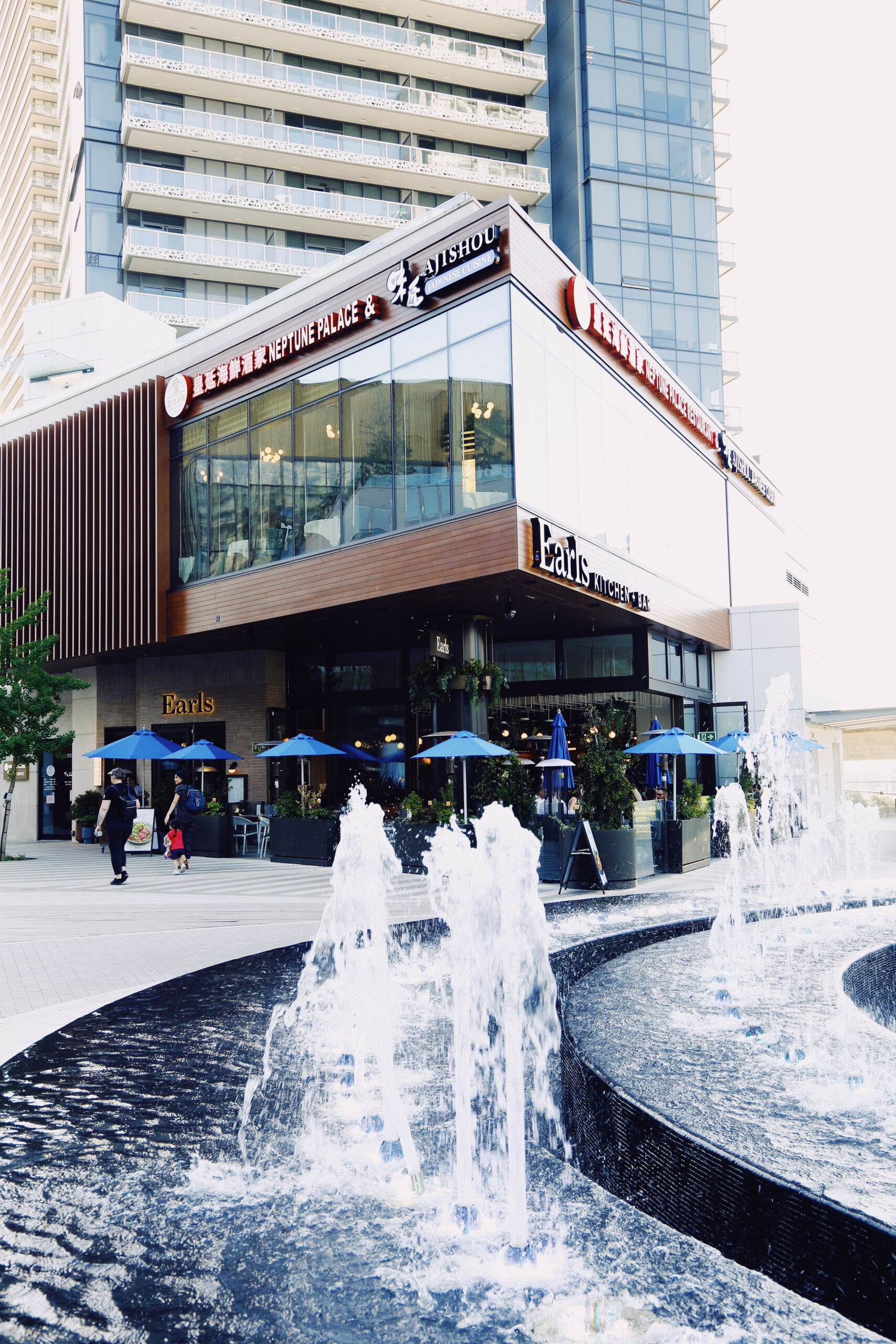
The Amazing Brentwood (Image: Shape Properties)The Amazing Brentwood (Image: Shape Properties)TABLES at The Amazing Brentwood (Image: Shape Properties)
Holly said first-to-market concepts include Evolve Strength Fitness out of Alberta which is under construction and opening in the fall in 21,000 square feet.
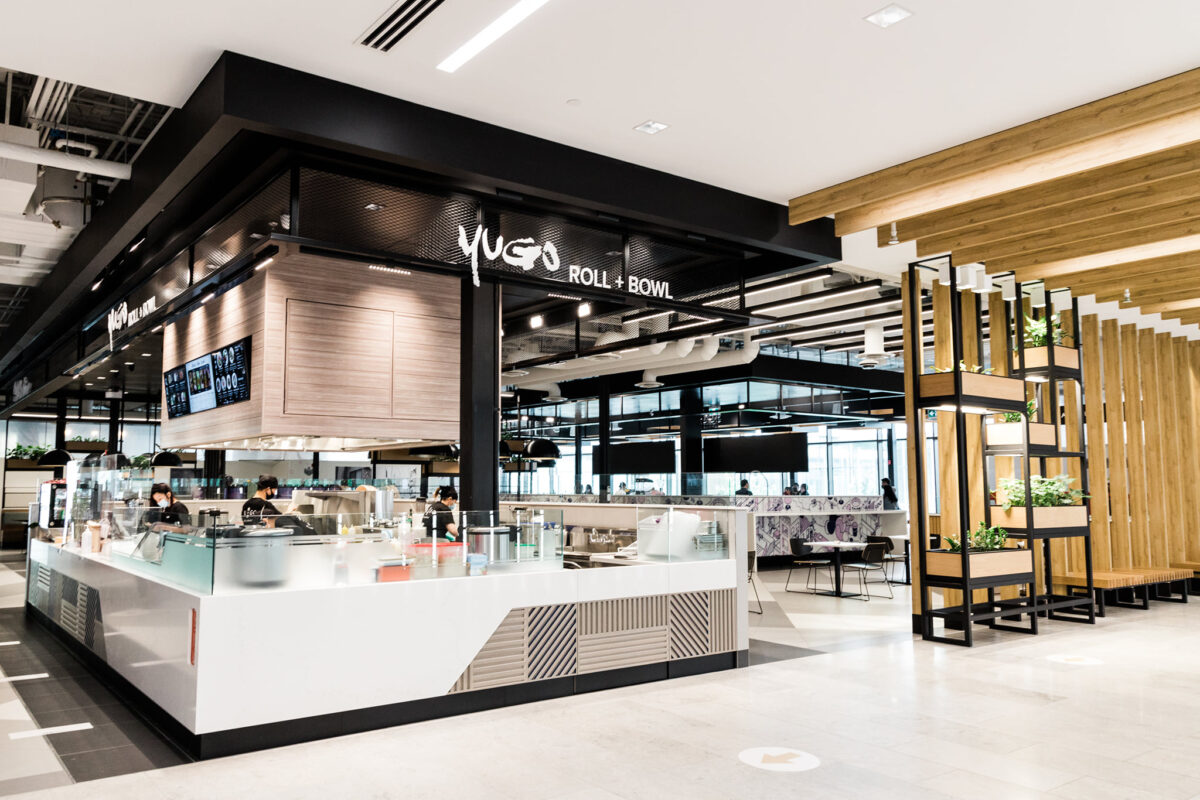
“And then we did a very large food court. It’s beautiful. It’s called TABLES. The acronym of The Amazing Brentwood is TAB and we use that in a lot of our marketing materials. So TABLES is a play on words with TAB and The Amazing Brentwood and it’s 30,000 square feet, it’s got 19 food vendors and they’re all unique, chef-driven, first-to-market offerings.”
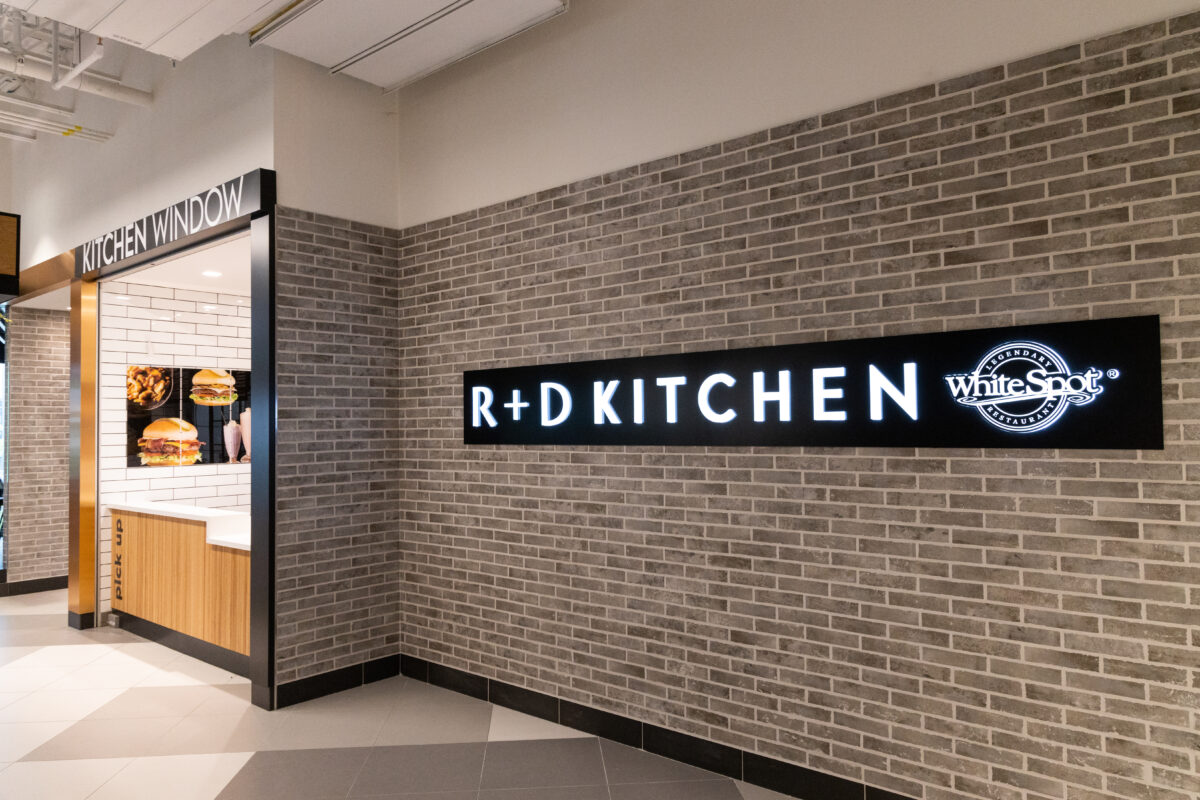
The project did a deal with Whitespot restaurant as part of TABLES where it launched its first-to-market R&D Kitchen in about 4,000 square feet.
Anchor tenants include a VIP Cineplex of 22,000 square feet (the top one in the chain) and a number of restaurants such as Earls, Neptune Seafood Palace, La Taqueria, and Jinya Ramen Bar.
Under construction is a three-level, 10,000-square-foot Tap & Barrel restaurant and bar as well as Bow & Stern, a seafood restaurant. Also under construction is Hello Nori, hand rolled Japanese sushi.
There are also a few coffee shops.
R+D Kitchen by Whitespot at The Amazing Brentwood (Image: Shape Properties)The Amazing Brentwood (Image: Shape Properties)
“It’s really become known in Metro Vancouver as an entertainment and food and beverage destination with kind of a dynamic public space,” said Holly, adding there’s a one-acre outdoor plaza and the Glass House, a two-level structure where pop-up retail exists.
“We just signed Rivian. It’s the Tesla of SUVs and pickup trucks, out of California. Super cool. They’re doing a longer pop-up than we normally do. They’re doing their renovation right now and they’re opening July 1 in 5,500 square feet.”
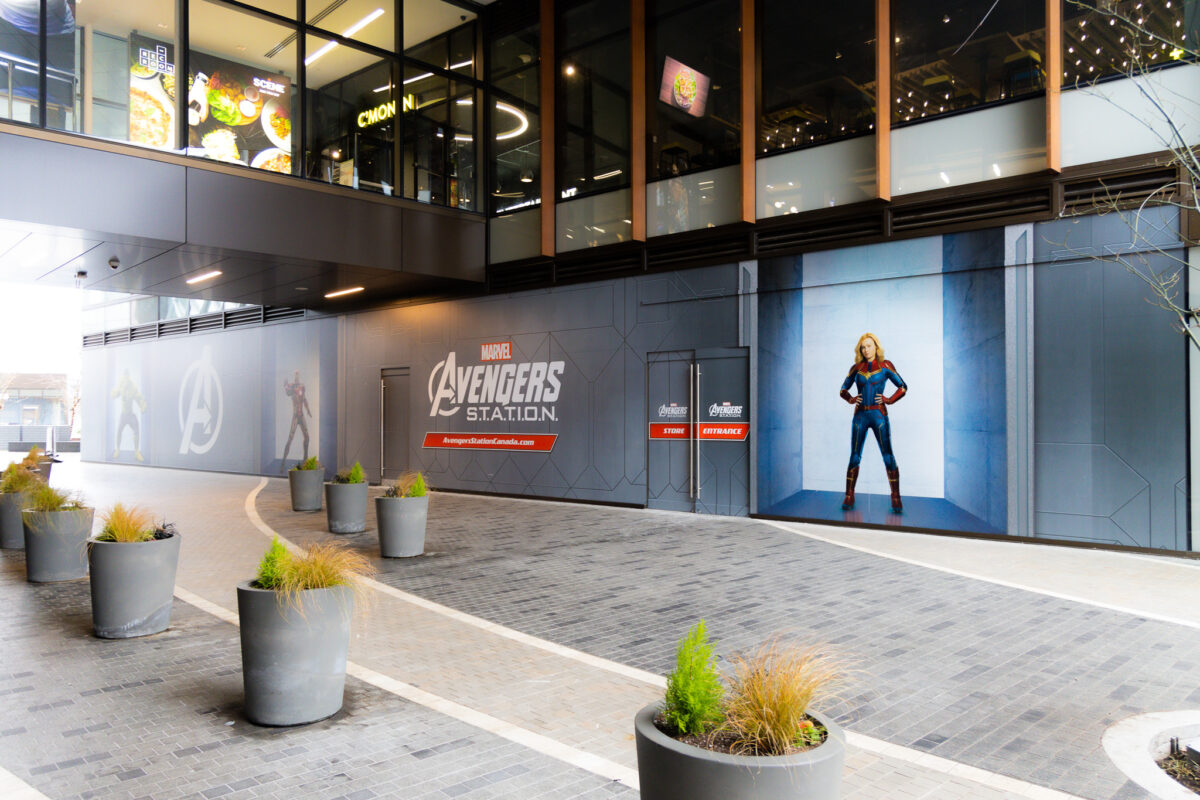
Marvel Avengers S.T.A.T.I.O.N also opened in 25,000 square feet as a pop-up until the end of September.
Athleisure does well in the market and The Amazing Brentwood offers well-known brands such as Nike and adidas.
“We only have about 8,000 square feet of vacancy but it’s the best CRU space in Neighbourhood One because it’s right along Brentwood Boulevard. And we’d like to do athleisure or unique branded fashion there,” said Holly.
The Avengers Station at The Amazing Brentwood (Image: Shape Properties)
The first phase of the project is now complete and the second phase is currently under construction.
“The next phase which is really the interior mall redevelopment in the development pipeline,” said Holly.
Shape purchased the existing shopping centre on the site along with HOOP in 2008.
“And the reason that they bought the Brentwood Town Centre site which was a 450,000-square-foot neighbourhood shopping centre originally anchored by Eaton’s and Loblaws way back in the day was connected to Sky Train and was identified by the City of Burnaby as a town centre,” said Holly.
“So it came along with a bunch of density. Up to 8.5 million square feet we could build on our 28-acre site. The former existing mall on two levels was surrounded by surface parking. Pretty standard for shopping centres built in the 60s.
“So what we have completed now is we’ve taken the surface parking in front of the existing mall and that’s where Neighbourhood One sits. And Neighbourhood One consists of, and is open, three very large residential towers. The tallest tower is 62 storeys so it rivals the height of some of the towers in downtown Vancouver. That’s a total of 1,700 units that are open and fully occupied.”
The Amazing Brentwood (Image: Shape Properties)
The Amazing Brentwood (Image: Shape Properties)
The Amazing Brentwood (Image: Shape Properties)
About 450,000 square feet of commercial/retail real estate was built with about 75,000 square feet of office that is leased. Holly said Neighbourhood One retail is about 95 per cent leased with about 90 retail tenants.
“But we are 61 per cent open. So we’re still in the opening phase,” she said.
The second phase which is Neighbourhood Two is in the ground right now. It will include two luxury residential towers. Tower Five sold out at $1,350 a square foot. Tower Six is even more than that and is almost sold out.
Holly said there will be an additional 60,000 square feet of retail as part of Neighbourhood Two. The phase will be completed in 2027.
“We are looking for retail that is unique. Retail that is also something that our residents will enjoy. At the end of our build out of our master plan we’ll have 11,000 people living just on our site,” she said. “It’s a lot of people.
“Through L Catterton, we have had a window into their brands and their relationships with some of the luxury players but at this point in time it would be a future phase. We don’t have that plan fully developed at this point in time. We’re focusing on the success of the residential demand and that’s why phase two or Neighbourhood Two is another two very big residential towers. Another 1,000 units.”
Retail Insider is streamlining its Canadian retail news from around the web to include a handful of top news stories that can be viewed quickly during the day. Here are the top stories from the past several days.
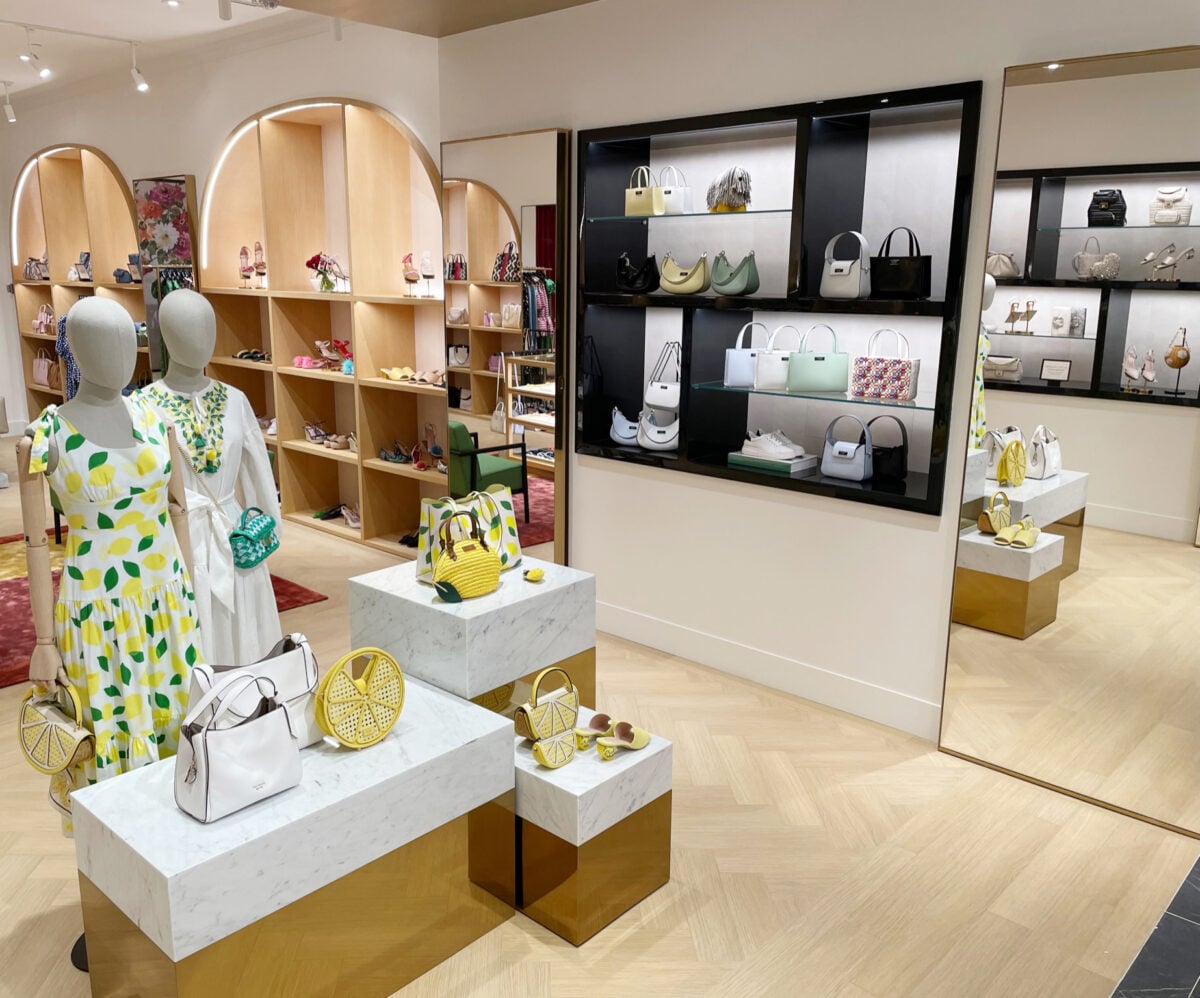
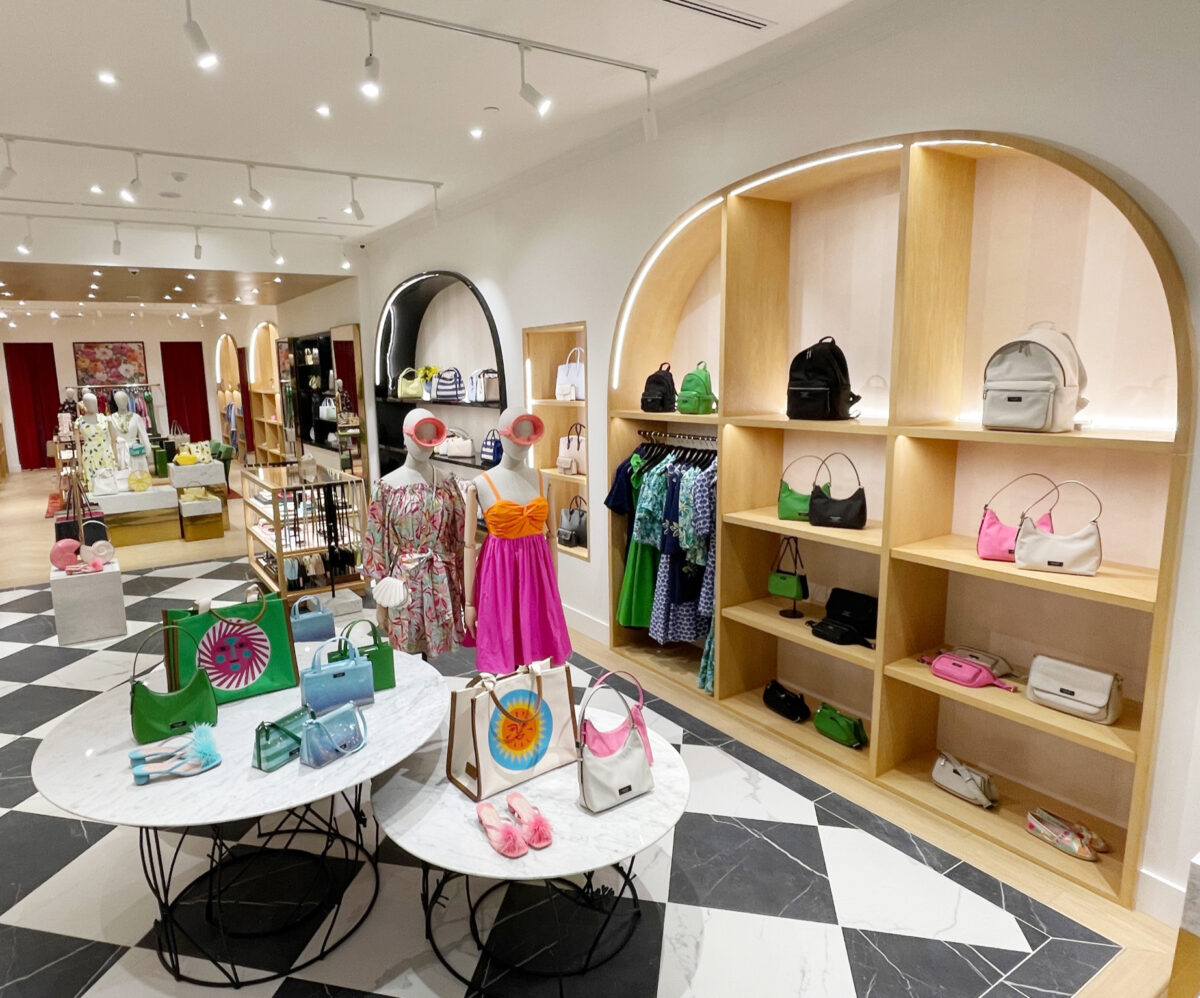
New York City-based brand Kate Spade has opened a new concept store at West Edmonton Mall in Edmonton. The store replaces a previous location in the mall and is the first in Canada to showcase Kate Spade’s new store design.
The store recently relocated to the second floor of Phase 2 of West Edmonton Mall in a 2,020 square foot retail space formerly housing a Samsung store. The new Kate Spade houses a range of the brand’s handbags, small leather goods, accessories, jewellery, watches, tech accessories, sunglasses and fragrances.
Liz Fraser
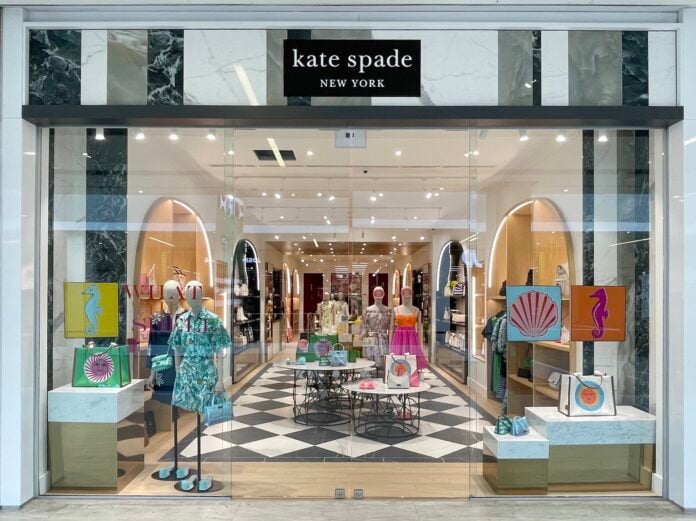
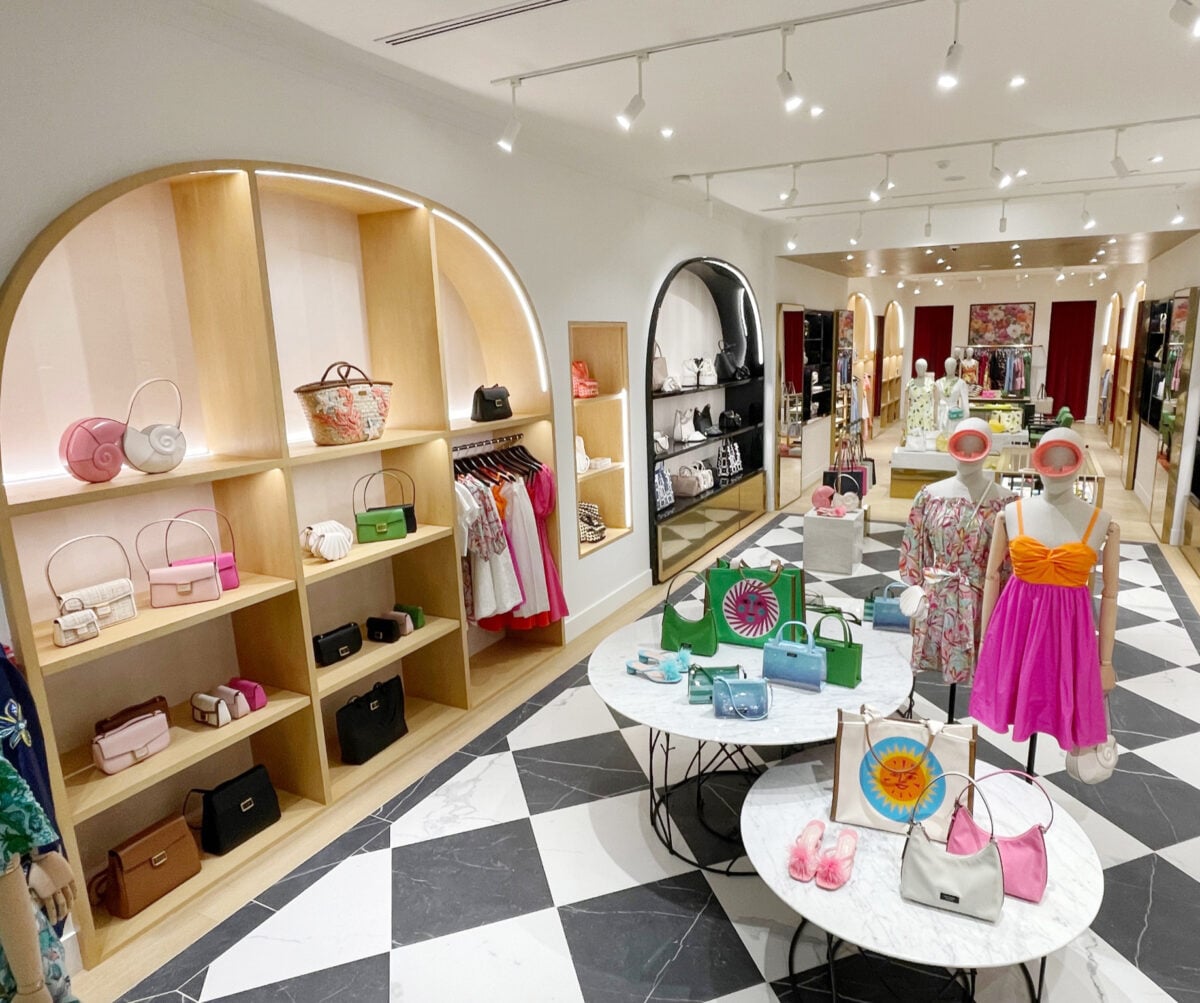
The store’s interior is said to be inspired by elements of both uptown and downtown New York City. Design elements include wood tones, wall coverings and gold accents that complement the brand’s colour palette of green, black and cream, with touches of pink and red found throughout. Kate Spade said in a press release that the store has a “residential feel” that is “ layered in through eclectic decor, rich fabrics and monumental artwork”, resembling an apartment in New York City. The store’s facade features green and marble stripes.
“Welcoming with warmth is a core value at kate spade. When customers walk into the store, we want them to feel that they are walking into a uniquely Kate Spade world. One that is both colorful and conceptual, clever, and crafted, curated and rooted in the culture of the community that surrounds it,” said Liz Fraser, CEO and Brand President at Kate Spade New York, in a statement. “Designed to evoke the feeling of a great escape, the newly designed retail locations offer both comfort and possibility, inviting customers to feel instantly transported, while still feeling right at home.”
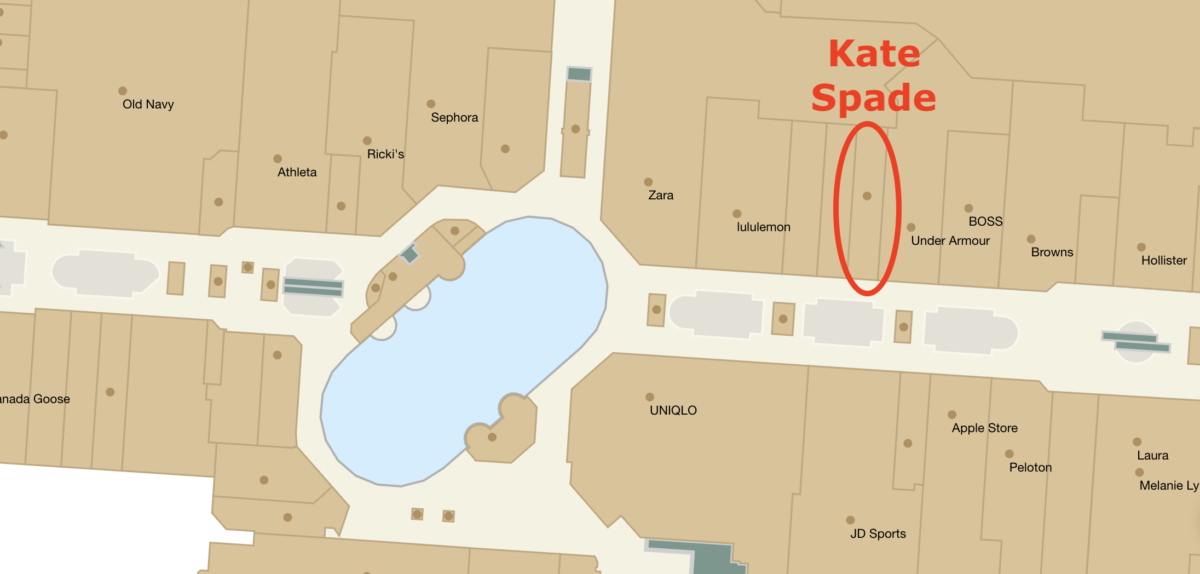
Click image for interactive mall map Kate Spade West Edmonton Mall. Photo supplied
West Edmonton Mall’s former Kate Spade store was the third in Canada when it opened in the spring of 2014. The store was previously located in the mall’s luxury corridor near Tiffany & Co., Balenciaga, Louis Vuitton, Gucci and Saint Laurent. The mall’s Kate Spade and neighbouring Lacoste stores were recently relocated for a new international luxury brand that will be entering the Edmonton market and will occupy both spaces.
Kate Spade now has 20 stores in Canada including in major shopping centres and at several outlet malls. Locations include:
Greater Toronto Area/Ontario:
-Yorkdale Shopping Centre (first in Canada)
-CF Toronto Eaton Centre
-CF Sherway Gardens
-Square One
-Toronto Premium Outlets
-Vaughan Mills
-Outlet Collection at Niagara
Vancouver/Lower Mainland:
-CF Pacific Centre
-Metropolis at Metrotown
-Park Royal
-McArthurGlen outlets
-Tsawwassen Mills
Montreal:
-Premium Outlets Montreal
Edmonton:
-West Edmonton Mall
-Edmonton Premium Outlets
Calgary:
-CF Chinook Centre
-Crossiron Mills
Ottawa:
-CF Rideau Centre
-Tanger Outlets
Winnipeg:
-Outlet Collection Winnipeg
Kate Spade West Edmonton Mall. Photo suppliedKate Spade West Edmonton Mall. Photo supplied
Kate Spade’s first Canadian store opened at Toronto’s Yorkdale Shopping Centre in November of 2012. A second location opened at 138 Cumberland Street in Toronto’s Yorkville area in May of 2013. That Yorkville store closed in the summer of 2021 and was replaced by Montreal-based footwear and fashion brand La Canadienne.
The Kate Spade brand was founded by Katherine and Andy Spade in 1993. The company began its Canadian distribution through Holt Renfrew when the brand sold just handbags. The brand has stores and wholesale distribution globally. Kate Spade was acquired by Tapestry Inc. in 2017.
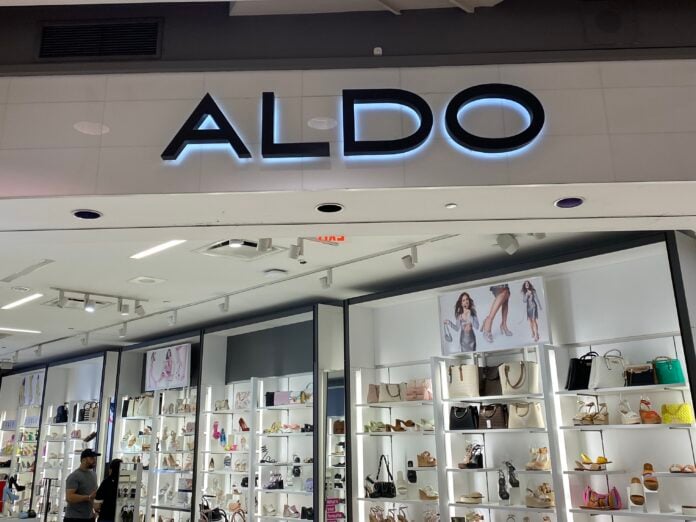
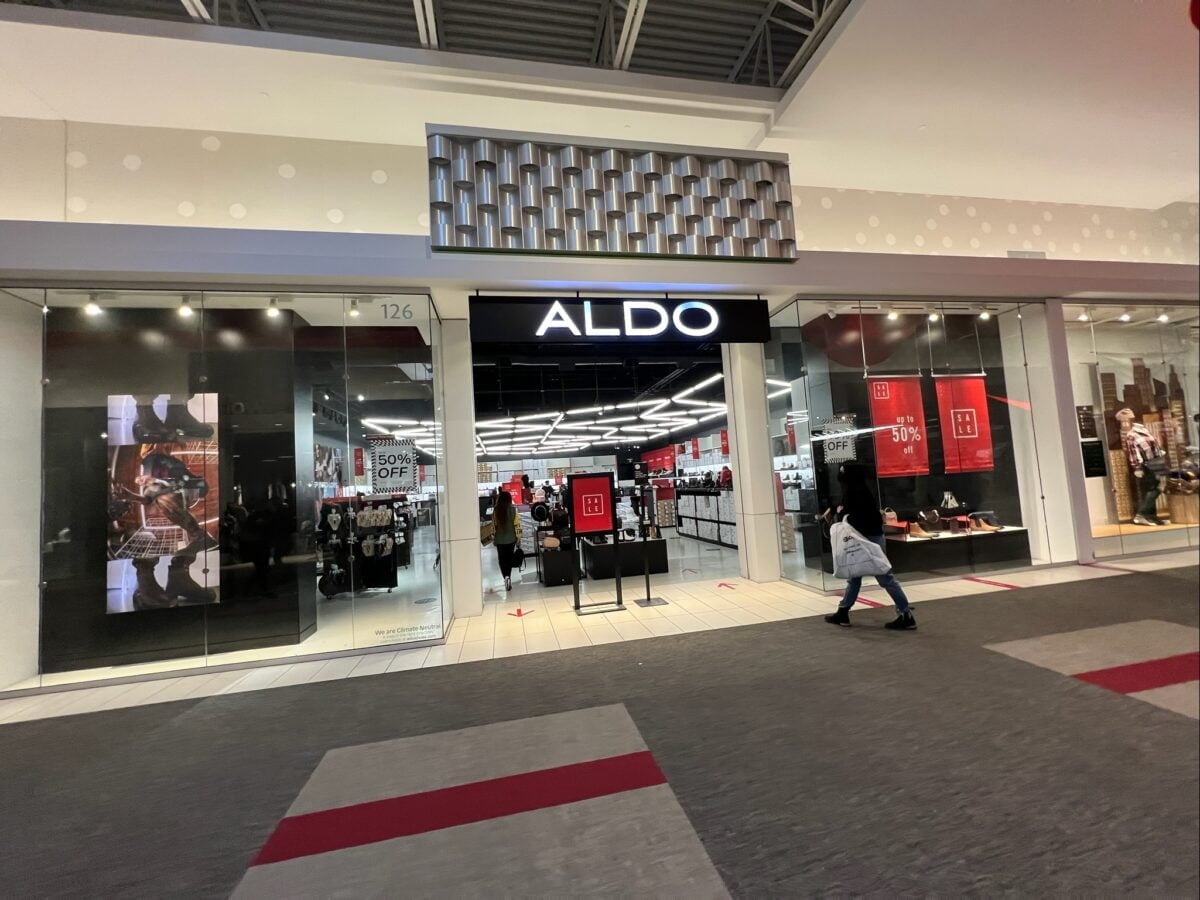
ALDO at CF Toronto Eaton Centre (Image: Dustin Fuhs)
After going through a painful restructuring process just over a year ago, global footwear brand ALDO, based in Montreal, is poised for growth.
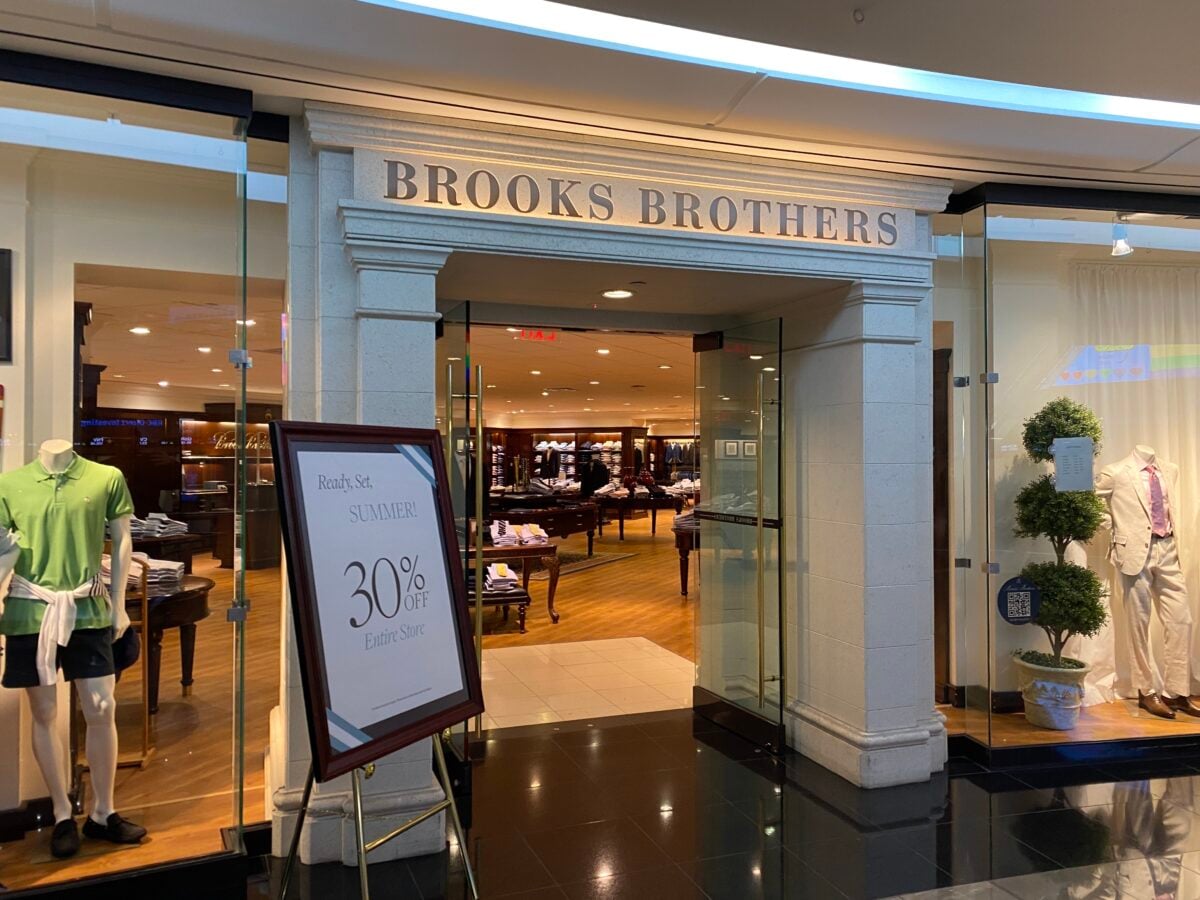
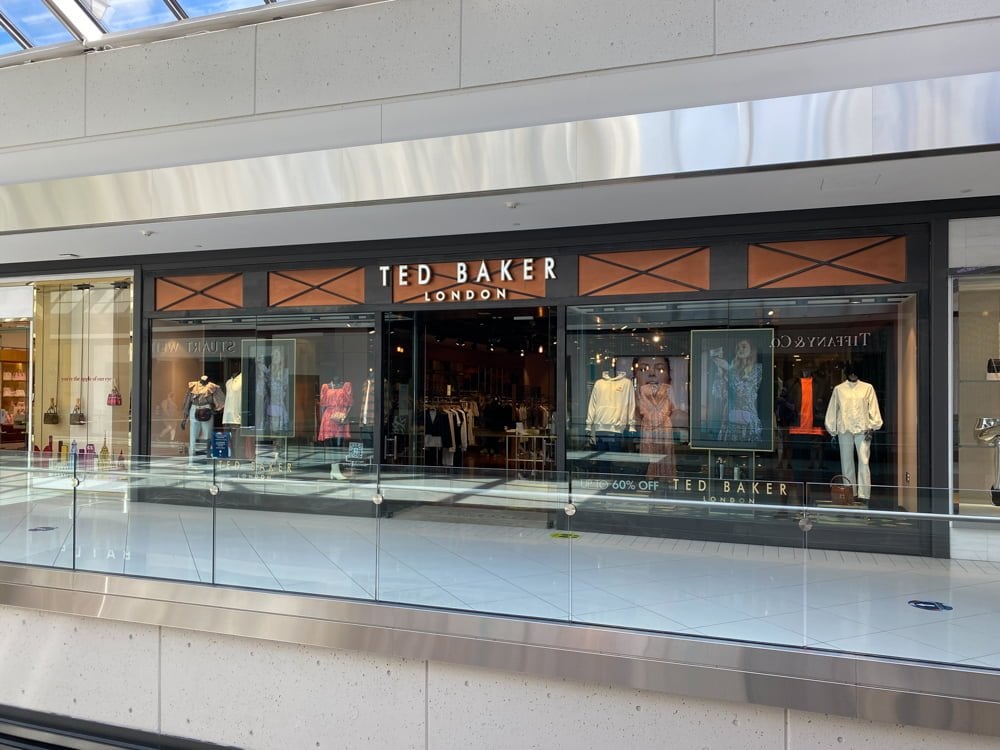
Recently, the retailer signed an exclusive licensing deal with retailers Ted Baker and Brooks Brothers.
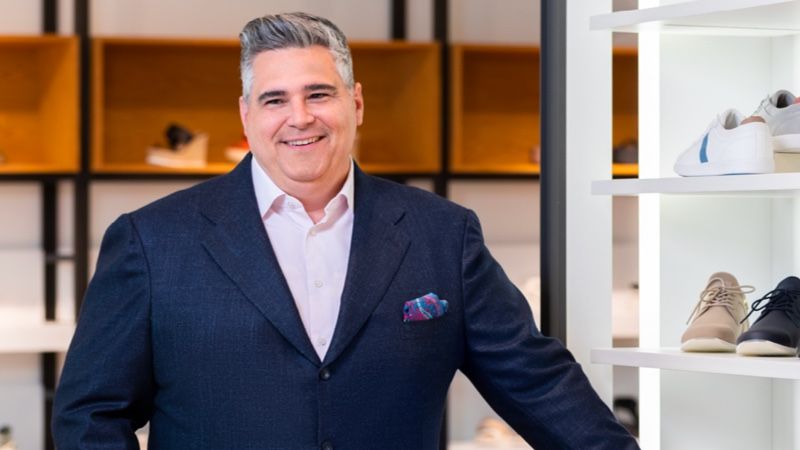
“We’re focused on growth and we’re really excited by being able to grow our wholesale divisions because we already have a very strong retail presence,” said David Bensadoun, CEO of ALDO. “Our goal is to make our business a little bit more diversified.
“These were really nice opportunities because both Ted Baker and Brooks Brothers are exactly the kind of shoes that we’re great at designing and sourcing. We have a very strong sourcing office. We have very strong product development and design teams. This was a chance to leverage those strengths and build some new revenue in the company that was not dependent on store footprint.
“In the case of the new licenses we have with Brooks Brothers and Ted Baker, we will be the exclusive wholesaler and distributor for North America. Most of our effort will be around opening up wholesale count but we’ll also be selling a line of footwear and bags to the Ted Baker and Brooks Brothers stores.”
David Bensadoun
Bensadoun said ALDO is currently in negotiations with two other brands which will be a similar arrangement but he can’t announce that just yet.
When looking to associate with different brands, he said the first thing ALDO looks at is the strength of that brand and if it has plenty of market potential.
“The second is that we have the skill set to do a great job with that brand. For example, in the case of Ted Baker and Brooks Brothers, we’ve always been very strong in men’s fashion footwear and we always have loved the premium end of the spectrum. ALDO is positioned a little bit more mid-price. So Ted Baker and Brooks Brothers are a chance for us to be a little more premium and do some design and some materials we often are not able to do with ALDO,” he said.
“The other thing we look for is that we have sourcing ability. In other words we have the right factory and the right material suppliers to be able to do a great job on the license. For example, we wouldn’t be very low price, very value oriented footwear because we don’t have that kind of sourcing and we also wouldn’t be good at doing ultra high end like designer brand level.”
Brooks Brothers at Royal Bank Plaza (Image: Dustin Fuhs) Ted Baker in North End of Level 3 at CF Rideau Centre (Photo: Dustin Fuhs)
Currently ALDO has 441 corporately owned stores and 1,200 franchise stores. There are 201 corporate stores in Canada and 240 in the US. The franchise stores are in 110 countries.
“We’re focused on growth now. As you know, we went through restructuring during COVID. We did everything we needed to do. We’re really happy with the company we have now and now we’re focused on growth,” said Bensadoun.
“So our growth is going to be one-third is going to come from wholesale, one-third is going to come from new franchise countries or franchise growth, and one-third will come from our store sales, our retail base.
“Retail is a completely different world than 2020. I think Canada is in great shape. We’re seeing really steady demand and it’s really exciting to see the interest the consumer has in fashion again. Internationally, we’re doing really well. We’re very, very happy with the growth. The US is a bit quieter this year but last year it was great. I think we’ve got to see how the US situation will evolve. The consumer there is clearly not as confident as they were last year. The non-stop talk about recession is not helping. Inflation is not helping. But we are selling a mid-price product so we benefit a little bit during economic downturns because people are still needing to replace parts of their wardrobe and so they will sometimes come and discover a mid-price brand and maybe in the past they might have been shopping at the higher end.”
Aldo at Tsawwassen Mills in Delta, BC (Photo: Lee Rivett)
Like many other retailers, Bensadoun said wages have increased substantially for the company in the last three years and it’s not as easy to find people as it used to be.
Adjusting the hours of operation in malls for example would be a positive move for the industry to help retailers be more efficient, freeing up some cash to pay rent or to be able to reduce retail prices.
The COVID pandemic pushed the retailer to seek creditor protection in 2020.
Through that restructuring process, it closed 267 stores and laid off more than 200 people.
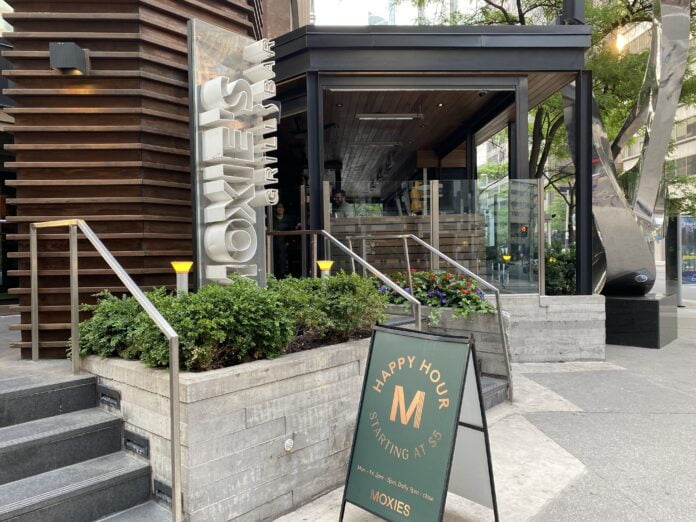
Moxie's on Wellington at University Avenue in Toronto (Image: Dustin Fuhs)
If there’s one sector that deserves some good news, it’s the restaurant industry. This sector has been through hell due to the pandemic, putting our restaurateurs and their employees to the test. However, recently published reports indicate that the restaurant industry is making a strong comeback.
According to a report from Circana, the restaurant industry continued its robust recovery in the first quarter of 2023. Restaurant visits increased by 11%, and spending rose by 18% during the quarter ending in March, compared to the same period last year. This is great news considering the evidently painful challenges this sector has faced in recent years. Since March 2020, despite higher prices, consumers appear to be visiting restaurants more often.
According to the Circana report, the increase in visits to food services at different times of the day can be attributed to changing behaviours, such as the gradual return of people to workplaces and engaging in formal or informal routines outside the home. Breakfast and morning snack periods experienced significant growth, with morning meal demand up by 13%, representing the largest share of daily traffic. Lunch and dinner visits also saw a growth of 10%, while afternoon snack demand increased by 8% compared to the same quarter last year. All very encouraging metrics for the sector.
In summary, full-service restaurants showed the highest growth in traffic, with a remarkable gain of 24%. However, quick-service establishments still dominated with a 67% share of all food service visits, showing a 9% increase during the quarter. Full-service establishments accounted for 22% of the total visits. The remaining share of traffic represents retail dining, including prepared foods in convenience stores and grocery stores, which experienced a 5% decline compared to the previous year.
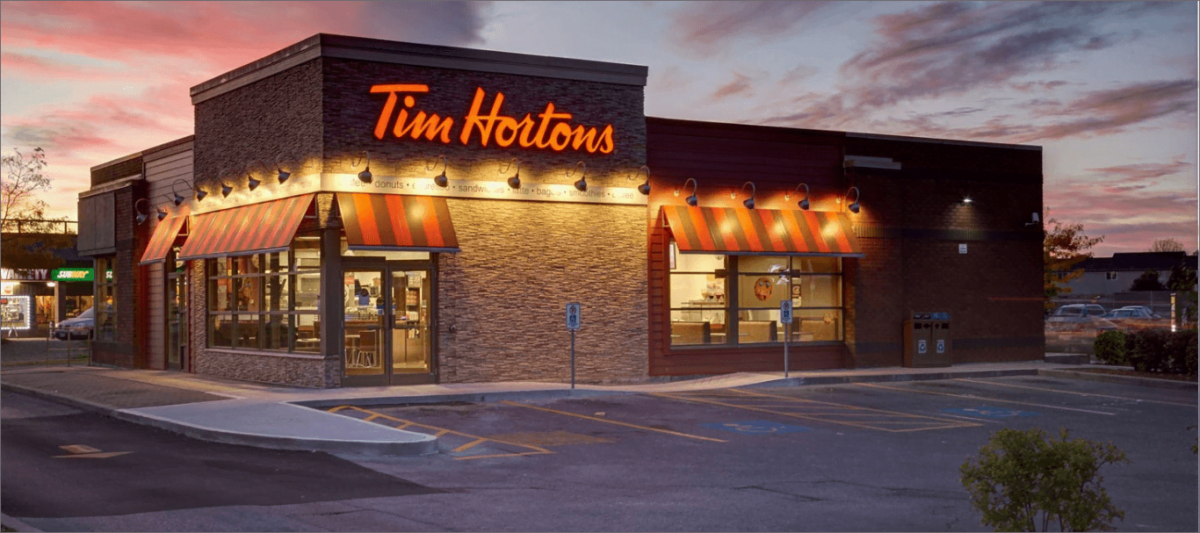
Image: Tim Hortons
No surprise here. The latest results from McDonald’s and Restaurant Brands International, the parent company of Tim Hortons and Popeyes, for example, indicate that the fast-food sector is doing better. This may not be desirable for some, but at least people are going out.
And the good news doesn’t stop there. Statistics Canada also added its two cents last week by mentioning that even though retail food sales have been declining for some time due to persistent food inflation, the percentage of food service in relation to total food sales seems to have returned to its pre-pandemic level for the first time. Before the pandemic, the percentage stood at 39%. According to Statistics Canada’s data, the percentage in the first quarter reached 39% again, a 4% increase from a year ago. In other words, when it comes to dining out, consumers are returning to their pre-pandemic habits.
The restaurant industry remains one of the most important sectors in our economy. If the restaurant industry thrives, so will retail. Restaurants are the ultimate lure for the retail business, enticing people to go out. But according to Statistics Canada, we also observed that the sector generated as much revenue as in the first quarter of 2019—the last complete pre-pandemic first quarter—but with approximately 100,000 fewer employees in the sector, including accommodation sites.
In short, the data from the restaurant industry is reassuring. Everything indicates that consumers may be going out to forget their despair at the grocery store. Perhaps it’s the “might as well” syndrome that drives people to go out, despite wallets still being intimidated by inflation.
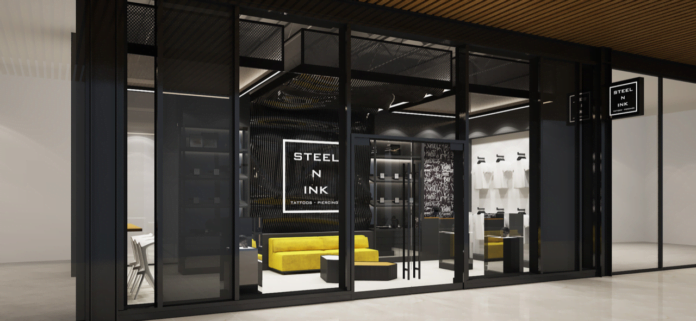
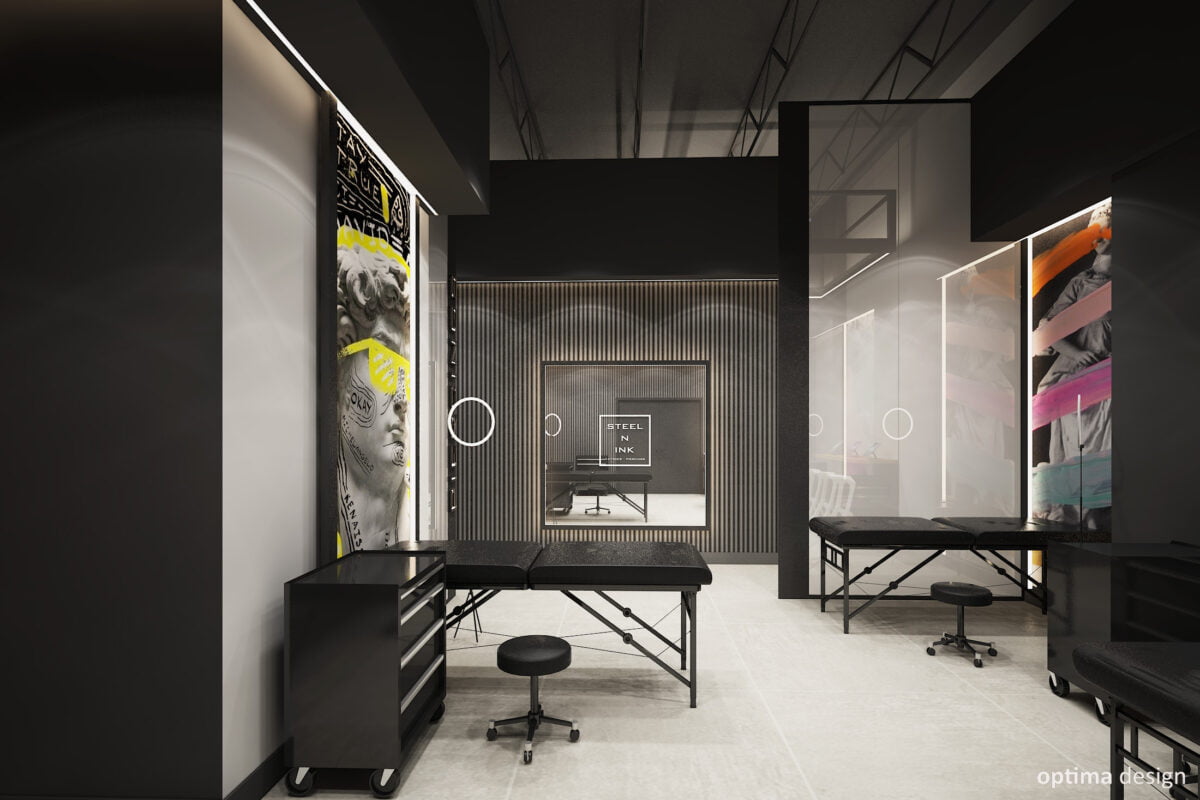
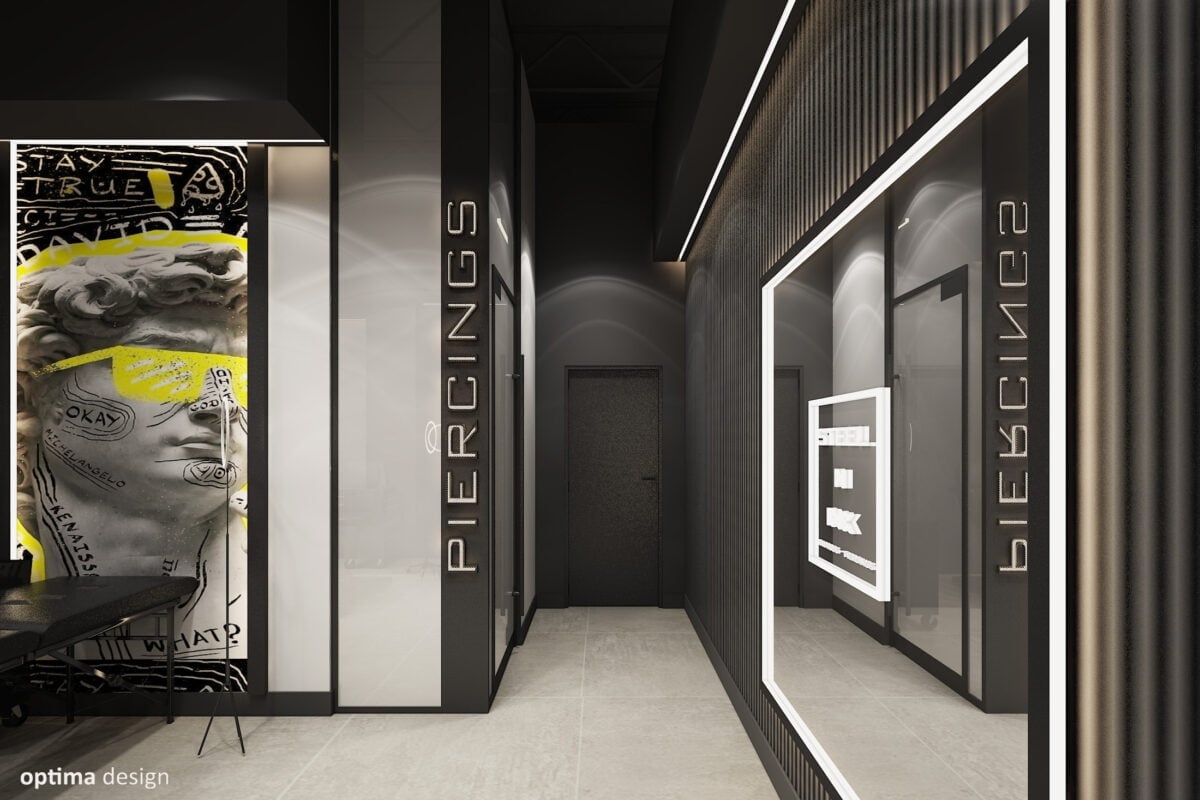
Steel N Ink at The Well (Rendering: Optima design)
The unique Steel N Ink, upscale tattoo and body piercing studio with body art and body jewelry, is opening three more new locations before the end of this year.
Jamie Randolph, President of the company, said the locations include CF Rideau Centre in Ottawa; The Well in downtown Toronto; and Winnipeg at Kildonan Place.
The company currently has 12 locations open with the most recent one opening in Midtown Toronto on Eglinton West at the end of April.
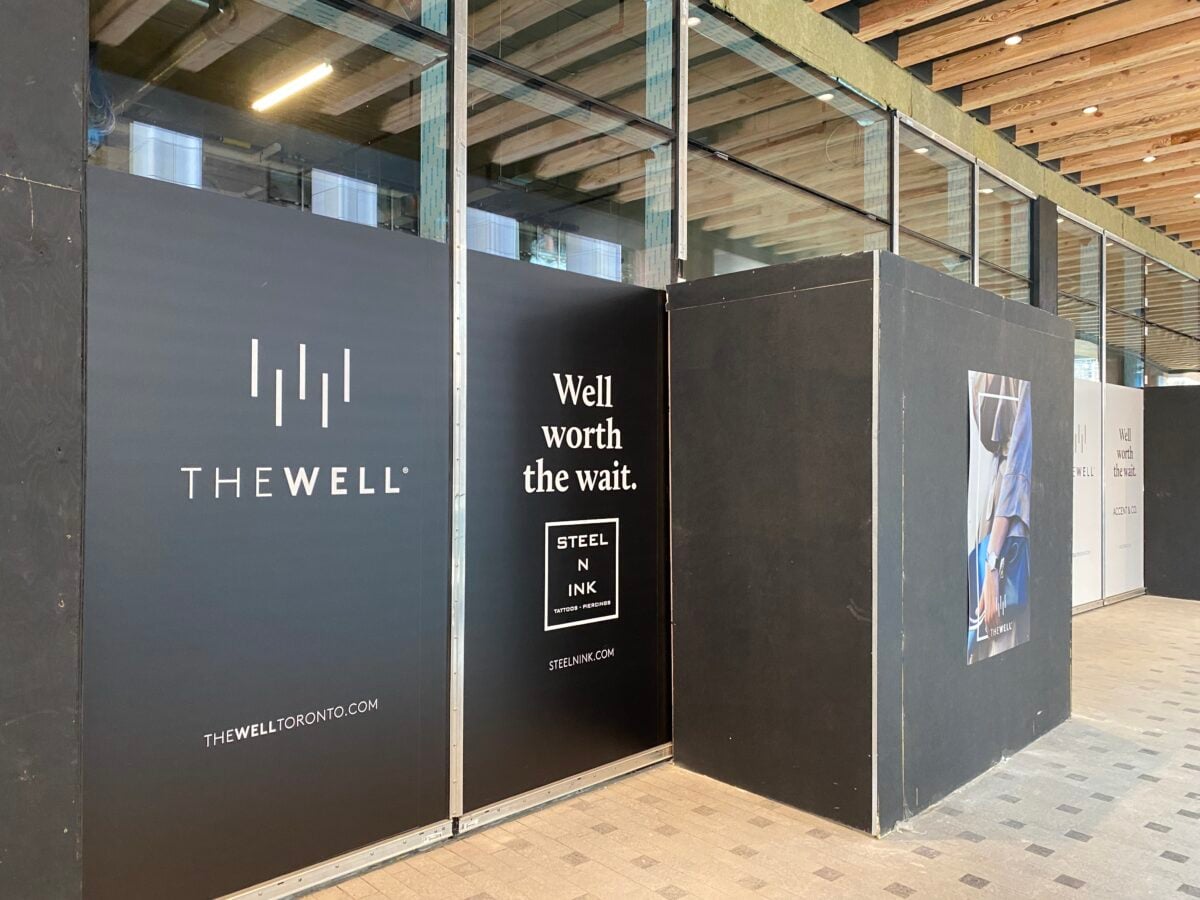
Steel N Ink at The Well (Image: Dustin Fuhs)
The Ottawa location should be open in the first week of August with The Well anticipated to open in September and the company’s second Winnipeg location to open in late September or early October.
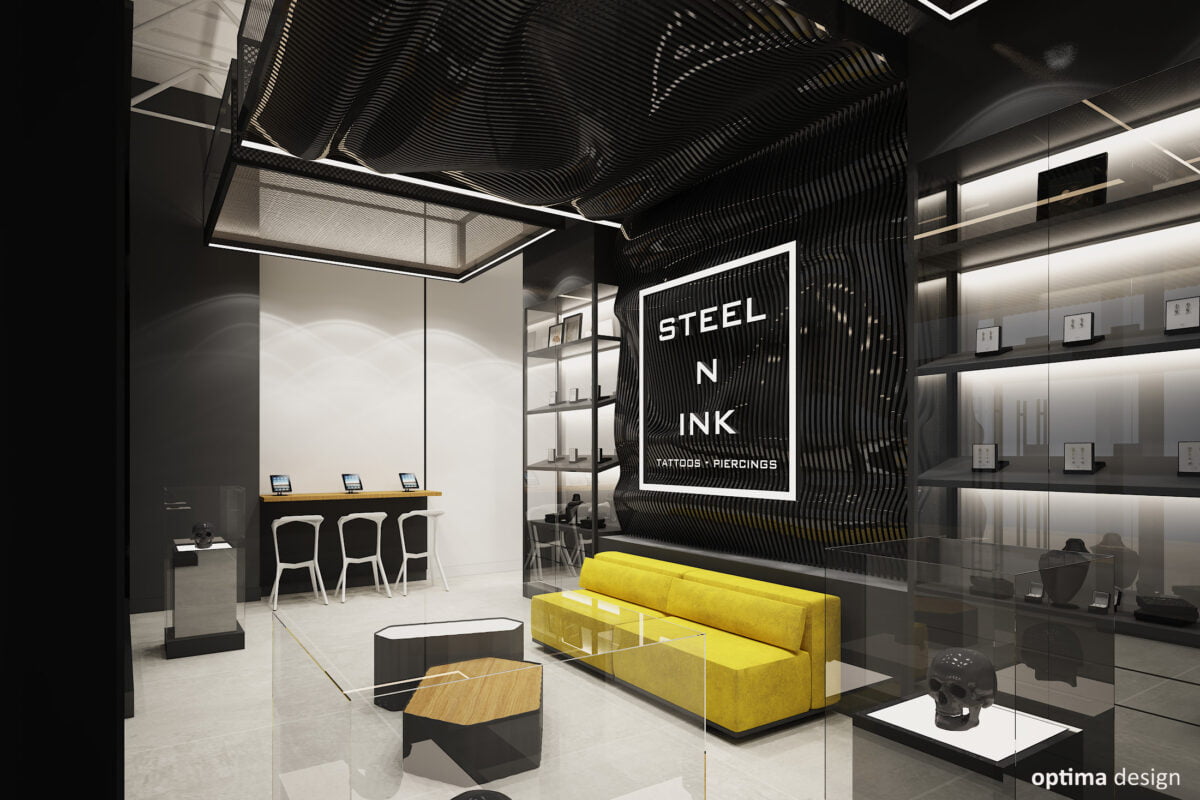
“We have a new concept of our studio that we’re doing at The Well. It’s just a little bit more lounge style. It’s also a downtown neighbourhood and we wanted to give it a better feel for clients to be more comfortable through the whole process – a place where they can come and hang out, ask questions, speak with the artists. There’s a big couch in the entry way. Just more of a place you can hang out and kind of discuss ideas with the artists,” he said.
The average store is about 1,200 square feet.
“We’re looking for high traffic locations. We’ve done well in enclosed shopping centres recently. With Midtown we went away from that. We went to a street style location but it’s also footfall for us. We just need high traffic locations,” said Randolph.
“We’re already the leader in our field as far as our industry goes. So we’re going to take it as far as we can. Right now we’re exploring opportunities in the western provinces as well as the Maritimes. And there’s nothing like us even in the States so I think we’re going to start looking to the U.S. in 2025 and beyond.”
Steel N Ink at The Well (Rendering: Optima design)Steel N Ink at The Well (Rendering: Optima design)
Randolph said the brand resonates with consumers because it brings an upscale studio to these high profile locations that wouldn’t normally be exposed to the tattoo and piercing industry.
“And we’re professional operators. We have the clients in mind whenever we open stores. We want to give them the best experience possible. And we want them to be comfortable. We want them to walk into our stores with a very inviting environment, open to everyone. We want anyone to come in and ask any question that’s on their minds. There’s no judgment in our studios,” he said.
The success of the brand today is beyond Randolph’s expectations.
“We had to fight tooth and nail to get into our first mall. We were told no about a dozen times. I was persistent. We just kept trying. A lot of locations that never would have looked at us that I had asked prior and that we were refused are calling us now,” he said.
Randolph said the industry used to be low brow but now it’s just an extension of the beauty industry.
Steel N Ink at The Well (Rendering: Optima design)
Steel N Ink business began years ago when he took a summer job with a family friend in Sauble Beach, near Owen Sound, Ontario.
“When I was 17 years old I went to Sauble Beach to work as a summer job. It’s a seasonal beach town. I went to work for a family friend. He owned a body piercing and T-shirt store and I worked there and then I bought it in 2005 and made it a tattoo studio as well,” said Randolph in a previous Retail Insider story.
The first location opened in Sauble Beach in 2005.
“I started in Sauble Beach and everyone always said to me who would get a tattoo on vacation. You know it’s just people. When you have a large crowd of people you have traffic. It’s very inviting. People come in and everyone’s thinking of doing a tattoo but a lot of people don’t go out of their way to get it done and other studios kind of make it hard to book in and they’re in certain parts of towns,” he said.
“We are to the masses. We’re in a great spot in Sauble Beach. Now people who wouldn’t typically walk into a tattoo shop come see us. Seeing that, we went to Collingwood which is also a tourist place and then at Barrie across the street from the mall because they wouldn’t allow me in the mall at the time. Then we went to the Fallsview Casino in Niagara Falls and that was tremendous for us.
“Then I said we’ve got to go into malls and everything got started from there.”
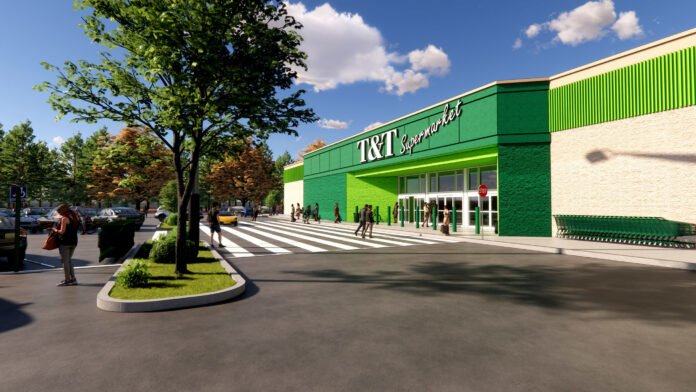
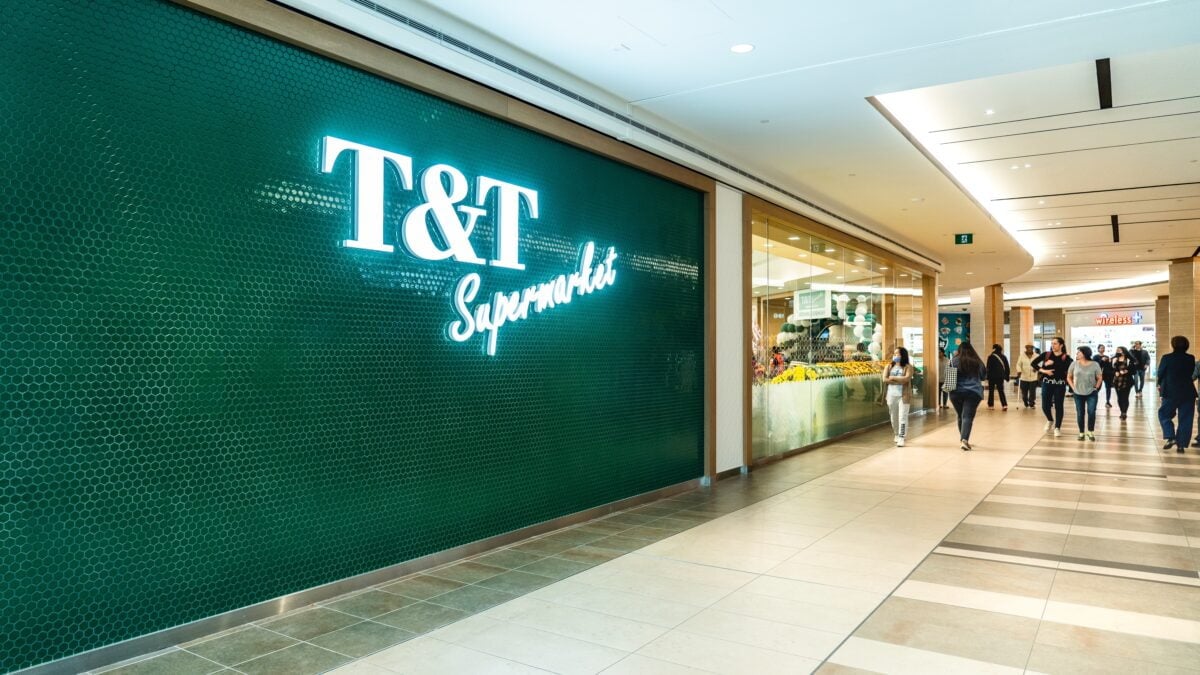
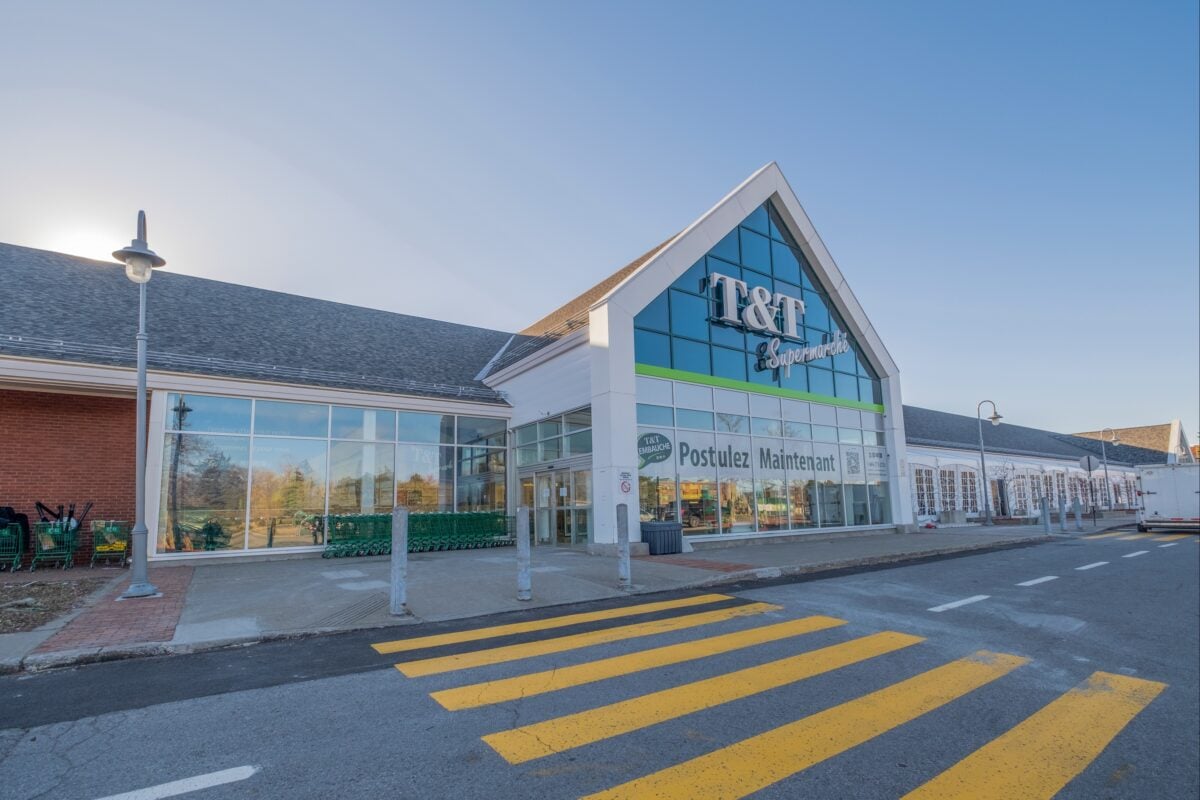
T&T Supermarkets coming to Marketplace at Factoria, Summer 2024 (CNW Group/T&T Supermarkets)
T&T Supermarkets, Canada’s leading Asian grocery chain with more than 30 stores, will open its first U.S. store in the Greater Seattle Area in Washington.
The flagship store will be 76,000 square feet and the largest Asian supermarket in the State when it opens in the summer of 2024 in Bellevue, Washington in the Marketplace at Factoria.
“We know the love for T&T transcends borders. It’s not unusual to see U.S. license plates in the parking lots of our British Columbia stores, with hundreds of customers regularly making the drive for our food,” said Tina Lee, CEO of T&T Supermarkets.
“After 30 successful years in Canada, we couldn’t be more excited to bring our unique offering closer to home for customers in the United States.”
“We can see the demand happening in Richmond, BC. In Richmond, not far from the border, on every American long weekend, we have a lot of Americans driving up three hours to shop our three stores in Richmond. One time we did a count and it was one in every 10 cars in our parking lot had Washington plates. And our cashiers can tell from the different credit cards that we had a lot of cross border shoppers and the feedback we were getting from customers ‘can you please open a store in Seattle?’
“Obviously we hope to serve them well in Vancouver but they can’t even shop the entire store. They love the experience but they can’t bring fruits and vegetables and meats back across the border. But they have a very good experience despite not being able to enjoy the whole value proposition that T&T presents. So after many years of this we thought it was very fitting that in our 30th year of doing business that we would try to step out into Seattle and we found a great location that was very hard to pass in Bellevue, Washington with a great developer in Kimco and decided to go for it.”
Lee said the door is open now to more stores in the US.
“At the moment, we’re very excited about getting our first store right. I find a lot of similarities to the new store that we opened in Montreal. If we do the first store well, yes certainly we’re open to exploring other locations as well but for the moment we’re very focused and excited about this single one,” said Lee.
Lee said no other new stores are planned for this year.
“Within this year we will be announcing our store plans for next year,” she said.
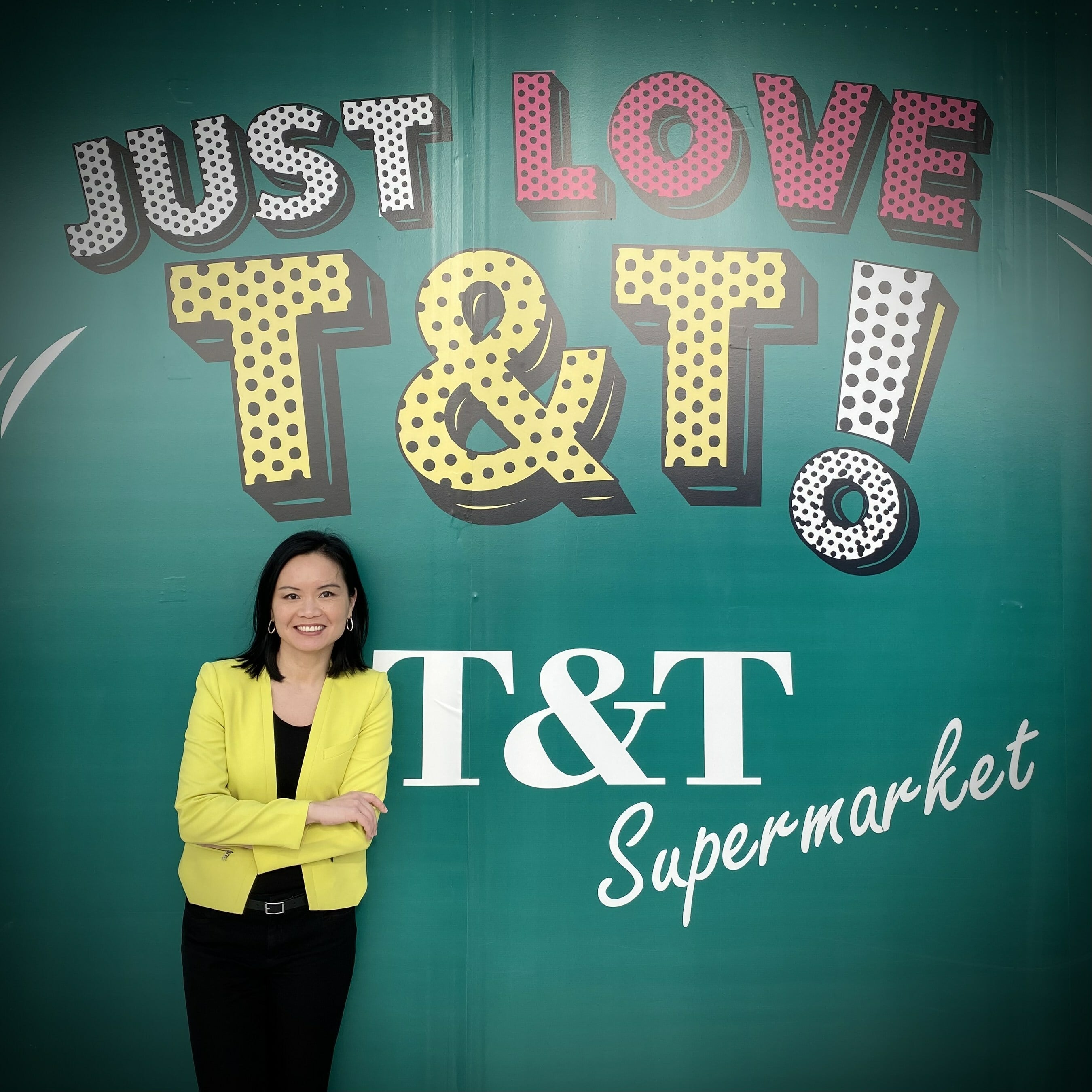
Tina Lee, CEO of T&T Supermarkets (CNW Group/T&T Supermarkets)
Filled with the Asian cuisine the stores have become famous for, the new location will feature a sushi counter, hot food bar, noodle station and in-store kitchen and bakery for freshly prepared delicacies like steam buns and pork belly bao, as well as Asian pastries and cakes. The store will also be home to more than 300 of T&T’s private label products, including customer favourites like green onion pancake, Korean kalbi marinade, juicy pork dumplings and seaweed snacks, said the supermarket company.
Headquartered in Richmond, BC, T&T Supermarkets is the largest Asian supermarket chain in Canada, operating stores in British Columbia, Alberta, Ontario and Quebec. The stores feature an expansive variety of fresh produce, meat, seafood, Asian packaged goods, trendy kitchenware and gifts, as well as in-store kitchens and bakeries. T&T Supermarkets was founded in Vancouver in 1993. In 2009, T&T Supermarkets was acquired by Loblaw Companies Limited.
“T&T’s anchor tenancy at Marketplace at Factoria begins an exciting chapter for the property, which includes new residential, retail, and dining experiences,” said Carmen Decker, President of Kimco Realty’s Western Region. “We search the globe for best-in-class retailers to elevate the shopping experience within our centers and are excited to welcome such an iconic Canadian brand to our retail collection.”
At the beginning of June, T&T opened its latest location in Canada – a 37,000-square-foot supermarket in Coquitlam, BC, and its second store in the city.
T&T Supermarket at CF Fairview Mall (Image: Cadillac Fairview)
The new store at 1085 Woolridge Street is located next to Ikea, visible to commuters from the Trans-Canada highway. The store is expected to have a regional draw, well positioned to serve the growing communities of Coquitlam, Lougheed, Burquitlam, Simon Fraser University, and New Westminster.
“When we opened our first location in Coquitlam 23 years ago, no one could understand why – the Asian community at the time was much smaller than it is today,” said Lee.
“But what we found was that the fresh food and assortment of flavours we offer appealed to a much wider, more diverse crowd and the store was a total success. As the community continues to grow, we’ve felt the love for T&T grow along with it. That’s why we’re so pleased to be opening a second, even bigger location to better serve the needs of the community and complement our original Coquitlam Centre location.”
T&T Supermarket Montreal (Image: T&T Supermarket)
And in May, the company opened at CF Fairview Mall in Toronto in 36,000 square feet. The supermarket opened in the former Sears space where an informal Asian food hall area has been created with other food service establishments.
Recently, it also announced it will be opening a new store in London, Ontario. The company confirmed the store, which is expected to open in Summer of 2024, is located at 530 Oxford St W, the southeast corner of Oxford St W and Wonderland Rd. At 39,000 square feet, it will be the largest Asian supermarket in town.
Industry veteran John Torella discusses great department stores around the world and what makes them popular, as well as the future of the store concept and why it has died in North America. J.C. Williams Group’s Lisa Hutcheson also chimes in.
John Torella is a Senior Advisor with J.C. Williams Group and Lisa Hutchison is the Managing Partner and Strategist at the consultancy.
A transcript of the conversation can be found below.
If you prefer to listen to the audio version, it is available below:
The Interview Series audio podcasts by Retail Insider Canada are available on Apple Podcasts, Stitcher, TuneIn, Google Play, or through our dedicated RSS feed for Overcast and other podcast players. Also check out our The Weekly audio podcast where Craig and Lee discuss popular content published on Retail Insider which is part of the The Retail Insider Podcast Network.
Craig Patterson Welcome to the Retail Insider video series. I’m your host, Craig Patterson. And we’re joined here today with two special guests, John Torella. He’s a senior advisor at the J.C. Williams group in Toronto and is a specialist in both marketing and branding. And we’re joined here again, of course with Lisa Hutchenson as well. She’s managing partner and strategist at J.C. Williams group. Welcome both of you.
John Torella Thanks for having us. Thanks. Great.
Craig Patterson This video interview was sponsored by Salesforce. Salesforce just recently held its Tableau conference in Las Vegas and launched some new products around AI. For more information, visit salesforce.com.
And we’re going to have a conversation here today, something that I’m very interested in and something that we’ve been discussing for a little while here on the Retail Insider video series, as well as in articles, we’re talking about department stores. This is something which we’ve seen, I guess, almost, I don’t want to say die in North America, but pretty close to it. While at the same time we’ve seen department stores thrive in places like Asia and Europe, under different business models that are a bit more exciting. So I wanted to talk to some people here at J.C. Williams group. And you know, John, you’ve done some traveling, you’ve got to see some really interesting department stores. But we’re gonna first talk a little bit about the past and some of the challenges that we’ve seen there. So, in Canada, we’ve had stores in the past department stores, Eaton’s, Simpsons, Woodward’s, Morgan’s, Sears, and Kmart. Those are all gone. Actually, I think the only one we have left as terms being a traditional department store is the Hudson’s Bay department stores. So let’s talk a little bit about the past and maybe some mistakes that were made with these department stores.
John Torella Well, you know, I come from a kind of unique perspective, because I spent a number of years as the CMO at Eaton’s and Craig, I got really a deep understanding of the culture of department stores. So here was this Canadian 100 year old department store, you know, cities, suburban, rural locations. Its own call center, own delivery. junior executives, from schools, all over the country, you know, a hostel where young women could stay for a while as they got into their jobs. You know, they had their own brands, Etonias Viking, that were leaders in their class. And so I tried to think about what was it that were really inherent strengths? And I think, fundamentally, was this concept of good, satisfactory or money refunded and, you know, we all heard the myths of people buying stuff using it, sending back. But, you know, from cradle to grave, they satisfied a whole bunch of needs built on this trust go. That was a cornerstone. The other thing they had was just a deep sense of the country, and Canada. And, you know, John David would make a point of, you know, we need to be true to our roots. So, a lot of really deep strengths. Absolutely. So when I think back well, what, what were the weaknesses? What were the barriers, what eventually led them to their demise? And I’ve thought a lot about it. And it seems to me that fundamentally, at least, Craig it was, they just lost sight of the customer. And they tied tended to generalize about the customer. And I can remember many meetings talking about all the customers so price conscious, you know, I was service and so on. But the thing that we really realized ultimately is the customer is not one thing. And if you didn’t recognize those segments of differentiation, you are in trouble. So that was certainly one issue. And second was they really didn’t make the investment in technology. They didn’t see you know the digital revolution that was coming and attended all we’ll be putting on the back burner. Another big issue and I think finally It was just a an old fashioned out of date leadership style, command and control my way or the highway merchant Prince, all of that kind of stuff. And the young people that were coming into the company, they didn’t buy that. So there was really little appreciation by diversity, little compassion, you know, no respect for certain groups. So I think ultimately, all of those things kind of mushroomed into just out of touch.
Lisa Hutcheson Yeah. And I would agree, particularly from, you know, sort of the past, there was this real sense of community where some of these brands, and were there role within each of the communities, you know, some of them were in Toronto, some of them were more focused out west, and smaller communities. So but then to your point is, I think that evolution is what we still see happening today, brands that don’t brands concepts that don’t pivot, adapt, listen to where the customer is, they, they fizzle out, and they become irrelevant. And I think that’s, you know, sort of what we keep seeing happening over and over again,
Craig Patterson And also a lack of investment, I remember before Eaton’s had shut down in the late 1990s, you could just sort of feel this almost slow death, it didn’t seem like there was a lot happening with the stores. They weren’t that exciting. And also, another thing I recall, is in the 1970s, and 80s. And even before I was born, Retailers, like Eaton’s has a decent selection of actually higher end designers. And this is something that we saw, I think after the recession of the early 1990s, it seemed like all the stores lost those as well. And I think that created a bit of a lack of excitement. I think on top of that, in terms of the positioning of the stores.
John Torella We’ve got to learn from the past, if we’re going to really address the future. And so that’s kind of switched to the future. And we love to take a global perspective, we’re part of a global Ebeltoft group. And so we always think, where do we start? Well, let’s start in London. And let’s talk about Selfridges. And let’s talk about Harrods. And I just absolutely adored going to Harrods and the food hall and you went in there. And that was an experience like no other. And this love of food and the diversity of the food and the ceremony of the food and, and the staff. That was it was you could spend an afternoon there and just love it. So that was always our first tour. And then Selfridges. And in my humble opinion, if I had to pick one department store, the future would be Selfridges. And why? Because they have this incredible sense of the contemporary customer. They’re just one step ahead. You know, whether it was cosmetics or fashion or their windows, or events or activities or advertising or publicity, they were always leading that customer was always a place to go and learn and go.
Lisa Hutcheson Yeah, I would certainly speak to both of those but Selfridges even just you know, some of the experiential elements we’ve seen them do. They were highlighted in our book a few years ago, from an experiential point of view with the fragrances you know, some really exciting things and I think that that’s a really important element today for department stores is to create that sense of experience and drive drawing the customer.
John Torella I remember going into the kitchen area, and they have a they have a, they had a table and the heading was the Italian Sunday snack. And here was this table set up with food on it. Pasta and the Ravioli and the desert and the Antipasto and they they went to that degree to involve the customer and to excite all of your senses so it wasn’t just a plate and a glass it was filled with wine you could see it I loved it.
Craig Patterson I said these stores look nice as well that’s I think one thing that’s important is that they’ve got you know interiors that are at least a bit upscale interesting. There’s there’s visuals right?
John Torella Yeah, merchandise presentation. Huge departments and you know, they had a taste level and a coordination and in a way of presenting style and fashion that was untouchable. So on to the city in my opinion that best demonstrates the department store that future, Guess who? Paris! Paris? Galleries Lafayette, I mean, on and on and on. And I had the opportunity to spend a week there at Christmas this year. And it reinvigorated my belief that there is a role for this department store if you step up to it and boy, those stores, they were done. The display outside, lighting, the graphics, the people, there was just a buzz. When you went into those stores. You felt special I mean you were greeted, you were treated with respect and humanity that was just so untraditional Retail. So, Paris.
Lisa Hutcheson Having a view of the Eiffel Tower is is not a bad thing either from an experiential point of view and really drawing upon that.
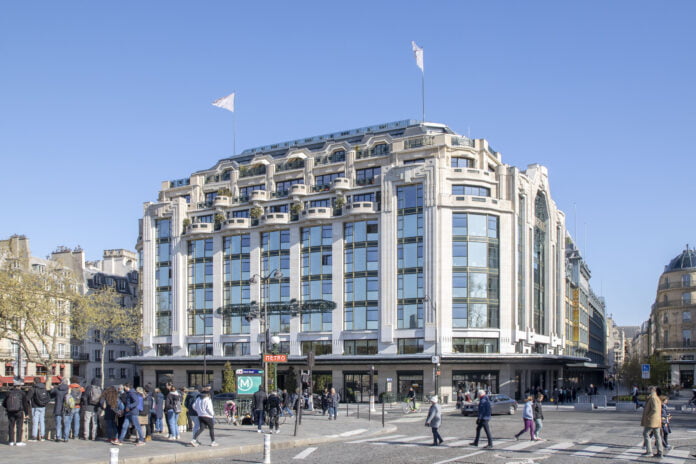
Craig Patterson I agree Paris has some amazing stores. Le Bon Marche, which I think is an LVMH brand also La Samaritane which opened during the reopen during the pandemic. Part of I think DFS, a major the one thing I’ve noticed that that seems to be a bit in common and we’ll go through some more stores here as well in in Europe and in Asia, is that there? There aren’t necessarily that many locations and they’re probably expensive. This is not kind of a Zellers or serious type of store. This is more of a towards what we would have in Canada a Holt Renfrew type of price point maybe not quite that expensive, in terms of its overall positioning, though.
John Torella LVMH is really interesting in what they’re doing, and I think it’s, it’s kind of a way the department stores are going to go. What they’re saying is, we don’t even want to be called a department store where we’re a really life style, life enhancing store. And if we’re going to take that position, it’s really going to influence the way the store is laid out. So they are moving from department, menswear department, for example. No, no, no, we don’t want, you know, piles of suits and piles of shirts. What we want is end use. So move from department store to end use. So if you need business attire, here’s everything you need for that. If it’s activewear here’s what you need there. If it’s leisure wear, and that’s absolutely brilliant, because that’s the way you shop. You know, their home furnishings department, it wasn’t mattresses and sofas and tables. It was dining room, living room. Kitchen, outdoor, deck. Absolutely brilliant.
Craig Patterson John, you were in Italy a few months ago, I think was it over the Christmas holidays?
Lisa Hutcheson Paris over the holidays, Italy just before that.
John Torella Yeah. Italy every year. That’s my culture. My heritage. I mean, you go there not just to look but to be seen. And the people are, you know, I mean, they dress absolutely stunning. You just walk through that store and you’re kind of head turning everywhere you go. And then you have to go to the dining room. You know, you have to go to have lunch there because it’s a ceremony you know, you start with the Aperitivo and you know, Primo and Secondo and Dolce and you know, it just goes on and on. It’s so sensual in every aspect of it. I just adore it. I guess you could go on to Spain, Barcelona, Madrid. You know the Spanish with tapas and and their absolute deep passion for food. Their department stores make up big thing of the food floors are stunning.
Craig Patterson That’s right. One thing I’ve noticed we were searching for images for El Corte Ingles. And very often what people will post on Google images is photos from the restaurants that are located in the store. So you will see some photos of say we were looking for photos at the Fashion floors and whatnot. But very often people are posting what they’re eating. Another interesting thing about that chain as well as I believe it’s the only real department store chain in Spain. Although at this point in countries that’s not unusual. But for many years, it’s been really the only player that I think Spain has had.
John Torella I don’t know what this fascination is about photographing of food. But I have two sons, and one is in New York and one is here and they travel a lot, and they’re always sending me these pictures of these meals they’re having, what am I supposed to do with this? Envious? Yeah, I guess so. Okay, let’s finish up the tour. And again, a place I’ve been a couple of times Tokyo and Mitsukoshi. Department store there. And Craig it is really a department store, like no other I’ve ever seen. It’s credible food floor. You can eat there every day for a month and never duplicate, you know, a theater full line theater that they make a thing about customization and personalization. So you know, your custom made suit or jacket or whatever it is. The Japanese are just fanatical on on detail. You know, the Bonzai, department layout, those special packaging. You just want to take the packaging and fret about the product. They’re so great. Anyways,
Craig Patterson Hong Kong as well, I think we had Lane Crawford. And many of these cities have a lot of crossover, some of the Japanese stores and whatnot. Even Chinese are in cities like or places like Hong Kong.
John Torella Bonnie Brooks. She was at Lane Crawford. And she invited me to go there and do a presentation to her staff. And, again, the luxury of the shopping experience. You sit down, you know, the Capuchino or an Espresso is brought to you, she told me that her staff spend as much time in people’s homes as they do in the store. So if you’re a good customer, they’re coming out to your home, and seeing your environment and understanding your closet and what your needs are having this really fixation on going the extra mile per thing. Go the extra mile, do all little things well, that nobody else does. And that will differentiate us. Wonderful, wonderful sense.
Craig Patterson It’s fascinating that Bonnie Brooks, you know, had that vision and that was something implemented at Lane Crawford, which is a much more expensive store than Hudson’s Bay. But here in North America, we don’t really seem to have this exciting Retail on the department store space in the same way unless maybe you include Mexico City. But United States and Canada, you know, it seems like we’re not we haven’t kept up have we.
John Torella No and I’d love to be able to put my finger on why like, it’s just something whether it’s given the leadership, or the visionary pieces of it or just a deep sense of of satisfying, you know, the and needs of their customers. There’s just something about it. So here we are, we want to get a sense of the future. Where do we look? And our belief is, look to Asia, look to China, look to what Alibaba is doing. Intention is doing. And Craig, they have an ecosystem that connects the Store of the company with the customer. And they are so far ahead. In technology, whether it’s AI or artificial intelligence, augmented reality, they are getting deep information, data, but most importantly, insights into the needs of the customer. So what they’re saying is, okay, Lisa, if we know you, and we probably know you, in many ways better than you know yourself, because we’re tracking your purchases. We’re tracking your behaviour. We’re tracking your social media. And so what they’re doing is say, we’re going to build off that understanding to satisfy more of your needs. So what are they doing? Education, banking, on and on, and this reservoir of insights just opens up as the customer needs met or unmet. They’re moving quickly into them. So I think, again, if if our Canadian department stores or international department stores, go to Asia, you’ll get you’ll get a sense of where it’s all going.
Craig Patterson There’s a grocery store there as well. I can’t remember the name of it where, again, a tie, it’s highly experiential, they can cook the food for you right in the store. You can bring it home with you it sounds I mean, the experience is there one way or another.
John Torella And reading just recently, Alibaba, they have now taken their six companies and separated them. So now they’re each aligned as a company, but competing with one another. And so you’ve got this sense of tension going on within the company, you know, to move the banking and remove the travel and remove the education element. You know, you’ve got a young daughter, she’s going to have to decide where to go to the university, where to go to school all over the world, we can help. Fascinating stuff.
Craig Patterson People see this as possibly being some of the characteristics you see in the department store the future, because I don’t think department store is going away. It’s just going to change.
John Torella it’s gonna stop being called a department store. It’s gonna be a lifestyle, like life enhancing store, forget about departments. That’s not where it is. That is where they all can be.
Lisa Hutcheson It definitely has to be more lifestyle to make more sense and diversify.
Craig Patterson I don’t think we’re really seeing that in North America, in which case, in theory, we may not have department stores in a few years.
John Torella Well, I’ll tell you where they are today. Yeah, they’ve got to change. And you know, they’re resisting change. I don’t think they appreciate, you know, the future is a long time coming. But when it happens, it happens fast, and it’s happening now faster than ever. You know, one of the topics we’re working on is just the metaverse, you know, and where’s all of that going? When you have this merging of digital and physical, and the implications of that? It’s a different world and the uncertainty of it all and the confusion of it all, you know, the borderless aspects of business today, the biggest and the best, you know, that go anywhere in the world. There’s nothing stopping.
Craig Patterson It’s a matter of, I guess, reinvention, or perish, for the department store concept.
John Torella That’s our bottom line.
Lisa Hutcheson Yeah it, definitely is. And I think it’s a lesson for all retail, but we’re seeing it, particularly as it relates to department stores.
John Torella So we thought we’d finish off with just, you know, if we were writing an outline of what department stores of the future have to be thinking about, we thought, well, first of all, you better have a vision that’s unique, and different and special. And you know, you better than have an infrastructure of a team, a leadership group that embraces that vision up every day and says, Okay, you know, let’s stay the course. And we’ve got to have to support that vision, a point of view, you know, I can remember having a conversation with Fred Eaton, when he was running Eaton’s and was at its peak, eventually lost interest in it. But he said to me, John, department stores are a school of life, and you better be a student of life. And that always stuck with me, you know, so if you’ve got this vision, you got to have a point of view, you got to have fixation with being unique and special. And then your team, and it better be a team got to be excited enough, top down. You know, and the things we’re talking about getting rid of that old merchant prince command and control and start to think about compassion and empathy, you know, respect, celebrate diversity within your group, encourage, you know, discussion points of view, and then you know, you better make an investment in technology and big tech, because those tools are going to be integral to success. And then just do it. rephrase what you said, reinvent or perish. That’s what it’s about.
Craig Patterson This has been a great discussion on department stores. I gotta say, thank you so much to both of you. We got John Torella, Senior Advisor at J.C. Williams group specializing in marketing and branding. And Lisa Hutchinson, you’re the managing partner and strategist at J.C. Williams group. Thank you so much, both of you for joining us here today.
John Torella Thanks for the opportunity.
Craig Patterson And thank you so much, everyone, for joining us here today. I’m Craig Patterson. I’m the founder of Retail Insider. I’m also the publisher of Retail Insider Media. Thank you so much for being here. Whether or not this is you’re watching us on YouTube or whether or not you are listening to us on one of our podcast channels. Be sure to subscribe, take care and bye for now.
Subscribe, Rate, and Review our Retail Insider Podcast!
Drop us a line at Craig@Retail-Insider.com. You can also rate us in Apple Podcasts or recommend us in Overcast to help more people discover the show!
Background Music Credit: Hard Boiled Kevin MacLeod (incompetech.com). Licensed under Creative Commons: By Attribution 3.0 License. http://creativecommons.org/licenses/by/3.0/
Retail Insider is streamlining its Canadian retail news from around the web to include a handful of top news stories that can be viewed quickly during the day. Here are the top stories from the past 24 hours.
Doug Stephens is recognized as one of the world’s foremost retail industry futurists.
Recently he was a guest speaker at the RCC STORE (Retail Council of Canada) conference where he spoke about Recapturing the Art of Retail in an Era of Technology-driven innovation.
Doug Stephens
“There are a tremendous number of things in the environment that are demanding a retailer’s attention. There’s no secret to say there have been massive societal changes obviously through the pandemic, the whole issue of work, work from home versus work in the office and the affect that has on commuting patterns in businesses, is certainly something to pay attention to,” said the founder of Retail Prophet.
“I think there are new corporate table stakes in terms of issues of diversity and inclusion that companies are now having to sort of wrap their heads around. Technology at the foreground now with AI barely a day, barely an hour, goes by we don’t hear something about AI or robotics.
“So tremendous number of things that are vying for a retailer’s attention but it’s been my experience that the one thing that most retailers, and I would say most businesses, let’s open up to all businesses, face today is the ongoing challenge of number one capturing a customer’s attention, holding it and then hopefully producing a memorable experience that drives disproportionate recall vis a vis their competitors. At the end of the day that’s what retailers want.”
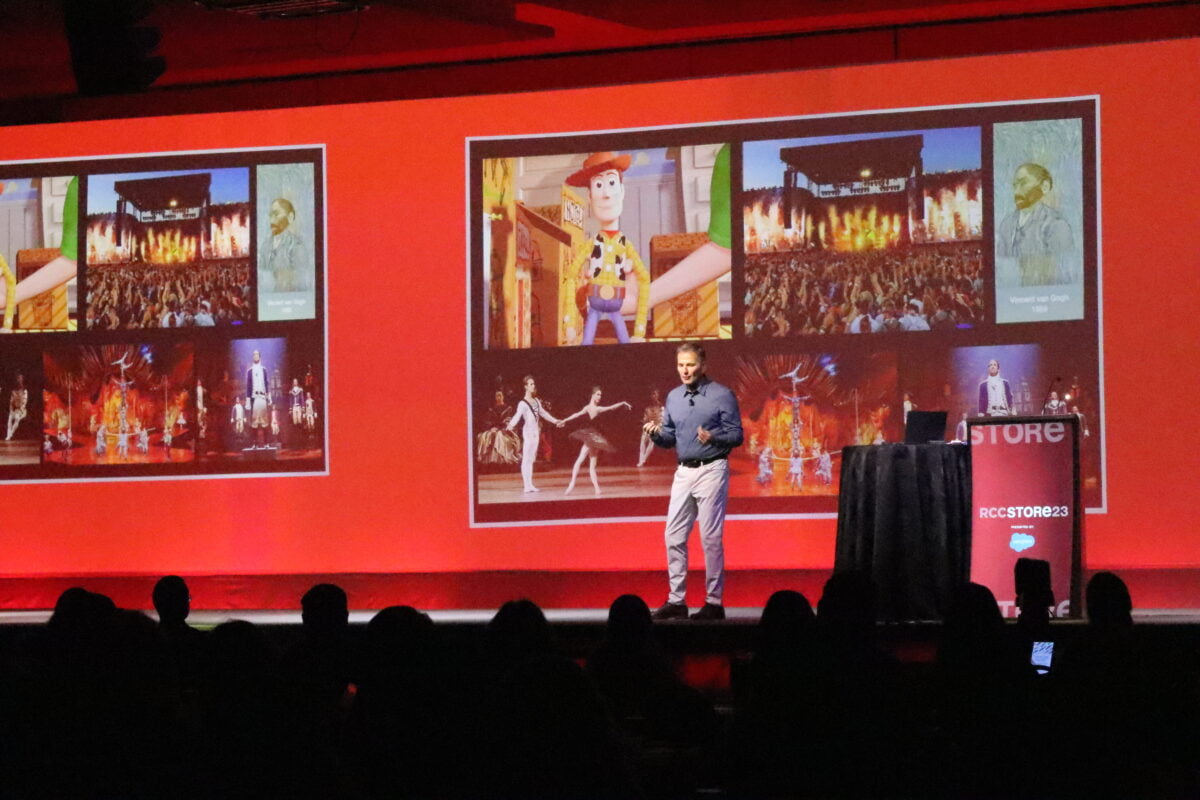
Doug Stephens at RCC STORE 23 (Image: Retail Council of Canada)
And most retailers in fact are falling down when it comes to that.
In this video interview, Stephens discusses how the retail industry has responded and still needs to respond to technology-driven innovation. Has the art of retail changed in this landscape?
Stephens’ intellectual work and thinking has influenced many of the most widely known international retailers, agencies and brands including Walmart, Google, L’Oreal, BMW and LVMH.
Prior to founding the consultancy Retail Prophet, he spent over 20 years in the retail industry, holding senior International leadership roles. Stephens is the author of three internationally bestselling books: Resurrecting Retail: The Future of Business in a Post Pandemic World (2021), Reengineering Retail: The Future of Selling in a Post-Digital World (2017) and The Retail Revival: Re-Imagining Business for the New Age of Consumerism (2013).
He sits on multiple corporate and academic advisory boards.
His unique perspectives on retailing, business, and consumer behavior have been featured in many of the world’s leading publications and media outlets including The New York Times, The BBC, TechCrunch, The Wall Street Journal and Fast Company.
The Video Interview Series by Retail Insider is available on YouTube.
Connect with Mario Toneguzzi, a veteran of the media industry for more than 40 years and named in 2021 a Top Ten Business Journalist in the world and the only Canadian – to learn how you can tell your story, share your message and amplify it to a wide audience. He is Senior News Editor with Retail Insider and owner of Mario Toneguzzi Communications Inc. and can be reached at mdtoneguzzi@gmail.com.
Interviewed this episode:
Doug Stephens
Like, Share and Subscribe to Mario Toneguzzi on YouTube!
Also check out the other series offered by Retail Insider, including The Weekly podcast and The Interview Series, which are both available on Apple Podcasts, Stitcher, TuneIn, Google Podcasts, or through our dedicated RSS feed for Simplecast and other podcast players.