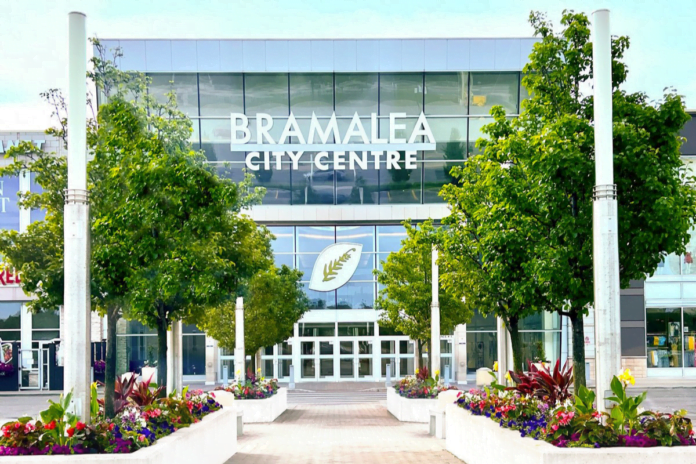
Bramalea City Centre continues to evolve to meet the growing needs of the City of Brampton in the Greater Toronto Area.
Brampton is known as one of the fastest-growing urban centres in the country with a population now approaching 700,000 and over the years Bramalea City Centre has adapted to the rapid growth by redeveloping the mall and bringing in new retailers.
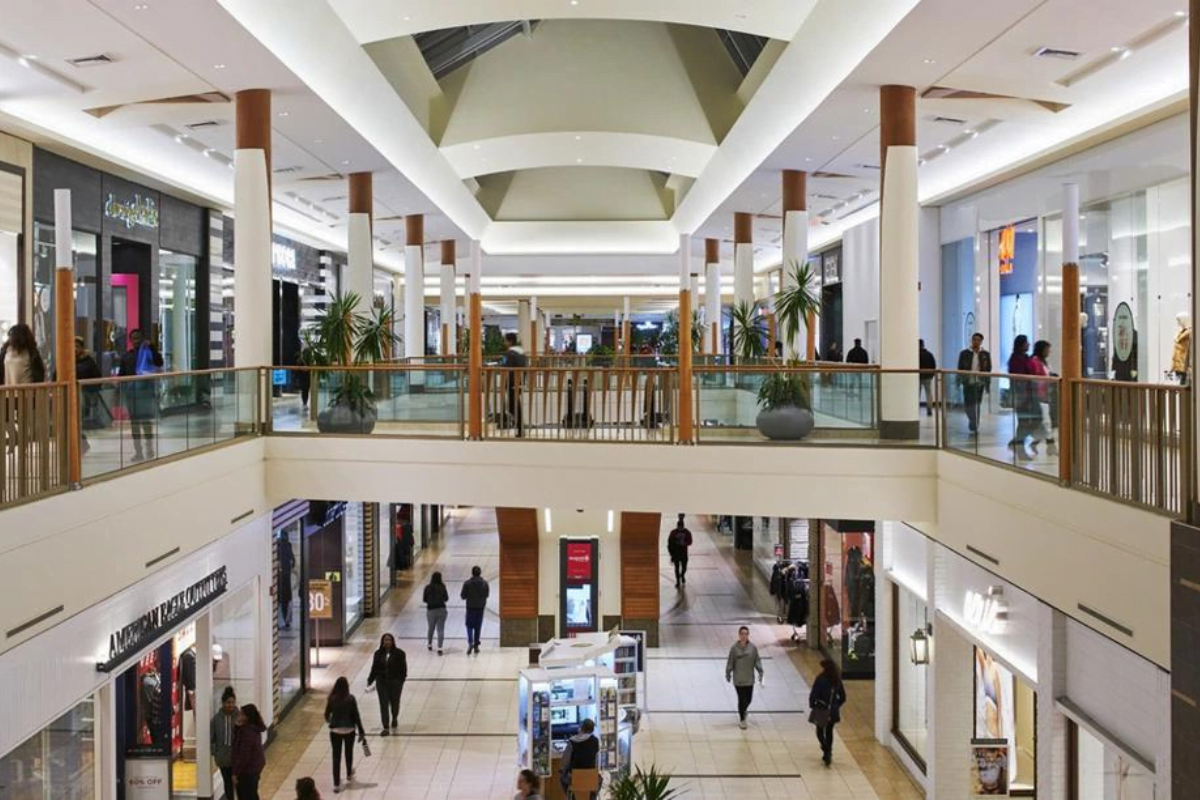
Bramalea City Centre has 1.5 million square feet of retail space at the corner of Queen Street and Dixie Road in the heart of Brampton. Bramalea City Centre is the fifth largest shopping centre in Ontario and seventh in Canada. Brampton is Canada’s second fastest growing city and the 9th largest city. The Province of Ontario has designated Brampton as an urban growth area and by 2031, the City’s population is expected to grow to 725,000.
The original shopping centre opened in the early 1970s.
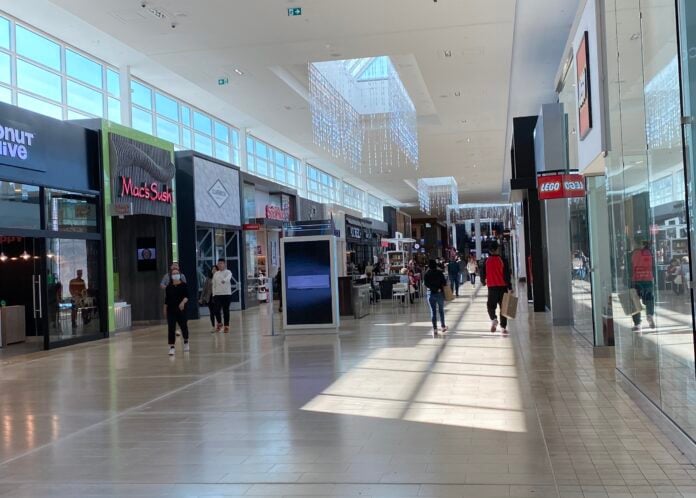
Bramalea City Centre (Image: Morguard)
“It’s gone through a number of transformations since its original construction,” said Andrew Butler, General Manager of BCC. “Morguard purchased it in 2004 and then they undertook a renovation of the shopping centre and brought it up to sort of contemporary standards.
“Right now we stand at about 1.5 million square feet of retail space and over 300 stores in the enclosed mall. And we have a number of freestanding pads as well as an office complex. So it’s a fairly large property. Fairly large site.”
The freestanding pads have about 27 tenants.
The office complex is about 80,000 square feet over three buildings.
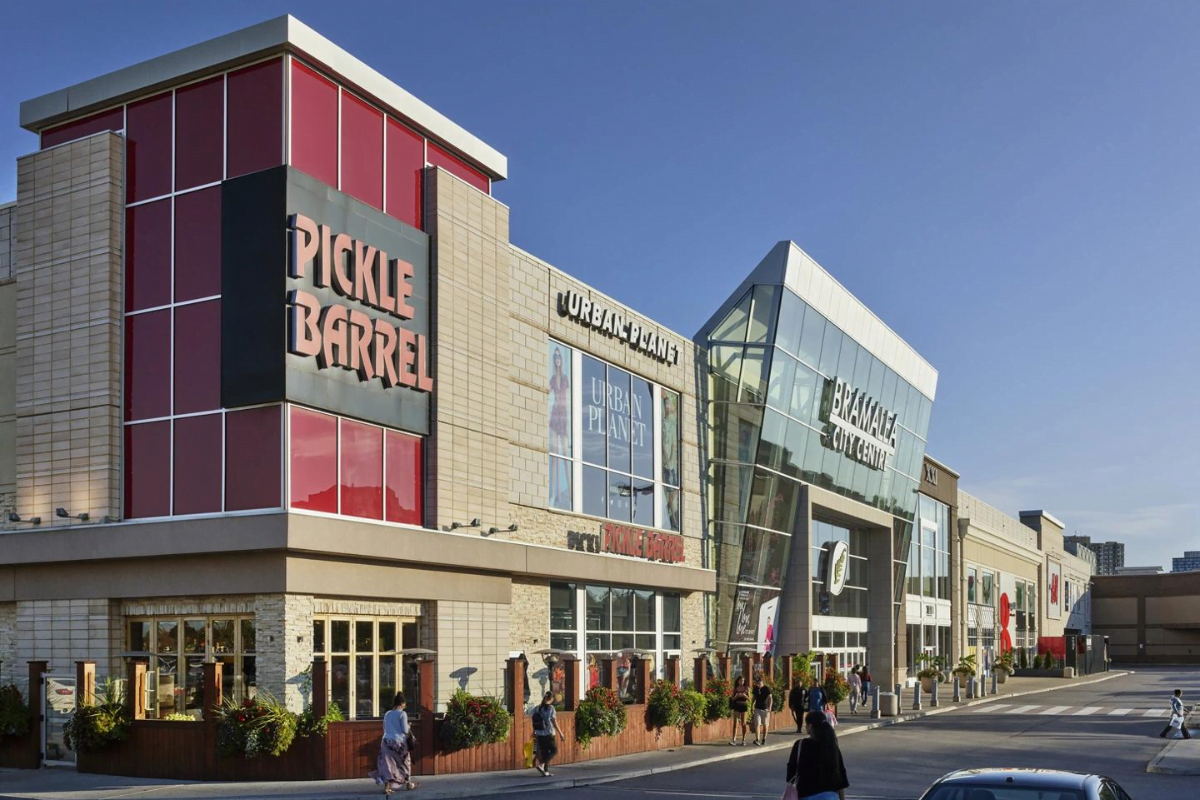
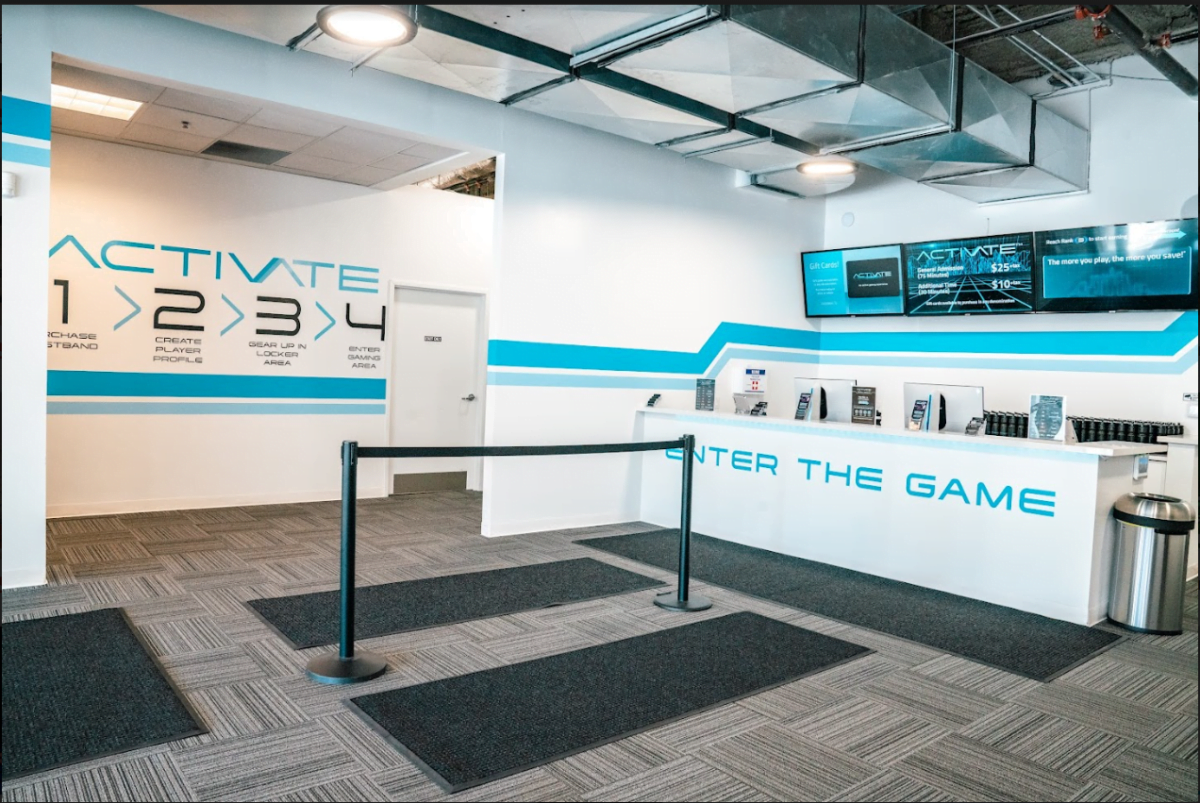
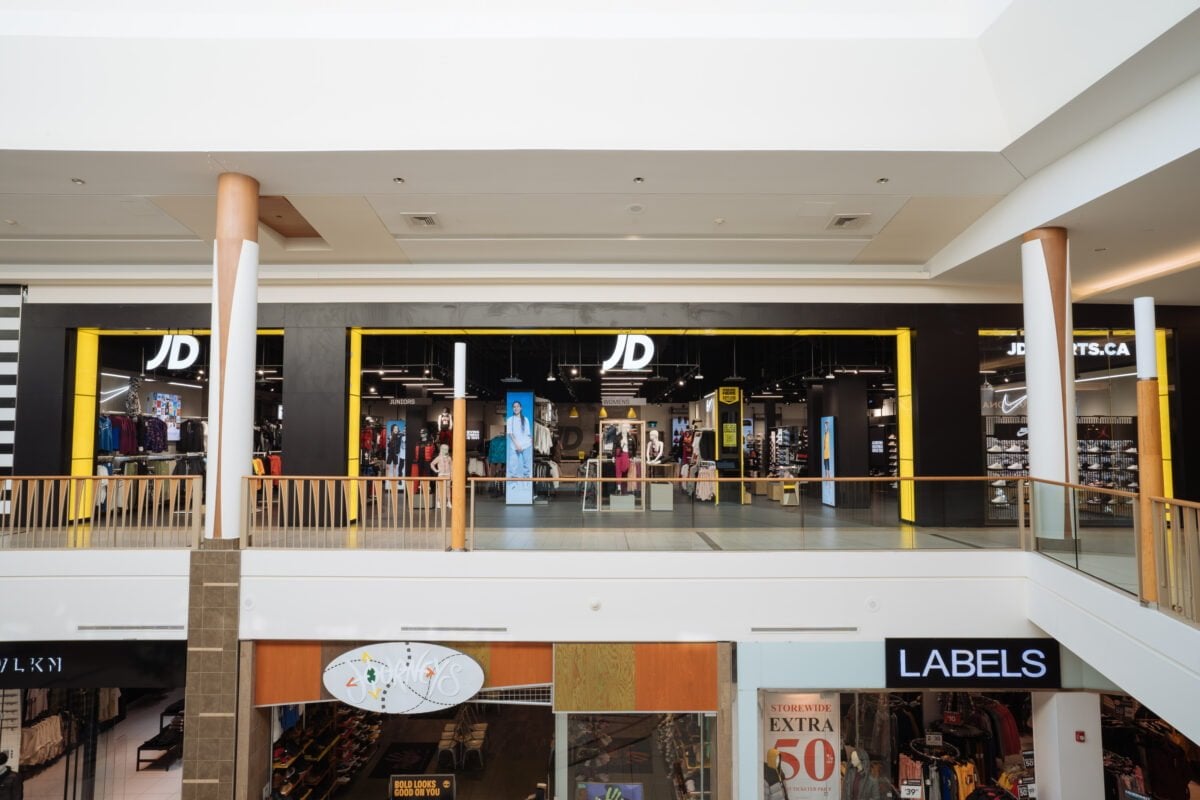
Bramalea City Centre (Image: Morguard)Activate at Bramalea City Centre (Image: Elle Marie)
A $165-million expansion project opened in September 2010. The project created 417,292 square feet of underground parking space, six new pad buildings constructed on the property, 325,000 square feet of new retail area on two levels, a new architectural centrepiece at the northwest corner of the property, and relocated loading docks and chiller units.
“We certainly feel that Bramalea is well positioned to take advantage of that growth (in Brampton). We’re located on Queen Street just to the east of the 410 Highway which obviously is a major thoroughfare that gets you to either the 407 or the 401 to other large highways in southern Ontario,” said Butler.
“And our primary trade area we’re looking at 600,000 people and the secondary another 400,000 or so people. We service a large catchment area. It’s a good transit system that services the Peel Region which Brampton is in. We have a Peel Region bus terminal adjacent to the property on the east side. Brampton is such a growth market. Really strong demographics. A young demographic. A lot of families. Decent disposable income.
“Brampton is a key growth market. I think with the investments Morguard and the owners have made on the site we’re well positioned to take advantage of that growth.”
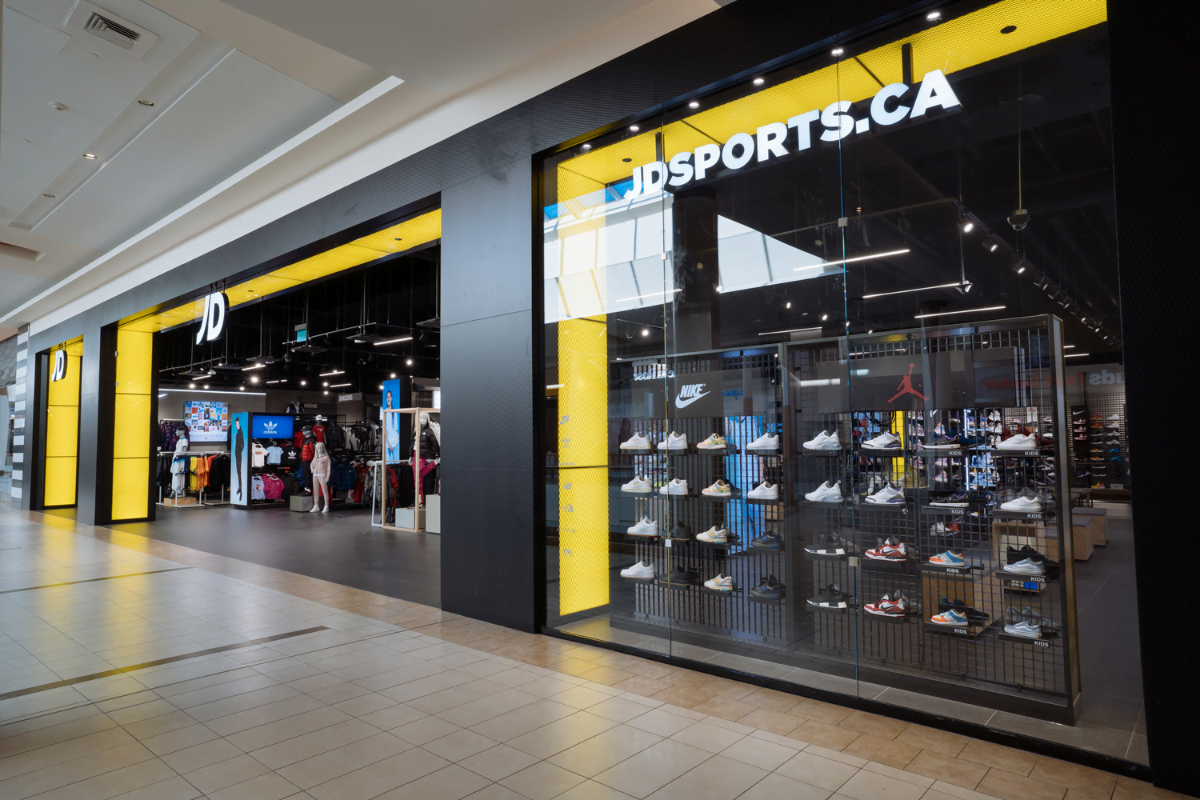
JD Sports at Bramalea City Centre (Image: Elle Marie)JD Sports at Bramalea City Centre (Image: Elle Marie)
Butler said traffic in the shopping centre has reached pre-COVID levels and sales are exceeding pre-COVID numbers.
“We were fortunate. Our leasing team has been really strong and has done a lot of good work in adding to the merchandise mix. We experienced what everybody else experienced where you had the closures and the reduced traffic with only essential services,” he said.
“But I was really pleasantly surprised that when we came out of it we didn’t see anywhere near the failure rate that I thought was potentially going to happen. I don’t think we lost more than one or two tenants out of the whole process. With the reopening we’ve actually been able to secure some new deals on the property that have been really helpful. One of which has been Decathlon which just opened up for us.”
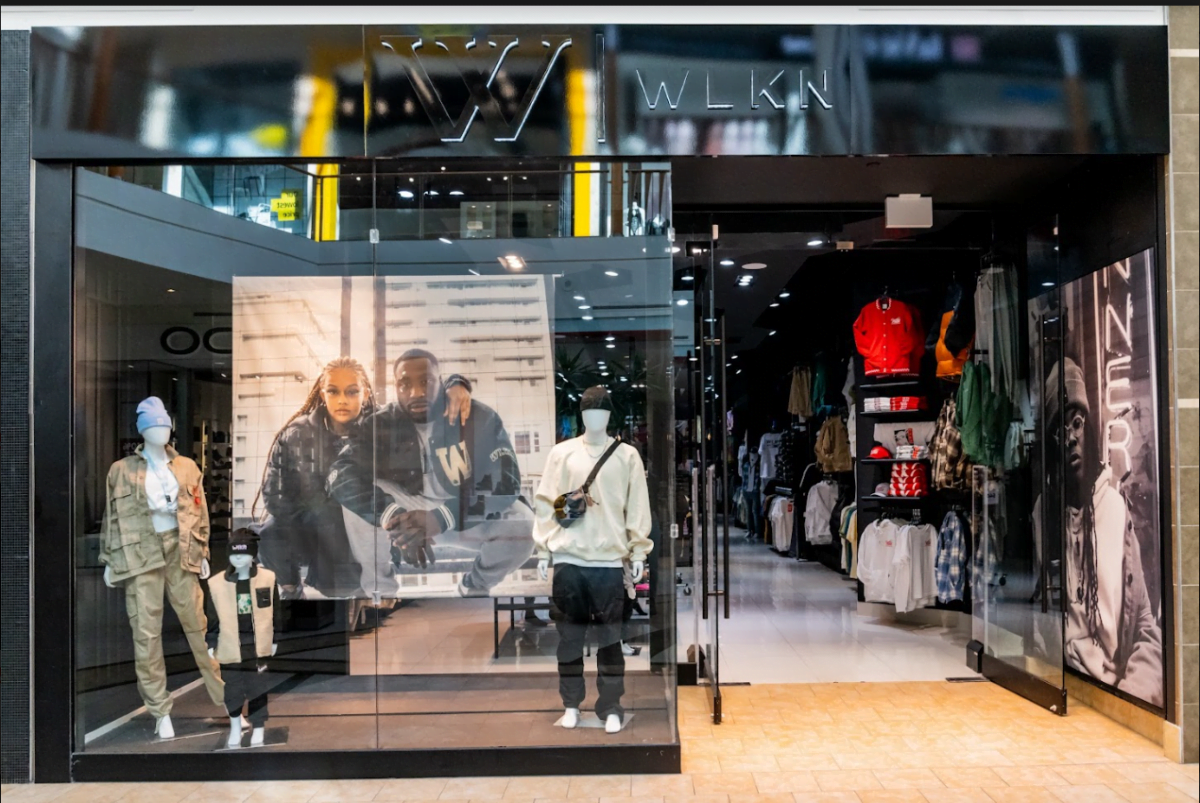
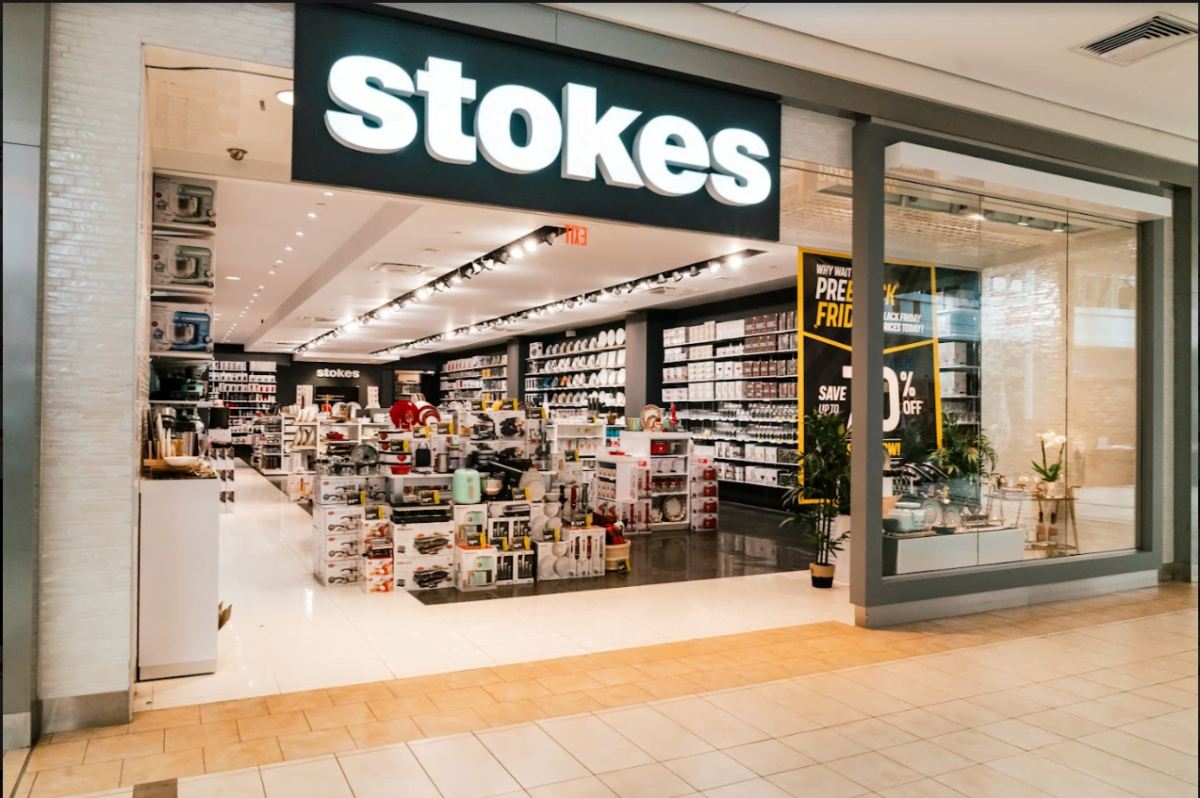
Recently, the shopping centre has seen the opening of Activate, JD Sports, Stokes and WLKN as well.
It also added CIBC and triOS College.
In the past year or so, some of the other new tenants include Church’s Chicken, uBreakiFix, Domino’s Pizza, Value Buds.
“We’ve got 100 per cent occupancy on our pad sites now,” said Butler. “We’re probably 95 per cent occupied now (in the mall itself). Despite what we all went through the retail side of it has actually come through pretty strong and I’m very optimistic that come the Christmas season we’re going to see some significant numbers for the property.
“Speaking with our leasing team, they’re pleasantly surprised with how the leasing market is evolving. There’s a lot of good opportunity out there and I think we’re well positioned to take advantage of it.”
Decathlon at Bramalea City Centre (Image: Decathlon)Stokes at Bramalea City Centre (Image: Elle Marie)
In 2015, Bramalea City Centre won the esteemed Outstanding Retail Building of the Year (TOBY) International Award at the Building Owners and Managers Association (BOMA) International Awards in Los Angeles. The TOBY Awards honour the best of the best in commercial buildings. In 2014 Bramalea City Centre was awarded the TOBY Award at the local level through BOMA Toronto.
For Bramalea City Shopping Centre, Morguard did extensive work in the years leading up to the award to enhance nearly every aspect of building’s operation and raise the standards of this building.
Those investments included:
Addition of energy efficient lighting retrofits;
Rooftop demand control ventilation systems to lower energy consumption;
Installation of building automation systems;
Retrofit of low flow fixtures to reduce water consumption;
Introduction of electrical charging stations for electrical vehicles;
Waste diversion – over 70 per cent of waste is diverted away from landfills;
Addition of a green roof on one of the Centre’s buildings and cisterns to collect rainwater for landscape irrigation.
Leasing Opportunities at Bramalea City Centre are available through Morguard.
Danish footwear brand ECCO now has 38 stores in Canada and it has recently opened a new concept store in Toronto where it will be a grounding place for testing new ideas.
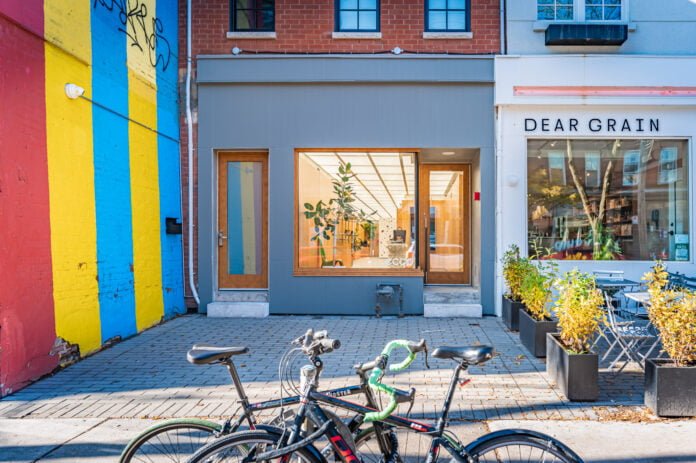
Located at 46 Ossington Avenue in Toronto, the ECCO store space is just over 1,200 square feet and is a space where ECCO can have a deeper connection with customers. The store celebrated with its grand opening on October 27th.
“We entered Ossington with the whole idea of creating a community hub. Ossington kept coming up as one of the central locations where there was a lot of energy, a lot of momentum, and a good vibrant consumer that may not be our traditional consumer, but somebody that we want to connect with. There are lots of younger customers in the area and we wanted a space that is eye-catching, engaging, and invites people into the space where they can learn more about the brand, concept, and more about how we are trying to engage in the community. The store is really vibrant, bright, and open to draw the consumer in,” says Joe Devlin, the Commercial Director at ECCO Shoes Canada.
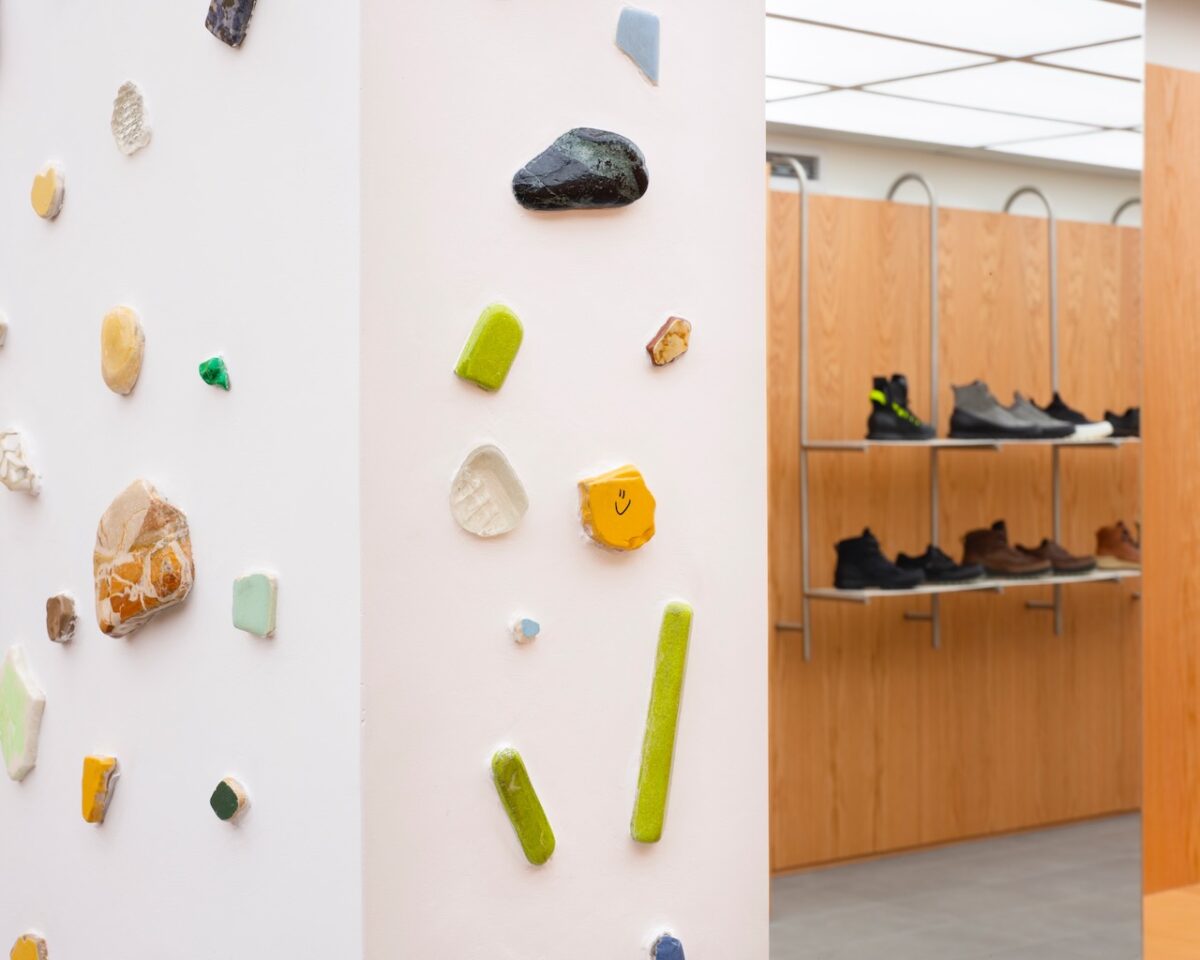
ECCO at 46 Ossington Ave (Image: ECCO)
The new location will be a space where ECCO can connect more with the consumer while also keeping in touch with its Danish heritage.
“We wanted something a little more vibrant, but also true to our heritage and who we are by keeping the feel of minimalist, clean lines, an engaging space, and also modular so we can create an event space for people to connect with the brand. We couldn’t be happier with where we landed with this space and how it has actually come to life”.
ECCO was founded in 1963 in Denmark and has since then grown into a well known international leader in footwear. Today ECCO has 38 stores in Canada and is sold in over 90 markets across the world. Products found at ECCO include a variety of footwear for men, women, and also leather goods.
What Can Customers Expect
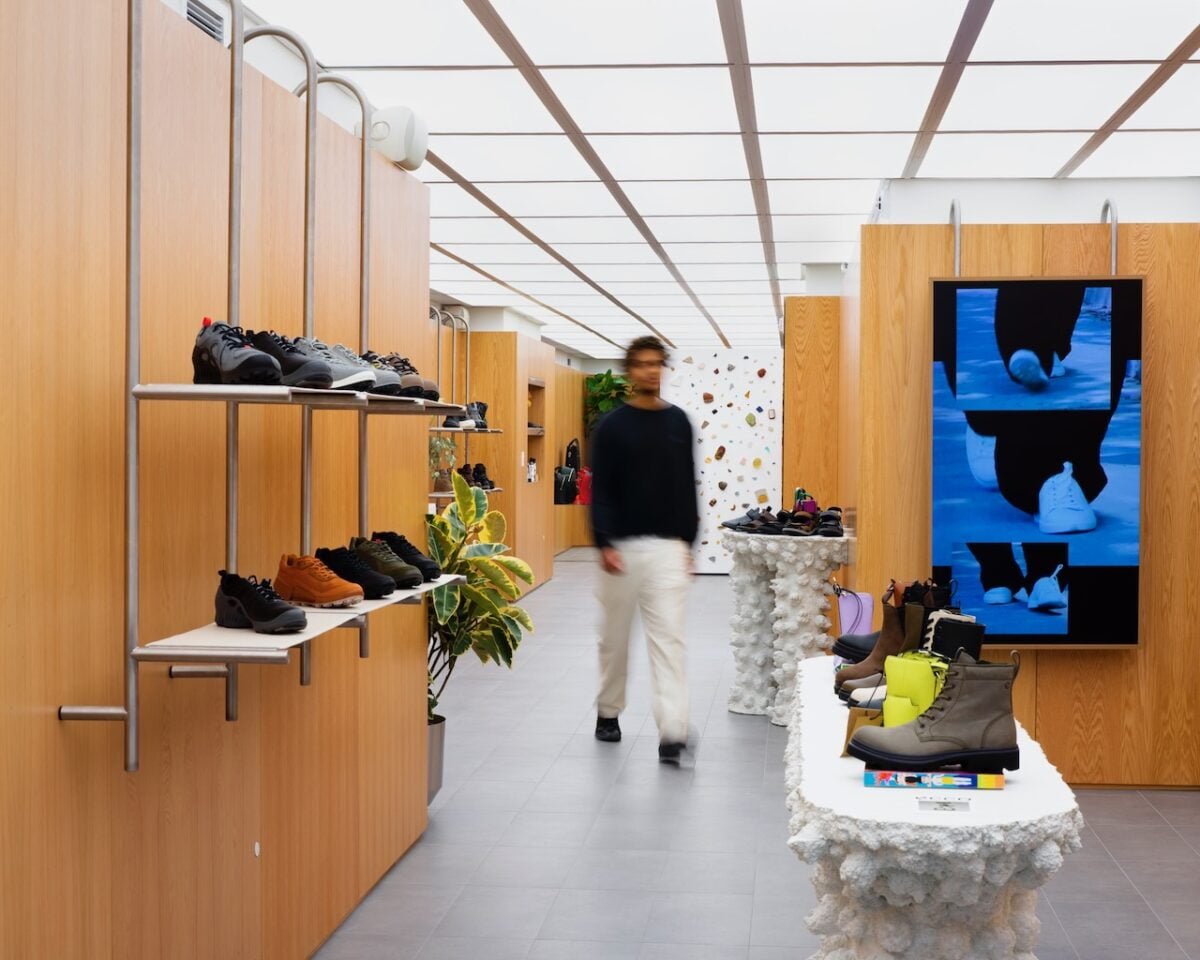
ECCO at 46 Ossington Ave (Image: ECCO)
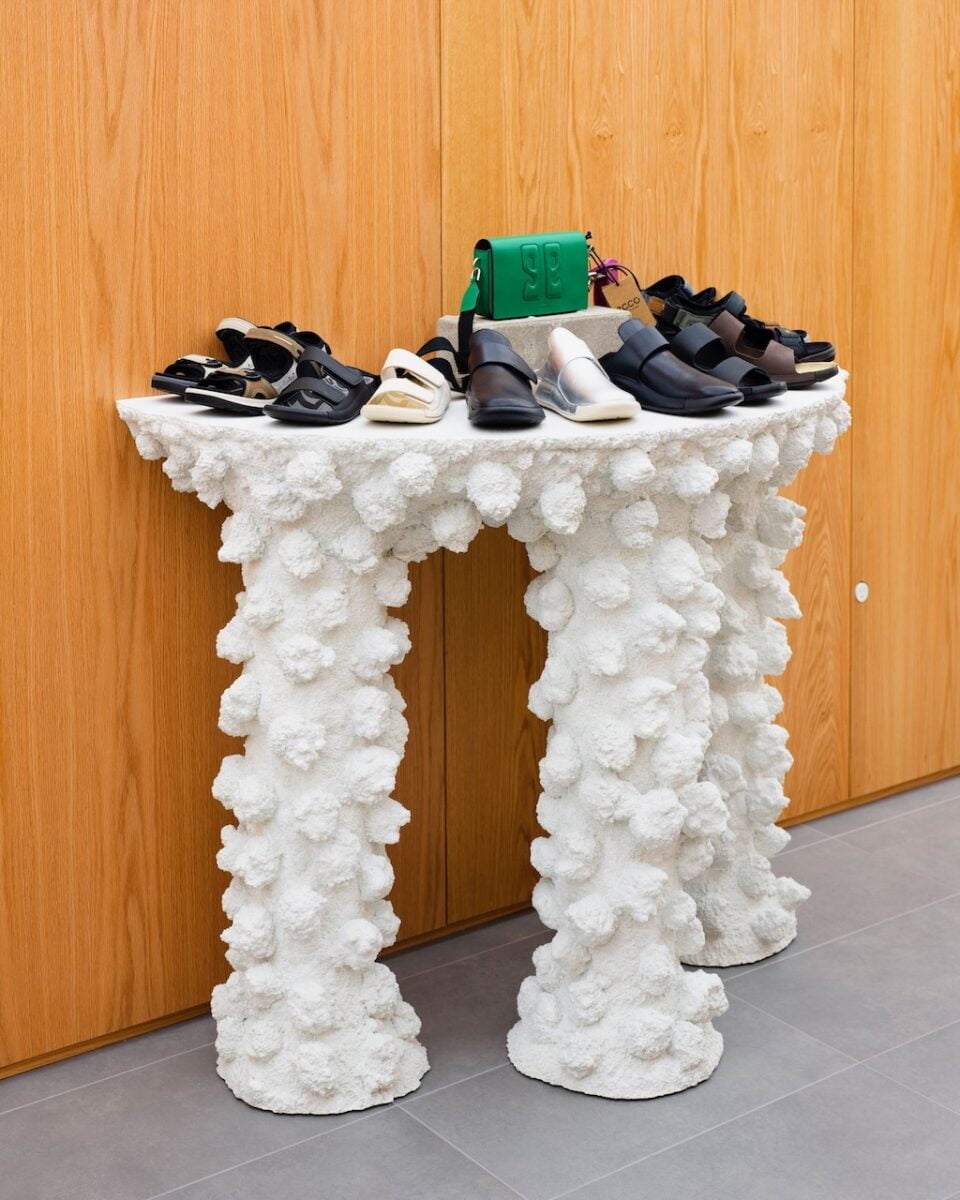
The new store is split into three spaces: the front entrance, design language, and ELU, ECCO’s Leather Good’s Unit. The front entrance is around product and collaboration, the middle section is for connecting with the community as it has artwork displayed from local artists and community designers, and the backspace is where customers can find ECCO’s leather goods and can be turned into an event space.
The Ossington location will also have exclusive products to share with customers.
“The unique proposition this store will offer, is that we will bring in some exclusive products from our global entities, where this will be the only store in Canada that will be carrying some products and will continue to do some exclusive pieces that create energy. This space will also be the biggest leather good space you will see from the brand in the entire country.”
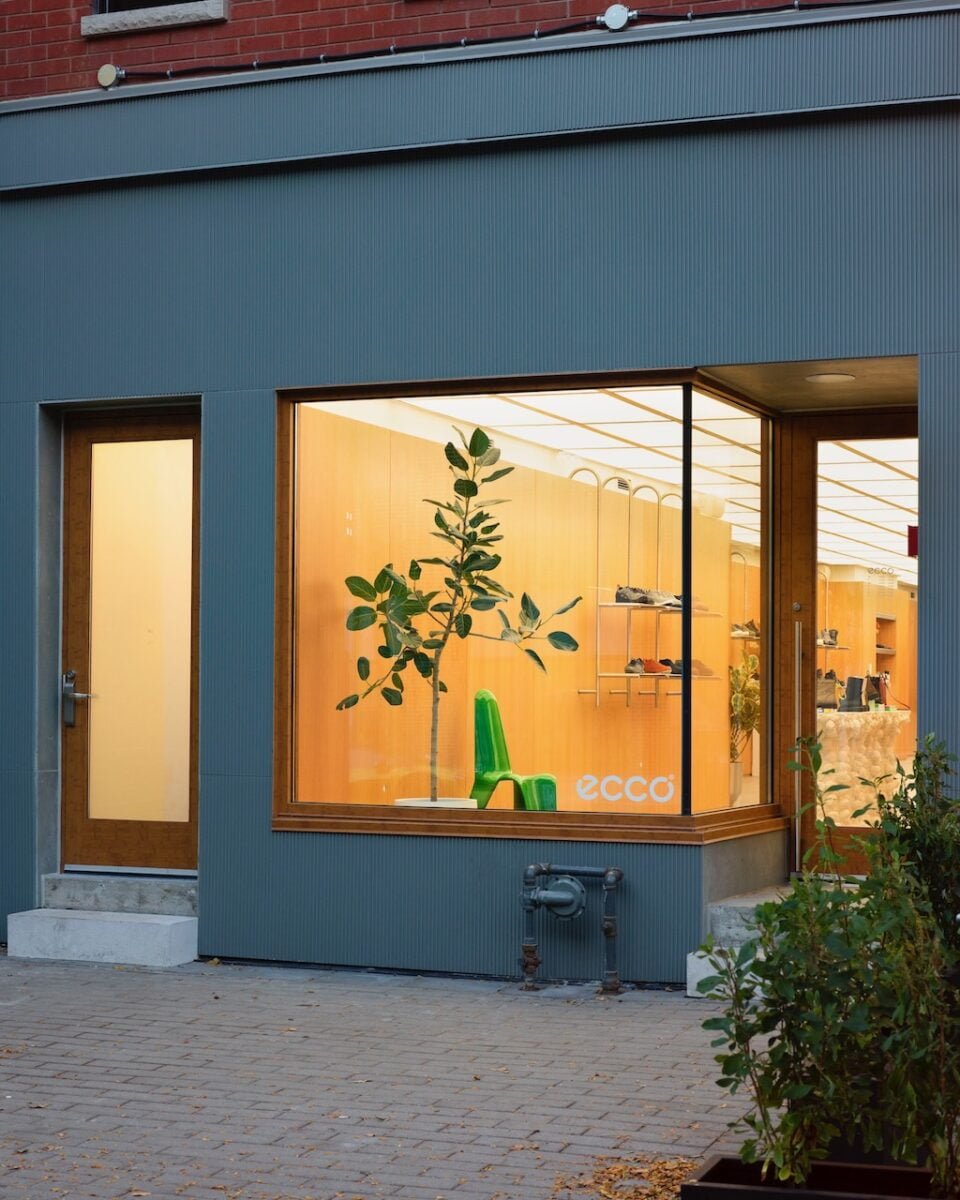
ECCO at 46 Ossington Ave (Image: Dustin Fuhs)
The leather section will be complete with all of ECCO’s bags, backpacks, gloves – “all of our opportunities in leather goods that the consumer might not have been exposed to before”. The leathers offered at Ossington are in a variety of colours, different textures, and premium smooth leathers that are all created at ECCO.
“The ELU department is a large global focus for us to expand globally and we think there is a great opportunity with some of the leather products that we create. We are taking the opportunity to really try and expand this offering and the Ossington store will be the center and the beginning of this phase. This area of our business from an ECCO standpoint has been around for years, we just have been more focused on footwear and nothing is going to be taken away from there, but we are going to be spending more energy and time on developing our consumers’ access to these types of goods.”
Community Engagement
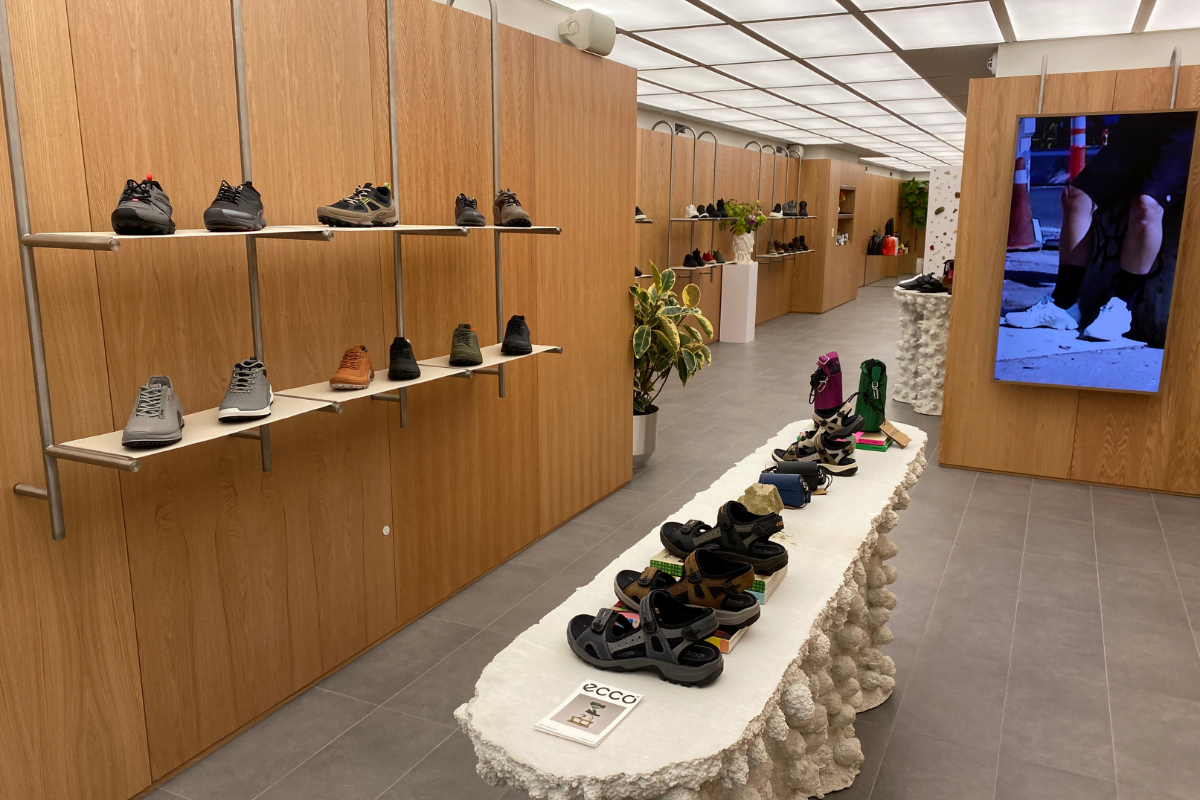
ECCO at 46 Ossington Ave (Image: ECCO)
The Ossington store will be a test location on how ECCO can engage with the community. Devlin said the store will be running community events and are looking at programming ideas, including having a night out event where ECCO will provide food and drinks while consumers connect with the brand and understand its Danish history.
The store will also be providing an opportunity for local artists to showcase their art along with ECCO’s products. If these programs work, they will be applied to other stores in Canada and international locations – this will be the testing location for the ELU concept as well as for community engagement.
Future Plans
ECCO at 46 Ossington Ave (Image: ECCO)
Customers can expect another store to open in 2024, this will be ECCO’s 39th store in Canada; however, Devlin was unable to disclose the location at this time.
Instead of focusing on expanding the amount of physical stores, Devlin said the company’s plan is to expand within the stores that are already open – meaning building connections with the community and its leather department.
The Ossington location will serve as a testing ground for any new ideas and if they succeed it will be applied to other locations throughout Canada and globally.
“We are really focused on optimizing our Ossington location and making sure we are connecting and drafting off our community concept that we are doing right now.It is a test and growth opportunity and we are looking at where we can make it scalable and look at opportunities where we can expand and go deeper in some of our own locations. For us, the expansion idea comes from building the brand and connecting with the consumer base as opposed to adding more physical stores. Ossington is more about creating an environment for the consumer as opposed to just a shopping environment – which is something we are looking to continue to build upon.”
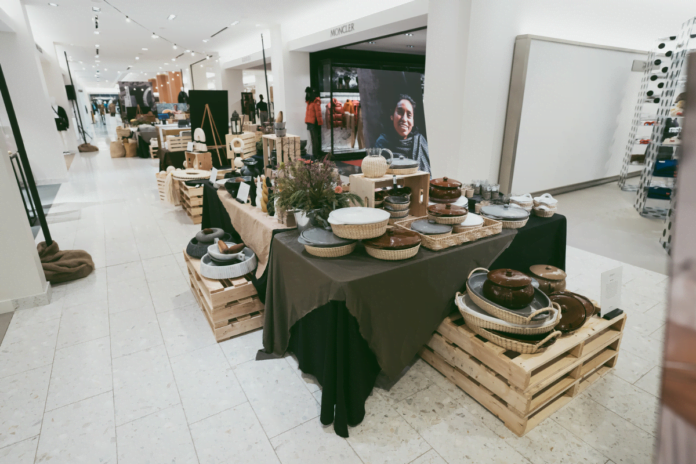
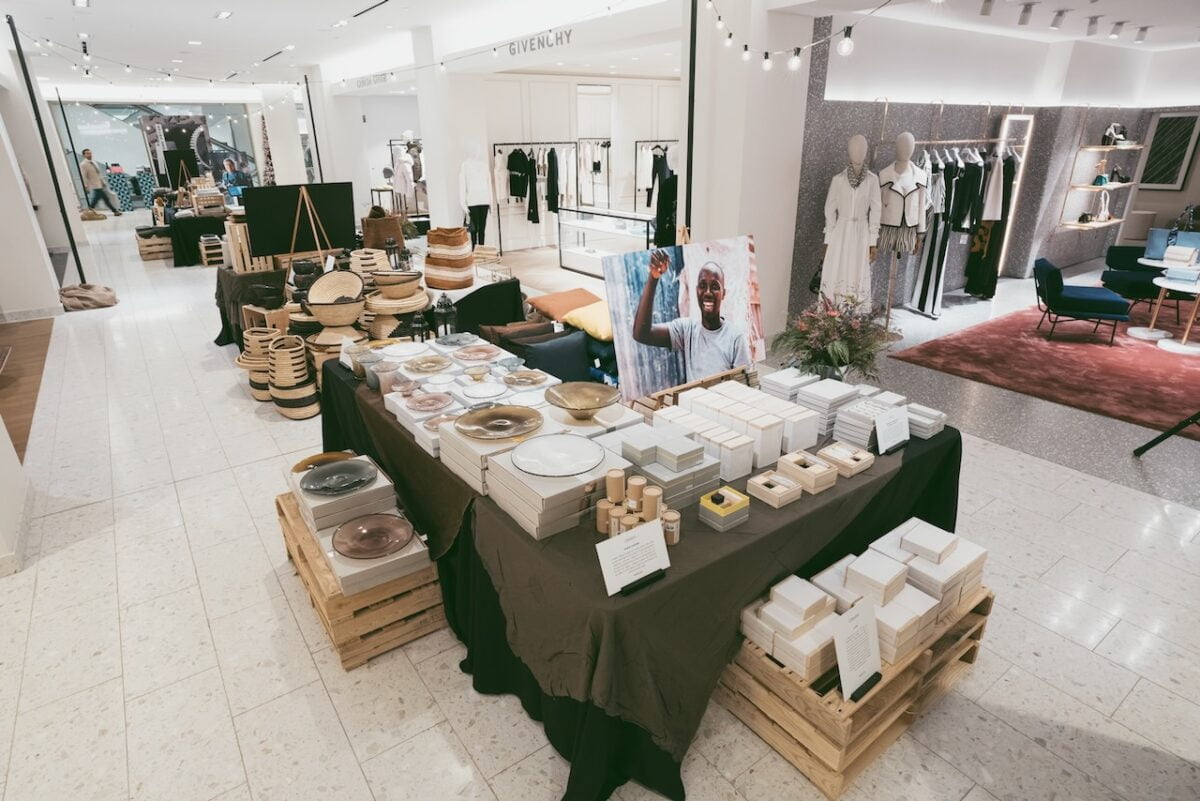
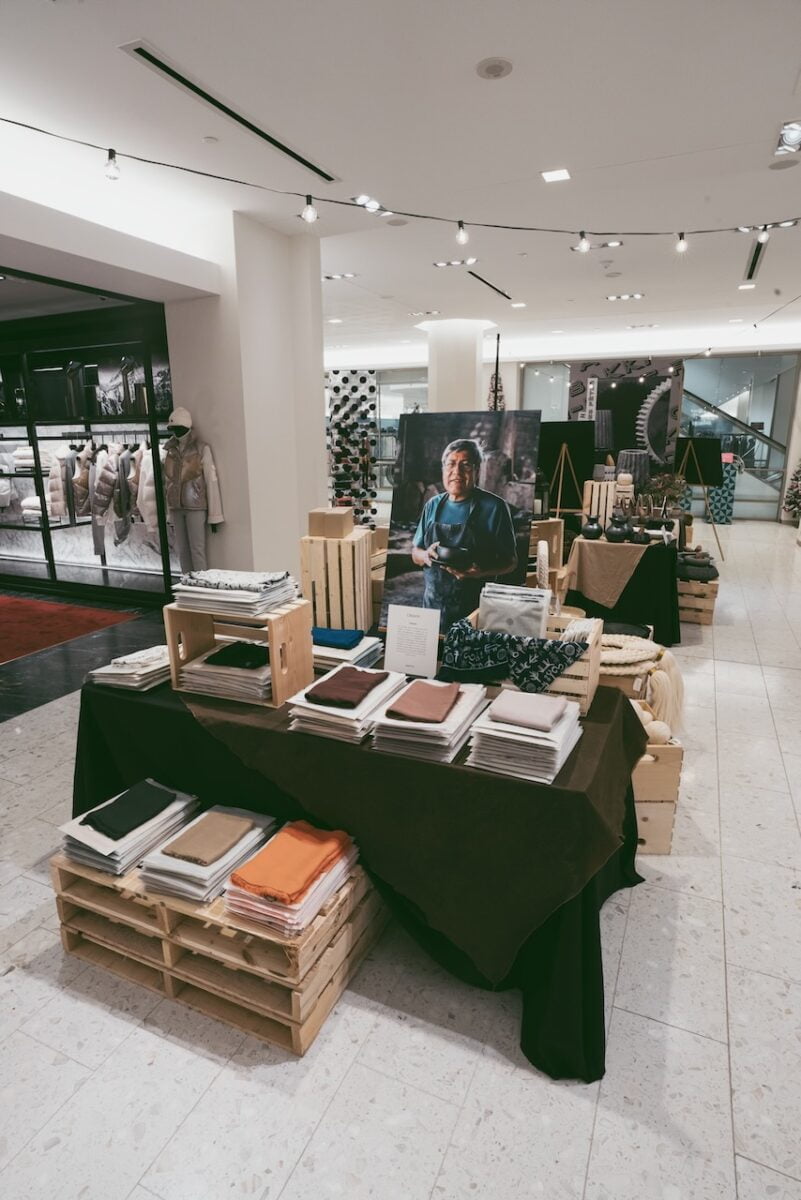
Obakki Holiday Pop-up in Holt Renfrew Ogilvy (Image: Jeff Malo / Holt Renfrew)
Canadian purpose-led lifestyle retailer Obakki has opened a seasonal pop-up shop at Holt Renfrew Ogilvy in downtown Montreal as part of Holt Renfrew’s H Project initiative.
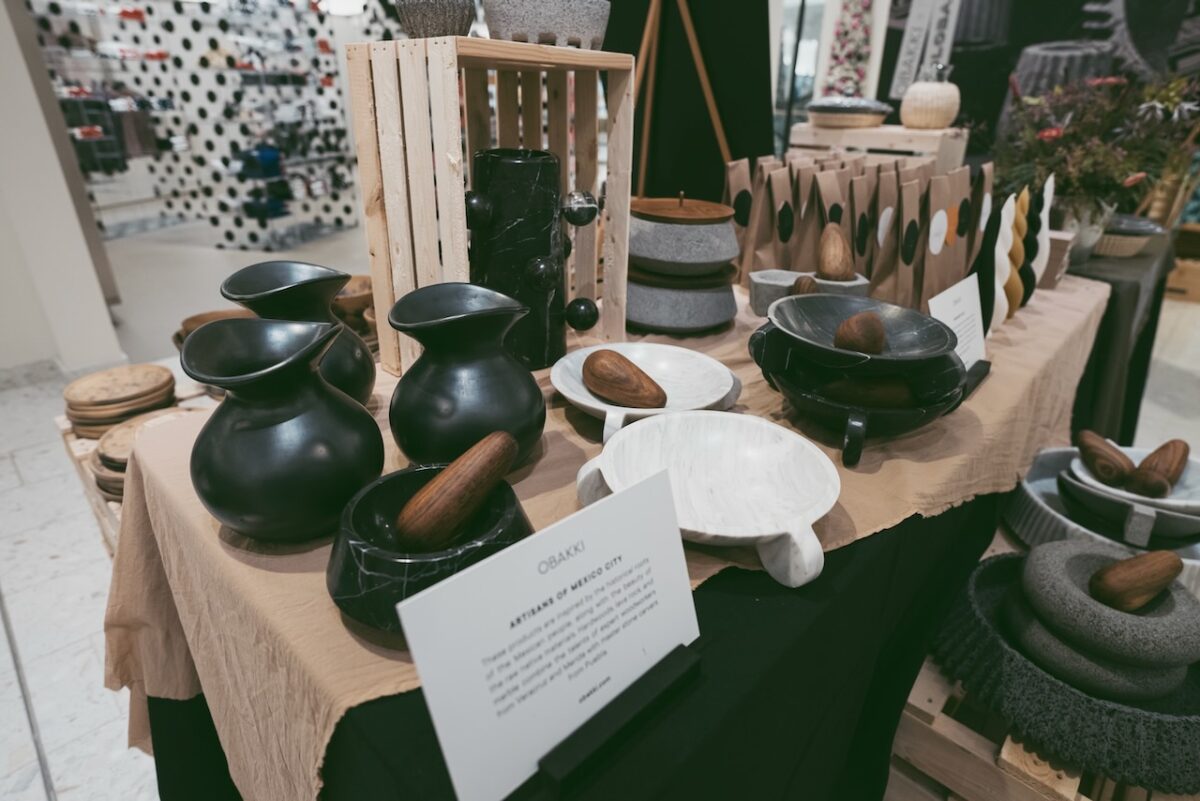
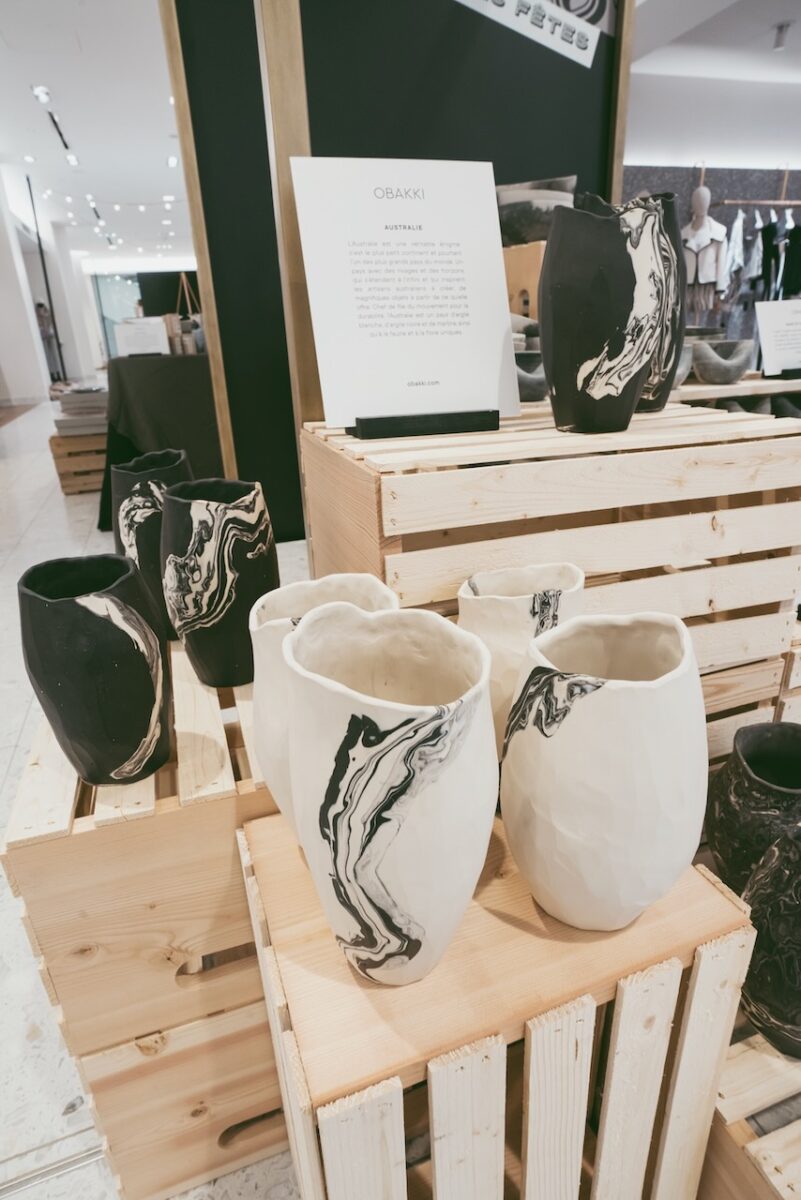
The immersive Obakki marketplace experience, located on the third floor of Holt Renfrew Ogilvy, features 25 artisans from 10 countries, including Kenya, Italy, Japan and Australia.
“With this pop-up at Holt Renfrew Ogilvy, the Montreal market will have a genuine opportunity to support and uplift artisan-made craft, shared Treana Peake, Founder of Obakki. “Many of our artisans come from very rural regions without any access to an international platform so an opportunity like this is huge. What you’ll find throughout the market is a lifetime of work, a whole lot of generational skill and an immense amount of pride and love that has been poured into the pieces before you.
“I honestly believe there is space in our design industry to both consider and incorporate modern, meaningful, and impactful collaboration. Because to me, sustainability is more than protecting the environments, it’s also about protecting, promoting and uplifting the communities and people behind the products we choose to put in our homes. And, the products you’ll find in this pop-up are the perfect example of this.”
Obakki Holiday Pop-up in Holt Renfrew Ogilvy (Image: Jeff Malo / Holt Renfrew)
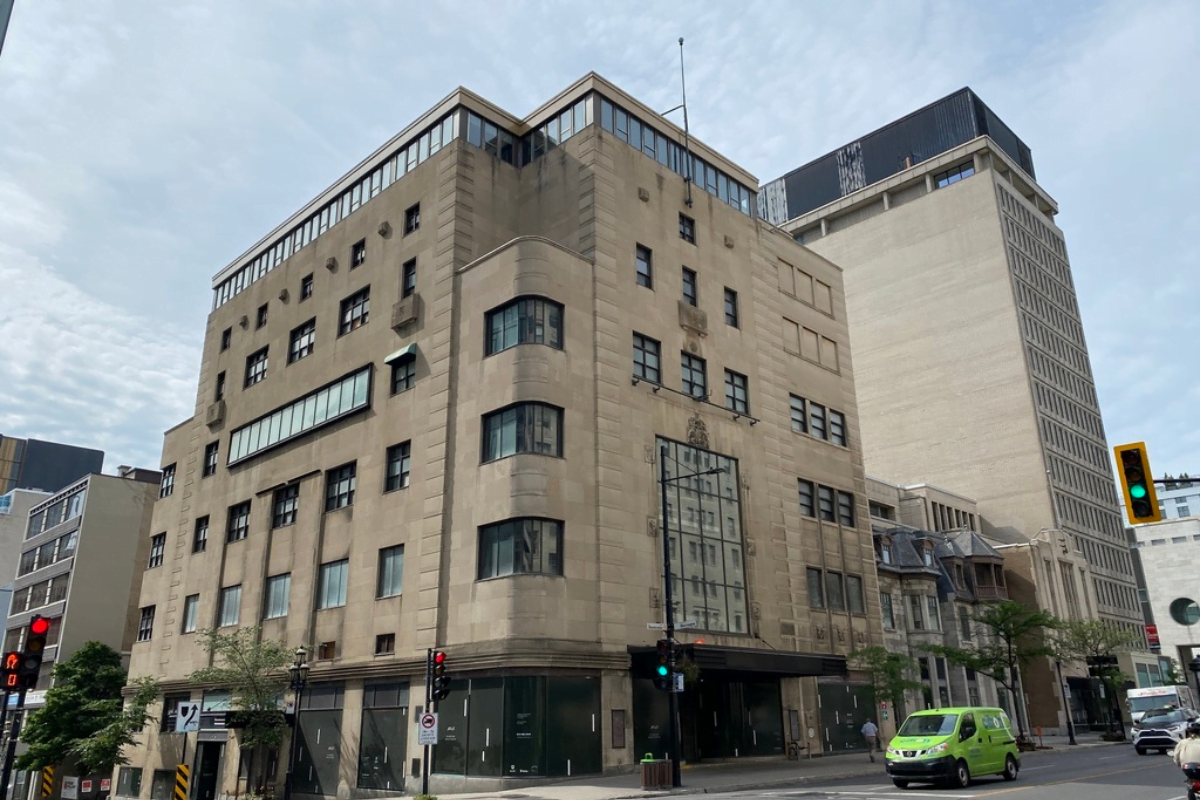
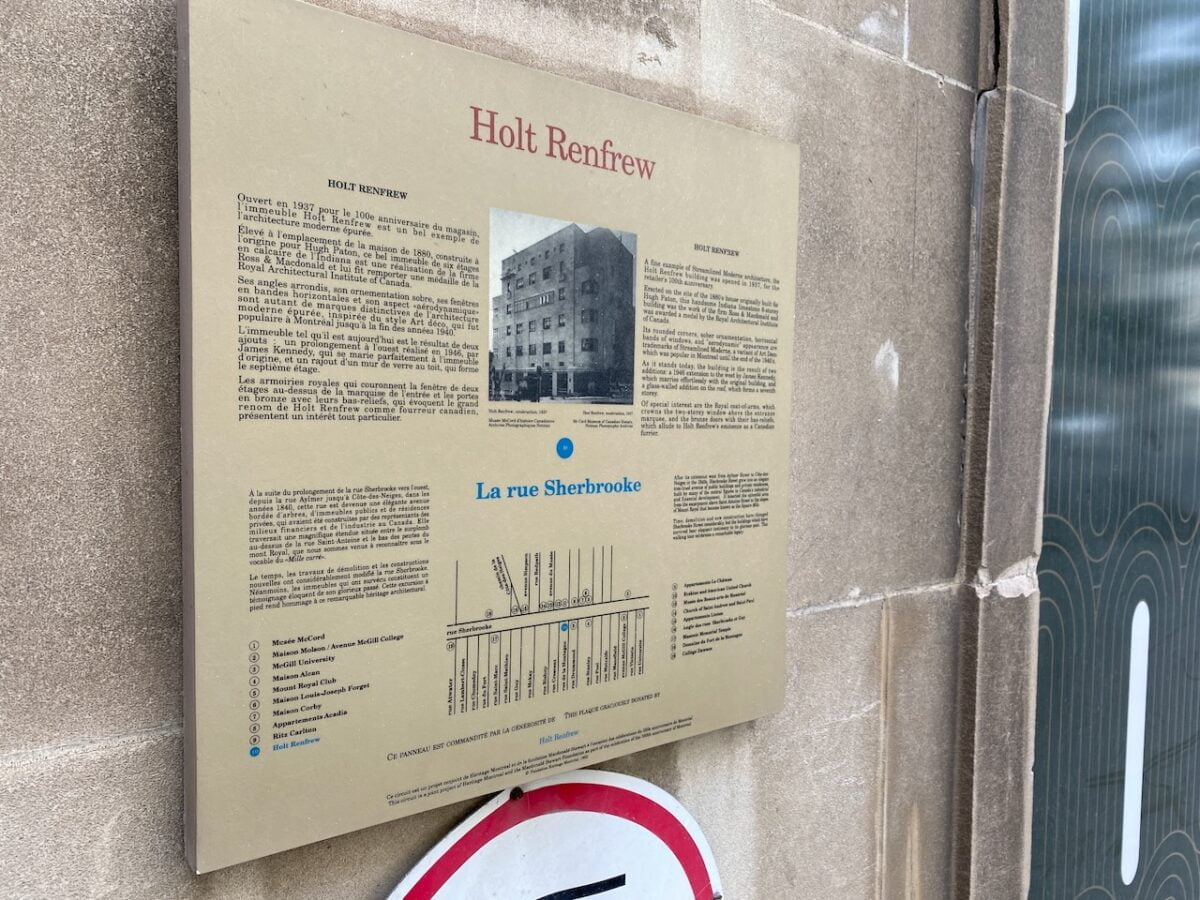
Former Holt Renfrew at 1300 Sherbrooke Street West (Image: Dustin Fuhs)
Former Holt Renfrew at 1300 Sherbrooke Street West (Image: Dustin Fuhs)
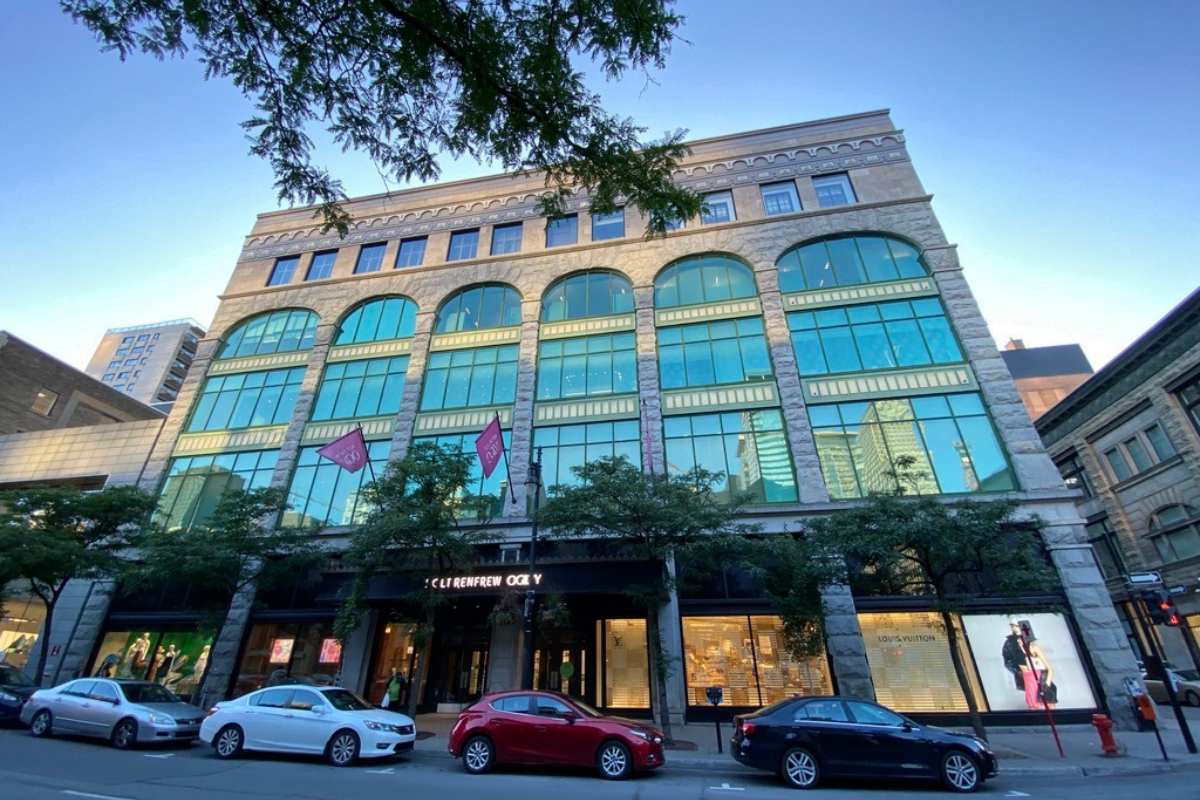
Holt Renfrew Ogilvy at 1307 Saint-Catherine St W (Image: Dustin Fuhs)
Montreal’s Holt Renfrew store, which operated nearby at 1300 Sherbrooke Street West since 1937, closed in 2020 to coincide with the opening of the expanded Holt Renfrew Ogilvy store on Ste-Catherine Street. Selfridges Group, the former parent company of Holt Renfrew, bought the 180,000-square-foot Ogilvy department store on Ste-Catherine Street in 2011 and subsequently announced that it would merge the two stores into one that would be named ‘Holt Renfrew Ogilvy’.
The 250,000 square-foot store is one of the largest multi-brand luxury stores in North America and has the opportunity to showcase brands in permanent and pop-up formats.
“We understand that the Holt Renfrew Ogilvy customer is looking for an expanded Home offering and this partnership allows us to bring them this product category in a meaningful way, said Alexandra Weston, DVP of Brand and Creative Strategy at Holt Renfrew. “To be true to both the Obakki and H Project brands it was important to include storytelling to provide the customer access to the story and the people behind the brands and products they were buying.
Obakki Holiday Pop-up in Holt Renfrew Ogilvy (Image: Jeff Malo / Holt Renfrew)
Obakki Holiday Pop-up in Holt Renfrew Ogilvy (Image: Jeff Malo / Holt Renfrew)
Obakki Holiday Pop-up in Holt Renfrew Ogilvy (Image: Jeff Malo / Holt Renfrew)
Holt Renfrew and Obakki partnered on a pop-up in Holt Renfrew Vancouver this past Spring 2022, which allowed the brand to gain experience with this experience in preparation for the Montreal activation.
“Obakki and H Project have partnered for many years in various ways and are always connected. Since Obakki’s evolution from an apparel brand into homewares, we have been looking for a way to showcase more of the collection and the Global Market concept from Obakki was the perfect way to do this,” shared Weston.
“We always saw this as a roaming market. We began discussing the next location for the Obakki Global Market as soon as we wrapped in Vancouver.
Obakki Holiday Pop-up in Holt Renfrew Ogilvy (Image: Jeff Malo / Holt Renfrew)
The lessons from the Vancouver pop-up from a consumer standpoint will be evident in the Montreal location.
“The setup as a souk market that you have to weave through to experience all of the products and various artisans was very successful and something we mirrored from the Vancouver pop up in Montreal.”
Holt Renfrew also partnered with Obakki to present images of the artisans and story cards for each country and artisan.
“Because storytelling is so relevant for Obakki and H Project, we found that engaging the customer and associates with elevated events and increased training session was important to the success of the pop up.”
The Obakki x Holt Renfrew Ogilvy Pop-up goes from November 17th to December 13th and the full Obakki market collection is available online.
Retail Insider is streamlining its Canadian retail news from around the web to include a handful of top news stories that can be viewed quickly during the day. Here are the top stories from the past 24 hours.
As a social innovation designer, I study complex challenges with the aim of finding common approaches needed to solve them. My goal is to discover the principles that can help us design a more humane future.
While sales are still below normal, business costs continue to climb. A report from the Better Way Alliance, a Canadian business network advocating for ethical business practices, found that rent for many Ontario businesses is commonly increasing between 10 and 50 per cent.
While big businesses are better positioned to negotiate rising expenses, small businesses are left feeling the brunt of rising costs — all while navigating pandemic uncertainty and shifts in the market.
Transitioning to a mix of online and physical sales involves more than just launching a website. It requires a shift in how a business operates, including technology upgrades and changes to its human resources and physical footprint, which necessitate significant time and financial investment — things that small businesses often run short on.
With Amazon as the most popular e-commerce platform in Canada — earning over US$9.8 billion (followed by Walmart, Costco and Apple) — there is a concerning disconnect between support for small business and where Canadians are spending their money. This gap could mean the difference between having independent shops or vacant storefronts.
These solutions all come down to one thing: valuing connection over just transaction. A common thread in the research is a clear desire for people to connect with and support small, neighbourhood businesses.
Judy Morgan, a retail consultant I interviewed, emphasized the importance of creating valuable spaces that people will want to visit, in a process known as placemaking: “There needs to be the physical infrastructure to facilitate coming to the area and then enjoying it while you’re there, as opposed to just being purely transactional.”
As Aaron Binder, business owner and director of the Better Way Alliance, said: “There’s a difference between consumers and customers. Customers are people. Consumers are a group. We want to focus on people… People are looking for that personal interaction.”
Our Main Streets offer more than just goods and services. They are integral to the fabric of a healthy community. A future where small businesses thrive must include more support through how we spend and through policies and programs aimed to keep expenses fair and our streetscapes business- and people-friendly. This is key to ensuring our communities are designed for making connections, not just transactions.
By Sarah Tranum, Associate Professor, Social Innovation Design, Faculty of Design, OCAD University
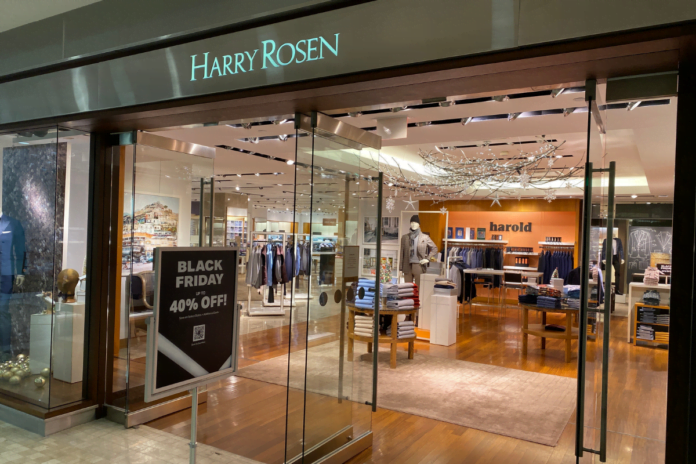
Black Friday Sales in Harry Rosen at First Canadian Place (Image: Dustin Fuhs)
The retail sector has gone through some challenging times in recent years because of the COVID-19 pandemic.
As the industry moves forward from that volatile period of history, there’s high anticipation of what this holiday season will bring for retailers across the country.
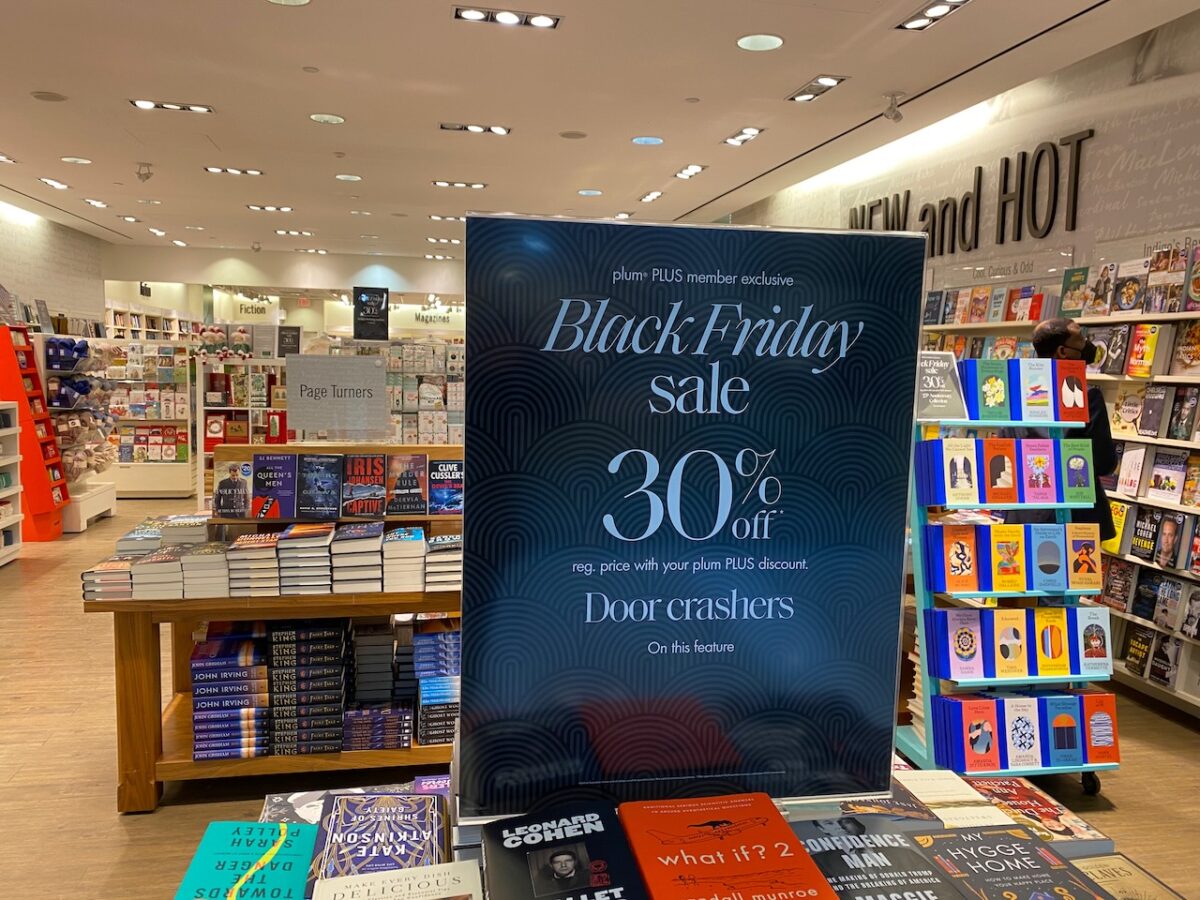
Today’s challenges include skyrocketing inflation and the higher cost of living for the average Canadian. What will that do to consumer confidence and spending as we embark on the holiday shopping season with Black Friday sales and promotions this week followed by Cyber Monday.
Retail Insider asked several retail experts their thoughts as retailers prepare for this busy time of year.
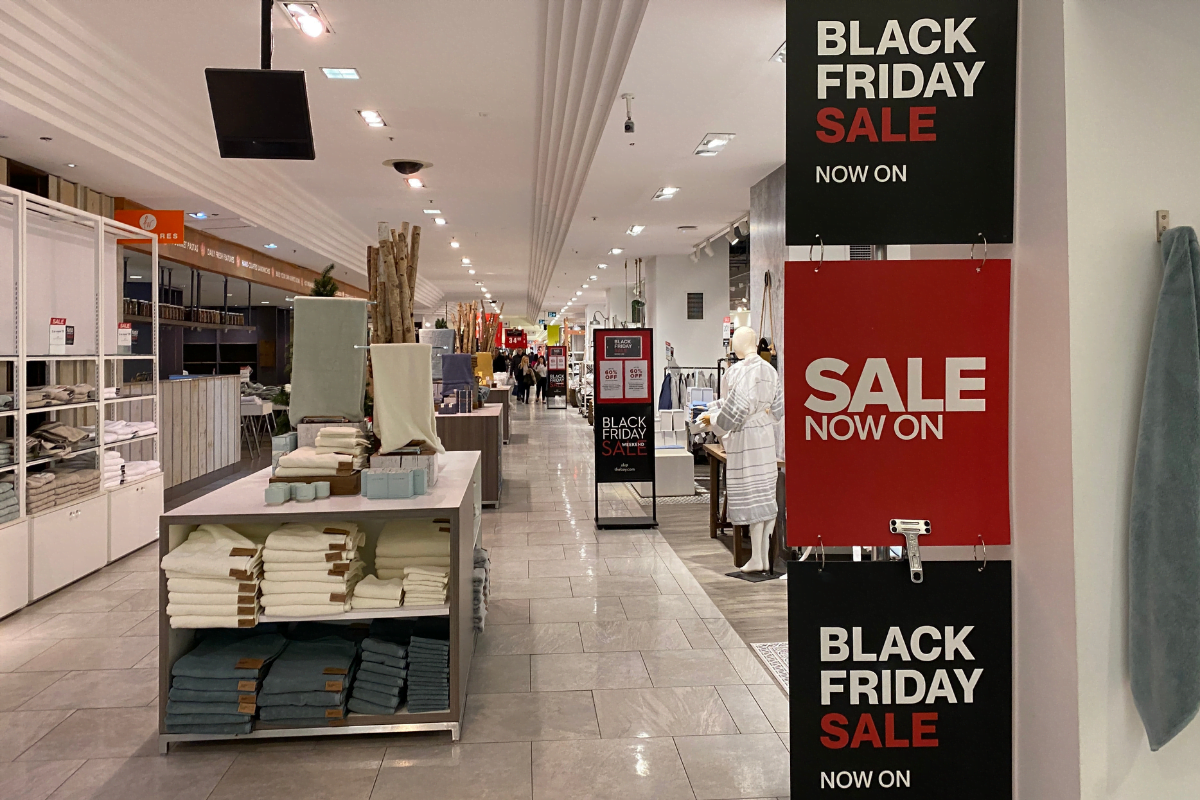
Black Friday Sales in Hudson’s Bay at CF Toronto Eaton Centre (Image: Dustin Fuhs)
1. What do you expect this year for Black Friday and Cyber Monday? Will shoppers be spending more or will they be cognizant of the inflationary pressures on them this year?
George Minakakis, author of The New Bricks & Mortar, Future Proofing Retail, who also leads advisory firm Inception Retail Group:
George Minakakis
“I believe the mood this holiday season has consumers more on edge with inflation. A $100,000 income does not have the buying power it used to pre-pandemic. What does that say for all other consumers? Everyone is looking for deals. If they spend more than last year it will be inflation-driven. That doesn’t mean they bought more! Nor that they are happy about it. That comes with a psychological impact.
“Those of us who have led retail chains are more interested in transaction and conversion growth, that matters a lot right now. Consumers will be looking to get as much as they can for their own holiday targeted spending. When the Bank of Canada and Canadian government tell the public to be prepared for a tough winter, they have been listening and this has set the stage for spending. I believe that higher income consumers are migrating as well from normal shopping patterns and destinations to more value. Those who are not high income earners are migrating deeper into the discount world. We shouldn’t be surprised if we hear that resell retailers have had increased volumes this season.”
Doug Stephens, author of Resurrecting Retail: The Future of Business in a Post-Pandemic World and Founder and President of Retail Prophet:
Doug Stephens
“From what I’m seeing there’s a sharp decline in excitement or interest around both these shopping dates. Consumers today simply don’t operate with any meaningful fear of missing out, given the protracted nature of what used to be Black Friday. And with Google reporting that searches for the term “recession” in the U.S. are up 355 per cent in 2022, I think it’s safe to assume the potential downturn is weighing on the consumer psyche.”
Gary Newbury, an award-winning Strategic Advisor and Delivery Executive focused on the rapid transformation of disrupted supply chain performance across the end to end retail supply chain and last mile, founder of RetailAID Inc. in Canada, a speaker, podcaster and thought leader on retail supply chain performance:
Gary Newbury
“I always find it interesting to see the big firms sharing their thoughts and watch them, as the events come closer into view, revise these in light of operating conditions. My thoughts are in two areas; overall spending will be somewhat lower (consumers are still adjusting their spending patterns), however individual gifts may rise over previous years as the “Great Inventory Glut” will provide enthusiastic shoppers with a range of gifts at much lower prices than would have been expected earlier this year.
“I also think the overall pattern of spending across socio-economic groupings will continue to build on last year. High-end spending will increase overall, as it has done throughout the pandemic. The middle and working classes will be reining in their expectations. When they do shop, the discount chains and off-price retailers will benefit most as long as they continue to make shopping on their apps/websites and in their stores convenient to shop, easy to navigate and adorned with many attractive promotions to prise highly valued dollars from a hard-pressed consumer.
Bruce Winder, author of RETAIL Before, During & After COVID-19 and president of Bruce Winder Retail:
Bruce Winder
“I think Black Friday and Cyber Monday will be OK (up single digit in $) this year despite the softness of the economic outlook, inflation, interest rates and geopolitical risks as frugal customers buy more on promotion versus regular price. Customers will use the event to do much of their holiday shopping to stretch their money. Retailers must offer outstanding value though or customers will balk at lukewarm offers based on higher regular retail prices. Retailers that try to prioritize margin rate will be punished.”
Michael Kehoe, Broker of Record, Fairfield Commercial Real Estate and a spokesperson for Consumer Real Estate Canada:
Michael Kehoe
“The Black Friday 2022 experience for consumers and retailers will vary in the various regions across Canada. Overall, I am expecting a robust Black Friday sales period but retailer expectations are cautious depending on the category.
“2022 Black Friday kicks off the holiday shopping season driving the post-pandemic retail recovery. The momentum will flow into Cyber Monday, the pre-Christmas shopping period and into Boxing Week. Sales and footfall at retail venues are expected to increase and consumer confidence is more or less on the positive side despite the effects of inflation and the awareness via the media of the potential for a mild recession in the near future.”
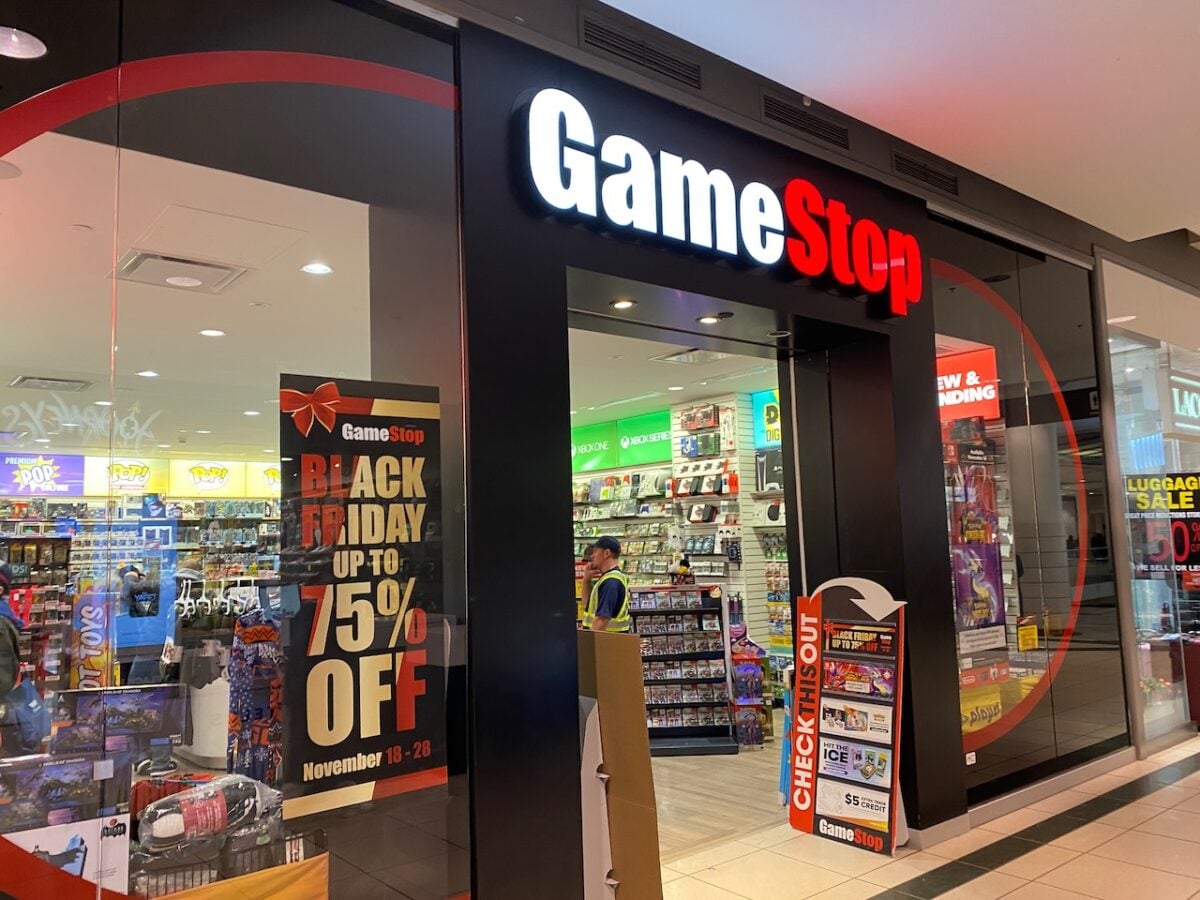
Black Friday Sales at GameStop in the CF Toronto Eaton Centre (Image: Dustin Fuhs)
2. Have you noticed that Black Friday really has come earlier this year? Sales and promotions earlier than before. Why?
Minakakis:
“I’ve noticed that holiday commercials, merchandising, displays and offers are out a lot earlier and aggressively. Everyone from Walmart to Canadian Tire are actively marketing for this season’s spending. There is no question that the uncertainty about consumers willingness to spend is a challenge. As a retailer you want to get out of the gate faster in stores and online. In fact, if you’re not there you could be at a disadvantage. I am pretty sure we will see increased advertising spending this season. It’s the only way to get a higher share.”
Stephens:
“Black Friday creep has been an ongoing trend in the US market for at least a decade and now we’re seeing the same in the Canadian market. In large part, it’s simply retailers mortgaging their futures with protracted discounts and promotions, so each year there’s a need to draw it out further to make the numbers. This year the stakes are even higher given the potential for retailers to be stuck with excess inventory if consumer demand falls short or if COVID outbreaks force holiday closures or occupancy caps.”
Newbury:
“The sooner retailers can move on from Halloween, and get into BF/CM promotions, the greater the opportunity to shift some of the excess stockholdings they have. They will not want to lose market share through a vital first strike on their consumers by their competitors.
“The extending period of BF/CM promotional period has been an increasing tendency over the last decade as Canadian retailing has slowly adopted and now fully embrace this sales event. Unfortunately, consumers tire of such long periods of single theme promotions and will be waiting for BF/CM extended weekend, or later, to pick up the bargains they are looking for at their desired price points.”
Winder:
“Outside of Amazon’s October event, I thought I would have seen more promotional activity earlier. I can’t say I’ve seen a meaningful change in how early the sale is this year versus previous. Perhaps retailers are waiting to spend scarce marketing dollars closer to the actual Black Friday/Cyber Monday dates as the competition for thrifty consumers becomes intense.”
Kehoe:
“The concept of Black Friday being a marketing event for retailers of all stripes has become an accepted driver of sales and every advantage is utilized by retail brands that seem to creep a little earlier on the calendar every year.”
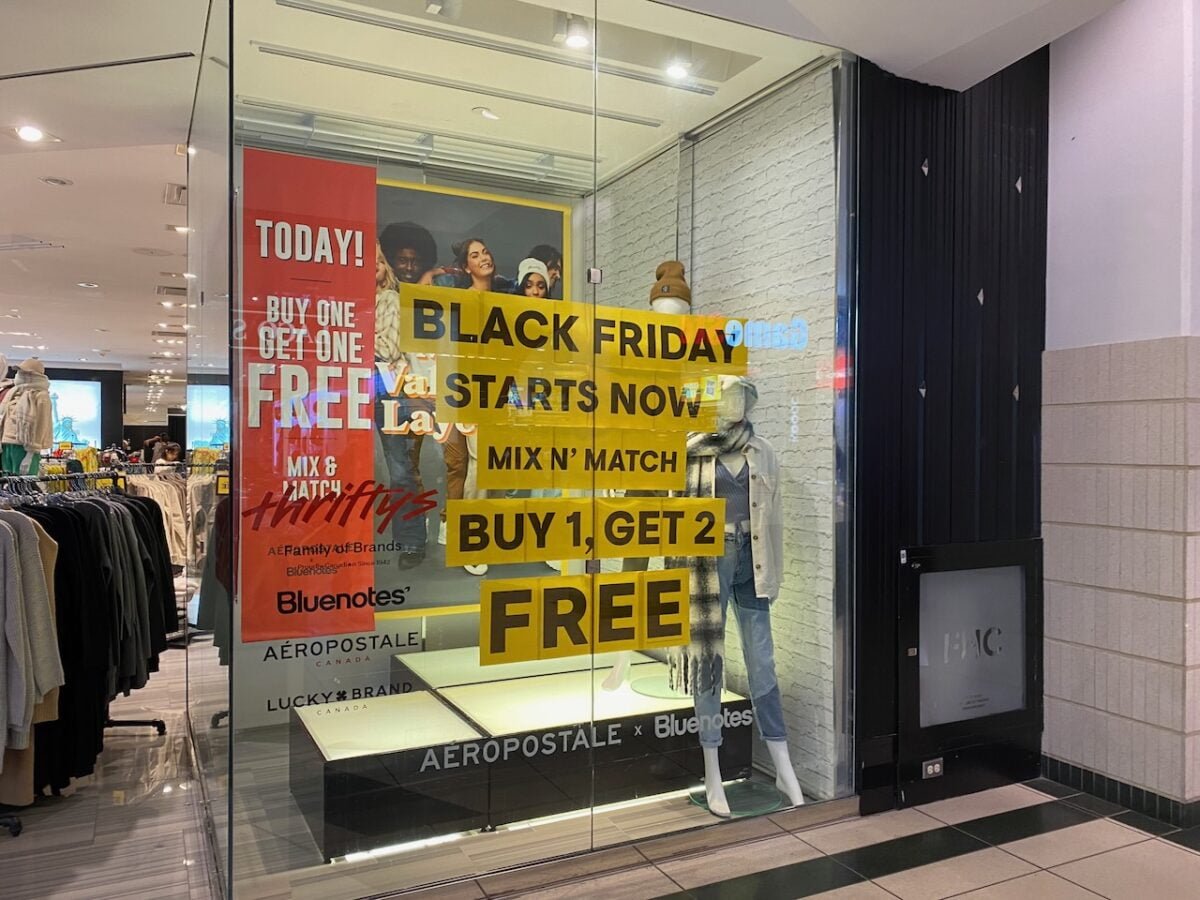
Pre-Black Friday Sale at Bluenotes (Image: Dustin Fuhs)
3. Do you expect to see supply chain issues this year for retailers and what impact will this have on consumers?
Minakakis:
“Much of the supply chain issues are more tempered. If anything large retailers have said they are seeing shipments arrive much sooner than anticipated. We already know that there are lot of containers sitting empty, indicative of changing patterns. I believe the biggest issue going forward in managing supply chains is not buying too much. Retailers with supply chain concerns may be facing financial issues, unable to fund their inventory needs. Overall, I expect the discussion in senior management meetings with retailers to pull out all excess inventory no matter how old, mark it down and move it.”
Stephens:
“Much of it depends on the degree to which global vaccination levels might quell any resurgence of the virus. If we have another winter of sporadic lockdowns, factory closures and dock worker shortages, then we could go back to square one with respect to supply chain breakage. It’s unlikely that we’ll have a situation as bad as last year but it’s not impossible.”
Newbury:
“With the demand patterns considerably curtailed from 2021 (through inflation and interest rate rises), and the inventory glut caused by overcompensating for potential shortages during 2021, we may see many stores with full shelves amidst the BF/CM promotion period and running into the final leg of the holiday promotions (and Boxing Day). Besides, vacancy rates for warehouse space is very low, especially in key markets like Toronto and Vancouver, so there’s a real pressure to get the inventory turning during Q4.
“However, my predictions for 2023 show a very choppy ride ahead for “Just in Time” retail supply chains, with potential disruption continuing in vital raw materials and energy, labour shortages across logistical activities and a very concerned consumer battered by accelerating inflation, accommodation costs, energy and increasingly dour job prospects.
“There will likely be realignment within supply chains. The last two to three years have not provided sufficient stability for advanced inventory management systems, perhaps using AI/ML, to make sense of disruption-impacted demand patterns, and furthermore, without more local sourcing of key “fashion” products (i.e. those fast moving, seasonal items that command higher margins), demand management processes will still lead retailers into malignment between consumer interests and the efficient servicing of their demand.
“We may have thought the worse, surely, is behind us. I would argue that it remains firmly in front of us, driven by the lack of real agility and resiliency across Canadian retailing, and the need to recognize that change is coming. Many retailers will proactively embrace this opportunity. Many will fight, tooth and nail against this. The concerns many CEOs have is “what can I do with my supply chain to help my business get in front of consumer demand and set trends?”. The response is not necessarily to keep fire-fighting and incrementalizing their current process and tech adoption on operating models that have barely survived the pandemic.”
Winder:
“I think there remain some supply chain issues this year but not as many as last year. In fact, some retailers have excess inventory that they are looking to sell off as spring and summer inflation softened sales and retailers made big bets a year ago on fall goods before inflation was a meaningful factor. Therefore, we should see some aggressive save stories (discounts) on select merchandise that retailers have too much of.”
Kehoe:
“Retailers in my network have, for the most part sorted out their supply chain issues with the exception of rising shipping costs and I believe that the problems of the recent past will be less impactful this year.”
Black Friday Sale at Indigo in First Canadian Place (Image: Dustin Fuhs)
4. Is this period of time make or break for many retailers? Who are most vulnerable?
Minakakis:
“This has always been a make or break period for most retailers. I would start by saying retailers need to worry about a collision course between consumer affordability and demand. Their strategies need to address this issue going forward. This is the biggest vulnerability every retailer faces now and into 2023 and perhaps beyond that. Excluding luxury, retailers that don’t offer deep enough value driven offers, will be the most vulnerable with traffic and conversion. Not to forget that e-commerce will take another bite out of in store shopping. At the end of the day retailers that carry a lot of unsellable inventory tied to debt and loan covenants, are very vulnerable.”
Stephens:
“Conventional wisdom used to suggest that the 4th quarter – dubbed The Golden Quarter – was a matter of life and death for most retailers. Online shopping and year-round availability of most items (including holiday items) has evened out demand across the year a little but for most it’s still a crucial time.
“The most vulnerable retailers are – and always will be those who offer commodity products without any level of added value – be it through service, expertise, convenience or some other aspect. Retailers like this may be able to cling to life during up-cycles but they’re usually the first to get eaten alive in recessions.”
Newbury:
“Around August last year I suggested Q4/2021 would be the make-or-break period for the Canadian retailing industry. That was before consumers continued to spend at high rates ahead of the holidays which glossed over the cracks in how we, as an industry, continue to do retailing. I don’t think Q4/2022 will throw up too many fallouts, however if online services remain “free”, especially returns, then we might be looking to see turmoil during the first half year 2023 as the inevitable realignment starts to take effect.
“Besides Target, Sears and a few other withdrawals over the last five years or so, we have yet to see the real fall out that higher operating costs (including interest rates, labour and transportation) surface. However, it is clear that discretionary categories will be under substantial pressure to focus on their proposition, their pricing and operating models and ensure their processes and technologies delight the consumer, or they will be passed over in preference for those that are getting this right as we enter 2023.”
Winder:
“This is a massive time for retailers that sell items that are bought as gifts. Sadly yes, several retailers will not survive past February 2023. This will be the first holiday since the pandemic that government supports will not exist. The world has changed since 2019 and some retailers will call it quits as the combination of debt incurred during the pandemic and the flight to value from customers will be too much for them. The most vulnerable are small retailers and brands that are not well capitalized.”
Kehoe:
“Fourth quarter retail sales success is essential for retailers but the need for strong sales this fall is amplified by many factors. Rising retail rents, increasing levels of taxation and other costs make the situation murky and unpredictable at best.
“Consumers will be cautious, price sensitive and strategic with their shopping this year. Fashion, toys, jewelry and experiential gifts like indoor skydiving or cultural event tickets are expected to be popular as well as small indulgences like artisan gifts from local Christmas markets.”
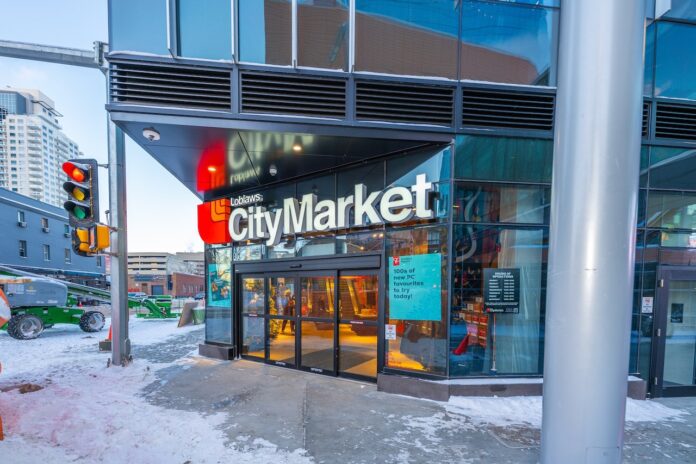
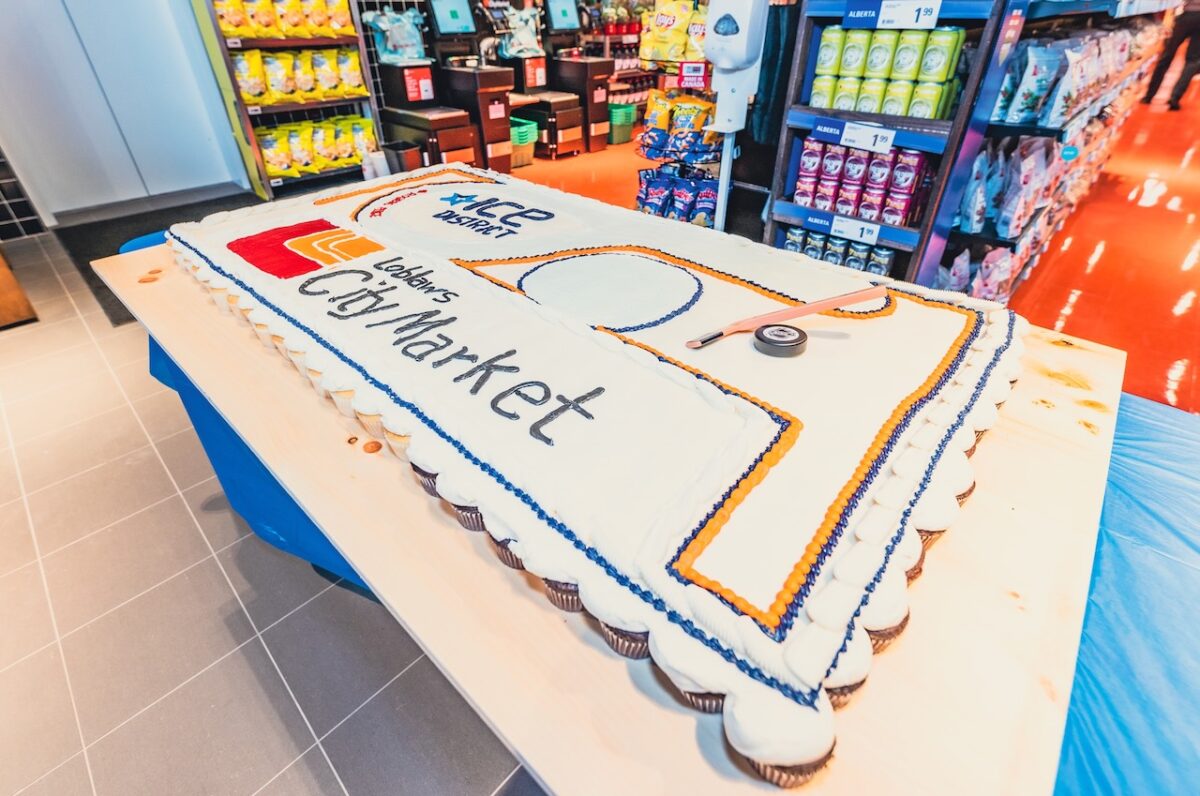
A unique concept Loblaws City Market store has opened in Edmonton’s ICE District, Canada’s largest mixed-use sports and entertainment district.
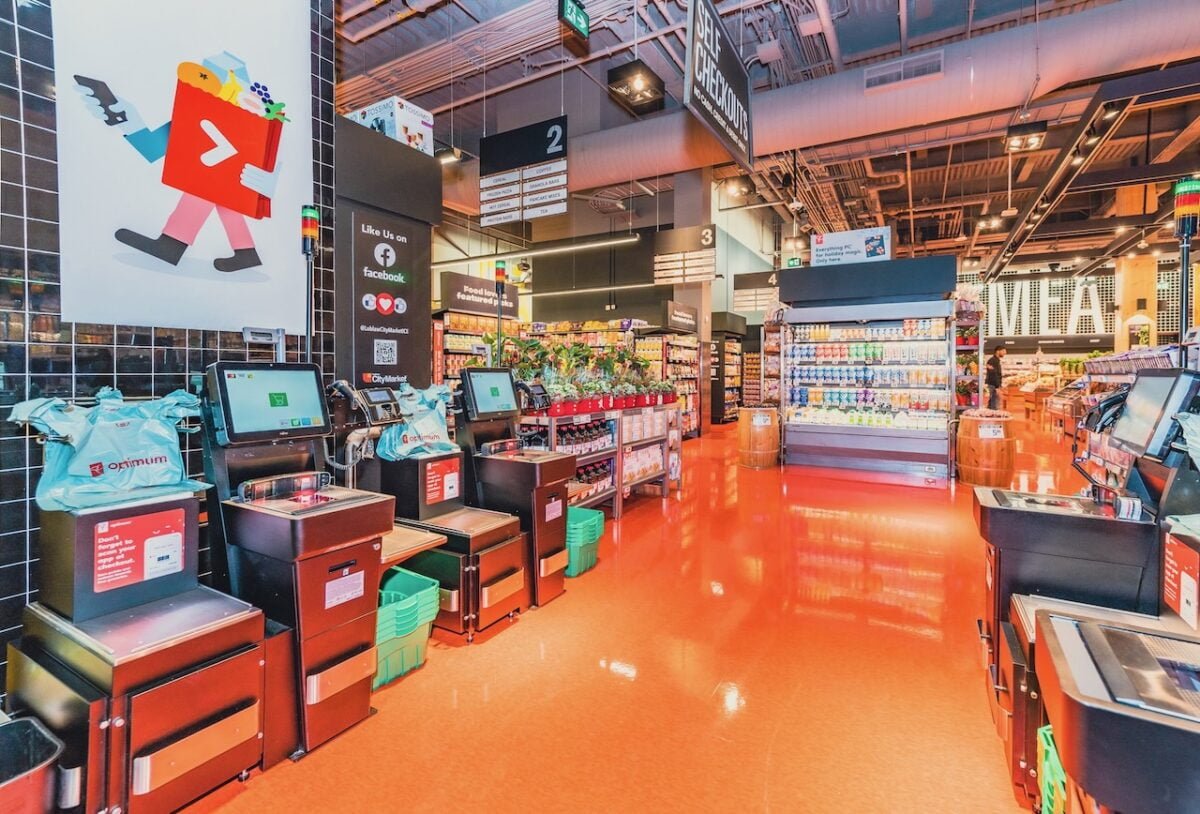
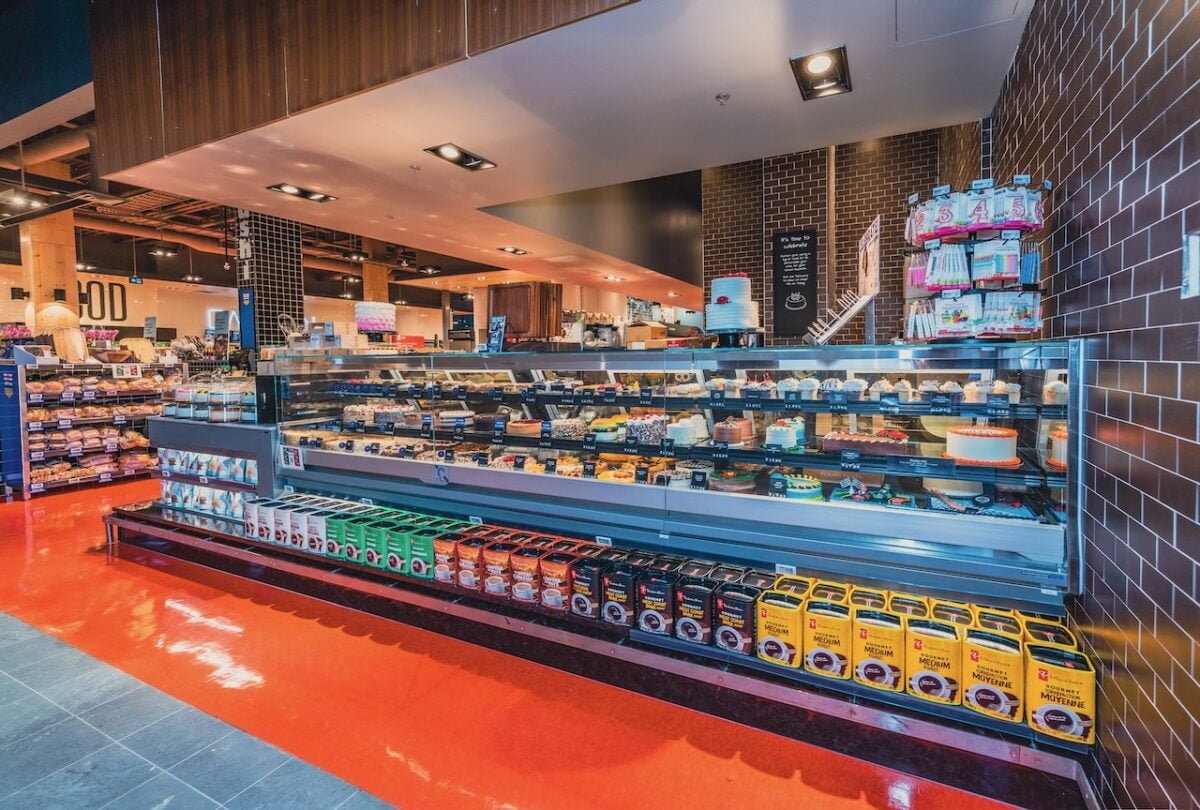
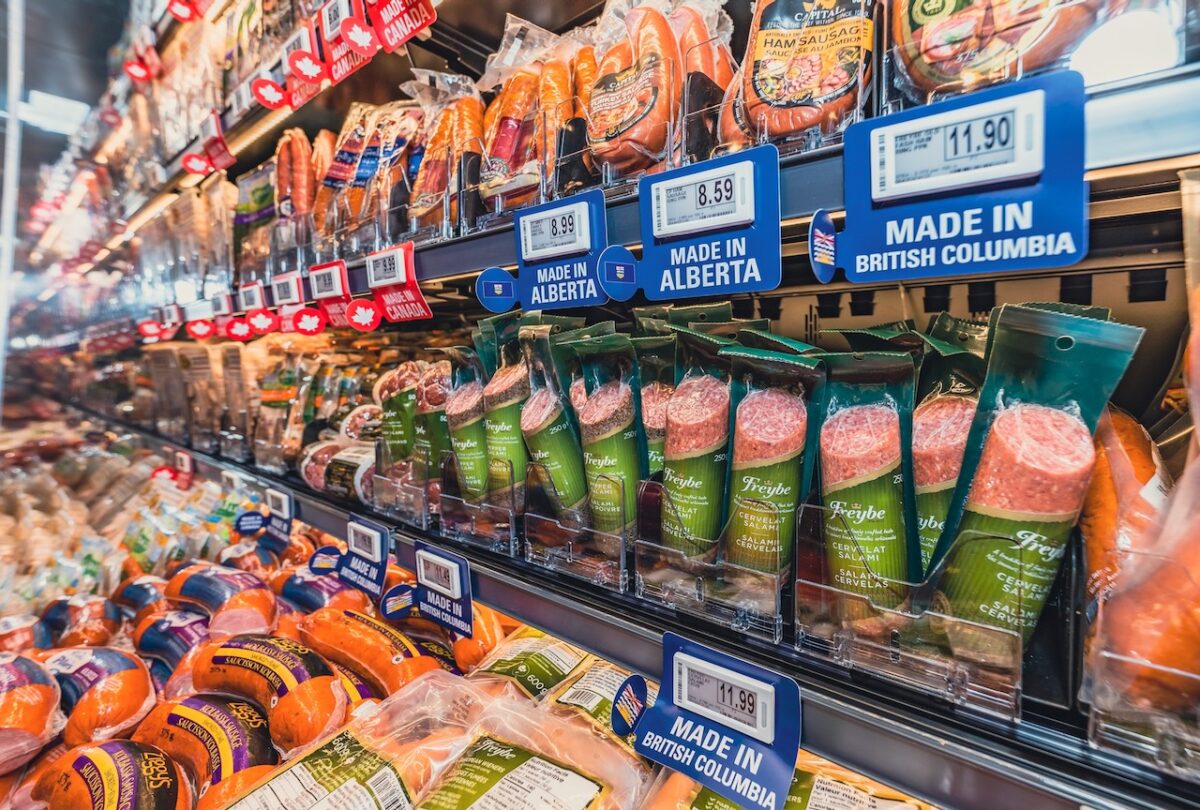
Stella He, Store Franchise Owner, said the smaller 22,000-square-foot store has a full assortment of merchandise as well as fresh goods and it will serve a need for a supermarket in the heart of Edmonton.
Stella He
“We’re so excited and proud to offer downtown Edmontonians improved access to a wide variety of delicious and convenient food options,” said He. “We look forward to a long and successful partnership with the ICE District, and to serving our customers and community for many years to come.
“We are serving the downtown core residents, students, event (goers) and office workers.”
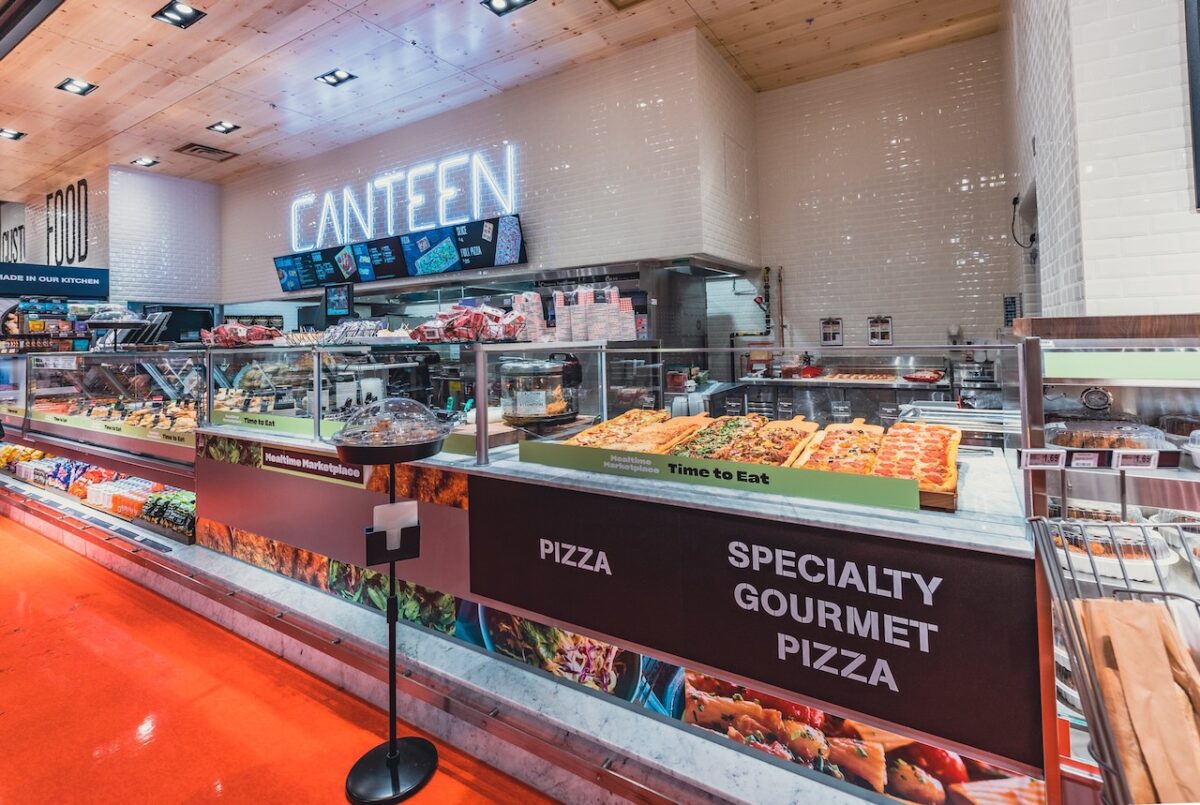
Loblaws City Market (ICE District) Image: LoblawLoblaws City Market (ICE District) Image: Loblaw
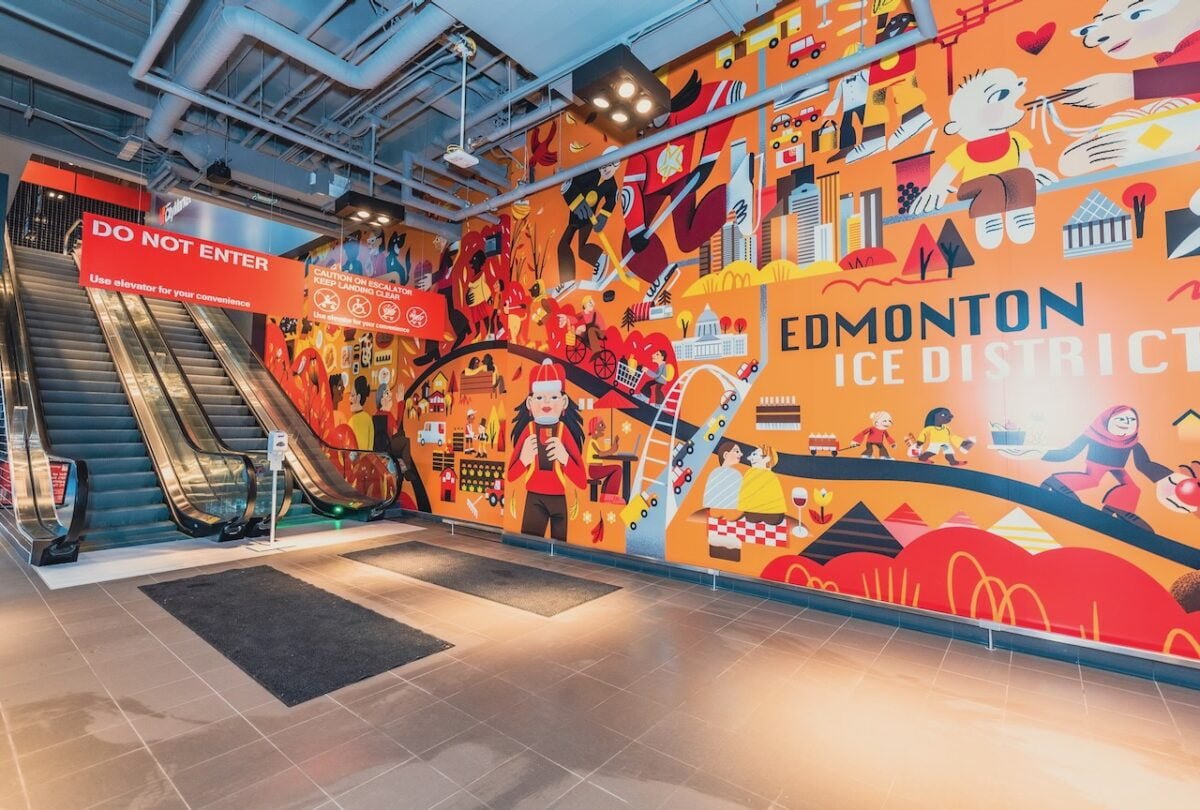
ICE District is reimagining the way Edmontonians experience their city’s downtown, offering the very best in entertainment and hospitality, as well as AAA office and residential spaces. With ICE District Plaza officially open in October and anchor tenants like Rogers Place, Stantec, JW Marriott, the Oilers Official Team Store, Grand Villa Casino and many others including a variety of restaurants and bars open for business, ICE District has become the epicentre of entertainment in Edmonton.
Officials said the Loblaws City Market is yet another milestone opening for the area, and an extremely welcome and exciting addition to Edmonton’s new downtown hub.
He said the decision to open a store at ICE District was spearheaded by the Loblaws real estate team.
“The location is so convenient and the community has been so welcoming to us. We’re overwhelmed by the amount of welcoming of the customers coming to us,” she said, adding the store is able to fulfill customers’ needs in a more compact setting.
“What we’re hearing over and over again is how excited they are that there’s finally a grocery store in the downtown core.”
Loblaws City Market (ICE District) Image: LoblawLoblaws City Market (ICE District) Image: Loblaw
The store is located at 10324 103 Ave NW and offers ready-to-go meals from its Mealtime Marketplace to the fresh produce and consumer packaged goods the Loblaws brand is famous for.
Stuart Ballantyne
“As part of the planning process for ICE District, the need was identified to bring in amenities that would help create a more livable downtown—and a modern, urban grocery store was top of the list,” said Stu Ballantyne, President and Chief Operating Officer, Rogers Place and ICE District.
“ICE District has already played a key role in North America’s most successful post-pandemic return to the workplace and downtown core, and we couldn’t be happier to see the doors officially open at ICE District Loblaws City Market. We know this has been a highly anticipated opening for our residential and office space tenants and we look forward to continuing to offer best-in-class experiences and offerings for Edmontonians as ICE District continues to evolve and grow.”
Loblaws City Market (ICE District) Image: LoblawLoblaws City Market (ICE District) Image: Loblaw
ICE District Properties, a mixed-use development surrounding Rogers Place and Ford Hall, was developed through a joint venture between Katz Group and ONE Properties.
“Our whole philosophy is live, work, play, shop and stay for ICE District. With all of the condominiums that sit on top of the hotel, that sit on top of the office tower in that block, not to mention all of the newer condominiums that have been built in and around ICE District, a grocery store within walking distance for those people was highly important and was part of the original plan that they mapped out for what ICE District could be,” said Ballantyne.
“And so having it open is literally game changing for those that live in the area.
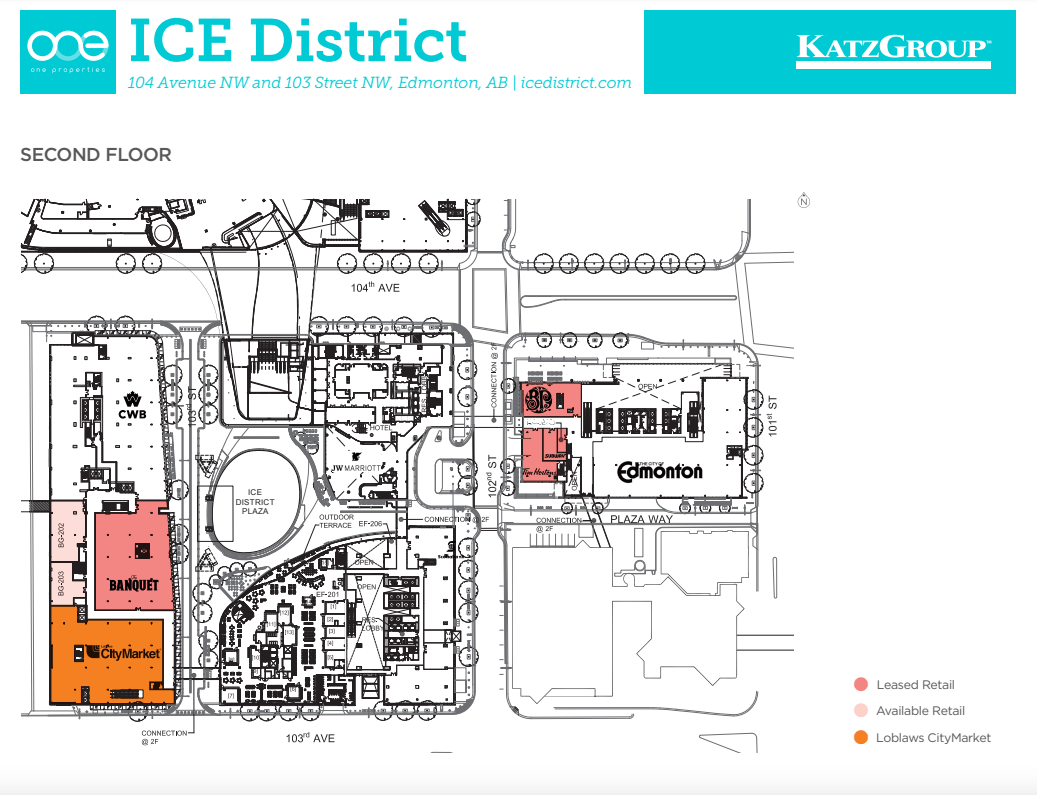
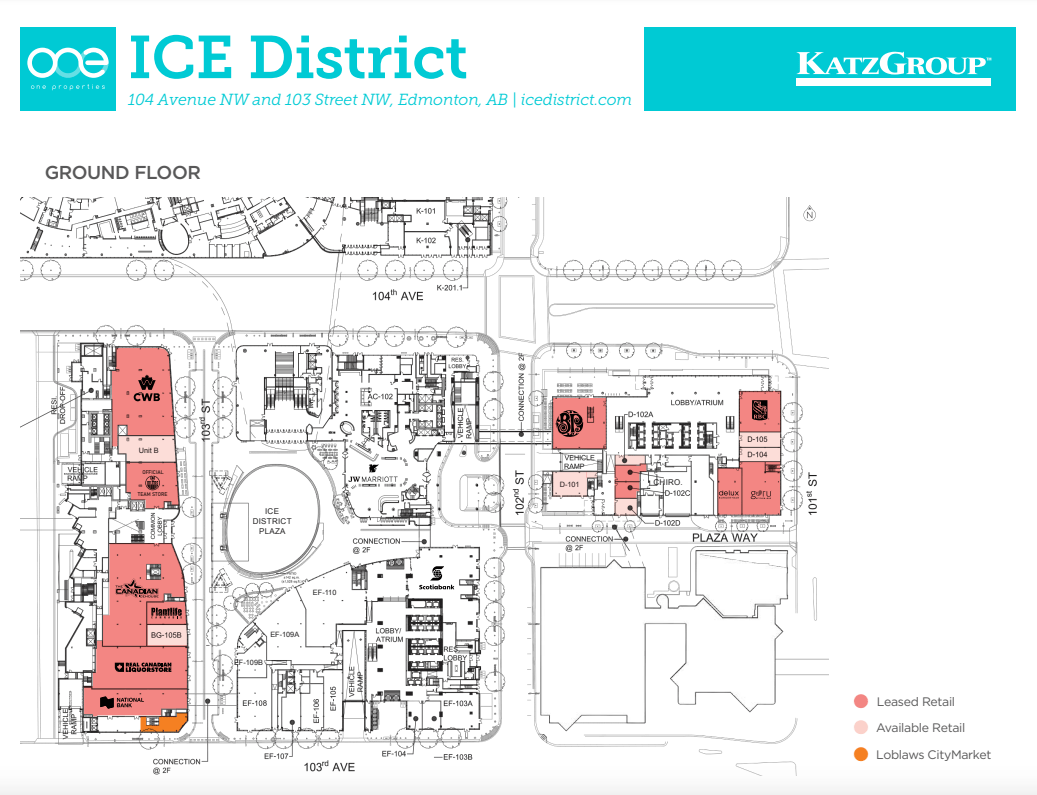
Image: ICE District
Ice District Leasing Map (October 2022)
Ice District Leasing Map (October 2022)
“This one of course is connected by pedway so people that live in the downtown core that sit on the pedway don’t have to go outside to get to the grocery store and go home.”
He said the closest grocery store would be about six blocks from ICE District.
Ballantyne said the “boutique” Loblaws store fits in nicely with the neighbourhood. It’s modern and urban in its style as well.
Adyen’s first Canada Holiday Report, commissioned by Angus Reid, finds that more than half of Canadians (58 per cent) said the most important factor when deciding where to shop this holiday season is a store they are loyal to and have had past experience.
Sander Meijers
The report also reveals that the checkout process will dictate whether Millennials and Gen Z decide to spend or not, with many also demanding that they have an integrated checkout and payment experience that is connected online and in-store. But only less than half of Canadians are usually satisfied with the return experience when they purchase a holiday gift.
“The retail industry is evolving, and we must recognize the changing needs and desires of Canadian shoppers at every age. How Millennials and Gen Z prefer to shop versus Boomers and the older Canadian population directly impacts which brands they’re loyal to,” said Adyen Canada Country Manager, Sander Meijers. “This holiday season, retailers will need to double down on their payment processes to ensure that they are meeting shoppers where they are – whether it’s online, in-person, or both. A seamless retail experience means convenience at every touchpoint, including speedy checkouts and convenient returns.”
ApplePay
Meijers said the most important finding from the report that he keeps seeing come back and back is that consumers don’t really care about where they’re buying or where they’re returning.
“For a merchant, a brand, a retailer, they don’t care where the contact is whether it’s online or in store. Consumers really want to have one experience,” he said. “Think about paying. They don’t want a different experience in the store than they see online. If they think about loyalty, they don’t want to be recognized online but then not be recognized in store when they pay or when they sign in.
“When they think about returns, they really don’t want the fact that whatever they bought online can’t really be returned in an easy way in store or what they bought in store can’t really be sent back to a random location and they get it funded on their e-commerce wallet for that matter.”
Meijers said unified commerce is important for retailers today. Customers should feel the same way in all retail touchpoints and they should be treated in the same way.
He said brands are really trying to do that today, and they acknowledge that, but they’re having troubles in the background. Historically, it’s been two completely different systems. Technology has been built to help with their online experiences and there was already technology there for their brick and mortar stores.
“These two technologies have not been connected. So what you end up with is a lot of manual work and I think brands recognize this and they’re struggling. They’re patching refund processes together and the shopper feels that. I think brands are recognizing the need but they’re just struggling to really get it in a seamless experience because their technology is just not connected.”
Adyen is a leading retail end-to-end, all-in-one payments solution for merchants across the globe.
The survey found that younger Canadians continue to drive the popularity of online shopping while older generations largely still prefer shopping in-store, and with that has come an increased desire and need for integrated payment solutions in the emerging world of “unified commerce.”
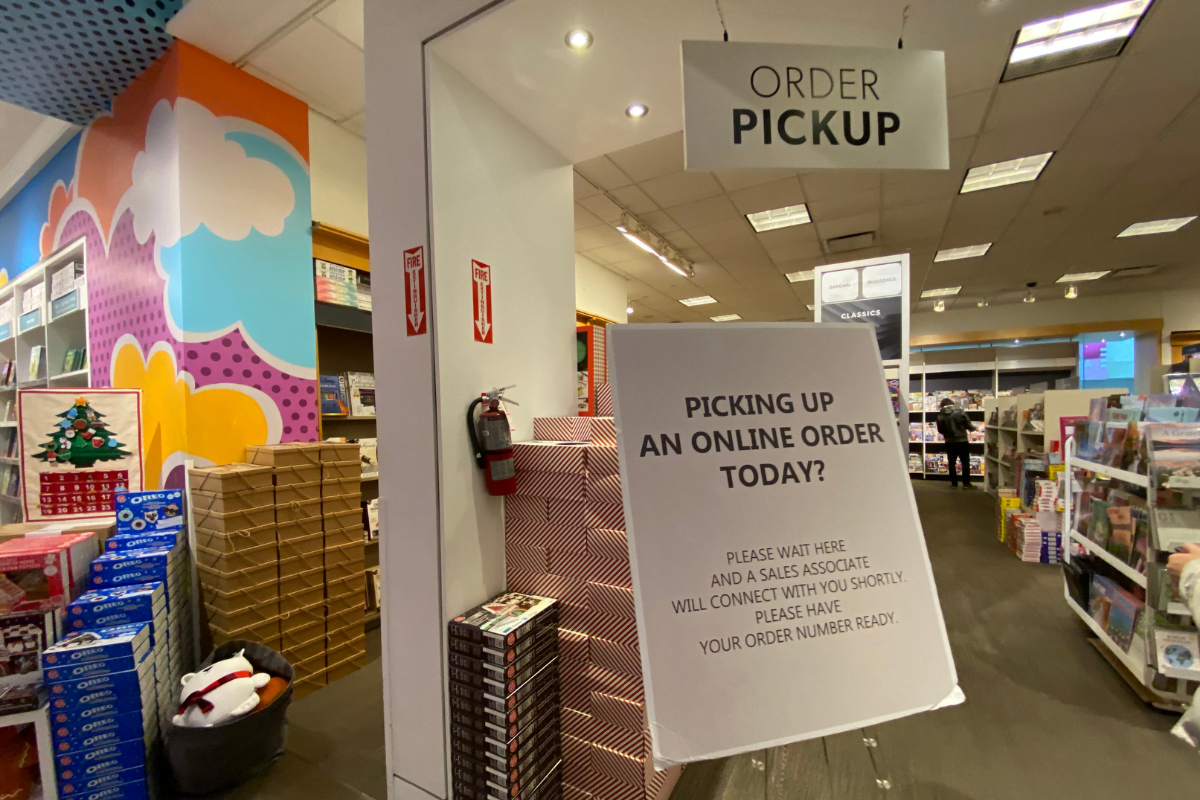
Indigo Order Pickup at CF Toronto Eaton Centre (Image: Dustin Fuhs)
Survey highlights include:
One in four Canadians say the speed of the checkout process dictates whether they spend or not;
54 per cent of young Canadians aged 18-34 say the single-most important thing for them when deciding which store(s) to shop from this holiday season is a store they are loyal to and have past experience with;
45 per cent of those aged 18-34 have not usually been satisfied with the return experience when trying to return unwanted items, nearly twice the proportion (24 per cent) of older Canadians (55+) who said the same;
44 per cent in the 18-54 age group say they are more likely to shop at stores that offer integrated in-store and online payments;
Conversely, only 25 per cent of older Canadians (55+) say they are more likely to shop at stores that offer integrated payments, with 75 per cent saying it makes no difference to them;
58 per cent of Canadians say the single-most important thing for them when deciding which store(s) to shop from this holiday season is a store they are loyal to and have past experience with. This is more than twice the proportion who said “stores that offer seamless in-store and online return processes” (25 per cent);
Young Canadians and older Canadians were aligned with the importance of brand loyalty, with 54 per cent of young Canadians agreeing that loyalty is the single-most important factor, and 65 per cent of Canadians aged 55+ agreeing as well;
45 per cent of those aged 18-34 have not usually been satisfied with the return experience when trying to return unwanted items, nearly twice the proportion (24 per cent) of older Canadians (55+) who said the same.
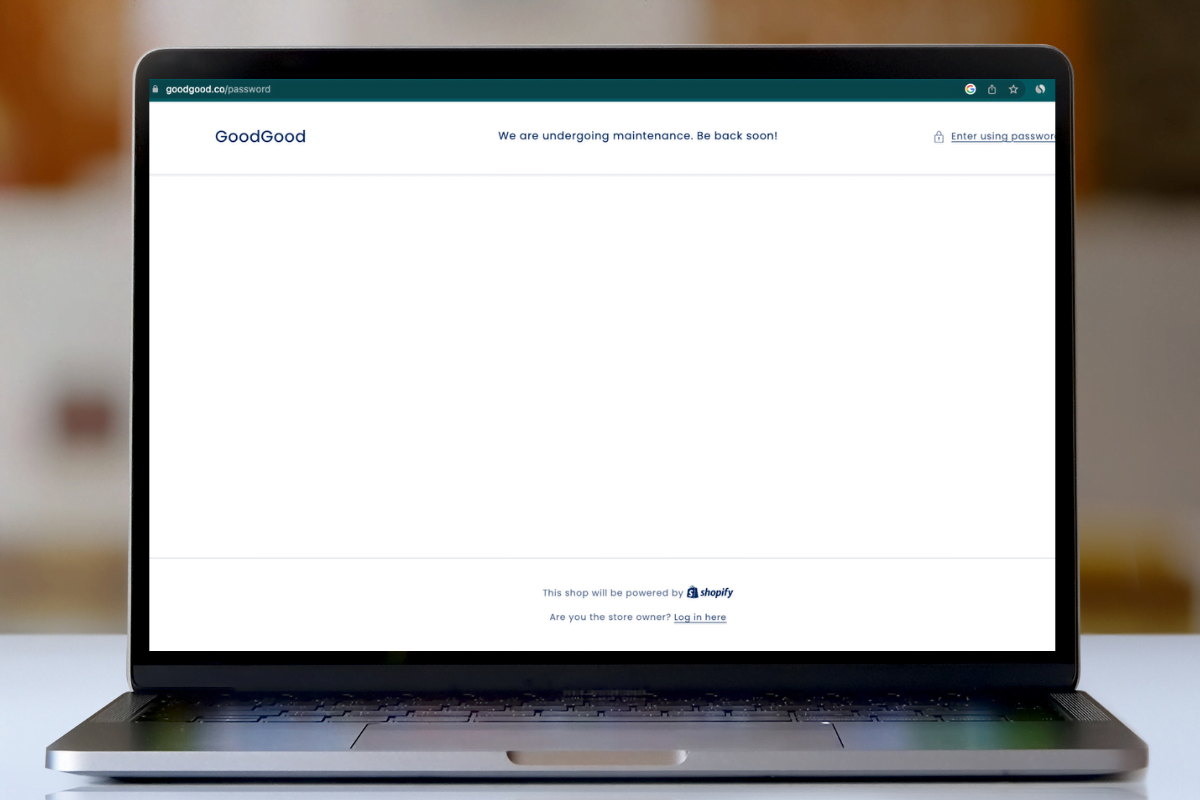
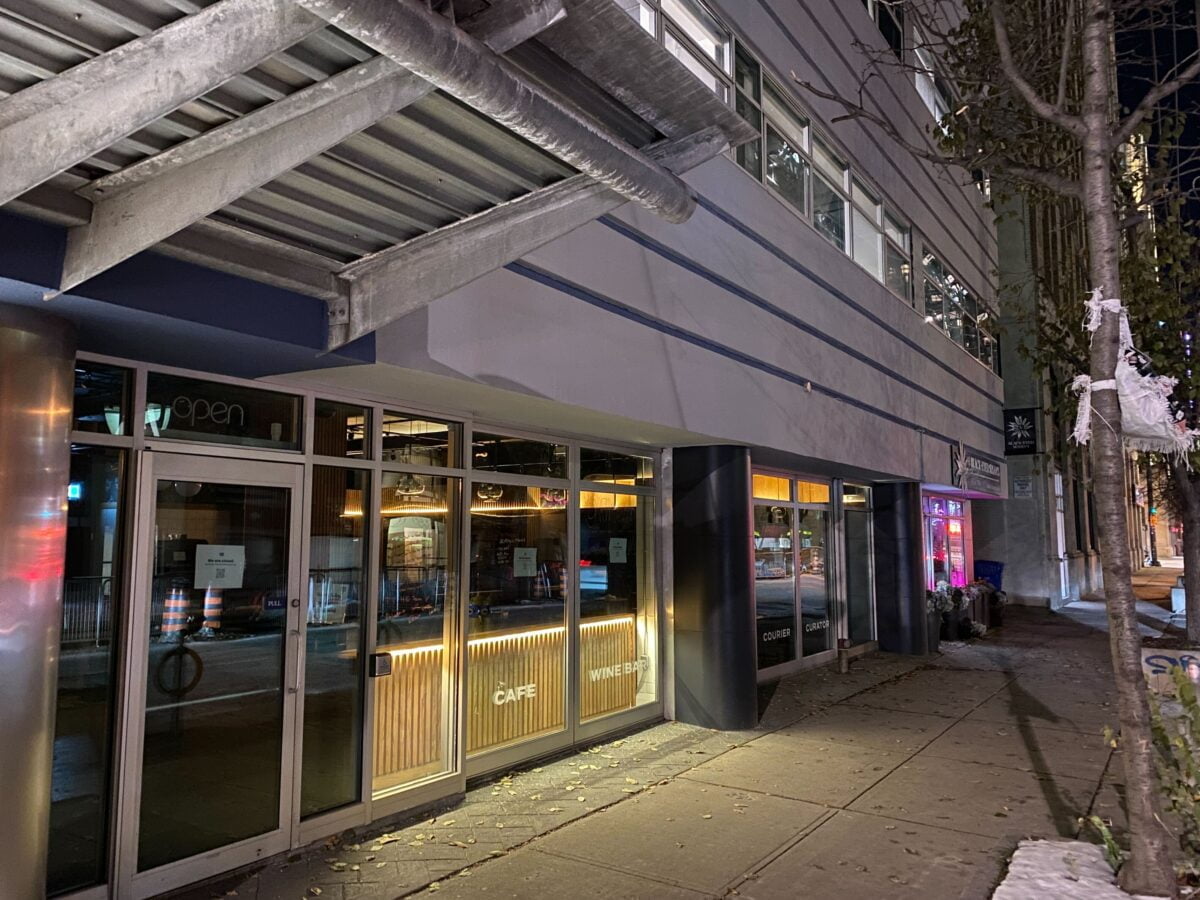
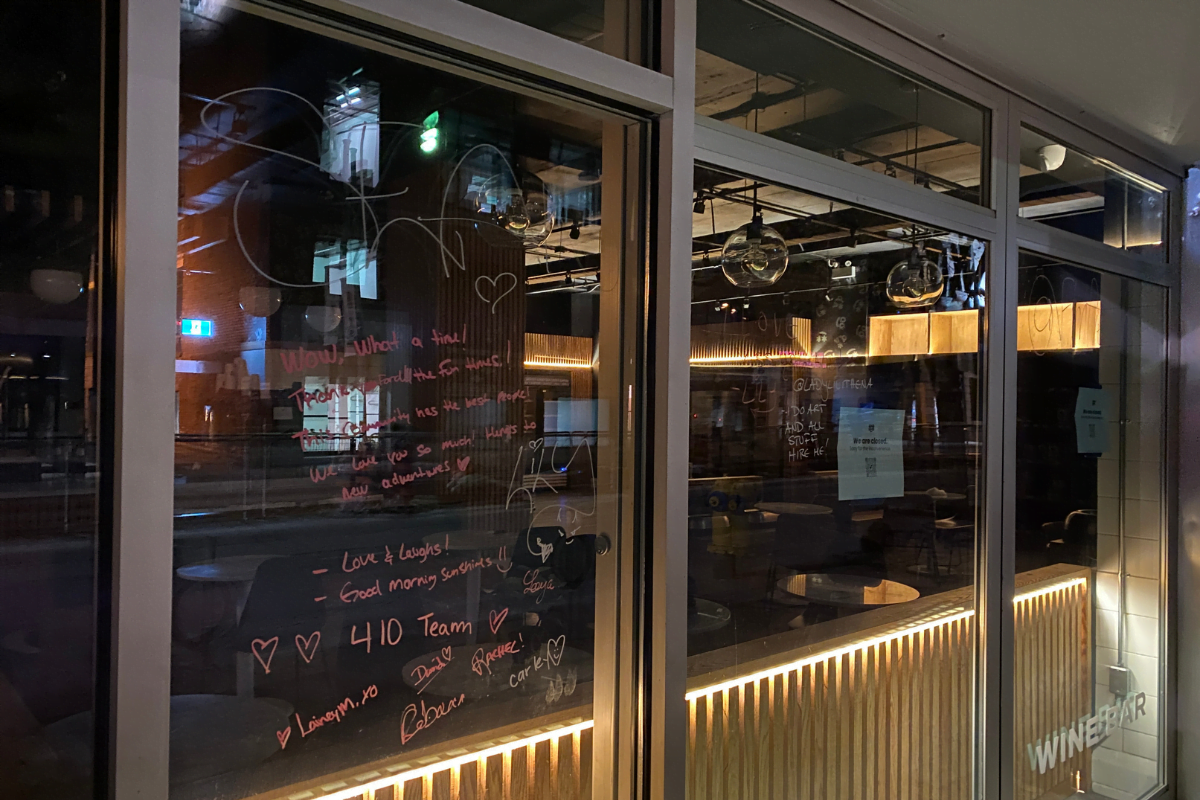
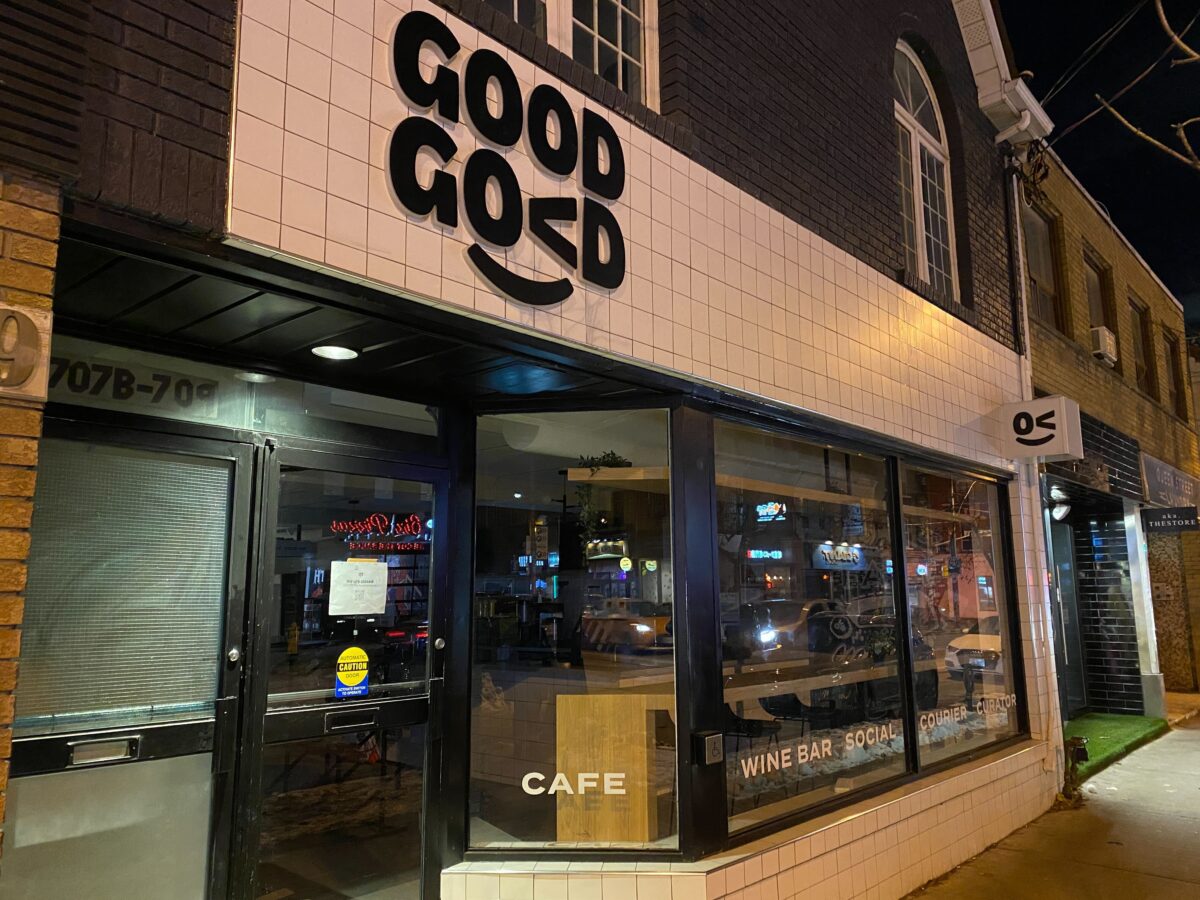
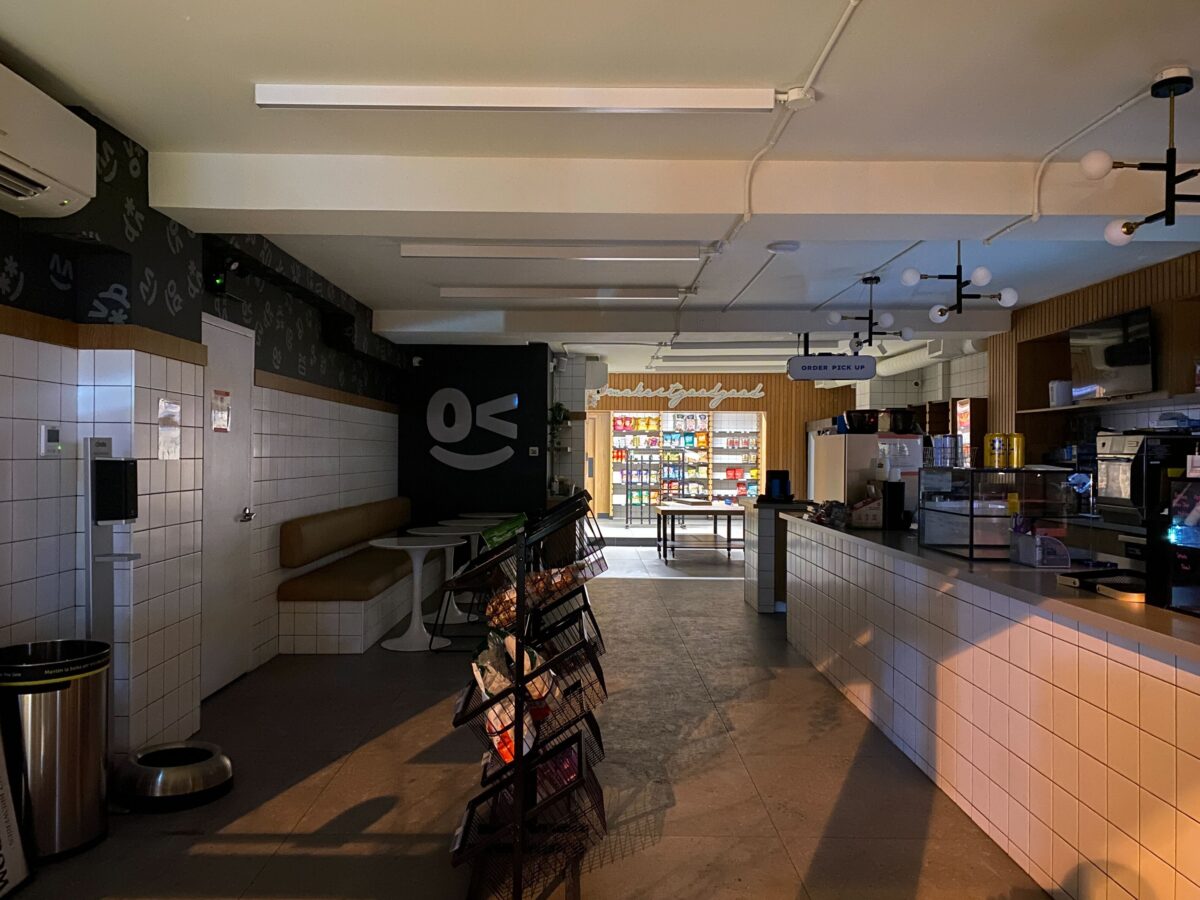
Unique Toronto-based local commerce retailer and foodservice business GoodGood has ceased operations and shut its retail spaces, noting challenges to doing business in this economic climate.
The company released the information via social media.
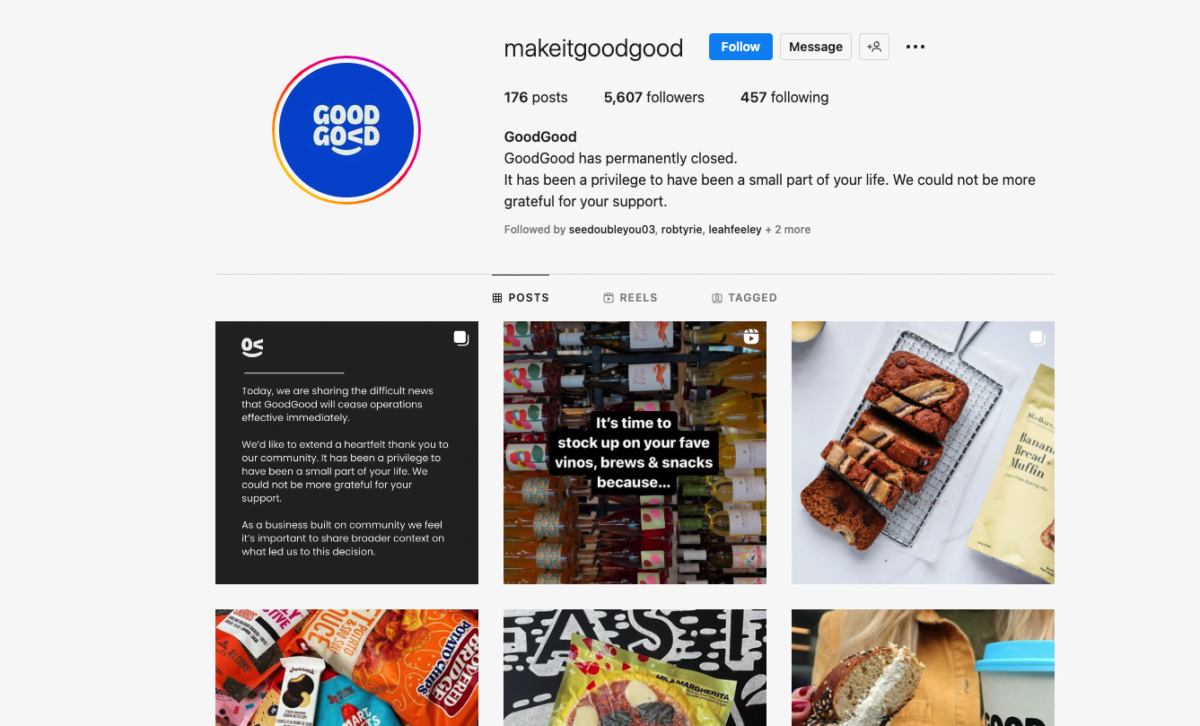
“Today we are sharing the difficult news that GoodGood will cease operations effective immediately,” said the brand on Instagram. “We’d like to extend a heartfelt thank you to our community. It has been a privilege to have been a small part of your life. We could not be more grateful for your support. As a business built on community we feel it’s important to share broader context on what led us to this decision.”
“When we set out to build GoodGood we had an extremely ambitious vision – reimagine modern day convenience, focused on making emerging makers more accessible to local communities.”
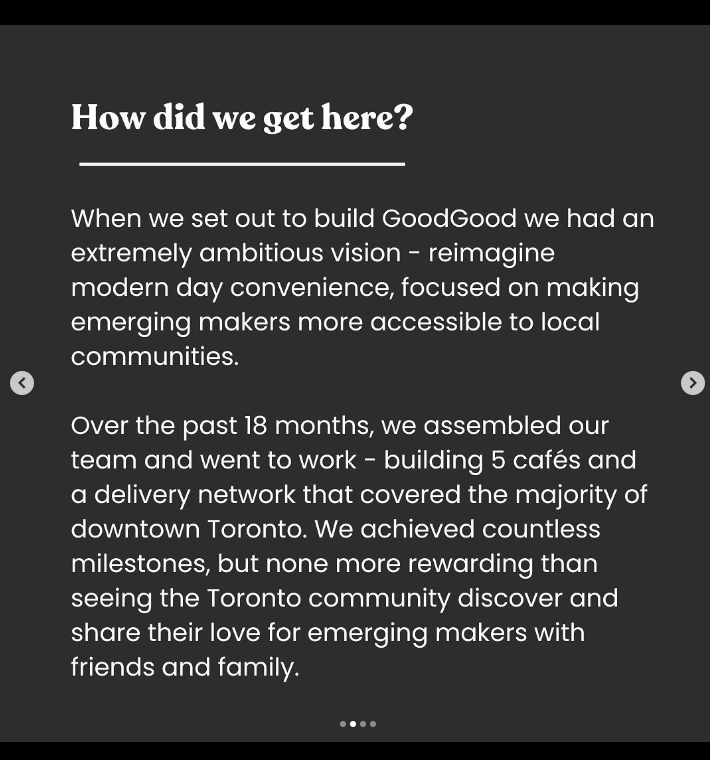
“Over the last 18 months, we assembled our team and went to work – building 5 cafes and a delivery network that covered the majority of downtown Toronto. We achieved countless milestones, but none more rewarding than seeing the Toronto community discover and share their love for emerging makers with friends and family.”
GoodGood Instagram Announcement (Image: GoodGood)
Image: Instagram.com/makeitgoodgood
Image: Instagram.com/makeitgoodgood
Image: Instagram.com/makeitgoodgood
Image: Instagram.com/makeitgoodgood
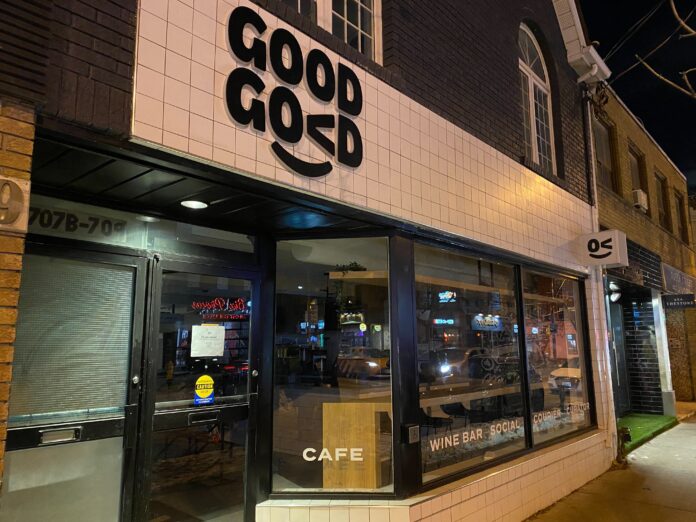
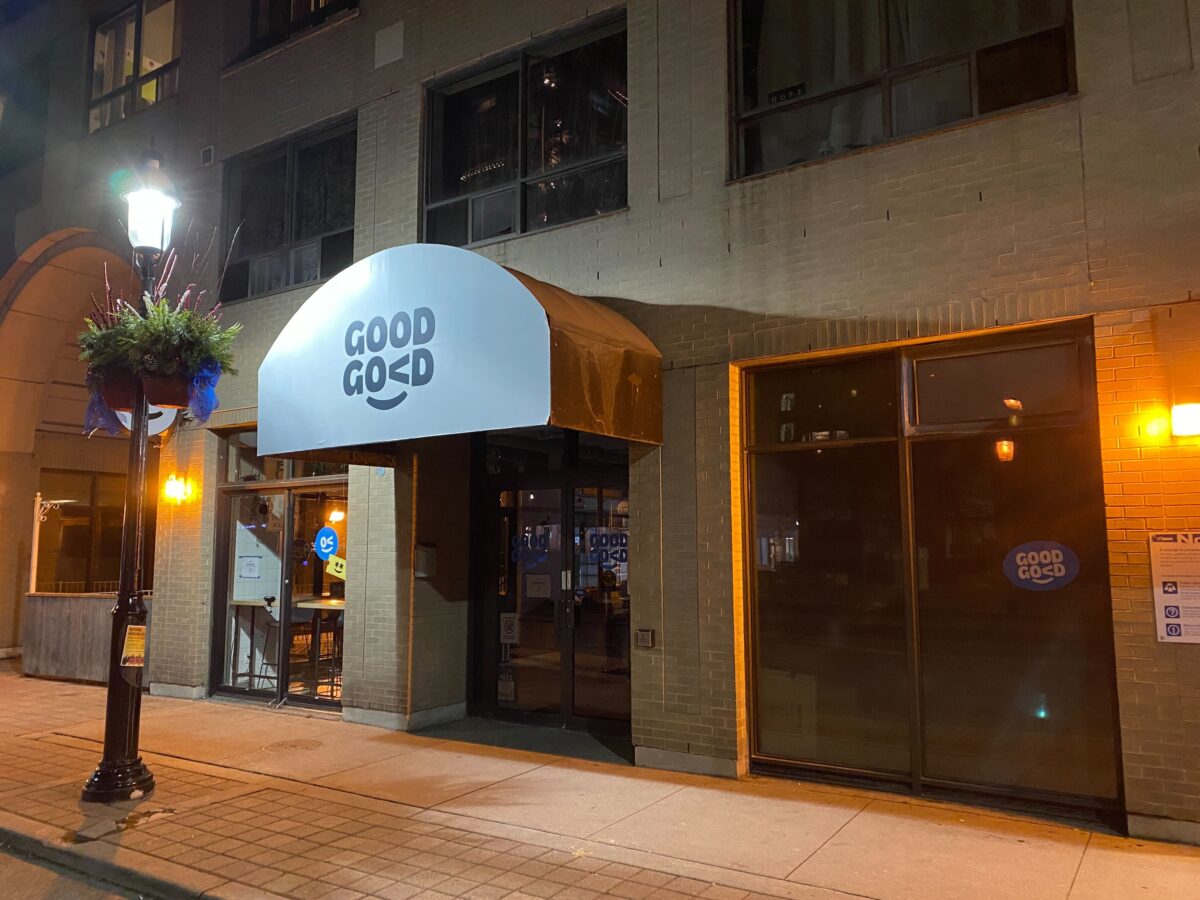
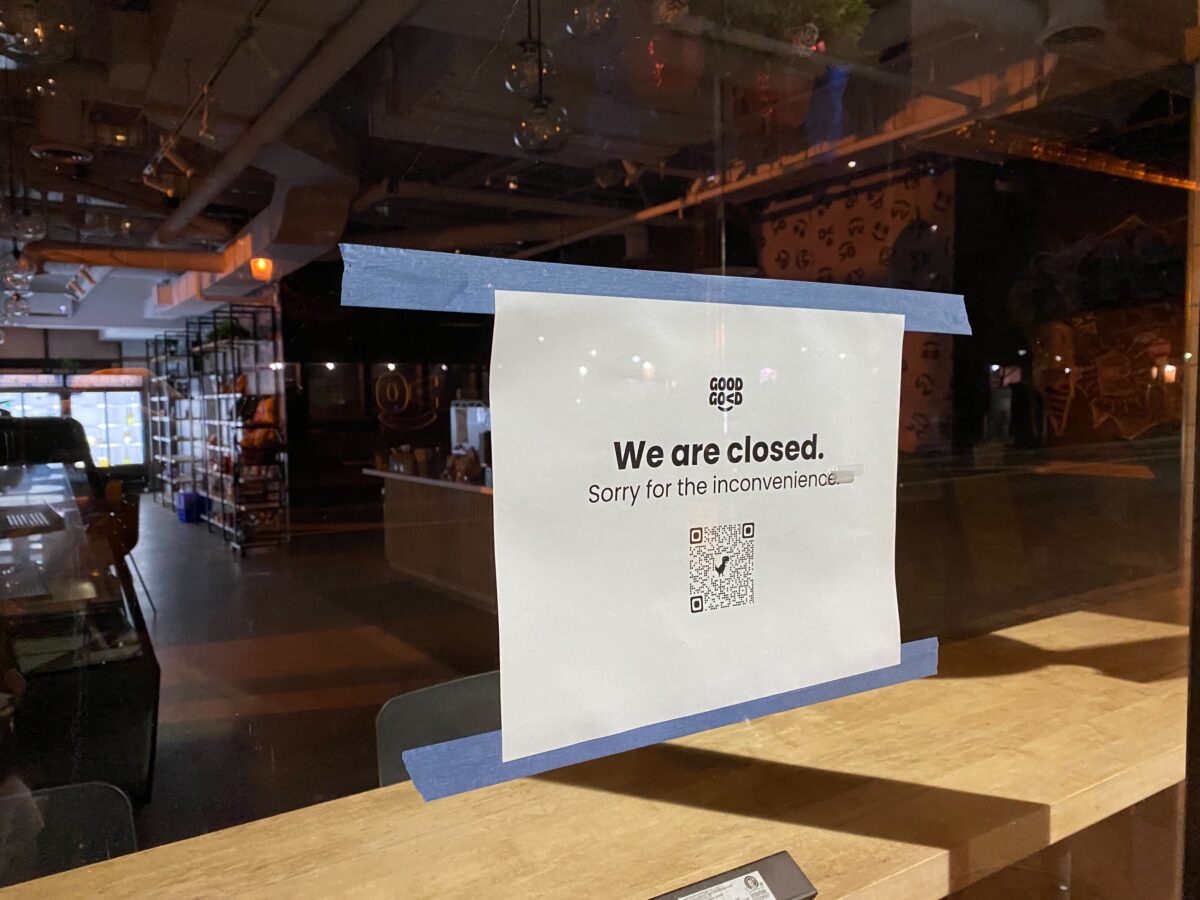
Former Esplanade GoodGood location on Sunday, November 20, photo: Dustin FuhsFormer Esplanade GoodGood location on Sunday, November 20, photo: Dustin Fuhs
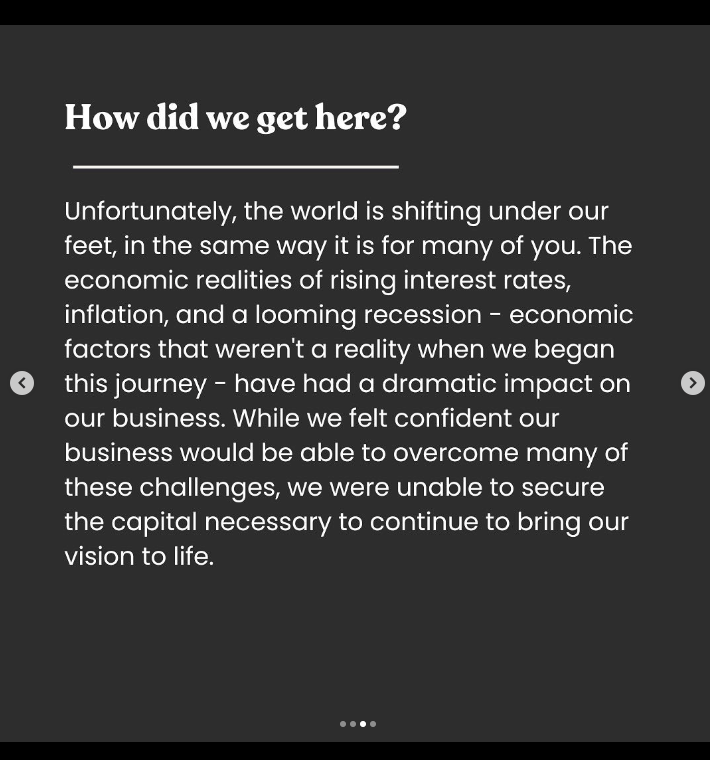
“Unfortunately, the world is shifting under our feet, in the same way it is for many of you. The economic realities of rising interest rates, inflation, and a looming recession – economic factors that weren’t a reality when we began this journey – have had a dramatic impact on our business. While we felt confident our business would be able to overcome many of these challenges, we were unable to secure the capital necessary to continue to bring our vision to life.”
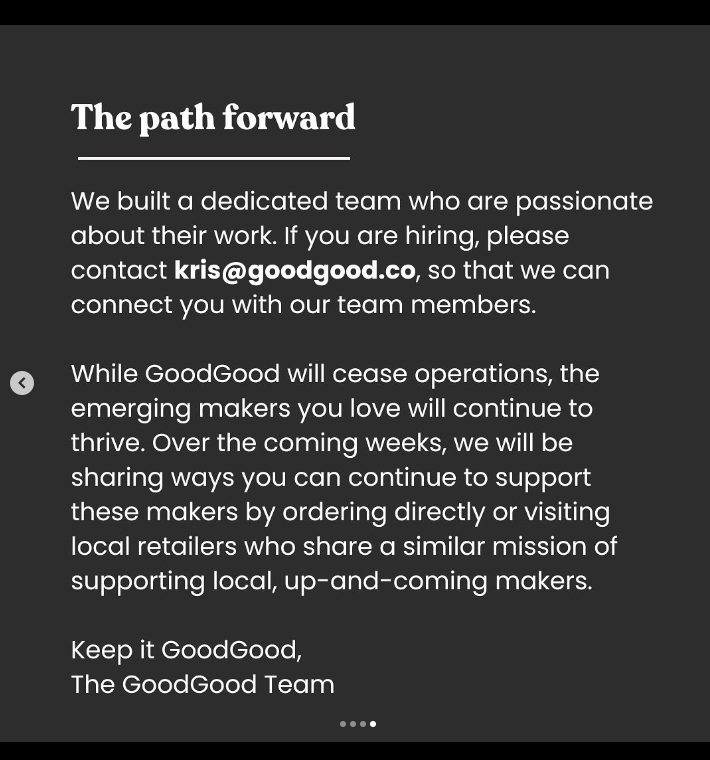
“We built a dedicated team who are passionate about their work. If you are hiring, please contact Kris@GoodGood.co, so that we can connect you with our team members.”
“While GoodGood will cease operations, the emerging makers you love will continue to thrive. Over the coming weeks, we will be sharing ways you can continue to support these makers by ordering directly or visiting local retailers who share a similar mission of supporting local, up-and-coming makers.
“Keep it GoodGood, The Good Good Team.”
Image: GoodGood.co Former Adelaide St. location on Sunday, November 20, photo by Dustin FuhsFormer GoodGood Location on Adelaide Street (Image: Dustin Fuhs)
Founded by Robert Kim and Kris Linney, GoodGood’s goal was to make it easier for neighbourhoods to access their favourite makers and artisans.
The brand opened its first pop-up at Adelaide Street West and Spadina in December 2021. That location was followed with locations at:
140A The Esplanade in the St. Lawrence Market neighbourhood
1187 St. Clair West in the St. Clair and Dufferin neighbourhood
709 Queen Street West
1909 Yonge Street at Yonge & Davisville
and a flagship at 410 Adelaide Street West
We’ll continue to update this article, as this is a developing story.
Former Queen Street location on Sunday, November 20, photo: Dustin FuhsFormer Queen Street location on Sunday, November 20, photo: Dustin Fuhs
Retail Insider is streamlining its Canadian retail news from around the web to include a handful of top news stories that can be viewed quickly during the day. Here are the top stories from the past three days.