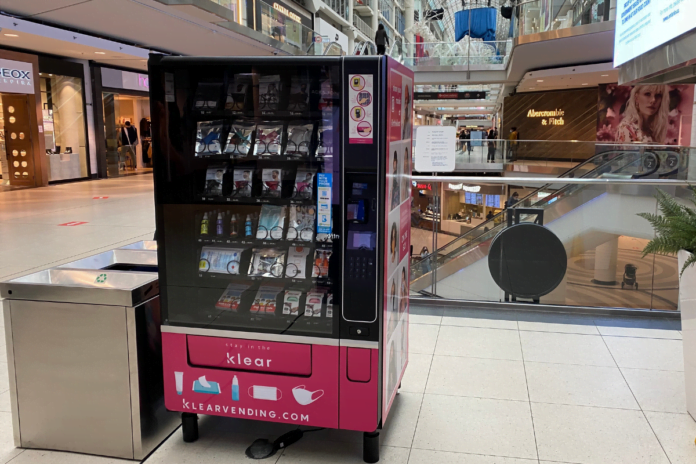
PPE Vending Machine at CF Toronto Eaton Centre - Photo by Dustin Fuhs
Investment in self-service technologies is exploding as Canadian businesses seek safe distancing, touchless transactions and a simple, intuitive user experience for employees and customers during the pandemic.
A survey by Angus Reid, commissioned by SCI Group Inc. and Signifi Solutions Inc., indicates that half of respondents say their organization actually increased investment in kiosk technology prior to the pandemic, with three-in-10 saying their investment level has increased by more than 15 per cent since 2019.
The survey also found that 47 per cent of businesses will spend more on kiosks in the next 12 months; among those who say their investment has increased since 2019, 61 per cent identified the COVID-19 pandemic as a significant or moderate factor in their decision; and the primary motivator for businesses when investing in self-service technologies is customer and employee satisfaction, with 63 per cent of businesses identifying this as their top driver.
Peter Collier
“The pandemic drove more people to use kiosks, which increased their comfort level with the technology and is leading to even better user-centric design for the next generation of devices,” said Peter Collier, Vice President, Technology, SCI Group, a logistics company. “We expect that increasing user comfort with kiosks and ongoing design improvements by kiosk manufacturers will continue to drive adoption.
“The growth of the self-service kiosk industry and the fact that it’s going to go on beyond COVID is the interesting part for us. People are looking at it from both a customer service perspective as well as employee satisfaction perspective because you can take employees and redirect them to higher value items and from a customer perspective you give them more options. So they can choose now if they want to go stand in a line and talk to somebody or ask somebody something or if they just want to self-service and look after themselves at the kiosk if it’s a simple basic transaction or something they’re familiar with.
“I really found it interesting that with COVID, we all went to a little bit more of a remote model and people became very familiar and comfortable with that and people want to continue that and expand it to give them more options going forward. So it’s definitely the longevity of self-service kiosks and the growth of it that we’re going to see in the next couple of years.”
The 2021 Canadian Kiosk Market Report said the pandemic has been a clear impetus behind investments in self-service technology. Among those who say their investment has increased in the past 12 months, 61 per cent identified the COVID-19 pandemic as a significant or moderate factor in their decision. For the healthcare sector, the primary application of kiosk technologies was for check-in purposes to help improve customer wait times.
It found that nearly half of Canadian businesses are already deploying self-service technologies, and another third plan to deploy kiosks or some form of self-service technology in the next 12 months.
Canadian businesses are including kiosk technology as part of their digital transformation strategies, with 77 per cent of organizations stating kiosk technology to be important to their business in the next five years.
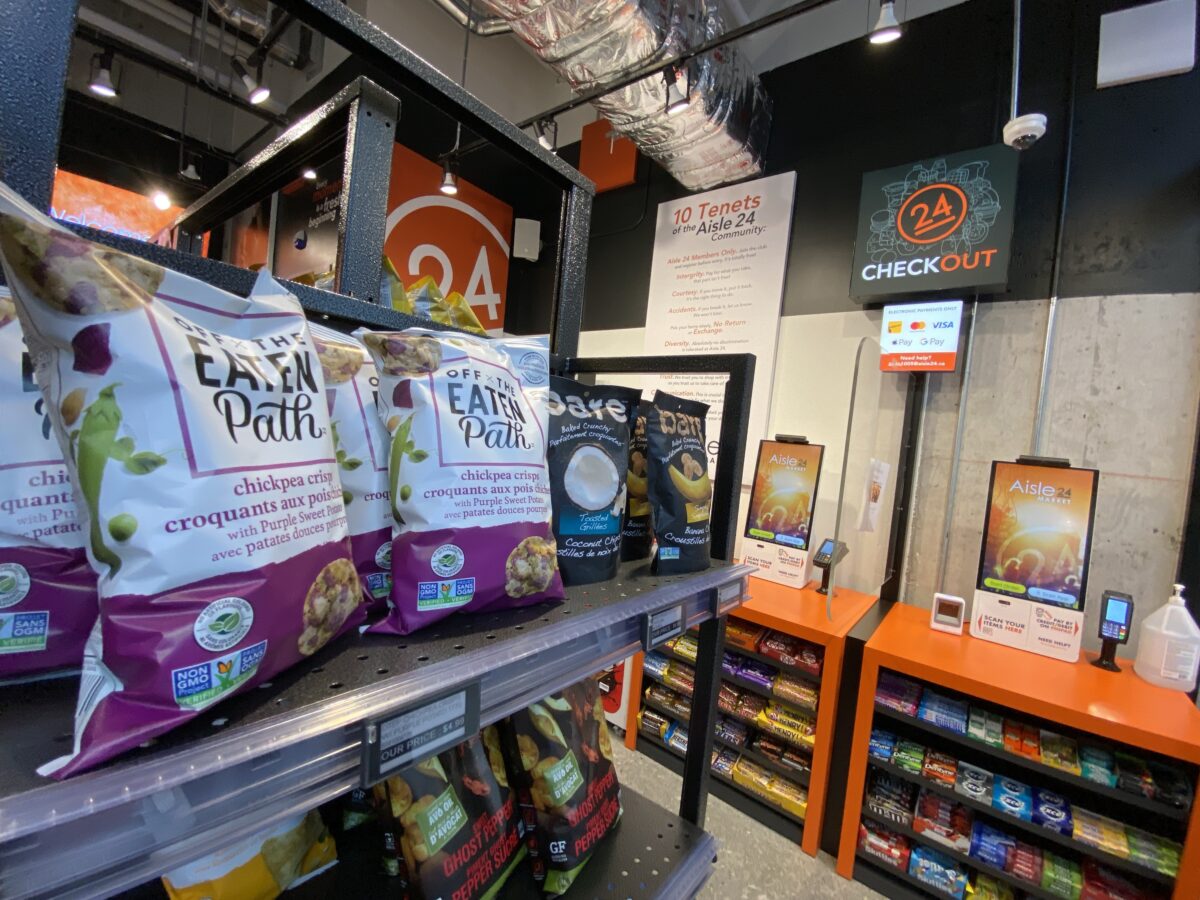
Aisle 24 Market in River City 4 (Photo by Dustin Fuhs)
“There’s a new appetite for automation and kiosk technologies, part of which may be attributed to the shift in user habits that has stemmed from the pandemic,” said Jamie McDowell, Vice President of Marketing at Signifi Solutions. “More and more Canadian consumers and employees seem to appreciate the simplicity and interactivity provided by kiosk technologies. Organizations are seeing this shift and including kiosk technology in their digital transformation plans.”
The report said the primary motivator for businesses when investing in self-service technologies is customer and employee satisfaction, with 63 per cent of businesses identifying this as a top driver. This was particularly noted in the retail industry, where 90 per cent of respondents said one of the main benefits they’re seeking from kiosks/self-technology is better customer flow.
“This research shows that organizations are looking for more than efficiency; they want to reduce customer wait times and improve the flow of people through stores and workplaces. Many are also looking to expand beyond transactional experiences to make kiosks part of an omnichannel infrastructure,” said Collier. “This also marks an important step forward for self-service technologies underscoring the shift away from thinking of kiosks as simply a cost and efficiency play – though both remain important drivers for buyers.”
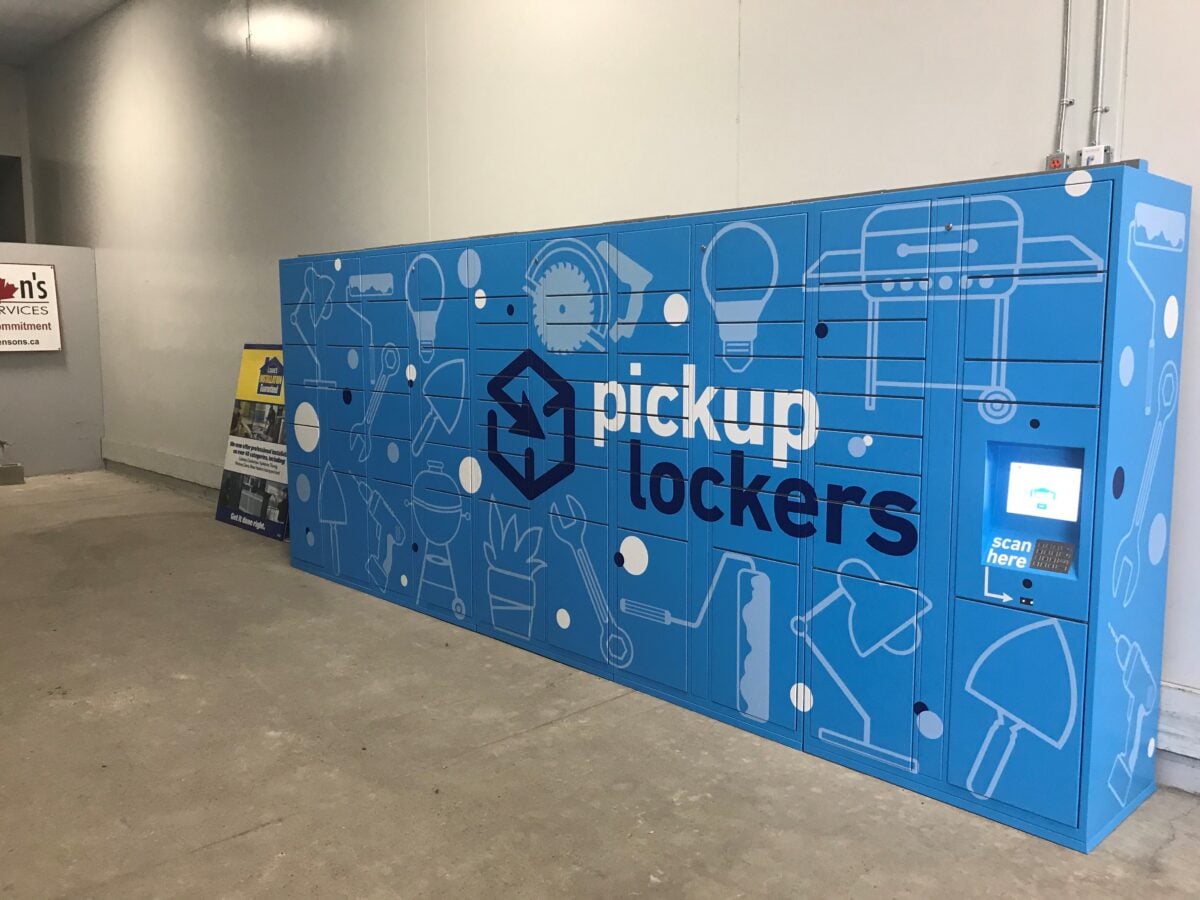
New contactless pick-up lockers at a Lowe’s location in Scarborough, Toronto. Photo: Lowe’s
Collier said it’s important that the companies get the technology right for the customer and it has to be integrated to the back end of whatever system the consumer engages in.
“The one thing is in the old days kiosks if you think about it were very transactional to what was in front of the consumer. These days you want to be able to order ahead of time and know that it’s already going to be in that particular box or kiosk. I can choose to have things delivered to a kiosk that’s maybe installed at a bus station or a subway stop. So flexibility from a consumer perspective to choose a more convenient location or secure location that I can pick up my packages with and that’s all about being tied to the vendor, the seller, the retailer’s back end system. That piece of the technology is huge,” said Collier.
“And obviously making sure it’s resilient. When I show up to scan my QR code or whatever to open the box or whatever four-digit code I have to open a door has been loaded properly to that box.”
He said the increasing use of the self-service kiosks is really across all areas of the marketplace.
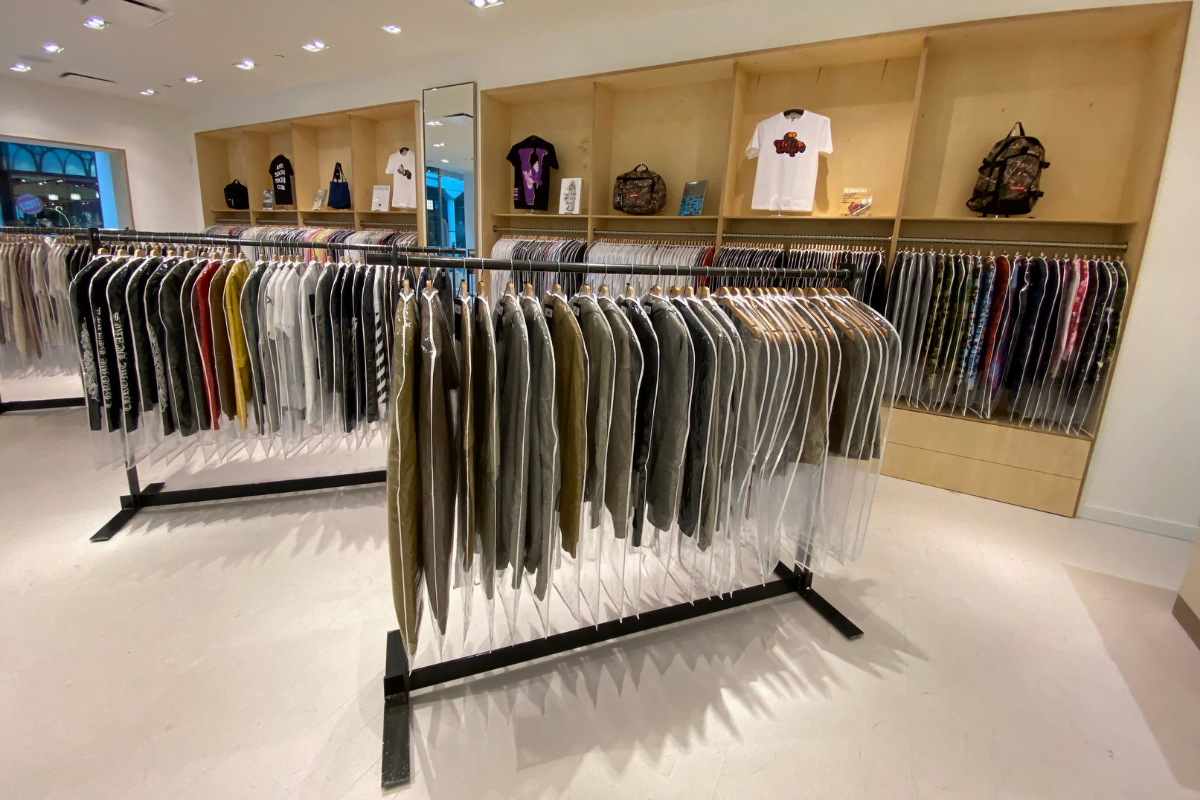
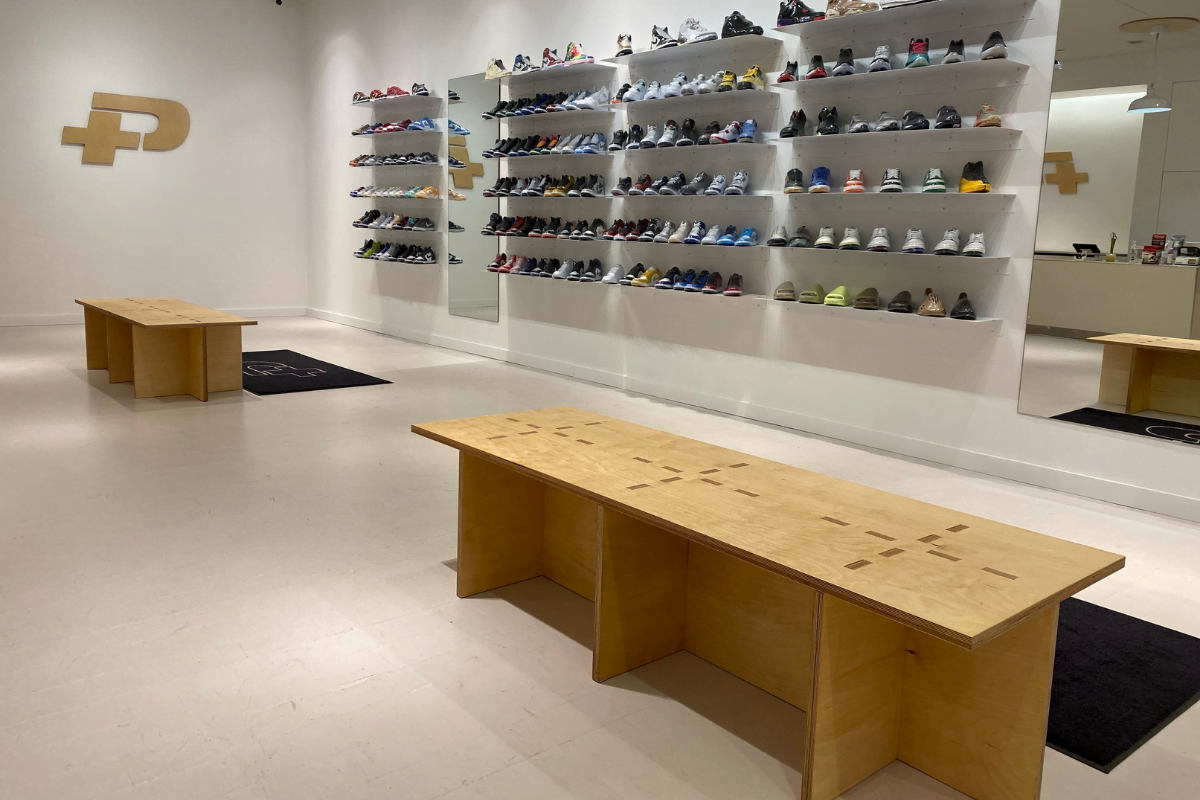
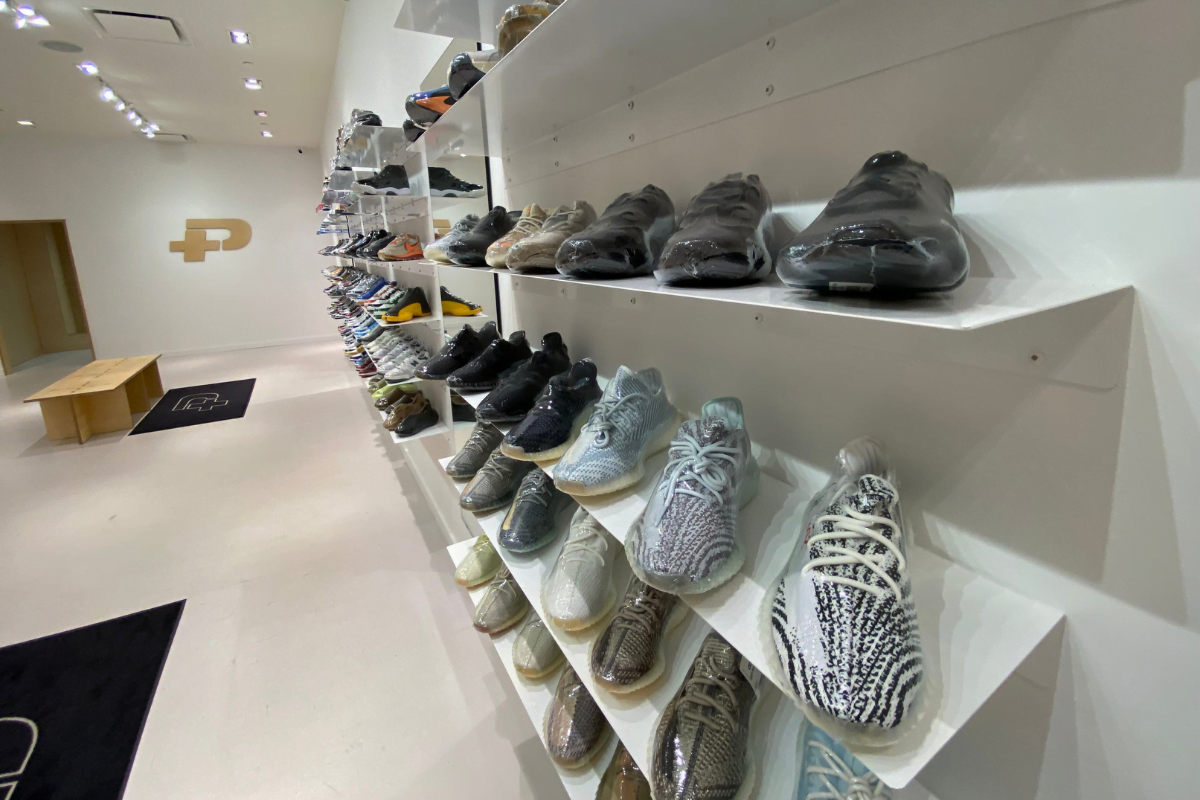
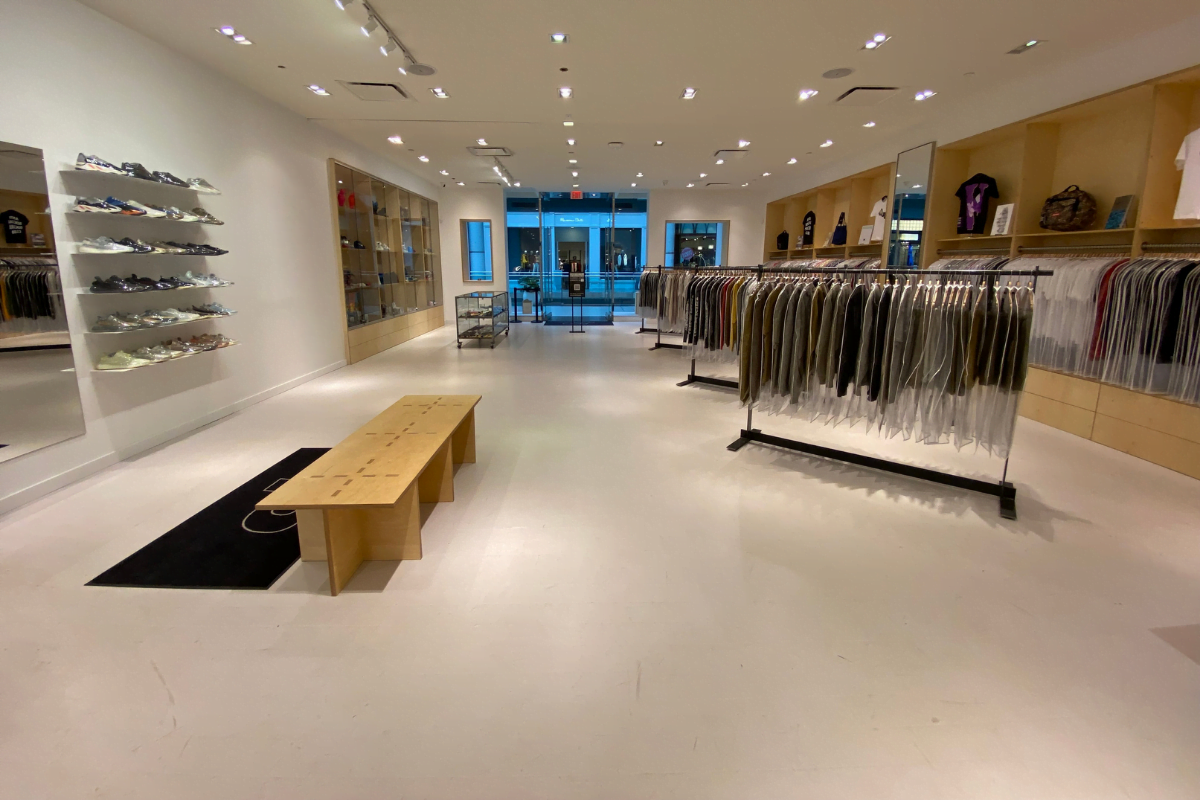
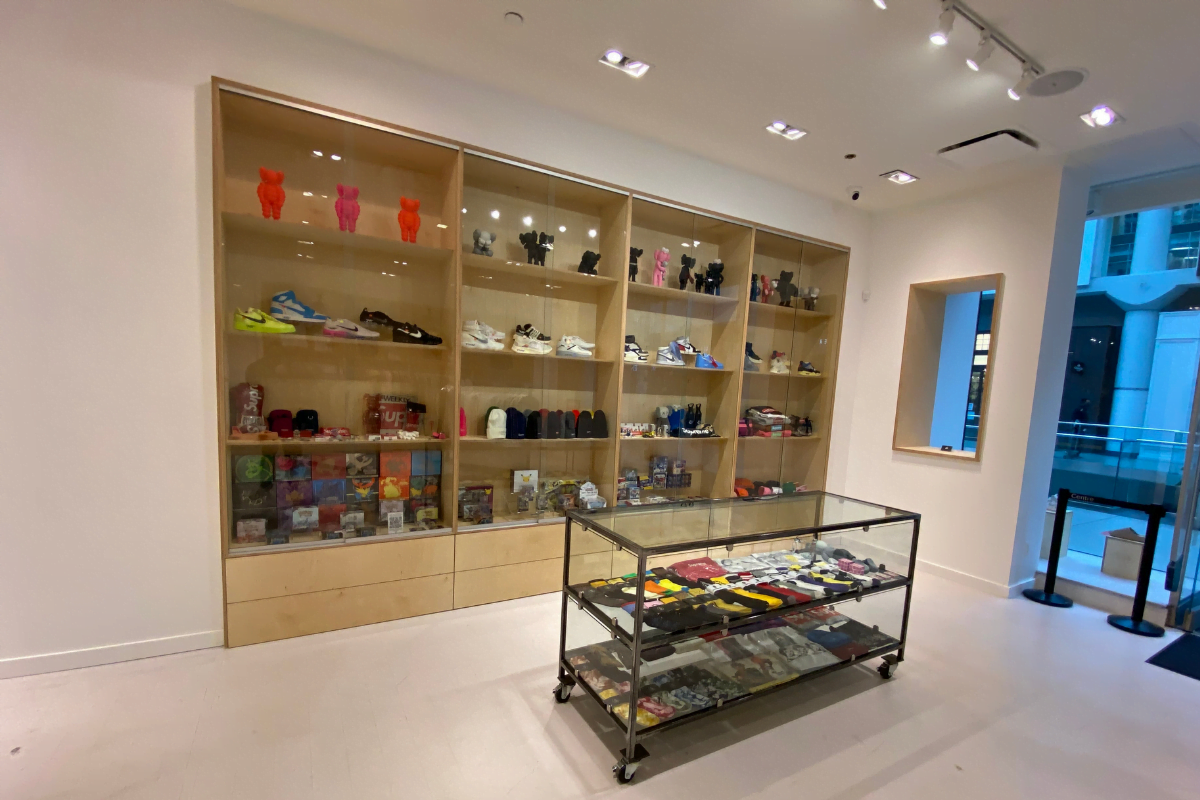
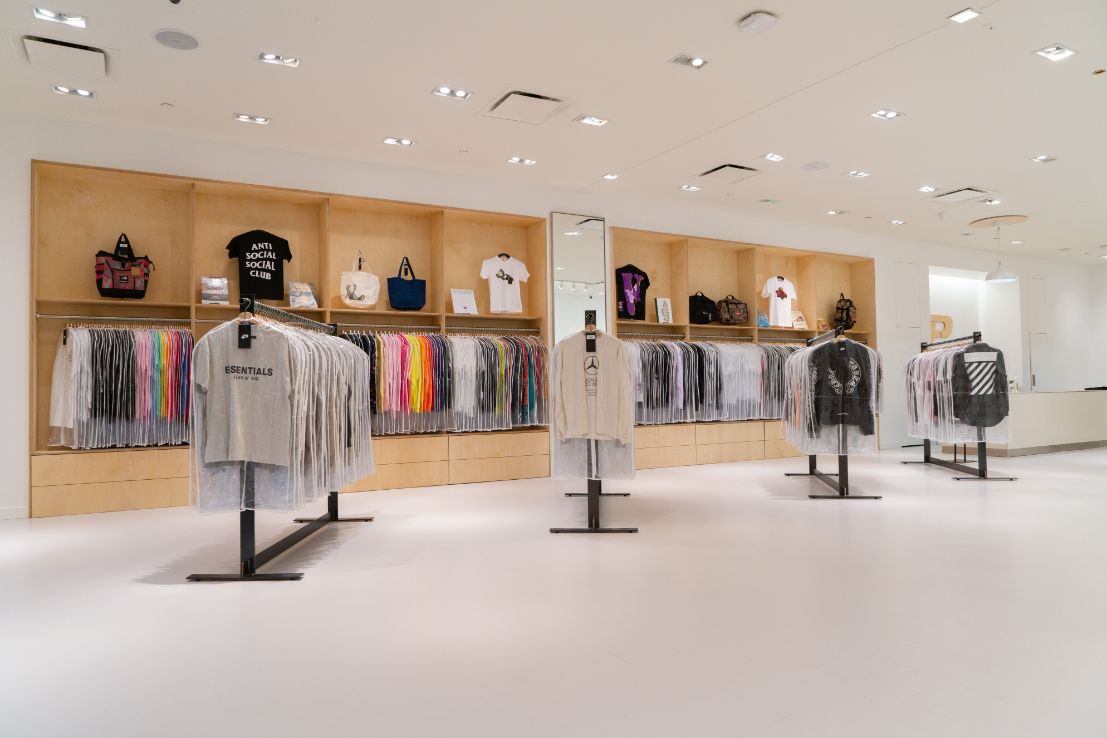
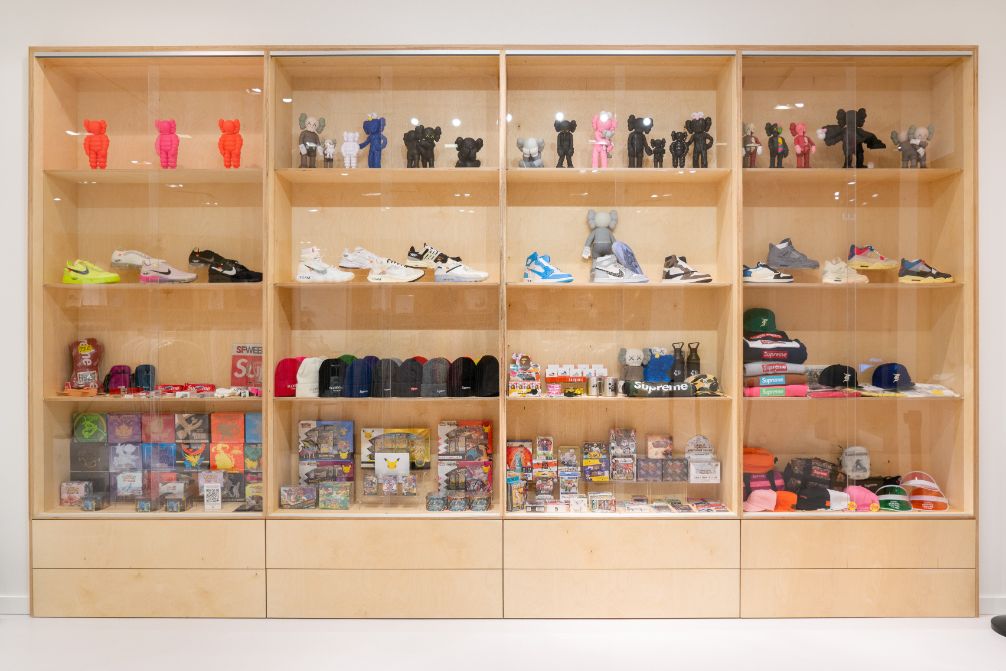
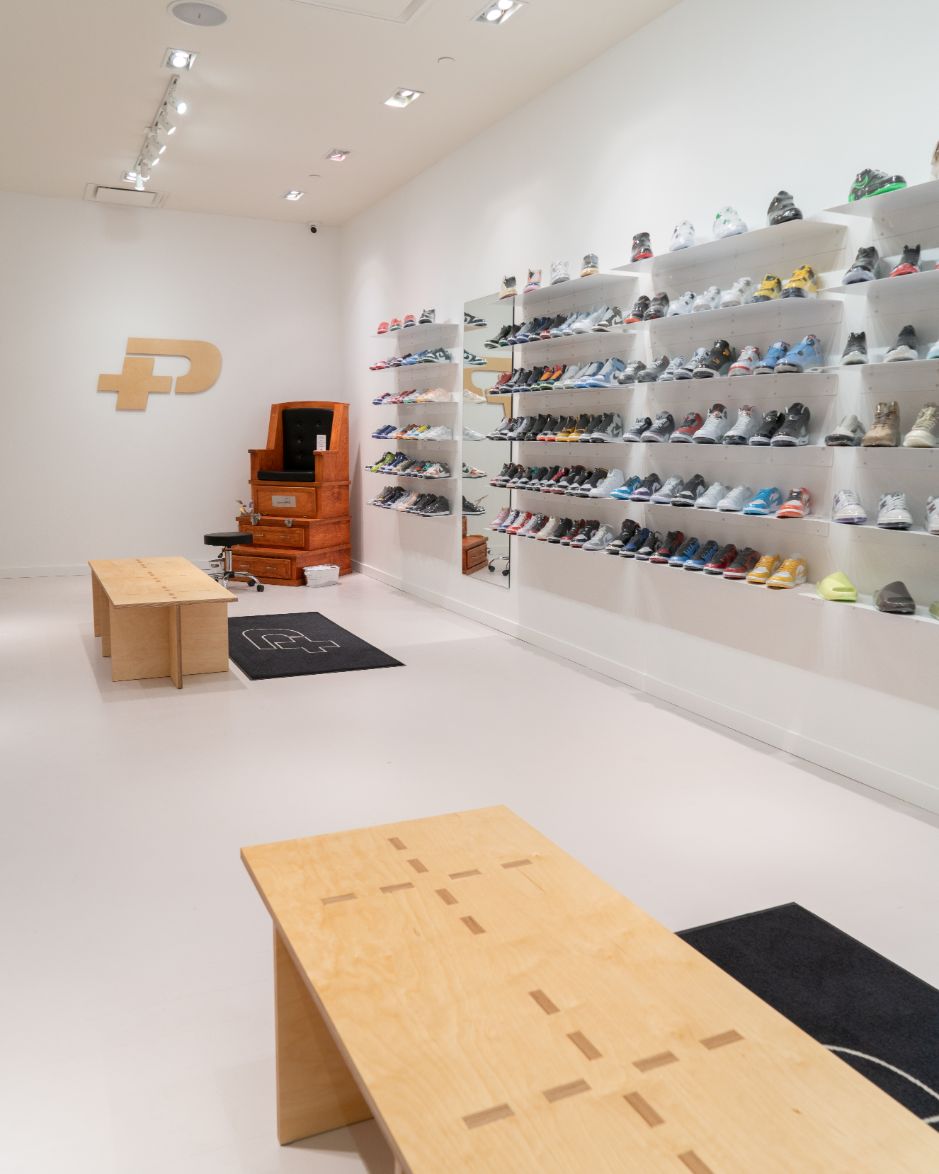
Vancouver-based PLUS, a streetwear experiential retail concept brand, recently opened a storefront at CF Toronto Eaton Centre in Toronto with plans to continue growth with new store locations.
The retailer was founded in 2017 and has grown to six locations in the last four years, making it a destination for exclusive sneakers, streetwear and collectables in Canada.
“CF Toronto Eaton Centre is a landmark mall,” said Ibrahim Itani, Owner of PLUS. “With most of our business being conducted out east, it made sense for us to have a presence downtown Toronto. The location and the tenancy opportunity was a no-brainer.”
PLUS opened on October 9th with a grand opening event that included a DJ and exclusive merchandise. The leadership team was on hand to welcome fans of the brand into the new location, which is located in between Canada Goose and OVO on the third floor of the shopping centre.
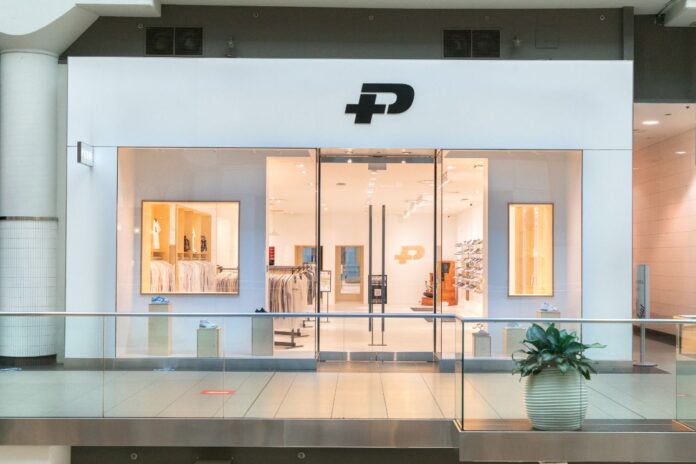
PLUS at CF Toronto Eaton Centre – Photo by Dustin Fuhs
With the location being signed pre-pandemic, PLUS was able to look at the elements and reflect on the goals and purpose of the space.
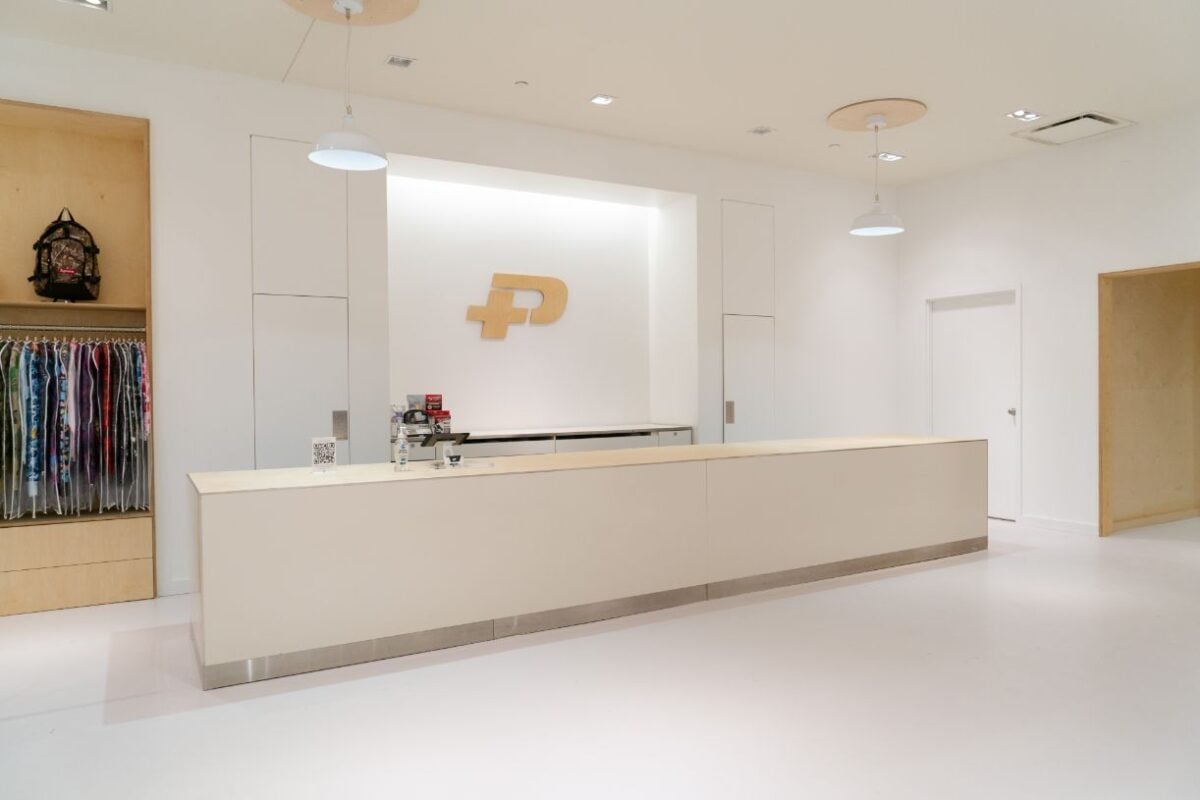
“We were given a much larger shell than we actually needed, which is why we segmented the store in the final design. We could have used the full space, but we only built out half of it. The store that we see today was designed to fit more with our intended use and product mix.”
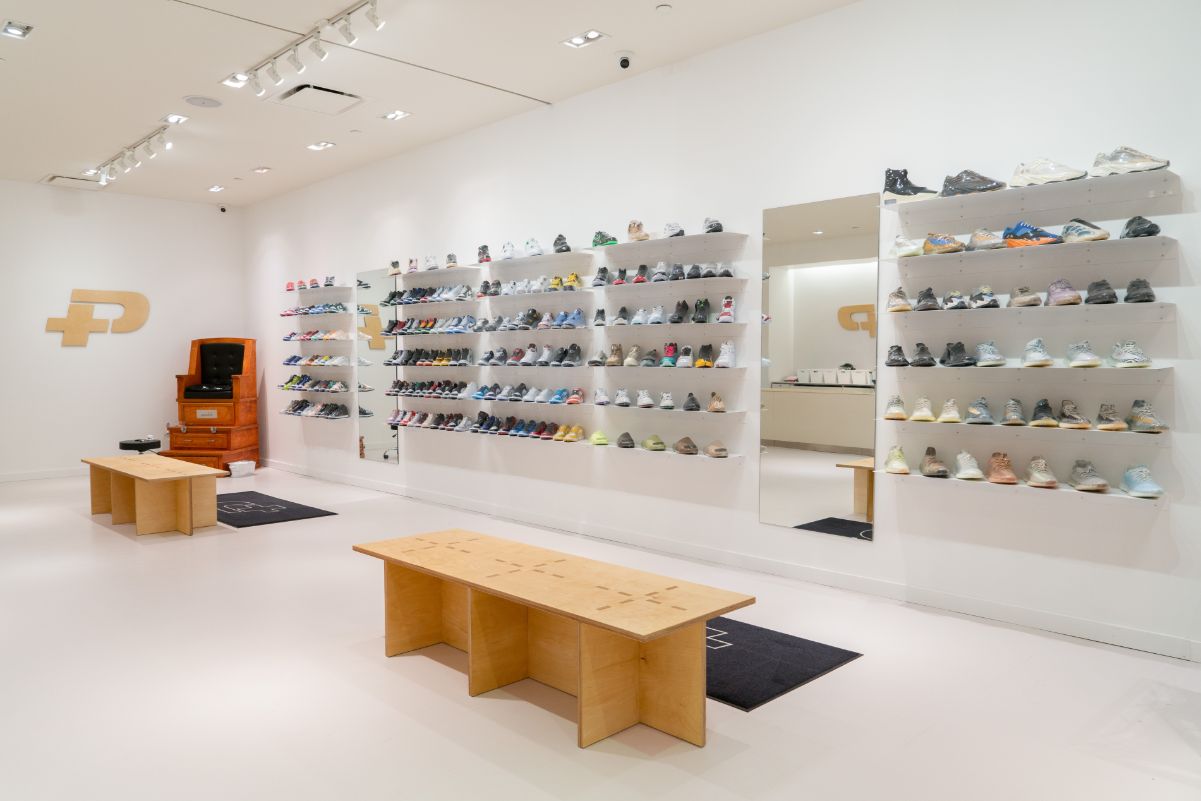
“Moving forward from the Yorkdale location, we looked at what worked well with the design elements and then adapted our unit at CF Toronto Eaton Centre to make something new,” said Liam Blackadder, Creative Director, PLUS. “With the shoes being material-based, we looked at the contrasting with raw elements in the store design.”
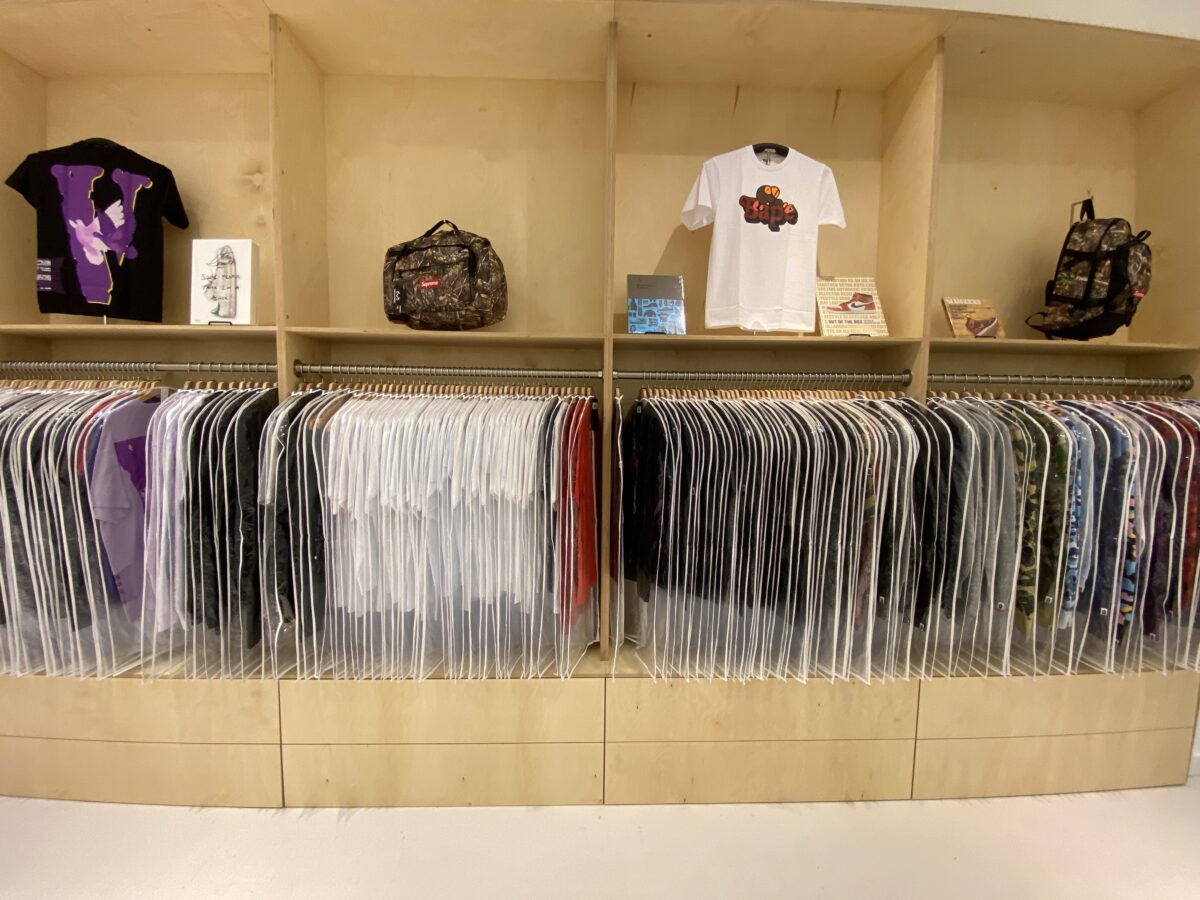
“The raw wood material was in the first concept and made it all the way through to open. The benches were also from the original plan and were created to to be symbolic of our sixth location by displaying six plus’s across their surface.”
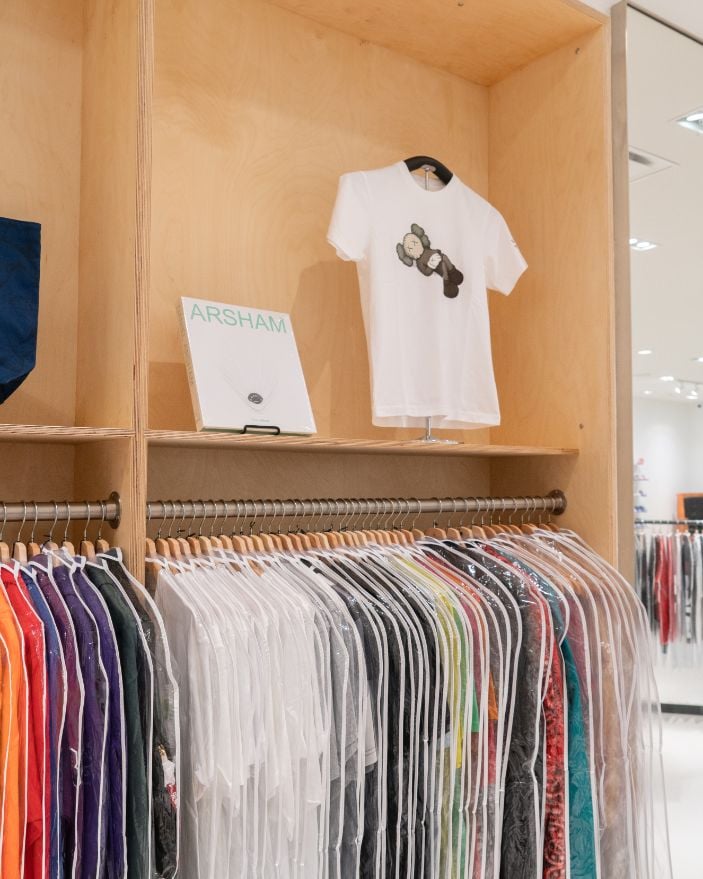
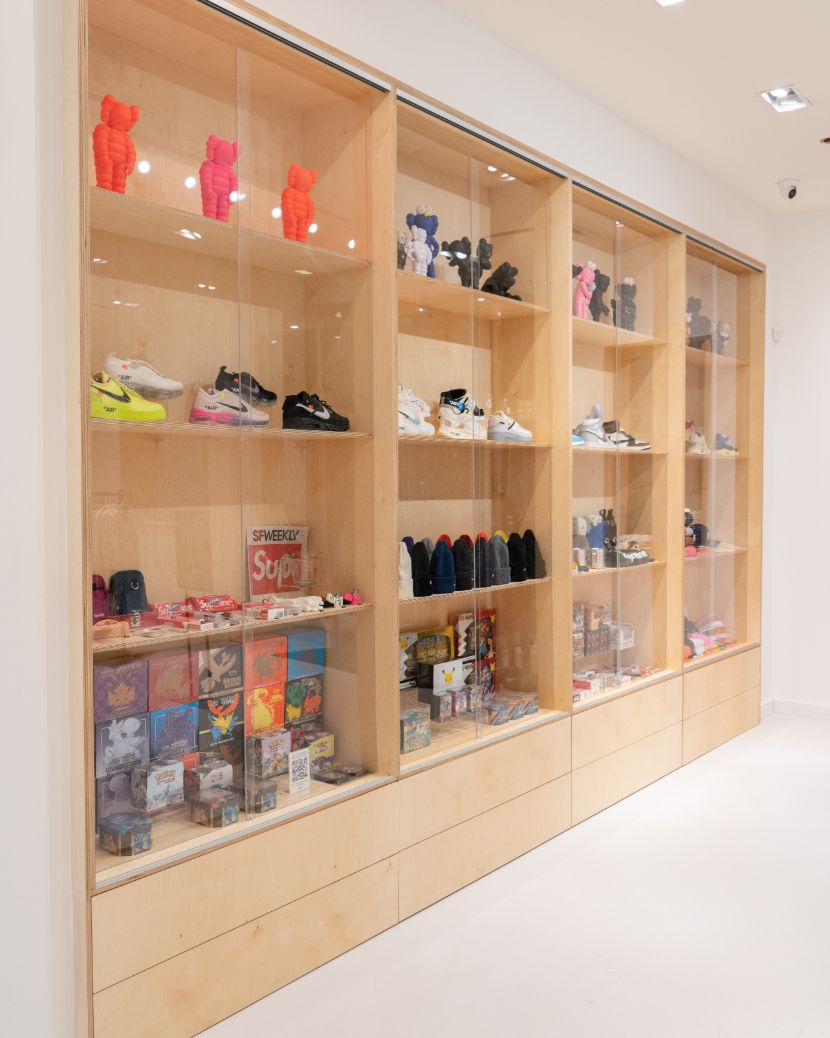
PLUS at CF Toronto Eaton Centre – Photo by Dustin Fuhs
PLUS opened its first store over four years ago in Gastown and has grown to locations in Yorkdale Shopping Centre, Square One in Mississauga, CF Pacific Centre in Vancouver and CF Chinook Centre in Calgary. The Yorkdale location is the company’s flagship. PLUS also has a pop-up location at Vaughan Mills and a successful e-commerce business.
The brand announced the opening of the CF Toronto Eaton Centre location on September 10th via social media. This gave the team a full month to plan for an event-based grand opening celebration. With current COVID pandemic restrictions and global fourth wave closures, there was always the looming possibility of another shutdown which the team took into consideration.
“This was the first time that we were able to work a few weeks out from the opening, which allowed us to be prepared,” said Itani. “We had our entire team working together on the open. “From Stefan Gregoriou, our Marketing Coordinator working on the promotions side, to our design team working on opening day exclusive merchandise and the operations team on the ground making sure that the store was fully stocked and merchandised – everything worked exactly as planned for a smooth open.”
Itani said that the company is looking forward to sharing the new space with their growing customer base.
“The response has been excellent – even better than anticipated. It’s exciting to have a presence in downtown Toronto.”
PLUS at CF Toronto Eaton Centre – Photo by Dustin FuhsPLUS at CF Toronto Eaton Centre – Photo by Dustin FuhsPLUS at CF Toronto Eaton Centre – Photo by Dustin FuhsPLUS at CF Toronto Eaton Centre – Photo by Dustin Fuhs
Photos From Pre-Opening
PLUS at CF Toronto Eaton Centre (Image: PLUS)PLUS at CF Toronto Eaton Centre (Image: PLUS)PLUS at CF Toronto Eaton Centre (Image: PLUS)PLUS at CF Toronto Eaton Centre (Image: PLUS)PLUS at CF Toronto Eaton Centre (Image: PLUS)PLUS at CF Toronto Eaton Centre (Image: PLUS)PLUS at CF Toronto Eaton Centre (Image: PLUS)PLUS at CF Toronto Eaton Centre (Image: PLUS)PLUS at CF Toronto Eaton Centre (Image: PLUS)
There’s no doubting the amount of disruption that’s been caused by the COVID-19 global pandemic. The past year-and-a-half is representative of one of the most turbulent times in recent human history. For retailers, it’s meant dealing with a delayed and fragmented supply chain, interruptions to store and network operations and a need to enhance digitization efforts in order to keep up with a consumer whose shopping and purchasing behaviour has shifted away from physical brick-and-mortar locations toward online channels. It’s a trend that’s been accelerated by social restrictions and lockdowns. However, it’s not the only aspect of the consumer that’s changed over the course of the past 18 months. It seems their general sentiment toward the brands they partner with is evolving as well. In fact, according to Accenture’s recently released Life Reimagined report, the motivations for today’s consumer to shop and engage with retailers are moving beyond price and quality.
Finer point on experience
The report suggests that a majority of consumers, despite their background, demographic or location, have taken advantage of the past 18 months to take stock of the things that really matter to them. They’ve reassessed and reimagined their values, resulting in a bit of a shift or tweak to their priorities and a discovery of the things in their lives that are most important to them. The research indicates that 44 percent of those surveyed have done just that. And, as Gregor Barry, Managing Director and Accenture Interactive Lead for Canada, points out, their rising sentiment is set to impact retailers and other businesses, creating a need to differentiate themselves based on purpose lest they be left behind.
“Today, consumers are really looking beyond the transaction into the overall experience that they receive from a brand,” he says. “This is not something new. But circumstances over the past year-and-a-half seem to have put a finer point on the experience. As a result, consumer motivations have moved away from price and quality toward other factors influencing their purchasing decisions. Things like health and safety, service and personal care, ease and convenience, product origin, trust and reputation are all factors that are more meaningfully impacting the way consumers view brands today.”
Personal care and support
For Canadians, the measures taken by businesses in order to address health and safety concerns is a priority, with 63 percent viewing it as a crucial component in attracting their interest. However, top on this list of heightened consumer considerations when it comes to engaging and spending money with a brand is the overall experience that they receive when interacting with it. In fact, according to the report, 69 percent of Canadian consumers expect the brands they engage with to understand how their needs and objectives have changed as a result of the disruption that’s occurred, and to address those new needs in a meaningful way.
“It’s really about creating an experience for the customer that’s as personal as possible,” says Barry. “Do they remember their customers and are they making their experiences better than they were the last time they engaged with the brand based on their insights? Are they proactively reaching out to customers when they need the brand most? More than half of consumers say that they’d switch brands if it doesn’t create clear and easy options to contact customer service. Over 50 percent of consumers say that companies disappointed them by not providing enough support and understanding of their needs during challenging times. So, what are brands doing to react in the moment instead of simply sticking to the script that they’ve relied on for the last long while?”
Ease and convenience
Another rising consideration among Canadian consumers, according to the report, is the ease and convenience involved in the shopping experience. Driven primarily by the acceleration in online shopping, the report finds that 57 percent of Canadian consumers will stop shopping with a brand that does not offer new, fast and flexible delivery options such as click-and-collect and curbside pickup. Barry recognizes the trend, suggesting that it’s a result of heightened expectations on the part of the consumer that he doesn’t see abating any time soon.
“Transactions very clearly moved to digital channels during the pandemic,” he asserts. “It compelled many companies to rethink how transactions are conducted in person. Consumers are now, more than ever, looking for ease and convenience with respect to their experiences. They’ve become expectations that will not retreat to previous state. So, anything that retailers do with respect to ease and convenience will become expectations going forward. It’s really a move into a world of everywhere commerce where transactions don’t have to start and end in the same place or on the same medium. So, those expectations are heightened even further, meaning that brands need to be available whenever and wherever a consumer wants to interact.”
Need for green practices
Along with the tenets of health and safety and the ease and convenience of service, another consideration motivating today’s consumer is the practices of brands and businesses with respect to environmental, social and governance issues. According to the report, 71 percent of Canadian consumers are most interested in shopping with brands that source services and materials in highly ethical ways. In addition, 65 percent say that they’re attracted to brands that are environment-friendly, provide credible “green” credentials for products/services, minimize harm to the environment and/or invest in sustainability. It’s yet another pre-existing sentiment that’s been accelerated by impacts of the pandemic. And, according to Barry, it’s a sentiment that’s broader in scope than some might think.
“We’ve seen a big shift in consumers’ interest in sustainable products and service,” he says. “Increasingly, they want to know what goes into a product, how it’s been produced and how far it’s been transported. Bringing that information into a more transparent model really allows the retailer to enable its consumers to make informed purchasing decisions. The brands that can develop or enhance their ‘green’ practices and convey those developments and enhancements to the consumer are likely to broaden their base. However, we’ve also seen tremendous growth in the shop local movement. Consumers want to shop with Main Street retailers and are increasingly realizing the importance of keeping at least some of their spend within their local communities.”
Trust and reputation
In addition, the report also finds that issues impacting the trust and reputation of a brand are also high on the hierarchy of motivators. The scope of these issues is wide-ranging and includes their treatment of employees and partners, the integrity of the decisions they make and the ways they contribute toward the betterment of society. In fact, the report’s findings suggest that nearly half (46%) of Canadian consumers would be willing to pay more for products and services to a brand that is proactively making positive improvements. It’s a motivator that Barry acknowledges as an important one that’s rooted in brand purpose.
“Companies exist to serve a need or to meet a new need within the market,” he says. “But increasingly, consumers are looking for brands to stand for something beyond the product or service they offer. They’re starting to ask what their favourite brands are doing from a societal point-of-view in order to make their communities and the world we live in a healthier, more sustainable environment. It provides retailers and other businesses with the opportunity to align their values and the things they stand for with those of their consumers, deepening their relationships with them, creating more meaningful engagement.”
Rebuilding relevance
Each of these motivators on their own is enough to prompt changes within any brand’s operations. The fact that they all extend beyond the product or service itself presents enormous opportunities to retailers that can focus their efforts to make improvements where they can. It provides them with areas in which they can differentiate their brand from competitors, developing an intrinsic purpose that can drive growth and success. And, with respect to identifying and seizing these opportunities, Barry suggests that they will vary depending on the retailer and the vertical and category that they operate within.
“Every brand needs to look at themselves and do some introspection around what the implications are for them and the engagement and growth it can drive. And to do this effectively, they’ve got to understand that the consumer is not who they used to be. Their desires have changed. And the ways they want to interact and engage with brands has changed, too, raising a different set of expectations. So, brands need to re-evaluate and rebuild or enhance their relevance to those new buying values and anticipate what consumers are going to expect from them. The critical choice for the industry today is either listen and make those changes, creating experiences that really matter, or miss the opportunity to drive differentiation and growth for their business.”
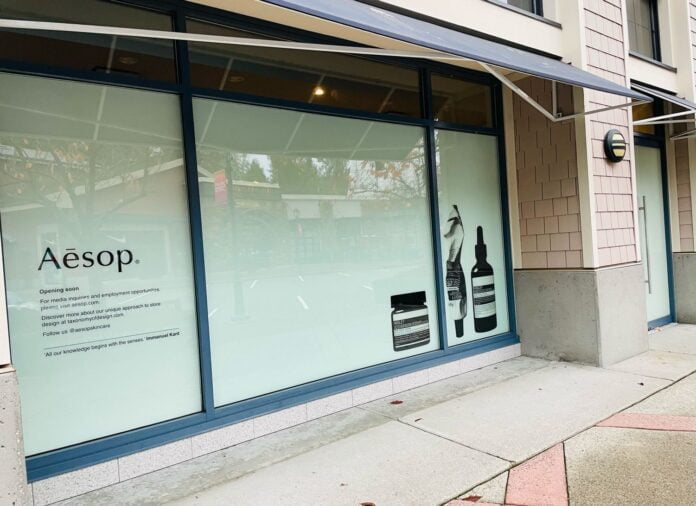
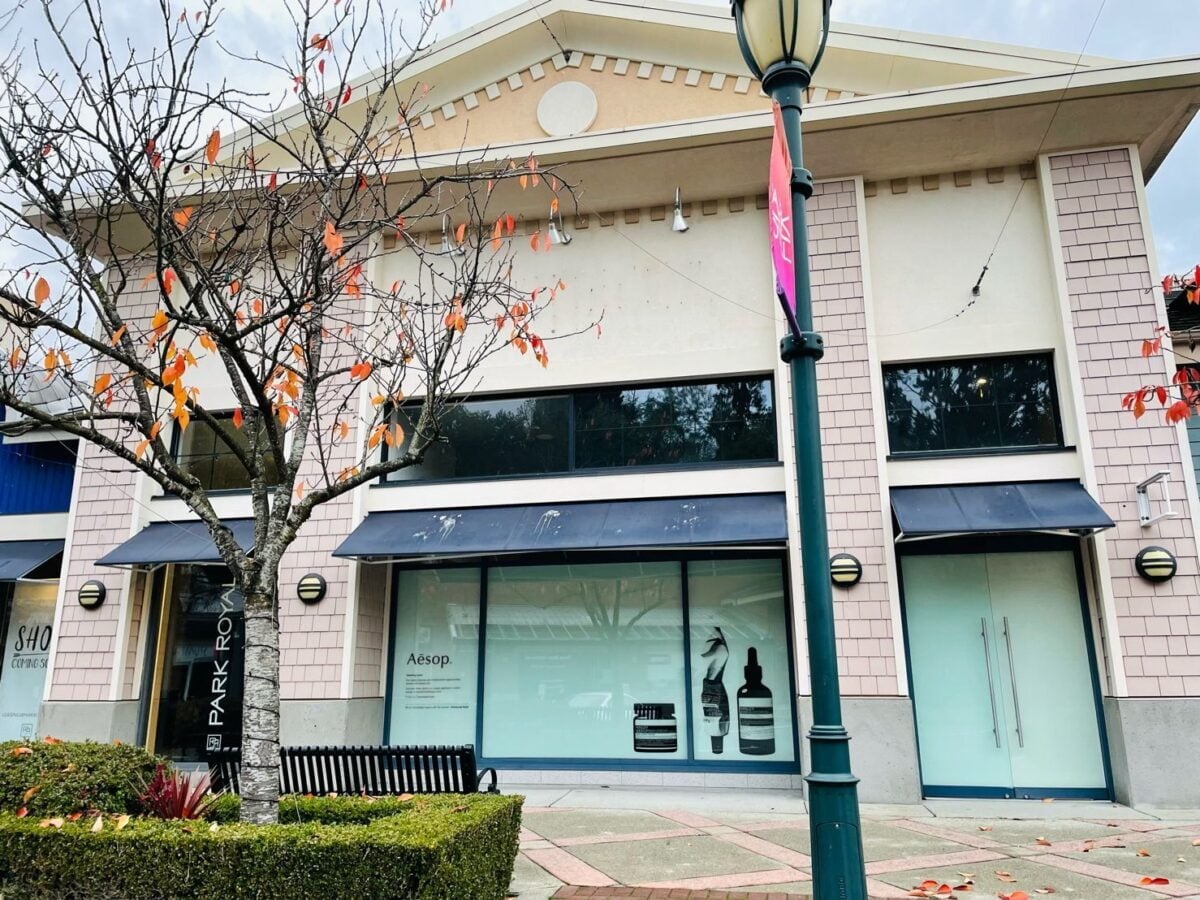
It’s the fourth Aesop location in the Vancouver area and the first outside of the city proper. The other store locations include Aesop Kitsilano (on West 4th Avenue), Aesop Gastown (on Water Street) and Aesop Main Street in Vancouver. Aesop entered the Canadian market in the summer of 2015 with its first location in Vancouver. The company subsequently expanded into the Toronto, Montreal, Ottawa and Calgary markets by opening standalone stores.
The first Vancouver store opened at 19 Water Street in the city’s Gastown area in 2015 in a 615 square foot space. Other locations that followed it include at 3583 Main Street in an up-and-coming area of the city as well as at 2072 W. 4th Avenue in Kitsilano. Sources say two more Vancouver lease deals are currently being negotiated.
Aesop Construction Signage at Park Royal Shopping Centre in “The Village” (Oct 2021). Photo: Shanon Thornley (LinkedIn).
Image: T&T Supermarket at Willowbrook Shopping Centre
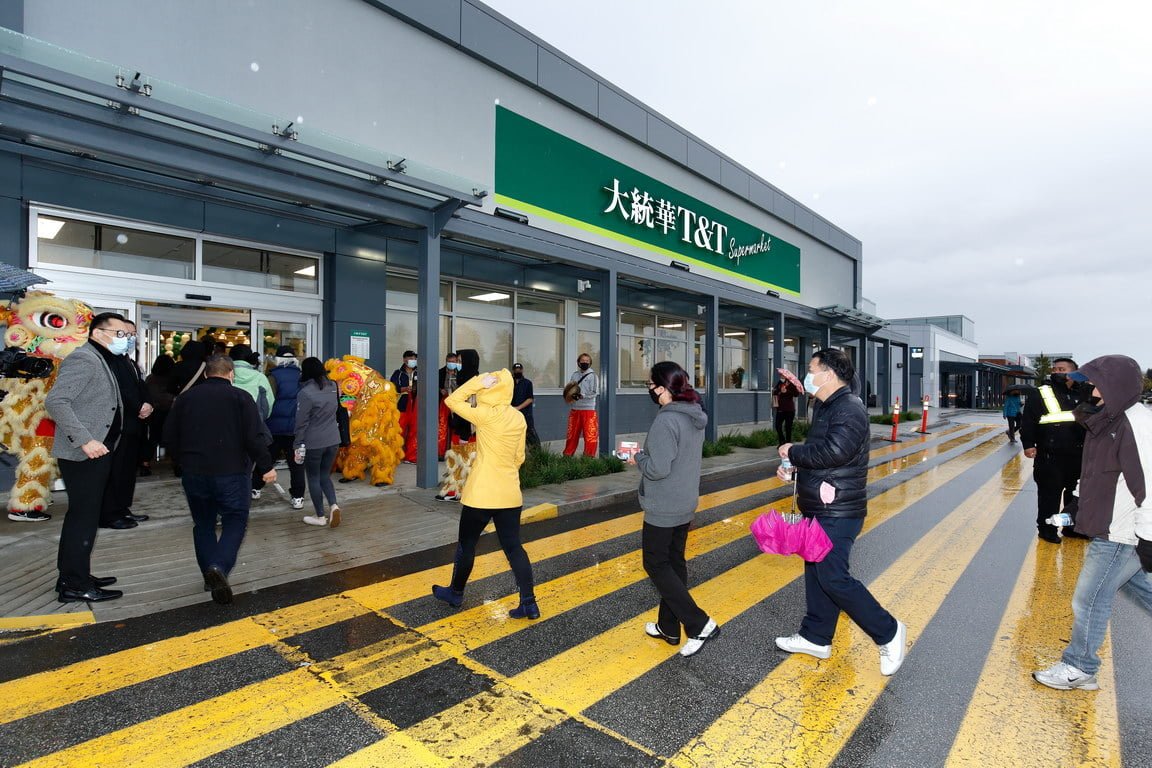
Richmond-based Asian grocery chain T&T Supermarket has opened a 40,000 square-foot location at Langley’s Willowbrook Shopping Centre.
The grand opening on October 22nd at 9am included a full community-based event, which featured a traditional lion dance performance followed by T&T CEO Tina Lee sounding a ceremonial gong.
“Langley is a lovely fast-growing community and we have been looking to open a location there for quite a long time,” shared Lee. “Our patience paid off and we finally found our first-choice location at Willowbrook Shopping Centre and a great partner in QuadReal Property Group.”
T&T Supermarket at Willowbrook Shopping CentreImage: T&T Supermarket at Willowbrook Shopping Centre
The new Langley location is the 13th branch in BC and the 29th store in the chain, operating in British Columbia, Alberta and Ontario.
There aren’t too many brands in Canadian retailing history that have captured the hearts and minds of so many consumers, becoming part of the fabric of the country, in quite the same way Roots has. Establishing itself through the years by way of the comfort, quality and versatility of its product, the adored retailer has long since achieved iconic status and a leadership role within the industry. And although the company has always operated on the same principles and beliefs on which it was founded and built nearly 50 years ago, its perpetual innovation and evolution has allowed it to remain relevant and successful, consistently adapting to and anticipating market shifts and changes. Today, as the brand approaches ever closer to its golden anniversary, it continues to evolve, expanding the brand and the community around it, driven by the guidance and leadership of CEO Meghan Roach.
“The business really has gone through an evolution through the years,” says Roach. “A lot of the heritage and essence that helped lay the foundation of the business and the brand still very much remains, but we’ve evolved it. As opposed to being a brand that’s only about camp and Algonquin Park, it’s now more about being a brand that’s at home in nature. That can be represented by going for a walk outside, going for a hike, or something as simple as taking part in a Zoom call in our clothing with natural fibres. It’s about creating a brand and a product offering that helps customers feel comfortable in their own skin and clothing that can be worn in multiple different situations. As we move forward, where we’re going as a business is about developing a really strong community around the brand we have today, really focusing on our pillars of comfort, quality and versatility, and expanding the brand to be more about the communities and nature in which we live.”
Rise to leadership
As far as backgrounds go, particularly those of CEOs managing consumer retail companies, Roach’s is an interesting one. She spent much of her career within the private equity space, starting at KPMG before joining the Ontario Teacher’s Pension Plan and later Searchlight Capital Partners where she spent time in both Toronto and the UK. Despite the unorthodox nature of her course toward a leadership position at one of Canada’s biggest brands, however, the work that she was involved in on the investor side has served to be essential. Gaining experience working with consumer businesses, collaborating extensively with brands across the retail spectrum, Roach gained intimate insights into the inner workings of retail operations and the levers that drove success for the businesses she worked with. It’s experience that she recognizes as instrumental in preparing her for her current role at Roots.
“The biggest advantage that I’ve had within my career to this point is the fact that I’ve had the opportunity to work with management teams at many different brands,” she explains. “It afforded me the chance to really dive into working on things like strategy, execution and operational turnarounds. And, as a result, I got to see what worked and what didn’t. Because of the work that I’ve been responsible for, working with a number of different companies, I bring unique leadership skills to this amazing Roots team. I’ve seen a lot of different things in repetition and am able to draw on the diverse experiences that I’ve acquired throughout my career in order to help more accurately identify opportunities for further growth and success.”
Partnership and support
The rare perspective with which Roach approaches her job is paying dividends for Roots as the company continues to improve on the tremendous accomplishments it’s already realized. Her expertise and judgement are proving critical in helping to manage the brand toward the next chapter of its impressive story. However, when it comes to identifying the factors contributing most to the company’s sustained progression and growth, she directs much of the credit to the team around her. She considers the opportunity to lead Roots as its CEO as an “honour”, describing the Roots team as “talented and dedicated”. It’s a cooperative attitude and collaborative method that supports her manner of execution, and a care and value in the collective that fuels her philosophies as a leader.
“From my perspective, it’s really important to help people carve their own paths,” she says. “There’s no one way to do something. And, as a leader, your responsibility is to work with individuals to help them find their own way toward success and achievement. It’s also very difficult to be the sole decision-maker. And so, for companies to be successful today, they really have to partner with their staff, understanding their skillsets and helping them manifest those skills in order to realize the overall corporate objectives and goals. Helping people develop their own leadership capabilities is what it means to be a leader. And, particularly during times of adversity and challenge, a leader has got to set an example for the rest of the organization, understanding that there are going to be setbacks and failures and persevering through the challenges.”
Holistic understanding
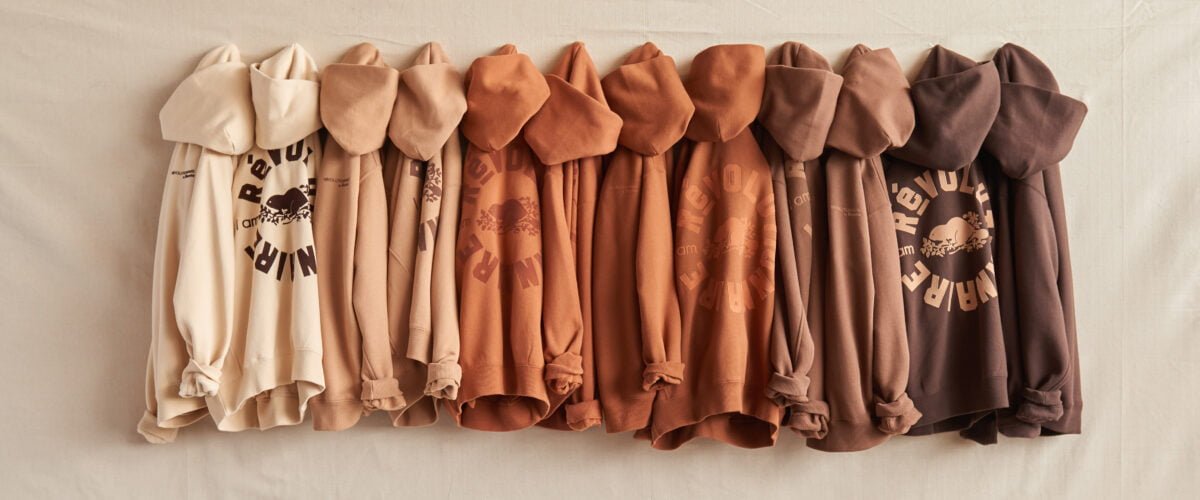
Image: Roots
Roach also emphasizes the importance of making clear and concise decisions in supporting the organization’s direction and ensuring that all staff are aligned with the strategy, equipping them with the guidance and tools to execute. It’s an outlook on leadership that seems to be underpinned by a combination of compassion and a holistic appreciation of the role that she serves, her capabilities as well as her limitations. And it’s also one that she says was shaped by a number of different influences that she’s enjoyed throughout her life and career. However, she recalls being particularly moved by the ideologies of one of her female compatriots in business, former PepsiCo CEO, Indra Nooyi.
“At the time in my career when Nooyi had risen to the highest level at PepsiCo, it was extremely rare to see a female in leadership as CEO,” she says. “That achievement in itself was really inspirational. But what I was really impressed and inspired by was the message that she always conveyed. She talked openly about the challenges of being a leader, particularly from a female’s point-of-view. She spoke about the difficulties in being a leader, a wife and a mother, and in accepting that no one can be perfect in all of these roles across the board. She stressed the importance of understanding your roles in life and the demands that come along with them while ensuring that you don’t set yourself up for failure by really appreciating what you can and can’t do. Her message has stuck with me through the years and really shown me the importance of recognizing your own limitations, strengths and weaknesses, and being transparent with your team about them.”
Adaptation and evolution
This lesson, combined with her unique experience, stands Roach well in her efforts to navigate one of the biggest challenges she’s faced thus far in her career. It’s allowed her to draw on the strongest qualities that the brand’s developed over the decades while helping it to continue adapting to consumer and market evolutions. And, given the trials and tribulations that much of the industry has faced over the course of the past 18 months or so, her razor-sharp focus and steadfast determination seem to be exactly what the company requires. It’s a time that will long be remembered by many as one of the most problematic and uncertain in recent human history. It’s also one, however, that Roach and her Roots team have leveraged in order to further adapt and maintain the momentum that the brand has amassed to this point.
“The Roots brand resonates with consumers,” she asserts. “And to be a brand as successful as Roots has been through the years, you really have to possess a deep understanding of who your customer is and what they want from you. We hear time and again that people love the comfort of our clothes and the quality and versatility. Continuing to understand how those qualities need to adapt to changing situations will enable continued success for the brand. Roots has always been extremely relevant to the society of the day. And we recognize that the Canadian consumer has changed, becoming much more diverse and differentiated. And we as a brand need to continue evolving in order to continue building strong relationships with them. In order to address this, we continue to diversify our product categories with extended sizes, more sustainable items and gender-free fit. And we’re also becoming more diverse when it comes to our marketing campaigns and thinking more intensely about the diversity of our teams. We’re doing a lot of things, and will continue to do things, that will allow us to be more reflective of society today and become even more meaningful and relevant in the lives of our customers.”
Accelerated pace
Roots at Yorkdale Shopping Centre – Photo by Dustin Fuhs (July 31st, 2021)
With respect to the adaptations and evolution of the brand that Roach refers to, much of the changes that would drive them needed to be develop and instituted at a much quicker pace than would usually be required. She took over the CEO post in January 2020, just months before eventual restrictions and lockdowns. The impacts of the pandemic accelerated everything, she says, not least of which consumer behaviour, prompting a speedy response on the part of retailers across the country. It was challenging to operate with such immediate need for execution, she says, but adds that it was essential in helping to continue moving the brand forward.
“The most significant impact of the pandemic was how quickly we needed to make decisions,” she explains. “A number of changes were required, like reducing promotions in order to make the brand a more desirable full-price brand, increasing perception among consumers. Changes were required to the overall cost-base of the business for greater efficiency. And more focus needed to be put on capital investments. Usually, when you make these types of changes to a business, they are all part of an overall strategy that often takes multiple years to implement and execute. But when you face the situation that COVID presented everyone, the need for these changes is accelerated. We needed to be focused and make quick decisions in order to remain successful through a difficult period.”
Digital investment
In addition, Roach and her team also doubled down on its understanding of the Roots customer and the product and experience that they’re looking for from the brand. To ensure the proper flow of product throughout the pandemic, the company focused on the management of its inventory, working closer than ever with its supply chain partners. And, in order to continue serving consumers during store closures, it leveraged its long-standing ecommerce presence, utilizing its brick-and-mortar locations as fulfilment hubs. It’s an area of the business that Roots began investing in and developing decades ago. And it’s one that Roach says will continue to be a priority to enhance going forward.
“Roots is a brand that has for a very long time offered very strong in-store and ecommerce capabilities,” she asserts. “And it really allowed us to continue developing the symbiotic relationship between in-store and online. We’re still making a lot of investments into honing our omnichannel expertise and creating a best-in-class experience for our customers. The shift that occurred in the consumer with respect to their increased comfort and willingness to shop and purchase online was obviously a trend that was accelerated by the pandemic. However, I don’t think that it’s a behavioural trend that will subside going forward, and we want to make sure that we continue to be at the forefront of this digital evolution for our customers.”
Building community
Image: Roots
Roach points to Roots’ ecommerce and digital maturity as a great example of the ways the company continuously adapts to the needs of its customers. However, the shift in consumer behaviour that was spurred on by the pandemic is not the only sentiment that she says has been amplified over the course of the past year-and-a-half. Attitudes and perceptions among consumers based on the values brands stand for are also heightening. As a result, Roach suggests that it’s more important than ever for retailers to listen to their customer in order to truly understand what they’re seeking from them, find synergies in the action they’re taking from an environmental, societal and governance perspective, and convey them to their customers.
“We’re extremely focused at the moment on building the right kind of community around the Roots brand,” she explains. “Today, people are not only buying with their wallets, but are increasingly making purchase decisions with their hearts as well. They want to know that the brands they’re partnering with have a purpose and values that align with their own. From a business perspective, Roots has always stood for community and integrity and continues to invest in expanding the brand out through our diversity, equality, equity and inclusion platforms. We strive to understand the Roots customer and believe that some of the things that they’re most interested in go beyond their love of our product, pushing us to consistently improve and do better as an organization.”
One Collection
Image: Roots
Though the consumer may be looking for things from brands that extend beyond their products, much of what Roots stands for as a company can be found within them. This is most evident in the recent launch of the Roots One Collection. A celebration of individuality and style, and a commitment to a better planet, the Collection features a gender-free fit, offers an extended size range and uses sustainable fibres to create what Roach says is the company’s “most comfortable and softest fleece to date”. She says that it’s a line of product that the entire team is extremely proud of, referring to it as a landmark in the progression of the Roots brand and an indication of the direction the brand is heading.
“The One Collection is really symbolic of the evolution of Roots as a company,” she says. “We had a lot of customers who were cross shopping – women buying from the men’s collection and men buying from the women’s collection – as well as those who identify as non-binary or transgender who are looking for gender-free fits. It was really important to us to reflect this in our product offering and to continue evolving it. The Collection is also made with sustainable fabric using 80 percent organic cotton and 20 percent recycled fabrics. And, it also includes extended sizes, creating greater inclusion within our offering. It provides customers the freedom to style the products in the way that best suits their needs. Because it’s not so much about the size of the product, and more about the feel and fit, it allows them to express themselves in unique and differentiated ways.”
Further growth
As interesting as Roach’s path to retail leadership has been, surely the 18 months since taking over as Roots CEO has been just as intriguing. Her focus on the team, developing forward-thinking strategy and equipping those around her to execute on the company’s vision have helped to position the brand for further positive trajectory. And her commitment to community building and values-based decisions are set to enhance the perception of the beloved Canadian brand that much more. With these things in mind, she believes that there’s still a lot of room for Roots to grow and boundless opportunities to continue building on its incredible history to date.
“For a brand to enjoy the life and longevity that Roots has clearly shows that it means more to consumers than the product we offer. People have a real love for the brand. And, as a steward of this business, my goal is to make investments and decisions that continue to affect the long-term success of the brand and continue to drive excitement and that love for Roots many years into the future. In the short-term, however, even though we’re nearly 50 years old as a business, there’s a real opportunity to become even more well-known globally. Roots is engrained in the mindset of the Canadian consumer. And although we’re proud of this fact, we’re really looking forward to expanding the brand’s digital and physical footprint, introducing our product and offering to even more people and connecting with them in meaningful ways.”
Patrician Grill on King Street (Photo: Dustin Fuhs)
A new report by Salesforce indicates that 43 per cent of Canadian small and medium businesses say financial support from the community has been vital to their survival and 90 per cent of them have moved a portion of their operations online this past year due to the COVID-19 pandemic.
Tiffani Bova, global customer growth and innovation evangelist at Salesforce, said the pandemic put a spotlight on the lack of investment SMBs have put around things like ecommerce and digital engagement with customers.
Tiffani Bova
“Because of that I think they were caught a little flat footed – and that’s a global statement. If you even look at restaurants, how many had their menus online or were set up to have delivery made or doing grocery store deliveries. Those kinds of things. Buy online, pickup in store. They didn’t have it,” said Bova.
“The need for that financial support from the community has been vital for business survival because of that lack of investment. What’s been great to see from it, the other side of the coin, is how many have actually made those investments in digital.”
The Salesforce’s Small and Medium Business Trends Report found that 72 per cent of Canadian SMBs feel operational shifts they’ve made over the past year will benefit their business long term. Also, 81 per cent of SMBs plan to offer contactless services permanently.
“If they had not had the help from the communities and from the government would they have been able to make those investments and making those investments is going to set them up for success in the future as well,” said Bova.
Was the pandemic a wakeup call for many small businesses who had coasted along for many years without investing in technology and other operational changes?
“They were caught flat-footed by not having made those investments,” explained Bova. “Sometimes they say we don’t need it, we have such a strong relationship with our customers, we’re a small retail shop, it’s a community store. Then when the doors closed, that very personal connection that many small businesses have with their customers was really challenged if you didn’t know in fact who those customers actually were.”
“What’s great is how resilient so many SMBs have been. Taking this as an opportunity to make those investments maybe they have not made in the past to make them now which puts them in a much stronger position going forward.”
“Early in the pandemic people were saying they wanted to get back to normal. They wanted to get back to the way it was. Well, I think we’ve learned that the way that it was was not as effective or as efficient or capable for especially small and mid businesses if they had not yet made those investments.”
Bova said customers today also have different expectations of small and medium businesses because of what’s happened due to the pandemic. So if those businesses don’t adapt and change, and continue to do things as they’ve done in the past, it will become harder for them to compete in the marketplace.
“It’s not about moving everything online. It’s not about completely eliminating the human interaction. This is about balancing technology and human and doing it in a way that your customers feel like they can control how and when and where they engage with you,” she said.
Bova said the trend toward offering more contactless operational features for businesses is not just geared toward customers. It’s also about recognizing the safety and concerns of employees.
She also said there is a growing trend to an ‘appointment’ economy.
“Customers are actually booking time with small businesses to come in. You have to book a time with your doctor. That’s very expected. But what about a retailer. Not just allowing people to show up but actually scheduling time for them to come in so you can control how many people are in your store both from a customer standpoint but also your employees,” said Bova.
“It will help you schedule time with your employees to know when you have a large demand for people to come in. Maybe higher on weekends and less during the week. I think looking at safety and wellbeing for your employees goes a long way and contactless is one of them.”
Bova said the resiliency in the small and medium businesses globally has been really inspiring. It’s been great to see how quickly they embraced the change and made decisions that perhaps they had stalled over time.
“That’s a great view into what the future would look like. Small and medium businesses are the heartbeat of communities around the world. So if they’re healthy and they’re thriving, their communities have places for people to work and they’re contributing to their communities as well,” she said.
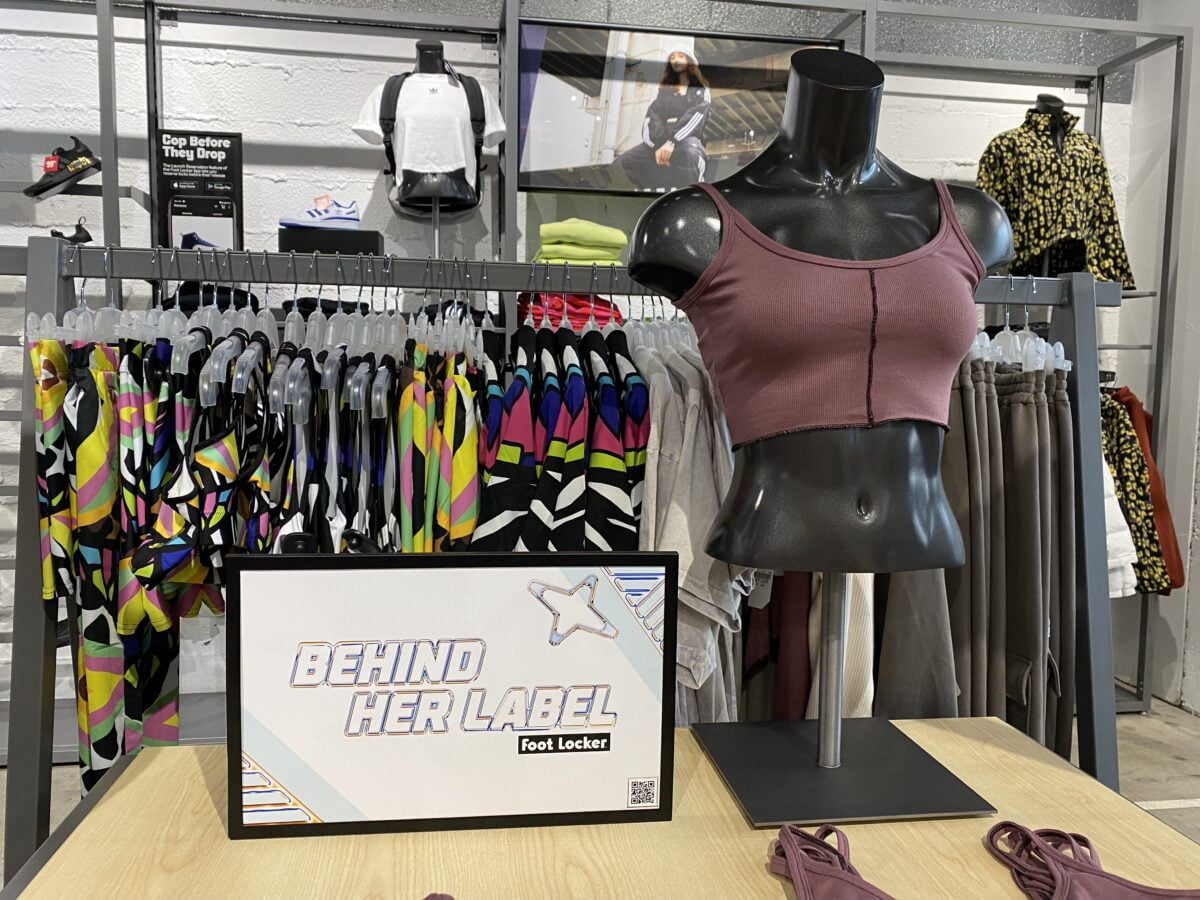
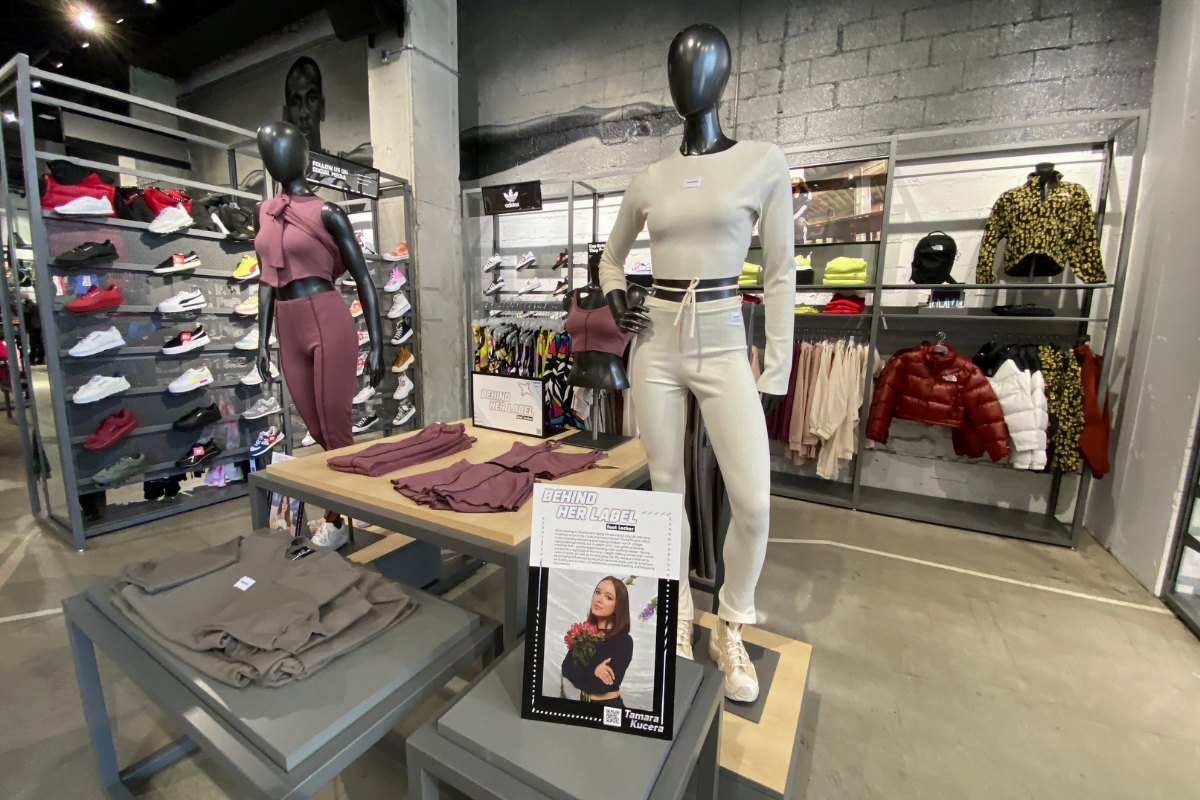
Behind Her Label at Foot Locker - Photo by Dustin Fuhs
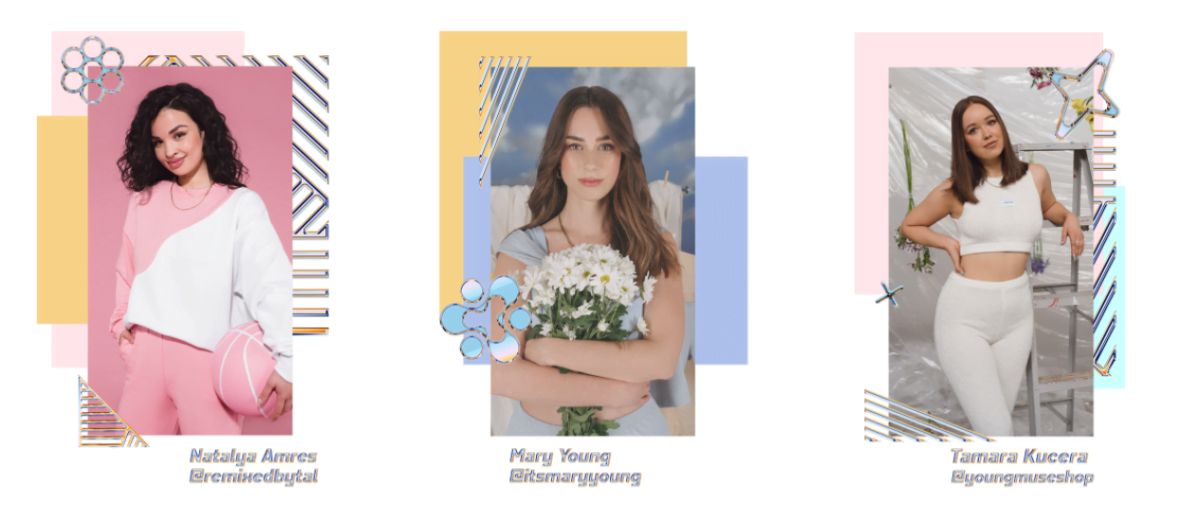
Foot Locker has expanded its ‘Behind Her Label’ platform to Canada with three Canadian designers and their brands including: MARY YOUNG by Mary Young, Young Muse by Tamara Kucera and Remixed by Tal by Natalya Amres.
Richard McLeod
Behind Her Label is Foot Locker Women’s response to the gender gap in streetwear design. It aims to elevate and provide resources to emerging female streetwear designers who have the opportunity to launch collections in-store and on Footlocker.com. The platform first debuted in the U.S. in 2020 – its Canadian expansion will bring these female streetwear designers’ collections in-store and online.
“The original program which I was fortunate to be part of started essentially as a national program back in 2020 in the US and it’s exciting that it’s been able to expand into Canada. It’s definitely evolved into what we would call an international program,” said Rich McLeod, Foot Locker Canada Vice President, General Manager. “We’re excited about that.
“At its core we designed the program to essentially elevate and provide resources to emerging female streetwear designers. The other part of it was just how do we continue to celebrate the long time contributions that women have made to streetwear and a broader youth culture.
Behind Her Label at Foot Locker – Photo by Dustin Fuhs
“In terms of the selection there’s obviously a plethora of female designers.”
McLeod said much of the focus right now is in the retailer’s Community Power Store concept on Yonge Street in Toronto.
“We will be expanding out to additional stores in Canada but the initial focus will be in the Toronto Power Store,” he said.
Foot Locker has 118 locations in Canada.
Behind Her Label at Foot Locker on Yonge Street – Photo by Dustin Fuhs
This is just the start in Canada for the Behind Her Label initiative.
“We were a little bit hampered by COVID in 2020 which is kind of the reason why we were slightly delayed in terms of our launch but we were fortunate as the stars aligned with the Power Store opening in August and it gave us the opportunity to actually truly launch the program,” said McLeod.
“It’s just the start. As we continue to drive more focus around these women designers we will continue to do that in the coming years. It’s not an in and out. It’s something we’re committed to and there’s a mission to continue to close that gender gap and just provide more focus and use our leverage as a power brand within Canada to support these female designers ongoing.”
Mary Young is a Toronto-based community builder, designer and founder of MARY YOUNG, an ethical intimates brand. At her core she believes that everyone should work towards embracing their natural shape and celebrating comfort first. By mixing classic styles with her passion for street style, she has created a brand that’s versatile, sustainable, and unique to help represent the diversity we see in one another, said Foot Locker.
Image: Foot Locker
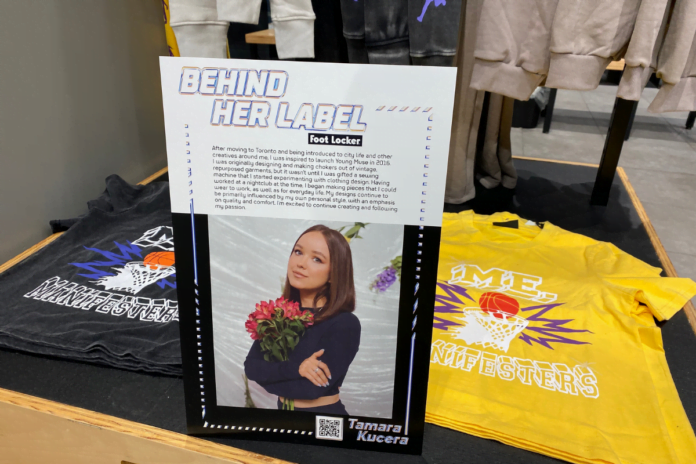
Tamara Kucera launched her label Young Muse in 2016 after moving to Toronto. After originally designing and making chokers out of vintage, repurposed garments, she shifted to clothing design, making garments she could wear to work as well as for everyday life. Designs are influenced by Tamara’s own personal style with an emphasis on quality and comfort, explained the retailer.
Recently, Foot Locker also announced the launch of a new apparel line LCKR by Foot Locker.
The retailer said “LCKR merges sneaker and sport culture with the heritage of Foot Locker to bring a new iteration of casual wear to the market. These every day, go-to lifestyle pieces compliment the Foot Locker customer’s existing wardrobe – particularly those who appreciate style and comfort.”
Bryon Milburn
“At Foot Locker we’re continuing to grow our assortment every day to make sure we’re meeting the evolving demands of all of our customers,” said Bryon Milburn, Foot Locker Senior Vice President, General Manager. “Today, we’re seeing the need for comfort and the acceptance of casual wear in more places than ever before. With LCKR, we have developed an elevated basics line that gives our customers a diverse way to complement their personal styles at a great value.”
When asked about any plans for future expansion of its retail footprint in Canada, McLeod said the marketplace is continuing to evolve and the company continues to evaluate its store presence.
“A lot of our focus is in the key markets. For us it’s more about how do we continue to look at our stores in order to drive some of the key categories.”
Foot Locker, Inc. has a portfolio of brands including Foot Locker, Kids Foot Locker, Champs Sports, Eastbay, WSS, Footaction, and Sidestep. It has about 3,000 retail stores in 27 countries across North America, Europe, Asia, Australia and New Zealand, as well as websites and mobile apps. Foot Locker, Inc. has its corporate headquarters in New York.