Advertisement
Home Blog Page 886

Iconic Canadian Jeans Brand Providing Silver Lining to Independent Retailers Amid Pandemic

Models in Silver Jeans. Photo: Silver Jeans

There have been a lot of stories of doom and gloom written during the past ten months or so, particularly when the focus of the commentary has been retail. Store closures and bankruptcies. Insolvencies and deferrals. It seems at times as though nobody within the industry has escaped the clutches of the pandemic unscathed to this point. Despite the comprehensive and indiscriminate nature of the virus’ effects, however, it’s clear that the greatest impacts have been felt by small businesses operating on Main Streets across the country. Significant challenges brought about by lockdowns and social restrictions have severely hindered their efforts, resulting in dramatically reduced footfall to their stores and a pervasive uncertainty surrounding their future. However, with every grey cloud that descends, adding to the murk of our current situation, there is also hope for brighter days to come. And, providing kindling for this hope, according to Mark Whyte, Executive Vice President, Canadian/International Sales at Silver Jeans Co., is the spirit of entrepreneurs from coast-to-coast-to-coast who refuse to give in to the challenges, and instead continue innovating to succeed during these difficult times.

“2020 was an extremely challenging year for retailers right across the country,” he recognizes. “Lockdowns and restrictions on the amount of people retailers can allow in their stores as a result of social distancing protocols have obviously put a big strain on operations for many businesses, large and small. It’s amounted to less revenue being brought in and fewer opportunities to engage with consumers. But the biggest challenge that retailers have faced is in dealing with the fact that life and business are not the same as they once were. Everything has changed dramatically, and the consequences of this change have hurt a lot of retailers along the way. What hasn’t seemed to suffer, however, is the resiliency and creativity of the small business community in Canada. Those who have survived have shown incredible ingenuity and are leveraging every means by which they can in order to continue engaging with their customers and making sales. They aren’t rolling over and dying. In fact, many are taking this opportunity to strengthen their service and offering, expanding the ways they do business.”

The Strength of Small Business

The resiliency and creativity that Whyte refers to are evident throughout the small business community, right across the country. From the development and enhancement of website and e-commerce platforms and the clever use of social media to inventive virtual personal service and private appointments, as well as many other ingenious devices in between, the innovation that’s been conjured up by small business owners during this difficult time for retail has been nothing short of remarkable and should serve as something of an inspiration for others within the industry to draw from. Their imagination and vision have allowed them to parry much of the brunt brought about by the pandemic and resulting restrictions, enjoying a bubbling of support from patrons within their local communities. And, it’s not the only support that some small businesses are receiving.

Models in Silver Jeans. Photo: Silver Jeans

Company’s like Silver Jeans Co., who recognize the value of small businesses and the importance of their strength in relation to the health and vitality of the communities in which they operate, are also doing what they can in order to aid and encourage the success of Canada’s entrepreneurs. For its part, the well-known, Winnipeg-based producer of high-quality jeans and other denim products, recently formed unique partnerships with dozens of smaller boutiques across the country, providing them with an exclusive line of jeans to sell to customers of their stores.

For Us, Not Them

The jeans, which are not available at any of the country’s larger retail mass merchants, provide independent businesses with a top-quality, limited-run product to put on their shelves. As part of the partnerships, the boutiques that Silver Jeans Co. are working with also receive significant margin from their sales. It represents a massive boost for their businesses and affords them an opportunity unlike many others. But, as far as Whyte’s concerned, the company, which has strong relationships with large department stores in the United States and does a lot of business with Mark’s, Bootlegger, and other major jean players in the country, also benefits from the partnerships it’s formed and the investments it continues to make with small businesses.

“This is a product line that’s been designed and produced specifically for our small boutique partners,” he asserts. “It’s not featured or available anywhere else. It’s a product that’s strictly and exclusively between Silver Jeans Co., the boutiques that we work with and their clientele. In fact, internally, and among our customers, we refer to the collection as ForUs. We haven’t branded the product as such. In fact, there is minimal branding included. It’s more of a codename. The creativity, inspiration, and innovation that it involves is just for us, a collaborative effort between Silver Jeans Co. and our partners. It’s not a collection or product for big business. We recognize our history and the success that the company has enjoyed through the years. We’ve evolved and have grown. But we’ve never lost track of where the company’s come from. And we saw this as an incredible opportunity for us to return to our roots and to create something specific for the specialty boutique channel.”

The Right Thing To Do

It’s a considerably generous business venture that the renowned denim producer, and its privately-held parent company, Western Glove Works, have taken on in an effort to support the tremendous innovation and endeavour of small business in Canada. It’s also a gesture that will hopefully not go unnoticed by others within the industry, one that could perhaps spark a surge of other similar retail partnerships meant to help ensure the continued health and wellbeing of independent retail in the country. But, as Whyte points out, the ForUs partnership program was simply something that Silver Jeans Co. felt compelled to initiate as a company, a quality that he says runs through the entire organization.

“2020 wasn’t the best year for retailers in Canada. Despite the vertical or category, the impacts have been immense. And for smaller businesses that are without the resources and capital of larger merchants and chains, the effects have been even more challenging and problematic. Because of everything that the industry’s experienced over the past ten months or so, we just saw ForUs as the right thing to do. It’s something that we all believe in and is a trait that has existed within the company throughout its history. We recognize that independent businesses and the smaller boutiques are the lifeblood of the Canadian communities across the country. They are critical to not only ensuring the financial health and wellbeing of the areas and neighbourhoods that they serve and operate in, but they also help to make up the fabric of the communities, lending to their character and energy. We understood the situation that we’re all currently working through as a time for retailers to pull together and to support one another. And we hope that our collaboration with our partner boutiques is helping to do that in some small way.”

Canadian Retail News From Around The Web For February 3, 2021

Canadian Retail News From Around The Web

Top Stories: National

Central/Eastern Canada News

Western Canada News

Big Changes Coming for Canadian Grocery in 2021 and Beyond: Expert

Retailer holds tablet and use augmented reality technology to monitor data.

Trying to escape or avoid the impacts and implications of the COVID-19 global pandemic is proving for those who might attempt to do so to be an act in utter futility. Touching just about every walk and facet of life, the effects of the virus’ spread linger demonstrably, everywhere we look, posing potentially long-lasting ramifications that are yet to be fully understood by even the most astute of experts and observers. It makes the job of providing predictions and forecasts based on market trends and analysis that much more difficult and prone to greater discrepancy and error. For grocers operating in Canada, the same uncertainty prevails. But despite the unpredictability of the current landscape, according to Sylvain Charlebois, Senior Director, Agri-Food Analytics Lab at Dalhousie University, consumer sentiment around an increasing appetite for online grocery shopping, coupled with the availability of state-of-the-art technologies, could lead to a transformative digitization of the Canadian grocery experience.

“The impacts of COVID have obviously been quite severe for many,” he says. “It doesn’t really matter which industry or sector we look at. Everyone has been affected. The landscape on which retailers and other businesses operate today has changed dramatically as a result of the pandemic. For grocers, the current situation is presenting some difficult challenges which they are all trying to figure out. With so many different considerations to make related to assortment, banner portfolios, private label offerings, and everything else, it’s nearly impossible at the moment, with so many variables at play and an underlying uncertainty about the future, for grocers operating in Canada to understand what they should commit to. However, one area that presents huge potential is around the continued development of omnichannel strategies and infrastructure which, when combined with a greater use of technology, can help to move the entire grocery experience forward.”

Sylvain Charlebois
Sylvain Charlebois

Record Grocery E-Commerce Sales

There’s no mistaking the bluntness of the strike with which retail sales in general were hit by as an initial result of the pandemic. It helped to set an early and ominous precedent and trend that resulted in the demise of many. But, as sales continue to slowly recover, and those who have survived begin to plot out strategies for 2021 and beyond, the accelerated migration of sales from physical bricks-and-mortar retail to the online channel is a shift that is being monitored closely by all. Early reports issued by Statistics Canada reflected staggering online numbers as e-commerce sales in the country hit a record $3.9 billion in May, representing a 2.3 percent increase over April and 99.3 percent increase over February. What’s more, e-commerce sales more than doubled year over year, posting a 110.8 percent increase compared with May 2019.

As substantial as these gains have been for the industry as a whole, however, results of the shift in purchasing behaviour have perhaps been even more significant for grocers. According to a survey conducted by PayPal in early April, 2020, the number of Canadian online grocery shoppers jumped 58 percent during the four weeks that followed the government’s declaration of a pandemic. The numbers were generated based on a comparable survey that had been conducted just a month prior, translating to fully 30 percent of Canadians shopping online in order to fulfill their food needs when the crisis first hit. In addition, recent Nielsen numbers indicate that food retail online sales in Canada represented close to 3.3 percent of all sales in 2020, compared to 1.7 percent in 2019. Though these numbers have been influenced by lockdowns and physical distancing protocols, the shift in consumer behaviour and purchasing preferences may well be sustained into a post-pandemic landscape. And if it is, Charlebois suggests that it could result in an altered approach by grocers operating in the country with respect to their service and offering.

“There’s been very obvious growth in interest among Canadian consumers to shop for groceries online,” he recognizes. “It was a trend that had already started to take hold prior to the pandemic. But people across the country have become really comfortable with the notion over the course of the past ten months or so. Because of the level of comfort that’s been developed, I don’t see this behaviour reverting too drastically. In fact, it’s possible that the consumer will be encouraged to do more of their shopping online in the future. Grocers have already invested a lot of money in developing infrastructure and platforms to support their e-commerce initiatives. They’ve been focusing a lot of effort toward improving their e-commerce service and getting better at selling food online. And if this is a trend that’s sustained, the Canadian consumer can expect continued and consistent improvements in quality and the overall experience.”

Potential Digital Transformation

As the levels of quality and service increase, however, so too do consumer expectations of the experience. Prior to the onset of the pandemic, it wasn’t uncommon for grocery orders placed online to take days to be put together and readied for the customer. Today, in some parts of the country, orders are often received, packaged and made ready for curbside pick-up or delivery within hours. This enhancement alone reflects the greater emphasis that grocers put toward the development of their omnichannel offering throughout 2020. And, in order to keep up with increasing demand and heightened consumer expectations, Charlebois suggests that grocers across the country will begin leveraging the full potential of available technologies, which could result in a complete transformation of the grocery experience in Canada.

“There’s a lot of room for grocers to grow and quite a bit of work for them to do in order to truly digitize the grocery experience,” he admits. “Of course, the potential growth and amount of work that can be dedicated toward an undertaking of this magnitude depends on the capacity of the grocer to execute. But, for those with the required capacity, things from a technology point-of-view will move very quickly. There will be an embracing of the tools that can help them achieve their goals, predictive analytics and machine learning in particular. There will be an evolution from the traditional use of intuition toward more of a data-driven approach in order to understand what’s happening in the aisles and on the shelves in stores and online. It will lead to more accurate forecasting and a greater understanding of consumer needs and behaviour for the grocer, and a better, more convenient experience for the customer.”

The Sobeys Smart Cart. Phtoo: OntariCNW Group/Sobeys Inc.

Ripple Effect

Charlebois points to Sobeys’ introduction of its Smart Cart — the first intelligent grocery shopping cart — as one of the ways grocers are starting to wade in to the use of technology, exploring and discovering different means through which they can receive more pertinent consumer data that can yield insights, action and positive changes to the grocery experience. Although he also recognizes that current innovations of this sort are relatively few and far between, he suggests that the effective implementation of such technologies and tools may well revolutionize operations for grocers, informing decisions that could have a ripple effect through entire organizations.

“When you look at the amount of business that’s conducted online, it’s hard not to see how the marketplace is already overstored,” he says. “And if this grocery e-commerce upsurge continues, supported by predictive technologies, grocers across the country will look to realign their overall real estate strategies rather than simply focusing on bricks-and-mortar. They’ll also be reviewing their banner portfolios and considering store conversions to make sure they are offering the right services to the right customers in the right locations. It’s very quickly becoming more about allowing consumers to choose the way they’d like to receive services. Insights generated by predictive analytics engines will provide grocers with a more accurate and holistic understanding of their store networks and banners as well as ways to optimize them for greater success.”

Redefining the Competition

In addition to facilitating a review of store networks and banner portfolios, Charlebois believes that the digitization of the grocery operation will also result in changes to the traditional food service supply chain. He asserts that grocers in Canada are currently trying to mitigate the effects of any shocks in their supply due to COVID, and that they’re consistently exploring and reevaluating their supply chain strategies with respect to efficiencies and the vendors that they work with. But he says that the advent and growth of grocery e-commerce will require food service providers to take a much closer look at their strategies, perhaps through a slightly different lens than they’re accustomed to.

“There’s a lot more competition and noise online,” he says. “As soon as you present e-commerce as a viable way by which your consumers can shop with you and purchase product from you, you’re all of a sudden dealing with a much different competitive landscape. A lot of the grocery vendors – farmers and food processors – are moving more and more online to sell directly to consumers. When you factor in e-commerce, the supply chain becomes much more open and democratic. For grocers to succeed, they’ll need to learn how to operate in this new environment, redefining their competition and what that means for their business.”

Despite the online noise and escalated competition that will come as a result of e-commerce growth, however, predictive analytics can actually serve to strengthen grocers’ relationships with preferred vendors, helping them find the right balance within their supply. With insights that can inform decisions related to conventional grocery challenges like product assortment, the mix and placement, in-store and online, can be optimized, leading to maximized product performance, and a scenario in which the grocer, vendor and consumer all win. As Charlebois rightly notes, it may take a little while for those operating within the highly competitive sector to achieve this type of supply chain equilibrium. But, implementation of the right technologies can help them realize their goals and objectives without the need for guesswork while minimizing costly missteps along the way.

Rise of a Grocery Revolution?

Though the realization of a true digitization of grocery in Canada will require a massive amount of investment and work on the part of grocers, and consists of an inordinate number of moving parts, the benefits seem evident. And, when considering the razor-thin margins that are perpetually at play within grocery and the predominance of price as the main factor by which most consumers still base their food purchase decisions, the rollout and use of technology and tools like predictive analytics and machine learning may well be in store for 2021 and beyond. And if that’s the case, Charlebois suggests that Canadians will be set to witness the rise of a revolutionary new grocery experience.

“When looking at and developing their strategies this year, grocers in Canada are going to be looking to areas within their businesses where they can make gains in efficiencies while reducing costs. These types of predictive technologies can help grocers tighten up their operations, across their entire organizations. They can help them find those efficiencies and uncover opportunities that they may not have recognized before. But, at the end of the day, the investments and work that grocers put into their operations is all about the consumer. It’s about continuously improving their shopping experience, whether in-store or online. It’s about making sure that every interaction with them, at every touchpoint, is exceptional. And it’s about providing them with choice, with respect to service and offering, and allowing them to shop and make purchases the way they want. E-commerce and the digitization of grocery offers a means to satisfy all of these things and, if executed properly, could result in a food shopping experience unlike anything the Canadian consumer has ever seen before.”

BRIEF: Nordstrom Appoints New Canadian Head of Stores, Summerhill Market Lands Prominent Chef

Retail Insider Brief

Nordstrom Names New Head of Canadian Stores

Upscale Seattle-based retailer Nordstrom has appointed retail veteran Alix Box as the new Senior Vice President, Regional Manager for Canada. Ms. Box replaces Michelle Haggard who is retiring after 30 years of working with Nordstrom.

Alix Box

Ms. Box’s previous experience includes 10 years at Starbucks between (1997 and 2007) where she was Vice President of Canadian operations, seven years (between 2007 and 2014) in store operations and marketing at Holt Renfrew, three years as President and CEO of Second Cup Ltd. (between 2014 and 2017), and most recently as the Chief Customer Officer for LCBO, prior to being poached last month by Nordstrom.

Nordstrom’s first Canadian head was Karen McKibbin who held the role of President of Nordstrom Canada from September of 2012 until January of 2017 when she became president of Nordstrom’s off-price division, Nordstrom Rack.

Nordstrom’s first store in Canada opened in September o 2014 at CF Chinook Centre in Calgary and the retailer now operates six full-line stores in Canada as well as seven Nordstrom Rack locations. In 2015 Nordstrom opened stores at CF Rideau Centre in Ottawa and at CF Pacific Centre in Vancouver. In 2016, Nordstrom opened two stores in Toronto at CF Toronto Eaton Centre and at Yorkdale, followed by a smaller location at CF Sherway Gardens in 2017. Ms. Box will lead those stores as well as the seven Nordstrom Rack locations in Canada.

Nordstrom is struggling in Canada amid government-mandated store closures. The four Ontario full-line Nordstrom stores remain closed at least until the middle of this month, and foot traffic is down in Calgary and Vancouver. Nordstrom only launched its Canadian e-commerce site in the spring of 2020 during the pandemic and at a time when consumers were shifting online and competition was growing from retailers such as Holt Renfrew which was also beefing up its online business.

In Canada, Nordstrom will continue to compete with Holts, as well as Saks Fifth Avenue which entered Canada in 2016 and has three full-line stores. In the high-end menswear space, Harry Rosen still maintains significant market share with a strong brand matrix. As brands continue to go direct-to-consumers, retailers such as Nordstrom are vulnerable as brands look to stand on their own by opening stores and operating dedicated online shopping portals — this has led to Holt Renfrew seeing success by offering brands dedicated spaces via a leased concession model.

Exterior of Summerhill Market location in The Annex. Photo: Summerhill Market

Summerhill Market Lands Prominent Chef Ted Corrado as New Executive Chef

Gourmet grocer Summerhill Market has announced that popular Toronto-based chef, Ted Corrado, has joined the team as company Executive Chef. Best known for his work with The Drake properties and his secret cannabis dinners with ByMinistry, Chef Ted Corrado will be based out of Summerhill Market’s commissary, overseeing the more than 700 items Summerhill Market prepares daily in-house.

Ted Corrado
Ted Corrado

Having spent over two decades cooking in some of Toronto’s renowned restaurants including Rain, Luce and George, Chef Ted Corrado emerged as one of the most influential names in the Toronto food scene. He made a name for himself in the city as Head Chef at the ROM’s c5.

Corrado was the first notable culinary name to make the shift from traditional hospitality into the world of cannabistronomy. As Director of Culinary for byMinistry, he oversaw the launch of their first-of-its-kind cannabis cooking school, plant-forward food and drink menus at all byMinistry spaces, and a range of edibles lines.

Summerhill Market currently has three locations across Toronto with a fourth location opening in Toronto’s Forest Hill neighbourhood in March 2021. Retail Insider reported on Summerhill’s most recent opening back in December 2019.

Queen Street West retail stores
Queen Street West retail stores, photo license via Alamy

Queen Street BIAs Collaborate to Remind Toronto of Importance of Shopping Local

Riverside BIA (Queen St E) and Queen Street West BIA in Toronto have teamed up to launch a month-long extravaganza of loving Queen Street businesses with 28 days of giveaways.

All in an attempt to support the street’s 400 plus local businesses during this trying time, the campaign features a daily draw for a $50 voucher from a different local business, and a $200 giveaway on Sunday between both BIAs combining prizes.

Every day at 12:00am, that day’s door on the advent-style calendar for each BIA is opened and the prize is revealed. Everyone is invited to earn entries to win in the daily giveaways by performing small acts of support, such as following local businesses on Instagram or leaving a supportive comment. The door closes at 11:59pm each day and the winner is announced at noon the next day.

Queen Street is one of Toronto’s most iconic, cultural, and economic drivers for the city, and the campaign aims to promote, highlight, and remind communities of the businesses that really need help amid the COVID-19 pandemic.

Daily entry is free and participants are able to have double the fun and chances to win by entering on both BIA websites: Queen Street West and Riverside.

Winners can decide how they wish to spend their prizes, either by shopping online, arranging for a curbside pick up, or simply holding on to them until lockdown and restrictions have been lifted.

DMS Future Proof

Digital Main Street Partners with GetintheLoop to Support Local

Digital Main Street is pleased to announce that GetintheLoop has been selected to offer its mobile marketing solutions to the hundreds of businesses in Toronto’s Kensington Market BIA, Riverside BIA, Lakeshore Village BIA, the Eglinton Way BIA, the Broadview Danforth BIA, and the Beach Village BIA through the Community Collaboration Program this winter.

The program has the goal of onboarding 240 main street businesses (40 per BIA) to the GetintheLoop platform and 50 have already come online. Funding for this pilot is made available through the Digital Main Street Future Proof program.

GetintheLoop’s technology connects local shoppers to local businesses by providing real time mobile offers and promotions. Users receive push notifications and emails highlighting specials, incentives, and loyalty programs that are available from nearby small businesses. Participating businesses can feature both in store and online offers; promoting curbside pick-up, delivery, buy now use later, and other timely offers based on the current market conditions. Digital Main Street is supported through FedDev Ontario funding and in partnership with ventureLAB.

As main street businesses in Toronto face ongoing closures, they are looking for new ways to engage with their customers and to attract new ones. The Community Collaboration Program seeks to pilot projects that will help main street businesses discover innovative ways to expand their reach. The pilot runs until March 2021. We encourage interested businesses to contact their BIA to learn more.

Legends Pinball machine. Image: AtGames

AtGames and The Brick Expand Partnership With Premier Launch of Legends Pinball in Canada

AtGames, a leader in interactive entertainment products, has partnered with Canadian furniture retailer The Brick on the first-ever Canadian launch of the popular AtGames Legends Pinball machine.

The most feature-rich machine in its class, Legends Pinball will be available throughout The Brick’s more than 220 retail outlets across Canada, as well as online at www.thebrick.com.

Legends Pinball sports a large 32-inch 1080p LCD playfield, 15.6-inch 1080p LCD backglass, 8-bit precision Hall-Effect plunger, arcade-quality flippers and nudge buttons, accelerometers, tactile feedback, extensive connectivity and accessories options, Internet connectivity and downloadable apps, global leaderboards, lobby for Party Play and Team Play, and more – priced at an MSRP of just CA$999. Pre-orders are now open, with deliveries expected to begin by April 2021.

The Brick already carries a full line-up of Legends Arcade Family products from AtGames.

Sproud products. Photo: Sproud

Swedish Plant-Based Milk Brand Secures $8.2 Million Investment

Plant-based Sproud milk being poured into glasses. Photo: Sproud

Sproud, the Swedish maker of a range of innovative plant-based milks made from pea protein, has announced that it has raised $8.2 million from growth capital investor, VGC Partners. The investment will be used to accelerate the brand’s distribution and brand building activities in Canada and other core markets. This most recent injection of funding further illustrates the growing investor interest in the alternative dairy retail sector.

Sproud’s innovative product line was developed to match both the taste and nutritional profile of dairy and the business is doubly attractive to investors as the production of peas is far more sustainable than other plant proteins.

Sproud is currently available at major retailers and specialty grocers across the country and continues to pursue extensive expansion in Canada, including development of Canadian manufacturing facilities that will handle production for all North American markets.

Read More Briefs From Retail Insider:

Special Edition 24: Lisa Hutcheson from J.C. Williams Group Discusses the Future of Retail Innovation

An off-schedule podcast discussion with Lisa Hutcheson, Managing Partner at J.C. Williams Group. Craig and Lisa discuss Ebeltoft’s 2021 retail innovation book which showcases leading innovations in Canada and beyond.

Interview Details

The Weekly podcast by Retail Insider Canada is available on Apple Podcasts, Stitcher, TuneIn, or through our dedicated RSS feed for Overcast and other podcast players.

Subscribe, Rate, and Review our Retail Insider Podcast!

Follow Craig:

Follow Retail Insider:

Listen & Subscribe:

Share your thoughts!

Drop us a line at Craig@Retail-Insider.com. You can also rate us in Apple Podcasts or recommend us in Overcast to help more people discover the show.

Canadian Retail News From Around The Web For February 2, 2021

Canadian Retail News From Around The Web

Top Stories: National

Central/Eastern Canada News

Western Canada News

Mounting Retail Staffing Crisis in Canada Requires Internal Growth and Development: Expert

Young waitress standing at an order terminal

Disruption. It’s been one of the most frequently bantered buzzwords within the retail industry for close to a decade, often used by experts and analysts to describe the impacts of newly introduced technologies, store concepts or modes of service. The results of such disruptions are, in most cases, positive and lead to the development of even greater advances, innovations and enhancements to the retail experience. And, although the very negative effects of the COVID-19 global pandemic may yet yield a similarly favourable outcome for the industry, the destruction and havoc that the virus is currently wreaking on operations are creating comprehensive challenges for many, posing potentially grave consequences if these challenges are not overcome. One of the hardest hits taken by retailers, a repercussion of the pandemic that bears significantly on the future health of the industry, is the collective strain that’s been placed on staffing efforts across the country. If you ask the opinion of Suzanne Sears, President of Luxury Careers Canada and retail staffing expert, this fact on its own equates to what is perhaps the most disruptive time in the history of retail, requiring merchants and brands to leverage creativity and shift their organizational mindset in order to find and retain the right retail talent.

“Retailers are approaching the pinnacle of crisis with respect to the staffing of their stores and operations,” she asserts. “The biggest challenge they currently face is a lack of potential staff to recruit from. That might seem contradictory given the numbers of people who have been laid off in the past year, leading some people to think that there must be thousands of applicants responding to each job posting. But the reverse is actually happening. And there are a multitude of reasons that help explain why. One of the biggest influences effecting this trend is the mass exodus of people from urban centres who have left to live elsewhere, outside of the city. And as we all know most major retail is concentrated in these urban centres across the country. It’s taken away from the population-base that retailers draw from in each of these cities, depleting the pool of talent in those areas.”

Suzanne Sears
Suzanne Sears

Draining Urban Population

According to recently released data from Statistics Canada, a record number of Canadians moved away from Toronto, Montreal, and Vancouver — the country’s three largest cities. In fact, between July 2019 and July 2020, an estimated 87,444 city-dwellers gave up their urban digs for the slower and, presumably safer, settings of the suburbs, smaller towns, and rural areas. This compares to an average annual exodus of 72,686 people for the previous three years. These numbers alone are startling. But what’s more significant is the fact that much of the urban departure currently taking place is represented by youth and young families. Nearly a third of those who left Canada’s major urban centres were between the ages of 15 to 29, while a whopping 82 percent were under the age of 45. Considering the fact that individuals within these younger cohorts are those who retailers would like to attract, either for frontline positions or senior management, and the current drought in retail talent starts to make sense.

Sears describes it is a trend that’s influenced by a feeling of fear among prospective talent and underscored by a prevailing uncertainty within society concerning safety, health, and wellbeing. For those who haven’t left the city behind, she says, that fear and uncertainty are showing up in a reluctance to work frontline positions, whether in environments like shopping centres or street-side locations, due to their unwillingness to engage directly with the public during this time. Thinning the availability of talent even further is the fact that for those working entry level or intermediate jobs, this is a time in their lives when, generally speaking, they are starting to have children and raise families. And because of the resulting ambiguity and unpredictability around the availability of schooling and daycare, many are postponing their return to employment, preferring to wait until there’s some reassurance that their children will be looked after in a safe environment while they work.

A Thinning Pool of Talent

In addition, its widely estimated that there is a disproportionate number of women currently remaining outside of the workforce to that of men, resulting in an awkward demographic imbalance within the industry. It’s awkward in that it seems well-understood by most that there are certain jobs that don’t attract men, like those in beauty and cosmetics, lingerie and women’s apparel stores. And if this commonly accepted perception holds true, it could place even further strain on the restaffing efforts of retailers operating within these verticals and others of the like. And, as though these influencers and forcing functions weren’t causing enough turmoil and chaos, Sears adds that members of the workforce who are close to or nearing retirement have decided to end their careers early as a result of the pandemic and the difficult situation surrounding it. With their leave from the industry, they take with them their years of experience, understanding and know-how. Cumulatively, she explains that these challenges are presenting retailers with a real staffing conundrum that they must answer in order to conquer their current dilemma.

“As a result of these primary pain-points currently burdening staffing efforts within the industry, retailers are left with few people on the bottom end of their organizations while the people with the expertise are leaving,” she laments. “What this has resulted in is a very thin supply of talent between the ages of 45 and 55 who are all at intermediate level stages of their careers. It’s presenting retailers everywhere with a massive challenge when it comes to staffing. And it’s a challenge that is going to require them to become creative and reimagine talent acquisition with respect to the ways they’re currently finding people to fill positions within their organizations.”

Rethinking the Role of Human Resources

The traditional approach to filling positions, Sears explains, in which retailers post job opportunities and receive 100 or more applications to find the right person isn’t as effective as it once was. More often today, retailers are being made to work for their hires, to go out and find prospective employees rather than wait for the talent to come to them. It’s a trend that’s been taking shape in recent years, but is yet another example of a shift that’s been accelerated by the impacts of the pandemic. And, Sears believes that to properly address this shift, to enable their organizations to find the right talent rather than simply receive it, retailers need to rethink the role that human resources play in this pursuit.

“Human resources departments have, for the most part, served a functional role within retail organizations,” she says. “They’re responsible for paper processes related to people coming in and people going out of the organization. And they’ve also been very administrative in their approach toward their management of the people for the company. In light of all of the challenges effecting retail staffing efforts, they now have to start serving more of a marketing function, developing ways to attract talent to the organization. Further, their approach needs to be one-on-one, personalized and relationship-based. They need to reassess their role and purpose within their organizations, perhaps even reinventing themselves to a degree in order to attract and retain employees.”

Internal Growth and Development

Another critical shift that retailers are going to be required to make, says Sears, involves placing a greater emphasis on the internal development of talent within their own organizations. Though there are some within the industry that have already instituted internal programs and initiatives to nurture and foster their young and emerging skilled employees, it’s not a strategy that’s gained widespread adoption to date. However, Sears suggests that it’s something that could change very soon if retailers have any ambition to boost the reputation of the industry and increase the attractiveness of retail as a viable career option.

“Most of the skills that retailers are currently looking for are not abundant in Canada,” she explains. “And in light of the scarce number of retail post-secondary programs available within the country, retail organizations are going to need to offer educational opportunities to prospective employees in order to train and grow the talent that they need from within. These are initiatives that were once common throughout the country forty-plus years ago. In order for the industry in Canada to succeed and thrive going forward, and to address their need for talent that just isn’t available currently, they’ll need to consider revisiting their approach from decades ago and reintroduce the same kind of management training and development courses and programs that they once did.”

Offering Adequate Compensation

Beyond the pitfalls of the traditional retail approach to staffing and the improvements that need to be made in order to achieve greater effectiveness and success, the significant matter of compensation, and its power to entice or deter prospective talent, adds another layer of complexity to the already complicated mix of challenges influencing retailers’ efforts to fill positions. And although there is some disparity across the country with respect to provincial minimum wages, Sears suggests that it’s not enough and does nothing to enhance the appeal of a job in retail, and that organizations will need to offer a little more in order to achieve their staffing objectives.

“If retailers want great talent rather than okay talent, they have to provide an income for their employees that is enough to live on,” she states. “The figure that’s generally considered ‘enough’ to live on is somewhere between $36-46,000 a year. Minimum wage falls short of that no matter where you’re working in the country. The fact of the matter is that people will leave your organization for any company that’s willing to pay them a dollar or two more than you’re paying them. Compensation is that critical to them, and rightly so. As a result, retailers will need to adjust to the fact that the talent they seek is going to cost them three to five dollars more an hour than they’ve ever been accustomed to paying before. It’s going to hurt. But they’ll need to find ways to offset for this increase in payroll. It’ll force them to find greater efficiencies in inventory, shipping, and other areas of the business. It’s also going to require a new mentality on their part if they are to find the calibre of employee that they need to succeed.”

Challenges and Opportunities

All told, the challenges faced by retailers in their bid to staff their stores and organizations amid the pandemic are not in short supply. There are a number of different levers being pulled at once today that are impacting the industry and their quest to find the right talent. It’s requiring retailers to view the current situation through an equally vast number of lenses as they attempt to increase their appeal among a thinning pool of prospective employees. But, as Sears points out, along with the challenges, there are also opportunities available for organizations to capitalize on as we collectively move closer toward an end to the pandemic and social restrictions.

“The pandemic will at some point be behind us, when everyone is vaccinated and people become comfortable going out again and visiting their favourite retail locations. It may not be until sometime in 2022. But there will be an end to our current situation soon enough. And when retailers are able to open their doors to the public, they’re going to want to be properly staffed with the right talent that will offer the exceptional service and expertise that their customers have come to enjoy and expect from them. Those who make the necessary adjustments to their internal hiring and recruiting processes, their mindset with respect to the development of talent, and the compensation and benefits that they are willing to offer prospective employees, will place themselves a step ahead of their competitors, positioning their organizations for future growth and success.”

Putting the Shopping Centre in the Palm of Your Hand – The Move to Mobile at Retail

Exterior of Erin Mills Town Centre in Mississauga. Photo: Cushman Wakefield

By Perry Schawrtz

The race to help businesses big and small get online in a meaningful way is well underway. With wide-spread lockdowns and stay-at-home orders in place across the country, the pandemic has accelerated the need for shopping centres to digitize their offerings. This trend has seen the proliferation and increased adoption of digital platforms like Shopify, Lightspeed, and fellow Canadian company, GetintheLoop.

Recently, we’ve even started to see various levels of government take action on this front with local Chambers of Commerce, Business Improvement Areas (BIAs), and other grassroots associations driving the shop local movement with a variety of digital and mobile strategies.

Matt Crowell
Matt Crowell

This growth in mobile isn’t new. Mobile user numbers have been steadily growing at a rate of 50 percent per year for the last 15 years, getting us pretty close to the point where every human on earth is now ‘connected’ via smartphone. What did change significantly in 2020 was moved from a steady one percent of growth per year in e-commerce over the last 18 years to an astonishing 10 percent increase in online retail sales in just the first eight weeks of the COVID-19 pandemic.

“2020 was an eye-opening year for our company. We quickly saw how the pandemic was making it more important than ever for businesses big and small to create a digital strategy. We have been working tirelessly to support the needs of thousands of local merchants as well as dozens of shopping centres and their tenants across Canada,” said Matt Crowell, Founder, and CEO of GetintheLoop. “With 63 percent of bricks and mortar shopping starting online, our platform is purposely built to help physical businesses attract and retain customers through an omnichannel digital approach that is focused on making it easy for consumers to find and support local businesses.”

Photo: Cornwall Centre

Shopping centres have long been the Mecca of local commerce, and despite recent challenges, Crowell and the GetintheLoop team don’t see that changing. In a recently published white paper titled, “Re-Imagining The Shopping Centre Experience,” he outlines how consumers are changing the way they interact with shopping mall retailers and how the services those shopping centres offer in the future are also adapting quite dramatically.

“It is important for us to support our tenants’ goals,” said Theresa Warnaar, Senior Vice President, Retail and Asset Resilience, KingSett Capital. “With the significant change in consumer consumption behaviour, we are investing in a digital strategy to help facilitate an enhanced shopping experience. In Cornwall Centre, for example, we have seen shopper engagement increase by over 200 percent with new consumer trends such as curbside pickup.

Transitioning long-standing retail strategies and evolving the marketing approach and the operational practices of shopping centres and their tenants won’t happen overnight. It takes time to develop and implement a fully-integrated and marketing strategy that seamlessly works between the online and physical retail environments.

One company that has proactively invested in their digital future is commercial real estate services firm, Cushman & Wakefield. This past year, GetintheLoop partnered with Cushman & Wakefield to support its retailers at 21 retail shopping centres across Canada.

“While it’s still early days of our partnership with GetintheLoop, we have seen significant success with up to 75% of tenants opting into the platform within the first 90 days,” said Molly Westbrook, Executive Managing Director for Canada, Cushman & Wakefield Asset Services. “The new tools allow us to provide our tenants with an extended reach on mobile and digital channels that drive awareness and engagement for their promotions, new product arrivals, and curbside services. We’re also helping consumers find relevant, local information on their smartphones that enhances their overall shopping experience in today’s omnichannel environment.”

So, what does all this mean for the future of traditional retail in Canada? If we’ve learned one thing over the past ten months, it’s that retailers who aren’t engaging with their customers digitally will struggle to survive. Those that were slow to integrate digital within their shopping experience before the pandemic have realized that they’re playing catch-up. In contrast, brands that were already active in the digital sandbox have undeniably given themselves a leg up on the competition when things begin to normalize again.

If you needed more proof that digital and mobile strategies are leading the way for traditional organizations in the wake of the pandemic, look no further than the 152-year-old H.J. Heinz Company, which became the unofficial condiment of the pandemic when it launched an impossibly time-consuming jigsaw puzzle on social media in the early days of lockdown, and later partnered with food delivery apps and Spotify to deliver a baseball stadium experience before the start of the fan-less 2020 season.

As we look ahead to the coming months, it’s clear that we’re in the early days of a digital transformation taking place at shopping centres as retailers begin to adapt to new consumer expectations and market demands posed by the pandemic in 2021. It will be interesting to see how retailers leverage the digital toolbox to look for new ways to attract customers to their brands in creative and engaging ways.

Crowell sat down with Retail Insider’s Editor-In-Chief Craig Patterson right before Christmas to share some insights about the shopping centre’s digitization on our December 22 episode of the Retail Insider Podcast.

If you’re interested in more on how Matt and his team view the future, download GetintheLoop’s white paper: Re-Imagining the Shopping Centre Experience.

Canadian Retail News From Around The Web For February 1, 2021

Canadian Retail News From Around The Web

Top Stories: National

Central/Eastern Canada News

Western Canada News

Pet-Focused Retailers in Canada See Sales Gains During Pandemic Amid Work-from-Home

Some of Ren's loyal customers sitting outside a Ren's Pets store. Photo: Ren's Pets

There’s no doubt that the COVID-19 pandemic has had a devastating impact on certain segments of the retail industry.

But in some sectors, such as sporting goods and home decor, sales are growing.

One sector of retail also experiencing that positive trend is the pet industry.

As more people spend more time at home with Fido and Felix, they’re also spending more money for their pets and the expectation is that they’ll also be buying more pets to keep them company at home.

Scott Arsenault

“There’s two things that have happened. There’s been an increase in pet ownership and then people now having the time — the interactions have been heavier or more concentrated or more involved,” said Scott Arsenault, President of Ren’s Pets, a Canadian specialty retailer with its head office in Guelph, Ontario.

“It’s been intentional because people are home. So they’re walking. They’re training more. Treats more. For current pet ownership, they seem to be really invested in their pets because it’s something you can do. You can walk them. You can play with them. Growth within the industry has been outstanding. The year for pets has been fantastic.”

The company was founded in 1975 in Oakville. Currently it has 32 locations and it will be opening seven more locations this year. The company has 29 locations in Ontario, from Sudbury to Windsor, and three in the Maritimes (New Brunswick and Nova Scotia). Of the new locations to be opened this year, one will be in the Maritimes and six in Ontario.

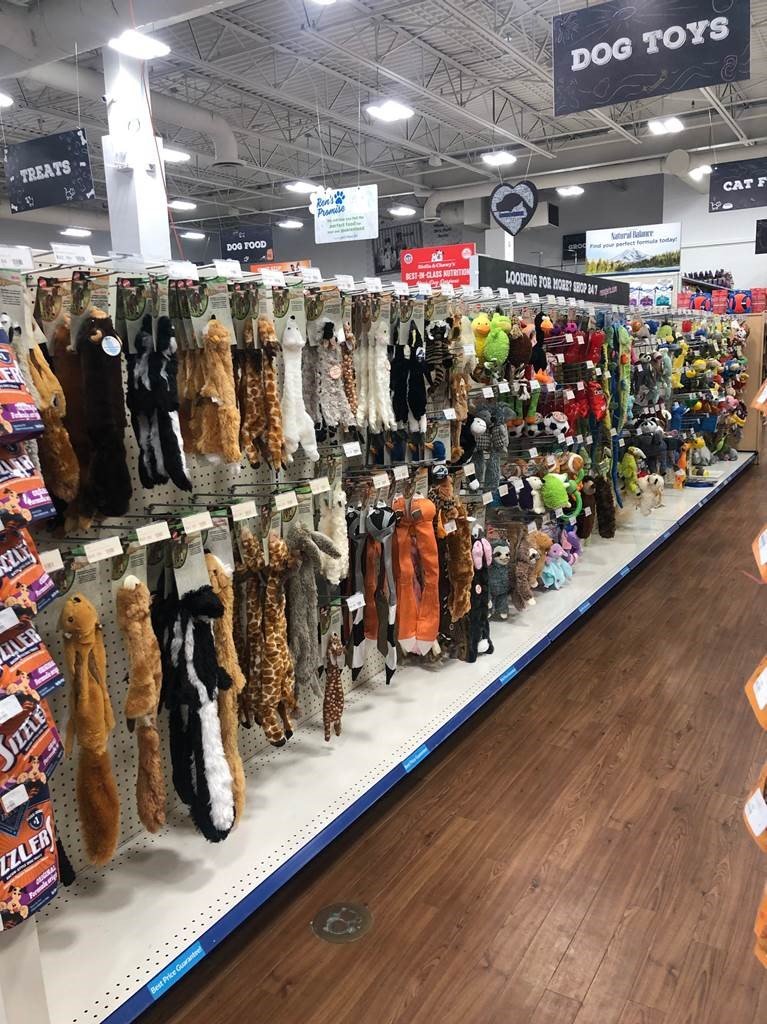
The pet retailer is primarily focused on dogs and cats and they don’t have any live animals in their stores, which have a typical footprint of about 7,500 square feet.

“The fact that we’re solely dog and cat with some small animals really makes us kind of a powerhouse within the dog and cat category. We would have as much as a PetSmart would have in a sense,” said Arsenault. “And we don’t do the services. We don’t groom in store. We don’t train. We don’t board. We don’t sell live animals. From that standpoint, we’re very fixated on dogs and cats.”

Arsenault said two categories have really grown in the pet industry. The raw food category is one of them.

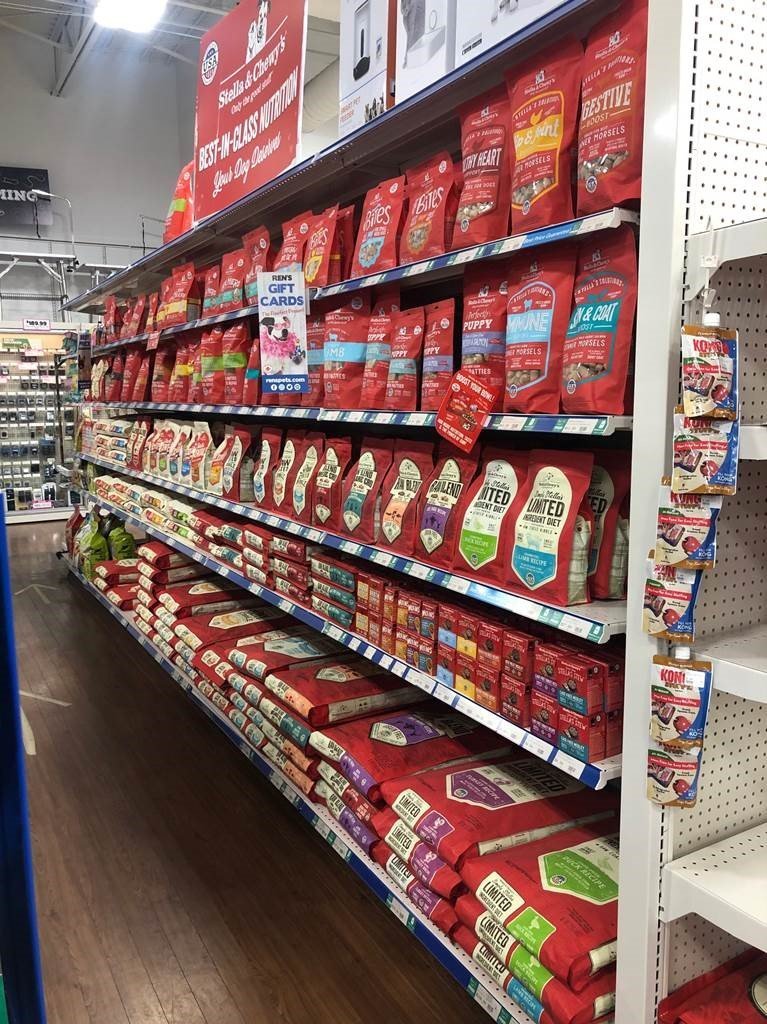
“More than 75 percent of our stores have walk-in freezers and a lot of people haven’t really understood the transition to raw pet food and how big it is. That category has really boomed,” he said.

“And then grooming. Grooming has been fantastic. Ren’s is the number one supplier of pet products to groomers in Canada. So to the professional. We don’t groom. That’s intentional. We don’t compete with the people we sell to. Also grooming for the retail consumer has been off the charts. Our retail business in grooming, in selling the products, has been probably the biggest surprise.

“That’s a good thing to do with your pets. Spend time with them in grooming them because they really like it. It’s a form of bonding with them. People are educating themselves and they’re grooming their pets. And that was one category that we didn’t see would boom the way it did.”

Arsenault said he sees the trend in pet ownership and people spending money on their pets to continue for a number of reasons. More people are working from home now and will continue to work from home even when the pandemic is gone. Also less people are travelling.

“I’ve seen people who I never thought would have gotten a pet because it might compromise their lifestyle and they’re now just flooding social media with the love this pet is giving them and they’re getting,” said Arsenault.

“It’s just a great connection that people are getting to have now. And pausing in their life. People have changed. They’re going to walk a little bit more. They’re going to spend more time with their pets. It’s an interesting vertical.”

Sales of fish tanks and other small pet enclosures have also seen a rise since the start of the pandemic.

Arsenault said the company has had record numbers both online and in-store for sales. With the online component, sales are across Canada.

“It’s phenomenal the growth that’s happened within our online but our stores are just as robust. From the retail standpoint, this is a good story because bricks and mortar is relevant as well as the online that is growing like crazy. We’re still going to expand stores when a lot of people are thinking contraction,” he added.