Young woman is outdoors, holding Christmas presents. She is holding paying card and smart phone
As vaccination rates increase in Canada and globally, shopping trends in 2021 are poised for yet another shift from last year’s surge in eCommerce transactions. The path to purchase is increasingly complex as retail searches grew at a rate 3X higher than the same time last year, according to Google.
Retail Council of Canada is bringing together experts and their latest 2021 learnings to help retailers of all sizes navigate their strategy for holiday 2021 at the Retail Holiday Shopping Forum on October 5, 2021.
Insights on consumer shopping behaviors for the holiday season will be presented by Luc Dumont, Vice-President, CPG at Leger. Leger will share the most important findings of the 4th annual RCC Leger Holiday Shopping survey, that is yet to be released, of over 2,500 Canadians coast-to-coast.
Retailers are also increasingly aware of the value of understanding their local communities and the cultural nuances. John Stevenson of CulturaliQ will share strategic insights covering multicultural consumers and their shopping patterns. John will also speak about the changing face of Canada, cultural holidays and trends, and how to connect the dots from a 360 DEI perspective.
Navigating the holidays wouldn’t be complete without talking about your digital strategy and leveraging the knowledge of Google. Jamie Garatsougias, head of Direct-to-Consumer and eCommerce Retail at Google joins us to share the critical insights to bolster your strategy.
Whether you are finalizing your holiday strategy and want to fine-tune it based on the latest learnings or figuring out where to go, Retail Council of Canada’s Holiday Shopping Forum will help you gain the critical insights you need to stand out and build meaningful connections with your customers and drive sales.
Retail Council of Canada’s Retail Holiday Shopping Forum will be hosted October 5, 2021, fully virtual from 1:00 – 4:00 pm ET. View the agenda or purchase tickets today
Strategic Partnership between GetintheLoop and Retail Insider
Retail Insider and GetintheLoop have partnered to bring Canada’s shop local platform to life inside the Retail-Insider platform. As the pandemic has evolved, brands big and small have turned to digital and mobile solutions to reach more customers and ultimately re-imagine their marketing in an increasingly digital world. As a part of this evolution, Retail Insider has launched an integrated partnership offering additional digital capabilities and reach for shopping centres, national brands, and now local retailers and businesses coast to coast.
Craig Patterson
“We got to know GetintheLoop over the past few years and have been increasingly impressed with the company’s technology and their commitment to helping retailers and local businesses attract and retain local customers during the pandemic,” said Craig Patterson, Editor-in-Chief of Retail Insider. Our partnership allows us to add further value to Canadian businesses big and small while providing another avenue and touchpoint for our 500,000 + visitors each month.”
Under this newly minted partnership, GetintheLoop’s rapidly expanding shop local platform will become integrated into the Retail Insider ecosystem. The partnership creates expanded reach for GetintheLoop business partners while bringing new products and services to the Retail Insider customer base and expanding Retail Insider’s reach coast-to-coast with an evolving focus on local stories and growth.
“In our conversations with brands and shopping centres, we know their strategies are evolving to become digital-first strategies, and we are excited to bolster what we can offer our shopping centre and retail partners,” Patterson added.
GetintheLoop currently works with over 6,000 local and national businesses across the country, including Sunrise Records, Hudson’s Bay, T.Kettle, The Body Shop, and Chapters-Indigo, helping them reach and engage with over 1 million shoppers each week. This partnership with Retail Insider will see GetintheLoop’s audience grow by significantly adding further value to its local and national business network, including partnerships with REITs like Cushman & Wakefield, Kingsett Capital, BentallGreenOak, and Trio Vest coast-to-coast and award winning properties like Hillside Shopping Centre, Halifax Shopping Centre, and Burlington Centre.
Matt Crowell
“Retail Insider is the authority of what’s new, what’s happening, and who’s growing in the Canadian retail landscape. We are super excited to be working with their team to expand our capabilities to help local and national businesses connect with engaged consumer audiences. It’s early days, but I think this partnership is a great example of the innovation that’s happening in media and the retail landscape,” said Matt Crowell, founder of GetintheLoop.
The two parties expect the integration to be live in time for the upcoming busy shopping season and view the partnership as a constant evolution that includes expanded localized content on the Retail Insider platform. Together, GetintheLoop and Retail Insider plan to enter new markets like the USA based on GetintheLoop’s recent announcement of international expansion.
Anyone interested in learning more is encouraged to reach out here to speak with the Retail Insider team.
ABOUT GetintheLoop
GetintheLoop is Canada’s leading Shop Local Community, providing businesses with an easy and effective way to attract and retain local customers. Members join to receive local offers and rewards while discovering and supporting local businesses like restaurants, retail, and things to do, from coast to coast. For more information, visit www.GetintheLoop.ca.
GetintheLoop is expanding into new markets with local owner/operators through our innovative approach to franchising. For more information, visit www.GetintheLoopLocal.com.
Third-party apps and websites can apply GetintheLoop’s software development kit (SDK) and API to integrate local offers right into their app and website, providing users with our network of relevant and local offers with one simple integration.
ABOUT Retail-Insider.com
Retail Insider (retail-insider.com) is Canada’s most-read retail industry news publication. It was founded in 2012 and has grown to report on happenings across the country. Retail Insider also has a notable podcast network, including The Weekly and The Interview Series.
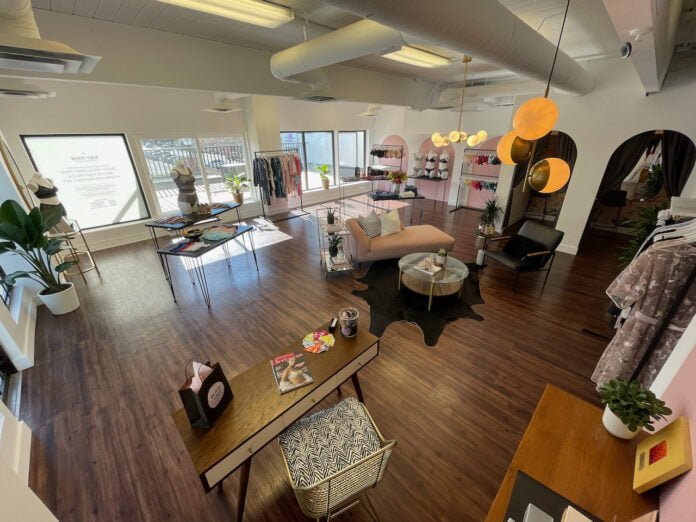
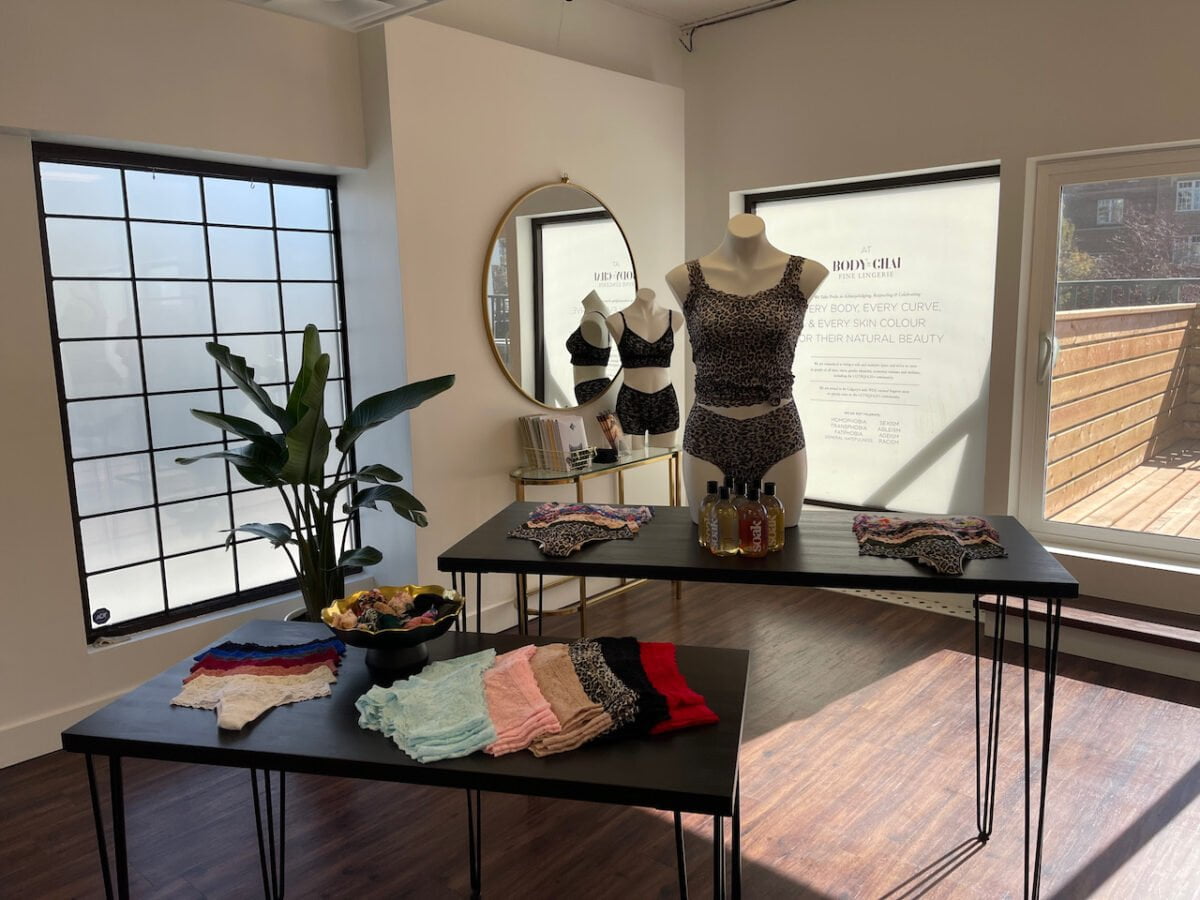
A new lingerie boutique store has opened in Calgary, catering to all women and LGBTQIA2S+ people of all sizes, with a mission of embracing and celebrating inclusion and diversity.
Body By Chai, which is owned and operated by Chai Swinton, has launched in Calgary’s Beltline neighbourhood along the 17th Avenue S.W. high street.
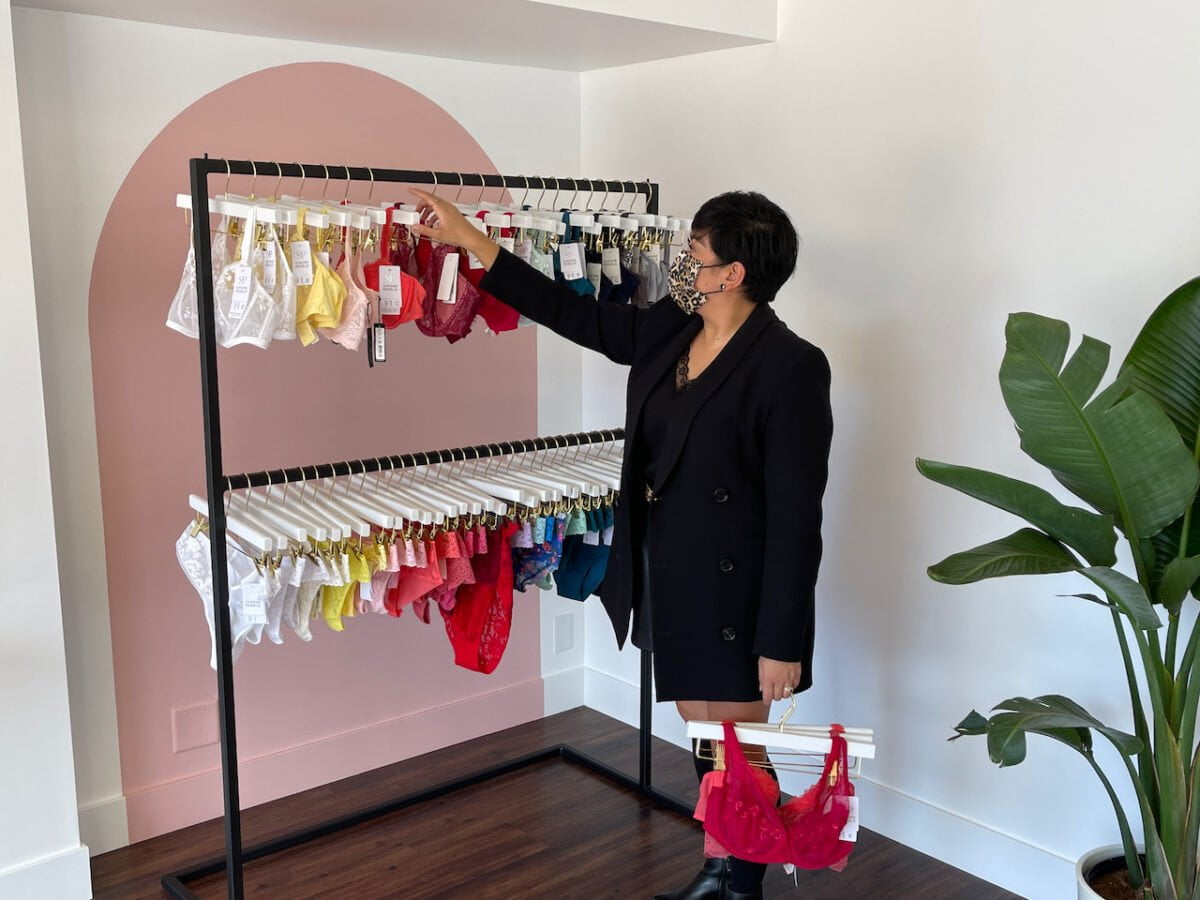
“Body by Chai’s concept is unique because we are an appointment-based, one-on-one lingerie experience where you have complete privacy during your fitting. Each appointment is personalized, and we make it all about the customer, no matter what their size may be — I love how we offer real sizes for real people. Our offering includes Canadian brands, as well as international brands and sizing,” said Swinton. “It’s fabulous because the sizing goes from A to an M Cup and band sizes from 28” to 48”. This may not be a unique size range to the savvy lingerie consumer, but the concept is unique because of the attention and service you receive.”
“This concept has been on my mind for 10 years, and I’ve been working in this industry for almost 12 years. What I felt was missing in the customer experience was consistency, knowledge and care, whether it was at a big box store or a specialty store. I wanted to create a lingerie experience that combined all of these elements into one welcoming environment. Thankfully, I have accumulated the experience and knowledge when it comes to brands, fabrics and fit. I also have the ability to connect with every client very intimately because it’s just me and them. And that’s something you can’t get everywhere. This is the gap in the lingerie market I’m hoping to fill.”
Image: Body by Chai
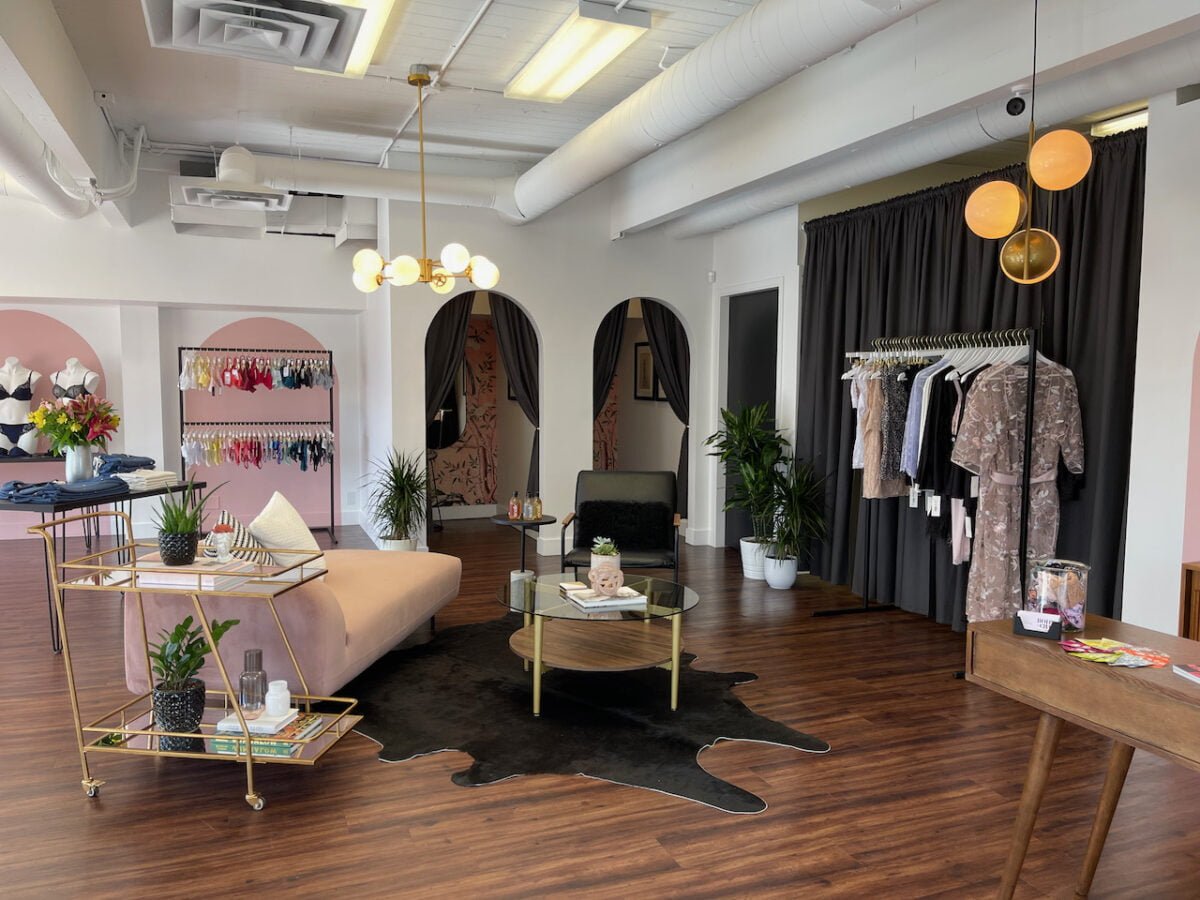
“The shop is also a really comfortable place where a partner or friend (or a few friends) can join you. Typically there isn’t a place for your guest to sit and relax, so I wanted to create an environment that felt like a cozy living room next to your dream lingerie closet. So that’s what I did.”
For the time being, she will have this one store but her next step is e-commerce. That will be an interesting initiative given that the store concept is all about the experience.
“We offer virtual fittings and are able send orders to clients all over Canada. Body by Chai has the ability to nail that fit every time,” said Swinton.
“The other piece is being a safe and inclusive space. We are the only truly inclusive lingerie store in Calgary. Size inclusivity in the lingerie industry has been positively changing in the past few years, but and I am proud say that we are the only WOC-owned lingerie boutique to openly cater to the LGBTQIA2S+ community, in which we were honoured with an international award from the Best of Intima Awards. The inclusivity award that we won was the first of its kind, and it’s an honour to pioneer an award that will hopefully continue from this point on.”
Image: Body by Chai
“Everyone is welcome in our store: All gender identities, all sizes, all races, economic statuses and abilities. I thought it was important to highlight this, given everything that’s been happening in the world finally coming to light about inclusivity. We need to bring this to the forefront and make sure it is known that everyone is welcome.”
Based on an ‘appointment only’ structure, clients have the comfort of knowing that they get a private shopping experience working directly with Swinton. The appointments can be booked online at bodybychai.com, or for last minute availability clients can check the website or Instagram @bodybychai.
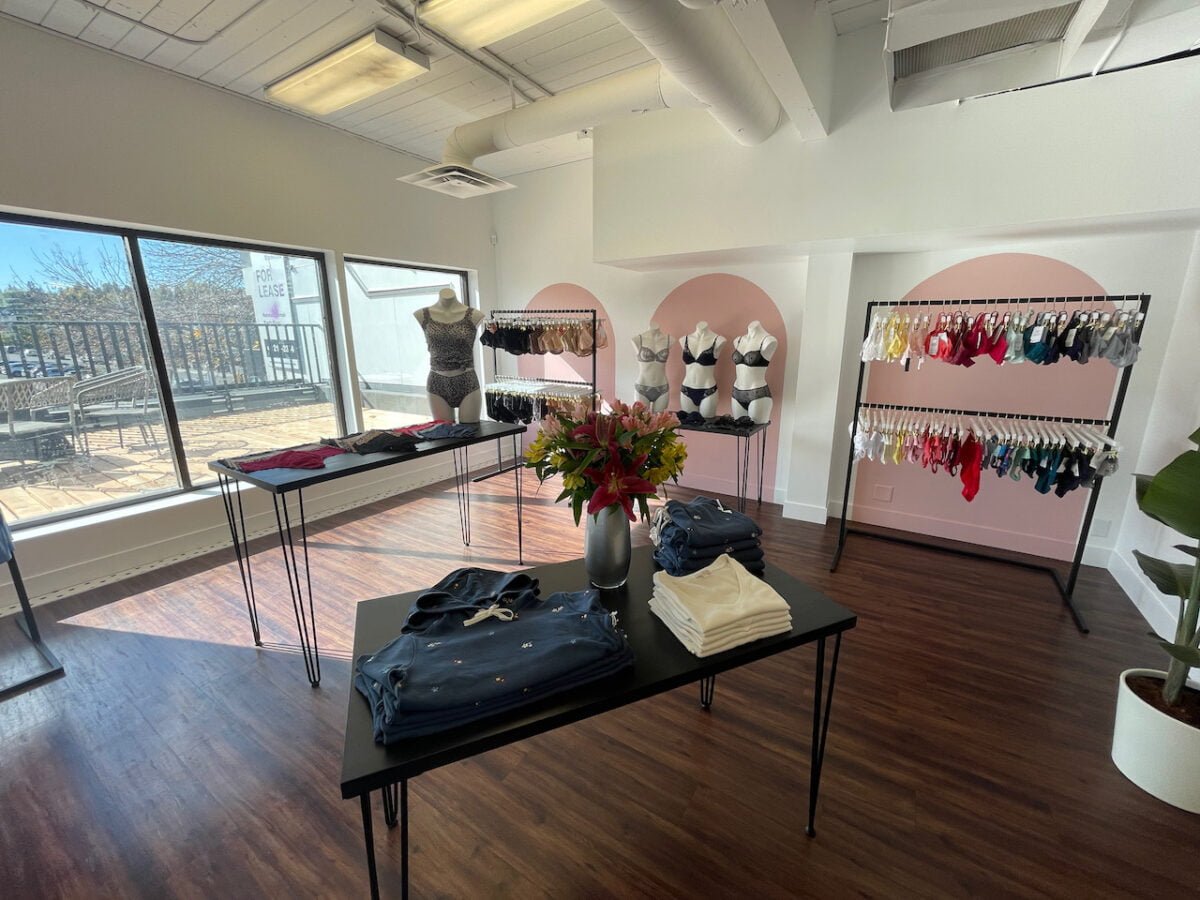
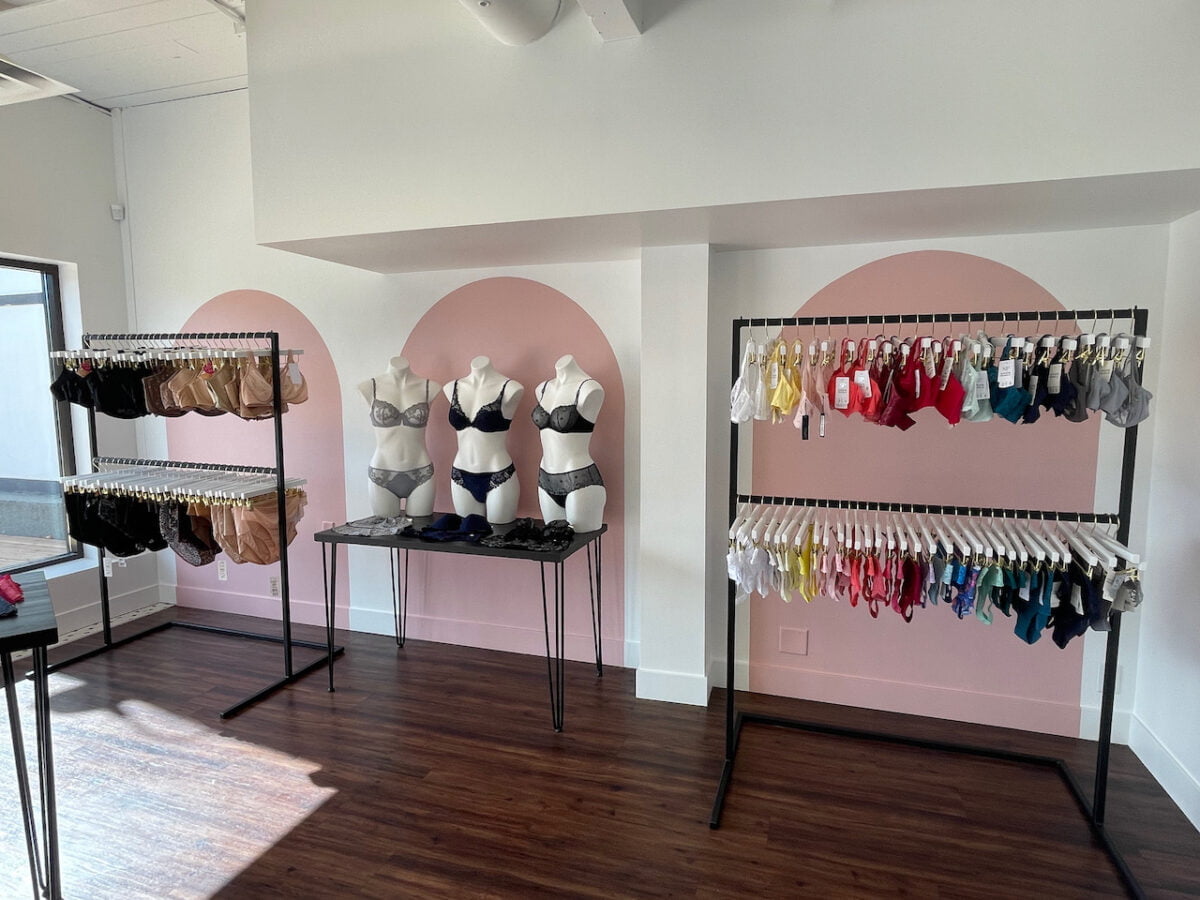
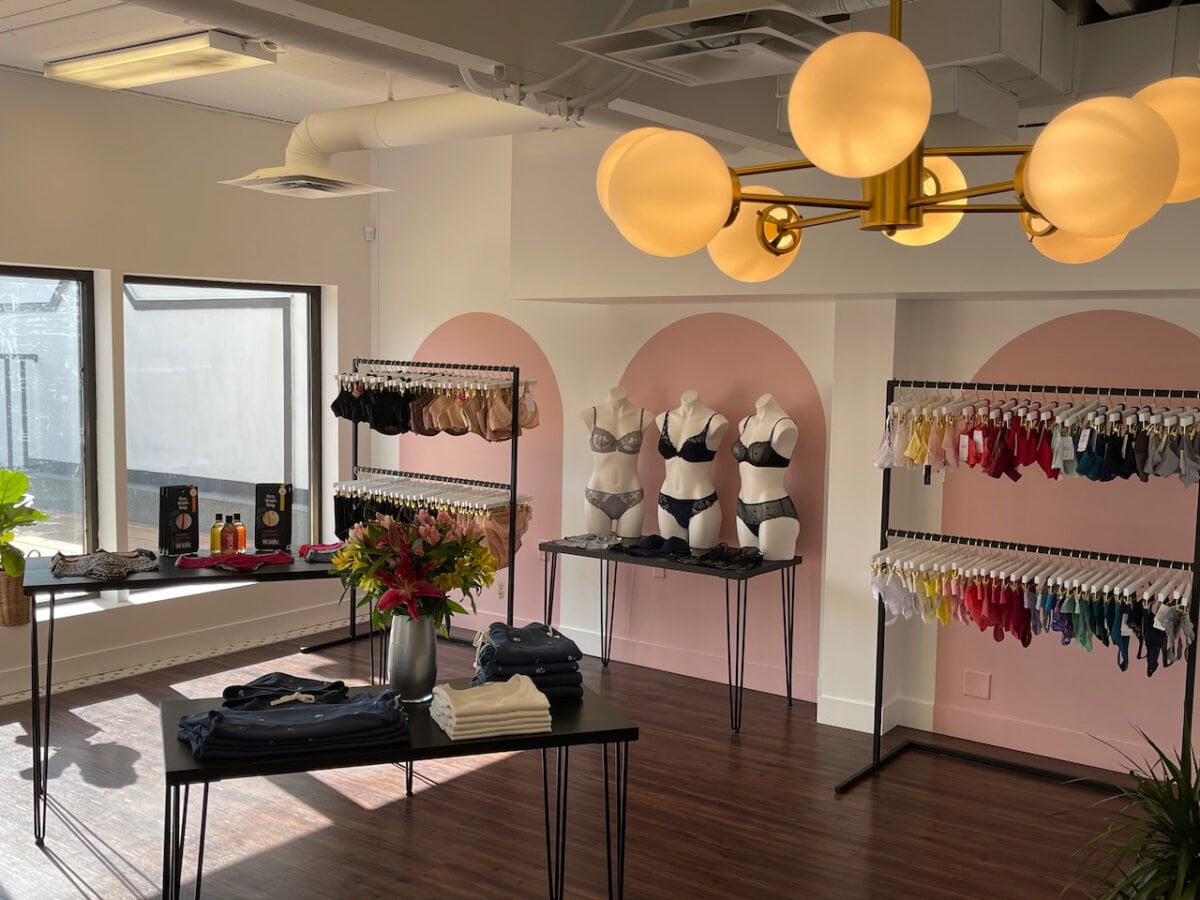
The boutique, designed by local award-winning design company, AV Designs, was inspired by Swinton’s vision of a place that invokes feelings of confidence, comfort, and fun. She said the white interior creates a feeling of calm, hits of pink add a bit of softness, pops of black a little edge, and the wallpaper in the changing rooms is an “unexpected delight.”
The overall space is eclectic and posh while still remaining a welcoming space for anyone walking through the door, she said, adding it provides the ideal backdrop for the thoughtfully curated inventory of hand-picked brands.
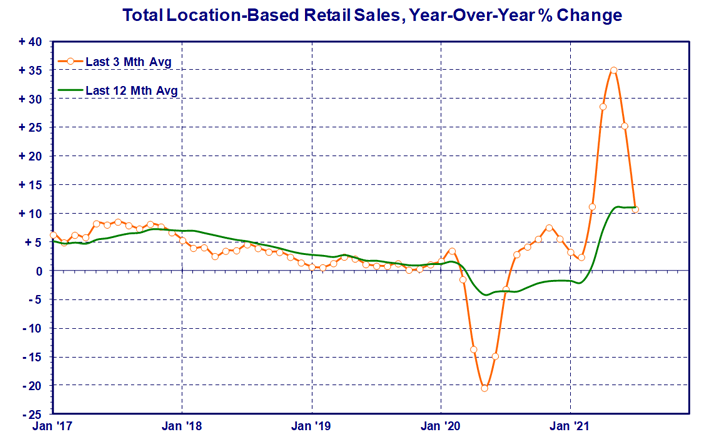
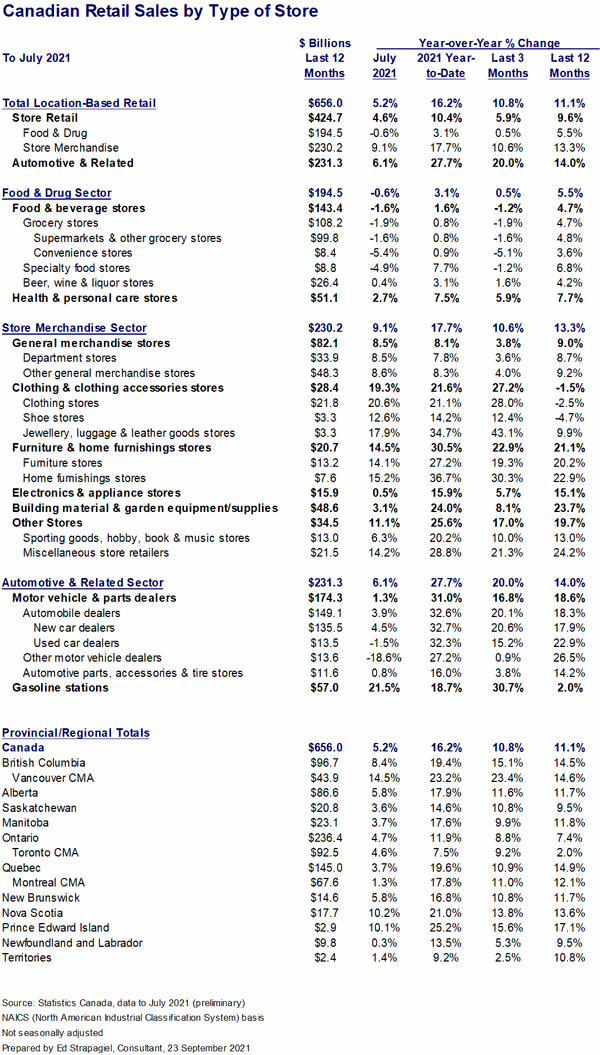
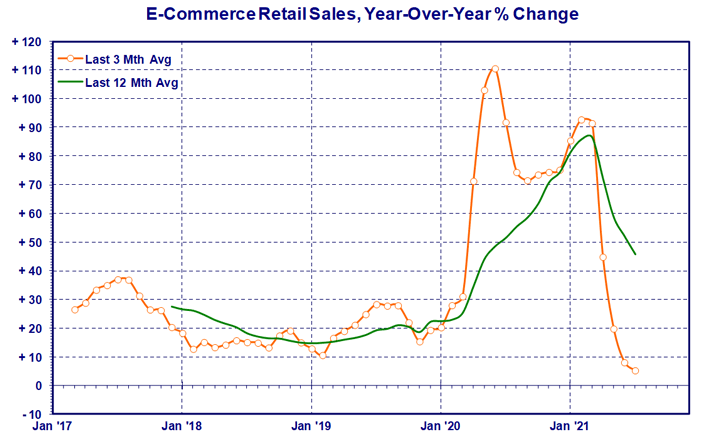
New numbers from StatsCan indicate that the Q2 2021 rebound is over. Actually, it only looked as good as it did because Q2 last year was so bad. The 3 month growth trend (orange line in the chart below) is coming down from recent highs. Overall retail sales still increased 10.8% year-over-year for the 3 months ending July, but half of that was due to the Automotive & Related sector which is now getting softer after its own rebound. After a significant rise earlier in the year, the underlying 12 month trend (green line) has now flattened out and is poised to deteriorate going forward.
More or less, Canadian retail sales are heading back to pre-pandemic levels but with some ups and downs along the way. As shoppers return to stores, e-commerce retail sales growth has also slowed down to a more normal level. Things are still in flux however, and it may be many months before they settle down.
Food & Drug
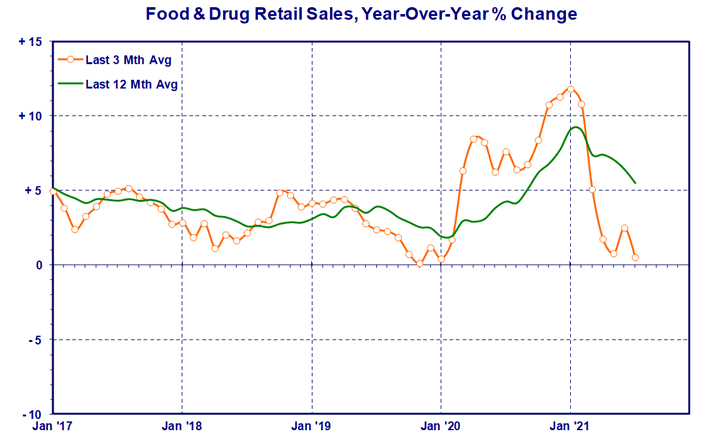
For the 3 months ending July 2021, retail sales in the Food & Drug increased just 0.5% year-over-year, a far cry from the 7.7% gain recorded for the year 2020. In fact, the 3 month growth trend has been softening since the start of the year 2021, and the underlying 12 month trend is also weakening significantly.
Supermarkets & other grocery stores make up over half of the business in this sector, but their retail sales were actually down 1.6% for the 3 months ending July. Convenience stores however suffered more, with sales down 5.1% during the period. Another casualty was specialty food stores – after scoring high growth rates in recent quarters, their retail sales declined 1.2% for the 3 months ending July.
Health & personal care stores did not share in the strong gains that the Food & Drug sector enjoyed last year. On the other hand, they do not appear to be affected by the current softness and instead saw their sales increase 5.9% in the latest 3 month period.
Store Merchandise
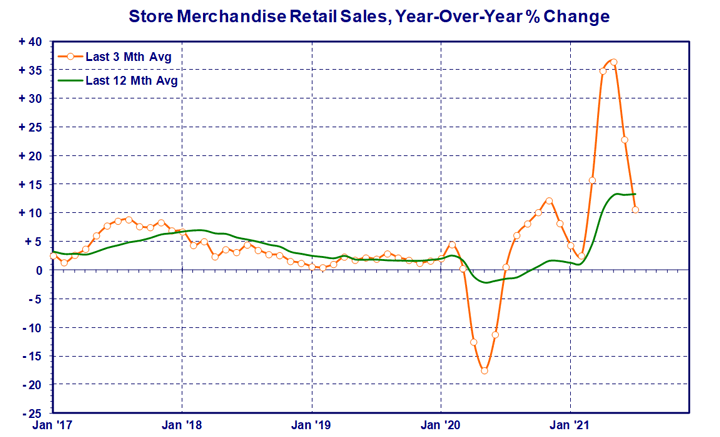
The Store Merchandise sector appears to be following the standard script. Huge year-over-year retail sales gains in Q2 2021 were mostly illusory, because of very weak sales a year ago. The 3 month trend is now cooling off, although there was still a good 10.6% increase for the 3 months ending July. The underlying 12 month trend however has now flattened out, and is likely to soften further in the next few months.
All store types in the sector had positive year-over-year retail sales gains for the 3 months ending July. Clothing & clothing accessories stores were up an outstanding 27.2%, furniture & home furnishings retailers gained 22.9%, and miscellaneous store retailers (which include cannabis outlets) were up 21.3%. General merchandise stores were also up but by only 3.8%.
Automotive & Related
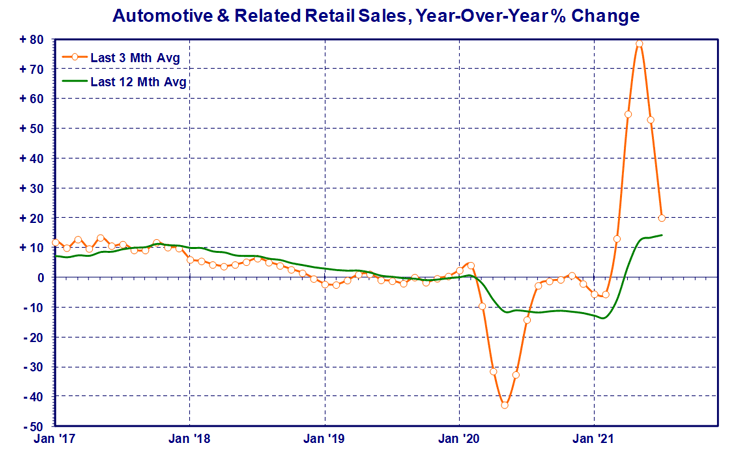
Retail sales in the Automotive & Related sector were up 20.6% year-over-year for the 3 months ending July, although this represents some cooling off versus earlier in the year. Again, comparisons are affected by weak year ago sales.
New car dealers’ retail sales were up 20.6% in the last 3 months, which however is a more modest gain than in previous quarters. Things may cool off even more going forward due to supply side issues.
Gasoline stations also did their part with a strong 30.7% year-over-year retail sales increase for the 3 months ending July. People seem to be getting out more and pump prices have gone up.
By The Numbers
Note that the data and analysis in this report are always based on not seasonally adjusted (or unadjusted) retail sales statistics.
The COVID pandemic touched off a boom in Canadian e-commerce, with retail sales almost doubling in 2020. In recent months however, this has cooled off considerably. For the 3 months ending July, e-commerce sales were up just 5.3%, the lowest such gain since StatsCan started collecting these data in 2016. Does this mean that the bloom is off the e-commerce rose? Probably not. After doubling over the last two years, a bit of a breather is not out of order. Even though more stores are now open for in-person shopping, some of the sales that have gone online are never coming back.
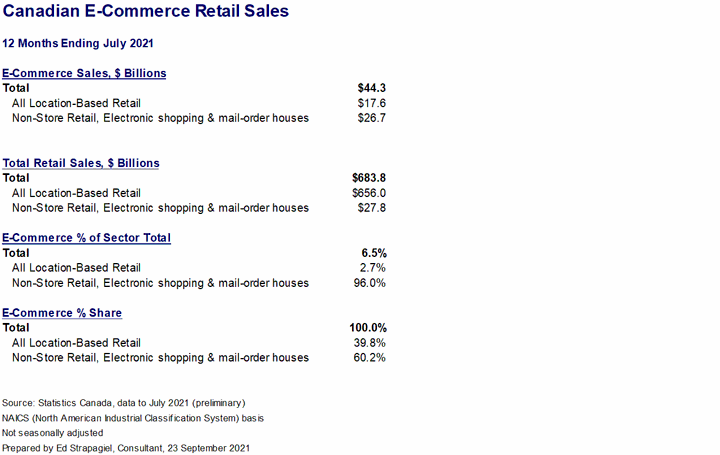
Overall, e-commerce represented about 6.5% of Canadian retail sales over the past 12 months, including both pure plays as well as bricks & clicks stores. Note that Canadian consumers may also buy online from foreign websites which is not captured in these numbers.
Location based retail is the same as that in the preceding “By The Numbers” table. It’s what’s normally reported as Canadian retail sales. Except that it isn’t. Location based retail excludes another section called Non-Store Retailers (NAICS code 454), which includes electronic shopping and mail-order houses, which in turn is where (mostly) pure play e-commerce businesses are. Over the 12 months ending July 2021, electronic shopping and mail-order houses had an estimated $26.7 billion in e-commerce sales.
But that’s not the only source of e-commerce, as (mostly) bricks & mortar location-based retailers also sell online. For the 12 months ending July 2021, this group had an estimated $17.6 billion in e-commerce sales. With electronic shopping and mail-order houses, there’s a grand total of $44.3 billion in e-commerce sales by Canadian operators. Note that this does not include foreign e-commerce purchases made by Canadian consumers, but it does include e-commerce purchases made by foreigners at Canadian operations.
For electronic shopping and mail-order houses, an estimated 96.0% of their sales are currently allocated to e-commerce. For (mostly) bricks & mortar retailers, it can be estimated that 2.7% of their total sales are attributable to e-commerce.
In the final section of the above table, (mostly) pure play operators (namely, under electronic shopping and mail-order houses) generated an estimated 60.2% of all e-commerce sales in Canada, while (mostly) bricks & mortar location-based retailers’ share of e-commerce was 39.8%.
This analysis is updated monthly as new numbers are published by Statistics Canada. If you would like notification from Linkedin of when an update becomes available (and you’ve read this far), please connect with Ed Strapagiel on LinkedIn.
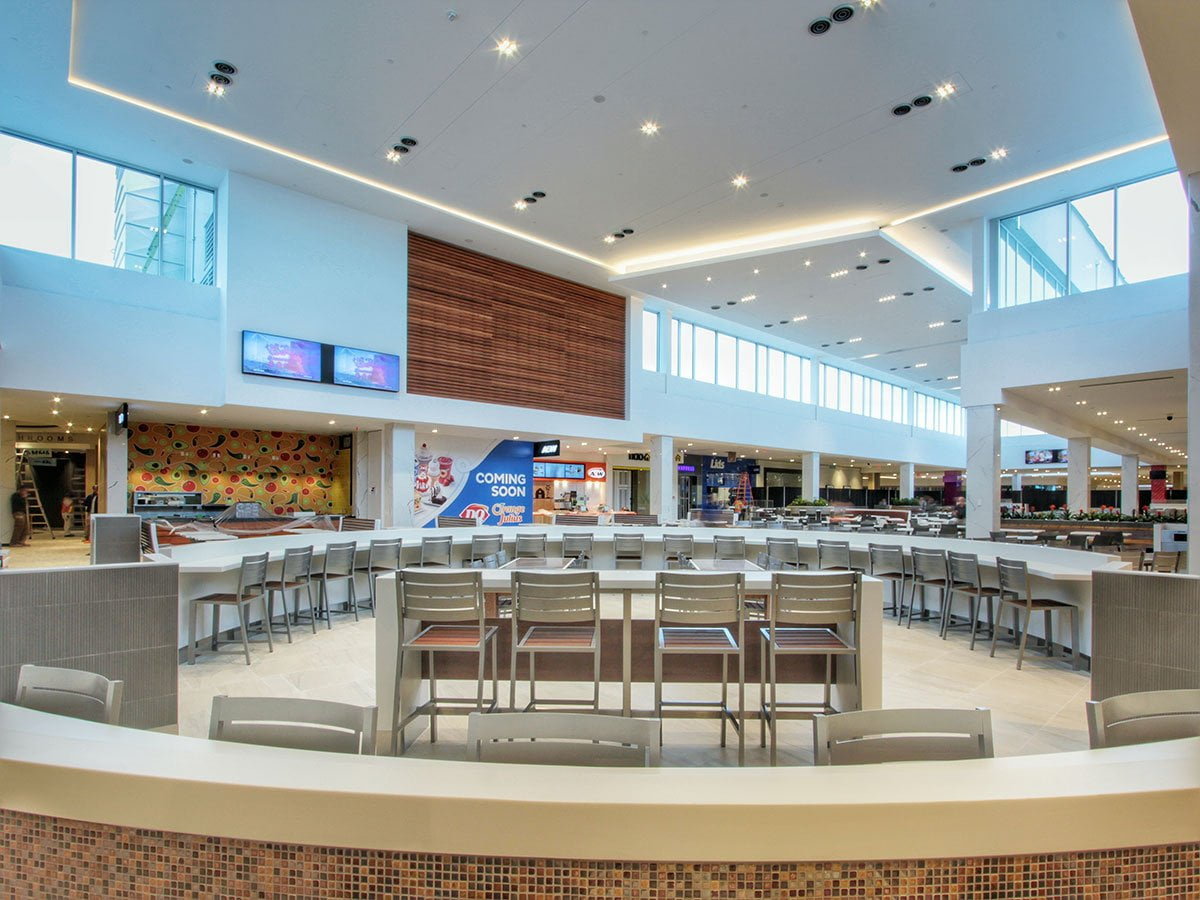
Cafeteria at CF Chinook Centre. Photo: Jessica Finch
Alberta shopping centres are asking the provincial government to review and revise current mandated public health restrictions which are hurting food court vendors in malls – threatening their very survival.
While vendors are open to sell food in those malls, customers are not allowed to sit and eat in the food court dining area.
In a letter to the provincial government, the Southern Alberta Shopping Centre Association and the Northern Alberta Shopping Centre Association, representing more than 15 major enclosed shopping centres with more than 200 food and beverage retailers are contesting the mandated closure of food court seating within enclosed retail centres as outlined in the September 20 Alberta Provincial Restrictions.
The associations are asking that the closure of food court seating be reconsidered and shopping centres be permitted to work with their respective health Inspectors to apply either the one-third fire code capacity limits to the seating areas with appropriate distancing or be able to participate in the Restriction Exemption Program which requires customers to provide proof of vaccinations.
“While Retail as a whole has been gravely affected by COVID-19 and the evolving restrictions implemented for the safety and wellbeing of the public, our Food and Beverage Tenants have been impacted on a substantially more drastic scale due to the numerous removals of their seating areas,” said the letter from the associations. “As you can appreciate customer behavior most often includes a dining experience, a food or beverage purchase as a part of their shopping trip. When there is no opportunity to “dine in” traffic & dwell time decreases and thereby sales decrease for not only food and beverage tenants but other retailers as well.
Image: Londonderry Mall
“As we near twenty months into this pandemic, many Food and Beverage Tenants have either closed or are barely surviving – even with the assistance of CECRA, CERS and Landlords. While many of the Food and Beverage operators (have) national banners, most are local franchisee/stakeholders who are operating the businesses and bearing the weight of these impacts. Tenants were just recently experiencing an increase in sales and this restriction will detrimentally deflate that opportunity.
“Lastly, with customers unable to eat in designated Food Court seating areas, that we all work so diligently to clean and maintain safely, they will seek alternate inappropriate locations such as other common area seating, back hallways or alcoves; all of which pose additional health and safety concerns. This also leads to very unpleasant interactions with shopping centre security personnel that are trying to follow government guidelines.”
Shannon Perschon
Shannon Perschon, the president of the Southern Alberta Shopping Centre Association and Property Manager of CF Chinook Centre in Calgary, said Quebec, Manitoba, and Ontario have implemented a type of vaccine passport program in enclosed shopping centre food courts, and it has been running smoothly thus far.
“Because retail has been so greatly affected throughout the pandemic, the food vendors have been hit the hardest in the whole group. They’ve had numerous times when they’ve reopened just as various capacity restrictions closed during the pandemic. It’s just been devastating for the food court retailers,” said Perschon.
“And if you have been to a mall you probably understand that the experience of shopping centres part of it is always dining. Whether it’s a food court, a restaurant, a coffee shop, it’s just a natural expected part of the shopping trip. You don’t see food courts just being a take out experience.
“With these latest restrictions customers now are sitting on the floor, they’re sitting in back hallways, they’re sitting in staircases. It’s extremely difficult for the security teams and cleaning staff to manage this and it poses additional health and safety concerns all over the place.”
Some malls have also opened up patio areas to accommodate customers.
“These food court vendors are probably losing 60 to 80 per cent of their business with food restrictions being in place. Their business has drastically dropped,” said Perschon.
“We were just getting momentum this last few months to get to even a possible comparison over year to year. With the closures and capacities changing all the time, you can’t do a comparison even to 2019. It’s tough because of all the restrictions that have been in place.”
“Food courts have been grouped into the wrong spot. We’re usually grouped with restaurants. So with the same restrictions that are put on a restaurant are often put on to a food court which makes a lot of sense. So all these food courts want is an opportunity to participate in the Restriction Exemption Program which the landlords are willing to do. Landlords are willing to put out the money to operate them with local health inspectors being part of the equation but also to ensure that property safety and cleaning protocols are in place.”
Michael Kehoe
Michael Kehoe Broker/Owner at Fairfield Commercial Real Estate in Calgary and a spokesman for Consumer Real Estate Canada, said he was surprised and disappointed when the Alberta government health restrictions effectively shut down the on-site dining at regional shopping centres and mixed-use complex food court venues.
“These facilities are an essential element of major shopping centres and mixed-use buildings and are an important amenity anchoring these high traffic venues. Food court and food hall operators have demonstrated in the recent past that these venues can be operated in a safe and effective manner with sanitizing procedures, customer pathway controls and the spacing of seating,” he said.
“I am not aware of any proven spread of COVID that has been linked to shopping centre food courts. The government mandated measures appear to me to be an overreach and unnecessary action at this time and should be lifted immediately. These socially important and popular gathering and dining places feature clusters of quick service independent and franchise style food operators that are often family-owned small businesses. At this human level actual people are negatively affected financially by these measures with little or no government and landlord support. I hope that the provincial officials will move quickly to rectify this situation with a view to protecting lives and livelihoods.”
Marketing research studies reveal that through this pandemic, grocery stores have been perceived to be among the “safest places” outside of people’s homes. These are consumer insights. Shopper insights, on the other hand, are insights about the key purchaser / shopper that have a direct impact on a company’s sales structure. Shopper Insights researchers use data related to distribution, retailer dynamics, promotional activity, and in-store experiences to influence their business’ sales and marketing efforts where shoppers buy (offline or online). E-commerce, at-home commerce, hybrid shopping and omni-channel commerce have all unleashed a variety of innovations in extracting shopper insights. By comparison, consumer insights are more concerned with consumer motivations and attitudes and perceptions and are more tied to factors that are subconsciously influencing shopper purchase decisions. Shopper insights and consumer insights may have intersecting functions but both work together to ensure that information and knowledge is communicated most effectively across a brand.
Shopper insights are retailer and channel focused, directing improved distribution, assortment, placement, and promotions based on how, when and what people buy or don’t buy. Shopper research is often used to elevate category management and sales teams as the guiding hand that drive the store’s retail strategy. Consumer research focuses more on when, why, and how people interact with a brand or category and how the brand is perceived, what emotions it evokes, and the need states it fulfills.
https://www.canadianresearchinsightscouncil.ca/registration-creating-shopper-insights-innovations/Speakers at the webinar
A few defining trends in shopper insights that are worth spotlighting include:
Digital acceleration came faster than shoppers (or retailers) were prepared for: The pandemic sped up e-commerce activities in life changing ways for consumers and retailers. A jump in e-commerce, however, did not spell the death-knell for physical stores, and stores like grocers and arguably cannabis retailers stood testament to the rise of hybrid shopping for essential services. Retailers adapted quickly.
The use of behavioural science techniques and applications to derive human insights: A lot of historical, transactional, point-of-sale, loyalty, CRM and so much other data about shoppers exists, but using behavioural science applications can actually extract some of the core truths that drive and predict shopper behaviour or sales in subconscious, non-obvious ways. We have truly leveraged social values that differentiate consumers based on their unspoken motivations and behaviours through this sub-discipline. These tools are often powered by some of the most scientific and human-centric design in understanding shopper behaviour.
Sustainability: Brands that endure offer the promise of green/environmental sustainability in an age where uncertainty is more than the norm. Brands that are marketed with sustainability hold higher value for shoppers than brands without a sustainability strategy. We have seen this across categories including indulgent processed foods, carbonated drinks and with cannabis. Positive consumer attitudes towards sustainability lead to an uplift in sales for brands and products.
Ongoing Innovation: Innovation can be perceived to be “expensive” but embedding innovation into the very folds and fabric of your systems and processes iteratively (and learning from successes and misses) can enable a fuller understanding of shopper behaviour and go a long way in improving brand, product, service or relationship outcomes. Importantly, embedding your research innovations in a strong ethical framework woven on principles of transparency, protection of personal data collected at any stage of the research process, and commitment to upholding consumer, participant and respondent trust in research by subscribing to the CRIC-ICC-ESOMAR Code of Conduct can go a long way in achieving gainful wins for your brand.
Hear more insights and perspectives from research professionals with unique data points and stories as they paint a well-formed picture of the future of shopper insights innovations through their innovation lenses at the Canadian Research Insights Council (CRIC)’s upcoming webinar “Creating Shopper Insights Innovations”. Visit this link to view the program and register for this free event: https://www.canadianresearchinsightscouncil.ca/registration-creating-shopper-insights-innovations/
Arundati Dandapani, CAIP, MLITT is the Chief Editor and Intelligence Officer (CIO) of the Canadian Research Insights Council (CRIC) and the Chief Operating Officer (COO) of Certified Analytics and Insights Professionals of Canada (CAIP), and founder of Generation1.ca. You can reach her at Arundati@canadianresearchinsightscouncil.ca, or find her on Twitter or LinkedIn.
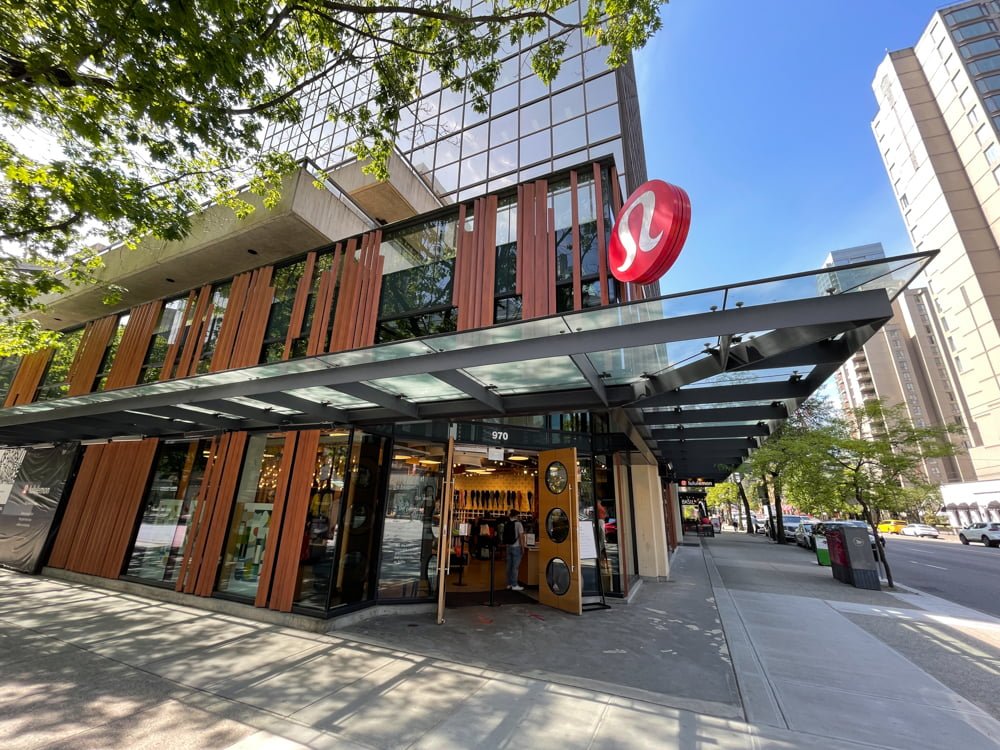
Lululemon on Robson Street in Vancouver (June 2021). Photo: Lee Rivett.
Vancouver-based athleisure fashion brand lululemon has released a study showing how clothing impacts workplace performance, culture and experience in a new hybrid environment.
Walmart Canada Marketplace’s Grocery has reached a significant milestone since it launched in November of last year.
The program now has more than 175 third-party sellers and seller onboarding more than doubled between January and June this year as more than 20,000 grocery items are now available through Marketplace.
Dan Farmer
Walmart said Marketplace Grocery orders are trending at six times compared to 2020, with an increased average order size.
Dan Farmer, VP Digital Platforms and Marketplace for Walmart Canada, said offering customers more choice is at the core of the retailer’s business and the new platform is enabling local Canadian companies and brands to reach customers in an increasingly competitive ecommerce environment.
The grocery platform is part of the wider Marketplace initiative which was launched in August 2017.
“We’ve been building the Marketplace business at Walmart Canada for the past five years or so. At the end of the day, this is about offering more selection beyond what Walmart brings in to our customers and to Canadians,” said Farmer.
“Our ambition is to be a real credible alternative to the other global marketplaces that are out there . . . in terms of bringing really broad selection, thousands of sellers from around the world. We built the Marketplace up to almost 5,000 sellers and it will be 5,000 by the end of the year, offering 30 million items to Canadians. Most of that selection has been in general merchandise and that’s a fairly typical place to start when you build a marketplace business . . . The natural extension for us is offering the same type of value of increased selection, access to specialty and niche items in grocery and so we started thinking about this late last year and we launched a project to start expanding into our grocery space.
Image: Walmart Canada
“It really does, particularly for Walmart, offer customers the ability to shop much deeper into categories beyond what we carry in our stores. So it’s actually a very nice complement for customers looking for a national brand and typical stock up type items you’d find in a store but then also allow customers to find more niche items based on lifestyle, healthy items, ethic items, also specialty items for a certain diet.”
Farmer said the number of third-party sellers in the grocery space is expected to continue to grow.
“Part of the value of the Marketplace for let’s say sellers or local Canadian businesses is that they can access all of the traffic that walmart.ca has to build and grow their businesses,” he said. “We definitely expect it to grow. We’ve been focusing on very specific categories as a starting point and as we start to open up more categories we definitely expect to see growth.
“There are parts of the grocery business today that are natural kind of next steps for us as we start to think about fresh and frozen. Every time we take the next step further in providing more to our customers through our Marketplace there’s additional business requirements we have to put in place to make sure that we can manage those businesses.
“But for us for sure, broader category selection as well as fresh and frozen are the next steps for us . . . We believe we’re the only full scale global competitive marketplace that can also leverage our 400 stores across Canada. We think that’s a huge benefit to the customers and it’s a huge benefit to sellers. That’s what I think really makes us different.’
Farmer said Walmart is continually building more services for the sellers.
Image: Walmart Canada
“If you are a seller on the Marketplace platform today the first promise is access to our customer base that is online. The thing that we’re working on all the time is making it as easy as possible to apply to be on the Marketplace and to set up your business on our Marketplace,” he said.
“If you’re a specialty brand and you have a story to tell about your brand, there’s the ability to do that which is through kind of storefront pages and those types of things. When it comes to other services like fulfillment, we’re in the process of building those types of services for our sellers and to be transparent they’re not in place today but we have on our road map to build those types of services for our sellers.
“Certainly there’s opportunities for additional marketing, there’s opportunities to always access our stores for ship to store. We have a ship to store program where customers can pick up in our store so you can leverage our store network to make it easier and easier for customers, and sellers have the opportunity to do that. And then we also have returns to our stores. So a seller can know that if a customer wants to take an item back they can easily do it in the store and then the item goes back to the seller through our network.”