Live streaming has become an increasingly popular trend in the retail industry, particularly with the onset of the COVID-19 pandemic close to two years ago, and the example of its extraordinary success in China.
John Crombie
John Crombie, Executive Managing Director, Retail Services, Canada, Cushman & Wakefield, said there is huge growth in the North American market when it comes to live streaming.
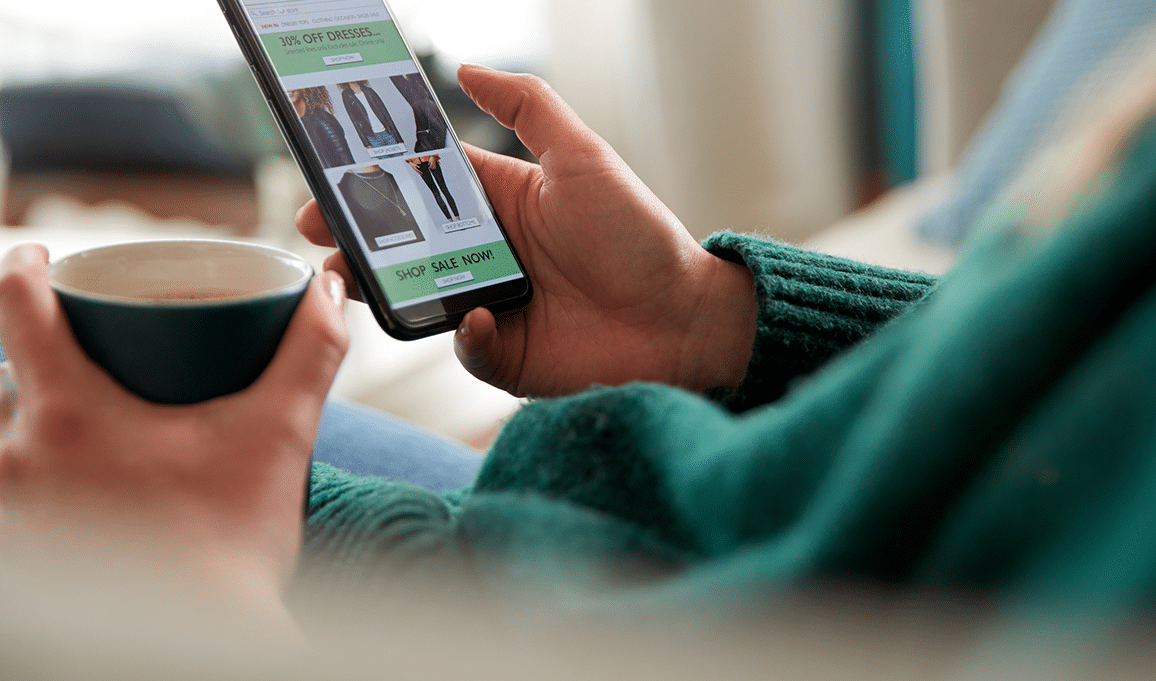
“It’s been a phenomena in China for a long time and effectively I call it a bridge between e-commerce and the brick and mortar where you designate a time for live streaming and you invite your customers in there and they learn about the product. It’s educational. It works really well in the beauty sector,” said Crombie.
“For direct to consumer brands I think it’s just that physical and live engagement. We’re also seeing live streaming happening in the runways and so before only the privileged got to go to the runway and now anybody can participate in the runway to see what the latest fashion is and see what Zara is going to produce in three weeks from that date, you know how quick they are.
“I think live streaming is a really interesting trend.”
According to a study by Brightpearl, a Retail Operating System (ROS) for retailers and wholesalers that’s built for hyper scalability, one in five UK shoppers have watched or participated in a Livestream shopping event in the past 12 months and 86 per cent would like to see more retailers offering livestream shopping.
According to McKinsey and Company, a global management consulting firm, live commerce has evolved rapidly in China, taking less than five years to develop into an innovative sales channel with an estimated penetration of 10 per cent. The value of China’s live-commerce market grew at a compound annual growth rate (CAGR) of more than 280 per cent between 2017 and 2020, to reach an estimated $171 billion in 2020, the company reports on its website.
“This growth spurt has been intensified by the COVID-19 pandemic, and Chinese sales are expected to reach $423 billion by 2022. The product categories most often showcased in live commerce are apparel and fashion, with a 36 per cent share, followed by beauty products and food, with roughly seven per cent each. Consumer electronics account for some five per cent, and furnishing and home decor for almost four per cent,” it said.
Elma Beganovich, a New York City-based digital marketing authority and considered to be one of the top influencers in the U.S. with over one million followers on social media, runs Amra and Elma digital agency with her sister Amra.
Elma Beganovich
“Live streaming is very exciting. I think now and I’ve seen the way where companies like Amazon and YouTube and TikTok are investing (which started in China), they obviously understand the business behind it,” said Elma Beganovich. “Amazon Live has been investing significantly and YouTube just launched basically where content creators are selling their own things.
“I think it’s very powerful, for small businesses especially because you’re able to sell directly to your consumer. And that’s why influencers are just going to become more powerful because you have influencers, where before you had to be a TV personality, now there’s millions you can basically engage as a brand and then they go and they directly sell your products.
“So for clothing obviously you can showcase your different clothing, you can talk about the materials for example, the influencer can model the clothing. Your consumers are directly watching that, watching that any time of the day, and then they can just click below the screen, it shows up different pieces that you are selling, and they can just directly shop. So it makes it really, really easy for the consumer.
“For example, on Amazon, most people have an Amazon Prime account. So they just click and they directly buy. With businesses it’s right away, people are excited. They like obviously live. It’s entertainment coupled with shopping so it makes it great.”
SkipTheDishes has just announced it is building 38 dark stores across the country to support its online food delivery strategy. This is yet another sign that online food delivery in Canada is here to stay.
We learned recently that SkipTheDishes is building 38 dark stores across the country to support its e-commerce renewal, which includes selling food online, like any other grocery store. Company CEO Kevin Edwards claims that the online food market will be worth $120 billion in a few years. That number is a little ambitious, but many observers believe online retail revenues could reach $25 billion by 2025. This could very well mean that about 10% of all the food purchased at retail in Canada could be bought online in just a few years.
Online food retailing is booming, no matter what some may say about grocery shopping being an irreplaceable experience. The pandemic has made a compelling case for empowering a stranger to do the work for you, even at a fee. While some may find it more convenient, others don’t have a choice due to a chronic or permanent ailment.
The Angus Reid Group reported that in the last month, 19% of Canadians ordered food from a retailer online. Before the pandemic, most online orders were for curbside pick-up. Not anymore. The split between door-to-door delivery and curbside is almost 50/50. So, offering a delivery service is increasingly becoming a competitive advantage. For food service and restaurants, that user rate goes up to 28%. In fact, SkipTheDishes is currently fulfilling about 400,000 orders a month. In March 2020, before the pandemic, the number of orders per month was less than 20,000. If any company has an idea of how much online food ordering has grown, it’s certainly SkipTheDishes.
Like anything else though, the way to support an e-commerce strategy is slowly evolving. Before the 2017 Amazon-Whole Foods deal, grocers considered e-tailing a nuisance, a distraction, and even a way to cannibalize revenues. When the American giant acquired Whole Foods, that’s when we saw an array of click-and-collects popping up everywhere. The click-and-collect model is more of a test balloon if you will, and not a full commitment to the development of a comprehensive online platform. The industry needed a decent push to commit to a more sustainable cybernetic approach. Over the last two years, that push has come from COVID.
Now, companies are thinking about the last mile, the middle mile and micro-fulfillment, like the use of dark stores. A dark store is a location which has the sole purpose of supporting a company’s e-commerce distribution strategy. Such a location doesn’t serve customers on-site, as it is designed to fulfill online orders only for a localized market. We are expecting more, but SkipTheDishes is the first company to make it an explicit point that dark stores are very much part of its strategy moving forward.
But anyone who has ordered food online knows that fees are often added to the bill, anywhere between $4 to $12, depending on where you live, the size of your order, and which provider you use. SkipTheDishes intends to offer some deliveries for free, for orders of $25. As the market matures, food delivery services will need to think about how to democratize the service to eliminate fees for those who need to order online. For people who are physically or even mentally compromised, or people who need to quarantine, service charges are simply a regressive tax. As we learn to live with viruses and other unfortunate public health challenges, access to online food delivery services can be an asset only if they don’t penalize those who have no other option, temporarily or permanently.
The labour market will look quite different from how it looked in March 2020. Based on some estimates, about 70% of the Canadian workforce will be working from home at least 5 days a month or more by the end of 2022. It means more of us will spend more time at home and will feel less inclined to leave the house to do errands like grocery shopping. Shopping online between video calls will be quite convenient for a growing number of people.
If you still don’t get the online food shopping phenomena, ask someone under the age of 40, preferably someone who has children. You’ll understand.
Around the world, retail customers are yearning for some normalcy and a return to the social experiences that come from in-store shopping. In concert with this desire to frequent “bricks and mortar” and have in-person bonding, the retail sector is facing some challenges and constraints with the renewed increase in store traffic.
But not all is what it used to be. Health and safety practices are top of mind for everyone, especially retailers. Customers are having to comply, and retailers are having to uncomfortably enforce, the politicized “mandatory mask protocol”. The mask mandate has led to some heightened emotions and uncomfortable confrontations.
Add to the mix the supply chain issues we are currently experiencing; they create the challenge of long wait times for product and a lack of inventory leading to drastic price increases. We are also seeing major workforce shortages, and because of this, customers are not getting the attention they need or expect based on past shopping encounters with brands they are loyal to.
More than ever, customers have become impatient and unforgiving in their service standards. Stores across Canada are having to contend with annoyed and hostile shoppers and heightened criminal activity. For this reason, many workers have left retail for other opportunities. They don’t want to deal with the aggression, and in some circumstances, very dangerous altercations.
Impacts of organized retail crime
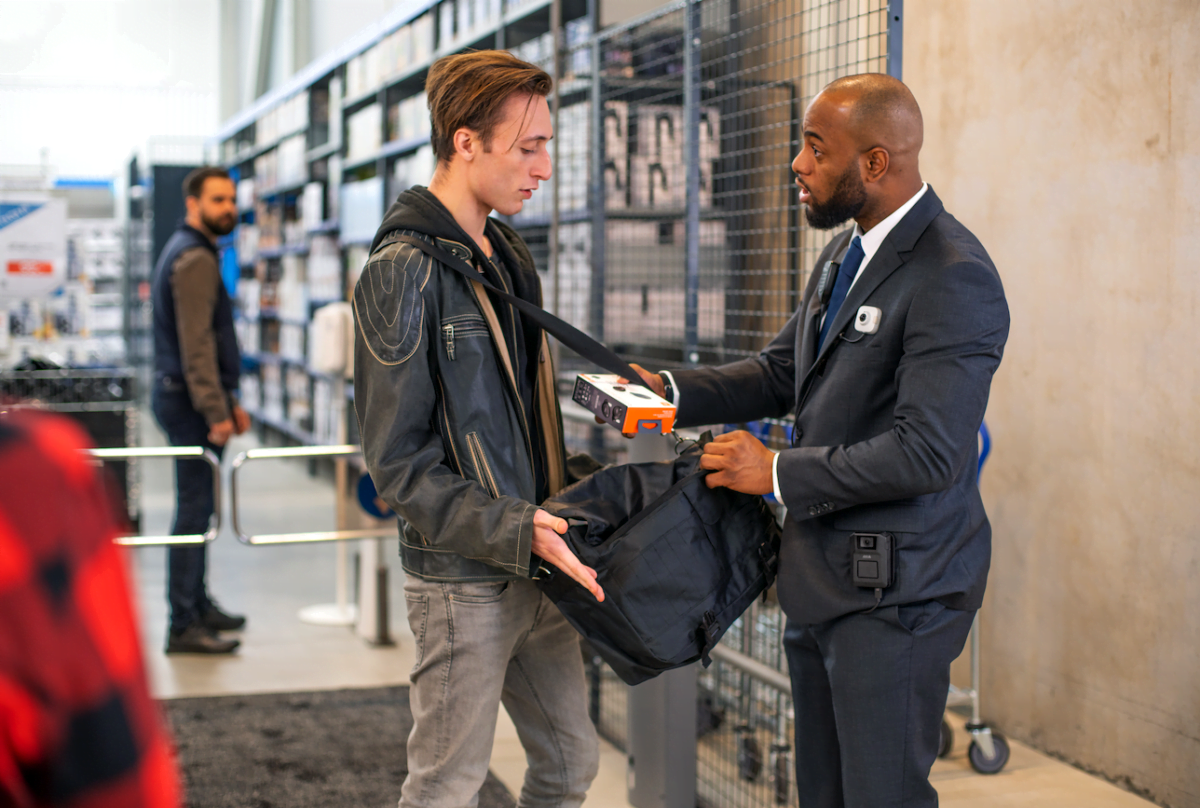
Image: Courtesy of Axis Communications
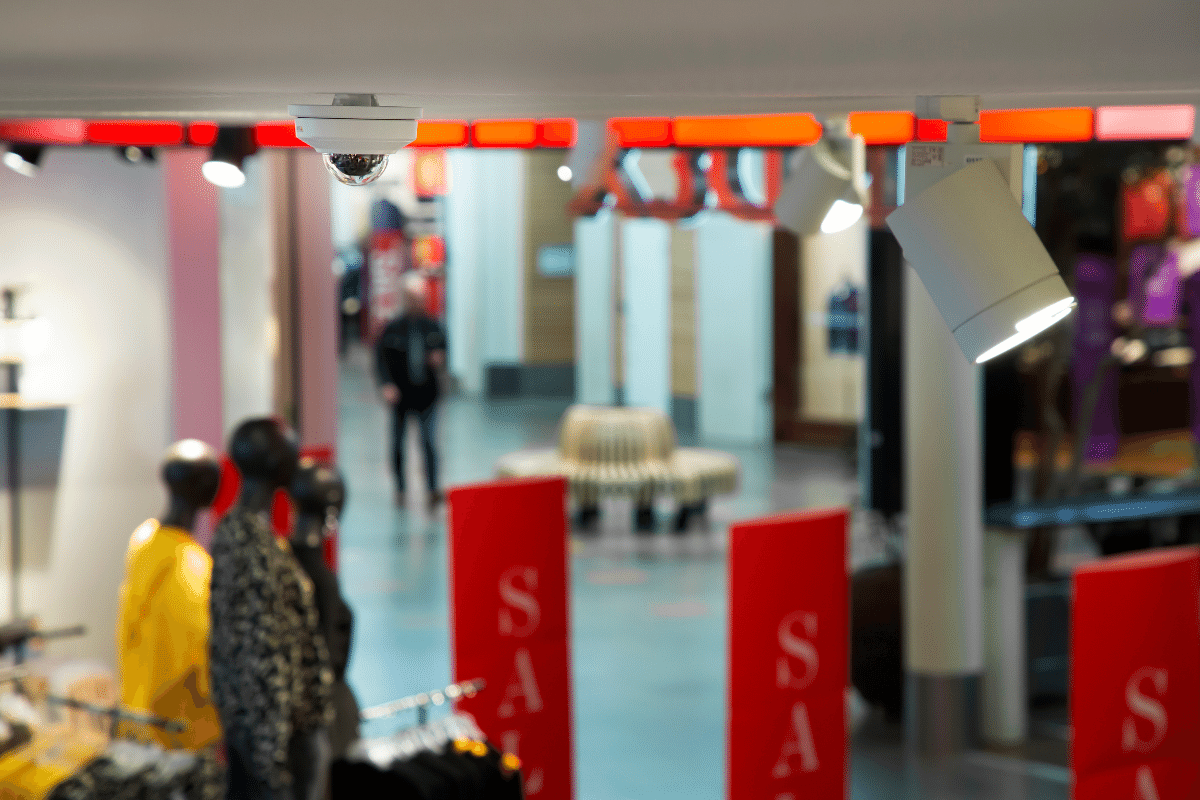
Another challenge retailers are having to tackle is organized retail crime (ORC). It’s rampant and even more so in the last two years. Culprits today are taking advantage of the face mask requirements and easily walking into stores and out with hands full of merchandise. This creates and internal threat to both workers and other customers in the store.
Canadian retailers estimate that ORC costs them over $4.6 billion each year. And guess what? The cost of the loss and the increasing surveillance and security required to curb or prevent it is passed onto the consumers through price increases.
In some cases, some of these criminals are stealing goods in the store, don’t leave the location, but take the goods to the counter to return them for cash back. In this case, imagine if the retailer had something at their fingertips to view the last few frames of some video footage from a camera that shows the criminal picked the goods in-store and that they are creating internal fraud without a receipt to get a store credit. With the footage, the store clerk is not having to question the thief, but rather now has evidence and can address the situation accordingly, in a different manner.
Rethinking customer experiences
Image: Courtesy of Axis Communications
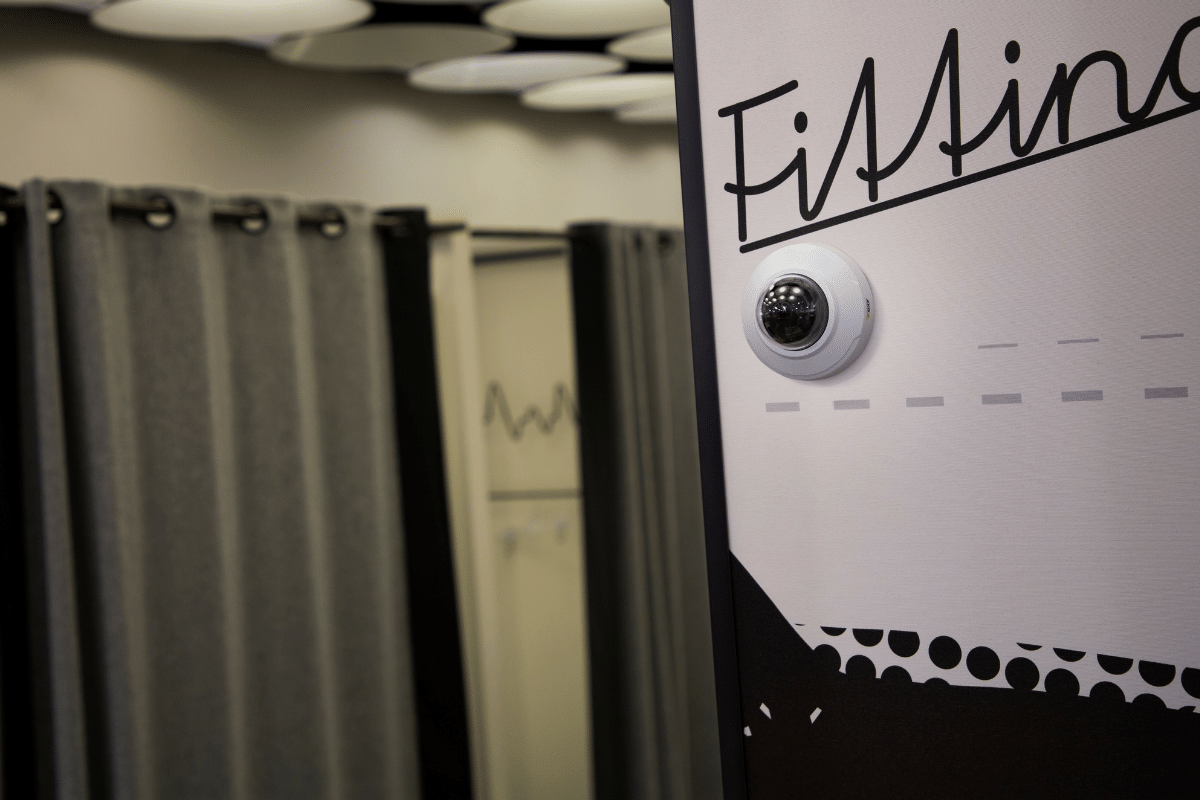
Tackling all these challenges has meant rethinking the way retail stores operate, so that people feel protected and that customers get the service they come to expect. Some customers continue to avoid shopping in-store as they don’t want to deal with potential negative encounters, preferring to shop online instead. E-commerce does come at a cost though for shoppers and retailers. Shoppers can’t touch the product, try it on and if it does not fit, spend time coordinating with a delivery company and paying to return it. For the store, it also means time and money.
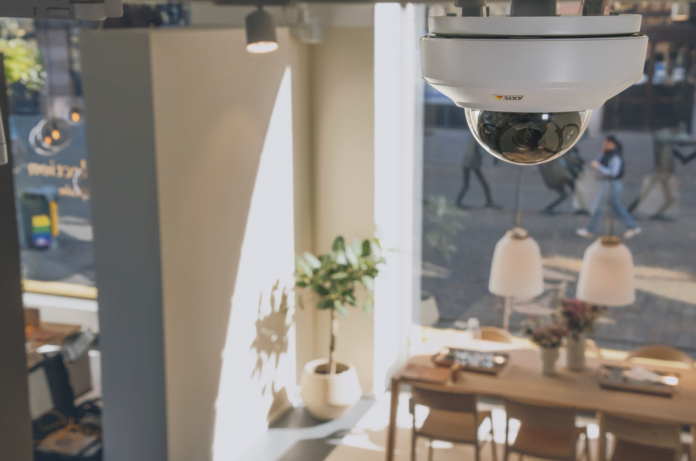
How does surveillance technology help with all these problems in today’s retail setting? First, we need to look at store planograms and store owners can start by reviewing the visuals from the video cameras they installed for loss prevention. They can serve as a tool to monitor how stores are set up/what each section looks like, what the merchandising looks like and to suggest layout adjustments to their staff all while doing it remotely from a master control desk as opposed to traveling to various locations.
An important thing as a surveillance technology provider in the retail industry, is providing retailers with a loss and prevention solution and to figure out how to take those owned approaches and devices, i.e., cameras, audio speakers and use them to create that same seamless level of in-store service and customer enhancement that is offered by the brand digitally. Therefore, it’s essential for store owners to research and purchase surveillance product that serves their needs today and in the future. Not only for theft prevention but for overall operational and customer support.
Marrying digital an in-store service
Image: Courtesy of Axis Communications
For many, bridging online and in-person service means looking at the grassroots and listening to the way retail has changed. For the e-commerce buying experience, customers walk through the gateway of an IP address, they pick their purchase, they review the total price and then they open a new tab and look at other similar competitor merchandise. They compare prices and then they potentially leave their online basket without purchasing. At which point, retailers then market the product digitally via email or retargeting, saying to the customer “Do you still want this item?”
Now imagine this concept of online analytics but for physical stores, where things like demographics, people counting, conversion data, heat mapping, user flow of the store all being captured by a surveillance dashboard that can be analyzed via a central monitoring system. Imagine taking this data to make decisions that are in best interest of your store and your customers.
Surveillance is being used to assist stores in their marketing, sales, and service requirements. Imagine capturing data like when a woman enters a store, the first place she looks is to the right. Meanwhile, men are walking in and tend to stand in the center of the entrance. It would be opportunistic to place some value items close to those locations, that get interest and high traffic. Or, to draw attention to promotions. Putting this kind of information in the hands of retailers is valuable. Consider an endcap – knowing where your highest foot traffic goes and planning store layout and merchandising around that.
Think of this, even in a mall situation, the average shopping mall could have ten thousand people flow through the building each day, but perhaps less than 1% stop and buy goods. How do you attract that group? You can have a camera monitoring the outside of your flagship store and put a sign at the entrance saying, “If you show us your receipt, you’ll get a discount on a coffee at X coffee shop in the mall”.
What if you put a sign outside your flagship store saying if you show your receipt to us, you’ll get a 50% discount on a coffee. And now suddenly, you are utilizing the other traffic to be able to create that 4/1 show conversion rate and so whether we do that in-store or in place, we can do a lot with the journey.
Global workforce shortages
Image: Courtesy of Axis Communications
Many retailers are offering guaranteed hours now, which we’ve never seen before. Normally they hire for the holiday season and let them go in January. But now many are going to that structure, so why not use technology to help.
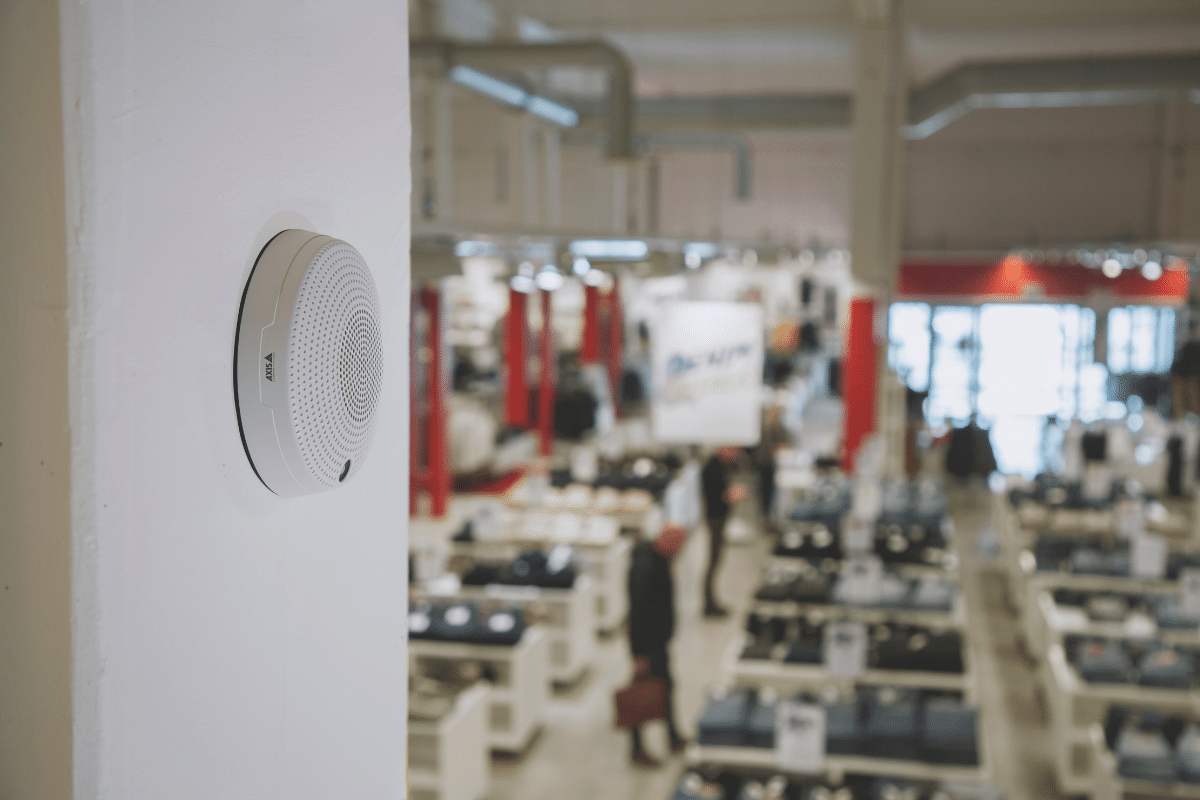
When we look at the shortage of staff that retail is experiencing, in-store efficiencies suffer. Processes like self-checkout should be monitored for people using them versus the standard point of sale exchange. Also, how many people are in store queues at any given time/how long are the lineups? What are the busiest times for the store? The buying habits of individuals have changed. With artificial intelligence (AI) and surveillance analytics, stores can access this information dimensionally and see that their queue line may be greater than six people, 25 times a week and generally between 12-3 pm. By analyzing this surveillance data, a decision can be made here for the store to staff up to avoid the overcrowding at that time.
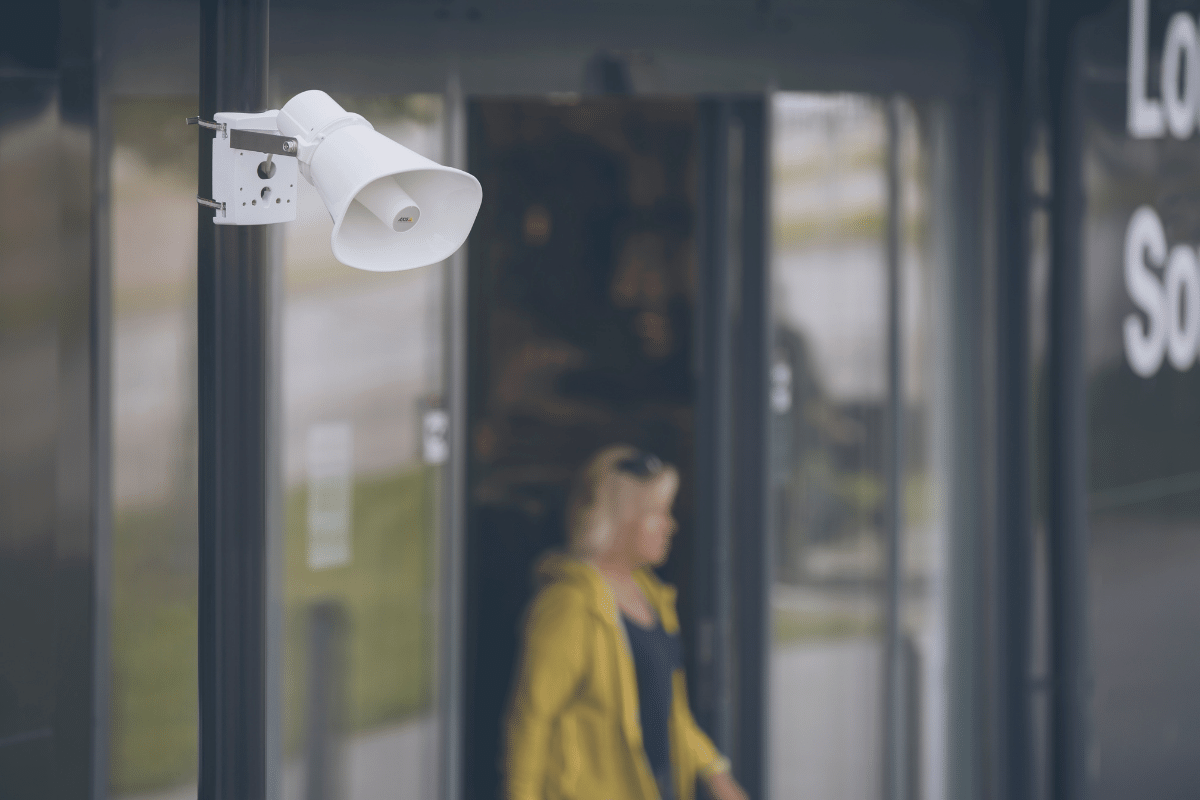
If the retailer can’t bring in people, with the assistance of surveillance, they can create an audio experience for the customer with live broadcasting, sharing messages like “We understand it’s longer than normal wait times, please feel free to use the self-checkout,” or “See a store associate and we’ll help you in some other way.” This lets the customer know that you care about them. Stores can also use surveillance audio to play tranquil background music to calm customers who may be frustrated by the wait.
Online orders and curbside pickup remain
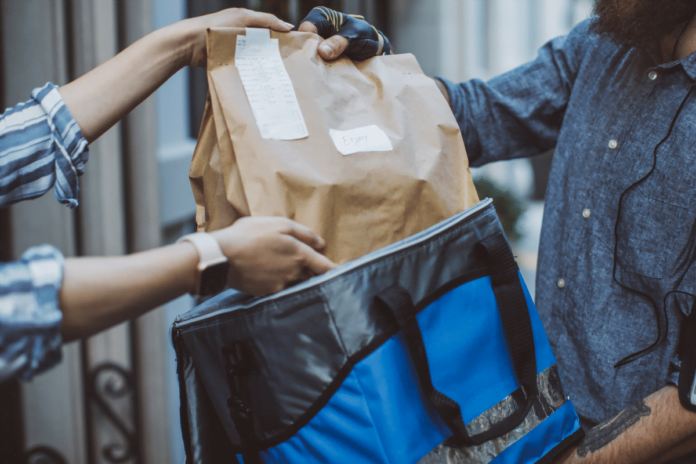
Image: Courtesy of Axis Communications
Buying online and curbside pickup are elements of retail that we’ve proven to the consumer works and it will remain. It will become another cycle of retail life. However, can we help the person that came to pick up the item they bought online with a better curbside pickup experience? Surveillance solutions can help determine how long they have been waiting inside the store entrance or outside – was it longer than five minutes? How many times did that occur this week? With the assistance of cameras, stores can determine how to make this process more efficient for people by identifying the model of their car or license plate number. So, when they come to pick up, a store notification is made to have their order delivered to them faster.
As the stores change to meet customer demands and the new way of shopping, we are going to see heavier e-commerce competition in the year ahead. Those retail locations that still focus heavily on brick-and-mortar shopping, that want to create that 24-hour same-day or next-day delivery, they are going to have to offer more ship from store service. But to make that work, they may have to change the layout of their store to accommodate and get the space they need to facilitate pick-up or deliver. That said, they can analyze their surveillance data to determine the best floor plan that won’t create safety issues like blocked fire exits or other important store flow areas, where placing online buying packages cause a hazard. Video analytics and operations help raise these questions and can solve for these issues. Sure, it’s store policies, people and procedures that help solve for all this, but surveillance technology is an aid in the overall decision making.
Advancements in AI and facial recognition
Retailer technology solutions will continue to grow and advance because of artificial intelligence. With their processing capabilities they are going to need to balance two things, the ethical use of analytics and how it applies to retail, so that a level of privacy is created that customers expect. And that enhances their experience, while optimizing how operations impact the bottom line and the top line of the business every single day.
Facial recognition has proven to be an effective asset for customer service, business enhancement and safety outcomes. Although, many retailers are not ready for it yet, in Canada, it works well in a store’s arsenal against organized crime and repetitive theft. It can also be used to link in-store shopping to a digital marketing nurturing experience. Such as, the sweatshirt your customer looked at five times, but did not buy, can be followed up by sending an email with a coupon motivating them to come back and buy it.
If retail loyalty programs ever get to the point where they incorporate facial recognition, anytime a customer walks into a store, the store can synch their entry with multiple digital displays inside that say “X customer is here, show her a coupon for this product area,” i.e., shirts.
However, the world is not prepared just yet for how personal activity intelligence (PAI) data is shared, so we need to think about integrity, think about use case and protecting personal and identifiable information in general, which is so important.
Smarter and safer retail
Image: Courtesy of Axis Communications
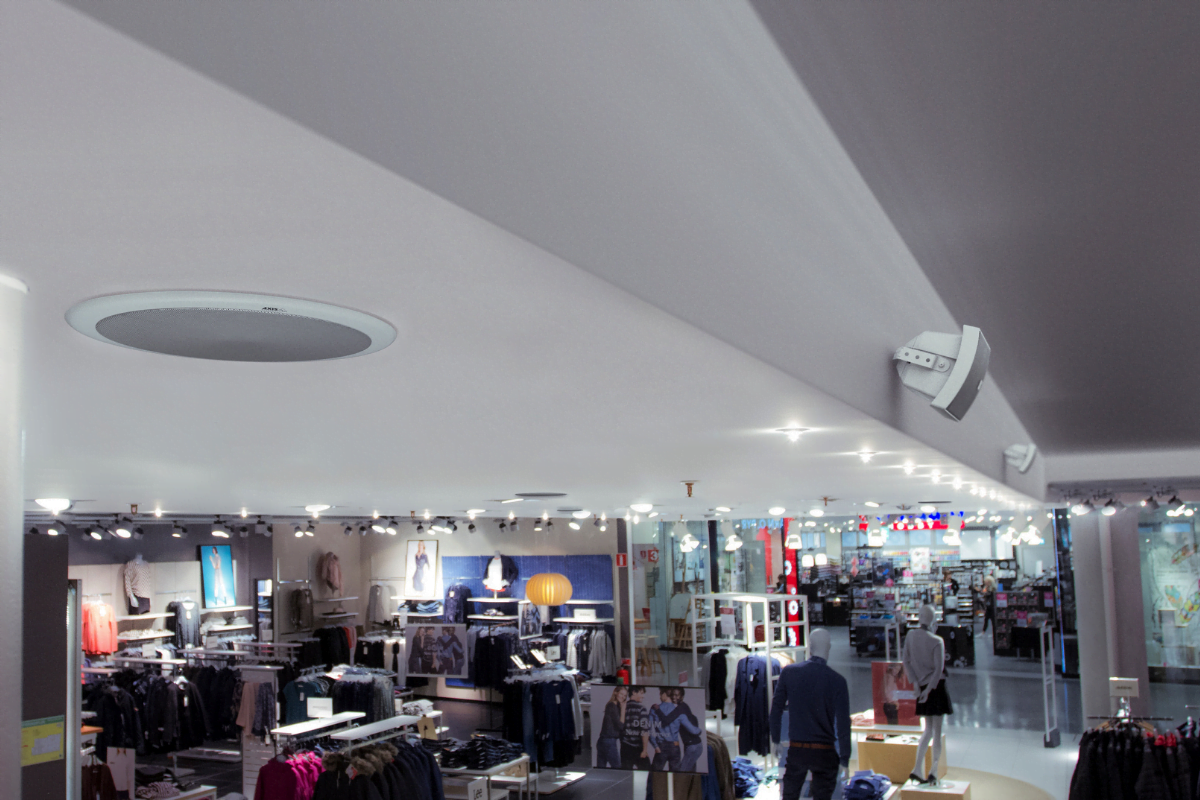
When we talk about becoming a smarter and safer world, it rings true for retail because we are solving for all aspects from customer service, business optimization and health and safety. By combining hardware with video analytics, stores find ways to reduce queuing times, perfect their store layout, allocate staff efficiently and protect them, and, ultimately, increase profits. They can even use surveillance equipment as a tool for creating a welcoming environment to attract visitors and inspire employees. They can improve security, reduce shrinkage, and increase operational efficiency even further.
More important than ever, with the way things are in the world, safety is top priority and so is streamlining operations. Technology is great for retail efficacy and efficiency. It makes our lives easy, and we want more of it, but privacy is a concern. This means cybersecurity must be at the forefront. Businesses need to invest in cybersecurity. This becomes the other side of protecting that personal data that customers entrust retail with. The last thing a business wants is to sign up members to a points program, and suddenly all their data or points are taken. We are seeing some big value data stolen every day.
Effective cybersecurity involves assessing risks and consequences and taking appropriate steps. Surveillance products should have built-in cybersecurity features, that are designed to decrease the risk of compromise and enable secure behavior. Staying cybersecure takes more than products with cutting edge technology. It’s also about ongoing store processes that take effort to maintain protection.
Keith D’Sa
Keith D’Sa is the country manager for Axis Communications in Canada and is responsible for all business operations in the region, including new business development, marketing, professional services and sales team leadership. D’Sa also manages Axis’ relationship with local distribution and channel partners.
Retail Insider is streamlining its Canadian retail news from around the web to include a handful of top news stories that can be viewed quickly during the day. Here are the top stories from the past 24 hours.
Canadian shoppers have returned to shopping centres and they started doing this in early November prior to Black Friday primarily because of concerns over supply chain issues and whether there will be problems with retail inventory this year.
“We’ve never seen holiday shopping begin this early. People are craving a return to normal and shopping centres offer an engaging way to get into the holiday spirit,” said Bradley Jones, Head of Retail, OxfordProperties. “Timing will be more important than ever with the level of activity we’re seeing this early in the season. Shoppers should plan to shop early for specific inventory and consider shopping on weekdays or early or later in the day on weekends.
“We’re seeing a different distribution of traffic. We’re getting more traffic Thursday night, Friday and weekend traffic than we are earlier on in the week. We have got our extended hours in place. Our traffic is generally running anywhere between 15 and 20 per cent below pre-COVID and that’s sort of an average across our portfolio across the country.
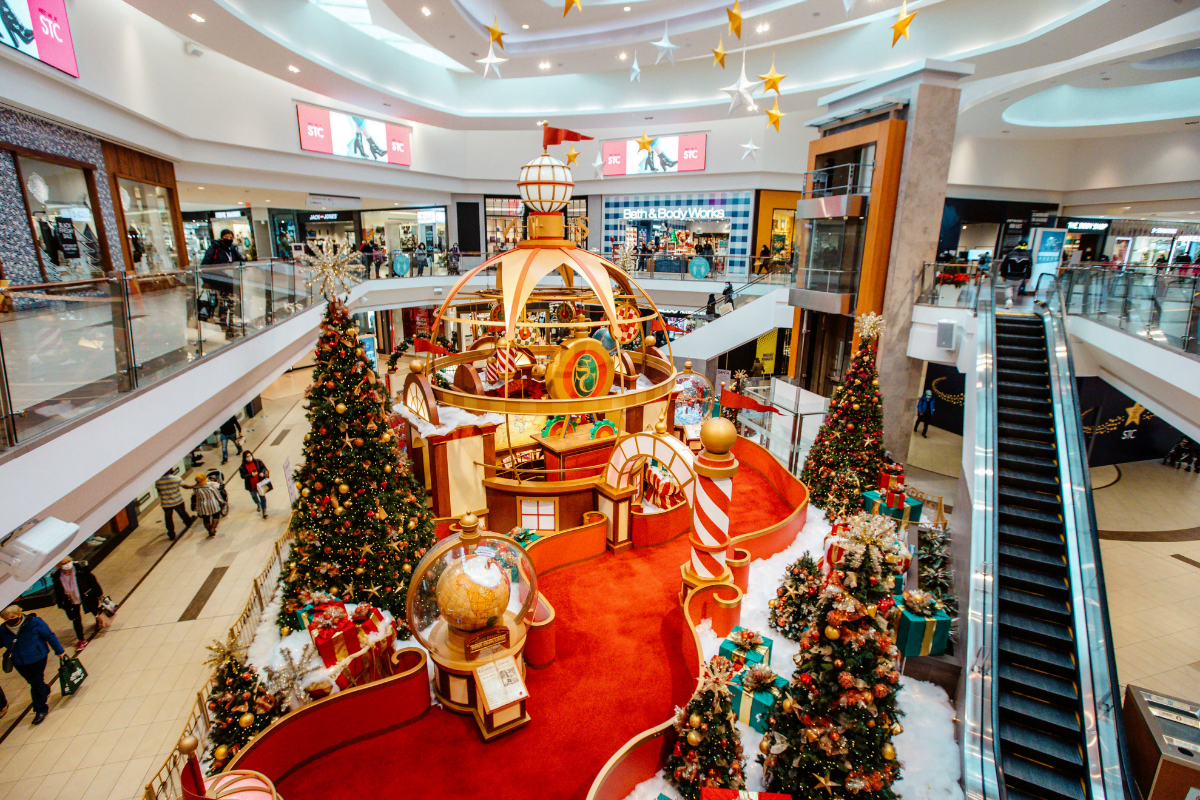
Image: Southcentre Mall’s Enchanted Forest
“But what’s interesting is that although the traffic has not returned 100 per cent, the average basket size is larger. People are spending more money because they’re having very purposeful shopping trips. And we’re experiencing that many customers have been shopping earlier this year because of the concern about supply chain and being able to actually get the product or the goods in their hand so that they can give to loved ones and friends at Christmas versus relying on courier companies or businesses to be able to have the product perhaps online. So we’re seeing physical coming back. We’re seeing customers wanting to be in shopping centres for the experience. It’s turning out to be quite positive for our business.”
Bradley Jones
Oxford Properties’ Ontario shopping centres, which include Yorkdale, Square One, Scarborough Town Centre, Upper Canada and Hillcrest, are offering a range of holiday services to assist shoppers before they set out, including digital inventory search and curbside pick up.
In its recent, 2021 Retail Holiday Survey, commercial real estate firm JLL found that 85 per cent of shoppers say they are going to return to shopping centres this holiday season and they’re going to be spending more time and more money in those malls.
Jones said what’s really important is that shopping centre owners continue to follow the Health Canada protocols when it comes to COVID, which Oxford has been very diligent on.
Image: The Grinch’s Grotto at Square One.
“We need to continue to assure our customers that our buildings are a safe place to come and visit and enjoy the experience,” he said. “That’s first and foremost and I think we have done a very good job there. The local health departments in all of our assets have been very pleased with the protocols that we have put in place and I think generally speaking the public feel quite safe in our assets and are returning to them as such.
“But we all know that customers want unique experiences. Food and beverage is playing a very important role in those experiences and we are trying to offer more and more unique opportunities because when we do that we know the customer stays longer and the average basket size goes up when they have places to eat.
“We also recognize that customers want different experiences that they can’t get by shopping on the web and for example we’ve put in an Avengers’ installation in a vacant unit in Yorkdale and that’s attracting a lot of new customers to our asset. About 30 per cent of the customers coming to those unique, entertainment type uses are new to the asset. So that’s very, very positive for us and we’re very focused on creating these unique and new experiences for our customers that they can’t get by sitting at home or being on the web.”
Jones said Oxford is very hopeful that the traffic will continue right through the holiday season to the Boxing Day period.
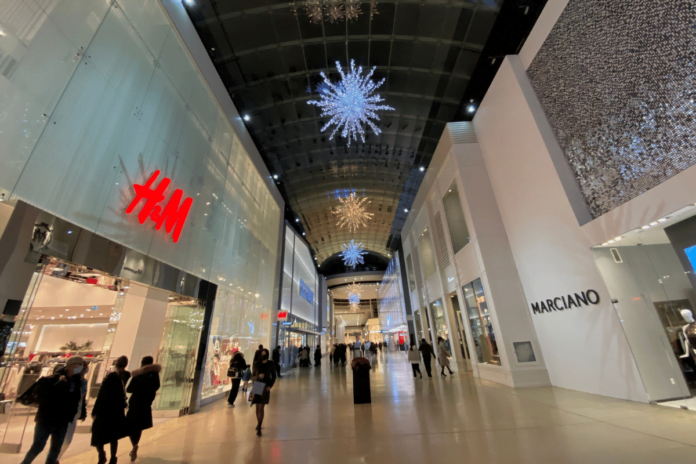
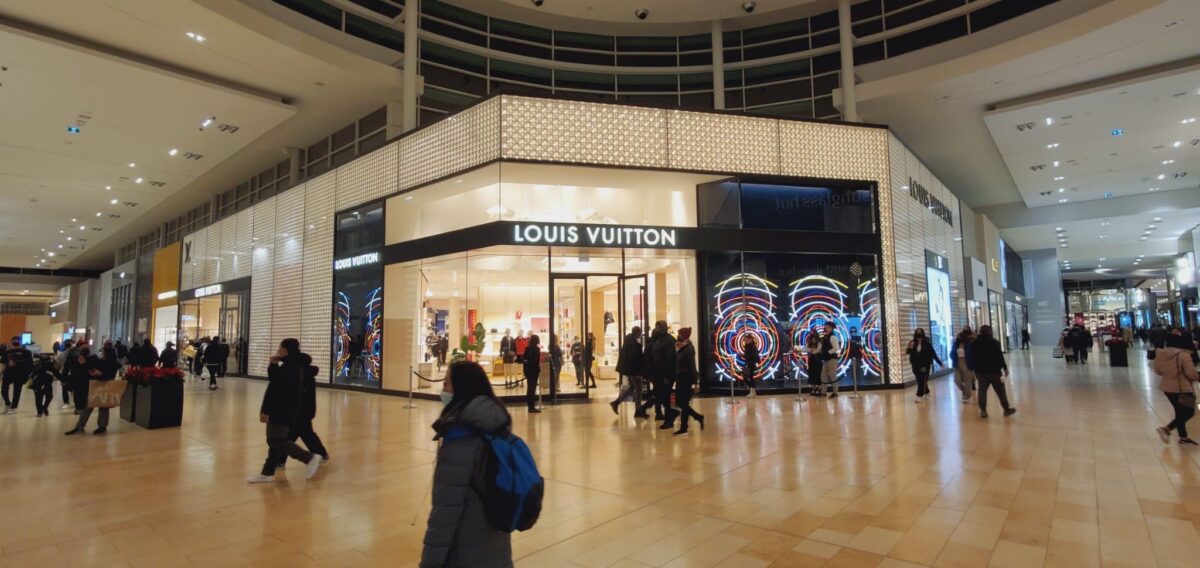
Scarborough Town Centre (Image: Oxford Properties) Louis Vuitton at Yorkdale Shopping Centre (Image: Craig Patterson)
“The customer, really while we were in lockdown primarily in the Ontario centres, they didn’t have a choice. The centres were closed. So I think there’s real pent-up demand for getting out, being with family and friends, socializing, collaborating, walking through the mall, having a lunch or dinner, going to these entertainment type uses, back to the theatre,” said Jones.
“We feel strongly that there’s a real movement back to that. We’re hopeful. We don’t know what the end result will be but certainly there seems to be a trend back to the physical because people just want a different experience than online that they’ve been getting.”
Visits with Santa are important traditions and Safe Santa experiences are available at all Oxford Properties shopping centres. Santa is fully vaccinated, will be masked and socially distanced from guests. All staff are also masked and fully vaccinated and the entire experience includes masking and social distancing practices. Surfaces will be cleaned after each visit. Guests must wear masks for their photos and can bring their own festive masks and must complete COVID-19 screening upon check in, prior to visiting Santa.
Traditional holiday services such as gift wrapping are returning to Oxford Properties’ shopping centres this year.
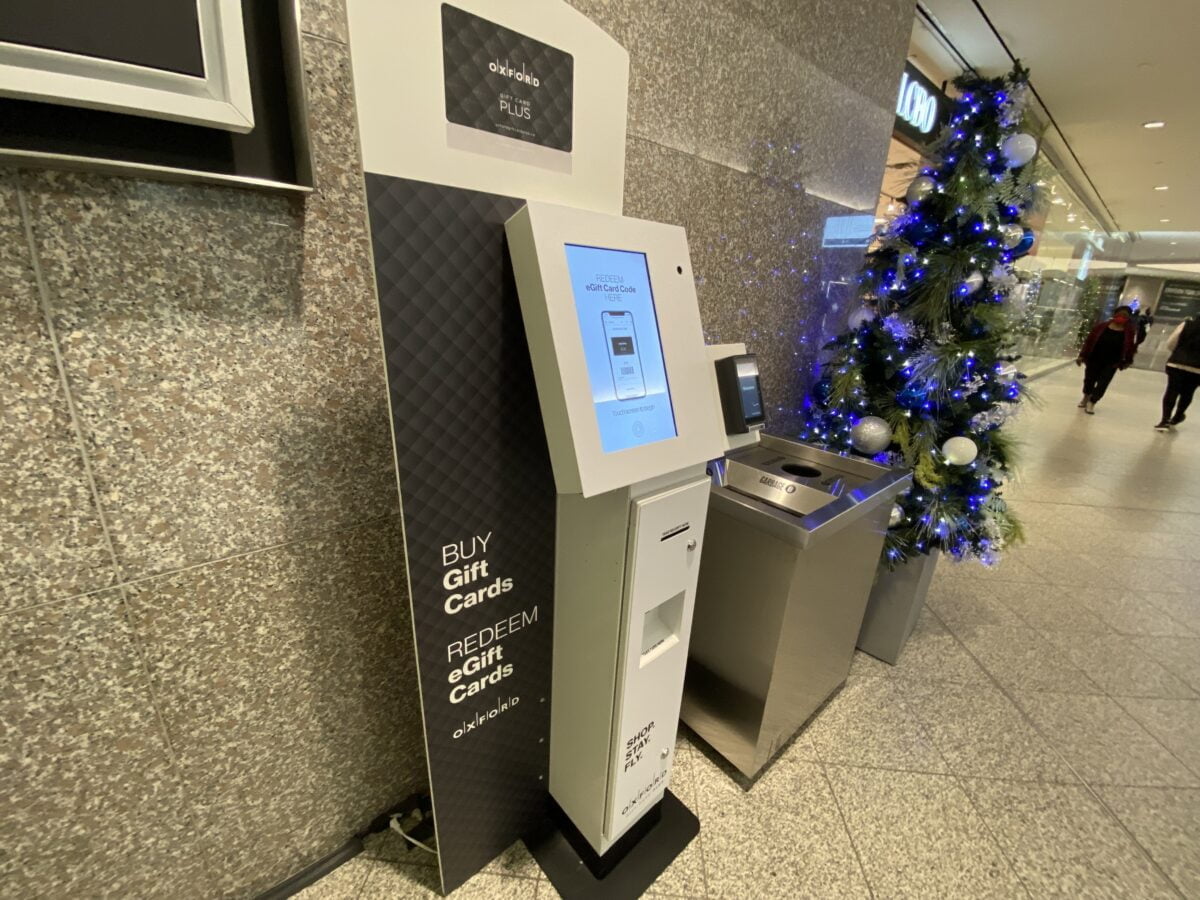
Oxford gift cards are a popular stocking stuffer, and recipients can use them at any store within the centre.
Oxford Gift Cards at Royal Bank Plaza (Image: Dustin Fuhs)
Guest Services staff are available to respond to inquiries about holiday services, store information, parking and more.
Many stores are offering curbside pickup with dedicated stalls. Participating retailers can be found on shopping centre websites’ Curbside Pickup page along with a map of the locations. Purchases and pickups are made directly with each retailer.
Oxford’s ShopNOW service is available on each shopping centre website and makes it easier than ever to search for products before you visit.
The directional map on shopping centre websites is available to guide the experience.
Extended hours began November 26 and will continue until January 2, 2022.
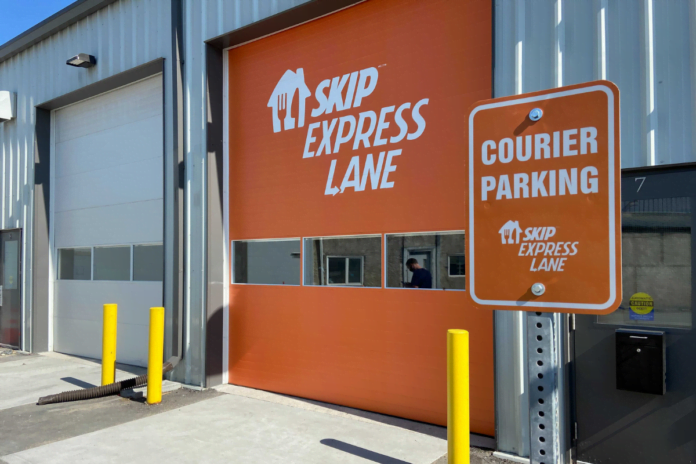
Skip Express Lane at Watt Street in Winnipeg (Image: SkipTheDishes)
SkipTheDishes, Canada’s largest food delivery network, has launched its Skip Express Lane grocery and household item delivery service.
Howard Migdal
The new service will include 38 new fulfillment centres by mid-2022 from coast to coast, delivering products to Canadians in 25 minutes or less.
“Skip Express Lane fills an important gap in the market. Canadians will now be able to get everyday essentials and grocery items delivered to your door in 25 minutes or less,” said Howard Migdal, Chief Operating Officer of SkipTheDishes. “Even during peak demand when we’re processing several orders a minute, orders are packed and out the door in under 10 minutes for delivery.
“Skip Express Lanes are local fulfillment centres that will have 2,500 SKUs – grocery items, household essentials – to customers in 25 minutes or less. It was born because we realized there was a gap in the market. In Canada you sort of had two options for deliveries of snacks and every day essentials or groceries. You have convenience stores which already live on apps like SkipTheDishes . . . But then in Canada the other option is click and collect or grocery delivery that typically comes in two hours or time slots or next day. And currently the grocery landscape in Canada was using a service like Instacart (where) you have a third party person going to a big box retail store, shopping for you. That takes a long time. Not very efficient. Things can go wrong. And then driving to your house.
Image: Skip Express Lane
“We know that people want things when they want them and they want things on demand. So the perfect solution to that was Skip Express Lane, building smaller centres, call them 5,000 square feet, that will have 2,500 SKUs – not as much as a grocery store but not as few as a convenience store – so people could get items delivered to them at grocery store prices because of the low cost of our fulfillment centres, but delivered to them in 25 minutes or less.”
Skip Express Lane stores are now active on the network with locations in Winnipeg, London, and downtown Toronto, with Edmonton and Calgary locations opening soon. This national expansion follows the successful launch of Skip Express Lane stores in Winnipeg and London in July and August, and will focus on increasing the availability of household products for customers.
Skip Express Lane opened its first fulfillment centre in Skip’s hometown of Winnipeg on July 29. Each fulfillment centre will operate seven days a week from 10 a.m. to 2 a.m. with delivery fees starting at $1.99, or free delivery for purchases over $25.
The fulfillment centres will be located near residential areas and they will be home to all the products. Ordering will be done through the SkipTheDishes app.
The fulfillment centres will have core SKUs but there will be SKUs as well geared for the different markets.
“Every store will have a local section with local curated products from their city or their neighbourhood and local curated products from restaurants. Maybe a famous restaurant has a barbecue sauce that they will be selling in store. So at the top of every menu there will be a locally curated list of locally famous, regionally famous, products or famous items from local restaurants,” said Migdal.
Kevin Edwards
The company said Skip Express Lane is expected to create about 1,000 jobs across the country.
“We’re thrilled for Skip Express Lane to bring even more value to our customers across Canada, helping Skip to become an indispensable part of the lives of Canadians with an entirely new delivery service,” said Kevin Edwards, CEO of SkipTheDishes. “To us, Skip Express Lane is not just a convenient option for Canadians, but it’s another way we are working hard to support local businesses through the pandemic and beyond.”
Rakuten Rewards Canada, the leading Cash Back and shopping rewards company in Canada, is partnering with Scene as part of its expanded Scene+ program as the e-commerce company continues to grow its business in Canada.
Claire Sweeney
Since launching in 2012, Rakuten.ca has helped Canadians earn over $70 million in Cash Back at over 750 retailers.
Claire Sweeney, Vice President of Marketing at Rakuten Rewards Canada, which is headquartered in North York, Ontario, said just over 6.5 million Canadians are currently earning Cash Back in points through the company for every eligible purchase at hundreds of retailers.
“In the last two years, for Rakuten specifically, we’ve grown over one million members. We’re definitely seeing a lot of consumers gravitating towards cash back or rewards platforms as they’re trying to supplement their daily spending but also help with bigger ticket items that they might be purchasing as well,” she said.
Rakuten is the name of the parent company in Japan and the name translates in Japanese to ‘optimism’.
“There’s definitely the growth of e-commerce and retailers being forced to accelerate their e-commerce strategy as well as consumers being forced to as well with the global lockdowns. That’s definitely a contributing factor. What we also have seen is the willingness of Canadians to try more brands that they wouldn’t have necessarily tried before,” said Sweeney.
Image: Rakuten
“It just gives people more opportunity to discover new brands and products.”
In a news release, officials said SCENE and Scotia Rewards have partnered up and expanded to create Scene+, giving Canadians an enhanced loyalty program with more ways than ever to earn and redeem points for entertainment, shopping, dining, cash-back rewards, and more. By partnering with Rakuten.ca, Scene+ members can earn up to 20 per cent more Cash Back on their everyday purchases from fashion & beauty, to home goods – and everything in between.
Matthew Seagrim
“Partnering with Rakuten is a natural fit. Our mutual goal to bring ease to the customer experience led us to a seamless partnership,” said Matthew Seagrim, Managing Director at Scene+. “There’s a real trend in the loyalty space toward everyday interactions. Members want to earn points in ways that are convenient for them, and this partnership helps our members do that.”
Jennifer LaForge
Jennifer LaForge, General Manager of Rakuten Rewards Canada, said member experience is at the forefront of everything the brand does, “and this first-ever partnership with Scene+, expands what we offer to be the most rewarding shopping experience in Canada.”
Sweeney said the partnership is a natural fit for Rakuten because it expands on the company’s goal to be the most rewarding shopping experience in Canada.
The partnership will lead to growth in the number of users on the Rakuten site but Sweeney is not able to share growth expectations.
Image: Scene+
Ebates Inc. was founded in San Francisco by two Deputy District Attorneys who specialized in online fraud and identity in 1999. Through international expansion, the Canadian version of the Cash Back site was launched, built by Canadians for Canadians from headquarters in Toronto in 2012.
In 2014, Ebates Inc. joined the Rakuten family of companies, a multi-national corporation with businesses in 29 countries.
In 2019, Ebates became Rakuten.ca in Canada expanding to a new headquarters in North York, Ontario.
The number of Canadian businesses that have fully integrated digital strategies into their core business has risen dramatically with almost three times more businesses following that path in 2020.
A new survey released by SAP Canada, in partnership with IDC Canada, said Canadian enterprises understand that digital transformation is both necessary and valuable for improved customer experience, employee productivity and the bottom line.
The 2021 SAP-IDC Innovation Readiness (IR) Study found that nearly 40 per cent of Canadian enterprises surveyed indicated having a digital strategy that is fully integrated to their core business.
”The COVID-19 pandemic has been instrumental in driving major changes across Canadian enterprises, from the way they operate to the way they engage with customers, partners, and employees,” said the report. “Overnight, COVID-19 made organizations take direct action to put in place processes and solutions that would enable them to engage with employees and customers remotely, such as telehealth in the healthcare sector, e-commerce in retail, and cloud-based solutions to execute on business processes.
“Many organizations experienced disruptions in their supply chains and had to source new suppliers and build resiliency into their supply chains. The pandemic pushed organizations to reconsider their digital transformation (DX) strategy road maps, and for many it provided the impetus to put a DX strategy in place. Often organizations had to undergo several years’ worth of transformation in a matter of months, accelerating their journey to becoming an ‘intelligent enterprise’.”
SAP is a market leader in enterprise application software.
Marcelo Souhami
Marcelo Souhami, VP of Sales for Customer Experience at SAP Canada, said when the pandemic hit, and shut down stores, retailers realized they had to accelerate their online business.
“Some of them were ready and they just had to make sure they had supply and some of them were playing catchup where they had to accelerate their transformation and everyone has a different maturity curve and its level of advancement,” he said. “That was something everyone responded to.
“Fast forward about a year into the pandemic, it was all about okay what’s the new normal. Now we have vaccination action going on. Stores are reopening and there was this whole re-shift in how do people interact with retailers.
“The transformation for them isn’t about being better online or being better at connecting the front office to the back office. It’s about being able to pivot to whatever we’re going to get next because every three months something else is different.”
Souhami said businesses who are not in the digital space are being left behind and a key is to remain relevant in the marketplace.
“The buzz word is personalization in the industry. So personalization is out there. Everyone is saying that they’re doing it. How well they’re doing and how data driven it is versus what marketing wants it to be is also something that not everyone’s at the same level,” he said.
“I think there will be a change on how fast retailers need to really step up their game to stay relevant in that regard. Just having a good website that converts well, it’s kind of like table stakes now.”
Souhami said the trend towards digitization will continue to grow.
The survey also found:
54 per cent of Canadian organizations implemented new digital and line-of-business initiatives to navigate pandemic-based challenges such as remote work, customer engagement and employee accessibility;
84 per cent of respondents highlighted that investment into digital technologies either met or exceeded their expectations this year;
81 per cent of the Canadian organizations surveyed reported that CX had a positive impact on their financial performance — an increase of nearly 20 per cent over 2020;
75 per cent of Canadian enterprises planned on migrating all or some of their applications and data to the cloud in 2021;
84 per cent of leaders in the digital transformation space are using technologies to make incremental and continuous improvements to their core business; and
Customer experience was also at the heart of the survey with most organizations surveyed (81 per cent) indicating a positive impact on financial performance because of strong client experience. This is an increase of 20 per cent over last year’s survey.
Brian Moore
“Digital transformation has been on the radar of Canadian businesses for years, but the last year has shown us that interest and value for it has soared,” said Brian Moore, Chief Operating Officer, SAP Canada. “We are seeing that organizations will need to continue to fully integrate their operations in the coming year to remain competitive.
“Simply put, a digital transformation strategy is no longer a ‘nice to have’ – it’s a necessity for organizations to thrive. In 2022, we will see Canadian businesses step away from tactical, reactive enhancements in exchange for developing digital transformation strategies that will enable them to achieve new levels of success.”
Retail Insider is streamlining its Canadian retail news from around the web to include a handful of top news stories that can be viewed quickly during the day. Here are the top stories from the past 24 hours.
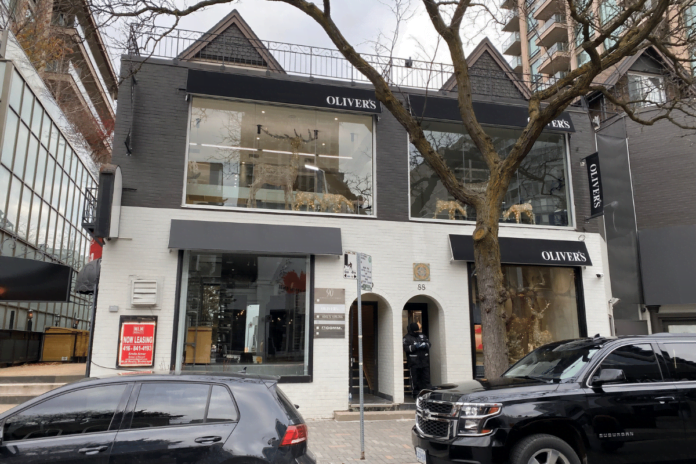
Oliver Jewellery 88 Yorkville Ave (Photo: Craig Patterson)
Television commercial personality Russell Oliver, known as ‘The Cashman’ as well as for his on-air tagline ‘Oh Yeah’, has opened a plush new luxury-focused storefront on Yorkville Avenue in Toronto. The store stocks gently-used and refurbished items from some of the world’s biggest luxury brands and it replaces an Oliver’s Jewellery location that opened several blocks away in 2016.
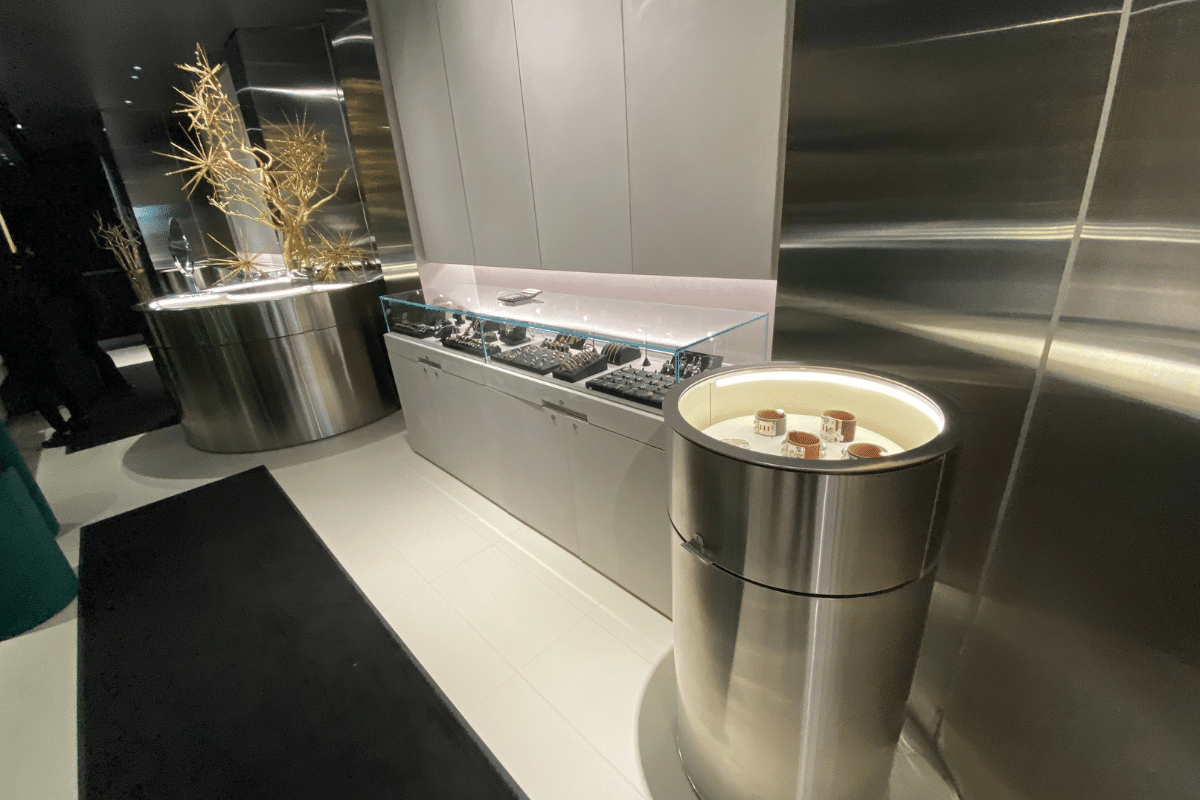
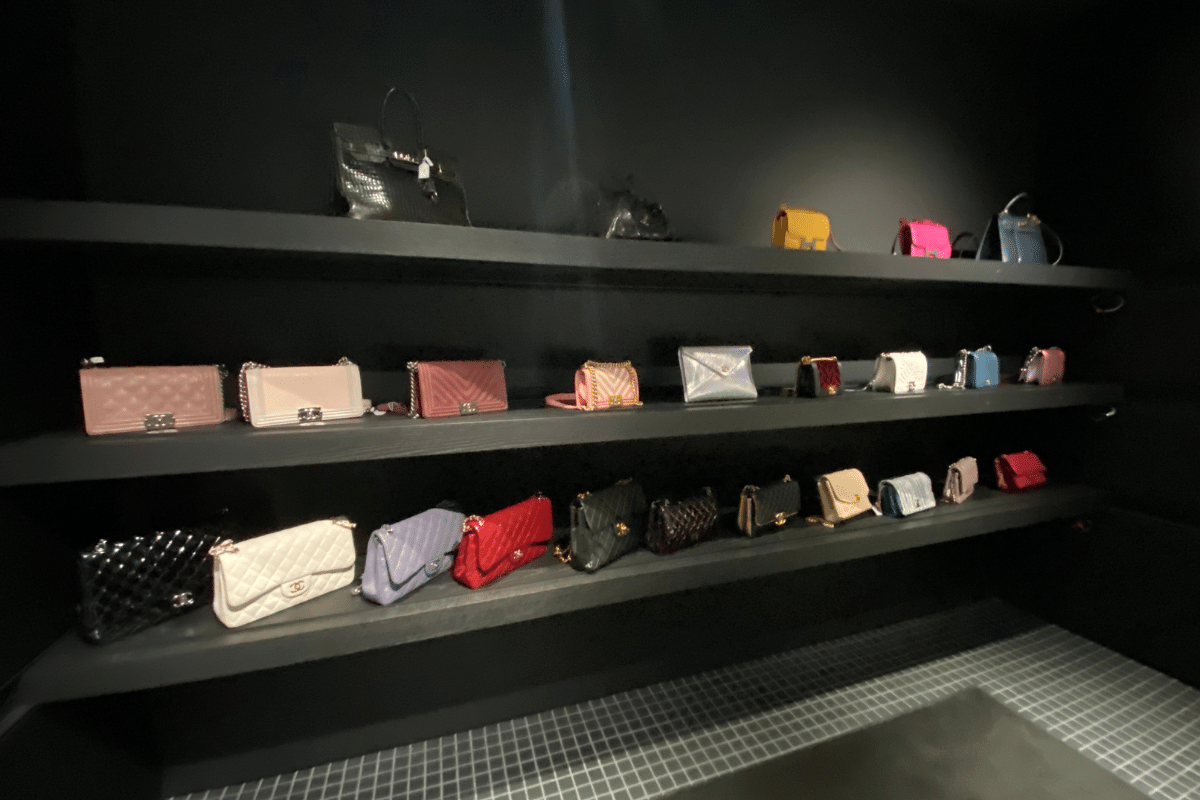
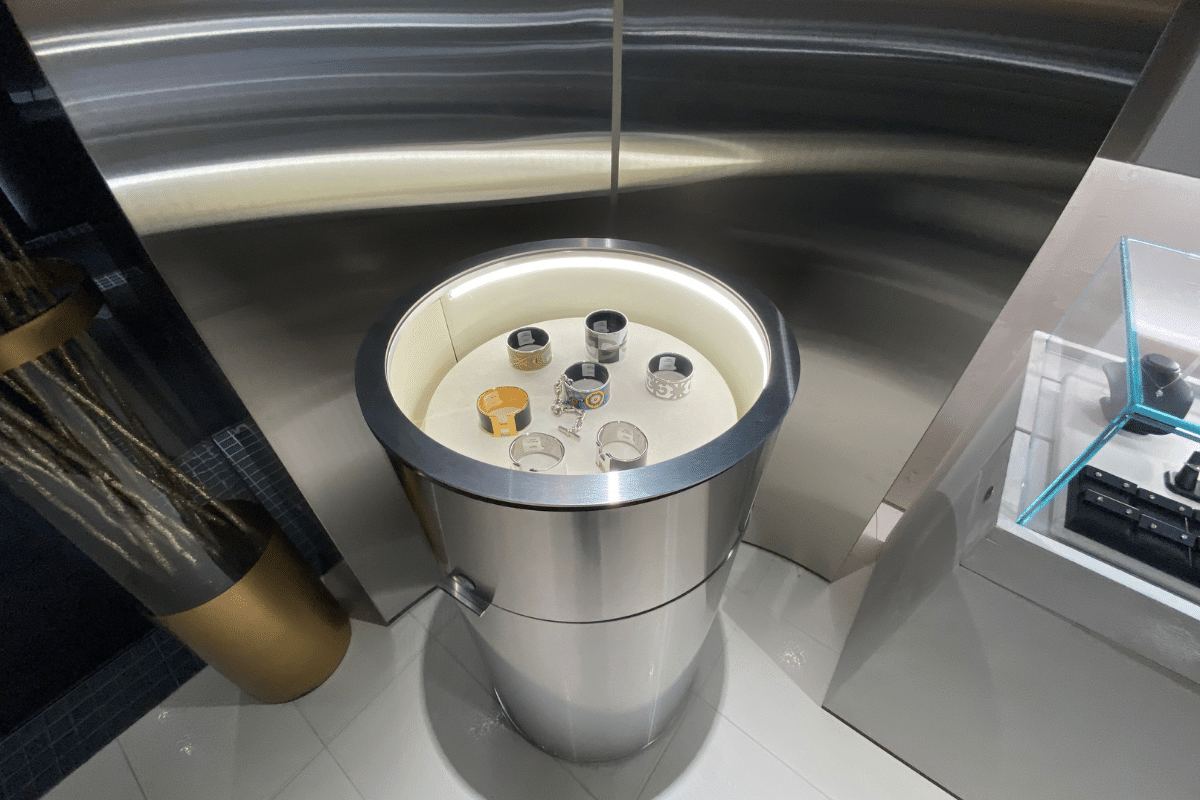
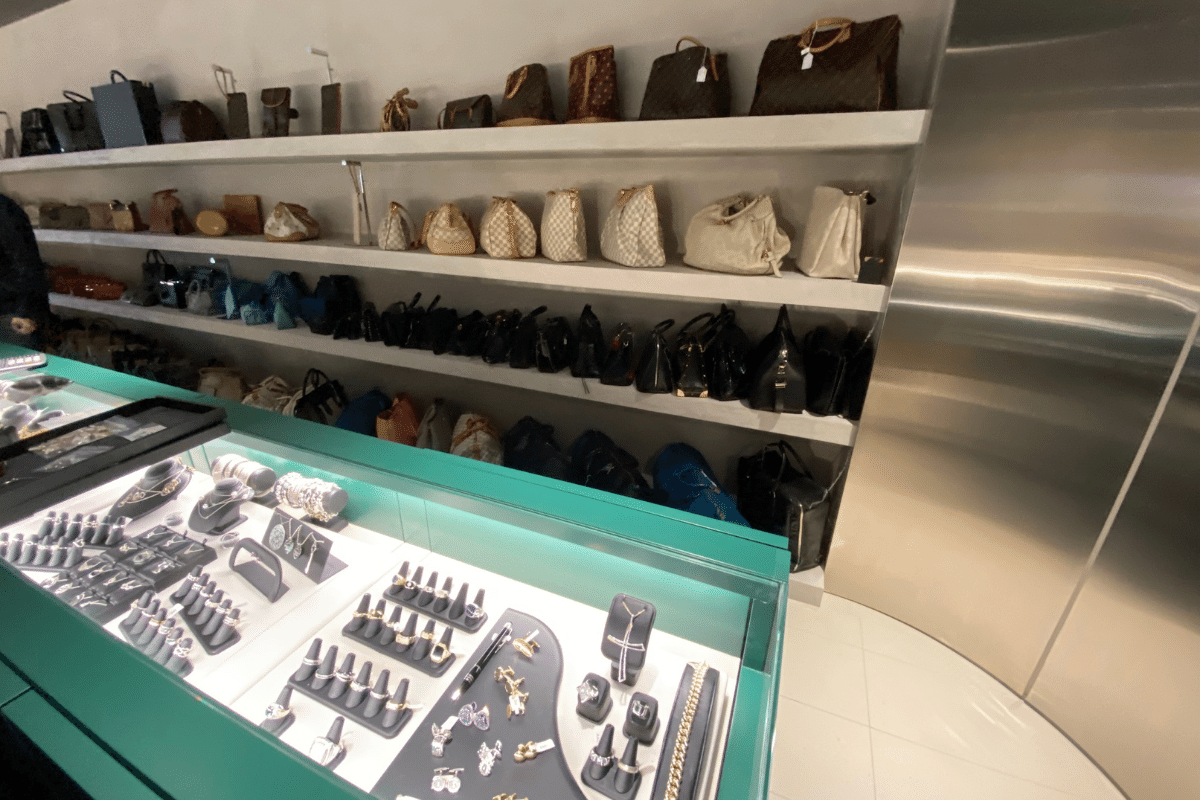
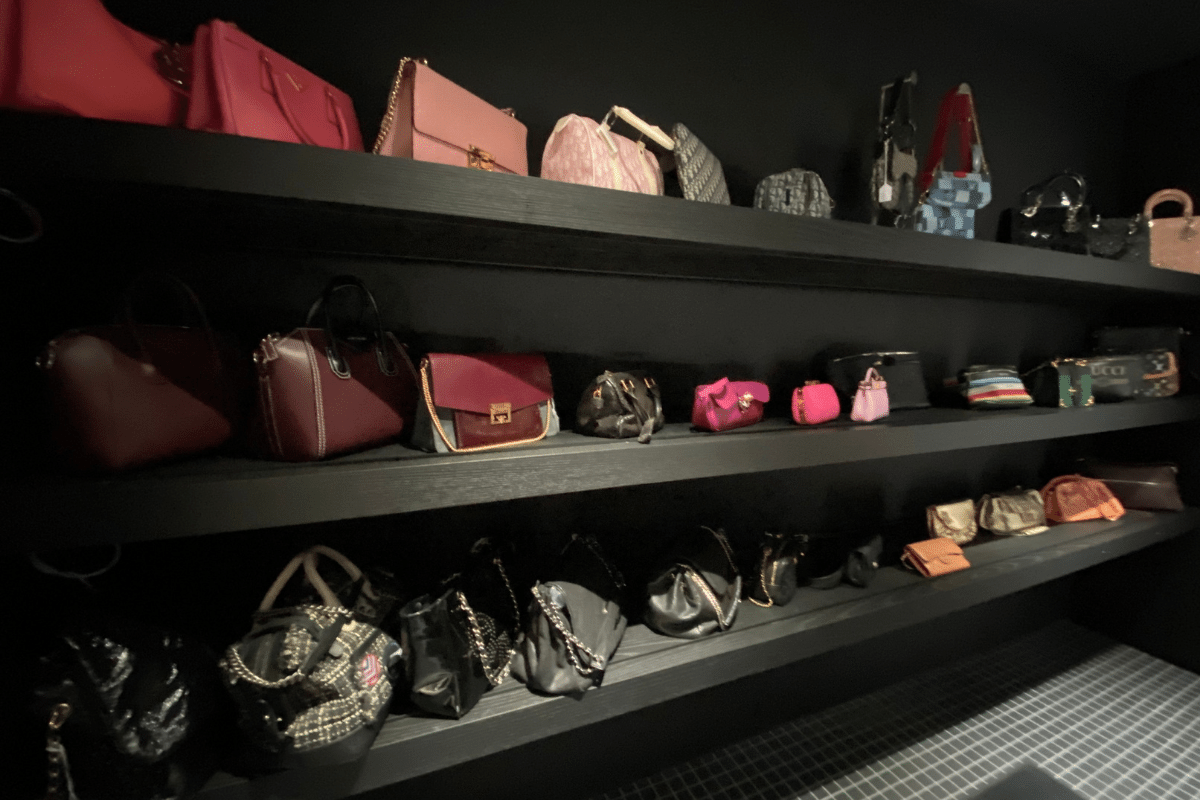
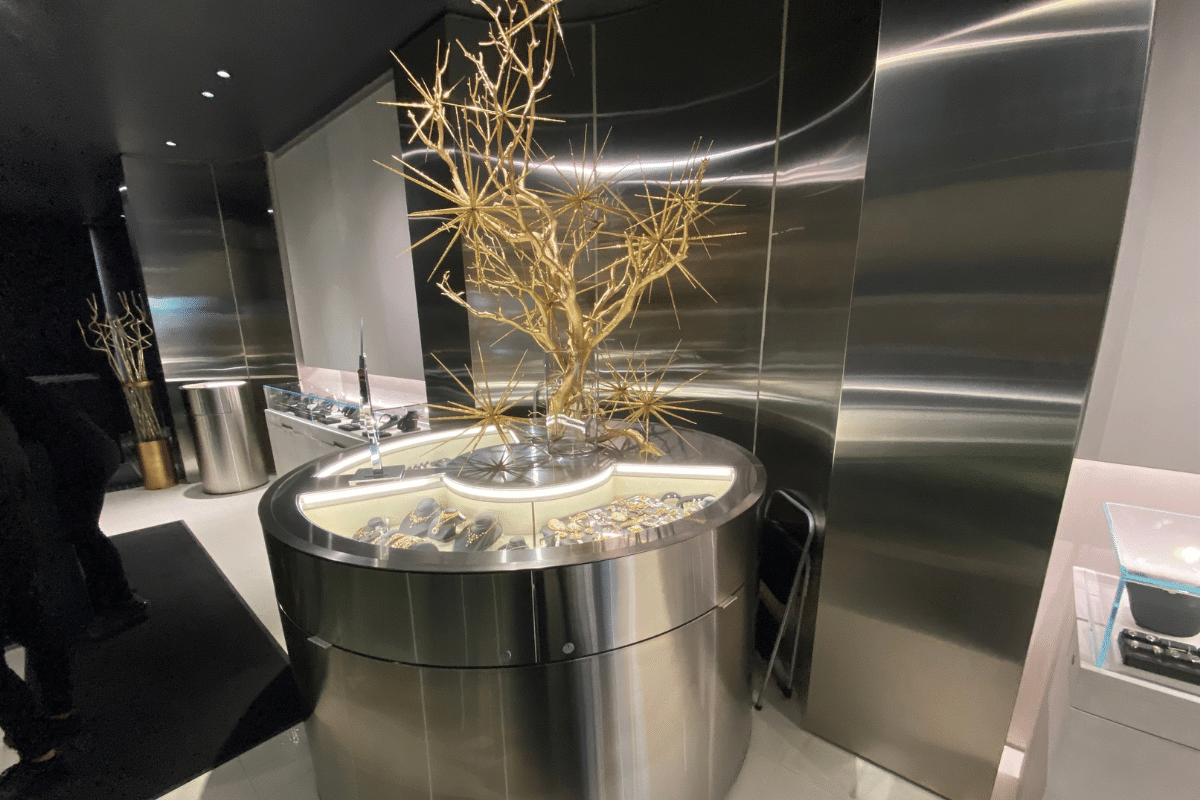
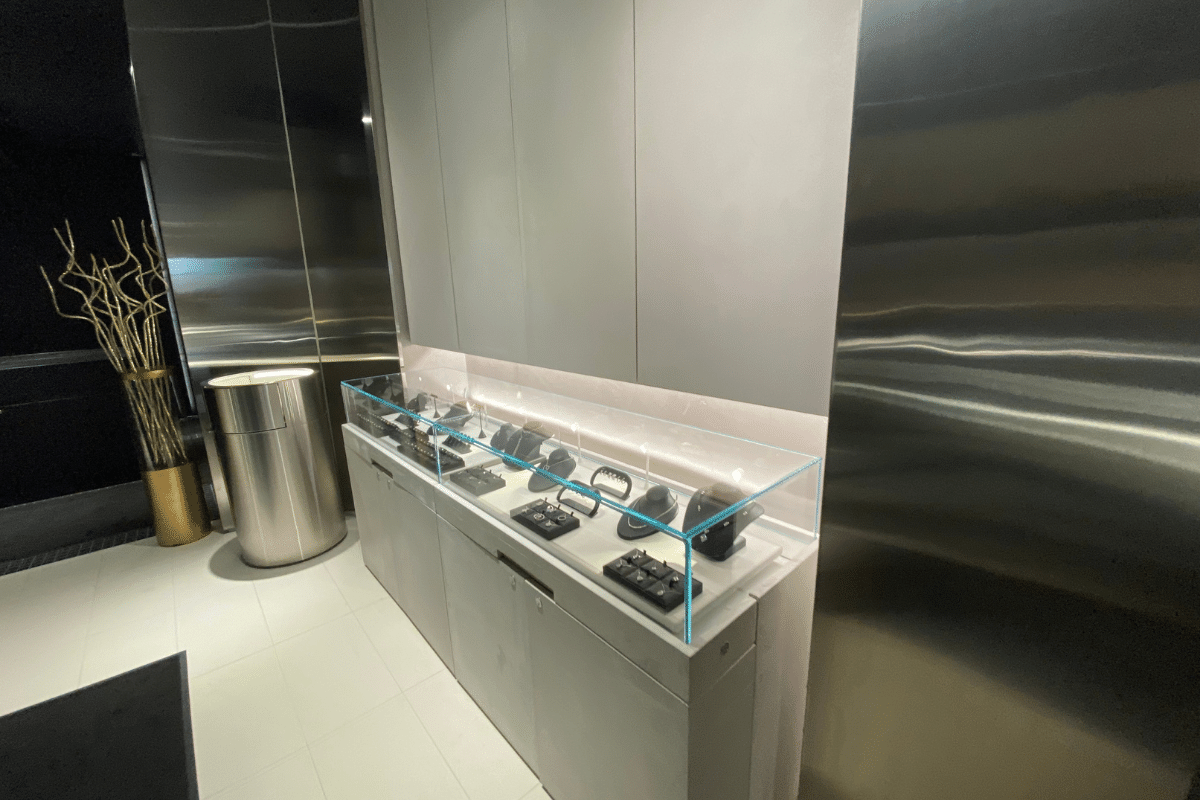
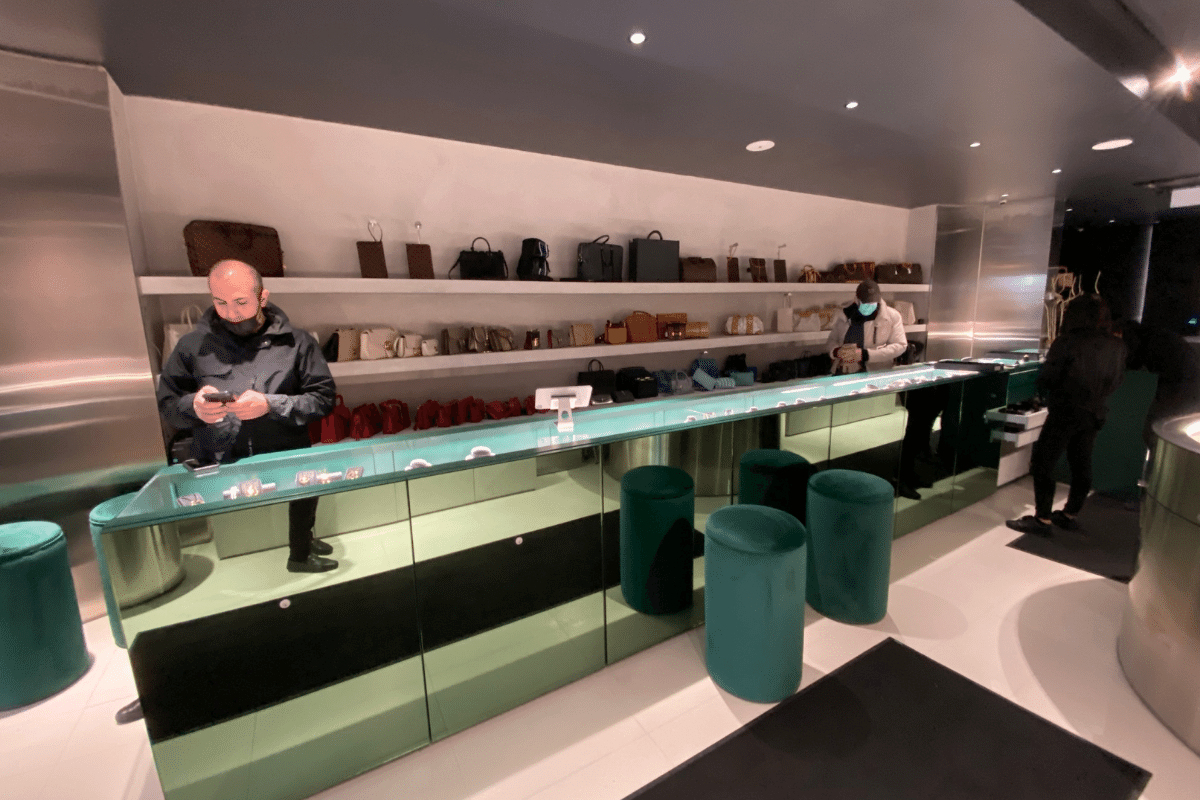
The new store spans two levels at 88 Yorkville Avenue. The main floor includes a showroom housing a range of bags, accessories, watches and jewellery from some of the world’s biggest luxury brands. Brushed metal display cases showcase unique jewellery and watches and bags can be found on shelves on several walls, including in a dedicated back area with more bags and designer watches. Brands such as Chanel and Hermes are well represented, as are brands such as Louis Vuitton, Prada, Tiffany & Co and others with jewellery by David Yurman and watches by brands such as Rolex and Louis Vuitton.
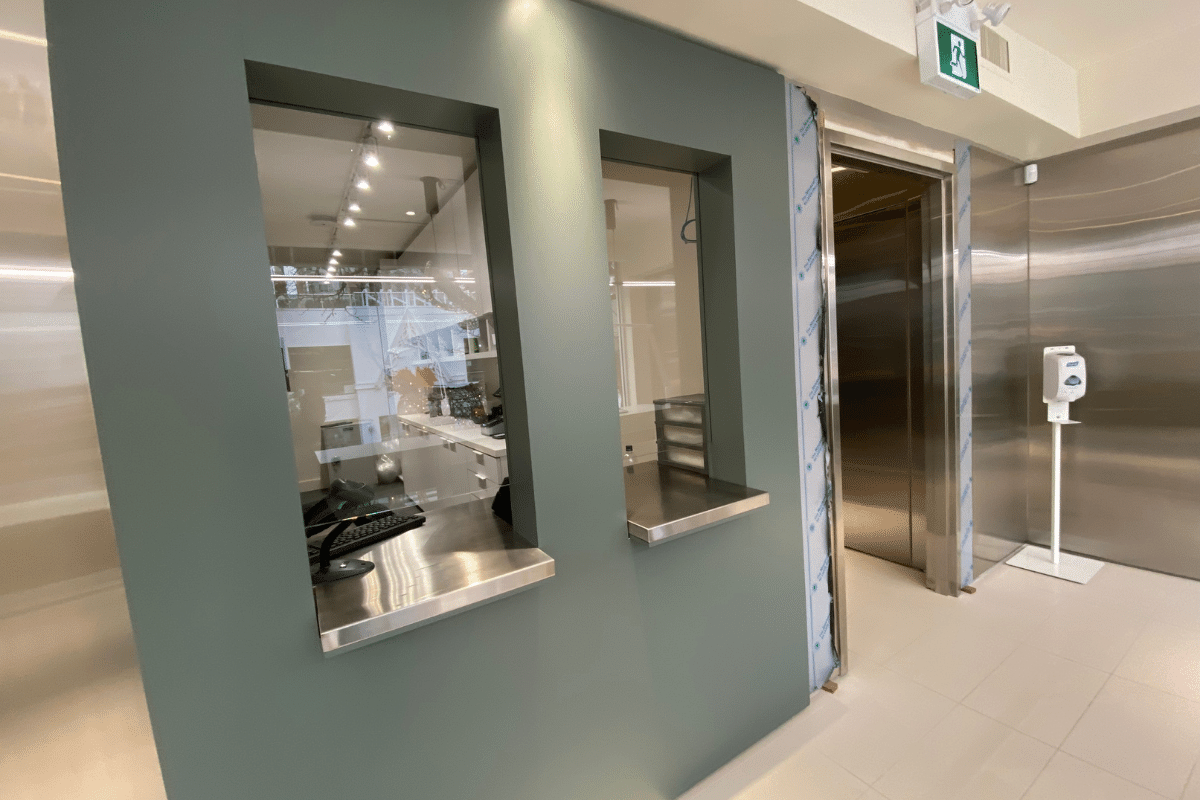
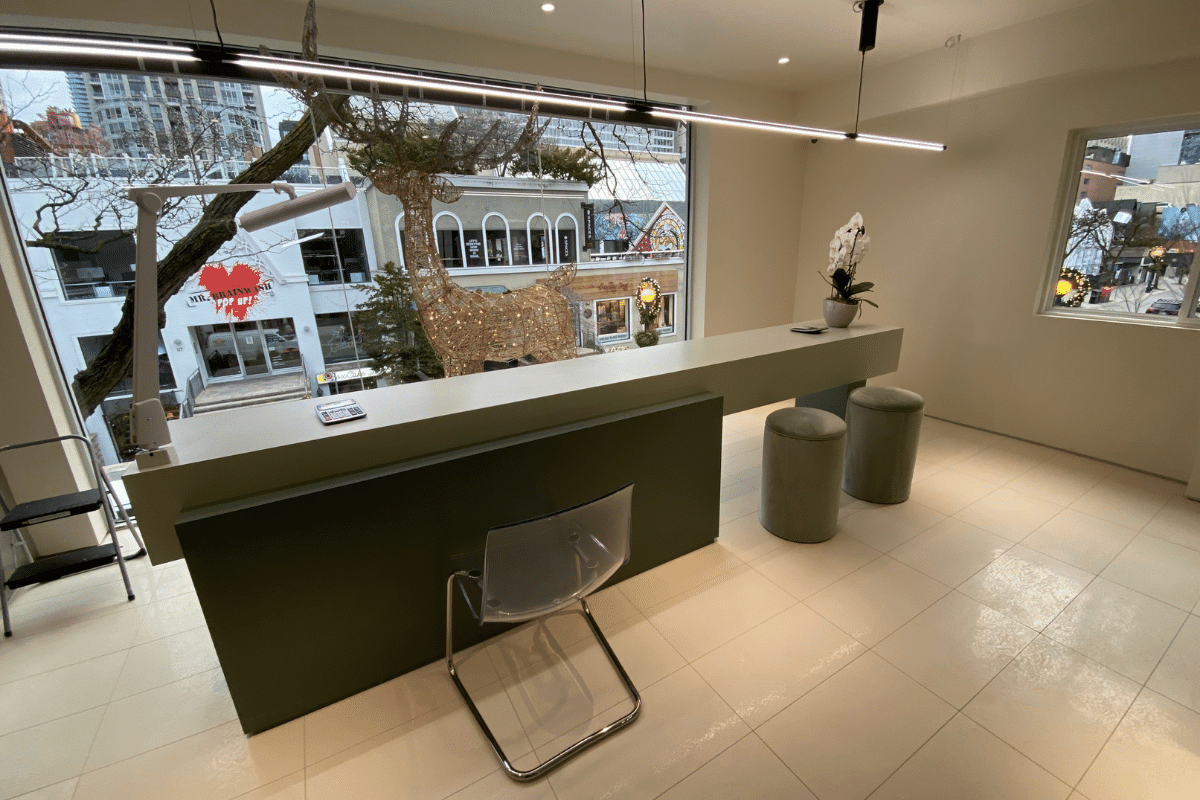
The second floor, accessed by a stairway next to the main entrance, features an area where customers can meet with representatives to trade items for money. A room sealed off to the public houses an authenticator for designer items such as bags as well as technology to determine the material makeup of jewellery — a Rolex Mr. Oliver was wearing during a tour showed to contain 18.08k gold.
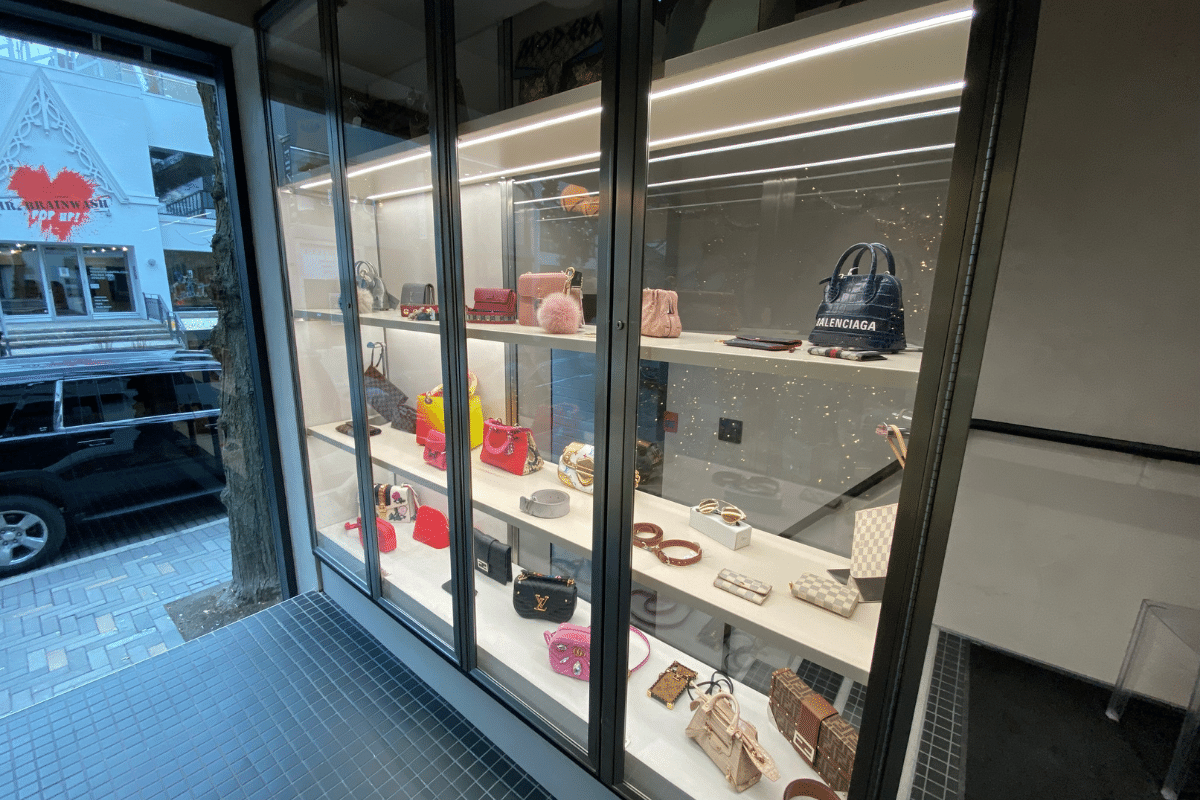
Oliver Jewellery 88 Yorkville Ave (Photo: Craig Patterson)Oliver Jewellery 88 Yorkville Ave (Photo: Craig Patterson)Window displays at Oliver Jewellery, 88 Yorkville Ave (Photo: Craig Patterson)
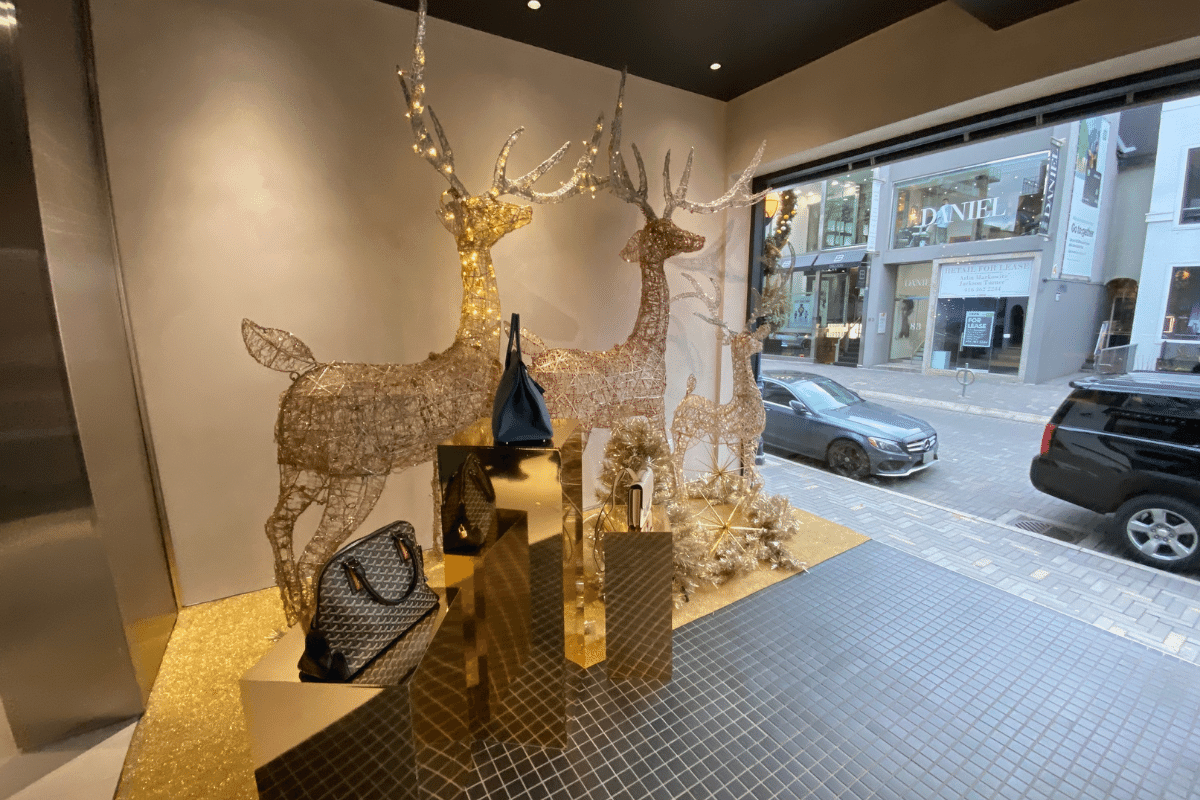
Window displays for the holiday season feature prominently facing Yorkville Avenue both on the main level as well as upstairs. Black awnings on the windows spell ‘Oliver’s’ with branding that is decidedly more upscale than the Oliver Jewellery storefront that opened several blocks south at 620 Yonge Street in the fall of 2016. The Yonge Street store, which was his first foray into retail since 1991, has since closed with the new Yorkville location replacing it.
Oliver’s is located in a prime location, being steps away from the recently opened Gucci x Balenciaga pop-up as well as big-name storefronts such as Chanel, Isaia, Christian Louboutin and Versace. Since opening recently, Mr. Oliver said that customers are coming to the store from the full-priced stores nearby to see what’s in stock.
It’s not the first time that Russell Oliver has had a store in Yorkville. After founding his business in 1971 near the Simpson’s flagship store in downtown Toronto, Oliver relocated his retail storefront to Yorkville. Customers included actor John Candy and Mr. T from TV program ‘The A-Team’ among others. In April of 1984, the then 36-year-old Russell Oliver was shot by two robbers and he sustained an injury to his right foot. Oliver Jewellers operated in Yorkville until 1991 when his business morphed into buying jewelry and gold.
Besides the Yorkville retail store, Oliver’s has storefronts where people can sell goods or use Oliver’s loan services in Toronto, Woodbridge, Oakville and Pickering.
Russell Oliver is known to many for his often over-the-top television commercials promoting his business. He has spent tens of millions of dollars on adverting over the course of 25 years which has resulted in his becoming a household name. One of his commercials was featured on the Ellen Show in February of 2021, and it’s worth a watch.
See below for several more images of the new Yorkville store.