Advertisement
Advertisement
Home Blog Page 94

Recipe outlines next phase of Olive Garden expansion in Canada

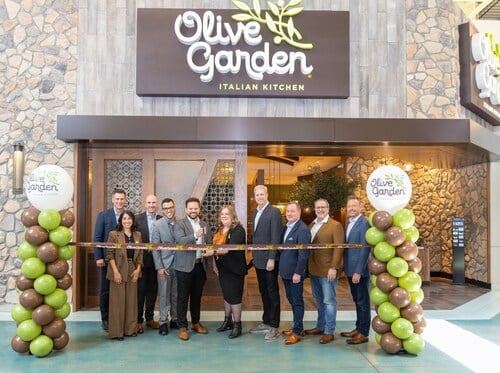
Photo- Olive Garden
Photo- Olive Garden

Recipe Restaurant Group International says it will open its first new Olive Garden restaurants under its control in Ontario this summer, marking the next phase of the brand’s expansion in Canada after acquiring the existing locations in Western Canada.

The Vaughan, Ont.-based company said the initial openings will be at Vaughan Mills in the Greater Toronto Area and in Ottawa’s Westboro neighbourhood, with both restaurants currently in development and expected to open in summer 2026.

The planned openings follow Recipe’s recent acquisition of all eight Olive Garden restaurants operating in Western Canada and the signing of a national development agreement with U.S.-based Darden Restaurants Inc., the owner of the Olive Garden brand.

Expansion beyond Western Canada

Recipe said the Ontario locations will be the first new Olive Garden restaurants to open under its expanded national mandate, representing a shift from a regional footprint to a broader, countrywide development strategy.

“These locations represent the first new openings under Recipe’s expanded national mandate and mark an important milestone in growing Olive Garden’s presence beyond Western Canada,” the company said in its release.

Photo: Olive Garden
Photo: Olive Garden

Recipe said additional Olive Garden locations are in various stages of planning across the country as it works to establish what it described as a long-term development pipeline for the brand in Canada. No specific locations or timelines beyond the two Ontario sites were disclosed.

The company framed the expansion as part of a broader growth strategy tied to its operational control of the brand in Canada following the acquisition and development agreement.

Management commentary

Frank Hennessey
Frank Hennessey

Recipe chief executive Frank Hennessey said the upcoming openings reflect both confidence in the brand and the company’s ability to execute on a national strategy.

“With these upcoming openings, we’re taking an important step in expanding Olive Garden’s footprint into new Canadian markets,” Hennessey said. “This expansion reflects our confidence in the brand, the strength of our partnership with Darden, and our ability to execute thoughtfully and strategically across Canada.”

Yianni Fountas
Yianni Fountas

Yianni Fountas, chief operating officer for Olive Garden Canada at Recipe Restaurant Group, said the company is focused on consistency and operational execution as it introduces new locations.

“Backed by the expertise of our operational teams, these new restaurants will welcome guests like family, delivering the consistency and value that guests expect from Olive Garden, while establishing a strong foundation for the brand’s continued growth in Canada,” Fountas said.

Development timeline

Recipe said both the Vaughan Mills and Ottawa Westboro restaurants are in active development. The company did not provide details on restaurant size, investment levels or employment impacts associated with the openings.

The company also said it plans to provide further updates on future restaurant openings and development milestones in the coming months as the Canadian expansion continues.

Photo: Olive Garden
Photo: Olive Garden

Brand and company profile

Olive Garden is an Italian-inspired restaurant brand that began operating in 1982 and is known for full-service, family-oriented dining. The brand operates under Darden Restaurants Inc., which is listed on the New York Stock Exchange under the ticker DRI.

Recipe Restaurant Group International is a Canadian-based restaurant operator with a portfolio spanning full-service, quick-service and fast-casual brands. The company operates nearly 1,100 restaurants across Canada and also has an international presence in the United States and the Middle East, according to the release.

Its portfolio includes Swiss Chalet, St-Hubert, Harvey’s, Montana’s, Olive Garden, New York Fries, Kelsey’s Original Roadhouse, East Side Mario’s, Original Joe’s, State & Main, Anejo, The Burger’s Priest, The Landing Group, Elephant & Castle, Fresh Kitchen + Juice Bar, The Pickle Barrel, Blanco Cantina and Bier Markt.

Recipe said it will continue to share details about its Olive Garden development plans as they progress.

More from Retail Insider:

Booster Juice opens first drive-thru location in Ontario

Booster Juice's First Drive-Thru location is approximately 1,400 sq. ft., built for speed, quality, and convenience (CNW Group/Booster Juice)

Booster Juice has opened its first drive-thru location, marking a new operating format for the Canadian smoothie chain as it looks to add convenience for customers and expand how its stores function.

The company said the drive-thru location opened Monday, Jan. 5, at the St. Clair Shores Shopping Centre in Lakeshore, Ont. With more than 470 locations across Canada, the company described the opening as a significant step for the franchise system.

New store format targets convenience

The drive-thru is housed in a standalone building of approximately 1,400 square feet and includes a double-lane drive-thru. The location also serves walk-in customers, similar to existing Booster Juice stores.

Franchise Partner Ana Bezarevic said the format is designed to respond to changing customer habits.

“Customers seem to have less time nowadays, and this just sets us up to save our customers the need to go into our stores for a more convenient experience,” said Bezarevic.

The Lakeshore location features five digital screens displaying current promotions and campaigns, as well as the full menu, allowing customers to place orders from their vehicles. The company said the layout was designed to support speed and quality of service.

Strategy and leadership perspective

President, CEO and founder Dale Wishewan said the drive-thru reflects the company’s longer-term approach to accessibility and customer service.

Dale Wishewan, founder, President and CEO of Booster Juice

“Our goal has always been to make healthy food more accessible,” said Wishewan. “With this drive-thru location, we’re bringing our fresh, healthy products to our customers in a fast, convenient way, and with great customer service.”

The company said the drive-thru model is an extension of its existing operations rather than a replacement. The Lakeshore site continues to accommodate walk-in traffic while adding vehicle-based ordering.

Store details and operations

The drive-thru is located at 29 Amy Croft Drive in Lakeshore, Ont., within the St. Clair Shores Shopping Centre. The company said the building was designed specifically to support drive-thru traffic, with infrastructure intended to manage ordering flow and reduce wait times.

Booster Juice said the location maintains the same menu offered at traditional stores, including smoothies, wraps, paninis, Booster Balls, and freshly prepared shots and beverages. The company noted that the primary difference from existing locations is the addition of the drive-thru service.

After 26 years in operation, the company said it continues to focus on adapting its store formats while maintaining its existing menu and service model.

Development and local involvement

The project involved collaboration with the property’s landlord and developer, Steven Valente, who said the store represents a milestone for the brand.

“Congratulations to the entire Booster Juice team on the opening of this truly historic drive-thru store,” said Valente. “The result is something truly special, and it’s inspiring to see the excitement and momentum this store has already generated.”

Booster Juice at Pearson International Airport in Toronto. Photo: Booster Juice

Company background

Founded in 1999, Booster Juice describes itself as Canada’s original juice and smoothie bar. The company operates in every province and territory and positions its business around providing food and beverages for customers with active lifestyles.

The company said it continues to focus on developing new products while maintaining its existing service approach as it operates within the quick-service restaurant sector.

The Lakeshore drive-thru represents the first time Booster Juice has introduced this store format within its Canadian network, as the company tests new ways to serve customers across its national footprint.

More from Retail Insider:

L’Oréal Canada appoints Laurie Bouchard as chief corporate affairs and engagement officer

Source: L'Oréal
Source: L'Oréal

L’Oréal Canada has appointed Laurie Bouchard as its chief corporate affairs and engagement officer, adding her to the company’s management committee as it strengthens its corporate affairs leadership.

The appointment took effect Monday, Jan. 12, the company said in a press release. Bouchard joins the Canadian subsidiary of the global beauty company following senior communications roles in federal politics, public affairs and the private sector.

Senior leadership appointment

Laurie Bouchard joins L’Oréal Canada (CNW Group/L’Oréal Canada Inc. (Only Use For Wire))

L’Oréal Canada said Bouchard brings experience in communications, leadership and public policy to the newly announced role, which oversees corporate affairs and engagement activities. The company positioned the appointment as part of its broader approach to managing reputation, government relations and external partnerships in Canada.

Bouchard joins L’Oréal Canada after more than a decade working in senior roles connected to Canadian politics and public affairs, including positions within the federal government and political campaigns.

Background in federal politics and public affairs

Most recently, Bouchard served as deputy director of communications in the Office of the Prime Minister of Canada under then-prime minister Justin Trudeau. She later led the communications team during the campaign of Prime Minister Mark Carney, according to the release.

Earlier in her career, Bouchard held several communications leadership roles within the federal government. These included director of communications for the minister of innovation, science and industry from March 2023 to May 2024, and senior communications manager from December 2021 to March 2023. She was also previously part of the operations team in the Office of Prime Minister Justin Trudeau.

The company said her professional experience also includes roles outside the federal government, including work in the private sector, at the Chamber of Commerce of Metropolitan Montreal, at communications agency TACT, and within the Quebec government. The release also noted that she has a legal background.

Company perspective

An Verhulst-Santos
An Verhulst-Santos

An Verhulst-Santos, president and chief executive officer of L’Oréal Canada, said the appointment reflects the company’s focus on trust, reputation and external engagement.

“Building trust and protecting our reputation is of utmost importance to L’Oréal Canada and absolutely strategic in bringing our sense of purpose, Creating The Beauty That Moves The World, to life.” said Verhulst-Santos.

She said Bouchard’s background and professional network were key considerations in the appointment.

“What Laurie brings to L’Oréal Canada is truly unparalleled. Her deep network and extensive experience within Canadian political circles provide unrivaled external relations and political acumen, which will be instrumental in navigating government relations, public affairs, and fostering strategic external partnerships, thereby significantly enhancing L’Oréal Canada’s influence and reputation, and solidifying our position as a thought leader in the market.”

Bouchard’s response

Bouchard said she is looking forward to joining the company and contributing to its work in Canada.

“It is a privilege to join L’Oréal Canada, an inspiring organization that is a pioneer in its field and that remains an industry leader thanks to its creativity, values and strong spirit of innovation. I am looking forward to contributing to our ambitious projects and especially amplify our impact in Canada within various networks,” said Bouchard.

About the company

L’Oréal Canada is a subsidiary of L’Oréal Groupe. Established in 1958, the Canadian business includes a head office, manufacturing plant and distribution centre in Montreal, as well as a sales office in Toronto.

The company employs more than 1,700 people in Canada, representing 73 nationalities, according to the release. Its portfolio includes 39 brands sold across multiple distribution channels, including hair salons, department stores, supermarkets, pharmacies, medi-spas and e-commerce platforms.

More from Retail Insider:

Canada’s retail property markets expected to remain tight as commercial real estate outlook stabilizes: Morguard

Hudson's Bay downtown Calgary. Photo by Mario Toneguzzi

Canada’s retail real estate markets are expected to remain tight in 2026, with strong demand for high-quality space supporting rents and income performance, according to a new outlook from Morguard Corporation that points to gradual stabilization across the country’s broader commercial property sectors.

The assessment comes from Morguard’s 2026 Canadian Economic Outlook and Market Fundamentals Report, which reviews conditions in 2025 and outlines investment and leasing trends expected to shape the year ahead. The report suggests that while economic growth is likely to remain modest, easing borrowing costs and improving lending conditions could support increased investment activity across retail, industrial, office and multi-suite residential real estate.

Retail sector remains supply-constrained

Morguard said high-quality retail space remained in short supply in Canada’s most productive centres and shopping nodes through the end of 2024 and into 2025. Vacancy levels held at what the company described as healthy levels nationally, particularly in community and neighbourhood formats, allowing landlords to achieve strong rents for well-located, high-quality space.

The report said supply constraints in most major markets are expected to persist, keeping conditions tight and supporting resilient rental and income performance in the retail sector.

Broader commercial markets show signs of stabilization

Beyond retail, Morguard’s outlook points to generally healthy conditions in the industrial sector, gradual stabilization in multi-suite residential rentals and an improved outlook for office markets.

Angela Sahi
Angela Sahi

“Canada’s economy shifted into a lower gear in early 2025 as U.S. tariffs and global trade tensions weighed on growth and business confidence,” said Angela Sahi, president and chief executive officer of Morguard. “Even in this slow-growth environment, high-quality real estate has continued to demonstrate resilience, supported by stable income performance and a steady flow of private capital into well-located, stabilized assets.”

The company said Canada’s economy is expected to grow at a relatively slow pace in the near term, with modest growth projected for 2026. Despite that backdrop, investment capital continued to flow into Canadian commercial real estate in 2025, particularly toward stabilized assets in the retail, industrial and multi-suite residential sectors.

Looking ahead, Morguard said the flow of capital into commercial property is expected to increase as borrowing costs ease, lender appetite improves and financing availability rises.

Industrial and office outlook improves

Industrial leasing fundamentals remained relatively healthy in 2025, even as new supply increased availability in several markets, the report said. Investment sales activity steadied, with quality logistics and warehouse assets continuing to trade at what Morguard described as a healthy rate. For 2026, the sector’s outlook is expected to remain favourable, supported by stable demand, moderating availability and income-driven performance.

The office market also showed signs of improvement, driven by return-to-office mandates from major financial institutions and the public sector. Morguard said building occupancy increased as more employees returned to physical workplaces, with demand particularly evident for high-quality, efficient space offering attractive amenities. Investors are expected to continue focusing on trophy assets, high-quality Class A buildings and value-add or conversion opportunities.

Keith Reading
Keith Reading

“We’re beginning to see the signs of renewed momentum across Canada’s major commercial property sectors,” said Keith Reading, senior director of research at Morguard. “Industrial and retail assets continue to post healthy fundamentals, and multi-suite residential demand is expected to firm as the economy stabilizes. As lending conditions improve, investors will increasingly re-engage with opportunities that offer stable and increasing income streams and long-term growth potential.”

Multi-suite residential rental market

Morguard said Canada’s multi-suite residential rental market softened in late 2024 and 2025 as weaker rental demand coincided with a notable increase in new supply. Despite that, buyers remained confident in the asset class, citing its income-driven stability and positive medium- to long-term outlook. The company said demand for multi-suite residential rental properties continues to exceed supply.

The report projects that rental fundamentals will gradually stabilize as modestly stronger economic growth and improving youth employment in the latter half of 2026 support firmer demand. As conditions improve, vacancy is expected to stabilize, landlord incentives are projected to ease and asking rents are expected to level off as the market moves toward a more balanced environment through 2027.

Economic backdrop and investment trends

Morguard said Canada’s economy slowed in 2025 as trade tensions with the United States, including tariffs on certain Canadian exports, weighed on growth, employment and confidence. While growth is expected to remain modest in 2026, the report anticipates that easing trade tensions could support improved business sentiment and investment activity.

Despite the slow-growth environment, the company said investment capital continued to flow into Canadian commercial real estate at a consistent rate in 2025, particularly toward high-quality, stabilized assets.

The report highlights the following expectations for 2026:

  • Demand for multi-suite residential investment properties is expected to gradually stabilize as fundamentals firm by the end of 2026.
  • Investor confidence in the industrial sector will remain strong, supported by healthy fundamentals and improving lending conditions.
  • Canada’s retail leasing market is expected to remain tight, with strong demand for high-quality space driving retailer expansion.
  • Canada’s economy is expected to grow modestly in 2026, given a projected easing of trade tensions while investment activity gains momentum.

Report details

The 2026 Canadian Economic Outlook and Market Fundamentals Report is Morguard’s 28th annual edition and provides an analysis of 2025 real estate market performance along with trends to watch in 2026. The report includes market analysis for Halifax, Montreal, Ottawa, Toronto, Winnipeg, Regina, Saskatoon, Calgary, Edmonton, Vancouver and Victoria.

Morguard Corporation is a Mississauga-based real estate investment company listed on the Toronto Stock Exchange under the symbol MRC. As of Sept. 30, 2025, the company’s owned and managed portfolio of assets was valued at $19.0 billion.

More from Retail Insider:

Richelieu reports higher 2025 sales, completes 10 acquisitions across North America

Photo- Richelieu
Photo- Richelieu

Richelieu Hardware Ltd. reported higher sales and cash flows in its 2025 fiscal year, driven by internal growth and a steady pace of acquisitions in Canada and the United States, including what it said was the 100th acquisition in the company’s history.

The Montreal-based hardware distributor said sales reached $1.96 billion in fiscal 2025, up 7.2 per cent from the previous year, as it completed nine acquisitions during the year and a further deal shortly after year-end.

Growth and acquisition strategy

Richard Lord
Richard Lord

“For Richelieu, 2025 was a year of sustained growth, with sales reaching $1.96 billion. Over the past thirteen months, we completed ten acquisitions in North America, representing additional annual sales of $100 million. The most recent acquisition, completed after year-end, is also Richelieu’s 100th acquisition in its history. Moreover, our 4th quarter and full-year results reflect good progress across our market segments in North America. Our operations generated cash flows of $68.7 million in the last quarter, including a $30 million reduction in inventories, and positive cash flows of $202.4 million for the full year. Benefiting from our strong balance sheet, our leadership position, and the expertise of our team, we will continue to focus on our innovation and acquisition strategies to seize opportunities, help evolve our markets, and drive growth,” said Richard Lord, president and chief executive officer.

The company said three acquisitions were completed in Canada during the fourth quarter and one in the United States after Nov. 30, 2025, marking the 10th acquisition since Dec. 1, 2024.

Those transactions included the purchase of Ideal Security, a Canadian distributor based in the Greater Montreal area, on Sept. 2, 2025; Finmac Lumber, a Winnipeg-based distributor of specialized wood products, on Oct. 1, 2025; and Klassen Bronze on Oct. 29, 2025. After year-end, on Dec. 12, 2025, Richelieu acquired three distribution centres from McKillican American in Portland, Ore., Seattle and Spokane, Wash.

Private brands and market focus

The company said the acquisitions of Ideal Security and Klassen Bronze expanded its portfolio of private brands serving hardware retailers and renovation superstores.

“We are maintaining our proactive market development strategy and will continue to invest in value creation in the short and long term. I am particularly proud of the acquisitions of Ideal Security and Klassen Bronze, which expand our private brand portfolio, bringing the total to ten brands in the retailers and renovation superstores market Segment. These additions strengthen our position in this strategic segment and fully align with our “one-stop shop” strategy, to the benefit of our partners and customers. They also support the growth of our private brands and exclusive products. It is worth noting that our private brands and exclusive products intended for manufacturers and retailers represent a significant proportion of our sales” added Lord.

Richelieu said the expansion of its private brands portfolio is supported by service centres in Calgary for Western Canada, Kitchener for Eastern Canada and Chicago for the United States.

Photo: Richelieu
Photo: Richelieu

In addition to the fourth-quarter transactions, the company said six acquisitions were completed during the first nine months of fiscal 2025. Two of those were in Canada—Mill Supply in Nova Scotia and Prince Edward Island, and Les Industries Camcoat in Quebec—while four were completed in the United States: Darant Distributing in Colorado, Midwest Specialty Products in Minnesota, Modulex Partition in New Jersey, and Rhoads & O’Hara Architectural Products, also in New Jersey.

Fourth-quarter results

For the fourth quarter ended Nov. 30, 2025, Richelieu reported:

  • Sales of $510.9 million, an increase of 7.3 per cent, including 4.1 per cent internal growth and 3.2 per cent from acquisitions.
  • EBITDA of $59.2 million, up 9.1 per cent, representing an EBITDA margin of 11.6 per cent.
  • Net earnings attributable to shareholders of $25.6 million, or $0.46 per diluted share, an increase of 4.5 per cent.
  • Cash flows from operating activities of $68.7 million.

Full-year financial performance

For fiscal 2025, the company reported:

  • Sales of $1.96 billion, an increase of 7.2 per cent.
  • EBITDA of $213.9 million, up 6.2 per cent, with an EBITDA margin of 10.9 per cent.
  • Net earnings attributable to shareholders of $85.8 million, or $1.55 per diluted share, an increase of 1.3 per cent.
  • Cash flows from operating activities of $202.4 million.
  • Working capital of $624.0 million as at Nov. 30, 2025, representing a ratio of 3.3:1.

Operations and footprint

Richelieu describes itself as a North American importer, manufacturer and distributor of specialty hardware and complementary products, serving customers in cabinetmaking, storage and closet systems, home and office furnishings, woodworking, doors and windows, and hardware retail.

The company said it offers more than 145,000 products to a customer base of over 120,000, supported by 119 centres across North America. These include 51 distribution centres in Canada, 65 in the United States and three manufacturing plants in Canada: Les Industries Cedan Inc., Menuiserie des Pins Ltée and USIMM UNIGRAV Inc.

The manufacturing operations produce veneer sheets and edge banding products, decorative moldings and components for the window and door industry, as well as custom products, including those developed through a 3D scanning centre.

Richelieu said its acquisition activity after Nov. 30, 2025, brought the total number of acquisitions since December 2024 to 10 and marked the 100th acquisition in the company’s history.

More from Retail Insider:
Helcim launches payment extension allowing merchants to integrate payments into existing software

Helcim Payment Extension in use at healthcare clinic (CNW Group/Helcim)

Helcim says it has launched a new payment extension that allows merchants to integrate its payment processing directly into the web-based business software they already use, a move the Calgary-based company says is aimed at giving businesses more control over how they accept payments.

The company said the Helcim Payment Extension lets merchants connect their existing operational software to Helcim through a browser extension, allowing payment data to move between systems without requiring separate workflows or manual reconciliation.

Addressing integration and cost constraints

In announcing the launch, Helcim said many growing businesses face trade-offs between using specialized software for operations such as scheduling, inventory management or accounting and accepting payment options that are bundled with that software.

The company said those bundled options are often limited to a single processor and may involve higher flat-rate pricing, which can reduce margins as transaction volumes increase. Businesses that choose to manage payments separately, Helcim said, can face fragmented records and added administrative work.

Helcim said the new extension is designed to address those issues by allowing merchants to integrate Helcim’s payment processing into browser-based software they already rely on, without replacing existing systems.

How the extension works

According to the company, merchants install the Helcim Payment Extension as a browser add-on, which then connects their existing software workflows to Helcim’s payment interface. Helcim said this setup allows transaction information to flow between the software and Helcim, so invoices are automatically marked as paid and accounting records remain up to date without manual data entry.

Jedd Ylagan
Jedd Ylagan

“Finally, we don’t have to choose between our favorite clinic software and fair payment rates,” said Jedd Ylagan, owner of Kinetically Whole Therapies and a Helcim beta user. “The workflow is seamless–our staff operates exactly as they always have–but now we are saving significantly on every transaction without compromising the client experience.”

Helcim did not disclose specific savings figures but positioned the extension as a way for merchants to continue using established workflows while changing how payments are processed.

Platform support and expansion plans

At launch, Helcim said the payment extension supports more than 20 software platforms. The company said it plans to expand that number to more than 100 integrations by the end of the year.

Helcim said the expansion is intended to make the extension relevant to a wide range of industries, including healthcare, automotive and professional services. The company said the extension allows those businesses to access Helcim’s interchange-plus pricing model through their existing software environments.

Nic Beique
Nic Beique

“We believe merchants deserve to be in control of their financial partnerships,” said Nic Beique, CEO and founder of Helcim. “Business owners shouldn’t be forced to overpay for payments just to use the operational software they love. This extension restores the power of choice, allowing merchants to pair the best tools for their business with the transparent, affordable payments they deserve.”

Business model and availability

Helcim said merchants can download the payment extension immediately and begin using it without setup or monthly fees. The company said its platform does not require long-term contracts and uses a volume-based interchange-plus pricing structure.

The company positioned the extension as part of its broader strategy to serve growing businesses by offering payment tools that integrate with existing systems while maintaining what it describes as transparent pricing.

Helcim did not provide financial projections related to the launch but said the extension is intended to help businesses reduce administrative friction and manage payment costs as they scale.

Company background

Helcim describes itself as a payment platform focused on serving scaling business owners. The company said it provides payment services to tens of thousands of merchants across North America and processes billions of dollars in payments annually across hundreds of industries.

The company said additional information about the Helcim Payment Extension, including download details, is available on its website.

More from Retail Insider:
Canadian Retail News From Around The Web For January 16, 2026

Canadian Retail News From Around The Web

News at a Glance

Retail Insider is streamlining its Canadian retail news from around the web to include a handful of top news stories that can be viewed quickly during the day. Here are the top stories from the past 24 hours.

The Complete Guide To Canadian Toy Stores (Today’s Parent)

Yorkdale mall owner fights transfer of former Hudson’s Bay lease to retailer Fairweather (Toronto Star)

Yorkdale is doing everything it can to keep a Fairweather store from opening (Toronto Life)

SAQ set to open 100 mini-stores and deliver with Uber Eats (CTV)

Toys “R” Us store on St. Matthews shuttering (Winnipeg Free Press)

Pet Valu makes changes to board of directors (Pet Food Processing)

Made from scratch: Toronto tech leaders reflect on 10 years of building Uber Eats (Beta Kit)

Ontario alcohol producers ‘bet on ourselves’ as U.S. booze ban nears 1-year mark (CBC)

Trendy record store and venue to launch cafe in downtown Toronto (Your City Within)

Lawyer appears in court for former Bedford pharmacy manager facing voyeurism charges (PNI Atlantic)

Parker: GWL Realty acquires redesigned Northland Village in $154-million deal (Calgary Herald)

Two rental housing towers, hotel proposed for former Army & Navy store site (Business in Vancouver)

Yaletown business owner shares frustration after repeat thefts (CityNews Vancouver)

Restaurants temporarily closing due to snowstorm in Toronto (Your City Within)

How to Optimize Shipping Routes to Save Time and Money

Cutting down on costs for a business means that the company must find the most effective shipping routes. Route optimization can be a competitive advantage in whatever capacity you use delivery vehicles, ranging from a single delivery truck to a fleet or an online shop or acting as a logistics provider to a large company. This blog details why route optimization is significant and reveals how to improve efficiency and minimize costs.

Why Route Optimization Is Important

Shipping routes are impactful because they determine a business’s productivity and revenue status. Optimized routes decrease time and, therefore, fuel consumption, as well as enhance customer satisfaction. Besides, they reduce vehicle usage. Hence, they have less wear and tear, thus reducing maintenance frequency. For businesses oriented towards sustainability, the efficient routes also contribute to minimizing carbon footprint, which is a key point.

Many retailers also improve operational efficiency by streamlining packing and preparation before shipments even leave their facilities. Using tools such as the trending Rollo wireless label printer helps teams label packages quickly and accurately, reducing bottlenecks and ensuring that optimized routes can function at their highest efficiency.

Main Factors That Affect the Selection of the Shipping Channels

Delivery Destinations

To do this, it is important to understand the geography of delivery points. Assigning nearby locations in a cluster minimizes travel distances between the customer and the delivery.

Traffic Patterns

One of the major problems in transport logistics is traffic jams. Real-time traffic information helps the driver minimize time spent on the road, ensuring that time is spent wisely.

Vehicle Capacity

Thus, optimizing vehicle loading will enhance capacity to the maximum level, minimizing the number of trips. This is economical in terms of fuel and labor costs.

Delivery Deadlines

Time-sensitive deliveries must be prioritized. One technique for route optimization involves developing a timetable for delivering products based on urgency.

Road Conditions and Weather

Unexpected events, such as bad road networks and unfavorable weather conditions, may hinder even the most careful route planning. Such elements are considered when optimizing the route: they minimize potential risks.

Measures to Improve Shipping Channels

Analyze Existing Routes

The process should start by assessing your existing shipping routes. Locate waste areas, including doubled-up runs, long hauls or other avoidable time-consuming issues. Information from GPS tracking devices, delivery records, survey feedback, and driver reviews are also included.

Implement a Route Optimization Software

The use of technology is very critical in the current logistics industry. Route optimization software computes improved schedules depending on the delivery timeslots, traffic realities and vehicle carrying capacity. Popular tools include:

  • Google Maps API provides the simplest routing form and updates limited traffic information.
  • Route4Me: It is intended for companies that require the delivery of various products and/or services to multiple destinations.
  • OptimoRoute: They assist in timetable planning and variations of the shifts as they occur.
  • These tools help make planning easier and guarantee that resources are well utilized.

Prioritize Deliveries

There are different types of deliveries, and not all require the same speed. Organize shipments into categories:

  • Time-Sensitive Deliveries: These must be addressed first to meet the customer’s expectations.
  • Clustered Deliveries: Deliveries in the same group to reduce the distances to be traveled.
  • This way, essential delivery services are accomplished on time while minimizing overall delivery cycle time.

Use Real-Time Data

Real-time data enables a one-time change in the routes. For instance, drivers can be redirected almost instantaneously if a congestion or road closure happens. Real-time traffic information and GPS tracking devices are assets for keeping operations on track.

Optimize Vehicle Loading

It is another important factor that can affect the overall route, and the loading of vehicles on the same greatly influences one another. Tips for optimizing vehicle capacity include:

  • Storing heavier items at the bottom to avoid the vehicle tipping over.
  • Grouping items enables the products with similar delivery orders to be offloaded in the shortest time possible.
  • Besides, through the help of software, one can identify the most appropriate loading configurations.
  • In the meantime, there will be fewer trips and fuel savings, as efficient loading is done at one location and transported simultaneously.

Train Drivers Effectively

Drivers, therefore, play crucial roles in the implementation of route optimization. Provide training on:

  • By applying route optimization applications.
  • Basic driving behavior elements include inadequate acceleration and refrainment from stalling the car.
  • Managing conditions beyond the rider’s control, such as route diversion or poor weather conditions.
  • The drivers can also change and ensure delivery is done in the best way possible.

Modify Routes Often

Route optimization is a continuous process that cannot be completed once and for all. Similar indicators may include delivery times, fuel consumption rates, customer satisfaction, etc. Ensure that this data helps you update your strategies and identify recurring problems.

The Use of Technology in Route Optimization

Artificial Intelligence (AI)

Computer programs use large amounts of data to develop the best routes. They consider issues such as traffic flow, delivery time, size and vehicle capacity, making route planning more accurate.

Internet of Things (IoT)

GPS tracking and telematics systems are part of the IoT and help drivers and managers receive details about the vehicles’ location, fuel level, and engine status. Such information will facilitate dynamic control of the route and perform anticipatory maintenance.

Machine Learning (ML)

ML algorithms can help plan future routes by using past delivery data. For example, they can distinguish traffic congestion patterns or peak seasons for some kinds of businesses and thus prepare for problems in advance.

Advantages of Ship Management & Optimization 

Cost Savings

They cut the amount of fuel used by vehicles, the maintenance costs of vehicles, and the human resources used. The gains made in this area improve customer satisfaction. Reduced delivery times and the increased ability to track orders improve customer satisfaction and, thus, loyalty.

Autonomous Vehicles

Autonomous delivery trucks and drones will probably change how the logistics business is conducted, as they reduce the chances of human mistakes.

Sustainable Practices

E-mobility vehicles, such as electric vehicles (EVs) and renewable energy, are set to become more significant in logistics sustainability.

Advanced Analytics

It will be even possible to predict when and where the demand will be even higher and what tendencies to expect in the future regarding traffic, thanks to big data and predictive analytics.

Conclusion

One important area that requires efficiency today is determining optimal shipping routes. This can be done by adopting technology, focusing on delivery and constantly reviewing organizational strategy to achieve significant cost reductions and better customer experiences. Thus, only further development of trends, such as AI, IoT, sustainability, etc., will guarantee an industry’s long-term prosperity. Route optimization is an essential aspect of logistics management, and it matters regardless of whether you operate locally or have a large network of supply chains.

Chocolats Favoris Expands to Whistler Village with New Location

Chocolats Favoris, a Quebec-born chocolatier adored across Canada, is set to open its newest location in Whistler Village on January 17, 2026. This opening highlights the brand’s continued expansion in Western Canada and represents its third location in British Columbia.

Perfectly positioned in one of Canada’s most iconic mountain resorts, the new chocolaterie aims to serve as an after-ski, after-bike, and after-adventure destination. Guests, whether returning from the slopes or simply enjoying a stroll through the village, will find a warm, indulgent environment to conclude their day.


The Whistler shop will feature Chocolats Favoris’ signature real chocolate dipping station, offering soft serve dipped into one of 12 decadent flavours, including Salted Caramel, Dulce de Leche, Cookies and Cream, and Cotton Candy. The location will also provide Kooky Cones, rotating surprise dips, take-home fondue tins, and various premium chocolate bars.

Family-Owned Operation

This location will be owned and operated by Karen and Steve Desmeules, who initially fell in love with Chocolats Favoris during visits to Steve’s family in Quebec. Their son, Nick, will co-manage the Whistler store, ensuring it remains a family-driven enterprise.

“For years, stopping at Chocolats Favoris was part of our tradition when visiting family in Quebec,” says Steve Desmeules. “Bringing that experience to Whistler, where our family has built its life, is incredibly meaningful for us.”


Commitment to Sustainability

Chocolats Favoris is dedicated to responsible chocolate production via its Sustainable Cocoa Mission, which ensures all cocoa is ethically sourced. This initiative aims to support fair wages, environmental sustainability, and community development. Additionally, the brand offers a variety of vegan-friendly options and adheres to strict protocols for guests with allergies and dietary restrictions.

“Whistler is a natural fit for Chocolats Favoris,” says Dominique Brown, CEO of Chocolats Favoris. “It is a place where people come together, locals and visitors alike, echoing our passion for creating chocolate experiences that are meant to be shared with family and friends.”

The new Whistler location is at 4295 Blackcomb Way, Unit 105, and will employ between 20 and 25 local team members, dependent on the season. The shop will operate from 11 a.m. to 10 p.m., offering visitors a taste of indulgence in a whimsical atmosphere.

As Whistler Village welcomes Chocolats Favoris, it is poised to become a destination for sweet treats starting January 17.

More from Retail Insider:
Thinking Outside the Big Box: Small Retail Innovations: CBRE

Hudson's Bay downtown Calgary. Photo by Mario Toneguzzi

The mass closure of Hudson’s Bay stores across Canada left a daunting amount of retail space without a purpose. While there is healthy interest in most locations from a range of businesses, finding permanent tenants will take time.  

“Landlords have a once in a lifetime opportunity, and I think that they will approach that opportunity appropriately,” says CBRE Vice President Kate Camenzuli.

Kate Camenzuli
Kate Camenzuli

In the meantime pop-up stores like Spirit Halloween have occupied several former Hudson’s Bay locations, a convenient short-term solution for landlords who can generate revenue from spaces that would have otherwise sat empty.

But what about the longer-term fate of empty Hudson’s Bay stores and the future of big box brick-and-mortar retail more broadly? What can consumers expect to see in major shopping districts in the years to come? Camenzuli breaks it all down.

A Short Time in Prime Time

Landlords turn to short-term tenants for two main reasons, according to Camenzuli. “To activate vacant spaces and to test the market.”

Seasonal stores and pop-ups like Spirit Halloween, Calendar Club and Cozy have always existed to fill up swing spaces in malls. Rarely, however, have they occupied huge spaces in some of the country’s most desirable malls and shopping districts.

“The difference we’re seeing now is that we have more vacancy in our shopping centres because of big box availability than we’ve seen in a very long time,” says Camenzuli. “They’re good pieces of real estate but they’re huge.”

Hudson’s Bay is just the latest in a long list of department stores that have shuttered in Canada over the past decade. Nordstrom, Zellers, Sears and Target followed similar patterns after years of operation, leaving behind hundreds of thousands of square feet the average retailer doesn’t need.

An empty Hudson’s Bay location in Toronto’s Eaton Centre
An empty Hudson’s Bay location in CF Toronto Eaton Centre

Department Stores Have Departed

Replacing Hudson’s Bay with a Costco or Walmart might at first seem like a practical solution to take up large amounts of empty space.

But Camenzuli says backfilling department stores with other department stores is a thing of the past. “200,000 sq. ft. to 300,000 sq. ft. department stores are not a vibe anymore.”

“Understanding your appropriate size and format is more crucial than it’s ever been, and that’s due to the pricing of real estate. Retailers have evolved into figuring out what they’re best at.”

The average retail project or phase is 35,000 sq. ft., nearly 50% smaller than three years ago, according to CBRE’s 2025 Real Estate Market Outlook. Domestically, an increasing number of brands are modifying the scale of their typical store, and smaller-format offerings are redefining what the typical store looks like.

“It’s harder than ever for stores to be everything to everyone,” says Camenzuli, adding that while longstanding players like Walmart and Costco aren’t leaving anytime soon, she believes empty Hudson’s Bay locations are better left for businesses that can introduce new and exciting concepts.

Right Mix, Right Partners

While it’s going to take a while for landlords to find long-term tenants that match their vision, there are seemingly endless possibilities for what’s to come.

“I think you’ll see landlords invest a lot of money into these former big box spaces in order to get the right mix with the right partners,” says Camenzuli.

Health and wellness hubs, pickleball courts, educational facilities and residential developments are just a few ideas for what might succeed in former Hudson’s Bay locations.

There are also opportunities for community hubs that can further activate the space. Look no further than Fairgrounds, a free-to-join public racquet club that boasts its own restaurant and bar, as an example.

“Take the risk, figure out a cool concept and try to roll it out as fast as you can,” says Camenzuli. “The loss of Hudson’s Bay has created so much opportunity for Canadian retailers.

“It’s time to build cool things to fill up these spaces and be part of making our country better and stronger than ever before.”

(Content provide by commercial real estate firm CBRE)

More from Retail Insider: