Home Blog Page 942

Etsy Provides Small Businesses with a Booming E-Commerce Platform but Who Reaps the Benefits?

Image: Etsy

2020 was a challenging year for many retailers. With most brick and mortar stores across the country subject to continuous lockdowns, and many local businesses struggling with the sudden pivot to e-commerce, it wasn’t a particularly promising time for entrepreneurs to establish themselves or main street retailers to grow. However, amid the chaos, American e-commerce website, Etsy, enjoyed a hugely successful 2020, crossing the billion-dollar (US) revenue mark for the first time in company history after a staggering year-over-year increase. 

According to data, Etsy experienced a 110.75% year-over-year increase in revenue in 2020 after setting a company record $1.7 billion in revenue — with Etsy’s marketplace earning $1.3 billion, amounting to 75.5% share of the platform’s total revenue and a 119.5% year-over-year increase from 2019.

Revenue from its services segment amounted to $422 million in 2020 which makes up the rest of its total revenue, an 88% year-over-year increase from 2019. A large portion of this increase is attributed to the growth of its on-site advertising revenue. 

In 2019, Etsy recorded 46.35 million active buyers on their site, a figure that grew by almost 77% in 2020 to 81.9 million. The number of sellers also grew by an impressive 61.7% year over year to 81.9 million in 2020.

Image of Etsy’s Marketplace. Photo: Etsy

The company believes this impressive influx of new customers and sellers was a direct result of the lockdowns imposed in many developed markets around the world, especially in North America. Additionally the trend towards shopping local and supporting small businesses has driven some to choose Etsy over alternative e-commerce platforms such as Amazon.  

With many different outlets such as Digital Main Street, Shopify, and social media selling tools like Instagram Shopping available for small businesses to seek help with the accelerated move to e-commerce, Etsy positions itself somewhat as a hybrid model — an e-commerce platform with an emphasis on community and support. 

The Etsy website reads, “In a time of increasing automation, it’s our mission to keep human connection at the heart of commerce. That’s why we built a place where creativity lives and thrives because it’s powered by people. We help our community of sellers turn their ideas into successful businesses. Our platform connects them with millions of buyers looking for an alternative — something special with a human touch, for those moments in life that deserve imagination”.

The e-commerce platform has also reported more than half of its sales coming from mobile devices — a staggering 51%. In 2020, that share had risen to 61%.

The Brooklyn-based e-commerce site was founded in June of 2005, years before having a digital presence was a must for most small businesses. The site specializes in handmade and vintage products, in addition to crafts and DIY supplies. Unlike a place like Amazon, everything on the site is made, collected, curated, and sold by its sellers. These independent business owners not only produce their own goods but manage their orders and inventory, too. Etsy acts as the middle-man, giving smaller, independent creators a platform to find and attract customers — an opportunity that, for some, would otherwise be out of reach. 

As we all know, however, the support local trend can often mean facing higher price points for items also found at discounted prices in places like Walmart and Amazon. In an attempt to compete against the retail giants of the world, in 2019 Etsy announced it would be encouraging sellers to offer free US shipping on all orders over $35. Or rather, it announced that sellers who didn’t offer free shipping would be de-prioritized by the site’s highly-competitive search algorithm. On a platform with more than 60 million things to buy, this can mean functional invisibility for brands unable to afford free shipping. Additionally, despite positioning itself as an affordable and accessible e-commerce platform, costing a mere $0.20 to list your first item, some sellers have found fault in Etsy’s transaction, payment processing, and offsite advertising fees saying that these inconspicuous costs make it difficult to grow amid a competitive market.

Despite the debate on who is really reaping the benefits of Etsy’s massive success, there is no denying the move toward supporting entrepreneurship and small businesses is the way forward, and as certain Canadian provinces continue to suffer the consequences of lockdowns, having an e-commerce marketplace for main street retailers is paramount.

BRIEF: Sephora to Open Almost 50 Stores in Canada, Cadillac Fairview and Ivanhoé Swapping Assets

Sephora to Open Almost 50 More Canadian Stores After Ulta Beauty Shelves Expansion Plans

Multi-brand beauty giant Sephora will open nearly 50 stores in Canada over the next two to three years. That’s according to a paywalled report in the Globe & Mail this week.

The expansion comes after US-based competitor Ulta Beauty announced that it was shelving its Canadian expansion for the time being. The two would have competed for customers while competitors, Shoppers Drug Mart and Hudson’s Bay, also beef up beauty offerings.

Sephora at 77 Bloor. Photo: Dustin Fuhs

The Sephora store expansions will happen primarily in markets between 100,000 and 300,000 residents according to the Globe & Mail article. Sephora will also begin fulfilling online orders from its stores — currently the company does so from distribution centres in Toronto and Vancouver. Sephora is looking to operate stores outside of malls according to the report. In 2015 a Sephora representative had said that a standalone Edmonton location would have a drive-through window though it never came to fruition.

Sephora has over 80 stores in Canada. In 2016 the retailer launched a ‘Toronto Takeover’ initiative that saw new stores open while others were renovated and expanded. The Toronto market is said to be one of Sephora’s top globally.

Jeff Berkowitz of brokerage Aurora Realty Consultants handles Sephora’s real estate in Canada.

Cadillac Fairview and Ivanhoé Cambridge Reportedly Swapping Assets

Rendering of the future development planned for CF Pointe Claire. Rendering: GH+A Design Studio

According to a French language report in La Presse, landlords Ivanhoé Cambridge and Cadillac Fairview are in the process of doing a real estate swap in Montreal that is related to an expropriation for a transit line. The article says that Ivanhoé Cambridge will become the sole owner of the CF Galeries d’Anjou centre in Montreal, which means that the centre’s “CF” will likely be removed from its name when a rebranding is complete. At the same time, Cadillac Fairview will reportedly become sole owner of the CF Fairview Pointe-Claire Centre on Montreal’s West Island. Both malls are currently owned in a 50/50 partnership with the two landlords.

Exterior of CF Galeries d’Anjou. Photo: CF Galeries d’Anjou

As of April 29, the deal was not yet finalized according to La Presse. The CF Galeries d’Anjou will accommodate the terminus station for the new Blue Line metro — the STM is expropriating a substantial portion of the mall site for a station and parking. Cadillac Fairview sued the city and things got messy according to the news report.

CF Fairview Pointe-Claire will be part of a new “downtown West Island” including a new urban core area that will be developed adjacent to the shopping mall. Included will be high-rise residential buildings, a hotel, offices, and parks.

Maximizing Brand Visibility and Recognition for the Lise Watier Brand*

C-West Custom Fixtures worked with Lise Watier to shift the brand’s in-store display from a wall insert to a floor feature in order to amplify brand engagement. Photo: Lise Watier

C-West Custom Fixtures worked with Lise Watier to shift the brand’s in-store display from a wall insert to a floor feature in order to amplify brand engagement. Impressively, it led to a reported 50% increase in sales. The custom fixture was designed and fabricated by the C-West team and has already been installed in over a dozen retail locations. The exquisite details featuring magnetic graphics, attractive backlit duratrans, LED frames, and acrylic captivates shoppers.

As brands evolve, their retail footprint must follow suit and reconnect with customers on a new level. When it comes to luxury cosmetics the stakes are that much higher and creating a premium retail display is a key to sales growth. Cosmetic retail is an incredibly competitive space as brands are generally displayed adjacent to their direct competitors.

Prestige Brands and Their Customers Expect Sustainability

The new-and-improved Lise Watier cosmetic display was manufactured in a LEED compliant facility using FSC Certified Laminate, particleboards, and melamine. The C-West team is committed to working with FSC certified suppliers and they use LED lighting exclusively in all builds focusing on selecting the lowest power drawing light available. Using value engineering options, C-West was able to provide Lise Watier over 30% cost savings.

Sustainability is built into every step, even for the delivery process. The C-West team delivers the fixtures directly to the store and use that opportunity to collect all the packing materials to bring them back to the warehouse for reuse. Remarkably, all the materials used to create this stunning display are recyclable. For C-West Custom Fixtures, being a leader in prestige retail displays goes hand in hand with being good stewards for our planet.

For more information on C-West Custom Fixtures, visit www.cwestfixtures.com

*This section of the Brief is sponsored content.

Hudson’s Bay Commits $30 Million to Advance Racial Equity

Hudson'sBay Company signage outside CF Toronto Eaton Centre. Photo: Dustin Fuhs
Hudson’sBay Company signage outside CF Toronto Eaton Centre. Photo: Dustin Fuhs

The Hudson’s Bay Foundation has announced the launch of its new social impact platform, Hudson’s Bay Charter for Change. The Foundation is committing $30 million over the next 10 years to organizations working to advance racial equity and inclusion. Focusing on three key areas as the platform’s pillars — Education, Employment, and Empowerment — this commitment is starting with five charitable partners: Indspire, Black Youth Helpline, CEE Centre For Young Black Professionals, CPAC Foundation, and MLSE Foundation.

Through this initiative, the Hudson’s Bay Foundation aims to impact more than 300,000 lives through programs run by its partner organizations. Beginning with providing scholarships and bursaries for First Nations, Métis, and Inuit students pursuing post-secondary education, empowering Black youth with career readiness and training programs in high-demand fields, and using sport to teach life skills, the social impact platform hopes to empower racialized communities and improve academic engagement and workplace readiness.

“Racial equity is one of the most urgent issues facing society, and through Hudson’s Bay Charter for Change our goal is to create tangible and measurable change that makes a difference in the lives of Canadians,” said Iain Nairn, President and CEO of Hudson’s Bay. “With our own 350-year company history that in the past included discrimination and inequity, we have a responsibility to take action and drive progress in creating a fair and equitable Canada for all.”

Hudson’s Bay has a track record of giving back to its communities. Last March, at the onset of the pandemic in Canada, the company donated $1 million to Food Banks Canada and Kids Help Phone to help those in need.

Consumers Shift Online Spending to Mornings Says Study

Image: Afterpay

A study by Afterpay shows that users have changed their preference from shopping later in the day to the pre-work hours. The bi-annual trend report also notes that many are still dressing casually. Melissa Davis, head of North America, Afterpay, said:

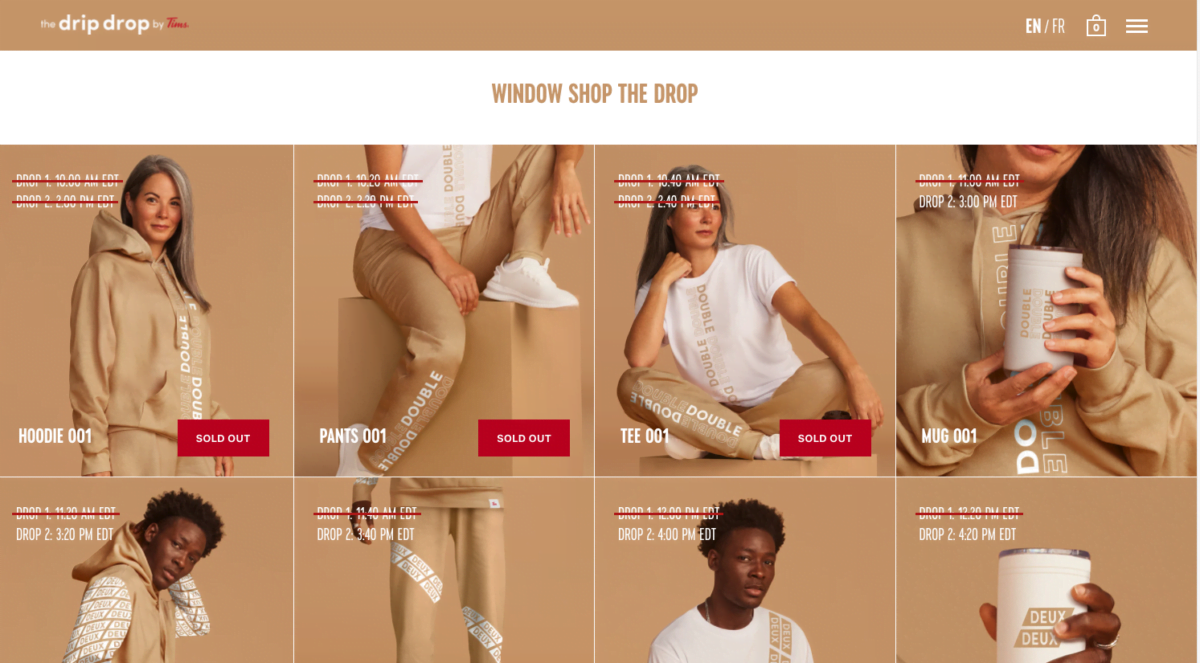
“The pandemic has not only shifted the way consumers shop, but also when they’re shopping. Our Bi-Annual Trend Report found that Afterpay customers are now shopping during pre-work hours rather than later in the day. This is valuable insight for our merchant partners to help them dictate timing for product drops, new content, marketing new lines and more.”

Jane’s Walk Takes Visitors to Queen Street East and West in Toronto

Jane’s Walk Weekend

The Queen Street West BIA and Riverside BIA are promoting “Queen Street Virtual Tours” this weekend. Three tours have been created and will officially launch on May 7th as part of the Jane’s Walk Weekend and the walks will highlight local restaurants, public art, and historical elements of these two popular Toronto neighbourhoods. Jane’s Walk Toronto 2021 takes inspiration from noted urbanist and philanthropist Jane Jacobs. She was “…an urbanist and activist whose writings championed a fresh, community-based approach to city building”.

Tours can be viewed online after and when things are safe (and open), people are encouraged to come to the neighbourhoods to explore. As part of the initiative, there will be a weekly draw valued at $100 with a gift card for a restaurant in each of Queen West and Queen East (Riverside) for the first five weeks on the BIA’s respective Instagram channels:@riverside_bia, @queenstreetwest

You can also learn more about each walk on our respective websites:

More tours are planned to be released in the fall with the potential of hosting in-person tours, dependent on COVID-19 protocols.

Farm Boy Opens at Queen’s Quay Terminal in Toronto

Exterior of the new Farm Boy location in Toronto’s Queen’s Quay Terminal. Photo: Dustin Fuhs

Empire-owned, Ottawa-based grocer Farm Boy opened its 38th store on Thursday at the Queen’s Quay Terminal in downtown Toronto. The 19,317-square-foot store is located on the waterfront and employs 135 people. The store, which was rebranded from Sobeys, serves a large urban population living in nearby apartment buildings.

The store features a wide range of freshly made grab-and-go options as well as fresh seasonal produce and high quality meat options, among other departments. Retail Insider’s Dustin Fuhs noted that the store currently does not have directional arrows or related signage as is seen in some grocery stores during the pandemic.

Fuhs and Maple Leaf Displays Principal, Norman Katz, took photos for this article.

3222 Yonge Street Available for Lease in Toronto

3222 Yonge Street in Toronto is currently available for a variety of retail uses. Located in the centre of the family-friendly, bustling shopping strip in the Yonge and Lawrence neighbourhood, the 3,150-square-foot lower-level retail space is available immediately with a 5-10-year lease agreement. Cushman & Wakefield is listing the space.

The Yonge & Lawrence neighbourhood offers some of the strongest demographics in the city, with a walk score of 92 and a transit score of 82. It is also home to various co-tenancies including, RBC Royal Bank, Shoppers Drug Mart, Scotiabank, Starbucks, TD Canada Trust, and Metro. This opportunity features the ability to lease the lower level either with the ground floor or separately for both retail or office uses.

Click for interactive Google Map of 3222 Yonge Street and the surrounding area.

Some highlights include:

  • Prominent frontage close to the corner
  • In the heart of main Yonge & Lawrence retail strip
  • Good frontage to depth ratio
  • Clean rectangular floor plate
  • Minimal columns and ability for open floor plate
  • Kitchen infrastructure from previous tenant
  • Ability to offer the basement to an incoming retailer or office user

With a population of over 17,000 people — and a daytime population of 9,496 — within a one kilometre radius of this location, the space is being leased at $16.75 per square foot (est. 2020).

For more information contact:

Cameron Stajer, Associate, Urban Retail Services Cushman & Wakefield. Direct:  +1 416 359 2712 Cell: +1 416 454 2727 email: cam.stajer@cushwake.com

London Drugs Continues Support of Local Restaurateurs in Western Canada

London Drugs at St. Albert Centre Mall. Photo: St. Albert Centre Mall

London Drugs has launched the Local Central program to support local retailers in Western Canada by offering shelf space to small businesses impacted by COVID to sell their house-brand, consumer-packaged products in stores.

“The collateral damage to small businesses created by the pandemic has been devastating and, the restaurant industry — particularly those small and locally-owned — have sustained one of the heaviest blows,” explains Clint Mahlman, President and COO of London Drugs. “As a company, we want to offer any support we can to restaurateurs and businesses in our communities right now, and we know our customers do too.”

Since its launch exactly a year ago, the program has supported more than 100 local businesses, helping them earn hundreds of thousands of dollars at a time when they might otherwise have had no revenues due to pandemic-related store closures.

One year after the initial launch, London Drugs is further expanding its support. Any restaurants with specialty items suitable for retail sales – such as sauces, jams, rubs, apparel – are encouraged to submit them for immediate consideration to be stocked and sold on London Drugs shelves.

To submit products for review, restaurant owners can visit the application form online at www.londondrugs.com/local-central-application.

Bed Bath & Beyond Introduces Same-Day Delivery

Bed Bath & Beyond now offering same-day delivery. Photo: Bed Bath & Beyond

Bed Bath & Beyond, together with DoorDash, has announced that same-day delivery services are now available in Canada, making it easier and more convenient to shop online for products from Bed Bath & Beyond and select buybuy BABY locations.

Same-day delivery follows last year’s successful introduction of buy-online-pickup-in-store (BOPIS) and contactless Curbside Pickup services, and will enable customers to shop products online and have them delivered to their doorstep within hours of purchase. Same day delivery across Canada from Bed Bath & Beyond and buybuy BABY will be powered through DoorDash Drive – DoorDash’s white-label fulfillment platform that powers direct delivery for any business.

47 Canadian cities across nine provinces can avail of the same-day delivery service and until May 20th, 2021, it is being introduced at a discounted flat rate of $4.99 for orders over $39 CAD, and $9.99 CAD thereafter.

Customers in eligible postal codes can utilize the service by going to bedbathandbeyond.ca and buybuybaby.ca and selecting the option for same day delivery at checkout. Orders placed by 4 p.m. local time on Monday to Saturday will be delivered the same day, while the ordering deadline for same-day delivery on Sundays will be 3pm.

This announcement is in keeping with the aggressive push toward enhanced omnichannel experiences we’re now seeing across the board — a trend hugely accelerated by the COVID-19 pandemic. Most recently, Altitude Sports announced the introduction of next-day delivery to customers in Western Canada, additionally, Oxford Properties recently implemented same-day delivery options from all of its shopping centres.

Read More News Briefs From Retail Insider:

Crisis Management and its Importance for Retailers in Canada at a Challenging Time

Risk Management Operations

By Josh Cobden

Few people would say that the world has become simpler in recent decades. In fact, there is strong evidence for the increased complexity facing organizations in all sectors, including retail. The past year has been particularly tumultuous, as businesses have grappled with the communications challenges around a global pandemic, rising concerns of racial injustice, growing cyberthreats, and escalating concerns and expectations around environmental sustainability. Each of these issues, and countless more, present risk in different ways.

As these threats have evolved, they have required new approaches and solutions requiring deep expertise in trust and reputation protection. This often starts with understanding the three main categories of risk and how to deal with them.

Risk 1: Issues

The lowest immediate reputational threat is an issue. An issue is a known concern whose risk level can be affected by current events. For example, poor worker conditions concern some people who may choose to boycott products, sign petitions, or take to social media. For others, the joy of inexpensive goods is more important than the plight of those who make them. However, evolving events can ramp up the threat level of an issue. Recently, leading Canadian clothing brands like Roots, Canada Goose, and Aritizia, among others, have faced pressure to sign and verify a specific commitment to not using cotton that is sourced through forced labour in the Xinjiang region of China, raising the stakes and reputational risks of this issue.

Every retailer ought to know what its issues are, and issue management is the practice of knowing which way the wind is blowing for each of them and how to react. This requires an always-on approach to reputation protection which might include social and traditional media monitoring, influence measurement, and opinion polling, among other research approaches. At a certain point, an issue may progress from a communications challenge to a legal challenge or an operations decision. Helping leaders recognize and assess risk is vital to determining if an issue can be de-escalated through communications, or if more is needed.

Risk 2: Emergencies

A second category of reputational threat is the emergency. An emergency is an undesirable but predictable event, even if it is unusual. Some issues accelerate into emergencies, or vice versa. For example, for any major retailer, an obvious and predictable emergency is a data breach that exposes personal information from customers or employees. Retail giant Target’s major data breach in 2013 was a wake-up call for many retailers, yet almost a decade later, retailers still struggle to stay ahead of cyber criminals. Recently, Home Hardware Stores Ltd., with over 1,050 stores, acknowledged it was targeted by the hacker group The Darkside that threatened to release private data if a ransom wasn’t paid. While data breaches are often isolated incidents (an emergency), if they share a common trait (e.g. a vulnerability in a common point-of-sale platform), even after an emergency, a lingering issue could remain.

Every retailer ought to have emergency plans in place around predictable events, even if they are unlikely. These might include scenario planning and simulations that stress test processes and help refine and update them, and media and spokesperson training. This planning should involve key functions within a retailer’s organization that may play a role in an emergency, such as communications, HR, IT, operations, security and legal, among others. A few savvy groups had plans in place if a pandemic were ever to occur. Since COVID-19, we can be sure this topic will now be covered in most risk audits. Still, many organizations are caught flat-footed when emergencies occur.

Risk 3: The Crisis

A third category, the crisis, is an unexpected and unpredictable event that also has potential to damage reputation. For example, last month, Canadian lifestyle clothier lululemon found itself under the microscope when an employee used his personal Instagram account to promote a xenophobic t-shirt design (not a lululemon product). According to news agency, Reuters, in less than a week of the employee’s post, the hashtag “lululemon insults China” was seen over 200 million times on Chinese social media platform Weibo, including calls for a boycott of the brand. A crisis is often fast, intense, and dynamic, and social media platforms have all but eliminated the time an organization once had to ponder a response. Thus, during a crisis, digital monitoring and presence are essential.

Technology’s New Role

Crisis management in the famous Tylenol case, when seven consumers died after consuming capsules that had been laced with cyanide, occurred in the old analogue world. Now, the Internet and social media have accelerated the speed and multiplied the reach. To battle the faster and farther impact of a crisis, human talent must be matched with technological prowess.

Leading crisis communicators use highly advanced social media monitoring processes and tools to track, assess, and forecast velocity and growth of a threat. These techniques harness artificial intelligence and predictive analytics, and can identify what is being said, by whom and how fast the message is travelling. This in turn, informs the response strategy.

Responding requires the ability to engage on whatever communications platform is most efficient in reaching key audiences. If the crisis is unfolding on social media, it is likely best to respond on social media. My colleague Rob Clark, an expert in crisis monitoring, says, “If one thinks of a crisis like a fire, one’s own side of the story can be a stream of water to control or even extinguish the flames. But if your hose can’t reach the fire, it will keep burning and even spread.”

Prepare in Advance

Good preparation involves setting up communications platforms and communications assets that are most likely to reach a retailer’s audiences (including potential critics) and then establishing a voice and following on each. This can’t start from scratch on the day a crisis erupts. Doing the work in advance is like insurance that pays out in all stages of reputation management but can also provide benefits in good times.

Josh Cobden

While the threat of widespread reputational damage has existed since the advent of the printing press, the stakes have skyrocketed. The combination of social media and evolving social expectations have formed an accelerant that can turn a spark into an inferno – unverified, amplified and magnified. Handling evolving threat categories must be done with precision, and that starts with understanding them in the first place.

Josh Cobden is Executive Vice President of Proof Strategies Inc., a leading public relations and communications firm based in Toronto. Josh frequently collaborates with in-house communications teams to manage reputational threats across a wide variety of sectors.

Canadian Retail News From Around The Web For May 6, 2021

Canadian Retail News From Around The Web

Advertisement

Top Stories: National

Advertisement

Central/Eastern Canada News

Western Canada News

Lucky Brand Jeans Re-Enters Canada with Multiple Storefronts in Partnership with Thriftys: Interview

Photo: Lucky Brand

Retailer Lucky Brand continued to re-launch in Canada with the introduction of more physical retail stores and a new online shopping platform.

After exiting Canada a couple of years ago, within the last year the company’s Canadian rights were acquired by Thriftys Family of Brands (Bluenotes, Aéropostale Canada, Lucky Brand Canada).

The online presence of Lucky Brand in Canada follows the recent re-opening of 10 retail locations in shopping centres such as Metropolis at Metrotown, Vaughan Mills, and Square One.

Two new stores will also be opening over the next month at Polo Park in Winnipeg and CF Shops at Don Mills in Toronto. The partnership with Thriftys Family of Brands also means a selection of Lucky Brand merchandise will be carried in select Bluenotes and Thriftys by Bluenotes stores this fall.

Photo: Lucky Brand

“This new partnership is a perfect fit for our customers as our Jeans are the heart of both the Bluenotes and Lucky Brand product offering. This collaboration has been in the works for some time now and thanks to the hard work of everyone on the Lucky Brand team, it’s exciting timing to be able to reveal this in time for the summer season,” said Michael Roden, CEO of Thriftys Family of Brands, in a statement.

Sean Goodall, Director of Marketing and Brand, said the company is very excited about bringing Lucky Brand back to the Canadian market.

“Lucky Brand is truly I think one of those iconic North American brands. They were founded in Los Angeles. Very focused on denim. And they have a really deep-rooted history in music which is fantastic as well and you’ll see that through a lot of the graphic T’s that we’re re-introducing to the market,” said Goodall.

Sean Goodall

“The brand itself really is about laid back lives and vintage-inspired looks but with great quality. That’s what we’re really excited to bring back to the market. High quality jeans, high quality product that the Canadian consumer is really going to love and has loved. It’s also one of those brands where we have a dedicated consumer base. Every year they shop their Lucky Brand jeans and that’s kind of their stake hold in their wardrobe each year.

“So we’re really excited to be able to offer them the product again and also re-introduce a new and kind of re-invigorated and inspired collection as we re-launch.”

Goodall said the company has no firm numbers regarding Canadian expansion of future store locations. Brokerage Oberfeld Snowcap represents Lucky Brand in Canada under the direction of Andrew Laudenbach.

“As we see how the market reacts, we’ll certainly look to expand. We’re really excited by the brand. It fits perfectly within the Thriftys Family of Brands which is all about denim. So I think wherever we can expand we will as long as the consumer sentiment is there for it,” said Goodall.

“Also in the fall we do have plans within our Bluenotes and Thriftys by Bluenotes locations to include some of the new product within there as well, offering a bit of a shop-in-store model where it makes sense.

“We’re really excited to bring the brand back. We’re going to do some great stuff with it and we have a lot of exclusive Canadian looks as well, obviously inspired by the American brand itself, that will be exclusive to Canada that will also join the assortment we have in stores. It’s going to be a really exciting time over the next year.”

Goodall said the retailer also has a Pride line of clothing which includes everything from denim jackets to shorts to jeans to graphic tees.

The online platform can be found at www.LuckyBrand.ca and to celebrate the company’s re-launch the entire site will be 40 percent off (limited time only). Online shopping has launched with a wide assortment of the brand’s iconic graphic tees, ranging from pop culture favourites to band tees that celebrate the brand’s heritage in music.

“There is a reason Canada is known for the Canadian Tuxedo, we love jeans! With a 79-year legacy in denim, it is only fitting that Lucky Brand, one of North America’s most respected denim retailers joins the Thriftys Family of Brands in Canada. With a rich history in pop culture and an even stronger reputation in quality, we look forward to reminding Canadians why there is nothing like a new pair of Lucky Brand jeans. Our current campaign, ‘Denim for Days’, further reinforces this message,” said Goodall.

The Thriftys Family of Brands was founded in 1941 as Thriftys (at the corner of Queen & Church St in Toronto). The company today has more than 125 stores across the country.

Experts Chime in on the Success of Gap-Owned Athleta’s Entry Into Canada Where lululemon Dominates

Rendering of Athleta store. Rendering: Gap Inc.

The jury is out on how successful Gap-owned Athleta, an athletic brand for women, will be as it enters the Canadian market and competes against long-standing retail giant lululemon for market share in this retail category.

Recently, Gap announced it will enter Canada later this year with Athleta, marking the performance lifestyle brand’s first company-owned expansion outside the United States. Athleta plans to launch e-commerce late this summer followed by opening retail stores at Yorkdale Shopping Centre in Toronto and Park Royal Shopping Centre in West Vancouver in the fall of 2021.

The brand plans to open between 20 and 30 stores a year, adding to its existing profitable fleet of over 200 stores across the United States. In 2020, Athleta surpassed $1 billion in net sales and had 16 percent annual sales growth.

Bruce Winder

“I think Athleta has a limited chance of success in Canada. Although they are smart enough to start small with e-commerce and only two stores, they face stiff competition,” said Bruce Winder, author of RETAIL Before, During & After COVID-19 and President of Bruce Winder Retail.

“I do like their cause positioning as this has become a table stake for many categories including apparel — but it may lack the differentiating effect they are looking for. Obviously, the athleisure category has been strong during the pandemic as more people work from home and this trend will probably carry over to some degree through 2022 and 2023 when white collar workers split time between the office and home.

“Will they be the next lululemon? No, I don’t think so. lululemon has such a strong brand and has enjoyed numerous first mover advantages in Canada and globally. How will Athleta really differentiate themselves? I feel like there are many similar brands out there — albeit not with the backing of a large company like Gap. There could be room for another brand in the premium segment, but they may be relegated to niche status.”

Winder said Amazon and other discounters are tough to compete against in the value segment of the market with their low price points, wide assortment, and convenience.

Exterior of Athleta store in Somerset Collection in Troy, Michigan. Photo: Somerset Collection

“A final consideration involves the Gap. If Gap can survive then Athleta may survive in Canada but if Gap falls on hard times Athleta could be sold off or closed down in Canada,” he said.

Mary Beth Laughton

Mary Beth Laughton, President and CEO, Athleta, said in a news release that international expansion is a key component of the retailer’s growth strategy to reach $2 billion in net sales by 2023.

“As a purpose-driven brand, we are excited to expand our community of empowered and confident women and girls to Canada and bring them a differentiated and inclusive offering in the performance lifestyle category,” she said.

Christine Cowan, a retail expert based in Portland, Oregon, who has worked with global brands such as Nike and Adidas, said the Athleta brand could find success in Canada because it also reaches out to perhaps a different customer than lululemon. And while the two brands are playing in a similar field, that could definitely be the way the new player makes some inroads on the veteran retailer’s home turf.

Cowan, who runs a consultancy called Innovate Strategies, said the Athleta brand has done very well in the United States.

“They have sort of found a success model where they’ve had the Gap, they’ve had Old Navy, and Banana Republic, and I feel like Athleta and Old Navy have sort of risen to the top and Banana and Gap have fallen off. And I think the reason Athleta has been successful at least in the U.S., is yes, they have a bit of a lululemon model, but I think they have gone a little broader base. They’re broader base in terms of swim. They’re broader in that they do this trekkie outdoor product and then they do some office wear type stuff. It’s more fringe on the office side,” she said.

“I think they’ve positioned themselves as a bit more broader based. Lulu obviously has got the mainstay in Canada and I would say lulu’s quality is a little bit more superior to the Athleta brand. I’ve got a number of their products and while they’re good quality, they’re not as high a quality as lulu. Their pricing structure is a little lower than lulu in some areas. From a pricing perspective, consumers will appreciate that.

“The other thing that differentiates them is that lulu’s got their community and they’re really entrenched in their sort of yoga mentality. I think Athleta tries to have a community and they position themselves like that but I don’t feel like they’ve done a deep dive like lulu has done. The one thing I also think is interesting about Athleta versus lulu is I think Athleta has really embraced the diversity piece in terms of sizing. They go up to like a triple XL. I think lulu is trying to get more body inclusive but I really feel Athleta has.”

Cowan made her mark at Nike Canada, opening the first Nike banded store. She then moved on to lead several global categories at the Nike HQ in Portland. She said Athleta has many girls’ products where in the past this area hasn’t been successful for lululemon.

Athleta is a certified B Corp. Over 70 percent of Athleta product is made from sustainable materials.

“The other new thing they’ve got is they’re doing a sleep line. With Athleta, they’ve got their base through Gap and Banana already so to come into the market they’ve got their structure in place, they don’t have to worry about that, and they have a bit of a consumer understanding from that point,” added Cowan.

“I do think they have similarities in their demographic (to lululemon) but then I think Athleta’s demographic is just a little more differentiated than lulu. It’s a little more broad based. They’re trying to appeal to the masses. The consumer you see going in there is not necessarily the same consumer I don’t think you’ll see at lulu.

“And the other thing they do a lot of is they put a lot of product on sale. They’ve got a huge section in their stores of sale items and product. Lulu just has a little section of it. But they’re driving consumers in with a lot of their sale price products as well.”

Cowan said the women’s activewear sector of retail has received a lot of attention recently with leggings and yoga wear becoming a popular clothing of choice for people.

“This market is here to stay. Athleta wants to grow the business and Canada’s a great opportunity to test the waters internationally for them. While it’s got similarities, obviously the Canadian market is a little different but I think as they look to expand beyond the U.S. Canada is a great litmus test for them,” she said. “The Canadian lifestyle is very active. People are out doing things. They’re willing to pay for a quality piece that’s going to survive for a long time. That type of product has the ability to be worn for multiple situations.”

MEC Looks to Future Growth Following Insolvency: Interview with CEO Eric Claus

Exterior of Vancouver’s new MEC flagship store. Photo: MEC

There is a short list of retailers in Canada that hold a special sort of place in the hearts and consciousness of consumers across the country. It’s not a list that’s been physically recorded, yet it’s one that is understood by most. It’s comprised of companies and organizations that have made significant contributions to their communities, supported the needs and lifestyles of their patrons and woven themselves, in one way or another, into the overall fabric of Canadian society. It’s a list that denotes an iconic status as leaders of the industry in the country, and of brands that reflect the values and beliefs of its citizens. Among this list, surely, is Vancouver-based MEC. And, to help celebrate an incredible 50 years of operation, the leading Canadian outdoor retailer is doubling down, refocussing on its commitment toward creating positive social and environmental impact and to continue leading into another half-century of business.

Eric Claus

“The brand has always meant so much to Canadians,” says Eric Claus, CEO and Chairman of MEC. “It’s experienced such a beautiful trajectory of growth throughout its history with respect to the value and trust that it’s engendered in people across the country. To many, MEC is more than a business. It means something more to Canadians, reflecting and representing the needs and desires of the outdoor community. Today, we feel really lucky to be the stewards of this incredible brand and to build on the legacy of the first 50 years. We have a lot of exciting plans to take MEC to the next level and to continue enhancing the experience and rewards that we offer customers.”

The MEC Philosophy

Though plans for the future may be exciting, Claus reflects on the year 2020 as a very difficult one for the brand, referring to it as “the most challenging in the company’s history”. He says that financial problems which were compounded by impacts of the COVID-19 global pandemic were too much to withstand, problems that culminated in the co-operative with an estimated 5 million members becoming a privately-owned company via its sale to Los Angeles-based investment group Kingswood Capital Management in October of last year. Claus, a former grocery executive, was appointed to his current position in the same month, representing one of the first orders of business of the company’s new owners. He says that, although the ownership structure of the company has changed, the philosophy by which the company operates has not.

“The ethos of the company and the way we conduct ourselves as a brand remains the same,” he asserts. “We’re committed to continuing the legacy that MEC has built through the years, giving back to the community and supporting and highlighting the benefits of the outdoors. We’re pleased to be able to do that, solidifying the foundations of the brand further and our dedication to everything we believe in.”

Significant Community Support

To that end, the outdoor retailer recently announced the development of its Outdoor Impact program through which, during the course of the next year, MEC will donate $1 million to benefit and support non-profit organizations across the country that are responsible for critical work in the outdoors. Partnering with national organizations, which include Avalanche Canada, Spirit North, Parks Canada, Association of Canadian Mountain Guides, Park Bus, Alpine Club of Canada, Canadian Parks and Wilderness Society, Protect Our Winters, Leave No Trace Canada, The Royal Canadian Geographical Society and Take Me Outside, the company will provide funding and gear to help build capacity in areas that support shared priorities. 

“This type of community support is not something new to MEC,” Claus says proudly. “We’ve now invested more than $45 million into non-profit organizations that share the same vision as us and passion to support outdoor recreation and conservation. The brand has always backed these kind of community initiatives. And, through our Outdoor Impact program, we’ve also made sure to partner with organizations that prioritize diversity, equity, inclusion, responsible outdoor recreation and accessible skill building. These are things that are really important to the brand and very much a part of who we are.”

MEC store on Toronto’s Queen Street. Photo: MEC

Sustainably-Focused

In addition, as one of the industry’s leaders in sustainability, the company will also be concerting efforts to support the advancement of its goals and commitments toward improving its social and environmental impact. As such, MEC has dedicated to producing 30 percent of its clothing in a Fair-Trade Certified factory by 2023, and 50 percent by 2025; ensuring that 50 percent of the polyester in MEC Label products is made from recycled content by 2023, and 100 percent by 2030; and by partnering with producers that abide by ethical employment standards and responsible practices with respect to the end-of-life of their products. They are lofty goals set by the company. But, as Claus points out, it’s all about continuing to do the right thing.

“This is another area in which MEC has always been known for,” he says. “We’ve set some really aggressive sustainability goals which requires us to work really hard with our supplier-base and push the limits in order to ensure that our product is ethically-sourced. We’ve agreed as the leadership team at MEC that responsible and sustainable practices will continue to be a cornerstone of the brand and one of the critical components of our business that will continue to drive us forward. It’s about doing what’s right for our customers, the planet and the people who help produce our products.”

People Power

It’s an approach that the company has never strayed from in its previous 50 years. And through intensified goals and targets, it’s already setting the tone for the future of MEC. Much of the direction and execution of these ambitions through the years have been supported not only by the foundations that the company was built on, but by the people that it has employed. And, according to Claus, it’s another aspect of the outdoor retailer that has never changed. In fact, he credits the strong relationship between the brand and the employees it attracts as the most important contributor toward ensuring MEC’s continued success during challenging circumstances.

“The team of people at MEC are absolutely amazing and have really shown their qualities over the course of the past 14 months or so to help the company get through a very difficult time,” he says. “They’ve been instrumental in making sure that our valued MEC customers receive safe and efficient service throughout the COVID period. As a result of these unique circumstances, many of those working in the stores have been dealing with a great deal of stress. And, as a business, we’re very cognizant of that and are supporting those frontline workers in whatever ways we can to ensure their physical and mental health. They’ve been incredible though in supporting shifts that we’ve needed to make as a result of store closures. We’ve taken almost the entirety of our online business in the east of the country and are shipping from stores, temporarily leveraging them as mini fulfillment centres. The level of commitment and dedication from everyone involved has been tremendous and critical in allowing us to make these necessary shifts.”

Increased Outdoor Activity

Claus’ praise of the MEC team seems endless, emphasizing the importance of their response to the current situation. And, in conjunction, he’s also recognized a similar response from the Canadian consumer who, according to recent studies, is showing an increased interest in self-care practices and habits as well as outdoor activities. In fact, MEC is already experiencing record increases in camping and hiking sales for spring 2021. And, according to the company’s CEO, it’s helped affirm yet again the values and qualities that define the brand and the direction of its focus going forward with respect to the product it carries.

“There has been a massive shift in the categories that are selling during the pandemic,” he says. “Anything that is directly related to an outdoor activity like cycling, camping, and climbing is doing very well. People have decided to get outdoors over the course of the past year, to take advantage of the time they have to improve themselves. The increase in these categories has been incredible and have actually helped direct us and refocus on tailoring our assortment around the products and gear that have made MEC what it is today and providing our customers with the most relevant items possible. And, going forward, we’re going to continue to put a lot of emphasis on the MEC label to improve the fit of the garments and to strike the right balance between the functional, technical and stylistic aspects of the pieces.”

New Member Benefits Program

As part of the recent increase in outdoor activities undertaken by Canadians across the country, Claus says that the company has been very fortunate in helping to introduce many first-time MEC customers to their offering and the value of outdoor recreation. It’s allowed the company to continue extending its reach to and broaden its awareness among a whole new set of customers. And, to reward its growing base of customers further, the company recently introduced its new no-fee MEC Membership. Developed to provide more meaningful benefits, the program offers MEC members online expert appointments, exclusive bike and ski service promotions, access to outdoor skill building workshops and seasonal events, exclusive offers and promotions on new product, as well as a 30-day price match guarantee. They are, indeed, attractive benefits. However, Claus, who has been a MEC member himself since 1984, believes that the true value of shopping and engaging with MEC remains its commitment toward best-in-class customer service.

“I’ve always known that when I visit a MEC location that I’m going to receive the best advice from experts who actually know what they’re talking about,” he says proudly. “This continues to be a massive focus for us, to maintain that consistently high level of customer service and to continue to be the leader in outdoor gear and advice. The combination of the exceptional experience that we provide for customers and our new member benefits is really helping to position us well as we continue to build out our programs and services further.”

Opportunities for Further Growth

Beyond the moves that the company has made to strengthen its proposition to customers, its also downsized its head office and retail footprint and introduced a new hybrid work-from-home structure for office employees in efforts to streamline the operation and reduce overhead costs. Claus is confident that all of these tweaks to the business, while adhering to the aspects of the brand that have made MEC what it is today, have positioned the company well to not only deal with current challenges in a COVID-ravaged society, but to grow exponentially post-pandemic as well.

“We’re working diligently to continuously increase our brand relevance and to reconnect to our roots as the leader at the forefront of the outdoors in Canada and the place people go for the best product and advice. We’re also looking at certain markets where we can potentially include additional store locations in order to reach even more prospective MEC customers. There are still opportunities for the brand to improve and grow on its achievements to date. It’s a really exciting time to be involved at MEC and to have the opportunity to be a part of the continued success and evolution of this iconic Canadian brand.”

Canadian Consumers Lose Trust in Big-Brand Retailers During Pandemic: Study

Exterior of Amazon warehouse. Photo: Amazon

There has been a dramatic shift in consumer loyalty and purchase considerations in the latest 2021 Gustavson Brand Trust Index (GBTI) following a “tumultuous” year with the on-going COVID-19 pandemic.

The Index found that previously trusted brands such as Amazon, Whole Foods, Air Canada, and Tesla Inc. dropped in the rankings as consumers felt that the companies’ values no longer aligned with their own.

Saul Klein

Saul Klein, dean of the Gustavson School of Business at the University of Victoria, said more than ever CEOs are being viewed as societal leaders entrusted to take a stand on social issues from climate change to addressing racial injustice.

“As the world climbs out of the pandemic, brand awareness is no longer the currency of business — consumer trust is the priority. There is a need for companies to rethink how they are driving positive societal change,” he said.

“Amazon may be past its peak in terms of brand trust. While more Canadians have used Amazon services than ever before, concerns about the company’s broader impact have resulted in Amazon dropping sharply in this year’s study. Whole Foods had always prided itself on its employee culture, but the company’s brand trust and advocacy scores plummeted in 2021, and employee relations may have played a part in that.”

This is the seventh year of the Index.

According to the study, Amazon lost 17 points in overall brand trust in 2020. The report attributed this sharp decrease in its brand trust score to the numerous controversies Amazon had faced, including accusations of monopolistic behaviour and allegations of poor employee treatment/working conditions, which culminated in employee rallies and concerns over privacy.

The 10 Most Trusted Brands in the study were:

  1. Canadian Automobile Association
  2. Dyson
  3. Lego
  4. Interac
  5. President’s Choice
  6. Costco Wholesale
  7. Home Hardware
  8. Mountain Equipment Company
  9. Quaker Oats
  10. Lactalis Canada
  11. Canadian Tire
  12. Chapters/Indigo

“This year it’s all about how brands behave responsibly during the pandemic. We’ve been looking at the three dimensions of how consumers look at brands. Ability, which is a product functionally-based dimension. Affinity, which is really relationship and service-based. And thirdly is the value-based, authenticity dimension, and it’s this one that we’re seeing start to take strong shape this year — more strongly connected with overall brand trust, it’s a stronger indicator of part of the word-of-mouth sentiment than it has in the past,” explained Klein.

“The brands who have responded in ways that were perceived by consumers to be acting in the best interests of society have enjoyed increased levels of trust, while brands that were seen as acting more in their own self interest, and trying to protect themselves during the pandemic, saw a fall.

Exterior of Dyson Store. Photo: Dyson

“And it’s not necessarily correlating with usage. To me one of the most interesting findings this year was around Amazon and we have seen trust in Amazon dropping before the pandemic but during the pandemic it continued to drop quite sharply even though people were using Amazon more and more. The key weakness in Amazon that we saw coming out was on that authenticity, value-base dimension where consumers just don’t trust Amazon to be acting in the broader societal interest.”

Klein said trust in key institutions, in society, and in business, has been eroding over the past few years.

“I think our societies have become much more polarized. There’s much more concern about truth and who you believe, what you believe, and in some cases, certainly spilling over from the United States, a very deliberate undermining of truth and that certainly erodes trust,” he said.

“But overall trust in brands has actually been pretty constant. At the brand level it’s a little bit different because consumers are really basing the trust more on their experience and what they’re seeing about a particular brand rather than the social media context.”

Lego at CF Richmond Centre.
Lego at CF Richmond Centre. Photo: Geetanjali Sharma

Other key findings from this year’s Index include:

  • Younger consumers are less trusting than older consumers. The GBTI study found that millennials are less trusting compared to older generations. This appears to be due to the younger generation’s inclination to assign their loyalties to proactive organizations who they perceive to be helping solve long-standing societal issues and contributing to making the world a better place;
  • Trust in media is at an all-time low. In the Spring of 2020, the media category saw a spike in trust as people tuned in at the beginning of the pandemic. Since then, the trust bubble has burst, with all traditional and new media brands (except for Maclean’s Magazine) giving up most (if not all) of the gains they saw early on. Social media brands such as Facebook remained among the least trusted in the Index;
  • Trust in Canadian telecom companies is on the rise, but it is still the second least trusted category. Past year-on-year results had telecom companies showing signs of trouble, with nearly all of the companies seeing a decline in their brand trust scores. Three of the big four telecom companies, however, saw significant improvement after COVID-19 struck as they provided critical infrastructure for both work and social interaction.

The report highlighted four brands to watch in 2021:

  • Amazon’s trust scores plummeted last year. Will Amazon continue to fall out of favour with Canadians in 2021?
  • After coming under fire for hiring influencers to promote travelling, will Air Canada see brand trust fall?
  • In the first four months of 2020, Google saw a 14-point jump in its brand trust score. Will Google sustain its recovery in 2021?
  • How will the sale of MEC to a U.S.- based private investment firm affect consumers’ trust?