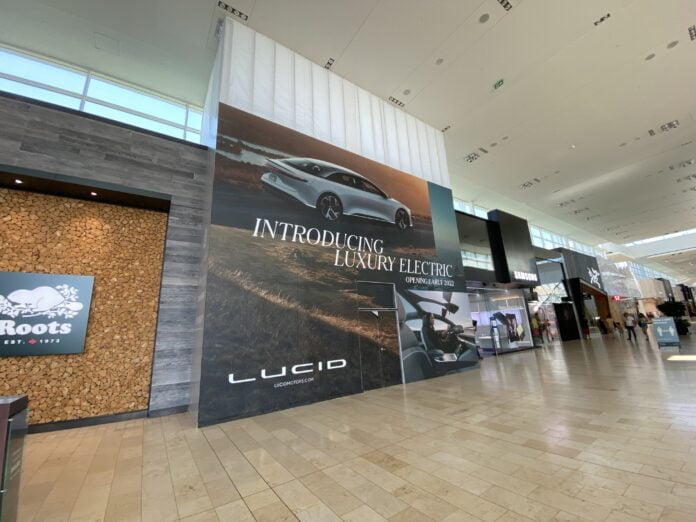
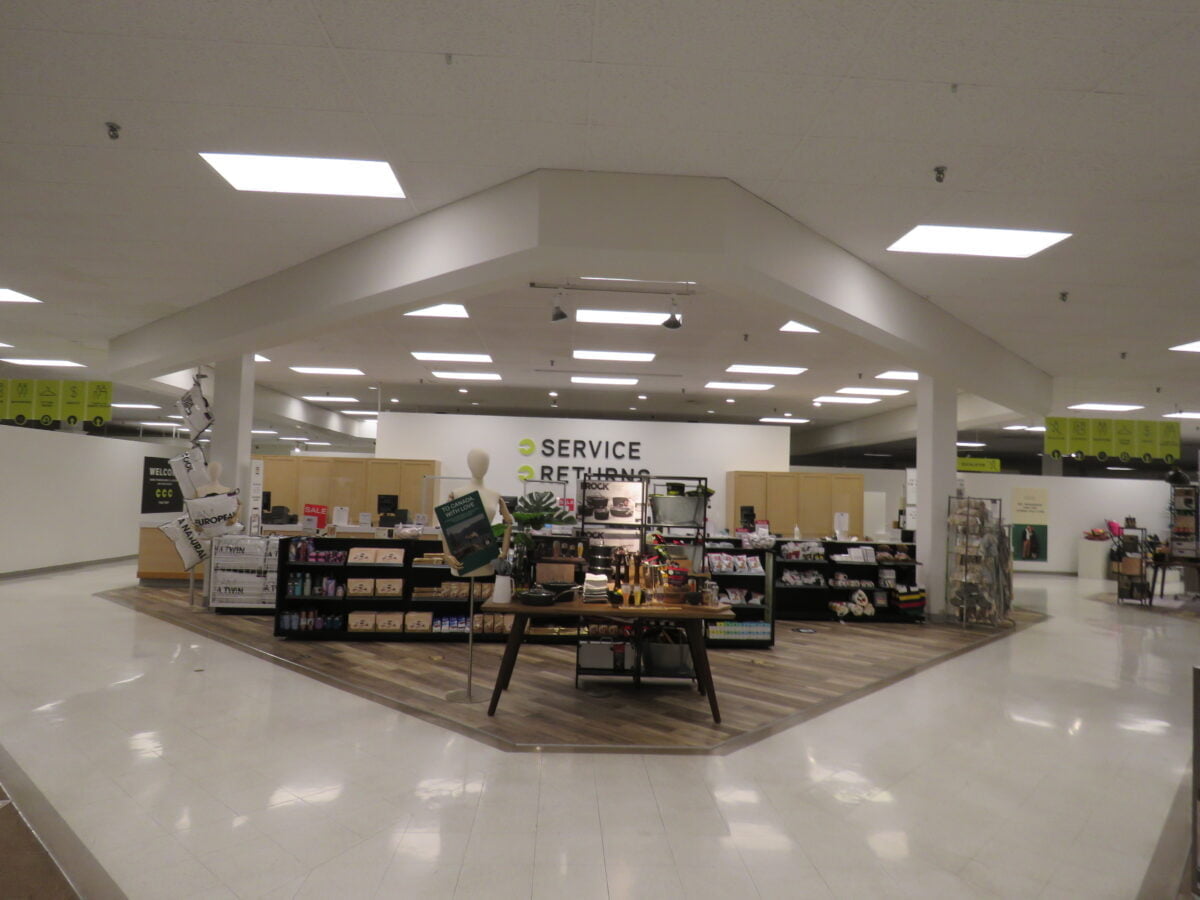
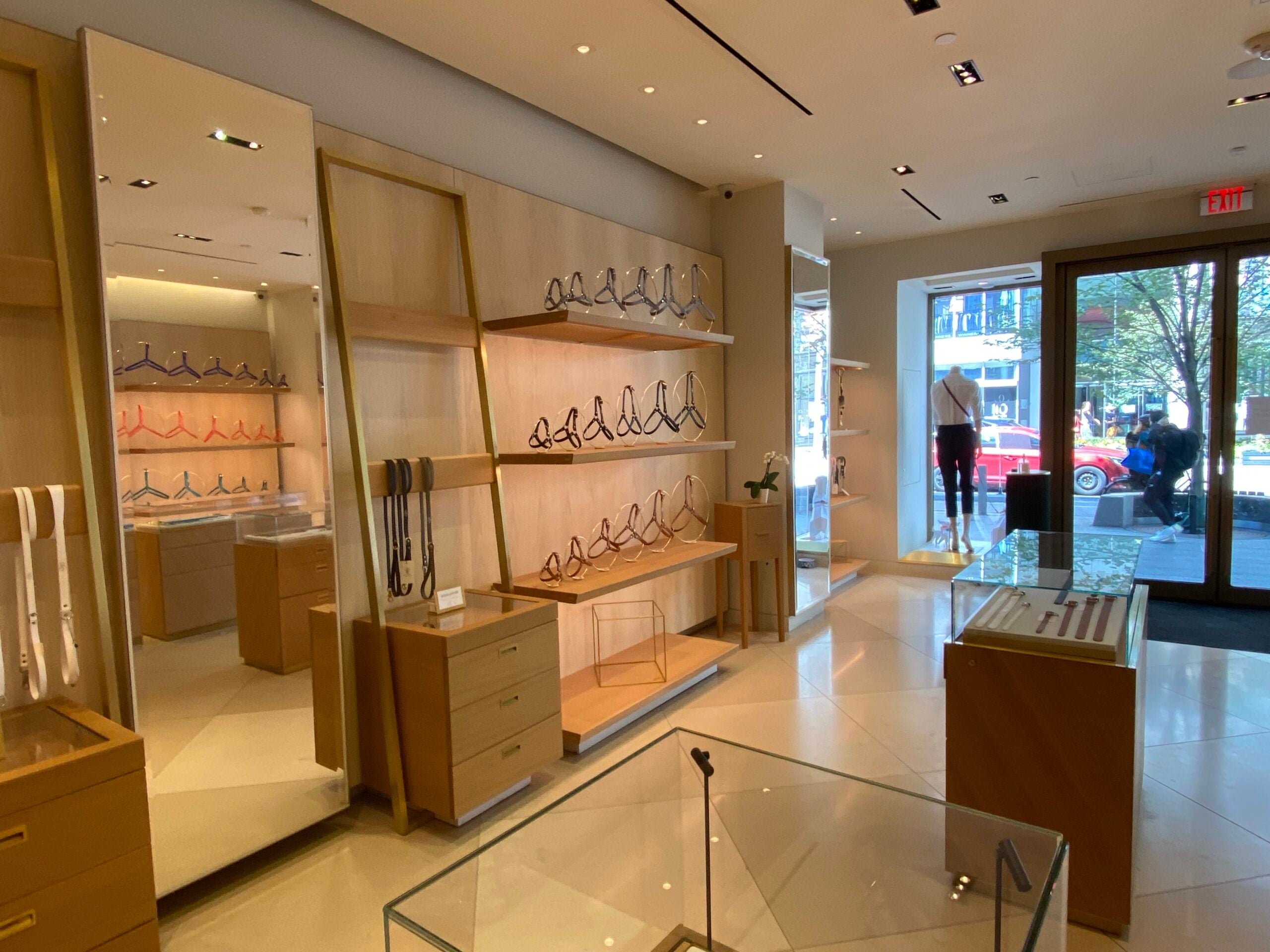
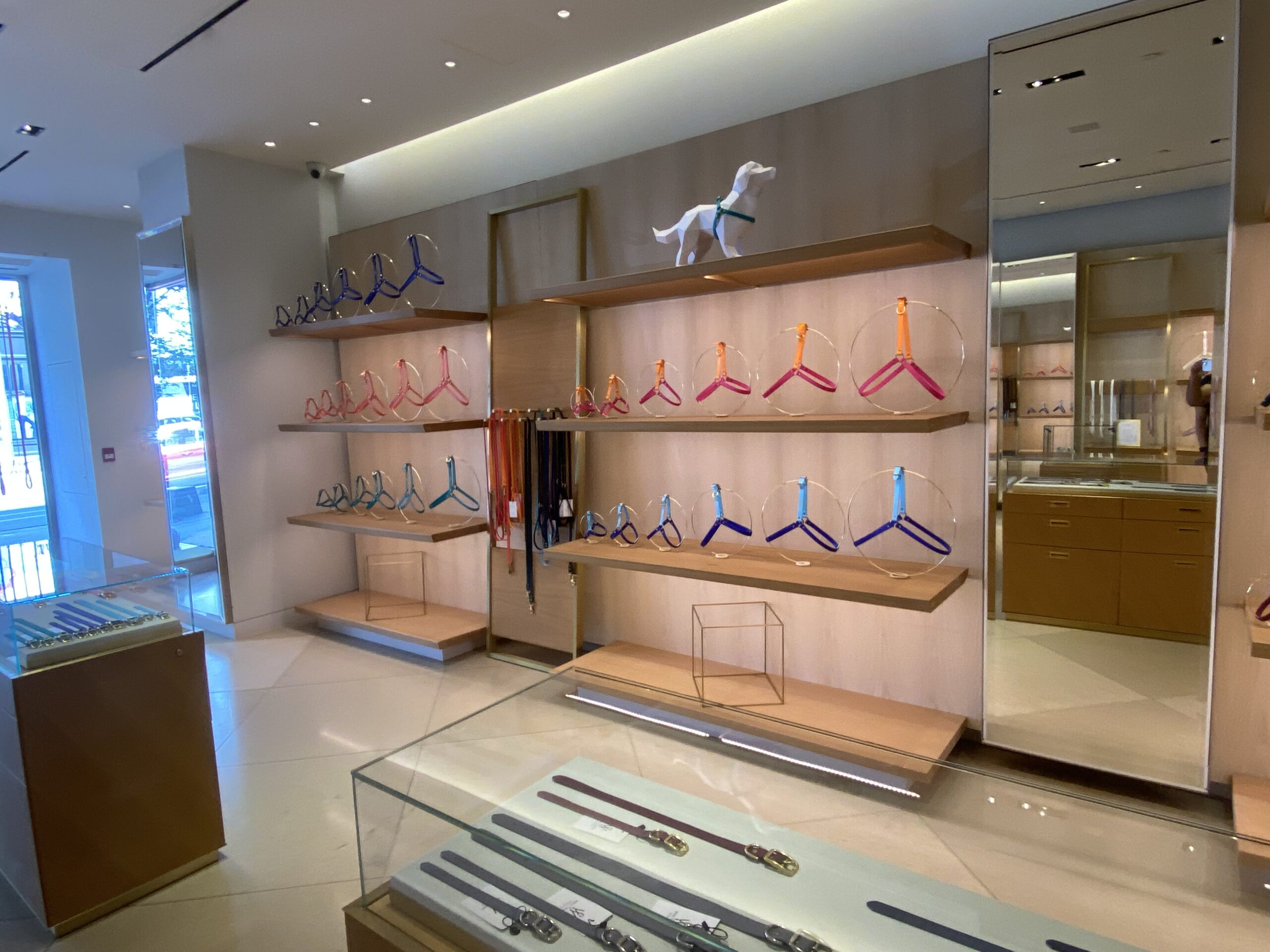
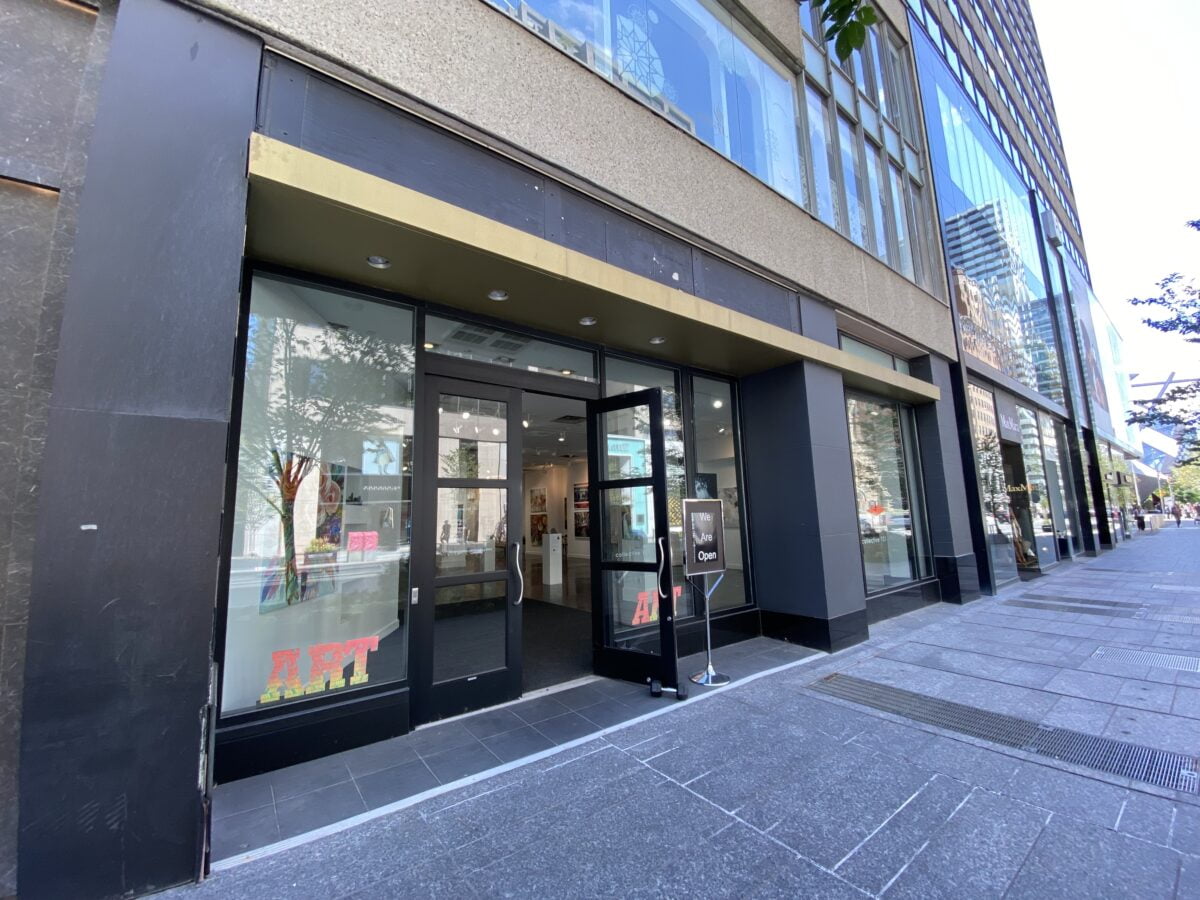
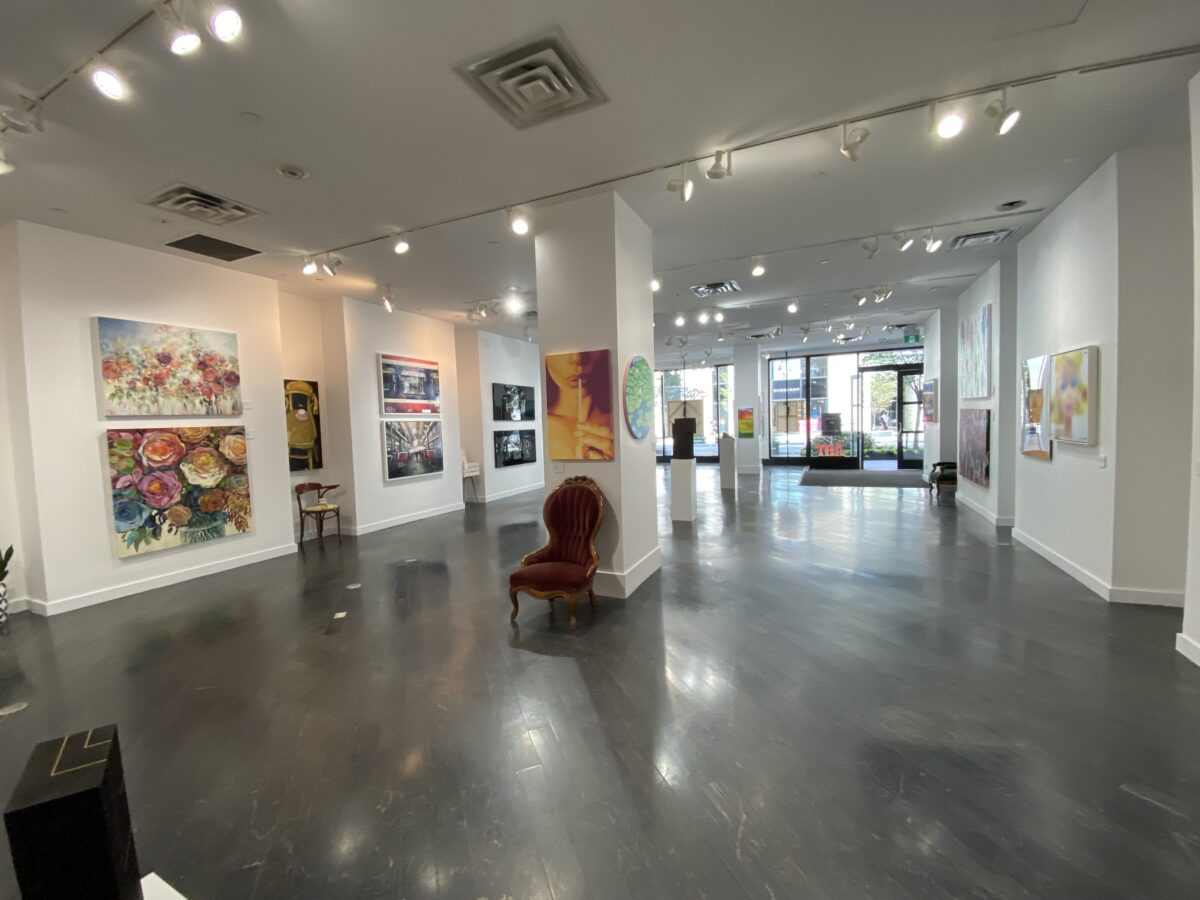
The Yorkdale Lucid Motors showroom will span about 2,850 square feet in the former Hunter space in the 2016 expansion wing of Yorkdale. Nearby tenants include Roots, Samsung, Canada Goose and a Starbucks which is located across the way.
Lucid Motors is a new luxury electric vehicle company based in Newark California. The design of the Lucid Air, the company’s first vehicle, is said to have been influenced by the state of California. The interior of the Lucid Air including its colours, materials and finishes, is said to be inspired by the diversity of landscapes and geography of the state creating a “post luxury” aesthetic, according to the company.
The Yorkdale Lucid showroom will offer visitors the opportunity to see the new Lucid Air in person, including its technology, exterior finishes and interior materials. Because Lucid showrooms often only have one vehicle on display, a virtual reality experience will be offered where visitors can see different models, colours and interiors. Visitors will be able to put two cars side-by-side to compare different colour and trim options, for example. Technology from online gaming will be used as part of the virtual reality experience which will boast high-quality graphics.
Competitor Tesla currently operates a showroom at Yorkdale which before the pandemic was said to have seen sales exceeding $70 million annually. Tesla has said that it’s looking to shut its inline mall stores to replace them with standalone locations. A Nissan showroom is also currently located across from Tesla at Yorkdale in a space most recently occupied by Microsoft. Over the past five years, automobile brands have been expanding into enclosed shopping centres to get closer to consumers and judging by Tesla’s sales at Yorkdale, the strategy may be a good one.
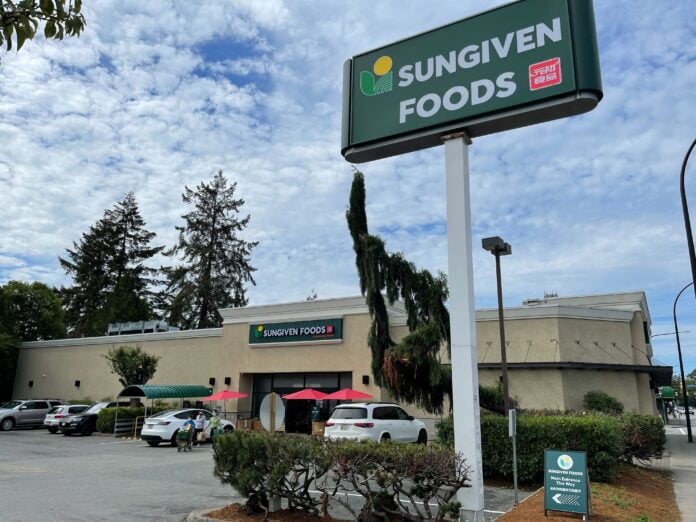
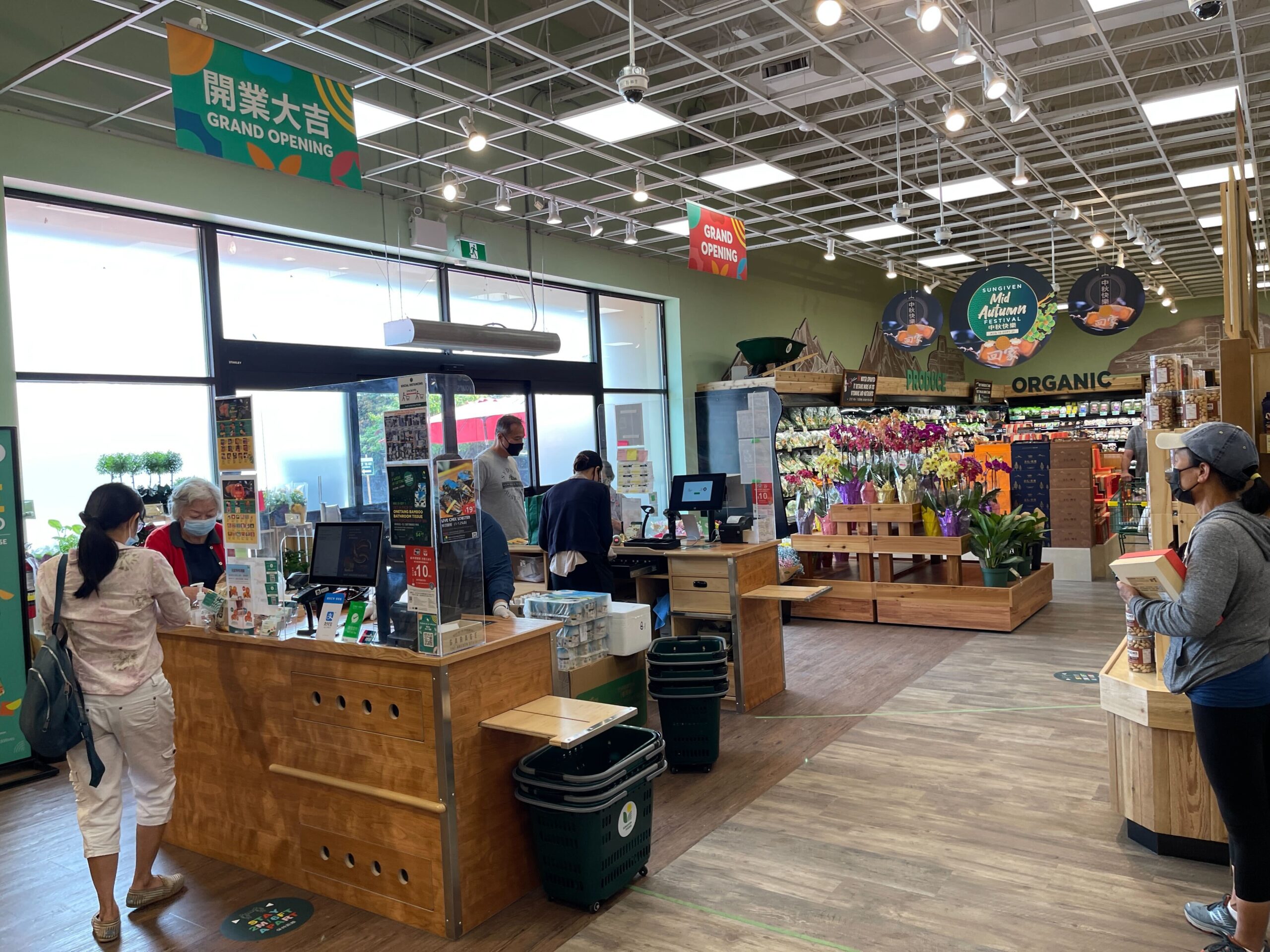
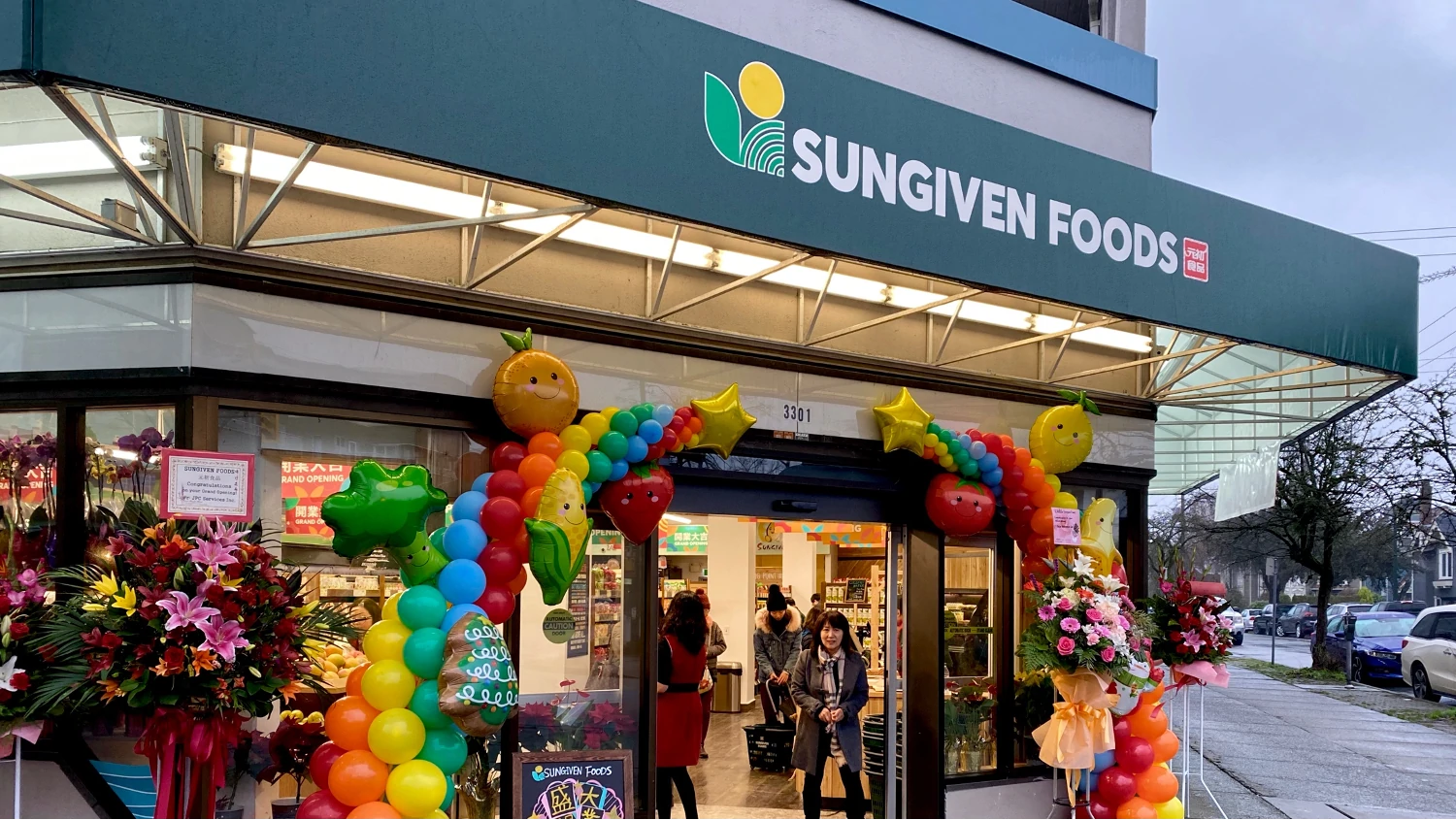
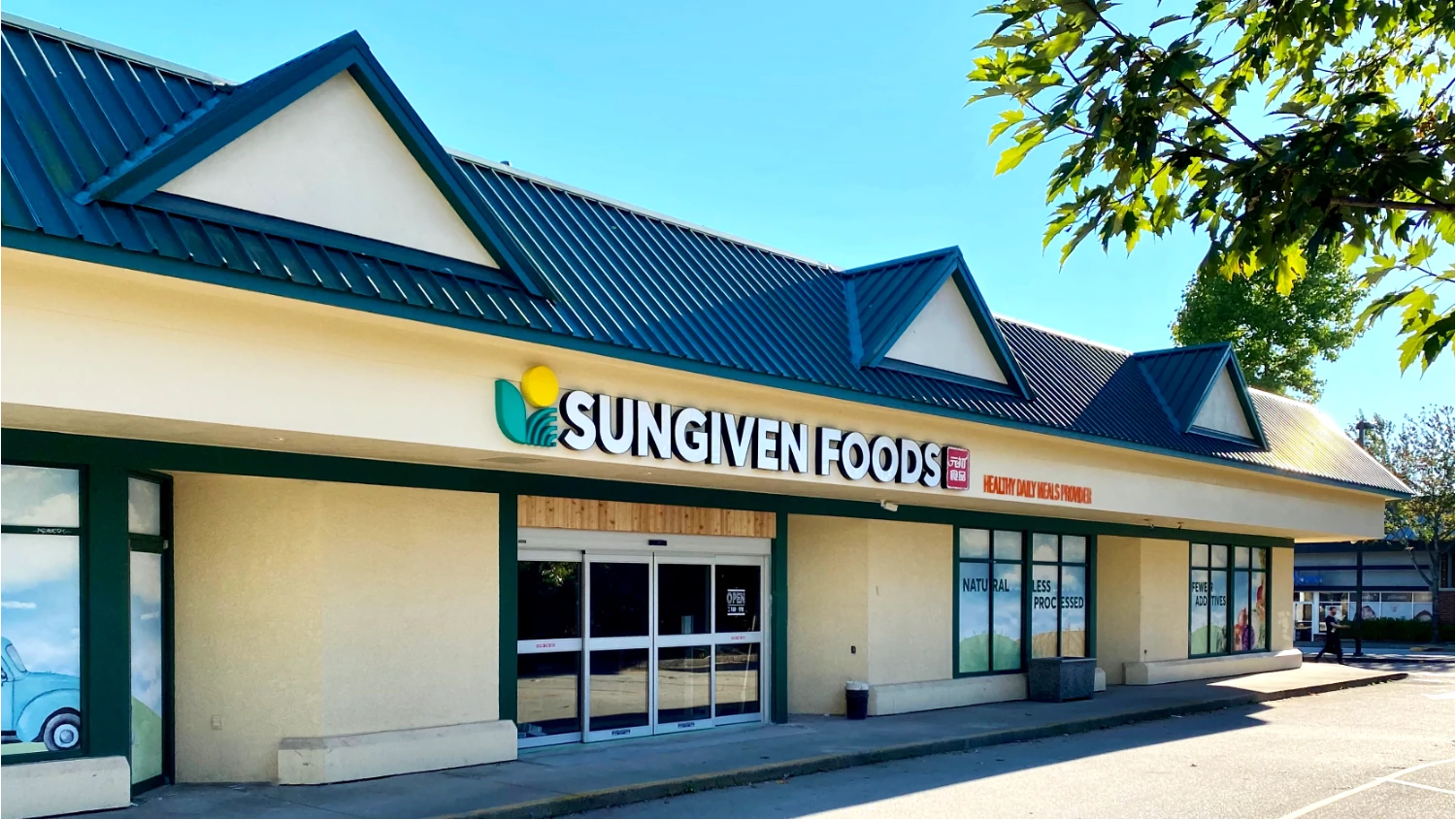
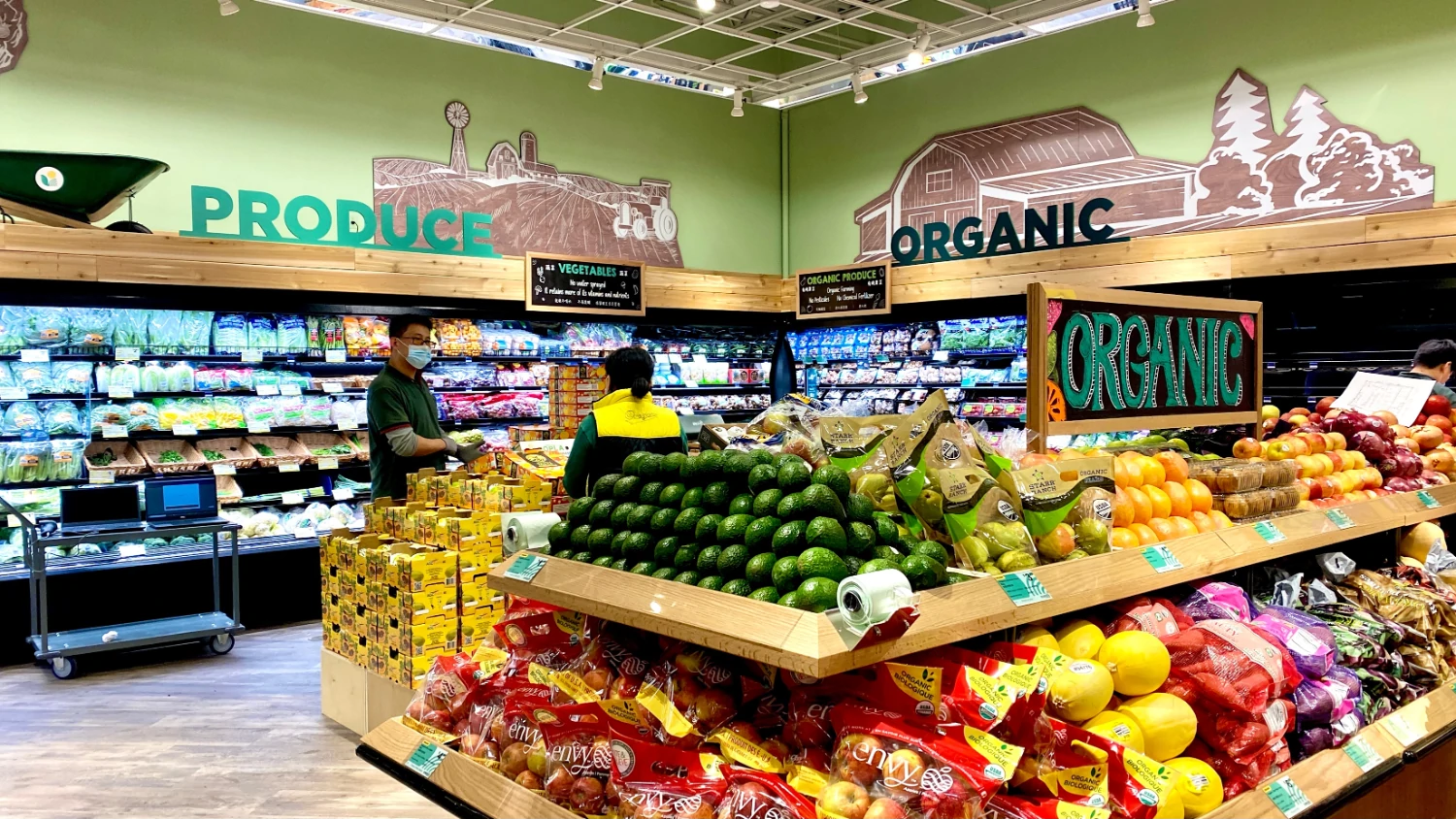
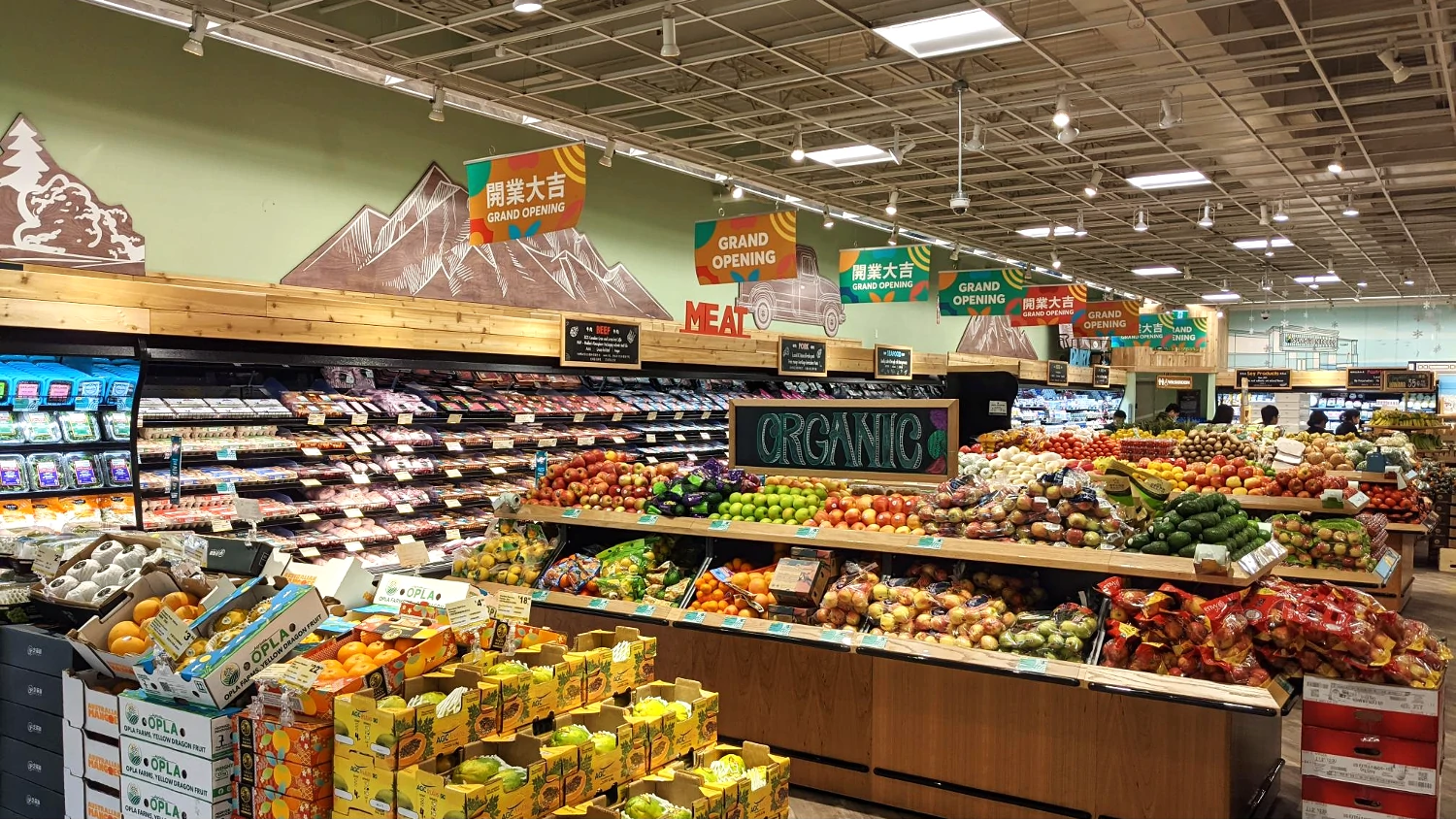
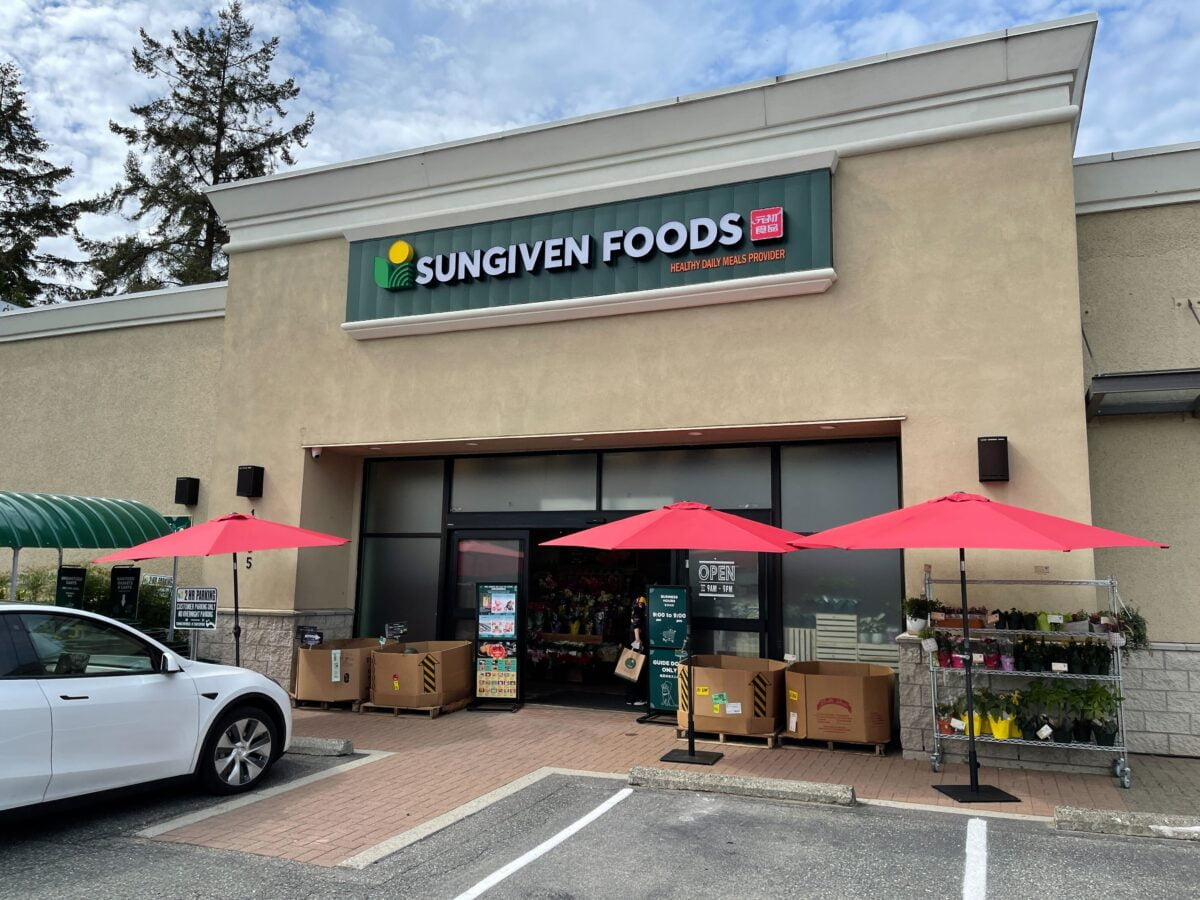
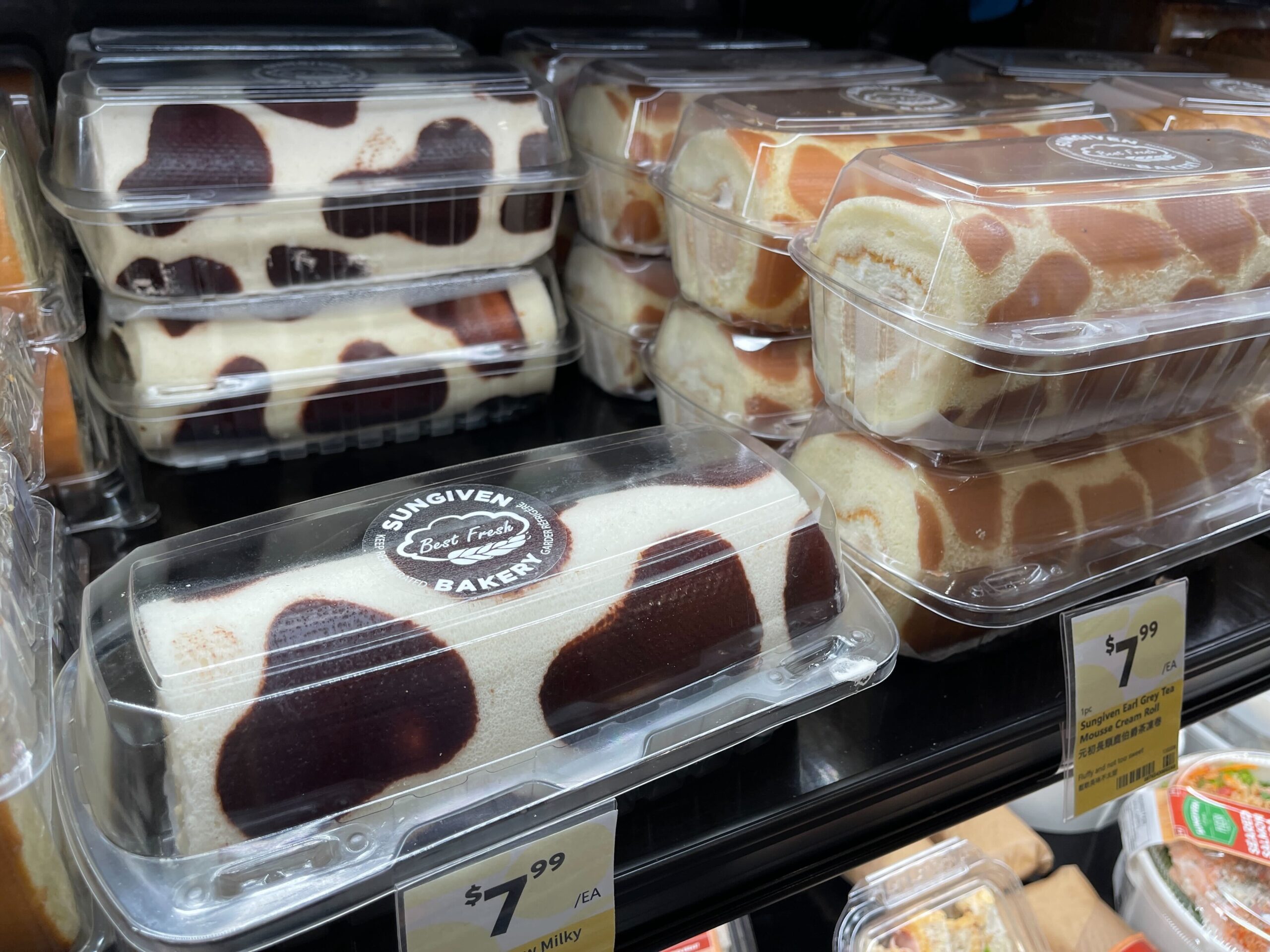
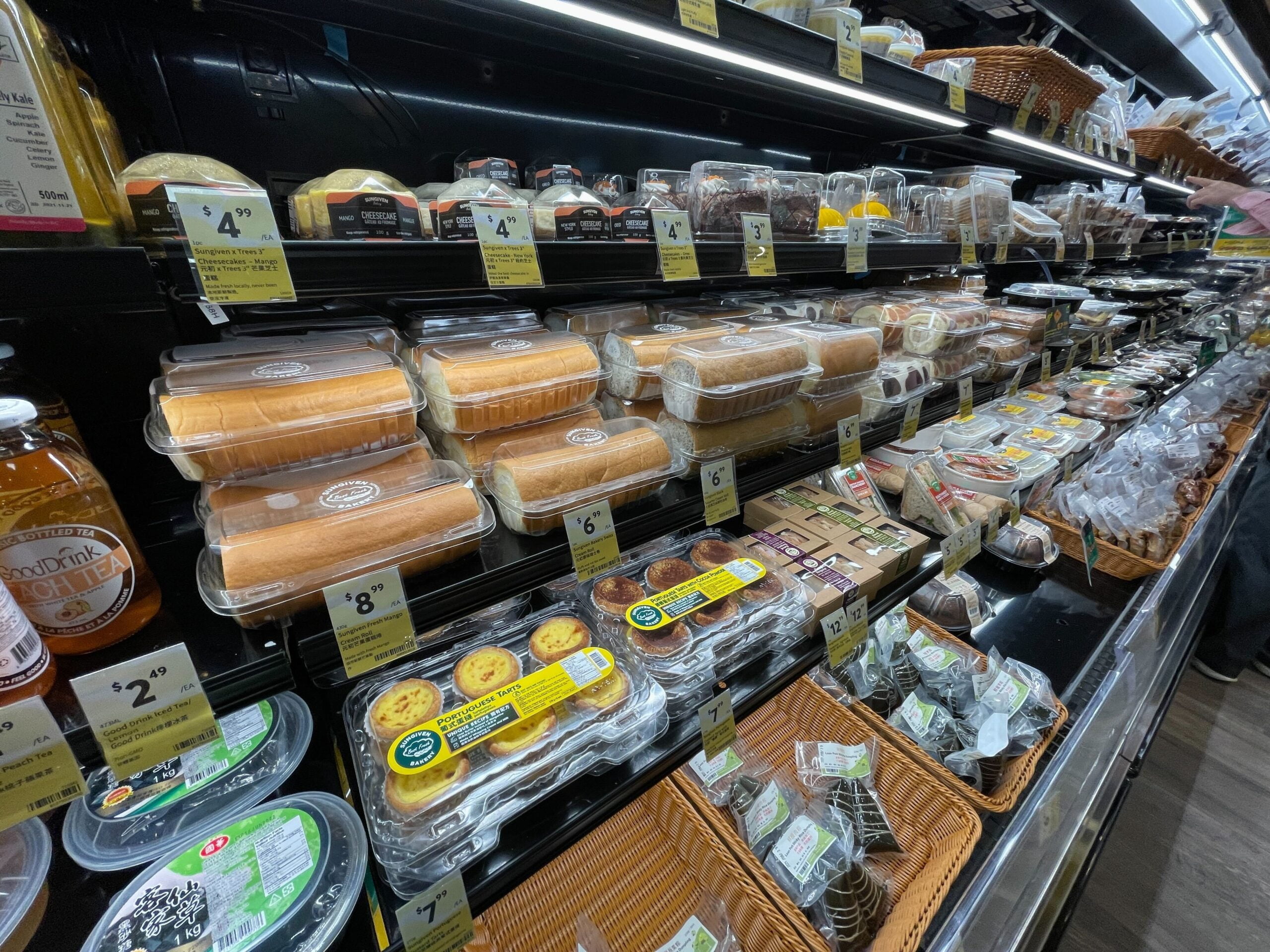
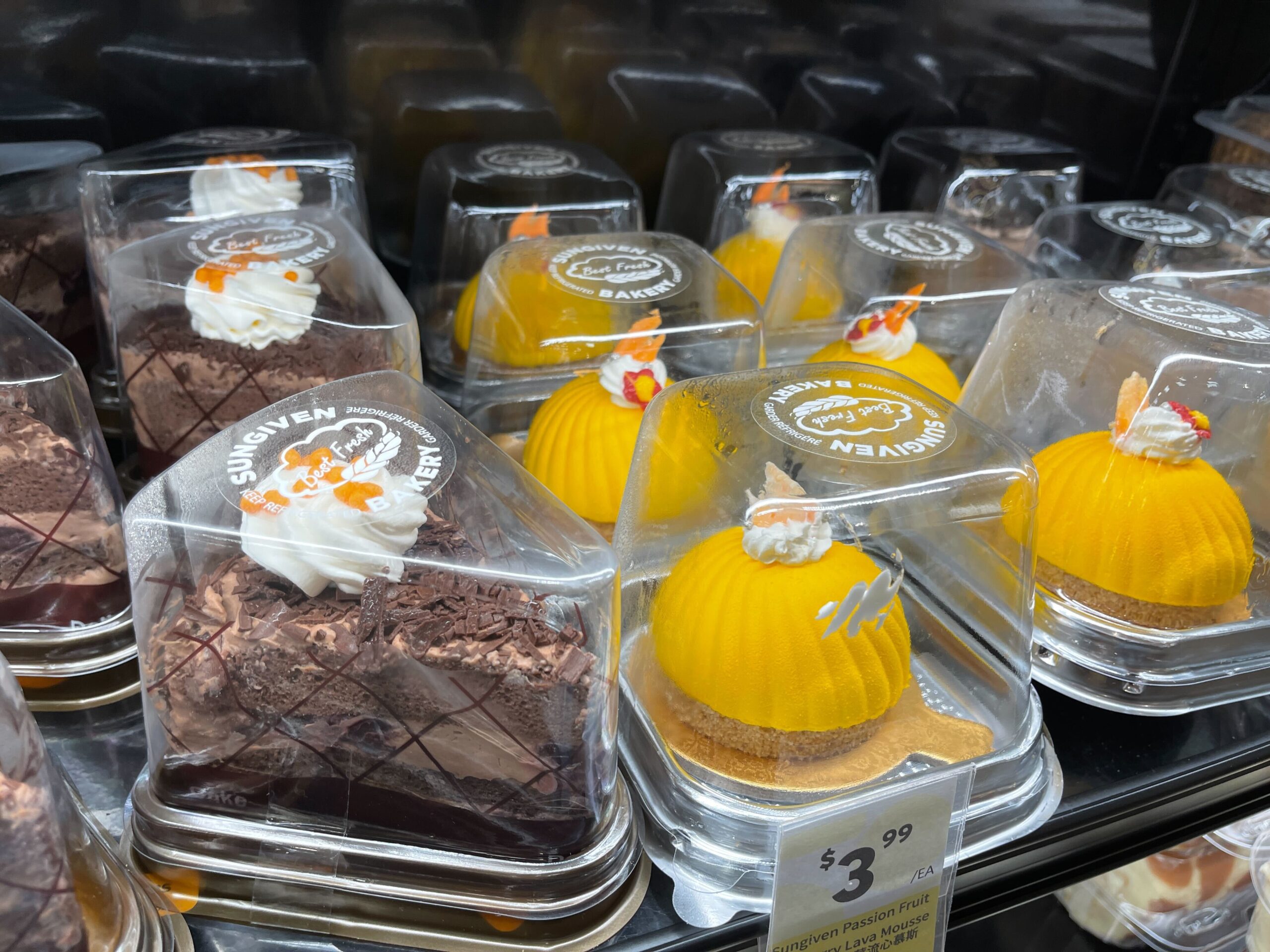
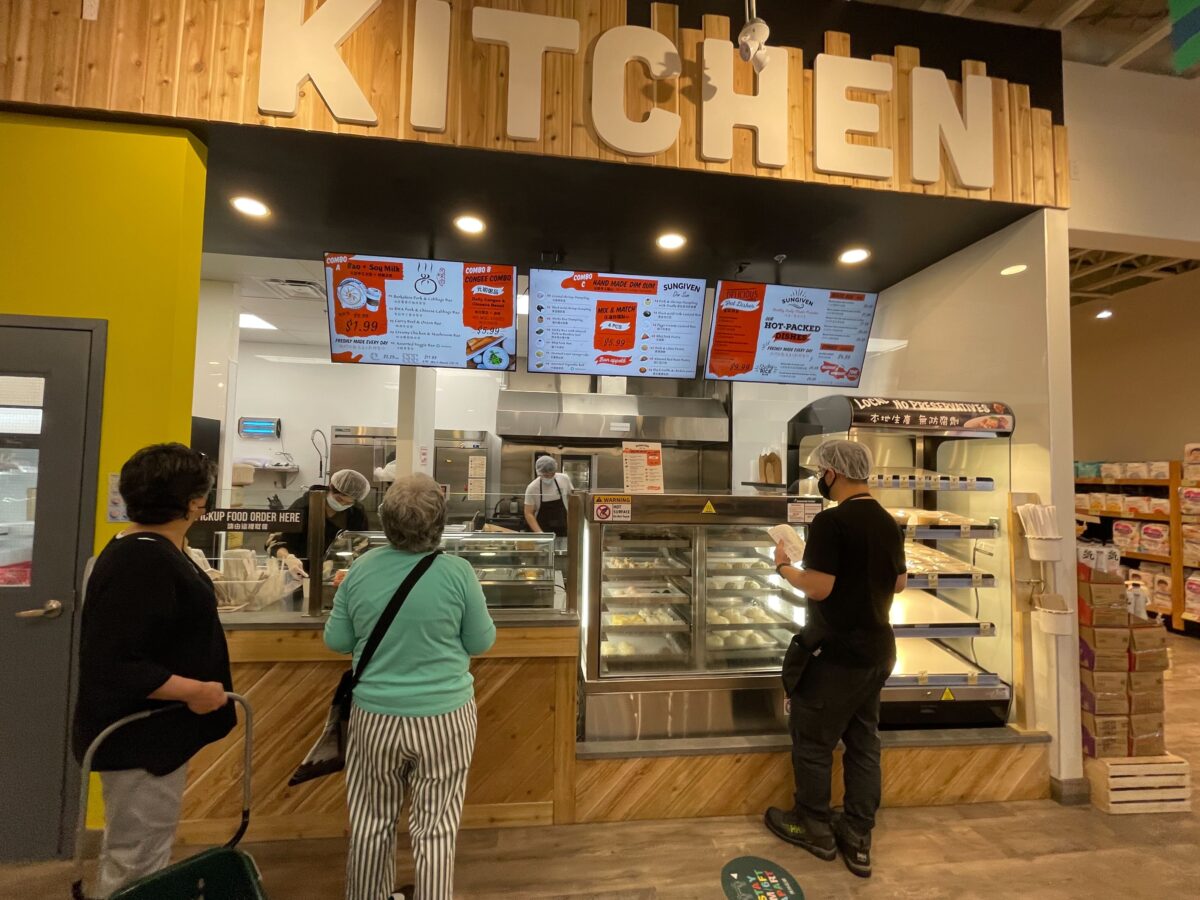
Sungiven Foods open in North Vancouver (August 2021). Photo: Lee Rivett.
Chinese grocery chain Sungiven Foods has now opened six locations across the metro Vancouver area with another two coming soon.
In the fall of 2019, Sungiven Foods opened its first Canadian store at City Square in Vancouver. The store was the first of about 15 locations planned for the BC Lower Mainland over the next several years.
A cross-Canada store expansion is expected, which could heat up competition amongst grocery retailers and particularly with Asian grocers as well as chains such as T&T. Sungiven Foods operates more than 100 stores in China and will also expand into the US. [Read the Full Article Here]
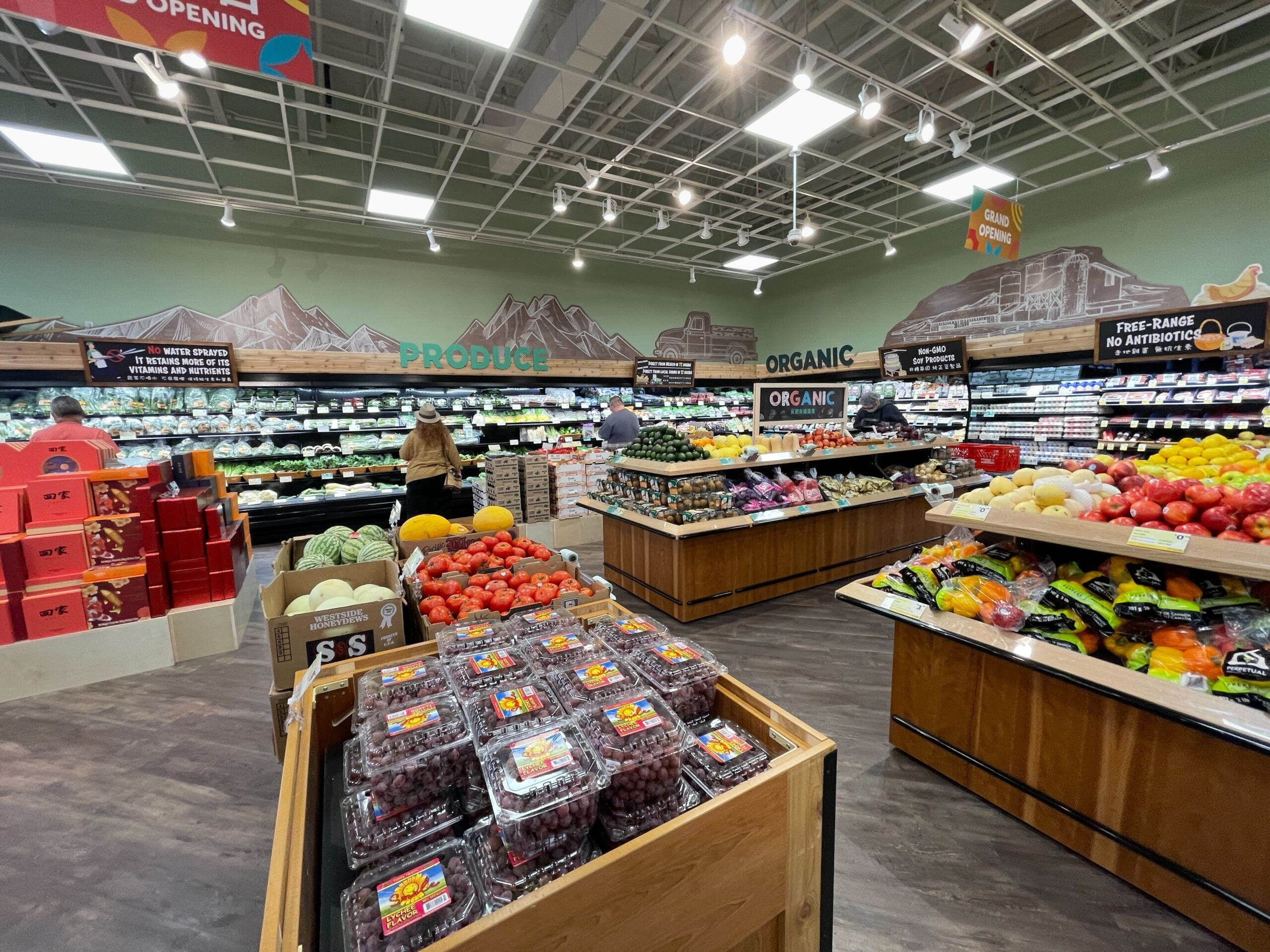
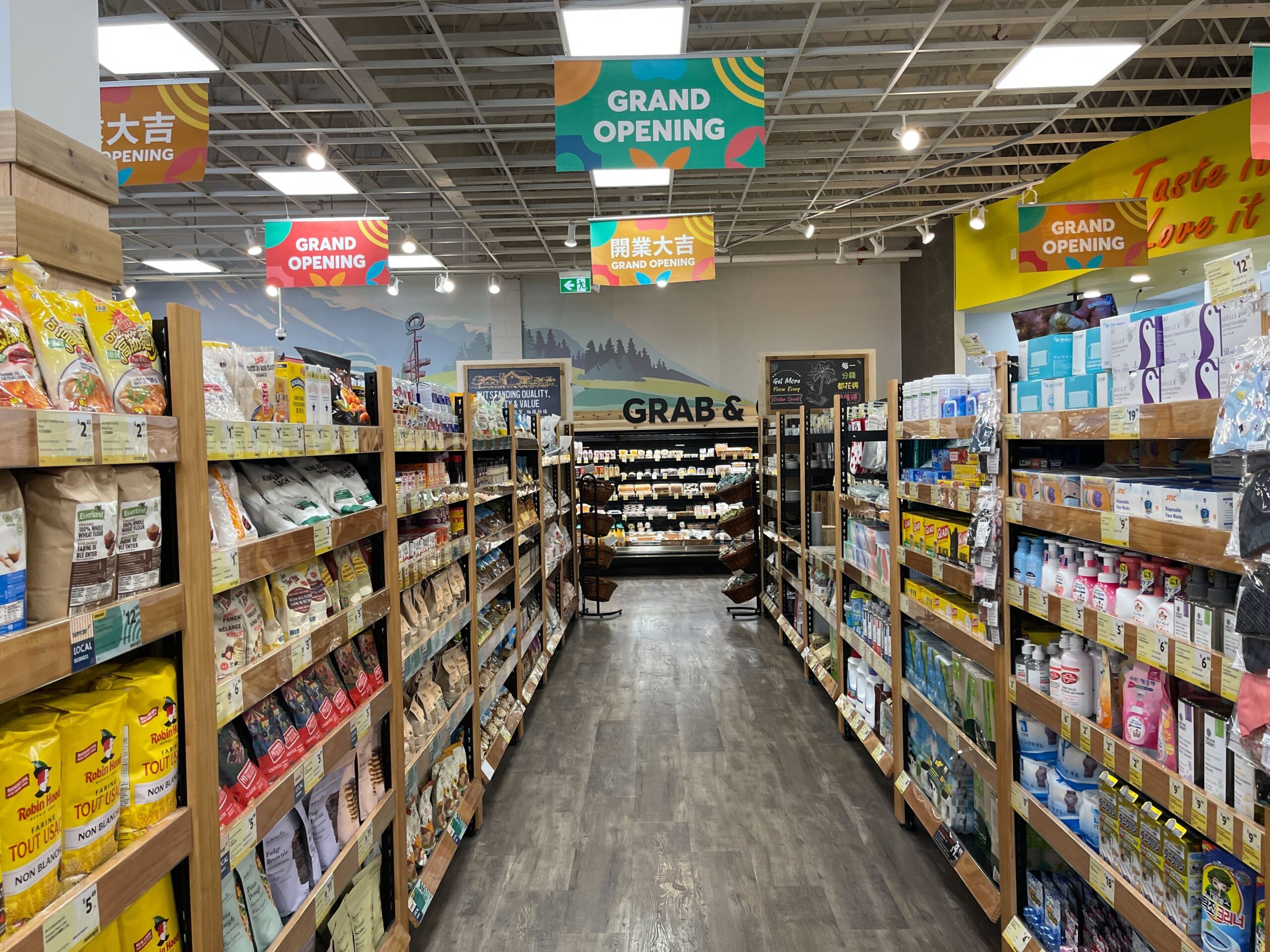
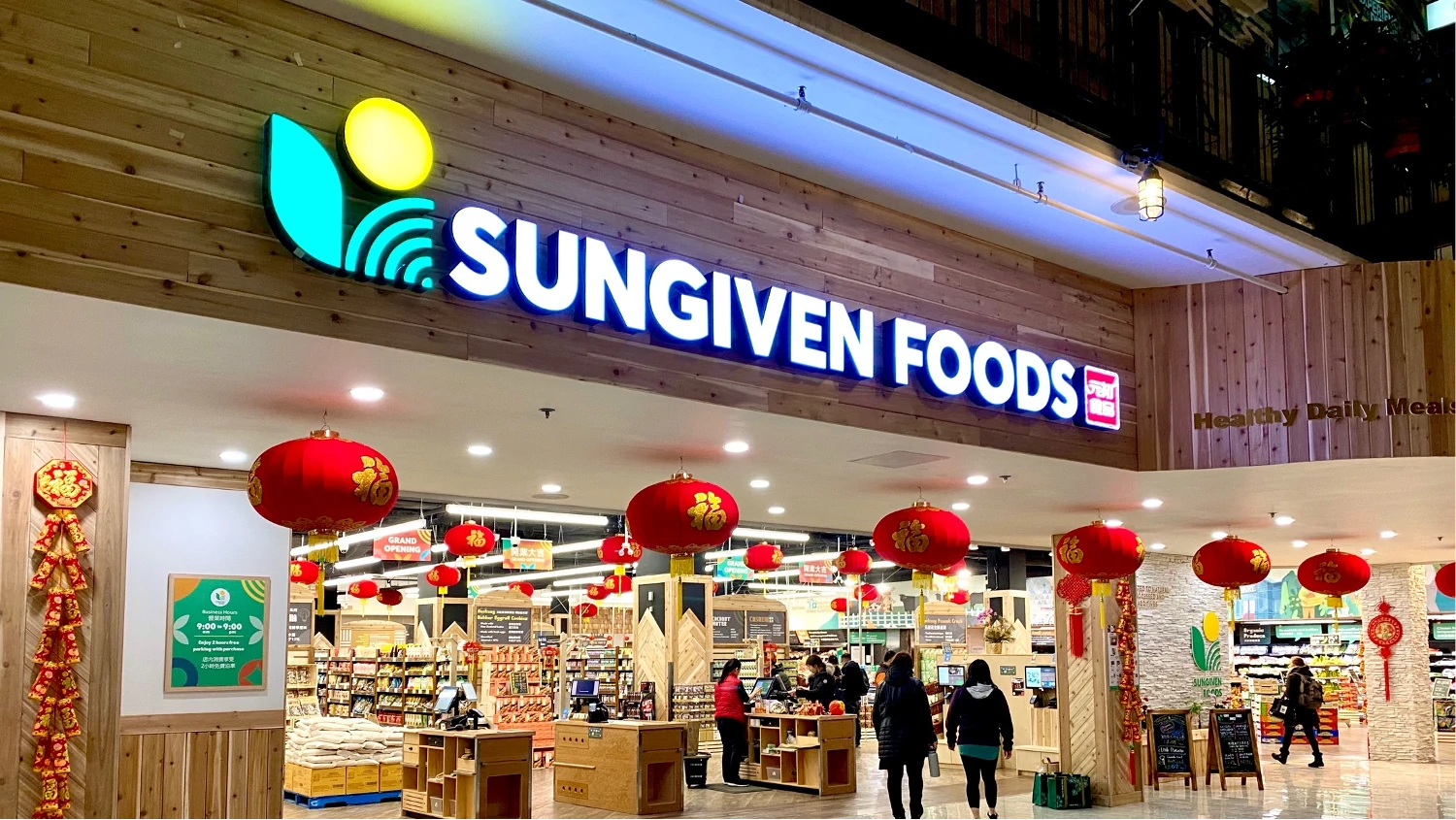
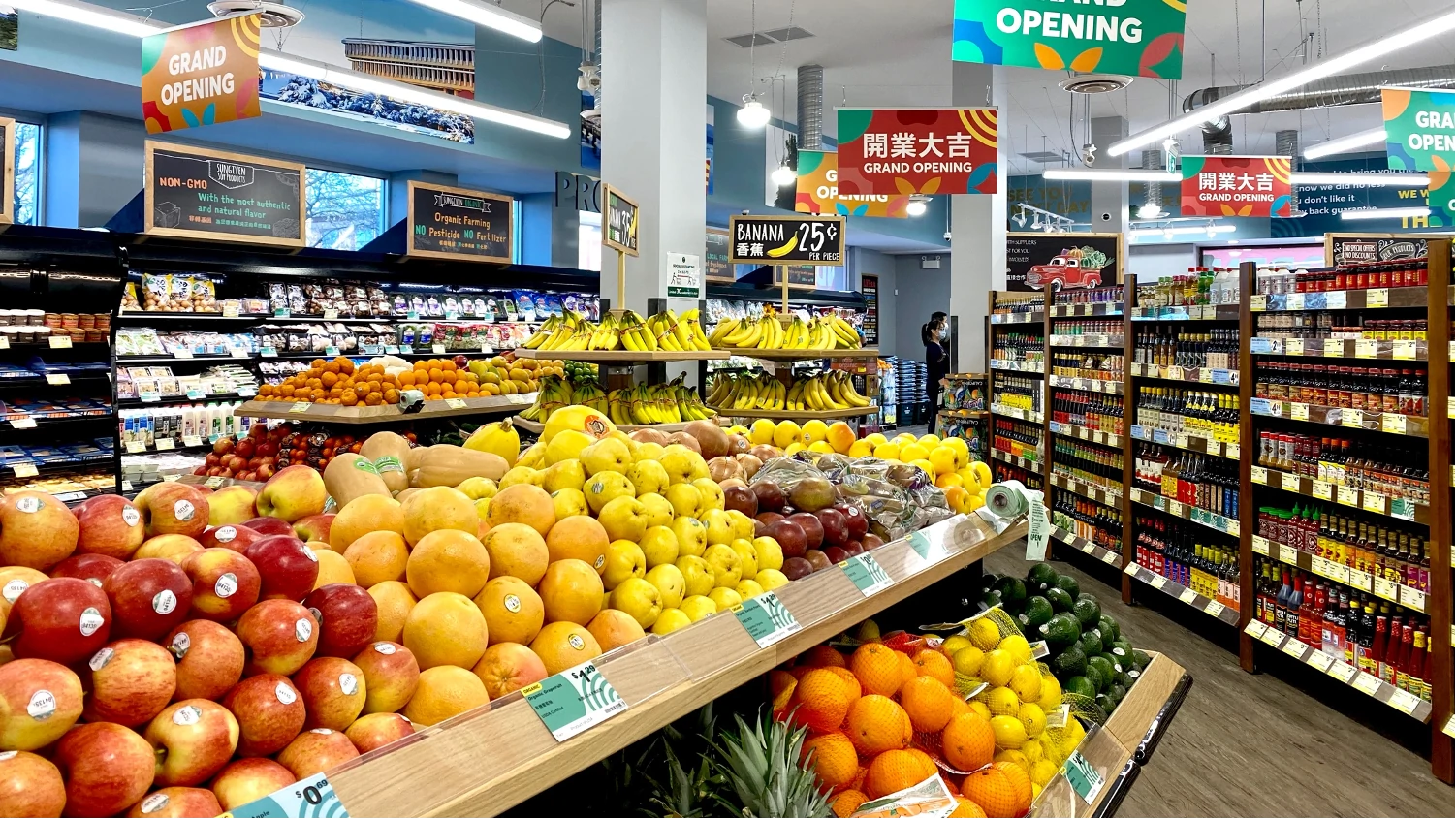
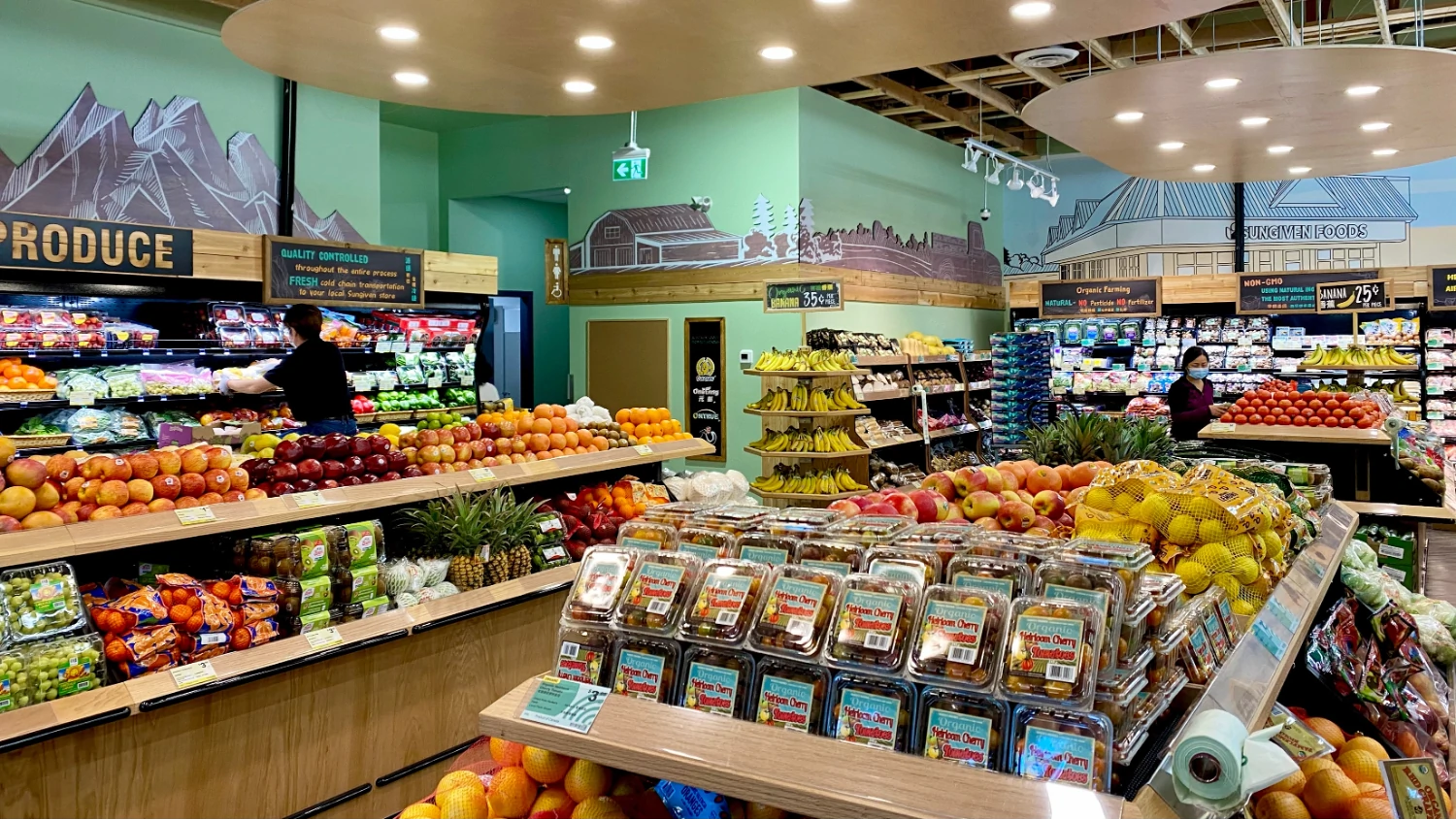
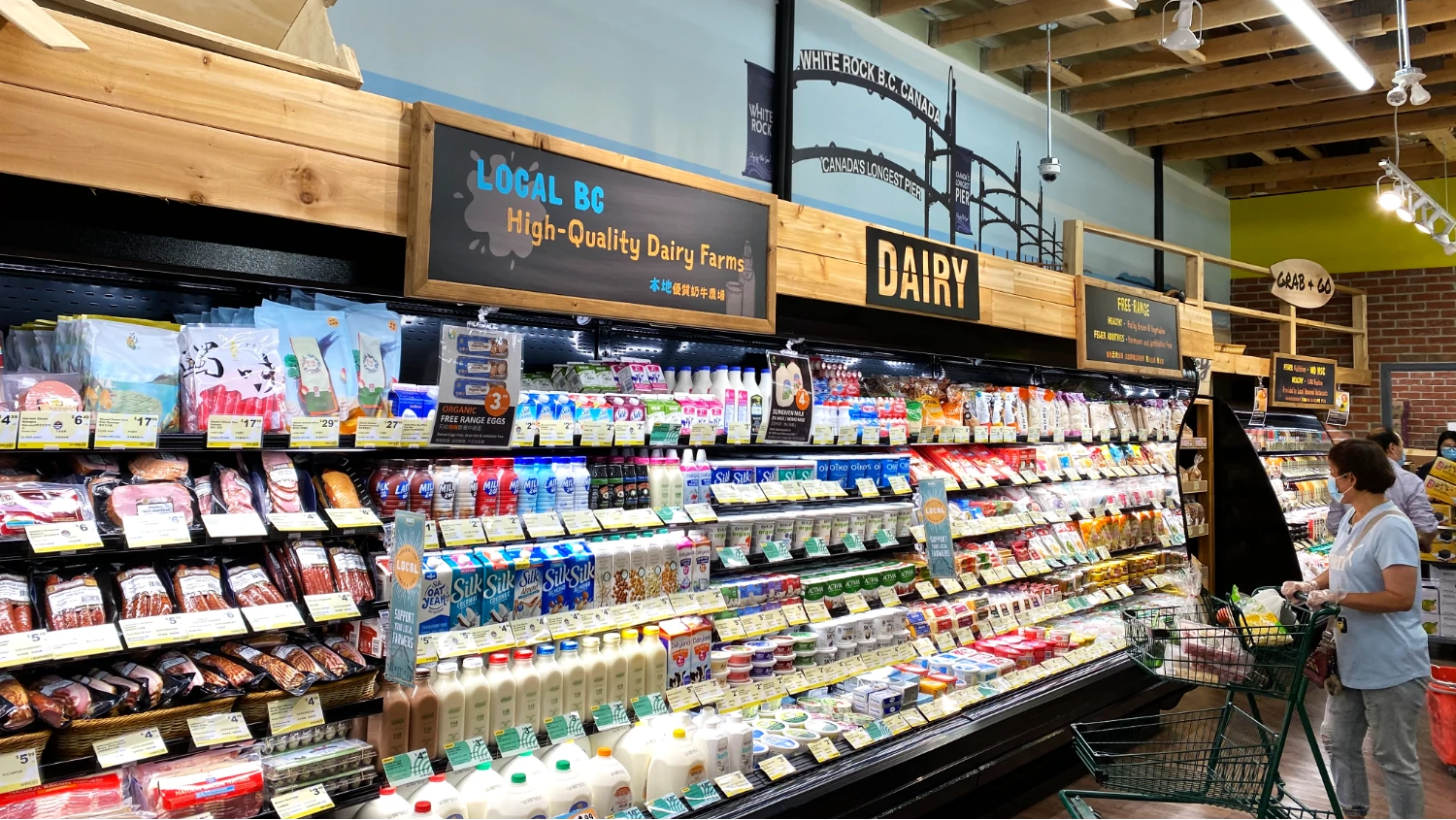
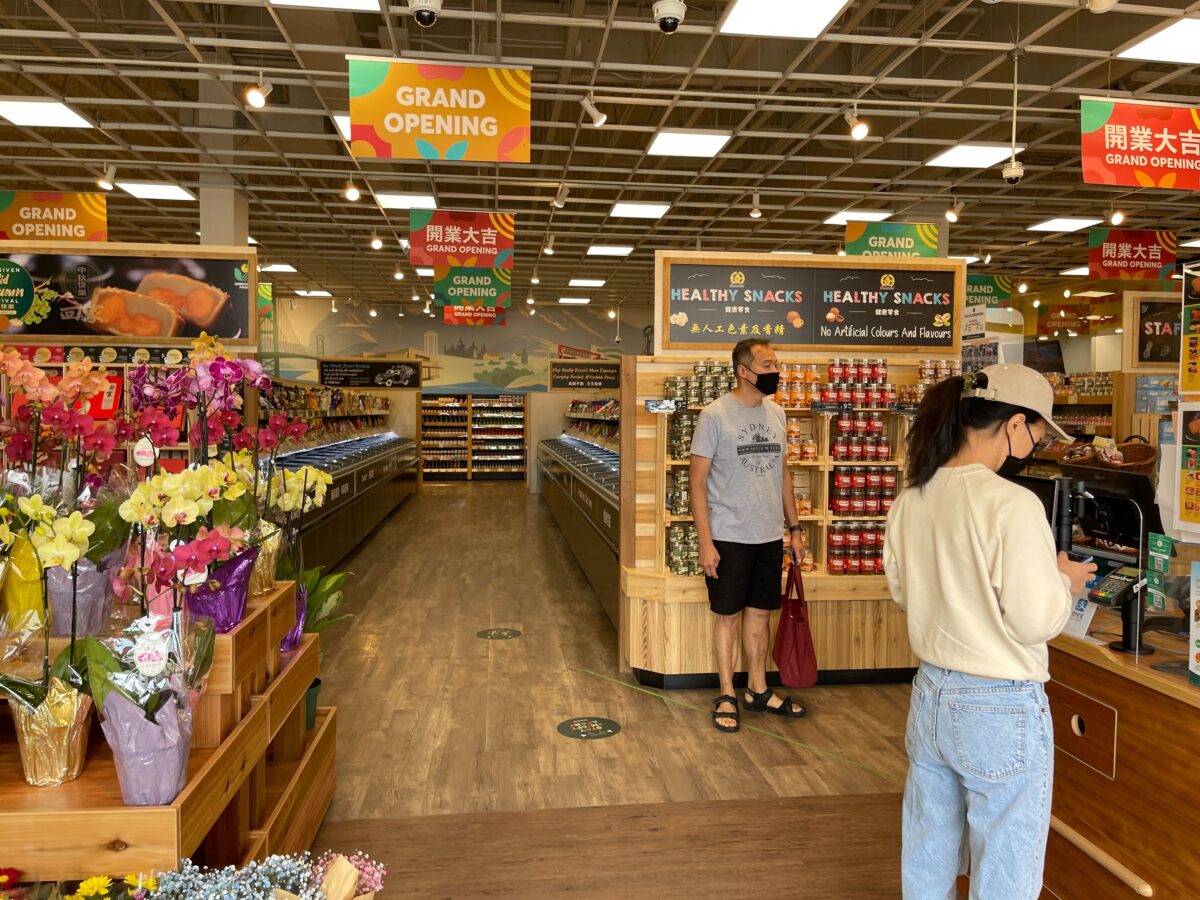
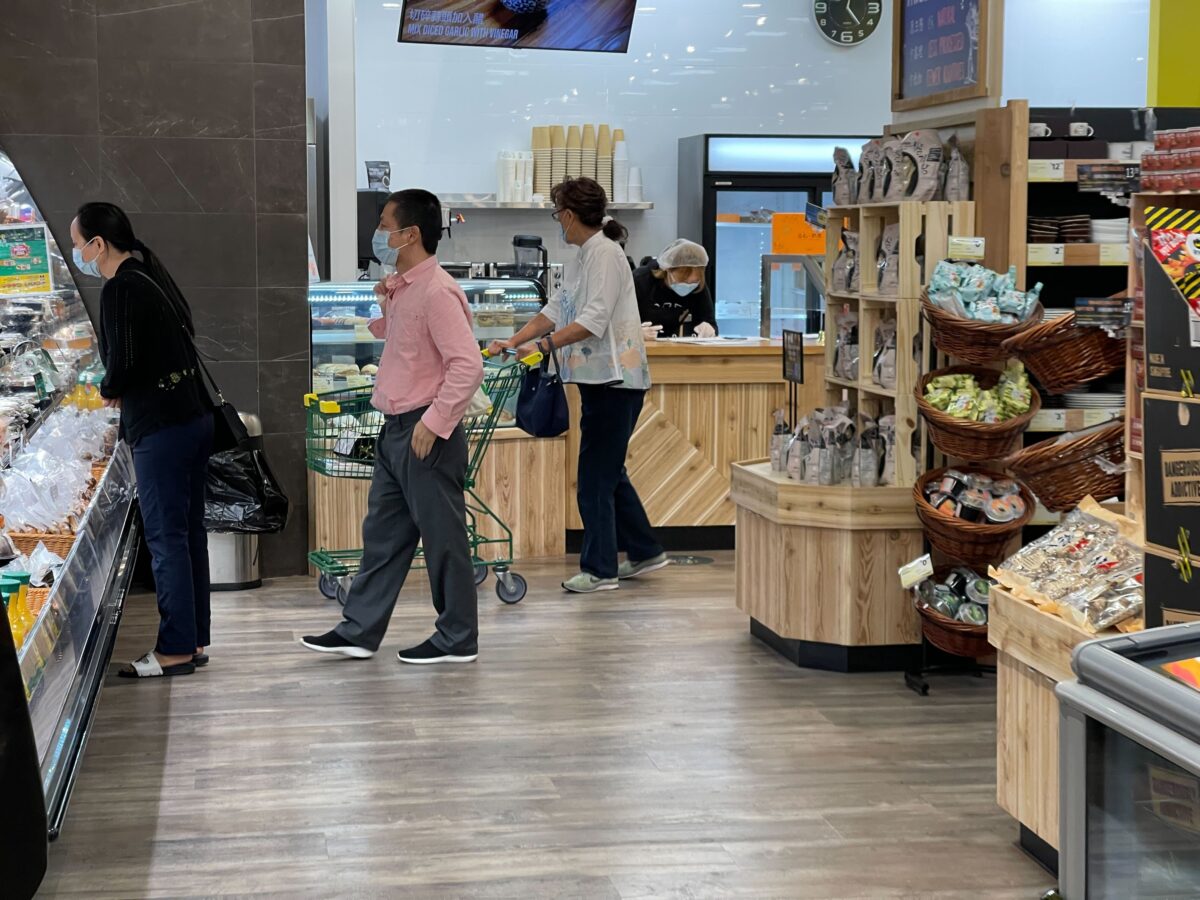
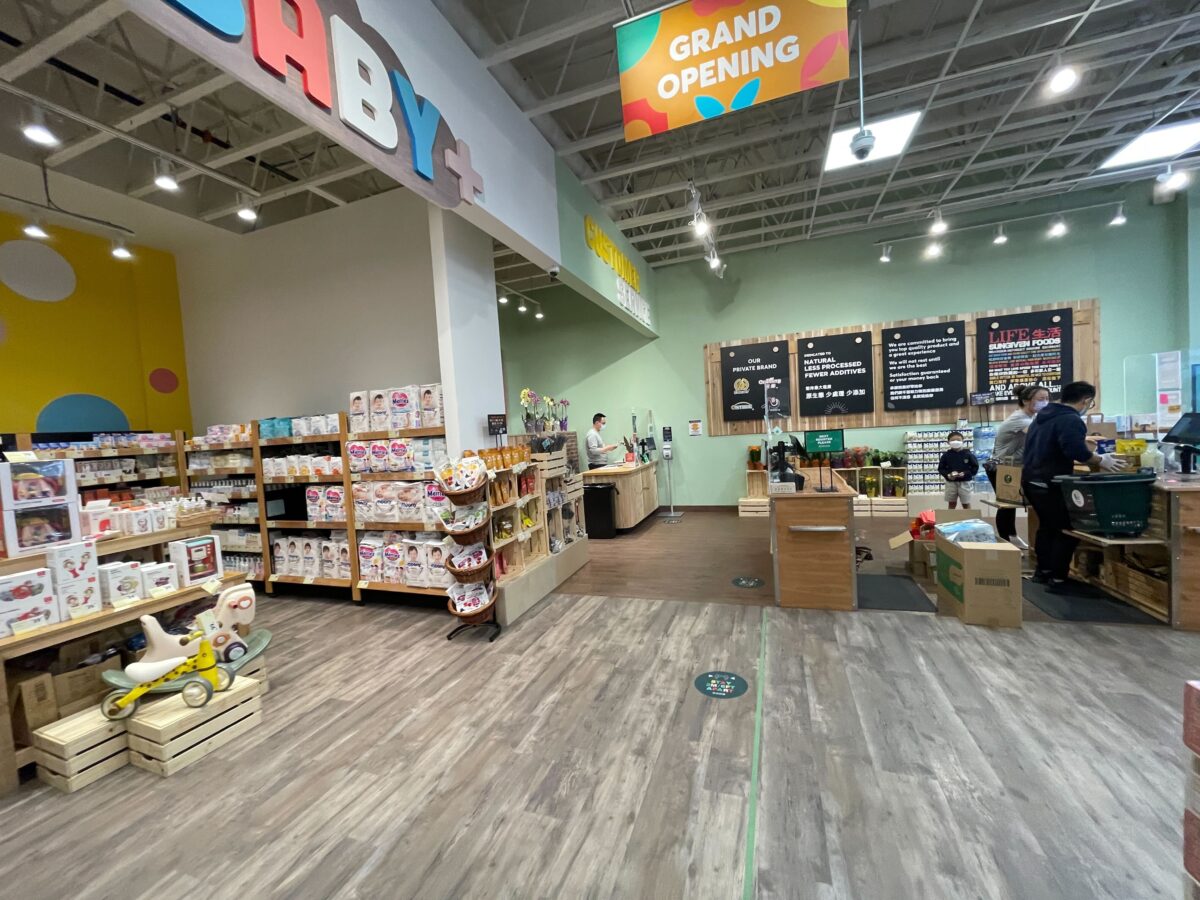
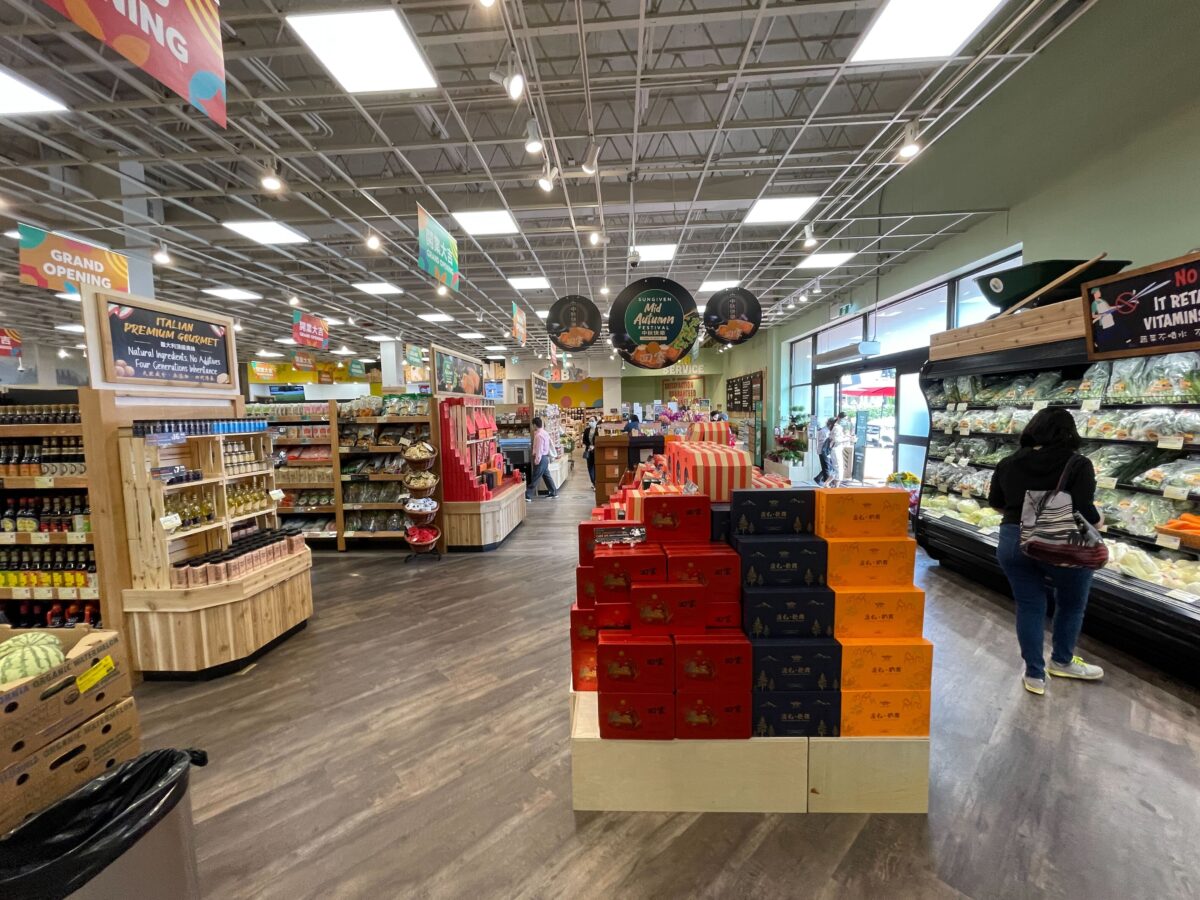
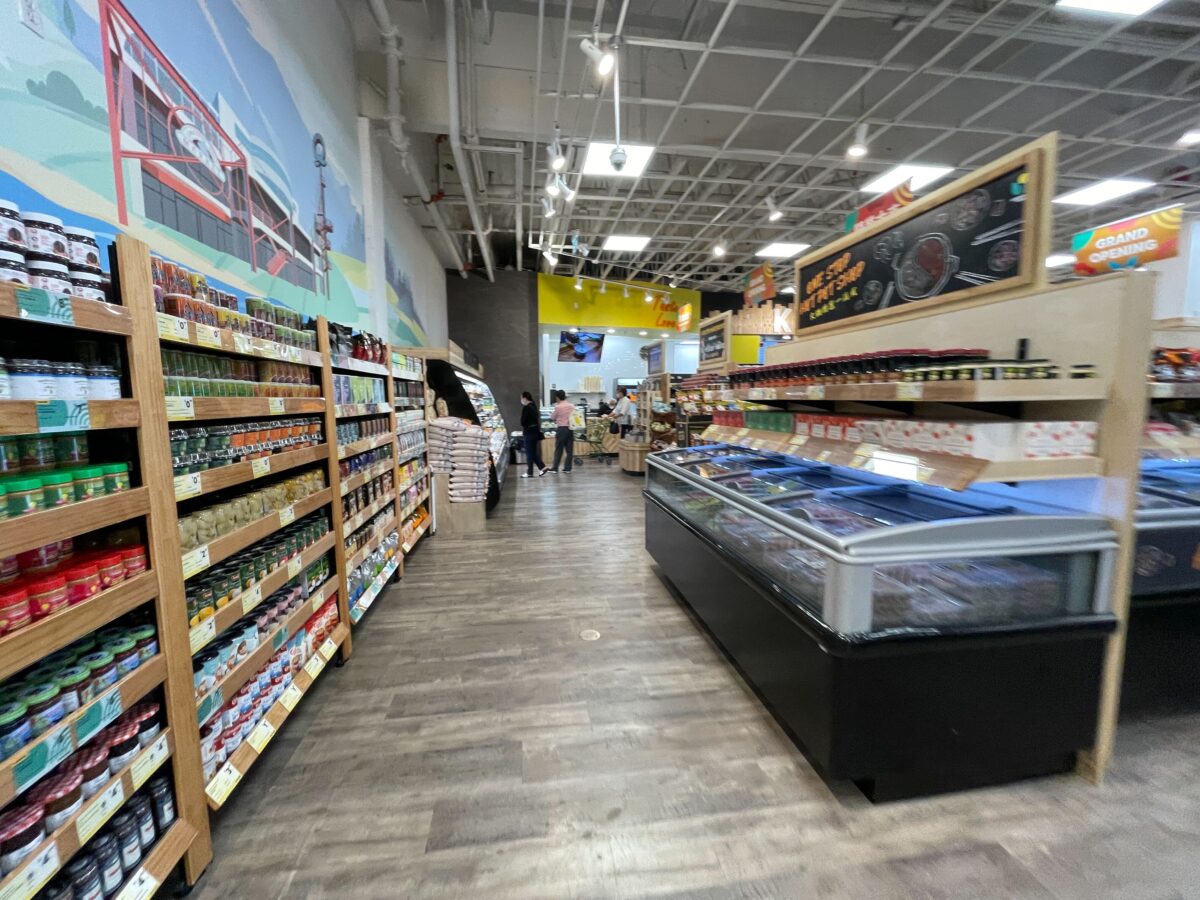
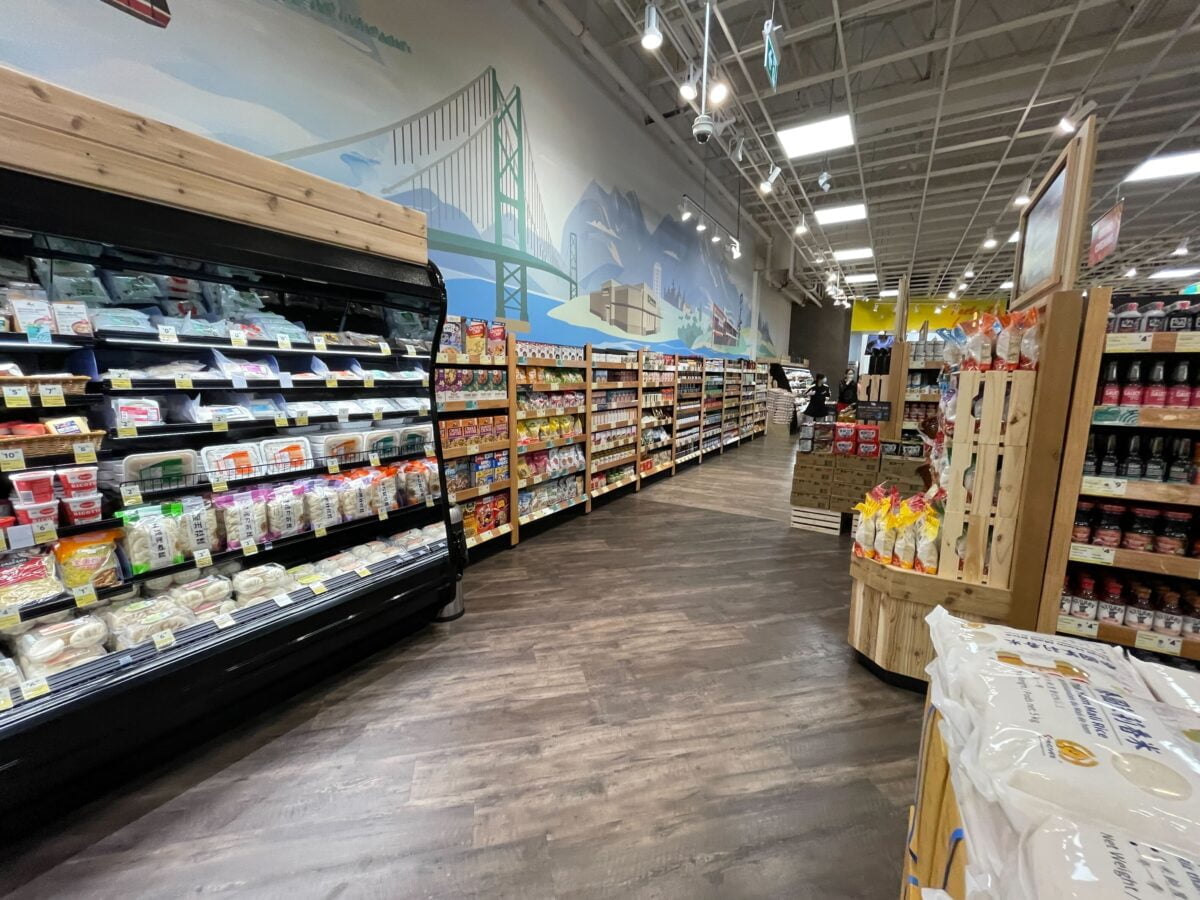
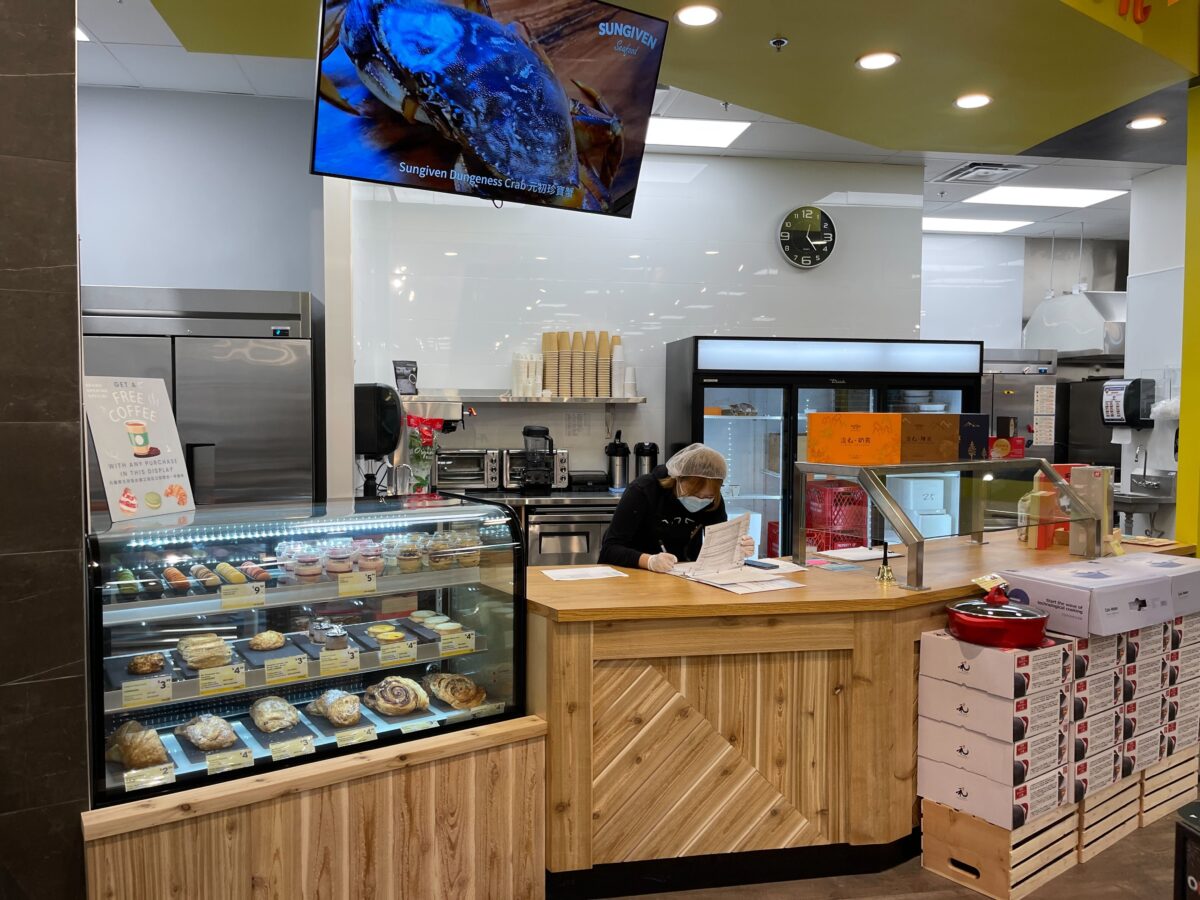
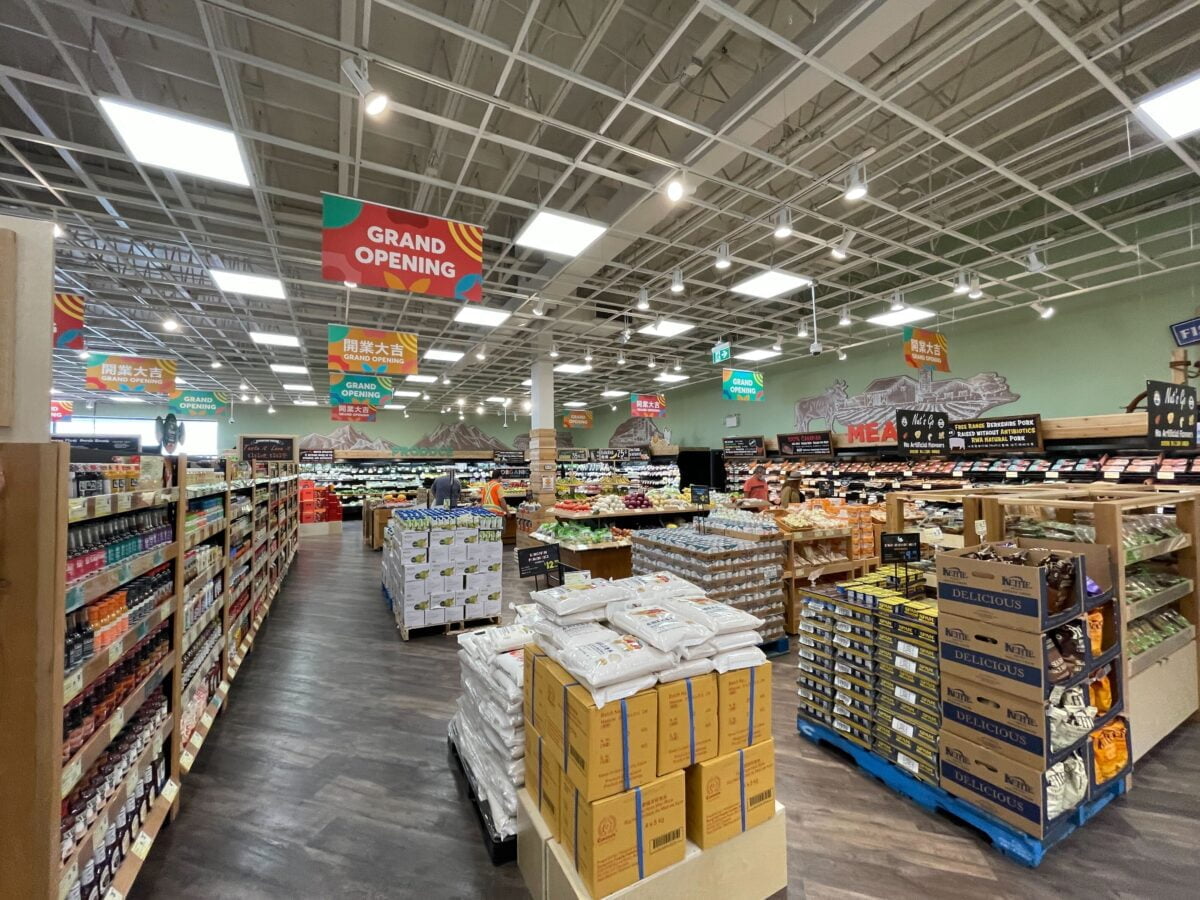
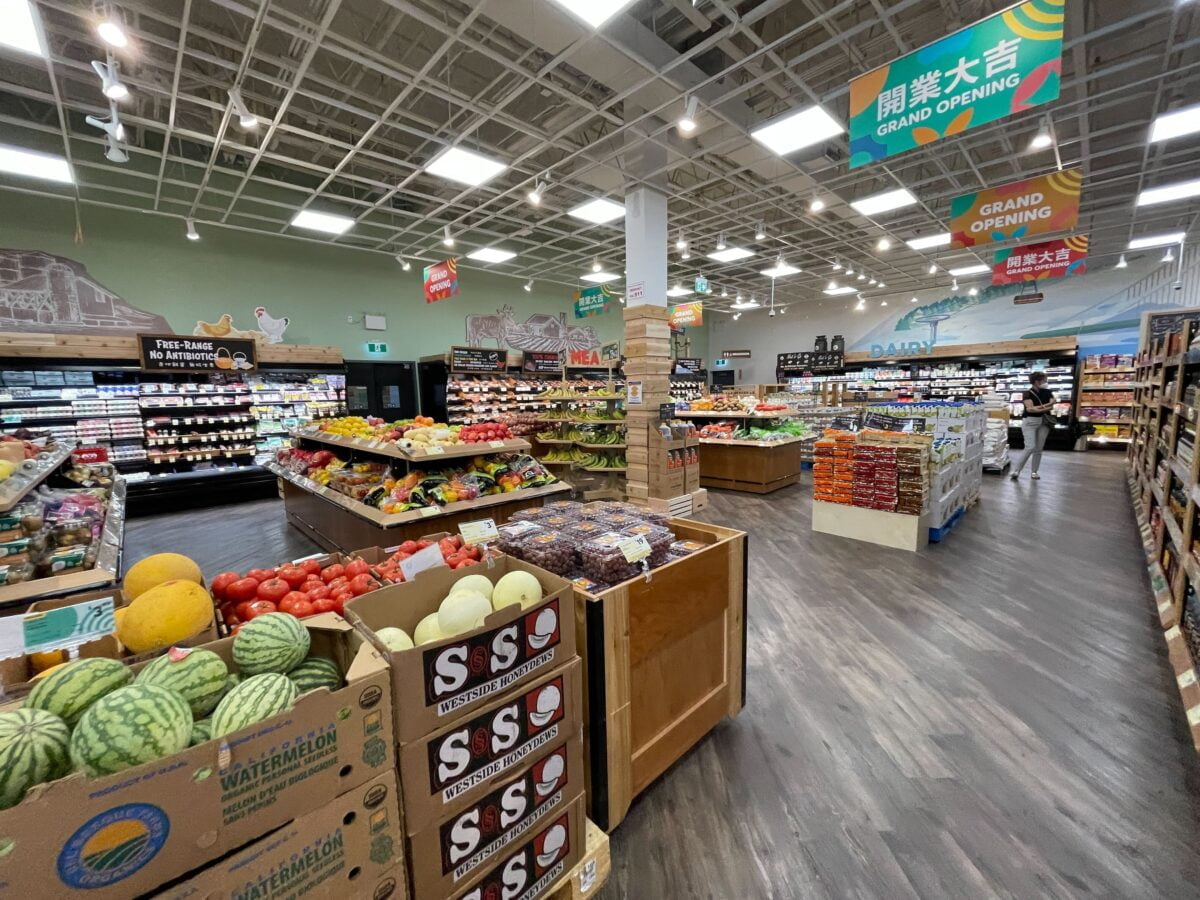
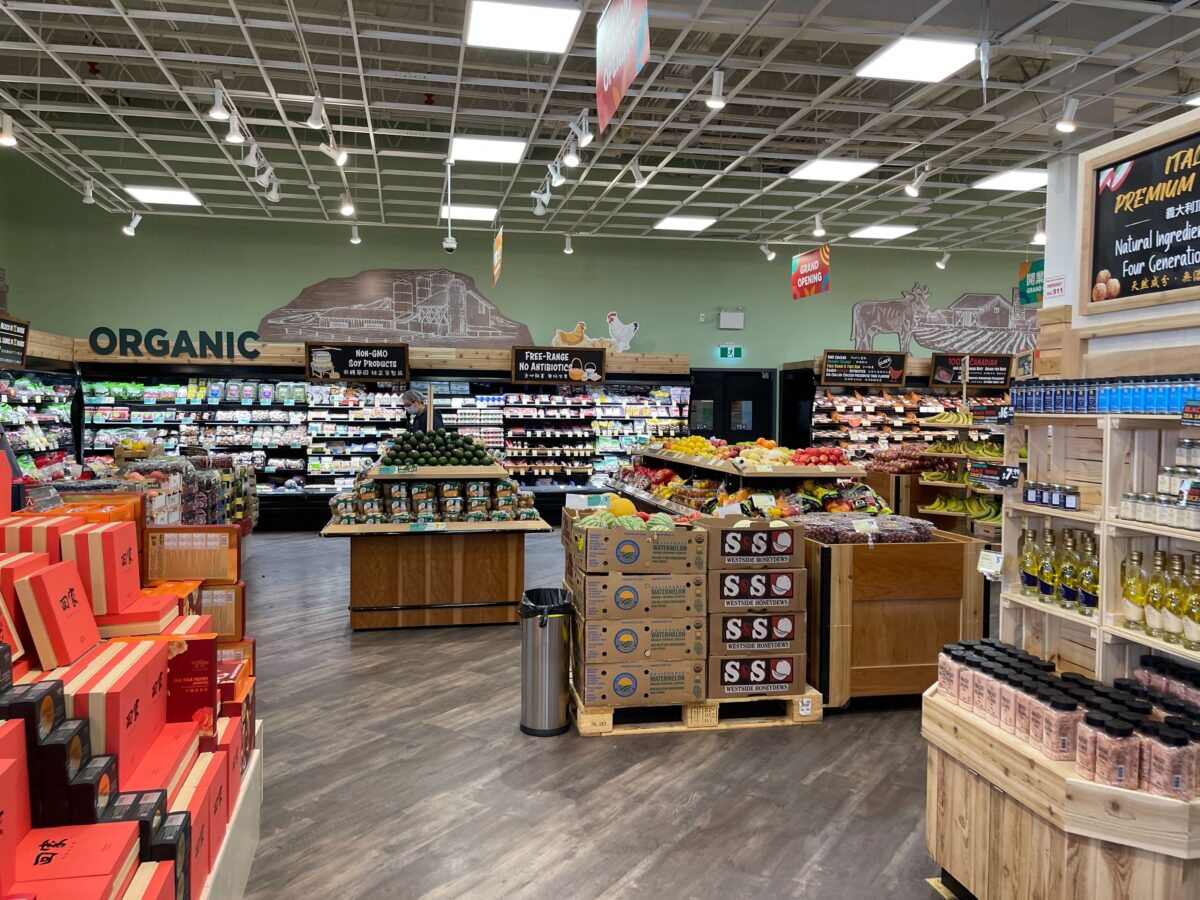
Interior of open Sungiven Foods in North Vancouver (August 2021). Photo: Lee Rivett.
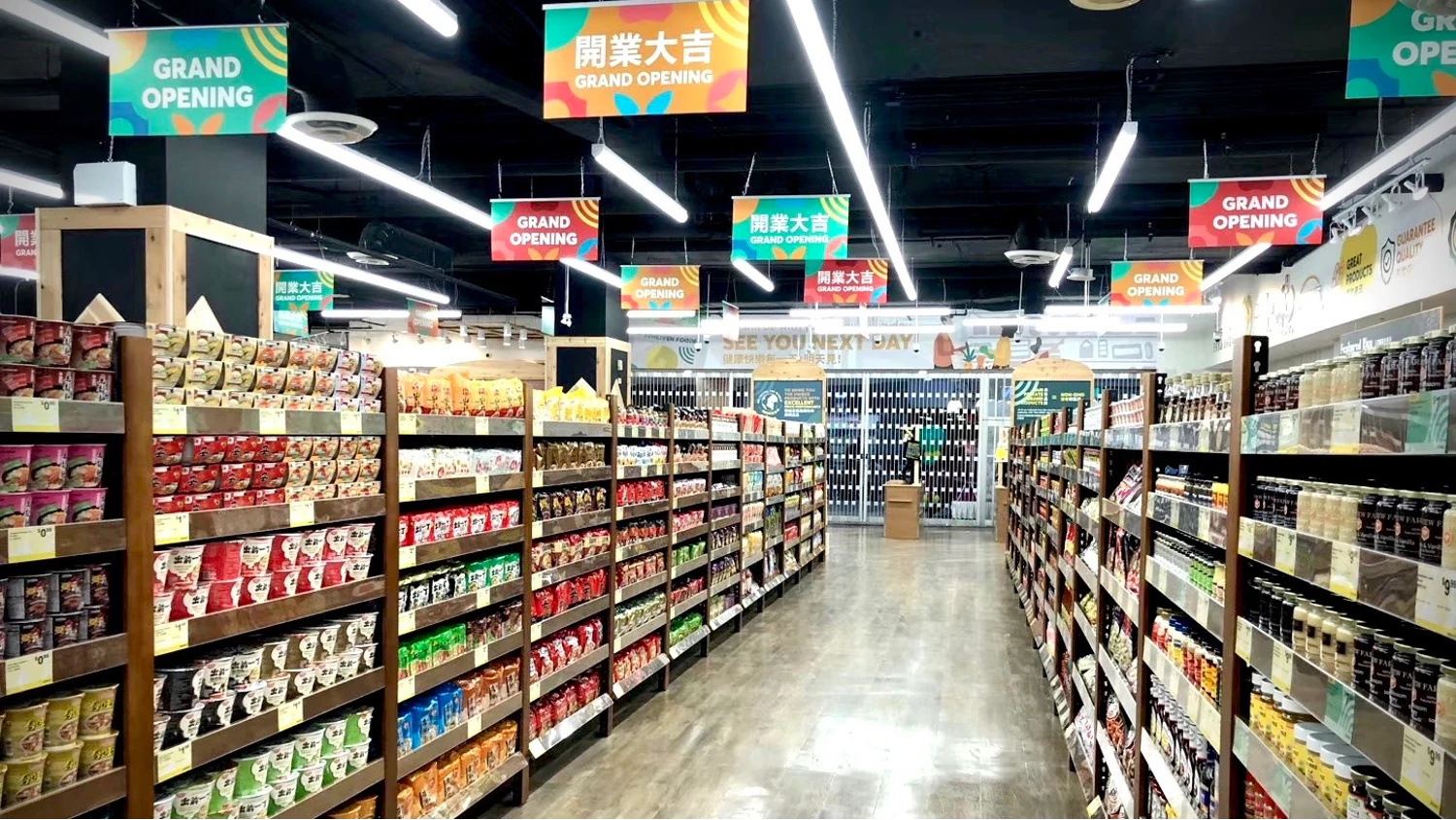
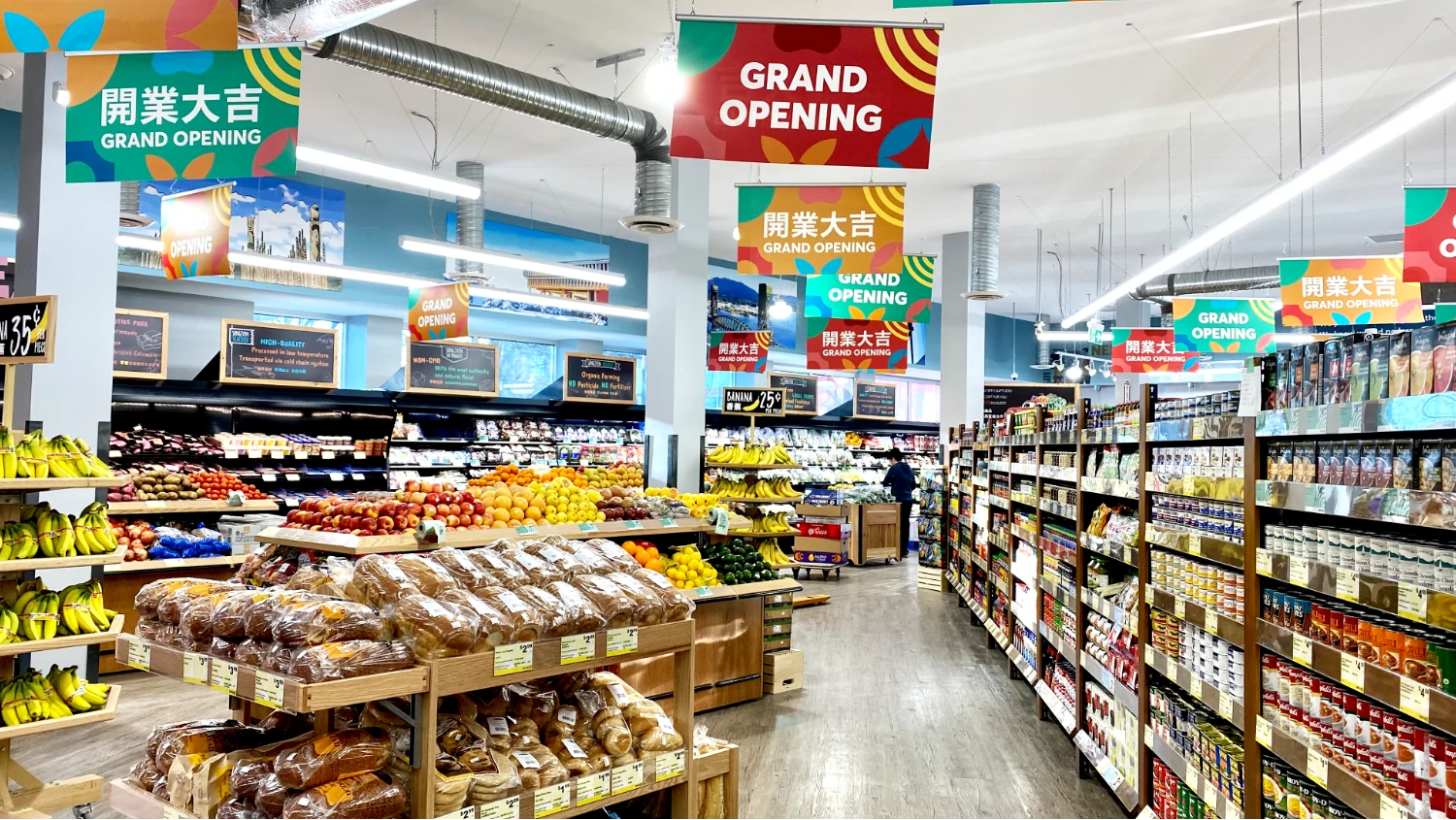
Interior of open Sungiven Foods in North Vancouver (August 2021). Photo: Lee Rivett.
Interior of open Sungiven Foods in North Vancouver (August 2021). Photo: Lee Rivett.
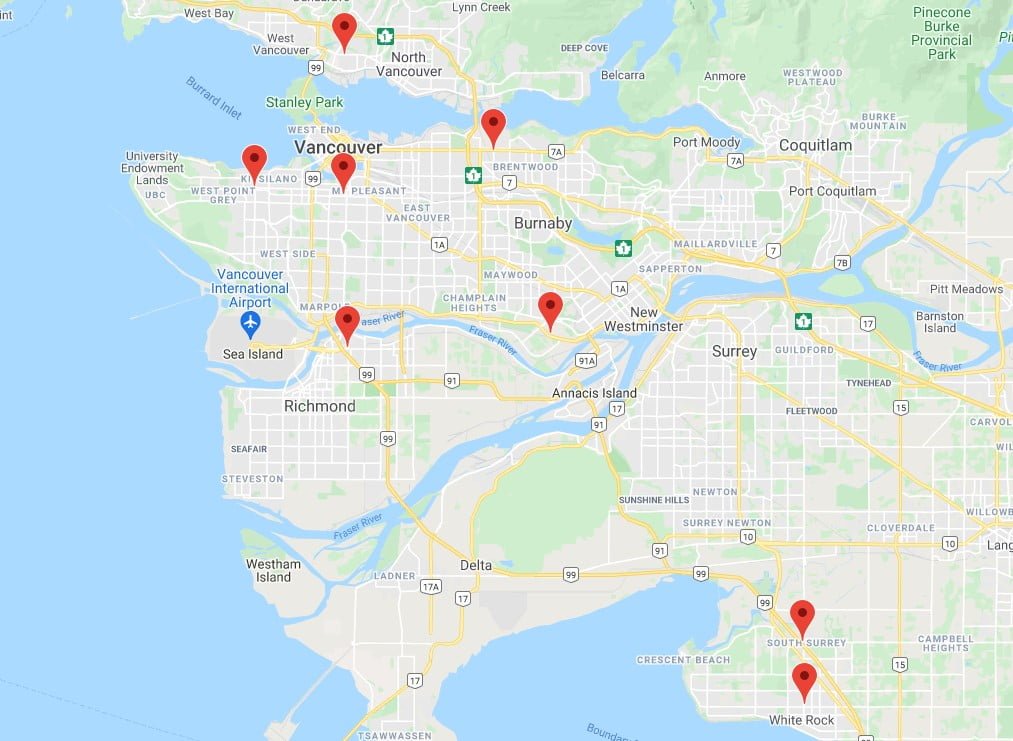
The Sungiven Foods locations in the metro Vancouver area include:
City Square Store (42-555 West 12th Ave, Vancouver)
West Broadway Store (3301 West Broadway, Vancouver)
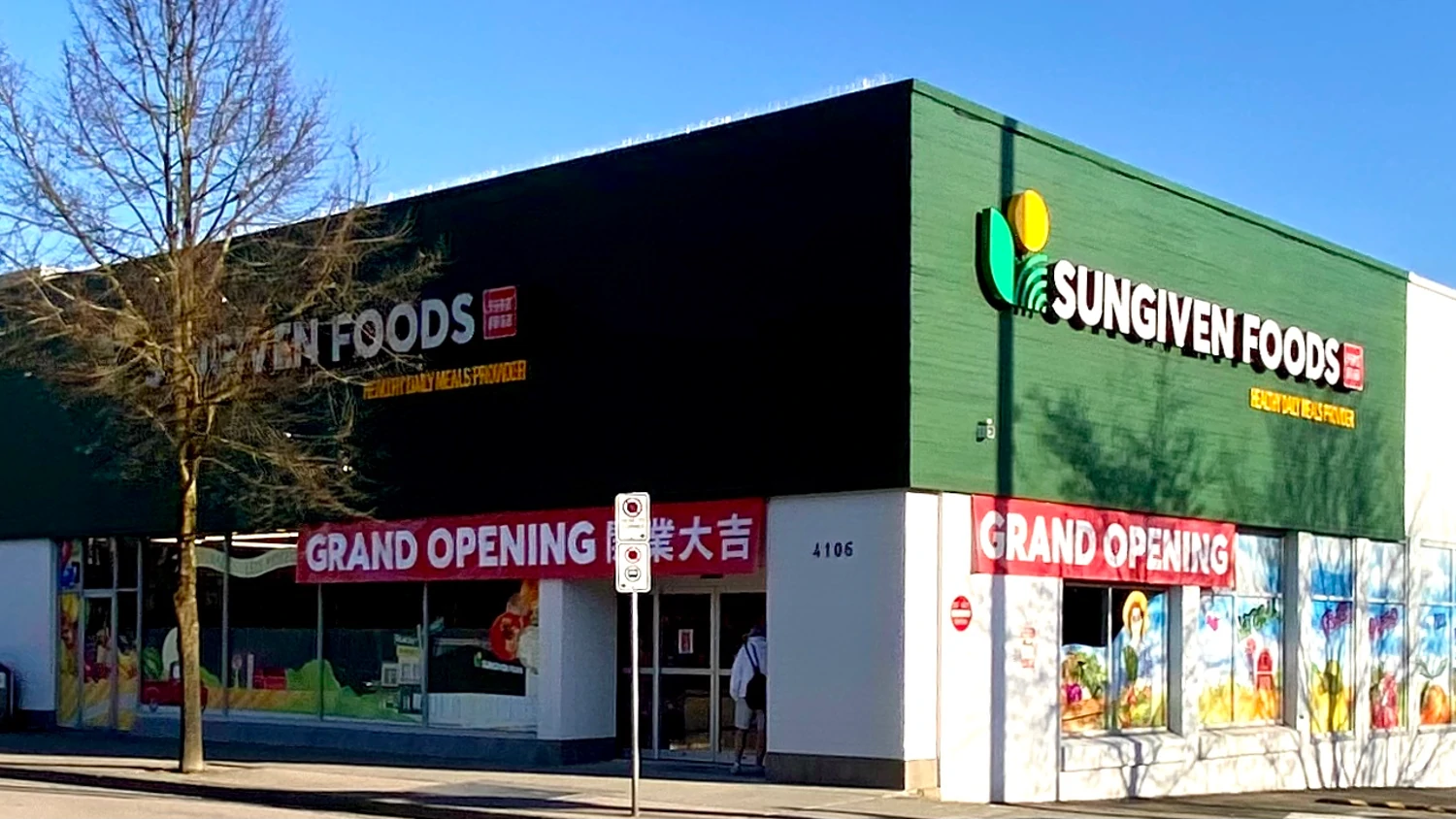
Burnaby Hastings Store (4106 Hastings Street, Burnaby)
White Rock Store (1640 152nd Street, Surrey)
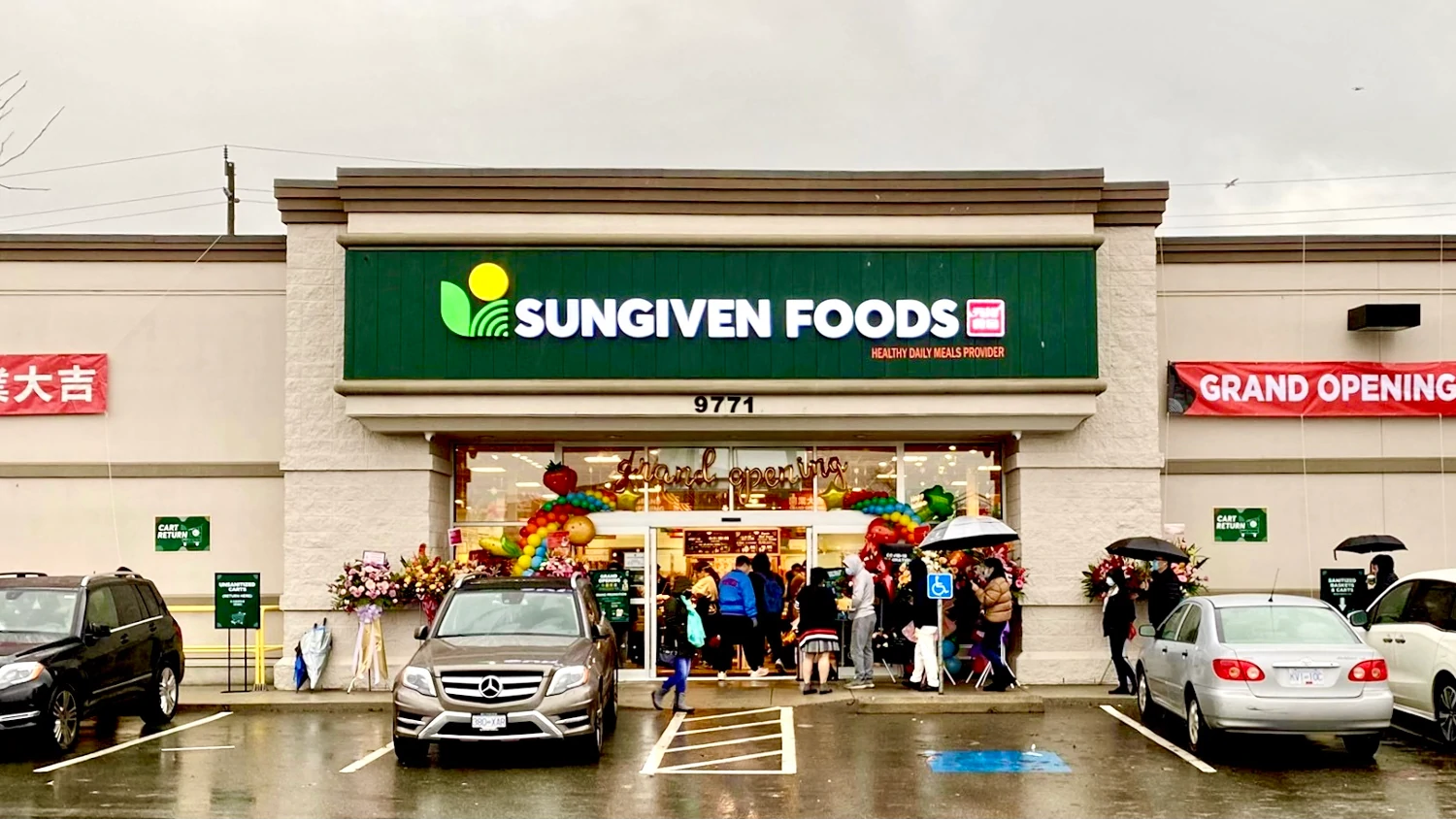
Richmond Bridgeport Store (9771 Bridgeport Road, Richmond)
North Vancouver Store (1595 Marine Drive, North Vancouver)
Burnaby Big Bend Store (600-5771 Marine Way, Burnaby) – Coming Soon
South Surrey TPC Store (3211 152nd Street, Surrey) – Coming Soon
Sungiven Foods Locations across Metro Vancouver. Photo: Google Maps via Sungiven Foods Website (Location Page)
City Square Store
1 of 3
Sungiven Foods in City Square Store. Photo: Sungiven Foods Canada.
Sungiven Foods in City Square Store. Photo: Sungiven Foods Canada.
Sungiven Foods in City Square Store. Photo: Sungiven Foods Canada.
West Broadway Store
1 of 3
Sungiven Foods in West Broadway Store. Photo: Sungiven Foods Canada.
Sungiven Foods in West Broadway Store. Photo: Sungiven Foods Canada.
Sungiven Foods in West Broadway Store. Photo: Sungiven Foods Canada.
Burnaby Hastings Store
1 of 3
Sungiven Foods in Burnaby Hastings Store. Photo: Sungiven Foods Canada.
Sungiven Foods in Burnaby Hastings Store. Photo: Sungiven Foods Canada.
Sungiven Foods in Burnaby Hastings Store. Photo: Sungiven Foods Canada.
Sungiven Foods in Burnaby Hastings Store. Photo: Sungiven Foods Canada.
White Rock Store
1 of 3
Sungiven Foods in White Rock Store. Photo: Sungiven Foods Canada.
Sungiven Foods in White Rock Store. Photo: Sungiven Foods Canada.
Sungiven Foods in White Rock Store. Photo: Sungiven Foods Canada.
Richmond Bridgeport Store
1 of 3
Sungiven Foods in Richmond Bridgeport Store. Photo: Sungiven Foods Canada.
Sungiven Foods in Richmond Bridgeport Store. Photo: Sungiven Foods Canada.
Sungiven Foods in Richmond Bridgeport Store. Photo: Sungiven Foods Canada.
Sungiven Foods Canada Inc. is a subsidiary of Xiamen Sungiven Foods Holdings Ltd., based in Xiamen, China. The company operates more than 90 stores in China, most being in Xiamen. The company’s Canadian head office was opened earlier this year in Burnaby.
The following are additional photos of the North Vancouver store taken in August 2021:
Sungiven Foods open in North Vancouver (August 2021). Photo: Lee Rivett.
Interior of open Sungiven Foods in North Vancouver (August 2021). Photo: Lee Rivett.
Sungiven Foods in North Vancouver (August 2021). Photo: Lee Rivett.
Sungiven Foods in North Vancouver (August 2021). Photo: Lee Rivett.
Sungiven Foods in North Vancouver (August 2021). Photo: Lee Rivett.
Sungiven Foods in North Vancouver (August 2021). Photo: Lee Rivett.Sungiven Foods in North Vancouver (August 2021). Photo: Lee Rivett.Sungiven Foods in North Vancouver (August 2021). Photo: Lee Rivett.Sungiven Foods in North Vancouver (August 2021). Photo: Lee Rivett.Sungiven Foods in North Vancouver (August 2021). Photo: Lee Rivett.Sungiven Foods in North Vancouver (August 2021). Photo: Lee Rivett.Sungiven Foods in North Vancouver (August 2021). Photo: Lee Rivett.Sungiven Foods in North Vancouver (August 2021). Photo: Lee Rivett.Sungiven Foods in North Vancouver (August 2021). Photo: Lee Rivett.Sungiven Foods in North Vancouver (August 2021). Photo: Lee Rivett.
The tumult caused by the COVID-19 global pandemic continues to linger across the country, challenging the recovery efforts of retailers from coast to coast. Though social restrictions in many provinces may continue to loosen as economies endure their gradual reopening, some fear that the virus has not yet been adequately contained and that further waves of its spread could be expected through the Fall and Winter months ahead. And, as vaccination rates are generally considered from a medical and health and safety point-of-view to be the primary forcing function that will either quell or prolong our current situation and the incidents of further COVID-19 cases, retailers are being presented with a philosophical dilemma concerning the unvaccinated among their staff. In fact, according to Suzanne Sears, retail staffing expert and President of Luxury Careers Canada, issues around vaccinations are perhaps the most critical that retailers face today in ensuring a safe and comfortable environment for employees and guests.
“Anecdotally, when we start to develop a clearer understanding of the general public’s perception of the vaccinated and unvaccinated among them, and whether or not they’d feel comfortable shopping in stores where there are unvaccinated employees and customers, the issue immediately takes on massive significance for retailers,” she says. “And, on the employee side, a good majority of the people asked would prefer to work alongside and serve customers who have been fully vaccinated. All of the data, right across the board, is pretty compelling, suggesting strongly that vaccinations is a really key issue for both the suppliers of services and goods as well as the buyers of those services and goods. It’s something that retailers are going to need to address because it’s not going to go away.”
Majority rules?
The data that Sears refers to was generated by a recent sample survey of Canadians which indicates that the issue of vaccinations is not one that is necessarily split evenly among the public, but is one that will continue to intensify as a return to “normal” comes increasingly into the balance. According to the survey, 68 percent of those asked believe that vaccinations should be mandatory for retail store staff, while 65 percent of employees are not willing to work with unvaccinated team members. These are statistics that start to highlight a bubbling narrative around health and safety concerns in the workplace, and could very well be the precursor to some heated debate among the general public on the issue. And, as Wagish Yajaman, Occupational Hygienist and Manager, Speciality Services at Workplace Safety and Prevention Services, points out, it’s an issue that’s already prompting conversation within many retail organizations as they currently attempt to navigate it.
“Vaccinations have become available to everyone across the country, and we’ve experienced a relatively effective rollout of the doses,” he says. “However, there is also the freedom of individuals to not take the vaccine. And that’s where the issue and concerns start to rise. Vaccines are well understood to be one of the layers of controls of the virus and one that everyone, if they are able to, should be practicing. At the moment, some jurisdictions have developed or are developing vaccine passports or other kinds of passes that are being distributed that contain an individual’s vaccine records. A province like Ontario hasn’t gone that direction just yet. But others have. And as employers across the country continue to take a closer look at the issue and the concerns that can arise from it, they’re considering ways to address it, primarily from the point-of-view of protecting the health and safety of their employees.”
Standard set
It’s clear form a health and safety perspective that the impetus for retailers to deal with the vaccination dilemma has been evident for a while. But, with the Canadian Federal Government’s announcement on August 13 that it would be making vaccinations mandatory for all federal employees, and that it would require this obligation to be fulfilled as early as the end of September, came a precedent for all industries to follow. And, closely behind the government, it seems that some retailers are already seriously considering their options when it comes to requirements for employment in order to deal with the issue.
According to a recent poll conducted by KPMG Canada, 62 percent of small- and medium-sized businesses in Canada are developing plans to make COVID-19 vaccinations mandatory for all of their current and future employees. Further, 84 percent agree that vaccines are key to avoiding another lockdown and should be mandatory, and 84 percent support vaccine passports to perform certain jobs or enter certain places. And, some companies have already decided to announce mandatory vaccination requirements for their employees and/or future hires, including all of the countries major banking institutions and Twitter, which has an office in Toronto. Disney in the United States recently came to an agreement with its employees’ union over the issue. And several other companies with operations in Canada – Google, Uber, Lyft and Netflix – are also considering mandatory vaccinations for in-office employees. And, although this seems to be the direction that most organizations will follow, Yajaman points out that the issue of mandatory vaccination requirements could become a very difficult and complicated one for any retailer to resolve.
“These measures may be implemented by organizations with the aim to protect the health and safety of others, but it becomes challenging with respect to the human rights component that’s inherently involved. At the moment, a retailer can ask the question, but the employee isn’t required to answer. So, then what do you do as a retailer in those situations? Your actions could be taken as discrimination if an employee is treated in a different way than others. In the end, the whole issue of taking the vaccine or not is very interesting from the perspective of how we’re going to deal with it.”
Retailer action required
It’s going to be interesting, indeed, as statistics and data continue to generate around the effectiveness of the vaccine or, rather, the ineffectiveness related to not getting it. According to the Public Health Agency of Canada (PHAC), nearly 90 percent (89.8%) of all COVID-19 cases reported since vaccination campaigns began back in December 2020 are among unvaccinated individuals. Further, PHAC data shows that 84.9 percent of Canadians that have been hospitalized with COVID-19 were also unvaccinated, while 82.3 percent of those who died as a result of the virus’ symptoms had not yet received their doses. The data is staggering, and is backed up by research that indicates that people who have been vaccinated are 69 percent less likely to be hospitalized and 49 percent less likely to die from COVID-19 than those who were unvaccinated.
Based on these statistics, it goes without saying that, as vaccinations are one of the most important layers of defence against and containment of the spread of the virus, it’s frustrating for some to follow the slow trajectory of vaccination rates across the country. Currently a less than comfortable 66.1 percent of Canada’s eligible population have been fully vaccinated, far below the 80 percent that’s believed to be required in order to reach herd immunity and begin our emergence out of the pandemic lifestyle. It’s becoming an indictment of the inaction and negligence of some within society – inaction and negligence that Sears says retailers must avoid falling victim to.
“Most of the retailers in Canada have, up until now, been waiting for government action,” she asserts. “Rather than ending up in front of the various provincial labour boards, they’ve been waiting for federal and provincial direction. And now that the direction has arrived, retailers would be doing themselves and their brands a disservice by not attempting to deal with this issue. As we speak, there’s almost an anger building within the vaccinated among us who feel as though the unvaccinated are the reason that we’ve entered another wave and that, if we experience another lockdown, they’ll be solely to blame. There’s a tremendous fear and anger issue that’s about to boil over. And the longer it takes for retailers to develop policy around vaccination requirements, the longer their difficulties around this issue will continue.”
Craig speaks with Christina Vandoremalen, VP of Business Deposits and Treasury Solutions at RBC and Doug Anderson, President & CEO of Peavey Industries. They discuss RBC Insight Edge and how it helps support data-driven decision making for expanding retailers looking to gain local insights.
The Interview Series podcast by Retail Insider Canada is available on Apple Podcasts, Stitcher, TuneIn, Google Play, or through our dedicated RSS feed for Overcast and other podcast players. Also check out our The Weekly podcast where Craig and Lee discuss popular content published on Retail Insider which is part of the The Retail Insider Podcast Network.
Drop us a line at Craig@Retail-Insider.com. You can also rate us in Apple Podcasts or recommend us in Overcast to help more people discover the show!
Background Music Credit: Hard Boiled Kevin MacLeod (incompetech.com). Licensed under Creative Commons: By Attribution 3.0 License. http://creativecommons.org/licenses/by/3.0/
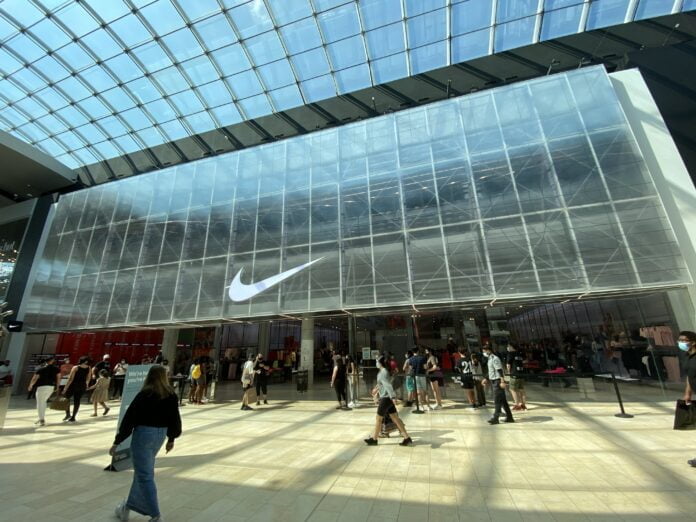
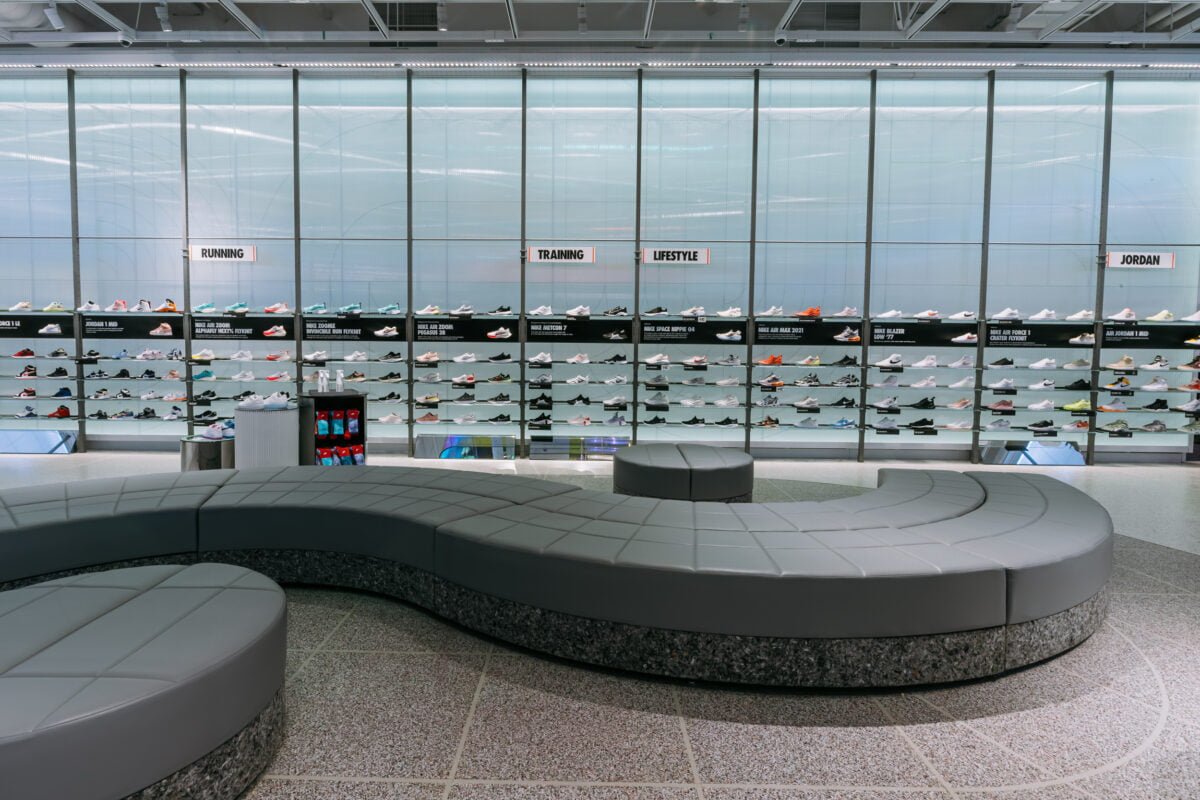
Nike store at Toronto's Yorkdale Shopping Centre in August of 2021. Photo: Craig Patterson
US-Based retail giant Nike has opened its first new concept flagship store in Canada at Toronto’s Yorkdale Shopping Centre. More locations are expected to follow as Nike continues with a store partnership with Israel-based retail fashion chain Fox-Wizel Ltd which already operates sports and beauty stores in Canada.
The Nike store was supposed to open in November of 2020 and it was delayed because of the pandemic. A report in Israel-based news publication Globes in September of 2019 announced that a 25,000+ square foot Nike store would be moving into Yorkdale. The now-open store occupies part of the mall’s former Home Outfitters storefront on the upper level as well as two main level retail spaces formerly occupied by Zara Home and Le Chateau.
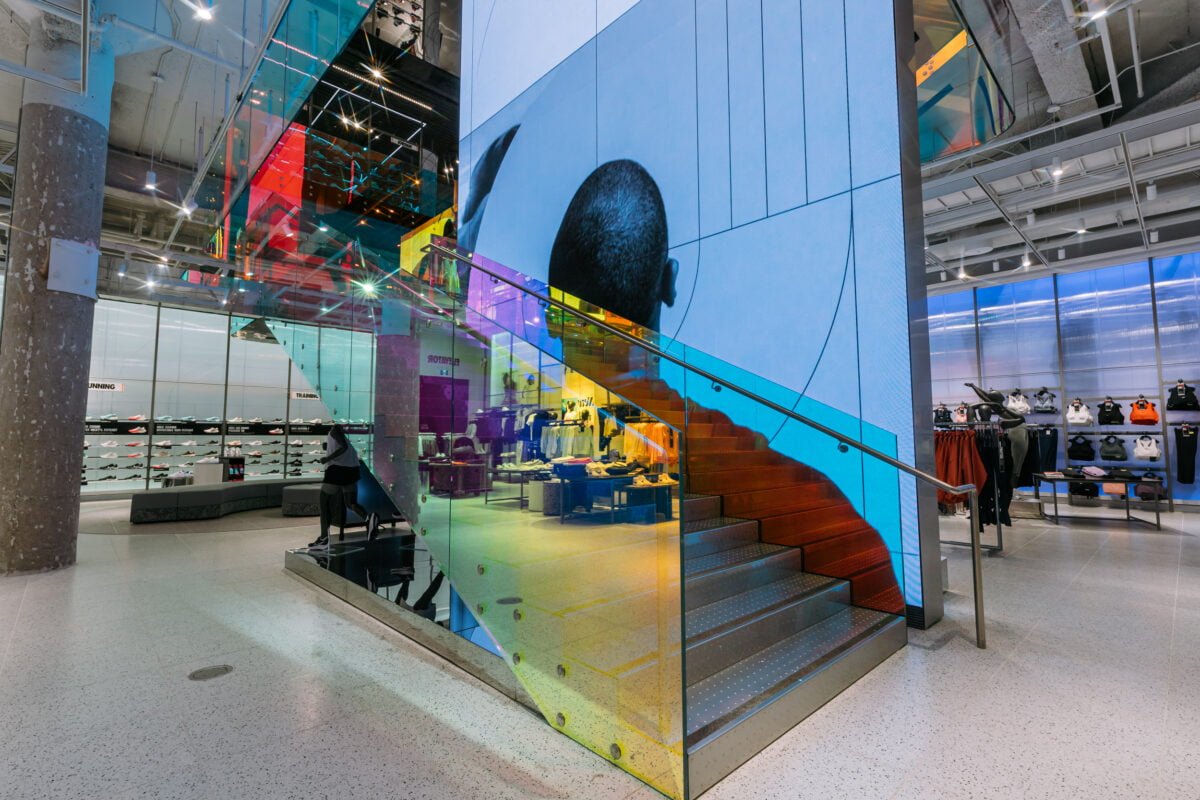
Photo: Nike
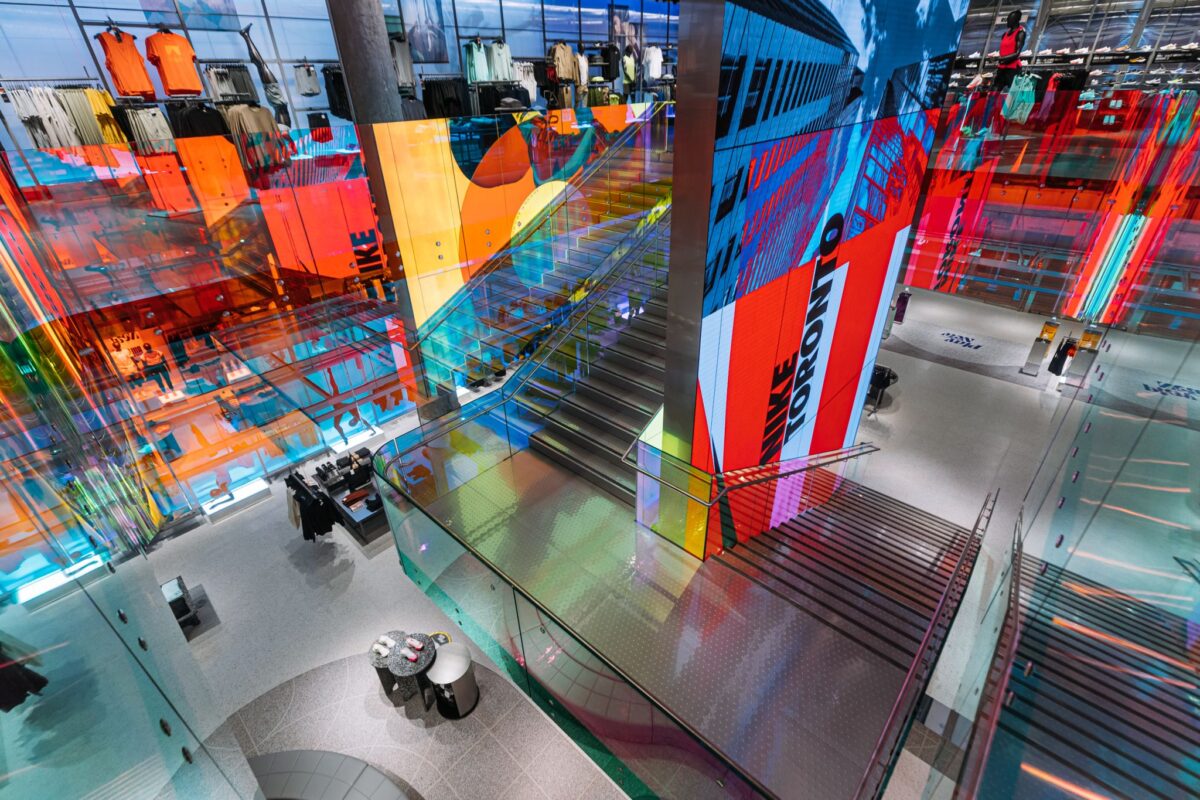
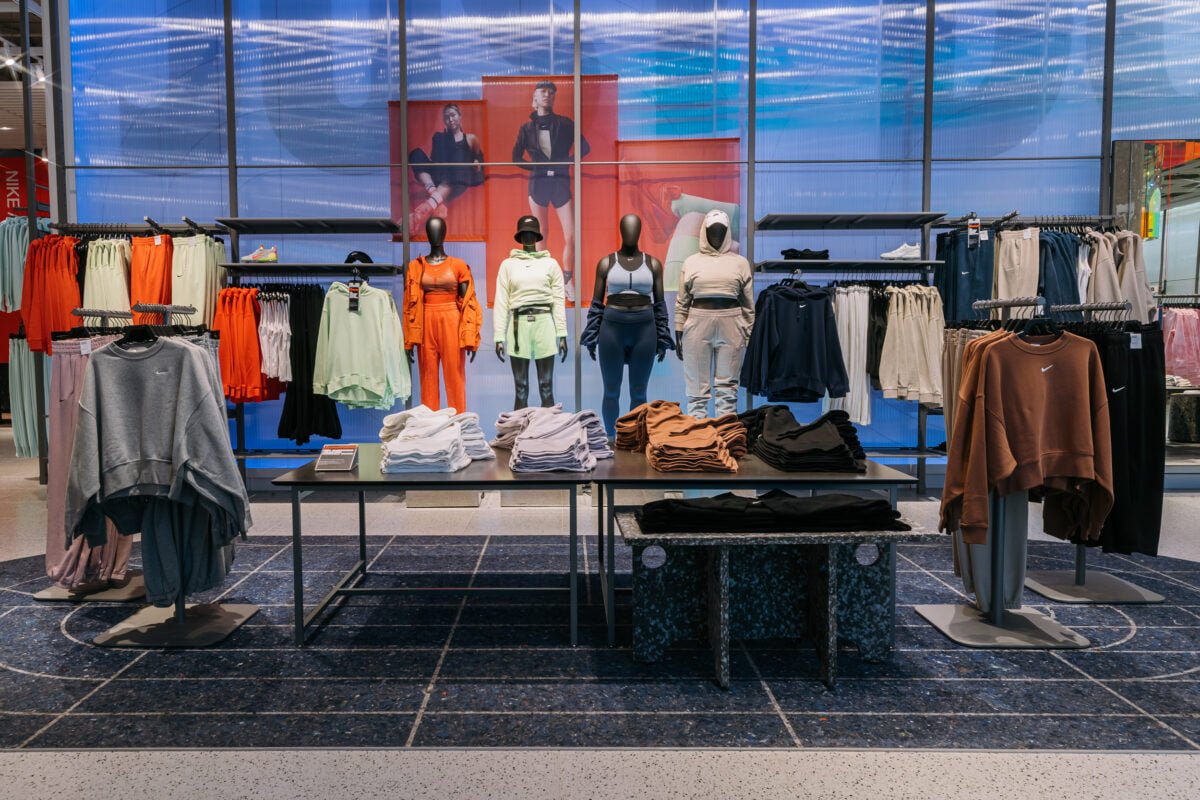
The store’s interior features video screens and various departments. The main floor includes Nike fashions for women and kids as well as a service desk. A steel and glass central staircase leads to the second floor which includes men’s items, Air Jordan products and washrooms.
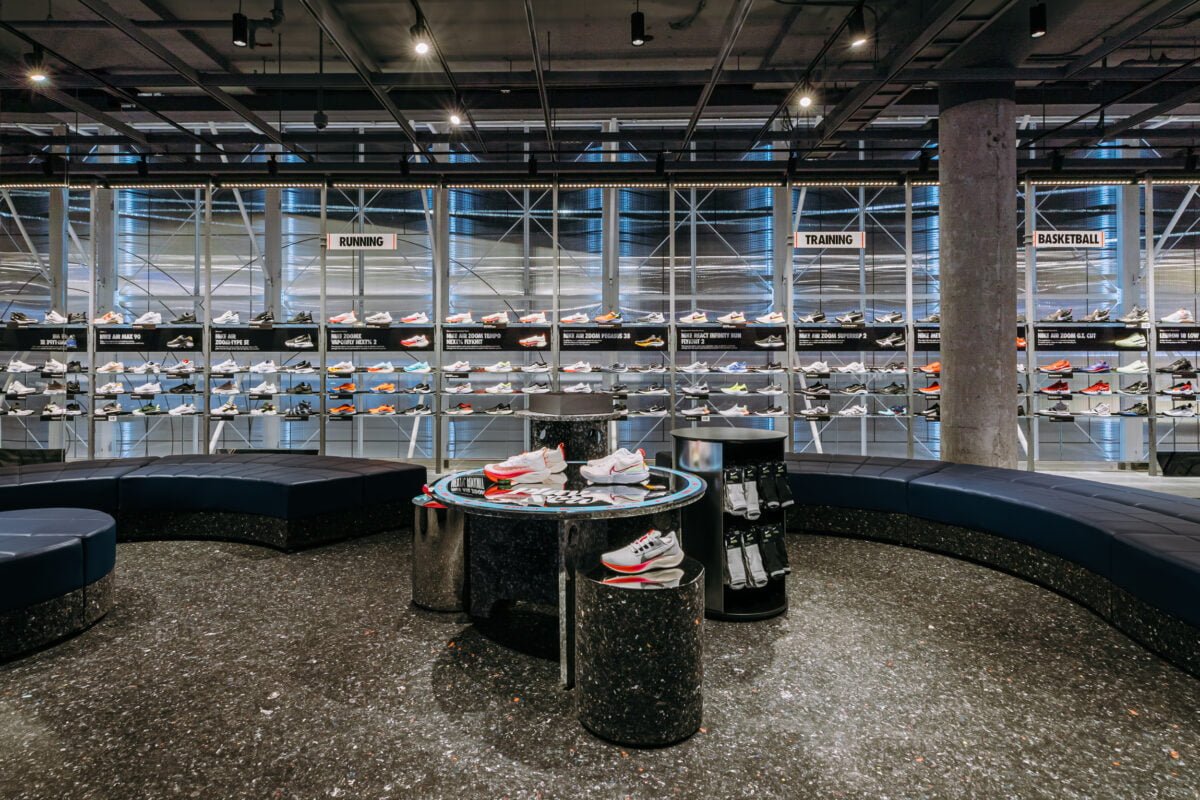
With an eye towards sustainability, the store features recycled flatpack fixtures, as well as details such as repurposed felt and rubber floor coverings and felt wall coverings as part of Nike Grind, a global sustainability program that helps transform manufacturing scrap and end-of-life shoes into recycled materials.
The Yorkdale store’s design was a collaboration between Nike Store Design in Portland, Oregon and BDP Quadrangle.
According to the 2019 news report, Fox-Wizel invested about $12 million in the construction of the new Nike store with a substantial amount of the financing coming from Yorkdale’s landlord, Oxford Properties. A ten-year lease for the store was reportedly signed with an option to extend it for five years. Annual revenues for the Yorkdale Nike store at the time were projected to be in excess of $20 million annually.
Nike Yorkdale (Image: Nike) Photo: Nike
The Yorkdale Niketown is Fox-Wizel’s largest storefront in the world, containing an expansive assortment of Nike products including fashions as well as technology and gadgets. Fox-Wizel already operates several Nike stores in Canada through its subsidiary Fox Canada that also includes Israeli beauty chain Laline, which is also expanding aggressively into the Canadian market.
In 2017, Fox-Wizel signed an agreement with Nike Canada to set up a chain of stores in this country over a period of seven years. As a result, a chain of Nike stores have rapidly opened in Canadian cities. More large-format Nike stores are expected to open in major Canadian cities with targets including downtown Toronto and Vancouver.
Photo: NikePhoto: Nike
While the brand opens standalone stores, Nike has been pulling out of wholesale partners in multi-brand retailers globally to focus on direct-to-consumer stores. It remains to be seen what happens in terms of distribution of Nike products in Canada in the future.
In years past, Nike operated Niketown locations in major cities globally, though the concept was scaled back. A Niketown location once occupied nearly 40,000 square feet of space at 110 Bloor Street West in Toronto, which is now part of a Brooks Brothers store in a commercial podium that will soon see a significant redevelopment.
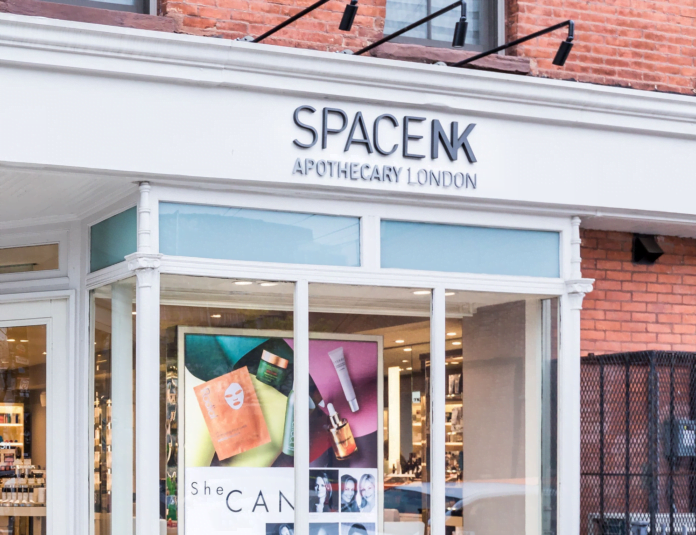
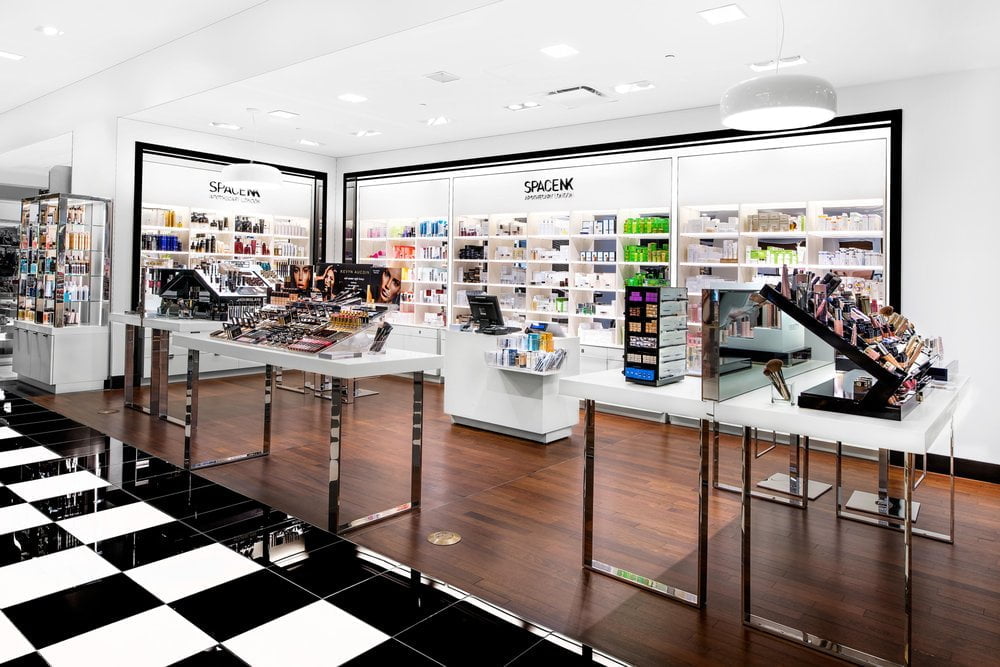
UK-based beauty apothecary concept Space NK is launching an initial three physical shop-in-stores in Hudson’s Bay flagships this fall with an online presence beginning immediately. The long-term strategic partnership could be the beginning of other national brand partnerships with Hudson’s Bay stores.
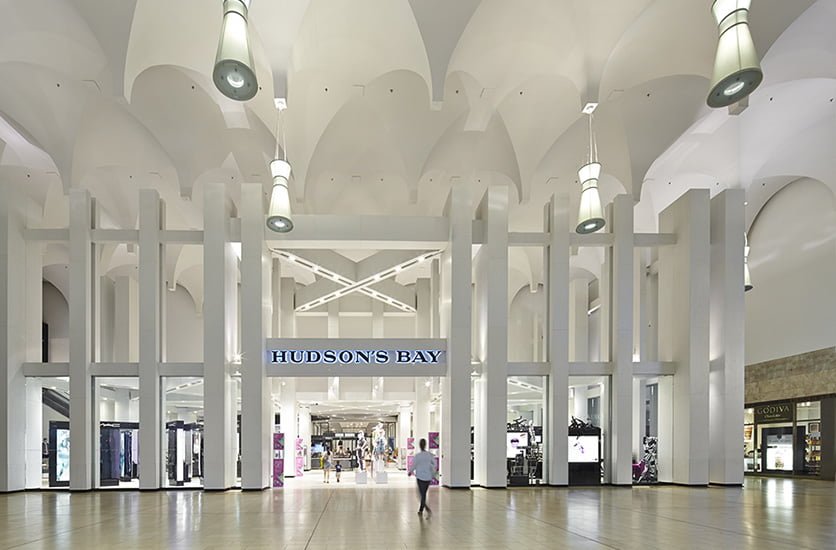
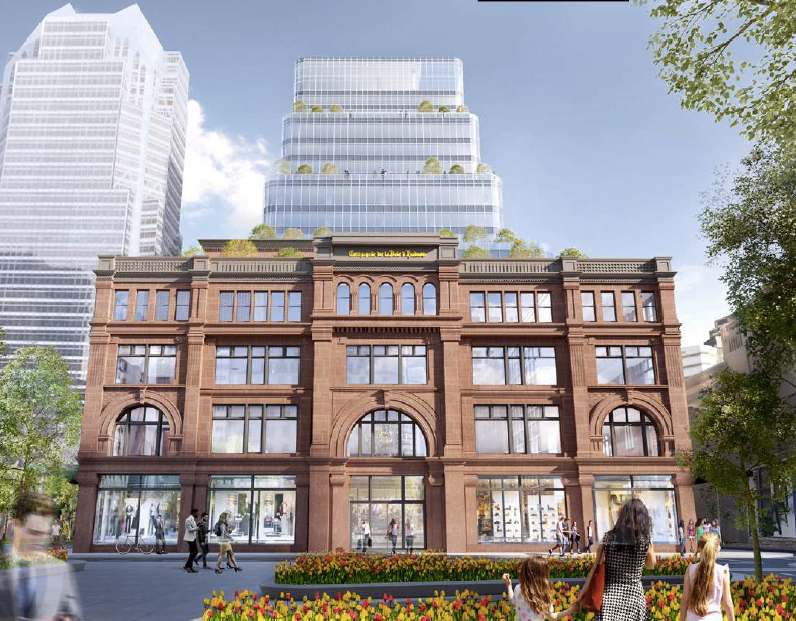
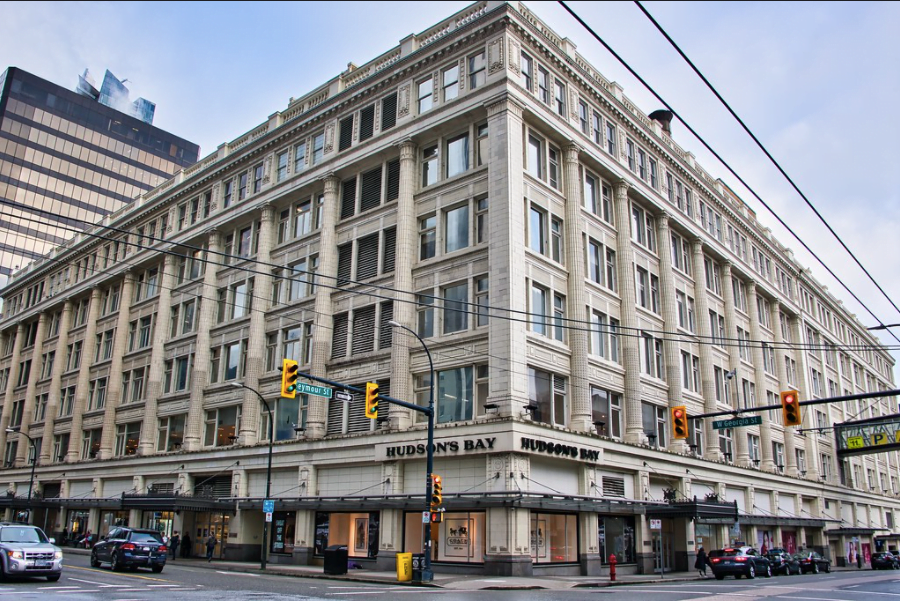
The first three physical Space NK wholesale shop-in-stores will be at Hudson’s Bay stores in Toronto, Montreal and Vancouver in October. In Toronto, Space NK will occupy about 1,100 square feet in the main floor beauty hall of the Yorkdale Shopping Centre Hudson’s Bay store. In the downtown Montreal Hudson’s Bay flagship, Space NK will occupy 755 square feet on street level while in Vancouver, the brand will have a 569 square foot main floor shop-in-store at the downtown Hudson’s Bay flagship. More Space NK locations within Hudson’s Bay are expected as the wholesale partnership expands including the Queen Street flagship store in downtown Toronto.
Hudson’s Bay’s newly rebranded website ‘The Bay’, along with its app, officially began carrying Space NK products on Friday. And this fall, 25 Hudson’s Bay stores will carry a select line of hair care products from brands such as R+co, Virtue, Christophe Robin and Philip B in branded display ‘towers’.
Space NK at Bloomingdale’s Aventura Mall in Miami. Photo: Bloomingdale’s
An initial 17 brands are being carried at The Bay with with the Space NK partnership, including a range of premium, independent and niche brands never before carried in Bay stores or online in categories including skincare, haircare, and makeup. Brands such as Sunday Riley, Aesop, Tata Harper, Chantecaille and Boy Smells are now available online at thebay.com and more brands will be added in the coming months.
“This is a beauty game-changer for the Canadian consumer. With a digital-first approach, Space NK brings innovative and sought-after brands to The Bay. Customers will discover an array of skincare, makeup, haircare and lifestyle products,” said Jo Osborne, Senior Vice President of Beauty at The Bay. “This transformative partnership reflects how we are innovating and expanding our beauty experience, for every Canadian, at every stage in their beauty journey.”
Noah Rosenblatt, President of Space NK’s North American operations, said, “Our ability to act as the ‘curator’ of some of the world’s most desired beauty brands uniquely places us to support the beauty businesses of our retail partners. The Bay’s customer profile and presence in the market make them the perfect partner to expand our department store business in Canada.”
Hudson’s Bay beauty hall at Toronto’s Yorkdale Shopping Centre. Photo: Alex Rebanks Architects Inc.Rendering of the renovated downtown Montreal Hudson’s Bay store. Photo: Hudson’s Bay Company Downtown Vancouver Hudson’s Bay store, image: Ted McGrath via Flickr
Space NK was founded in London in 1991 with a storefront in the city’s Covent Garden which opened in 1993. The company now has over 70 standalone stores across the UK and Ireland. Until last year, Space NK also had eight standalone stores in the United States and the company recently shut them to focus on a wholesale model for the North American market.
Similar to Hudson’s Bay, Space NK also has partnered with department store retailers in the United States. In 2008, Space NK partnered with Bloomingdale’s to open concessions in several store locations and these are now being converted to a wholesale model as per Space NK’s new strategy. Space NK shop-in-stores are also found in several American Nordstrom store locations.
Other retailers in North America are also launching beauty shop-in-stores. US-based Kohl’s began rolling out Sephora shop-in-stores earlier this month with plans for at least 850 locations by 2023. At the same time, Sephora is terminating its partnership with JC Penney (which began in 2006) with those Sephora shop-in-stores to shut by next year.
Other Hudson’s Bay department stores in Canada have seen recent updates including a partial renovation to the Londonderry Mall store in Edmonton which now features showroom spaces for baby items and home goods. The two-level store features central checkouts on each level, mirroring recent changes to Hudson’s Bay stores at Centrepoint Mall in Toronto and at the Centre Laval near Montreal.
New central check-out at Hudson’s Bay Londonderry Mall in Edmonton. Photo: Christa Patterson
More partnerships are expected for Hudson’s Bay in the coming months as the retailer continues to transition its business model and bring in new brands. Hudson’s Bay is competing with the likes of Nordstrom which entered Canada in 2014 as well as a range of retailers and standalone brands that are selling both in-store and online. The department store model has seen a downward trend in North America in recent years as brands increasingly sell direct-to-consumer while pressure also mounts from discounters, off-price and online retailers. Prior to the pandemic, Hudson’s Bay was said to be looking at converting various departments to a concession model where outsourced third parties would operate such departments as footwear and jewellery, with UK-based Kurt Geiger rumoured to have been in discussions to run Hudson’s Bay’s footwear departments in Canada while Australia-based Michael Hill was said to be in negotiations to take over the jewellery operations.
Hudson’s Bay may still look to a concession model as brands increasingly demand autonomy in terms of selling directly to consumers. Toronto-based Holt Renfrew, currently part of London-based Selfridges Group, shifted its business model in recent years to include a significant amount of leased floor space dedicated to brands operating their own stores such as Gucci, Prada, Louis Vuitton, Fendi, Saint Laurent and others. The concession model is also being adopted by Seattle-based Nordstrom which said several months ago that it planned to expand concession-based sales from 5% to 30% in its stores.
Toronto’s Bloor-Yorkville area recently saw several new retailers open in the prestigious neighbourhood, and more stores are on the way. Despite the pandemic, retailers continue to open stores which is a positive sign for brick-and-mortar retail. Here are a few retailers that recently opened, followed by several that will be opening soon.
LEONE Napoli
Image: LEONE Napoli Yorkville
Image: LEONE Napoli Yorkville
Image: LEONE Napoli Yorkville
Image: LEONE Napoli Yorkville
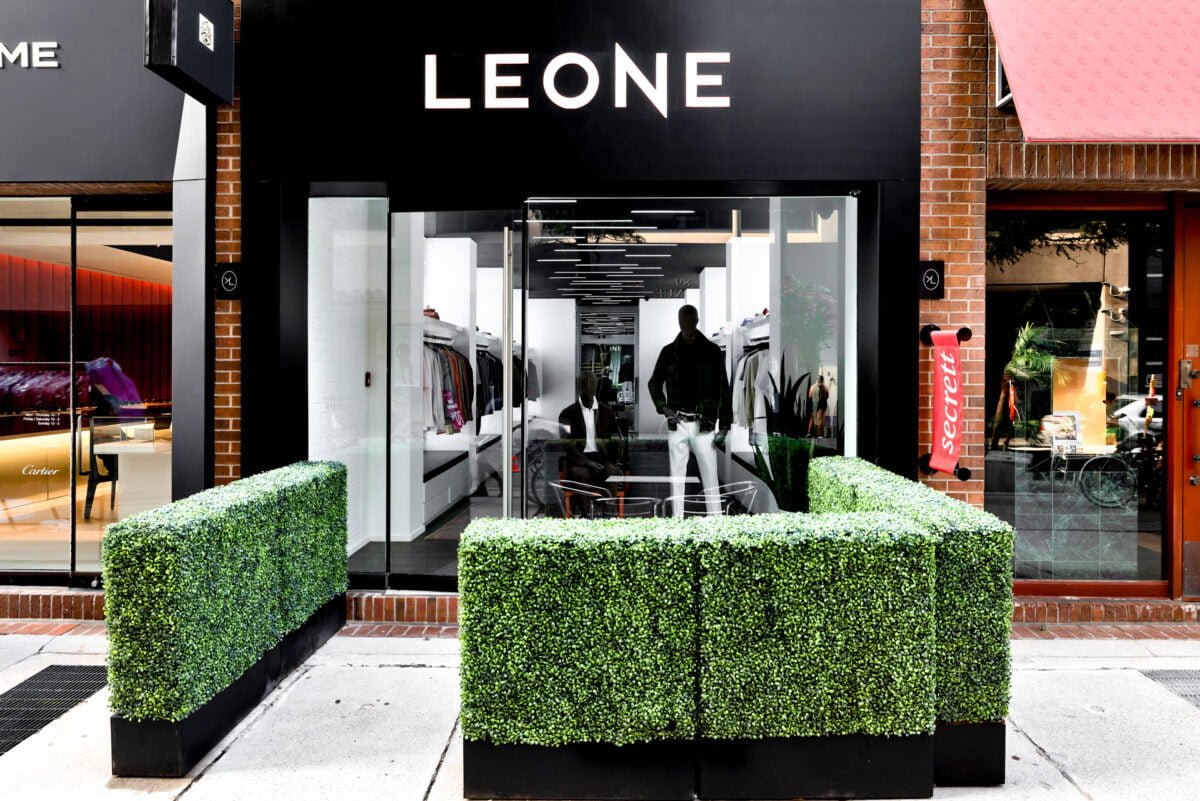
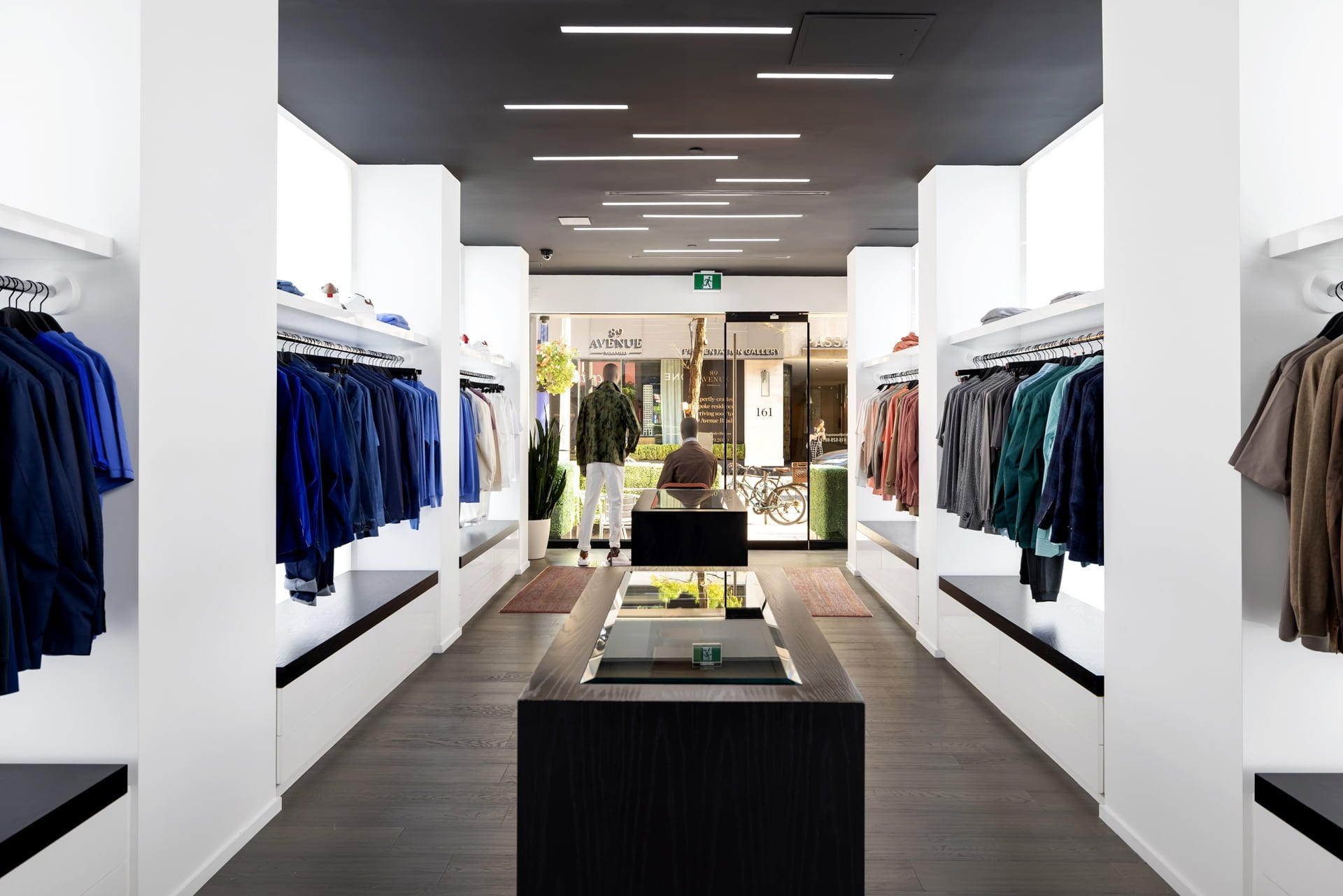
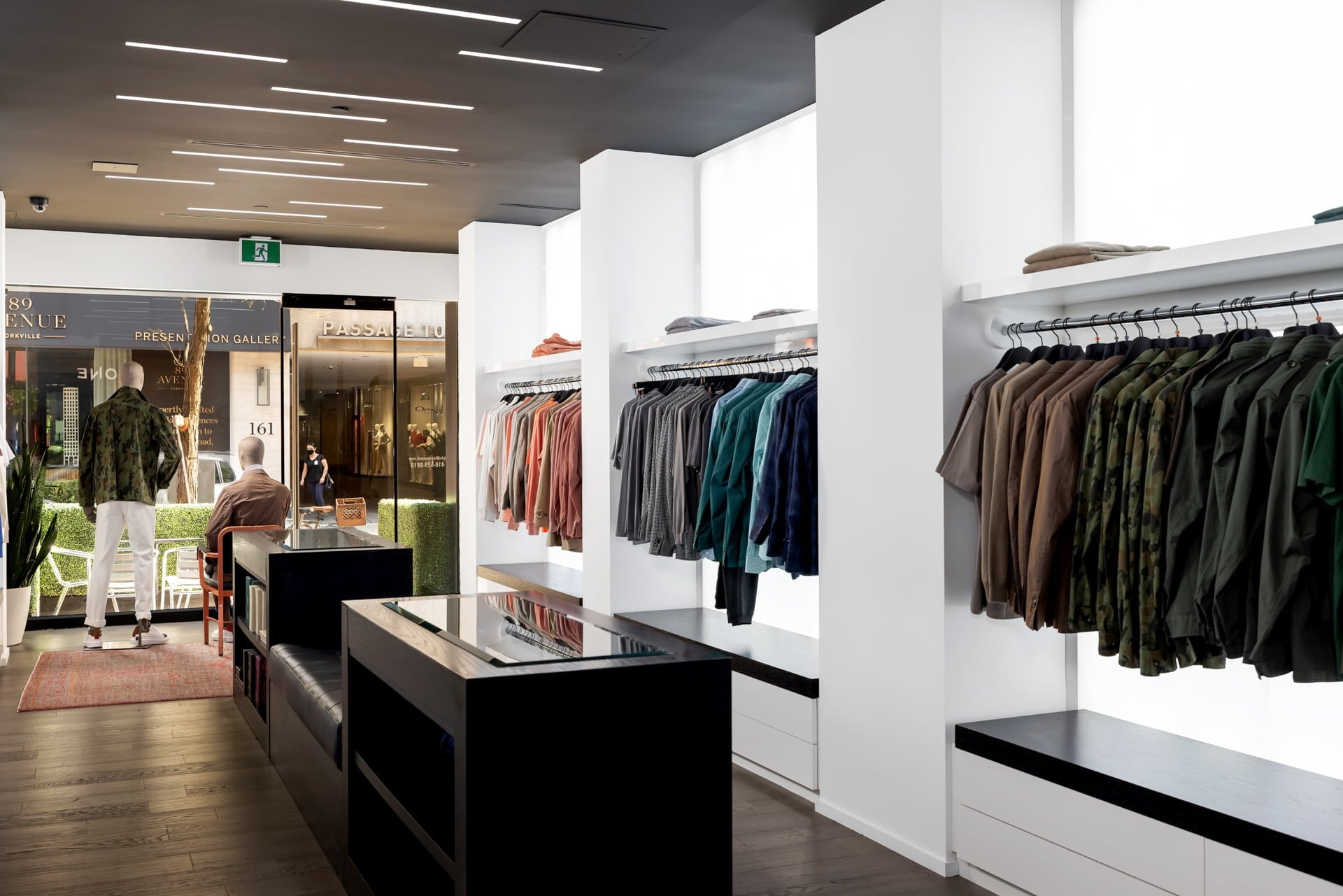
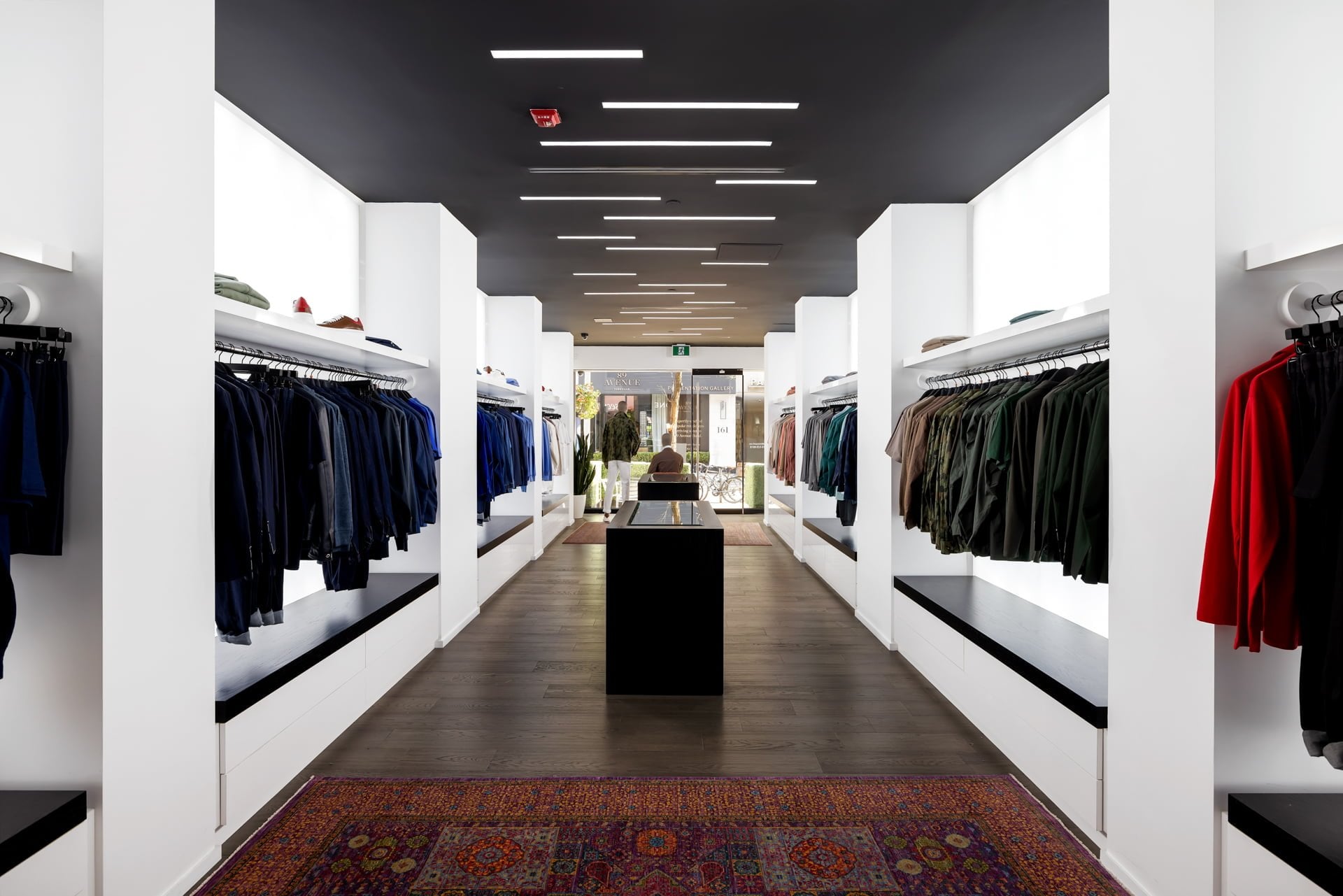
Several months ago two Toronto-based entrepreneurs, Aaron Gonsenhauser and David Petrash, opened a mono-brand menswear store called LEONE Napoli at 162 Cumberland Street. The store stocks a range of made-in-Italy men’s fashions and accessories that carry the brand’s logo. Suiting is an anchor for the brand which also makes more casual items — pieces are made in Italy including well-made jackets lacking lining.
It took two years for the duo to build Leone Napoli. In person research was done in Italy, involving multiple trips to Biella for fabrics and to Casalnuovo di Napoli which is known for its tailoring. Prices are in the $250 range for jeans and shirts and suits average about $1,700.
Lisa Gozlan
Lisa Gozlan (Image: Craig Patterson)
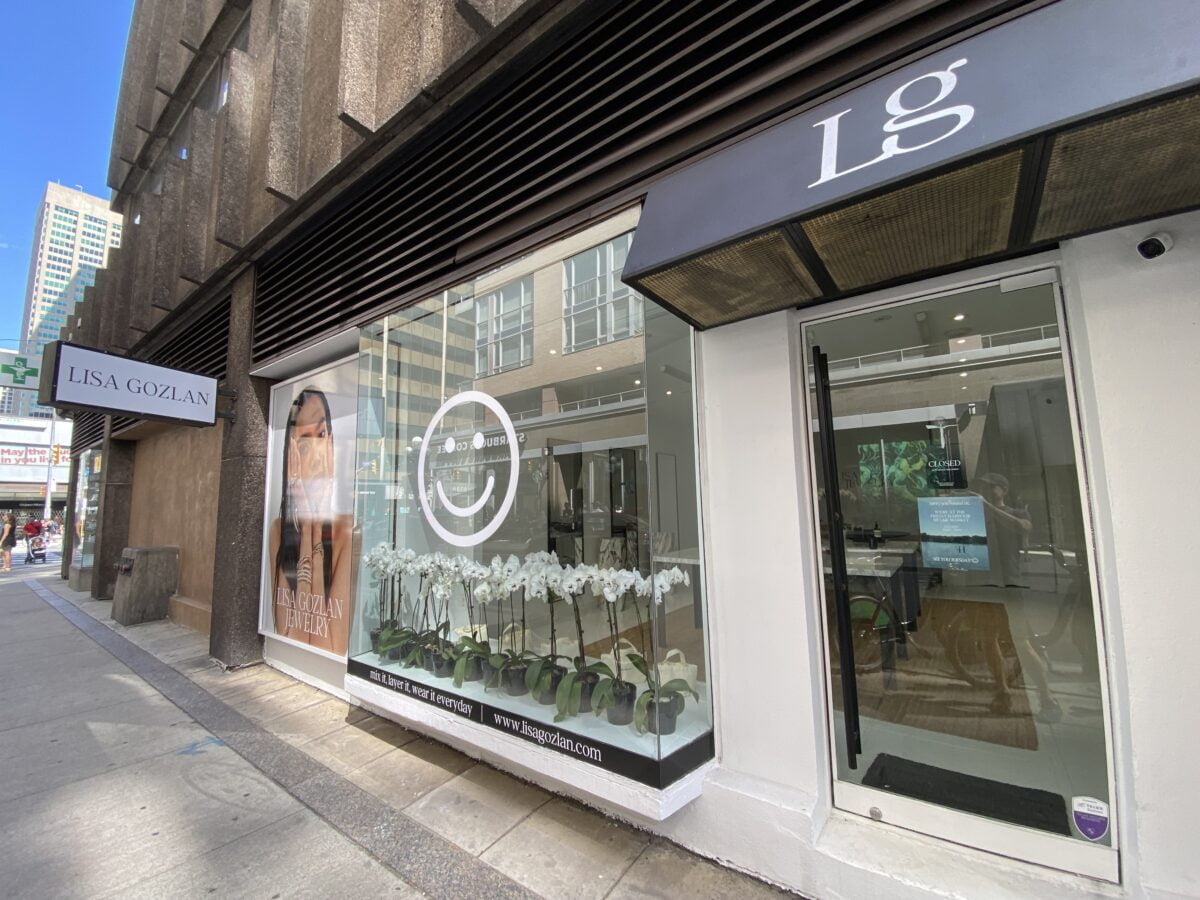
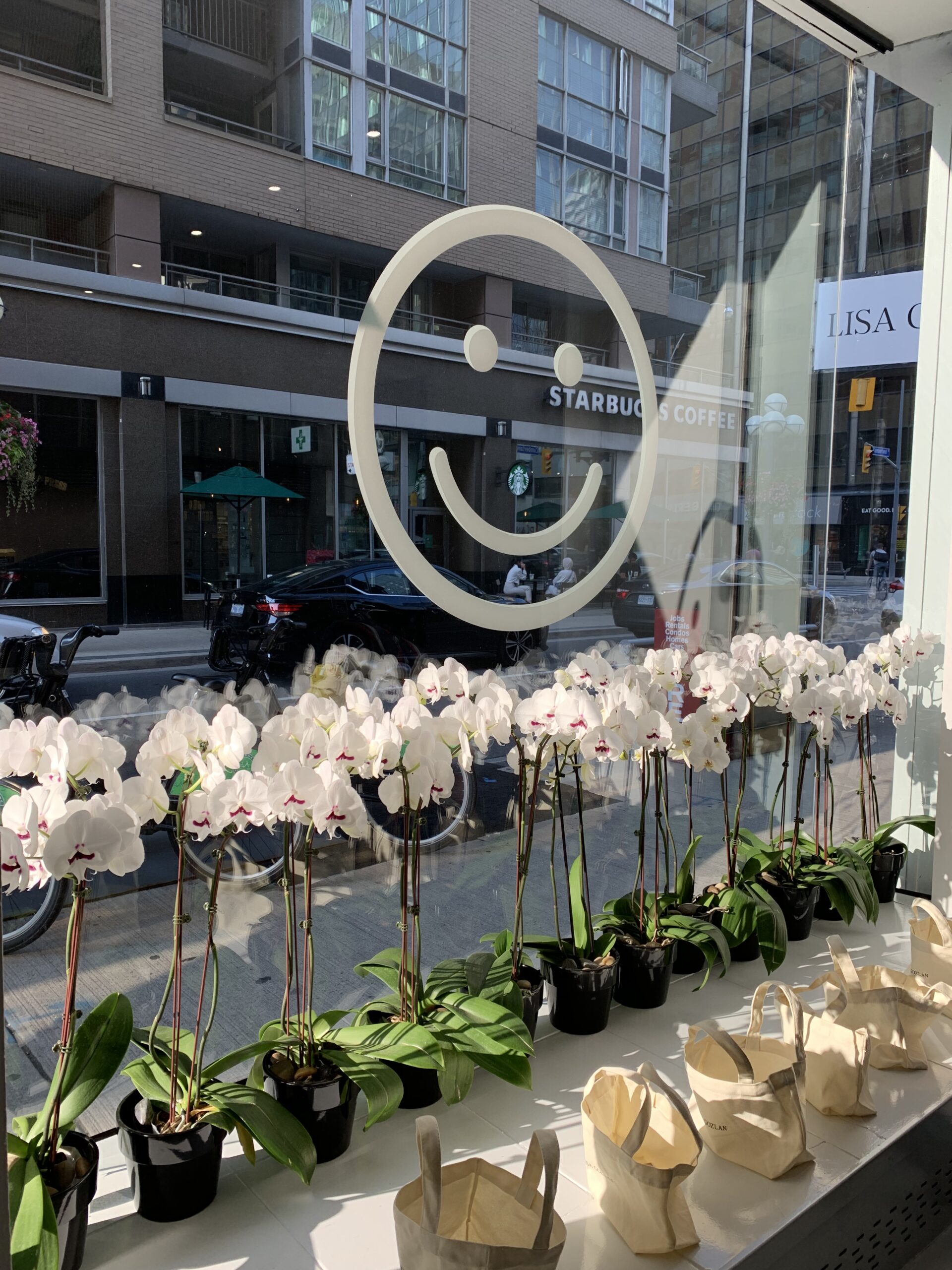
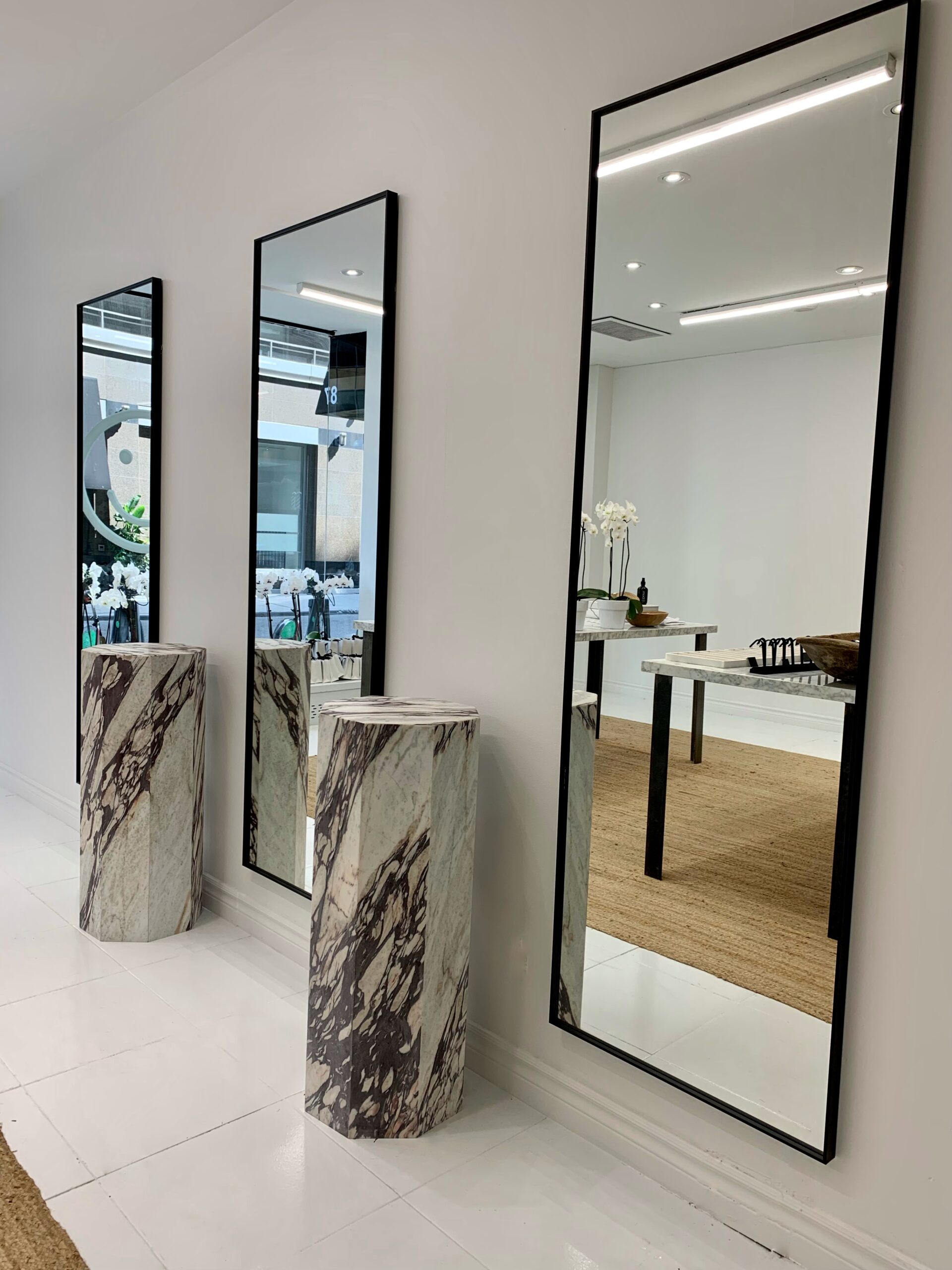
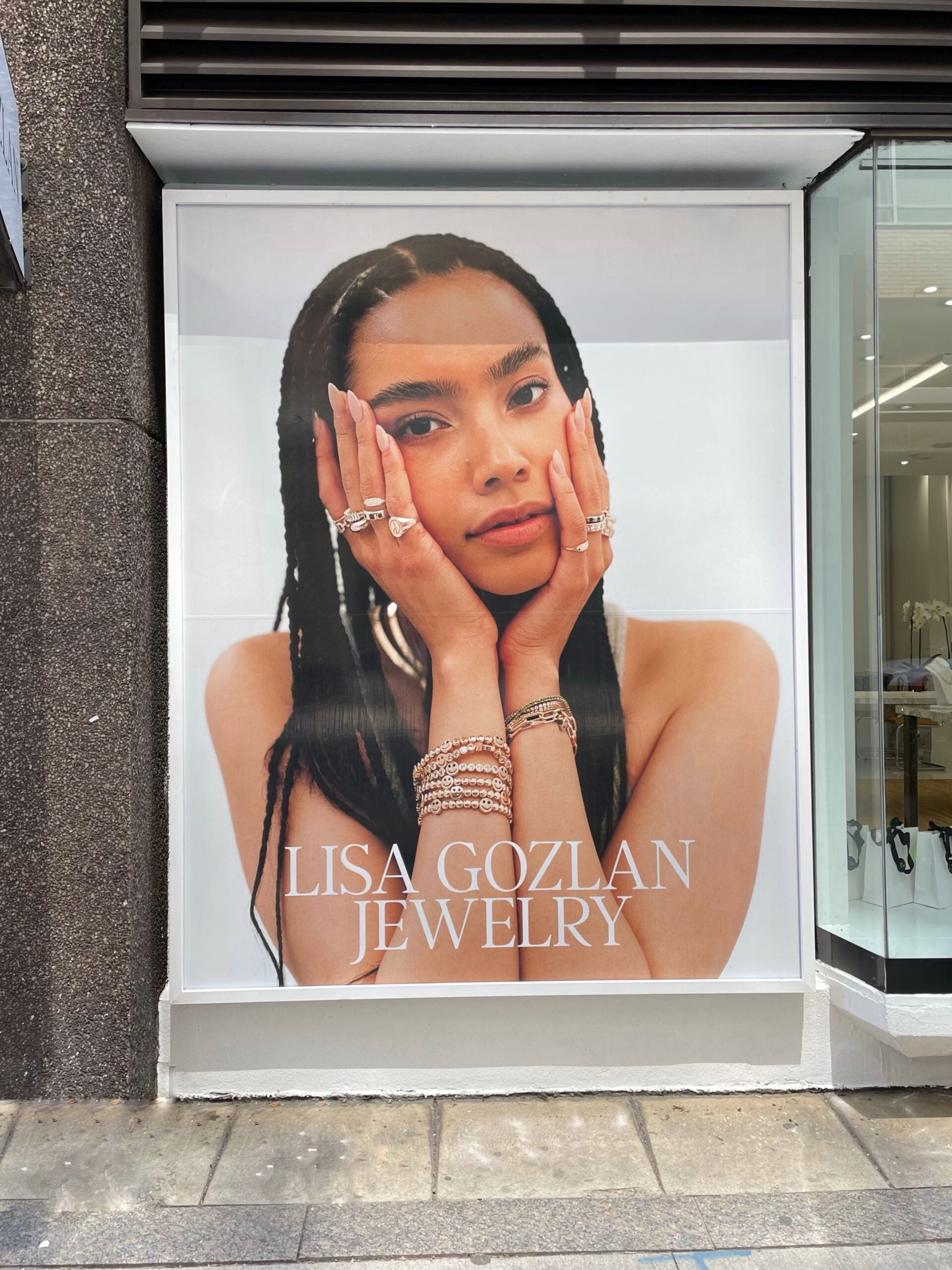
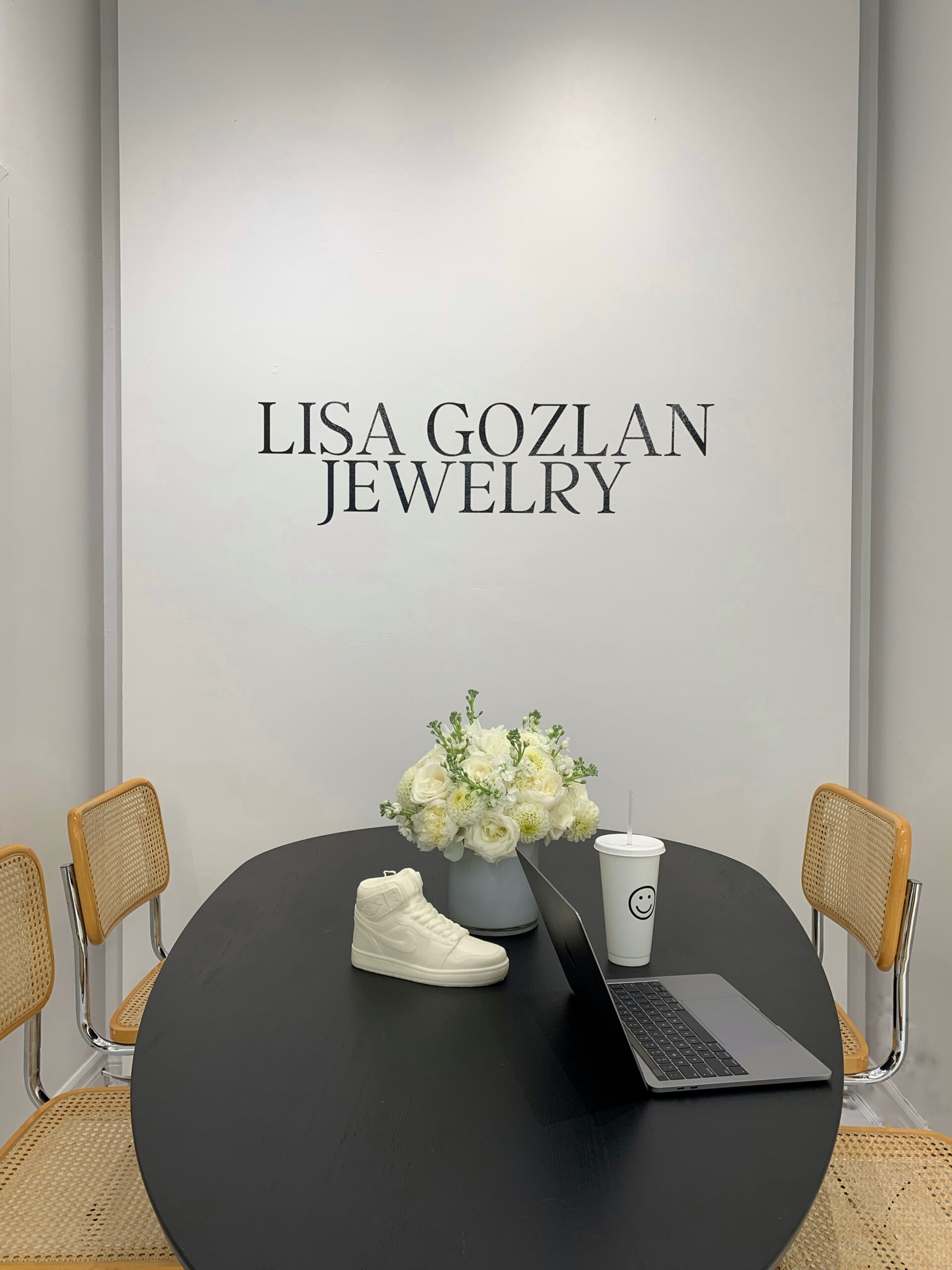
Toronto-based jewellery brand Lisa Gozlan recently opened a small store at 87 Cumberland Street. Lisa and her husband Ryan, a 5th-generation Gozlan in the jewelry business, are continuing the family legacy with the launch of Lisa Gozlan Jewelry. The store specializes custom jewelry including one-of-a-kind pieces including engagement and bridal.
1 of 4
Image: Lisa Gozlan Jewelry
Image: Lisa Gozlan Jewelry
Image: Lisa Gozlan Jewelry
Image: Lisa Gozlan Jewelry
All Eyes on Me
All Eyes on Me (Image: Craig Patterson)
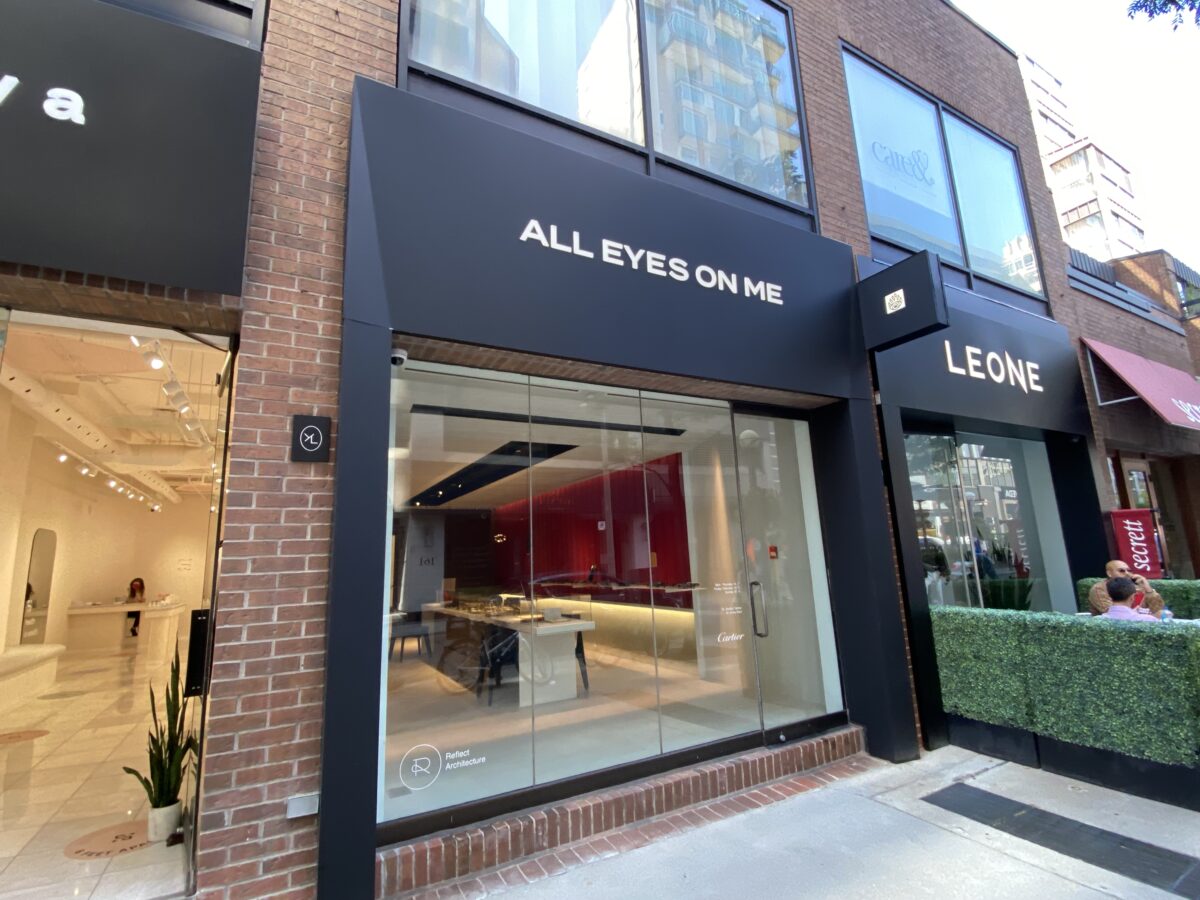
An upscale jewel box-like eyewear retailer called All Eyes on Me recently opened at 162 Cumberland Street. The beautiful store stocks several luxury eyewear brands with a particular focus on Cartier. Some styles are not available elsewhere in Canada or even globally, and we’ll be following up on this with a full article with photos discussing the store.
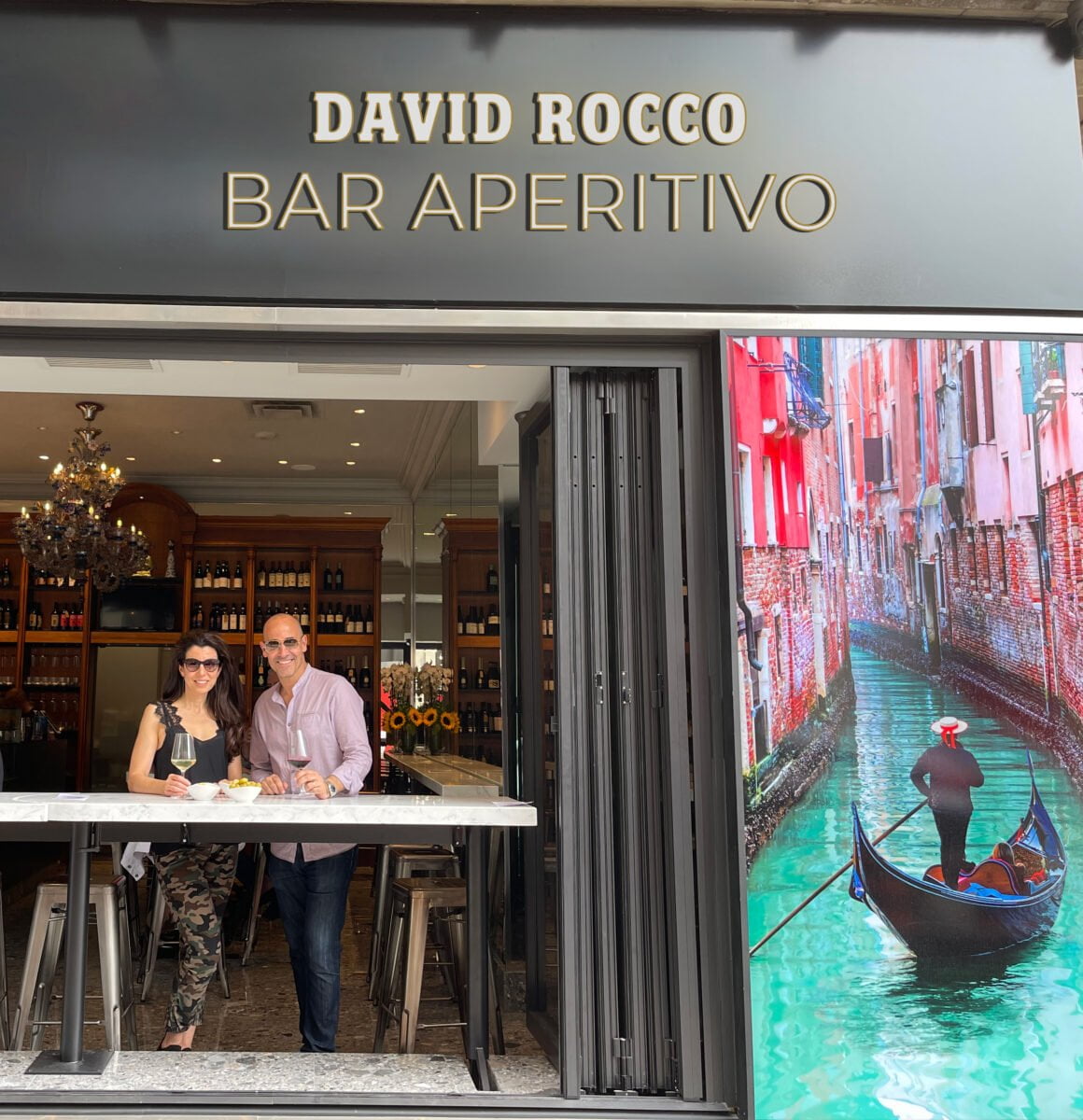
David Rocco Bar Aperitivo
Image: David Rocco Bar Aperitivo
Toronto-based food celebrity David Rocco recently opened a wine bar at 95 Cumberland Street in Yorkville called ‘David Rocco Bar Aperitivo’. It is in a retail space formerly occupied by HÖM Cafe.
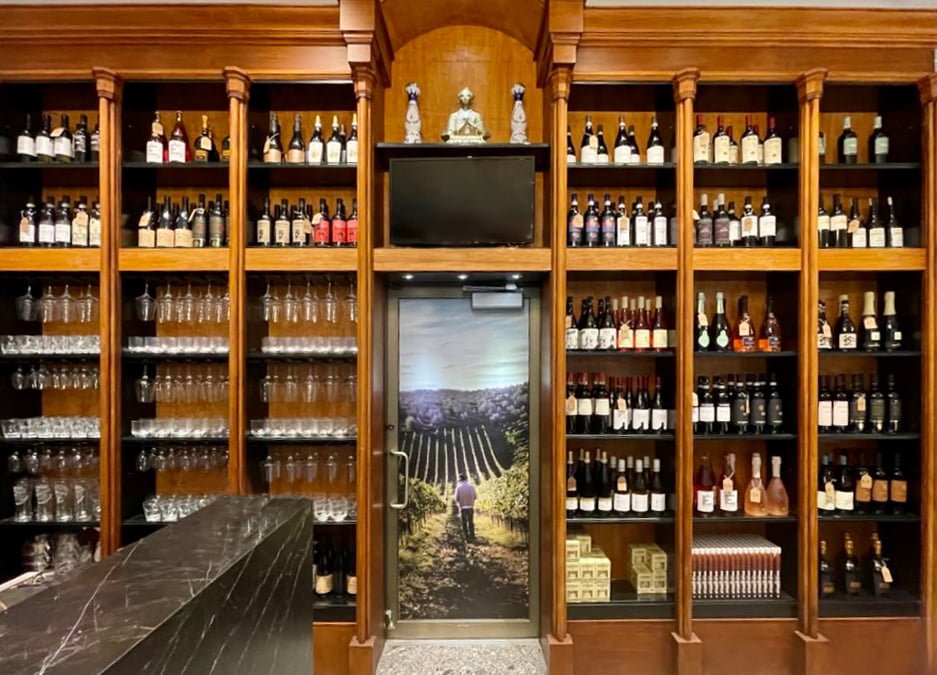
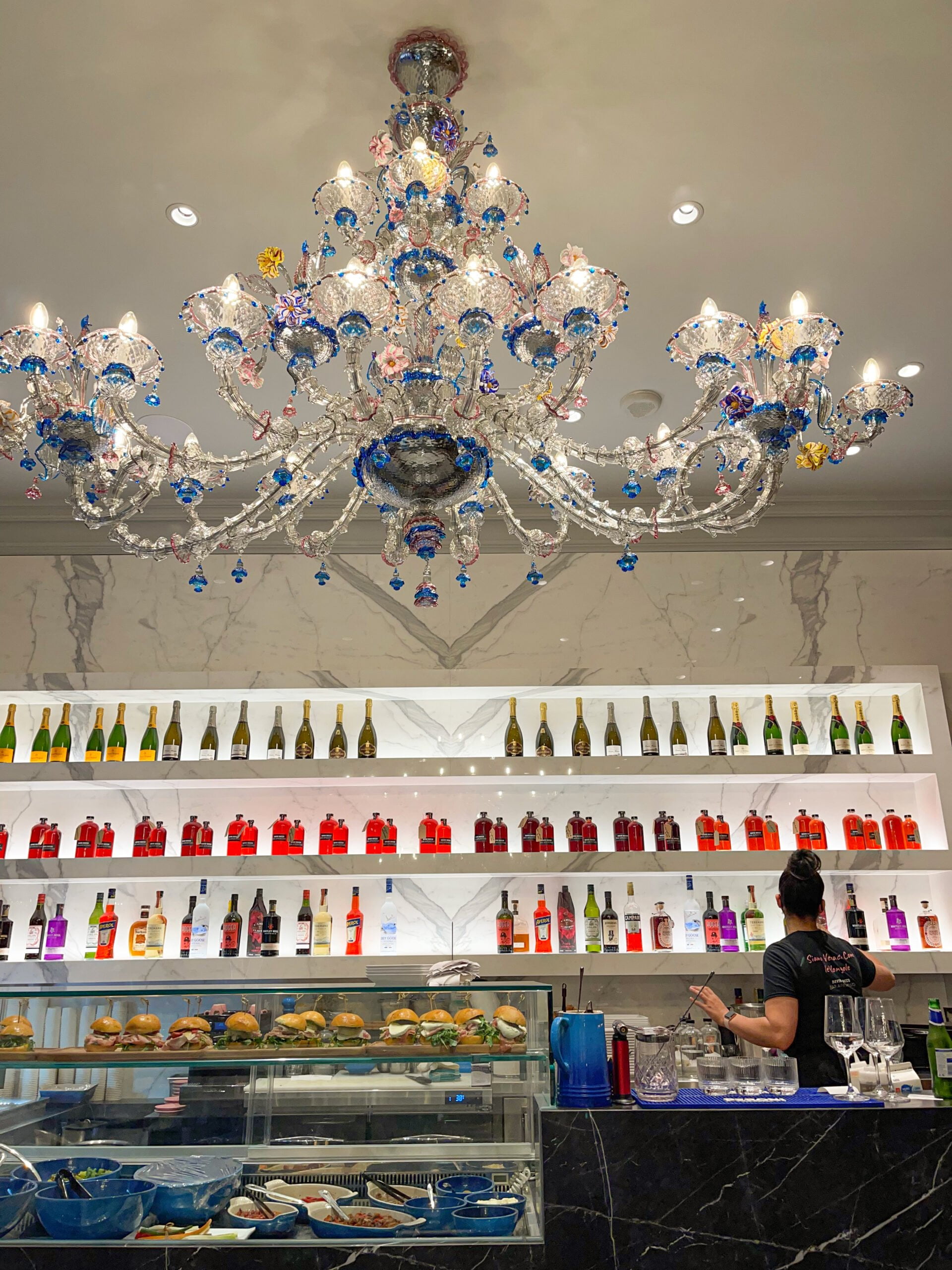
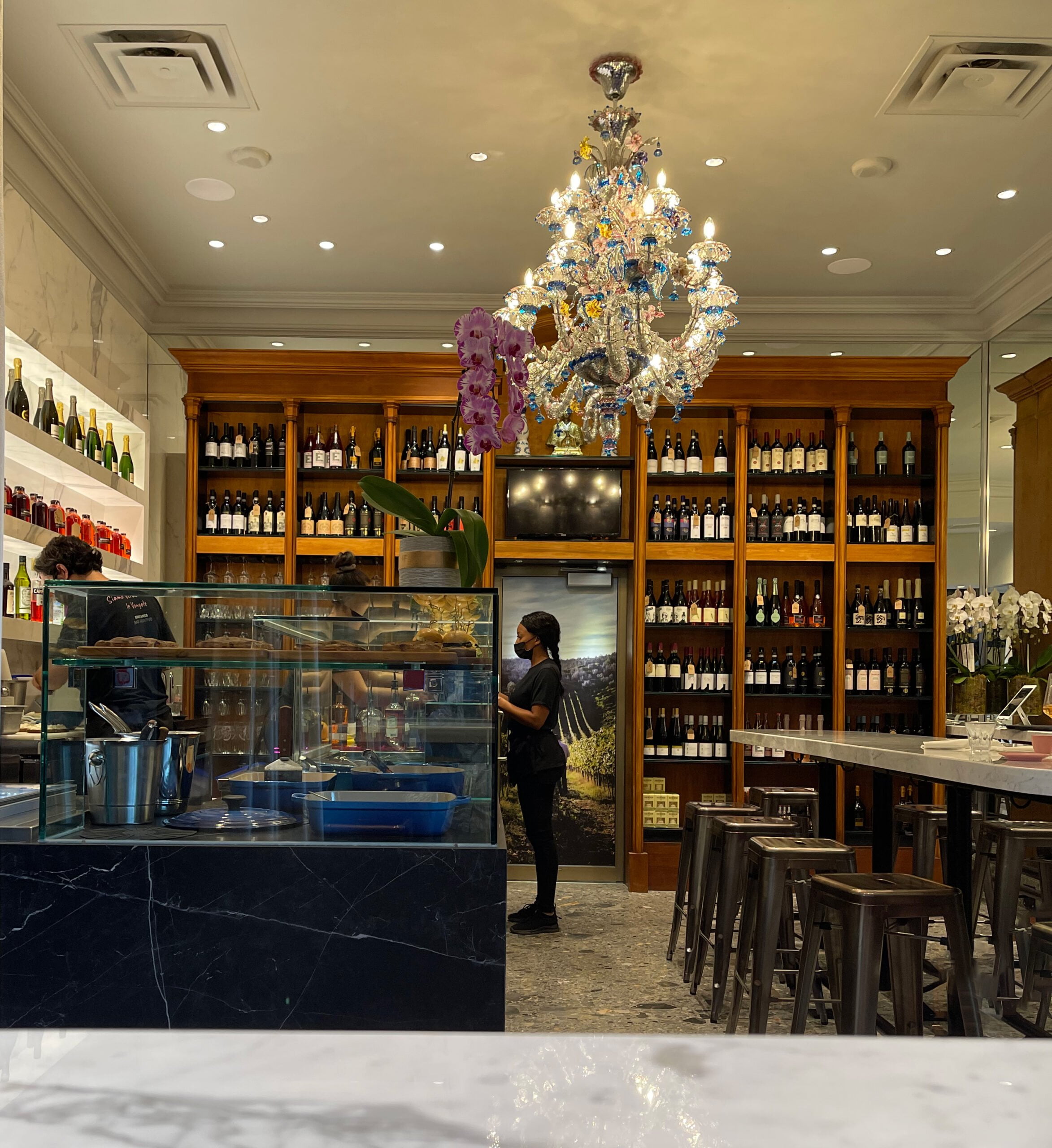
A range of Italian wines, Prosecco, Champaign, and mixed drinks are available as well as a tapas-stye menu featuring small portions. The vibe inside is intimate with high-top tables. The front-of-house space spans about 575 square feet with a capacity of about 25 seats. The total leased space is about 1,200 square feet at street level. Also included, weather permitting, is an extended patio along Cumberland Street that has been popular over the summer.
The overall design of the space is inspired by the culmination of Rocco’s travels to Italy and other passions. Rocco is a celebrity chef who expanded his business to become an executive producer, best-selling author and host of several internationally syndicated TV series. Acclaimed Toronto restaurant Oretta on King Street West is among Rocco’s other business ventures.
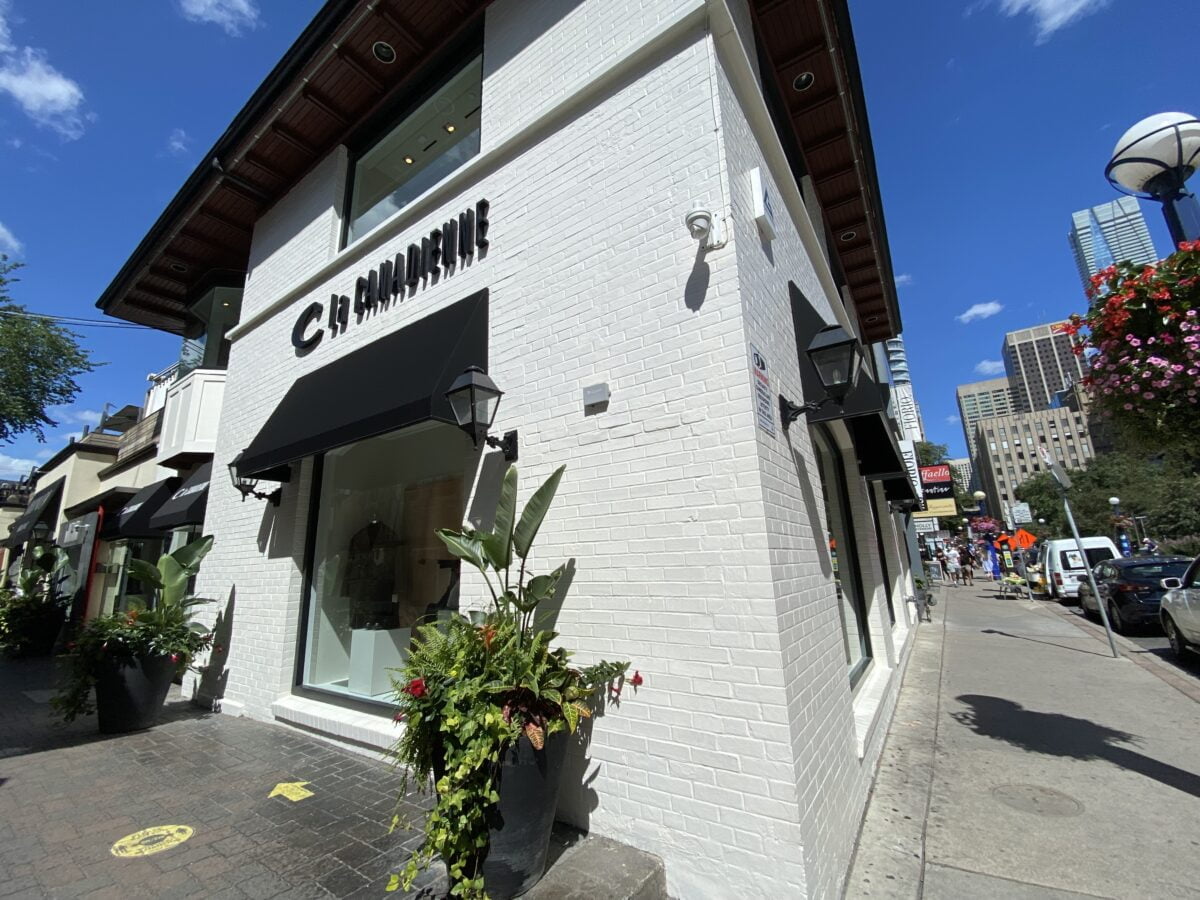
We recently reported that Montreal-based women’s footwear and fashion brand La Canadienne had opened its first Toronto storefront in the former Kate Spade space at 138 Cumberland Street. The store spans about 4,000 square feet. We recently profiled a feature article on the store and the space with interior photos.
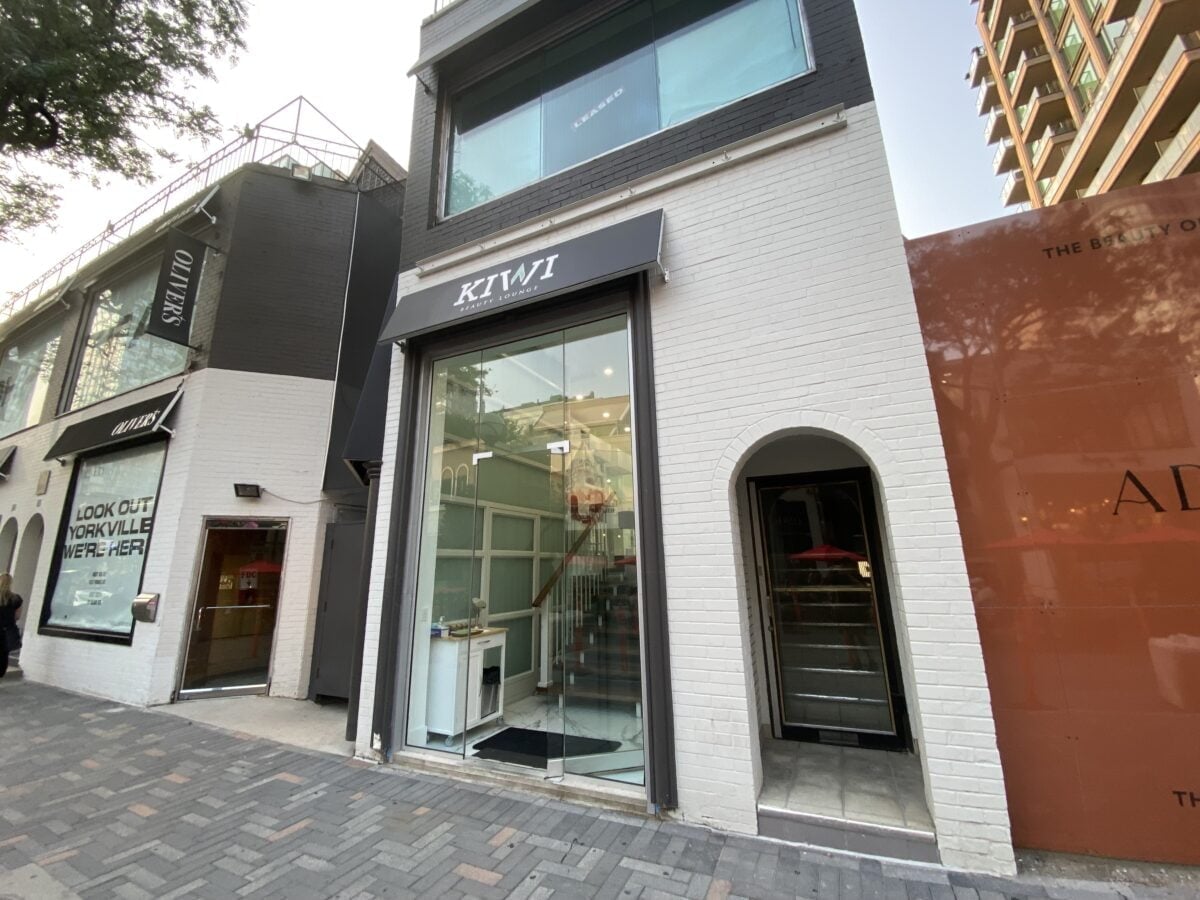
KIWI Beauty Lounge
KIWI (Image: Craig Patterson)
The second location for beauty concept KIWI recently opened at 86 Yorkville Avenue. The storefront provides face rejuvenation and body care treatments including multiple treatment rooms. Its first store for the company is at the CF Markville Shopping Centre in Markham.
KIWI’s Yorkville location is across the street from the soon-to-open Isaia storefront and is a short distance away from big luxury names including Chanel, Versace, Brunello Cucinelli and Christian Louboutin.
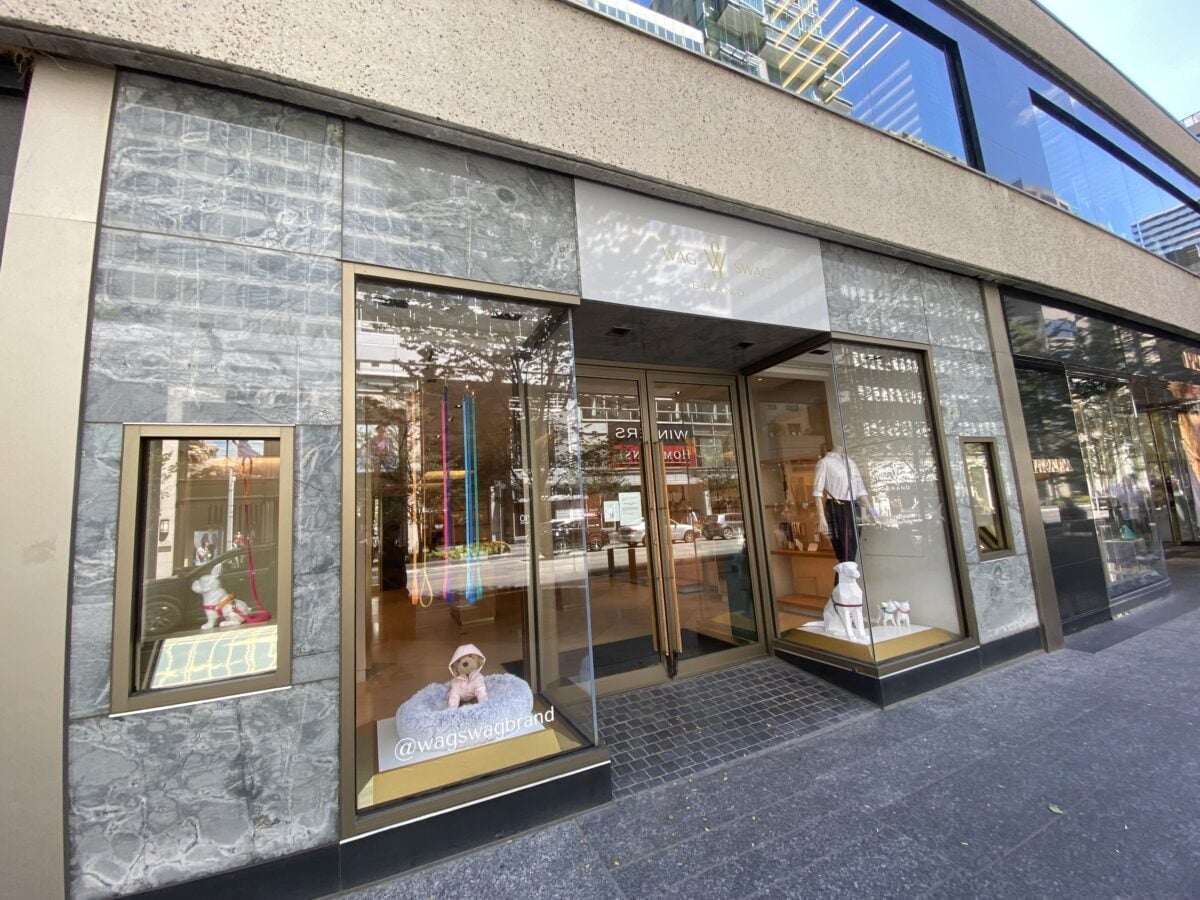
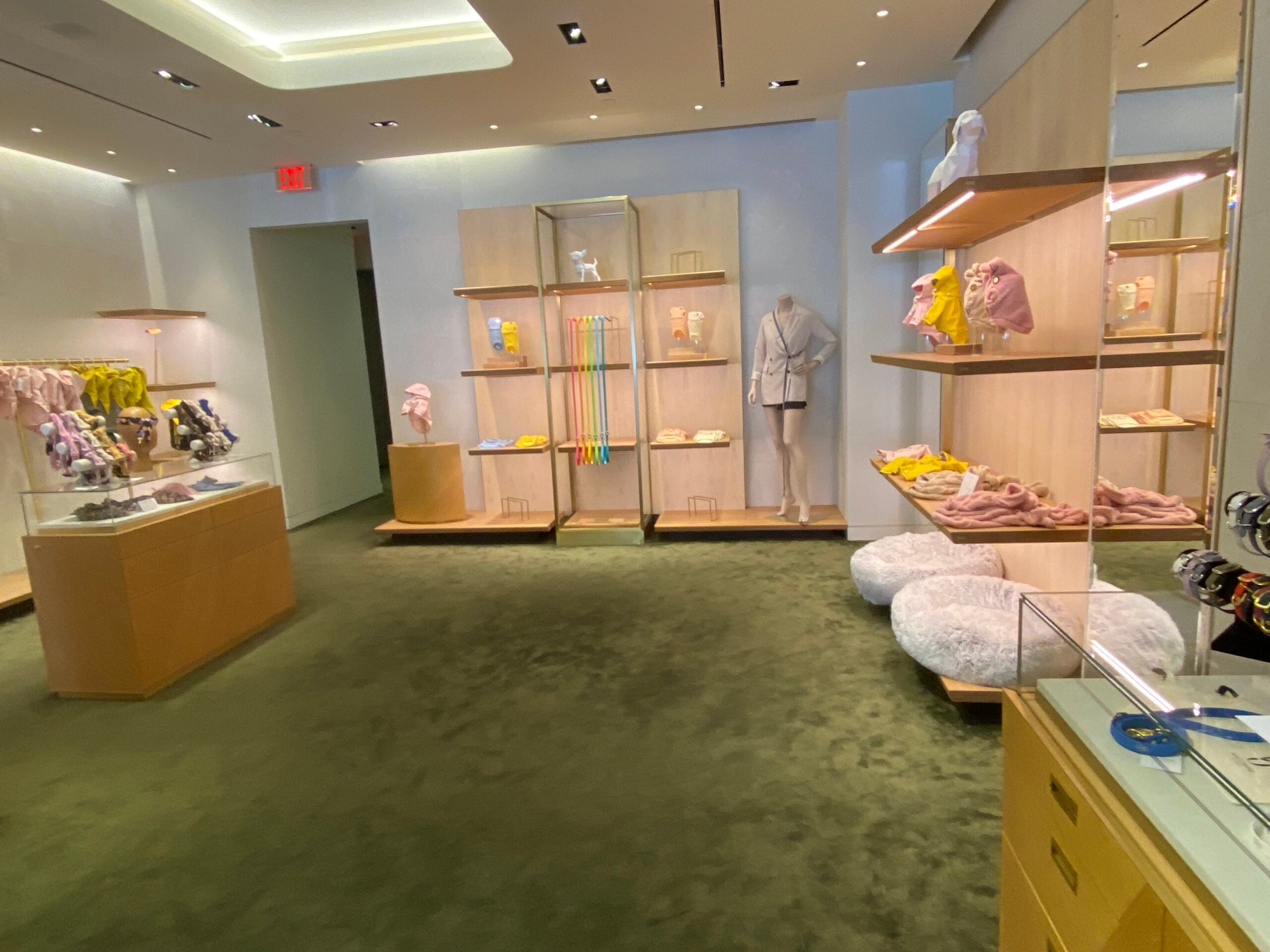
Wag Swag Pop-Up
Wag Swag (Image: Craig Patterson)
Wag Swag (Image: Craig Patterson)
Wag Swag (Image: Craig Patterson)
Wag Swag (Image: Craig Patterson)
Vegan pet accessory retailer Wag Swag recently opened a temporary store location at The Colonnade at 131 Bloor Street West. The 2,200 square foot storefront formerly housed luxury UK-based bag and accessory brand Mulberry which shut its two Canadian stores last year.
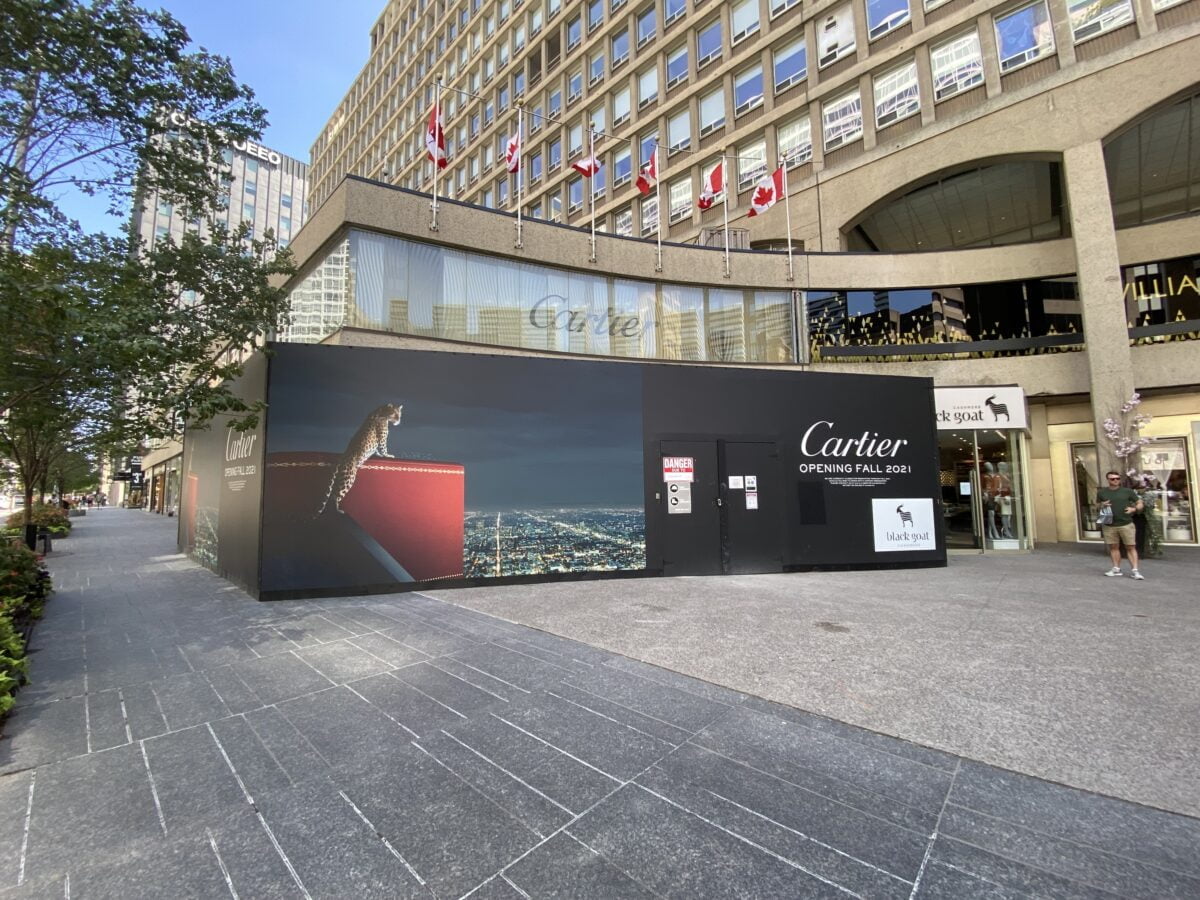
Wag Swag will continue to operate in the space into the fall of 2021 and it’s not yet been determined when the store will close. Prior to the pandemic, the asking rent for the space was said to be over $400 a square foot and hopefully a permanent tenant will be secured for the future. The space is located next to Coach and Prada stores in a retail complex also housing Dior, William Ashley, Moncler and a Cartier flagship store that will reopen after a renovation in November of this year.
Collective 131
Collective 131 (Image: Craig Patterson)
At The Colonnade, seven artists came together to launch Collective 131 at 131 Bloor Street West. The artwork is for sale and some of the pieces are very eye-catching. The pop-up will be open until the end of the summer in a retail space formerly occupied by a Bogner pop-up store — Bogner is said to be interested in returning to the space in the fall and this time, Bogner may end up leasing the space long-term for a permanent storefront.
“The pandemic has had such a negative impact for so many artists who were unable to mount exhibits and shows,” said Morgan Jones, artist and a member of Collective 131. “We were fortunate to be able to access this incredible space that has been an integral part of the Yorkville community. As all sectors of the economy continue to recover, we look forward to connecting with art lovers who are looking for their next collector’s item, or who just want to be out doing something fun this summer.”
Collective 131 (Image: Craig Patterson)
What’s to Come
Several new retailers will be opening or re-opening this fall in Bloor-Yorkville. These include:
The Webster
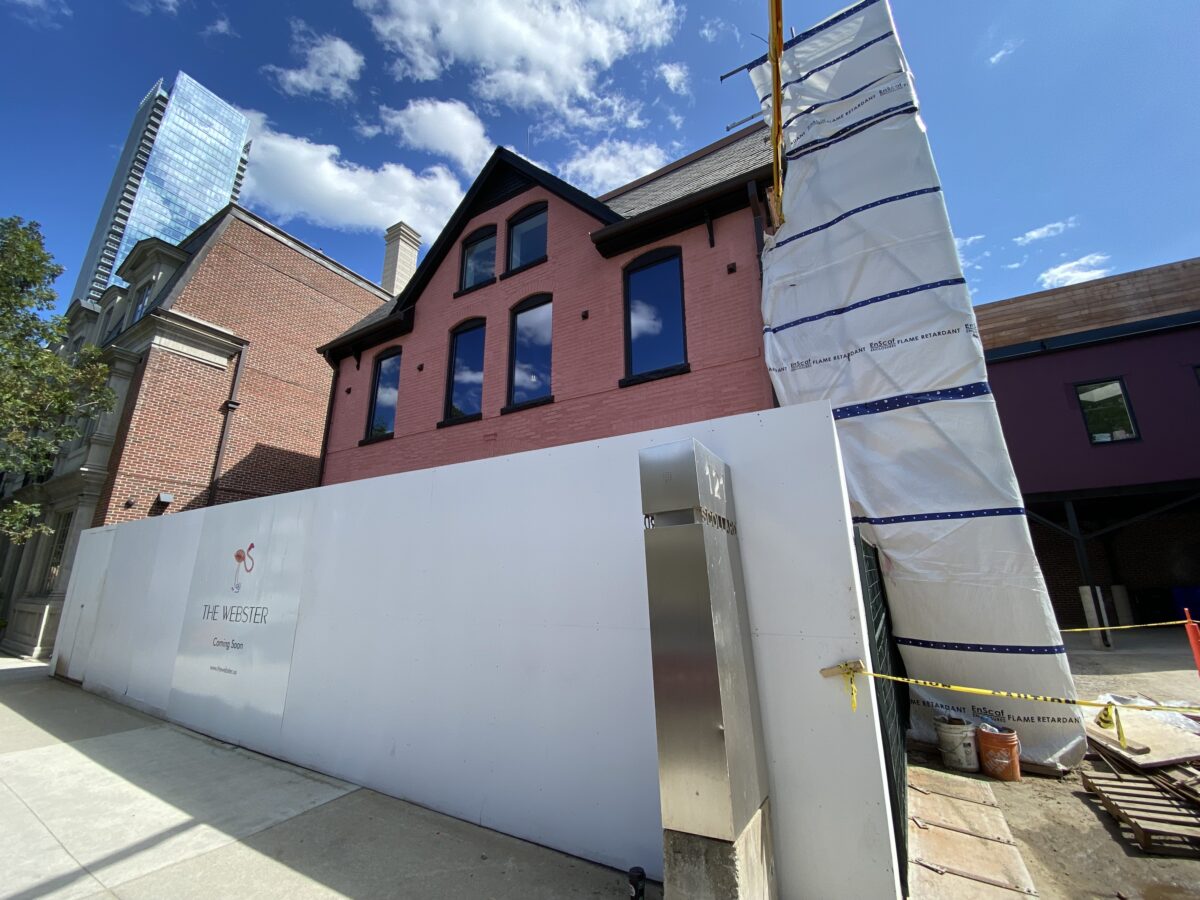
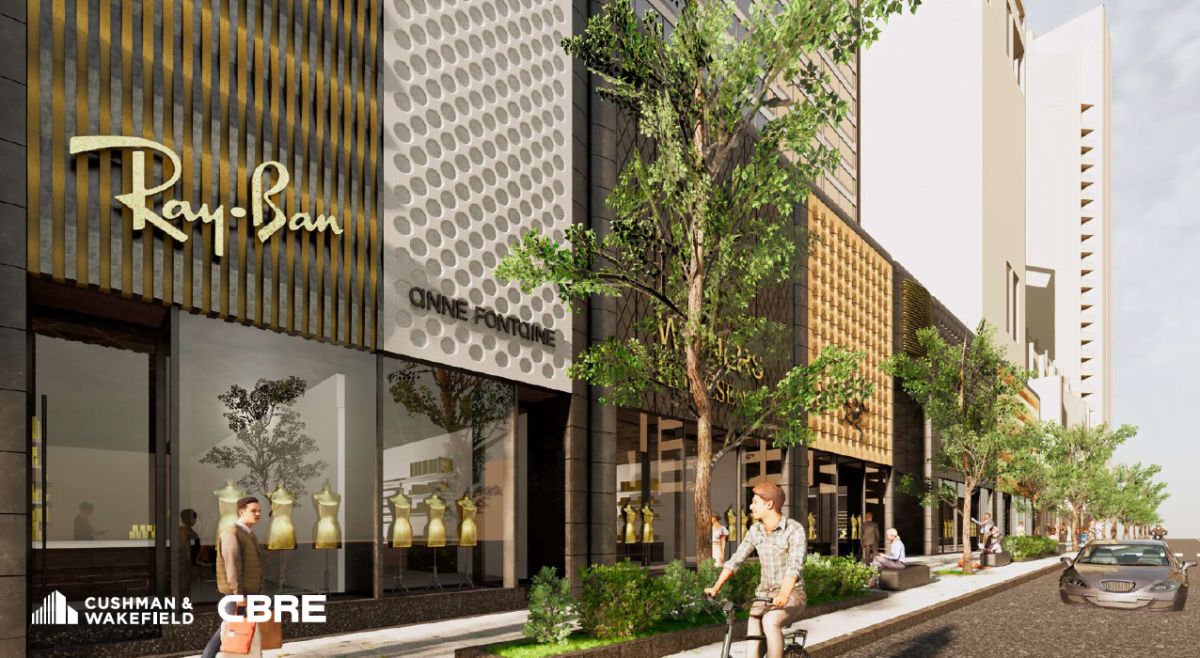
Miami-based multi-brand luxury retailer The Webster will open its first Canadian storefront this fall at 121 Scollard Street in Toronto. The 6,500 square foot store will carry a range of high-end brands including products not found elsewhere. The Webster represents a significant milestone in the retail development of Bloor-Yorkville and the store is expected to attract high-end shoppers from Toronto and beyond.
Many wondered what colour the store’s facade would become after an overhaul of the historic townhouses on the site which until recently were sandblasted back to its natural brick. We’ve now learned that the store’s facade will be pink. We’ll follow up when the store opens with a full article and photo essay. Plans for an in-store café won’t be happening we’re told.
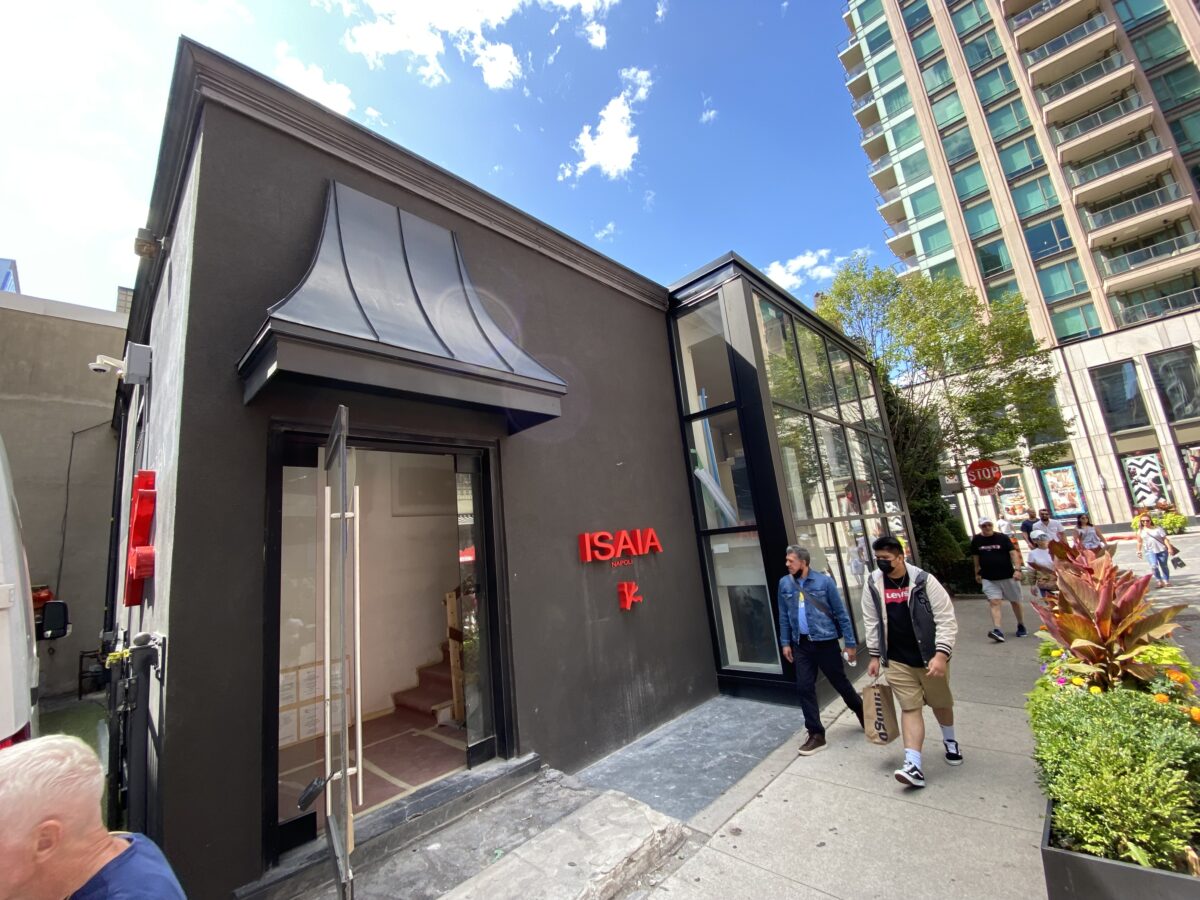
The Toronto Isaia flagship will span two levels. The upper level, spanning about 1,600 square feet, will feature two rooms carrying the full assortment of Isaia’s clothing and made-to-measure as well as footwear, leather goods, jewellery, eyewear, and accessories. The lower level will feature an 800-square-foot social meeting place, called the Vesuvius Lounge, was well as back-of-house operations and tailor shops.
We will be following up with a profile of the store when it opens in September.
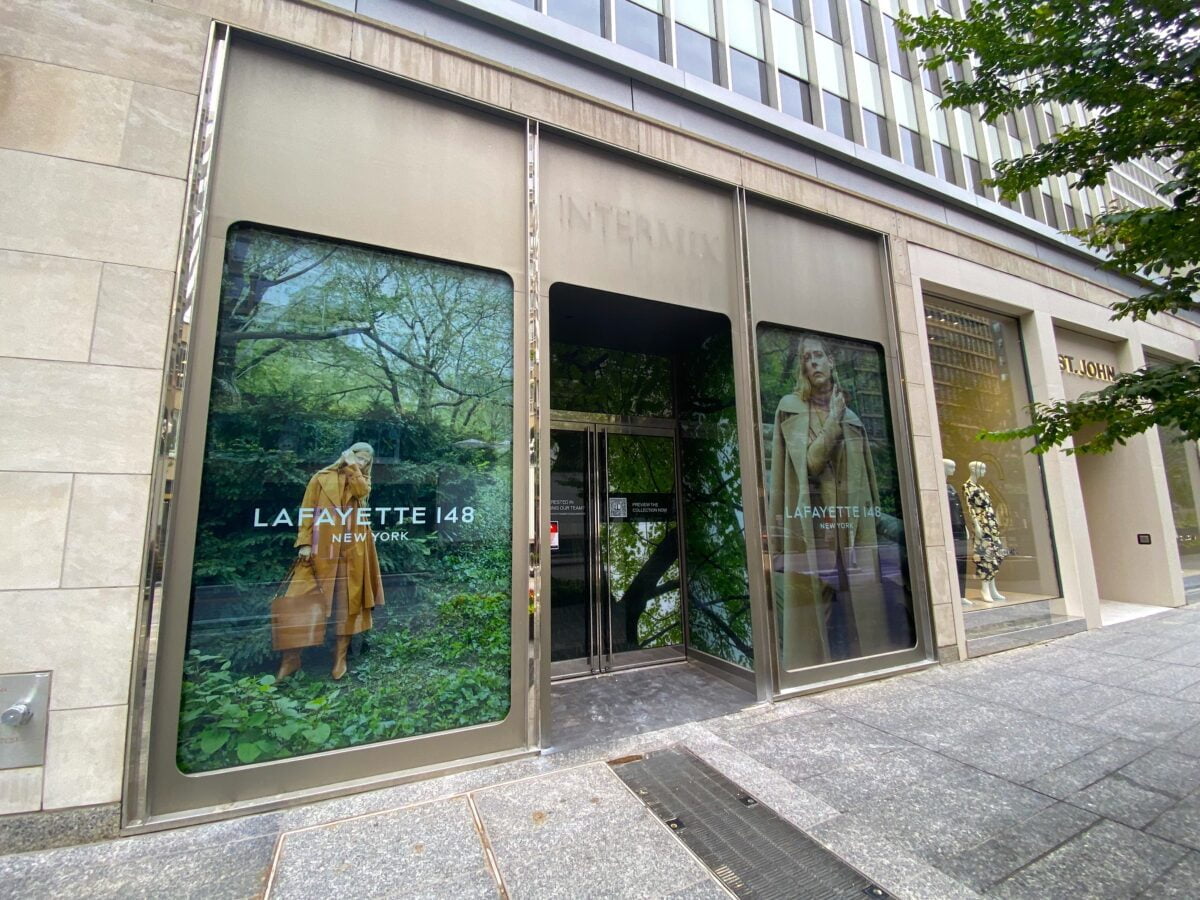
Lafayette 148
Lafayette 148 at 130 Bloor Street – Photo by Craig Patterson
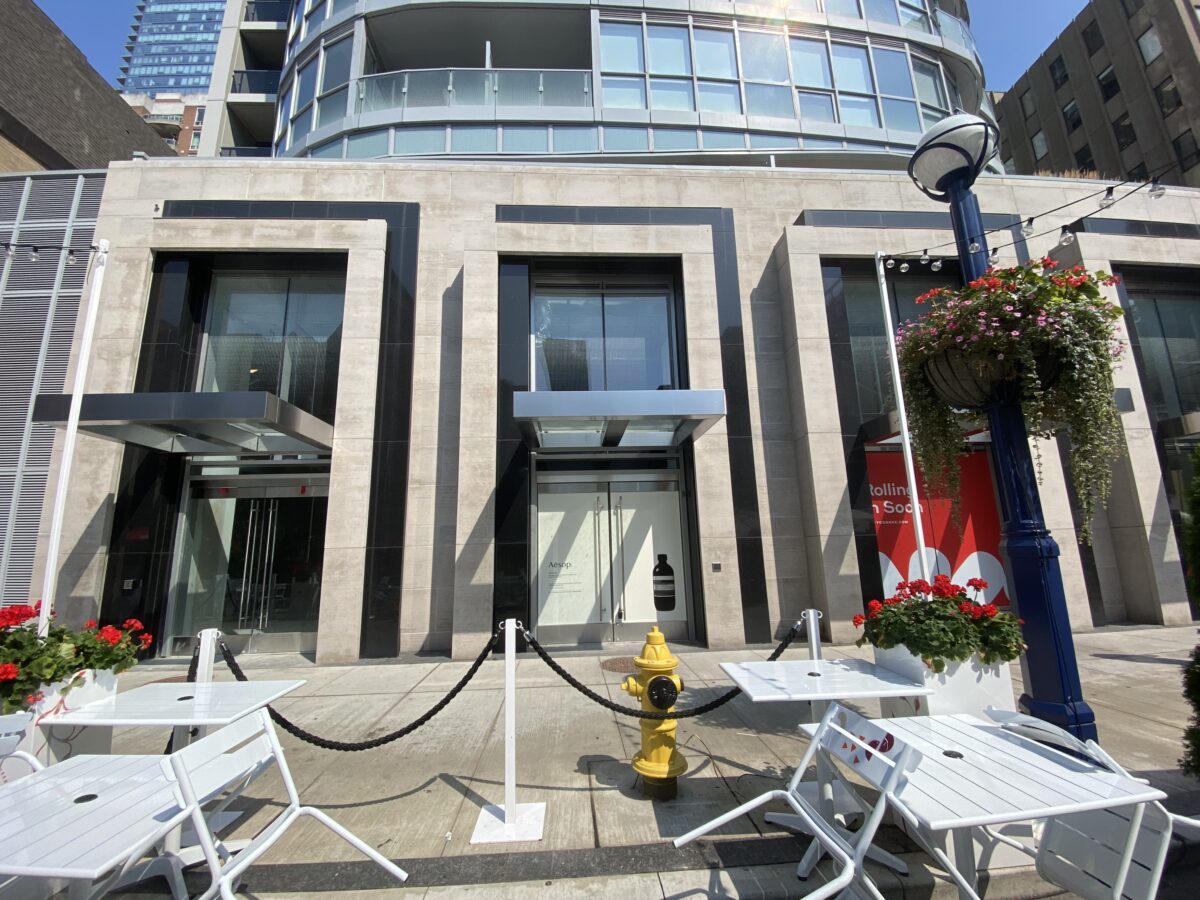
The Bellair Street-facing side of the 88 Cumberland Street commercial podium. Tenants left-to-right will be: Euroline, Aesop and Tokyo Smoke
The commercial podium at the base of the 88 Cumberland Street condominium tower (corner of Bellair Street) will soon be home to three new retailers. Cannabis retailer Tokyo Smoke will occupy the corner space in the podium and Australian beauty brand Aesop will be opening a store next to it. A third smaller space next to Aesop on Bellair Street will become home to a showroom location for appliance retailer Euroline.
The podium had been leased to luxury Italian menswear brand Isaia before the nearby 77 Yorkville Avenue building, formerly occupied by Canadian fashion brand Pink Tartan, became available. ProWinko owns the podium.
Oliver Jewellery
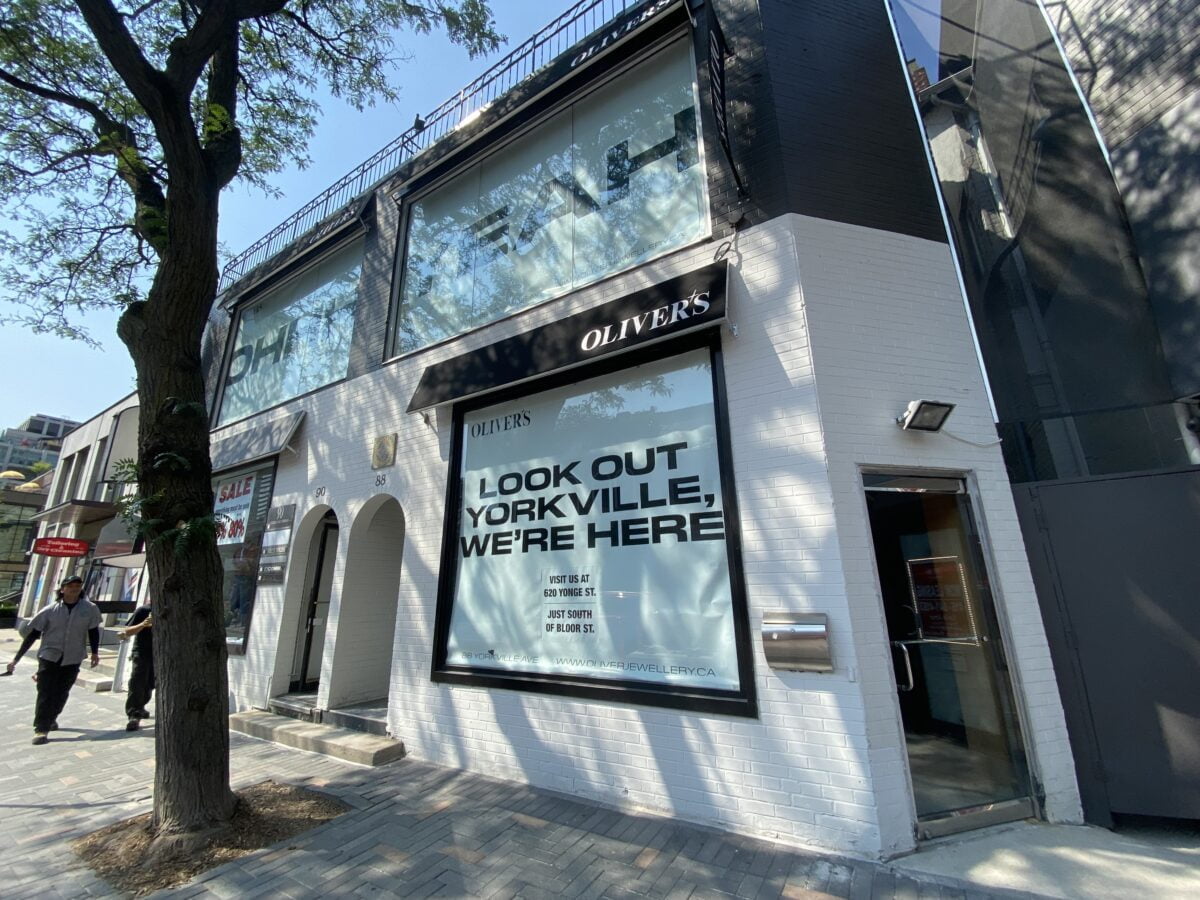
Future location for Oliver Jewellery at 88 Yorkville Avenue on August 26, 2021. Photo: Craig Patterson
“The Cashman” Russell Oliver will be opening a luxury goods store called Oliver’s at 88 Yorkville Avenue this fall, carrying a range of second-hand and vintage handbags and jewellery. The space will span two-levels. We spoke to Mr. Oliver earlier in the summer and he said that he will continue to operate his other luxury goods store at 620 Yonge Street for a time before shutting it. He opened the Yonge Street store in the fall of 2016.
95 Bloor Street West
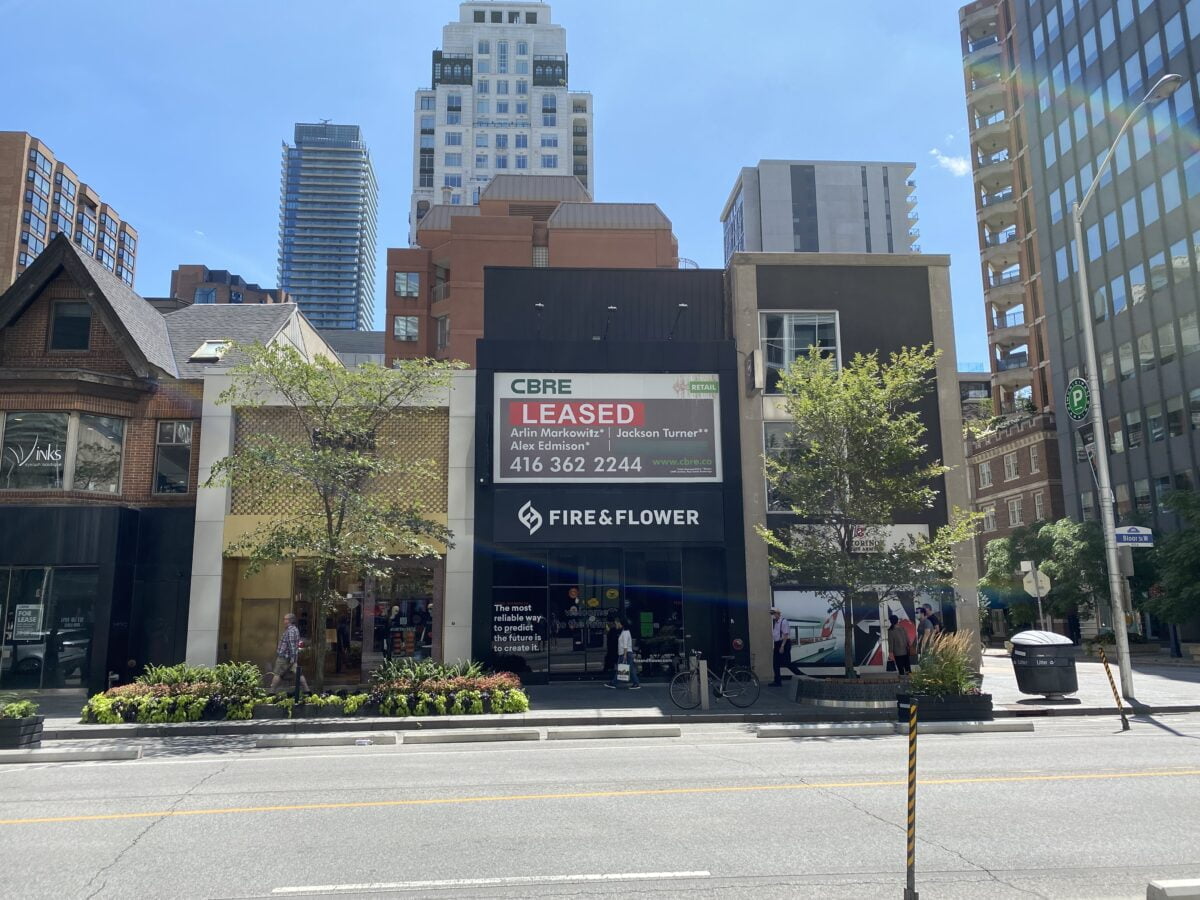
The retail building at 95 Bloor Street West has sat vacant since late 2018 when Swiss men’s fashion brand Strellson vacated the premises. Cannabis retailer Fire & Flower leased the space and never ended up opening a store there and is now involved in a $3 million lawsuit because of a dispute with the landlord.
The storefront was recently leased out by CBRE to a condominium showroom that will occupy the building for a time to be determined.
Manulife Centre
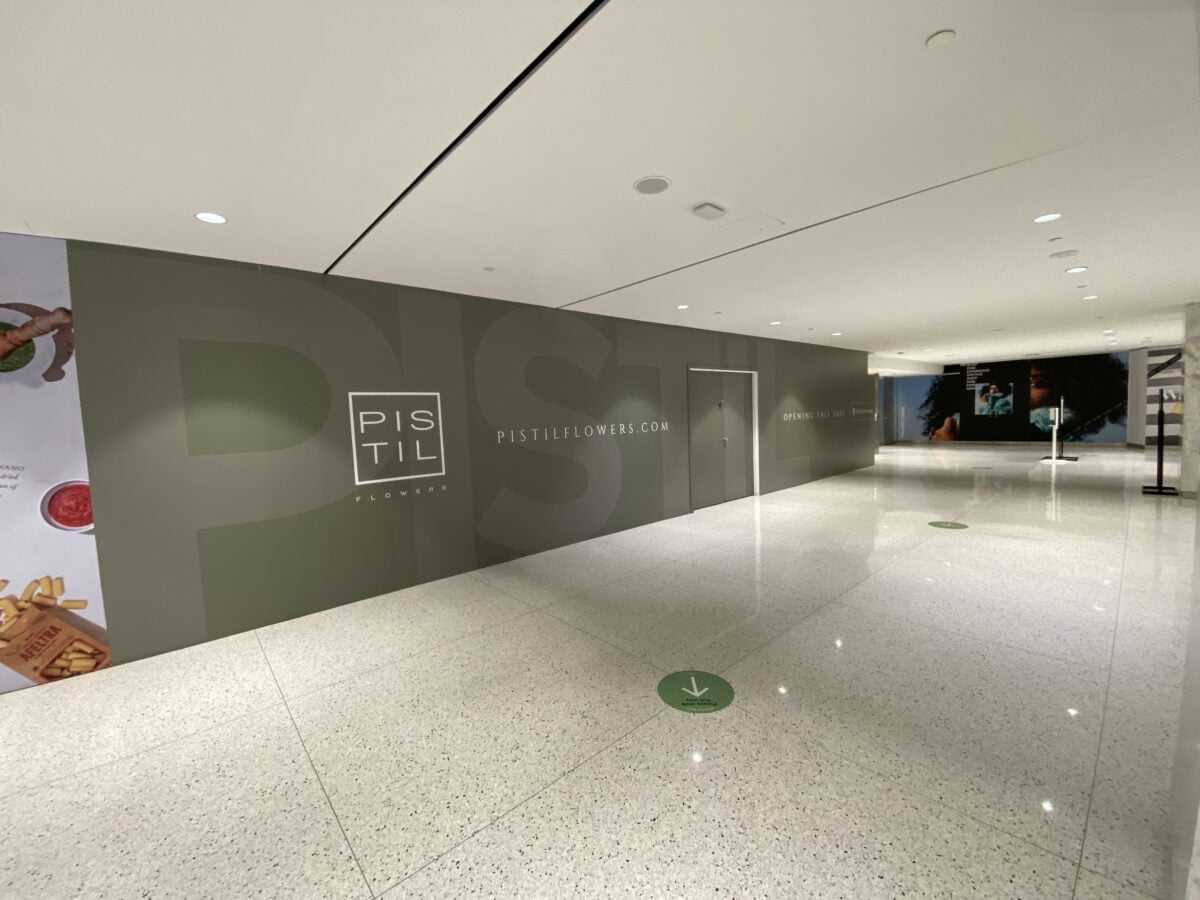
Two new retailers will open on the concourse level of the Manulife Centre this fall, including fashion retailer Studio D and floral retailer Pistil Flowers. We’ll follow up on these when they open including a broader profile on Studio D which is relocating its midtown storefront.
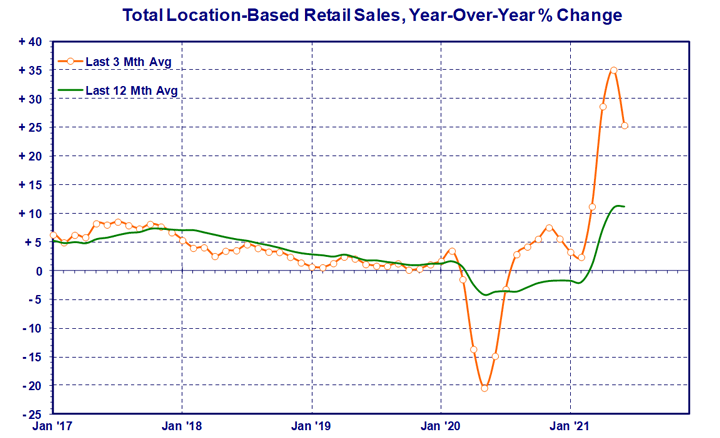
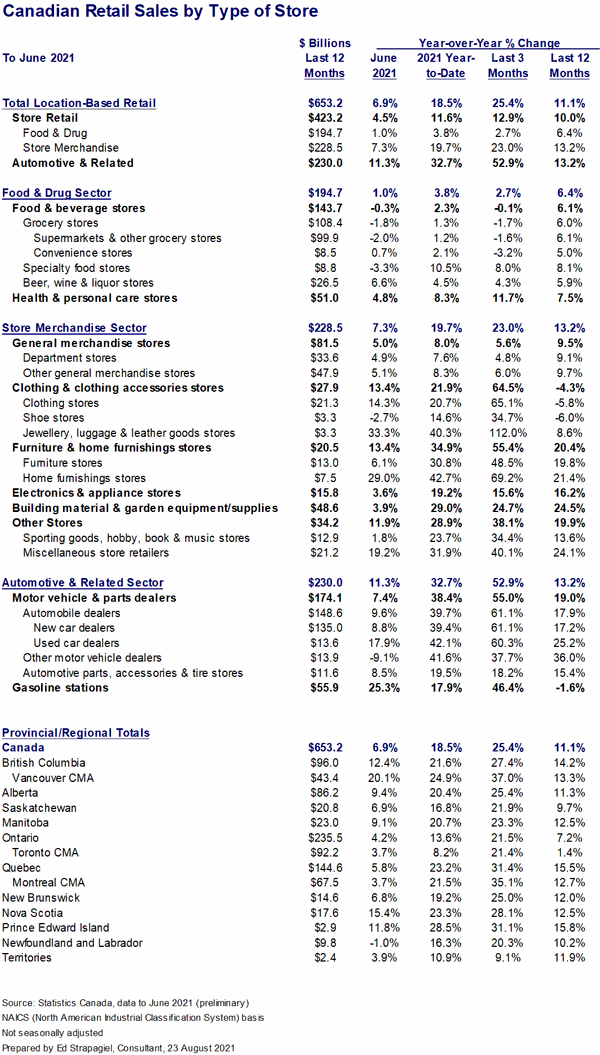
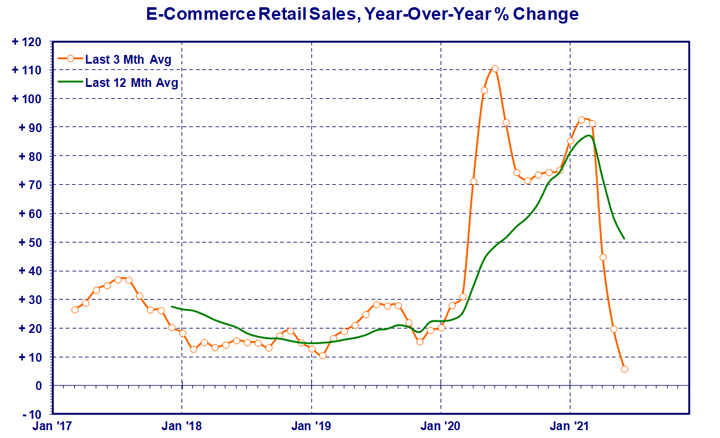
The latest data from StatsCan show a big recovery in Canadian retail sales. In Q2 2021, total overall sales were up 25.4% year-over-year. The 3 month growth trend (orange line in the chart below) has been at record breaking highs, and has pulled up the underlying 12 month trend (green line) along for the ride.
Note that hot current sales growth rates do not mean that good times are here again – it’s more of a reflection of how bad things were a year ago due to COVID. In Q2 2021, total retail sales were $173.8 billion, well up from $138.6 billion in Q2 2020, which itself however was well down from $162.7 billion in 2019. In other words, we’re just getting back to around where we were two years ago, in pre-pandemic times, plus a little inflation and population growth.
Retail conditions are still very much unsettled. The impact of the next COVID wave and/or variant is essentially unpredictable. There are also huge sales swings in every major retail sector.
Food & Drug
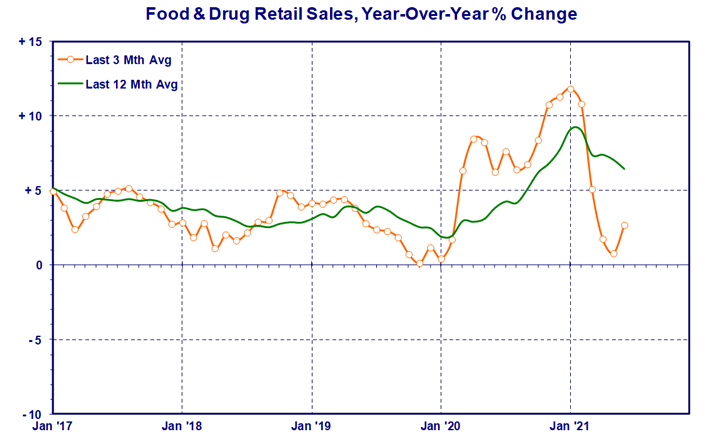
The Food & Drug sector actually posted record high retail sales increases last year as COVID rolled out. This was due to a mix of factors, such as staying open while other retailers were mandated to close, and highly restricted operating conditions for restaurants which promoted eating in over dining out. These circumstances now appear to have reached a plateau, and retail sales growth rates have returned to more typical levels. In Q2 2021, retail sales were up 2.7% year-over-year, or roughly at pre-pandemic levels.
There are some twists and turns here too. Supermarkets & other grocery stores’ retail sales were down 1.6% in Q2 versus last year, while convenience stores saw a sales decline 3.2%, even though both these retailer types had strong gains in 2020. On the other hand, specialty food stores are still hanging in with an 8.0% Q2 increase in retail sales.
Health & personal care stores are holding up the Food & Drug sector at this time. Their retail sales were up 11.7% year-over-year in Q2, which countered the bad news in food stores.
Store Merchandise
The Store Merchandise sector seems to be back with a vengeance, with year-over-year retail sales up 23.0% in Q2. As non-essential retailers and malls reopen for business, it seems that consumers are catching up on shopping needs they may have been putting off. Interestingly, the boom in e-commerce retail sales appears to be slowing somewhat at the same time.
Almost all store types in the sector had strong year-over-year retail sales gains in Q2. Clothing & accessories stores were up 64.5%, furniture & home furnishings retailers gained 55.4%, and sporting goods, hobby, book and music stores saw a 34.4% increase in retail sales. On the other hand, general merchandise stores only had a modest gain of 5.6%.
Automotive & Related
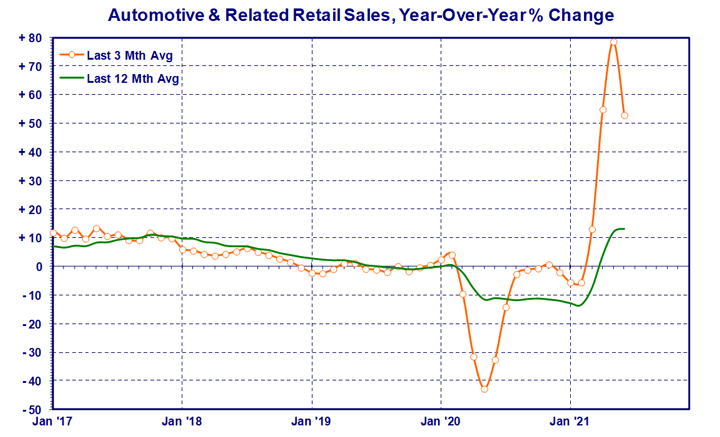
Retail sales in the Automotive & Related sector gained 52.9% year-over-year in Q2 2021. Much of this however is due to very weak year ago sales in 2020. In dollar terms, the sector’s Q2 retail sales are just slightly ahead of what they were in 2019. In other words, we’re just getting to where we were two years ago.
Sales at automobile dealers were up 61.1% year-over-year in Q2, again mostly because last year was so bad. Going forward, sales may slow due to production issues caused by a shortage of computer chips.
Gasoline stations also had a strong retail sales gain in Q2 with a 46.4% increase. This has been helped along by pump price increases and perhaps people driving around more (possibly to get to reopened retail stores!).
By The Numbers
Note that the data and analysis in this report are always based on not seasonally adjusted (or unadjusted) retail sales statistics.
After hitting double digit and even triple digit increases in 2020, e-commerce retail sales gained only 5.8% year-over-year in Q2 2021, the lowest 3 month gain since StatsCan started reporting this data. Perhaps some consumers are switching back to in-store shopping for certain goods that they may have gone without due to pandemic closures.
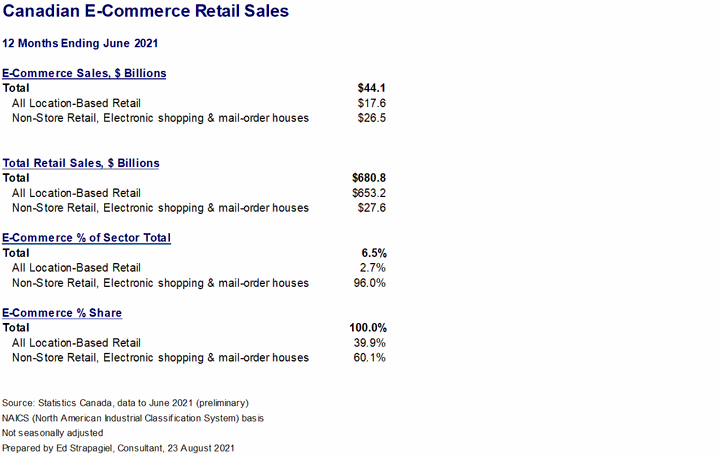
Overall, e-commerce represented about 6.5% of Canadian retail sales over the past 12 months, including both pure plays as well as bricks & clicks stores. Note that Canadian consumers may also buy online from foreign websites which is not captured in these numbers.
Location based retail is the same as that in the preceding “By The Numbers” table. It’s what’s normally reported as Canadian retail sales. Except that it isn’t. Location based retail excludes another section called Non-Store Retailers (NAICS code 454), which includes electronic shopping and mail-order houses, which in turn is where (mostly) pure play e-commerce businesses are. Over the 12 months ending June 2021, electronic shopping and mail-order houses had an estimated $26.5 billion in e-commerce sales.
But that’s not the only source of e-commerce, as (mostly) bricks & mortar location-based retailers also sell online. For the 12 months ending June 2021, this group had an estimated $17.6 billion in e-commerce sales. With electronic shopping and mail-order houses, there’s a grand total of $44.1 billion in e-commerce sales by Canadian operators. Note that this does not include foreign e-commerce purchases made by Canadian consumers, but it does include e-commerce purchases made by foreigners at Canadian operations.
For electronic shopping and mail-order houses, an estimated 96.0% of their sales are currently allocated to e-commerce. For (mostly) bricks & mortar retailers, it can be estimated that 2.7% of their total sales are attributable to e-commerce.
In the final section of the above table, (mostly) pure play operators (namely, under electronic shopping and mail-order houses) generated an estimated 60.1% of all e-commerce sales in Canada, while (mostly) bricks & mortar location-based retailers’ share of e-commerce was 39.9%.
This analysis is updated monthly as new numbers are published by Statistics Canada. If you would like notification from Linkedin of when an update becomes available (and you’ve read this far), please connect with Ed Strapagiel on LinkedIn