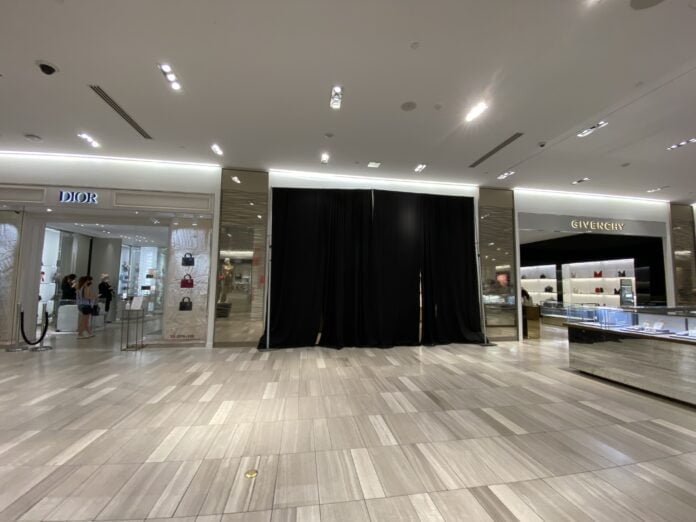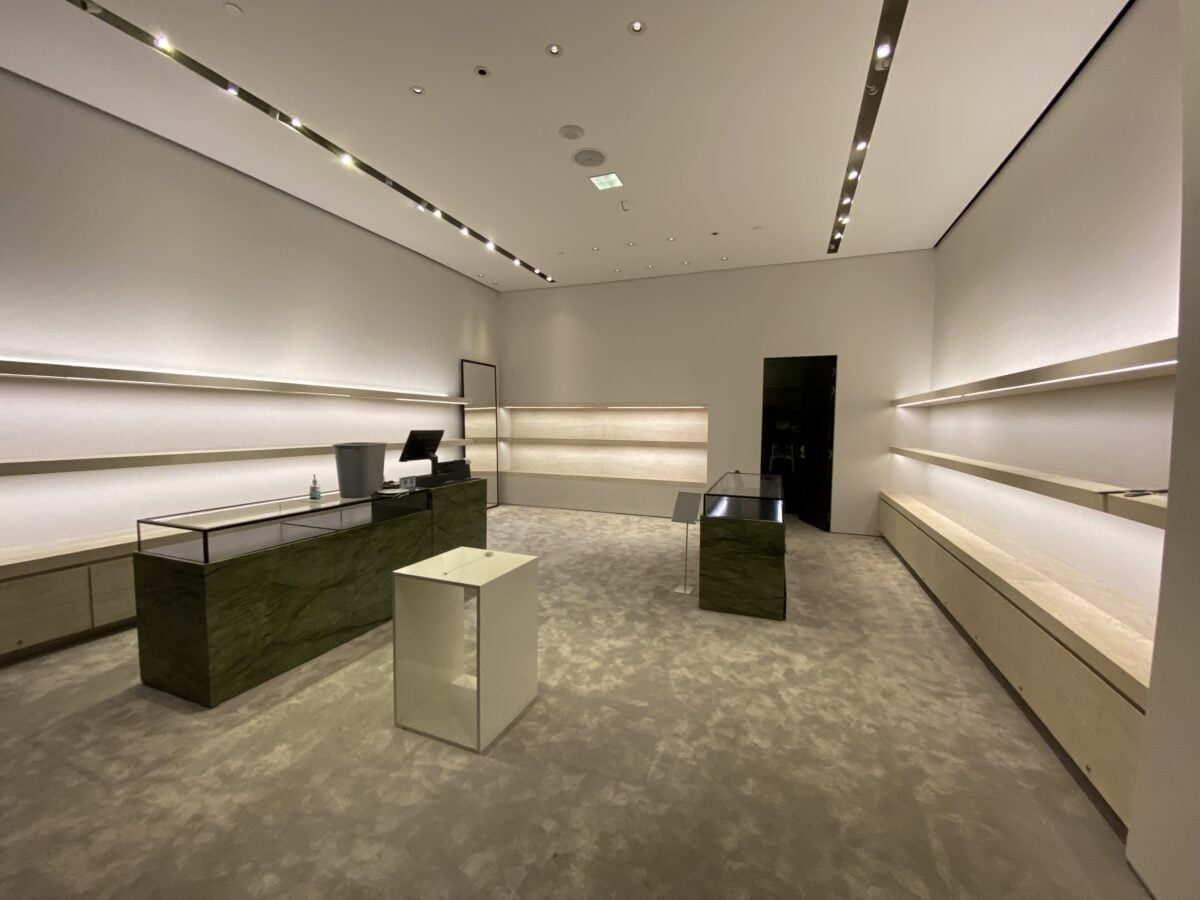
ALDO AT FIRST CANADIAN PLACE. PHOTO: FIRST CANADIAN PLACE
Montreal-based footwear retailer Aldo announced that it is restructuring its operations after shutting its stores in March due to the COVID-19 pandemic. Similar announcements are expected in the coming weeks as retailers look to reduce store locations in an effort to rightsize businesses at a time when consumers are expected to increasingly shop online while avoiding physical retail spaces.
Aldo said that it had sought and obtained an initial order pursuant to the Companies’ Creditors Arrangement Act (the “CCAA”) from the Superior Court of Québec while at the same time voluntarily applying for similar protection in the United States. Switzerland will follow according to the company.
One of the goals of the restructuring is to “stabilize the business and build on its legacy in retail fashion” according to the release.
The Order made by the Superior Court of Québec provides for a stay of proceedings in favour of Aldo for an initial period of 10 days. That will be subject to an extension thereafter as the Court deems appropriate. Ernst & Young Inc. was appointed as Monitor in the Companies’ Arrangement Act proceedings.
According to filings, Aldo did not pay rent in April and May for its stores in both Canada and the United States. The company will run out of cash by the first week of June according to the filings. Aldo was already in trouble before the COVID-19 store closures — despite selling more than $1.2 billion worth of merchandise over the 12 months ending February 2020, the company lost $74.8 million in Canada and $52.8 million in the United States. The company’s debt stands at $287 million, excluding rents owed, and filings stated that some shuttered store locations will never reopen.
Aldo’s Connected Store at the Westfield World Trade Center. Providing a seamless shopping experience to customers through the Kinetic Commerce platform’s mobile and in-store solutions. Photo Credit: Luciana Pampalone (CNW Group/Kinetic Cafe)
PHOTO: ALDO
ALDO IN CENTRE-VILLE. PHOTO: ALDO
David Bensadoun, Aldo’s CEO, said: “ALDO is one of the world’s leading fashion footwear and accessory brands with a solid track record of growth and profitability for almost half a century. It is no secret that the retail industry has experienced rapid and significant change over the last several years. We were making strong progress with the transformation of our business to tackle these challenges”.
Mr. Bensadoun went on to say, “However, the impact of the COVID-19 pandemic has put too much pressure on our business and our cash flows. After conducting an exhaustive review of strategic alternatives, we determined that filing under CCAA and related proceedings is in ALDO’s best interest to preserve the Company for the long term and survive through this challenging period.”
He went on to say, “Throughout the process, ALDO expects to carry on business while it develops and implements a comprehensive restructuring plan across the organization. With our deep fashion footwear heritage, experienced leadership team, extensive omnichannel capabilities and loyal customer base, we firmly believe that we will emerge from the restructuring process and from the challenges posed by the COVID-19 pandemic. We will come out stronger and well-positioned to continue leading the way in fashion retail.”
ALDO AT AVALON MALL. PHOTO: AVALON MALLPHOTO: ALDO
The Aldo website as well as websites for its other retail brands, Call It Spring and GLOBO, will remain open. The Company’s corporate stores, which are temporarily closed due to COVID-19, will re-open based on the guidelines set by local governments and health authorities — many of those openings are expected to happen this month as restrictions are being lifted in many provinces.
Few details have been released by Aldo on store closings. Insider sources had informed us several weeks ago that Aldo had been considering filing for CCAA protection in an effort to reduce its store count. Aldo has more than 850 storers in North America and more than 3,000 points of sale in about 100 countries.
Sources are saying that more large retailers are looking to file for creditor protection in the coming weeks. One source said that they were ‘shocked’ when they learned of some of the names of the retailers that were looking to file for bankruptcy protection. Some retailers that have already announced that they are struggling include Montreal-based women’s fashion retailer Reitmans as well as camera retailer Henry’s. There are many more. This week, US-based retailers J. Crew and Neiman Marcus announced bankruptcy filings related to struggles with debt which have been compounded by COVID-19 store closures.
PENDER STREET IN VANCOUVER'S 'CROSSTOWN' AREA. PHOTO: TRIPSAVVY
Each passing day without clarity in the federal government’s commercial rent assistance program is putting more and more Canadian businesses under the threat of permanent closure as they struggle to stay alive during the COVID-19 (coronavirus) pandemic.
“It’s a mess,” said Laura Jones, executive vice-president of the Canadian Federation of Independent Business. “Rent is one of the biggest bills a business owner has to pay – rent and wages are the two big ones. We don’t have a rent program that will help enough tenants in place right now.
“The program itself although the details of it have been described the application process won’t be available until the middle of May and then the money for the program we don’t know when that’s going to start flowing. Will it be days after the application process is open or weeks? That’s an open question.
“I think the design looks beautiful in theory. It looks great in a textbook but in practice it’s not working.”
The CFIB has members in the position of being tenants, landlords, and both.
“The program is working for some. That’s what we’re hearing. We’re hearing about 25 percent of our landlord members are planning to use the program. But we’re still hearing from both landlords and tenants a lot of uncertainty about whether the program will work for them. About a third of our landlords are saying they don’t know if they’re going to use the program. And we’ve got a lot of our tenant members also saying they’re not sure their landlords are going to be accessing the program,” said Jones.
KENSINGTON AREA IN CALGARY. PHOTOS: TOURISM CALGARY
The Canadian Emergency Commercial Rent Assistance (CERCA) program announced recently by Prime Minister Justin Trudeau will provide forgivable loans to qualifying commercial property owners to cover 50 percent of three monthly rent payments that are payable by eligible small business tenants who are experiencing financial hardship during April, May, and June; the loans will be forgiven if the mortgaged property owner agrees to reduce the eligible small business tenants’ rent by at least 75 percent for the three corresponding months under a rent forgiveness agreement, which will include a term not to evict the tenant while the agreement is in place and the small business tenant would cover the remainder, up to 25 percent of the rent.
Impacted small business tenants are businesses paying less than $50,000 per month in rent and who have temporarily ceased operations or have experienced at least a 70 percent drop in pre-COVID-19 revenues.
There is much confusion for both landlords and tenants on what the program entails but critics point to several issues: businesses that have seen revenue reductions of less than 70 percent are not eligible; businesses paying $50,000 or more in rent per month are not eligible; there is no protection for businesses from evictions; and the program is entirely voluntary by landlords.
Karl Littler, Senior Vice President, Public Affairs at the Retail Council of Canada, who made a presentation to the House of Commons Finance Committee on Tuesday, said the reality is that with limited or no income from operations, retailers can’t keep going simply by receiving generous assistance to pay employees.
“Even with taxes and in some cases, utilities deferred, the meter continues to run on their rent even when nobody is coming through the door,” said Littler. “The CECRA program is an important step for severely impaired small retailers but one that is limited by enterprise size, rental footprint and by 70 percent income loss threshold.
SPRING GARDEN ROAD IN HALIFAX. PHOTO: FLICKR
“When CECRA was announced on April 24, the Prime Minister stated – and I quote – ‘we will also have more to say in the coming days about rent support for larger businesses’. Sticking the landing of that policy decision is critical, not only to larger retailers but also to smaller retailers who do not fit within the parameters of the CECRA program.
“Simply put, retailers without income or severely reduced revenues have no ability to pay rent. Not only does this jeopardize their tenure in the very stores that they will need in order to emerge from this crisis, it jeopardizes many of the million+ jobs in the discretionary retail sector.
“Non-payment of rent also ripples through a complex ecosystem involving commercial real estate, individual and institutional investors and pension beneficiaries and upon governments, especially municipalities who are dependent on the commercial tax base. There may be a misconception that large retailers are sitting on a pool of cash. In reality, most entered the crisis with 30 to 60 days worth of cash on hand, most of which has been exhausted.”
Littler said the government is dealing with many distress sectors and there are challenges for many different industries.
“We are not the only entity that has challenges at this stage. So I don’t anticipate that just because we need it quickly that is the only imperative for government. I remain cautiously optimistic that they will move on it. I know that certainly that was their stated intention that they would move to address the issue but obviously with each passing day we get a little more concerned that it may not be timely or that it may not be what we had hoped it to be.”
WHYTE AVENUE IN EDMONTON. PHOTO: LOOPNET
Jon Shell, co-founder of the grassroots coalition Save Small Business, supported by about 40,000 small businesses across Canada, said the fact the program was not finalized by May 1 was really important because now there are tenants who didn’t pay rent who are waiting and exposed.
“Everything I hear is that the conversations between landlords and tenants are on hold. So each passing day adds uncertainty and stress for both landlords and tenants and the closer we get to May 15 the worse it’s going to get,” said Shell. And the more permanent closures we’re going to see.
“People are giving up. This was like the shining solution that many people clung to and I think with all of the uncertainty and with the amount of landlords that are saying well I don’t know anything about it so we’re just going to stick with the deferral, you’re seeing a lot of tenants just give up,” said Shell.
Jones said a CFIB survey found that 75 percent of its members say they need rent assistance for May. Of those that need help, many either won’t qualify for the government rent assistance program or they may qualify but they don’t think their landlord will participate. That’s over 60 per cent.
QUEEN ST WEST, TORONTO. PHOTO: RETAIL INSIDER
She said the survey found that eight percent of CFIB tenant members are worried about being evicted with another 14 percent they’re not sure. But as many as 15 percent in the hospitality sector are worried about being evicted.
Benjamin Shinewald, President and Chief Executive Officer of BOMA Canada (Building Owners and Managers Association), said the organization is hearing gratitude from its members that the government understands that the sector is a lynchpin for so many businesses across Canada, understanding that the government is operating under exceedingly difficult circumstances and anxiety around the need for far more refinement of the details about existing programs and announcements for new programs, including one aimed at larger landlords.
“Just the way that the government wisely invested in businesses to bridge them in order to keep employees on the payroll, landlords need to be bridged in order to keep tenants in good standing. It’s just as critical and the exact same policy proposal,” he said, adding it’s vital to have something in place that meets the needs of landlords and tenants.
“The vast majority of Canada’s economic activity happens within BOMA member buildings. We have the biggest landlords in Canada and the corner store. Commercial real estate accounts for a humongous proportion of where Canadians live, work and play. It is literally the ground beneath the economy, the place where the actual and metaphorical foundation is laid.
“But what this really means is that by helping landlords, you are really helping tenants. Tenants can’t survive without landlords. So, we must ensure that landlords are stable so that the millions of business and billions of economic activity that they house is safeguarded.”
Quebec City-based Simons, the 180-year-old, family-owned fashion retailer, is significantly expanding Fabrique 1840, its digital platform that supports skilled artisans from coast-to-coast.
“We are clearly seeing a renewed interest and desire from Canadian consumers to support and sustain local design and makers of hand-crafted goods,” said Peter Simons, President of Simons. “Fabrique 1840 is now a well-established, proven ecosystem that can help artists realize their digital potential.
“We want to offer our support to a wider group of Canadian artisans who might now, more than ever, need a new sales channel and marketing team to find success.
“As we look to the future and try to determine what our new normal might be, I am most excited about the role we can play to shine a light on the exceptional artisanal talent that exists in Canada. The creativity that is emerging as a result of this moment in time and how consumers appreciate it will help guide the evolution – or revolution – of our creative communities in Canada.”
The digital platform currently has 117 makers, creating everything from home décor and modern art to fashion accessories and stationery, with more than $1 million in sales in the last 14 months.
plant coloured swaddling blankets. photo: La petite Leonne
Synergy art print photo: Annie Axtell
PLANT COLOURED ORGANIC COTTON NAPKINS. PHOTO: LA PETITE LEONNE
RED AND WHITE STONEWARE SALT CELLAR. PHOTO: AKAI CERAMIC STUDIO
Simons’ goal is to grow the Fabrique 1840 community to 500 Canadian artisans.
The company said that artisans who are selected to join Fabrique 1840 become part of a digital community that benefits from the expertise behind a world class e-commerce platform with more than 55 million annual sessions, addressing the critical challenge of exposure and customer acquisition in an increasingly crowded digital world.
The online market was launched in the fall of 2018. The name comes from the year the retailer Simons was founded in 1840 by John Simons as a dry goods store in Quebec City and its location there at 20 Côte de la Fabrique. Fabrique also in French means an artisanal workshop.
“(The name) references our history and it references what the site is all about,” said Peter Simons.
“About five years ago we started to field this interest in supporting local artisans and smaller artisans. We felt that there was a way to tap into that desire that our customers were expressing. We were also looking at enriching our web ecosystem. When the ecosystem becomes richer it really helps your organic traffic. That was an aspect.
“We also had developed a competency in e-commerce in all sorts of areas that we felt we could leverage and finally for us there’s some really incredible characters and people that are passionate about what we’re doing. It was that extra bonus of being able to be around and work with these smaller artisans that often we couldn’t incorporate into our stores because they just couldn’t handle that sort of production.”
Fabrique 1840 offers turnkey digital marketing services including merchandising, sales analytics, professional copy writing and product photography, SEO, SEM and display advertising, and a user-friendly management portal to support unlimited growth. With 1.2 million newsletter subscribers and over half a million users on social media, Fabrique 1840 makers also gain visibility to Simons’ growing audience of North American consumers. Simons also plans to spotlight Fabrique 1840 merchandise within its network of 15 stores across Canada.
In the last five months, 13 Canadian artisans have joined Fabrique 1840 including: Annie Axtell, a screen print artist from Vancouver; Yusuke Akai of Akai Ceramic Studio in Toronto; Alicia Phillips and Kevin Leboeuf of Educated Beards, men’s natural grooming line from Fredericton; and two brands from Montreal – MardiROS, makers of modern home design products and La petite Leonne, a mother who uses organic fabrics and plant-based dyes to make home and baby items.
“We had a real discussion even more intense around local fabrication, manufacturers, retailers supporting the local economy. I think it’s going to continue to be part of the conversation. We were just ready to scale up. We really felt ready at this time,” said Peter Simons. “The whole (COVID) crisis and confinement just got us focused on saying we could accelerate this. It would be good for the artisans and good for our website and e-commerce as we move forward into the future.”
Simons has 15 locations in Canada: nine in Quebec (three in Quebec City, including its headquarters in Old Quebec, plus Montreal, Anjou, Laval, St. Bruno, Sherbrooke, Gatineau); two in Edmonton (West Edmonton Mall and Londonderry); West Vancouver; Calgary; and Mississauga, and Ottawa.
Peter Simons said the response by consumers to the reopening of stores amid the COVID crisis will be gradual.
“Consumers have suffered what behavioural scientists call a somatic shock and it has certain characteristics in terms of it’s more primordial, it’s a little less rational and it takes time . . . We’re going to open up May 19 (in Quebec). We’re working right now on our procedures and everything. I think it’s going to take some time for people to just get used to the new shopping environment and for all of us to learn what that’s going to be like exactly and to take some to recalibrate everything following what we’ve been through,” he said.
“In the other provinces we’re waiting for guidance right now and we’re obviously following each province’s plan. The priority is doing it right for us, for our people and for our customers.’
Upscale French bakery and sweets maker Ladurée has expanded its e-commerce business in Canada by launching a dedicated transactional website. The www.ladureecanada.ca website launched earlier in the spring and has been well received by customers who have been missing Ladurée after its locations temporarily closed due to the COVID-19 pandemic.
Every Ladurée store opening attracts a line-up of customers, and now the company says that its website has been popular with the brand’s fans who are happy to have Ladurée products delivered to their door steps. This service has been introduced in a remarkably timely fashion given the current situation. “At the moment we don’t know when we will be able to make the next trip to Paris, so why not have a sweet piece of Paris be delivered to your home,” said Ladurée’s Canadian licensee Olesya Krakhmalyova
The website is seeing robust business amid a push on social media that includes upcoming celebrations such as Mother’s Day on May 10.
The retailer now ships delicacies across the country and is fulfilling orders rapidly. Ladurée Canada now ships its famous macarons in a variety of flavours in the attractive gift boxes. Other products sold on the website that are shipped across Canada include Ladurée collection of chocolates, gourmet teas, jams and honeys, candles, and accessories such as Parisian theme key chains and shopping bags.
Ms. Krakhmalyova says that updates to the website were accelerated after store locations across the country began closing in March. The website is currently the only sales channel for the company until stores reopen, she said.
PHOTOS: LADURÉE
1 of 4
For those living in the Greater Vancouver area, Ladurée famous cakes and pastries are available to order online and to be delivered. The Vancouver market is served by Ladurée’s first Canadian pastry laboratory and Ladurée French Pastry Chef which opened in the summer of 2018.
For Mother’s Day, Ladurée Canada has introduced a specially design and limited collection of macaron gift boxes and has chosen the cakes suited for the holiday.
Ms. Krakhmalyova says that Ladurée Canada will continue to grow its online business, recognizing the importance of being able to sell online at this time as well as into the future as some consumers may be spending more time at home. Other retailers are also growing online transactional sites amid an acceleration of change resulting from the COVID-19 situation.
Ladurée has been expanding its physical presence in Canada over the past four years. Most recently, a 680-square-foot storefront opened at the Exchange Tower in Toronto’s Financial District in December. The retailer entered Canada in March of 2016 when it opened a 1,100-square-foot boutique and 23-seat tea salon at 1141 Robson Street in Vancouver. In December of 2018, Ladurée opened its first Toronto location at the Yorkdale Shopping Centre. The 1,185-square-foot storefront features a retail area as well as a 26-seat tea salon. Claudia Ravnbo designed the Yorkdale Ladurée, which was the first in the world to reflect a new design aesthetic with an interior inspired by the colonial style of the 18th century.
In addition to the full scope locations, Ladurée Canada also has a Carriage pop up at Holt Renfrew in Vancouver, and is looking to have more of these at selected retail locations.
A Toronto pastry laboratory is expected to open at some point as well, according to Ms. Krakhmalyova. “Toronto is eagerly looking forward to us offering Ladurée croissants and cakes in the city”. Ladurée is also looking into opening in Montreal in 2021 according to Ms. Krakhmalyova. The plans were for 2020 but will likely have to be delayed due to the unexpected situation with COVID-19.
Founded in Paris in 1862, Ladurée is best known for its double-decker macarons, selling over 15,000 of them daily. Many Ladurée locations also sell ice cream, sorbets, jams, chocolate and candy, as well as branded accessories. Ladurée was purchased by French business group Groupe Holder in 1993, expanding Ladurée from a handful of locations to dozens of boutiques in 27 countries, including several in the United States.
Retail in Canada is facing unprecedented times as the industry tries to navigate through the COVID-19 pandemic. With new challenges emerging on a daily basis, retailers are finding it increasingly difficult to perform with limited information and resources available to help guide them. The “Retail Pulse Check” was created out of the observation that there is an opportunity to provide centralized support directly to retail leaders, operators, and employees. This new series, presented by Retail Insider and Bottom Line Matters, will feature a highly informative discussion, focused on content that has been curated BY the industry FOR the industry.
Join us weekly – and hear from industry experts Craig Patterson and Stephen O’Keefe as they dive into discussion on the most critical topics that have been identified by you, the retail audience. Be sure to share your questions on the things that are keeping you up at night so that Craig and Stephen can include in their discussion.
Goals of The Retail Pulse Check are to:
Provide Retailers with a forum to ask questions on whatever hot-button issues they are looking for insights or guidance on, with honest, unfettered dialogue from industry experts
Create an environment for collaboration, conversation, and learning amongst those who are continuing to service the Retail Industry
Establish a focus on best practices to ensure that Canada’s retail leaders, operators and others who are affiliated with the industry have an outlet to seek information, support, and guidance
Craig Patterson is the founder and Editor-in-Chief of Canada’s most-read online retail industry news publication, Retail Insider. He is also a Director at the University of Alberta School of Retailing, as well as a research consultant at Retail Council of Canada. Craig has studied the Canadian retail landscape for over 25 years, and has also been involved with strategy pertaining to urban revitalization in several cities, as well as retail and shopping centre-related design. He is an industry consultant who also gives retail tours and and is a public speaker. He is a graduate of the University of Alberta and holds a Bachelor of Commerce degree and Bachelor of Laws degree.
Stephen O’Keefe, Founder @Bottom Line Matters
Stephen O’Keefe is a 30 year veteran of the retail industry having worked with major brands such as Sears, Hudson’s Bay, and Walmart where he was Vice President of Loss Prevention and Risk Management. He founded Bottom Line Matters as a source for retailers of all sizes to draw upon his experience and expertise and deal with what matters – maximizing their bottom line. Stephen clients have included major retailers, BIAs, vendors as well as the Industry Association itself. He was awarded the Lifetime Achievement Award for his work with the retail loss prevention community, sharing best practice to combat shrinkage and advocating for legislative changes to support retail business.
YORKVILLE AVENUE IN TORONTO. PHOTO: CRAIG PATTERSON
The Retail Council of Canada (RCC) has created a framework of key issues to consider as retailers prepare to operate within the ongoing COVID-19 pandemic environment.
The playbook offers examples of practices observed from retailers across various sub-sectors around the world and key issues to consider in implementing tactics from other regions and sectors.
A survey found that 85 percent of Canadian consumers require measures prior to resuming going out again with social distancing and increased hygiene seen as the primary drivers.
The COVID-19 Response Planning guide was created in consultation with the Boston Consulting Group, a global management consulting firm, and various retail industry stakeholders.
Diane Brisebois, President and CEO of RCC, said Canadian retailers have been front and centre during this crisis, with grocery retailers, drug stores and other essential retailers demonstrating their ability to keep consumers well fed, healthy, and safe during the crisis.
“However, many retailers located in communities across Canada were required to close their brick-and-mortar businesses or operate at reduced levels. The impact on retail employers and employees cannot be underscored and the return to business necessitates fundamental changes to every aspect of our members’ retail operations,” she said. “With that in mind and recognizing the economic challenges posed by the COVID-19 pandemic, Retail Council of Canada with the assistance of industry Experts and Retail Task Forces, developed two assets to support our retailers during the recovery stage of this crisis.”
BOUTIQUE TOZZI IN MONTREAL. PHOTO: BOUTIQUE TOZZI
The Boston Consulting Group/RCC Retail Recovery Playbook currently includes two chapters: (a) Customer Health & Safety Playbook, and (b) Employee Wellbeing Playbook. Four other Playbooks will be added in the week(s) to come dealing with Retail Operations, Merchandising and Marketing, Omni-channel and Finance.
Employer occupational health & safety considerations
Social distancing and sanitation for retail stores and other workplaces
Sample cleaning checklists for stores and other facilities
Preparing the store for opening: Facilities checklist
The Council said it has compiled these materials through a scan of practices observed from companies in countries that have started to emerge from the government-imposed restrictions on the essential, non-essential, and restaurant sectors.
LOUIS VUITTON AT TORONTO'S YORKDALE SHOPPING CENTRE IN FEBRUARY 2020. PHOTO: CRAIG PATTERSON
YONGE STREET IN TORONTO. PHOTO: CRAIG PATTERSON
“These materials are intended to provide you with a framework for key considerations and relevant global best practices as you operate your business in today's challenging environment. They are not intended to be legal advice or to replace local health and government guidelines,” it said on its website.
“The COVID-19 crisis is rapidly evolving and there are different considerations for retailers in different regions and sub-sectors of the retail industry. Readers should consult the applicable laws & regulations, and guidelines issued by federal & provincial health and labor authorities, to make the best decisions for their respective businesses.”
The playbook outlines four key priorities for retailers for customer health and safety:
Customer screening & requirements. Manage access to the store to people who may be exposed to COVID-19, while protecting the vulnerable;
Social distancing. Provide adequate space to allow customers to navigate while avoiding close proximity with others;
Checkout & payment. Limit interaction during checkout and payment processes to minimize transmission risk; and
Store cleanliness. Over-invest in cleaning to ensure any potential virus exposure is quickly eradicated.
Three key priorities for employee wellbeing include:
Safety procedures & protective equipment. Provide preventative and protective equipment to create a safe workplace;
Supporting employees through the pandemic. Assist employees through flexibility and support programs (financial and otherwise); and
Confirmed case response. Re-assure staff & customers with clear, credible communications.
WEST 4TH AVENUE IN VANCOUVER. PHOTO: DAVID IAN GRAY
COMBINED SAKS FIFTH AVENUE AND HUDSON'S BAY STORES IN TORONTO PHOTO: CRAIG PATTERSON
Brisebois said additional assets continue to be developed to address pressing issues such as supply chain, loss prevention, cybersecurity, physical and mental health, retail category specific best practices (e.g. fashion, hard goods, jewellery, etc.), and employee training.
“As new information is included, RCC will endeavour to ensure that all retailers have access to these resources. Our experts and retail member volunteers have been extremely generous and many of our larger members appreciate that our industry is comprised of thousands of small and mid-size retailers who may not have the resources in-house to develop recovery plans. Thus, the focus has been on providing tools and resources for our smaller retailers across Canada to assist them in re-building and growing their businesses,” she said.
“Our team at RCC has been overwhelmed with the generous support of retail members from coast to coast. Everyone stepped up and simply said ‘how can we help? – it has been very gratifying and encouraging. We have been blessed with a huge team of volunteers and a dedicated Board of Directors who, together, have been focused on helping our smaller retailers get the help they need as quickly as possible.
“The Retail Recovery Playbook is also intended as a blueprint, aimed at advancing and promoting a harmonized ‘back to business’ approach with provincial, territorial, federal governments, and Public Health Authorities. Our goal is to ensure the safety of our communities, the safe reopening of retail, the safety of employees and customers under clear and well communicated guidelines and protocols across jurisdictions. This has been a labour of love for us at RCC and we are focused on helping rebuild our retail sector and our communities.”
A Leger survey released on Monday asked the question: ‘once the governments lift the protective measures put in place to fight COVID-19, which of the following would you be comfortable doing. Responses were as follows: shopping at the mall, 50 percent; dining in restaurants, 41 percent; and going to bars, lounges, night clubs and pubs, 17 percent.
WEST EDMONTON MALL IN FEBRUARY 2020. PHOTO: CRAIG PATTERSON
HUDSON'S BAY STORE TORONTO. PHOTO: CRAIG PATTERSON
A report by Deloitte said it may take months, a year, or even longer, but the world will emerge from the COVID-19 pandemic. Consumers’ behaviours may take more time to return to what they were—if they ever do.
“Expect a COVID-19 ‘hangover.’ Canadian consumers may continue to act cautiously after the pandemic subsides. People may continue to stockpile food and other supplies. Shifts in discretionary spending could be permanently changed. Consumers may also be slow to travel for leisure or business, or to return to restaurants, malls, gyms, and other public venues. They may instead choose to spend more on in-home entertainment, home offices, and fitness equipment,” said the report.
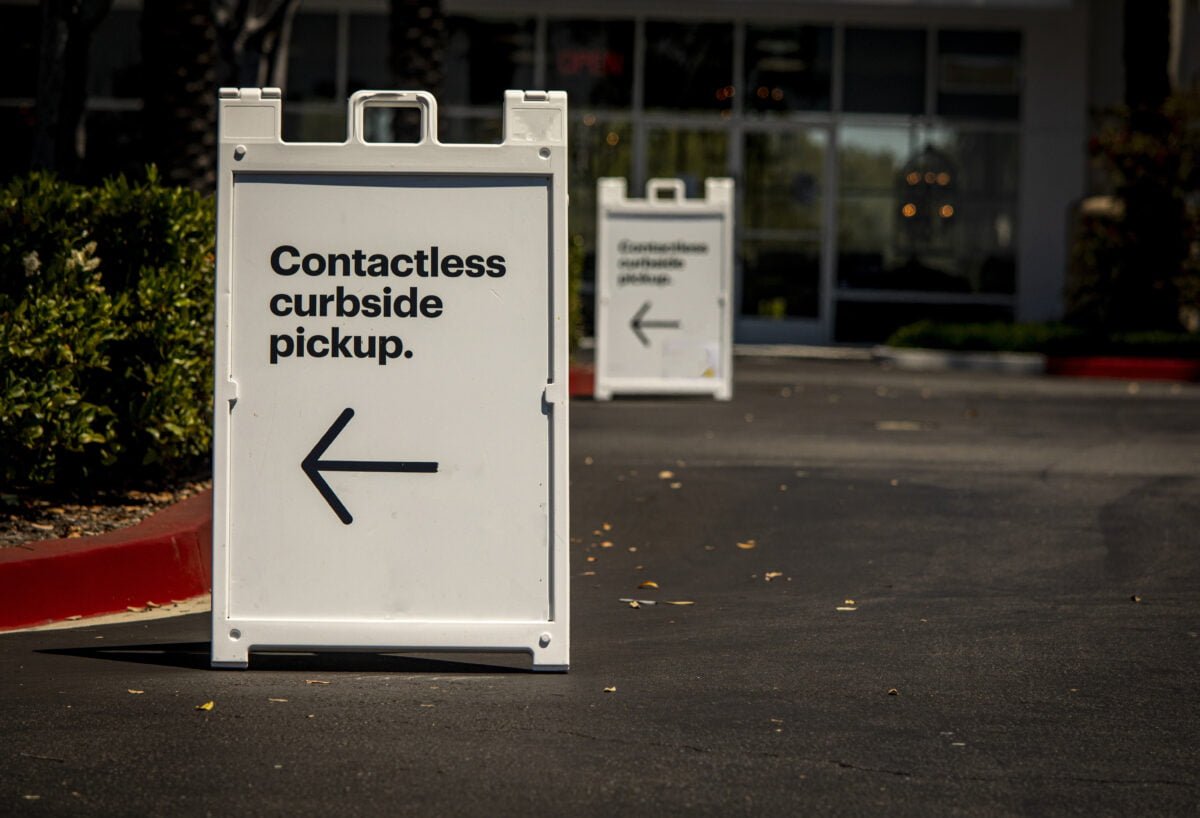
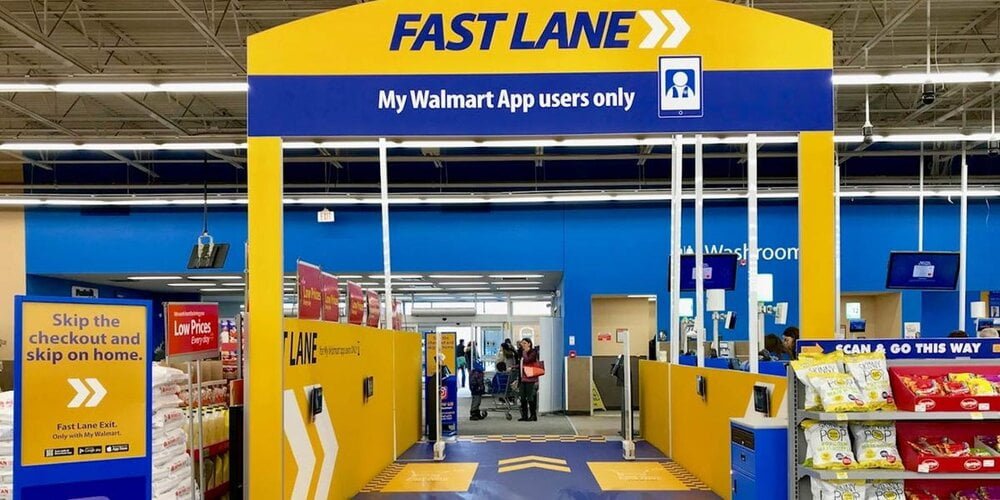
“Consumers may be open to new ideas and technologies. Consumers still seeking to reduce exposure to others may be more willing to try new technologies, such as self-checkouts, contactless payments, in-store robots, non-contact delivery options, virtual reality, and more.
“Customers may retain the habits and behaviours they adopted during the pandemic. They may continue to buy online or avail themselves of click-and-collect. They may stay loyal to new brands they discovered while searching for hard-to-find items. Older Canadians may grow more comfortable with digital channels, opening up new opportunities for retailers to reach a notoriously challenging demographic.”
With the COVID-19 pandemic sending shockwaves throughout the world’s economy, the future of retail is in flux. While some sectors — such as the hospitality industry — are struggling more than others, it is fair to say that all aspects of the Canadian retail market are being forced to reevaluate their sales strategies going forward.
Prior to COVID-19, recommence was rising in popularity with merchants growing 20-times faster than the broader retail market and five-times faster than off-price retailers, according to Coresight Research. Digitally-native brands like ThredUp were huge, consignment shopping was trendy, and buying sustainably was a must for many. Clothing rental was also a hot ticket, with Rent a Runway being a prime example. Today, the US-based recommence site is 11 years old and valued at $1 billion US.
As COVID-19 tears the Canadian retail landscape (as well as many of our wallets) to pieces, consumer habits and demands are changing rapidly, and will continue to evolve into the future as society attempts to find stable ground after this pandemic. While some consumer habits may be obliterated, others may flourish. And recommence is sure to be one of them.
Processed with VSCO with c6 preset
According to research done by GlobalData in 2019, the clothing-rental business is expected to reach $2.5 US billion by 2023 and when combined with resale, it will account for 13% of the total $360 billion US clothing market within the decade.
There are many reasons why recent years have seen clothing rental grow in popularity. Looking at it from a generational standpoint, millennials, in general, are less interested in ownership than they are in remaining current or having easy access to trends. In a world of social media and appearance-focused living, having the option to rent an item of clothing for a fraction of the cost is highly attractive to those who may not have the means to make frivolous purchases. “Social media is the driving force behind the clothing rental trend. In our society of oversharing on Instagram etc you cannot be seen to wear the same outfit twice. Many of my clients have two or more events per week and simply can’t afford to spend hundreds of dollars on each dress so they turn to rentals,” says Yana Brikker, Founder of Ask Yana Inc.
Sustainability is also a big factor in the recommence movement. As the world moves towards becoming more environmentally-friendly, the circular nature of clothing rental lowers consumption of fast fashion and the inevitable waste that accompanies this form of consumerism.
And now COVID-19 is a player in the attraction of recommence and the clothing rental industry. In today’s economic climate of unrest and unpredictability non-essential consumption has slowed down. People have less disposable income, limited access to traditional retail mediums, and exist in a perpetual state of unease, financially and otherwise. People are being forced to cancel all formal events and large gatherings, such as weddings, events, religious services etc, and with the first six months of 2020 due to exist practically void of social events, what does that mean for the latter half of the year (assuming life regains some sense of balance within the coming months)? It means an influx of events, social gatherings, and formal occasions, and thus, an increase in demand for formal wear.
“People are stuck at home right now. Some have lost their jobs and their incomes are compromised. But people will still want to socialize when all this is over. Many won’t have the ability to purchase formal wear so they will turn to rentals to satisfy their wardrobe needs,” says Brikker.
Marlee Rabin, Founder and CEO of Ocurent, a designer rental concierge based in Montreal, notes that she foresees many people needing formal wear in a pinch when life finally returns to regularly scheduled programming. “I think it might take some time but when life does return to normal I think there will be a huge spike in dress rentals. People will be excited to socialize but might not have the disposable income they once had.”
Ocurent is reinventing itself to a degree in an attempt to stay afloat during this wave of COVID-19-related retail closures. Traditionally an in-person service, now Ocurent allows you to browse and make purchases online. “COVID-19 has pushed me to be more forward-thinking about my business and assess what will ensure productivity and success in the future,” Rabin said about ramping up her online presence. “And surprisingly people are still buying dresses during this time. I think people know that eventually they will have that wedding or event to attend so they’re preparing for it now during this down time.”
EXAMPLES OF AVAILABLE ITEMS ON OCURENT. PHOTOS: OCURENT
Rabin notes that small retailers need to be prepared for the possible abrupt upturn in demand as people become more anxious to socialize in whatever capacity available to them, and as people begin to reschedule events. The need for formal clothing rental is sure to spike and businesses need to be ready.
Ocurent offers an array of over 400 dresses, varying in style, with a size inclusivity that ranges from 0-20. “We have dresses that would work for a 17-year-old going to prom and we have dresses for women in their seventies and eighties. We try to cater to all people and we have options to rent or purchase.”
However when it comes to setbacks for the rental clothing industry, a probable cause for concern post COVID-19 will be the hygienic aspect (or lack thereof) of renting or buying used clothes. As our society rapidly becomes more accustomed to segregation and increasingly hyper aware of cleanliness and sanitation, will the concept of sharing clothes with strangers be unappealing to many? “Perhaps people will be asked to produce the dry cleaning bill along with the returned dress,” suggests Brikker.
Lauryn Vaughn, Founder of the luxury online consignment store The Upside believes “As long as companies are clear about their best practices for both their staff and customers I believe the second hand and resale industries will grow post-COVID.”
In the wake of COVID-19, The Upside has a launched a new program ensuring that the personal shopping experience can still happen during these unprecedented times. The Upside’s Virtual Closet Edits allow women across Canada to schedule a 30-minute virtual appointment with one of The Upside’s specialists for a closet consignment edit. The appointment includes a general introduction to resale (if new to the concept), a look at items that the consignor would like to resell (what will and will not be accepted and why), and how to ship items directly to The Upside. Consignors can receive up to 70% commission on a once loved item.
Vaughn is confident that women are still anxious to shop, but perhaps in a more sustainable and affordable way during and post COVID-19. “Now more than ever, I believe that consumers are looking for value, what a company stands for and how sustainable it is.”
Due to the unprecedented nature of COVID-19, it is almost impossible to predict what the future holds for retailers and consumers alike. All that is certain, however, is that people will be more than ready to socialize with friends and even more ready to look good on Instagram.
An innovative automated pizza oven concept, which recently opened a new location at a gas station in Mississauga, has plans to expand to thousands of locations across North America in the coming years.
PizzaForno’s latest pizza vending machine venture is at the Petro Canada Dixie Petro-Pass (7300 Dixie Road) offering truck drivers, who have struggled to find food options during the COVID-19 pandemic, nutritious and convenient menu items at the tap of a digital screen.
Les Tomlin, co-founder and president of PizzaForno, said the company has been talking to Petro Canada looking at ways to launch the brand in the gas station system.
Pizzaforno Val Caron
“And we sort of accelerated those conversations once COVID hit because of the truckers having difficulty finding food solutions because a lot of the places had closed. So in partnership with Petro Canada we said ‘hey we’ve got this great solution, you’ve got a location, we’ve got the unit’. We moved very quickly to answer the call of truckers by putting this PizzaForno in the Petro Pass location,” he said.
Customers have a choice of seven artisanal pizzas, which are cooked in under three minutes. The pizzas are baked in a patented convection oven and transported by a robotic arm – no human interaction is involved. PizzaForno order screens and ovens are thoroughly disinfected on a regular basis, and hand sanitizer is available on-site for health and safety.
The first unit was launched December 2018 on Bay Street in Toronto. The company currently has 15 locations in southern Ontario.
The capacity of the vending machine at the Petro Canada Dixie Petro-Pass is 70 pizzas a day. The company can track in real time the actual sales of a unit and as the inventory gets to a near depleted level it can fill the machine as required so it never runs out of stock.
PizzaForno has three ways of deploying the vending machines — in a shipping container, an outdoor kiosk version, and a storefront location.
Tomlin said the plan is to have 10,000 of these automated pizza vending machines across North America by 2025.
“Our plans are North America wide. We are working on plans for a U.S. launch some time later in 2020 as well as more nationally across Canada. We’ll be launching our first unit outside of Ontario shortly with a national chain,” he said.
“It’s disruptive. It’s a 24/7 solution. It’s a very low touch food option. You’re only touching the screen. The pizza is robotically transferred from the refrigerated section of the unit to the oven where it’s baked in a proprietary convection oven and the whole thing is less than three minutes from the time you order to the time it’s delivered.
“Obviously it also has a very low footprint in terms of real estate. Real estate prices being what they are, you can have a turnkey pizzeria in less than 80 square feet.”
All 12-inch artisanal pizzas come out whole and unsliced. Each machine provides cutlery - either a fork and knife or mini pizza-cutter. One pizza can be made at a time however people can order multiple pizzas in the same transaction. At this time, napkins are not available at the machine. The team is working on it.
The pizzas range between $11 to $13 plus tax.
PHOTO: PIZZAFORNO FACEBOOK PAGE
Mark Ainley, who operates Sense of Space which specializes in flow optimization, said one of the issues with the concept is when one person is ordering a pizza at the machine the next person can’t place their order until the previous pizza has come out.
“The three minutes starts once you’ve been able to place your order. If five people are in line, that’s 15 minutes. When you go to a restaurant where they have lots of pizza ovens you can place your order and multiple pizzas are being made at the same time,” said Ainley. “You might only wait 10 minutes.
“So really the whole waiting time for this system really depends on how many people are in line ahead of you. It might be faster to get your pizza from a restaurant.”
Ainley said the concept is good at this particular time when people are paying closer attention to contactless delivery of food to customers.
There appears to be some light at the end of the tunnel for retailers and small businesses in Canada struggling to survive during the COVID-19 (coronavirus) crisis.
A careful, phased approach to the reopening of the economy has begun in several provinces after many businesses were effectively shut down in mid-March to prevent the spread of the potentially deadly virus.
The reopening strategy is not universal but every province is taking a different approach to this recovery, particularly when it comes to the dates of when things will start returning to a normal state of affairs – whatever that will look like in the future.
The Retail Council of Canada has a list of the reopening dates in the provinces for non-essential retailers which can be found here. Also on its website the Council has a retail recovery checklist for retailers which can be found here.
“Obviously we are pleased to see the medical officers make determinations that the public health environment will sustain a reopening. Not only do we want that reassurance for our associates but we want customers to have that confidence too,” said Karl Littler, Senior Vice President, Public Affairs at Retail Council of Canada.
“In general, the rules or guidelines under which reopening is happening are reasonable with a couple of exceptions. For the most part we’re finding governments pretty reasonable to work with. Some of them are at different stages. It’s not like all the horses are coming up to the starter’s gate at the same time.”
In a Facebook post, Larry Rosen, Chairman and CEO of leading Toronto-based menswear retailer Harry Rosen, said the company’s first store reopened in Winnipeg at CF Polo Park.
“We are adhering to the strictest standards of social distancing, restricted entry and hygiene to ensure our people and clients are safe,” he said.
CFIB data indicates 80 percent of small firms are closed (fully or partially) with only 20 percent fully open and over 40 percent report that they may permanently close if the current restrictions remain in place until the end of May.
“So it is good news that some businesses in some provinces will be permitted to serve customers once again starting today. Quebec and Manitoba appear to be making the biggest moves, including allowing many retailers to resume in-store operations (outside of Montreal). Small firms feel they can play a positive role in continuing to flatten the curve. It doesn’t make sense that we force everyone to line up at Costco and Walmart to buy a t-shirt or frying pan just because they also sell groceries,” said Kelly.
EMPTY STOREFRONTS ON TORONTO’S QUEEN ST WEST. PHOTO: JESSICA FINCH
“Small, independent businesses are more naturally able to adjust to the need for ongoing physical distancing given they serve far fewer customers than the big box stores. We’ve learned a lot in the past six weeks. BC’s rules have been far more sensible through the entire pandemic, allowing many small firms (including retailers) to remain open with significant adjustments and protections. Learning from the grocery model of limiting the number of customers in-store, disinfecting between customers, barriers at checkouts where needed, small firms can be part of the solution if given the opportunity.”
“But it will be a messy recovery. Employees may be nervous to return to work or prefer to remain on the Canada Emergency Response Benefit. Protective equipment may be difficult to find. Employers may not be sure what the rules of the game are. My advice for governments, business owners, employees, and customers: let’s be patient, careful and respect each other’s perspectives. We are in new territory—not everything will be clear or in place as it should. And we need to listen to the advice of medical officers. An uptick in COVID-19 cases or a handful of ‘yahoos’ may prompt a quick end to the phased reopening.”
As Canadian provinces prepare to relax their COVID-19 lockdown restrictions it could be well into this summer before consumers will feel completely comfortable venturing out again for non-essential shopping and restaurant dining, said Michael Kehoe, Lead Ambassador in Canada for the New-York based International Council of Shopping Centers.
“It is all subject to the status of the virus for any kind of normalcy to set in, with consumers spending and retailers and restaurants cash flowing in a positive manner. The goal of reopening the retail sector over the mid to long-term will focus on enticing customers back into the fold and to re-establish retail and restaurant teams in a safe manner,” said Kehoe, a veteran of more than 40 years in the industry and broker/owner of Fairfield Commercial Real Estate in Calgary.
“The entire reopening scenario will be dependent on the coveted female shopper feeling safe venturing out for non-essential shopping and dining with their families.”
While reopening will be helpful to some, the vast majority of small businesses will still struggle for a long time coming out of this, said Jon Shell, co-founder of the grassroots coalition Save Small Business, supported by about 40,000 small businesses across Canada.
“If governments and the media pretend that this slow reopening will fix the crisis in small business, they will be doing a great disservice to the community,” he said. “We are still in the ‘save from bankruptcy and evictions’ phase of the crisis, and if we want there to be businesses around to help the economy recover, that’s where our attention needs to be right now. Politicians can’t just ‘pivot’ to recovery, they have to keep their focus on saving businesses while planning the slow reopening of the economy.”
INDIGO AND ALDO STORES ON ROBSON STREET DURING COVID-19 PANDEMIC. PHOTO: LEE RIVETT
Rapid increases in testing and contact tracing are needed to hasten the re-opening of the economy, according to a C.D. Howe Institute working group.
Based on international experience, the Working Group on Business Continuity and Trade said widely available testing and effective tracing are essential to manage risks for health system capacity and workplace transmission, as a precursor to reopening the economy.
“The working group recommends that policymakers distinguish between ‘backstops’ and ‘bailouts.’ Providing temporary ‘bridge’ financing for immediate liquidity needs is distinct from government participation in long-term support for the restructuring of distressed companies. While governments must be conscious of taxpayer exposure, ensuring access to near-term credit is essential for businesses to be able to cover fixed costs,” said the C.D. Howe Institute in a statement.
“Even with near-term credit support, governments should expect a wave of corporate distress. For certain sectors, the downturn in demand is likely to be protracted. Governments will face political pressure to support specific failing companies and distressed sectors. Although the present crisis is distinct from the 2008-09 ‘credit crunch,’ governments should draw on past experience (e.g., restructuring of major auto-manufacturers) to define rigorous and principled criteria for decision-making and design of long-term, company-specific support.”
The Institute also said there is a need for greater detail in the provinces’ restart/recovery playbooks, including clear thresholds and indicators for decision-making about the easing of restrictions.
IMAGE: SALESFORCE WEBSITE
On Monday, Salesforce, the global leader in CRM, announced Work.com – new technology solutions and resources to help business and community leaders around the world reopen safely, re-skill employees and respond efficiently on the heels of the COVID-19 pandemic.
Work.com includes new solutions to accelerate private and public sector response to the COVID-19 pandemic, including employee wellness assessment; shift management; contact tracing; emergency response management; and grants and volunteer management. Salesforce said the Work.com Command Centre brings all data streams together so that businesses and communities can make more informed decisions.
Also, Work.com brings together health experts, business leaders and the Salesforce ecosystem in a resource centre informed by the Business Roundtable and the University of California San Francisco with insights from business, health and government leaders as well as analysis, best practices and recovery stories from our trusted partner ecosystem.
“Every company and community in the world is focusing on how to safely reopen and get to a new normal,” said Bret Taylor, President and COO, Salesforce. “With Work.com, we’re bringing together powerful new technology, our partners and network of experts to help organizations reopen and recover from this crisis while putting employee and visitor health and safety first.”
Modern gym interior with equipment. Row of training exercise bikes wheel detail, backlight. Healthy lifestyle concept
Fitness and exercise studios may be physically closed in Canada since mid-March, but the industry has been adapting through the current COVID-19 (coronavirus) crisis and it will also see significant changes in the future.
“Many organizations have been offering free online classes and other solutions in order to keep members healthy through this pandemic,” said Scott Wildeman, President of the Fitness Industry Council of Canada.
“Physical and mental health go hand in hand, and we are proud of how our industry has stepped up in the face of such adversity to take care of so many Canadians. We look forward to being able to open our doors again to welcome everyone back in person, but until then, we will continue to best support Canadians with their physical and mental well-being.”
The Council has more than 5,000 facilities in Canada and the association represents about 500 locations across the country.
Wildeman is also a partner with GYMVMT in Calgary and Edmonton.
“I think when we reopen in the short term you’re going to have people that are concerned about going back to the facility. There will likely be regulations about the number of people that can come into a facility or a certain part of the facility in any given time,” said Wildeman. “So I think it will be a phased, slow entry back into normal life.
“A lot of facilities have added remote services to be able to accommodate people not only now but as well as when they reopen. I actually can see a time when people are going to the facility a couple of times a week and then working out at home a couple of times a week using the remote services.”
Wildeman said people may see more segmented areas in the future in fitness clubs and studios which will be designed to accommodate traffic flow. Clubs might remove some cardio equipment and they might make sure that the cardio equipment is pointed in the right direction so people aren’t breathing on each other.
Morning workout routine in home gym. Fitness motivation and muscle training concept. Man in sneakers tying shoelaces in sunlight. Athlete starting exercise with dubbell weight. PHOTO: TOTAL SHAPE
“In Europe it’s very common where cardio equipment actually faces each other to create kind of a social vibe. That probably won’t be happening anymore,” he said. “And you might see equipment more spaced out and with traffic a lot more wider walkways and potentially different rooms to do different exercises in to cap the number of people.
“We’re learning right now because China is starting to reopen and some countries in Europe are starting to reopen. We also sit on the global federation of fitness associations, so we actually get to learn some best practices from other countries and see what they’re doing. Club design is part of it.
“Also basically looking at different segments of a facility and almost booking appointments to go in.”
Wildeman said the health and safety of facilities will be paramount with a diligent effort to clean, sanitize and wipe down equipment. Prior to closure, fitness facilities were already ramping up their cleaning protocols because of the soon-to-be health crisis.
Gym interior background of dumbbells on rack in fitness and workout room
“I think some of the clubs were some of the cleanest places you could be,” he said.
“Members were disinfecting equipment before and after use. Staff were disinfecting high touch areas all the time such as the door handles and things along those lines. I think you will see that ramped up even more.”
The key for the future is the expansion of remote offerings by fitness clubs and studios.
“A fitness studio needs to do that if they’re going to survive. So I think you’ll see a blend of both in home and in facilities. People still really love the social dynamics of a facility. There’s nothing like working out with your workout buddy or a group of people. Social distancing and those restrictions that will have to follow will limit that to an extent but people will still crave that social interaction but I think they’ll have a blend of working out at home with technology and working out in a facility.”
In the future, said Wildeman, there will also be more smart equipment from a technology point of view.