Home Blog Page 964

Suitsupply Reopening Canadian Stores with Safety Protocols and Expansion Plans

PHOTO: SUITSUPPLY

The global Suitsupply men’s fashion brand is looking at expanding its footprint in Canada as it moves on with the reopening of its locations during the COVID-19 pandemic.

Fokke de Jong, Founder and CEO, said the company has 150 stores worldwide.

“In most countries where we’re active in, we still have a lot of room to grow. We expect when we have the corona bump behind us we’re going to expand business a little further,” said de Jong.

The men’s fashion brand was founded in 2000 in Amsterdam. The first store outside the Netherlands was opened in Antwerp in 2007. Today, it has two locations in Toronto (9-11 Hazelton Avenue) and Montreal (2152 Rue de la Montagne) and is currently building at The Amazing Brentwood near Vancouver which is scheduled to open at the end of this year or early 2021.
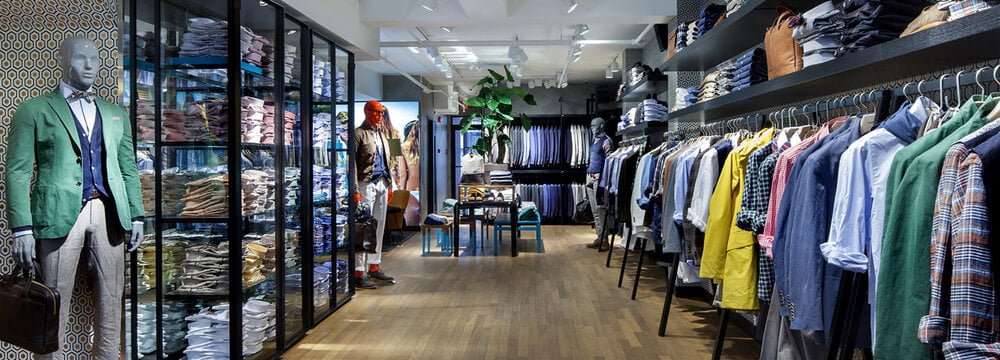
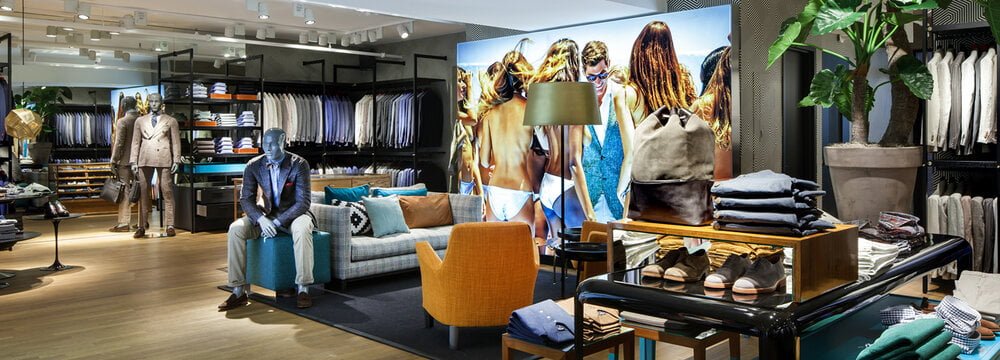
PHOTO: SUITSUPPLY
PHOTO: SUITSUPPLY

“We are about getting people a perfect fit from everything basically that has a jacket on. We do suiting. We do jackets. We do the more elegant part of men’s fashion. And we’re making a product that’s a high-end, luxurious product, best Italian fabrics, best way of making it. We’ve been around now for almost 20 years and we’re successful all around the world because we’re doing that with a high amount of expertise but also are able to offer this level of product for an attainable price point,” said de Jong.

“I think we were the first almost direct to consumer omnichannel brand and we’ve been successful with that strategy for a long time now. We combine high-end product, high-end materials, but also high-end service. We believe in stores. Everybody is talking about online but we’ve been opening stores even last year and we’ll continue to do so because that’s where the heart of our brand is where we have people in our stores who are highly-trained, they know everything about suits, everything about styling and customers will go out and find them.”

Most of the Suitsupply stores are more of a destination with interesting places such as rooftops of buildings and mansions.

Because the retailer is a global company, it has seen the whole scenario of COVID play out already in February when China closed and reopened. So the company has been closing and reopening now for some time.

“What’s been really important for us as a brand is obviously when you reopen there’s all kinds of safety measures and precautions that we have to put in place and we’ve been learning to work with over the last months,” said de Jong.
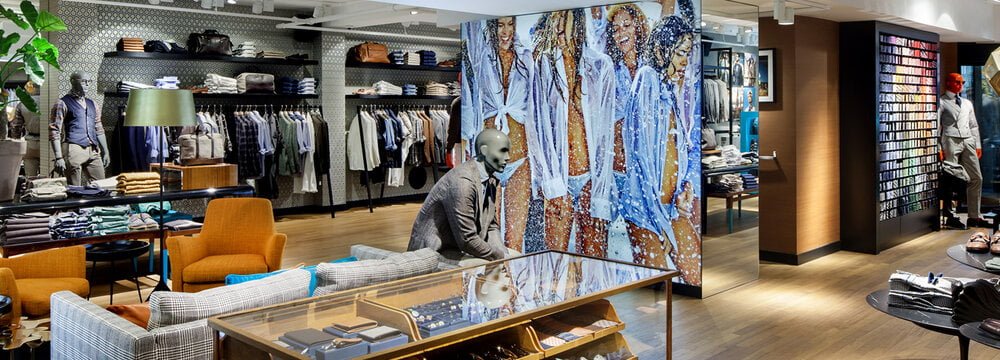
PHOTO: SUITSUPPLY

“What is important there is when you reopen in a country people of course want to go out, they want to feel safe, but they also want to have an enjoyable experience. They’re craving to shop again, to go out again. So you don’t want to walk into a store that suddenly feels like you’re walking into an operating room where they’re doing an open heart surgery. So to do it in a way that feels not invasive is something we learned to do with all the cleaning protocols that we do. We go above and beyond. We clean all the fitting rooms after every visit, we steam all the clothes that have been tried on, we clean all the regular touch surfaces in set intervals.

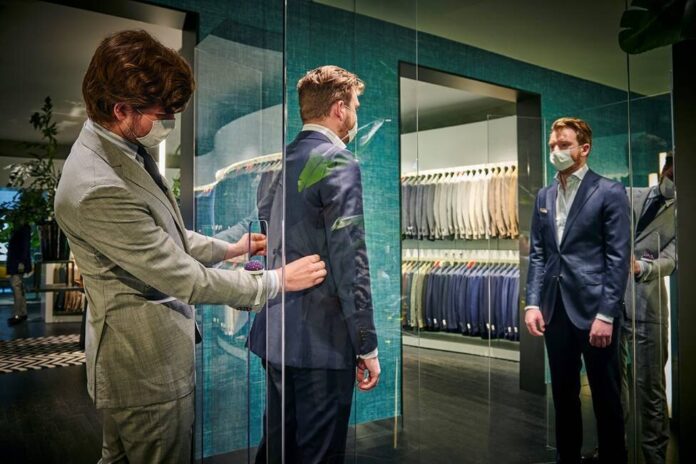
“But we also have to get close to customers which is the most important thing because we’re about fitting customers, measuring them, and it’s pretty hard to pin somebody’s hems at a six-foot distance. It doesn’t work. We developed beautiful looking glass, shopping screens, that have holes in them, they actually look nice. We can measure them up in a very safe manner. It doesn’t feel intrusive. It feels like a natural part of the whole shopping experience and it’s something customers like.”

Experience has taught de Jong when countries reopen again the first few weeks are always a little slow. People have to venture outside again and sometimes people remain a little anxious about going back to normal.

“But after a few weeks, and we’ve seen it now in Europe, we’ve seen it in China, life gets back to sort of normal. It’s not like the world is going to be completely different after this is all over. People are wanting to go out again. They’re going to interact in some way or form. So it’s not as bad as people sometimes think. There’s a pretty normal world out there and we’ve seen it happen and come back in all the countries we’ve reopened,” added de Jong.

The End of ‘Hero Pay’ for Grocery Workers in Canada an Operational Necessity: Expert

Smiling shopkeeper serving a customer while wearing a mask, coronavirus pandemic concept

The “hero pay” is quietly fading away in grocery stores and food distribution centers. In fact, the American-based Kroger chain, among others, even asked employees to return the extra money they received but has since backed off. Quite the reversal from 10 weeks ago. It appears higher salaries in grocery stores were short-lived. It is not overly surprising, given the high-volume, low-margin nature of the business, but it will likely create a rift between employees and companies.

American retailers like Target, Walmart, Whole Foods, Costco, Sprouts, and Kroger implemented “hero pay” early on during the pandemic. In Canada, Sobeys, Quebec-based Metro, Vancouver-based Save-On Foods, and Loblaws did the same thing. Sobeys is giving its workers “hero pay” of $50 for every employee, and $2 an hour for staff working more than 20 hours a week. Loblaws is giving all its staff an additional $2 an hour.

Most of these programs, however, will likely end in May or June. Some grocers like Sobeys have announced that they plan to reassess the program at some point. Calgary Co-op announced it was eliminating its COVID-19 wage stipend program for front-line employees on May 30. More than a dozen grocers in the United States have announced that they will not be renewing their pledge to workers either. The idea of offering some sort of danger pay to front-line workers in the food industry is clearly losing steam. Chances are these stipends will not survive the summer, and perhaps not even the possible second COVID-19 wave.

The economics of pay increases at retail are always weak, especially in food retailing. With such low margins, these stipends were offered simply to keep enough staff around and not have operations affected by higher absenteeism rates. It worked for a while, but COVID-19 fears are slowly fading away. But so is the need to incentivize employees to show up for work. The COVID-19 fear factor is diminishing. The money will instead be spent on PPEs and other protective shields, which are likely to remain in place for a while. This seems to be where things are going. Disappointing for employees, but not surprising.

The average salary in a Canadian grocery store is less than $30,000 or $15 per hour. An employee would start at around $13 an hour. The highest paid employees could earn almost $50,000 a year, tops. The “hero pay” represents a 10% to 15% increase in pay. Given that the average grocery store in Canada would employ about 80 full-time employees and that payroll represents roughly 30% of costs to operate, the “hero pay” essentially made the average store almost unprofitable.

At the beginning of the pandemic, sales came out of nowhere, so salaries were not an issue. Now, numbers just do not make sense for the initiative to remain sustainable. The only way to make it work, of course, is to increase food prices. Food inflation could push food prices higher for a while, but there may not be enough room for higher wages. Grocers also need to think about e-commerce as we maneuver thought the COVID era. That will bring its own load of extra costs as well.

COVID-19 made us realize that many whose jobs are too important to shut down are the ones making the least money. And many are public-facing jobs with higher risks of contracting diseases. Mostly women, students, seniors, people who often need a second job occupy these positions. For the first time ever, grocery clerks and front-line workers in food distribution were considered heroes and were praised constantly. Higher wages over time would have redefined many of these roles and would have allowed grocers to attract a different crop of talent, not just those simply looking for a job.

Also, the idea of labelling it “hero” pay was never going to end well. As businesses gets back to normal, grocers must get their expenses, including pay, back to normal as well. But normal will not be the same coming out of COVID-19. The grocery landscape will probably change, with fewer stores and fewer SKUs due to higher distribution costs. Grocers could potentially afford to pay employees more to support a different business model, one focused on analytics and omni channels.

To support bold ambitions, hiring talent can only make sense, and that always comes at a cost. Ending stipends in grocery stores may be a missed opportunity. Let’s hope this does not happen across the sector.

Special Edition 14: Shifting Consumer Behaviour to Impact Retail: Experts

exc-5ed45cd8df699b54f8cf0afc

An off-schedule podcast discussion with Ramesh Venkat and Mark Innes from David Sobey Centre for Innovation in Retailing and Services. Mr. Venkat and Mr. Innes discuss the latest research for Canadian retailer responses to COVID-19 and the Rise Again Retail virtual executive education program at the David Sobey Centre for Innovation in Retailing and Services.

The Weekly podcast by Retail Insider Canada is available on Apple Podcasts, Stitcher, TuneIn, Google Play, or through our dedicated RSS feed for Overcast and other podcast players.

Interview Details

  1. Rise Again Retail: Virtual executive education program by the David Sobey Centre for Innovation in Retailing and Services designed to help retail executives navigate the challenges posed by the pandemic and to enable retail companies to take advantage of the opportunities ahead.
  2. Ramesh Venkat, Director, David Sobey Centre for Innovation in Retailing and Services
  3. Mark Innes, Executive In Residence, David Sobey Centre for Innovation in Retailing and Services

Subscribe, Rate, and Review our Retail Insider Podcast!

Follow Craig:

Follow Retail Insider:

Listen & Subscribe:

Share your thoughts!

Drop us a line at Craig@Retail-Insider.com. You can also rate us in Apple Podcasts or recommend us in Overcast to help more people discover the show!

Listen on Google Play Music

Share your thoughts!

Drop us a line at Craig@Retail-Insider.com. You can also rate us in Apple Podcasts or recommend us in Overcast to help more people discover the show!

Mastermind Toys Shifts Operations as Stores Reopen Amid COVID-19

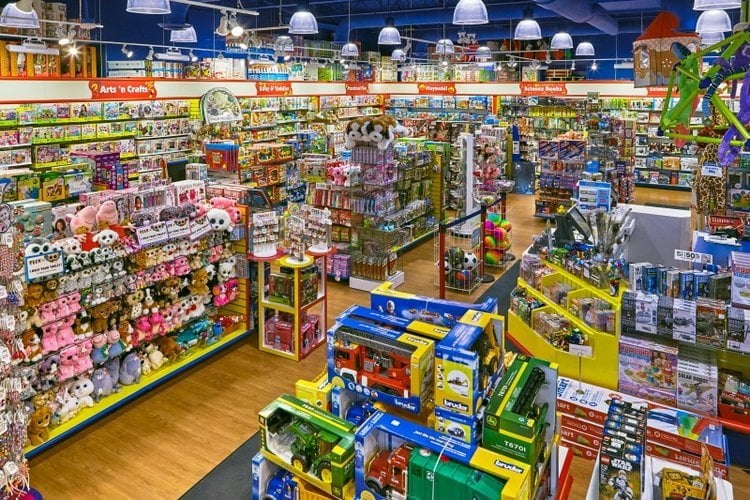
Mastermind Toys has been focused during the COVID-19 crisis on accelerating its strategy which includes rolling out several new offerings for customers as well as enhancing its social media and digital presence.

There are currently 69 stores across Canada in every province with the exception of Quebec. The first store was opened in 1984 in Toronto.

“When I came in January, one of the big things that lent itself to my expertise was doing a digital transformation. We had grown pretty rapidly over the last two to five years. We went from 12 stores to 69 stores and we feel that’s a really good number in Canada right now. We’re happy with the customers we’re serving that way. But what we recognize even pre-COVID is that our digital experiences were actually lagging our competitors and our industry,” said Sarah Jordan, CEO of Mastermind Toys.

SARAH JORDAN

“So when I came in January, even pre-COVID, of course we were going to look at our footprint and make decisions either opportunistically on where we could add a select few but really our focus was to turn our attention to digital. And it was really about how do we up our game on a host of experiences that rely on our website. As you can appreciate with COVID, we’ve actually seen an ability to accelerate some of that agenda.

“We’ve introduced curbside which is a service we did not have before and we’ve also upped our game in terms of our website and we’ve experienced triple-digit growth over that time, over COVID. But that is where we still believe that we can make better experiences.”

Jordan said a key pillar of Mastermind’s success is that it truly believes it is customer obsessed and it tries to keep the customer and its employee experience at the core of everything it does.

“When we think about our in-store experience, we really think about providing delight and wonder around every corner. So we love to be the experts on age and stage and we actually curate our toys based on our model that we call why kids play which is based on for each age and stage how do the kids develop their body, mind and expression. We really believe in providing a great experience when you come in the store, but we also deeply believe in being the best toy curators,” said Jordan.

“So you won’t find everything in our store. We tend to try and balance imagination and development. We’re often called the educational toy store and it’s really for us about helping parents, grandparents, kids, kids at heart, play. We deeply believe that play is critical and central to kids’ lives. So that makes us a bit different from a toy store perspective.”

One of the other initiatives that sets the store apart is its Mastermind wrapping paper which is a free service in its stores as well as loot bag assembly.

“Everyone who touches a customer at Mastermind really takes pride in that. One of the things we’ve noticed even with COVID is what our customer service agents do. And we don’t just help someone navigate the website, they also are experts in helping them navigate to play pattern for either their own kid or for the gift recipient. And actually through COVID we’ve been able to assist five times the number of customers that we would traditionally do at this time because we’ve extended our hours as we’ve rolled out different service offerings because we couldn’t do that while our stores were closed,” said Jordan.

Those stores closed in mid-March. Today, 65 stores have reopened.

Jordan said the company has tried to reimagine its website as much as it could at this time to create boutiques to help customers navigate to the most relevant items they are looking for.

“Parents have now been tasked with homeschooling and they’re also about to be tasked with summer camps. So while we haven’t revolutionized our website we did believe that we could help our customers navigate them better by helping them find puzzle boutiques, or games, and help them get to those hard-to-get items quickly,” she said. “And with that we’ve also used our social channels to make sure people know where to find those items or what items might be helpful in helping them solve those problems.

“So we’ve really taken our authority on play seriously where we’ve noticed the categories that matter. We’ve been trying to highlight what those are. We’ve been trying to get ahead of what parents need whether it’s sidewalk chalk for their driveways, puzzles for their new family bonding, outdoor activities for their driveways or their backyards, we’ve really tried to make our website more navigable. We’ve also extended our customer service hours to be more friendly coast to coast and also for extended weekend coverage.”

Jordan said Mastermind will continue with curbside pickup which is completely contactless.

“We have launched curbside with the intention that it is an experience that will be valuable to our customers. So while we were rolling it out we tried to make sure that our signage in our windows were permanent. We tried to make playful emails along the journey that’s true to our brand. We’re trying to stay a little bit whimsical but on brand,” said Jordan.

Also, as the retailer’s doors have opened to foot traffic, it has had to alter the experience in the store. It has taken the guidance of the province’s safety and health measures. But Mastermind has also created signage that caters to families and kids.

“We want our customers including our littlest customers to feel comfortable when they come into our stores. We’ve tried to create signage whether it’s on the door or even on the floor that reminds customers, little ones, big ones, what social distancing means. One of the positive pieces of feedback we’ve heard from customers is how grateful they are on how we’re describing to our little customers, to the kids, what social distancing means,” explained Jordan.

For customers visiting a physical store, a concierge at the door will assist them and also remind people to respect that it’s a low touch environment. No demonstrations will take place in the store. Customers will also be helped to navigate to the right spots in the store.

The retailer also started daily readings online by well-known personalities. There are virtual birthday parties. A Lego master taught kids how to build Lego.

“For us right now, it’s about making sure that we deeply understand what our customers are going through. While we offer them new experiences, ways that they can choose their own adventures, curbside, online, in-store, it’s also really important that we’re helping them through this time,” Jordan said, adding that it is rolling out a program to help parents set up summer camps at their homes.

“We really want to make sure that our customers appreciate that we’re here for them and that we understand that they want to shop in new and different ways and that they’re also trying to engage their children in new and different ways. We’ve really tried to keep kids in mind during this time and help parents solve those problems.”

Q&A with Mary Turner, President of DSW/Designer Brands Canada

Mary Turner

Mary Turner, President of Designer Brands Canada Operations, leads the retail banners The Shoe Company, DSW Canada, and The Shoe Warehouse with 141 stores.

She spoke to Retail Insider recently about her career and the state of the retail industry in Canada.

Retail Insider: Can you tell us a little bit about your career?

Turner: “I’ve been a retailer all of my life – before, during, and after university. I’ve been really, really fortunate to have worked for some of North America’s great retailers – Hudson’s Bay Company, Holt Renfrew, and now of course Designer Brands.

RI: What about your current position?

Turner: “I joined Designer Brands about four years ago and I became the President about 18 months ago. I joined initially as Chief Merchant and got the opportunity to learn more about the business and obviously we went through a fascinating time. I joined just pre the completion of the acquisition by Designer Brands of Town Shoes Limited. So it’s been a very, very interesting time.

RI: Pre-COVID 2019, what was business like for the company?

Turner: “2019 for us was absolutely a landmark year. We exceeded every one of our metrics. We like to say internally it was our best year ever. And quite honestly we were poised to continue that momentum right through into 2020.”

RI: Why do you think you had such a good year?

Turner: “Well interestingly one of the big drivers of our success in 2019 was the fact that we were able to re-launch our e-comm business on the ATG platform that the U.S. also uses. We completed that just about I guess it was March of last year and that was a huge contributor to our success in 2019 and as you can imagine a huge win for us as we moved into COVID. We re-platformed to a much more sophisticated system.”

RI: Since mid-March, what has been the impact of COVID for you as a retailer?

Turner: “It certainly has been a fascinating learning time. I think we were very fortunate in three ways actually. First of all we had this amazing new platform that we would not have had the ability to use before. Secondly, we fulfill 100 percent from stores and that I think that gave us a real advantage over people who were struggling to get orders through their warehouses. It also allowed us to keep our staff engaged and employed in the business. And thirdly the nature of our business. Our strongest categories in footwear are athletic, kids, casuaL, and comfort. All absolute home runs during this period of time.”

RI: What’s happening right now in terms of the reopening of stores in Canada?

Turner: “We have 93 percent of our stores open now. The only stores we have that are not open are Newfoundland stores because Newfoundland hasn’t declared a plan yet and our mall-based stores in Ontario. And we are super encouraged. We’re encouraged by how passionate our associates are about being able to open their doors and look after their customers. We’re really encouraged by how our customers are responding to all the things we’ve done to ensure the health and safety both for themselves and our associates. And we are just extremely encouraged by the return of the customers.”

RI: With such a tactile experience in the business you are in, how are the stores reopening in terms of the protocols they have in place?

Turner: “A couple of things. First of all, if you come in as a customer to try on we have designated spaces for you to leave the shoes you tried on rather than putting them back onto the shelves. And the associates gather those up, spray them down and sanitize them before returning them to the inventory. If you bring in a return, we quarantine the return for three days.”

RI: As you look forward and beyond, what’s your outlook for the retail industry in the future?

Turner: “Well, I don’t pretend to have a crystal ball about the whole retail industry because I think we’re going to see some very substantial changes. I will tell you that for our business we’re taking a very aggressive stance this fall. We feel we came quite strongly out of this both in terms of the cleanliness of our inventory and also the strength of our categories and we’re going to drive that right into fall. We know we’ve got lots of work to do as I’m sure many of my fellow retailers do in terms of being able to service the customer in any channel she chooses as we continue to go through a world, or a period of time, where not every customer wants to use the store.”

RI: Any plans of expansion in terms of the number of stores?

Turner: “Absolutely. We actually had a number of stores on the go for 2020. We’re working with the landlords now just to decide on the right cadence to actually open those under the circumstances.”

RI: On a personal note, when we have a crisis like we’ve seen currently and a few years ago with the financial crisis, how do you as an executive deal with things like that in making decisions?

Turner: “I’m a really huge believer in the power of positive momentum. So when we get into these crazy times, like we just have done with COVID, to me it’s so important to find something that we can impact and that we do have control over, and get the team focused on that and set goals around that and get people moving ahead. It is tremendously important I think in terms of rallying the team and I’m so proud in how the team did rally to this and how much they enjoyed learning what they could do that they would never have realized they could do before. I think the other thing we really learned through this period was the incredible importance of staying in touch. I would tell you that as a team, an extended team including the store managers, we probably have spent more time together virtually through COVID than we did physically when he had the ability to do so.”

RI: Any final thoughts?

Turner: “I think the only thing I’d say I can honestly tell you I’ve been a retailer for more years than I’m going to admit to you and I would have to say this has been the most fascinating period of my career.”

Coronavirus Recovery: Canadian Small Businesses Must Focus on Easing Employee, Customer Fears

By M. Tina Dacin and Laura Rees

A small business has been given the green light to reopen amid the COVID-19 pandemic. What does it need to consider for employees and customers?

Small business owners are reorganizing physical space to account for continued distancing requirements and rethinking supply chains to deliver products and services in new ways to meet changing demand patterns.

But they must not forget the hearts and minds of employees and customers.

That doesn’t mean replacing a focus on the bottom line, but it helps address the need for a new set of expectations and ways of communicating in terms of product or service offerings, delivery methods and real-time feedback.

Based on our expertise in organizational behaviour and past research we’ve conducted, we provide a set of recommendations to help small businesses thrive in our new COVID-19 economy by looking after the hearts and minds of the people most important to businesses — employees and customers.

Fear, Anxiety

One of the biggest outcomes of living amid the COVID pandemic is the fear, anger, sadness and vulnerability many people are feeling. Even very loyal customers may have suddenly short fuses when a favourite product or service is delayed.

Both old and new customers may feel hesitant to enter shops or restaurants, unsure of how to engage with employees safely and afraid of unknowingly getting infected or infecting others.

Employees, although likely relieved to be able to earn a pay cheque, may have similar fears, and wonder how to control potentially unsafe situations or customers who aren’t adhering to social distancing protocols.

Overall, engaging the hearts and mind of both employees and customers means recognizing that they’re probably feeling emotions differently than they were before COVID-19. In particular, they may experience more ambivalence — a mix of emotions that can feel uncomfortable or even alien — as they grapple with discovering, experimenting and understanding what a “new normal” means.

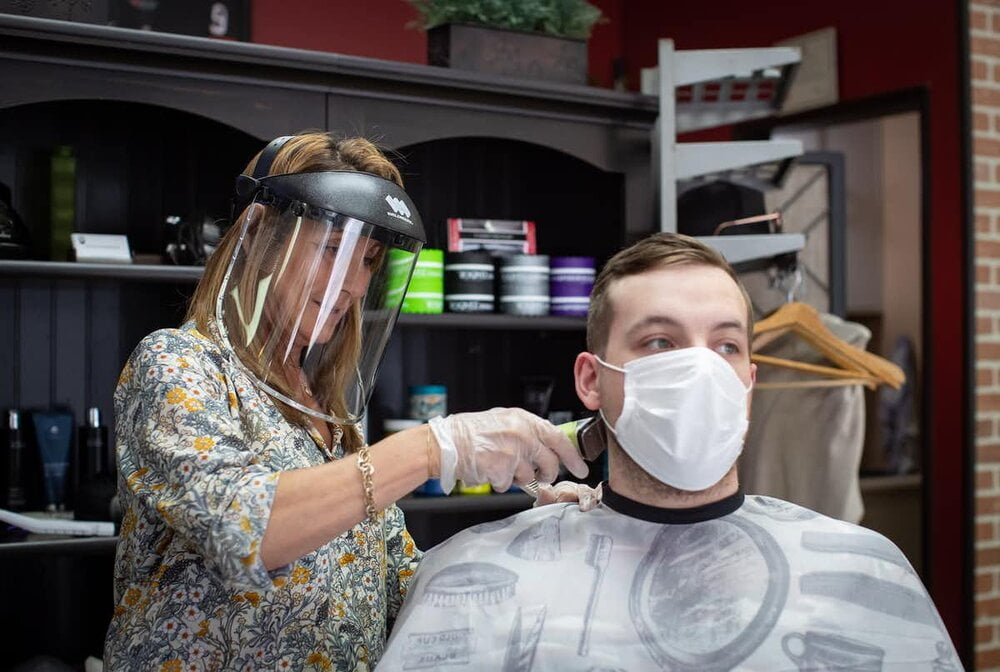
OWNER ROSANNA PETAN WEARS A FACE SHIELD AND JACK WILLIS WEARS A FACE MASK AS SHE CUTS HIS HAIR AT FRANK’S BARBERSHOP, IN VANCOUVER, ON MAY 19, 2020. PHOTO: THE CANADIAN PRESS/DARRYL DYCK

Research shows this kind of emotional complexity can lead to a host of outcomes, including vacillation, disengagement and even paralysis — at least partly explaining why employees and customers may seem like deer in headlights during the first days of a business reopening.

Yet our previous research shows that ambivalence can actually be helpful, increasing people’s problem-solving abilities by opening their thinking to alternative perspectives.

Redirecting Emotions

That means rather than avoiding ambivalence because it feels uncomfortable, small businesses must help their employees redirect these feelings into brainstorming creative solutions for engaging customers, updating websites and soliciting and incorporating customer feedback.

GROUNDS CREW DO MAINTENANCE AS THEY PREPARE TO OPEN PIPER’S HEATH GOLF CLUB DURING THE COVID-19 PANDEMIC IN MILTON, ONT., ON MAY 13, 2020. PHOTO: THE CANADIAN PRESS/NATHAN DENETTE

Doing so will have the added benefit of helping employees and customers feel more in control over the situation — a basic human need that has been drastically reduced during the pandemic.

Coupled with emotional complexity is the loss of beloved everyday rituals, from shaking hands to being able to stand close to help a customer decide on a haircut, new clothes or specific menu items.

As businesses reopen, addressing this loss of tradition and predictability in employees’ and customers’ minds will be crucial.

Our research on the role of rituals in institutional maintenance shows that common rituals bind people together, anchoring our sense of identity and structuring our lives in comfortable and predictable ways.

In short, rituals create the sense of normalcy that is now lost.

But to form new rituals and traditions, businesses must first re-establish trust. When trust is fragile and old rituals must be abandoned to make way for new practices, business leaders need to consider multiple approaches in how to work and interact with employees and customers.

Start a Dialogue

The first approach is to engage in dialogue.

Reopening costs do not solely pertain to sanitizing workplaces and providing personal protection equipment, but also to the amount of time it takes to discuss and address concerns.

Important questions to employees and customers include:

  • What are your concerns about being here? What can we do to make things safer?

  • What do I need to know about you that could help me work with and serve you better?

Companies should use this feedback to create new rituals and workplace norms together with employees and customers.

Customization, in fact, will be increasingly important as both employees and customers have unique needs and circumstances.

TWO WOMEN HAVE DRINKS ON THE PATIO OF A RESTAURANT IN VANCOUVER, ON MAY 19, 2020. BRITISH COLUMBIA HAS BEGUN REOPENING ITS ECONOMY. PHOTO: THE CANADIAN PRESS/DARRYL DYCK

According to local small business owner Lisa Arbo of Salon 296 in Kingston, Ont.: “A large part of success going forward will be about being sensitive to everyone’s reality.” This type of empathetic co-creation is likely to reduce uncertainty and give everyone a healthier sense of emotional and physical comfort and control.

Manage Perceptions

The second approach is to manage perceptions. Small business owners are the custodians of the trusted relationships between their companies, employees and customers.

Even as business owners adapt to this new, emotionally complex and less predictable world, their employees and customers are looking for them to communicate clearly, succinctly and often about what is both possible and not possible, and what the new expectations are at all levels of the social contract. That includes everything from physical distancing rules to standards for customer satisfaction.

By recognizing and finding ways to incorporate employees’ and customers’ emotional complexity and sense of loss for beloved traditions, small businesses can actually make this challenging time an unexpected opportunity to thrive.

PEOPLE WAIT IN A LINE FOR THE CASHIERS, SEPARATED BY THEIR CARTS AND A CORRAL MADE OF TAPE TO ALLOW FOR PHYSICAL DISTANCING, AT A GARDEN CENTRE IN OTTAWA ON MAY 23, 2020. PHOTO: THE CANADIAN PRESS/JUSTIN TANG

Uncertainty, change and customization are key elements of the new business reality and embracing them, while difficult, will yield success. Businesses that excel will be the ones that effectively learn to engage the hearts and minds of their employees and customers.

This article was originally published in The Conversation. Read the original article here.

M. Tina Dacin, Stephen J.R. Smith Chaired Professor of Strategy & Organizational Behavior, Queen’s University, Ontario.

Laura Rees, Assistant Professor of Organizational Behaviour, Queen’s University, Ontario.

Retail Council of Canada Launches Online Webinar Series with Empire CEO Michael Medline

By Retail Insider 

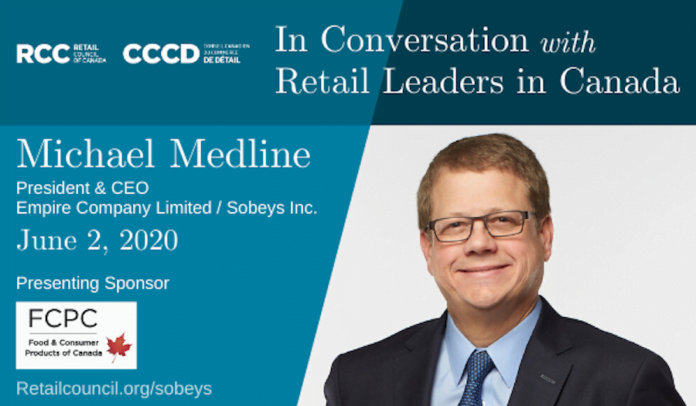
Retail Council of Canada is launching an online webinar series called In Conversation with Retail Leaders in Canada. The series will feature one-on-one conversations with Canada’s top retail leaders. The first segment, being held Tuesday June 2 at 2:00pm EDT, will showcase a discussion hosted by Retail Council of Canada president Diane Brisebois where she will interview Empire president and chief executive officer Michael Medline. 

Tickets for Mr. Medline’s webinar can be purchased here

Michael Medline is President & Chief Executive Officer of Empire Company Limited and its wholly-owned subsidiary Sobeys Inc., a leading Canadian grocery retailer and food distributor. Medline is a proven leader with a strong track record of success in Canadian retail. He was appointed President & CEO of Empire in January 2017 after more than 15 years in a variety of senior retail leadership positions at Canadian Tire, including as that organization’s President & Chief Executive Officer.

In Conversation with Retail Leaders in Canada is a new online series featuring in-depth conversations between RCC President and CEO Diane J. Brisebois and Canada’s top retail leaders and industry insiders. 

The webinar series aims to assist everyone in the retail industry who has been forced to reconsider how their organization’s teams, operations, inventories and policies will need to adjust to ensure a strong retail recovery. 

Following Mr. Medline’s segment on Tuesday, the In Conversations with Retail Leaders in Canada webinar series speakers include: 

  • Greg Hicks, President & CEO Canadian Tire Corporation Ltd., June 11, 2020 3:00-4:00pm EDT  

  • Brian Hill, Founder & CEO of ARITZIA June 17, 4:00pm-5:00pm EDT

  • Calvin McDonald, CEO lululemon athletica Inc. June 30, 2020 12:00pm-1:00pm EDT

[Buy tickets to hear Michael Medline speak on Tuesday June 2]

208: COVID-19: Stores Begin Reopening in Canada, Some Closing Permanently

exc-5ed1214afae07973962a7b43

This week Craig & Lee talk about the COVID-19 re-opening retail announcements as well as the closure announcements. Reopenings included IKEA, Nordstrom and Holt Renfrew while the closures ranged from Victoria Secret (L Brands), Reitmans, Stokes and Nando’s.

The Weekly podcast by Retail Insider Canada is available on Apple Podcasts, Stitcher, TuneIn, Google Play, or through our dedicated RSS feed for Overcast and other podcast players.

Article Details

  1. IKEA Begins Reopening Canadian Stores with New Safety Protocols
  2. Nordstrom Begins Opening Canadian Stores with Safety Protocols
  3. Holt Renfrew Sets Out Plan to Reopen Stores with COVID-19 Safety Protocols
  4. L Brands to Permanently Shutter 13 Victoria’s Secret Stores in Canada
  5. Stokes to Permanently Close 40 Store Locations in Canada
  6. Reitmans Files for and Obtains Bankruptcy Protection
  7. Restaurant Chain ‘Nando’s’ Permanently Closing 21 Canadian Locations

Subscribe, Rate, and Review our Retail Insider Podcast!

Follow Craig:

Follow Retail Insider:

Listen & Subscribe:

Share your thoughts!

Drop us a line at Craig@Retail-Insider.com. You can also rate us in Apple Podcasts or recommend us in Overcast to help more people discover the show!

Listen on Google Play Music

Share your thoughts!

Drop us a line at Craig@Retail-Insider.com. You can also rate us in Apple Podcasts or recommend us in Overcast to help more people discover the show!

Canadian Retail Sales Growth Goes for a Ride with March Declines

Family in the supermarket. Beautiful young mom and her little daughter smiling and buying food. The concept of healthy eating. Harvest

Updated Statistics Canada data show that unadjusted retail sales declined 0.7% year-over-year in Q1 2020. But that’s not the real story. Only about the second half of March was impacted by the COVID-19 shutdown, and for March alone the decline in Canadian retail sales was a whopping 10.9%. This is the sort of result, or worse, that we can expect in the April numbers when they are released.

Various retail sectors have been affected very differently. Food & Drug stores and E-Commerce have spiked up, while Store Merchandise and Automotive & Related have spiked down. The circumstances in Canadian retail however are so unprecedented that it makes little sense to consider trends. Things will likely return somewhat closer to normal at some point, but it’ll likely be a new normal that we haven’t seen before.

Food & Drug

Retail sales in the Food & Drug sector were up 8.8% year-over-year for Q1 2020, and a nosebleed plus 14.6% in March alone. As the above chart shows, there was a sharp spike in the 3 month short term trend (orange line in the chart), and the underlying 12 month trend (green line) has taken a distinct upward turn. These are anomalies however, and should cool off by midyear.

Supermarkets & other grocery stores led the charge, with retail sales increasing 22.1% year-over-year in March, and gaining a record 12.6% for Q1 2020 overall. This was a combined effect of consumer hoarding and of many other retailers temporarily closing their doors.

Health and personal care stores’ retail sales were up 5.5% in March. This was not nearly as robust as the gain for supermarkets but still well above the overall retail average.

Store Merchandise

Retail sales in the Store Merchandise sector took a sharp downturn, declining 10.4% year-over-year in March and 0.7% for Q1 2020 overall. Store and mall shutdowns only began in mid March however, so that the numbers for April are likely to be significantly worse.

Clothing and clothing accessories stores were hit especially hard. Their sales were down a colossal 54.1% in March versus last year, and were down 19.0% for Q1 2020. Many of these retailers are located in and are dependent on shopping malls which shut down. Furniture and home furnishings stores also had a terrible March with retail sales down 26.2%, likely due to consumers avoiding major purchases.

The one bright spot in this sector however was general merchandise retailers, whose retail sales gained a respectable 6.2% for both March and Q1. This group includes combination stores like Costco and Walmart which also serve as supermarkets, and/or tend to be larger retailers with better developed e-commerce capabilities to shore up their retail sales.

Note that Statistics Canada is now suppressing the breakdown of general merchandise stores for confidentiality reasons. The figures in the “By The Numbers” table below are estimates based on previous trends.

The Automotive & Related sector looks like it has just driven off a cliff. Retail sales were down 8.5% for Q1 overall, and off a huge 30.2% in March alone.

New car dealers saw their sales decline 35.0% in March due to closed dealerships and people reluctant to take on financial risk in times of economic uncertainty. Again, the numbers for April stand to be even worse.

Gasoline station retail sales were on a modest rise at the start if the year, but have since gone downhill, as pump prices have declined and people are staying home and driving less. In March, gas station sales were down 23.3% year-over-year.

By The Numbers

Special Note: Statistics Canada revised historical data with the February 2019 release. Unadjusted monthly data were revised back to January 2018, while seasonally adjusted data were revised back to January 2015. Those keeping score should update their files. The analysis in this report is always based on unadjusted data.

Canadian E-Commerce Sales

Just as there were major changes in location-based retail sales, StatsCan data shows an upswing in e-commerce.

Overall, e-commerce represented about 3.7% of Canadian retail sales for the 12 months ending March 2020, including both pure play sellers as well as the online operations of brick & mortar stores. In March 2020 alone however, e-commerce’s share of total was up to 4.9%. Note that Canadian consumers may also buy online from foreign websites which is not captured in these numbers.

Canadian e-commerce sales were up 23.8% year-over-year in Q1 2020. This was far better than for location based retail which lost 0.7%. In March 2020 alone, e-commerce sales gained a huge 40.4% over a year ago. Year-over-year growth of e-commerce sales is expected to increase in the next few months as consumers become more accustomed to shopping online.

Note that location based retail is the same as that in the preceding “By The Numbers” table. It’s what’s normally reported as Canadian retail sales. Except that it isn’t. Location based retail excludes another section called Non-Store Retailers (NAICS code 454), which includes electronic shopping and mail-order houses, which in turn is where (mostly) pure play e-commerce businesses are. For the 12 months ending March 2020, electronic shopping and mail-order houses had an estimated $15.1 billion in e-commerce sales.

But that’s not the only source of e-commerce, as (mostly) bricks & mortar location-based retailers also sell online. For the 12 months ending March 2020, this group had an estimated $8.1 billion in e-commerce sales. With electronic shopping and mail-order houses, there’s a grand total of $23.3 billion in e-commerce sales by Canadian operators. Note that this does not include foreign e-commerce purchases made by Canadian consumers, but it does include e-commerce purchases made by foreigners at Canadian operations.

For electronic shopping and mail-order houses, an estimated 85.8% of their sales are allocated to e-commerce. For (mostly) bricks & mortar retailers, it can be estimated that just 1.3% of their total sales are attributable to e-commerce.

In the final section of the above table, (mostly) pure play operators (namely, under electronic shopping and mail-order houses) generated an estimated 65.1% of all e-commerce sales in Canada, while (mostly) bricks & mortar location-based retailers’ share of e-commerce was 34.9%.

For more explanation on the e-commerce numbers, see Statistics Canada: Retail E-commerce in Canada.

Friendly Stranger Expanding Cannabis Retail Operations with Plans for Growth

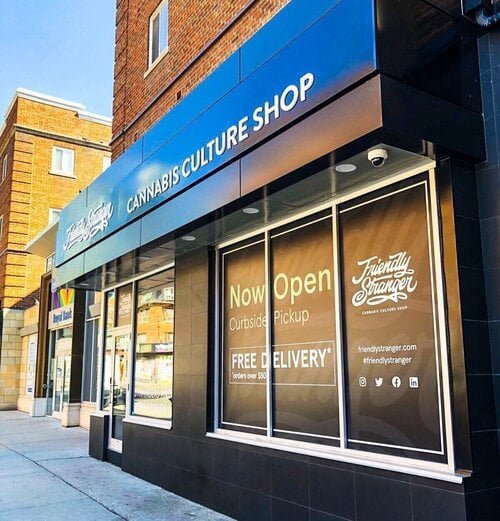
ORIGINAL FRIENDLY STRANGER LOCATION ON QUEEN ST, TORONTO. PHOTO: YELP

It’s been a busy 2020 so far for Friendly Stranger and the Friendly Stranger Holdings Corp (FSHC) team. And it doesn’t look like it’s slowing down any time soon.

This is good news for Canadian retail, at a time when we could all use some positive stories.

To kick off the year, the FSHC team added the iconic HOTBOX™️ to its growing portfolio. Having already included the family-run Happy Dayz™️ brand, this allowed them to get into the full-service model of serving the cannabis industry. Now their brand spans from accessories to product and ultimately they plan to add consumption lounges (when they become legal).

This month, in the midst of the COVID-19 crisis, Friendly Stranger opened its first Toronto cannabis retail location on Church Street. This marked its third cannabis shop, with London and Burlington also opening their doors earlier this year.

Patience and flexibility are required in any construction project. But they were never so prevalent in the newest project as when COVID-19 added its many challenges. Just a few included working virtually with the Alcohol and Gaming Commission of Ontario (AGCO) to meet the regulatory requirements and pass the pre-opening inspection.

FSHC is planning to open its fourth location on Queen Street West, very close to the original store. And two more planned Friendly Stranger stores have just received building permits in Oshawa and Hamilton.

And if that isn’t enough, the FSHC is working to convert four Happy Dayz™️ locations to be licensed to sell cannabis, and Kensington Market’s HOTBOX™️ will reopen in the coming months.

Two more Toronto stores are planned to open: one HOTBOX (converted to cannabis retail) and one new Friendly Stranger on Danforth. HappyDayz conversions will happen next in their smaller markets of Barrie, Orillia, Peterborough, and Oshawa.

2020 Schedule of FSHC Expansion at a glance:

  1. London and Burlington open

  2. Church Street location opens

  3. Queen Street West is restarting construction

  4. Oshawa and Hamilton have building permits

  5. Two more in Toronto: HOTBOX convert and net new Friendly Stranger on Danforth

  6. Two more applications are scheduled to get in the AGLC queue (construction TBD)

Staying true to their values

“We are pleased to deliver on our aggressive expansion plan to become the leading cannabis and cannabis accessory retailer in Ontario,” states James Jesty, President of FSHC. “We have dedicated staff who are eager to safely serve and educate the community, remaining true to our company’s core mission and values.”

With a deep history of community presence and involvement, their dedication to education and drive to eliminate the stigma surrounding cannabis will remain front and centre.

As proof of its community commitment, Friendly Stranger has been in the Queen Street West community since 1994, HOTBOX has spent the past 20 years in the Kensington Market and Happy Dayz is a family-run business in their smaller communities.

PHOTO: HOTBOX KENSINGTON MARKET, TORONTO.

Several of their newest stores opened up just before (or during) the COVID-19 crisis so they haven’t been able to reach out in a meaningful way to the surrounding communities. The plan is there to also welcome the communities into the stores; a few of the new locations have small community rooms where the company will do cannabis education and local organizations can request space for meetings.

As they embark on their newest location in the Village, FSHC extends their commitment of support to LGBTQ2IA+ communities.

As more locations open, how is the transition from selling accessories to product retailer going?

Jesty sees it as a natural progression. 80 percent of their customer base are connoisseurs, the daily user. He’s very happy to be able to take the Friendly Stranger experience and brand and transition it into full-service stores.

“We are unique to our competitors because we have this long history and understanding of legacy and multiple brands,” explains Jesty. “I consider it a competitive advantage. And we’re still a small team, so we’re nimble and able to leverage our locations and reputation.”

What about expansion outside of southern Ontario?

“We’re in this for the long-haul. We will continue to grow. Obviously, we’re struggling like everyone else,” Jesty comments. “But there is now some light at the end of the tunnel. Over the next six to 12 months, the industry should continue to grow. And (we hope) to be in a position to look at real estate that makes sense and sign leases.”

Currently, FSHC has leases from Windsor to Ottawa. They continue to look for opportunities where they exist. But for now, they’re focusing on the GTA. Which makes sense as that’s where their brand recognition is strongest and it’s been their loyal customer base for both Friendly Stranger and HOTBOX for decades. It’s also still the largest market to grow in.

But FSHC isn’t saying no to merging or acquiring stores throughout the country.

“I’d love to have a 24-month outlook but as we’ve seen in the past two years, it’s very hard,” says Jesty. “We’re still on an aggressive growth plan and that’s super exciting.”