Home Blog Page 964

Oppsense.Digital Brings Sequoia Backed Growth Management Platform to Canadian Businesses

exc-5eea419cc69b7406e469b10d

Capture.JPG

Oppsense.Digital, a digital catalyst based in Toronto, has announced a new partnershiagreement with Sequoia backed Insider, a Singapore based company that is operating in 15 markets worldwide including Indonesia, South Korea, Japan, Malaysia, Thailand, Vietnam, United Kingdom and Australia.

This new partnership agreement between Oppsense.Digital and Insider will enable Canadian businesses to create more intelligent interactions with their customers on their preferred channels by using Insider’s Growth Management Platform (GMP). Powered by deep AI and Machine Learning capabilities, Insider’s Growth Management Platform (GMP) delivers real-time insights and personalization across the web, mobile web, mobile app and ad channels. This provides digital marketers a full suite of features across the growth funnel, from acquisition to activation, retention and revenue.

Insider’s Growth Management Platform (GMP) is being used by international clients that include Singapore Airlines, Samsung, Philips, Estee Lauder, Unilever, IKEA, MediaMarkt, UNIQLO, Avon, New Balance, CNN and Nissan.

According to Cagdas Clark Onen, Managing Director of Oppsense.Digital, ‘With international operations in 15 markets worldwide and backed by Sequoia, Insider’s Growth Management Platform enables brands to grab customer’s attention and turn browsing visitors into paying customers. We are happy to offer this premium partnership to Canadian businesses and we are confident that it will provide tremendous value.’

According to Ali Can Kamiloglu, Partner | Director of Commercial Channels & Mobile Platform,Insider ‘We always scout the market to create the best global partnership opportunities as Insider Growth Management Platform. Oppsense.Digital’s deep knowledge and industry experience is a perfect fit for exploring and evaluating the opportunities in Canada.’

You can see the company credentials on the website: http://oppsense.digital/

About Oppsense.Digital Oppsense.Digital is a Toronto-based company that offers fast and innovative solutions for catalyzing the marketing operations via the world’s fastest creative production process, customer experience journey, data-driven transformation and augmented-shopping solutions. Oppsense.Digital team has a combined experience of 10+ years in working with international technology companies and growth-stage startups. Oppsense.Digital is a Shopify Partner and Clearbanc Trusted Agency Partner.

About Insider Insider is a technology company with offices in London, Paris, Singapore, Tokyo, Hong Kong, Seoul, Sydney, Paris, Helsinki, Barcelona, Dubai, Moscow, Warsaw, Taipei, Jakarta, Istanbul, Kiev, Ho Chi Minh City, Bangkok, Brussels, Amsterdam, Manila, Wellington, Luxemburg, Ankara and Kuala Lumpur. Insider has been named a “Cool Vendor” in the report titled “Cool Vendors in Multichannel Marketing” by Gartner, Inc. and recognized as a Leader in the G2 Grid for Mobile Marketing in 2019. Also, Insider was listed as one of Europe’s 100 Hottest Startups by WIRED Magazine in 2018 and won Red Herring Top 100 Europe in 2017. CrunchBase has recently ranked Insider’s co-founder and CEO Hande Cilingir as one of the top three women CEOs outside of the US.

Insider Growth Management Platform (GMP) helps digital marketers drive growth across the funnel, from Acquisition to Activation, Retention, and Revenue. Leveraging real-time predictive segmentation powered by deep Artificial Intelligence and Machine Learning capabilities, Growth Management Platform empowers marketers to deliver personalized journeys across the web, Mobile Web, Mobile Apps, and Ad Channels. Built on a unified data layer, GMP is easy to implement and simple to use, avoiding the need for complex integrations and dependency on IT teams. Insider simplifies the life of digital marketers and helps them drive growth for their brands, with zero marketing waste.

Cadillac Fairview Proposes Adding Housing Component to CF Polo Park

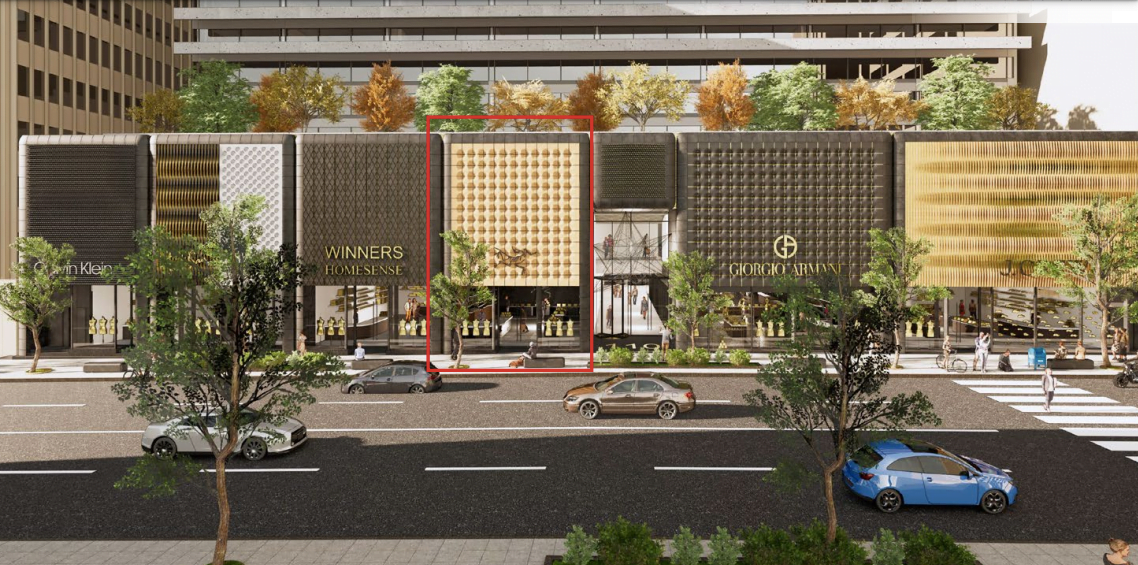
RENDERING OF POLO PARK SITE. RENDERING: CADILLAC FAIRVIEW

A proposed residential development on land at CF Polo Park in Winnipeg will provide Manitoba’s top shopping centre with an additional boost in traffic over the next few years.

The proposal, however, remains in the City of Winnipeg’s approval process for the time being.

“We’ve made a presentation to the City of Winnipeg to densify the property not unlike what’s been done at (CF) Richmond (Centre). That’s the biggest and most exciting thing we have on the horizon. It is likely a few years out in terms of just getting through the approval and governmental regulations,” said Peter Havens, general manager of Polo Park.

“If that comes to fruition, densifying the Polo Park lands would be an incredible addition to Winnipeg and to certainly Cadillac Fairview.”

Havens said one of the key drivers of the initiative is densification for Cadillac Fairview on its properties. He said Polo Park in Winnipeg is so ripe for densification.

RENDERING OF POLO PARK SITE. RENDERING: CADILLAC FAIRVIEW

“We sit on a very large site. Pushing some parking underground, putting up some residential, putting up some office, some mixed-use, really densifies that location and it’s very well situated. We have a major bus loop out front and a secondary bus loop on the west side and we’re becoming more of a hub for people that want to live, work and play kind of thing all in the same area. That’s the way cities are going to develop and instead of sprawling out we want to densify that area,” added Havens.

The shopping centre is 1.2 million square feet with about 188 businesses operating in the centre.

Polo Park originally was in an outdoor strip centre which opened in 1954.

“It has had various evolutions over the last 61 years. First enclosing the mall in the 1960s, adding a second storey in 1984, plus numerous other renovations and reconfigurations over the years to arrive at what it is today. It’s quite the institution in Winnipeg,” said Havens.

“It’s actually super regional. We draw basically the whole province of Manitoba and even down into the States. The draw is quite strong for the property.”

In 2019, Havens said productivity for the mall was up about two per cent and traffic was basically flat as there has been competition entering into the Winnipeg retail market.

CLICK FOR INTERACTIVE MAP

“Our biggest opportunity that we’re still participating in is the reconfiguration of the Sears box. After Sears went dark, a fairly large Sears, we’ve been working with quite a number of tenants to reconfigure that entire space, open it up. It’s going to be chopped up into quite a number of tenants. There’s really no large majors out there taking a couple of hundred thousand square feet anymore. So we’re going to chop that up and do something really creative with it,” explained Havens.

“We have some deals in place. Unfortunately I can’t speak to them right now. They haven’t been announced publicly. We feel pretty confident in the change that we’re going to make in that building.”

The 220,000-square-feet Sears space, which includes two main levels and a full basement, has been vacant since the Sears store closure a couple of years ago. Havens said the space could be home for six or seven new tenants.

“I think it’s always better to have selection and fulfilling what the market is looking for. If there was a large tenant that made sense economically and demographically I’m sure we would look at that as well but in this market it’s better to have some variety to drive those footsteps,” he said.
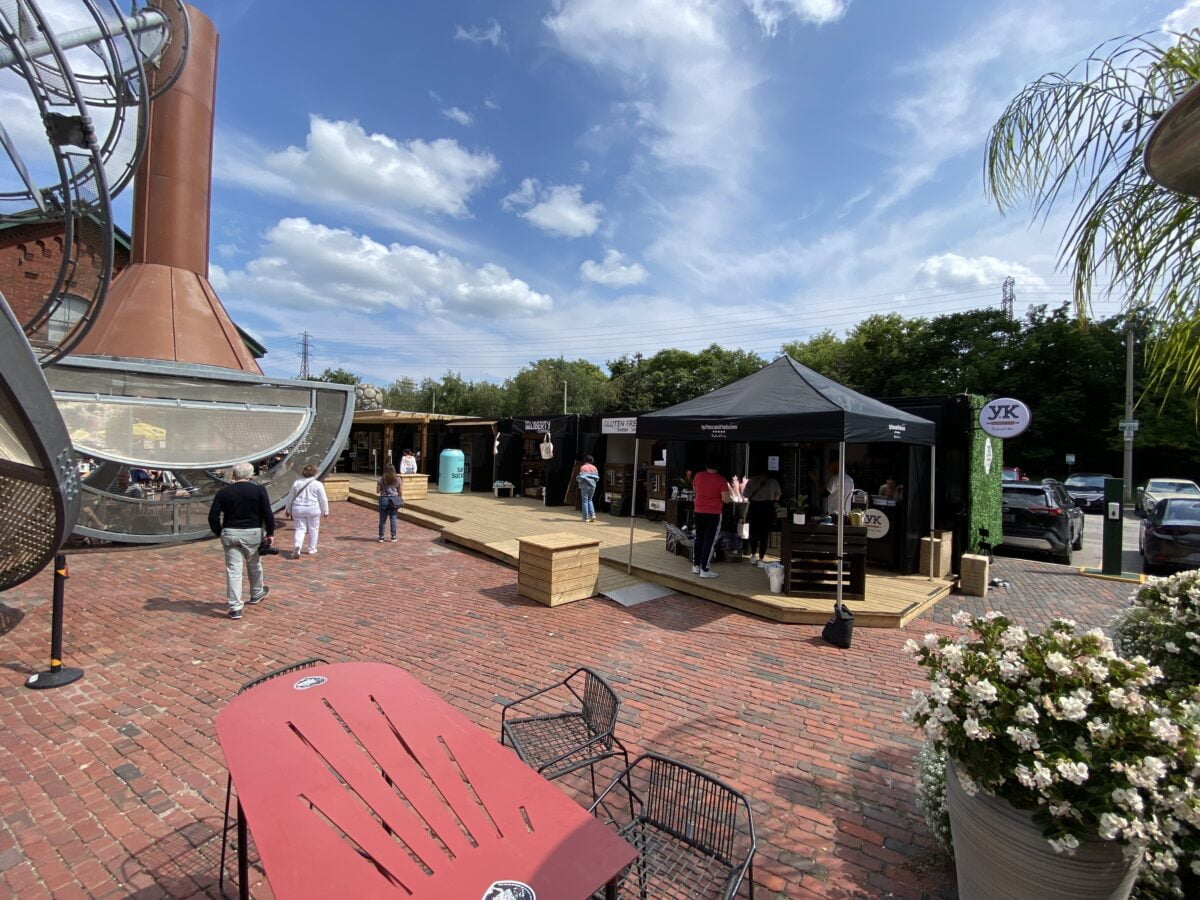
The mall is also currently in the middle of a skylight refurbishment project.

“Polo Park is really noted for its very wide main corridor as a result of it being a strip centre back in the day. We have these wonderful beautiful skylights and we’re refurbishing them this year with new panes,” he said.

As Restaurants Reopen in Canada, Most Operate at a Loss

The economy may be slowly restarting but most restaurants in Canada say they are still operating at a loss.

A survey by Restaurants Canada found that six out of 10 restaurants are operating at a loss while 22 percent of single-unit operators and 15 percent of multi-unit operators said they are just breaking even.

David Lefebvre, Restaurants Canada Vice President, Federal and Quebec, said that even though establishments are able to reopen, 50 percent of the organization’s members feel there will be a money crunch problem for them.

“And one of the reasons is that a lot of them still had to pay rent during the closure and they had to be even more indebted in order to do that,” said Lefebrve.

“The challenge is basically a lack of cash flow and also it’s going to be difficult to run a business and make a profit when you run at only 50 percent capacity. This is a challenge.”

The Restaurants Canada survey also found:

  • Among restaurants that have reopened their doors for on-premise dining fewer than half (31 percent of single-unit operators and 43 percent of multi-unit operators) said doing so has had a positive impact on their operations;
  • More than a third (47 percent of single-unit operators and 39 percent of multi-unit operators) said the impact on their operations has been negative; and
  • The remainder reported no impact or said it’s still too soon to assess.

“When restaurants thrive, so do the communities they serve,” said Shanna Munro, Restaurants Canada President and CEO. “Our industry wants to contribute to rebuilding the economy and reviving neighbourhoods, but time is running out. Most restaurants have been operating at a loss and accumulating debt for three months already. If they don’t get the help they need to return to positive cash flow, many won’t be able to last much longer.”

Lefebrve said surveys have indicated about 10 percent of restaurants won’t be reopening.

“We’re working to save as many as possible,” he said. “But definitely, especially should there be a second wave (of coronavirus) or something like that, it would be absolutely catastrophic to the foodservice sector.

“I think now at least people have a chance to reopen. They can see better days and they can hope that social distancing measures will be further relaxed so they can make a better opening. I would say that most operators that I speak to, they just want a chance to reopen and see if they can make it a business again.”
Restaurants Canada said that the federal government’s 75 percent wage subsidy is helping some restaurants keep staff working during this period but it said most foodservice businesses are going to need continued assistance until they are generating enough revenue to staff their operations without support.

“We are working with government to ask for an extension and some kind of sliding scale on the wage subsidy. The wage subsidy has been the program that’s been the most helpful I would say for foodservice operators,” said Lefebrve.

Restaurants Canada recommends the following changes to the Canada Emergency Wage Subsidy (CEWS) program:

  • Continue to keep the subsidy available for as long as needed. Instead of the 75 percent wage subsidy suddenly dropping to zero, reduce support smoothly and gradually as a business gets closer to manageable levels of revenue variance; and
  • The 30 percent revenue decline threshold should be scaled to support restaurants in their recovery, instead of serving as a disincentive to improving sales at the risk of losing access to the subsidy while businesses are still operating at a loss.

    Restaurants Canada also said half of restaurant owners across the country are still dealing with landlords who are not willing to participate in the Canada Emergency Commercial Rent Assistance (CECRA) program or any other rent relief arrangement. And more than half of single-unit operators say they have not paid their rent in April, May, and June; one in five of those who have not paid rent for those months did not have permission from their landlord to defer payments for all of those months.

“We’re also asking government to extend and to make more eligible for the rent support program because moving forward it’s also a big piece,” said Lefebrve. “Rent is the number one fixed cost in the foodservice industry. So it would be important if government would be more generous with the program and also make more people eligible for it.”

Restaurants Canada recommends the following:

  • Ensure commercial tenants are protected until solutions are in place. The federal government should work with the provinces to ensure a moratorium on evictions in every jurisdiction to relieve pressure from commercial tenants currently not benefiting from the CECRA program;
  • Tenants should be able to apply for the CECRA program and an application from an eligible tenant should make a landlord’s participation compulsory;
  • Eligibility requirements should be expanded to be more inclusive of all foodservice business models; and
  • Support through the CECRA program should be available on a sliding scale beyond June, recognizing the tenuous financial circumstances that many commercial tenants still face. Relief should continue until business revenues return to a determined percentage of pre-pandemic levels.

Lightspeed Unveils New eCommerce Features as SMBs Transform their Businesses Digitally

As commerce shifts toward fast and efficient online shopping and personalized experiences for limited and distanced in-store visits, Lightspeed POS Inc. has announced the upcoming release of new Lightspeed eCommerce features that will strengthen its omnichannel experience.

In 2016, Lightspeed introduced SMBs to a powerful eCommerce solution that synced with its existing in-store platform. In the wake of COVID-19, the company saw a 400% increase in eCommerce volumes processed by its retailers in April 2020 when compared to February, illustrating that merchants who adopted Lightspeed eCommerce to power their online business were able to adapt quickly to changing consumer behaviour in the face of the pandemic.

As the global economy begins to re-open and entrepreneurs enter a new paradigm of business, Lightspeed has advanced its eCommerce onboarding process with 24/7 customer service available to new and existing merchants. By integrating the latest features into their operations, the company has been able to support an increased volume of customers. Recent new features include ‘Live Preview Themes’, which allows merchants to test the look of their online store prior to going live and ‘Multi-Location Inventory’. This gives SMB’s the ability to display to consumers their inventory availability for all store locations online so no sale is missed. Customers can also take advantage of a plethora of integrations available on the app store, working seamlessly with its multi-channel and multi-currency system, opening up a new world of selling possibilities.

Lightspeed merchants will also see the following digital tools available in the near future:

  • Lightspeed Shipping: An enhanced shipping broker service so Lightspeed merchants have immediate access to shipping rates and labels via Lightspeed eCommerce
  • Curbside Pick-Up: Enables consumers to shop curbside for convenience and flexibility
  • Personalized Shopping: Allows consumers to make appointments at their favorite merchants in a risk-free environment, building loyal relationships with store experts

“Lightspeed is a company that helps retailers and restaurants become digital, and by introducing these eCommerce features, we’re able to address the immediate business needs of SMBs,” says Dax Dasilva, Founder and CEO of Lightspeed. “Omnichannel is no longer a nice-to-have, it’s a must-have, and it is important for us to constantly innovate in the retail, eCommerce and hospitality space, so we can continue to support retailers and restaurants as they digitally transform their business.”

“We know from our customers that they find our website easy to navigate and that check out is seamless–both on a desktop and, more importantly these days, on their mobile devices,” says Lightspeed customer Simon Tooley, Founder & President of Etiket. “When we moved to Lightspeed eCommerce in 2017, we saw a jump in sales. We are seeing double-digit growth year-over-year, and part of that is because our focus is on our customers, new products, and growth opportunities, rather than having to manage the platform.”

Lightspeed is also sharing industry knowledge through an online resource guide that serves to protect SMBs during COVID-19. To further equip merchants, Lightspeed officially launched Omni Loyalty last month, which allows retailers to build out their loyalty program with integrated offers and experiences seamlessly shared through both their online shop and their brick-and-mortar store.

For more information, please visit: www.lightspeedhq.com

On social media: Linkedin, Facebook, Instagram, YouTube, and Twitter

*Partner content. To work with Retail Insider, email: craig@retail-insider.com

StyleDemocracy Pivots and Goes Digital with Online Warehouse Sales

IMAGE: STYLEDEMOCRACY

North America’s leading provider of outsourced warehouse and pop-up sale events, StyleDemocracy, is going digital in the wake of the COVID-19 pandemic. It’s a bold move that could signal the future of warehouse sales as many seek to avoid crowds for the time being.

Toronto-based StyleDemocracy is known for its work with dozens of the world’s most coveted fashion brands, helping them to utilize excess inventory by running physical warehouse and sample sales events on their behalf. Over the years, StyleDemocracy has executed close to 500 events across North America for brands such as Nike, Adidas, Nordstrom, Levis, Lacoste, Ted Baker, Hugo Boss, Dolce & Gabbana, Frank and Oak, and more.

And now, as COVID-19 has obliterated all opportunities to host physical events for the time being, StyleDemocracy has pivoted its business model to create a digital platform; a place to hold virtual warehouse sales similar to the physical ones SD has become famous for.

“We always discussed how a digital platform for online warehouse sales was something we wanted to implement at StyleDemocracy at some point. Adding this vertical to our service offering for brands, and product offering for customers, has the potential to create a tremendous amount of value to the company as it’s more scalable than physical events. It was always a back-burner type of idea as our event business has been so strong and we didn’t want to take our foot off the gas.” Like the majority of the world, though, out of nowhere our brake pedal was slammed hard by a global pandemic,” said Oliver Berg, StyleDemocracy’s Vice President.

IMAGE: STYLEDEMOCRACY

StyleDemocracy’s new platform, shop.styledemocracy.com, will be run on Shopify Plus and officially launched on June 15th with an Online Warehouse Sale for Lacoste, Canada.

OLIVER BERG

To follow this, StyleDemocracy has consecutive events lined up for the coming weeks, some of which include collaborations with John Varvatos, Valentino, Off-White, and Frank and Oak. The company is also in talks with an array of brands interested in becoming involved in the initiative and utilizing the platform.

“It’s really interesting when you think about how COVID-19 has afforded us the time to be able to completely re-tool our business, which is what we have been doing for the last two or so months. We’ve been working tirelessly behind the scenes strategizing our eCommerce approach, speaking with dozens of brands, hiring new people with some impressive eCommerce experience in the industry, and setting up marketing partnerships, in what could be a much bigger business than we had previously,” said Berg.

IMAGE: STYLEDEMOCRACY

The site provides brands with a risk-free, zero-cost platform to showcase products. Not to mention the exposure to SD’s extensive database of customers that the company has accumulated over the years from the physical business. The company has also set up marketing partnerships with companies such as American Express, PayPal, CAA, and SPC to further amplify it’s reach.

Established in 1999, StyleDemocracy — formally Paradigm Retail Group — had been having a successful run. February 2020 saw two hugely successful warehouse sales for popular brand OVO, one in Toronto and one in Vancouver. The company’s line up for the spring season was gaining momentum prior to COVID-19 with large events organized and ready to go. “The first couple of weeks of the pandemic for us was a waiting game, as everyone was cautiously optimistic we could go back to business in a month or two, but as time went on we realized this was not the case,” said Berg.

StyleDemocracy’s President and CEO, Michael Berg, grew up working in a family owned luxury retail business started by his great grandfather, Ira Berg. When he and his father, Russell, closed the business with a liquidation sale in 1996, Michael saw first-hand how customers react when faced with a good deal. Through his connections to major brands he was able to provide this service to brands and the company had instant success. Fast forward to 2020 and StyleDemocracy continues to thrive, continuing to run huge warehouse events for global brands, alongside a digital media and advertising business that was developed through the company’s massive database of shoppers. Michael’s son, Oliver Berg, is now Vice President of the company.

“We’re also really lucky that our core service hasn’t changed in helping brands with unsold product, which there is plenty of right now and which brands are looking for additional channels to move.”

Backlash as Grocery Retailers Roll Back Hourly ‘Hero Pay’ in Canada

A few weeks ago some national grocery chains were being applauded for raising the wages of frontline workers who were considered heroes for their work during the COVID-19 pandemic.

Now, those same retailers are being sharply criticized for deciding to roll back those wages while the pandemic continues to take its toll on people’s health and on the economy.

Companies like Metro, Empire, and Loblaw have ended the $2 per hour premium pay for front-line workers.

Suzanne Sears, President of Best Retail Careers International, said there are two perceptions to the issue. First, the businesses themselves feel they gave a lot — more than was required.

“There’s the perception of the staff who feel like previously they were zeroes, then they went to heroes, now they’re back to being zeroes. There’s an emotional reaction,” said Sears, who is retained primarily by retailers for private searches to fill roles from the Executive to Sales Clerk level. “Two dollars an hour is not a huge amount of money to make. It doesn’t make a huge difference in your life but it is a sign of respect and appreciation.

“I think the way the staffing is feeling about it is that you told us this virus was so bad and so deadly we needed to shut down the entire country but we continued to go to work for you and some of us died for you and you gave us $2 an hour more. But nobody’s saying that it’s over. They’re just saying that it’s slightly better than it was. So now we’ll absorb the same amount of work, same risks.”

SCREENSHOTS FROM ANGRY TWITTER USERS

She said it’s more about the acknowledgement being withdrawn for their efforts. From a purely practical point of view, there’s not a grocery store or big box store that has lost money during the present crisis because they paid more for their staff. The amount came off of pure profit, said Sears.

“So if you can pay it why don’t you pay it,” she added.

Sylvain Charlebois, Professor, Food Distribution and Policy, Faculties of Management and Agriculture, Dalhousie University, said he can certainly understand why the businesses are rolling back premium pay.

“The economics for raising wages are weak in food retailing at best. Margins aren’t very high and of course they want to operate different stores,” he said.

“But also to me it’s a missed opportunity to look at their talent pool very differently and look at how grocery stores should be run in the future post-COVID. When I say that, I’m alluding to the use of automation to clean carts for example or cleaning anything really. Looking at how humans will interact in a store, looking at e-commerce as well. The use of analytics.

“I think grocery stores will need to deploy a very different altered strategy moving forward.”

He said grocery stores likely didn’t have much of a choice in rolling back wages. It was predictable. But it was disappointing especially in light of the fact that most people that work in the industry are those with highly vulnerable financial situations such as single-parents, students, seniors with fixed income, underprivileged demographic groups.

“These people who are probably occupying these positions may not have other options. So that’s something you may want to think about as a grocer when you think about the type of risks that your employees are exposed to. Absenteeism is also going to be something they have to look for because we’re not done with the second wave (of coronavirus). There is a second wave of course. We’re not done with this virus so risks are actually quite real still,” added Charlebois.

Unifor, Canada's largest union in the private sector, representing 315,000 workers in every major area of the economy, including 20,000 in the retail and wholesale sector, said it opposes the decision by Loblaw Companies Ltd. to end pandemic pay for workers at its retail outlets across Canada.

"The pandemic is not over. The danger has not passed. These workers are no less at risk and are no less essential today than they were yesterday. There is no justification for ending pandemic pay now, or ever," said Unifor National President, Jerry Dias.

"Retail workers have always been essential, and they have always deserved much better. The fact is, the pandemic did not make these workers essential and did not create the inequities in retail, it simply exposed them.

"Loblaw knows the risk is not over. It's just trying to boost profits on the backs of its most vulnerable workers, and that's just wrong. Unifor is putting all retail employers on notice – the return to normal for these workers is not happening, because normal was not good enough."

SCREENSHOTS FROM ANGRY TWITTER USERS

The United Food and Commercial Workers Union (UFCW Canada) said it is disappointed that employers in various sectors across Canada are choosing to stop paying COVID-19 premium pay while the pandemic continues, and some provinces are still enforcing precautionary measures.

“UFCW Canada acknowledges that premium pay was introduced as part of the COVID-19 response, but the union also expressed that premium pay should be maintained throughout the pandemic,” said the union in a statement.

It is the country’s leading private sector union, representing more than 250,000 union members across Canada working in in food retail and processing, transportation, health care, logistics, warehousing, agriculture, hospitality, manufacturing, and the security and professional sectors.

“The health and safety of UFCW Canada members is – and has always been – the union’s top priority. And, with that in mind, we must also acknowledge that many employers have acted upon UFCW Canada recommendations to better protect members, their families, and numerous communities. UFCW Canada will continue to meet with employers to maintain these achievements and further advance health and safety protocols across the country.

“UFCW Canada is pleased that society as a whole has come to better appreciate and recognize the crucial work that our members do in many important sectors of the economy. Throughout the pandemic, UFCW Canada members have gone above and beyond as frontline workers. And the issues, needs and concerns identified throughout the COVID-19 pandemic will be top priorities for the union in future collective bargaining efforts.

ICSC Survey Shows Canadians Pessimistic on Retail Recovery

A consumer survey by the International Council of Shopping Centers says 32 percent of Canadians believe economic conditions will improve 12 months from now, but 51 percent believe they will get worse, and eight percent think they will stay the same.

The sentiment is much more pessimistic than Americans as 49 percent of those south of the border said economic conditions would improve 12 months from now, 36 percent said they would get worse, and 10 percent said they would stay the same.

Improved economic conditions were most anticipated in British Columbia and Ontario at 36 percent with the Prairies the lowest at 23 percent.

“Such low levels of consumer confidence are a concern in consumer real estate circles where the recovery is expected to be a gradual improvement over time. Millennials and Gen X will lead the way in spending with physical stores, restaurants, and bars rated high on the ‘comfortable to visit’ scale,” said Michael Kehoe, Lead Ambassador in Canada for the New-York based ICSC.

“Malls and open-air shopping centres also scored high on preferred shopping venues to frequent after the COVID-19 crisis subsides. Consumer sentiment at 78 percent being more aware of the importance of small business in Canadian communities is a positive sign as small business will lead the way within any post lockdown recovery,” added Kehoe, a veteran of more than 40 years in the industry and broker/owner of Fairfield Commercial Real Estate in Calgary.

The survey of consumers also found:

  • 78 percent said the COVID-19 crisis has made them more aware of the importance of small businesses in their community and therefore will support them more in the future;

  • 73 percent said they are more likely to purchase from retailers/brands that helped communities/first responders during COVID-19 than those who did not;

  • 66 percent said whatever purchases they had planned but could not make during the outbreak, they will make after it subsides;

  • 61 percent said if small businesses in their community are forced to close due to COVID, it will be less convenient for them to get the goods and services they need; and

  • 66 percent said they would feel comfortable visiting physical stores to buy goods within two months or sooner after the crisis subsides with 56 percent citing restaurants, bars or other eating places;

Bruce Winder, a retail analyst and consultant with Bruce Winder Retail, said consumers will respond in different ways depending on their personal risk tolerance, health, and specific economic situation.

“Risk averse customers or customers who could be more susceptible to the virus (seniors or those with pre-existing conditions) may avoid non-essential retailers until a vaccine is administered in one to two years,” said Winder, who is also author of a new book on Amazon called RETAIL Before, During & After COVID-19.

“Customers who are less risk averse or feel they are less susceptible will begin to shop in somewhat similar patterns as before the pandemic, while respecting an individual retailer’s revised protocols as it relates to metering, PPE (personal protective equipment) and cleanliness.

“Overall, I think we will see brick and mortar retail return to perhaps 60-90 percent of pre-pandemic traffic and sales levels for a little while but this will vary widely by retailer, category and target customer. Retailers have worked hard to facilitate transactions outside of brick and mortar stores through e-commerce.”

Winder said some customers will reduce spending as their income has been reduced and their job prospects are at risk, specifically as the Canada Emergency Response Benefit potentially runs out for some consumers.

“The question for many retailers will be whether they can survive under these new lower traffic sales and margins (retailers often make less money on e-commerce) levels once government supports dry up but before a vaccine is widespread,” he added.

The survey also found:

  • 20 percent of consumers do not plan to cut back on spending while three percent said they will in the first month, 10 percent for one to two months; 22 percent in three to five months; 17 percent in six to eight months; 11 percent in nine to 12 months; and 17 percent to over one year;

  • New considerations among consumers include 69 percent saying they will be limiting direct contact with other people; 66 percent saying they will be practising social distancing; 41 percent saying they will be making expenditures on non-essential goods and services;

  • As for the top uses of federal stimulus money, 56 percent said to buy groceries; 45 percent to pay housing costs; 33 percent to put into savings; and 33 percent to pay off debt; and

  • 38 percent of Canadians have received or plan to receive assistance.

Canada Could Become Over-Saturated with Cannabis Retail Stores

INTERIOR OF SPIRITLEAF STORE. PHOTO: SPIRITLEAF

The ‘high’ experienced initially with the introduction of the cannabis retail trade in Canada has not lost its level of interest across the country as new store locations keep popping up and the industry continues to thrive.

The Canadian retail sector of the cannabis industry is maturing with an influx of new consumers of cannabis products and a growing demand from legacy consumers, said Michael Kehoe, a retail specialist and broker/owner of Fairfield Commercial Real Estate in Calgary.

“The market has accommodated the national brands and an array of local and regional independent retailers as brand loyalties are established. There are winners and losers and a shakeout has been underway with numerous retailers not meeting their revenue projections and burdened with high rents that is leading to many cannabis store closures in the post-COVID-19 period,” said Kehoe.

“Competition has been intense in the Canadian retail sector of the cannabis industry with new products being introduced such as edibles, vape cartridges, and others. There has been a gradual downward pressure on prices, an increase in product quality in the free market economy and this is good for the consumer. The governments who collect the taxes driven by increasing sales have evolved with efficiencies in their approval process of new retailers and their locations. The retail sector of the cannabis industry in Canada is now considered to be mainstream as the market has decided which retailers survived and thrived.”

According to Statistics Canada, in the fourth quarter of 2019, 16.7 percent of Canadians used cannabis in the past three months with Nova Scotia the highest at 27.5 percent and Newfoundland & Labrador at 25 percent.

In the first year of legalization, total retail sales at cannabis stores reached $907.8 million in Canada or $24 sales per capita between October 2018 and September 2019.

Retail sales in March were $181.1 million, up from $151.9 million in February.

Recently Inner Spirit Holdings Ltd., a Canadian company that has established a national network of Spiritleaf cannabis retail stores, announced that five franchise partners have secured proper approval for stores in Toronto, Ottawa,and Guelph.

INTERIOR OF TOKYO SMOKE STORE. PHOTO: TOKYO SMOKE

It also said there are seven additional Spiritleaf stores which have completed construction and are in the final stages of licensing in Calgary and Red Deer; in Toronto, Ottawa, and London; and in St. John’s, Newfoundland and Labrador.

Darren Bondar, Founder, President and CEO of Inner Spirit, said the company is excited to continue its expansion and set deeper roots into Ontario.

There are currently 48 stores operating in the country with at least five more opening in Ontario. The company has a presence in British Columbia, Alberta, Saskatchewan, and Ontario. Additional store locations are expected to open in 2020 in British Columbia, Alberta, Saskatchewan, Manitoba, Ontario, and Newfoundland and Labrador.

“The majority of our planned locations in Ontario will be franchise owned which aligns with our business model. We will support this core group of stores with a select number of corporate-owned outlets including the anticipated acquisition of the Kingston store this month and a flagship corporate store in Ottawa that is currently in the AGCO licensing queue. Overall, we believe the benefits of local entrepreneur ownership line up perfectly with the policy objectives of the Ontario government in crafting their retail cannabis laws, namely, to support small business,” said Dave Marino, the company’s Ontario General Manager and a Spiritleaf franchise owner.

Bondar said the company currently has over 80 stores in the pipeline which it hopes to get open this year but it will depend on licensing.

“It’s been really exciting. Obviously it’s been a bit of a roller coaster but now that we’ve seen a more stable market we continue to see same store increases. May was a record month for us. We’re seeing a lot of new entrants to the market where things like edibles and beverages are appealing to a new consumer but we’re also seeing a lot of legacy customers,” said Bondar.

INTERIOR OF TOKYO SMOKE STORE. PHOTO: TOKYO SMOKE

“I feel really bad for many of the businesses who are struggling out there but fortunately for us we’ve had a really good run. I think the strongest retailers will continue to grow. The independents can have success as well. They really just have to choose their segments of the market and do their thing. But definitely there’s some entrants that maybe didn’t have the retail or branding experience that will likely fall off.

“I think there’s still a lot of growth. Cannabis is still very new. The industry is only 18 or 19 months old and there’s under 1000 stores in Canada. I think there’s still going to be a lot of growth and again for retailers to be successful it’s really choose your segment and how you want to compete. It’s definitely going to be competitive and there will be some winners and losers.”

Rick Bohonis, an owner of a Tokyo Smoke store in Thunder Bay, Ontario, and former co-founder and past-president of Urban Barn, said the cannabis store opened March 1.

“Our opening day we did $77,000 and at the time we believe that might have been a Canadian record for cannabis retail,” said Bohonis, who is also a senior advisor with consulting firm DIG360.

“Like most retail, it’s location, location, location. Up until January 6 in Ontario, there were very few licenses or licenses even being contemplated to be approved. By population, it was crazy. There was 40 stores or so open in all of Ontario. You still had to choose your location because everybody knew that there would be a ton of competition out there and saturation.

“In Alberta, because of the way they doled out their licenses, saturation came quite quickly. The guys that are successful have picked very good locations, really well thought out. It’s definitely sales top line when it comes to retail especially in the GTA. In BC, it’s been very, very slow to approve licenses . . . so it’s not seeing that saturation. Alberta definitely did. I think there’s 400 stores or so in Alberta and I’ve talked to some retailers there and some of them are just not doing very well and I think we may even get to see the stage where some retailers in Alberta will basically say I can’t make this go, here are the keys, goodbye.”

INTERIOR OF HUNNY POT STORE. PHOTO: HUNNY POT

Cameron Brown, a spokesperson for the Hunny Pot cannabis stores in Ontario, said 2019 was a fantastic year for the business as it was one of only 25 stores in Ontario to open.

“We didn’t know what to expect with the brand new legal market and it exceeded expectations. The amount of people that were looking for access to legal cannabis and regulated product was astounding and I think everybody in that first 25 group would say the same,” said Brown.

The company has six stores located in Toronto with four locations and one each in Burlington and Hamilton.

“I think what we’re seeing now is the expansion that Ontario needed, being able to distribute legal cannabis to all of Ontario.”

Canada’s 1st Fully Automated Restaurant Opening this Summer

Image: Box'd by Paramount

Canada’s first fully-automated restaurant is coming to Toronto as Canada prepares to experience life in a post-COVID-19 world.

Box’d, by Paramount Fine Foods, will revolutionize the way consumers order and pick up food. Located at 4 King St. W., in the heart of Toronto’s financial district, Box’d is not your typical restaurant. It has simplified the order process, so Torontonians don’t have to spend time standing in line or waiting for their food to be prepared.

Guests place their order in advance via a mobile app or they can order at a digital kiosk in-store. Digital status boards within the restaurant update guests when their food is ready and lead them to their pickup location. Digital cubbies and shelves identify orders and create a streamlined experience.

“We are excited to bring the Box’d experience to Toronto,” said Mohamad Fakih, CEO and President of Box’d by Paramount Fine Foods. “Throughout the COVID-19 pandemic, many Torontonians chose to cook their meals at home, but as the restrictions ease and more businesses open people are looking forward to eating out. We understand that people may still be a little wary of public places, so we have created a dining option that is fast, efficient, and safe.”

4 KING ST WEST. PHOTO: GWLRALEASING.COM
CLICK FOR INTERACTIVE MAP

He said the design looks beautiful, will save a lot of time and will resolve the biggest problem in the food industry today.

“You have limited amount of staff, limited amount of space to serve as many customers as you can at the same time and a lot of the area is only busy three hours a day, four hours a day, so how much can you pull out food and deliver food at the same time within those three/four hours,” said Fakih.

Also for consumers, lineups are getting longer and slower these days to pick up food in various establishments.

“There is a great technology behind it that organizes the order by the minute of ordering and when do they want pick up. So the consumer will have the option when they want to pick it up,” said Fakih.

“The food will always come out fresh. When the food is prepared fresh and the staff are not overwhelmed, they produce better, they produce more and because of the point of pick up we have 20 cubbies there is no bottleneck . . . The cubbies will deliver food fast in an organized, great way that the sales will get much higher.”

PARAMOUNT FINE FOODS LOCATION IN YORKVILLE, TORONTO. PHOTO: PARAMOUNT FINE FOODS

The idea for the concept was in the works before the COVID-19 outbreak.

“When the coronavirus hit, this has become a story like I had a crystal ball, which I didn’t. This is very good for coronavirus because number one you’re ordering and paying through a website or a kiosk in-house and then you’re picking up from a divided, separated, sanitized cubby that we sanitize after each order and prepared by only one chef that will seal your order to make sure that only one person touched it and that same chef will load it in the cubby and you’ll come in, you’ll see your name with the cubby number and you’ll go to that cubby and you retrieve your order by tapping on the glass, the glass will open and you’ll pick up your order. No one else touched it but yourself and the one chef,” said Fakih.

A concierge in the location will greet people and help people if they need it.

Chef Tomer Markovitz has created lunch and dinner menus with vegan and vegetarian options. Each have sustainable packaging and express menu options that are accessible in just a few quick and efficient taps.

“The state-of-the-art technology used throughout Box’d will revolutionize and transform how consumers experience dining on-the-go and will help our guests feel safe,” said Markovitz. “With one chef per meal, all meals are sealed and delivered to sanitized, individual cubbies which simplifies the process and keeps cleanliness and safety top of mind.”

Youtube video

Menu items will feature Paramount Fine Foods famous hummus and traditional Middle Eastern flavours and spices in new and exciting recipes created by the chef. From salads to Box’d hot dishes, delicious oven-baked wraps and refreshing smoothies, Box’d provides a multitude of fast, healthy options for everyone.

“Being fully automated means Box’d can offer Canadians a new and exciting ‘smart’ way to experience eating out safely,” said Ahmed Daify, the Box’d franchisee for Paramount Fine Foods. “Box’d will be the first automated restaurant with a certified chef. We will be hiring at a time when the service industry needs it the most. We are excited to bring this opportunity to Canada, since Canada is a country of hope.”

Fakih said the plan is to roll out the concept to other locations. It’s a great concept for places such as sports arenas, universities, for example.

“And we will expand it across Canada. We have a lot of franchisees who are very excited and I’m hoping there will be more. So far everyone has shown their excitement. We have interest to expand it everywhere,” he said.

Images from Box’d by Paramount

Box’d by Paramount (Image: Jump Branding & Design)

In Memoriam: Catherine Hill, Founder of Luxury Retailer ‘Chez Catherine’

CATHERINE HILL

One of Canada’s most prolific luxury retailers passed away this month. Catherine Hill was the founder of multi-brand luxury retailer Chez Catherine which operated for 30 years with stores in Toronto, Montreal and in Florida, including licensed boutiques for some of the world’s leading brands.

Over the years, customers frequented Chez Catherine stores for a range of luxury brands that could not be found elsewhere. Styles in Chez Catherine stores were colourful and bold and catered to a woman who wanted to be seen.

CHEZ CATHERINE IMAGE: NEWSPAPER AD, 1988

Catherine Hill opened her first Chez Catherine location in Toronto in 1972 and soon relocated it to the Hazelton Lanes shopping centre, now called Yorkville Village. The Chez Catherine boutique carried luxury brands including Claude Montana, Issey Miyake, Ungaro, Rena Lange, Gianfranco Ferré, Christian Lacroix, John Galliano, Karl Lagerfeld, Basile, and Christian Dior among others. Chez Catherine also operated separate boutique spaces at Hazelton Lanes for some of the world’s biggest names. In 1979, she opened Canada’s first Giorgio Armani boutique at Hazelton Lanes which operated for about seven years. The boutique “never made any money” said Ms. Hill in an article in the Montreal Gazette in 1987. The Armani boutique was replaced with a Versace boutique, joining other Chez Catherine boutiques at Hazelton Lanes that included Krizia and a Valentino boutique which occupied about 1,500 square feet next to her Chez Catherine space.

Some of Toronto’s wealthiest women shopped at Chez Catherine, some of whom also spent winters in Florida. In 1979, Ms. Hill opened a Chez Catherine storefront at 210 Worth Avenue in affluent Palm Beach, carrying designers such as Laura Biagotti, Giorgio Armani, Vicky Tiel, Gianfranco Ferré and Issey Miyake. The boutique’s interior featured yellow carpets, copper coloured walls and a massive porcupine chandelier. The boutique relocated to South Country Road in 1987 where it operated for several years.

In 1987, as well, Ms. Hill expanded Chez Catherine into the Montreal market in a partnership with the upscale Ogilvy department store (now called Holt Renfrew Ogilvy). Chez Catherine operated a multi-brand space as well as boutiques within Ogilvy for brands including Versace, Krizia and Valentino. The 1,500 square foot Valentino boutique was located on the ground floor of Ogilvy on the corner facing Ste-Catherine St. W. and Rue de la Montagne with a street-facing entrance on Montagne. Chez Catherine operated within Ogilvy until the early 1990s and the Valentino boutique was eventually replaced with a Louis Vuitton store.

CATHERINE HILL, RIGHT, WEARS A VALENTINO GOWN AT AN EVENT WITH DAUGHTER STEFANIE HILL IN 1986. PHOTO: TORONTO PUBLIC LIBRARY ARCHIVES

In 2002, former Globe & Mail journalist Marina Strauss featured Catherine Hill in an article when Chez Catherine was closing. Ms. Strauss said in the article, “There’s no doubt, as many fashion writers have observed, that owner Catherine Hill was in a league of her own. She had exclusive contracts to carry the best of the best. Women walked out of the boutique in the chic Yorkville district of Toronto with tens of thousands of dollars worth of elegant outfits. Ms. Hill knew how to take care of her customers with her impeccable eye for style.”

CATHERINE HILL IN FRONT OF HER NEW VALENTINO BOUTIQUE AT OGILVY ON MOUNTAIN STREET IN MONTREAL IN 1987. MS. HILL IS WEARING A VALENTINO COAT WITH FUR TRIM IN THIS PICTURE. PHOTO: GEORGE BIRD FOR THE MONTREAL GAZETTE VIA NEWSPAPERS.COM

Ms. Hill got started in the fashion business as a buyer for the downtown Eaton’s department store in Montreal. She was hired as a buyer for the upscale Eaton’s Townhouse department which at the time carried luxury brands such as Ungaro, Oscar de la Renta, Halston and others. Ms. Hill founded Chez Catherine after taking a risk and a $10,000 loan — a pillow in her Yorkville condominium residence had the words embroidered “To eat the fruit on the tree, you have to go out on a limb”, according to a Toronto Star article in 2009 by late journalist David Livingstone.

She was born in Hungary and as a teenager in 1944, was taken to Auschwitz where Ms. Hill survived — the rest of her family didn’t. She eventually moved to Rome and then Paris before moving to Canada. Ms. Hill spoke fluent Hungarian, Czech, German, French, Italian and English. She was featured in a book by British author Linda Grant called ‘The Thoughtful Dresser’, and Ms. Hill also spent countless hours writing her own memoirs.

TORONTO’S HAZELTON LANES SKATING RINK IN 1976. PHOTO: TORONTO PUBLIC LIBRARY ARCHIVES

Catherine Hill passed away in Toronto on June 2, 2020 at the age of 94, and was predeceased by husband Cecil Hill who died in 2002 also at the age of 94. She is survived by her daughter and business partner Stefanie Hill (Stefanie is married to Greg Mahon). Ms. Hill’s grandchildren include Zach and Ben. An obituary published for Ms. Hill this month described her as being “known for her style, her strong character and a no-nonsense attitude that carried her through a long life filled with international travel and glamorous social events”.

Memorial donations can be made to The Catherine Hill Memorial Fund c/o The Benjamin Foundation 416-780-0324 or www.benjamins.ca or a charity of your choice.