This week Craig & Lee recap the top 10 most-read articles for Retail Insider in 2019.
Sponsored by Peregrine/Acorn: We are a team of creative engineers and skilled fabricators collaborating to design and manufacture highly effective retail environments. In 2017, they acquired “Acorn Wood Designs” – an award-winning architectural millwork company by focusing on quality craftsmanship and relationships. Visit Peregrine at https://www.peregrine.build to see their portfolio!
Discussed this episode:
Subscribe, Rate, and Review our Retail Insider Podcast!
This week Craig & Lee talk about the opening of Apple’s massive store at CF Toronto Eaton Centre, bespoke tailoring trend at Brenton & Co, the opening of the St. John flagship on Toronto’s Mink Mile and watchmaker Daniel Wellington’s entrance into the Canadian marketplace with plans for a national expansion.
The Weekly podcast by Retail Insider Canada is available on Apple Podcasts, Stitcher, TuneIn, Google Play, or through our dedicated RSS feed for Overcast and other podcast players.
Oberfeld Snowcap is a full-service real estate and retail advisory firm that focuses on retail tenant representation, strategic planning, property and project leasing, as well as real estate investment sales.
Subscribe, Rate, and Review our Retail Insider Podcast!
THE 366 SQUARE FOOT ‘HAPPY PILLS’ STOREFRONT AT CF CARREFOUR LAVAL IN SUBURBAN MONTREAL. PHOTO: FREDGLOZMAN/REDDIT
Barcelona-based Happy Pills, a retailer of adult candy, has entered the Canadian market with its first store in suburban Montreal and the company says there is more to come.
“Regarding Canada, we are really excited with our local Master Franchise, and its first opening in CF Carrefour Laval shopping centre. We are receiving many contacts of people who love the idea to start their own business through our brand, and we are focusing all our efforts in developing the market faster, including B2B business,” said Daniel Muñoz, a spokesperson for the retailer, adding that the company is looking to expand to at least 20 stores in Canada.
“Our concept fits everywhere, a fun and delicious present for anyone.”
The company has its base in Spain but also operates a number of stores in South Korea and just recently also opened a new store in Boston.
HAPPY PILLS STORE CIRCLED IN RED. CLICK IMAGE FOR INTERACTIVE CF CARREFOUR LAVAL MALL FLOOR PLAN
“Happy Pills is a sweet and premium experiential concept based on regular and natural candies. We chase the idea to offer a new way to introduce candies to the market,” said Muñoz, of the brand which first started in 2007.
“We always wanted to do something with candies. At Spain in that moment, there was nothing interesting and we came up with the idea of selling sweets in a luxury way, designed to engage adults – not for kids.
“We had our first experience four years ago (in expansion), through a partner in South Korea, which is currently running eight stores. After learning all the difficulties of being international, we have started in Canada, Boston, Andorra, France and we are negotiating contracts in more than 10 countries to land the brand during 2020 and 2021,” added Muñoz.
PHOTO: HAPPY PILLS
He said the company is also starting a big development plan that would include shop-in-shop in department stores.
On its website, Happy Pills says it provides people with “sweet remedies” for daily pains.
“Choose a bottle, candy flavors, a label (or create your own) and in a few seconds you’ll have the perfect recipe to fight against stress, blue Mondays or boring Sundays, heartbreaks, hangovers, the inescapable bore…Or to celebrate that it is finally Friday, that someone loves you, that it is sunny or that you just feel like it,” says the retailer.
It’s a concept with an adult target market.
PHOTOS: HAPPY PILLS
“The retail experience, pricing and the sticker you need to choose and fix in the bottle to complete your purchase makes a unique and different concept of buying candies,” said Muñoz.
“Despite that, we have the Happy Kids concept with a specific fit out for them. Kids really appreciate to share with parents that moment and to discover this new idea of selling candies.”
“Talking about B2B, companies discover a new way to surprise their internal/external customer for events, parties, product presentation, etc. Finally, it is something sweet and funny to share with people.”
The Canadian resale apparel market has become one of the fastest-growing segments of the retail industry with growth expected to continue in the future.
Randy Harris, president and owner of Trendex North America, a marketing research and consulting firm, said the key thing to understand is that the resale apparel market is also a very fast-growing segment of the overall Canadian apparel market.
“However, historically it never showed up on people’s radar because most of the sales were either done at ma and pa type consignment stores or in places like the Salvation Army or Value Village,” said Harris. “So it was often the case of out of sight, out of mind.
PHOTO: THRED UP
“The consumer knew it was there. They were going there but retailers, big chains for example, really had no idea of how important the segment has become. The interesting thing is that the growth of the resale apparel market is accelerating rather rapidly at this point and could be arguably the fastest growing segment of the Canadian apparel market.”
A recent Trendex report said the Canadian growth is being driven by four underlying forces:
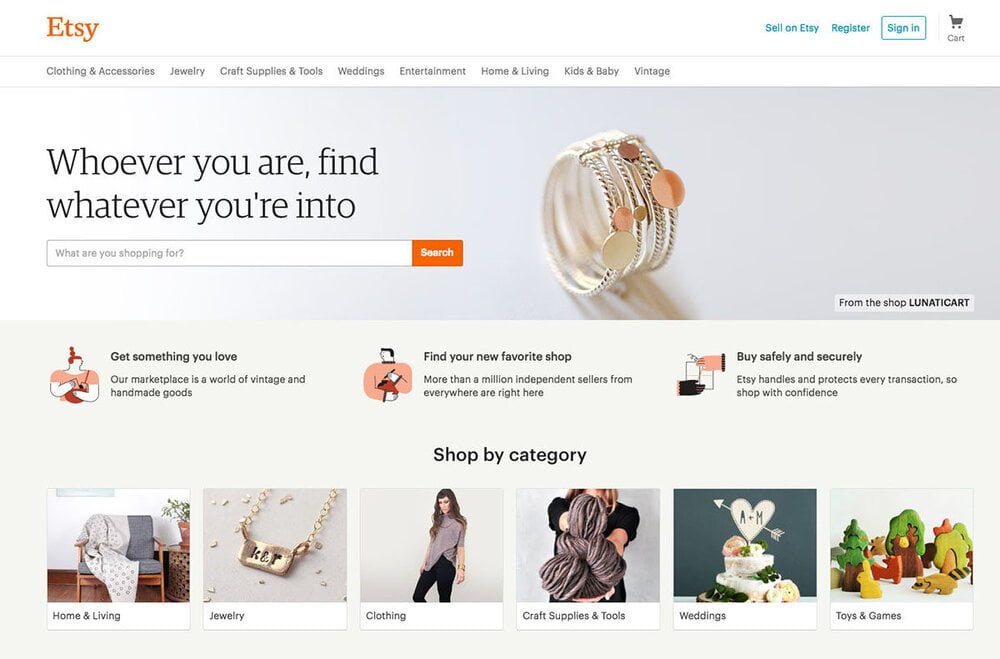
IMAGE: ETSY
1. Environmental concerns: The fast-fashion cycle has led to increasing concerns about the amount of clothes filling up landfills. The consumer has become concerned about the ecological sustainability of a model in which garments are worn often for less than a half dozen times then discarded;
2. Search for value: Increasingly, both traditional luxury apparel purchasers, along with aspirational luxury apparel purchasers have turned to websites, including the Real Real, to acquire luxury resale items. Many of these luxury apparel/accessories items are impossible to distinguish between new and a resale items (e.g. Louis Vuitton purse). Often resale items are priced at half their original price, and their quality is guaranteed by the seller;
3. Generation Z purchasing: Millennials and baby boomers are the largest purchasing segments of the resale apparel market, however, Generation Z is the fastest growing segment. Research published by Thread UP found that members of Generation Z are purchasing second-hand fashions 2.5 times faster than any other age segment; and
4. Technology changes: The advent of the internet has facilitated buyers and sellers interacting in unprecedented ways. E-commerce based fashion resellers, including Montreal’s LXRandCo and Calgary’s Upside have emerged that facilitate the re-sale of apparel on both national and international levels.
IMAGE: DEPOP
PHOTO: RENT FROCK REPEAT
“The interesting thing is that consumers are taking a stand against materialism if you will and they’re shopping with more values and social consciousness,” said Harris. “The younger consumer is very comfortable in going into these kinds of stores. They’re very knowledgeable. They know what the brands are, and they know what they’re looking for.
“The other thing driving the growth of the market besides a social consciousness is that a number of large players have entered the market and what those large players are doing is leveraging technology to bring to the buyer and seller together. That is a huge change in the marketplace.”
Historically, the small ma and pa shop consignment store couldn’t really do that nor were places like Value Village set up to do that. Now buyers and sellers can come together to buy used resale apparel and not have to be in the same city. They can do it anywhere in the country.
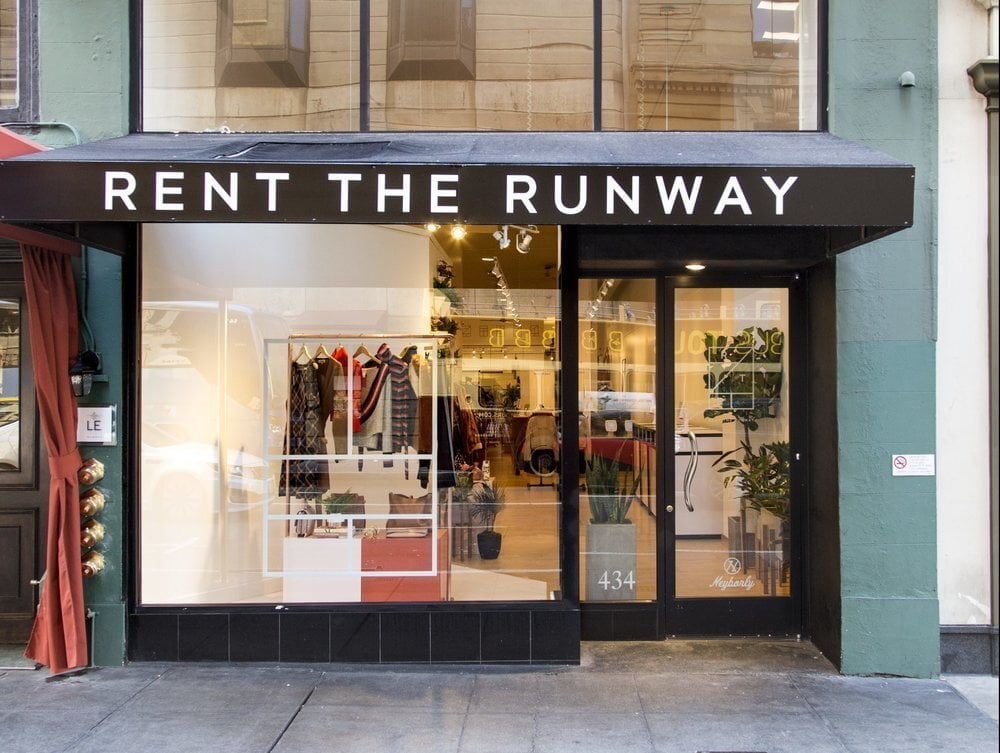
PHOTO: RENT THE RUNWAY
“Matching buyer and seller has gotten a lot easier. In the long-term if you extrapolate this it means that increasingly these chains that can leverage technology are going to affect the individual consignment stores and so what we’re going to see is a movement in the market to larger and larger players who can afford to advertise, who can do all kinds of digital promotions,” said Harris.
“It’s inevitable that the structure of the market will change over the next five years.”
But Harris said that doesn’t mean that the consignment shops are going to go out of business because the overall pie is getting bigger. Indeed, their market share will go down but because the pie is growing so fast their sales might stay about the same.
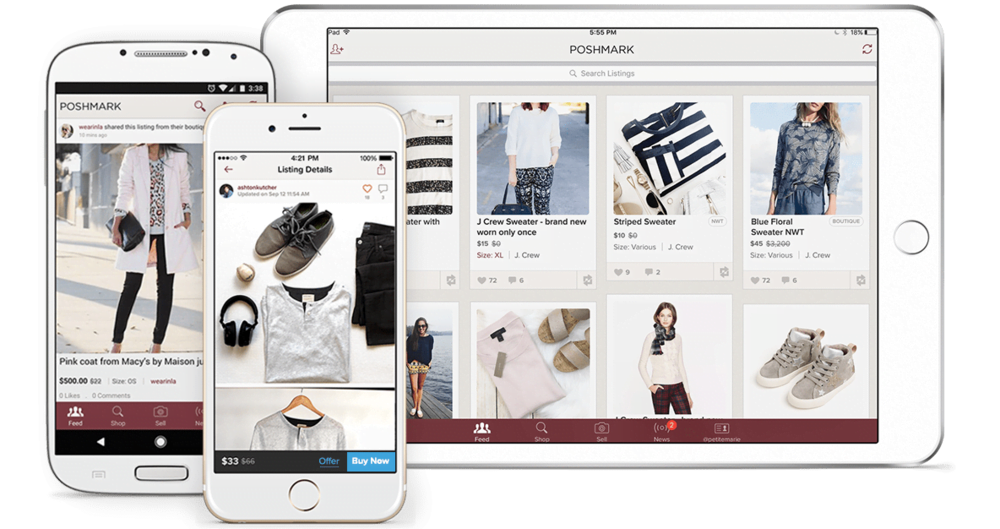
IMAGE: POSHMARK
The Canadian apparel resale market includes both resale stores and thrift/donation retailers.
The Trendex report said that in Canada, information published by Kijiji revealed that during 2017, 85 per cent of Canadians participated in the second-hand economy valued at $28.5 billion. During 2017, 2.3 billion resale items exchanged hands up 24 per cent from 2016. Clothing/shoes/accessories was the top resale category, as it accounted for almost one-third of all products sold. Baby clothing and accessories (7.7 per cent) was the third most important category. Interestingly, while clothing/shoes/fashion accessories was the top resale category for both disposal and acquisition, at least twice as many apparel items were disposed of than acquired, said the report.
Trendex said that for 2018 the largest Canadian channels for resale apparel were: 1) Resale brick and mortar chains; 2) Local thrift/second-hand shops; and 3) Consignment shops.
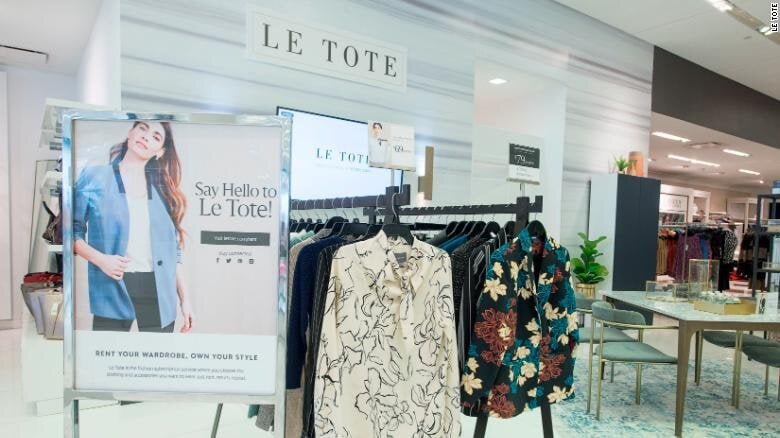
PHOTO: LE TOTE
“Over the next five years, the fastest growing apparel resale channel should be the one that is internet based. However, resale brick and mortar chains will, for some time, continue to be the dominant channel for resale apparel,” said the Trendex report.
“Assuming the Canadian resale market is between 1/11 and 1/13 the size of the U.S. market, the Canadian resale apparel market would have been between C$2.4 and C$2.8 billion in 2018,” added the report.
Harris said major retailers will be targeting the resale apparel market in the future by either setting up resale areas within their stores or resale divisions.
“At some point, the major retailers as we know it are going to say ‘I need to get into this business. I can’t ignore it. It’s growing too fast’ and that will be interesting to see how they do that.”
It’s been an interesting year for Canadian retail. From the closing of big box stores such as Williams Sonoma, Payless ShoeSource, and Home Outfitters, to an influx of Chinese luxury consumers (50 percent of all luxury purchases will be to Chinese consumers by 2025), the retail landscape is experiencing a complete overhaul.
Contrary to popular belief, all of this change doesn’t foretell the death of retail, but it is the harbinger of a retail renaissance the likes of which few of us have ever seen. Several Canadian retail chains will recede into obscurity in 2020, while others––such as Apple and Lululemon––will continue to grow. So, what is the difference between the chains that succeed and the chains that fail?
Let’s take a look at the contributing factors that will make or break Canadian retailers in 2020.
Strip Malls Make a Comeback
Strip malls have gotten a bad reputation due to poor upkeep and sparsely attended retail locations. But these once abandoned retail centres are making a comeback, largely due to the fact that they’re finally getting the renovations (including new fitness centres and restaurants) that they’ve been in need of for so long.
Consumers are once again seeking convenient locations from the brands they patronize, and Canadian consumers place a high value on shopping local. As Kruti Desai, Manager of National Research Insights With Data Solutions told Retail Insider, retailers and shopping centres are turning their spaces into “destination” and “convenience”-based retail concepts.
Fitness centres and modern eateries are bringing new life to tired strip malls and consumers are taking notice. In the coming year, many of the malls that Canadian retailers had once written off for dead will see new life as vibrant hubs in their communities.
Increased Expansion in Health and Wellness
The global health and wellness market is currently valued at over $4.2 trillion USD and it shows no signs of slowing down. Health and wellness has, unsurprisingly, become more experiential in recent years. Just take a look at the Canadian native yoga apparel retailer Lululemon Athletics Inc.
Through experiential retail concepts such as in-house yoga classes and eateries, along with an expansion into the self-care and cosmetics market, Lululemon has managed to grow net revenue from $747.7 million in 2018 to $916.1 million this year. But Lululemon isn’t the only major player in the Canadian health and wellness industry. Large and small format retailers that cater to the health and wellness sector are popping up all over Canada––everything from quick-service organic restaurants to conscious aging healthcare platforms are expanding with market share from health-conscious consumers.
However, wellness and cause-based shopping go hand-in-hand for modern consumers: sustainable, Fair Trade, and philanthropic initiatives add to the appeal of wellness-based retailers.
Direct-to-Consumer Brands Love Toronto
Cultural diversity and comparatively low tax rates make Toronto a popular launchpad for young brands. DTC startups such as Smile Direct Club and women’s underwear brand Thinx find the Canadian market is a welcome testing ground to gauge how their brand will perform in the world at large. (In fact, Canada is a top five market for Thinx.) But it isn’t just startups that are drawn to Canada by the appeal of a diverse customer base.
Large scale DTC brands also stand to benefit by establishing a brick-and-mortar brand presence in Canada. Lululemon’s DTC revenue increased 29 percent this year alone (and yes, I’m using Lululemon as an example twice… but can you blame me?) Canadian customers look to like when it comes to local brands. In fact, 85 percent of Canadian consumers think it’s important to buy from a retailer within Canada this holiday season.
New Ways to Identify Consumer Sentiment
Consumers demand a personalized shopping journey and, beyond the day-to-day tasks of running a successful retail business, proper use of customer data is the key to retailers being able to achieve this personalization. But relevant consumer data isn’t only found in a customer’s online click path and purchase history. It can also be found by aggregating and studying data from customer returns.
Most businesses struggle to assign accountability for the returns problem. According to the Returns Reduction Calculator developed by retail commerce optimization firm, Newmine, every $1 million in returns reduction can add roughly $500,000 to a retailer’s bottom line. And mining consumer return data can help retailers identify the not readily apparent factors that can contribute to their business losing out on profits.
The retail industry has never been more competitive. However, Canadian retailers have the advantage of a customer base that’s hyper-focused on shopping local. By identifying issues as they arise, staying abreast of retail trends, and tapping into the potential of a ready and willing customer base, Canadian retailers can achieve and maintain success well into the new year… and beyond.
Jasmine is a writer, thought leader, and content strategist. She is CEO of the millennial think tank, Jasmine Glasheen & Associates, and a frequent contributor to The Robin Report, IBM, Sourcing Journal, the Vend blog, and many others. Formerly contributing editor at RetailWire and content lead at Retail Minded, Jasmine knows how to create top-ranking retail thought leadership that makes an impact.
As a retailer in Canada, you’re probably thinking about the best ways to enjoy 2020 payoffs throughout the year. Discover six tips that could help achieve your goals.
1. Learn About Real-Time Payments
One industry magazine recently featured a piece profiling real-time payments and the impacts they could have on retail brands’ customers. These payments allow for the immediate release of funds, an end-to-end transaction length of approximately 15 seconds. They’re equally suited for business-to-business transactions.
PayPal is one major provider offering real-time payments in the Canadian market. It began working with customers in the banking sector, but other brands entered the space soon after. A broader rollout is on the way, making now a fantastic time to explore how real-time payments could assist your business.
2. Increase Your Digital Ad Spend
Research shows that, for the first time, adults in Canada spend more time consuming digital media than the traditional kind. These findings highlight how YouTube and Netflix are particularly popular. People devote more than three hours each day to watching digital content on mobile devices.
Canadian digital ad spending first exceeded traditional advertising expenditures in 2018, and it shows no signs of slowing. What might these conclusions mean for 2020 developments? They suggest a strong need to increase the attention placed on digital ads when developing a budget.
Canadians no longer sit down in front of TVs to see ads. Instead, they’re used to marketing content before and during YouTube content and other digital media. As a retailer, there are plenty of ways to embrace the digital ad trend.
Perhaps the most important is to make sure you’re appearing high up in search engine results. The vast majority of consumers will click pages and links that are on the first page of results when they type in keywords to seek out a product. This means that you need to appear on the first page too. SEO will help you to achieve this.
Many people are now also automatically clicking the Google “shopping” tab when they’re intending to buy. This means you can also greatly benefit from listing your products with Google shopping. This guide from FATJOE will explain exactly what Google shopping is and how to get started with it.
3. Focus on Measuring Foot Traffic
Despite the rise in e-commerce shopping, in-store retail opportunities still pay off. Morphe Beauty, for example, is an online-only brand that plans to launch approximately 50 brick-and-mortar stores in Canada, the United States, the United Kingdom, and Australia.
Each location appeals to creatives, and people can book the space to film YouTube clips — after getting done up with the brand’s makeup, of course. This company proves that physical retail is not dead, merely evolving.
As you examine how to keep in-store retail relevant in 2020, consider tracking foot traffic measurements to see if your marketing efforts yield the desired results. If your store installs sensors along with traffic-counting software, it’s possible to determine metrics such as peak traffic times and average visit lengths.
MORPHE STORE. PHOTO: RETAIL INSIDER
4. Think About Launching a Podcast
Podcasts can make workouts more enjoyable, help a listener pass time during a commute and — as research shows — cause stronger brand associations. The study linked brand mentions in a podcast to a 16% increase in engagement and a 12% rise in memory encoding.
The possibilities are endless concerning which direction you might take for a podcast focused on retail. A show could become a platform for describing how to use a product, announcing new items or giving people a behind-the-scenes look at how your company chooses suppliers.
5. Make Online Returns Quick and Free
People love the convenience of online shopping, but they may get fed up if returning an item is complicated. A recent survey polled people in 15 regions and countries — including Canada — to get their thoughts about e-commerce. Nearly three-quarters of the respondents — 73% — said the return experience affected whether they’d continue shopping with a retailer.
Some things that annoy customers when it comes to returns include delays in getting refunds or replacements and having to pay to send something back. Be mindful of these complaints if you plan to improve your brand’s online shopping experience.
SMART CART, SOBEYS. PHOTO: RETAIL INSIDER
6. Investigate Using Artificial Intelligence
It’s worth thinking about whether artificial intelligence (AI) could boost your 2020 profits. Sobeys, Canada’s second-largest grocer, recently unveiled an AI shopping cart system that scans and weighs items that people put into the basket. Consumers can also pay for goods without going through a checkout line. Instead, they use a point-of-sale card terminal on the cart.
In-store AI technology can generate consumer interest due to curiosity and could save time for employees. Check out your budget and see if AI might fit in.
Pursue These 6 Retail Opportunities in Canada This Year
The six tips above will help you jump into action as you make your retail 2020 plans. Adapt them to fit your needs and anticipate impressive outcomes.
Kayla Matthews is a researcher, writer and blogger covering topics related to technology, smart gadgets, the future of work and personal productivity. She is the owner and editor of ProductivityTheory.com and ProductivityBytes.com. Previously, Kayla was a senior writer at MakeUseOf and contributing freelancer to Digital Trends. Kayla’s work on smart homes and consumer tech has also been featured on Houzz, Dwell, Inman and Curbed. Additionally, her work has appeared on Quartz, PRNewswire, The Week, The Next Web, Lifehacker, Mashable, The Daily Dot, WIRED and others.
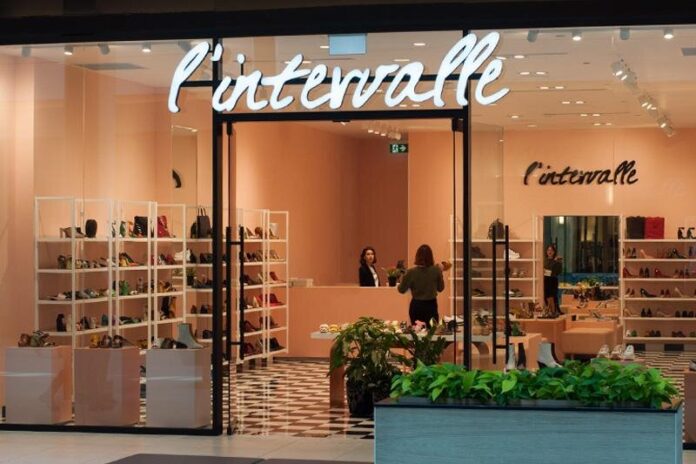
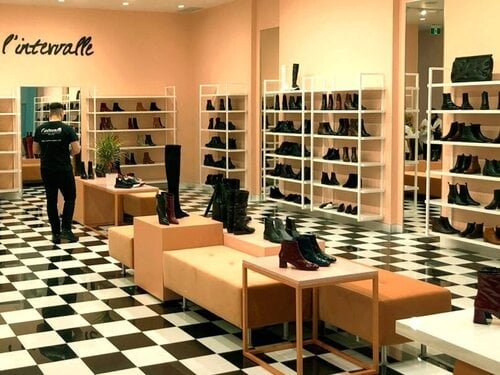
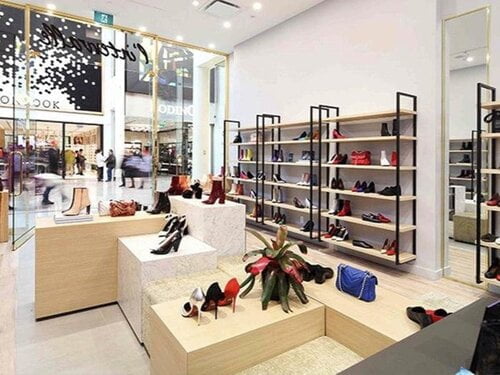
Montreal-based retailer L’Intervalle has succesfully captured shoe lovers’ hearts – and feet – by redefining fast fashion through creating footwear for people of all ages who defy trends.
The vision of the company for the past few years has been to position itself in the fashion industry by offering outstanding quality while remaining in an affordable price range.
“There’s definitely a place for expansion in terms of rolling out nationally, more out West, and also within the Toronto area. There’s still room for that expansion,” said Vicky Scalia, who along with her husband Sam Assaf co-founded and co-owns the company.
“Nothing has been defined just yet but definitely we’re always in discussions and open to that.”
CF SHERWAY GARDENS. PHOTO: L’INTERVALLE
PLACE STE-FOY. PHOTO: L’INTERVALLE
CARREFOUR LAVAL. PHOTO: L’INTERVALLE
The retailer has 14 stores today primarily in the Montreal area but also in Rideau Centre in Ottawa, the CF Toronto Eaton Centre, CF Sherway Gardens in Etobicoke, Square One in Mississauga, Maple View in Burlington, and the CF Fairview Mall in Toronto – its most recent location which opened in November.
Stores are typically about 1,800 square feet. Dianne Lemm, Executive Vice President at real estate company is representing the brand as it continues to expand in Canada by opening stores.
“We’re a Canadian brand that is locally designed in Montreal. We produce all of our shoes and stain in Italy and Brazil and we go to direct sourcing. So we basically cut out the man in between,” said Scalia. “We only work with quality components. So real leather, real suede. We really focus on the craftmanship as well and we work with very ethical factories and very sustainable processes. Those are very important values for the company.
CF TORONTO EATON CENTRE PHOTO: L’INTERVALLE
FAIRVIEW POINTE-CLAIRE. PHOTO: L’INTERVALLE
“And we really offer a value proposition. That’s where we have differentiated ourselves in the market. When customers walk into L’Intervalle once they see the product, once they see the quality and they look at the price and see the value proposition, try on the shoes, they find the comfort, they find the fashion they’re looking for, and that’s really what we’re offering to our customers.
“We’re definitely the fashion footwear destination. We have ladies. We have hand bags and we have men’s shoes as well. We’re definitely geared towards a Millennial customer but what’s been interesting, through our journey and developing the brand we definitely resonate with 18 to over 65 years old. Our styles are not determined by a customer’s age but more by her sense of fashion. And so fashion today really doesn’t have an age anymore. We are really able to resonate across those borders.”
The company was founded in 2015 when it incubated the concept and the idea.
“Sam comes from experience as his background is in footwear. He’s worked for some international brands and then in 2015 wanted to bring the brand home which is Montreal where we founded the company,” said Scalia.
“The reason we call the company L’Intervalle is because we felt there was a need in the market or an empty space for fashion footwear. We created L’Intervalle because it’s sort of the in between the high end and the low end.”
Scalia said L’Intervalle focuses on quality, well crafted, fearless and fashion-forward designs that allow the brand to stand out and distinguish itself as a footwear force to be reckoned with. It offers exclusive and ethically sustainable products from Spain, Italy, and Brazil.
The first store was in Montreal’s Plateau area on Mont-Royal E. for a specific reason.
“We figured we would sort of test the market in that area because our market is very geared towards Millennials. It’s a very hipster neighbourhood, Millennial geared. We felt if we could resonate to this type of customer and sort of create a following within our brand then we knew we were on to something and be able to push it forward,” said Scalia.
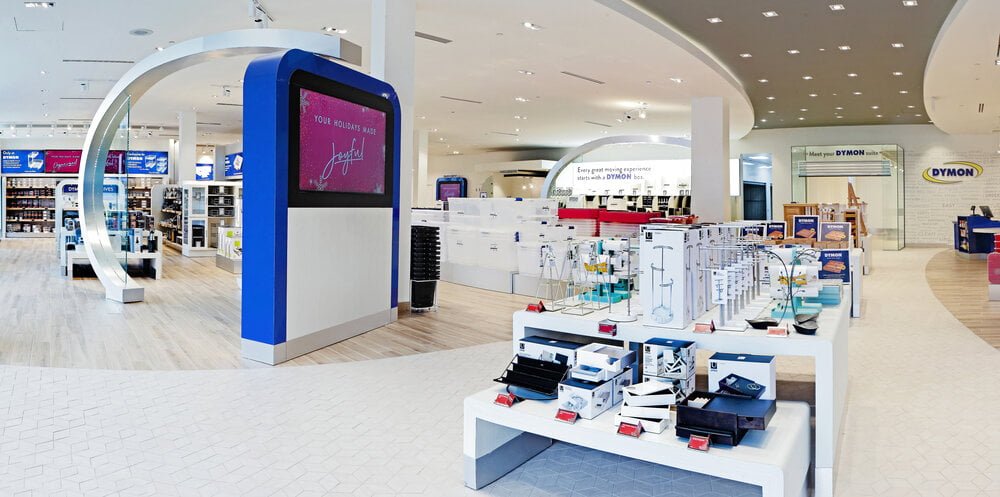
Ottawa-based DYMON, a real estate development company, has elevated the self-storage model to a new level with its state-of-the-art massive 500,000-square-foot location in Etobicoke, which recently opened.
The Etobicoke facility with more than 3,000 storage units is the biggest in the world, said Stephen Creighton, Senior Vice President, DYMON Group of Companies, and includes features such as a co-working space, wine storage units and a huge retail space of about 10,000 square feet.
He describes what the company does for self-storage as the Ritz Carlton approach with a focus on guest experience but at a very reasonable price.
In the first quarter of this year, two new ancillary brands will launch at the Etobicoke site – DYMON Work Refined, an elevated co-working brand, and DYMON Wine Cellar, a luxurious membership-based wine storage cellar and lounge.
DYMON, ETOBICOKE. PHOTO: DYMON FACEBOOK
The number of wine storage units planned are 368 in total – holding over 90,000 individual bottles plus an additional 8,000 cases of wine. Total square footage of the co-working space will be 24,938 square feet.
The first DYMON storage facility was launched in 2006 in Ottawa. The company has 11 storage facilities currently open and in operation – nine in Ottawa, one in Brampton and the Etobicoke location.
The 11 locations comprise in excess of two million square feet in total.
DYMON
1 of 3
“Self-storage is not a new concept. It’s been around for a long time. It had its genesis in the southern U.S. in the 1950s and it developed over time. And it’s most recognizable as single storey buildings with garage doors, chain link fence usually attached to highways or located in industrial parks or rural areas. That was sort of the model,” said Creighton. “There was no security of any nature generally. There were no humidity and climate controls. Very limited hour access.
“Over time there have been improvements in the operating model. There are better quality facilities being built and DYMON had an eclectic background in terms of real estate development. We built office buildings. We built industrial buildings. We built assisted living retirement homes. And we looked with a lot of interest in the self-storage industry because with its genesis in the U.S. and with our belief that over the course of time Canadian consumption patterns are very similar to the Americans. There’s about nine square feet per capita of self-storage in the U.S. But significantly less than two square feet per capita in Canada.
PHOTO: DYMONPHOTO: DYMON
“We saw an opportunity in the industry but like we’ve done, and how we’ve been successful in the past with our real estate development is we don’t like to build a model or a product that’s the same as everybody else. We like to disrupt the markets we’re in. We like to offer a differentiated product with unique services and we like to really focus on the customer experience. We adapted a hospitality approach. We call our customers guests and we do everything we can do to serve them.”
So the DYMON facilities are very large relative to the competition with an average of about 140,000 square feet. Humidity and climate controls protect items from the elements as well as bugs, vermin, mould, and fungus. High-end security is in place with a central command centre that monitors the facilities 24/7. There are extended retail hours with people in them 13 hours a day Monday to Friday and nine hours on Saturday and Sunday. They also have a free truck and driver, a moving and logistics division, on-site shredding services, luxury board rooms and meeting rooms, mail box service, safety deposit boxes, parcel delivery services.
“Most people think that self-storage is just for residential users. But we’re trending now that about 40 per cent of our guests are actually businesses and 60 per cent are residential,” said Creighton.
PHOTO: DYMON
PHOTO: DYMON
“We’re out there to try and really service a guest in an industry that really hasn’t focused much on the guest. We’ve had record sales in Ottawa. We just opened our ninth location in Ottawa at Lincoln Fields on Carling Avenue which is a major thoroughfare. And we had the fastest fill in the industry. We stabilized in less than four months and we had 1100 units. Frankly, we can’t build them fast enough in the city of Ottawa.
“We have four other projects under way now under construction in Ottawa. And we have 15 other sites in the GTR (Greater Toronto Region) that we are working on right now and our plan is to build about 15 million square feet over the next seven years between Ottawa and the Greater Toronto Region.”
Creighton said the Etobicoke facility is the latest and greatest offering in the company’s portfolio. The wine storage aspect of the facility will include a private member’s lounge with wine tasting rooms, a bar that members can invite guests over, a meeting room that can be used for dining and a full-time sommelier on staff.
DYMON, OTTAWA. PHOTO: DYMON
The wine storage area can take deliveries on people’s wines. DYMON will also deliver wine to customers’ homes.
“It’s very, very upscale. Very unique. It’s another way where we’ve disrupted the market and we’re doing something very unique for the guests,” said Creighton.
“We became the largest retailer in Ottawa of moving and packing supplies, but with the launch of our retail superstores, we decided to enhance our retail offering and now boast over 2,500 speciality products. We now have home décor and organizational products for everything from your office, bath, bedroom, living room, garage and kitchen.”
DYMON also now sells custom closet solutions for homes and businesses.
“As we began to expand throughout the Americas, we knew that Canada was going to be a priority. Taking a look at our successful online e-commerce alongside our audience on social media within Quebec specifically, we knew that we already had a big fan base in the province. Naturally, Montreal was the first place to establish that foothold in the country to bring our online experience offline, directly to our existing customer,” said John Ehrnst, the retailer’s Executive Director Americas, in an email interview with Retail Insider.
“We find the Canadian market attractive because we are excited about the opportunity to harness our existing high brand awareness in a market that is full of possibility. As we have expanded over the past eight years across countless countries, we have come to the realization that you can’t commit yourself to one universal strategy—it’s important to curate your messaging for a specific local audience. We have focused significant resources to bringing Daniel Wellington to the Canadian customer, and a brick-and-mortar store has a crucial role in that.”
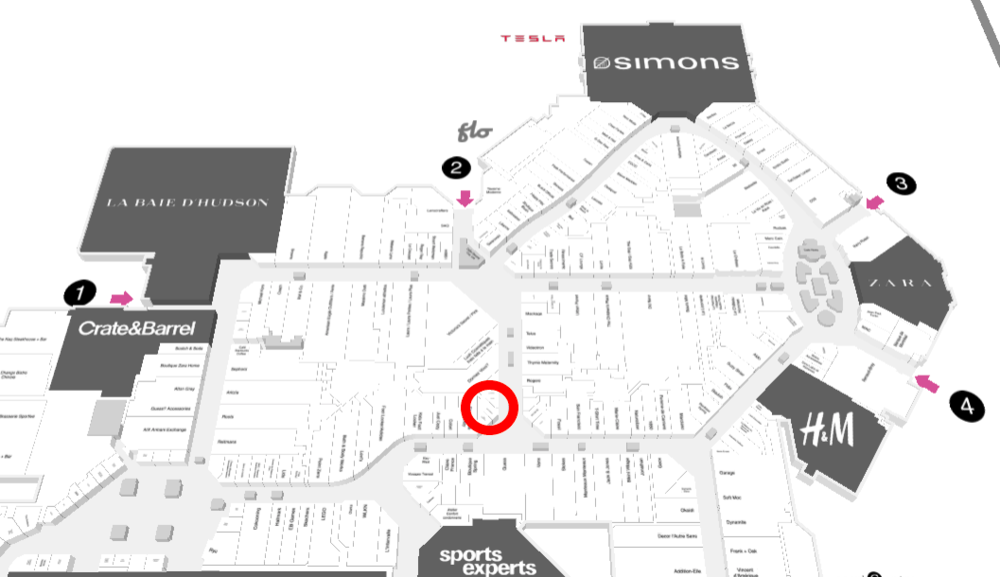
DANIEL WELLINGTON STORE LOCATION AT CF CARREFOUR LAVAL, CIRCLED IN RED. CLICK IMAGE FOR INTERACTIVE MALL MAP
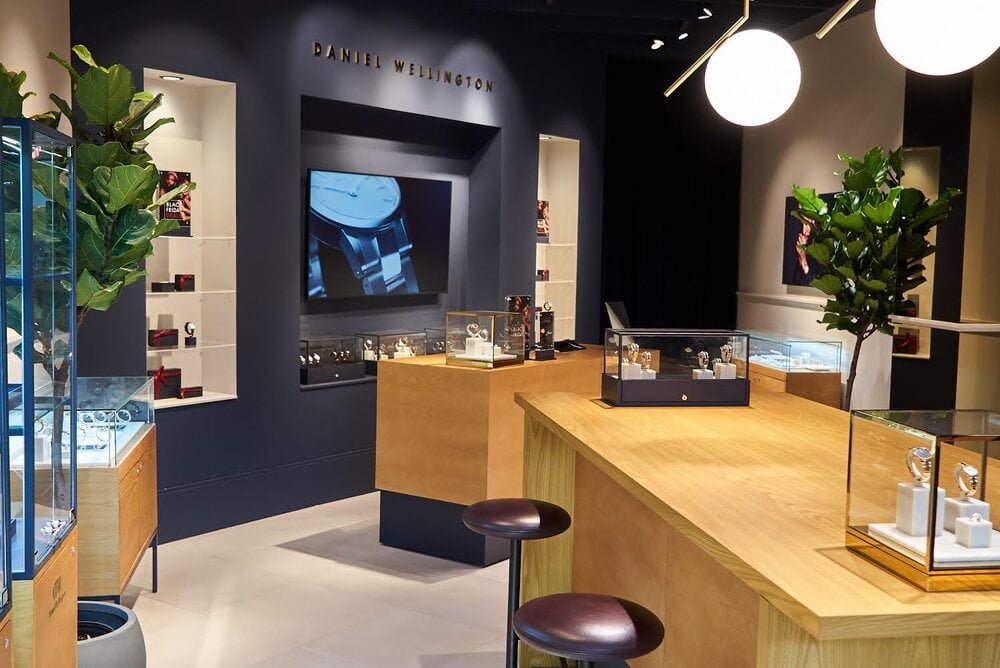
CF CARREFOUR LAVAL STORE. PHOTO: DANIEL WELLINGTON
Daniel Wellington is a Swedish brand founded in 2011. Known for its sleek and minimalist design, DW offers timeless watches and accessories, worn on all occasions by men and women all over the world. Since its inception, Daniel Wellington has sold over 11 million watches and established itself as one of the fastest growing and most beloved brands in the industry. Daniel Wellington is partnered with distributors in over 37 markets and represented in over 9,000 points of sales worldwide.
“Everything we produce is designed in our Stockholm headquarters by our in-house design team, ensuring the highest quality craftsmanship in every piece,” said Ehrnst.
“Daniel Wellington is well-regarded for our classic and minimalist designs, which means our collections appeal to anyone with an eye for timeless design at an affordable price point. Recently, we have also expanded further into accessories with the addition of rings and new bracelet styles, allowing for our customer to mix and match Daniel Wellington pieces into their existing personal style.”
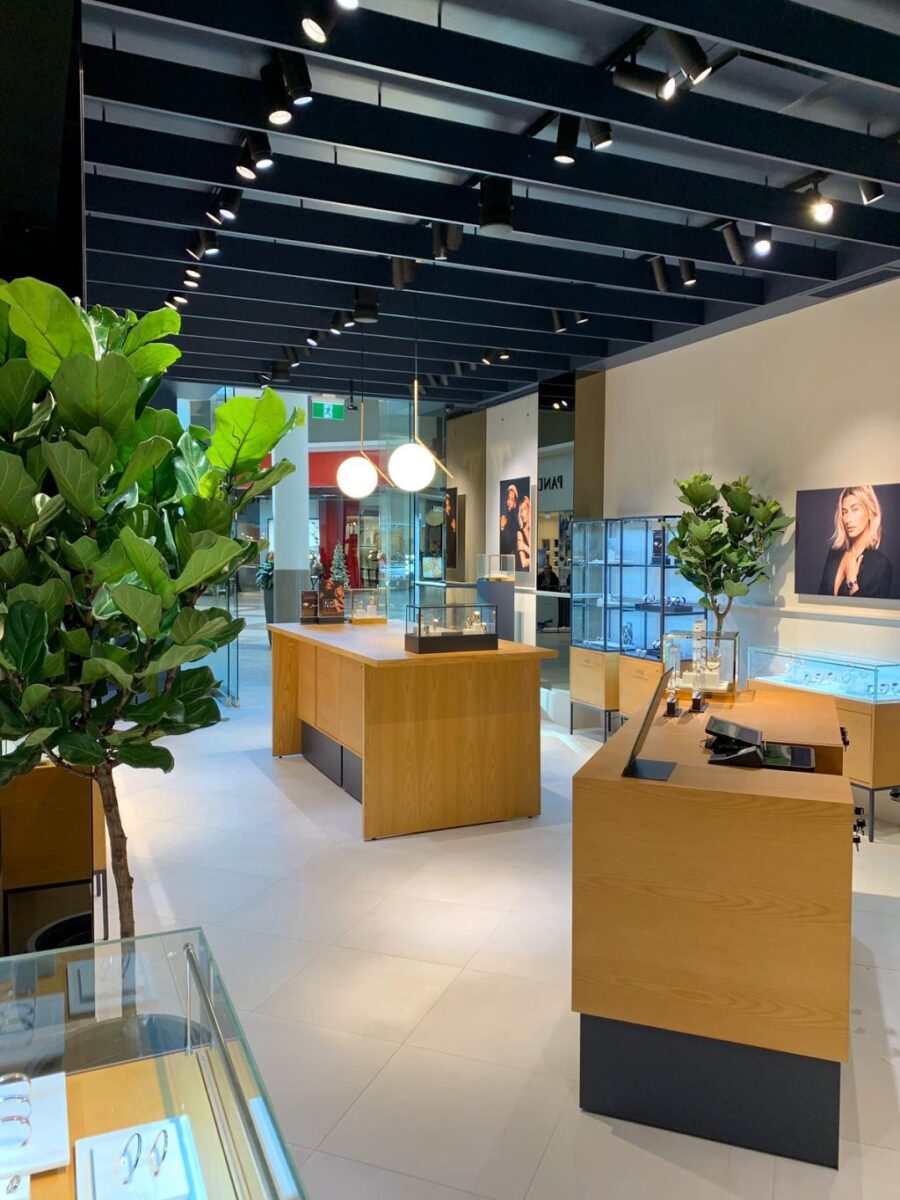
Daniel Wellington at CF Carrefour Laval (Image: Daniel Wellington)
The company says the Daniel Wellington brand represents detail-oriented design, crafted around minimalism and preciseness to create immaculate watches and accessories. It believes that the traditional, yet crisp design blends together perfectly with the colourful NATO strap, the elegant leather strap and the beautifully-crafted mesh strap.
“The story of the Classic watch is also the history of the creation of Daniel Wellington. On a trip halfway across the world, founder Filip Tysander met a captivating British gentleman with impeccable yet unpretentious style. The man had a particular fondness for wearing his vintage watches on old, weathered NATO straps. Inspired by his new acquaintance, an idea was ignited, and Tysander decided to design his own watch, minimalist and refined. The man’s name – Daniel Wellington. From this single moment, the idea grew into a design, and the design into a watch – a watch that would come to define the Daniel Wellington brand,” explains the company of its history.
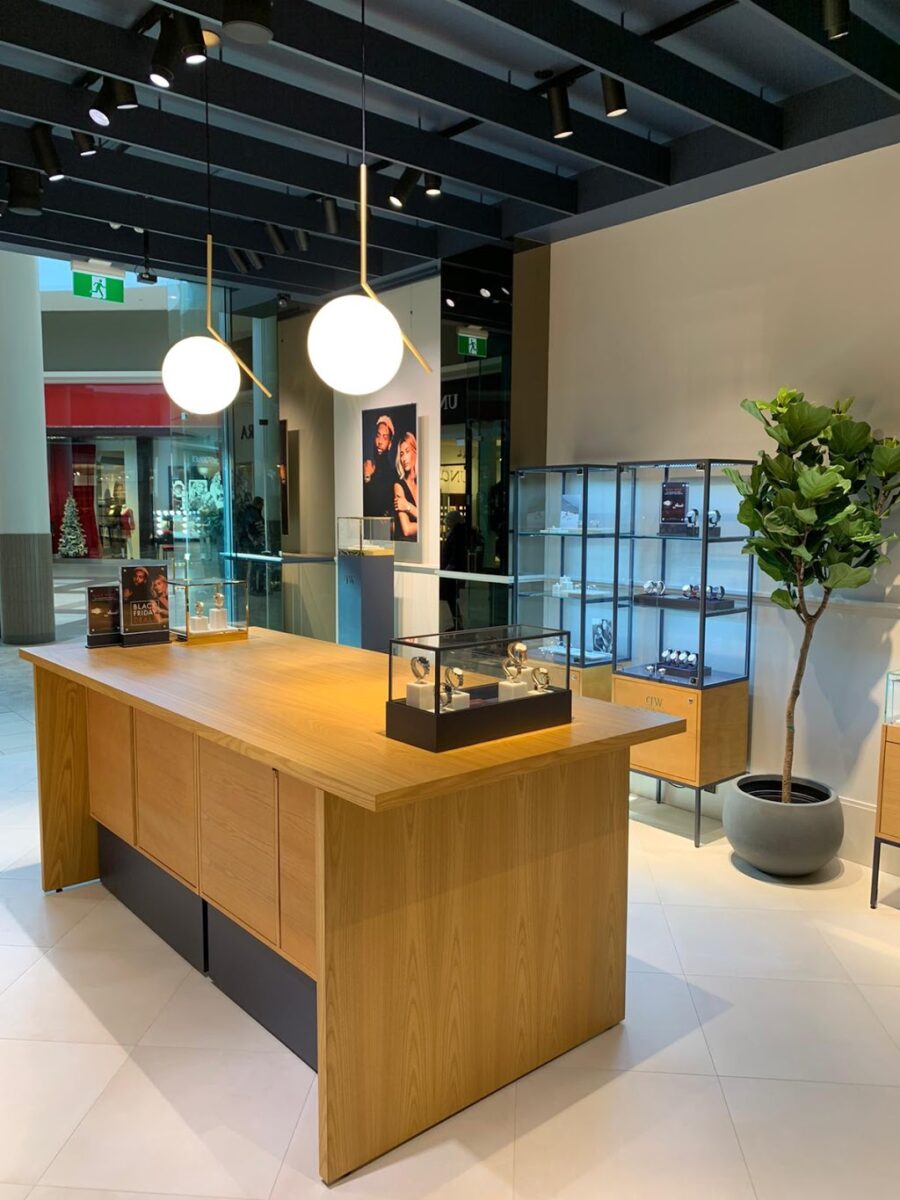
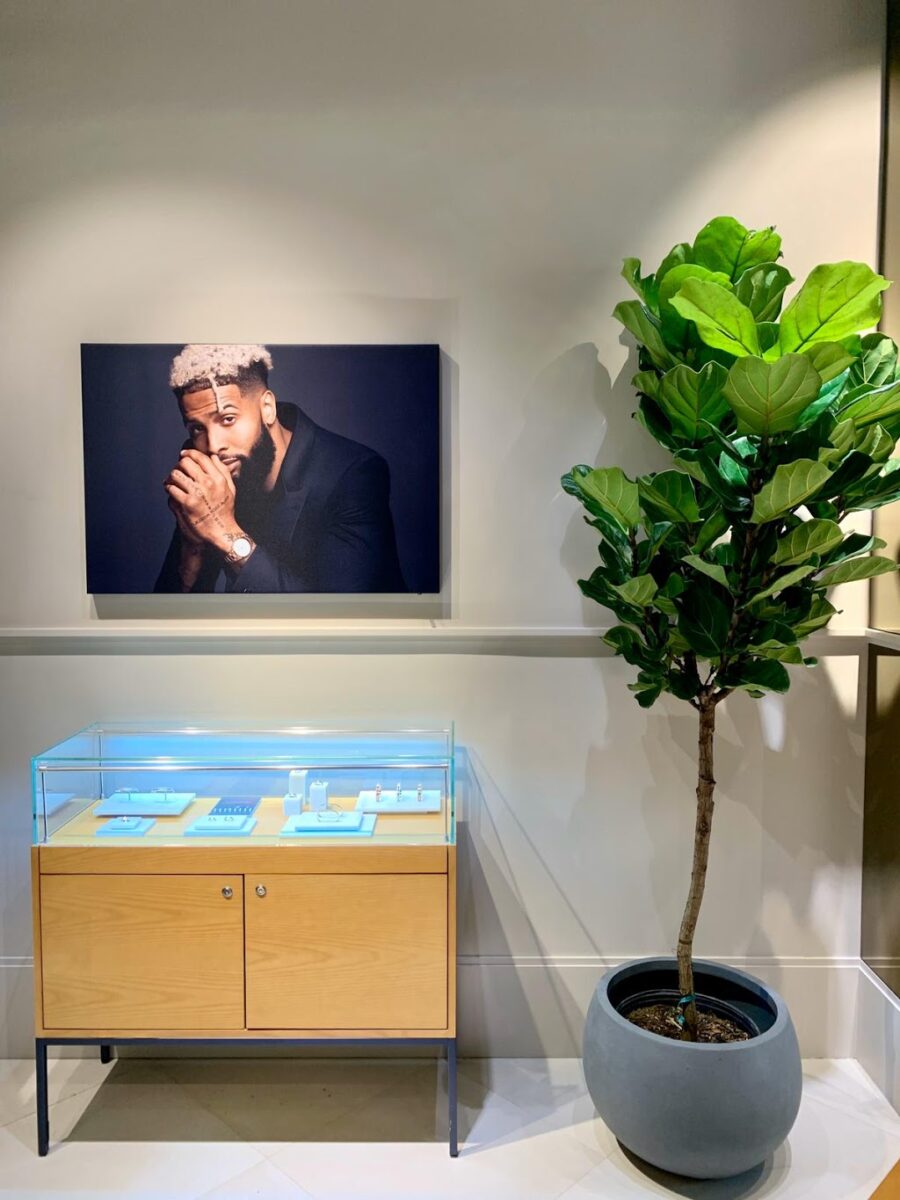
Daniel Wellington at CF Carrefour Laval (Image: Daniel Wellington)Daniel Wellington at CF Carrefour Laval (Image: Daniel Wellington)Daniel Wellington at CF Carrefour Laval (Image: Daniel Wellington)Daniel Wellington at CF Carrefour Laval (Image: Daniel Wellington)
Today it has more than 400 retail stores worldwide.
“We believe that today’s consumer is looking for a unique offline experience that mirrors the brand’s values, providing a comfortable atmosphere to shop whether that person is looking for style advice, the perfect gift or values being able to touch and feel the product firsthand. Daniel Wellington has a range of watches and accessories that are meant to be mixed and matched, not just with each other but also with the customer’s own style. Our style advisors provide a personalized in-store shopping experience for every customer,” said Ehrnst.
PHOTO: DANIEL WELLINGTON
Sal Iacono, Executive Vice President of Operations, Cadillac Fairview, said the company is thrilled to partner with the iconic brand.
“At Cadillac Fairview we are dedicated to delivering an exceptional shopping experience for our guests and introducing first to market retailers like Daniel Wellington is an example of our ongoing commitment,” he said.
Cadillac Fairview is one of the largest owners, operators and developers of best-in-class office, retail and mixed-use properties in North America. The Cadillac Fairview portfolio is owned by the Ontario Teachers’ Pension Plan, a diversified global investor which administers the pensions of more than 327,000 active and retired school teachers. The real estate portfolio also includes investments in retail, mixed-use and industrial real estate in Brazil, Colombia and Mexico. Valued at around $32 billion, the Canadian portfolio includes over 37 million square feet of leasable space at 70 properties in Canada, including landmark developments, such as Toronto-Dominion Centre, CF Toronto Eaton Centre, CF Pacific Centre, CF Chinook Centre, Tour Deloitte, and CF Carrefour Laval.
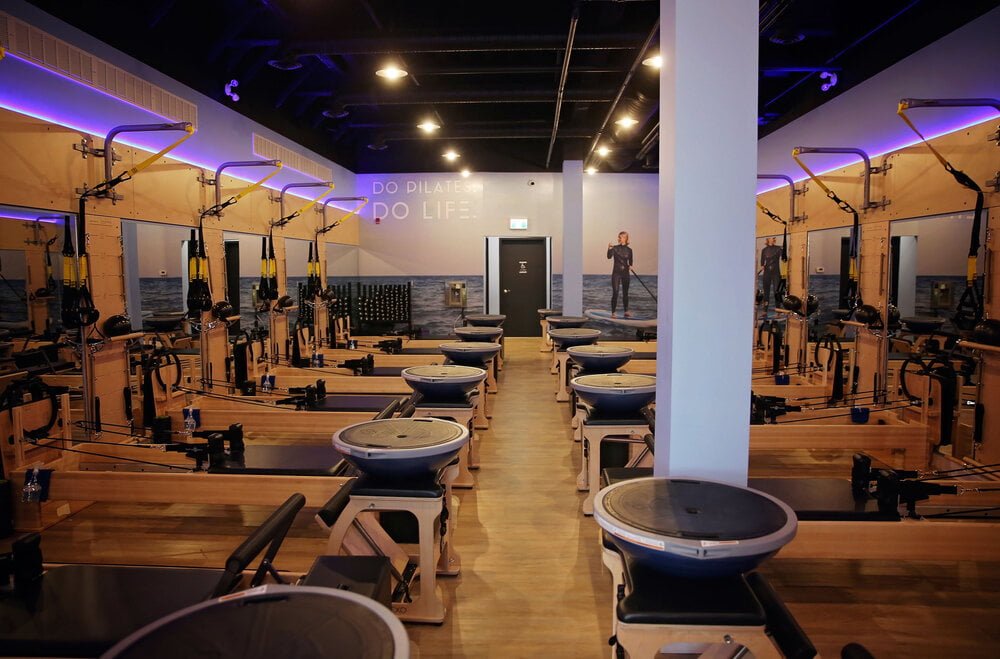
Club Pilates – the largest network of Pilates studios – is growing at an astronomical rate and is planning to open 100 locations in Canada over the next few years.
The company, which was born in 2007 in San Diego, California, was recognized by Inc. Magazine in 2018 as one of the fastest-growing companies in the United States, coming in at 95th on the magazine’s top 5,000 list.
Shaun Grove, President of Club Pilates Franchise LLC, told Retail Insider the company has a total of 615 studios open across the United States and Canada and about 900 territories sold.
PHOTO: CLUB PILATES
“We’ve just opened our first studio in Tokyo, Japan. We’ve got a number of other international deals that are starting to roll out. We’re in 10 countries currently. Those being Japan, South Korea, Brazil, Mexico, Saudi Arabia, Singapore, Germany, and Spain as well as Canada and the U.S.
“In Canada, we have six locations opened and another three that will be opening before the end of the year,” said Grove, adding that the first location was in Vancouver about two years ago.
The other locations in Canada include two in Calgary, with a third opening in December, three in the Vancouver area, one in Waterloo and a few others opening in the Ontario and Toronto area market before the end of the year.
“We look at Canada really as an extension of the U.S. All of our other international deals are master franchise relationships which means essentially we’re finding a partner in that country in supporting them and training them to become us in that country and they will sell franchises and be the franchisor essentially for that country,” said Grove.
“Canada we’re treating it a little bit differently just because of the proximity and the relationship between the countries that we’re able to actually function as a franchisor in the U.S. with Canadian franchisees. So we’re really looking at developing Canada in the same way that we developed the U.S. focusing on the major markets across the country and just finding the best franchisees that we can in those countries most primarily multi-unit operators but several single-unit operators as well.
“It’s not too dissimilar from what we experienced in the U.S. where we had some great initial growth but then it took some studios getting open and being able to validate the concept before others kind of entered the market and really started getting on board. That’s what we really found in Vancouver. We got the first studio open and everybody was kind of a little bit hesitant because they didn’t want to be the first to market in this U.S. concept. How’s it going to work in Canada? And our first studio in Vancouver did incredibly well – still doing amazing. And prompted another entrant into that Vancouver market who opened one studio and again did incredibly well. He just came back back and bought three more territories.”
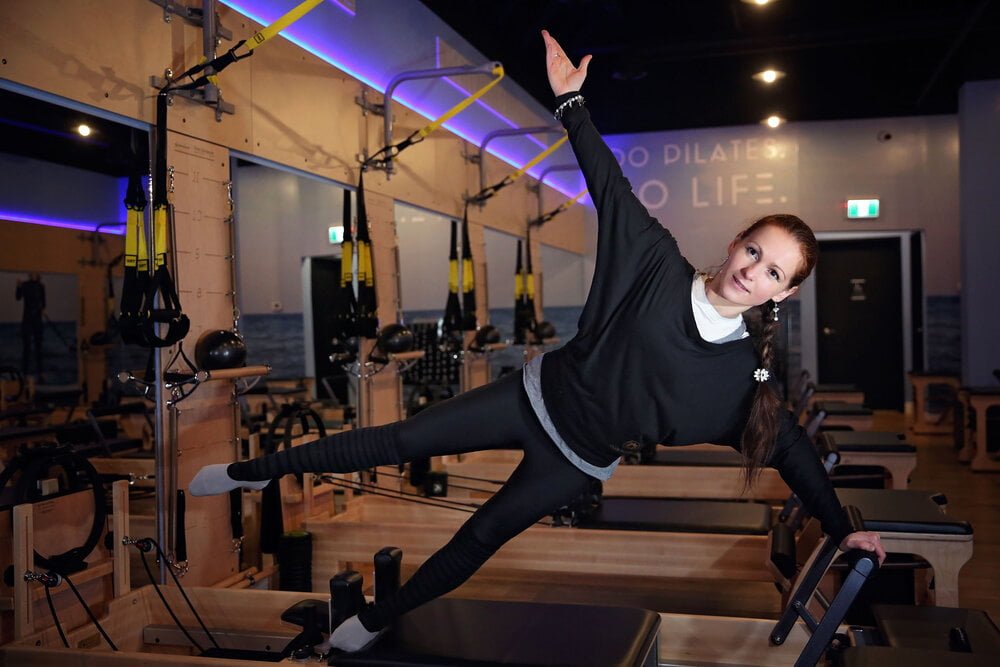
PHOTO: CLUB PILATES
With numerous fitness-related concepts in the market, Grove said the tradition based Pilates classes sets it apart from other boutique fitness that are out there.
“When you look at the fitness landscape, you really have to separate it between boutique fitness and sort of big box fitness. You subcategorize that to the boutique fitness market and there’s a lot of differentiation between concepts within that boutique fitness market,” said Grove.
“For us, we really stand out because there’s nobody else out there on the franchise level doing what we’re doing with traditional Pilates. Pilates in general is a very low impact full body workout that moves the body through different planes of motion and corrects imbalances in the body. So there’s a lot of very positive benefits that you get from Pilates in addition to the physical fitness aspect of it. And I think that’s what really sets us apart as well in terms of what we do in the studio. It’s a great low impact physical activity you can do but it also helps to transform and repair and rehabilitate the body. It’s something that everybody can benefit from whether you’re 15 years old or 95 years old you can get the same benefits out of a Pilates workout.”