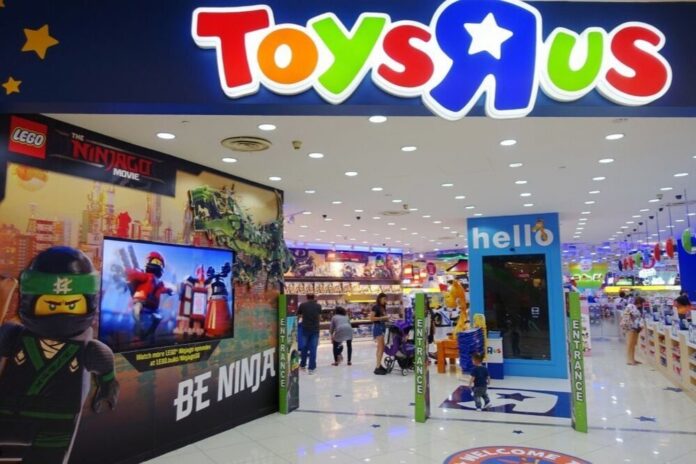
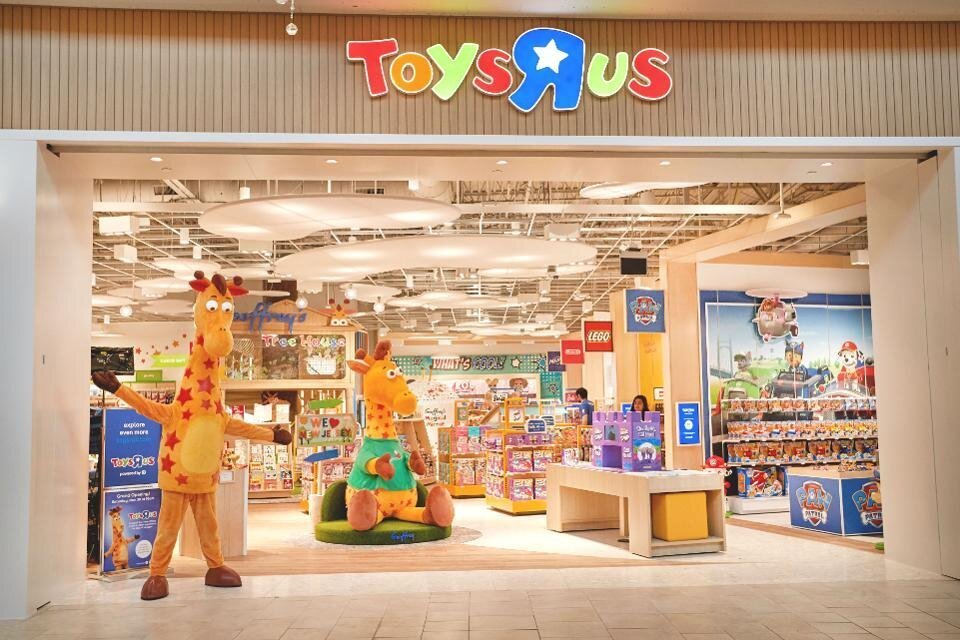
The Toys R Us brand may be virtually dead in the U.S. but the retail chain is alive and thriving in Canada and recently inaugurated a new era in ecommerce and technology.
The brand, which is owned by Fairfax Financial Holdings Limited in Canada, began 35 years ago in the country and today has 83 retail locations coast-to-coast in every province.
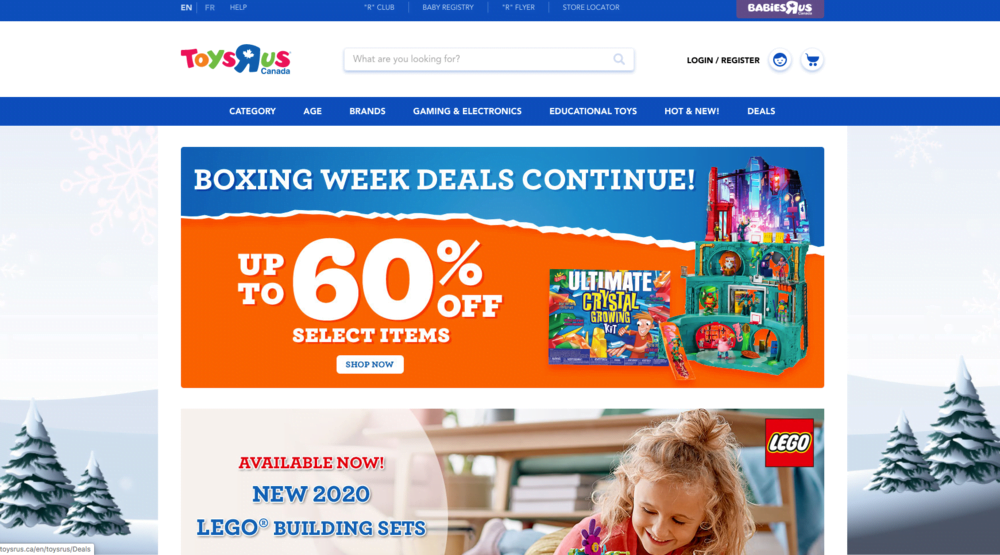
“Ecommerce is very important. We’ve had our best ecommerce season ever by far . . . We’re more than dipping our toes into it,” said Frank Juhasz, vice president of marketing, public relations and omni channel strategy.
IMAGE: TOYS R US CANADA WEBSITE
“We’re going to continue to not only invest in ecommerce but also invest back more into our stores with more eventing, more special things happening, more engagement because customers are really calling out for it.”
The company recently announced it had completed a major tech project that “propels” it forward in the areas of digital marketing, ecommerce and in-store clientelling.
It has launched a new website, ecommerce platform and in-store technology, as well as piloted successful innovations including leading-edge digital flyers, and multi-platform toy books.
“We’ve been working around the clock with our partners to make sure we’re introducing platforms that are leading edge and well suited for the future,” said Juhasz. “We’re confident that these solutions will respond to the expectations of all of our customers and that we’ve kindled partnerships with industry leaders that will propel us toward leadership in omni channel retailing and customer engagement.
PHOTO: TIMES COLONIST
Many Canadian consumers may be confused about the brand considering what has happened with the Toys R Us bankruptcy in the U.S. and the subsequent closure of stores.
Two years ago, Toys R Us was a subsidiary of Toys R Us USA. Juhasz said that during the entire period of the company’s financial woes Canada was always profitable as a subsidiary.
“So when Toys R Us global went into bankruptcy Toys R Us Canada was purchased by Fairfax Financial as a profitable company,” he said.
The retailer’s new website features a mobile-first design, enhanced product management and in store clientelling. Also a major new initiative is a partnership Toys R Us has launched with Snapchat and Google moving into the Augmented Reality and Voice space.
“Twenty five years ago it was just exciting to go into Toys R Us because there were toys stacked all the way to the ceiling. That just kind of blew your mind (as a kid). With kids these days, they get their minds blown in all sorts of wonderful and fantastical ways not only in the movies but in video games. There’s a lot going on that stimulates them,” said Juhasz.
“If our goal, and it is our goal, is to remain a magical place for kids we’ve really got to keep up with the times and so it seems like Augmented Reality and things like deeper engagement it’s going to be very important for us to remain just as magical for kids in the year 2021 and 2025 as it was back in 1980.”
PHOTO: TOYS R US
It recently launched a Snapchat Portal Lens – a unique lens that transports Snapchatters into a rich augmented reality (AR) experience that allows for interaction with some of the hottest toys for the 2019 holiday season.
As well, the company launched a series of successful pilot projects with Flipp, a company known for transforming the traditional flyer space around the world. Toys R Us Canada became, in March 2019, the first Canadian retailer to integrate Storefront Lite, a dynamic digital solution that transforms traditional flyers into rich experiences connecting websites, product details and editorial content directly onto the Flipp digital publication.
“As part of this desire to remain a magical place, we struck a partnership with some leading edge technology companies and consumer engagement companies. Google being one of them. Snapchat being one of them. And essentially I went to them and I gave them this pitch and told them the story. I’ve got great retail locations. I’ve got an instantly recognizable brand name and a very large retail player in the country. I want to be your guinea pig. So let’s come up with something really, really creative that’s going to help get closer to consumers and engage with kids the way they’re engaging with their phones right now,” said Juhasz.
Three things developed with Snapchat. A filter where kids can turn themselves into a giraffe for example. The second one being if someone holds their phone to the Toys R Us holiday toy book it will come to life in a 3D way.
“And probably the most exciting one was the Augmented Reality, the Virtual Reality, where you could walk into a virtual Toys R Us store and see some of the products and experience some of the hot trending toys,” added Juhasz.
“It’s been incredibly popular and we’re going to do more of it.”
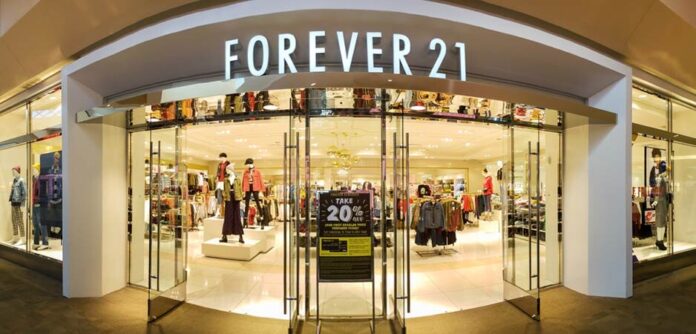
After shutting all of its 44 stores in Canada in 2019, Los Angeles-based fast-fashion retailer Forever 21 has announced that it is again operational in Canada. This time around it won’t be with physical stores however — Forever 21 is launching a ‘localized’ e-commerce website targeting Canadian consumers. Given the retailer’s lack of success in Canada when it had brick-and-mortar stores, it’s questionable if having an online presence will be worth the effort and online returns could become a significant issue.
The rationale is that the ‘localized’ Canadian e-commerece site will drive sales while again growing Forever 21’s market share in Canada after its exit from the market several months ago. “E-commerce forms a large chunk of the profitable core of our operations and as part of our new global strategy, Forever 21 will leverage Global-e’s technology to offer international customers an outstanding online experience,” said Alex Ok, President of Forever 21.
“To engage digitally savvy consumers today, retailers need to invest in creating a unique online experience that speaks directly to the shopper. With the continued increase in demand from international shoppers for our brand, we recognized that an advanced global online shopping experience is a fundamental part of our future growth,” he went on to say. “The seamless localized shopping experience our consumers around the world can now enjoy is a vital milestone in our mission to use the latest retail technology to bridge the online gap between the convenience of e-commerce and the local experience of in-store.”
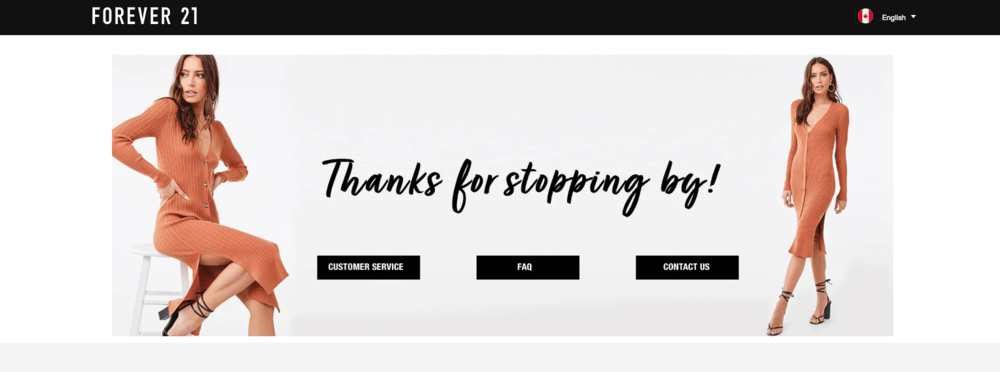
IMAGE: FOREVER 21
Forever 21 partnered with cross-border e-commerce solutions provider Global-e to launch the international offering, which includes localized websites for the Canadian market as well as sites for Asia, Asia/Pacific, and Latin America. The Canadian website accepts local currency. As part of the purchase process, duties and taxes will be calculated on the site with a prepayment option. Shipping rates will be “attractive” and free shipping will be offered over a specified threshold, according to a news release.
As part of the online initiative, Forever 21 will be able to tailor its offerings “according to its marketing strategy and business goals, including running market-specific promotions,” according to the release.
Matthew Merrilees, the North American CEO of Global-e, explained how “more than 80% of Canadian online shoppers are now purchasing from international retailers. Brands like Forever 21 understand that in order to boost global sales, it is crucial to create an online presence that is fully localized to each individual market.”
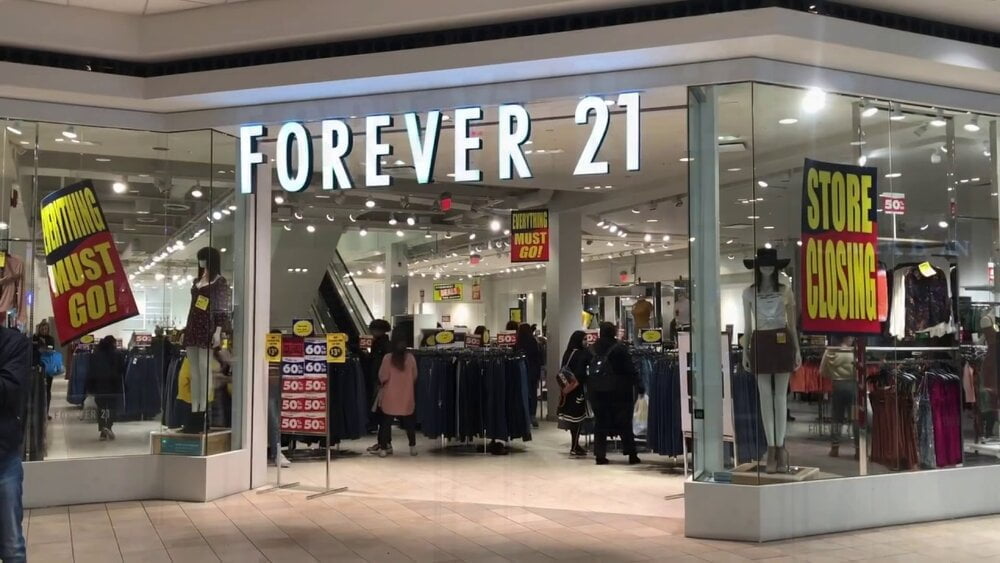
HAMILTON, ON FOREVER 21 CLOSING. PHOTO: AIR AERO YOUTUBE PAGE
Cross-border shopping often includes dues and taxes in Canada, which could pose an issue as Forever 21 looks to gain market share with other fast-fashion retailers operating in Canada. Canadians shopping online may buy products costing up to $20 from international online retailers without having to pay sales tax or duties — also known as the de minimis threshold which is expected to increase with a ratified free trade agreement.
As a comparison, the de minimis threshold for those living in the United States is $800. Retail Council of Canada has lobbied against raising the threshold for Canadians in an effort to protect Canadian retailers during an already challenging time which includes international brands entering the market at an unprecedented rate.
FOREVER 21 CANADA ONLINE CHANNEL AS IT STANDS NOW
Forever 21 closed all of its Canadian stores in November of 2019 after its US-based parent filed for bankruptcy. In total, about 900,000 square feet was vacated, though not for long — Montreal-based fashion conglomerate YM Inc. scooped up many of the leases on a temporary basis to open its own brands including Urban Planet and West49. Urban Planet’s fashion offerings are also considered to be ‘fast fashion’ in terms of pricing and style.
When Forever 21 operated stores in Canada, many locations were underperforming. Sandy Shindleman, CEO of Winnipeg-based real estate company Shindico, told 680 CJOB radio in November that the 37,000-square-foot Forever 21 store at CF Polo Park had annual sales between $2 million and $3 million dollars. That means the store’s productivity was less than $100 per square foot in a shopping centre that boasts annual sales per square foot approaching $900 for non-anchors, according to a recent Retail Council of Canada study.
Another landlord told Retail Insider in November that the Forever 21 store in one of its shopping centre properties had less than $2 million in annual sales, in a shopping centre where many retailers see per square foot sales exceeding $1,000 per square foot annually.
Not having physical stores may pose a challenge for Forever 21 in Canada as it launches its local e-commerce site. Consumers will not be able to try product on, and the lack of instant gratification from buying in a physical store could pose a challenge to the retail venture as well. And if consumers do order product to try on at home, the rate of returns could again pose challenges depending on terms. Many retailers end up destroying returned product rather than going through the trouble of checking and attempting to resell it, and consumers are becoming increasingly aware of such issues.
FOREVER 21 PHOTO: GLOBAL NEWS
As well, studies have shown that having a physical presence leads to a boost in online sales for retailers. In 2019, Retail Insider reported on an International Council of Shopping Centres report which discussed the ‘halo effect’, where web traffic to a retailer’s online store sees a boost when a physical store opens in a new market. Not having physical stores in Canada could result in an ‘out of sight out of mind’ situation with Forever 21 in Canada unless extensive marketing efforts are launched to grab hold of Canadian consumers.
Forever 21’s re-launch in Canada comes at a time of unprecedented competition amongst fashion retailers. As mentioned, YM Inc is expanding its presence to include most of Forever 21’s former Canadian locations, and other fast-fashion and value-priced retailers continue to expand within Canada.
Swedish fast-fashion retailer H&M has been opening stores yearly in Canada in an effort to gain market share, as has Spanish chain Zara and Japanese retailer Uniqlo. At the same time, value-priced retailers such as TJX Group’s Winners and Marshalls banners have been expanding further into Canada, offering designer product at discounted prices. Further disruption is expected into 2020 and beyond as second-hand clothing purchasing grows at a rapid pace, while clothing rentals are predicted to be the next bing thing.
Forever 21 will no doubt have an uphill battle to gain market share in Canada despite its best efforts to be a key online player after its brick-and-mortar retreat last year.
Canadian furniture retailer The Brick continues to expand its Commercial Design Centres across the country with the latest one opening recently in Montreal.
Eric Beam, Senior Director, Commercial Sales Division, said the Montreal location is the company’s eighth one across the country with one in every major market – Toronto (North York), Burlington ON, Ottawa, Winnipeg, Calgary, Edmonton, and Vancouver (Coquitlam).
The first location for the unique concept opened May 2011 in Toronto’s North York area.
The centres offer top specialty brands in the premium appliance market for builders, and commercial and residential retail customers. All the centres are within Brick stores.
“We’ve got over 35 brands available in most regions,” said Beam. “For the most part we have a full offering of everyday household appliance brands right up to the super premium.
“What these design centres are for is our team members work closely with developers, builders, landlords, real estate agents, designers, you name it, and it gives them an opportunity to send their clients into our showroom in a vignette format to really be able to see what opportunities there are for them from an appliance standpoint.
“In a builders’ world, it may be to upgrade from whatever that builder package was. From a design standpoint, it could be a client trying to decide what type of new appliances they want to put into their new kitchen.”
The centres also give consumers the opportunity to see what options they have available for their appliance choices.
The Commercial Design Centres’ in-store showrooms boast creatively inspired displays accented with home décor options. This enables customers, such as new home builders, designers or residential property managers, to visualize the product selection in more natural home-like settings. A range of appliance packages are available to fit any budget whether for single-family homes or multi-unit residential buildings.
Each centre offers custom showrooms (vignettes) featuring premium appliance lines such as Gaggeneau, Bosch, Thermador, Monogram, Fulgor Milano, Bertazzoni, SMEG, and several others.
The new centre in Montreal is located inside The Brick’s Marchè Central store. It operates under the banner of Midnorthern Appliance, which celebrates its 60th anniversary this year.
The Brick’s President Dave Freeman said the opportunity is right for continuing growth into the Montréal market, which is home to a large number of designers and builders.
“We have one of the widest selections of premium appliances in the country, and this new Commercial Design Centre helps make these appliance options more readily available to anyone from new home builders to luxury homeowners across Canada,” said Freeman. “And we’re able to cover every single market for national level developers and builders.”
Beam said the centres are about 3,000 to 4,000 square feet.
“Right now because we’re represented in all markets we may expand within those communities to have potentially two in the Vancouver area but nothing is written in stone right now. Our first footprint was to be represented in every major market and now it’s about letting our partners know that we’re there to support them,” said Beam.
“There’s a retail component to it as well because people can walk in and have access to those design centres. It’s not just for the commercial side of the business.”
Midnorthern Appliance is a commercial sales division of The Brick, and has been servicing the builder and retail appliance community since 1959. During that time, Midnorthern has sold over 2,500,000 major home appliances throughout Canada and the world.
“We’re creating workstations within those showrooms so that people have access to a computer and to WiFi and all the things they need to do to be able to have their office away from office so to speak. Trying to make it convenient for them,” said Beam.
“One of the advantages that we offer versus what anybody else is doing in the market is the full 360 service because we use our own fleet for delivery. We have our own in-house customer service team that manages the customer service aspects and the delivery aspects as far as appointments go and those types of things internally. With our partnership and being owned by LCL which is the Leon’s group we have Trans Global Service which is our shared installation company which is also owned by us. So really from the selling standpoint all the way to install you’re dealing with The Brick all the way through versus some of our competitors may have to farm that out to a third party to do the customer service.”
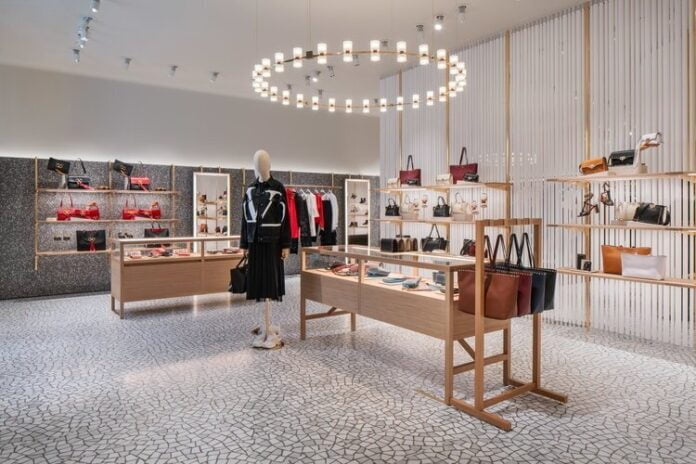
INTERIOR OF VALENTINO, YORKDALE SHOPPING CENTRE. PHOTO: MICHAEL MURAZ
International brands continue to enter Canada by opening standalone retail stores. In 2019, 30 brands opened stores in Canada according to our count, further adding competition at a challenging time in the Canadian retail industry.
With almost 30 international brands entering Canada in 2019, it’s clear that Canada continues to be a target for retailers expanding operations globally. In many respects, it makes sense. Canada is an advanced country that is relatively safe and stable both politically and economically. International retailers have been part of Canada’s history since its inception, and Canada’s multiculturalism has resulted in strong name recognition for many brands prior to even entering the country. As the world becomes globalized, Canada is expected to continue to see international brands open stores for many years to come — industry insiders say that could include well known grocery giants as well as international department store chains that have either launched global expansions or are planning to do so.
The concept of retailers ‘entering Canada’ has become a bit blurred over the past several years, and Holt Renfrew is responsible for some of that. Over the past three years, Holt Renfrew’s business model has involved dedicating a substantial amount of store space to leased concessions, which in reality means that many luxury brands have already launched retail operations in Canada, albeit within the host retailer. To keep consistent with previous years’ tallies, Retail Insider continues to track brands that have opened standalone stores in Canada. At the same time some big names that technically have Canadian operations may continue to operate in stores such as Holt Renfrew rather than opening standalone units. In the future, some of the concession brands contained in retailers such as Holt Renfrew will eventually step out to open standalone stores in Canadian cities after gaining name recognition as well as a loyal clientele.
In terms of geography, the breakdown of cities that saw first-to-Canada stores open in 2019 are broken down as follows:
Toronto/GTA: 18
Montreal: 5
Vancouver: 3
Ottawa: 2
Edmonton: 1
Halifax: 1
The Toronto area is clearly the primary entry point for international brands opening stores in Canada, far surpassing any other market in 2019. Toronto’s Yorkdale Shopping Centre saw six international brands open stores in the mall — over the past several years, Yorkdale has launched more first-to-Canada retail concepts than any other place in the country. In Montreal, three of the five first-to-Canada openings in that area were at the CF Fairview Carrefour Laval, speaking to the strength of that shopping centre as well.
The following is Retail Insider’s count of the international brands that entered Canada in 2019 by opening standalone stores. The list is broken down into four quarters with a brief discussion of each time period.
Q1 2019: Four international brands opened first-in-Canada stores in the first quarter of 2019. The year got off to a slow start with the first of the four stores opening in March.
VALENTINO, YORKDALE SHOPPING CENTRE. PHOTO: MICHAEL MURAZ
Valentino: Italian luxury brand Valentino opened its first standalone Canadian flagship at Toronto’s Yorkdale Shopping Centre in March of 2019, next to a Bottega Veneta flagship that opened in November of 2018. The 4,700-square-foot Valentino store features the full range of Valentino fashions for men and women, including ready-to-wear, bags, accessories, and footwear. For years the Valentino brand has been available at multi-brand luxury stores in Canada including Holt Renfrew and more recently at Saks Fifth Avenue and Nordstrom. More standalone Valentino stores are expected for Canada — Toronto’s Bloor-Yorkville is said to be in line for a store, and the Vancouver market is also a likely target for the luxury brand as many brands go direct-to-consumer. Valentino pulled out of multi-brand footwear retailer Davids Footwear which partly resulted in its demise — Davids shuttered its five Ontario stores in October of 2019. [Read the Full Article on Valentino Here]
ARMANI CASA, VANCOUVER. PHOTO: HELEN SIWAK
Armani/Casa: Italian designer Giorgio Armani’s home furnishings brand Armani/Casa opened its first standalone Canadian storefront in Vancouver in March of 2019. The 2,200-square-foot retail space, located in Vancouver’s ‘Armoury District’ is only the fourth Armani/Casa location in North America, with three others in the United States. A range of minimalist furniture items are available ranging from larger furniture items to lamps and smaller items. It’s unknown if more Canadian stores will open, though Toronto would be a logical guess for a second location. [Read the Full Article Here]
Tan Mujiang: In March of 2019, unique Chinese comb brand Tang Mujiang opened its first Canadian storefront at the Scarborough Town Centre in Toronto. The 612-square-foot retail space features artful traditional Chinese wooden combs and mirrors boasting “oriental charm and exquisite craftsmanship.” The company said that it was seeking franchise partners to expand the retail concept to other markets in Canada. [Read the Full Article Here]
PHOTO: PENTI
Penti: Turkish women’s fashion brand Penti opened its first Canadian store in March of 2019 in downtown Halifax at the Park Lane Mall on Spring Garden Road. As many as 10 stores could open in Canada by the end of 2021, according to the retailer’s Canadian partner. Penti refers to itself as a “Turkish-European franchise”, with more than 600 stores in Turkey, Europe, and the Middle East. Product categories carried in Penti stores include: women’s intimates, hosiery/legwear, socks (for both women and men), activewear, beachwear, and some homeware items, according to its website. [Read the Full Article Here]
ALYX STOREFRONT (26 BELLAIR STREET) ON MARCH 16, 2018. PHOTO: CRAIG PATTERSON
ALYX: In March of 2019, Toronto became home to the world’s first standalone storefront for edgy and upscale New York City-based fashion brand 1017 ALYX 9SM. The boutique, operated in a partnership with multi-brand retailer CNTRBND, opened in a 1,700 square foot space at 26 Bellair Street in Toronto’s Bloor-Yorkville area. California native Matthew Williams founded 1017 ALYX 9SM in 2015 and the brand is known for its unique and fashion-forward streetwear styles. On the store’s opening date, crowds of young affluent shoppers (mostly Asian) flooded the store after its opening was announced by the brand and CNTBND on Instagram, speaking to the power of social media. [Read the Full Article Here]
Q2 2019: In the spring/summer of 2019, six international brands entered Canada by opening stores.
SILK LAUNDRY’S MONTREAL BOUTIQUE. PHOTO: MAXIME FRECHETTE
Silk Laundry: In April of 2019, Australian fashion brand Silk Laundry opened its first Canadian storefront in Montreal’s Little Burgundy area. Designer Katie Kolodinski founded the brand in 2015 and has three stores in Australia. Ms. Kolodinski, who grew up in Thunder Bay, Ontario, moved back to Canada last year with her Australian husband and business partner, Reece Rackley, to operate the new store as well as to offer their children French-immersion schooling. Silk Laundry features a range of attractive and durable silk garments such as dresses and camisoles that perform well in hot temperatures. Handbags and shoes are next to be produced as Silk Laundry becomes a lifestyle brand. The Montreal store is expected to be the only standalone location in Canada as Silk Laundry looks to expand sales via its e-commerce website as well as securing wholesale accounts in multi-brand retailers. [Read the Full Article Here]
PHOTO: XIMIVOGUE
Ximivogue: In the spring of 2019, “Korean” variety retail concept XIMIVOGUE entered the Canadian market under a franchise model with stores opening in Toronto. The company is actually from China, and sells a range of products at low prices including household goods, clothing, jewelry, cosmetics and beauty products, toys, and other small goods, with about 7,000 products in total. The first two stores opened at CF Sherway Gardens and at CF Fairview Mall in Toronto, and locations have since opened including a downtown store at College Park in October. A national expansion for the retailer is expected for 2020. [Read the Full Article Here]
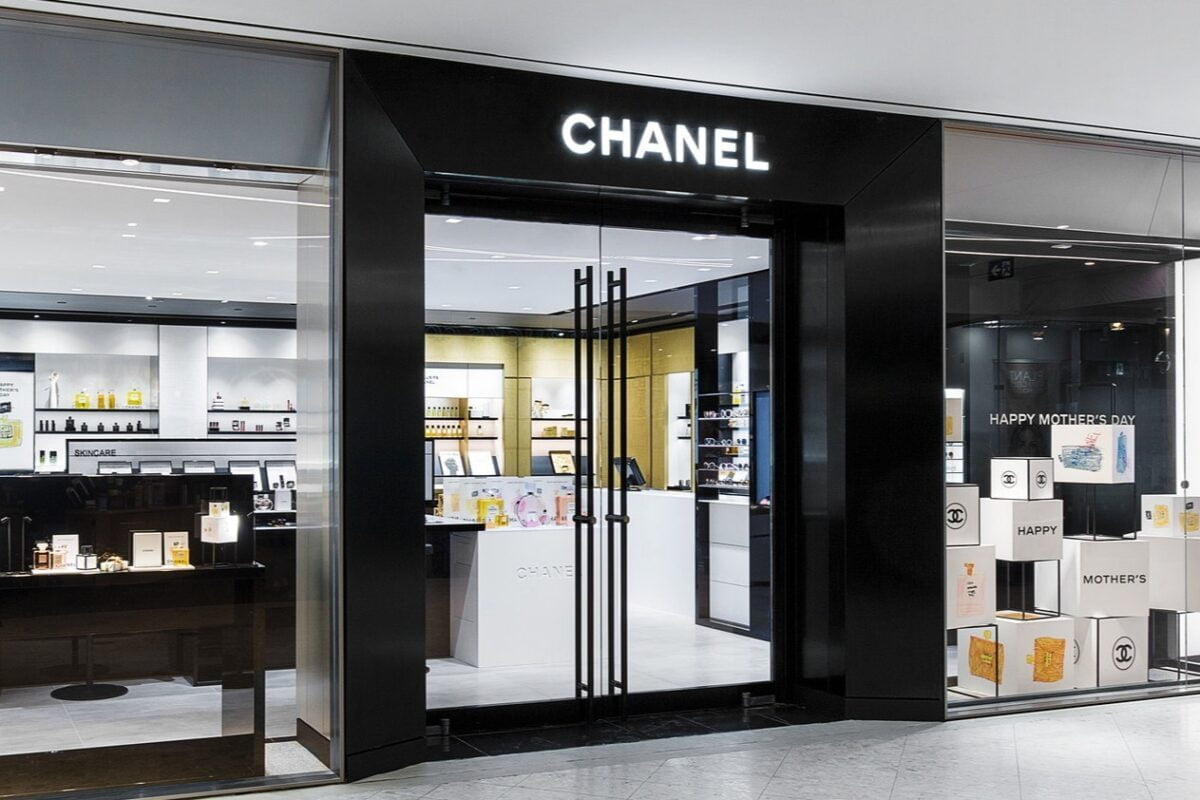
PHOTO: CHANEL
Chanel Beauty: Canada’s first standalone Chanel beauty boutique opened in May of 2019 at Toronto’s Holt Renfrew Centre. The 1,280-square-foot storefront is connected to Holt Renfrew’s concourse-level beauty hall which opened earlier in the spring. The Chanel boutique features beauty, fragrances, and sunglasses, as well as a private treatment room. Chanel itself has had a retail presence in Canada since 1989 when the brand opened its first standalone store at 131 Bloor Street West in Toronto, and prior to that the brand had a partner boutique in multi-brand luxury retailer Creeds which operated for years at the Manulife Centre in Toronto until its bankruptcy in 1990. [Read the Full Article on the Chanel Boutique Here]
Sheng Tang Peony: Chinese luxury brand Sheng Tang Peony opened its first standalone Canadian storefront on Toronto’s Yorkville Avenue in the spring of 2019. The store features beautiful hand-made garments as well as bags and jewellery, some of which are one-of-a-kind. Fabrics include silks and cashmere and buttons on some garments are made from semi-precious stones. We spied a vest, which took nearly a year to make, priced at more than $17,000. Many other items are priced considerably lower, though pricing is still in line with what one might find in Bloor-Yorkville. Toronto is the only standalone location for Sheng Tang Peony after a unit in San Francisco closed earlier this year — other boutiques are in China and Taiwan and are part of a partnership with Aman Resorts. A New York City location is expected to be unveiled in a new Aman hotel set to open in the city in 2020. [Read the Full Article Here]
RAINS’ VANCOUVER STOREFRONT. PHOTO: LEE RIVETT
Rains: Danish rain-focused brand ‘Rains’ opened its first Canadian store in Vancouver in May of 2019. The Vancouver store spans 750 square feet on Carall Street in Vancouver’s historic Gastown area and carries an expansive assortment of waterproof bags and accessories as well as ponchos in a variety of colours. Vancouver is expected to see several Rains stores prior to a national expansion — founder Philip Lotko told Retail Insider that the goal is to create a clustering of stores in the Vancouver market to create a strong brand awareness, prior to moving into other major markets such as Toronto and Montreal. [Read the Full Article Here]
PHOTO: CHRISTOPHER LUI
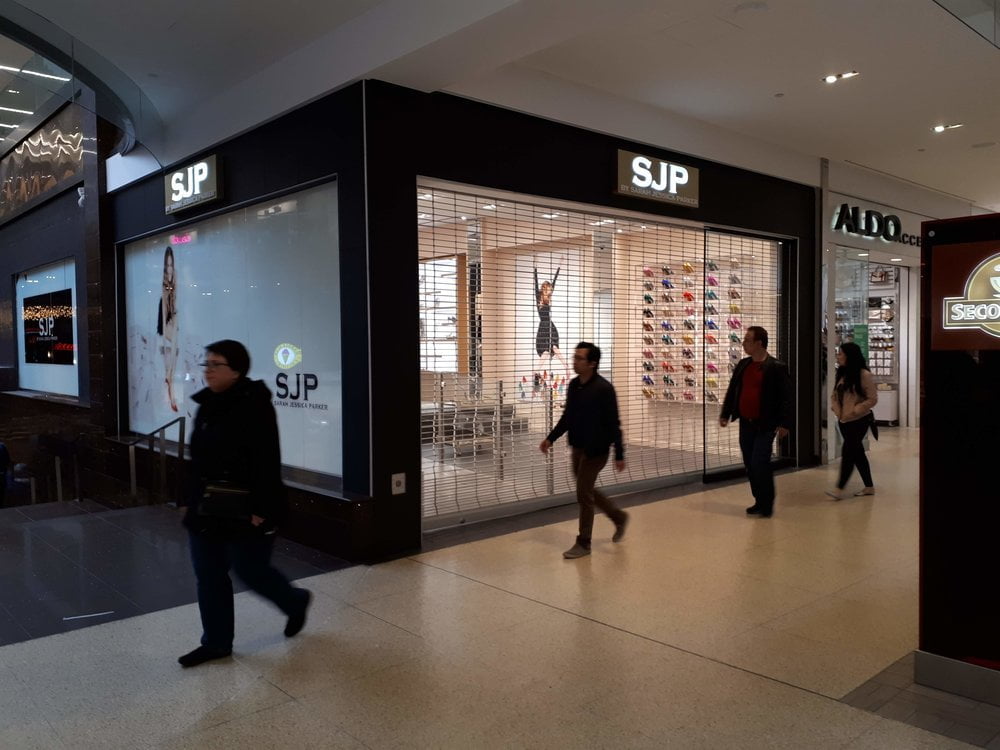
Sarah Jessica Parker: The first standalone Canadian store for US footwear brand SJP by Sarah Jessica Parker opened in June of 2019 at West Edmonton Mall. The store carries an expansive range of footwear from the access known for her stint on the TV series ‘Sex and the City’. The West Edmonton Mall store is unique in how it slopes upwards as one walks into the space — Retail Insider toured the store in September during a visit to Edmonton. More locations could follow, though only a handful of SJP stores exist globally in a partnership with Triple Five Group. [Read the Full Article Here]
Q3 2019: Between July and September of 2019, seven more international brands entered Canada by opening stores. Several of these have big plans to expand across the country by opening multiple locations.
REFORMATION’S YORKDALE STOREFRONT. PHOTO: JEFF BERKOWITZ VIA LINKEDIN.
Reformation: In July of 2019, US-based fashion brand Reformation opened its first Canadian store at Toronto’s Yorkdale Shopping Centre. The 1,650-square-foot store features the brand’s range of eco-friendly women’s fashions which have been a huge hit in the US market. More stores are planned for Canada, and are expected to be considerably larger than the Yorkdale store. They will include dressing rooms with interactive mirrors that also allow guests to customize lighting and music. Target markets for Reformation include downtown Toronto, Vancouver and possibly Montreal, with stores spanning between 2,000 and 3,000 square feet. [Read the Full Article Here]
PHOTO: GEORGE PIMENTEL
L.L. Bean: In August of 2019, US-based retailer L.L. Bean opened its fist Canadian store at Oakville Place in Oakville, Ontario. The 14,000-square-foot store is the first of about 20 stores for the retailer that are expected to open in Canada over the next 10 years in a partnership with Jaytex Group. L.L. Bean also struck wholesale partnerships with with multi-brand retailers including Hudson’s Bay and Sporting Life to roll out products across the country to help gain brand awareness. [Read the Full Article Here]
RENDERING: DAMAT/TWEEN
DAMAT/TWEEN: Turkish men’s fashion brand DAMAT/TWEEN entered Canada in August of 2019 when it opened a storefront at CF Rideau Centre in Ottawa. The store is franchised under ownership of family-owned Nextrue and is marketed by Luxi Management. Product is dressy and attractive, including suiting and accessories such as ties and cufflinks. More Canadian stores are expected for Toronto, Vancouver, and Montreal over the next four years before expanding into the US. The retailer is part of a partnership with landlord Cadillac Fairview which means the next batch of Canadian stores will be in ‘CF’ malls. [Read the Full Article Here]
PHOTO: INNISFREE VIETNAM VIA FACEBOOK
Innisfree: Korea’s leading beauty brand Innisfree launched its Canadian expansion in August of 2019 at Toronto’s Yorkdale Shopping Centre. It was followed by openings at CF Toronto Eaton Centre and Scarborough Town Centre, and a national expansion will commence in 2020. Innisfree’s products are known to be eco-friendly, being South Korea’s “first all natural brand” with many of its ingredients being sourced from Jeju Island. The Vancouver market is said to be in the works for stores, according to a representative from CBRE. [Read the Full Article Here]
OUTSIDE THE NEW STACKT MARKET STOREFRONT. PHOTO: NICK LEE @BESTOFTORONTO
Puebco: Japanese sustainable lifestyle brand Puebco opened its first Canadian storefront at Toronto’s Stackt Market in August of 2019. The store showcases a unique range of products made from recycled materials, as well as repurposed items. The Toronto store has an industrial-retro feel, as do many of the products. Plans are in place to open permanent stores in Vancouver and possibly Montreal — the company also launched a Canadian e-commerce site over the summer to expand brand awareness. [Read the Full Article Here]
THE 366 SQUARE FOOT ‘HAPPY PILLS’ STOREFRONT AT CF CARREFOUR LAVAL IN SUBURBAN MONTREAL. PHOTO: FREDGLOZMAN/REDDIT
Happy Pills: In the summer of 2019, Spanish ‘adult candy brand’ Happy Pills opened its first Canadian store at CF Carrefour Laval in Montreal. The 366-square-foot boutique is the first of many to open in Canada. The company says that it plans to open more than 20 stores in Canada, adding competition to an already crowded candy industry. Another adult-targeted candy brand, Sugarfina, shuttered both Toronto-area stores in 2019 after filing for bankruptcy in September — Sugarfina’s remaining store at Metropolis at Metrotown remains open after closings in Toronto’s Financial District and at Square One in Mississauga. [Read the Full Article Here]
PHOTO: CATH KIDSTON
Cath Kidston: In September of 2019, UK fashion brand Cath Kidston opened three pop-up stores in Canada. It’s part of a bigger expansion for the brand which is looking to open permanent storefronts in a partnership with Montreal-based Halcyon Brands. A broader Canadian store expansion is expected for 2020 as the brand, founded in London in 1993, gains brand awareness. [Read the Full Article Here]
Q4 2019: Between October and December of 2019, the pace picked up when 12 international brands opened stores in Canada.
PHOTO: UNDER ARMOUR
Under Armour: Baltimore-based sportswear brand Under Armour opened its first ‘brand house’ in Canada in October of 2019 at CF Toronto Eaton Centre. The flagship spans 3,100 square feet on ‘Level 1’ of North America’s busiest retail complex. More Under Armour ‘brand houses’ are expected to open in major markets in Canada, though the company wouldn’t go on record to say where and how many. Under Armour also operates ‘factory stores’ in Canada, though the CF Toronto Eaton Centre location is the brand’s first full-priced concept store in the country. [Read the Full Article Here]
FURLA, YORKDALE SHOPPING CENTRE. PHOTO: MICHAEL MURAZ
Furla: Upscale Italian bag and accessory brand Furla opened its first Canadian store at Toronto’s Yorkdale Shopping Centre in October of 2019. The 1,500-square-foot boutique is located alongside other luxury brands near Holt Renfrew, displaying an assortment of hand bags as well as smaller goods in an attractive retail space. Montreal-based Halcyon Brands is the licensee for Furla in Canada and plans to roll out stores in markets such as Vancouver, Calgary, and Montreal as well as opening a downtown Toronto store in the future. [Read the Full Article Here]
PHOTO:CURIOSITY
Sungiven Foods: In the fall of 2019, Chinese grocery chain Sungiven Foods opened its first Canadian store at City Square in Vancouver. The store is the first of about 15 locations planned for the BC Lower Mainland over the next several years. A cross-Canada store expansion is expected, which could heat up competition amongst grocery retailers and particularly with Asian grocers as well as chains such as T&T. Sungiven Foods operates more than 100 stores in China and will also expand into the US. [Read the Full Article Here]
PHOTO: LI-NING
Li-Ning: Chinese sports brand Li-Ning opened its first retail showrooms in Canada in the fall of 2019 in Ottawa and Burlington, Ontario. The company says that it plans to open in 13 additional markets in Canada which will be followed by a US store expansion. The company is known for its high-quality, specialty racket and paddle sport equipment, shoes, and apparel with unique styles that are likely to see strong sales in Canada in years to come. [Read the Full Article Here]
PHOTO: STONE ISLAND
Stone Island: In November of 2019, upscale men’s fashion brand Stone Island opened its Canadian flagship on Yorkville Avenue in Toronto. The 2,500-square-foot, two-level store features a wide range of Stone Island fashions, a brand favoured by musician Drake. It’s only the third standalone storefront for Stone Island in North America, and the retailer has 26 standalone stores globally. Stone Island can also be found in upscale multi-brand retailers in Canada. It’s unconfirmed if any more Stone Island stores will open in Canada, though Vancouver is a logical location for a second store, while the line might also resonate with a Yorkdale shopper. [Read the Full Article Here]
PHOTO: TAG HEUER
TAG Heuer: In November of 2019, Swiss luxury watch brand TAG Heuer opened its first standalone Canadian storefront at Toronto’s Yorkdale Shopping Centre. The 762-square-foot boutique is across from the recently opened Hublot store which is the first corporate location for Hublot in Canada (a franchised Vancouver boutique opened a couple of years ago). TAG Heuer is expected to open more stores in Canada with Vancouver and downtown Toronto expected to be targets. [Read the Full Article Here]
KIT KAT, YORKDALE. PHOTO: CRAIG PATTERSON
Kit Kat: In November of 2019, chocolate brand KitKat opened an innovative and experiential ‘Chocolatory’ retail space at Toronto’s Yorkdale Shopping Centre. The highly interactive space allows guests to custom-design chocolate bars as well as buy unique creations not available elsewhere. A first in the world ‘chef’s table’ was introduced in the Yorkdale store as well. The store’s design is bright and branded and very Instagram-friendly. [Read the Full Article Here]
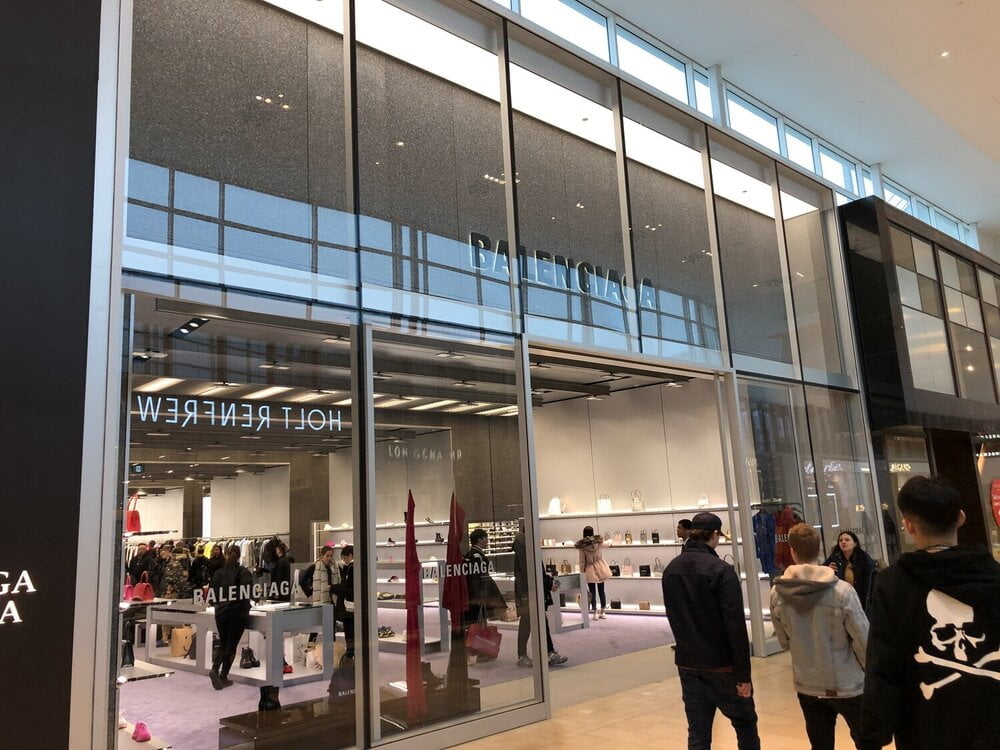
GLASS FACADE AT THE YORKDALE BALENCIAGA FLAGSHIP. PHOTO: NORMAN KATZ
Balenciaga: In late November of 2019, Kering-owned luxury brand Balenciaga opened its first standalone Canadian flagship at Toronto’s Yorkdale Shopping Centre. The 4,700-square-foot storefront is located alongside other luxury brands including Valentino and Bottega Veneta, and is across from the mall’s Holt Renfrew store. Balenciaga could open more standalone stores in Canada with a focus on Bloor-Yorkville in Toronto, as well as in Vancouver, and Montreal’s Royalmount could be a target in years to come. Balenciaga’s direct-to-consumer expansion in Canada launched in late 2018 when it opened a ‘world of’ concession at Holt Renfrew in Vancouver, and Balenciaga now operates concessions in Holt Renfrew stores on Bloor Street in Toronto as well as at the soon to be completed Holt Renfrew Ogilvy in Montreal. [Read the Full Article Here]
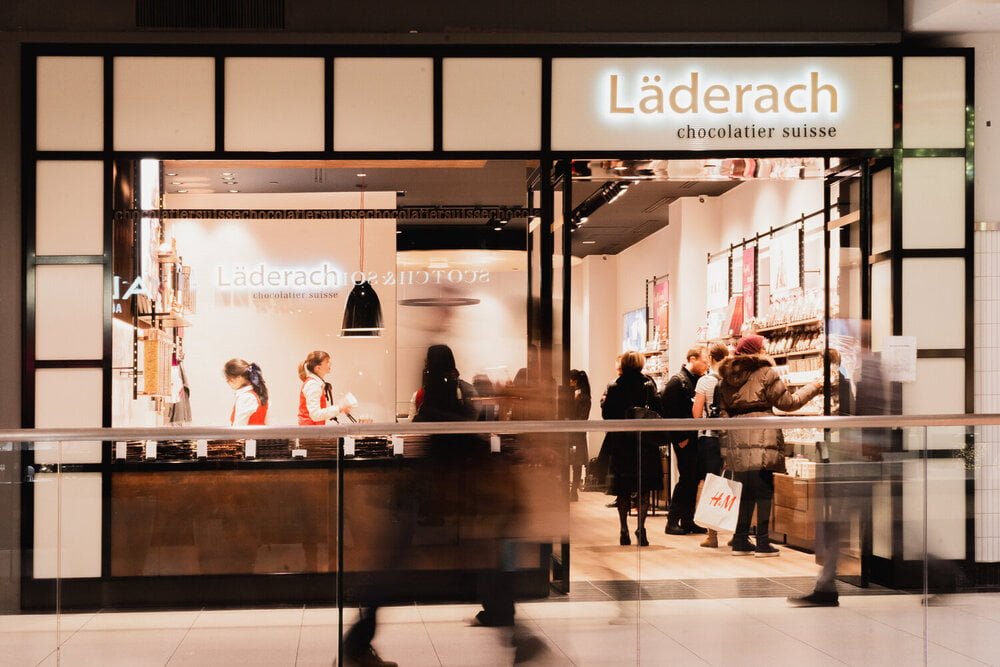
PHOTO: LADERACH
Läderach: In December of 2019, Swiss chocolate brand Läderach opened its first Canadian store at CF Toronto Eaton Centre. The brand is known globally for its high-quality chocolates as well as its attractive looking stores. More locations are expected in Canada, with at least three Toronto-area stores expected as well as entry into markets such as Vancouver and Calgary. [Read the Full Article Here]
CF CARREFOUR LAVAL STORE. PHOTO: DANIEL WELLINGTON
Daniel Wellington: In December of 2019, Swedish watch brand Daniel Wellington opened its first standalone Canadian store at CF Carrefour Laval near Montreal. The brand is expected to expand its stores across the country in major markets. Daniel Wellington can be found in multi-brand retailers throughout Canada and there’s no word yet if distribution will be pulled-back amid the corporate store expansion. [Read the Full Article Here]
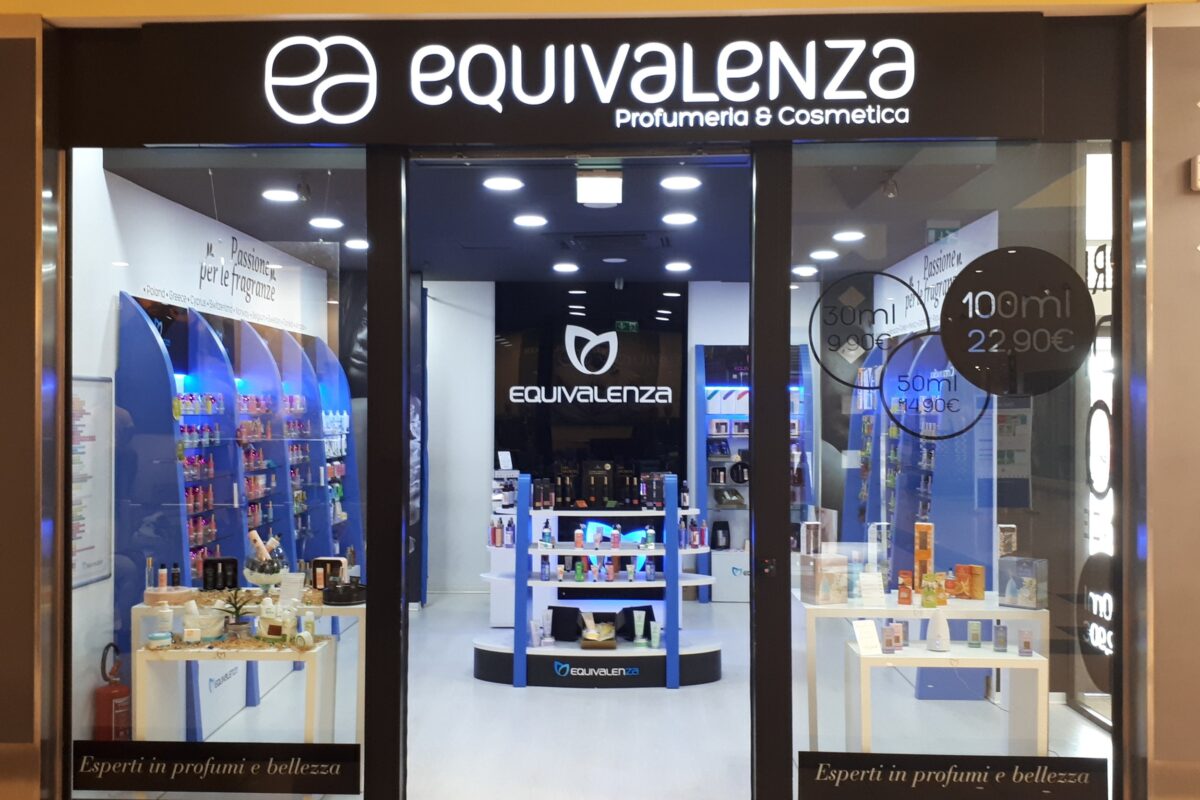
PHOTO: VIBO CENTRE
Equivalenza: Spanish fragrance and beauty brand Equivalenza opened its first Canadian storefront at the Montreal Eaton Centre in downtown Montreal in December of 2019. The company is known for its extensive selection of affordable fragrances with the motto “a perfume for everyone”. The boutique is the first of more than 40 locations that are expected to open in Canada over the next decade. Master franchisee Corinne Barres says that she is seeking franchisees for other markets in Canada. [Read the Full Article Here]
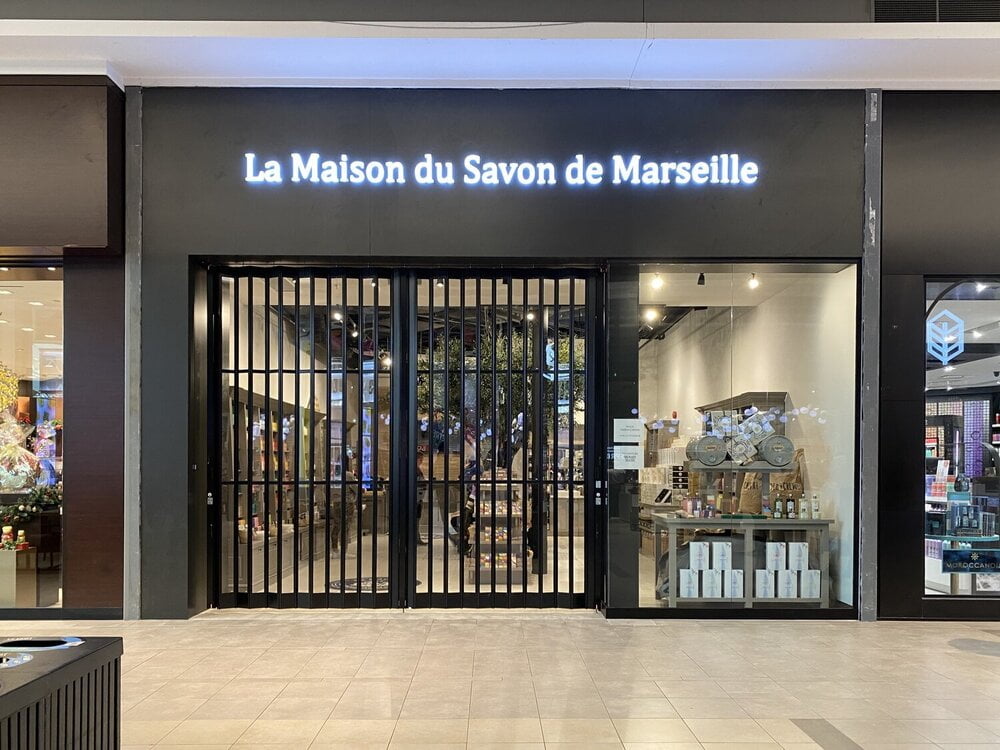
La Maison du Savon de Marseille Storefront. PHOTO: MAXIME FRECHETTE
La Maison du Savon de Marseille: French soap and fragrance brand La Maison du Savon de Marseille opened its first Canadian store at CF Carrefour Laval in suburban Montreal in December of 2019. The 880-square-foot boutique carries the brand’s 100% natural products that include hand-crafted household soaps, as well as a range of fragrances and gift items. Two more Montreal-area stores are said to be in the works (including downtown Montreal and in Brossard) and a Canadian expansion could be expected if the brand takes hold with consumers. [Read the Full Article Here]
This month, Retail Insider will feature an analysis on the future of retail in Canada, particularly as international brands continue to enter the market with the intention of gaining market share. At the same time, retail is changing as consumers shift spending to online channels as well as on technology, while also spending more on experiences such as restaurants and travel. What we’re seeing is unprecedented competition that will result in more store closures, which will result in job losses as well as headaches for landlords.
RENDERING OF FUTURE NIKE FLAGSHIP AT YORKDALE SHOPPING CENTRE. IMAGE: FOX-WIZEL LTD
By Carl Boutet
If you were to ask me about the greatest trend of the last decade that has had the deepest impact on retail, I would suggest it is brands’ desire to have a more direct relationship with their customers.
For the first part of that decade, gaining that relationship was mostly a question of leveraging the digital channels created by social media and marketplaces. These same channels quickly launched many “Digital Native Vertical Brands” such as Warby Parker, Dollar Shave Club, Casper among many others. Legacy brands also chose to emulate (or acquire) these strategies in a bid to cut out the middleman (ie. the mass retailer) and gain a tighter relationship with their customers while gaining economic margins.
PHOTO: CASPER
PHOTO: WARBY PARKER
The later part of the last decade saw these same brands realise that digital channels had their limits in cost-effective reach & depth spurring the need for investments in physical retail. Even the all-mighty Amazon realized this need and is iterating on a half dozen physical store concepts with more in the pipeline. It became apparent that for brands to truly manifest themselves they needed to create high-touch environments, that went well beyond transactional into the inspirational.
This is at the very core of what has “disrupted” retail and caused the implosion of many legacy retailers whose competitive advantage was built on logistical effectiveness controlling access to these very same brands that can now go direct. Especially those serving an “average” consumer that no longer exists.
Here are some retailers I consider “won” the last decade:
Why: Full vertical integration, seems to have the best systems to acquire data (Nike+) and leverage it (acquisitions of Zodiac & Celect) then acts on with how it builds and merchandises its stores (ex. Melrose).
One of the few retailers that seems to be able to cater & iterate to all regions and demographies with a continued strong sense of self.
PHOTO: IKEA TWITTER
Best Technology: Cloud Computing
Why: Has levelled the playing field for retailers who can now rapidly and cost effectively access complex solutions that were once long and costly to deploy (think POS, CRM, marketing stack, etc). Also what fuels marketplace platforms.
Runner Up: Augmented Reality
Although still has a long way to go, the possibilities seem endless for this technology to augment any environment. Bandwidth, processing and decent hardware have probably held it back. Expect that to change with 5G.
PHOTO: THE STAR
Retail Loser of Decade: Sears
So much to say here but it’s already been written. I’m mostly sad for the many good people that tried to make it work but never got the support they deserved from their main investor.
Runner Up: Hudson’s Bay Company
I really hope they can salvage the longest running corporation of the Americas and one who Canada owes much of its economic development to for nearly 350 years.
Worst Technology: Beacons
A perfect example of when a technology is in search of a customer problem to solve. A reminder that this dynamic must be the other way around. Important lesson for all of us who get excited by the technological possibilities without really understanding the customers need for it. The good news is the experiment has taught us much about empowering associates and launched many other solutions that seek to but messaging in a context of time & location.
VALENTINO, YORKDALE SHOPPING CENTRE. VALENTINO LAUNCHED ITS DIRECT-TO-CONSUMER CANADIAN EXPANSION IN 2019 AND IS EXPECTED TO ANNOUNCE A SECOND CANADIAN STORE IN 2020. PHOTO: MICHAEL MURAZ
Now for the next decade…
We’ll continue to see the previous decade’s “directness” amplify as even established legacy retailers (those that are still around) behave like brands, become more agile in their go-to-market approaches, leverage their brand equity and organic traffic. In other words, many (especially department stores) will see themselves as platforms for brands. That is not to say that they will succeed as their economic models are still focused on generating 3rd party product margin.
However, the focus of the next decade will or should be: Sustainability.
Like my broad definition of “retail” that includes hospitality & entertainment (the blurring of those lines will be another strong trend of the next decade), my definition of sustainability goes well beyond the usually associated environmental connotation.
True sustainability must also include social and economic concerns.
Meaning that retailers will need to have a more holistic approach to running their businesses. Their decisions will need to take into consideration the impacts on the environment, its stakeholders all the while being economically feasible. What you might have heard referred to as the triple bottom line. There is even a “B Corp” certification process that some brands & retailers are now pursuing to demonstrate this new more holistic approach.
Today that effort will differentiate your brand. In a couple of years, it will put you at par. By the end of the upcoming decade, failure to adopt this approach will be a real detriment that could (should) sink the business.
Speaking of differentiation, this pursuit for broader sustainability will also fuel much of how retailers will seek to distinguish themselves. Here, I continue to use my adapted version of the Kahn Retail Success Matrix to create the Retail Relevance Index built on measuring 4 vectors: Purpose, Value, Convenience, and Delight.
I’ll be sharing more on that structure in a book that I’ll be releasing in the second half of 2020 where I will address how these broader sustainability goals will drive relevance for retailers & brands.
Anything that can come out of India. The market where the global retail winner will probably be decided.
Technology to Look Out for
Already mentioned how 5G will continue to augment & blur the digital/physical divide. Beyond that, I’m also fascinated by prescriptive analytics and digital objects in the context of the personalization/privacy paradox.
With all that said, I leave here with a quote that Ron Johnson from Enjoy Technologies and the person who led the creation of the Apple Stores shared with me on stage a couple of months ago: “There has never been a time where being bold and courageous is more needed in retail than now. Static retail is dead retail”. So on those fine words, I wish you all a tremendously successful & fulfilling 2020 and the decade to come. Let’s all elevate this industry together.
Carl Boutet is the Chief Retail Strategist at StudioRx
By: Ryan Webber, Vice President of Enterprise Mobility, SOTI
Self-checkouts, which are now pervasive in most grocery stores in Canada, ushered in a sea of change in consumer shopping habits. Now, grocery retailers are looking beyond self-checkouts to design the next generation of in-store experiences that will keep shoppers coming back.
The biggest trends to watch for in the coming years are in interactive digital displays, data extraction, and further application of IoT.
Many modern retailers already use digital displays to connect with their customers, but some are progressing further to offer an in-store shopping experience that is more in line with their ecommerce experience. This can be seen with stores helping customers build shopping lists online for purchasing in store, or furthering the digital display interaction by serving up individually tailored offers in aisle, based on searches or purchase patterns.
IMAGE: FOOD NAVIGATOR
Social media data extraction is also being used to predict what shoppers are most likely to buy and to address some of their biggest complaints. A person’s social network tells us what they like and don’t like but also reveals which complaints are the most common or recurring. By connecting this to datasets collected in-store, special offers or new products and services can then be introduced to shoppers that will continue to enhance the personal grocery shopping experience.
Behind-the-scenes, the use of IoT is giving retailers real-time visibility over their inventory, signalling where items are located and when product is nearing out of stock. This helps companies improve customer satisfaction—what’s more disappointing than seeing that the product you want is out of stock—increase sales velocity and streamline inventory management operations, eliminating the average of 20 hours spent per week in conducting manual stock counts.
FACIAL RECOGNITION CHECKOUTS. PHOTO: TREND HUNTER
The Use of Facial Recognition
Long term, we will also see more widespread use of facial recognition once retailers prove they can meet customers’ expectations of privacy. At checkout, facial recognition can speed up transactions and make them more secure, and it can also deliver new and unexpected ways to tailor the in-store experience. Digital displays with facial recognition, for example, can help retailers better understand how different types of customers use their stores—where they gravitate towards, what signage is catching their eyes—even alerting sales staff when a customer appears to need assistance. Insights gleaned from this data can aid retailers in designing the most dynamic layout for ultimate sales potential. Or they can offer personalized discounts by leveraging IoT devices when shoppers appear to be considering impulse purchases, unsure of which brand to go with.
Facial recognition technology is available now, but customer acceptance hasn’t quite caught up just yet. This was made apparent by the backlash to Toronto-based Foody Mart’s announcement that they’re looking to bring this method of payment—already ubiquitous in China—to North America.
PHOTO: FRESON BROS.
Making Time to Get Personal With Your Customers
As competition intensifies in the grocery market, we’re seeing a new wave of innovations in customer experience benefiting shoppers. Digitizing more of the physical experience in-store is allowing retailers to shift their focus to providing more personalized customer experiences that truly set them apart, like the in-store meat smoking offered at Alberta grocer, Freson Bros, or The Beer Den at Lowes Foods, where you can find an impressive selection of craft beers and drafts.
Key Takeaways
For the benefit of the customer and to help push the industry forward, tech innovations should complement, not overtake the role of employee experts.
When strategized properly, technology can enhance the role of employees who can now shift focus to providing a more personalized customer experience.
Prioritizing consumer data safety and privacy across all access points is essential. To achieve this, mandatory opt-in approval for tracking is necessary, which will help to make all shopping touch points tailored and seamless.
High-profile businessman Larry Rosen has been selected as a member of the Order of Canada joining his father who received the honour in 2004.
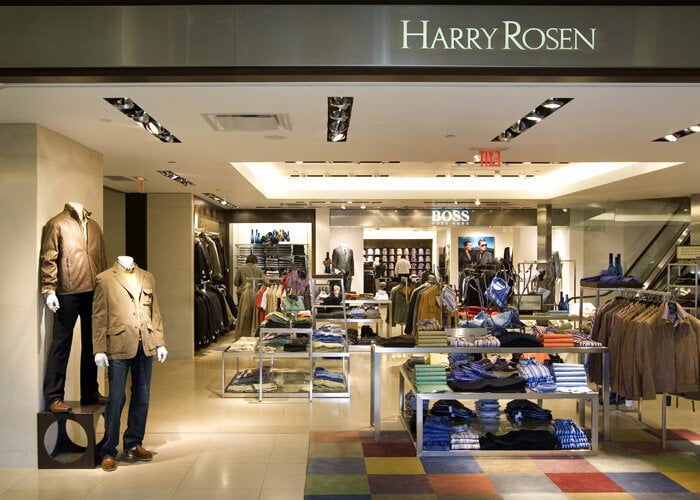
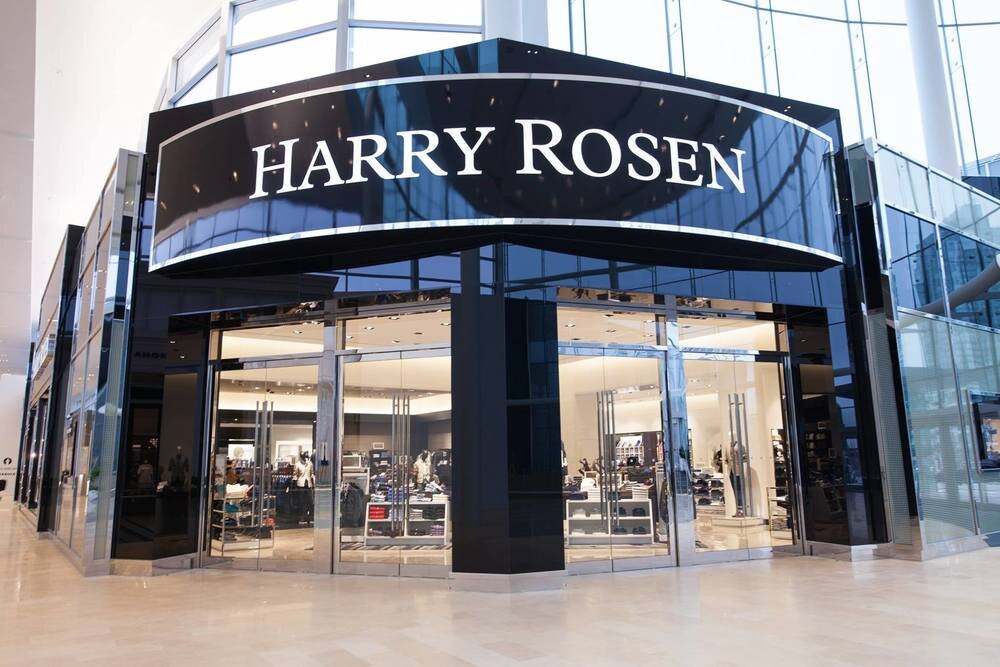
Larry Rosen, current Chairman and CEO of leading Toronto-based menswear retailer Harry Rosen, was chosen to join the Order “for leading and expanding the family’s high-end fashion company, which became one of Canada’s most valuable retail brands.”
“I was surprised and delighted to be acknowledged because we are a Canadian story. My father got the Order of Canada as well. He’s been honoured by the Retail Council of Canada for a lifetime achievement in retail. I’ve received the distinguished retailer of the year from Retail Council of Canada. So we are highly engrained in Canadian retail,” said Rosen.
“My father started the company in 1954 in Cabbagetown in Toronto and he built it and then I continued to build it as a cross-country, leading quality menswear retailer.
PHOTOS: HARRY ROSEN CIRCA 1960s APPROX
PHOTOS: HARRY ROSEN CIRCA 1960s APPROX
“A number of retailers have been acknowledged over the years. It’s great to be in that company and it’s great to be acknowledged by a country that I have so much love for. To be a Canadian retailer, you have to be very close and understand the Canadian retail landscape and how it differs from the rest of the world. It will be 66 years this February 4th for our company to be a leader in Canadian retail. We were the first quality retailer to do online in Canada.”
There are 18 Harry Rosen stores in Canada with about 330,000 square feet of retail. After working in a clothing factory and in a quality menswear store, Harry Rosen and his brother Lou opened a small made-to-measure store on Toronto’s Parliament Street on February 4, 1954, with a $500 down payment.
Today, it is a Canadian source for the world’s leading menswear designers including Giorgio Armani, Tom Ford, Canali, Ermenegildo Zegna, Hugo Boss, Burberry, Polo Ralph Lauren, Canada Goose, Brunello Cucinelli, Dolce and Gabbana, Loro Piana, Moncler, Parajumpers, John Varvatos, and many more. It also carries footwear from Prada, Salvatore Ferragamo, Tod’s, John Varvatos, Giuseppe Zanotti, Lanvin, Maison Margiela, and more.
Harry Rosen also offers Made to Measure tailoring from a number of designer collections as well as the ultimate expression of the tailor’s art – its own Bespoke tailoring. From formal wear to jeans, sportswear to suits and sports jackets, rugged outerwear parkas to superbly hand-crafted dress shoes, the retailer says it strives to dress each of its customers appropriately for the occasion.
Larry Rosen said it’s a very interesting, exciting, scary time to be a retailer in Canada. There have been many changes in the retail industry. Change is simply part of retail.
“That’s why I love retail so much. It’s a great study of human psychology in trying to understand how to satisfy customers’ needs and how to satisfy Canadian needs and we’ve been doing that for a long time,” said Rosen.
“There’s no doubt we’re in a period of profound change. The Boomer generation is in the throes of retiring. In two years over half the Boomers will be retired or be of retirement age, if you think of 65 as retirement age. There’s no doubt that power has shifted down. We see it every day in our stores. The new generation of men between 20 and 40 have very different expectations of a retailer.”
Like all retailers, Harry Rosen is adapting and has been working hard to make its online experiences meaningful, relevant and exciting.
Larry Rosen said the online portion of the business has been growing and growing.
HARRY ROSEN, YORKDALE. PHOTO: HARRY ROSEN
HARRY ROSEN, OTTAWA FLAGSHIP. PHOTO: HARRY ROSEN
“We recognize that the customer of today wants the convenience of choice. He wants to be able to buy it online, have it shipped to him. He wants to be able to go to a store and try it on. Think about it. Either go home and buy it online or buy it there. He wants to be able to return it hassle free either to a store or online. He wants to be able to pick up in store. And today’s customer is way more oriented to those types of activities than ever before.”
Currently, Harry Rosen does about 10 per cent of its business online. Five years from now, Larry Rosen said the company will continue to have a strong retail footprint but the online portion of the business will grow to about 30 per cent.
“It will be a more concise footprint. A store has to be meaningful. I predict we will still have large stores with dominant inventories. But it will be more concise. I don’t know if we’ll have 330,000 square feet of retail. We may have the same amount of stores. They may be more focused. And I think 30 per cent of our business at that time will probably be online,” he said.
HARRY ROSEN, SQUARE ONE LOCATION. PHOTO: HARRY ROSEN
PHOTO: CANADIAN BUSINESS
“The pure online growth is good business and we’re working hard at that and getting a lot of growth. But I think there’s this huge middle ground of assisted online growth. We’re working really hard to get our associates to learn how to sell online to our customers. We’re introducing this spring a customer facing app. We have this behind the scenes tool for associates to allow them to send more and more ideas to their clients and advise their clients online. And that’s where I see the market really evolving to.
“We’re known as a relationship-based seller. We have very highly-trained associates that understand their customers. But the transition is going to be not just serving customers in store but serving customers digitally. We may have an associate today that sells $1.5 million. I would see that he could sell more but he might be doing half of his business remotely through an app, through digital communications. We recognize our associates for those digital outreaches and we think it’s very important that they do that. So we see a huge shift in our business with people working with our associates but working digitally as well as in store. That’s a landscape change that we think is very interesting and very exciting. And I think we’re very well positioned to be a leader in that area.”
Rosen said the company also has hired a new chief marketing officer who is spearheading the retailer’s messaging towards a new younger client to make sure it is relevant in today’s world.
Well-known Canadian retailer Heather Reisman recently received a promotion to Officer of the Order of Canada.
The CEO of national bookseller Indigo, Canada’s largest book, gift, and specialty toy retailer, and co-founder of Kobo, a leading global eReading company, was honoured by the Canadian Governor General “for her contributions to Canadian book publishing and children’s literacy, and for her transformational philanthropy.”
Reisman, who is also founder and Chair of Indigo, said “it’s an incredible honour to get the Order of Canada for sure.”
“It’s one of the country’s highest honours and it’s an incredible group of people who have been included in this award,” she said.
PHOTO OF HEATHER REISMAN AND HER HUSBAND, GERRY SCHWARTZ. PHOTO: UNIVERSITY OF TORONTO
Reisman first received the Order of Canada about seven years ago and in late December was elevated to the position of Officer of the Order of Canada.
The Order of Canada was created in 1967 and is one of our country’s highest honours. It is presented by the Governor General of Canada and the federal government says it honours people whose service shapes our society, whose innovations ignite our imaginations, and whose compassion unites our communities. Close to 7,500 people from all sectors of society have been invested into the Order of Canada.
“It’s an opportunity for the government to acknowledge the contribution that those people make, and I think also in telling the stories of what people have done it can inspire others to strive to make a contribution. And that’s always wonderful,” said Reisman.
Reisman has been an inspiration in the retail industry for many years.
INTERIOR OF INDIGO STORE. PHOTO: PUBLISHERS WEEKLY
INTERIOR OF INDIGO STORE. PHOTO: MISS604
“In general, business is probably not the frothiest it’s ever been. There’s parts of the country, for example Alberta, that are still a bit under pressure economically. There are other spots in the country that are a bit under pressure as well. Customers are being very careful about how they spend their money these days. That always puts a certain amount of pressure on,” said Reisman.
“For those retailers who really have something of value to offer, they are getting their share and there is pressure on everybody to really step up their game.”
A look inside the new Indigo store on Robson Street in Vancouver. Credit: Janis Nicolay [PNG Merlin Archive]
Reisman said Indigo’s focus has always been 100 per cent on the customer. At every opportunity the company had to bring better quality to that customer experience as well as being careful on prices.
“There’s always a need to be investing in the ability to serve the customer digitally because we are in a world where the customer is as happy to do their shopping online in many cases as in store. Ensuring you can invest into the digital side of the business is very important,” she said.
“In our case, we’ve also been investing in our stores to create more richer experiences. So on both sides it is important – investing in your retail infrastructure and in your digital infrastructure.”
She said the company has renovated or relocated about 25 stores in the past two years. In the past year, Indigo began the launch of programming in its stores. The retailer is running different learning programs in the stores, doing everything from calligraphy to wine tasting to health.
“It’s still in its test phase but it’s had a very interesting response because customers I think feel like there is a need for just a basic social interaction that happens when you’re together doing something of shared interest in a class. That’s quite an interesting initiative we have going on,” said Reisman.
Heather Reisman – Photo Toronto Star
“We also launched a new digital application called Thoughtfull which is an online gift application. That allows people to gift people experiences as well as products. And experiences of all kinds – baking, and tours, and flying, and experiences in going up in helicopters. That’s a new initiative for Indigo.”
Reisman said Indigo has an extensive retail footprint, covering the country from one end to the other. So it’s not looking to expand. From time to time, it does choose to change locations and it is constantly assessing its portfolio.
“But in general we do not think that we need a lot more retail – physical space – in the next couple of years,” she added.
Reisman is the recipient of several awards including the WXN Top 100 Most Powerful Women; Waterloo Entrepreneur Hall of Fame, University of Waterloo; International Distinguished Entrepreneur Award, University of Manitoba; John Molson School of Business Award of Distinction, Concordia University; and the Desautels Management Achievement Award in recognition of her outstanding contribution to Canadian business and society. She is the recipient of Honorary Doctorates from Ryerson University (2006), Wilfrid Laurier University (2009), Mount Allison University (2010), St. Francis Xavier University (2013), McGill University (2017), and the Weizmann Institute of Science (2017). Reisman was inducted into the Canadian Business Hall of Fame in 2015.
CF Toronto Eaton Centre Holiday Displays, 2020. Photo Cadillac Fairview
After 10 months of 2019, year-to-date Canadian retail sales were up only 1.5% versus last year on a non-seasonally adjusted basis, according to the latest numbers from Statistics Canada. At this rate, 2019 will very likely clock in as a ten year low for retail sales growth. One has to go back to 2009 and the Great Recession to find a lower number.
To put this in perspective, note that Canada’s annual population growth rate is currently about 1.4% while inflation is around 2.1%. This means retail sales should be going up by something like 3.5% just to keep pace. Actual retail sales growth however is significantly below this benchmark.
Food & Drug
It’s also apparent that things are likely to get even worse before the year is done. For the 3 months ending October 2019, year-over-year Canadian retail sales were up a scant 0.5%, a six year low. The 3 month sales growth trend (orange line in the chart above) is still tracking below the underlying 12 month trend (green line), which will drive it down even further.
Of the major retail sectors, Automotive & Related is in the worst shape and may even end the year with a loss. Food & Drug has deteriorated significantly in the last few months. Store Merchandise appears to be the best performer, but only because the other sectors are in such poor shape.
Store Merchandise
The Food & Drug sector continues to sag. For the 3 months ending October 2019, retail sales increased just 0.5% year-over-year, a historical low.
The 3 month trend (orange line in the chart above) has weakened considerably in the second half of the year. The underlying 12 month trend (green line) is following suit, and is likely to end the year at a record low.
PHOTO: CANADIAN GROCER
Supermarkets and other grocery stores’ retail sales were up only 1.0% for the 3 months ending October 2019. While specialty food stores gained 5.5% during this period, this was more than negated by a 6.1% retail sales decline at convenience stores.
Health and personal care stores performed reasonably well for much of 2019, but things appear to have softened recently. Retail sales for the 3 months ending October 2019 were down 0.1%.
Automotive & Related
Retail sales in the Store Merchandise sector have been holding up in recent months although at relatively modest levels. For the 3 months ending October 2019, retail sales gained 2.2% and are up 2.3% on a year-to-date basis.
After a slow start to the year, the 3 month trend (orange line in the chart) has strengthened somewhat, with recent ups and downs tending to offset each other. The underlying 12 month trend (green line) has steadied and may even improve slightly going forward.
Electronics and appliance stores however continue to be a major drag on the sector. For the 3 months ending October 2019, their retail sales were down a whopping 12.5% year-over-year. Sporting goods, hobby, book and music stores were also down but by a more tolerable 2.2%. Retail sales at shoe stores and home furnishings retailers also declined in the period, by 0.2% and 0.1% respectively.
Miscellaneous store retailers had the highest sales gain among all retail types of 12.2% for the 3 months ending October 2019. This is largely due to the addition of cannabis stores a year ago, so the effect will diminish going forward. Retail sales at general merchandise stores were up 4.3% on a last 3 months basis and the same year-to-date. General merchandise retailers represent just over 1/3 of the Store Merchandise sector.
Note that Statistics Canada is now suppressing the breakdown of general merchandise stores for confidentiality reasons. The figures in the “By The Numbers” table below are estimates based on previous trends.
The Automotive & Related sector is like doing the limbo – how low can you go? Retail sales were down 0.9% year-over-year for the 3 months ending October 2019. Under current trends, their retail sales could very well be in the red by the time final numbers for 2019 are posted.
Gasoline stations are the main drag on the sector and on overall Canadian retail sales. They account for just over 10% of total retail, but their sales were down 5.0% year-over-year in the last 3 months. Without gas stations, overall Canadian retail would be up 1.2% instead of 0.5%.
In the past, strong automobile dealers’ sales tended to offset the loss from gasoline stations, but this is no longer the case. For the 3 months ending October 2019, retail sales at auto dealers were up only a modest 0.9%.
By The Numbers
Special Note: Statistics Canada revised historical data with the February 2019 release. Unadjusted monthly data were revised back to January 2018, while seasonally adjusted data were revised back to January 2015. Those keeping score should update their files. The analysis in this report is always based on unadjusted data.
Canadian E-Commerce Sales
StatsCan started providing ecommerce retail sales data in January 2016. While the amount of data is limited, some trends appear to be emerging. Here are some results.
Overall, e-commerce represented about 3.4% of total Canadian retail sales for the 12 months ending October 2019, including both pure play operators as well as the online operations of brick & mortar stores. Canadian consumers however also buy online from foreign websites which is not captured in these numbers.
Canadian e-commerce sales were up 23.8% year-over-year for the 3 months ending October 2019. This was much higher than for location based retail which gained just 0.5%.
Note that location based retail is the same as that in the preceding “By The Numbers” table. It’s what’s normally reported as Canadian retail sales. Except that it isn’t. Location based retail excludes another section called Non-Store Retailers (NAICS code 454), which includes electronic shopping and mail-order houses, which in turn is where (mostly) pure play e-commerce businesses are. For the 12 months ending October 2019, electronic shopping and mail-order houses had an estimated $13.5 billion in e-commerce sales.
But that’s not the only source of e-commerce, as (mostly) bricks & mortar location-based retailers also sell online. For the 12 months ending October 2019, this group had an estimated $7.8 billion in e-commerce sales. With electronic shopping and mail-order houses, there’s a grand total of $21.3 billion in e-commerce sales by Canadian operators over the year. Note that this does not include foreign e-commerce purchases made by Canadian consumers, but it does include e-commerce purchases made by foreigners at Canadian operations.
For electronic shopping and mail-order houses, an estimated 85.6% of their sales are allocated to e-commerce. For (mostly) bricks & mortar retailers, it can be estimated that just 1.3% of their total sales are attributable to e-commerce.
In the final section of the above table, (mostly) pure play operators (namely, under electronic shopping and mail-order houses) generated an estimated 63.4% of all e-commerce sales in Canada, while (mostly) bricks & mortar location-based retailers’ share of e-commerce is 36.6%.
This analysis is updated monthly as new numbers are published by Statistics Canada. If you would like notification from Linkedin of when an update becomes available (and you’ve read this far), please connect with Ed Strapagiel on LinkedIn.
27 December 2019
This analysis is updated monthly as new numbers are published by Statistics Canada. If you would like notification of when an update becomes available (and you’ve read this far), please connect with Ed Strapagiel on LinkedIn.
Entrepreneurs across Canada are invited to showcase their impact, with up to $20,000 in commercial equipment up for grabs
SilverChef, Canada’s leading hospitality financier, launched its new national awards program, The SilverChef Hospitality Awards, to recognize entrepreneurs across Canada who are advancing the hospitality sector. This program will acknowledge the hard work of hospitality entrepreneurs who are setting new standards in the areas of innovation, sustainability, and social responsibility and impact. SilverChef will award each winner $5,000 of commercial equipment to help grow their business.
Robert Phelps, President of SilverChef, said: “The Canadian food and hospitality experience is often celebrated, but over the last 33 years we’ve seen the unique challenges faced by hard-working hospitality entrepreneurs. That’s why we created these awards – to acknowledge and reward those who are advancing Canada’s hospitality sector and shaping the future of the industry.”
“SilverChef has supported over 30,000 hospitality owners globally and I am looking forward to seeing the award entries that will highlight the fantastic success from some of Canada’s most innovative and brightest entrepreneurs,” Phelps continued.
There are four awards available under the following categories:
Communitarian Award: Hospitality operators who give back either through charitable giving or hiring practices that impact their local communities.
Entrepreneur of the Year: New businesses that have introduced something exciting, either with technology or service offering. This award recognizes the obstacles faced by hospitality entrepreneurs, and highlights the winner’s achievements in their first year of business.
Momentum Award: Establishments that have made the largest leap forward in terms of sustainability or environmental conservation (e.g. food waste management).
Hospitality Business of the Year: The establishment with the highest score overall.
Entry to the awards is open to all hospitality operators across Canada, free of charge. To enter or nominate someone for an award, please visit: The SilverChef Hospitality Awards. The closing date for entries into the awards is January 15th, 2020, and finalists will be announced on February 5th, one month prior to the RC Show 2020, the nation’s largest hospitality tradeshow.
The awards judging committee is comprised of industry peers, veterans, and mentors. Winners will be announced at an awards ceremony at the RC Show 2020 on March 3rd, 2020, in Toronto. All finalists will receive complimentary admission to RC Show 2020, but will not need to be present or exhibiting at the show to qualify or win.
Learn more about our judges and the awards, by following along on Instagram @silverchefca, Facebook @SilverchefCanada Hashtag #ImpactfulHospitality.
About SilverChef
At SilverChef our job is to provide flexible equipment finance to help hospitality entrepreneurs grow their businesses. Our dream, though, is to help you achieve yours. Founded in 1986, we’ve helped more than 50,000 hospitality businesses around the world to bring their business dreams to life.
A proud Certified B Corp, SilverChef is part of a movement that is using business and profit as a force for good. B Corp businesses balance profit and purpose through verified social and environmental performance, public transparency and accountability. Through our partnership with Opportunity International, and with the support of our people, customers and partners, we’ve helped to lift 1.5 million people out of poverty – and counting.