In 2018, after 15 years of experience in the apparel business, Mayer Vafi wanted to create a ‘better narrative’ surrounding sustainable living. He wanted to create a company and a dialogue around ensuring a future for generations to come by repurposing waste into fashionable high-quality apparel.
His latest venture, called Norden Project, produces outerwear using an innovative fabric made entirely of repurposed plastic waste with 100% traceability and transparency. He says that he wanted to change the way apparel is manufactured by creating clothing from repurposed waste and as a result, Norden’s fashionable outerwear is free of fur, feathers, leather, and all other animal by-products.
MAYER VAFI, CO-FOUNDER OF BETTER NARRATIVE PHOTO: THEINDUSTRY.FASHION
Having worked with brands such as 7ForAllMankind, UGG Australia, and Pajar, Vafi had reached the point in his career where venturing into the marketplace was his next move.
The new business venture is important not only to Vafi and his team, but to consumers who are looking to change how they shop. “We are at a crossroads, we cannot keep endlessly using our finite resources. Norden Project specializes in outerwear and wants to show that warmth and style do not have to come at the cost of people or the planet,” he said.
Vafi has partnered with REPREVE and Polartec for fabrics, and has gained PETA-approved Vegan status for the product line. Norden’s outerwear is constructed with a combination of three REPREVE fabrics – Oxford (100% polyester), Bonded (polyester/spandex blend), and a Two-way stretch (100% polyester), along with POLARTEC Polyfill made in the USA entirely of recycled plastic.
PHOTO: NORDEN PROJECT
Another requirement is that all suppliers are UNIFI tested and approved. These partnerships allow Norden Project to use non-virgin polyester which consumes 45% less energy, 20% less water, and emits 30% less GHG.
“Our goal is to become a closed-loop production system and work towards a better narrative. Our customers and the community love that we are @PETA certified and that our products are made from recycled plastic. The jacket’s lining, insulation and shell fabrics, all made from post consumer bottles. They also love our end of life solution!” says Vafi.
PHOTO: NORDEN PROJECT
Like Canada’s outerwear disruptor Wuxly Movement, Norden Project offers a trade-in initiative to put the company closer to this goal. Their ‘End of Life’ initiative invites purchasers of Norden outerwear to swap their garments – after a minimum of three winter seasons – for an updated one. Norden will provide a discount code of 40% that can be applied towards the new purchase of any Norden product. At this time the company does not know what they will do with the traded-in jackets but there are many options – donation, refurbish and resell, convert them into accessories – anything to prevent what they produce from going into a landfill. Their goal is to create solutions to convert unwanted garments into the raw materials needed for new garments.
For 2019, Vafi says “We want to show that better business practices do exist, we want to create awareness and shift mindset.”
The luxury retail market in Canada has been experiencing some impressive success in recent years and is poised for even more growth in the coming years.
Lanita Layton, a retail expert and consultant based out of Toronto, said the Canadian luxury market has been very strong and many international brands are currently looking to set up shop in the country for the first time.
“In Canada there’s a certain European sophistication and a large Asian population that embraces it, among other groups” said Layton. “In general, business in retail has been more difficult over the past six months to a year. However the top end of luxury continues to hold and build nicely.”
BOTTEGA VENETA’S YORKDALE BOUTIQUE PHOTO: MICHAEL MURAZ
Layton has an impressive history in the retail industry for a number of years. She was managing director for Hugo Boss in Canada. She was also vice president and general merchandise manager for Holt Renfrew. In the past year, Layton has been consulting for various groups such as Bottega Veneta for their retail launch in Canada, including the first standalone Canadian store in Toronto’s Yorkdale Shopping Centre.
LANITA LAYTON
“Overall the Canadian economy, as much as those of us in Canada gripe about it, is still a pretty stable marketplace. It’s a stable economy, we’ve got a conservative banking system. Overall, we’re still in reasonably good shape out there and better than some of our friends elsewhere,” said Layton.
She said there’s no question there are more and more luxury brands that are looking at the Canadian marketplace.
DAVID YURMAN BOUTIQUE AT HOLT RENFREW OGILVY PHOTO: DAVID YURMAN
“I think that’s a wise move on their part and particularly from certain countries i.e. the UK where they’ve got other difficulties right now . People are looking to where else can they build a business,” explained Layton. “Where’s a great place to invest? No question Asia is one but the Canadian marketplace also has great potential, there’s less promotional activity here, people embrace fashion and quality.
“Certainly, people I’m talking to are seeing there’s a definite interest in moving into this marketplace. Yorkdale Shopping Centre isn’t stopping any time soon it seems. Not to mention the upscale stretch of Bloor Street West, Yorkville Village/Yorkville Avenue and downtown Vancouver. The most difficult piece for anyone from what I’m hearing is trying to find the location right now. Also in Calgary there’s an interest and there’s certainly a customer there for it. One thing people need to be cautious about and understand is you cannot rely just on tourists. There’s been too much reliance in some cases on the tourists rather than on your local customers. They’re here. They’re wonderful consumers. They appreciate luxury as well. You need to embrace the markets in the regions you’re in. That’s where people are going to have to pay more attention as we go forward.”
LOUIS VUITTON’S NEW WEST EDMONTON MALL BOUTIQUE PHOTO: LOUIS VUITTON
Layton said there are a number of international brands that are currently investigating entering the Canadian marketplace, adding that there are still some amazing brands that have yet to establish a store presence in the country. They’re testing the waters with some of their wholesale partners. The LVMH Group of luxury retailers is an example, as is the Kering group of luxury brands.
“They’ve got some brands that still haven’t introduced with their own stores or shops yet. There’s going to be some movement around that,” said Layton. There’s no secret that Holt Renfrew is expanding with major shops with Dior, Gucci and Fendi and other big names, and they’re also opening their own stores . Alexander McQueen right now is one that certainly the Kering group is talking about but we haven’t seen a push into this marketplace yet. That could be an opportunity.
“There’s many other types of brands out there. Certainly with menswear with major growth predicted we’ll probably see more of the Italian and UK brands in particular coming this way expanding with their own stores or shops.”
VALENTINO’S YORKDALE BOUTIQUE PHOTO: MICHAEL MURAZ
Layton said that from a logistics point of view Canada presents an environment for a luxury brand where it is easier to focus on certain areas where the population is condensed. The supply chain and everything around that can be less difficult for a retailer. The consumer in Canada embraces the idea of new brands, fashion and quality. Overall, many of the Canadian cities have high per capita incomes and the consumer base therefore has the money to look at these brands.
“Canadians travel a lot. It’s interesting when I’m speaking to some of these brands. The Canadian consumer is part of the Commonwealth for example and we recognize a lot of the UK brands already. There’s less work to be done perhaps around the marketing aspects. It’s a name that’s already known and it’s just building upon that,” said Layton. “The same thing with the Italian brands and the French brands. That’s an opportunity for them.”
But Layton said there are some challenges for international luxury retailers operating in Canada and points to the example of Target. “Companies need to do their homework before setting up shop in Canada. They need to have a team in Canada with Canadians involved. It’s not a matter of just parachuting in people from elsewhere. That’s important for training and coaching and understanding the brand but it’s also important to have people who understand the specific marketplaces, the regionalization, the community, the cultures that are involved as well as Canadian laws.”
Last week landlord Oxford Properties announced that it would be building a $3.5-billion mixed-use mega-project in downtown Toronto that will become one of Canada’s biggest real estate projects. This week, Retail Insider spoke with two executives from Oxford Properties to discuss details on the 200,000 square foot retail component, which is expected to become a destination in an area that is seeing a remarkable transformation.
Called ‘Union Park’, the 4.3-million square foot complex on four acres will be just north of Toronto’s Rogers Centre and the CN Tower, and across the street from CBC’s Broadcast Centre, Simcoe Place and the Ritz Carlton Hotel. Included at Union Park will be two office towers (58 and 48 stories), about 800 rental apartments in two buildings (54 and 44 stories), and three acres of public space including an urban park over the Union Station rail corridor spanning between Blue Jays Way and the John Street footbridge. Union Park will transform both the city skyline as well as the experience at street level.
As part of the Union Park project, Oxford Properties will add about 200,000 square feet of retail space spanning multiple levels, which will house a variety of commercial tenants. Experiential retail will be key to the project which could include a new food hall for Toronto’s downtown core which will be a draw for visitors and locals.
Construction is expected to commence in 2023 depending on city approvals.
SITE PLAN, SHOWING THE POSITIONING OF BUILDINGS AS WELL AS THE ‘WINTER GARDEN’ AND NEW PARK OVER THE RAIL YARDS. ABOUT 200,000 SQUARE FEET OF RETAIL WOULD BE LOCATED WITHIN THE COMPLEX. IMAGE: OXFORD PROPERTIES
A ‘WINTER GARDEN’ WOULD ADD NORTH-SOUTH CONNECTIVITY, WITH RETAIL SPACES BOASTING 20-FOOT CLEAR CEILING HEIGHTS. IMAGE: OXFORD PROPERTIES.
Retail space at Union Park will include a lower level corridor that will connect to Toronto’s PATH pedestrian network, which will be expanded as part of the new project. Carlo Timpano, Vice President of Development at Oxford Properties, said that the retail mix on that level will be “PATH oriented” with a mix of tenants geared towards those utilizing the pedestrian network which is said to be the largest underground shopping complex in the world. Targeted tenants will include food and beverage operators as well as other localized retail offerings with a convenience and lifestyle focus.
Upstairs at the street level will be dramatic retail spaces with 20-foot clear ceiling heights, according to Mr. Timpano, which will activate Front Street with a variety of uses. A glass-enclosed ’winter garden’ will provide further activation as well as access to more retail space that will face toward the newly built park, while also creating north-south connectivity within the massive Union Park complex.
Sherif Masood, Vice President of Retail Asset Management at Oxford Properties, described the proposed retail mix at Union Park as being focused on food and beverage, entertainment and ‘lifestyle’ with a particular focus on food and beverage to act as a draw. Tenants could include QSR tenants, lifestyle concepts such as spas and beauty, banks, full-sized restaurants and even a food hall is a possibility as the landlord strategizes and begins discussions with potential tenants. Mr. Masood said that there is the opportunity for flagship restaurants to locate in space facing the new park, with opportunities for large patios.
PARK SPACE OVER THE RAIL YARDS AT UNION PARK. RESTAURANTS OVERLOOKING THE PARK COULD HAVE OPPORTUNITIES FOR LARGE SOUTH-FACING PATIOS FLOODED BY SUNLIGHT. IMAGE: OXFORD PROPERTIES.
An upper-level food hall could become a significant component of Union Park. The food hall could include outdoor space as well as windows to provide ample natural light. A grocery tenant is also a possibility for Union Park, and the landlord will examine various options including a grocery-anchored food hall or a more traditional standalone grocery concept.
NIGHTTIME VIEW OF TORONTO’S SKYLINE WITH THE NEW ‘UNION PARK’ RISING BEHIND THE ROGERS PLACE FACILITY. IMAGE: OXFORD PROPERTIES.
Food halls are good for business, according to Mr. Masood, noting that the opening of Eataly at Boston’s Prudential Centre led to its landlord being able to command higher lease rates for office tenants above and even nearby. Food halls also pull in visitors from further away, he noted, as evidenced with the Chef’s Assembly Hall in downtown Toronto as well as two food halls in Oxford’s Upper Canada Mall in Newmarket (which opened last year) as well as at Square One in Mississauga, which opened in the spring.
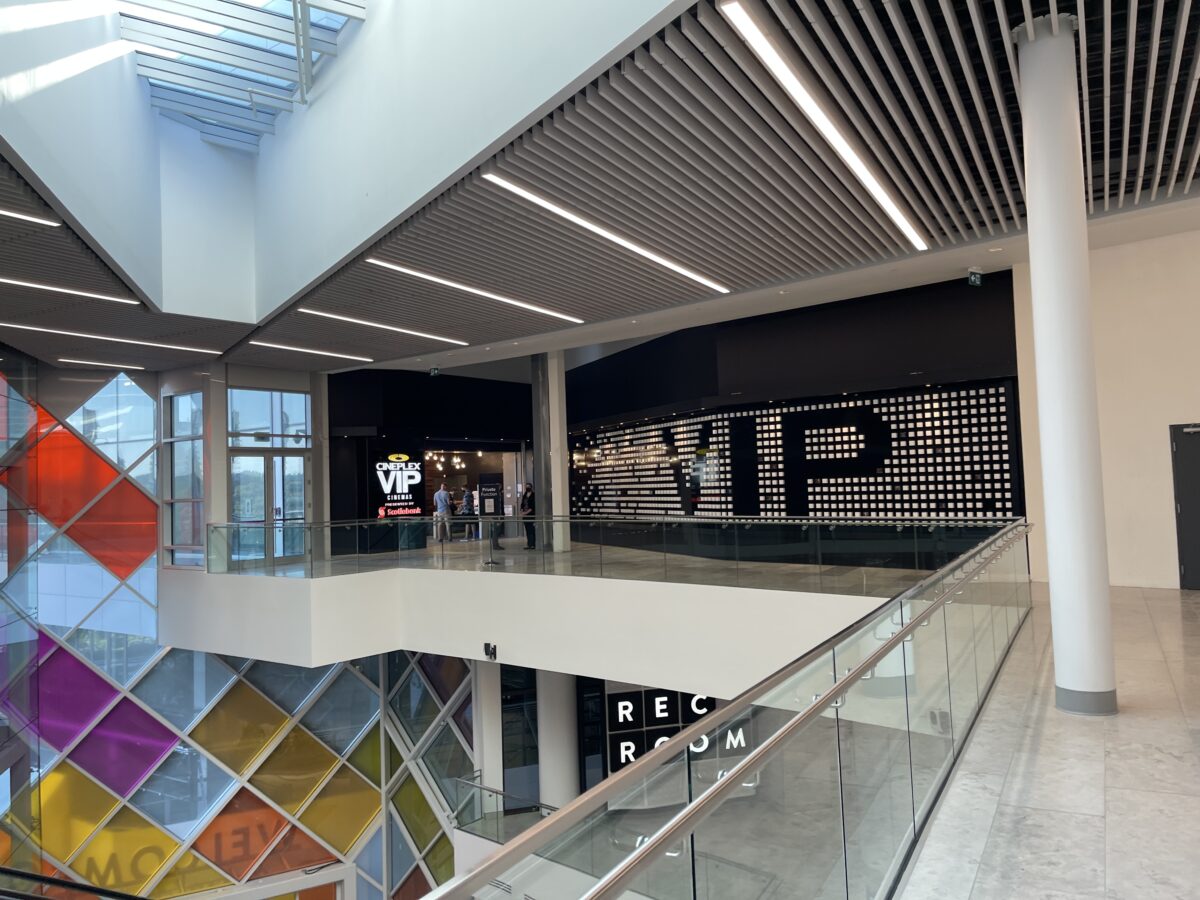
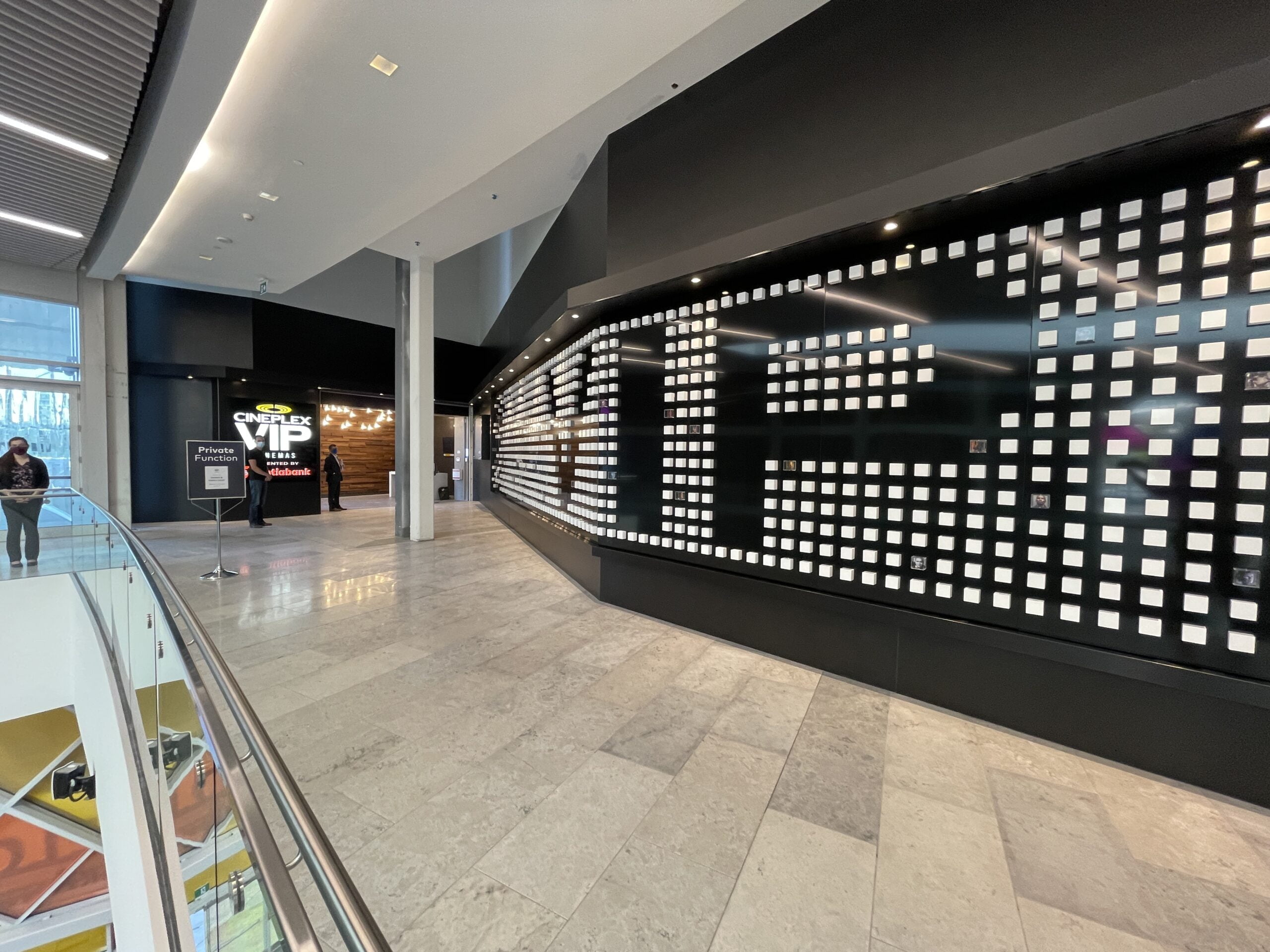
Entertainment is also expected to be an important part of Union Park. The area is already home to attractions such as the CN Tower, Ripley’s Aquarium and Cineplex-owned ‘The Rec Room’ which opened in the summer of 2017. Union Park’s ‘winter garden’ could also become activated at various times of the year to host events for the Toronto International Film Festival, Pride, and Toronto Fashion Week, for example.
Mr. Masood noted that with about 3.5 million square feet of space, Union Park will bring a level of scale that will “bring a truly successful mixed-use community” that will be an added draw for the area. Those working in the new office towers on the site as well as nearby will have even more options for dining and shopping, while new residents to the area will further add to Union Park’s commercial viability. The area surrounding Union Park is seeing a development boom that includes thousands of new condominium units as well as several large new office towers.
ANOTHER VIEW OF UNION PARK IN TORONTO. IMAGE: OXFORD PROPERTIES.
Oxford Properties owns the four-acre Union Park site as well as about seven acres immediately to the east that currently houses the Metro Toronto Convention Centre as well as an office building and a hotel. While Oxford will focus on Union Park’s proposed four-acre property, there’s the possibility that an expansion eastward could be a possibility at some point in the future.
‘Oxford Place’ as proposed by Oxford Properties in 2012
1 of 3
Union Park will be less than 300 metres from ‘The Well’, which will be a mixed use project that will include about 420,000 square feet of retail space. Both developments will create a critical mass as densification continues in the city’s core.
In 2012, Oxford Properties proposed a significantly larger development called Oxford Place that could have included a new hotel, residential towers, office towers, a redeveloped convention facility and a Royal Vegas Casino in Canada. Spanning the entire 11 acres on the south side of Front Street between Simcoe Street and Blue Jays Way, Oxford Place would have included approximately one million square feet of retail space, which could have become a competitor to CF Toronto Eaton Centre, given the size. Toronto City Council voted against the downtown casino and plans to develop Oxford Place were put on hold indefinitely.
Longo’s Brothers Fruit Market has launched its latest pilot project which is a meal-based shopping kiosk developed as a strategic response to the changing needs and behaviours of today’s shopper.
The concept is operating inside the company’s Maple Leaf Square location at 15 York Street in Toronto.
“In essence, it will allow for a smarter way to shop. The meal-based shopping kiosk merchandises produce based on recipe ideas, which helps shoppers plan their weekly meals better, and save time shopping around the store,” said Rosanne Longo, the company’s consumer spokesperson.
“We spend an incredible amount of time ensuring we are well positioned for the future of retail and understanding the new consumer who will shop with us. Shoppers today are so diverse, and they are changing constantly so if we are to stay relevant, we need to ensure that we are putting consumer needs at the centre and doubling down on our marketing and execution strategies. The meal kiosk is just one of the many initiatives we are testing to see if we can satisfy this new wave of consumers.”
Longo said the Maple Leaf Square location is located in Toronto’s downtown Financial District and ideal for the launch of the concept.
“Statistically, people who live and work in this area are most likely to use meal-kit delivery services and food delivery apps due to their convenience and ease of use. From our own research, we felt that our shoppers in this area would find the most use from this pilot, and would be the most receptive to a more convenient shopping experience,” she said.
“If successful, we plan to adapt this program into other stores throughout the GTA. If consumers respond well to the program, we would love to see a store dedicated to offering strictly meal-based shopping. Like all other initiatives that we test, we have to see how the consumer responds, optimize accordingly and keep striving to perfect the retail experience 360 degrees.”
Longo said the grocery store model is continually evolving and businesses in this sector must focus on developing programs that are both customer-centric and designed for the future of retail.
The concept includes a kiosk area where fresh ingredients are merchandised according to a specific meal. The kiosk provides customers with one central location inside the store where they can hand-select their produce, meats, starches and garnishes to create a specific meal or recipe. Meal sizing will be adjustable to ensure shoppers have enough to feed a single person or a large dinner party of 10. Recipes and step-by-step cooking guides will also be available in-store and online.
“Today’s consumers are changing dramatically. They want convenience, speed and simplicity but they also want an experience. We had to ask ourselves, how do we create an offering that will allow our guests to have all three elements? We decided to test out the meal-kiosk because it will be automated, tech-focused, convenient, speedy and simple. The perfect storm for the customer of the future,” said Longo.
“Since launching the program, we’ve seen a very positive response from our shoppers who love the simplicity of the design and ease of use but only time and data will tell us the whole picture. We are going to be collecting data and feedback to better understand their experience to optimize it. We will also be launching mystery shopping with a few members of the public to get a fully unbiased view.
“The bottom line is this: For a long time, shoppers were loyal to a single store that would fulfill all of their grocery needs. Today, consumers are far more likely to embrace multiple retail locations and varying formats to ensure they get exactly what they want. It is our firm belief that they will respond well to new ideas and options that show the retailers are truly listening.”
Longo said the concept may be expanded to become a full store concept. It may also be something later offered online through its grocery delivery service, Grocery Gateway. The possibilities are endless.
“Similar to many Longo’s initiatives that are currently underway, this program seeks to prepare us for the future of retail. As we carefully examine consumer trends, we know that customers are certainly seeking convenience, but we firmly believe that they also want a human-centred experience where they can browse, see, feel and compare ingredients before purchasing,” said Longo.
She said the program has great potential to not only attract and engage new customers but to also help its existing customers discover better ways of shopping that provide both ease and convenience. Longo’s plans to expand the model to each of its 33 stores by Spring 2020.
Longo’s is a family-owned business that started in 1956 when three brothers, Tommy, Joe and Gus opened their first fruit market. It was a small 1,500 square foot store on Yonge Street (at Castle field) in Toronto. Longo’s employs more than 5,000 people.
Most students in Grade 11 are concerned with deciding what college they wish to attend or what they want to do with the rest of their lives while enjoying their final years of high school.
For four girls from Toronto, they didn’t want to wait until graduation. Three years ago, they turned their dream into a reality and started She Clothing Co. Who are the minds behind She Clothing Co.? What are they doing differently, and why are they making headlines in 2019?
The Minds Behind She Clothing Co.
She Clothing Co. is the brainchild of a quartet of young women from Toronto:
Laura David, who handles communications and sourcing
Alara Karahan, the company’s marketing and social media director
Jordan Murrell, She Clothing’s finance director
Lara Ground, the company’s creative director
1 of 4
LAURA DAVID
ALARA KARAHAN
JORDAN MURRELL
LARA GROUND
Each of these accomplished young women has taken the message, “Be the change you wish to see in the world” to heart, creating a clothing company that lets them get their point across.
“Launching a clothing brand while also being a high school student has been a rewarding experience, to say the least,” David told Retail Insider. “It’s taught us a lot about how to balance various activities at once and it’s also given us real-world skills that you can’t find in a classroom.”
“We started planning and came up with the idea over the summer of 2017,” says Murrell, “so I don’t think we were even thinking about the possible impact that school would have on us running this business at first. Overall, it was harder than we thought it would be — trying to find time between all of us to coordinate and communicate, but we learned that it’s all about finding balance.”
That desire to change the world is part of the fabric of every shirt, hat and hoodie this groundbreaking company creates.
A Heartfelt Mission
The term feminism has gained somewhat of a negative reputation, thanks to popular media and radical extremists on both sides trying to turn it into something it isn't. She Clothing Co. is working to reclaim the idea that feminism is for everyone, and that all people deserve to live in a world that treats men and women equally across all aspects of their lives. Their logo — the symbol of femininity with cat ears and whiskers — showcases their commitment to creating that world.
PHOTO: SHE CLOTHING CO VIA FACEBOOK
“We wanted to start this clothing line because we felt that there was real discontent with women, young women especially, about gender issues in Canada and even around the world,” David says. “We started this brand in 2017, so after the American election and the first Women’s March, we saw people’s frustration but also saw that a lot of women really just didn’t know where to channel those feelings.”
“We wanted to find a way for women to show their support for the cause while also making a tangible impact in fixing the problem of gender inequality in our community,” she explains. “In terms of bringing the brand to life, we literally all just got together over the course of summer 2017; we’d meet at someone’s house, brainstorm ideas, reach out to organizations, figure out designs, and really tried to refine our mission and direction with the brand. We put our first product out that fall, and it turned out to be a crazy success!”
Men aren't exempt from the damaging stereotypes She Clothing Co. is hoping to fix. Society may mock them for showing emotion or being "too sensitive," as if being emotional was the exclusive province of women. That's the mission of She Clothing Co. — to create the world they want to live in, one where men and women share genuinely equal footing.
PHOTO: SHE CLOTHING CO VIA TWITTER
All Method, No Madness
She Clothing Co. isn't just making T-shirts, hoodies and hats for their fans to wear. They're also trying to make a difference by educating their customers, supporters and followers through social media engagement, a weekly newsletter and a video series the four founders put together. The goal is to remind people they're not only buying a sweater — they're helping make a difference by wearing it.
She Clothing's ultimate goal is to help young women in need and to assist anyone who is fighting for the same cause. They are working to reclaim feminism from the extremists, which is no easy task, but one these four bright young women are more than willing to tackle head-on.
Making Headlines in 2019
One thing that sets She Clothing Co. apart from other clothing brands is that the company donates all their profits to charities in Toronto that are working to break down the barriers women are facing around the globe. In 2018, the company teamed with GEM — Girls E-Mentorship, a mentorship program that pairs girls in Grades 10-12 with a mentor who's succeeded in the young woman's chosen field. In total, She Clothing raised $2,000 and supported two GEM scholarships that year.
In 2019, they've paired with the Jean Augustine Centre for Young Women's Empowerment, or JAC. This program focuses on improving girls' well-being by providing programs that support their mental, physical and social lives. She Clothing Co. has committed to raising $3,000 for JAC's STEM program, which introduces these young women to mathematics and science while teaching them skills like coding and problem-solving.
The Future of She Clothing Co.
It's been nearly three years since She Clothing Co. opened its doors, and the four founders are showing no sign of slowing down.
“The most exciting part about launching She Clothing Co was definitely seeing something that we created come to life,” David says. “There’s nothing like putting so much time and effort into something and finally seeing all that hard work pay off. The best is always when we get to visit the organizations we work with because we really see how we’re having an impact on the lives of women and also get ideas for other ways we can help. We’ve built so many connections and grown tremendously as people through this brand, and I think that’s been the best part of it all.”
The company, above all else, has dedicated itself to creating the world they want to live in and that they hope their eventual children will grow up in. A world where men and women are truly equal, where a woman can go to work without worrying she's making 80% of what her male colleagues make, and a man can shed a tear without worrying about anyone considering him as less masculine.
She Clothing Co. is, quite literally, becoming the change they want to see in the world. Time will only tell what the future holds for She Clothing Co., but as it stands, they will continue earning money for JAC through 2019 and keep revolutionizing long into the future.
Kayla Matthews
Kayla Matthews is a researcher, writer and blogger covering topics related to technology, smart gadgets, the future of work and personal productivity. She is the owner and editor of ProductivityTheory.com and ProductivityBytes.com. Previously, Kayla was a senior writer at MakeUseOf and contributing freelancer to Digital Trends. Kayla's work on smart homes and consumer tech has also been featured on Houzz, Dwell, Inman and Curbed. Additionally, her work has appeared on Quartz, PRNewswire, The Week, The Next Web, Lifehacker, Mashable, The Daily Dot, WIRED and others.

The “Amazon Effect” continues to accelerate eCommerce in Canada, heating up the competition among retailers and brands and marketers that win are those that rise to meet changing consumer expectations head on.
The research, Rethink eCommerce by Reprise Digital, a digital marketing agency, found that in the last year 63 per cent of those surveyed used Amazon to discover a new product, 88 per cent were aware of Amazon’s Prime program, and 42 per cent of Canadian households hold a Prime membership.
Among Amazon shoppers, 78 per cent say Amazon has the most efficient shipping and 84 per cent say Amazon has the widest selection.
“There’s a need in the market to provide some greater insight into the digital shopping journey. We heard this from a number of clients,” said Matt Ramella, Managing Director, Reprise and Digital Partnerships.
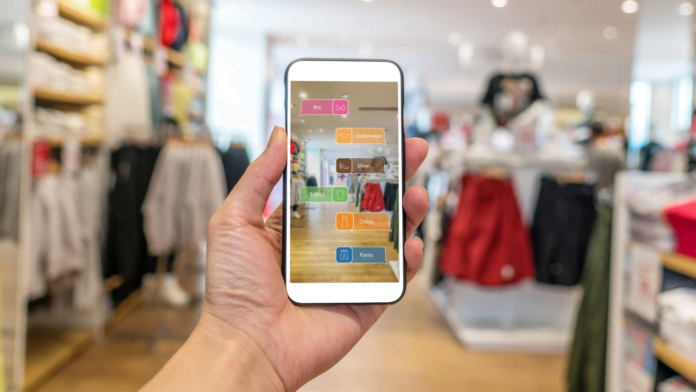
“Shopping behaviours are changing so quickly and brands need to understand that behaviour in order to keep up, come e-retail ready and capture their share of the digital shelf. That’s why we named this Rethink eCommerce.”
He said the most underdeveloped retail category is grocery. That is the largest opportunity for retailers moving forward “and the biggest nut to crack.”
The research also found the following:
Canadians are more likely to purchase Toys & Games, Appliances and Baby products online from Amazon than other retailers. 26 per cent of Canadians are more likely to purchase appliances on Amazon versus 12 per cent who would purchase from Costco;
When purchasing Grocery, Patio & Garden, Health & Beauty, Books and Clothing Amazon is neck and neck with other well-known retailers such as Walmart, Shoppers Drug Mart and Indigo. For the grocery category, 22 per cent of Canadians are more likely to purchase from Walmart and 21 per cent to purchase from Amazon;
In Canada, Furniture, Electronics and Automotive categories are dominated by category specific eRetailers. 26 per cent of Canadians are more likely to purchase furniture from Wayfair than Amazon;
The largest weekly online shopping cohort, 34 per cent, is the 35 to 44 year old age bracket. This group grew up in the age of media and digital transformation, making them more comfortable with technology and more apt to shop online. They have more disposable income than younger generations, making them a prime audience for online shopping;
99 per cent of those surveyed researched a product online regardless if they bought it in-store or online;
For 68 per cent, the biggest deterrent to online shopping is the shipping fee while for 18 to 34 year olds they’re most concerned about getting products fast.
“From a points of friction standpoint, Reprise found that shipping time and shipping fees were the primary points of friction for online purchase,” said Ramella. “And that’s especially more prevalent with the younger end of the demographic – Millennials for example.
“We also found that the older end of the demographic was also concerned about missing out on that human element of shopping that you often get when you’re shopping in-store.”
Ramella said convenience is the main reason why Canadians like shopping online and its ease of research.
“From a discovery perspective, online marketplaces for example Amazon is the number one point of discovery for shopping online,” he said.
“We do know that Amazon dominates the minds of Canadians when they purchase online. It also is front and centre as we work with our clients across the eCommerce space. From a purchase perspective in the study, 75 per cent of respondents shopped on Amazon in the past six months and the next closest retailers in the Canadian market are Walmart at 31 per cent and Costco 29 per cent. There’s a significant difference between number one and the rest.”
The research found that shoppers are using Amazon product details and reviews even when they don’t buy on Amazon and Amazon stores have become a one-stop shop for branding, reviews and purchase.
The research also showed that 85 per cent of respondents say they are likely to shop at Amazon in the future followed by 52 per cent at Costco and 50 per cent at Walmart.
PHOTO: AMAZON
Amazon is the dominant retailer when it comes to the Toys & Games, Appliances and Baby categories. It is competitive in Grocery, Patio & Garden, Health & Beauty, Books, and Clothing. It is trailing in Furniture, Electronics and Automotive.
Retail expert Bruce Winder said Amazon is the new Walmart as it relates to channel power with suppliers, especially smaller ones.
“Smaller suppliers have really no bargaining power with Amazon and are forced to capitulate on whatever terms and conditions they demand. Amazon’s ecosystem is just too big to ignore for all suppliers now. One of the major risks for all suppliers is Amazon using supplier metrics to build its own private labels to eventually displace them,” he said.
“I find it interesting that consumers are purchasing merchandise online from category specialists like Wayfair over Amazon. This may be a clue for retailers trying to survive against Amazon by building niche businesses. Also, the research may show the level of comfort Millennials have with Amazon as baby products and toys are leading categories. This will no doubt be a distant early warning for other retailers that sell products used as consumers age through their life stage. Finally, it shows that existing, large established brick and mortar retailers are holding their own in select categories online. It appears that the large investments made at retailers like Walmart, Shoppers and the like have paid off at least for now.”
There was an uptick in Canadian retail sales growth in April 2019, according to the latest unadjusted numbers from Statistics Canada. For the 3 months ending April 2019, sales were up 2.8% year-over-year. Although hardly spectacular, this was the highest such gain in 6 months. More importantly, things now appear to be heading in the right direction, and retail sales in all major retail sectors are showing the same kind of rebound.
The 3 month trend (orange line in the chart above) continues to strengthen, although it has a way to go to return to its previous highs. The underlying 12 month trend (green line) is also showing a slight improvement, for the first time in over 12 months.
While the patient seems to be recovering, we’re not out of the woods yet. There was a similar upswing in retail sales growth in mid 2018 that never stuck.
Food & Drug
Retail sales in the Food & Drug sector were up 3.6% year-over-year for the 3 months ending April 2019. This beat the overall retail average, and in fact Food & Drug has been turning in good sales growth for about the last 8 months. The underlying 12 month trend (green line in the above chart) has been slowly improving since then, after having weakened for almost 2 years prior to that.
Supermarkets & other grocery stores led the way in this sector. Their sales increased 4.3% year-over-year for the 3 months ending April 2019, much higher than the mere 0.6% gain recorded for the same period in 2018.
Retail sales at health & personal care stores gained 3.1% for the 3 months ending April 2019. This is about in line with historical performance and represents some recovery over very modest sales gains a year ago.
Convenience stores and specialty food stores, after being high flyers last year, have now come back down to earth. For both, retail sales were up just 1.2% for the 3 months ending April 2019.
Store Merchandise
The Store Merchandise sector’s retail sales gained 2.9% year-over-year for the 3 months ending April 2019. While not exactly setting the house on fire, sales do appear to be steadily improving after last year’s dismal performance.
The 3 month trend (orange line in the chart) has now just nudged ahead of the underlying 12 month trend (green line) for the first time in over a year. While this is promising, these trends were so low that they almost had no choice but to come back up.
For the 3 months ending April 2019, miscellaneous store retailers reported the highest gain at up 9.3% year-over-year, in large part due to the addition of new cannabis stores. Jewellery, luggage and leather goods stores also had a large sales increase at 7.5%. The large general merchandise sector also did well, with retail sales rising 5.5% during the period, their best 3 month gain in over a year. Furniture stores were up 2.6%, a marked improvement over slow to no retail sales increases in 2018.
Electronics & appliance stores continued to be the poorest performers, with retail sales down 8.8% year-over-year for the 3 months ending April 2019. Sporting goods, hobby, book & music stores and shoe stores were also down, by 1.3% and 1.2% respectively. .
Note that Statistics Canada is now suppressing the breakdown of general merchandise stores for confidentiality reasons. The figures in the “By The Numbers” table below are estimates based on previous trends.
Automotive & Related
The Automotive & Related sector appears to be getting up from the canvas after having been beaten down for over a year. Total sector retail sales were up a modest 2.2% year-over-year for the 3 months ending April 2019, but this represents a good move out of the negative territory at the start of the year.
New car dealers’ retail sales were up 3.5% for the 3 month period, a solid improvement over the 1.2% decline in the last quarter of 2018. Although it’s a much smaller group, used car dealers did very well, with a 12.5% retail sales gain for the 3 months ending April 2019. Automotive parts, accessories & tire stores also recorded an above average increase of 7.1%.
The Automotive & Related sector, and overall Canadian retail sales for that matter, is still being suppressed by slow sales at gasoline stations. Their retail sales were down 2.9% year-over-year for the 3 months ending April 2019. This of course is all due to lower gas pump prices … and motorists don’t mind it at all.
By The Numbers
Special Note: Statistics Canada revised historical data with the February 2019 release. Unadjusted monthly data were revised back to January 2018, while seasonally adjusted data were revised back to January 2015. Those keeping score should update their files. The analysis in this report is always based on unadjusted data.
Canadian E-Commerce Sales
StatsCan started providing ecommerce retail sales data in January 2016. While the amount of data is limited, some trends appear to be emerging. Here are some results.
Overall, e-commerce represented about 3.1% of total Canadian retail sales for the 3 months ending April 2019, including both pure play operators as well as the online operations of brick & mortar stores. Canadian consumers however also buy online from foreign websites which is not captured in these numbers.
Canadian e-commerce sales were up 18.0% year-over-year for the 3 months ending April 2019. This was significantly higher than for location based retail which gained 2.8%.
Note that location based retail is the same as that in the preceding large “By The Numbers” table. It’s what’s normally reported as Canadian retail sales. Except that it isn’t. Location based retail excludes another section called Non-Store Retailers (NAICS code 454), which includes electronic shopping and mail-order houses, which in turn is where (mostly) pure play e-commerce businesses are. For the 12 months ending April 2019, electronic shopping and mail-order houses had an estimated $11.4 billion in e-commerce sales.
But that’s not the only source of e-commerce, as (mostly) bricks & mortar location-based retailers also sell online. For the 12 months ending April 2019, this group had an estimated $7.6 billion in e-commerce sales. With electronic shopping and mail-order houses, there’s a grand total of $19.0 billion in e-commerce sales by Canadian operators over the year. Note that this does not include foreign e-commerce purchases made by Canadian consumers, but it does include e-commerce purchases made by foreigners at Canadian businesses.
For electronic shopping and mail-order houses, an estimated 85.4% of their sales are allocated to e-commerce. For (mostly) bricks & mortar retailers, it can be estimated that just 1.2% of their total sales are attributable to e-commerce.
In the final section of the above table, (mostly) pure play operators (namely, under electronic shopping and mail-order houses) generated an estimated 60.0% of all e-commerce sales in Canada, while (mostly) bricks & mortar location-based retailers’ share of e-commerce is 40.0%.
This analysis is updated monthly as new numbers are published by Statistics Canada. If you would like notification of when an update becomes available (and you’ve read this far), please connect with Ed Strapagiel on LinkedIn.
UNTUCKit, the American casual men’s apparel brand that makes shirts meant to be worn untucked, is expanding its presence in Canada with several new stores this year after opening in Toronto last year to smashing success.
“It was our number one performing store in December out of all 50 stores in the U.S. and that was without any real marketing. (Hockey legend) Wayne Gretzky is our brand ambassador but people really got excited. They would come walk by the store and a ton of people were coming in. The traffic was great and they just loved to learn about the brand. They shared the same thing we always heard from our U.S. customers that their shirts were too long and this was the perfect way to look polished casual,” said Riccobono.
NEW CF RIDEAU CENTRE STORE IN OTTAWA. PHOTO: UNTUCKIT
“Obviously to have your first store in CF Sherway Gardens which isn’t even the busiest mall in Canada and to have that doing the business that it’s doing and the malls in Canada are just tremendous, I’m very excited about the future.
“You want to look good but these days everyone’s dressing casual. There isn’t a better way to do that than our product. People wear them to work because they look so neat. They don’t look sloppy.”
UNTUCKIT STORE IN SAN DIEGO, CALIFORNIA PHOTO: UNTUCKIT VIA FACEBOOK
There’s three more planned in Canada for the following year with one in Vancouver and at least one, possibly two, in Toronto.
Brokerage Oberfeld Snowcap is handling UNTUCKit’s Canadian store expansion including negotiating the new locations under the direction of Rob Hart.
The first store for UNTUCKit was 2015 in Soho in New York City and today it has just over 60 stores in North America. Besides the four Canadian stores opening this year, two stores will also open in the United Kingdom by the end of the year, signalling the company’s overseas expansion.
“We’ll have 85 by the end of the year,” said Riccobono.
PHOTO: UNTUCKIT VIA FACEBOOK
“I started the company because I simply needed a shirt that could be untucked, that wasn’t too long and sloppy. In 2011, when I began working on it, it just didn’t exist. I did a lot of research on what the right length was and if this really was a problem and 95 per cent of men we surveyed had the exact same problem that anything that was available was too long and too sloppy.
“Today we’re just a very strong brand that carries essentially everything. We have our shirts. We have pants, shorts, sweaters, sports jackets. We have a women’s line, kid’s line. And people love shopping at our stores. They love the experience. They love the story of UNTUCKit and how it started. We’ve grown so fast.”
Riccobono said the retailer plans to have eight more stores in Europe and potentially in Latin America in 2020. He said another 20 international stores will come in 2021.
UNTUCKIT STORE IN FORT WORTH, TEXAS PHOTO: UNTUCKIT VIA FACEBOOK
“When I launched I always thought it was going to be young guys (as customers) who really cared how they looked – real fashion forward guys. And luckily it ended up being essentially all men. Men 25 to 70 years old and it’s evenly distributed,” said Riccobono.
“We had a big campaign that we ran and we still run called All Shapes and Sizes because we have 50 different sizes. We fit 96 per cent of men. A young kid wears it. A son wears it. A father and a grandfather. And you see that all the time. So basically if there’s a man out there that wants to look good, doesn’t want to think about it too much, is used to wearing a shirt untucked, wants casual, then he’s a customer. We have everyone from the Leonardo DiCaprios of the world, name NHL players to a non-fashion forward guy in the middle of the USA. and that’s what’s helped us grow so fast.”
There are several reasons the brand, which is headquartered in New York City, resonates so well with consumers. Riccobono said the retailer has something for everyone.
PHOTO: UNTUCKIT VIA FACEBOOK
“We have denims. We have two pocket flannels. We have prints. We have preppie stuff. We have night clubby stuff. You want to wear all black and go to a club. We cover everything. The key point is when guys come in and they try on a shirt they really do fit great. The quality is incredible,” he said.
“Most guys want to look good but they don’t want to spend too much time on it. We kind of fix that problem. You come in. You try on your shirt. You find the right fit. And then you can buy online or at the stores. And always know your fit. It’s a very easy shopping experience.”
Riccobono said there’s also a full ecommerce push happening in Canada and it will be shipping out of Canada. Also, UNTUCKit will be ramping up its marketing efforts.
“Our female line is about five per cent and that’s growing each month. It’s been doing really well recently,” he said, adding there is good potential future growth with that demographic.
Large-format American footwear and accessory retailer DSW Designer Shoe Warehouse says that it has finally turned a first quarter profit with its Canadian operations for the first time after entering the market about five years ago. DSW has also announced that it is launching a new loyalty program to further gain market share.
The company says that Canadian consumers are embracing the large-format retail chain that is seeing incredible growth particularly from its enhanced online channel, as well as growth in its physical stores.
DSW entered the Canadian market in 2014 by acquiring an initial 49.2% stake in Canadian footwear chain Town Shoes (which operated Town Shoes, The Shoe Company and Shoe Warehouse nameplates) and has since opened 27 large-format DSW stores located coast-to-coast. DSW also launched its Canadian e-commerce site in 2014 which recently saw an overhaul to optimize the customer experience.
PHOTO: DSW CANADA VIA FACEBOOK
Mary Turner, DSW’s Canadian President, explained that the company’s newfound profitability in Canada is partly a result of selling more ‘clean inventory’, which means more regular-priced shoes in its stores rather than clearance-priced discounted merchandise. The resulting higher margins ultimately helped DSW’s bottom line as the retailer further establishes its operations in Canada and gains market share, with plans to further optimize sales by selling more higher-margin product. Furthermore, the company’s Canadian e-commerce site, which relaunched this spring with a streamlined checkout process, is more user-friendly and features a vast array of footwear styles including some not found in its physical stores. Substantial growth in DSW’s online channel further contributed to the retailer’s spike in revenue that led to a profit being reported on May 30th of this year for the first time.
“Customers are buying more new product at a higher markup,” explained Ms. Turner, who went on to say that DSW Canada expects to continue to remain profitable as it continues to see increased sales from the retailer’s ‘clean’ inventory. Prior challenges to DSW included carrying excess aged inventory which resulted in the company not optimizing its sales opportunities, she said.
Sales over the past year in DSW’s Canadian stores increased by about 8%, she explained, with the retailer’s digital sales in this country seeing an impressive 33% increase. DSW has continued to gain market share despite heated competition from a wide range of retailers such as mono-brand stores, off-price retailers, department stores, and even Amazon. As a result, DSW is now the third largest footwear retailer in Canada in terms of volume (Walmart is said to be number one) and in the women’s shoe category, DSW is now the top retailer in Canada in terms of overall sales.
DSW Canada is part of a multi-brand conglomerate called Designer Brands Inc., which was formerly known as DSW Inc. until it changed its name in March of this year. Designer Brands Inc. also operates DSW stores in the United States as well as The Shoe Company and Shoe Warehouse in Canada. Earlier this year the company shuttered all 38 of its Town Shoes stores due to lack of profitability.
DSW’s Canadian sales are expected to further increase with the introduction of its new VIP loyalty program in Canada, which is similar to wildly successful program in the United States. Ms. Turner explained that Canada is home to more than 1.1 million loyalty program members who will be able to take advantage of the program’s personalized experience that also offers compelling rewards.
Included in the VIP program is free shipping as well as the ability to earn rewards earlier and more often, as well as the ability to donate shoes for points.
The new loyalty program introduces three member tiers. That includes the VIP Club (which is free to join), VIP Gold (requiring a minimum $200 annual spend), and VIP Elite (those spending in excess of $500 annually with the retailer). All tiers receive an accelerated reward of $5 for every 100 points earned, while Club and Gold members earn 1 point for every $1 spent. The programs’s Elite members earn 2 points for every $1 spent, which means spending more can lead to drastically more points. Additional member benefits include a $10 welcome gift upon enrolment for their next purchase in-store, birthday rewards, early access to offers, and extra points for shoe donations.
PHOTO: DSW
The shoe donation program is part of DSW’s philanthropy in partnership with Soles4Souls, which creates sustainable jobs and provides relief through the distribution of shoes and clothing in Canada, the US, and around the world. Some materials from donated shoes are also recycled.
Points from the loyalty programs can be redeemed online, with DSW’s Canadian website offering a wider range of sizes and some styles not in stores. In the United States, DSW’s website is said to have about twice the selection as what’s available in physical stores. In Canada, DSW is looking to expand its drop shipping capabilities in order to serve its customers, Ms. Turner noted.
The Company has also launched the DSW Canada app where members can access their DSW VIP rewards anytime in one easy-to-redeem location.
DSW expanded rapidly over the past five years as it opened 27 stores spanning from British Columbia to Nova Scotia. Ms. Turner said that the company will not be opening anymore DSW stores in Canada this year, though the parent company will open six more The Shoe company locations as the company expands its smaller-format stores that target smaller markets as well as areas where finding space for a ~20,000 square foot DSW store may be challenging.
PHOTO: DSW CANADA VIA FACEBOOK
In March of this year, we reported that the newly renamed Designer Brands Inc. had initiated a three-year plan for its Canadian operations. Included will be the eventual introduction of in-store experiences such as nail bars, custom insoles, shoe repair, a ‘shoe concierge’ and other initiatives. Customers in US stores have been receptive to the enhanced store experiences and sales have continued to grow as a result. Nail bars have brought more Millennial shoppers to DSW’s US stores, Ms. Turner explained, and the company now has an ‘innovation team’ that is looking to further enhance the overall store experience
Designer Brands Inc. plans to open approximately 50 more stores in Canada over the next three years, which could include about 20 large-format DSW Designer Shoes stores and 30 or so locations under the company’s Shoe Warehouse and The Shoe Company banners. Real estate strategies will be different for the larger-format and smaller store concepts.
Large-format DSW stores target markets with a population exceeding 400,000 people in storefronts that often exceed 20,000 square feet. The optimal size for The Shoe Company and Shoe Warehouse stores will be approximately 4,000 square feet each, as a comparison.
While the company has expanded coast-to-coast, Designer Brands Inc. has yet to enter the Quebec market. That will change as the retailer plans to make a move into Quebec as it upgrades its business systems including POS systems and its digital platforms. “We now have a roadmap for Quebec,” after entering Canada almost five years ago, Ms. Turner said in an earlier interview.
PHOTO: DSW CANADA VIA FACEBOOK
The Quebec market is also being targeted for Shoe Warehouse and The Shoe Company nameplates, which Designer Brands Inc. will look to open in secondary markets with less than 50,000 residents. The same strategy will be rolled out Canada-wide as the company strategically opens stores to further penetrate the Canadian market with the smaller-format stores. Shoe Warehouse and The Shoe company units act as a “last mile solution” for the company, Ms. Turner explained, by acting as distribution points for click-and-collect and online orders while serving markets that might not otherwise support a larger DSW storefront. Designer Brands Inc. currently operates 112 locations for The Shoe Company and Shoe Warehouse in Canada.
British Columbia is also a target for more stores under Designer Brands Inc.’s multiple banners — the province currently has just three large-format DSW stores, with two of those being in the Vancouver/Lower Mainland and one on Vancouver Island in Victoria. The Toronto market is also a target for more stores, with the potential in Quebec being “huge” according to Ms. Turner. Quebec has more than 8.4-million residents with a population known to appreciate value-priced footwear.
We’ll continue to report on Designer Brand Inc.’s continued expansion into the Canadian market at a time when an unprecedented number of international brands enter the market, which off-price retail continues to grow rapidly. We’ve been tracking a considerable number of brands that will be launching their first Canadian stores over the next couple of years, while those that entered the market are now expanding their operations into new secondary markets. Off-price retailers, many of which offer similar brands as those found in DSW, The Shoe Company and Shoe Warehouse, also continue to grow their operations. TJX banners Winners and Marshalls are opening stores at a rapid pace, with both retailers carrying a range of footwear for women, men and children. As well, Hudson’s Bay-owned Saks OFF 5TH has expanded into Canada with 18 stores to date, while Nordstrom Rack looks to grow from its current six Canadian stores after entering the market for the first time last year.
Minimalist Japanese retailer Muji is continuing with its Canadian store expansion, which includes opening new locations as well as expanding existing units. This week, construction hoarding went up at the Guildford Town Centre in suburban Vancouver for a two-level Muji store that will span more than 15,800 square feet over two levels.
At that size, the Muji store at Guildford Town Centre will become the largest Muji store in the Vancouver area, and the second largest in Canada. Only the downtown Toronto flagship, which expanded to nearly 20,000 square feet last year, will be larger in this country. The Toronto store is currently the largest Muji location outside of Asia, though we’re told bigger units are in the works.
The two-level Guildford Town Centre Muji store will include 8,375 square feet on the mall’s main level with an additional 7,465 square feet upstairs for a total of 15,839 square feet. The store will be located in the centre of the busy shopping centre as per floor plans below. The store is expected to feature many of the offerings found in Muji’s flagship units in Toronto and Vancouver that include coffee counters, aroma bars, plants and customization areas that include labels, stamps, digital fabric printing, and laser engraving.
The new Guildford Town Centre Muji location will also be the second in Canada to span two levels. The Toronto flagship also encompasses two floors after its expansion.
INTERACTIVE GUILDFORD TOWN CENTRE MALL FLOOR PLANS: CLICK ABOVE FOR LEVEL 1, AND BELOW FOR LEVEL 2.
MUJI’S DOWNTOWN TORONTO FLAGSHIP STORE PHOTO: CRAIG PATTERSON
In the Vancouver market, Muji opened its first store at Metropolis at Metrotown in August of 2017, followed by a large flagship on Robson Street in December of that year. The Robson Street store is currently the largest in the region with 14,507 square feet of retail space. The Metropolis at Metrotown store, which was 7,770 square feet when it first opened, was expanded to 12,305 square feet in order to also bring it more in line with the offerings at the Robson Street flagship, with both units being among the top sellers in the chain in North America. Muji’s CF Richmond Centre store, which opened in 2018 with 6,252 square feet of retail space, expanded to an impressive 9,212 square feet in February of this year.
Remarkably, all four Vancouver-Area Muji stores will be large enough to be considered as flagship stores. In Toronto, the recently expanded downtown flagship is the only one to boast such a size and expansive product and service offering.
Muji entered the Canadian market in November of 2014 when it opened the downtown Toronto store which, at the time, measured only about 4,400 square feet. Muji has since opened four other stores in the Greater Toronto Area. That includes a 5,225 square foot store at Mississauga’s Square One in November of 2015, followed by the October 2016 opening at Toronto’s Yorkdale Shopping Centre (6,375 square feet) and the Summer 2017 debut of a 6,000 square foot space at CF Markville, north of Toronto. A store at Scarborough Town Centre, measuring about 6,800 square feet, opened in March of 2018.
Muji has been re-evaluating its Canadian operations and as part of that, it is looking to open larger stores. That’s according to Masaaki Kanai, Chairman of parent company Ryohin Keikaku, who told us in an interview last year that Muji is not only looking at opening substantially larger stores, but that it is also considering opening grocery stores, hotels, designing public realm, and even getting into residential development.
The Montreal market is expected to be a target for Muji with sources saying that a location could open as early as 2020. The Edmonton and Calgary markets are also expected to be targets for Muji as it expands nationally by opening stores. In an interview in 2017, Muji’s Canadian President/US CEO Toru Akita said that he expected MUJI to operate between 15 and 20 stores in Canada by the year 2020. Given the dynamic nature of the company as of late, that number could be modified as Muji looks to new concepts as it grows its identity as a lifestyle brand.