According the latest data from Statistics Canada, the April numbers show the deep impact of COVID-19 on retail sales. Total unadjusted retail sales were down 13.7% year-over-year for the three months ending April, and down a whopping 32.8% for the month of April alone. Considering all the store closures, this was pretty much as expected.
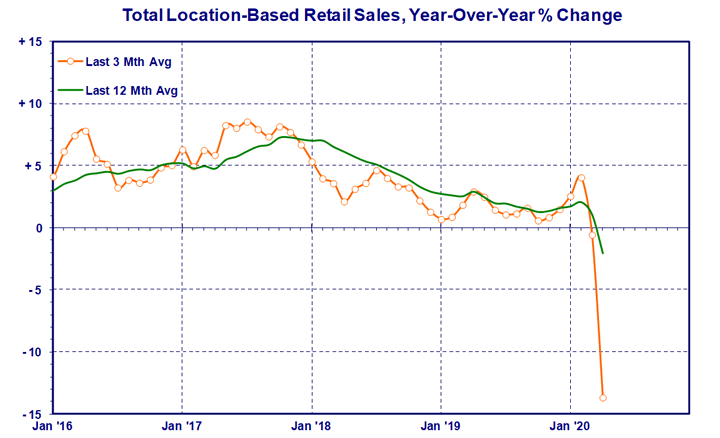
The above chart shows the plunge in 3 month average (orange line) retail sales growth, the most precipitous on record. Note that this is spread out from February to April, only about half the period affected by COVID-19. For April 2020 alone, the plunge is twice as deep, and the numbers are likely to be even worse in May.
On the other hand, overall sales performance is a combination of different retail industry sectors and a mix of winners and losers.
Food & Drug
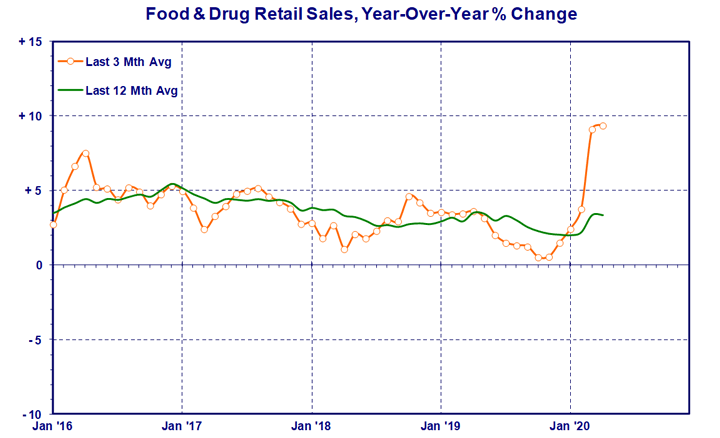
The Food & Drug sector is actually registering record sales increases due to COVID-19. For the 3 months ending April, retail sales were up 9.4% year over year. This was a combined effect of many other retailers being closed, consumer hoarding and panic buying, and more people cooking at home rather than going to restaurants. These conditions continued into May, so more of the same is expected going forward.
Supermarkets & other grocery stores benefitted significantly from the pandemic. Their retail sales were up a scorching 17.0% for the 3 months ending April versus a year ago, and up 18.7% in April alone.
On the other hand, retail sales at health and personal care stores were mostly flat. Their sales declined just 0.4% for the 3 months ending April, but that is still a good result when many other non-food retailers were down by double digits.
Store Merchandise
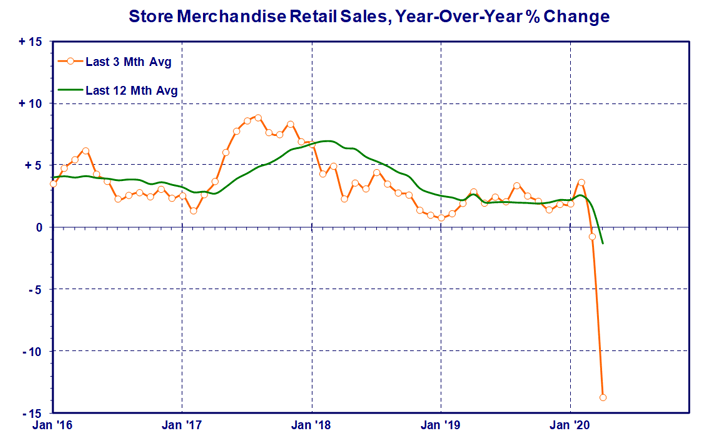
Retail sales in the Store Merchandise sector have fallen off a cliff. They were down 13.7% year-over-year for the 3 months ending April, and off 33.2% in April alone.
General merchandise stores however seem to be keeping their heads above water. Their retail sales gained 0.6% for the 3 months ending April versus a year ago, a very respectable result when many other retailers are seeing their sales evaporate. This group includes combination stores like Costco and Walmart which are also major grocery stores, as well as larger retailers like Canadian Tire and Hudson’s Bay which may have more developed e-commerce capabilities and online presence to fall back on.
At the other end of the scale, clothing and clothing accessories stores are suffering greatly. Many of these are mall based retailers dependant on walk-past traffic – of which there isn’t any when the mall is closed.
Note that Statistics Canada is now suppressing the breakdown of general merchandise stores for confidentiality reasons. The figures in the “By The Numbers” table below are estimates based on previous trends.
Automotive & Related
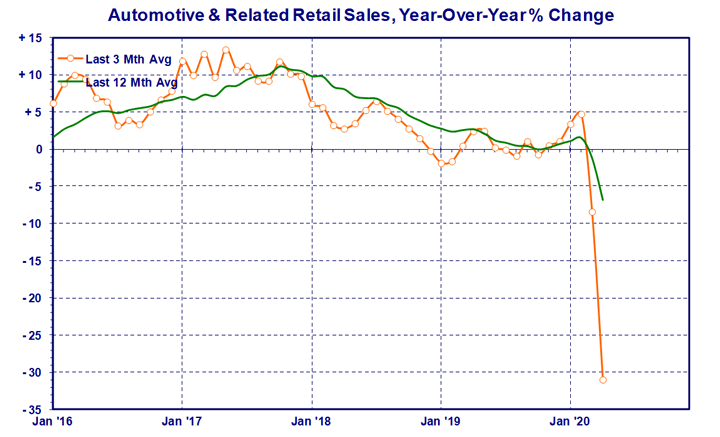
The Automotive & Related sector has been decimated. Retail sales were down 31.0% for the 3 months ending April versus a year ago, and down 58.4% in April alone.
Retail sales at automobile dealers have crashed. April sales were down 65.4% year-over-year, and are off 35.3% for the 3 months ending April.
At the same time, gas station retail sales declined 47.8% in April versus a year ago. This is a result of both less driving as people stay home, and lower gasoline prices.
By The Numbers
Special Note: Statistics Canada revised historical data with the February 2019 release. Unadjusted monthly data were revised back to January 2018, while seasonally adjusted data were revised back to January 2015. Those keeping score should update their files. The analysis in this report is always based on unadjusted data.
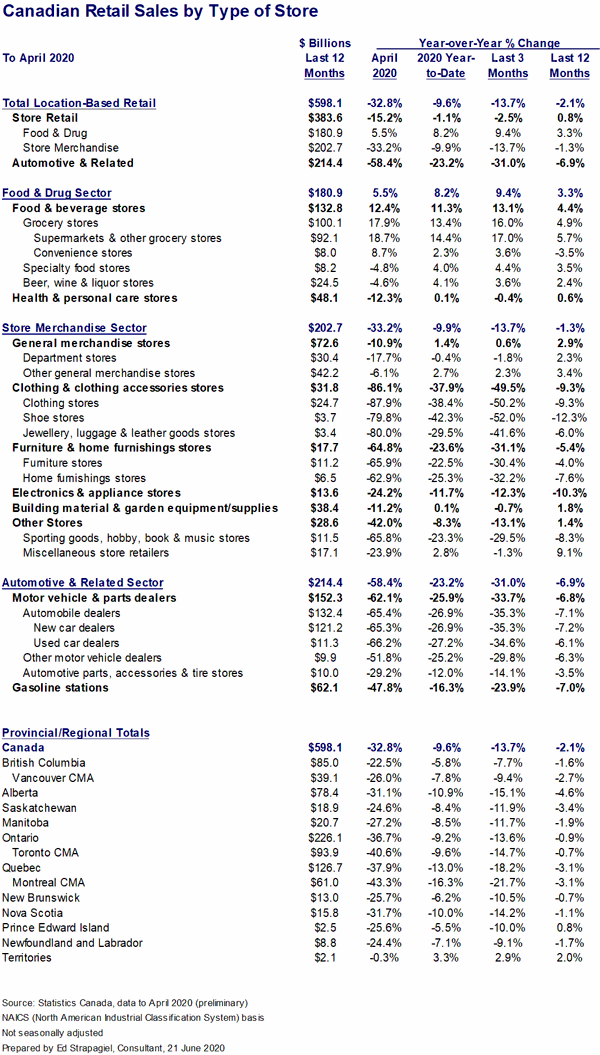
For definitions of store types, see Statistics Canada NAICS.
Canadian E-Commerce Sales
While there were major declines in location-based retail sales, StatsCan data shows a huge increase in e-commerce. In April, e-commerce retail sales were up 120.3% year-over-year. This is a gain of $1.9 billion from one April to the next, but still not nearly enough to explain the $16.7 billion decline in location-based retail. In fact, bricks & clicks stores appear to have gained more from e-commerce than pure play operators.
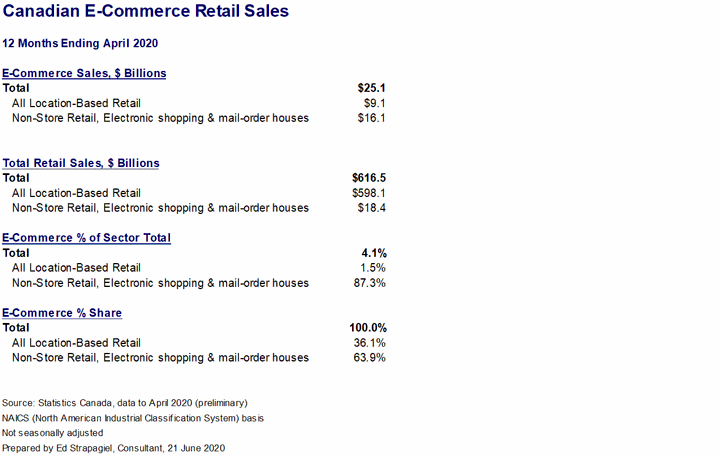
Overall, e-commerce represented about 4.1% of Canadian retail sales for the 12 months ending April 2020, including both pure play sellers as well as the online operations of brick & mortar stores. In April 2020 alone however, e-commerce’s share of total was up to a record high of 9.5%. Note that Canadian consumers may also buy online from foreign websites which is not captured in these numbers.
Location based retail is the same as that in the preceding “By The Numbers” table. It’s what’s normally reported as Canadian retail sales. Except that it isn’t. Location based retail excludes another section called Non-Store Retailers (NAICS code 454), which includes electronic shopping and mail-order houses, which in turn is where (mostly) pure play e-commerce businesses are. For the 12 months ending April 2020, electronic shopping and mail-order houses had an estimated $16.1 billion in e-commerce sales.

But that’s not the only source of e-commerce, as (mostly) bricks & mortar location-based retailers also sell online. For the 12 months ending April 2020, this group had an estimated $9.1 billion in e-commerce sales. With electronic shopping and mail-order houses, there’s a grand total of $25.1 billion in e-commerce sales by Canadian operators. Note that this does not include foreign e-commerce purchases made by Canadian consumers, but it does include e-commerce purchases made by foreigners at Canadian operations.
For electronic shopping and mail-order houses, an estimated 87.3% of their sales are allocated to e-commerce. For (mostly) bricks & mortar retailers, it can be estimated that just 1.5% of their total sales are attributable to e-commerce.
In the final section of the above table, (mostly) pure play operators (namely, under electronic shopping and mail-order houses) generated an estimated 63.9% of all e-commerce sales in Canada, while (mostly) bricks & mortar location-based retailers’ share of e-commerce was 36.1%.
For more explanation on the e-commerce numbers, see Statistics Canada: Retail E-commerce in Canada.
This analysis is updated monthly as new numbers are published by Statistics Canada. If you would like notification of when an update becomes available (and you’ve read this far), please connect with Ed Strapagiel on LinkedIn.