For the first time, Unilever Food Solutions (UFS) has brought its global thought leadership platform Future Menus to Canada, officially launching Volume 3 at a high-profile event at Prime Seafood Palace in Toronto. The launch signals a significant moment for the Canadian culinary landscape, linking the country’s foodservice sector to global shifts in dining culture and consumer preferences.
The annual Future Menus report has become an internationally recognized resource for chefs and foodservice operators, distilling insights from a combination of global research, social media analysis, and contributions from more than 250 professional chefs across 20 markets. The Canadian debut of Future Menus 2025 places the country within a larger global conversation about how we eat, what we crave, and where dining is headed.
The research behind Future Menus 2025 is vast and data-rich, reflecting more than 312 million online searches and 237,000 keywords across 21 countries. UFS also tapped into the expertise of its global chef network and gathered insights from more than 1,100 culinary professionals through detailed panels and surveys.
This year’s findings suggest a notable shift in consumer appetite, with Asian cuisines overtaking traditional European culinary strongholds. Chinese and Japanese food now rank among the top five global favourites across all age groups, with Korean and Mexican flavours rising fast. These insights point to a growing openness to diverse tastes among Canadian diners, particularly younger generations who are driving demand for new, exciting, and accessible food experiences.

Four Culinary Trends Defining 2025
At the heart of Future Menus 2025 are four key trends expected to influence menus and dining experiences over the coming year.
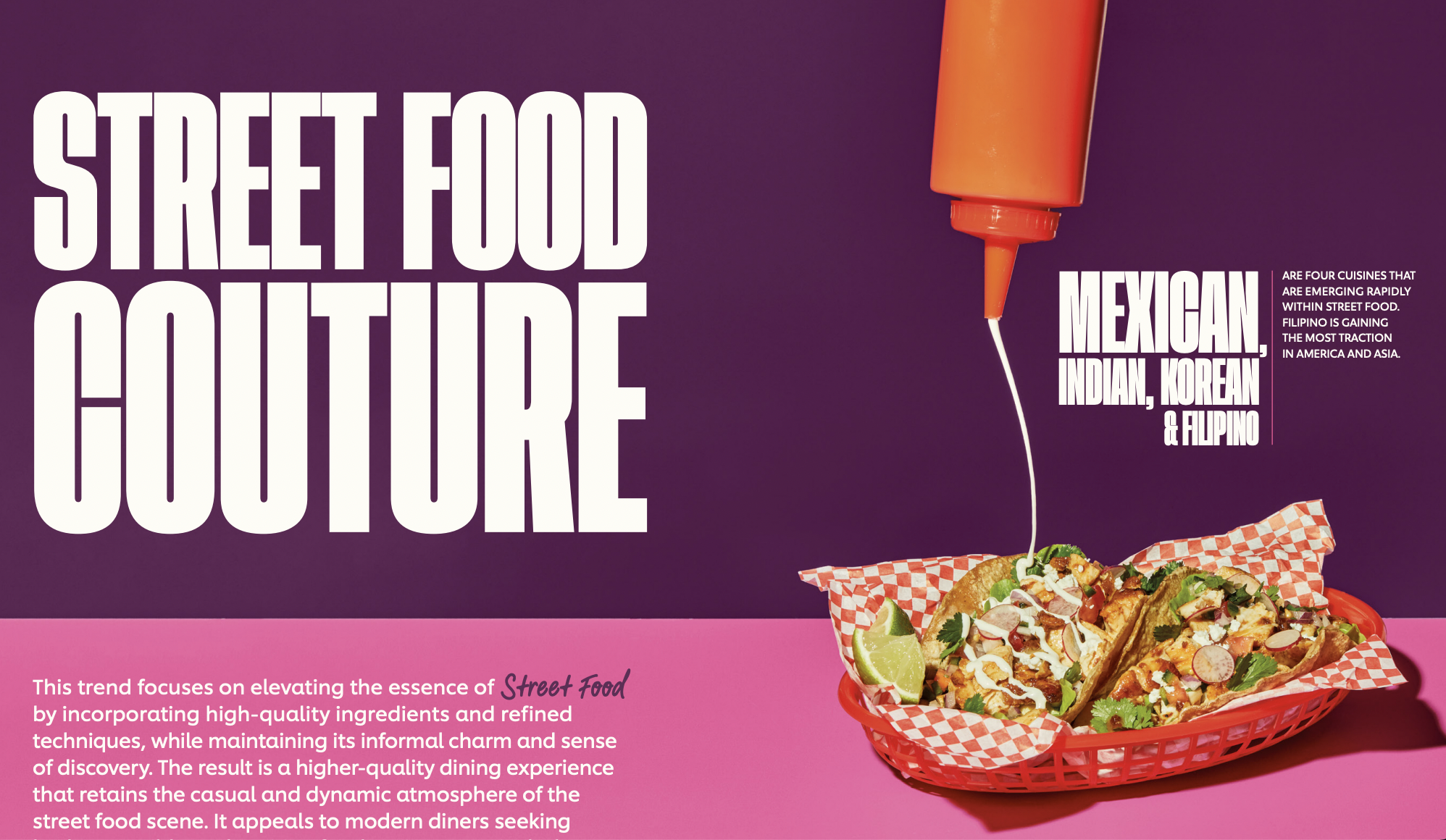
Street Food Couture: Street food has moved far beyond its humble origins, with chefs across Canada elevating global street eats into refined, chef-driven creations. UFS notes that Gen Z diners are especially drawn to this category, seeking value for money while still demanding high-quality, flavourful experiences.
Toronto’s thriving night markets and pop-ups have become test kitchens for Filipino, Indian, Mexican, and Korean-inspired dishes. Restaurants such as Lamesa and Tita Flips are cited as leading examples of how Filipino cuisine is capturing local palates. Canadian twists on street food, such as butter chicken roti and Indian-style pizza, exemplify how these flavours are being adapted for domestic audiences.
Borderless Cuisine: Canada’s multicultural makeup is accelerating the rise of fusion cuisine. According to UFS research, 73 percent of Canadians say they enjoy experiencing other cultures through food, while 57 percent report being more open to ethnic foods now than before.
This openness is inspiring chefs to create dishes that blend traditions in unexpected ways — think Vietnamese-inspired pizza, Latin American spices layered into Canadian classics, or Kamayan-style communal feasts designed for a contemporary audience. Borderless Cuisine is not only a culinary movement but also a reflection of globalization and migration patterns, with kitchens serving as cultural meeting grounds.
Culinary Roots: While Canadian diners are eager to try international flavours, they are also seeking authenticity and connection to local heritage. Culinary Roots emphasizes the rediscovery of regional ingredients and Indigenous techniques, including smoking, fermenting, and open-fire cooking.
Chefs across the country are reimagining menus that honour both Canada’s Indigenous traditions and immigrant foodways, giving diners a deeper connection to place and identity. This trend also ties into the growing movement toward sustainability and local sourcing, as chefs look to reduce food miles and celebrate seasonal ingredients.
Diner Designed: Personalization is no longer a novelty; it has become an expectation. Diners want to curate their own experiences, from choosing flavour profiles to designing their meals through digital interfaces. According to UFS, 47 percent of consumers now prefer to spend money on experiences rather than material goods, a figure that is reshaping how restaurants think about service and menu design.
At the Toronto launch, this trend was brought to life with an AI-powered dessert activation, allowing guests to create custom desserts guided by algorithmic recommendations based on a brief survey. This example reflects a broader shift toward experiential dining where technology meets creativity.
Matty Matheson and Digital Culture Take the Stage
Adding to the buzz was Chef Matty Matheson, owner of Prime Seafood Palace and a celebrated figure in Canada’s culinary scene. Matheson spoke about how global culinary shifts are influencing Canadian menus and emphasized the importance of creativity and risk-taking in kitchens.
Digital food culture also had a presence, with mukbang influencers Tasmin and Maxwell sharing their perspectives on how trends like Street Food Couture are playing out online. Their involvement underscored the growing intersection of food media, social platforms, and dining decisions, with platforms like TikTok and Instagram acting as amplifiers for emerging trends.
Implications for the Foodservice Industry
For Canadian chefs and foodservice operators, Future Menus 2025 provides actionable insights, recipe ideas, and strategies for integrating these trends into menus while staying profitable. UFS supports operators with training, menu engineering, and practical tools to make trend adoption seamless.
In an era where consumers are more informed and experimental than ever, staying ahead of these shifts can be critical to business success. By anticipating what diners will crave next, restaurants can position themselves to meet demand and stand out in an increasingly competitive marketplace.
Unilever Food Solutions operates in more than 75 countries and accounts for 20 percent of Unilever’s Foods Business Group. Its chef-led model and power brands, including Knorr Professional and Hellmann’s, allow it to influence culinary innovation at scale.
Bringing Future Menus 2025 to Canada signals a recognition of the country’s evolving food culture and its role in the global culinary dialogue. As Canadian cities continue to diversify and experiment, this annual report may serve as a roadmap for the industry, pointing toward a future where street food can be couture, borders dissolve on the plate, and diners play a starring role in designing their own meals.