As Canadian grocers invest billions into e-commerce infrastructure, AI personalization, and retail media networks, new research suggests the physical grocery store remains the country’s most effective environment for turning product discovery into purchasing behaviour.
The findings arrive during a period of major transformation within Canadian grocery retail. Consumers are increasingly engaging with digital platforms, retailers are expanding omnichannel capabilities, and food inflation continues reshaping household spending habits. Yet despite that rapid evolution, the physical aisle still appears to play an outsized role in influencing what Canadians ultimately decide to try.
Research from Leger found that 47% of Canadians made an unplanned purchase of a new food or beverage product while shopping in-store during the previous three months. By comparison, only 30% reported making similar spontaneous purchases while shopping online.
The gap highlights a broader reality emerging across Canadian retail: digital channels may shape awareness and consideration, but physical grocery stores remain highly effective at converting interest into trial.
Consumers Are Becoming More Deliberate About Spending
The findings come as grocery affordability remains a growing concern for Canadian households.
Canada’s Food Price Report 2026 estimates that a family of four will spend $17,571.79 on food this year, representing an increase of nearly $1,000 over 2025. Food prices are now approximately 27% higher than they were in 2021, with categories such as beef continuing to experience significant price increases.
That environment is influencing how consumers evaluate new products. Rather than responding strongly to broad advertising campaigns or aspirational branding, Canadians appear more focused on practical value, usefulness, and perceived purchasing confidence.
Leger found that 77% of Canadians remain open to trying new food and beverage products, but the strongest trial drivers were directly connected to tangible value. Sampling and tasting influenced 46% of respondents, while promotions, coupons, and value for money each influenced 45%.
Traditional advertising demonstrated surprisingly weak influence. Only 7% of Canadians said advertising motivated them to try a new product.
The findings suggest Canadian consumers are becoming more selective about the information they trust, particularly as higher food costs force households to scrutinize discretionary spending more carefully.
“Canadians are not lacking information. They are selective about what earns their attention and what ultimately shapes their behaviour,” the report noted.
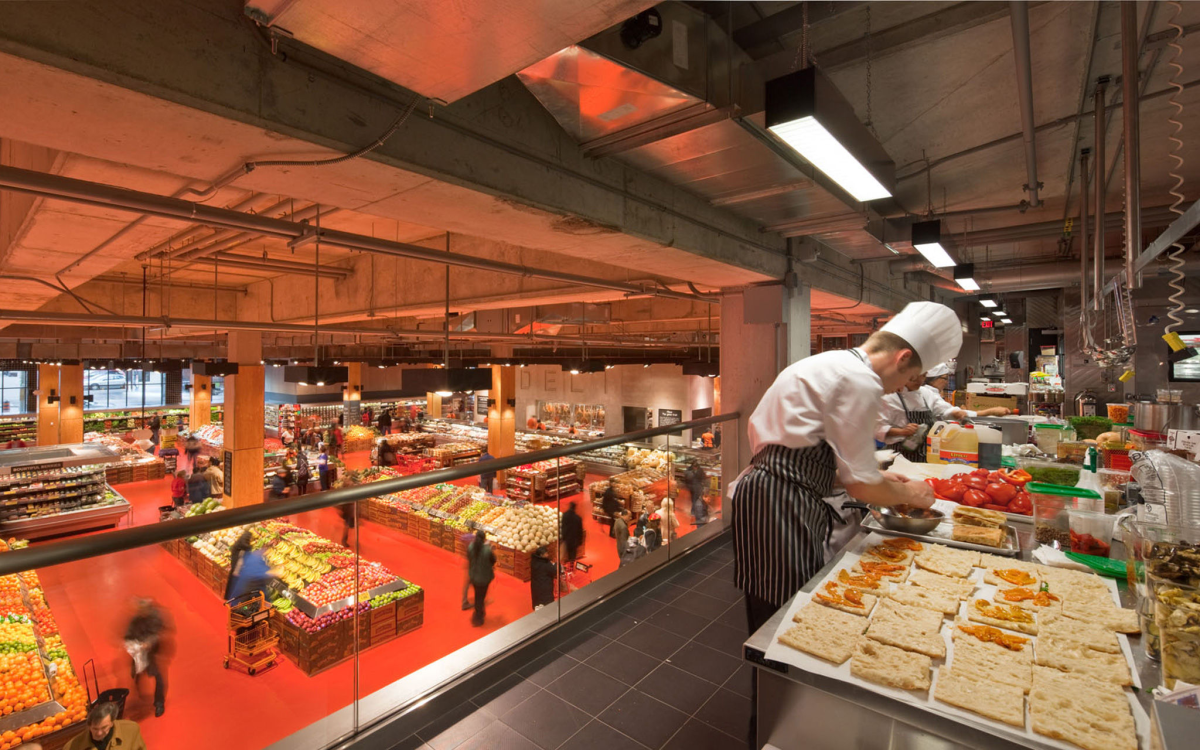
Grocery Stores Continue to Function as Discovery Environments
The research reinforces the continuing strategic importance of physical merchandising within Canadian grocery retail.
While consumers increasingly encounter products through fragmented digital touchpoints, including Facebook, Instagram, TikTok, streaming platforms, and retailer apps, the in-store environment continues to exert unusually strong influence at the moment purchasing decisions are actually made.
According to the report, 32% of Canadians discover products through in-store shelves and signage, slightly ahead of Facebook at 31% and television at 30%. Family recommendations also remain highly influential at 29%.
That distinction matters because grocery shopping often operates differently than other forms of e-commerce. Many consumers enter stores with only partial shopping lists, navigate aisles while comparing prices and promotions, and remain highly susceptible to visual interruptions, endcaps, packaging, displays, and sampling opportunities.
In that environment, the grocery shelf functions as more than a fulfillment mechanism. It becomes a behavioural conversion point where curiosity, convenience, pricing, and physical visibility interact simultaneously.
The findings also help explain why Canadian grocers continue investing aggressively in store modernization and retail media infrastructure.
Retail media now captures roughly 20% of all digital advertising spending in Canada, with expenditures increasing nearly 20% year-over-year as brands shift budgets toward closed-loop retail ecosystems capable of directly measuring purchase behaviour.
Major Canadian grocery operators are rapidly expanding those capabilities.
Loblaw Companies Limited is investing approximately $2.4 billion in 2026, including plans to open 70 new stores while continuing to expand automation infrastructure designed to improve e-commerce efficiency. Walmart Canada is advancing AI-driven personalization tools and expanding in-store digital media networks, while Empire Company Limited continues building first-party data and off-site media capabilities connected to its grocery platforms.
The findings suggest those investments are tied to a broader strategic objective: monetizing consumer attention during active shopping moments.
Online Grocery Still Struggles With “Discovery”
The report also highlights one of the continuing structural challenges facing grocery e-commerce platforms.
Canada’s online grocery market is now valued at approximately $3.84 billion USD, with click-and-collect accounting for roughly 46% of all online grocery orders. Consumers continue embracing digital convenience, particularly when avoiding delivery fees, but online grocery platforms still face limitations in replicating the spontaneous experimentation that occurs naturally inside stores.
The contrast between in-store and online impulse behaviour illustrates that challenge clearly.
Nearly half of Canadians reported making spontaneous in-store purchases of new products, substantially higher than the 30% who reported similar behaviour online.
That gap points toward a growing issue within grocery e-commerce often described as a “discovery gap.” Digital grocery platforms perform efficiently when consumers are replenishing known items or shopping from predetermined lists. However, they remain less effective at recreating the sensory and behavioural conditions that encourage experimentation.
Physical grocery stores still hold major advantages in areas such as visibility, tactile engagement, impulse merchandising, sampling, and real-time comparison shopping.
The challenge is particularly important because product trial often drives higher-margin purchases and increases basket size, both of which remain strategically important for grocers operating in a highly competitive and inflation-sensitive environment.
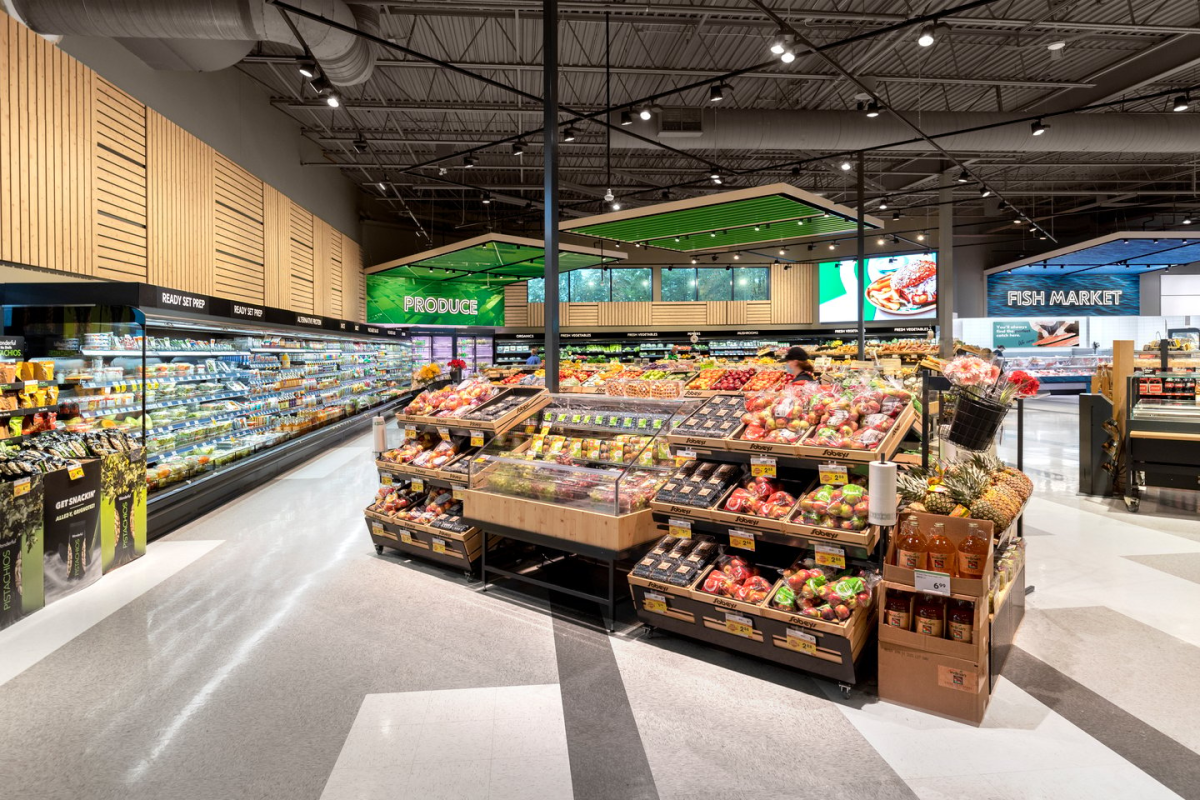
Utility and Trust Are Becoming More Important Than Branding
Another notable takeaway from the research is the growing shift toward utility-driven consumer engagement.
Canadians continue consuming large amounts of food-related content, but they increasingly prioritize practical information over traditional brand messaging. Leger found that 46% of consumers actively seek recipes, while 40% search for deals and savings opportunities.
At the same time, many consumers appear skeptical about the broader influence of marketing itself. Only 43% of Canadians said food information meaningfully impacts their purchasing behaviour, while 57% reported that such content has little or no influence.
Even social media influence appears more nuanced than many marketers assume.
Younger consumers remain more likely to discover products through Instagram and TikTok, yet trust in those platforms trails more traditional and interpersonal sources. Family recommendations and in-store sampling ranked significantly higher in perceived reliability.
One of the report’s more surprising findings showed that flyers continue outperforming many digital channels in trust, particularly in Quebec and Atlantic Canada.
That persistence reflects how Canadian grocery shopping behaviour continues evolving in layered and sometimes contradictory ways. Consumers may browse recipes on social media, use retailer apps, and order groceries online, yet many still rely heavily on practical value cues, trusted recommendations, and highly visible in-store merchandising when making final purchasing decisions.
“Digital channels may continue to grow in reach, but the shelf remains one of the most effective places to convert interest into trial,” the report stated.
In many ways, the findings challenge the assumption that digital commerce is replacing physical grocery retail. Instead, they suggest the industry is evolving toward a hybrid model where digital platforms generate awareness and convenience, while stores remain the critical environment where discovery, trust, and purchasing decisions ultimately converge.