Slow checkout lines and outdated payment terminals aren’t just an inconvenience anymore, they’re costing retailers real sales. Oobit surveyed 1,000 U.S. adults and found that a meaningful share of shoppers are walking out the door the moment a business can’t keep up with how they actually want to pay. For retailers still relying on swipe-only setups, the data is a clear signal that the checkout experience itself has become a competitive risk.
Key Findings:
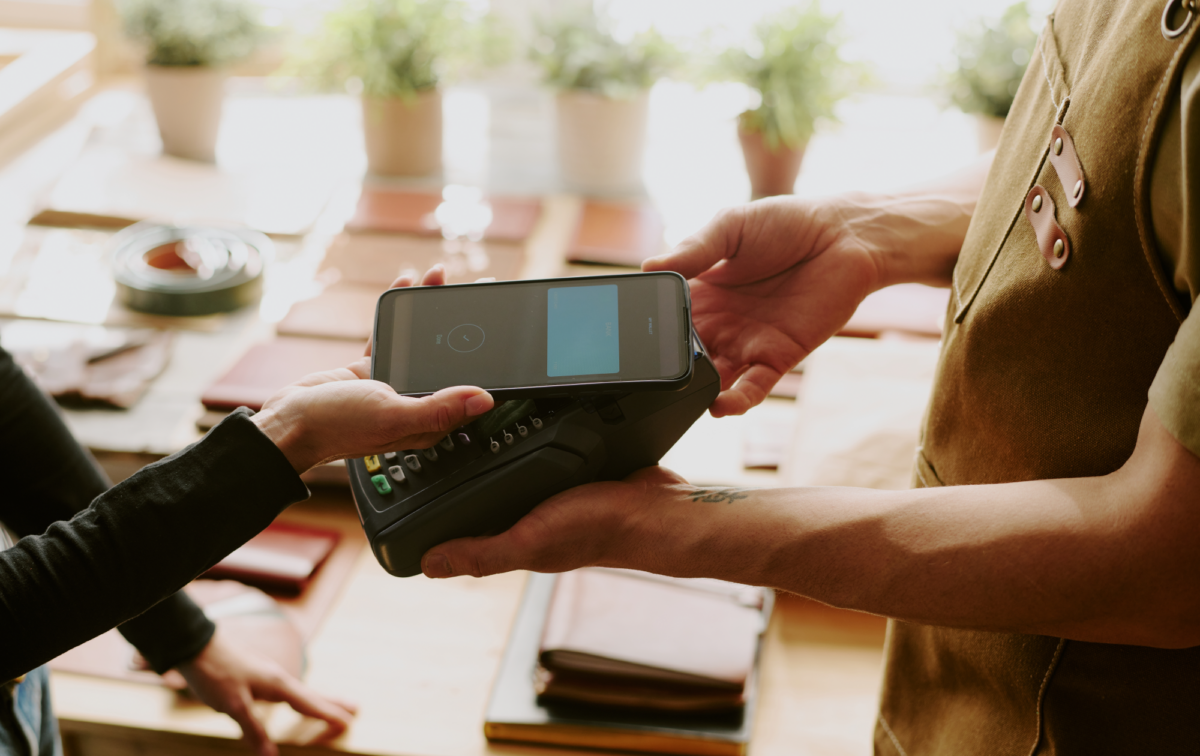
- Over 1 in 4 American adults (28%) have walked away from a purchase because the merchant didn’t accept tap-to-pay.
- 44% say a no-tap business feels outdated, a perception problem that compounds the lost sales.
- Gen Z shoppers are more than twice as likely as baby boomers to abandon a non-tap purchase (36% vs. 14%), a warning sign for retailers trying to win younger customers.
- More than half of Americans (56%) used phone tap-to-pay in the past 30 days, meaning the customers retailers are losing aren’t a fringe group, they’re the mainstream.
- 1 in 4 American adults (25%) leave their wallet at home either deliberately or without thinking, including just over 1 in 10 (11%) who say they no longer feel they need it.
- More than 2 in 5 Gen Z Americans (41%) treat their phone or smartwatch as their primary payment method, compared to 1 in 4 American adults nationally (25%).
You can explore the full study here.
In an interview with Retail Insider, Bernard Fisher, CMO, Oobit, discusses the survey findings.

Question: Your survey found that 28% of consumers have abandoned a purchase because tap-to-pay wasn’t available. What does that tell us about how consumer expectations at checkout have evolved?
Answer: In this context, the number seems to be a clear indicator that tap-to-pay has reached the level when it should not be considered nice to have but expected. In light of 27% of adults deciding not to complete transactions because a shop did not accept tap-to-pay and 44% of respondents finding it old-fashioned when a store did not accept taps, checkout friction has become a deal-breaker for many customers. People have grown accustomed to paying in one swipe. As soon as a retailer expects them to fish a card out of a pocket, the convenience of paying in one click breaks and the consumer does not hesitate to leave.
Q: Gen Z is far more likely than baby boomers to walk away from retailers that don’t accept tap-to-pay. How should retailers adapt their payment strategies to meet the expectations of younger shoppers?
A: The fact that members of Generation Z are almost twice as likely (36% vs. 14%) to avoid stores that do not accept taps indicates how much this trend can grow in the near future and how the retail market will change. Retailers interested in attracting young consumers cannot consider contactless payments a premium service and need to ensure that their terminals are equipped with NFC capabilities. Besides, retailers need to train their employees and consider potential implementation of cryptocurrencies and stablecoins stored in a wallet. Members of Generation Z and younger consumers who tend to use smartphones as primary devices are the most convenient group concerning in-wallet cryptos.
Q: Beyond avoiding lost sales, what other business benefits do retailers gain by modernizing their payment systems, such as improved customer loyalty or operational efficiency?
A: There are several ways how faster checkout can benefit retailers, even if they are not directly visible in a single transaction. Shorter queues mean increased checkout throughput during busy hours and are particularly important for quick-service and high-volume retail. Modern payment infrastructure, especially linked to mobile devices, provides for richer transactional data for developing personalized loyalty programs. Finally, the perception aspect: 44% of adults perceive no-tap checkout as being “outdated.” By modernizing the payment process, a retailer signals customers that it is a modern and reliable company, not only fast.
Q: What are the biggest barriers preventing some retailers—particularly small and independent businesses—from adopting newer payment technologies, and how can they overcome them?
A: However, there is little reason to doubt that the barriers to implementing faster payment are usually related to cost, complexity, and inertia instead of the skepticism towards the technology itself. Terminal upgrade, renegotiation of processor contract, staff training all take some time and initial investment, which is hard to justify for a business with low margins. Moreover, many independent retailers stick to whatever infrastructure their processor provided initially and never update it. For example, modern POS providers already provide for NFC capability as a part of the package. Therefore, many smaller businesses are able to upgrade their checkout process simply by switching processors at a natural renewal date without any large investments.
Q: With ongoing economic uncertainty and consumers being more selective about where they spend, how important is a seamless checkout experience in helping retailers remain competitive and capture every potential sale?
A: When consumers are more selective about purchases, they become less patient in terms of payment and less willing to experience any unnecessary friction. Seemingly small issues can become reasons to abandon the shopping idea. Moreover, combined with the fact that nearly half of all adults find losing their phone more problematic than losing a wallet, payment convenience became an integral part of the approach to spending money. In such conditions, a retailer has to care not only about the quality and pricing of its products. Payment process became a part of the customer value proposition.
More from Retail Insider: