As a regular contributor to Retail Insider, I can’t help noticing the differences in retail whenever I travel. I’ve spent considerable time exploring South Africa’s retail landscape over several visits, including trips documented in Retail Insider’s Sandton City, Menlyn Park and Mall of Africa tours. What continues to strike me is how department stores remain woven into the shopping experience here. The combination of retail, dining and social activity at these centres often makes me reflect on the role department stores once played in Canadian malls, and how much that landscape has changed.
Then came the news that Australia’s David Jones entered voluntary administration on November 5. Founded in 1838, the chain was previously owned by South Africa’s Woolworths Holdings, which sold it to Anchorage Capital Partners in a transaction completed in 2023. David Jones is still trading under receivership, but its future is uncertain.
It’s hard to read that story without thinking about Canada. We’ve watched Woolco, Eaton’s, Sears Canada and Hudson’s Bay disappear, and Nordstrom’s departure left enormous vacancies in some of our best shopping centres. I keep coming back to the same question: did Canadians stop wanting department stores, or did too many department stores stop giving us a reason to visit?
Where Did Canada’s Department Stores Go Wrong?
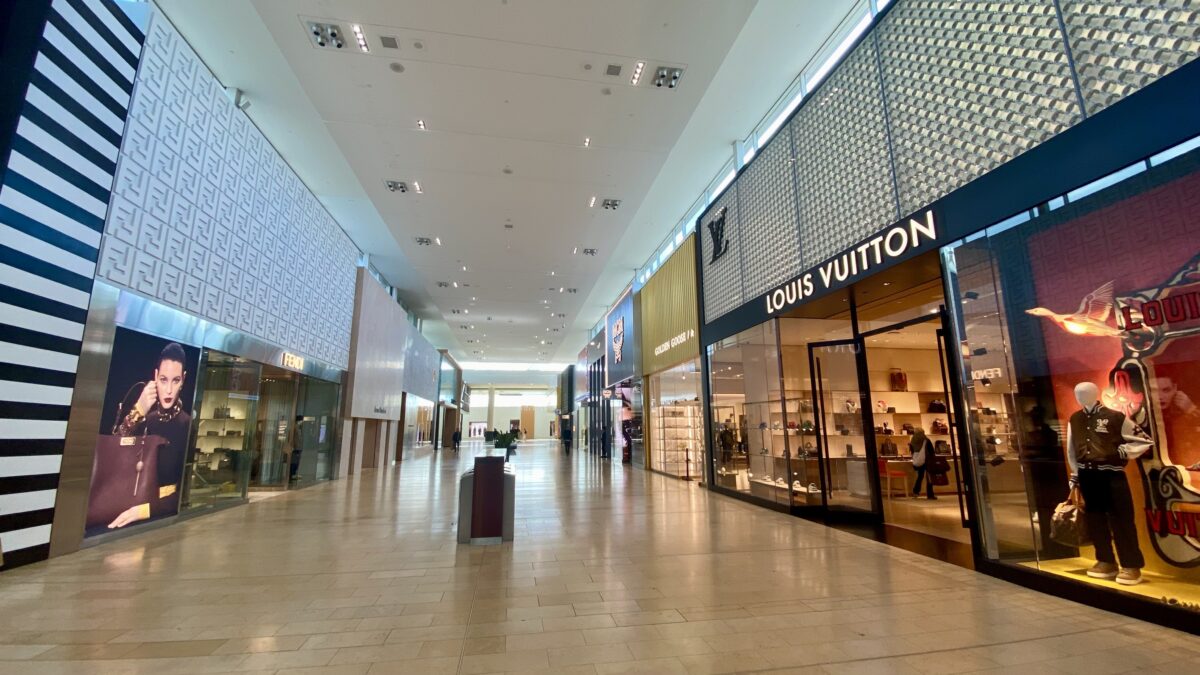
Our department-store decline started long before Amazon.ca became a household habit. Woodward’s, once a major force in Western Canadian retail, went bankrupt in 1993, while Walmart acquired the leases of 122 Woolco stores in 1994. Simpsons, another historic Canadian department-store name, was gradually absorbed into the Hudson’s Bay network during the 1980s, and Eaton’s went into liquidation in 1999. Zellers largely disappeared after Target acquired many of its leases in 2011, only for Target itself to leave Canada in 2015. Sears Canada followed in 2017. These companies had different problems, and I’m wary of any explanation that treats them as one long, inevitable collapse. Competition, investment, merchandising, ownership and the cost of operating large stores all mattered, but not in identical proportions.
Hudson’s Bay is the most disappointing example for me. A retailer whose origins date to 1670 entered creditor protection in March 2025 and subsequently liquidated its stores. Over its final years, too many locations felt tired, with inconsistent merchandise presentations and little sense that the company was giving customers something worth going out of their way to see. It’s reasonable to question whether successive owners invested enough in the stores and whether the retail business received the attention it needed. That doesn’t mean a particular ownership decision explains everything, or that the company’s real estate alone brought it down. But the condition of the stores was visible to anyone who spent time walking through them.
What interests me is how many of the shopping centres that housed these retailers remain desirable properties. In some cases, landlords have found new tenants willing to invest heavily in spaces the former anchors could no longer support. The retailer and the real estate weren’t necessarily facing the same problem.
Canadians Still Go Shopping
COVID changed how Canadians shop, and I don’t think there’s much doubt about that. Delivery became routine, Amazon.ca became more deeply embedded in household habits, and categories once purchased in person became easy to order from a phone. Statistics Canada’s retail-trade data put e-commerce at approximately 3.5% of Canadian retail sales in 2019 and around 7% in 2025. That measure doesn’t cover every online transaction, but it captures the lasting shift in the retail sector. It doesn’t tell us that Canadians stopped going to shopping centres.
Look at Yorkdale in Toronto, where Oxford Properties reported sales productivity of approximately $2,368 per square foot in 2025. Yorkdale is exceptional, and plenty of secondary properties face much harder conditions. Still, the strength of leading centres makes it difficult to argue that physical shopping itself has lost its appeal.
I suspect shoppers have become less forgiving of stores that offer nothing beyond merchandise they can order elsewhere. That is a different problem from the disappearance of demand for shopping centres, and it changes how we should look at the department-store closures.
The Landlord’s Department-Store Problem
The financial difficulties facing Australia’s David Jones become particularly interesting when viewed from a landlord’s perspective. In its November 4 operating update, Scentre Group disclosed that David Jones occupied approximately 200,000 square metres across 17 Westfield shopping centres in Australia. Despite that substantial footprint, the retailer accounted for approximately A$45 million in annual gross rent attributable to Scentre, representing just 1.8% of the group’s total gross rental income.
The rent comparison caught my attention. Scentre reported David Jones gross rent of A$352 per square metre, against A$942 across its portfolio. Department-store rents have traditionally been lower than specialty-store rents because anchors were expected to draw customers for the rest of the centre, so those figures aren’t a like-for-like test of value.
But the relationship only works while the anchor earns its place. When a department store occupies an enormous amount of space and no longer brings the traffic or sales it once did, the landlord has to consider what else could occupy that floor area.
Scentre disclosed about A$30 million as its share of bank guarantees supporting the leases, equivalent to eight months of gross rent, and confirmed that David Jones had paid rent through September 30. The financial exposure is real, but so is the contrast with Scentre’s wider business: 99.8% occupancy, 554 million customer visits over the preceding year and A$30.5 billion in annual tenant sales. There’s also an example of the alternative already in Scentre’s portfolio. At Westfield Tuggerah, a A$20-million redevelopment of former David Jones space has brought in JD Sports and rebel, with Scentre reporting a 6.2% increase in visitation in the eight weeks following their openings. It’s a property-specific result, not proof that every department-store subdivision will work, but it shows what a landlord can gain from reconsidering an old anchor.
Canadian landlords know the other side of this calculation. Replacing a Sears, Nordstrom or Hudson’s Bay can mean years of planning, expensive construction and complicated leasing. Retail Insider has documented how those former anchors are being divided among specialty retailers, food, services and entertainment, with very different prospects from one property to the next.

South Africa Has Its Own Department-Store Problems
It’s tempting, looking around South African malls, to conclude that the department store is simply healthier here. Woolworths and Edgars remain familiar names, but neither is immune to the pressures that affected Canadian retailers. Woolworths Holdings reported growth in South African Fashion, Beauty and Home sales for fiscal 2026, alongside a 14.1% decline in adjusted operating profit. Its food business performed much better. Seeing a strong Woolworths store in a shopping centre doesn’t tell you that every part of the business is performing equally well. Edgars survived the collapse of its former parent, Edcon, but its footprint has changed. At Walmer Park Shopping Centre in Gqeberha, Growthpoint Properties invested R75 million in a redevelopment that included resizing Edgars to a little over 2,000 square metres and opening space for additional tenants. The reconfigured store opened in July 2026.
I like that example because the landlord didn’t have to choose between keeping the department store exactly as it was and losing it altogether. It kept Edgars in a smaller format and gave other retailers room to operate. There is no reason to assume the footprint that worked twenty years ago is still the right one.
South Africa’s e-commerce market is growing too, with Takealot well established and Amazon.co.za expanding. I wouldn’t attribute the continued prominence of physical shopping here to a simple lack of online alternatives. The malls I’ve visited offer something broader than a collection of stores, and that remains valuable even when customers can order goods online.
La Maison Simons Is Making a Different Bet
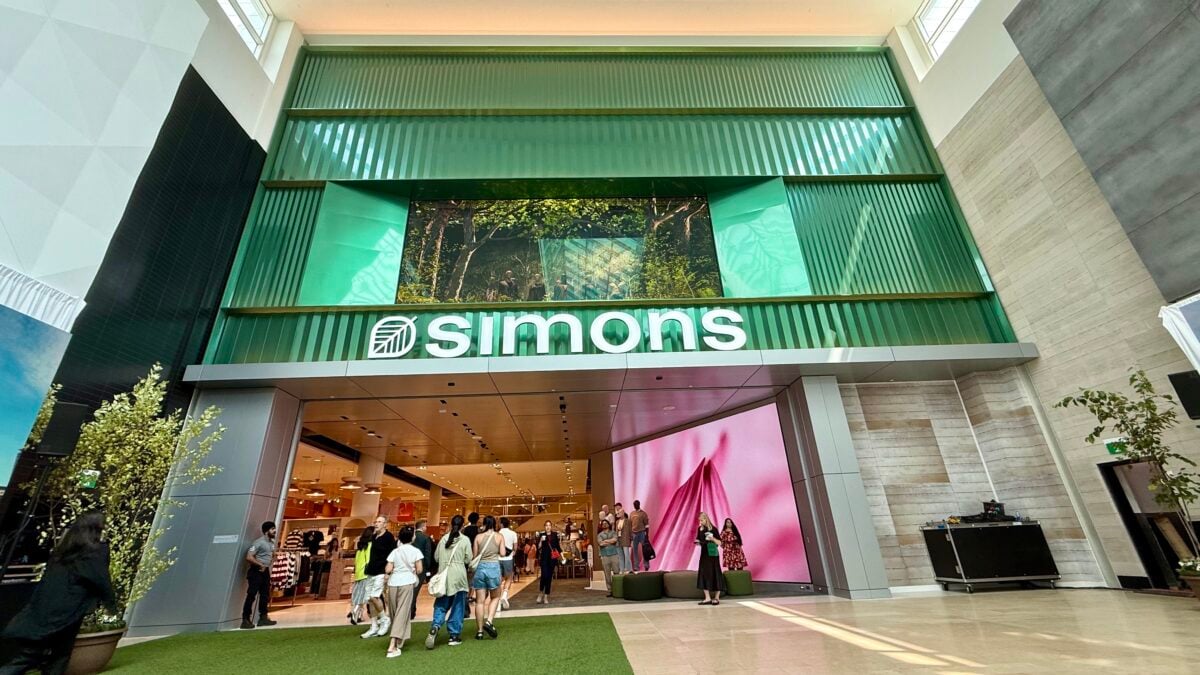
Back in Canada, Simons is doing something that would have sounded improbable during the final years of Sears and Hudson’s Bay. It’s expanding, including into former Nordstrom locations at Yorkdale and CF Toronto Eaton Centre, with another store planned for CF Pacific Centre in Vancouver in fall 2027.
Vancouver illustrates how the anchor model is changing. The former Nordstrom occupied about 230,000 square feet; Simons is taking roughly 92,000, while Aritzia is developing approximately 41,800 square feet and UNIQLO about 37,000. Retail Insider’s examination of the former Nordstrom stores shows how landlords are distributing large floor plates among several retailers instead of waiting for one replacement of equal size.
What appeals to me about Simons is its willingness to give the store a point of view. Private labels, contemporary fashion, home merchandise and designer brands sit together in a way that encourages browsing. You can visit with something specific in mind and still find something unexpected. I’ve paid particular attention to Édito, its designer-fashion department. Retail Insider’s coverage of the Yorkdale opening documented a substantial selection of international labels, while its Toronto Eaton Centre reporting detailed the mix of private labels and designer merchandise. Édito gives the retailer a reason to be visited that goes beyond a rack of familiar basics. The question is how much discovery a retailer can afford to offer, and where. Designer brands bring inventory risk and require careful buying, but they can also make the wider store more interesting to customers who might otherwise go directly to a specialty retailer or shop online.
Holt Renfrew is another reminder that Canada hasn’t lost every domestic department-store operator. Its luxury positioning and brand-focused selling model differ from Simons’ broader assortment, and neither approach is immune to the cost of carrying inventory and operating large stores.
I wouldn’t suggest that Simons has discovered a formula Hudson’s Bay could simply have copied. It is much smaller, selective about its locations and benefiting from access to prime real estate vacated by competitors. Even Peter Simons has resisted describing the business as a conventional department store, which says something about how deliberately the company distinguishes its format.
Still, it’s hard to argue that Canadians have no appetite for department stores when a Canadian retailer is committing substantial capital to a modern version of the idea. The format may need a different size, merchandise mix and operating model, but it hasn’t disappeared from the possibilities.
Did They Have to Disappear?
Following the David Jones news from South Africa has made me think about how quickly familiar retail institutions can become memories. Canada lost some remarkable names, and I doubt every one of them could have been saved, even with better management or more investment.
What I don’t accept is that their disappearance proves Canadians stopped wanting to shop in person. Our strongest malls are still doing business, landlords are finding new uses for old anchor spaces, and Simons is making a substantial bet that customers will visit a store offering something worth discovering.
Perhaps Canadians didn’t stop wanting department stores. Perhaps too many department stores stopped giving Canadians a reason to want them.