The holiday shopping season is here. Black Friday crowds, packed parking lots and stretched store staff create a security challenge that retailers can plan for now.
Cathal Walsh, Vice President, Physical Security and Chief Security Officer at Guidepost Solutions advises organizations on physical security programs that protect people and property without disrupting the customer experience.
In an interview with Retail Insider, Walsh spoke about safety and security issues for retailers at this time of the year.

With Black Friday and the broader holiday shopping season approaching, what are the biggest physical security risks retailers, shopping centres and other commercial venues should be preparing for, and what steps should they take now to mitigate them?
Retailers face a myriad of threats particularly during the holiday season with a significant increase in shoppers. Threats are omnipresent and vary from individual shoplifting, internal pilferage, organized retail theft, flash mobs and vandalism. From a safety perspective slip and fall, crowd density, assault and battery, etc. pose significant challenges. An OSHA (Occupational Safety and Health Administration) assessment should also be conducted prior to the event to ensure there are no blocked exits or impediments, fire hazards, and address the risk of falling merchandise.
Retailers may want to prepare for the holiday season by assessing their current security and safety posture. Larger retailers often have corporate security (asset protection & loss prevention) teams that work to identify threats typically grounded in historical incidents and current trends. Local managers should reach out to their corporate security partners to understand the threats and seek advice on how they can adequately maintain a safe and secure environment.
Planning for large crowds should occur months before the event. Understanding local laws, permit ordinances, and law enforcement requirements should be communicated well in advance. Coordination with local law enforcement, corporate security, private security, emergency services, and other retailers to leverage a whole of community approach to security and safety for managing large crowds will take time.
Large crowds, long lineups and doorbuster promotions can create safety challenges during peak shopping periods. What are the most effective strategies retailers can use to manage crowd flow, control store entry points and prevent potentially dangerous situations?
When large, big-box retailers offer popular promotions, they should anticipate large crowds. When the doors are closed, customers often form lines that build up often around the block.
Failure to plan and foresee incidents arising from the lack of crowd control management may lead to injury, initiating premises liability, civil, and criminal lawsuits.
With this in mind, retailers should coordinate with local law enforcement and fire department officials to determine the best way to manage both pedestrian and vehicular traffic. For safety purposes, Fire Department officials can limit the number of shoppers in the store at any one time enforcing strict capacity limits. The plan should ensure the crowd is not pressed up against the main doors, which could cause crushing leading to asphyxiation. Maintain a stand-off distance by the main doors and deploy a serpentine queue formation to reduce pressure on the crowd. These queue formations should include blowout gates that further facilitate the release of crowd pressure should it be necessary. Having authorized individuals actively communicating with the crowd demonstrates an authoritative voice with calmness, sets expectations, and provides direction.
Further shoppers can be issued tickets or wristbands that are associated with a particular merchandise item. When enough shoppers account for the number of items, other shoppers can be made aware those items are no longer available. This aids with crowd management and manages the customer experience.

Organized retail crime remains a concern for retailers, particularly during busy shopping periods. What practical security measures can businesses implement to reduce theft and protect employees without creating an intimidating shopping environment for customers?
There are several security program strategies to dissuade organized retail crime. These include leveraging technology, operational, and physical space planning. Technology includes deploying video surveillance cameras, smart tags, and RFID technology to identify and detect potential theft. Operationally, employees should receive training that includes active customer service greeting each individual as they enter the store. This approach is not only respectful, it also demonstrates to potential criminals that they have been noticed and may have difficulty roaming the store without supervision. Space planning incorporates removing secluded areas of the store by reconfiguring layouts, increase lighting, and maintain a neat and organized store may aid in reducing theft. Further, relocating high-priced and easily concealed items to more secure locations reducing loss. Comprehensively these tactics may create a challenging environment for organized crime to operate in reducing theft.
Moreover, retailers should recognize patterns of behavior that organized retail crime groups employ including working in groups, price switching, gift card and return fraud. It should be noted that retailers should never physically engage with criminals and notify law enforcement when safe.
Parking lots and shopping centre perimeters are often overlooked when retailers develop security plans. What should property owners and retailers be doing to improve lighting, surveillance, patrols and overall shopper safety in these areas?
Property owners and retailers should work together to identify and solve security and safety challenges. Perimeter security and safety should include engaging a lighting engineer to perform an assessment of the existing illumination levels adequately support safety. OSHA and the illuminating Engineering Society offer light recommendations to ensure safety and hazard identification. Maintaining adequate lighting levels can support video surveillance cameras identify vehicles, persons, and improved incident management.
The addition of blue light towers to facilitate two-way communication is often observed in parking lots, garages, and on college campuses as a means to support two-way communications. These units are equipped with highly visible blue lights with an intercom and often a surveillance camera to communicate the issue while under observation.
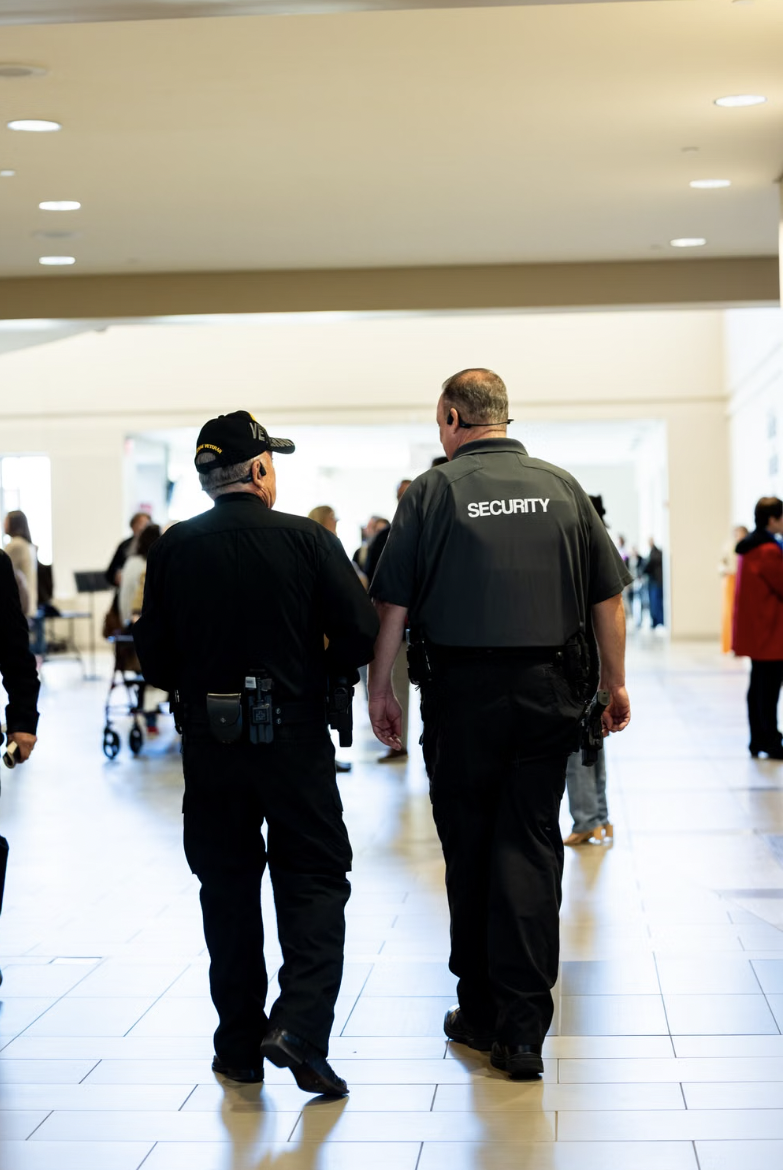
A combination of fixed and roving security patrols strategically positioned can show strong support for creating a safe and secure environment. Ideally, security officers are deployed at main entries, parking lots, food courts, and high-theft areas to dissuade crime.
Many retailers rely on seasonal employees during the holiday rush, while also investing in security technology such as cameras and analytics. How can businesses quickly prepare temporary staff to recognize and respond to security incidents, and where should retailers prioritize technology versus trained personnel?
Similar to full-time employees, seasonal employees should receive training that prioritizes their safety. Employees should receive situational awareness and health & safety training. All employees should be aware of what actions to take during lockdown situations and where to report security incidents. This can include computer-based and in-person training.
In addition to installing surveillance cameras to deter crime and capture incidents for investigative purposes, most retailers are not maximizing all available features. Retailers can leverage video surveillance analytics to advance their business. For example, analytics can aid in proactive loss prevention with real-time automated audio deterrence, occupancy counting, and provide queue management insights. Although technology increases capacity and is considered a force multiplier, it is best used to support trained personnel.
More from Retail Insider: