

A recent survey reveals that despite moderate brand familiarity, American retail giant Nordstrom struggled with low visit frequency in the Canadian market, ultimately leading to its exit due to insufficient consumer engagement.
The recent survey was done by Leger for Retail Insider.

“Following the closure, 67 per cent of former customers turned to other retailers like Hudson’s Bay and La Maison Simons (among others), while 53 per cent expressed disappointment as those consumers had valued the retailer’s selection of clothing, quality products, and overall shopping experience,” said Luc Dumont, Senior Vice-President with Leger.
“This significant emotional impact and the diverse preferences for replacement retailers highlight substantial opportunities for other brands to capture the displaced customer base.”
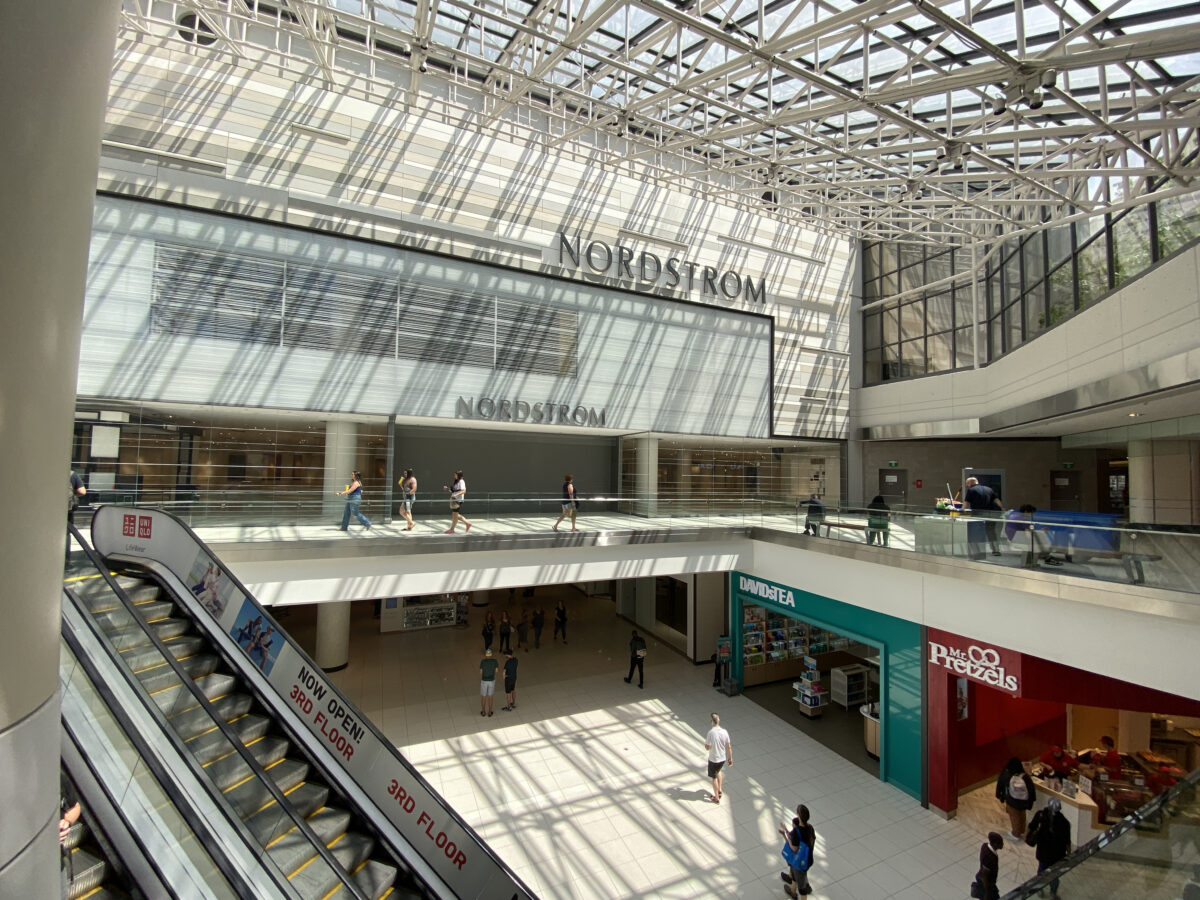
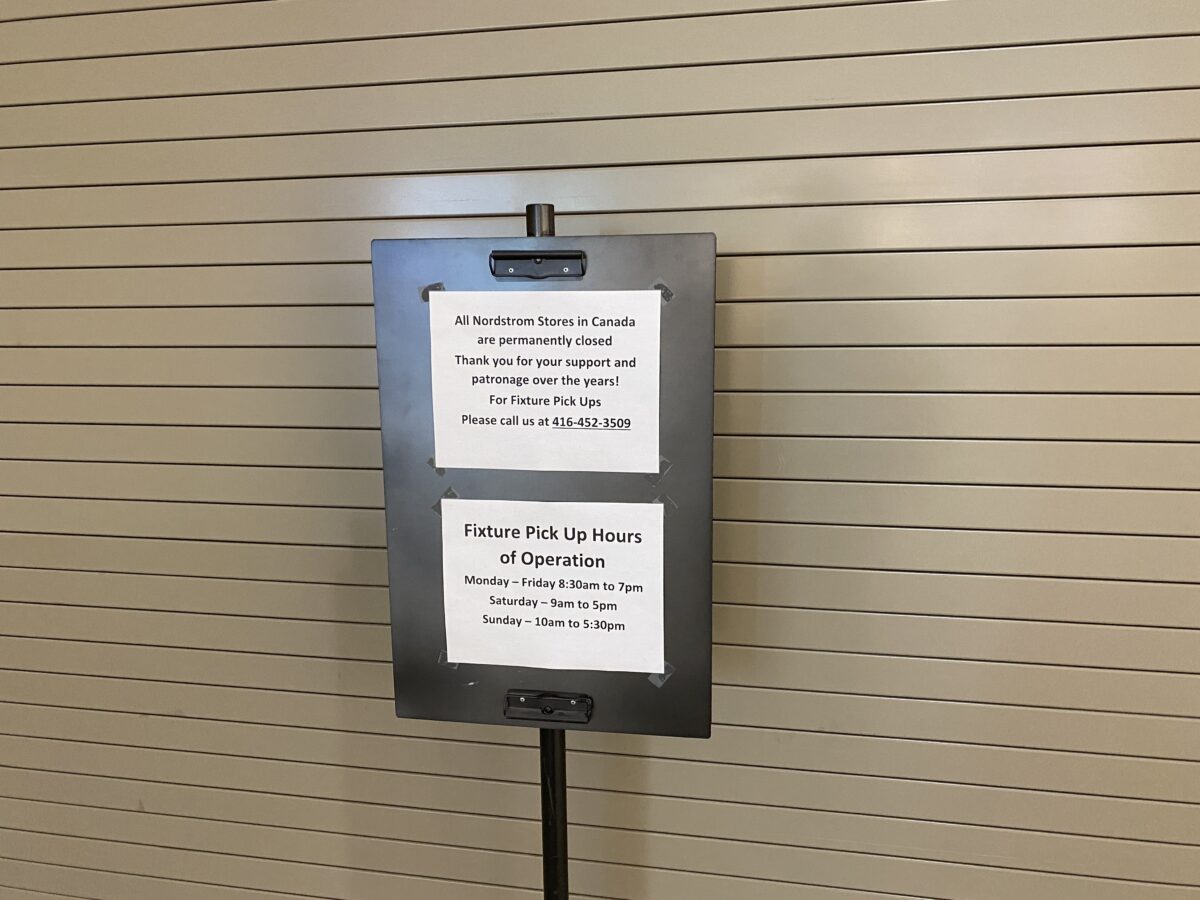
Dumont said the survey didn’t reveal anything super surprising.
“We did see that Nordstrom was recognized by many Canadians. Kind of a moderate awareness level. But as we all saw from its performance, they kind of struggled to turn this recognition into actual floor visits,” he said.
“Even before their departure from the Canadian market we could see that. They were struggling to convert that awareness into shop visits and sales.”
Based on his assessment of the brand’s marketing efforts, or lack thereof, Dumont said he felt that Nordstrom never really knew how to connect with the Canadian consumer which is completely different than the American consumer.
“I don’t have any examples of what that means but I think a lot of people were aligned with that thinking when they were here,” he said.
“Canadian consumers are very unique. Following the closures most shoppers say they adapted by turning to or going back to other retailers like The Bay and Simons, which I feel offer similar experiences in terms of their brand mix and their overall in-store experience.
“But it’s also notable to see that quite a few did not have or say they did not find a suitable replacement. That might highlight a bit of an opportunity for other retailers to fill that gap.”
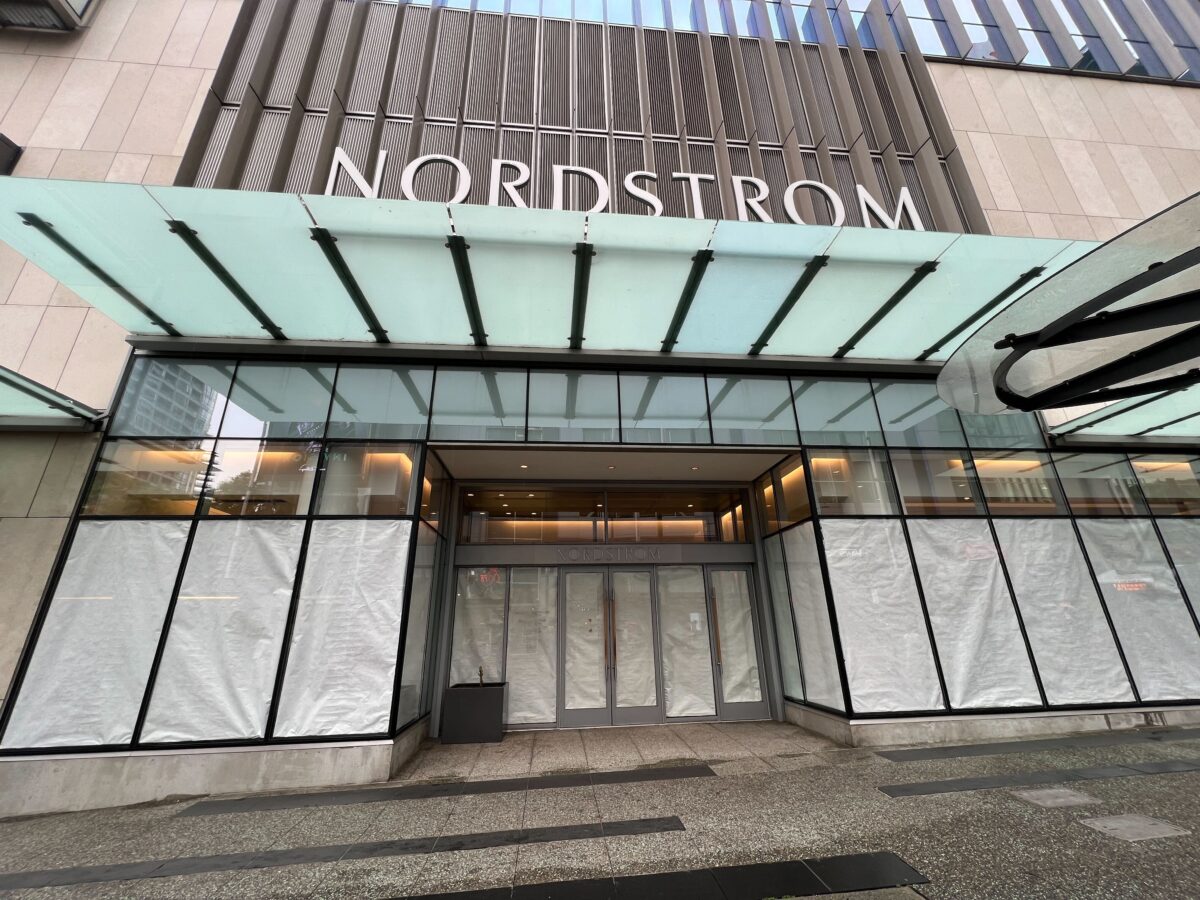
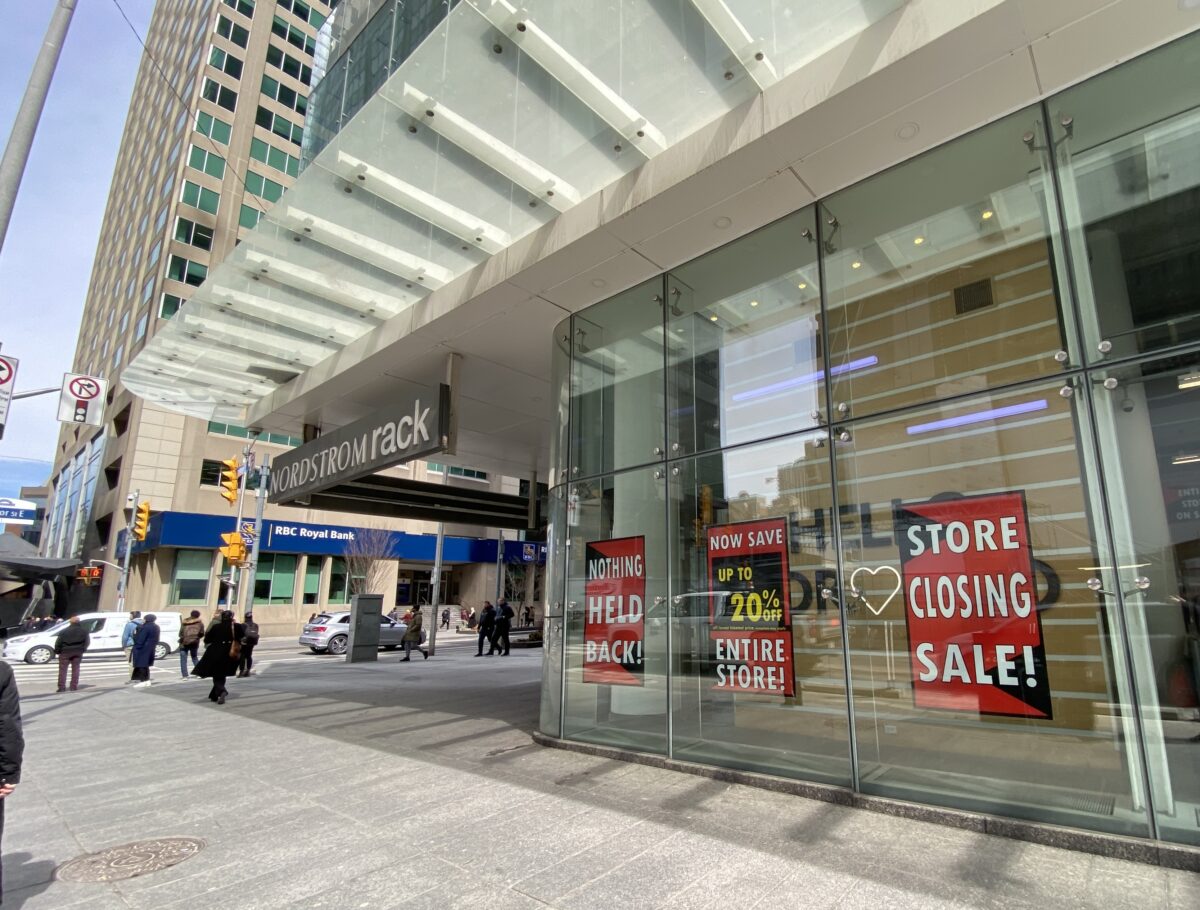
Key highlights from the survey report include:
- Nordstrom’s aided awareness is at 56 per cent, placing it in the mid-tier among the listed retailers. This indicates that while over 1⁄2 of Canadians were aware of Nordstrom, there is a significant portion that were not. Nordstrom’s awareness is higher than Saks Fifth Avenue (49 per cent) and La Maison Simons (49 per cent), but lower than The Bay (85 per cent) and lululemon (76 per cent);
- While Nordstrom had a presence in Canada, it was not as deeply entrenched in consumer consciousness as some other major retailers. Nordstrom has a net familiarity of 35 per cent, which is lower than top retailers like The Bay (79 per cent) and Nike (76 per cent) but higher than Decathlon (22 per cent) and Saks (27 per cent). 66 per cent of respondents either did not know Nordstrom or had only heard of it without knowing any details, indicating a general lack of brand engagement;
- Despite being familiar to many Canadians, Nordstrom faced challenges in attracting regular visitors, with 44 per cent of familiar respondents never having visited the store and 38 per cent visiting only rarely. This lack of frequent foot traffic, particularly among older age groups and lower-income households, suggests a disconnect between Nordstrom’s offerings and the needs of these demographics. The limited engagement likely contributed to Nordstrom’s decision to exit the Canadian market, highlighting the importance of converting brand awareness into actual store visits;
- Following Nordstrom’s exit from the Canadian market, 67 per cent of its former shoppers have replaced it with other retailers, with The Bay being the top choice at 20 per cent, followed by Simons (11 per cent) and Winners (seven per cent). However, 26 per cent of respondents did not find a replacement. The variety of replacement choices, including specialty and second-hand stores, underscores the diverse preferences of Nordstrom’s former clientele, highlighting both the adaptability of consumers and potential market opportunities for retailers to capture this displaced customer base;
- Nordstrom’s departure from Canada deeply affected its customers, with 53 per cent expressing disappointment. Their sentiments were primarily driven by the store’s valued clothing and brand selection, their fondness for shopping there, and its reputation as an excellent department store. The high net disappointment rate underscores the brand’s meaningful presence and the gap it leaves in the Canadian retail landscape. Customers also cited good merchandise, a unique product line, and good prices as key reasons for their disappointment of Nordstrom closing. This indicates opportunities for other retailers to capture this displaced customer base by emulating Nordstrom’s valued attributes and addressing the broader economic and community concerns stemming from its closure.












I can only speak to my anecdotal experiences at Nordstrom. I bought a Jack Victor suit at the TEC store in Summer of 2021 — great experience — customer service was absolutely top notch (I still have the associate’s business card buried somewhere in a drawer) — very personalized, escorted right to alterations where thorough measurements were taken — jacket and pants both tailored — just an outstanding experience all-around. A year later I bought another JV suit in the same store. Night and day experience. I dealt with a different associate who didn’t seem to have any background in menswear and was reasonably indifferent. Alterations rushed me in and out in 5 minutes (the alterations associate was helpful but seemingly overworked) — the fitting rooms were dusty with a healthy coating of cobwebs on the ceiling light fixtures. Over the following few months more and more of the 2nd floor was taken up with bland clearance items. The Mens Footwear department and selection were tiny — it always felt (especially at TEC) that the entire effort was half-hearted. As I’ve said before, the busy (usually suburban) Nordstrom stores in the U.S. have a real life/excitement to the in-store experience — that was lacking here. Yorkdale and Chinook were pretty close to that experience, TEC and Rideau just seemed moribund — and in the last couple of years it felt like that essentially gave up (perhaps they had). It said a lot that they never made it to Montreal — where the in-person shopping experience is still very much thriving.
These traditional tailoring menswear departments always have a difficult time coping within a department store structure in the current climate. I was formerly a buyer at Hudson’s Bay where we used to have long-tenured associates in the men’s tailoring department with a clientele list and higher level service. Through time, with our parent company acquisition of US stores and centralised systems of management, further necessary investment in store payroll hours became under-prioritised and these services eventually suffered. We foresaw this with Nordstrom and knew that being a “shiny penny” only lasts for so long; new competitors opening stores will always be a distraction to the retail ecosystem. There is simply no additional business to be assumed without putting another retailer out of business (or in the case of Nordstrom and Target, over-estimating sales and exiting the market after a brief time). These US retailers coming into Canada need to understand that managing a Canadian operation (with little to no input from the Canadian Team and simply applying an American template) from the US is always destined for failure.
It’s interesting that both Target Corporation and Nordstrom Inc.–which are respected in the industry as savvy operators–both failed so miserably in Canada. They both refused to put Canadians in charge of the local operation (and Nordstrom never even bothered to set up a Canadian head office) and the two companies thumbed their noses at the advice they got from those who actually knew something about retailing in this country.
Nordstrom’s efforts in Canada were haphazard and, in hindsight, doomed to fail. Is it any wonder that the company struggled with recognition and penetration when it declined to open full-line stores in Edmonton (despite both Southgate and in particular West Edmonton Mall, falling over themselves to accommodate the retailer?), Winnipeg and (unforgivably) Montreal? And yet somehow Nordstrom management thought that the GTA required THREE full-line Nordstrom stores in the meantime.
Nordstrom invested a lot of money to establish itself in Canada, but it made the fatal mistake that many failed retailers make : it snubbed Quebec. Montreal and Quebec are an important market for retailers in Canada and without it, brand recognition and foot traffic are clearly suffering.
Ottawa is not Quebec, folks. Opening a store on the Quebec border isn’t a working alternative. Stores that succeed in Canada have presence in Quebec, the correlation is clear.
Retail Insider doesn’t seem too interested to explore this. Why?
One out of every five Canadians or so speak French as their first language, yet from what I recall, Nordstrom’s website didn’t even bother to have a French language option. This really seems to underscore how little they understood the market, which is a shame since Nordstrom’s personalized service and focus on fashion could have resonated very well with consumers in Quebec.
I was told that Nordstrom had planned to open at Royalmount — it would have been interesting to see how that could have played out if it had remained in Canada, and opened in that shopping centre. Carbonleo’s strategy shifted away from Nordstrom and Galeries Lafayette anchors to ‘brand stores’, which are showing stronger year-over-year growth generally, I was told.
Blake Nordstrom (and currently Erik Nordstrom) sits on the board of Jim Pattison Group….Blake and Jim were good friends, and Jim’s advice to Blake was to not enter Quebec…he took that advice to heart. The complexities of the different language and labour laws were big reasons behind the advice.
The language laws are a big obstacle for international businesses coming into Canada as it become a huge incremental marketing expense unanticipated. For Canadian businesses, it is second nature and budgeted to label everything bilingually. Also it’s not a simple as migrating products available in the US store because Canadian distributors of brands have to be dealt with and current distribution have to be protected.
Why haven’t you mentioned Holt Renfrew – a Canadian success. I’m a 76 year old woman with disposable cash and at first, lamented the closing of Nordstrom. We’ve already bought four times the clothing at Holt’s in the year since Nordstrom closed.
Hindsight is always 20/20. Like Target mistakes were made — a slower roll out probably would’ve made more sense (especially if you consider how successful the Vancouver store was) — but of course their entry coincided with the fire sale of Sears Canada’s leases in some pretty priceless locations. From my eyes Vancouver, Chinook and Yorkdale seemed to be the stars. They certainly built-out an aesthetically beautiful environment to shop in — as did Target — and for that reason (among others) — I miss both.
This whole survey or poll is BS. Vancouver was the chains most profitable store but at the end of the day they exited Canada because of their US stores failing and shareholders losing money. Canada was collateral damage.
Nordstrom said in its Canadian bankruptcy filing that overall, its Canadian division lost money year-over-year since entering the country in 2014. The Vancouver store was among the top, and sometimes the top selling store in the chain. The Ontario stores and Calgary were more responsible for the lack of Canadian profits.
A lot of truth to this comment; individually as a store, most of the stores were profitable….however there were some shared services and ‘corporate’ allocations that ultimately took the PnL to the red….yes a couple of stores struggled with profitability (Edmonton, Bloor Rack, Ottawa, Sherway), but the rest were all fairly healthy. You also need to realize these stores were 100+M capital expenditures to build w/ an aggressive amortization cycle, so the EBITDA vs. EBIT was a very different story……..the press release had to be spung in a way that made sense for the company.
Ultimately, Canada was 3-4% of the total company revenue, but took up 20% of the bandwidth of the shared service departments, like purchasing, logistics, allocation etc….in the end, with a struggling US economy, the distraction was not worth it.