As retail crime and liability concerns escalate in Canada and globally, video surveillance has become more than just a passive tool. According to Jason Chiu, Professional Services Group Manager at Axis Communications, retailers are increasingly turning to intelligent, integrated video systems not only for post-incident evidence but to proactively deter theft, prevent liability claims, and enhance customer service.
“Video evidence is critical because it aids in investigations and in building cases if they decide to prosecute,” said Chiu in a recent interview. “But I would argue that high-quality video evidence is even more important.”
From Passive Surveillance to Active Prevention
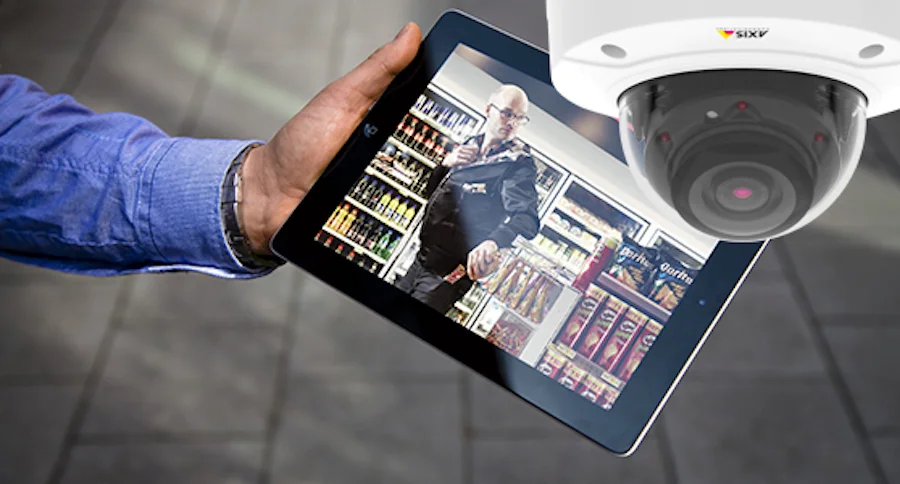
Gone are the days of grainy, low-resolution security footage. Today’s retail environments are adopting advanced IP-based video systems with analytics and AI capabilities. Axis, a leader in network surveillance technology, is seeing strong demand for systems that go beyond simply recording.

“With modern systems, we can capture interactions in real-time,” explained Chiu. “For example, our audio analytics can detect stress in human voices or yelling, which can trigger an alert. That gives retailers the ability to intervene immediately, rather than just reviewing footage after the fact.”
Axis also offers connected speakers to deter incidents before they escalate. These speakers can play pre-recorded voice prompts, such as “An associate will be with you shortly,” when loitering is detected in high-value areas. “That simple acknowledgment lets a person know they’re being watched, which often prevents theft from occurring,” said Chiu.
The Role of AI and Privacy Considerations
Artificial intelligence is playing a growing role in retail surveillance, but Chiu is quick to point out that Axis complies with strict European regulations designed to protect privacy.
“Our AI applications are used to aid investigations, not replace human judgement,” he said. “For example, our system can search for ‘a man in a red sweater’ by analyzing recorded video, but we’re not using AI in ways that would compromise consumer trust.”
This balance between smart technology and privacy is key, especially as regulations continue to evolve.
Meeting the Needs of Legal and Insurance Stakeholders
Chiu said that retailers are increasingly being asked by insurers and legal teams to produce video evidence after an incident — whether it’s a slip-and-fall or a theft. But if the system isn’t functioning properly or hasn’t retained the right footage, there can be consequences.
“In the past, systems weren’t always monitored actively. You’d hope they were recording, but no one checked,” said Chiu. “Now, we recommend smart systems that can send alerts if a server goes down, or if a camera is tampered with or stops working.”
To ensure video evidence hasn’t been altered, Axis has contributed to an international standard known as “signed video,” which guarantees authenticity from capture to playback. “With today’s editing tools, even a regular PC can be used to manipulate video. Our technology ensures the chain of custody is preserved,” he said.
Real-World Scenarios: From Point-of-Sale to Internal Theft
Beyond external theft, Chiu says Axis technology is helping retailers investigate internal fraud by connecting surveillance footage to point-of-sale (POS) data.
“One customer is using our system to analyze cash transactions, which are rare today. They can detect if a cashier is performing a refund without a customer present,” he said. “We can bookmark those moments in the video timeline and flag them for investigation. That way, loss prevention teams don’t have to scroll through hours of footage.”
The solution has significantly reduced the time needed to review incidents, enabling retailers to take swift action.
“Employee theft is a sensitive issue, and it does happen,” Chiu added. “Our systems can detect unusual activity — for example, when there’s only one person in the store and multiple POS transactions are happening.”
Expanding Beyond Security: Operational Intelligence
While Axis is known for security, the company is rapidly expanding into business intelligence solutions that offer ROI beyond loss prevention.
“We’re helping retailers cost-share surveillance systems across departments,” said Chiu. “Marketing can benefit from traffic data, heat maps, and store occupancy insights. Facilities can use our systems for HVAC control or energy management.”
One free analytic tool offered by Axis classifies humans and vehicles — a feature that’s now being repurposed for queue monitoring, pickup wait times, and in-store engagement tracking.
“For example, we can detect when lines are too long and alert staff to open another register,” Chiu explained. “Or we can monitor wait times for curbside pickup customers, improving their experience.”
Future Trends: Air Quality and Environmental Monitoring
Axis is also pushing into environmental sensing with the launch of new air quality sensors.
“These sensors can detect indoor air quality, vaping, and even refrigeration temperatures,” said Chiu. “In grocery and food retail, a power outage or cooler failure can lead to costly losses. Our system alerts managers before it becomes a crisis.”
This level of integration turns the traditional security system into a comprehensive risk management and operations platform.
The Shift Toward Integrated Retail Ecosystems
As the retail landscape becomes more complex, Chiu said the key is involving multiple stakeholders in technology decisions.
“The more people who can use the system — security, marketing, operations — the more successful it will be,” he said. “A camera system isn’t just about preventing crime anymore. It’s about using data to make the whole store run better.”
Axis Communications continues to work on new applications of AI and analytics, and Chiu hinted that there’s much more to come.
“These tools are already available and improving all the time,” he said. “It’s a really exciting space to be in. The opportunities for retailers to reduce loss, improve safety, and run more efficiently are bigger than ever.”