Apple Inc. has unveiled a new all-in-one solution aimed at simplifying how companies manage operations while expanding their reach to customers, introducing the Apple Business platform ahead of its April 14 global rollout. The announcement signals a notable evolution in how businesses, including retailers, can integrate technology, marketing, and operations within a single ecosystem.
The Apple Business platform combines device management, communication tools, and customer engagement capabilities into one interface, reflecting Apple’s broader push into enterprise services. According to the company, the goal is to streamline both the day-to-day running of a business and its ability to grow through improved visibility and digital connectivity.
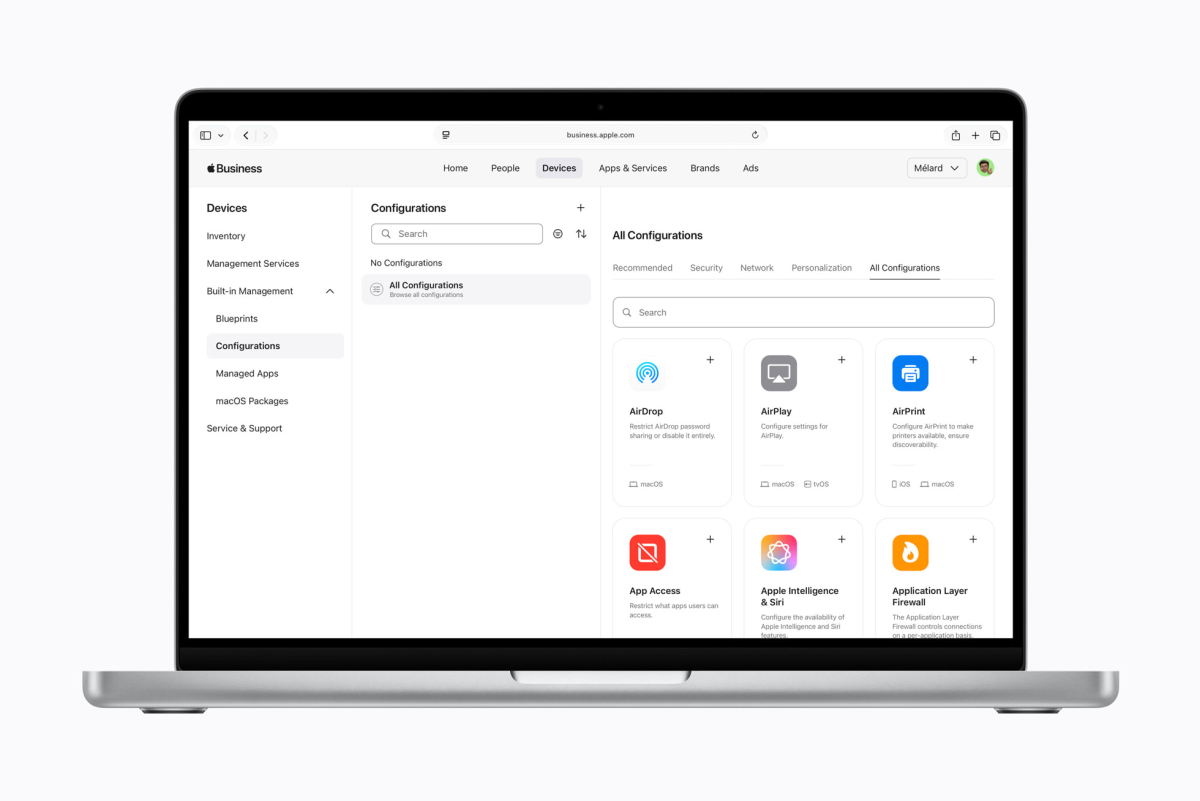
At its core, Apple Business consolidates a range of previously separate tools into a single destination. Businesses can manage devices, configure security settings, deploy applications, and organize employees without requiring extensive IT infrastructure.
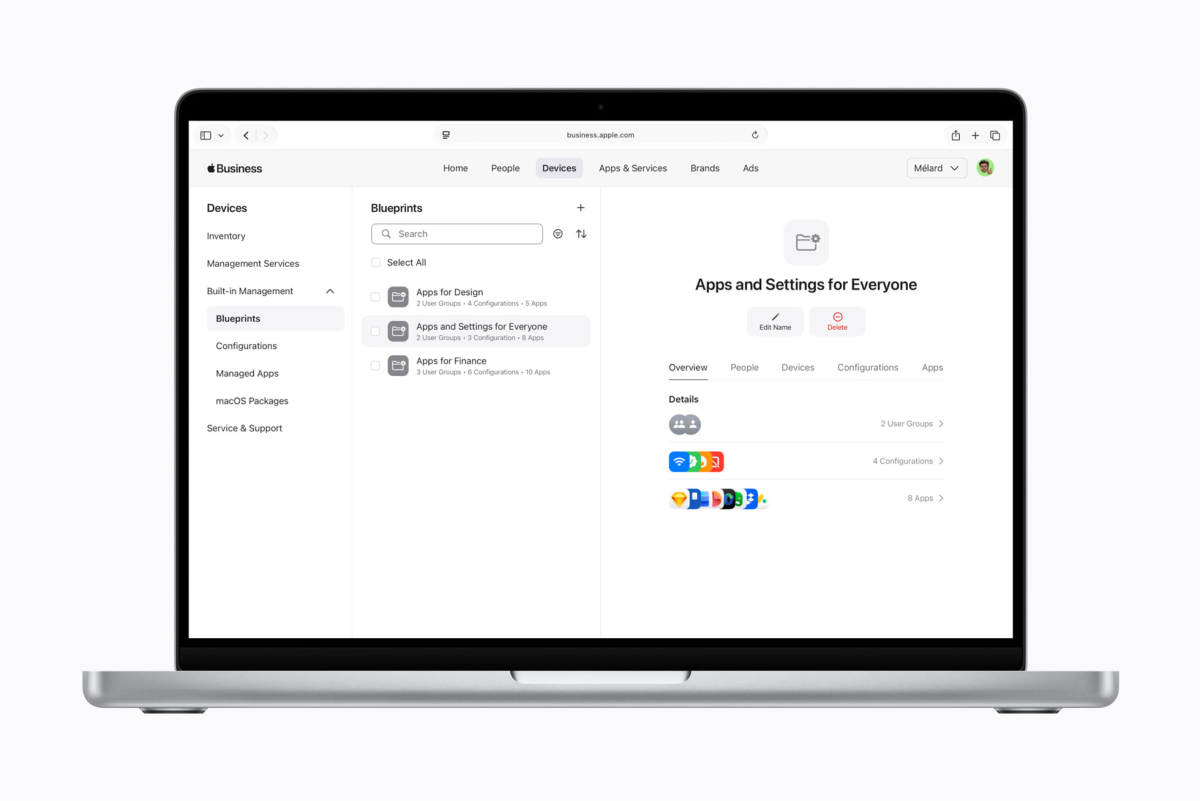
A key component is built-in mobile device management, which allows organizations to deploy Apple devices with minimal setup. Through a feature called “Blueprints,” companies can preconfigure devices with apps, Wi-Fi access, and security settings, enabling employees to begin working immediately upon unboxing.
The platform also introduces business email, calendar, and directory services tied to a company’s domain, providing a more professional communications infrastructure. This is particularly relevant for smaller businesses that may still rely on generic email services.
Built for Both Small Businesses and Enterprise Users
While Apple Business simplifies deployment for smaller organizations, it also includes advanced tools for larger enterprises. Companies can create custom employee roles, automate account creation through integrations with platforms such as Google Workspace and Microsoft Entra ID, and distribute apps at scale.
The platform includes a dedicated Apple Business app for employees, allowing them to access work applications, view colleague directories, and request support directly from their devices. Additional services, including iCloud storage upgrades and AppleCare+ for Business, provide further operational support.
Importantly, Apple has made the core platform free to use, a move that lowers the barrier to entry for businesses that may not have previously invested in device management solutions.
New Apple Maps Advertising Opportunity for Canada
One of the most significant developments for retailers is the introduction of advertising within Apple Maps. Beginning this summer, businesses in Canada and the United States will be able to place ads directly within Maps search results and discovery features.
These ads will appear at key moments when users are actively searching for products or services, such as restaurants, stores, or local providers. Apple emphasized that ads will be clearly marked and limited in number, with only one sponsored result shown per search experience to maintain a clean user interface.
From a retail perspective, this represents a new performance-driven marketing channel tied closely to consumer intent. As one Apple executive noted during the briefing, users of Maps are “searching with intention, and they’re ready to make a decision and even visit a destination right then and there.”
The advertising model is designed to be accessible, allowing businesses to set their own budgets and pay based on engagement, such as taps on an ad. This could prove particularly valuable for independent retailers and restaurants seeking local visibility without large marketing budgets.
Privacy-Centric Approach Shapes Advertising Strategy
Apple continues to differentiate itself with a privacy-focused advertising model. The company confirmed that user location data and ad interactions within Maps are not linked to Apple accounts and are not shared with third parties.
This approach aligns with Apple’s broader positioning in digital advertising, where it aims to balance targeting capabilities with user privacy. For retailers, this may limit granular targeting compared to other platforms, but it also offers a brand-safe environment that could appeal to privacy-conscious consumers.
Enhanced Brand Presence Across Apple Ecosystem
Beyond advertising, Apple Business expands how companies present themselves across Apple’s ecosystem. Businesses can manage brand profiles, customize place cards with images and operational details, and highlight promotions through “Showcases.”
These features extend across Apple services, including Maps, Mail, Wallet, and Siri, creating a consistent brand presence. Retailers can also access location insights, such as how customers discover and interact with their listings, providing data to inform marketing and operational decisions.
Additionally, features like Tap to Pay on iPhone allow businesses to display their branding during transactions, reinforcing trust and recognition at the point of sale.

Implications for Canadian Retailers
For Canadian retailers, the Apple Business platform introduces a combination of operational efficiency and new customer acquisition tools within a familiar ecosystem. The integration of device management, communications, and marketing into a single platform reflects a broader industry trend toward consolidation and simplification.
The introduction of Apple Maps advertising is particularly noteworthy. As consumers increasingly rely on mobile search and navigation to discover nearby businesses, this feature positions Apple as a more active player in local commerce and retail discovery.
The platform’s free entry point also suggests that adoption could be widespread, especially among small and mid-sized businesses seeking to modernize operations without significant upfront costs.
As Apple Business launches globally on April 14, with Maps advertising to follow in Canada this summer, the platform has the potential to reshape how retailers manage their operations and connect with customers in an increasingly digital and location-driven marketplace.