Italian coffee company Lavazza is looking to significantly expand its presence in Canada as part of a broader North American growth strategy, with increased distribution, new consumer touchpoints and further investment in markets where the brand remains underrepresented.
The push is becoming increasingly visible in Canada. Lavazza has expanded its relationship with the Toronto International Film Festival (TIFF), extending its role as Official Coffee Partner through 2028 while becoming Gala Presenting Partner and introducing its first Red Carpet Lavazza Bar at Roy Thomson Hall.
The expanded TIFF presence comes as Lavazza pursues a much larger ambition for North America. The company has set a goal of more than doubling its business in the region by 2028, according to Daniele Foti, Vice President of Marketing for Lavazza North America, with Canada expected to play an important role in that strategy.
“The results have spoken for themselves – the engagement we’ve seen from Canadian audiences each year has been genuine and it’s only grown, which made deepening our involvement and extending our partnership into 2028 an easy call,” Foti told Retail Insider.
Lavazza’s Canadian plans extend well beyond marketing. The company sees room to increase distribution across grocery, e-commerce, foodservice and workplace channels, while moving further into parts of the country where its presence remains relatively limited.
“Canada plays a real role in why North America is such a priority for us,” Foti said. “It’s part of one of the largest global coffee markets, and we’re seeing real growth here.”
The strategy already has momentum. Lavazza Group reported that North American revenue increased 26.9 per cent in 2025, driven primarily by retail and e-commerce. Foti said the company made a decision in 2023 to more aggressively pursue the potential it saw in the region.
“We set the ambition to more than double our business here by 2028 – making it our most strategic growth market,” he said.
Canada Takes Larger Role in North American Strategy
Founded in Turin in 1895, Lavazza has grown from a family coffee business into an international group with operations across numerous markets. While the company’s European presence is well established, North America has become an increasingly important focus.
In Canada, Lavazza operates across grocery, e-commerce, foodservice and workplace channels. Its foodservice business includes hotels, restaurants and bars, while the company also supplies coffee and equipment for workplace environments, adapting its machines and offerings to different business requirements.
“All of our channels represent real opportunity for us,” Foti said. “For us, growth isn’t just about selling coffee through more channels, it’s about using each one as a way to be present and stay relevant to consumers, wherever they’re choosing to get their coffee.”
Lavazza products are already carried by major Canadian grocery retailers including Loblaw and Sobeys and are available through Amazon, according to Foti. The company also works with foodservice and workplace clients across the country, although he said considerable room remains to broaden its distribution.
“We’ve traditionally been strongest in big cities, particularly Toronto and the East Coast, so we see real opportunity to keep building there, and even more so on the West Coast, where our presence is still relatively light.”
Western Canada Offers Further Potential
Western Canada is an interesting area of opportunity given Lavazza’s longstanding connection to the region through Kicking Horse Coffee.
Lavazza acquired an 80 per cent interest in Invermere, British Columbia-based Kicking Horse Coffee in 2017 in a transaction that valued the Canadian company at $215 million. The investment was positioned at the time as part of Lavazza’s strategy to accelerate its development in North America. Kicking Horse has since become a wholly owned subsidiary of Lavazza.
The acquisition formed part of a longer expansion on the continent. In 2021, Lavazza established its first U.S. roasting and packing operation in Pennsylvania, another investment that reflected the growing importance of the North American market.
For the Lavazza brand itself, however, Foti said the West Coast remains relatively underrepresented. That creates an opportunity to build distribution in Western Canada while continuing to deepen the company’s presence in Toronto and other established markets.
Canada and U.S. Are Different Coffee Markets
Lavazza is not treating Canada simply as an extension of its U.S. business. Foti said the company sees differences in coffee preferences between the two countries, including what he described as a stronger European influence in Canada, particularly around espresso.
“They’re similar in a lot of ways, but different too,” he said. “In Canada, we see a stronger European influence in coffee culture, particularly around espresso, which shapes both consumer preferences and how we go to market.”
Qualità Oro is one example of how those differences affect Lavazza’s assortment. The blend is an important product for the company in Canada but does not have the same prominence in its core U.S. offering.
“Qualità Oro, for example, is one of our hero products here in Canada, but it’s not a major part of our core offer in the US,” Foti said. “Our approach in Canada leans more into that stronger espresso culture, rather than a one-size-fits-all North American strategy.”
Coffee consumption remains high across Canada. The Coffee Association of Canada’s 2025 Canadian Coffee Drinking Trends study found that 71 per cent of adults surveyed had consumed a coffee beverage the previous day, while 29 per cent reported consuming an espresso-based beverage.
Higher prices are nevertheless affecting how some Canadians buy coffee. The association has reported consumers seeking promotions, experimenting with different brands and adjusting some out-of-home purchases, adding another competitive consideration for companies operating in the premium segment.
TIFF Becomes Part of Broader Consumer Strategy
Lavazza’s expanded relationship with TIFF illustrates another part of the company’s Canadian strategy: creating opportunities for consumers to experience the brand beyond the grocery aisle.
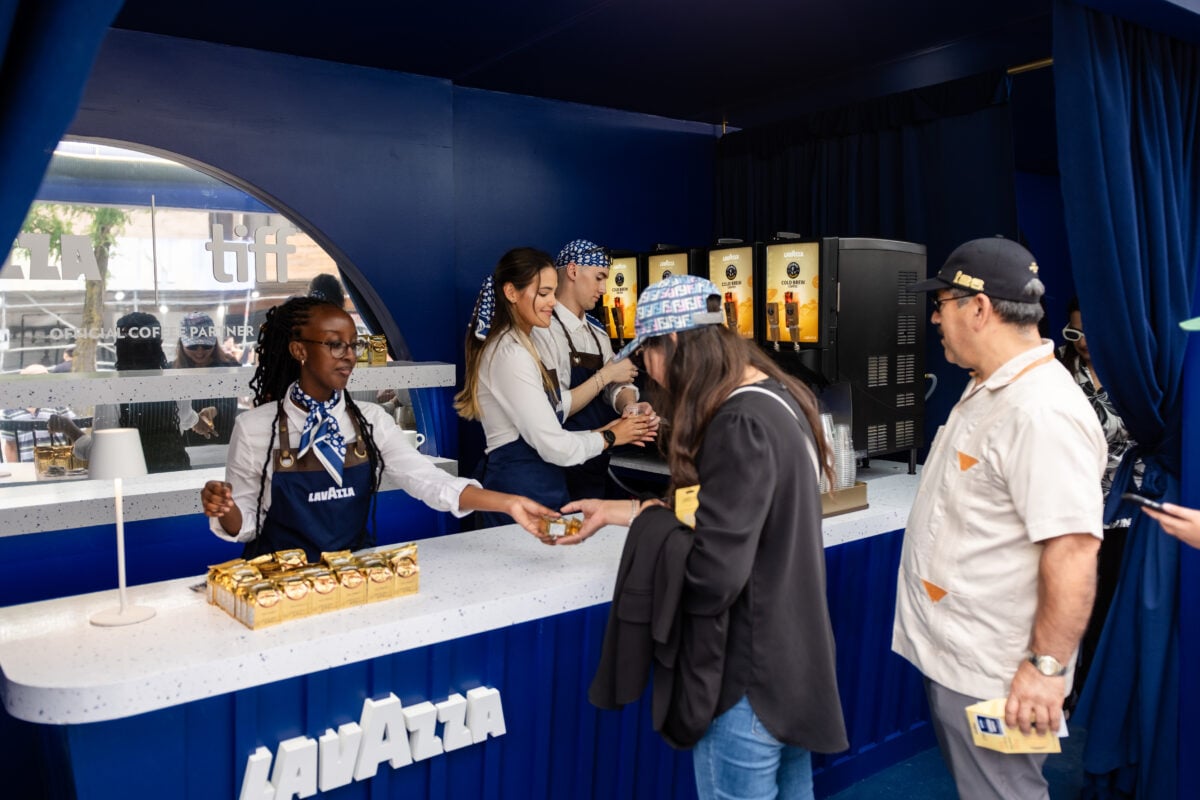
The partnership began in 2023 and has now been extended through 2028. This year’s program included the first Red Carpet Lavazza Bar at Roy Thomson Hall, where coffee and signature coffee-based cocktails were served to talent, filmmakers and guests.
Foti said the space was designed as an elevated hospitality experience where guests could pause during the activity surrounding the festival. The approach also allowed Lavazza to become part of the event experience itself instead of appearing primarily through conventional sponsorship branding.
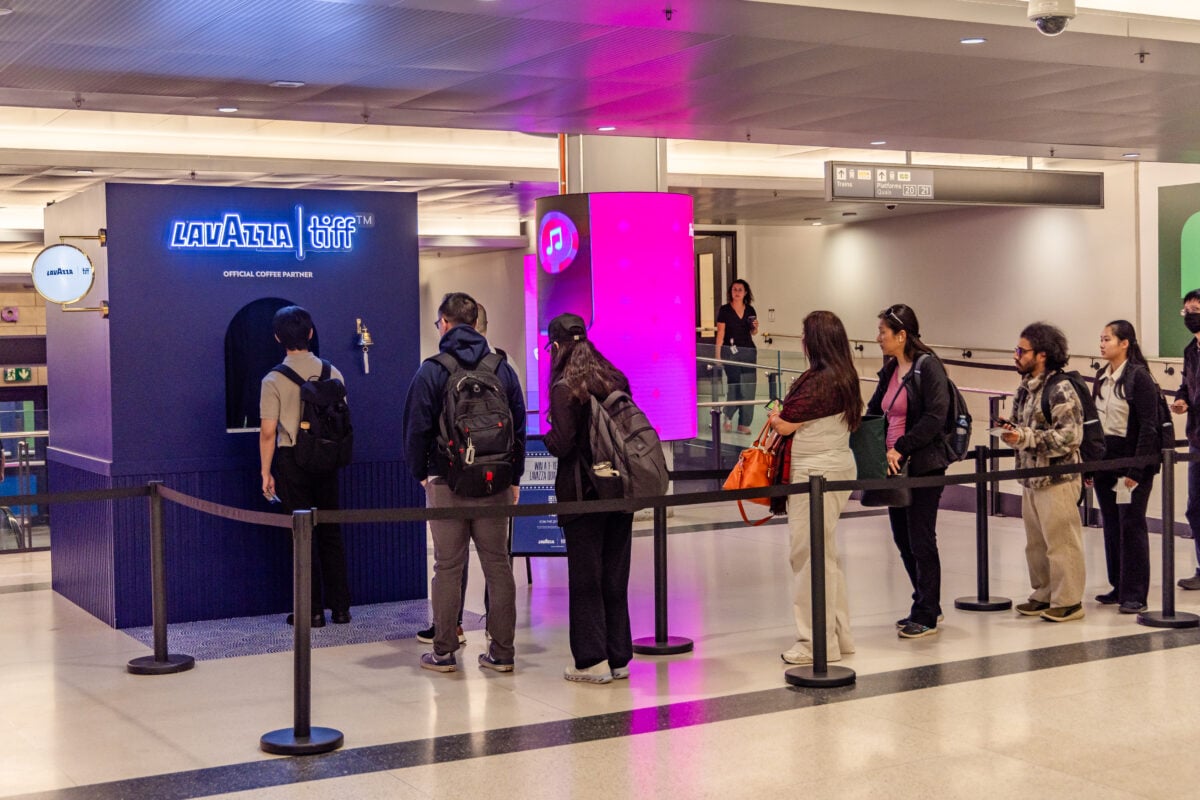
The company’s TIFF presence extended beyond the red carpet. Lavazza operated its Cinema Lavazza activation on King Street, participated in TIFF: The Market at the Metro Toronto Convention Centre and had an activation at Union Station.
“A festival like TIFF lets us build genuine connections with people, instead of just buying visibility,” Foti said. “Traditional advertising can tell people about a brand, but it can’t put them inside a real moment with it.”
He said that physical interaction can create a different kind of connection than conventional advertising.
“That kind of organic presence is what tends to stick with people; it’s a story they’re part of, not an ad they scroll past,” he said. “It also lets us show up as more than a logo – we’re contributing something to the moment itself.”
Measuring the Impact of Experiential Marketing
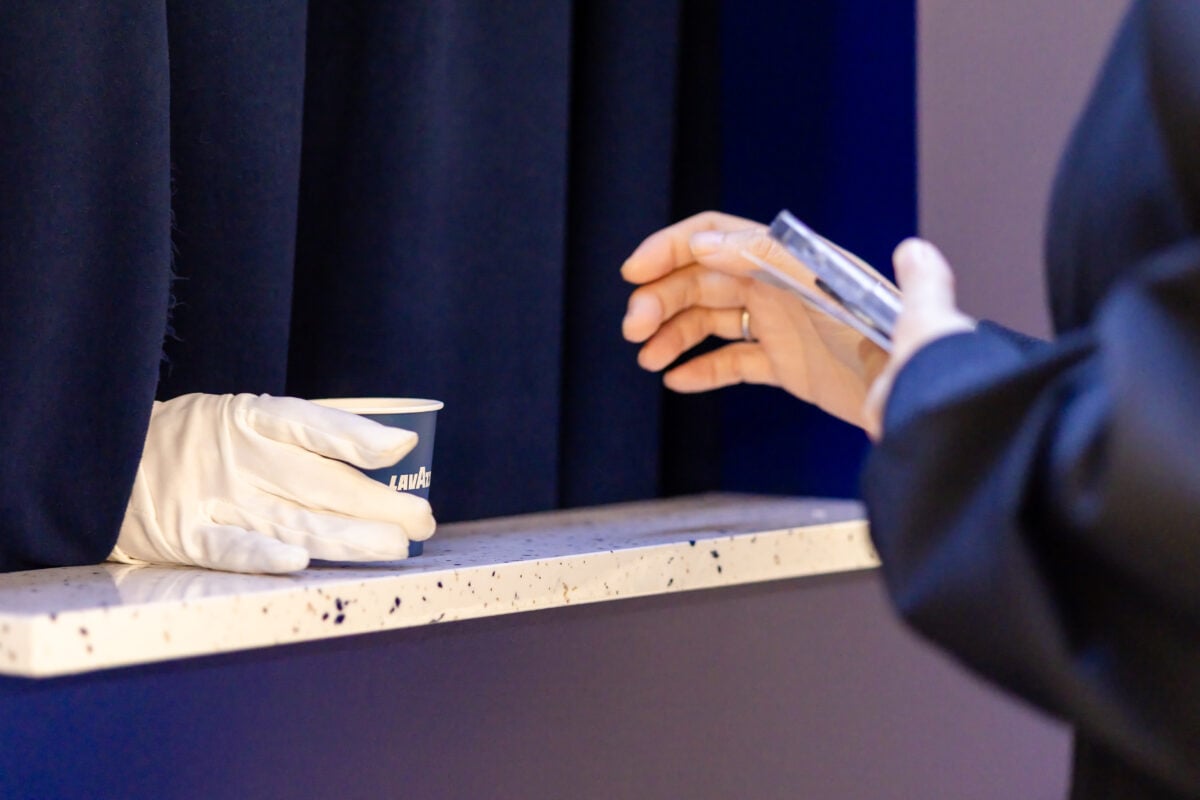
Lavazza evaluates partnerships such as TIFF through a combination of brand awareness, product sampling, lead generation and social engagement. Sales are also considered, though Foti said the impact of an event partnership extends beyond transactions generated while the event is underway.
Sampling can introduce consumers to the product, while social engagement extends the reach of an activation beyond those who experience it in person. The strategy also supports Lavazza’s broader effort to differentiate itself as competition intensifies in premium coffee.
“The premium coffee category is far more crowded than it used to be, with plenty of newcomers, so what matters most is building a brand that genuinely stands out,” Foti said.
Italian heritage is central to that positioning. Lavazza traces its blending tradition to founder Luigi Lavazza, who began experimenting with coffees from different origins after establishing his business in Turin in 1895.
Foti said the company’s history is less about emphasizing its age than demonstrating the experience and craftsmanship behind the product.
“We have over 130 years of experience behind us, and that’s less about being the oldest name in the room and more about the craftsmanship,” he said. “Conveying that story and value to consumers is honestly one of the biggest parts of my job.”
More Canadian Expansion Ahead
Lavazza expects to continue adding consumer touchpoints and expanding into Canadian markets where its presence is currently smaller as it works toward its broader 2028 North American objective.
Cultural partnerships will remain part of that effort. Foti said the company intends to pursue opportunities that provide a natural connection with the brand, with TIFF serving as one example of how Lavazza can combine product experience, hospitality and consumer engagement.
“You’ll see us continue investing in cultural partnerships that genuinely fit our brand, not just TIFF, but other moments that let us tell our story and connect with Canadians where they already are,” he said.
Those investments will run alongside the less visible work of broadening distribution across retail, foodservice, e-commerce and workplaces as Lavazza looks to establish a larger Canadian presence.
“All of that ladders up to the bigger ambition we’ve set for North America – building real, lasting relevance here, not just growing sales.”