Apple is expanding its connected-home business with a dedicated smart home display and a collection of security, climate-control and automation products developed with LG Electronics and Schneider Electric. The October 13 announcements broaden the company’s involvement in household technology categories already served by consumer electronics and home improvement retailers, while creating opportunities to sell multiple compatible products through its Canadian retail network.
The new lineup includes HomeView, a seven-inch smart home display priced at $429 in Canada, along with security cameras, video doorbells, smart locks, thermostats and sensors. Apple is also updating HomePod mini and Apple TV 4K, bringing together household controls, communication and entertainment within a wider connected-home offering.
The expansion comes as connected-home technology becomes increasingly common in Canadian households. Apple’s opportunity is to encourage existing customers to purchase additional devices within its ecosystem, although the company faces established competition from other technology platforms and manufacturers offering products compatible with multiple systems.
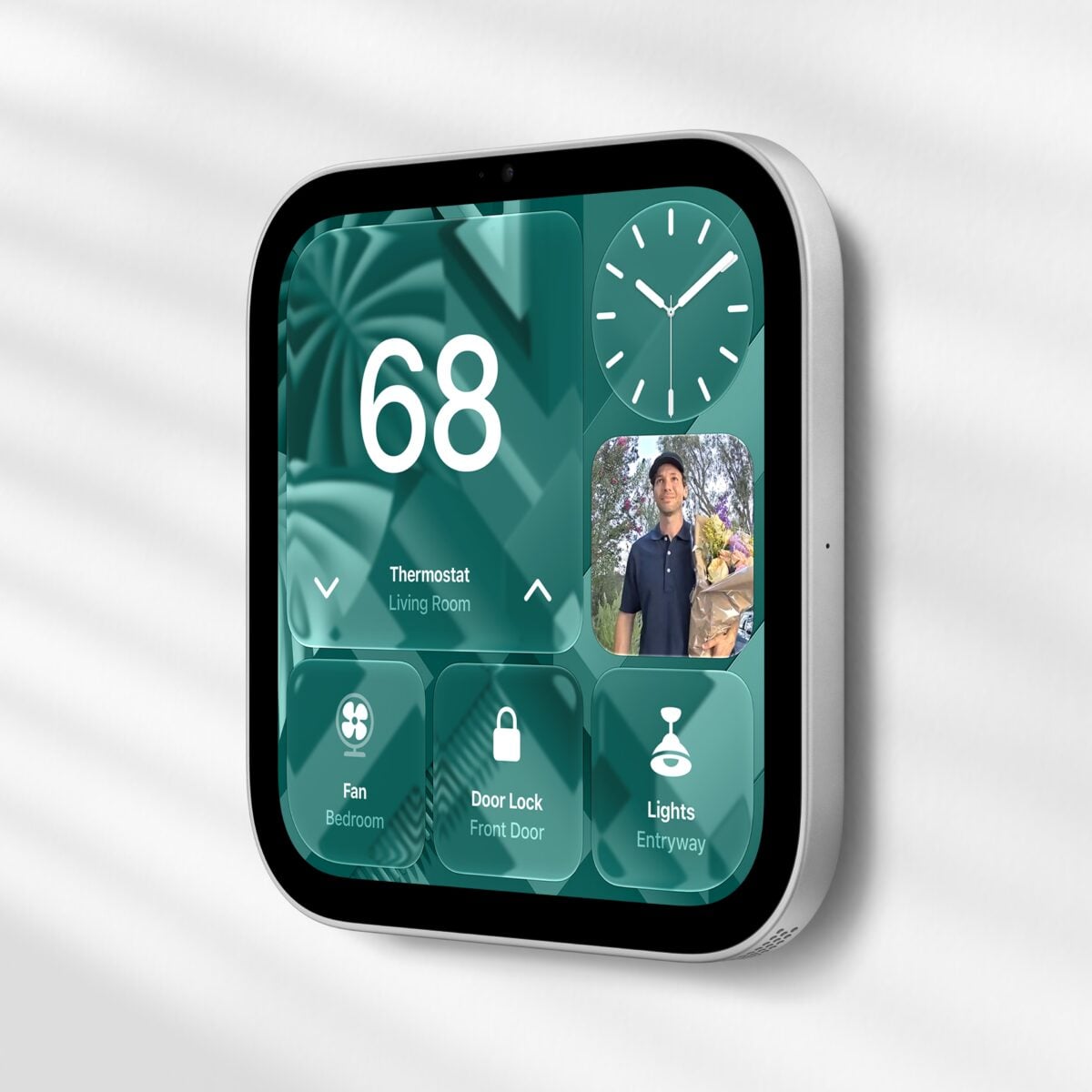
HomeView Gives Apple a Dedicated Household Control Device
HomeView is scheduled to become available in Canada on November 13, with tabletop and wall-mounted configurations priced at $429. The device features a seven-inch Liquid Retina display and supports household controls, camera viewing, FaceTime and entertainment functions.
Apple is introducing an enhanced Siri experience intended to make interactions with connected devices more conversational and personalized. HomeView can recognize individual household members and provide access to personalized information, subject to Apple’s privacy and device requirements. Canadian French support for Siri AI is expected through a later software update.
The product fills a gap in Apple’s existing home hardware assortment. Customers seeking an Apple home hub have generally relied on HomePod speakers or compatible Apple TV devices, neither of which provides a dedicated touchscreen for managing the household.
HomeView gives Apple a product designed for shared use in kitchens, living areas and other spaces where a television may not be present. It also provides another reason for consumers to purchase compatible accessories, since the usefulness of a central display increases as households connect additional devices.
LG and Schneider Electric Broaden the Product Assortment
The Apple Home Collection is a significant commercial development because it expands the range of connected-home products associated with Apple’s ecosystem. Developed with LG Electronics and Schneider Electric, the collection spans security, access control and climate management.
LG’s products include indoor and outdoor cameras, a video doorbell, smart lock, thermostat and temperature sensor. Canadian prices range from $54.95 for a temperature sensor to $549.95 for the LG Floodlight Cam, with the Video Doorbell Wired priced at $349.95 and the Smart Deadbolt Lock at $479.95. Indoor and outdoor cameras are priced at $279.95 and $399.95, respectively.
Schneider Electric is contributing a smart thermostat, room sensor and mounting accessories for the wall-mounted HomeView. Its thermostat will retail for $279.95 in Canada, while the room sensor is priced at $54.95. The collection is scheduled to begin arriving in December, with additional products expected in early 2027.
Working with established manufacturers allows Apple to broaden its assortment without developing every device itself. LG brings consumer electronics and appliance expertise, while Schneider Electric has an established business in electrical infrastructure and residential energy management.
Schneider’s broader portfolio includes hybrid inverters, battery storage, smart electrical equipment and systems designed to manage household energy consumption. Those products are not part of the announced Apple Home Collection, and Apple has not confirmed that HomeView will provide comprehensive control of residential solar generation or battery storage.
The immediate commercial opportunity is to offer consumers a coordinated assortment of products designed to work within Apple’s home ecosystem. A household purchasing a HomeView could also be considering a video doorbell, smart lock and thermostat, creating the potential for sales across several merchandise categories.
Connected-Home Technology Has an Established Canadian Audience
Statistics Canada’s 2022 Canadian Internet Use Survey found that 47.4% of Canadians aged 15 and older reported using at least one internet-connected smart-home device in their primary residence. The survey covered products including smart speakers, security cameras, lighting, thermostats, appliances and locks.
Although the figures are several years old and measure individuals rather than households, they demonstrate that connected-home technology was already widely used before Apple’s latest expansion. More recent federal research also points to adoption of smart and adaptive thermostats among Canadian homeowners, reinforcing the relevance of connected technology to household climate control.
For Apple, that existing market creates opportunities to sell additional hardware to consumers who already own iPhones, iPads and other Apple products. A familiar interface and integration with existing services could encourage customers to add cameras, locks and climate-control equipment over time.
The company faces competition from Amazon, Google and Samsung, alongside manufacturers offering products compatible with several platforms. Apple’s existing customer relationships may help attract buyers, but the announcements do not include Canadian sales forecasts or evidence that consumers will replace competing systems.
Interoperability and Energy Management Expand the Market
Connected-home technology is extending into major appliances, heating and cooling equipment, electricity monitoring and residential energy systems. Consumers can increasingly combine products from different manufacturers, creating demand for platforms capable of coordinating them.
Matter, the industry interoperability standard, has expanded support for energy-related equipment, including solar systems, inverters and battery storage. However, support within a technical standard does not mean every connected-home platform provides the same functions or displays the same information.
HomeView offers a dedicated interface for supported household devices, but Apple’s announcements do not establish comprehensive native management of solar generation, home battery reserves or sophisticated energy-based automation. Independent platforms such as Home Assistant already allow technically inclined users to coordinate compatible appliances, climate-control equipment and energy systems through customized automations, although those systems generally require more configuration.
Apple’s emphasis on an integrated, relatively simple experience may appeal to a broader consumer audience. Its partnerships with LG and Schneider Electric provide access to manufacturers with expertise in appliances and energy technology, but any deeper integration of those systems would require further product announcements.
Canadian Retailers Face New Competition and Opportunities
Apple has confirmed that Home Collection accessories will be sold through its Canadian retail stores, online store and Apple Store app. Distribution through third-party Canadian retailers has not been announced, leaving the collection’s availability outside Apple’s own channels uncertain.
The assortment overlaps with merchandise sold by electronics and home improvement retailers, including security cameras, smart locks, thermostats and connected-home accessories. Retailers such as Best Buy Canada already serve customers interested in these products, while home improvement chains sell equipment associated with security, climate control and electrical systems.
Apple’s coordinated offering could encourage consumers to purchase several products within the same ecosystem. A HomeView, video doorbell, smart lock and thermostat would cost $1,538.85 before taxes and installation, illustrating the potential value of a multi-category transaction rather than indicating expected consumer spending.
Other retailers may find opportunities in product selection, compatibility advice and installation services. Cameras and sensors may be relatively straightforward to install, while thermostats, locks and more complicated household systems can require additional assistance.
Apple has announced a professional installation arrangement with ADT in the United States, but no equivalent Canadian program has been confirmed. Installation and technical support could therefore remain areas of differentiation for Canadian retailers and service providers as connected-home systems become more complex.
Recurring services are another part of the category’s economics. Supported security cameras can use Apple’s HomeKit Secure Video features through eligible iCloud+ subscriptions, while other connected-home products may involve monitoring, cloud storage or ongoing support services.
HomePod and Apple TV Support the Wider Strategy
Apple’s announcements also include a second-generation HomePod mini, priced at $199 in Canada and scheduled for release October 30, and an updated Apple TV 4K, priced at $429 and expected November 13. Both support the company’s connected-home ecosystem while retaining their roles in audio and television entertainment.
The new HomePod mini is expected to receive enhanced Siri AI capabilities through a future software update, while Home Collection accessories will begin arriving in December, with additional products expected in early 2027. The staggered rollout will extend Apple’s introduction of new connected-home products over several months.
The expansion gives Apple a broader assortment through which customers can manage their homes, with opportunities across hardware, accessories and services. For Canadian retailers, it adds a major technology brand to more home security and climate-control purchasing decisions while increasing the importance of compatibility, installation support and the practical differences between competing connected-home ecosystems.