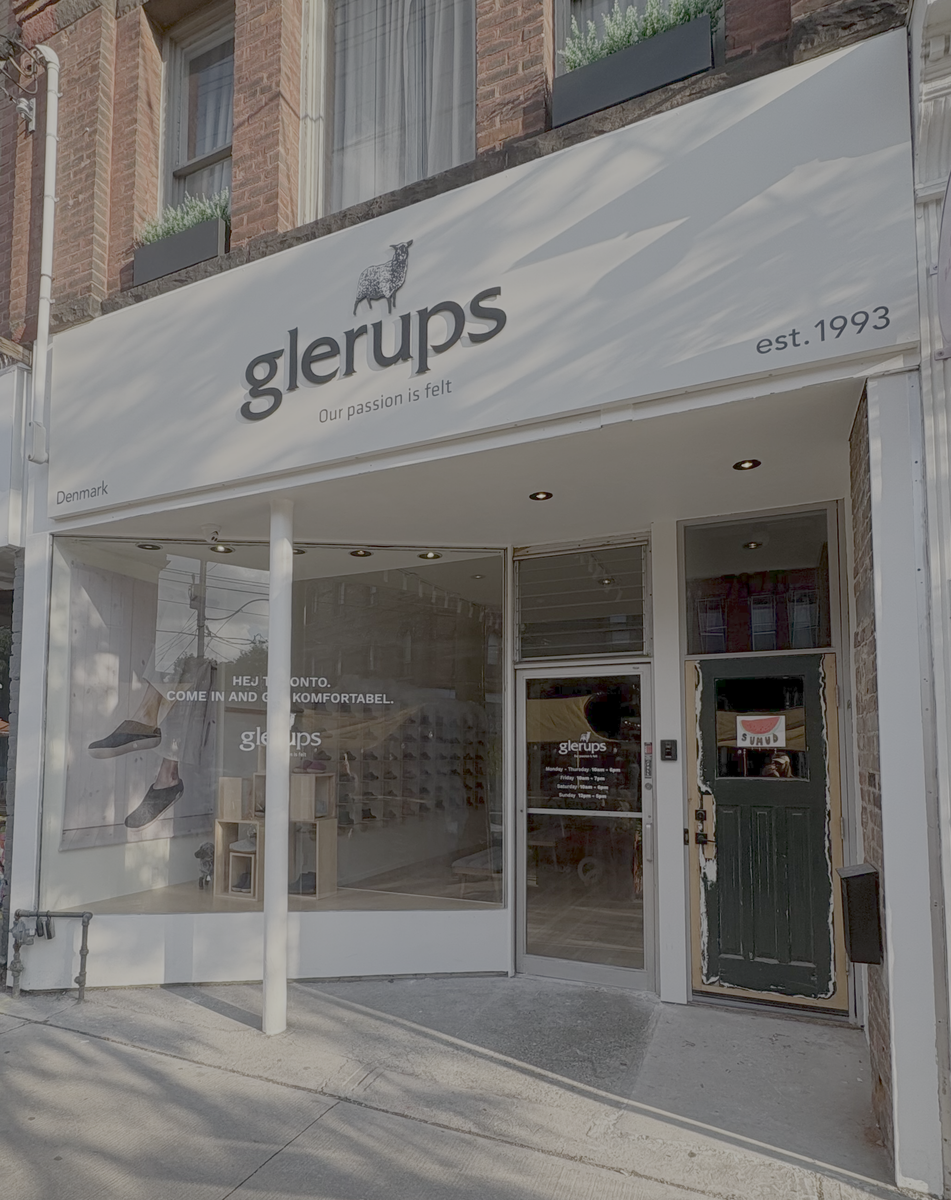
Danish footwear brand glerups has opened a standalone store at 787 Queen Street West in Toronto, giving Canada a distinction within the company’s international operations. According to co-owner Allan Timm, it is currently the only operating standalone glerups store in the world.
The store opened in late August 2026 through Tin Shack, which has distributed glerups in Canada for approximately 15 years. The company previously operated a store in Denmark that closed during the COVID-19 pandemic, making Toronto its second standalone location historically.
Tin Shack, which also distributes Blundstone in Canada, sees the opening as an opportunity to introduce more consumers to the Danish brand while supporting its existing wholesale network. In separate interviews with Retail Insider, Timm and Tin Shack’s Tim Stacey discussed the Canadian business, the company’s origins and the decision to establish a dedicated retail presence.
A Dedicated Store on Queen Street West
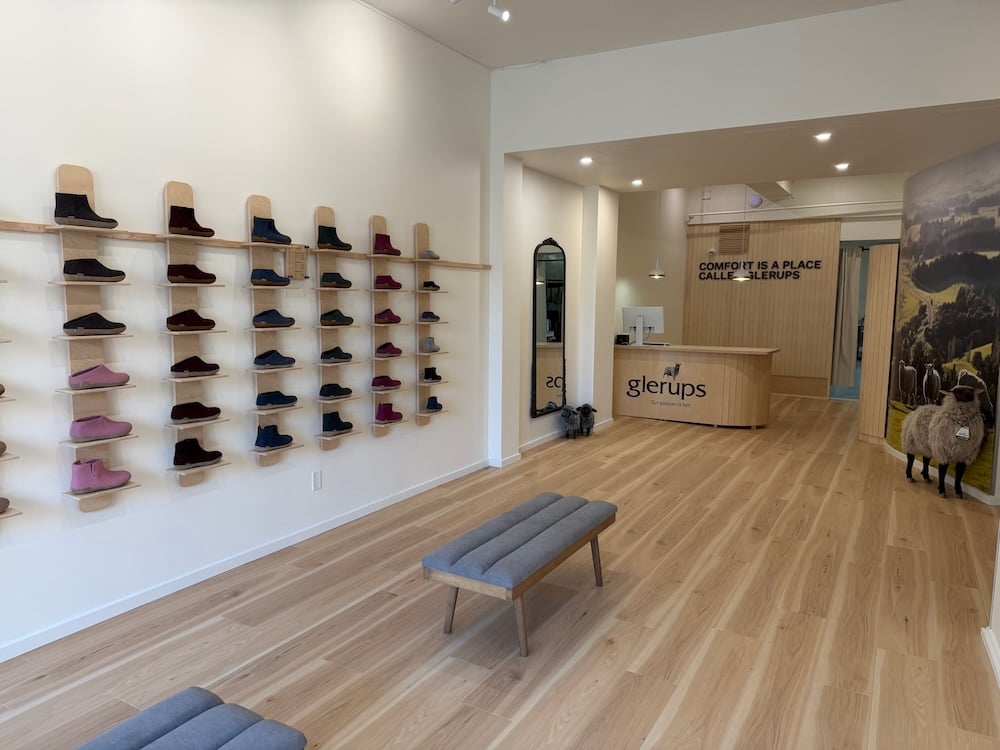
The Toronto premises measure approximately 1,600 square feet, according to Stacey, who estimates the retail sales area at about 1,000 square feet. The compact format accommodates a focused collection of felted-wool footwear in different styles, colours and sole constructions.
Inside, footwear is displayed along the walls, while photographs and sheep-themed decorations connect the merchandise to the company’s Danish origins. Among the displays is a wooden rocking sheep that Stacey said was made by Ove Glerup, whose wife Nanny founded the business.
Timm said the store reflects Danish principles of simplicity and functionality, along with hygge, a concept associated with warmth, comfort and togetherness. The design incorporates photographs of the founding family and their sheep, allowing customers to learn about the company while exploring its products.
The location is situated along a stretch of Queen Street West with a mix of independent fashion, footwear and lifestyle businesses. Nearby retailers identified by Stacey include Filson, Sydney’s, Park & Province and The Latest Scoop, while Tin Shack’s Blundstone store provides another connection to the neighbourhood.
Stacey said the area has changed considerably since the pandemic, when cannabis retailers occupied numerous storefronts. He believes independent businesses are helping shape the neighbourhood’s current retail mix, supported by nearby restaurants, cafés and pedestrian activity associated with Trinity Bellwoods Park.
Tin Shack Builds on a 15-Year Canadian Relationship
The relationship between glerups and Tin Shack began more than two decades ago, when Timm met Stacey in Spain while working with footwear brand El Naturalista. Timm was also involved with glerups and encouraged Stacey and his business partner Ian Heaps to consider distributing the Danish footwear in Canada.
The partnership took several years to develop. Timm recalled that Tin Shack initially declined because of other business commitments, although the partners became familiar with the products through samples and subsequent discussions.
Tin Shack eventually agreed to represent glerups, establishing a Canadian distribution relationship that Stacey said has now lasted approximately 15 years. The company identifies itself as the exclusive Canadian distributor of glerups and Blundstone, providing sales, marketing and support to retail partners.
The Toronto store gives Tin Shack a place to present the brand’s story, explain the footwear’s construction and introduce customers to styles they may not encounter at a multibrand retailer.
“We really wanted a place where people could come and kind of indulge in it, learn more about the story and the brand,” Stacey told Retail Insider during a visit to the store.
Stacey said the store is intended to build consumer awareness that can also benefit existing wholesale accounts. He compared the approach to Tin Shack’s experience developing Blundstone in Canada, where dedicated retail locations have complemented a broader distribution network.
Retail Insider previously examined that business in its feature on Blundstone’s 30 years in Canada.
The Queen Street West opening adds a direct retail channel to Tin Shack’s established distribution business. Stacey identified customer education and brand visibility as its primary objectives, although no sales figures or measured wholesale benefits have been disclosed.
From a Danish Sheep Farm to an International Brand
The origins of glerups trace back to Nanny and Ove Glerup, a Danish couple who raised Gotland sheep and experimented with products made from their wool.
Timm said Nanny became interested in felting after working with yarn and knitted products. During a felting course, she made a pair of wool shoes directly around Ove’s feet to help keep them warm.
Ove liked the footwear enough to wear it outside, including to the supermarket, prompting Nanny to add a sole. Friends and family began requesting pairs, and what started as a household project gradually developed into a business.
Nanny, a former school gym teacher, initially sold yarn, hats, gloves and footwear through a small farm shop. As interest in the shoes increased, the family developed more efficient production methods to meet demand.
The company was formally registered in 1993, according to the official glerups history. Timm became involved more than two decades ago and is now a co-owner alongside Jesper Glerup, the founders’ youngest son.
Today, glerups designs its footwear in Denmark and manufactures it at its own factory in Romania, where production began in 2005. The company uses wool sourced from New Zealand, having expanded beyond the original supply from the family’s Gotland sheep.
Despite its international distribution, glerups has maintained a relatively narrow assortment centred on felted-wool footwear. The Toronto store incorporates the company’s history into its presentation, connecting the products to the family business from which they originated.
A Focused Footwear Assortment
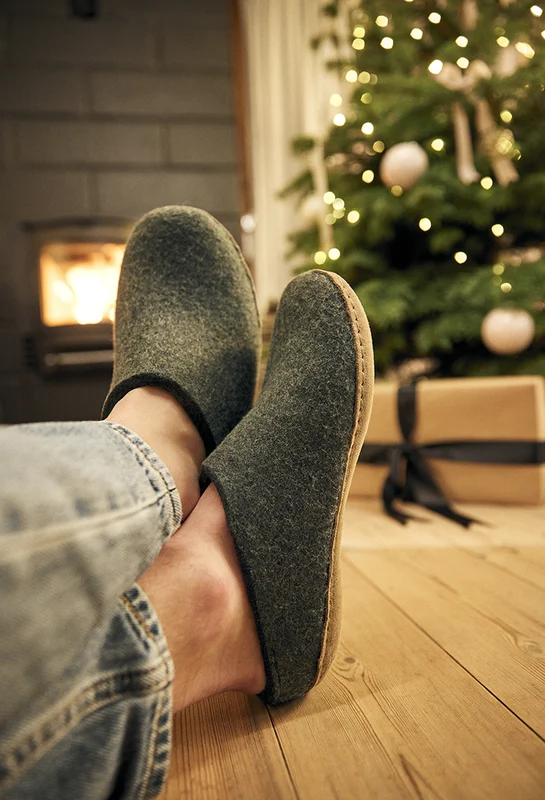
The glerups collection centres on three styles: slip-ons, shoes and ankle-height boots, available with leather or natural rubber soles. Stacey said rubber-sole models provide additional traction for limited outdoor activities, such as stepping onto a deck or making a short trip to a nearby store.
The footwear is primarily associated with indoor comfort, with each silhouette offering a different fit and degree of coverage. Stacey noted that customers often have personal preferences, particularly when choosing between slip-ons and boots.
The Canadian assortment includes European sizes extending approximately from 35 to 51, according to Stacey. Colours discussed during the store visit included charcoal, denim, forest and chestnut, along with newer shades such as beet, moss, sky and flower.
Stacey recommends trying the footwear without socks so customers can experience the felted wool directly against their feet. The store allows staff to explain the material, sizing and differences between styles.
Canadian prices vary by model and sole construction. On the glerups Canadian website, leather-sole slip-ons are listed at $99.95 and leather-sole shoes at $109.95, while rubber-sole versions are listed at $119.95 and $129.95 respectively.
Direct Customer Feedback and Canadian Growth
Beyond building awareness, Timm sees the Toronto store as a source of direct customer feedback. He said the company’s former Danish location provided useful information about consumer preferences, including colours and potential new styles, and expects similar benefits in Canada.
Feedback through wholesale accounts can be influenced by the other brands those retailers carry, Timm explained. A dedicated store allows glerups to hear directly from consumers about the products and how they use them, helping inform future assortment decisions.
Timm described Canada as a growing market, saying the Canadian team is requesting more merchandise than he can currently supply. Tin Shack also identifies Canada as glerups’ largest import market, although neither company provided supporting sales figures or a market-share breakdown.
The company has further business-development plans but intends to expand gradually, Timm said, balancing demand with production capacity and the standards established by the founders. No additional Canadian standalone stores have been announced.
“We are not volume-driven, we are value-driven,” Timm said, explaining the company’s selective approach to wholesale and e-commerce partners.
Timm said he promised Nanny and Ove Glerup before their deaths that he would protect the company’s identity. That commitment continues to guide its growth, even as Canadian demand increases.
For Tin Shack, the Toronto location provides another way to develop glerups alongside its established wholesale business. For the Danish company, it offers direct access to Canadian customers in a market where Timm says demand is increasing, without committing to a broader network of standalone stores.