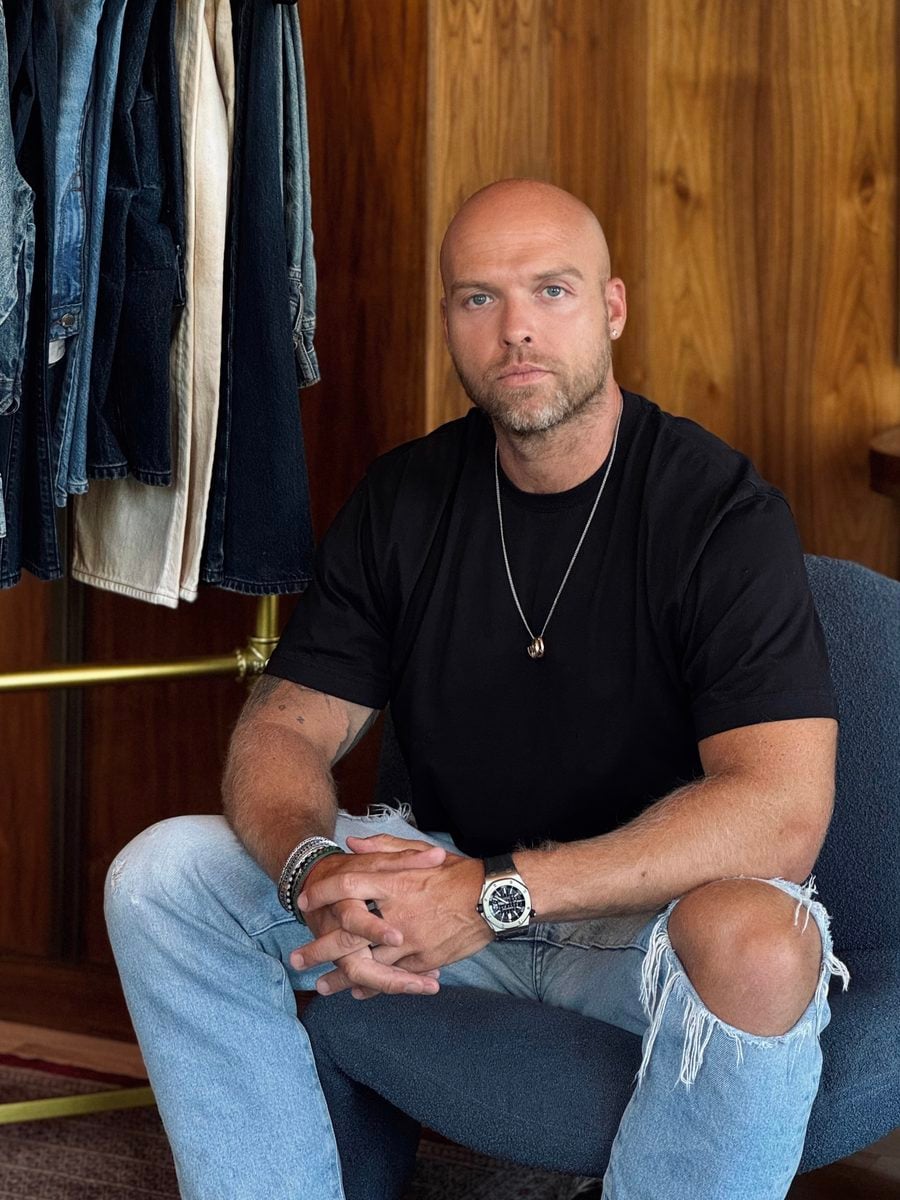
Vancouver-founded premium denim brand Triarchy has introduced a collection using digital dyeing technology that could change how the company purchases fabric, manages inventory and responds to consumer demand. Launched October 15 in partnership with textile technology company WTRLSS, the five-piece collection demonstrates how different colours and finishes can be produced from the same undyed cotton fabric, potentially reducing advance purchasing commitments and providing greater manufacturing flexibility.
For Triarchy co-founder and creative director Adam Taubenfligel, the commercial implications are as important as the environmental benefits. The technology allows the company to determine colours and finishes later in production, creating opportunities to adjust assortments and replenish successful styles without sourcing separate fabrics for each wash.
“This is as big a step to me as the sustainability element because we are no longer beholden to purchasing multiple fabrics which all come with minimums,” Taubenfligel told Retail Insider.
Triarchy is the first brand to launch a commercial collection using WTRLSS technology, according to the companies. The initial production run is intended to demonstrate the process ahead of broader adoption and planned wholesale presentations in February 2027.
A Different Approach to Denim Manufacturing
Conventional denim production typically involves dyeing cotton yarn with indigo before weaving, followed by cutting, sewing and garment finishing. Washing, bleaching and other treatments create the faded and worn-in appearances associated with different denim styles, often requiring considerable water, energy and chemical inputs.
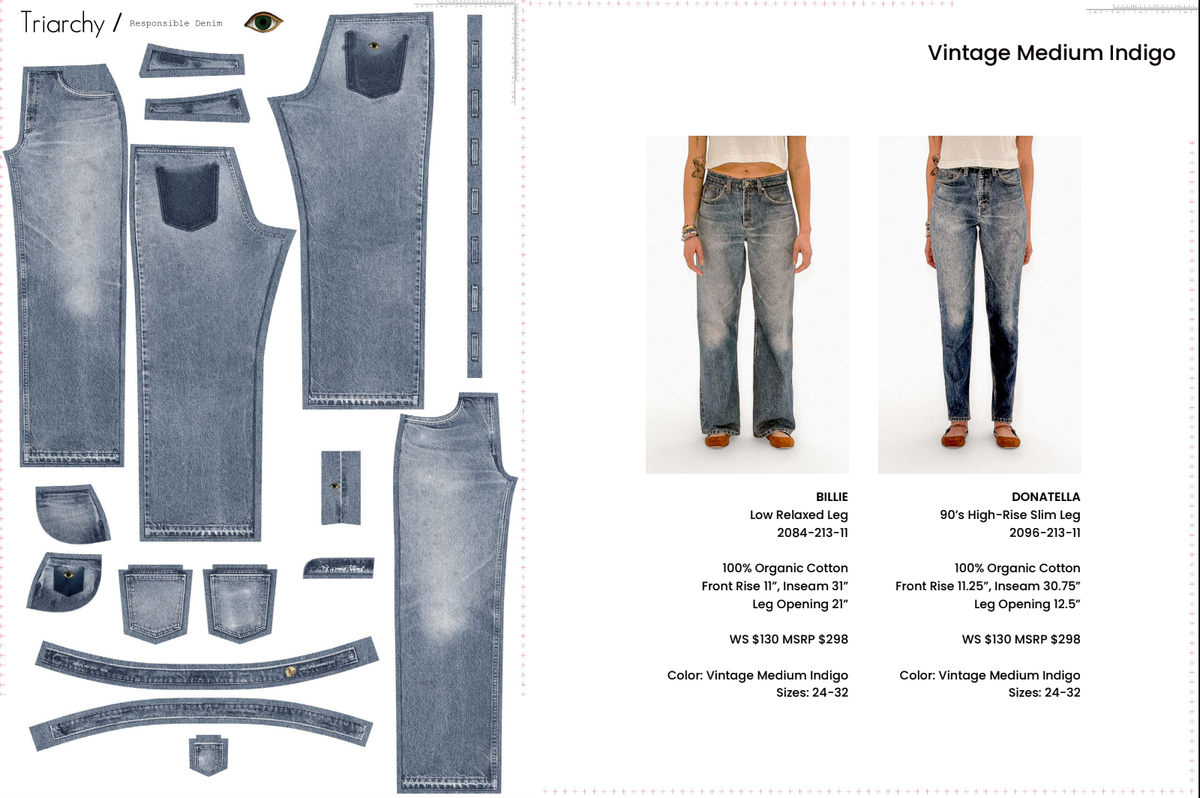
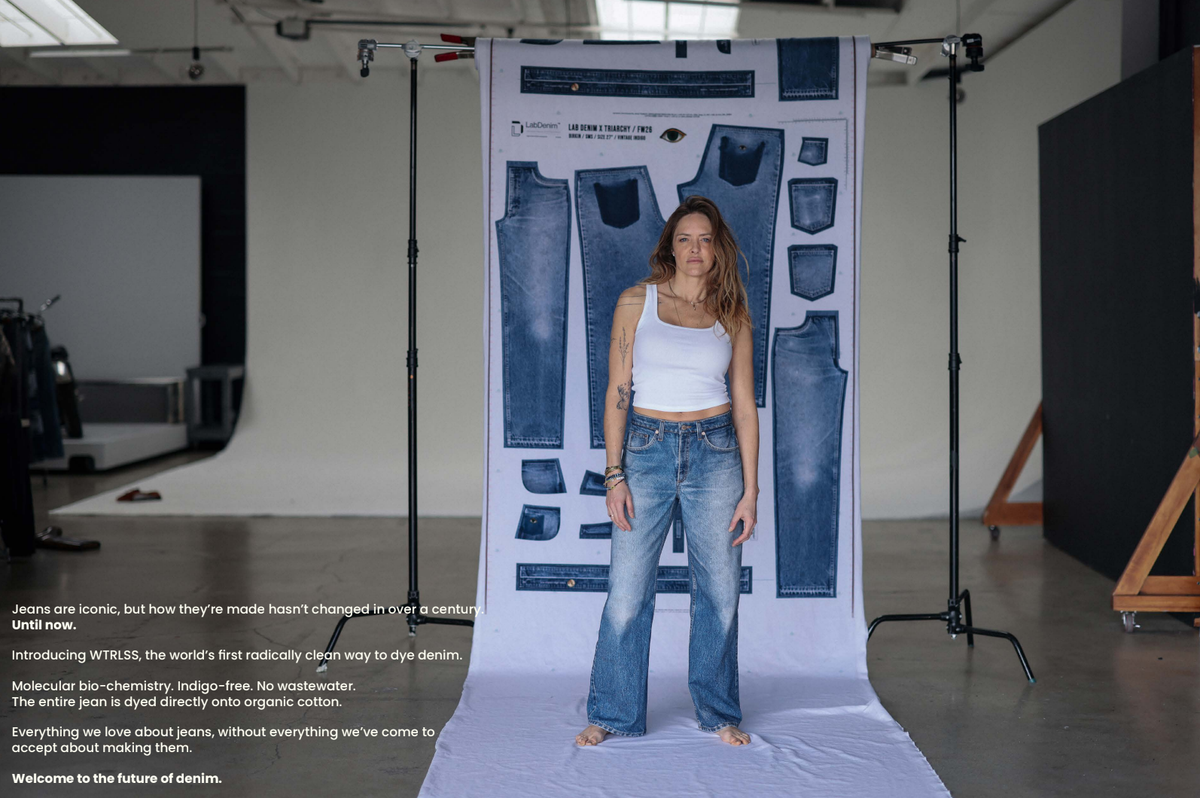
WTRLSS has developed a process that digitally applies colour and the appearance of finished washes to undyed fabric before garments are cut and sewn. The company says its proprietary MultiActiv chemistry bonds colour into the fibres, reproducing effects such as faded indigo, black denim and detailed patterns without conventional indigo dye baths or repeated wet-finishing treatments.
Taubenfligel explained that Triarchy can design the appearance of a completed garment digitally and reproduce that finish directly on the fabric before assembly. The finished jeans receive a separate rinse, but do not undergo the conventional sequence of garment-washing treatments needed to create their appearance.
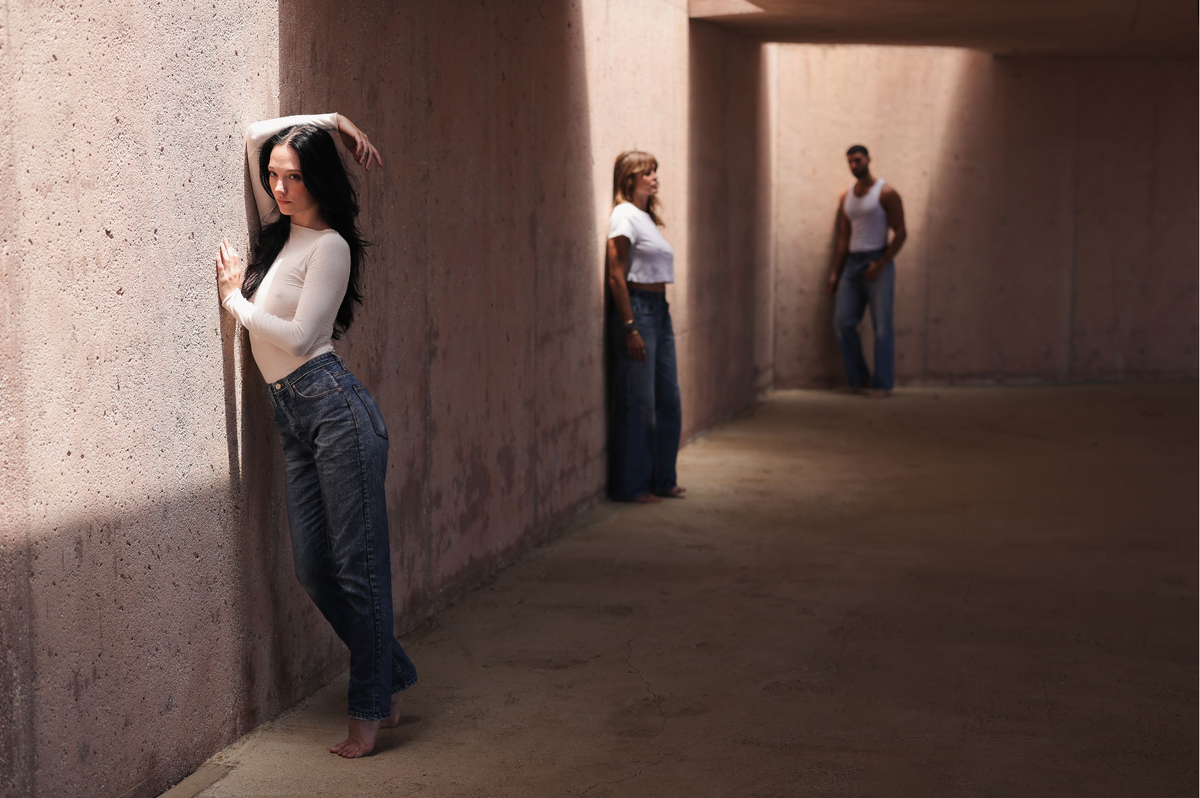
The collection includes five products across three colourways, featuring indigo, black and Cowhide finishes. The Cowhide design uses a photographic pattern reproduced on jeans and a matching jacket, demonstrating the range of appearances possible from a common base fabric.
All five products are made from 100 per cent organic cotton and are designed and produced in Los Angeles. The assortment includes two versions of the Billie relaxed-leg jean, the Donatella high-rise slim jean, the Birkin straight-leg jean and the Charlie boyfriend jacket.
Changing Fabric Purchasing and Inventory Decisions
Apparel brands typically commit to fabric colours and finishes before knowing which products will sell best. Separate fabric minimums can leave companies with excess material in slower-selling colours while limiting their ability to replenish successful styles.
Triarchy believes WTRLSS could change that calculation by allowing multiple finishes to be produced from a common inventory of undyed fabric. Taubenfligel said the company could use the same material to make a substantially wider assortment.
“With this technology we can dye blue, black, green and anything you can think of back to back, one after another,” Taubenfligel said. “The colour bonds at a molecular level and is indistinguishable from traditionally dyed denim, so all we need is one good denim fabric and we can make a whole collection.”
The flexibility could be particularly valuable when a product performs better than anticipated. Instead of sourcing additional fabric in a specific colour or wash, Triarchy could use material already available and apply the required finish during production.
“This also means we can respond to styles that are working immediately because we already have the fabric on hand, regardless of which style it is,” Taubenfligel said.
For retailers and apparel brands, the potential advantages include more responsive assortment planning, faster replenishment and reduced exposure to fabric purchased for unsuccessful finishes. The approach could also allow companies to make some merchandising decisions closer to the selling season.
Those benefits remain prospective. Using a common fabric does not eliminate garment-production minimums, manufacturing capacity constraints or distribution lead times, and Triarchy has not disclosed comparative costs, inventory savings or measurable reductions in production timelines.
The broader commercial test will be whether these advantages can be maintained economically as the technology moves beyond an initial collection.
Environmental Savings and Their Limitations
WTRLSS estimates its technology uses up to 99.9 per cent less water and up to 90 per cent less energy than a conventional industry process for denim dyeing and finishing. Its comparison uses approximately 75 litres of water per pair for conventional methods, against roughly 20 millilitres for the digital process.
The figures are estimates supplied by WTRLSS and have not been independently established as full lifecycle results. They apply to specified production stages and do not account for every aspect of a garment’s environmental footprint, including cotton cultivation, fabric production, transportation and consumer laundering.
Triarchy also gives each finished garment a separate rinse before shipment. That step is distinct from the water-use figure attributed to digital dyeing and is relevant when considering the overall manufacturing impact.
The partnership follows earlier changes to Triarchy’s production practices. The company stopped conventional denim manufacturing in 2016, paused operations for approximately 18 months and relaunched in 2018 with revised sourcing and manufacturing methods.
Triarchy also says it introduced plastic-free stretch denim in 2022, reflecting its efforts to reduce the use of petroleum-based synthetic fibres. Its responsibility statement describes earlier work with alternative denim materials and finishing processes.
“If something falls under the category of ‘future garbage’ then we don’t make it,” Taubenfligel said. “So when meaningful solutions present themselves we do our due diligence and if it passes inspection, we adopt it wholeheartedly.”
Canadian Roots and Premium Retail Positioning
Founded in 2011 by siblings Adam, Mark and Ania Taubenfligel, Triarchy maintains strong Canadian connections despite producing its denim in Los Angeles. The siblings grew up in Vancouver, and the business operates across Canada and the United States.
Adam oversees design and production in Los Angeles, while Mark and his wife Andrea are based in Vancouver and Ania works from Toronto. The arrangement keeps the family involved in different parts of the business across North America.
“We all wear many hats and are in contact with one another throughout the day so it’s quite an efficient ship,” Taubenfligel said. “Mark and his wife Andrea man the fort in Vancouver and Ania is in Toronto so we cast a wide net over North America with each of our positioning.”
Triarchy has an established Canadian retail relationship with Holt Renfrew, which has featured the brand in its sustainability initiatives. Taubenfligel hopes to introduce WTRLSS products through that relationship, although no Canadian retail launch has been confirmed.
“Triarchy.com is the only point of purchase currently but Triarchy’s home in Canada has long been Holt Renfrew/H Project, so as soon as we can get this new technology across the border I will be aiming to do so with them as they are an incredible partner at telling stories like ours,” he said.
The collection launched for preorder, with jeans priced at US$298 and the Cowhide jacket at US$355. The original announcement identified November as the expected shipping period, while the brand’s website continues to list the products as preorders.
For Canadian customers, Triarchy’s published shipping policy lists a US$150 charge for deliveries to Canada, with duties and taxes prepaid. That adds a substantial cost to purchasing directly from the U.S. website and makes future domestic retail distribution particularly relevant.
The pricing places Triarchy in the premium denim segment, where product quality, design and differentiation are important competitive considerations. The company is making its manufacturing process part of that positioning, although it has not disclosed whether WTRLSS changes its production margins.
Taubenfligel said the initial preorder response was ahead of expectations. He did not provide order volumes or other sales figures, making it too early to assess broader consumer demand.
Wholesale Expansion Planned for February 2027
Triarchy intends to incorporate WTRLSS technology more broadly into future collections, with the next phase involving potential reorders and additional product development.
“We are working to adopt this technology fully,” Taubenfligel said.
The company is working with WTRLSS on production plans following the first collection and expects to have new products ready for the February 2027 wholesale market. Taubenfligel said Triarchy intends to begin showing the collection to retailers at that time, although no new distribution agreements have been announced.
The next phase will test whether the flexibility demonstrated in the initial collection can support repeat orders and larger production volumes. It will also provide an opportunity to assess retailer interest in products made using the new process.
For Triarchy, the February wholesale presentations represent a step toward broader commercial adoption. Their outcome will help determine whether digital dyeing becomes a lasting part of the company’s manufacturing and retail strategy.