

The Hudson’s Bay Company (HBC) has announced that it will shutter its chain of Home Outfitters stores in Canada this year. The company is also taking a hard look at its Saks OFF 5TH chain of off-price stores, which is said to be struggling in terms of profitability.
All 37 Home Outfitters locations will close in Canada, representing more vacant retail space that landlords will have to deal with, at a challenging time when other chains have also announced store closures. Home Outfitters employs nearly 700, and it’s not yet known how many may be transferred to other HBC banners.
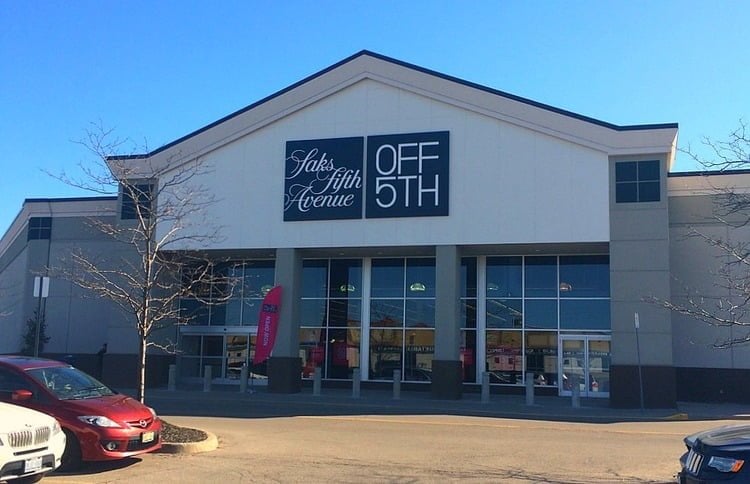
HBC is also reevaluating its chain of 133 Saks OFF 5TH stores, which are struggling financially. About 20 Saks OFF 5TH stores are expected to be closed in the US in an effort to increase profitability.
Helena Foulkes, who became CEO of the Hudson’s Bay Company a bit over a year ago, said that the closures are in an effort to “reduce costs, simplify the business and improve overall profitability.” In a release, she said that “The divestiture of Gilt, rightsizing of Lord & Taylor, the recent merger of our European retail operations in Germany, and today’s announcement exemplify the bold strategic actions we are taking to set HBC up for long-term success.”
HBC came under scrutiny in November when activist investor Land and Buildings Investment Management LLC. called out the board for failing to take decisive action to unlock value for shareholders. One of the suggestions was that HBC sell off its 650,000 square foot Saks Fifth Avenue flagship in Manhattan, which was assessed in 2014 at $3.7-billion — considerably more than the price that Governor/Executive Chairman Richard Baker paid for the company in 2013.
Selling Saks Fifth Avenue and Lord & Taylor as well as HBC’s remaining stake in its European business, could result in a doubling or even tripling of the share price of the HBC, according to the activist investor.
HBC lost $164-millon dollars in its latest quarter, or about 69 cents per share.
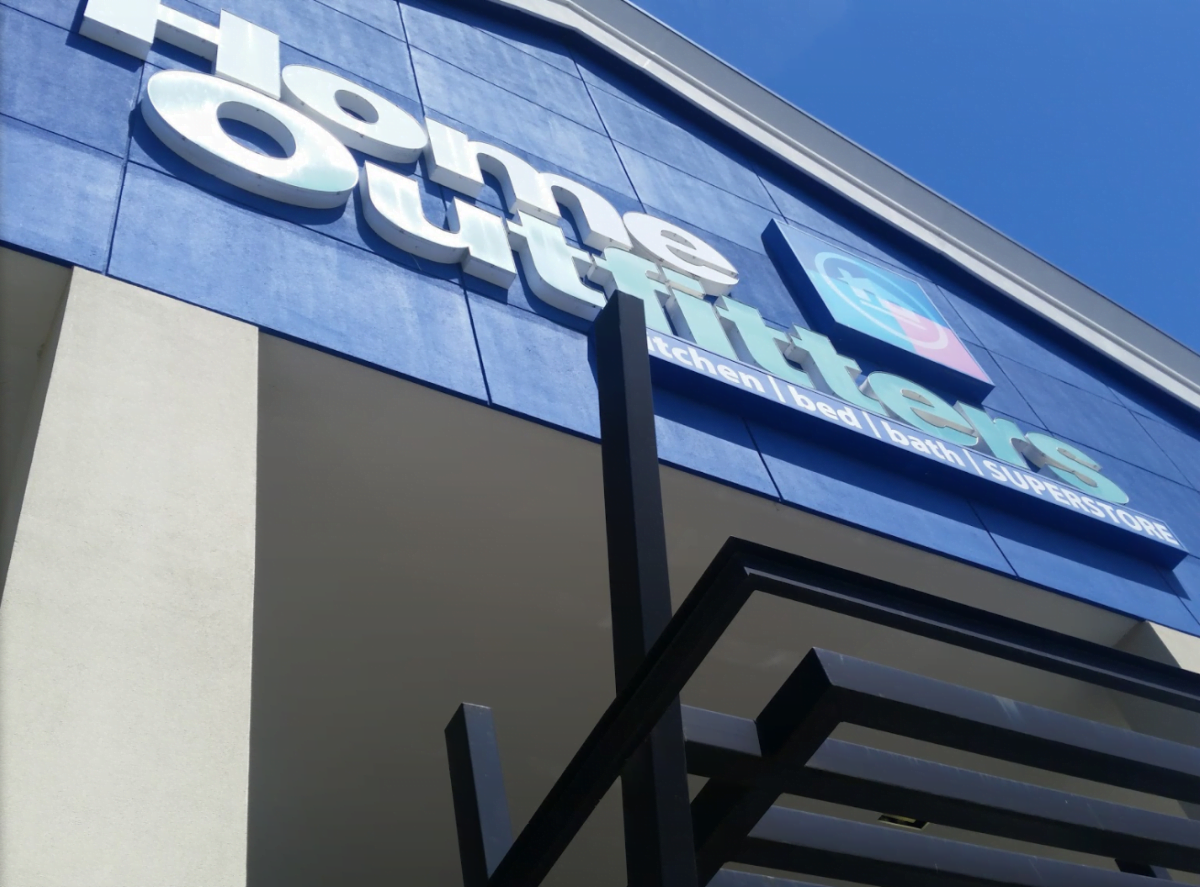
Home Outfitters operates stores Canada-wide in a diverse range of locations, including standalone units, power centres, and even top shopping centres such as Toronto’s Yorkdale Shopping Centre. Smaller communities such as Nanaimo, Kelowna, Saskatoon, and Halifax have Home Outfitters locations that may prove challenging to fill. Home Outfitters locations are, for the most part, in suburban areas with ample parking.
Some landlords will struggle to fill vacated Home Outfitters locations, which span between 28,000 square feet and 81,000 square feet, averaging approximately 35,200 square feet each. This week, Payless ShoeSource announced that it was closing all 248 Canadian stores after the company’s bankruptcy, and Lowe’s is in the process of closing 27 stores under its Rona banner in Canada. Other smaller format chains such as Town Shoes have also recently closed stores.
The large size of Home Outfitters locations is similar to Future Shop, which was shuttered by parent company Best Buy in March of 2015. That was around the time that Target began closing its 133 Canadian stores as part of a national pullout. About a year ago, as well, Sears Canada closed all of its Canadian stores. In all, millions of square feet of retail space has been vacated in Canada in recent memory.
Some landlords are repurposing some larger vacated retail spaces by adding new retailers, food halls and food markets, fitness centres, and even schools. Some larger boxes have been reconfigured for multiple tenants, while others have been demolished for redevelopment.
Most of Home Outfitters’ stores are in markets that are also served by Hudson’s Bay stores. Furniture offerings will continue to be in those Bay locations. According to Home Outfitters’ website, the chain stocks popular brands such as Le Creuset, RICARDO, Calvin Klein bedding, and mattress-in-a-box brand Casper. As a result of the closure, brands will lose a key distribution network, though there is also considerable crossover with offerings at Home Outfitters and at larger Hudson’s Bay stores that offer home furnishings.
Rumours that HBC was looking to shelve the Home Outfitters nameplate have been going around for years. In the summer of 2014, sources informed us that Home Outfitters was going to be converted to a new chain called ‘Hudson’s Bay Home’. HBC subsequently put out a statement saying that while Home Outfitters had become part of Hudson’s Bay’s Home Division, there would be no name change.
As part of the Home Outfitters restructuring, two stores were closed in Mississauga and in Abbotsford, BC. In July of 2014, Home Outfitters operated 69 stores in Canada, which means nearly half have shuttered as only 37 are remaining today. Home Outfitters was founded in 1999 selling categories including housewares, small appliances, bath accessories, bedding, furniture and home decor.

HBC did subsequently launch the ‘Hudson’s Bay Home’ banner in the spring of 2016 when it opened three Hudson’s Bay Home stores in Winnipeg. The concept does not appear to have taken off.
Off-price Saks OFF 5TH entered the Canadian market in the spring of 2016 when it opened at Vaughan Mills, north of Toronto, and the chain has since opened 17 more locations in the provinces of BC, Alberta, Manitoba, Ontario and Quebec. Saks OFF 5TH, which is its own division and is separate from Saks Fifth Avenue despite the name, had originally intended to have opened 25 stores in Canada by the end of 2018, though sources say that the concept is struggling in Canada as it has failed to gain traction with consumers. Saks OFF 5TH had announced that it would open a two-level store at downtown Montreal’s Montreal Eaton Centre, which was subsequently cancelled with the announcement that French sports retailer Decathlon will occupy that space.
Saks OFF 5TH already has a considerable amount of competition in Canada. TJX banners Winners, Marshals and HomeSense have been expanding in Canada and as per its name, Winners has come out on top with an impressive 271 stores in Canada. US -based Marshalls, which entered the Canadian market in 2011, now has 88 stores in Canada. Off-price home furnishings retailer HomeSense has 125 stores in Canada.
Winners anticipates opening eight more Winners stores this year, and Marshalls is aiming to open about 10 stores in Canada in 2019 as well. HomeSense plans to open 12 stores in Canada this year and all three banners could see as many as 30 new locations open nationwide in 2020.
As well, Nordstrom Rack entered Canada in the spring of 2017 when its first store opened at Vaughan Mills in Toronto’s suburbs. Nordstrom Rack now operates six stores in Canada with three in the GTA and individual units in Edmonton, Calgary and Ottawa. As many as 15 Nordstrom Rack locations are expected to be in operation in Canada by the end of its multi-year expansion.




Saw a post on Hudson’s Bays Twitter replying to a customer stating that the Hudson’s Bay Home Stores will remain open.
Any idea where to locate that Tweet? We’ve had no luck searching.
https://twitter.com/hudsonsbay/status/1101150180563447810 Looks like the tweet has incorrect 😜