Home Blog Page 1006

Invisible Face Mask ‘Mingle Mask’ Targets Canadian Retailers and Businesses

Model wearing a Mingle Mask - Photo by Mingle Mask

Canadian company Mingle Mask is targeting Canadian retailers and foodservice businesses with its new invisible, ergonomic mask that provides all the benefits of mask protection while allowing one’s face to be completely visible.

CANADIAN-MADE AND ECO-FRIENDLY MINGLE MASKS

The eco-friendly and recyclable masks are made from FDA-approved PET plastic and come in one size, adjustable for all faces with a built-in chin rest and adjustable ear straps. The lightweight design maintains its shape and is designed to cover the nose and mouth area to protect against respiratory droplets being expelled by the wearer. The Mingle Mask is the first Canadian-made, clear face covering on the market.

IMAGE OF BOX OF MINGLE MASKS. PHOTO: MINGLE MASK

Mingle Masks allow for facial identification and ease of communication, while also working well for those who are hearing impaired. They are also designed to make breathing easier and do not fog up. Mingle Masks are reusable and easily cleaned. Breaking down communication barriers created by the visual obstruction of traditional masks, Mingle Masks increase customer engagement and general morale in retail and hospitality environments.

As the new normal settles and retail operations reopen across the country, implementing new safety procedures has been a challenge for all. The list of mandated safety protocols is long, and they run the risk of interfering with the once seamless business model people enjoyed pre-COVID.

A concern for business owners in all areas of retail and hospitality is maintaining a warm environment for customers in a new world of PPE, temperature checks, sanitization, and questionnaires. Establishing a connection between customer and staff has made that a bit harder due to the implementation of face masks in most public places across the country. Not to mention the difficulty of hiring new employees by social distancing at interviews.

“We believe we are the best alternative face covering product on the market for Non Medical face masks,” said representative Kara Kelly.

“We have been at the forefront a ground-breaking initiative and have created an innovation product that can benefit so many people and business sectors including: corporate conglomerates, small business, finance, sales and service reps, manufacturing, retail, bars, restaurants, education, transportation workers, and notwithstanding the public and individuals in marginalized segments of the population who have breathing difficulties, hearing loss, and asthma sufferers.”

“One last notable point I want to include is, the cost. “We wanted to produce and supply something that was affordable to everyone. We are proud to share the retail price per mask breaks down to only $1.00. We have done a soft launch of the product and have been selling online since July. We have already sold over 120,000 units across the country.”

The masks are 100% Canadian made, with the distribution centre located in Ontario. The company ships nationwide and provides wholesale pricing for resellers and distributors.

Those interested in bulk orders can contact Kara at Kara@theminglemask.com and get 10% off your order with code RI-10.

Canadian Fashion Industry Hit Hard by COVID-19: Interviews

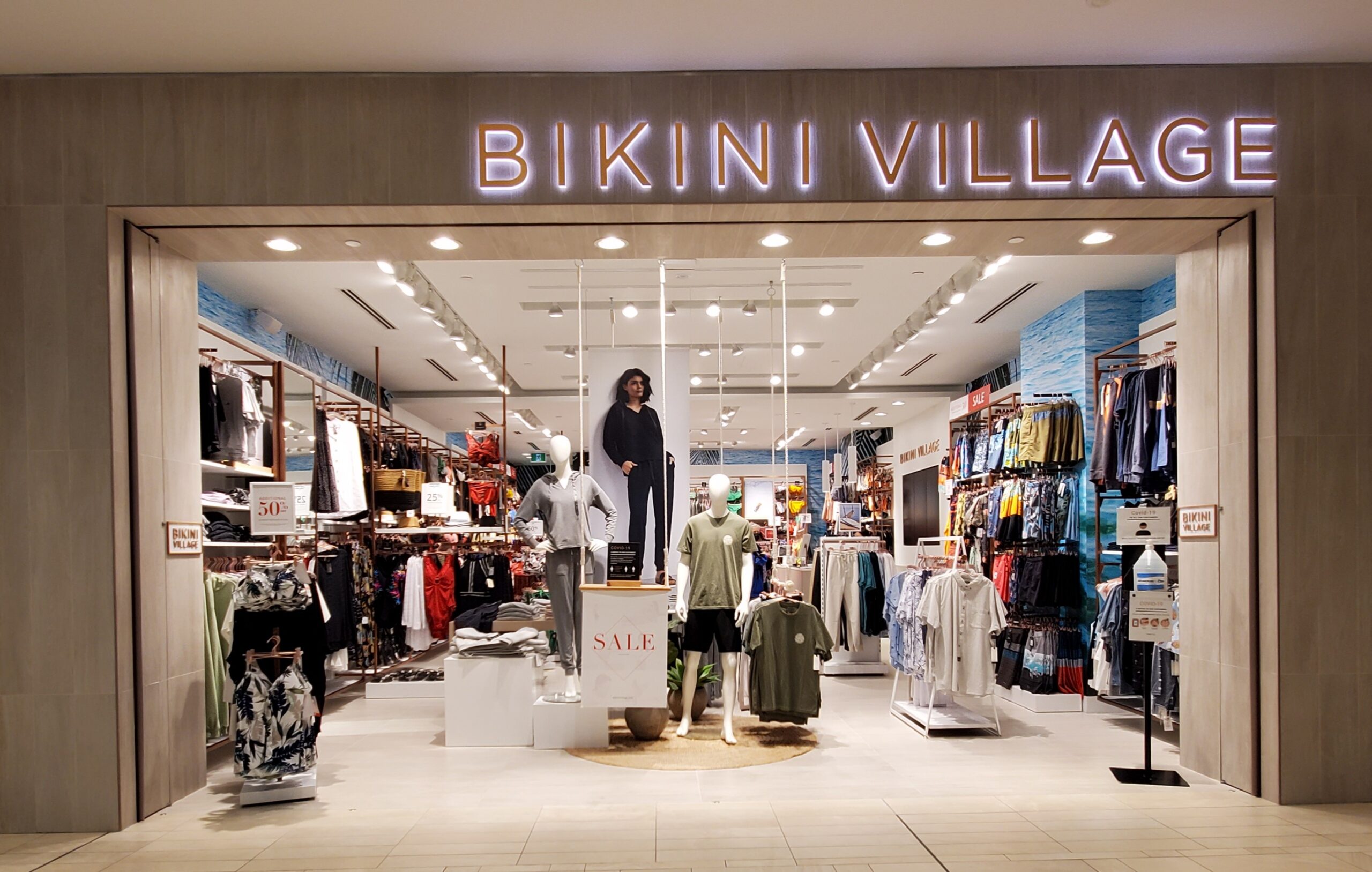
INTERIOR OF FASHION RETAIL STORE

The fashion industry, like many others in Canada, has been hit hard by the impact the prolonged COVID-19 pandemic has had on the country’s economy.

VICKY MILNER

Vicky Milner, President of CAFA (Canadian Arts & Fashion Awards), said the impact has been huge.

“When it just hit and everything just started shutting down, there was a big panic. I think through this whole pandemic it’s accelerated a lot of things for brands — things that maybe they were planning to do before but were waiting, anything that obviously involves digital and consumer experience that needed to be seamless,” said Milner. “This situation has definitely upped the ante so to speak and upped the standards of what brands and designers have to now do.

“Because you just couldn’t go into a mall and buy things, a lot of things just shifted to online when it comes to fashion. It’s not an essential service. So a lot of brands who weren’t positioned well in the ecomm space, or didn’t have strong social media presence or weren’t selling through social media, had to definitely pivot quickly to make sure that their exposure on all of those platforms was very strong.”

COVID-19 HAS IMPACTED PRODUCT LINEUP FOR RETAILERS

The impact to the industry has also been very specific to commodities and what companies are producing. So for example, an evening wear designer would have seen a big slow down in business because many events are simply not taking place. But a designer doing leisure wear or more comfortable clothes for home can’t keep their inventory in stock.

“People just shifted their buying habits tremendously based on what was going on,” said Milner. “Foundationally, I think people are right now strategizing what’s to come. Holiday season is coming up. How are they going to make the most of that if people are going to be scared to still go to the malls or if there’s an upswing in numbers (of COVID),” added Milner.

“The whole online kind of conversation is huge as I talk to many brands. They’re investing more in social media, marketing for sure. We’ve seen obviously a rise in live stream shopping. It’s been around for awhile overseas but it’s hitting here more now. There’s a few platforms out there that a lot of brands are now looking at to have that personal engagement with consumers through a live stream shopping experience to augment the ecomm experience as well. So that they can connect on a more personal level with consumers.”

The expectations of consumers has also shifted in how fast they want something. So to compete with the Amazons of the world, independent brands have to also be able to offer quick delivery, a seamless experience and perhaps free delivery where before they never considered that.

The Canadian Arts & Fashion Awards (CAFA), which was formed to recognize, celebrate, and promote established and emerging talent within Canada’s fashion community, had to postpone its annual awards in May. All events across the country had to be postponed as well. The national awards were tentatively rescheduled for November but it’s now looking that the big event will take place next May.

CAFA HAS PIVOTED TO HOSTING ONLINE EVENTS IN THE WAKE OF COVID-19

CAFA has also pivoted to host more online events such as a shopping event in support of Canadian brands with 160 participating. It also held Live with CAFA where twice a week experts gave the industry advice on how to navigate the current situation.

David Dixon, a clothing designer in Toronto with David Dixon Inc. and Professor at the Seneca School of Fashion, said for the fashion industry COVID came out of nowhere very fast.

“Fashion generally is quick to change in terms of how we do things. But there’s a formula in how we do things in terms of making things happen. The industry came to a quick halt I would say at the beginning of March where basically we were deemed non-essential in terms of operating businesses,” he said. “Many of my contemporaries here in Canada basically changed their basic structure to be able to create PPE (personal protective equipment) like gowns for hospitals (and face masks for the public).

DAVID DIXON

“The fashion industry itself the normal process of creating a collection, showing a collection, selling it, distributing it, that whole process or sort of rhythm was broken. During March that’s a very significant month of the year for fashion in showing a collection, selling and distributing. The big months are March and September in a year.”

Dixon said that in Europe many designers are doing multiple platforms right now in getting their collections across. People are slowly getting back to their studios, trying to fill orders that were made or trying to rebuild what they had missed during that period.

“Right now in Europe, they’re showing couture, they’re showing men’s wear, they’re showing cruise wear. Things like that but they’re using different platforms,” he said.

Dixon said designers have to think how they can promote their product digitally. There will be innovation coming in how they will do exactly that.


“I think it’s a change for good. The fashion industry I think needed a little bit of a shakeup anyway. It will probably build itself into something a little bit stronger,” he said.

Glenn Dixon, Owner of Glenn Dixon Design and Strategist at Shikatani Lacroix Design, who is an Interior Designer specializing in Retail, Commercial and Residential design, said the impact of COVID has been huge in the industry but there is also opportunity coming out of it.

“It’s really important for retailers to still focus on their stores, their flagship especially,” said Dixon. “That’s the store that would send the image and tell the customer who they are. The opportunity there is to really put more effort into building an experience for customers where it’s not bricks and mortar anymore. It’s an experience. Retailers are going to have to go deeper into that more so than ever.

“People want to get out and shop still. The experience of shopping is always fun, provided that the consumers are treated well.

“One of the things I’ve seen a lot of is that the stores, or the retailers, have learned the value of their customers and their employees even more so during this. They’re really concerned about their employees’ safety and they’re looking after that. If you treat your employees well, they’re going to treat the customers well. So there’s this love affair going on with customers and employees again only because we were taught the importance of these people through this pandemic. So what that means ultimately to the consumer is a better shopping experience. They’re more likely to come back.”

Retailers Must Track E-Listening Habits to Stay Relevant

WOMAN STREAMING MUSIC ON SMARTPHONE

The pandemic has accelerated global media adoption rates of streaming across devices and platforms. Digital video consumption has soared followed by digital audio with Spotify being the most listened to platform in the US followed by Pandora.

In Canada, according to Vividata’s Spring 2020 Survey, YouTube (54%) followed by Spotify (42%) are the top two streaming services and over three-quarters of Americans listen to music via streaming.

Half of all Canadian respondents who owned a mobile phone streamed music, which is more than those who watched videos in the past month signalling new opportunities for retail brands.

What is E-listening? 

E-listening includes streaming (listening) online or listening to downloaded music, radio, or TV. With the rise in digital streaming people have replaced their televisions and radios with the internet on computers or mobile devices.

In the US, 63% of respondents reported paying for at least one audio-streaming subscription, while 53% paid for two. Along with audio streaming, the rise in mobile streaming is worth tracking for retailers to understand streamers’ relationships with their devices. According to Vividata’s Spring 2020 Survey, currently four-in-ten Canadians stream audio content.

Moreover, over a quarter (27%) of all Canadians indicated that being able to listen to the radio online has changed how they engage with audio content.

Audio streaming answers the need for on-demand convenience and access, driven by its growing popularity among educated, affluent, employed and younger consumers. Further, the rise of audiobooks (eclipsing e-books in major markets like US and China), podcasting and voice-operated smart speakers points to the growing power of audio tech in consumers’ lives.

Globally brands saw a surge in e-listening during the pandemic. Spotify has a growing number of paid subscribers, rising to 130 million listeners (plus another 257 million free subscribers) of health and wellness tunes, meditative and instrumental music. In the UK and US, the top two activities performed online during the pandemic were searching for coronavirus updates followed by listening to music.

More retailers saw boomers shift their spending online through the pandemic in what is predicted to be an enduring change in shopping habits among this traditional cohort. A quarter of all Canadians stream audio content through podcasts, doubling in the past two years. Comedy, news and business remained the top podcast genres through COVID-19 for Canadians indicating an appetite for content conveying safety, comfort and motivation in uncertain times.

E-Listeners are Heavy Consumers of Home Electronics

E-listening is reported by users as helping them “unwind”, “slow down”, or “multi-task hands-free”. Students, followed by MOPES (Managers, Owners, Professionals, or Entrepreneurs), index highest in their use of audio streaming services with Generation Y, Generation Z and MilleXZials being the highest consumers of digital audio globally, according to Vividata and other sources. Smart speaker owners and podcast listeners are also the early adopters of this technology and report fluency with technology products, suggesting that all those who listen to digital audio are also “digital natives”.

Smart devices are electronic devices wirelessly connected to other devices. Smart speaker ownership skews young and affluent with those earning over $75,000 annually being 36% more likely to own such devices than the average Canadian. In the US, 81% of Americans own a smartphone (in Canada it’s 85%) with one in five US consumers being smartphone-only internet users.

With 91% of US consumers reporting subscription to a video-streaming service and 30% subscribing to three or more such services, consumers’ e-listening habits are growing. Most voice commands today issued by smart speaker owners in Canada are for music streaming and weather updates (56% each) with a quarter of all voice commands used for listening to live-radio online.

E-listening is device-driven, and “e-listeners” (audio-streamers) are 13% more likely than the average Canadian to prioritize equipping their households with the latest technology and to be vocal about their opinions surrounding product and services online. This group is also 15% more likely than the rest to spend upwards of $2500 on home electronics or entertainment products in the past two years. This social affluence and comfort and awareness with technology spells opportunity for retailers looking to capitalize on product review platforms and build online communities that act as net promoters and drive traffic to storefronts. A great way for these artists and podcasts to build up awareness and exposure is to buy Spotify plays.

Walmart and Canadian Tire appear to be the top sources of purchases for e-listeners who purchased consumer electronics including smart devices in the last two years, according to Vividata. Google Home (60%) followed by Amazon Echo (29%) are the top smart speakers owned by Canadians whose household ownership of voice activated speakers has more than doubled in the past year alone. In the US, the Amazon Echo boasts a roughly 70% market share compared to just 25% for Google Home and 5% for Apple HomePod even as smart device ownership peaks. It is true that consumers can hear faster than they see, taste, smell or feel, with each sound wave reaching the human brain in 0.05 seconds, triggering heightened emotion and stimuli. Tapping into the growing motivations and values of e-listeners will help retail brands program and orient for the next normal as it evolves.

Arundati Dandapani

Arundati Dandapani advises non-profits and businesses with data storytelling at the intersection of cannabis, media and marketing (or social) research. A well-published research professional, she is the Founder of Generation1.ca, an online cross-sectoral resource and outlet for Canada’s newest residents. She has been honoured with notable industry awards, is involved with multiple industry associations, and is the Chief Editor of Canada’s MRIA-ARIM. She can be reached at arundati@generation1.ca.

SAP GOLD PARTNER SAVANTIS APPOINTS KEITH HONTZ AS CHIEF EXECUTIVE OFFICER AND PRESIDENT

EXPERIENCED SAP EXECUTIVE TO ACCELERATE REVENUE GROWTH AND INNOVATION

Savantis, a leader in global IT staffing and SAP Gold Partner delivering full-service consulting, managed services and industry solutions, today announces the appointment of Keith Hontz as Chief Executive Officer and President. Keith will be working closely with Will Schramme, the Interim CEO who will be transitioning back to Chairman of the Board, to lead the next phase of revenue growth and technology innovation.

“We are excited to have Keith join Savantis as our Chief Executive Officer and President. His exceptional track record of driving profitable growth coupled with extensive SAP experience from his 23-year tenure with the company makes him the perfect choice,” said Will Schramme. “Keith shares our complete commitment to customer success and he understands what our valued clients require to realize the full benefit of their investment in SAP solutions and IT staffing. His leadership, expertise, and background are perfectly aligned with our overall vision and strategy to drive the company’s future growth, from SMEs to large enterprises.”

Keith will play a key role in expanding the SAP business with the support of Michael DiGiandomenico, the company’s newly appointed COO and a former executive with SAP, IBM and Accenture. “Our mutual experience at SAP makes Savantis well positioned and fully qualified to deliver cost-effective projects and the managed services to support the success of our customers,” commented DiGiandomenico.

Prior to joining Savantis, Mr. Hontz served as CEO of SocketLabs, an industry leader in high-volume email infrastructure, where he built a leadership team, onboarded an enterprise sales organization. He delivered double-digit YoY revenue growth in his first year with SocketLabs and in less than one month, formed a strategic partnership with SAP, becoming their PartnerEdge® Build partner and App Center solution for high-volume email delivery for SAP Marketing, Commerce, and Qualtrics. With over 30 years of success in business, Mr. Hontz has established an executive trademark of uncovering new business growth areas in support of digital transformation for customers across all industries.

“I’m thrilled to join the talented team at Savantis and look forward to leveraging my experience and relationships to deliver the company’s next wave of profitable growth together with our expanding global organization,” said Hontz. “We have an exciting opportunity to bring together our global team of IT experts, experienced consultants and strategic partners, to provide innovative industry solutions to the markets we serve, including consumer industries with a focus on retail, discrete industries and service industries such as entertainment, hospitality and travel.”

About Savantis

Savantis has been helping companies improve their operational efficiency by providing IT staffing and delivering end-to-end solutions with SAP, the world’s leading business software since 1999. Savantis brings together an extensive global team of IT experts, experienced SAP consultants, and innovative industry solutions for the retail, entertainment, high-tech, hospitality, manufacturing, and travel markets. Savantis supports the complete enterprise SAP application portfolio – CRM and Customer Experience, ERP and Finance and SAP’s Business Technology Platform. Savantis has industry-leading expertise in SAP S/4HANA, C/4HANA, and other innovative technologies. With significant global reach and resources and a deep network of technical expertise, Savantis works closely with international customers to provide business value while implementing comprehensive solutions with a low total cost of ownership.

Headquartered in Exton, Pennsylvania (US), and with offices in New Jersey, India, and Sri Lanka, Savantis has a global team of over 500 employees servicing 280 customers worldwide. Savantis has three distinct business units – SAP Gold Partner Consulting Practice, SAP Industry Extensions, and IT Staffing which are exclusively focused on engaging with customers and ensuring their success. Visit www.savantis.com to learn more.

– 30 –

To schedule an interview or for media assets please contact:

Linda Farha

Zenergy Communications

T: 416.591.5461

linda@zenergycom.com


Tips for Creating Greater Resiliency in the Retail Sector Amid COVID-19

CUSTOMER PAYS FOR COFFEE USING CONTACTLESS PAYMENT WHILE CASHIER WEARS GLOVES AND MASK

By Peter Capponi

According to global engineering consultancy GHD, reopening and maintenance of retail operations can be safely achieved with proper resiliency planning aligned to business requirements and drivers, and a high degree of management and health and safety measures. This creates an environment to operate where employees feel comfortable and safe returning to work and customers feel safe shopping.

The establishment of temporary (or long-term) screening measures and diversions to meet social distancing requirements, that are monitored and managed digitally and aligned to retail flow patterns, coupled with robust communication strategies are a cornerstone of creating and reinforcing trust with all stakeholders as part of the overall response to COVID-19.

Retail Space Audits:

Determine sites and buildings to be re-opened and desired business level and activities. Perform an audit to understand demand conditions and site criticality to assess business continuity. Rank by safety considerations and facility layout and conditions. Evaluate economic impact to “bricks and mortar” operations and consider online sales avenues.

Health and Safety Facility Guidelines:

Determine public health and governmental guidelines during COVID-19 business activities. Understand and define safety guidelines for the facility and ensure that all government guidelines are incorporated. Conduct an assessment as to what is currently in place versus what is required and then plan to close the gap. For example, secure Personal Protective Equipment (PPE), and consider the availability of future stock and potential for supply chain disruption that could occur during an increased risk level.

Employee Health and Safety Policies:

Develop a site-specific employee safety plan with policies and protocols for health screening, social distancing and contact tracing. Conduct and document health risk assessment and develop appropriate PPE guidelines. Importantly, modelling of worker and customer movement will be critical to ensuring social distancing requirements tied to the specifics of the retail space/location. These policies and processes should be constantly reviewed and part of a continuous improvement strategy based on actual performance.

Consider Queuing Challenges:

Deploy digital technology and modelling to ensure social distancing and employee/visitor safety – specifically for queues and capacity requirements. Modelling and monitoring of movement outside and inside your facility will be critical to ensuring social distancing requirements.

Evaluate and Re-Engineer Floor Space Layouts for More Effective Physical Distancing:

Having the appropriate expertise, technology and data science to track, model, plan and implement effective social distancing in retail space is critical. Evaluate retail floor layout, product display options, and fitting room standards (eg. full doors versus curtains) that can safely accommodate people flow and contact interaction. This will lead to better health, safety and industrial hygiene protocols.

Cleaning, Disinfecting, and Decontamination:

It is important to respond to possible impacts and the needed prevention to identify and clean needed assets while maintaining retail flow, employee and customer confidence and product integrity.

HVAC Systems:

Infectious aersols can pose a high exposure risk, regardless of whether COVID is defined as airborne infectious disease. Evaluate and improve the design and operations of heating, ventilation and air conditioning systems and local exhaust ventilation (LEV) systems to decrease the transmission. Evaluate and develop strategies to minimize transmissions through ventilation systems including Dilution and extraction ventilation, pressurization, airflow distribution and optimization, mechanical filtration, ultraviolet germicidal irradiation and humidity control.

Effective and Regular Employee Communications:

Timely, consistent, and targeted communication and engagement is critical to the successful deployment of any significant business change. This should clearly articulate how a retail store is going to operate but also be clear how workers, customers and other stakeholders should behave. Given the personal nature of health screening and the fear associated with the COVID-19 virus, a comprehensive communications and engagement program is imperative.

Disclaimer: It is recommended that business owners and organizations monitor and adhere to the guidelines released by relevant public health authorities such as Health Canada, as well as other provincial authorities. Every business and organization’s situation is different. These tips are intended to raise awareness of a few best practices, solutions and considerations.


Peter Capponi

Peter Capponi is a North American Industrial and Manufacturing Sector Leader at GHD.

Biway $10 Store Launches Website as it Prepares to Open 1st Physical Store in November 2020

BIWAY STORE DUE TO OPEN IN TORONTO IN NOVEMBER

Businessman Mal Coven says that his new Biway $10 Store concept will launch its first location in Toronto in November of this year, and the company has also just launched its first website featuring brands and product lines that will be carried in the store. The Biway $10 Store is a fresh take on the original Biway chain that Mr. Coven sold in the late 1990s prior to its shuttering in 2001.

THE TORONTO BIWAY STORE WILL FEATURE A VARIETY OF BRANDS AT AFFORDABLE PRICES

The first Biway $10 Store will open in November on Orfus Road near the corner of Dufflaw Road, south of Toronto’s Yorkdale Shopping Centre. The 15,000-square-foot space will include about 10,000 square feet for the retail store according to Mr. Coven. The store will be located in an area featuring various off-price and outlet retailers including a Roots Outlet located in the same retail complex.

The new store will feature items priced at $10 each, or multiple items together costing a total of $10. Prices in the store will not be above $10 for items that in some instances would cost considerably more in full-priced retailers.

CLICK IMAGE FOR INTERACTIVE GOOGLE MAP

BIWAY WILL CARRY CARTER’S OSHKOSH IN STORE

Last week, Biway $10 Store’s website was unveiled to the public featuring some of the brand names that will be carried in the new Toronto store. One of the biggest brands will be kid’s brand Carter’s OshKosh, which will feature an expansive range of products in the new store. The 155-year-old Carter’s OshKosh brand is huge in the United States, with a whopping 90% of all millennial parents and 80% of boomer grandparents having shopped there over a recent 12-month period.

BIWAY ADVERTISEMENT

Other children’s goods will be carried in the new Biway $10 Store according to Mr. Coven. In total about 28% of the initial stock will be geared towards kids with a goal of attracting parents who will also shop for other categories such as adult fashion and home goods.

According to the Biway $10 Store website, other brands carried will include Puma, the Gap, Old Navy, Pinky, and Snugabye among others. Several sports-branded lines will be included as well with names including the Toronto Maple Leafs, Toronto Raptors, and Toronto Blue Jays. A range of hats from Australian brand Kangol, typically priced in the $40-$80 range, will cost only $10 in the new Biway $10 Store.

The store will feature a range of men’s and women’s fashions as well, including clothing, robes, lingerie, and underwear. A well-known brand that Mr. Coven did not want publicly disclosed will be carried in the store including women’s underwear and men’s socks.

A selection of high-quality bath towels from Turkey will be stocked in the new Biway $10 Store, according to Mr. Coven. He said that the fabric will make the product compelling, and that previous business relationships allowed him to secure the line for his new store. Other home items will include kitchenware, and kids toys and books will also be carried in the store.

A range of food will be available in the store as well. That includes Kosher foods from brands such as Aurora, and Italian specialities including an assortment of olive oils. Candy and cookies will be carried in the store as well.

The new Biway $10 store website features photographs of family members who were used as models. A photo showcasing menswear includes a photo of Mal Coven himself standing next to business partner Barry Weinberg. Mr. Weinberg’s children and grandchildren are featured in the photos, and his wife coordinated the layout given her previous experience in the world of fashion. Mr. Weinberg and his sister formerly owned the rights to the Italian women’s brand Max Mara for the North American market.

BIWAY WEBSITE WILL SERVE TO DRAW CUSTOMERS TO THE PHYSICAL STORE

The website acts as a draw for consumers to come to the physical location — product will not otherwise be sold on the website itself for the time being.

Mr. Coven said that he has been building stock for his first store since 2018, and that he could open multiple locations in years to come as the retailer takes off. The new concept will utilize the guiding principles that “will be no different than the original Biway stores”. That includes choosing products that consumers are seeking while presenting them in a “non-confusing manner” with a depth of product to make visiting a store compelling.

In a previous interview, Mr. Coven said that the new chain will feature “better quality, better brands, and better layout” which will “make shopping a more enjoyable and comfortable experience for the whole family” when compared to the original Biway chain which once had about 250 stores in the Ontario market.

The shopping experience in the store will aim to be spacious, with products showcased on the perimeter walls of the store as well as on tables or racks for hanging merchandise throughout the space. As with the former Biway chain, the new store concept will feature display tables that will have “one idea and one price line to make shopping and decision making easier. The same will be true for the hanging merchandise on the racks” with “all of the sizes and classifications being well identified”, according to Mr. Coven.

BIWAY HAS THE POTENTIAL TO DISRUPT VALUE-PRICED RETAILING IN CANADA

If it expands in a significant way, the Biway $10 Store concept could disrupt value-priced retailing in Canada by hitting a price-point between dollar retailers and off-price retailers such as TJX’s Winners/Marshalls/HomeSense, with a price point also lower than much of the offerings in big-box retailers such as Walmart. Given research conducted by Mr. Coven and his business associates, the Biway name is still recognizable with many consumers. Based on the lingering reputation alone, 91% of those interviewed said that they would be interested in visiting the new concept store. Survey answers indicated considerable interest from both men and women in all regions.

The former Biway chain had an overall strong brand perception on the part of consumers. According to a Goldfarb Associates survey in years past*, 96% of people in Ontario were aware of the Biway name. Of those old enough, 52% said that they shopped at Biway regularly and 32% shopped occasionally. Ninety percent of respondents said that Biway sold good quality merchandise and 95% said that the chain provided good value. The survey also found that “interest is high even among those who have never shopped there personally”, coming in at 80% of respondents.

Mr. Coven has more than 60 years of retail experience and turned 91 years old several months ago. He says that he has a lot of energy left and that he plans to make the new store concept successful. He was one of the leaders in building the discount Biway store chain, which had about 250 stores across the country over 28 years. After selling the company in the late 1990’s, the Biway chain shuttered in 2001.

Mr. Coven wrote a book about his extensive experience - How I Succeeded in Retirement and the Biway Story.

The Toronto store will act as a prototype. In a previous interview, Mr. Coven said that the concept could eventually expand across the country. If an expansion does happen, new locations would ideally be in the 8,000-square-foot to 11,000-square-foot range.

*UPDATE: a Reddit thread noted that the study quoted would have been at least 15 years old, as that Goldfarb Associates is no longer in business. We apologize for any misunderstanding with the information provided.

Shaw Communications to Open 12 New Concept Stores in Western Canada [Photos]

OPENING AND RIBBON CUTTING AT NEW SHAW COMMUNICATIONS STORE. PHOTO: SHAW COMMUNICATIONS

While the retail sector faces enormous challenges with many closures, Shaw Communications is going in the opposite direction as it aggressively invests in more retail locations to support the launch of Shaw Mobile in British Columbia and Alberta.

WESTERN CANADA STORE EXPANSION COMES AT THE SAME TIME AS INTRODUCTION OF ‘SHAW MOBILE’

The company recently announced the launch of Shaw Mobile — a new wireless service in Canada that leverages Shaw’s Fast LTE and Fibre+ network to provide Shaw Internet customers with an innovative wireless experience that can virtually eliminate their monthly wireless data bill.

Customers can learn more about Shaw Mobile by visiting one of 20 Shaw retail locations across Alberta and B.C., including 12 new and enhanced stores in high-traffic shopping centres to be opened by the end of the summer. Shaw Mobile will also be available at over 120 locations of the company’s largest national retail partners across B.C. and Alberta.

SHAW STORES HAVE BEEN REDESIGNED TO CREATE IMMERSIVE EXPERIENCE

Shaw stores have been redesigned to provide customers with an immersive destination where they can explore, learn, and interact directly with the latest Shaw products and services, including Shaw’s suite of in-home technology. All stores are designed with physical distancing in mind and will continue to adhere to applicable health and safety protocols to keep customers and employees safe.

Shaw is creating 64 net new jobs as part of its retail expansion in Alberta and B.C.

It’s interesting to note that more than 90 percent of all wireless activations occur in person at a retail setting in Canada.

“We recognize that Shaw is in a unique position being so aggressive in investing in retail in Canada and we’re very certain that’s the right strategy. As a result, landlords as partners have given us the best spots in all the best malls and we’re confident that we’re going to be driving great traffic to the Shaw stores with these new formats,” said Pat Button, Senior Vice-President, Sales and Distribution for Shaw.

“Of this new format, we’ve opened four and have another half dozen in the pipeline over the next few weeks. We just launched Shaw Mobile so we created a new format to properly position Shaw Mobile along with the wireline products and most specifically our unique value proposition. We have a Shaw Go WiFI product with 450,000 hotspots that comes with your Shaw Mobile or your Shaw internet product.

“It’s right in the middle of the store to help customers understand that it’s a value add for both products. So we built the store to actually have that flow in mind.”

The company also retrofitted eight of its existing Shaw retail locations to be able to sell a mobile product. Over the next six weeks, it will add another 10 locations.

The CF Market Mall location, which opened last week in Calgary, is about 2,500 square feet, the largest one currently for Shaw. The stores’ footprints range from about 900 square feet to about 2,500 square feet.

At the current time, the Shaw Mobile product is available only in Alberta and British Columbia.

Shaw has street locations as well as mall locations for its retail operations.

“The wireless category as a whole because of the nature of a high fraud component to it, so the nature of the credit check process and the ID verification, the majority of sales happen at retail. So right now approximately 90 percent of all activations happen at a retail store. It’s very strong and going forward it’s a very strong channel,” said Button.

“So Shaw is definitely embracing investing in retail this year and for the years going forward. We’re going to continue expanding. I can’t speak to an exact number but we’re going to be very aggressive over the next 12 months adding Shaw stores as we expand our Shaw Mobile strategy.”

Mass Bankruptcies and Store Closures Expected in Canada by Early 2021: Experts

BUSINESS OWNER DISPLAYS ‘CLOSED’ SIGN IN RETAIL STORE

If you think it’s bad now for the retail sector in Canada, you ain’t seen nothing yet — just wait until early 2021.

THIS MAY BE THE LAST HOLIDAY SEASON FOR MANY RETAILERS

For many, the day of reckoning could come following the holiday season.

“For many retailers, sadly, this will be their last holiday season. For those that were caught with outdated business models, weak balance sheets, less than exciting brands, short-term investors or near-sighted landlords the holiday will be their swan song,” said Bruce Winder, author of RETAIL Before, During & After COVID-19 and President of Bruce Winder Retail.

“Some will have a hard time securing inventory for the all-important fourth quarter with cash in short supply and credit tapped out. Faced with stingy consumers, fading government subsidies and in some cases mounting deferred rent due, liabilities will exceed assets and they will enter CCAA (protection from creditors) and in many cases liquidate. And what a liquidation it will be. Clearance will be everywhere putting pressure on any remaining retailers as many wind down operations in the fall and use December to generate cash from inventory blow-outs.

“Some will live to fight again. Perhaps they will be bought by private equity and the truckloads of cash they are sitting on or scooped up by a landlord who wants to save them. Some could be acquired by one of the mega retailers looking to pick up a distressed brand. They will exist in a different form come the new year. Others will scrape by with e-commerce running full tilt and store traffic lower than last year but enough to pay the bills. They will regroup for holiday 2021 which will be a better time to be a retailer.”

Winder said Amazon will be Canada’s new holiday store and that it will give Canadian Tire, Walmart, and Costco a run for their money. There will be many late packages though, arriving after December 25 as delivery capacity will be no match for online demand, he added.

John Moss, Senior Vice President of Retail Leasing and Investment for CBRE Limited in Calgary, said there will be a reckoning.

“Retailers will feel more significant hardship by the end of the year. With government programs expiring, including the provincial eviction moratorium, tenants will realize how weak their financial positions are. Sales will continue to be weak,” he said.

“Come Christmas holiday season, it is unlikely corporations will have company functions because of COVID. This will be detrimental to most hospitality tenants. Come the new year, retailers will liquidate any retail inventory and shut their doors because they can’t hold on anymore.”

EXPERT SAYS ‘CATASTROPHIC’ TREND IS UNFOLDING WITH STORE CLOSURES DUE TO COVID-19

Craig Patterson, Editor-In-Chief and Founder of Retail Insider, described the trend in store closures as “catastrophic”. He did a tally in the early part of the year that indicated more than 1,000 store locations would be closing this year in Canada. COVID-19 has simply accelerated the financial challenges retailers were already facing.

“Now we’re seeing a fairly substantial number of bankruptcy filings. That doesn’t necessarily mean that the retailers will be going away, but some will. Others are restructuring. I was told that most retailers in this country have taken on a bit of a restructuring in some form. It doesn’t mean that they’ve necessarily filed but they’re certainly looking at their operations,” said Patterson.

“Overall, what I’m thinking, having talked to brokers, landlords, retailers, we are starting to see closures in the summer here. At the same time, there are government supports which have helped keep businesses afloat at least for now.

“But when those supports go away, I think we’re going to see more closures. Into the fall, I think we’re going to see more of this. We’re going to see more bankruptcy filings. Some will be household name retailers. From there we’re going to see the December holiday shopping season which some retailers will look to hopefully recoup some losses and maybe keep operational. But depending on things like a second wave, we don’t know where that’s going to go. I think January of 2021 is going to be a blood bath. I think we’re going to see a substantial amount of store closures in Canada — probably the most we’ve seen in our lifetimes in such a short period of time.”

EXPERT SAYS 10 YEARS OF CHANGE HAS OCCURRED IN THE PAST 7 MONTHS DUE TO COVID-19

Michael Kehoe, Broker/Owner of Fairfield Commercial Real Estate in Calgary and a veteran of the industry, said retail is always changing and evolving, and we have seen 10 years of change in the past seven months in this time of accelerated disruption.

“Although we are in the thick of the transformation of the consumer real estate and the retail industry, we are still in the birth canal of this process and will be well into 2021. Many retailers and building owners are struggling to cope with the changes and an unknown future that will be either terrifying or exciting as we strategize for ‘what could be’ for the retail future in Canada,” he said.

“As the structures we have come to know and rely on seem to be crumbling before us, the future can either add to the fear or it can inspire the industry with new ideas and innovative possibilities. 2021 will see stores and restaurants continue to close and new ones will open. Building owners and their lenders will adapt and governments will need to get out of the way so as not to impede or delay the transformation of retail properties as they enter a new era to better serve the consumers in the markets where they are situated.

“Shopping centres and the concept of organized retail is the greatest entrepreneurial development in human history and both sides of the tenant, landlord equation will continue to be inspired by the challenges and the unknown trajectory of the future. The consumer real estate industry was built on relationships and the major adjustment in this intense time of change and unpredictability will be centred around the reorganization of relationships throughout the consumer real estate transactional chain.”

According to the most recent Canadian Federation of Independent Business survey, one in seven Canadian small businesses (158,000) are at risk of closing. The survey said 62 percent of small businesses are fully open; 37 percent are fully staffed; and only 26 percent are making normal sales.

Canada Goose to Open 1st Ottawa Store as it Unveils 3rd Toronto Location

HOARDING AROUND NEW CANADA GOOSE STORE IN CF RIDEAU CENTRE. PHOTO: REDDIT

Toronto-based fashion brand Canada Goose, known particularly for its warm outerwear, will open its ninth standalone Canadian store at Ottawa’s CF Rideau Centre in the coming month. Last week, a unit also opened at CF Toronto Eaton Centre in Toronto. The brand continues to expand its base of corporate stores while at the same time reducing its wholesale accounts to increase profitability.

CANADA GOOSE AT CF RIDEAU CENTRE WILL MARK THE BRAND’S NINTH STANDALONE CANADIAN STORE

The CF Rideau Centre store in Ottawa will span about 4,100 square feet, according to lease plans from landlord Cadillac Fairview. The store will feature the full line of outerwear and fashion for men, women, and children, and will also feature a ‘cold room’ where visitors can test out jackets in a sub-zero environment.

The store will be located on the mall’s third level amongst other upscale retailers such as Tiffany & Co., Harry Rosen, Kate Spade, Marc Cain, Stuart Weitzman, Tumi, Ted Baker, and others. CF Rideau Centre’s Nordstrom store also has an entrance on the same level.

CLICK IMAGE FOR INTERACTIVE CF RIDEAU CENTRE MALL FLOOR PLAN

Canada Goose is rapidly growing its base of standalone stores in Canada. Last week the brand opened a 5,000-square-foot store at CF Toronto Eaton Centre, marking the third Canada Goose store in Toronto. Canada Goose opened its first Canadian store in the fall of 2016 at Toronto’s Yorkdale Shopping Centre. The CF Toronto Eaton Centre Canada Goose is located in a retail space formerly occupied by Apple, which relocated downstairs into a substantially larger space in December of 2019.

EXTERIOR OF CANADA GOOSE STORE IN CF TORONTO EATON CENTRE
CLICK IMAGE FOR INTERACTIVE CF TORONTO EATON CENTRE MALL FLOOR PLAN

THE NEW CF TORONTO EATON CENTRE CANADA GOOSE STORE IS HIGHLY IMMERSIVE

The CF Toronto Eaton Centre Canada Goose store features a cold room with real snow, a rock-face interior and shards that illuminate. Consumers will be able to test Canada Goose products in extreme temperatures as low as -25°C. It’s the second Toronto Canada Goose store to feature a cold room, following the opening of the CF Sherway Gardens unit last year.

To mark the opening of CF Toronto Eaton Centre store, Canada Goose partnered with Toronto-based illustrator and designer Alexis Eke as part of In Residence – Canada Goose’s global artist residency program – to create a window installation that captures the spirit of the city and embraces the brand’s Live in the Open ethos.

Other standalone Canada Goose stores in Canada are in Vancouver at CF Pacific Centre, Calgary at CF Chinook Centre, Banff at Cascade Plaza, West Edmonton Mall in Edmonton, and in Montreal on Ste-Catherine Street which is the company’s largest store in Canada. Last year as well, Canada Goose opened a concept store at Toronto’s CF Sherway Garden where one ‘experiences’ the brand with the opportunity to try on a jacket and have it shipped to one’s home.

The Yorkdale store has moved temporarily into the mall’s CONCEPT pop-up space. The 4,500-square-foot original Canada Goose space will expand by about 2,000 square feet by taking over a retail space formerly occupied by foodservice business Nadege.

Canada Goose has also expanded globally. Its first store outside of Canada opened in the fall of 2016 in New York City’s Soho area. The company has since opened stores in the United States in Boston, Chicago, Short Hills NJ, and in suburban Minneapolis. Other international cities where Canada Goose has opened stores include London UK, Paris, Milan, Tokyo, Hong Kong, Beijing, Shanghai, Shenyang, and Chengdu.

The Canadian market, with nine Canada Goose stores, may be sufficiently covered. At the same time, major markets such as Winnipeg and Quebec City, both with chilly winters, do not yet have standalone Canada Goose stores. A source said last year that Canada Goose had also been speaking with Cadillac Fairview to possibly open a store at CF Carrefour Laval in suburban Montreal — the same source was correct in informing us of other locations that proved to be accurate.

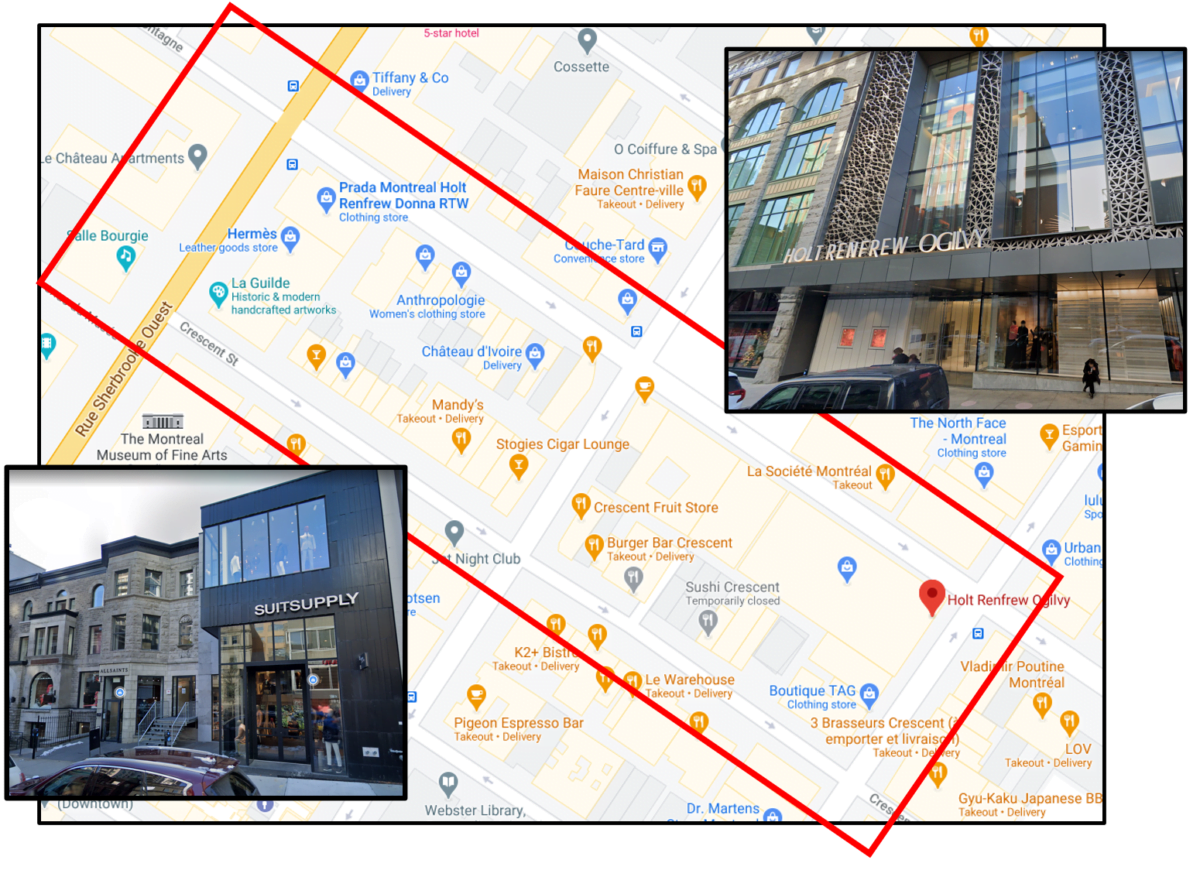
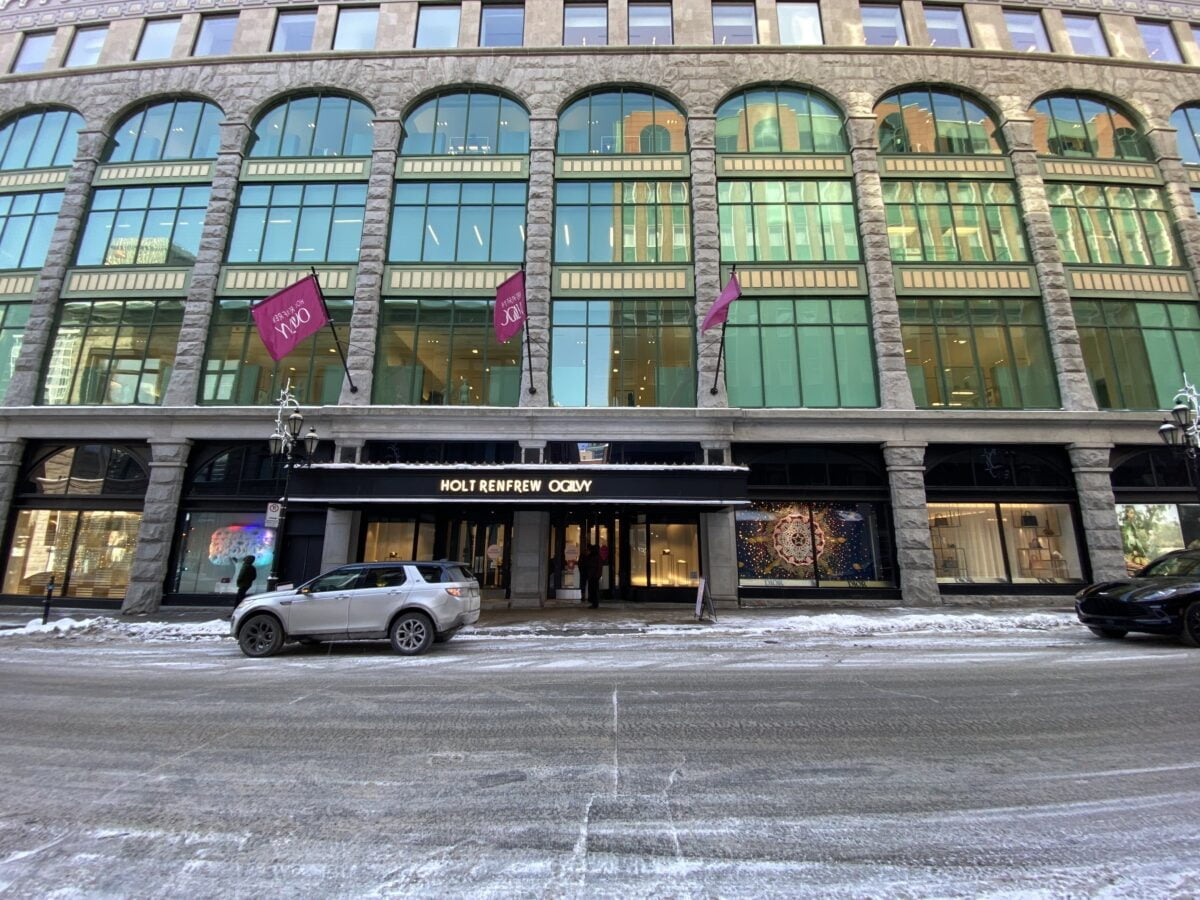
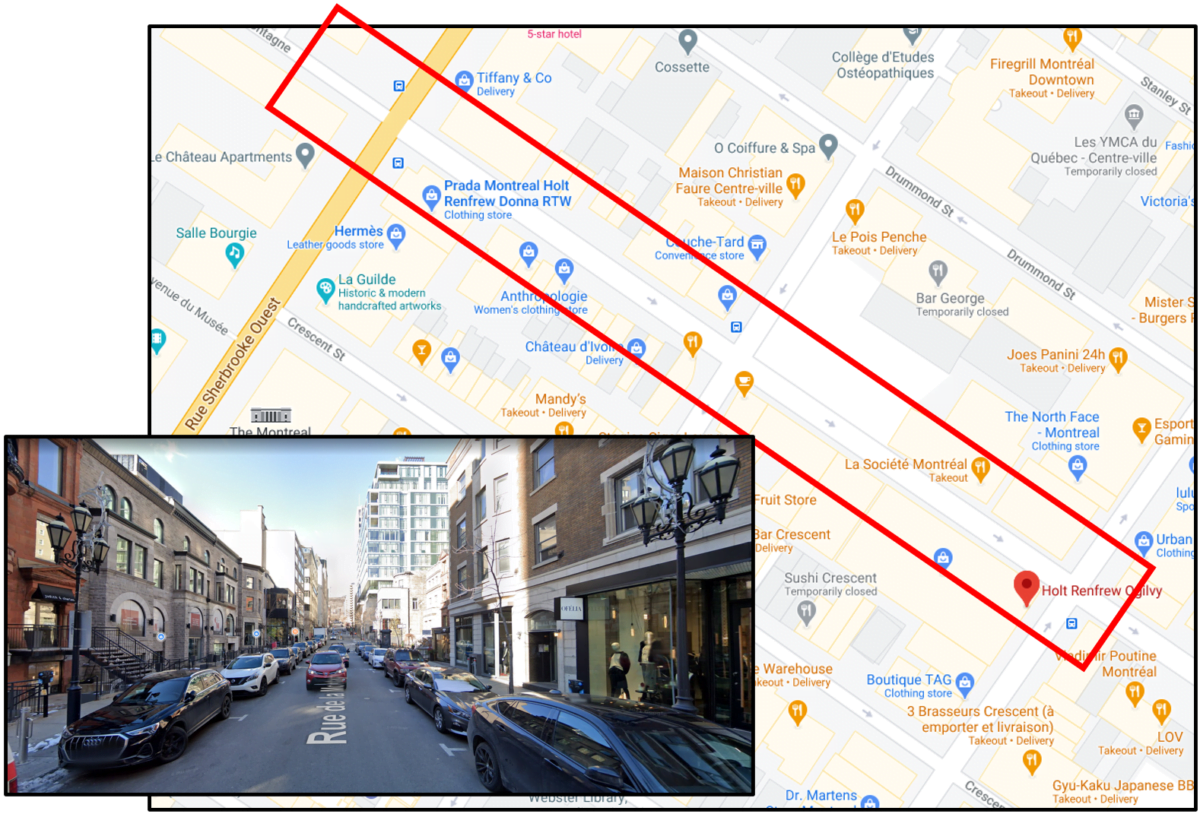
Since the brand began opening stores, Canada Goose has been reducing the number of multi-brand retailers that carry the line. We reported earlier this year that Canada Goose had pulled its line from La Maison Simons stores, and we subsequently learned that the line was also pulled from SAIL, Sports Experts and Atmosphere, among other retailers. It’s a trend among brands seeking to sell directly to consumers by operating their own stores and e-commerce sites. At the same time, Canada Goose has partnered with some multi-brand retailers such as Harry Rosen which unveiled a branded shop-in-store concept at its Bloor Street flagship in Toronto. A women’s Canada Goose boutique space will also soon be unveiled at Holt Renfrew Ogilvy in Montreal.

Massive Bingham Crossing Shopping Centre Near Calgary Gets Approval for 2nd Phase

RENDERING OF BINGHAM CROSSING LOCATED ALONG THE TRANSCANADA HIGHWAY BETWEEN CALGARY AND BANFF. RENDERING: BINGHAM CROSSING

The massive Bingham Crossing shopping centre, to be located along the TransCanada Highway between Calgary and Banff, received a major boost recently when Rocky View County gave its approval for Phase 2 of the project.

PHASE 2 OF BINGHAM CROSSING PROJECT APPROVED

Phase 2 of the project by Rencor Developments Inc., includes a large-format anchor building and commercial retail for the state-of-the-art, pedestrian-oriented, open-air shopping and lifestyle centre, in the heart of the Springbank area and just 3.2 kilometres west of Calgary. It is located right across the highway from the Calaway Park amusement centre.

The site has spectacular views of the majestic Rocky Mountains.

“This is a significant and exciting step forward for Bingham Crossing and its co-owners, a project that has been underway for 13 years,” said Ron Renaud, President of Rencor. “Bingham Crossing is an important project for the near communities of Springbank and Harmony, as well as the surrounding region and TransCanada Highway 1 drivers, and will bring much-needed, conveniently-located amenities into the area.”

THE PROJECT INCLUDES 175,000 SQUARE FEET OF RETAIL SPACE

Phase 1 of the project includes 270,000 square feet and Phase 2 will accommodate up to 175,000 square feet of retail.

RENDERING OF BINGHAM CROSSING ENTERTAINMENT AND RETAIL AREA. RENDERING: BINGHAM CROSSING

That will include about 30 to 45 businesses.

The overall development also includes seniors’ housing with 190 residences. The approval is for a large campus building that would include independent living, assisted living, and a number of townhomes in future phases.

Renaud said the large anchor format could be anywhere from 110,000 square feet to 175,000 square feet.

“We’ve been dealing with a couple of food stores. We have a letter of intent out with one of the food stores now that would anchor Phase 1, but this allows us the flexibility of putting a larger anchor in. We’ve had ongoing negotiations with two of the large anchors,” he said.

Construction is expected to start in the spring of next year with an opening in 2022. Rencor is likely to build both initial phases at the same time. Renaud estimates that on total build-out the entire project, with future phases, would be about $750 million.

RENDERING OF BINGHAM CROSSING ENTERTAINMENT AND RETAIL AREA. RENDERING: BINGHAM CROSSING

“We’re in a unique position in that we serve three different markets. One of them is let’s call it the local Springbank community including the new Harmony master-planned community which is 1,800 acres which will have about 4,500 households on its full build-out and it’s got a few phases up and running. There’s basically no services west of Canada Olympic Park (in Calgary) on the west end. So it’s grossly underserved,” explained Renaud.

“In addition to that emerging market, we’re going to serve the west Calgary shoulder market and also what I call the regional market servicing the mountain parks. A lot of traffic is generated on Highway 1 which will increase pretty significantly when the southwest Ring Road opens.

“The other thing that’s unique is that it’s a 300-acre site. So these are the first two phases of a multi-phase project. We’re not constrained by land. And one of the things this COVID-19 pandemic has really brought forward is that people don’t want to be in confined areas. They don’t want to be in let’s say multi-level retail developments with parking underground where they are in confined areas. For example the first phase is 80 acres. You would only need really about 20 acres to put what we’re putting into Phase 1. There will be a lot of expansive areas that allow for people to choose their shopping experience, parking at the front door, lots of open space, lots of landscaping.”

RED INDICATES BINGHAM CROSSING LOCATION. CLICK FOR INTERACTIVE MAP

FUTURE PLANS FOR BINGHAM CROSSING COULD INCLUDE ENTERTAINMENT AND WELLNESS USES

Future phases for Bingham Crossing could include entertainment and health and wellness uses.

“I think the days of what I call the power centre are over. I don’t think you’re going to see a lot of really big power centres developed, if any. There could be some residential uses. We’re also looking at a community centre that would enhance the Springbank experience,” said Renaud.

“If you look back at the history of real estate, a lot of the great projects were started in times like these. It’s an unserved market. Everybody sort of lights their hair on fire with the advent of internet shopping and online shopping but there will always be a need for what we call essential retail-food stores. There will always be that need for an experience. I don’t think online is going to take over the majority of retail spending.”