Home Blog Page 1009

Mississauga-Based Custom Fit Footwear Retailer Launches Unique Foot Spa Concept [Photos]

PHOTO: ALIGN CUSTOM FIT FOOTWEAR & FOOTCARE

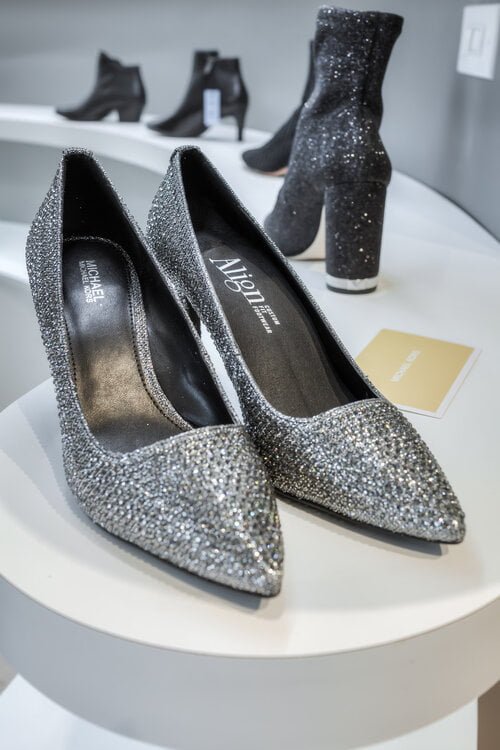
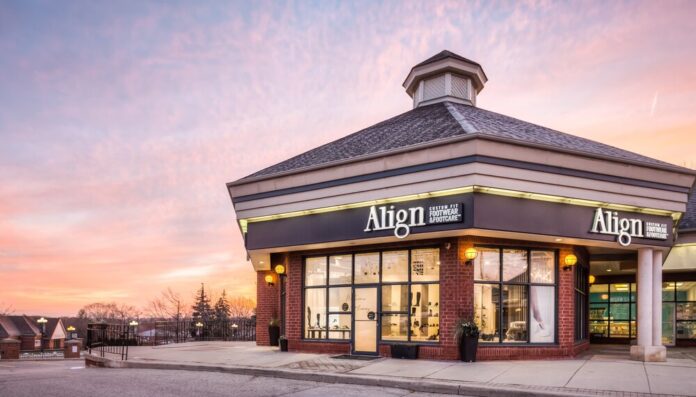
Mississauga-Based Align Custom Fit Footwear & Footcare has expanded its retail space in an effort to enhance the consumer experience while creating a ‘one stop shop’. That includes a newly launched ‘foot care spa’ that aims to grow the retailer’s base of loyal clientele. 

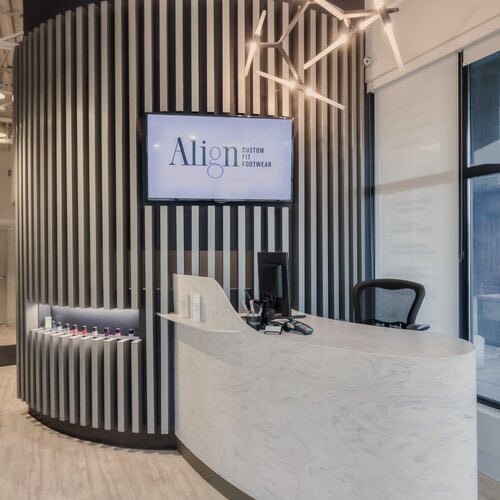
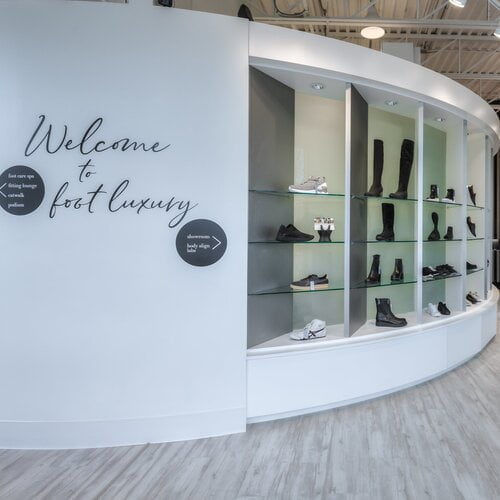
The store, located at 1960 Dundas St West in Mississagua, encompasses a shoe boutique, a medical body alignment clinic, and most recently the new foot care spa. Align describes it as being a ‘unique sanctuary’ that offers holistic, medical, and total health for one’s feet.

Align Custom Fit Footwear & Footcare has been operational since 2013. The retailer provides clients with knowledge on how their unique body alignment works, how to use functional movement to strengthen for improved alignment, and how to re-learn how to shop for shoes based on this information.

In the expanded retail space, clients can choose from a unique collection of footwear curated from the season’s latest fashion trends and luxury fashion brands. Designs are selected based on structure, materials used, and sustainability. Advanced 3D technology is utilized to custom fit that pair with an Align Orthotic, which the retailer says corrects one’s imbalances to permanently improve the way clients walk.
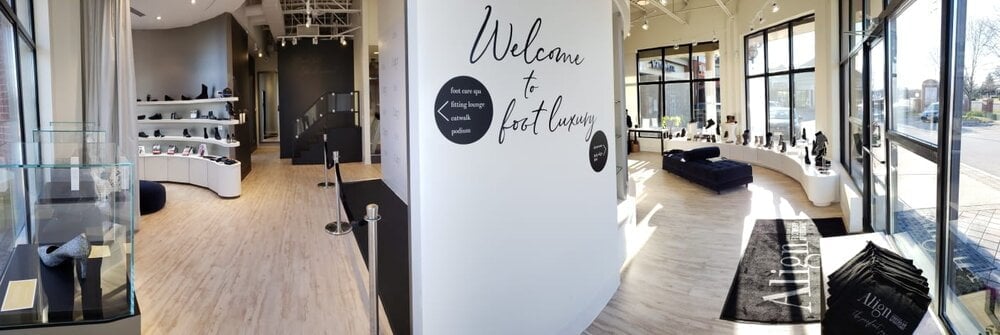
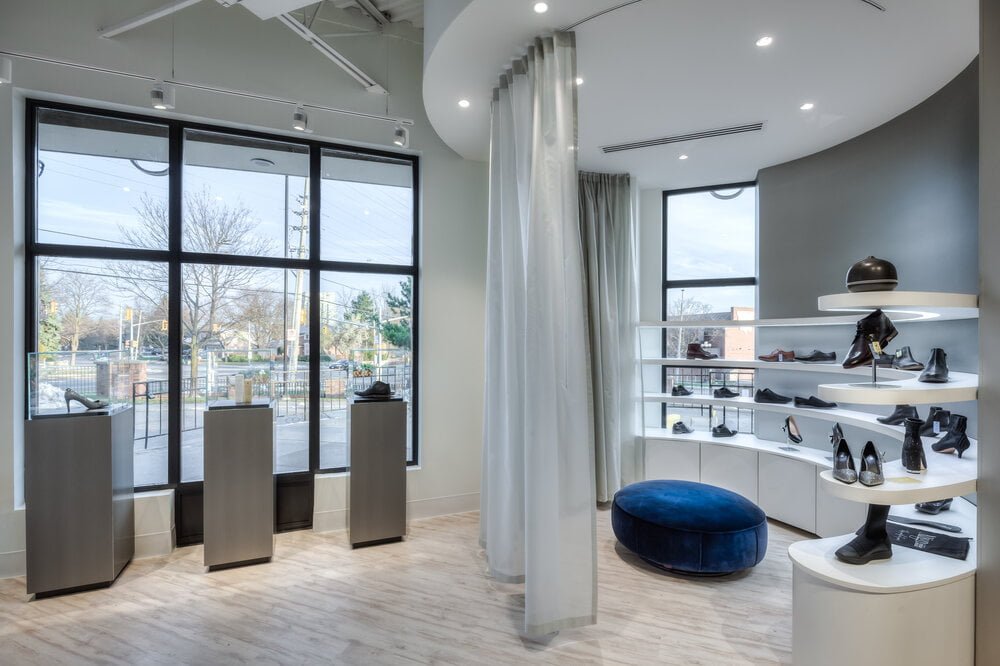
IMAGE: GETALIGNED.COM
PHOTO: ALIGN CUSTOM FIT FOOTWEAR & FOOTCARE

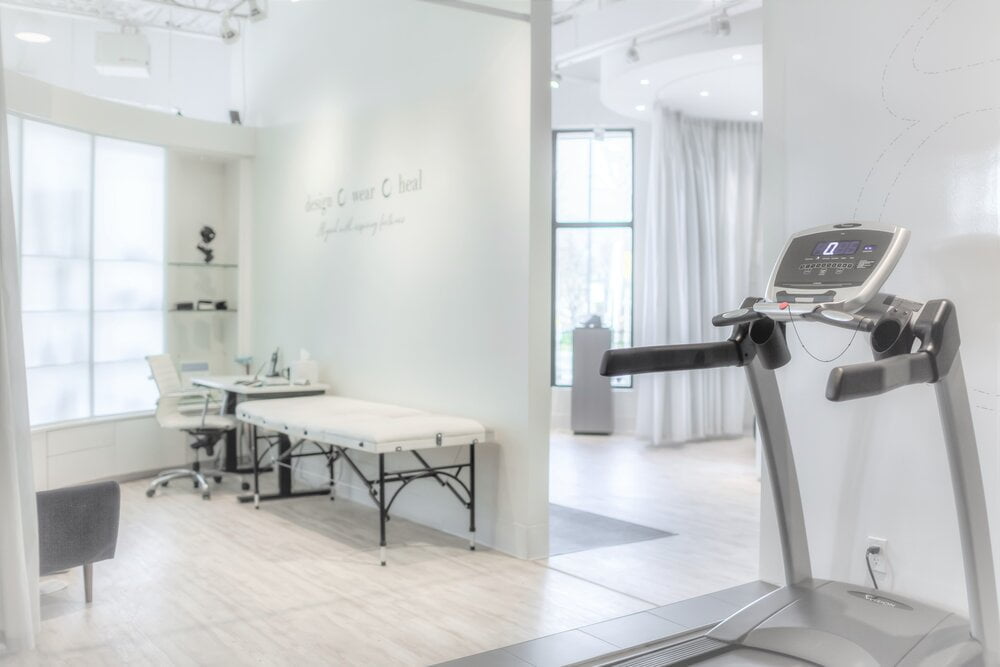
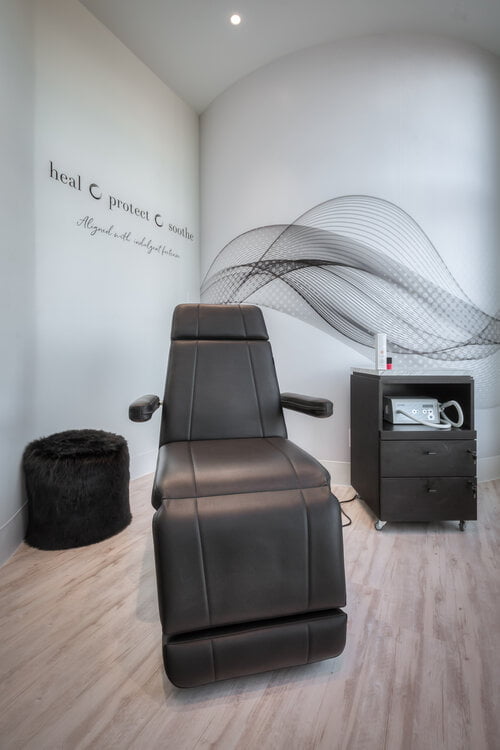
Last month, Align’s new foot-care spa began offering medical pedicures in addition to services already provided. “Looking at the options for foot care for Canadians in average pedicure places and the overwhelming amount of clients who come to us with conditions spawn in these places, we saw the need to create an unheard of type of offering for our clients so they could safely beautify their feet, while at the same time improving the health of their feet. It is the most decadent, safe, hygienic, healthy medical pedicure available”, says Darius Dinshaw, Align Custom Fit Footwear & Footcare co-founder.

Align’s recent expansion made a bold move to go all out luxe, featuring a private shoe fitting area, a catwalk, and the new foot care spa. “You can go to orthotic clinics, foot care clinics, footwear retail stores and spas, but never before in the world, has this concept been available as one, total, holistic, luxury service under one roof,” says Dinshaw. It’s this highly personalized and specialized experience that brings together spa-style pampering and healthcare, ensuring that clients leave with wearing comfortable designer footwear, a sense of spa tranquility, and feet that feel brand new. 

With consumer knowledge, education, and ultimate satisfaction at the forefront of its business model, the Align team designs custom Align Orthotics that correct clients’ body alignment and produces ultimate foot comfort in a pair of designer footwear. Co-founders Darius and Teressa Dinshaw say that they are passionately dedicated to providing luxury health care that is “inspiring, indulgent, and effective”. With Darius’s unique combination of designations including pedorthist, athletic therapist, and strength and conditioning specialist, his perspective on the role of total body biomechanics in foot health is unique.

“We look at your full medical history, evaluate the musculoskeletal and nervous system, and skin health of your feet to provide treatment that will ease pain, soothe and promote wellness. With your soles nurtured first, we are ready to correct your footwear,” says Dinshaw. “We aim to ensure everyone has the opportunity to have their feet evaluated for good health and structure to treat as well as to prevent foot damage.”

About 70% of people wear shoes that damage their feet and body alignment, according to the company, and Align says that it is committed to changing these statistics. With that, the expanded Align boutique provides VIP treatment to its clients while also educating them on the importance of body alignment. “We believe wellness begins with a feeling and we aim to provide that feeling in the inspiring environment we have created for you,” says Teressa Dinshaw.

How does it work? A skilled, on-site clinician assess the client from the feet up. A digital 3D scan of the individual’s feet is taken, and by placing it digitally beside the scan of their chosen designer shoe, the medical professional (Pedorthist, Chiropodist, Orthotist and Prosthetic Technician, or Athletic Therapist) can then design the custom insole with millimetre accuracy. In addition to replacing the generic insole with a custom Align Orthotic, Align also modifies the actual shoe to ensure optimum comfort and improved body alignment. That may involve stretching, slicing and even adding or taking away structural components. The innovation to creatively do this in high fashion is unprecedented, according to the co-founders.

PHOTO: ALIGN CUSTOM FIT FOOTWEAR & FOOTCARE
Always forward thinking and on trend, Darius and Teressa have expressed their desire to create an experiential getaway for each customer who choses to put their feet first. The boutique is spacious and quiet with ambient house music playing in the background for a modern yet tranquil undertone, with natural sunlight flooding through the large, panoramic windows.

With the recent addition of the spa, the scent of eucalyptus fills the space. Lounge chairs and ottomans, reminiscent of 1930s Paris, create an inviting and comfortable area to spend time. “Creating an experiential space is a top priority for us. We make sure not to fill our store with too many customers at any given time, booking appointments accordingly. We want each client to feel as special as they truly are and to be able to ensure their needs are being met,” says Teressa. 

Youtube video

Both Teressa and Darius note the importance they place on sustainability in their paperless practice and take pride in the steps they’re taking to reduce their carbon footprint. “If you own a pair of shoes that ensure comfortability and support then you will want to keep them forever. Our company does it’s best not to contribute to the fast-fashion trends of today. We create shoes to last a lifetime,” says Teressa.

To book an appointment at Align Custom Fit Footwear & Footcare, please email them  at info@getaligned.com, call 905-823-0111, or check them out online at www.getaligned.com

Why the Human Touch Matters in Customer Service for Retailers

exc-5dc2c2337efe3d177310e992

By Renee Soulliard

“Hi! How can we help you today?”

As an internet user, many times, you’ve probably seen an automated chat bot appear on the bottom corner of your screen when you’ve opened a website. To build more efficiency into our daily lives and to save time, automated technology has found its way into every industry, including tech support and customer service. 

Digitization has evolved many industries including tech support services, but still, we can’t overlook the human touch in customer support as an invaluable factor to customer success and satisfaction. A recent study revealed that 75 percent of customers would rather solve support issues by speaking with a live agent than by using another method. While online services are often convenient and helpful for data collection, there are many reasons why live agent customer service remains the best option for technical support. 

The Push for Personalization 

A recent study revealed that the number one reason customers dread calling companies for support is the growing probability that they will encounter a bot instead of a human upon connection. When customers call a customer support network, they want to be greeted by another person who has the expertise to help them solve a problem. Humans want to feel valued and understood, so empathic communication and active listening play critical roles in an agent’s ability to successfully support their customer. A live agent can step into the shoes of a consumer and understand an issue from their perspective, both technically and emotionally. With this perspective, not only can an agent solve the technical problem at hand, but they can also build a long-term, personal relationship with a customer. This relationship development can increase customer satisfaction by allowing an agent to align recommendations strategically with what their customers value most.

In addition, 56 percent of customers seek a personalized experience when contacting a customer support network. They expect their agent to know who they are, what they are doing, and what concerns they have, and they don’t want to have to repeat their tech problem over and over if they get passed to another agent. With the help of customer data, a live agent can track past interactions with a customer and draw conclusions about support based on the customer’s story. While simple, this benefit of live customer support is impactful. Eighty-four percent of customers are more likely to continue business if they are treated like a person by a representative, rather than a number or ticket. While the technology behind customer data collection helps maintain and store customer information, a personal conversation with an agent ensures the data is used in a way that supplements services precisely and reminds the customer of their value to the company. 

More Efficiency, Less Hassle

Some say that digitizing customer support across all channels improves efficiency, but this is not always the case. In fact, half of consumers worldwide will use whichever communication channel is fastest for reaching a human agent while seeking customer support, and only six percent do not prefer or feel neutral towards support from a live agent. The live agent’s role is valued because of the human ability to listen to specific concerns and address them immediately. Currently, the transaction of human communication cannot be replaced by digital innovation. A live agent can react to the concerns of a customer immediately and can determine a course of action to resolve the issue more quickly than a virtual channel can, driving efficiency in resolving issues and ensuring a positive experience. A live agent can also go off-script while providing support, while non-human support systems may hit roadblocks following a customer support software script. This differentiates the conversation between a live agent and a customer from other support resources. 

Human communication ensures ongoing, proactive problem solving between a provider and a customer. While moving conversations to online support platforms might seem convenient, it can significantly slow down the delivery of support and lead to frustration from a customer. Humans can typically speak 125- 175 words per minute and listen to up to 450 words per minute while communicating verbally. However, when communicating through a chat function, this number decreases to around 40 words per minute. This significant difference in speed can lead to frustration from a customer and can create barriers to understanding the problem a customer is experiencing. Therefore, the opportunity to speak with a live agent avoids the risk of barriers in solving problems quickly. 

Self-Service Is Not Taking Over

Self-serve resources and online chats are becoming more prevalent in tech support. While these resources are valuable, they cannot meet the needs of every customer. Companies may think they are streamlining efficiency by implementing online resources and self-support as their primary means of customer service. However, only 20 percent of companies currently offer this service, while email and phone communication to resolve issues remains the norm. Only one-third of customers will be satisfied by online-only, self-help resources for tech support. 

Despite the plethora of tech support options available, speaking with agents remains the favourite method of customer support—in fact, over half of customers globally rank speaking with a knowledgeable agent who can solve their problem as the most important part of their overall satisfaction. That said, customers do not like to repeat themselves, or repeat steps that they have already taken, which often leads to a lot of frustration. Agents who can walk a customer through resolving an issue without handing them off to another agent, or without asking them to repeat steps, can dramatically improve the customer’s overall experience and perception of the company. 

The Verdict

With all this considered, it is no surprise that the human touch has been coined as a “luxury” in customer service. While technology is storming customer support services, the value of human communication in problem-solving, relationship development, and overall customer satisfaction cannot be overlooked. As customer expectations continue to climb and tech support needs increase as connected devices proliferate, the live customer support agent’s role will only become more important to customer satisfaction.

111: Harry Rosen Tower Proposal, True Outliers, Slow Fashion Entrepreneur and Expired Amazon Foods

exc-5dc4cb9c6db86d2348b66c1b

This week Craig & Lee talk about Harry Rosen Flagship Tower Proposal, True Outliers, Slow Fashion & Expired Amazon Foods.

The Weekly podcast by Retail Insider Canada is available on Apple Podcasts, Stitcher, TuneIn, Google Play, or through our dedicated RSS feed for Overcast and other podcast players.

Sponsored by prisma construction: prisma construction is a leading retail construction specialist. we do development, rollouts management, project management plus, coordination and follow up. Retail Insider recently featured prisma in an article discussing the company’s expansion internationally, including its first project in China.

Discussed this episode

Other topics discussed

Subscribe, Rate, and Review our Retail Insider Podcast!

Follow Craig:

Follow Retail Insider:

Listen & Subscribe:

Share your thoughts!

Drop us a line at Craig@Retail-Insider.com. You can also rate us in Apple Podcasts or recommend us in Overcast to help more people discover the show!

Listen on Google Play Music

Share your thoughts!

Drop us a line at Craig@Retail-Insider.com. You can also rate us in Apple Podcasts or recommend us in Overcast to help more people discover the show!

IKEA to Launch Small Urban Format Stores in Canada Beginning in Downtown Toronto 

IKEA IN MANHATTAN. PHOTO: IKEA

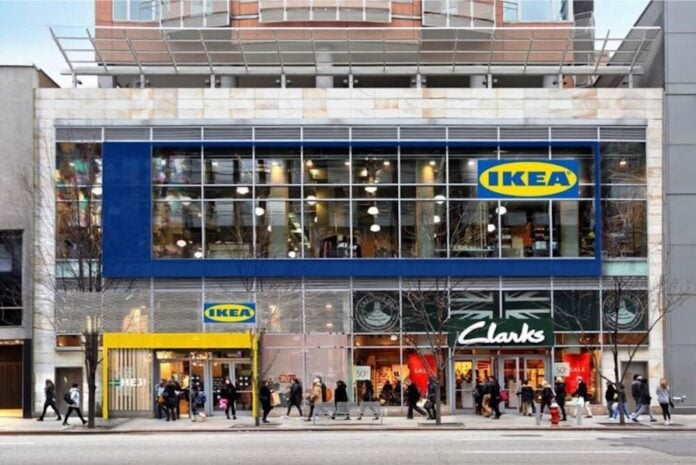
Swedish home furnishings retailer Ikea plans to open at least one small-format store in downtown Toronto within the next two years as it expands its urban store concepts globally. Given expansions in other parts of the world, other Canadian urban centres are also expected to see similar stores amid the company’s efforts to gain market share. 

The company made the announcement at an event on Wednesday in Toronto where it also announced its most recent sales numbers. Ikea’s Canadian president, Michael Ward, explained how the retailer is making changes to its retail strategy, including targeting urban dwellers who may otherwise not make a trip to the suburbs to shop at an Ikea store. 

Mr. Ward said that downtown Toronto would be first in Canada to see such a store format. Given Ikea’s urban store expansion in markets such as Australia, other Canadian cities with robust high-density cores such as Vancouver and Montreal could also be targets for smaller Ikea showroom concepts. 

SMALL-FORMAT STORE IN MADRID. PHOTO: EL ESPANOL

The Ikea small-format stores include three concepts that range in size from slightly more than 5,000 square feet to more than 50,000 square feet. A store in Manhattan, which spans about 5,400 square feet, focuses primarily on services. A store in central Madrid, featuring showrooms for living rooms and bedrooms, is an example of a store concept which typically spans 25,000 to 30,000 square feet. Another concept dubbed ‘extra small’ spans about 55,000 square feet and showcases a broader range of categories — a store in Paris spanning 54,000 square feet offers a selection of 1,500 decorative accessories and small pieces of furniture that can be purchased immediately, while larger items are available for home delivery. The highly experiential retail space features a restaurant and offers themed workshops. 

Ikea also announced in April of this year that it would introduce its ‘Home Planning Studio’ concept in Australia. In the pilot concept stores, consumers sit down for one-on-one consultations with an Ikea employee to plan and build rooms such as kitchens, bathrooms and bedrooms. Orders can be placed for home delivery or for pick-up at the store. Technology such as tablets are used. Between five and eight of these store concepts are expected to open in the metro Sydney region alone, with other markets including Melbourne, Brisbane and Perth also in line for multiple locations. Each of these will be between 1,100 square feet and 1,600 square feet. 

The retailer has also been testing other smaller city-centre formats, such as a kitchen showroom in Stockholm, as well as a bedroom showroom and accessory space in Madrid. Ikea is also rolling-out order and pick-up points in major markets. 

Several Canadian cities feature high-density urban cores that Ikea is likely to target. Downtown Toronto is a target according to Mr. Ward, and the city could see multiple small-format Ikea stores depending on the retailer’s strategy, including what concepts it deems will work in certain areas. 

Downtown Toronto, which has a population approaching 300,000 residents, is seeing a population boom that could see more than 500,000 people living there within the next 20 years. Retail space is mandated at the base of many buildings constructed on major streets, providing Ikea opportunities to test out small-format concept stores in a variety of sizes. 

THE FIRST OF AS MANY AS 8 SMALL FORMAT IKEA STORES IN SYDNEY, AUSTRALIA. PHOTO: IKEA

Vancouver’s downtown peninsula houses more than 120,000 residents, and the city’s dense core could also be a target for Ikea. As with Toronto, many residents in downtown Vancouver live in small apartment units and may utilize transit or cycling rather than driving a private vehicle. 

Montreal’s downtown core population is about the same as downtown Vancouver’s peninsula, and Montreal is also seeing a building boom that will add several thousand new residents in the coming years. 

Urbanization is taking hold in other cities in Canada as well. Downtown Edmonton and Calgary are seeing new residents as developers build new condominium and apartment towers, and Ottawa and Winnipeg are also seeing increasing urban populations. It’s a trend seen in other cities in North America as downtown cores are increasingly seen as desirable places to live. 

Congestion is also helping fuel demand for downtown housing in major Canadian cities. Toronto was recently ranked as the worst city in North America in terms of commute times, and sixth in the world. The congestion has resulted in households, even families with children, looking to the urban core to be closer to jobs and other amenities. Given the incredible congestion in Toronto, many have chosen to take transit or cycle rather than driving a car, and many new condominium developments limit parking availability. We reported this week on a proposed tower at 80 Bloor Street West in Toronto that would cantilever over Harry Rosen’s flagship store — the tower’s plans show 1,430 condominium units with only 140 parking spaces dedicated to residents. It’s more than likely that parking spaces will only be made available to purchasers of larger units such as penthouses and 2+ bedroom homes. 

Ikea’s move into urban cores is an intelligent move as the younger generations increasingly move downtown. Urban life offers vibrancy as well as ample amenities, and many companies with headquarters in the suburbs have either relocated to downtown locations, or are looking to do so. Many of Ikea’s furniture designs are geared towards small-space living, and the retailer has been testing pop-up concepts in markets such as Toronto for the past several years, drawing crowds. Some are surprised Ikea hasn’t already opened in downtown Toronto after lineups at an Ikea pop-up on King Street West in the spring of 2016. 

A SMALL-FORMAT IKEA STORE IN MADRID. PHOTO: IKEA

At the same time, other furniture concepts are also targeting urban dwellers, and Ikea is no doubt looking to take market share. Winnipeg-based EQ3, which recently opened its first US-based store in Manhattan, has been targeting urban dwellers with home furnishings offerings geared towards tight condominium living. Concepts such as Urban Barn have opened in high-density areas with a focus on urban dwellers. Crate & Barrel-owned CB2 targets urbanites in Toronto and Vancouver with stores housing product similar in style to that of Ikea, and generally at a higher price point. Other disruptors such as mattress-in-a-box brand Casper are expanding into Canadian markets, having opened urban locations in Toronto and Vancouver over the past year. Sleep Country Canada, as well, has a network of urban stores, and many other furniture concepts, ranging from chains to independents, now operate in Canadian urban centres. 

While the cost of living may be high in Canadian cities, young urbanites appear willing to spend money on furniture items which has led to the success of Toronto’s King Street East ‘Design District’, as an example. The flood of new residential units in markets such as Toronto, Montreal and Vancouver means that there’s continued demand for new furniture offerings. Tech booms in all three cities have resulted in young households with high incomes, and retailers are taking notice. 

As Ikea makes its move into urban cores in Canada, it will compete with retailers already targeting urban dwellers. Ikea’s prices are lower than most of the competitors, while at the same time offering furniture designs that appear similar to pricier offerings. If Ikea were to launch a similar expansion by opening multiple locations such as is the plan in Australia, smaller urban-focused furniture retailers could stand to lose significant market share. 

Ikea has already seen success in the Canadian market. At a Wednesday event in Toronto, Ikea provided updates on its financial performance in Canada. For the fiscal year ending August 31st, the company saw sales of a whopping $2.53 billion in Canada, which was a 6.1% increase over the previous year. In-store visits registered at 31 million people, which was a 2.7% increase over the year prior. Ikea’s e-commerce portal Ikea.ca saw 117.2 million visits over the 12 months with sales of $261.2 million, which was 12% higher than the year before. 

The retailer also discussed its eco initiatives with an aim to be climate-positive by 2030. Ikea’s Sell-back program offers store credit for gently-used Ikea products. In May of this year, the retailer phased out plastic straws from its stores amid a global commitment to eliminate single-use plastics by 2020. 

We’ll follow up on this article when Ikea begins opening urban concept stores in Canadian cities, the first of which is targeted for downtown Toronto in either 2020 or 2021. Other areas of the city are also being examined, according to Mr. Ward. At least one ‘extra-small’ Ikea store is expected for the core, which could span in excess of 50,000 square feet. The ‘planning studio’ concept is also being examined for the city amid a global expansion for Ikea’s smaller urban store concepts, which are likely to land in other Canadian cities in the coming years. 

Digitally-Native Canadian Intimates Brand ‘Knix’ Opens 1st Physical Stores [Photos]

PHOTO: KNIX

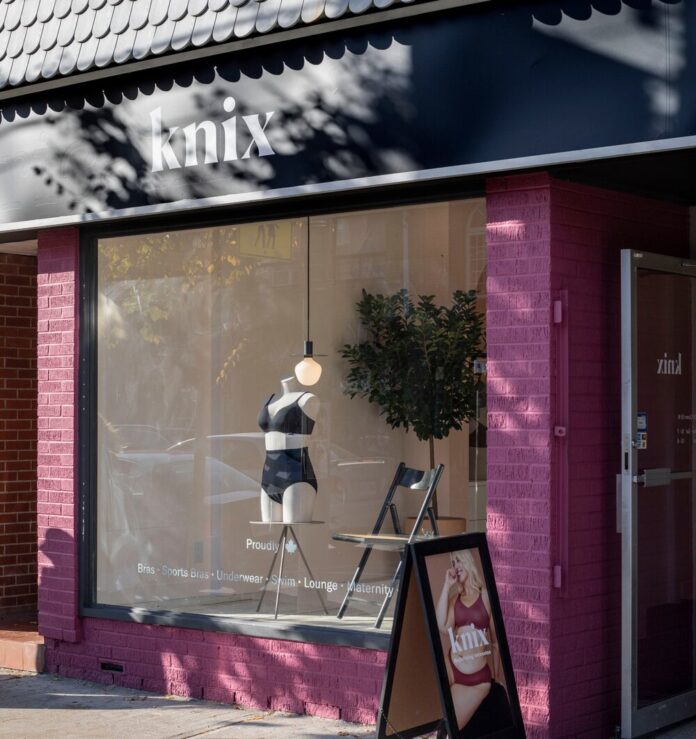
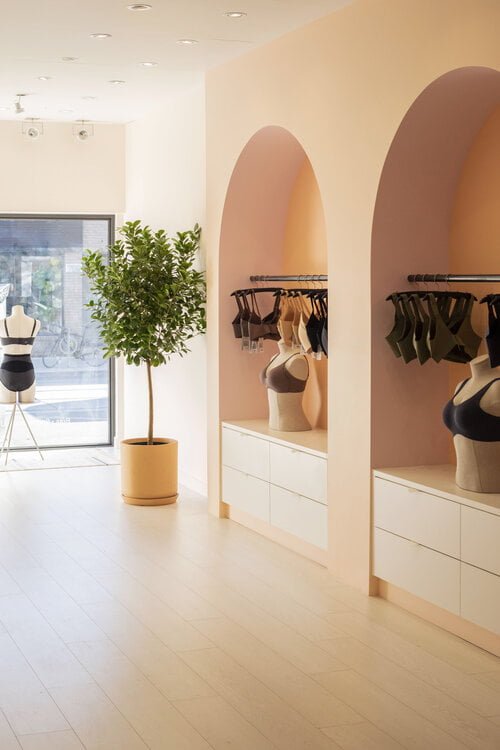
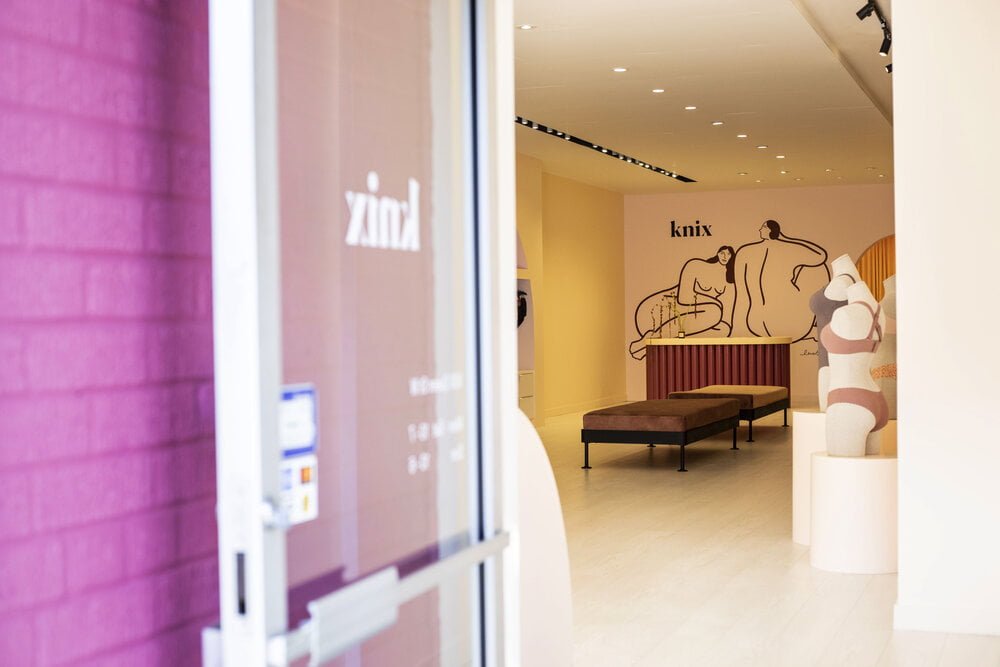
Toronto-based intimates brand Knix, known for its leak-proof underwear, wireless bras, and bold marketing campaigns, is beginning to expand into physical stores after several years of selling products online only.

The brand, founded in 2013, opened its first two permanent retail stores in October—one in Vancouver’s Kitsilano neighbourhood, and one on Toronto’s Queen Street West. In addition, under a new partnership with Nordstrom, the full line of Knix products is available at all Nordstrom locations across Canada until the end of 2019.

PHOTO: KNIX

Knix’s direct-to-consumers online sales strategy has been very successful for the brand in recent years, helping the company become the sixth fastest growing company in Canada based on three-year revenue growth, according to Report on Business’s 2019 ranking of Canada’s Top Growing Companies. 

However, after having success with pop up shops in the past, as well as with its by-appointment-only showroom, Knix determined that some customers liked having the opportunity to try on the products before making a purchase. 

“We’ve seen that there’s interest [in shopping at physical stores],” says Knix founder and CEO Joanna Griffiths. “We know that there is a group of people who want to touch and feel and get fitted for the product.” 

PHOTOS: KNIX

Griffiths notes that with bras, especially, it can be challenging for customers to determine the right size. To ease the experience for customers shopping online, Knix offers a flexible returns and exchange policy, as well as customer support seven days a week.

“We’ve done as much as we can to remove every barrier for online shopping,” Griffiths says. “But, some customers just want to come and touch and feel the product. So, it felt like it was time to open [some stores], and really invest and put our best face forward, and create more of a branded experience compared to what we’ve done before.”

PHOTOS: KNIX

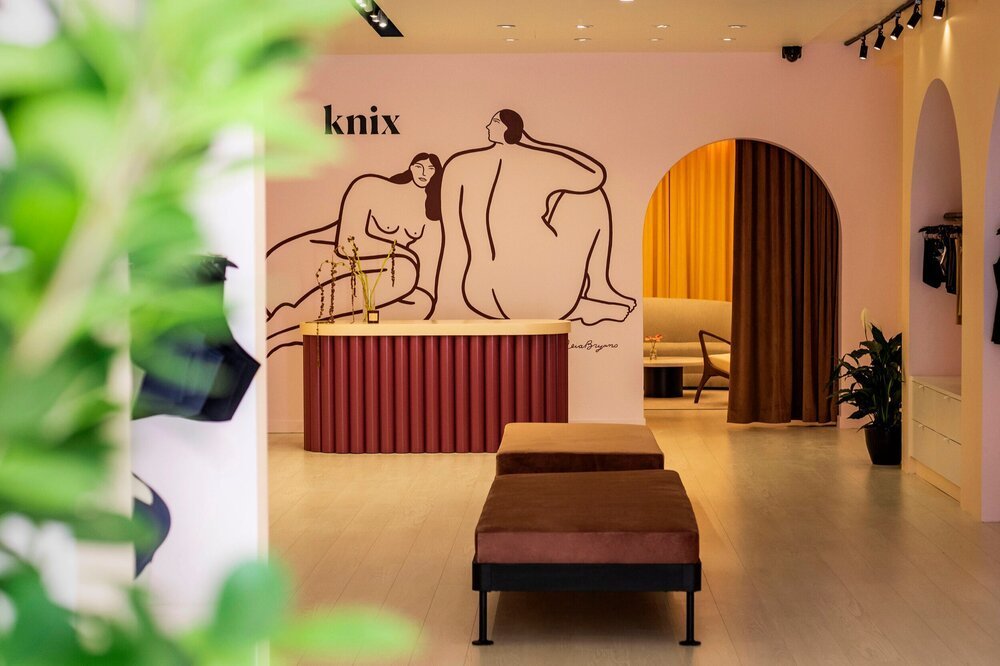
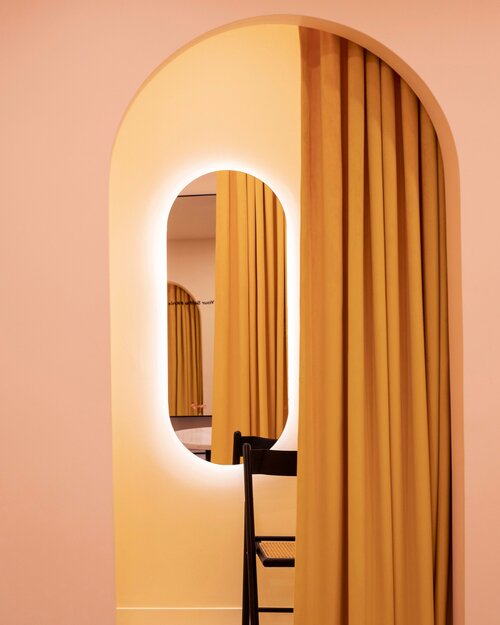
Dominated by shades of pale pink and yellow, the new stores have a warm and bright feel, and each features an original mural by Toronto-based artist, Leia Bryans

The Toronto store, at approximately 2,500 square feet, is significantly larger than the 1,100-square-foot Vancouver store. “We’re testing two different concepts,” Griffiths says. 

PHOTOS: KNIX

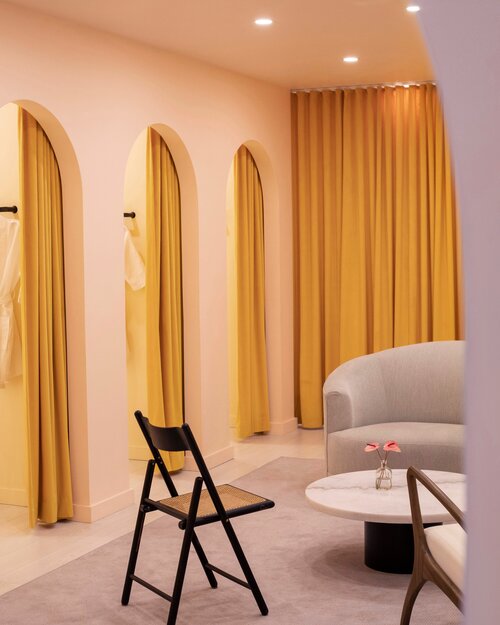
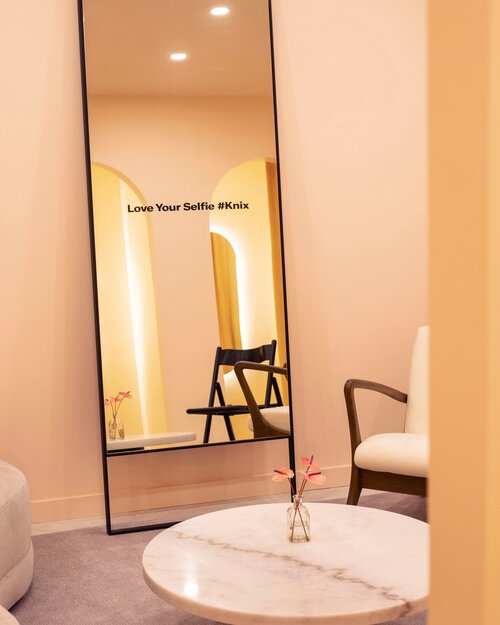
A key difference in the Toronto location is the spacious fitting room area, which contains multiple individual change rooms as well as a seating area. The entire fitting room section can be separated from the rest of the store by a curtain, which aims to create a private and comfortable space for customers.

“We want to redefine the fitting room experience,” Griffiths says. “We’re trying to make it feel like a bridal salon.”

Knix will likely explore the possibility of opening additional locations once the brand has had time to assess the performance of the first two stores, Griffiths says. “We have a lot that we want to learn from the two locations, and then we’ll take best practices and go forward from there.”

The Nordstrom partnership, meanwhile, creates additional physical touch points for Knix in Toronto and Vancouver, while also bringing the brand’s products to Calgary and Ottawa.

“We really wanted to create a moment within Canada where people can go and have as many locations to try the product on as possible,” Griffiths says. 

The new distribution strategy comes as Knix has been steadily growing its product offerings. The brand recently launched a maternity and post-partum collection, as well as a product line geared towards teens.

All of Knix’s products are inspired by customer input, according to Griffiths. “We’ve really embraced our relationship with our end customer,” she says.

Knix also incorporates its customers into its marketing and advertising campaigns. The brand’s ads showcase real women of all shapes and sizes and at various stages of life, in an effort to help women feel comfortable in their own skin. Earlier this year, the brand was presented with the 2019 Retail Marketing Innovation Achievement Award from the Retail Council of Canada.

Griffiths attributes the company’s growth and success to its commitment to its customers. “The way that we’ve been building our brand, we’ve really put our customers at the epicentre of everything we do,” she says. “We tell their stories. We are facilitating conversations that aren’t being had elsewhere, and it’s really connecting people.”

Spanish Beauty Brand ‘Equivalenza’ Enters Canada with Multi-Unit Store Expansion

Equivalenza
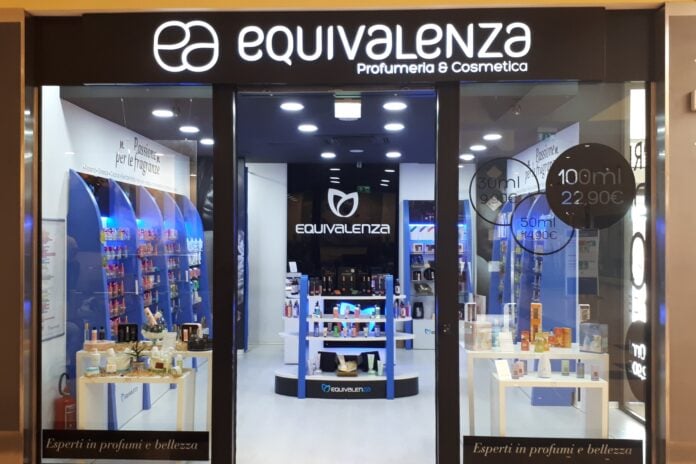
Equivalenza (PHOTO: VIBO CENTRE)

International fragrance and beauty brand Equivalenza’s motto is “a perfume for everyone”.

Now that will include the Canadian market as the Barcelona-based retailer prepares to open its first store in Montreal led by Corinne Barrès, Equivalenza’s Master Franchisee in the country – with many more stores expected on the horizon.

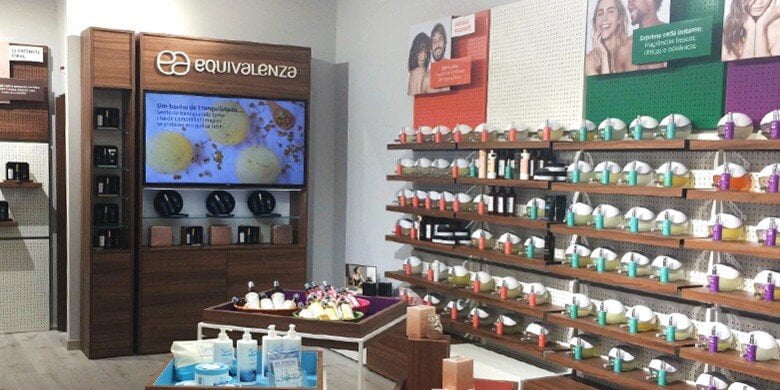
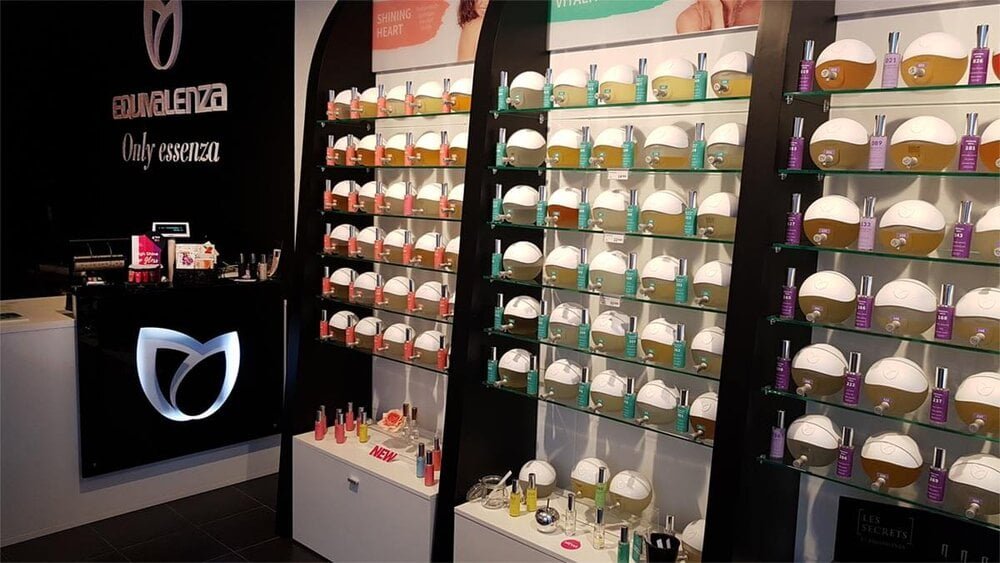
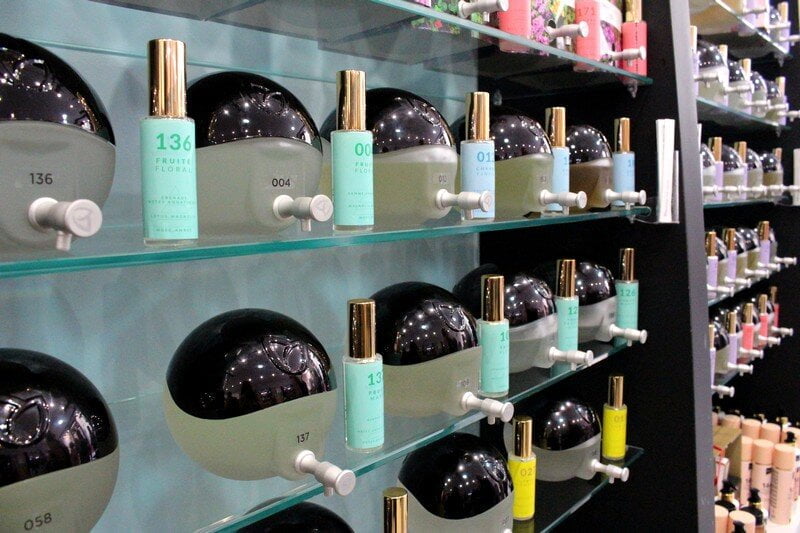
“They’re very well-known in Europe. When you walk into a shop you have a massive wall of fragrances and then you select the fragrance according to the olfactive family,” says Corinne. “It’s 80 per cent of our sales and then we have 20 per cent of the rest of our sales which are cosmetics.”

She said the first location in Canada will open in the Montreal Eaton Centre in Montreal in the early part of December. 

EQUIVALENZA
PHOTO: EQUIVALENZA

She believes Canada can accommodate more than 40 stores in the next five to 10 years.

Corinne will own the first Montreal store.

“My role basically is to recruit a franchisee and to really develop and create the franchisee network in Canada. I will have a couple of shops on my own but then to have 40 shops and more I will have to recruit franchisee people,” she said.

Corinne left France 15 years ago and lived in different countries with her husband and three children. She has more than 20 years of experience in the information technology field as a sales director.

EQUIVALNEZA
PHOTO: EQUIVALNEZA

After working in Montreal for four years, she realized that she wanted to do something different with her career. When in the UK, Corinne and her husband ran a restaurant. She started investigating and researching for a concept that didn’t exist in Canada.

“There was no point for me to open something that was already in Canada,” says Corinne. 

She discovered Equivalenza.

“I phoned Equivalenza. I analyzed the Canadian market and I thought it was a great opportunity because there was no real concept like Equivalenza with a large range of perfumes at really affordable prices. So I contacted Equivalenza and presented the market. I presented myself and said I wanted to launch your brand in Canada,” said Corinne instead of Barrès, who then negotiated the contract for Canada where she has the exclusivity to develop the brand in the country.

EQUIVALENZA
PHOTO: EQUIVALENZA FACEBOOK

Equivalenza is known for providing consumers with high-quality fragrances at affordable prices. Since it was founded in 2011, it has grown to more than 800 stores in 27 countries – Spain, Italy, Andorra, Portugal, France, Germany, Austria, Luxembourg, United Kingdom, Romania, Ireland, Greece, Belgium, Netherlands, Tunisia, Mexico, Brazil, Peru, Panama, Dominican Republic and the Caribbean, Chile, Angola, Mozambique, Cape Verde, South Africa, and South Korea.

Founding Partners are Francisco Morán and Miguel Aznar.

The company’s mission is to provide consumers with high-quality fragrance, cosmetic and aroma products by creating emotions and unique experiences. And its vision is to be the world’s leader in single-brand perfumery and cosmetics by providing a unique experience in its stores with the highest quality and minimal environmental impact.

Corinne is working with commercial real estate broker Roger Rhéaume and his company Himalaya in Montreal for retail space selection as the brand expands further into Canada.

Harry Rosen Bloor Street Flagship to be Integrated into Massive Tower Proposal [Renderings]

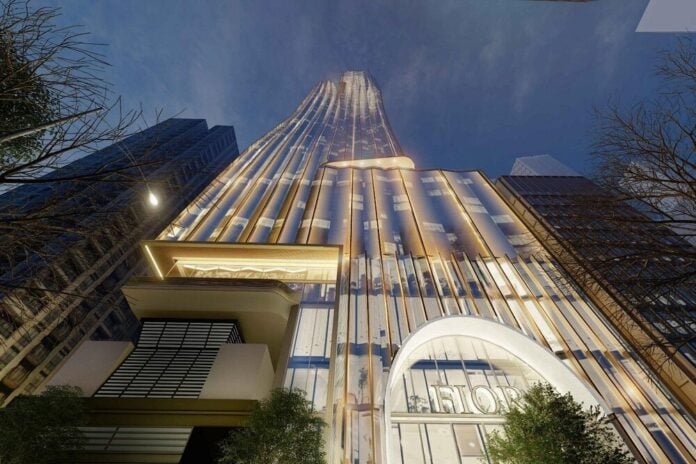
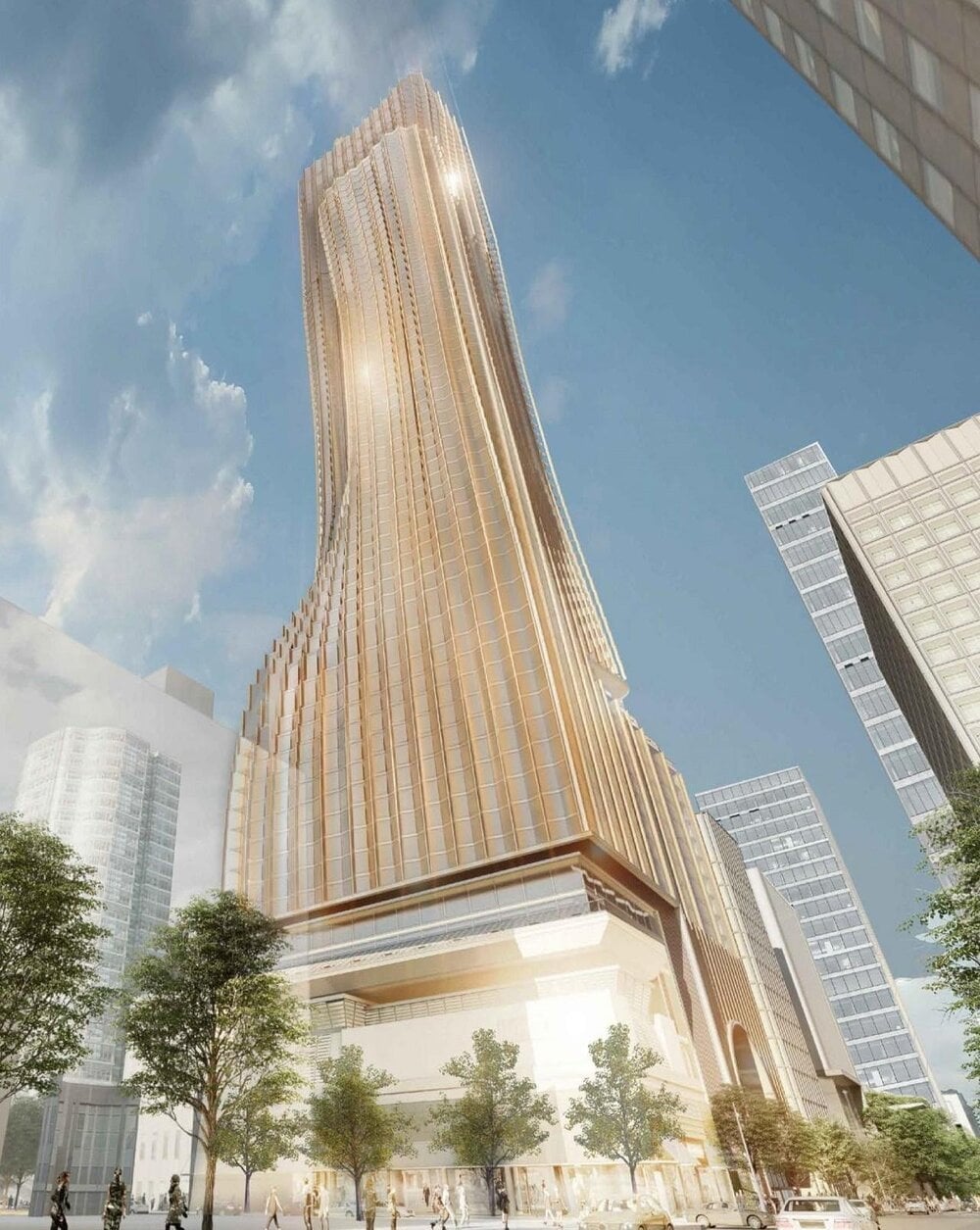
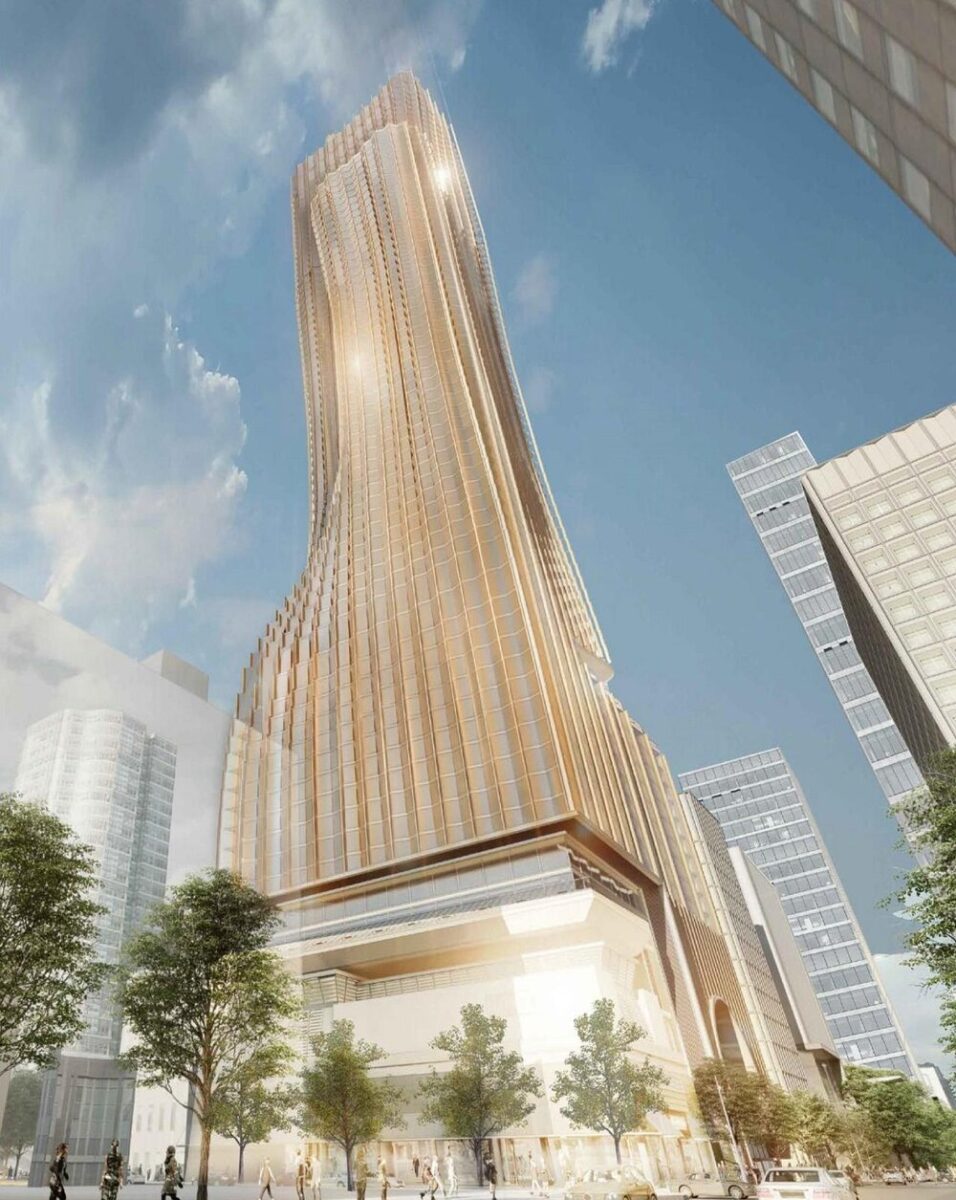
HARRY ROSEN’S UNIQUE FACADE IS ON THE LEFT SIDE OF THE RENDERING, WITH A TOWER ABOVE. IMAGE: GIANNONE PETRICONE ASSOCIATES.

A bold proposal to transform a key block on Toronto’s Mink Mile will involve integrating the existing Harry Rosen flagship store into the podium of what will become one of Canada’s tallest buildings. It’s the latest development news in Toronto’s rapidly changing Bloor-Yorkville area, which houses a substantial number of luxury stores including several Canadian flagships. 

Publication Urban Toronto reported on Monday of this week that a proposal by Krugarand Corporation for 80 Bloor Street West has been brought forth to the City of Toronto, which will include an 874 foot 79-storey mixed-use tower that will include a substantial retail component at its base. Included will be 1,430 residential condominium units in the massive tower, as well as three levels of retail space at the base facing onto Bloor Street. [Download architectural plans/floor plans (PDF)]

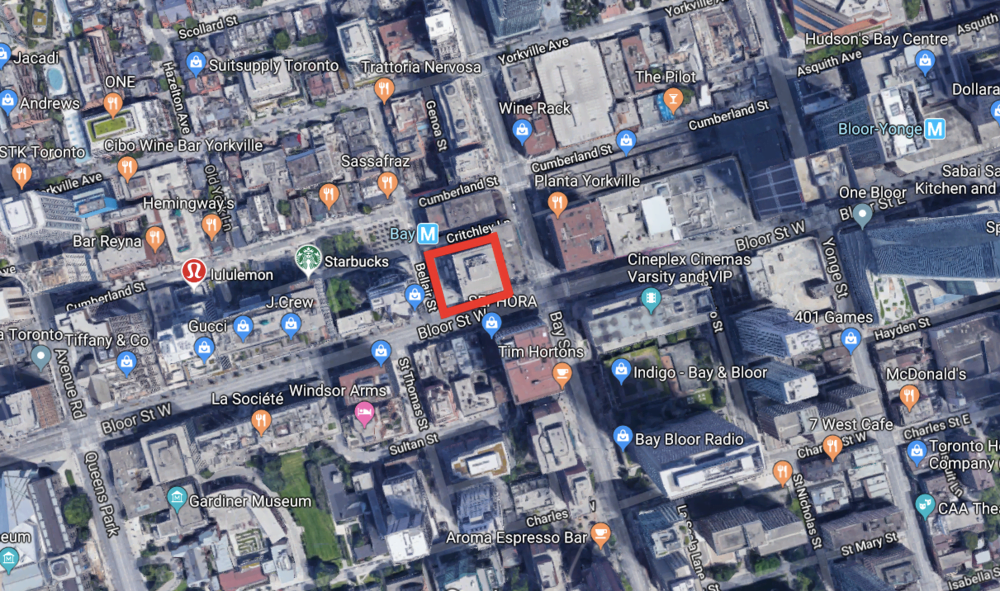
CLICK IMAGE FOR INTERACTIVE GOOGLE MAP

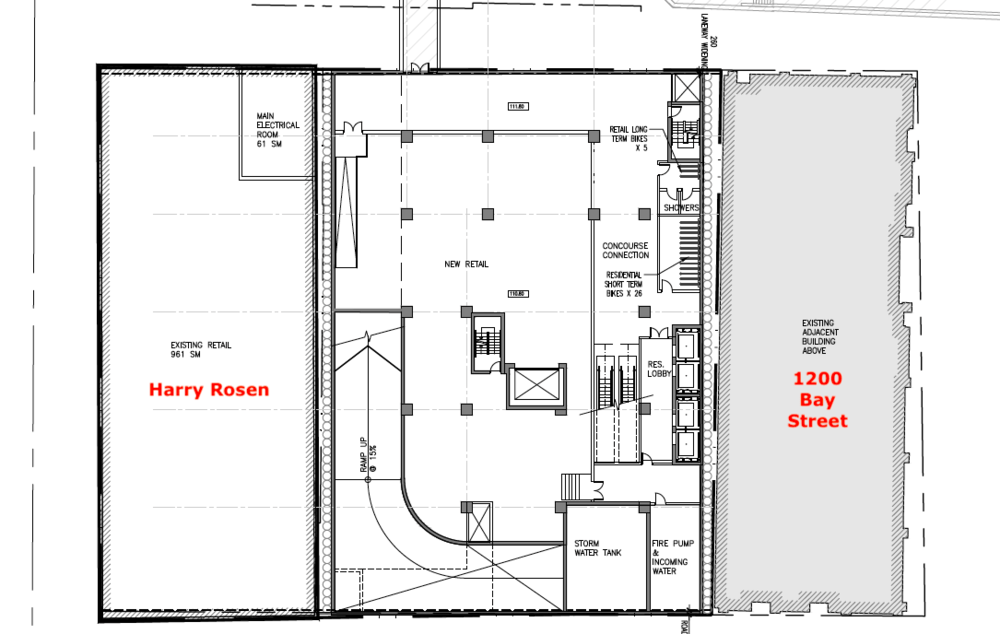
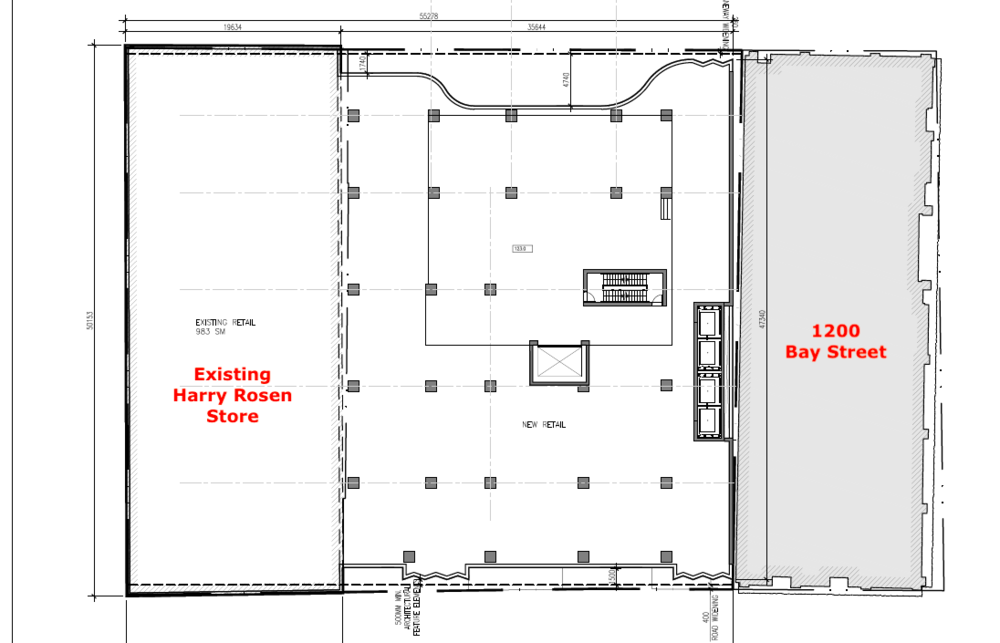
The tower will integrate the existing five-level Harry Rosen flagship store at 82 Bloor Street West, with part of the tower rising directly above it. More than 32,000 square feet of new retail space to the east of Harry Rosen will also be part of the proposal, spanning three levels including street level retail as well as second-floor and lower-level space. The Harry Rosen store spans 50,280 square feet according to the report, and the overall retail space when the project is built will encompass about 83,000 square feet.

A limited number of parking spaces are part of the proposal. In total, 172 spaces are proposed for the entire project, 32 of which will be allocated for visitors as well as for the retail space in a five-level underground parking structure. The development will be connected to the TTC Bay subway station via an escalator from a Bloor Street entrance downstairs into the concourse level retail component. Valuable retail space availability will be optimized as the residential tower will have a relatively small lobby on the main floor which will lead to a grander fifth-floor ‘sky lobby’. 

RENDERING OF THE NEW TOWER AT THE NORTHEAST CORNER OF BLOOR ST. W. AND BELLAIR STREET.
ABOVE: CONCOURSE LEVEL OF THE PROPOSED REDEVELOPMENT. RETAIL SPACE WILL BE ACCESSED FROM AN ESCALATOR FROM STREET LEVEL, AND A NEW CORRIDOR WILL CONNECT THE CONCOURSE TO THE TTC ‘BAY’ SUWBAY STATION
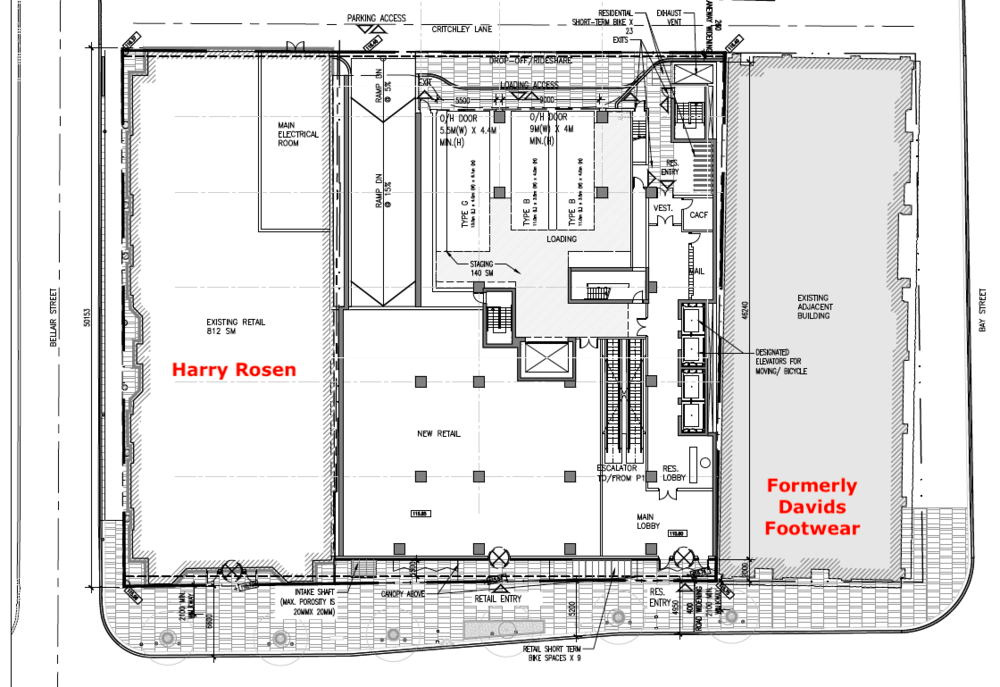
ABOVE: STREET LEVEL OF THE NEW 80 BLOOR ST. W. PROPOSAL. INCLUDED WILL BE A LARGE RETAIL SPACE AS WELL AS A SHARED LOBBY FOR THE MASSIVE RESIDENTIAL TOWER AS WELL AS LOWER-LEVEL RETAIL. THE BACK END OF 80 BLOOR WILL ALSO HOUSE LOADING DOCKS AND SERVICING AREAS.
ABOVE: SECOND LEVEL OF THE NEW DEVELOPMENT, WHICH WILL FEATURE A CONSIDERABLE AMOUNT OF RETAIL SPACE. THE CURRENT 80 BLOOR BUILDING HOUSES A ‘GOODLIFE FITNESS’ ON ITS SECOND LEVEL.

The existing 18-storey 80 Bloor Street West office building will be demolished for the new development. Current retail tenants include Roots and Banana Republic, as well as a second-floor fitness centre and optical and medical retail tenants above it. The adjacent 1200 Bay Street tower is not part of the redevelopment proposal — 1200 Bay Street includes a 6,500 square foot retail space recently vacated by Davids Footwear at 66 Bloor Street West, as well as two restaurants facing onto Bay Street. 

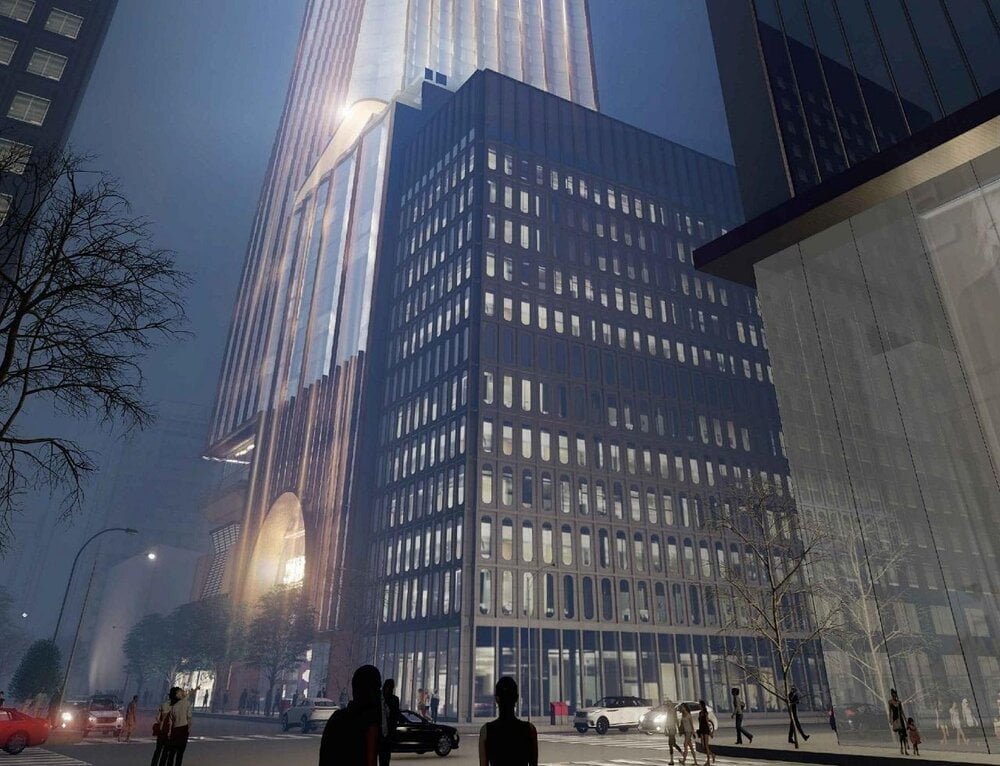
LOOKING TOWARDS THE NORTHWEST OF THE PROPOSAL FROM THE SOUTHWEST CORNER OF BAY STREET AND BLOOR. IMAGE: GIANNONE PETRICONE ASSOCIATES
IMAGE LOOKING NORTHWEST FROM THE MANULIFE CENTRE AT 55 BLOOR ST. W. A ‘GAP’ STORE IS TO THE FAR RIGHT OF THE IMAGE, WITH HOLT RENFREW TO THE RIGHT OF IT. IMAGE: GIANNONE PETRICONE ASSOCIATES

The additional retail space at 80 Bloor Street West presents an opportunity for brokers to add new retail tenants to the area. At the same time, some have said that leasing space in the area has been a challenge, and several spots on the strip are already either vacant or are for sublease. 

Luxury retail is a possibility for the new 80 Bloor retail podium, which is strategically positioned between Harry Rosen’s flagship and Holt Renfrew’s flagship which is located about 285 feet east of the new development. Luxury brands have typically located west of the Harry Rosen store along the stretch of Bloor Street leading towards Avenue Road, while Holt Renfrew boasts numerous luxury brand stores in a building which is also seeing a major overhaul that will be completed next spring. Given that the luxury stretch of Bloor Street West spans only about 900 feet, expanding it might make sense as brands eye moving into the area.

At the same time, disruption caused by the 80 Bloor tower construction could pose a challenge to the overall flow of pedestrian traffic on the Mink Mile. Many luxury shoppers will visit Holt Renfrew at 50 Bloor Street West before making their way westward towards flagships for brands such as Hermes, Gucci, and Louis Vuitton. The area is in a state of transition, though luxury brands are still leasing in the area — in September we reported on Dior’s opening of an impressive 13,300 square foot flagship at The Colonnade at 131 Bloor Street West, and US-based women’s brand St. John Knits will open soon across the street at 130 Bloor Street West. 

In the long run, the transformation of Bloor-Yorkville is good news. Groceraunt concept Eataly will open to the public on November 13 at the Manulife Centre at 55 Bloor Street West, which also saw a new Shoppers Drug Mart store open in the summer as well as the renovation of a basement-level Loblaw Independent CityMarket grocery store. Development at the corner of Bloor and Yonge Streets will include a newly renovated/rebuilt Cumberland Terrace at 2 Bloor Street West, as well as a reported Apple flagship store at the southwest corner of the intersection at the base of Sam Mizrahi’s ‘The ONE’ development. A W Hotel will open next year at the Hudson’s Bay Centre, which is also expected to see significant changes as a new subway platform is reconfigured below. Thousands of new residents will move into Bloor-Yorkville over the next several years in massive towers currently being built in the area. 

VIEW FROM CUMBERLAND STREET/VILLAGE OF YORKVILLE PARK FACING SOUTHEAST TOWARDS THE NEW TOWER. THE 10 BELLAIR STREET CONDOMINIUM TOWER IS TO THE RIGHT, WITH A RETAIL PODIUM HOUSING A HOLT RENFREW MEN’S STORE, HERMES, ZEGNA AND BARRY’S BOOTCAMP. IMAGE: GIANNONE PETRICONE ASSOCIATES
A FEW FROM THE CORNER OF BLOOR ST. W. AND ST. THOMAS ST. TO THE NORTHEAST, WITH HARRY ROSEN’S STORE RETAINED AND A TOWER RISING ABOVE. IMAGE: GIANNONE PETRICONE ASSOCIATES
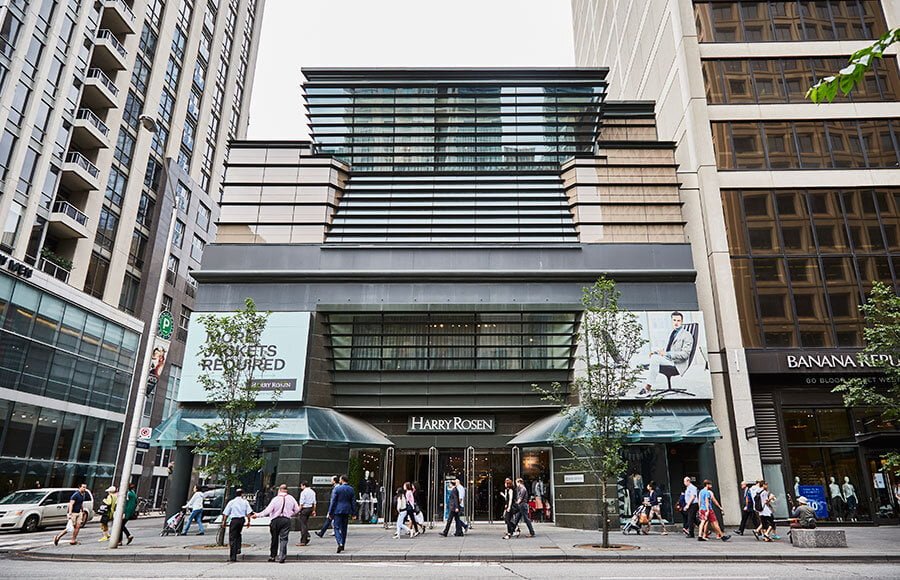
HARRY ROSEN’S BLOOR STREET FLAGSHIP IN TORONTO. THE BUILDING ON THE RIGHT, HOUSING BANANA REPUBLIC AND ROOOTS, WILL BE DEMOLISHED FOR THE NEW DEVELOPMENT WHILE HARRY ROSEN WILL REMAIN. IMAGE: HARRY ROSEN

Youtube video

Above: A flyover rendering of Toronto’s future skyline, including the new 80 Bloor St. W. tower. Video by ‘Koops65’ which was posted on Urban Toronto’s chat forum.

Yorkville Avenue is also seeing growth in luxury retailers as landlords such as First Capital Realty develop new projects. Already, brands that have opened on Yorkville Avenue since 2016 include Christian Louboutin, Chanel, Brunello Cucinelli, Versace, and Off-White. More are said to be on the way with the redevelopment of 101 Yorkville Avenue as well as in spaces recently vacated by Diesel and Anthropology. 

We’ll report back with updates on the 80 Bloor Street West proposal, which will change the face of a key block of Toronto’s famed stretch of Bloor Street West. A timeline has not yet been revealed as to when construction will begin or when the tower project will be finished. 

Edgy Luxury Canadian Brand ‘True Outliers’ Launches Highly Anticipated Outerwear Collection

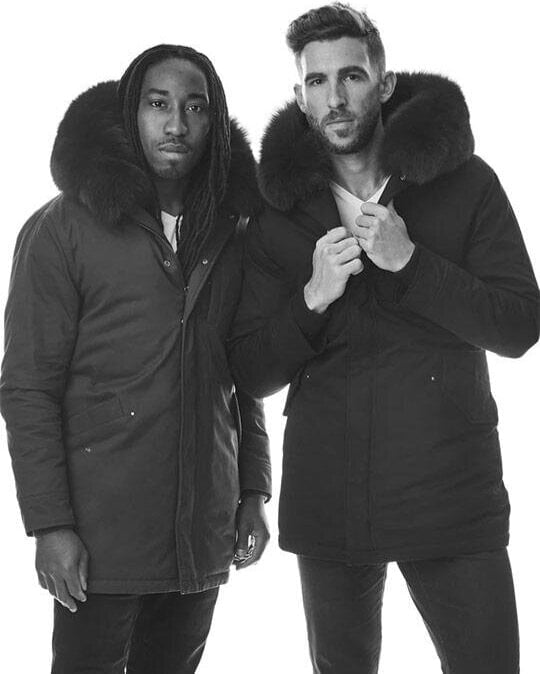
TRUE OUTLIERS CAMPAIGN IMAGERY. PHOTO: TRUE OUTLIERS

The highly anticipated True Outliers fashion brand has officially launched after ample social media hype and was kicked-off with a flashy by invitation-only opening party in an affluent area of Toronto in September. The unique brand, already a favourite amongst influencers and celebrities, is being spearheaded by entrepreneur Moses Mandelbaum who is part of the family that owns Toronto-based fashion manufacturer and distributor Gertex.

The unique True Outliers brand currently includes a range of stylish warm parkas that feature ethically sourced real mink lining and collar as well as a cotton outer shell containing dense 650 ‘fill power’ down — it could be the warmest jacket on the market to date. Each of the jackets can be customized with a monogram and a wider range of styles will be rolled-out as True Outliers continues to grow its operations this year as it looks to 2020 and beyond.

The company’s website states, “A True Outlier doesn’t care to belong. A True Outlier dares to be different. They require no blessing from others and are true to themselves. Welcome to the Tribe of True Outliers.”

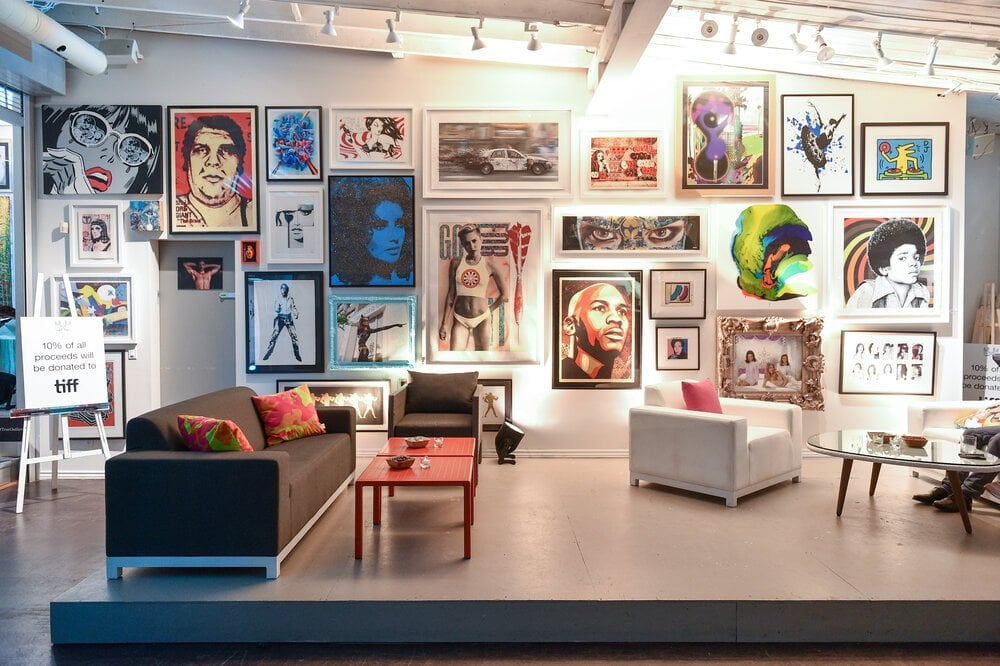
The brand’s well-attended opening party was held on the evening of September 10th at the Struck Contemporary Art Gallery on Dupont Street in Toronto’s Annex area. Attendees were treated to food and drinks while viewing and trying on samples of the newly launched parka collection. Many notable locals were in attendance, not to mention artists showcasing their craft.

Youtube video

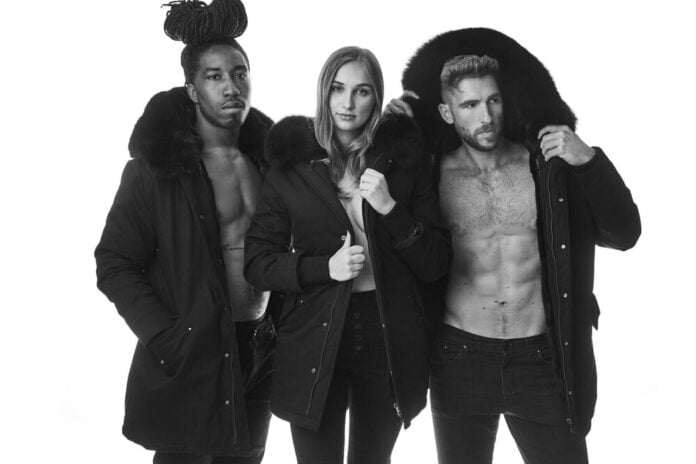
True Outliers’ marketing is edgy with a hint of sex appeal, featuring a diverse range of attractive models wearing the parkas. In some campaign photos, fit male models wear the brand’s parkas shirtless, creating an attention-grabbing contrast of image that is seen in other marketing campaigns. In the summer, for example, True Outliers held a photoshoot in Florida for a campaign to showcase the line with palm trees in the background, again referencing contrast that is part of the brand’s ethos.

Mr. Mandelbaum spent nearly three years developing the new line. “We sourced the best materials possible and created a design that is both functional as well as fashionable,” he said.

True Outliers’ initial parka design feature a three-quarter length style with cuts for both men and women. Jackets currently come in black, navy blue, and khaki green cotton shells. Detachable mink lining currently includes black and brown “with more colours to follow” according to Mr. Mandelbaum.

The cotton shells are down filled with a quality and warmth comparable to competitors who claim to have the warmest jackets available. True Outliers’ mink lining and collars further add to the warmth of the parka.

“I used cotton for the outer jacket shell so that the jacket can breathe, and cotton won’t become shiny with wear as is the case with some competitors that use polyester,” said Mr. Mandelbaum. Rivets under the arms allow the jackets to ‘breath’, which means a person won’t overheat while wearing one of True Outliers’ parkas, even indoors. The jacket design is well thought out and includes several discrete pockets to hold various items.

CAMPAIGN IMAGE. PHOTO: TRUE OUTLIERS

That includes two hidden pockets, including one on the outside of the jacket as well as an interior pocket that is accessible from within the jacket’s interior zipper area. The pockets are well thought-out and can hold a wallet and other items, as well as a mobile phone that includes the largest iPhone and android styles. 

The large fox fur collars, also ethically sourced, can be unbuttoned on a chilly day to entirely cover one’s face. “True Outliers’ jackets are impenetrable to the cold,” said Mr. Mandelbaum.

Mink lining was chosen because of mink’s warmth, as well as the fact that it doesn’t shed like rabbit fur, according to Mr. Mandelbaum. “Rabbit hairs will get all over your outfit and are tough to get off of your clothing. Worse than that, in the matter of months, shedding will get worse and worse.” He went on to explain that mink is also lighter than other furs while still being the warmest.

“More than that, mink is incredibly soft. Out of all the furs it feels so good on your skin. We all want the softest thing to protect our bodies and mink is so soft.” The parka’s mink lining can be detached in about 15 seconds, according to Mr. Mandelbaum, depending on weather and consumer preference.

CAMPAIGN IMAGE. PHOTO: TRUE OUTLIERS

Mr. Mandelbaum decided to use real fur rather than ‘faux fur’, partly for environmental reasons as well. “Real fur is environmentally responsible”, he said. “From family owned fur farms to local stores and boutiques, even on a mass scale, real fur is a renewable resource”.

“When an old fur coat is done with, it can be sold and restyled. It has years and years of wear, before being discarded and eventually decomposed. Old fur can even be used as compost for your backyard,” he went on to say.

“Fake fur is made in part by non-renewable materials such as plastics and nylon. When someone is done with a fake fur coat, they throw it in the garbage. The problem with fake fur is that it can sit in a landfill for years and since it’s not made from anything natural it cannot decompose.”

He went on to say, “Genuine fur means quality, and real fur will last for years and years. From small town furriers to the high fashion runways of Paris and Italy, real fur means consistent quality without sacrificing the environment.”

PHOTO: TRUE OUTLIERS WEBSITE

The outer cotton lining on True Outliers’ parkas can be washed in a washing machine on the cold setting and hung to dry. Fur specialists are suggested if the mink requires any cleaning.

Prices for the first run of True Outliers parkas, both for women and men, are currently $1,800 each. While the price point is higher than that of some competitors, the pricing could be considered reasonable considering the high-quality materials, design, and mink fur lining both within the jacket as well as the jacket collar.

Mr. Mandelbaum said that he’s in talks with several well-known US-based fashion retailers to carry the initial True Outliers line and is in talks with others. However, distribution will be very limited to retailers that match the brand ethos, and distribution will otherwise be limited to maintain brand cachet. Trunk shows are also part of the brand strategy, as is pop-up retail and events. At some point, True Outliers retail stores are also a possibility as the brand expands into other product categories in the coming years.

“I have a vision for the next 15 years for the True Outliers brand which will eventually include other product categories,” says the 26-year-old Mr. Mandelbaum, who has worked for family company Gertex from the distribution floor to head office.

TRUE OUTLIERS EVENT SPACE. PHOTO: GEORGE PIMENTEL

The True Outliers brand also has a charitable component by donating 10% of proceeds to a charity called Chai Lifeline Canada, which helps families cope with pediatric illnesses. True Outliers will donate to the charity of choice for partners involved with hosting trunk shows.  

“Part of the brand is also about giving back,” explained Mr. Mandelbaum, who is a direct descendant of the Cohen line that stems from the founder of the first priesthood of Jerusalem. The double-hand symbol used in True Outliers’ branding is the symbol of the priest in Judaism. It is passed down generation-to-generation by families that are direct descendants of the first Jewish priest Aaron. Mr. Mandelbaum explained how the symbolism behind the Cohen symbol is vast, essentially being the highest sign of blessing as Cohens give blessings to others.

“The only person in history to ever be awarded the title of Cohen was a man named Pinchas”, noted Mr. Mandelbaum. “He received the honour after being a True Outlier himself.”

Old Navy Marks Successful Canadian Store Expansion with 100th Location

PHOTO: RETAIL INSIDER

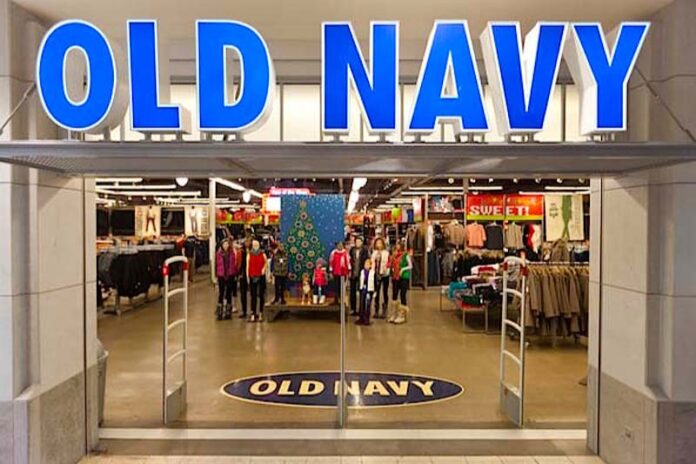
Clothing retailer Old Navy has reached a milestone in Canada with the recent opening of its 100th store in the country as the company looks to nearly double its footprint in North America in the coming years.

The 100th store was opened on October 30 in Medicine Hat, Alberta.

Pooja Sethi, VP and Head of International at Old Navy, said the retailer’s first of 12 stores in Canada opened in April 2001.

“We are so proud of our Canada business and believe it is an important market for our brand,” she said.

“One of the top comments we receive from our customers is that our stores are not close enough, especially in smaller markets. We want to be where our customers shop and live and opening new stores in smaller markets will help us bring the store experience closer to home and introduce the brand to new customers.”

OLD NAVY DEERFOOT CITY TWITTER
PHOTO: OLD NAVY DEERFOOT CITY TWITTER

Old Navy is a San Francisco, California-based brand founded in 1994, and this year marks the brand’s 25th anniversary. The first three stores opened in California in 1994. In 1997, it was one of the first retailers to reach $1 billion in sales within four years of opening. In 2000, oldnavy.com launched. After launching in Canada in 2001, the company launched in Mexico in October 2015 and now have 25 stores in Mexico City, Puebla, Querétaro, and Quintana Roo, making its store expansion in Mexico its fastest to date. Today, Old Navy has more than 1,100 stores globally.
“(Recently) we announced our plans to continue growing our fleet at a pace of approximately 75 stores a year, including entering small underserved markets. Over the long term, we believe there is white space for us to nearly double our store footprint in North America,” said Sethi.

In Canada, Old Navy also opened recently in Deerfoot City in Calgary, McArthurGlen outlets in Vancouver, and in Grandview Corners in Surrey, B.C.. The Montreal Eaton Centre location, which opened in 2004, has also been renovated. A report from a news publication in Kamloops, British Columbia, notes that recent building applications showed plans for an Old Navy store. It would occupy part of the space vacated by Sears last year at Kamloops’ Aberdeen Mall.
“While we don’t have any new store openings to announce at this time, we are excited to continue to grow our store fleet so even more customers can experience the Old Navy brand,” said Sethi.

Real estate company JLL represents Old Navy in Canada and is negotiating deals for new stores under the direction of Lawrence Hildebrand and Chris Canuel.

“At Old Navy we believe in the democracy of style. This is what guides our brand and our business, and it means that everyone should be able to participate in fashion, at every age in the family, every income level, and every size. These principles are part of our brand’s DNA and have been with us since the brand was founded 25 years.

“Old Navy serves the whole family and we believe that style should be accessible to everyone. Our target customer is one looking quality, on-trend fashion at an exceptional value – accessible pricing is a part of our DNA.”

Sethi said the retailer is really excited for the holidays, adding that this year, it has “some incredible” gifting items, including its famous cozy socks and sleepwear, as well as lots of great fleece and outwear for the Canadian winter.

Alberta Entrepreneur Expands Unique Ethical Fashion Line Amid ‘Slow Fashion’ Movement

PHOTO: DEBRA HUNTER

W1 Hundred describes itself as being “unapologetically ethical fashion” – Canadian designed and produced clothing where ethics matter.

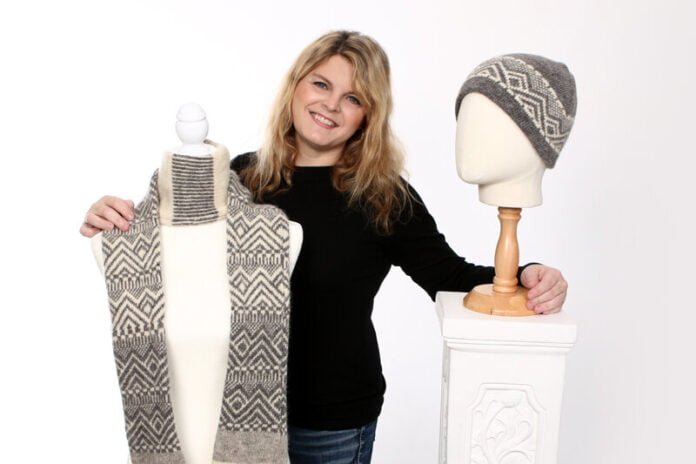
Owner Debra Hunter, who is based in Red Deer, Alberta, said the concept is actually the product of two other projects, Handmade in Canada and Pure Wear Canada, that just kept growing.

“I was trying to create Canadian made items out of wool but doing it as ethically as possible which meant accessing Canadian wool, Canadian milled, Canadian produced, but also dyeing by hand in natural dyes so you’re not dealing in chemical dyes. It was a small project that started as Handmade in Canada and as Handmade in Canada grew, I got into apparel. It became Pure Wear Canada,” said Hunter.

“Then I decided I wanted to grow it more into the apparel direction, but I also wanted to focus on getting it to a level of being even more local. So I have this idea – I’ve been working with mills in Canada accessing fibre – what if we could go make it even more local? What if we could bring this down to a hundred-mile wardrobe? I’ve been working on that since then. That’s where the W1 Hundred comes from. That’s what I’m working towards. Being able to use the closest fibre that I can get, milled as close as I can and then local production.”

Hunter said she has been working with mills in Prince Edward Island for her two previous projects. But she found a mill in Linden, Alberta with its own herd. She is going to now be able to use Alpaca fibre from their herd, milled on their site and within one hundred miles of where she makes the clothing.

“That’s the main goal. It’s local production. Ethical production using Canadian farmers, knowing where your fibre comes from the most part. Really, really clean supply chain. Really, really pure,” said Hunter.

“What makes people want this? First of all, Canadian made. There’s a real desire for Canadian made product out there right now. There’s a desire to support Canadian, especially with wool. It allows them to support right down to the farmers, the mills, that sort of thing,” said Hunter.

“The second thing people like is they know who’s making it, they know who’s crafting it. It’s not some vague idea of a factory on the other side of the world. They know who it’s coming from. I’m very transparent about exactly how it’s made. People like to know that you’re doing natural fibres, especially now that there’s a big plastic free movement. That’s huge that people know they can get natural. Natural dyeing. You’re not flushing chemicals out into the water system.

“I kind of see what I’m doing as an extension to when people started to look to the 100-hundred-mile diet where people are buying from local farmers. It’s kind of an extension of that mindset where people want to know where it’s coming from, how it’s made and value the product for that.”

Hunter said she has some ideas long-term in how to run a different business model.

“I think it is time to offer new options to retailers, allow them to be more reactive while having more choice. I believe I can give them options to work with that are more than just the physical product. I've come to the textile/apparel business in an around-about way, having owned a professional photography business for two decades, plus being a working artist. This background leaves me always thinking ‘how can this be done differently?’ I think the time is right for different,” she said.