Advertisement
Home Blog Page 1087

Pop-Up Shop Lease Negotiations Give Rise to Unique Legal Issues

YSL BEAUTY OPENS ITS FIRST FREESTANDING POP-UP SHOP IN CANADA. PHOTO: HANNAH YAKOBI AND COURTESY OF YSL

By Michael Gilburt and Horatiu Porime

In recent years, the retail landscape has taken a novel turn with the rise of pop-up shops, which occupy retail space for short periods, anywhere from a few hours to over a year.

Luxury brands, online retailers, and celebrities alike have opened pop-up shops in locations as varied as shopping centres, trendy neighbourhoods, popular shopping districts, and even a moving downtown streetcar, showcasing the latest products and services one day, and disappearing the next.

Paired with the rapid spread of information on social media (often via teasers and mysterious references to “secret locations” with details to follow), pop-up shops have become a powerful marketing tool.

Pop-up shops bridge the gap between traditional brick-and-mortar retail and internet-based retail. An example is the men’s suiting brand, Indochino, which initially started as an online retailer. Following its online success, Indochino entered the brick-and-mortar market, initially via a series of pop-up shops, which led to a growing number of permanent locations.

The rising popularity of pop-up shops has coincided with the growth of e-commerce, particularly as shopping centres and retailers now place a greater emphasis on the experiential aspects of shopping.

(CASPER POP-UP AT TORONTO INTERNATIONAL FILM FESTIVAL)
(THE PEDESTRIAN PASSAGE OVER DUNSMUIR STREET AT HOLT RENFREW IN VANCOUVER WAS TRANSFORMED INTO A “PRADA SPIRIT POP-UP SHOP” FROM FEB. 8-19 OF THIS YEAR. RENDERING COURTESY OF PRADA)

With the growth of online shopping, brick-and-mortar establishments are increasingly looking to broaden the shopping experience to include a more experiential element that will draw customers to their stores. Retailers look to their online elements as a means of distributing and marketing the products they sell, while a brick-and-mortar presence enables them to engage with their customers more directly. Pop-up shops, with the attendant buzz that often starts online and culminates in an interactive in-store experience, are an ideal medium for such engagement.

From a business perspective, pop-ups have compelling propositions for both landlords and tenants. While most landlords would prefer more stable, long-term tenancies, the pop-up provides an opportunity to generate rent from otherwise vacant premises. This is especially advantageous in light of the recent flurry of insolvencies across the retail industry.

Pop-up shops also enable landlords to vet potential tenants in advance, essentially providing a “trial run” before committing to a long-term lease. Landlords also benefit from increased customer traffic brought on by pop-ups, as customers come back to see the latest tenant and the latest products and services offered.

Tenants view the pop-up model as an effective means of gauging public reaction to new products, concepts and services, without the commitment of a traditional long-term lease. Pop-up shops also allow tenants considering expansion into an underserved area to determine whether the location is viable from a business perspective. For online retailers, pop-up shops provide a showroom for their products, which can then be purchased online (as illustrated by the example of Indochino).

Given the unique nature of pop-up shops, there are a number of legal considerations of which parties considering a pop-up relationship should be mindful. This article highlights a few of those considerations.

[Below: Louis Vuitton fragrance pop-up at Toronto’s Yorkdale Shopping Centre]

(AIR FRANCE POP-UP AT TORONTO INTERNATIONAL FILM FESTIVAL)

Use of the Pop-Up Shop

In any pop-up agreement, whether within a shopping centre, street location or other multi-tenant development, the tenant’s right and ability to use the premises for its specific business, and the landlord’s control of the various uses within the shopping centre or development, are among the most fundamental and important terms.

Principal among these provisions is the tenant’s use clause. A use clause will restrict the tenant to using its premises for a specific purpose and may include a list of agreed-upon products or services that a tenant may sell in its premises.

A tenant will want to ensure the use clause is drafted as broadly as possible in order to retain the flexibility to adjust their product offerings to respond to consumer demand, implement a change in business strategy or carry out promotional events from the premises that include a variety of uses (such as the pairing of food and entertainment services with the sale of clothing).

By contrast, a landlord will want to ensure the use clause is very clear and specific to protect tenant mix within a multi-tenant development and to protect itself from breaches of any exclusivity rights granted to other tenants. For example, if the landlord has given another tenant the exclusive right to sell jeans, giving a pop-up tenant an unrestricted right to use the pop-up shop for any lawful purpose could result in a situation where the exclusive right is breached.

Parties considering a pop-up relationship should also undertake the necessary due diligence to confirm that the proposed use of the premises is permitted by applicable zoning and municipal regulations, particularly where the proposed use differs significantly from the manner in which the premises has been used previously.

The use of a pop-up shop may also require that certain licenses be acquired, such as a liquor license or an event license. In addition, while signage is an item that tenants often consider integral to the marketing impact of a pop-up shop, there are often restrictions imposed by municipal regulations and zoning legislation on the size, location, and type of signs that are permitted.

Accordingly, a pop-up tenant should begin its planning phase by gaining an understanding of how the municipality’s regulations will affect its intended use of the space.

VEUVE CLICQUOT OPENS RETAIL POP-UP SHOP IN MONTREAL
GOOP POP-UP AT NORDSTROM AT CF TORONTO EATON CENTRE IN THE SPRING OF 2017.

Type of Governing Agreement

Parties to a pop-up relationship should be mindful of the advantages and drawbacks of the various types of agreements that can be used to document such an arrangement.

A pop-up relationship may be documented in the form of a license agreement, which permits the grantee to use a portion of the grantor’s property for a certain purpose for a limited period of time. A license, as opposed to a lease, does not include a right of exclusive possession of the space and does not create an interest in land.

While leases are complex documents, licenses are relatively uncomplicated and may be suitable for a relatively simple pop-up arrangement with simple business terms. A license is also advantageous to the landlord who needs flexibility while looking for a permanent tenant, as it generally allows a landlord to terminate the arrangement at will, upon reasonable notice.

Leases, on the other hand, do create an interest in land, and include a right of exclusive occupation. The downside in a pop-up relationship is that given the complexity of a lease, it may take longer to negotiate and draft when compared to a license. A lease is also not as flexible from a termination perspective, as terminating the landlord-tenant relationship inherent in the lease may be more complicated than doing so in a license arrangement, from both the landlord and tenant’s perspective. It does, however, afford the opportunity for greater protections for both parties and is recommended if the business arrangement is more complex and greater safeguards are required.

Despite what the parties may call the arrangement, whether an agreement is a lease or a license depends on the substance of the agreement. Clarity and precision in drafting are essential in order to avoid misunderstandings and unintended consequences. Improper termination of a lease or license can have adverse consequences, including a claim for damages.
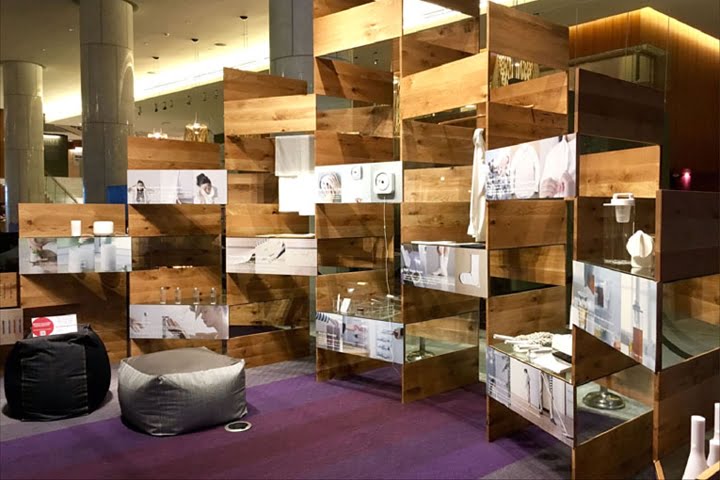
(MUJI POP-UP IN VANCOUVER — MUJI TESTED THE WATERS AND CREATED BUZZ PRIOR TO OPENING PERMANENT STORES IN THE MARKET. PHOTO: RETAIL DESIGN BLOG)
‘CONCEPT’ AT YORKDALE — THE 3,600 SF SPACE HOUSES A ROTATION OF POP-UPS.

Percentage Rent and Online Sales

A common rent structure under many pop-up agreements involves the payment of rent based on a percentage of the tenant’s sales of merchandise and services from the pop-up shop (referred to as “percentage rent”).

Many tenants, particularly start-ups and online retailers looking to test-run the viability of a brick and mortar location, prefer a percentage rent structure over a fixed rent structure as the rental payment correlates directly with the success of the tenant’s business and will preserve the tenant’s cash flow (percentage rent is typically paid after the fact based on a report of gross sales figures for the relevant period). Accordingly, if the pop-up shop underperforms, the payment of a percentage rent will be less burdensome to the tenant. However, for the same reason, such a rental arrangement has the potential to leave landlords with little to no rental income. Nonetheless, in the right circumstances, a landlord may decide that a percentage rent structure is viable for a pop-up shop, particularly in the case of a high-profile brand that has a demonstrated track-record of success and holds the promise of attracting more customers to the development.

Once the parties to a pop-up relationship have agreed on a percentage rent calculation, they must turn their minds to how “gross sales” will be defined in the pop-up agreement. The types of transactions that are included and excluded from the definition of “gross sales” will have a significant impact on the amount of percentage rent a tenant will end up paying. Accordingly, a tenant will want to limit this definition as much as possible while a landlord will want to broaden it as much as possible.

For pop-up tenants with a strong online presence, it is important for both parties to understand how online sales will be treated and accounted for from the beginning so that both parties can determine whether a percentage rent structure makes sense and, if it does, what types of online sales activity should be included and excluded from the definition of “gross sales”.

Given that online sales are an area where many pop-up tenants primarily focus their business, the failure to capture these sales in the definition of “gross sales” may result in lower rents than a landlord had anticipated. By contrast, a definition that captures all forms of online sales may result in a rent that far exceeds the tenant’s budget. Accordingly, tenants should seek to exclude all online sales of merchandise except those which are made through the tenant’s in-store point of sale system and fulfilled at the premises.
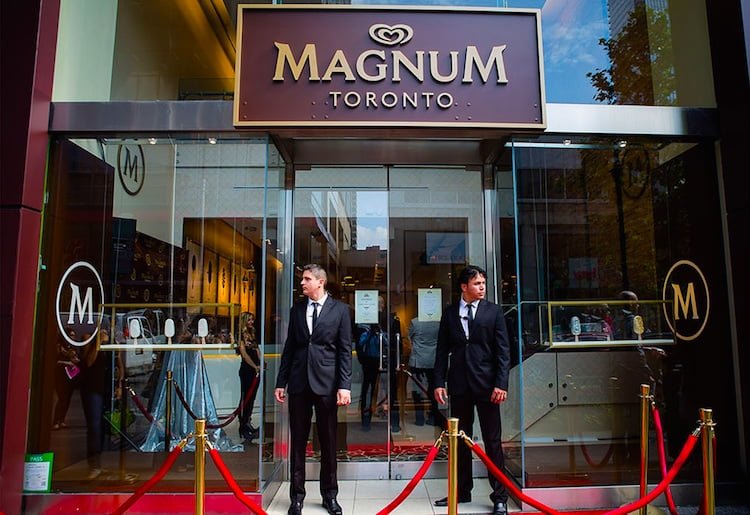
MAGNUM POP-UP. SUMMER OF 2013, PHOTO: MAGNUM

Landlords, on the other hand, should seek to ensure that “gross sales” captures all internet sales that ‘touch the store’, particularly in the case of pop-up shops which are operated as showrooms. For example, purchases made by customers in a pop-up shop through store-owned tablets which are fulfilled with merchandise at a distribution centre may ‘touch the store’ but may not be registered as sales through the in-store cash register. As this example illustrates, there are many ways an online sale can ‘touch a store’. How the parties distinguish between online sales which are included and excluded from “gross sales” will depend on the nature of the operations of the pop-up tenant and the negotiating leverage of the parties.

With the continued evolution of consumerism toward experiential marketing and the emergence of e-commerce as a viable secondary retail channel, it is clear that the pop-up phenomenon is no flash in the pan. With its understanding of the unique business and legal issues facing the parties in a pop-up relationship, the Commercial Leasing Group at Blaney McMurtry can help landlords and tenants successfully navigate these issues and prepare the legal documentation necessary to achieve their goals.

Originally published in Blaneys on Business: March 2018.

Michael Gilburt and Horatiu Porime are members of Blaney McMurtry’s corporate/commercial and commercial leasing practice groups.

Michael Gilburt‘s practice encompasses all aspects of commercial leasing. He regularly advises and assists businesses of all sizes with the negotiation, drafting, and review of retail, office and industrial leases. He also advises on such related issues as redevelopments, default and termination. Michael can be reached at 416-593-3981 and mgilburt@blaney.com.

Horatiu Porime conducts a general practice in corporate and commercial law. Horatiu can be reached at 416-593-3904 and hporime@blaney.com.

Billy’s News Shutters After More than 100 Years

Billy's News (Image: Google Streetview)

Iconic Calgary downtown retailer Billy’s News, which has been a city landmark business for more than 100 years, has closed its doors because of future redevelopment plans for the historic Lougheed Building.

The news magazine store, which was located at 604 1st St. S.W., had to close shop as the owner of the Lougheed Building is planning a future re-purposing of the site.

The owners of Billy’s News could not be reached for comment.

This is the third time in the past six years that downtown office building development has impacted the retailer.

In June 2012, it moved from the old Herald block, where it had resided for many years, to the Art Central building a couple of blocks away as the Herald structure was being demolished to make room for the new Brookfield Place office skyscraper.

Then a few years later, the Art Central building was being demolished to make room for the new TELUS Sky office/residential tower.

Billy’s then found space to lease at the Lougheed Centre in 2014.

“Billy’s news was known as a legacy retailer having operated continually in various locations in downtown Calgary for over 100 years,” said Michael Kehoe, an Alberta-based retail specialist with Fairfield Commercial Real Estate in Calgary, which represented Billy’s in its leasing deals. “The firm fell victim to a changing media landscape, the soft economy in downtown Calgary and having been forced out of its past three locations over that past six years due to downtown redevelopment projects.

BILLY’S NEWS (BOTTOM RIGHT) IN LOUGHEED CENTRE BUILDING. PHOTO: GOOGLE MAPS

“Perhaps the Billy’s brand may re-emerge in the future depending on the owner’s appetite to carry on.  The retail landscape is continuously changing and adapting to consumer demand and the pace of change has accelerated in the recent past especially in the downtown core.”

Allied Properties REIT acquired the Lougheed Building in 2010. It was built in 1911.

The building has 90,496 square feet of leasable space comprised of 69,557 square feet for office and 20,937 square feet of retail.

It was renovated in 2006/2007.

It’s a restored six-storey, brick and beam office/retail building with a finished penthouse and is now vacant.

“The Lougheed Building was our first acquisition in Calgary and remains a prized element of our portfolio in Western Canada. While we haven’t finalized our repositioning strategy for the property, we’re confident that it will be both socially and economically successful,” said Michael Emory, president and CEO of Allied Properties, in a statement.

LOUGHEED CENTRE. PHOTO: ALLIED PROPERTIES REIT

The City of Calgary, on its inventory of historic resources website, describes the Lougheed Building as a“Classical Revival style building with a brick façade and elaborate cornice across the top.

“Senator James Lougheed, a prominent Calgary lawyer, businessman and politician, purchased thirty lots in downtown Calgary from the C.P.R. in 1884, and saw his land become the central core area of the city. He remained active in development, and in 1911 he built this six-storey brick structure at the corner of 1 Street and 6 Avenue SW.,” says the City.

“The architect was D.S. McIlroy, also the designer of the First Baptist Church. A large portion of the building was occupied by the Grand Theatre Opera House (for a time known as the Sherman Grant Theatre). The Grand Theatre was used for worship by both Central United Church and Knox United Church while they were rebuilding. Besides the theatre, there were originally stores on the ground floor, commercial sample rooms on the next two storeys, and two and three-room living suites on the top floors.

“The heritage value of the Lougheed Block lies in its representation of Calgary’s tremendous commercial growth prior to World War One. The block served as a major centre of commercial activity for most of the twentieth century. It is a good example of the Chicago Style of commercial architecture, which embodied the sense of optimism in Alberta’s economy. One of the few remaining examples of this style of architecture in Calgary, it is a familiar landmark in downtown Calgary.”

BRIEF: French Connection Downsizes to 1 Store, Copper Branch to Double Store Count

exc-5acf9fddaa4a99ae7ba066e5

And then there was One: French Connection Significantly Downsizes in Canada

UK fashion brand French Connection has been progressively closing its Canadian stores over the past five years, and it now operates one store location at 1181 Sainte-Catherine Street West in Montreal. The company’s second-last Canadian store location recently closed at CF Sherway Gardens in Toronto. 

Since 2013, French Connection closed four other Toronto stores, as well as a location in Vancouver. In 2013, French Connection’s store at 11 Bloor Street West closed, and the site is now part of the construction of Sam Mizrahi’s ‘The ONE’. A French Connection at Toronto’s CF Toronto Eaton Centre closed in 2014, and closures on Queen Street West and Yorkdale Shopping Centre followed. A store on Vancouver’s Robson Street shuttered in 2016. 

Known for its cheeky ‘FCUK’ branding (stands for ‘French Connection United Kingdom’), the French Connection brand appears to have lost some of its popularity not only in Canada, but internationally. There’s a lot of competition in the Canadian market as international retailers continue to open stores, and brands such as French Connection need to establish their place and maintain their popularity through consistent marketing, not to mention offering products that consumers desire. The company, which was founded in 1972 and is headquartered in London, continues to operate standalone stores as well as distribute via wholesale channels globally. 

A representative at French Connection notes that the company will continue to maintain a Canadian presence through its Montreal brick-and-mortar location, as well as with its Canadian e-commerce site: https://canada.frenchconnection.com.

‘Melissa’s Musts’ Pop-up Brings On the Haute

Melissa Evans-Lee is not only Bayview Village’s Marketing Director but she is the de facto resident fashionista and decorista who is curating a month-long pop-up shop of ‘haute’ must-haves for Spring.

‘Melissa’s Musts’ has popped-up near the Centre’s lobby on for the month of April. Evans-Lee has carefully hand-picked the season’s most exceptional items from Bayview Village’s retailers so guests can expect the hottest fashion trends, top beauty picks, culinary essentials, glam gifts and more.

This current pop-up follows last year’s wildly successful “The Haute Spot” at which Evans-Lee featured a month full of marvellous, sold-out events at one of Canada’s most prestigious shopping venues Bayview Village Shopping Centre. This lifestyle centre, through its over 110 upscale tenants, is a highly-curated collection of one-of-a-kind boutiques, restaurants and services.

Over the next month, guests can make purchases on-site and are encouraged to consider this pro-tip: visit frequently, a limited quantity of items will be available and, once sold, new merchandise will be introduced.

MOOOoove Over Big Meat, Copper Branch is Re-defining QSR with More Locations in the Works

With plans to open dozens of vegan eateries across the country, Copper Branch is changing the QSR experience, with a menu comprised of 100% plant-based power foods. The company aims to be ‘the undisputed leader in healthy fast-casual foods.’

Established in Montreal in 2014, Copper Branch currently operates 17 locations – 13 in Quebec and 4 in Ontario – with plans to more than double its footprint by the end of the year. This ambition extends into 2019 with 10 more in the works. The company’s ideal spaces are 1,250 to 2,000-square-feet in open-air centres and 450 to 1,500-square-feet in enclosed malls.

With the assistance of initiative partner chartered real estate brokerage Think Retail, under the direction of Tony Flanz, Copper Branch continues its push into Ontario, with restaurants slated to open in Markham, Peterborough, Bowmanville, Kingston, Oakville, Newmarket, East Gwillimbury, Mississauga, and Ottawa.

In addition, the company is to open six confirmed locations in its home province of Quebec in Candiac, Anjou, Rimouski, Saint-Jean-Sur-Richelieu, St. Laurent, and Cote Vertu.

After 25 years owning several traditional fast-food franchises, entrepreneur Rio Infantino set out to revamp the QSR experience with nourishing gourmet power foods designed to appeal to a mainstream audience seeking clean healthy meal option, and he is succeeding!

Note: Copper Branch’s expansion representation is as follows: 

Super regional malls (national) – Think Retail/Tony Flanz

Open air centres & streets in Montreal – Corey Besner at Core Consultants Realty

Alberta – Stephen Travers (stephen.travers@copperbranch.ca)

Shoppers Drug Mart Unveils New Wellwise Store in Etobicoke

Offering everything from sleep therapy to low-impact fitness and physiotherapy products, the newest Wellwise in Etobicoke, is exactly what the doctor ordered for Canada’s ageing population. For the first time, there are now more Canadians over the age of 65 than under 15, and they are not going to grow old quietly. Today’s seniors want to take control over the way they age and Shoppers Drug Mart launched the Wellwise stores in 2017 to tap into this market.

The Etobicoke Wellwise differs from the original in Leaside neighbourhood of Toronto with the inclusion of the full-sized vignettes where shoppers can walk through a model bedroom, bathroom, living room and garage to try out products to see how they would fit into everyday living. Soon the store will also feature an innovation space where new products, that haven’t hit the market yet, can be tried, and a community room for associations and experts to run education events.

The grand opening was held last week with a ribbon-cutting ceremony and store tours.

Maje Celebrates Anniversary with Photo Book & Flower Cart

Twenty-years ago, Judith Milgrom founded her boho-chic inspired label Maje in Paris. The French-Moroccan fashion designer is known for her affordably priced pieces that are worn by women in 40 countries worldwide. In addition in the upcoming months, Maje will open its largest-ever European store in London. (Formal announcement will be coming soon).

To celebrate the label’s 20th anniversary, Milgrom commissioned three photographers to collaborate with her on a limited-edition coffee-table book with three themes called ‘Maje 20.’ Mark Peckmezian shot ‘family life’ in Paris, Thurstan Redding portrayed ‘friendship’ under the Ouzoud Waterfalls in Morocco, and Coco Capitán teamed up with painter Frances Wilks to experience ‘love’ in England.

In Canada, Maje has created a 20th anniversary flower cart to celebrate the label’s anniversary and the launch of the SS 2018 Collection.

Fans of the brand can do celebratory selfie’s on April 14th at the downtown Hudson’s Bay in Vancouver; on April 21st at Queen Street Hudson’s Bay, and on the 28th of April at Maje Yorkdale.

Until the fall of 2016, Canadians could only buy Maje collections in a handful of concessions at Hudson’s Bay but in 2018 the company has expanded into 8 locations plus an outlet at McArthurGlen.

The Amazing Brentwood Completes Final Pour for Tower ONE

A landmark celebration was held last Friday at 614-feet to celebrate the final concrete pour for The Amazing Brentwood’s Tower ONE, the first of 11 towers to go up in the 28-acre project. Standing 63 levels with 591 units, this is the future home of the greatest number of suites in any one building in Metro Vancouver. With ten more towers, more than 250 shops and restaurants, a one-acre plaza, and zoning for possible 1.1 million-square-feet of office space, this is the first of many milestones for The Amazing Brentwood.

Since 1991, Brentwood Town Centre has been part of Burnaby when it was a partial open-air strip centre and enclosed mall. In the 1980s, a second level was added to the mall. In November 2014, a redevelopment announcement was made that shocked not only the community but the Lower Mainland. Over the following 4 years, the development would see the 500,000-square-foot enclosed centre transform into a mixed-use super-regional shopping centre. The Amazing Brentwood will be one of B.C.’s largest shopping centres when completed and will provide sorely needed residential housing to the city.

Tower ONE includes 300 rental homes and 291 market condos which sold in record time in 2014. Since then, two more towers have pre-sold for a total of 1,380 homes with the next highly anticipated release coming next year. In 2019, the first residents will move into Tower ONE.

Birks Jewellers to Exit Downtown Edmonton After Almost 90 Years

It’s the end of the road for iconic Montreal-based jewellery chain Birks‘s store in downtown Edmonton’s Manulife Place. Signs in the Manulife Centre store indicate that it will be closing soon, marking the end of several decades of continuous operations for the brand. 

Prior to having moved into Manulife Centre more than a decade ago, Birks operated a much larger street-level store location near a former Woodward’s flagship in ‘Edmonton Centre’, which is now the eastern portion of Edmonton City Centre. Most modern Birks stores are considerably smaller than flagships of the past, though Birks continues to operate large stores in Montreal, Toronto (relocating) and Vancouver. 

Birks opened its first Edmonton store in 1929 in ‘the Birks building‘ at the corner of Jasper Avenue and 104 Street. The elegant building still stands and is heritage designated

Birks is the second tenant to be leaving downtown Edmonton’s Manulife Place. Last week we reported that Escada has closed its Edmonton store on the ground level next to Holt Renfrew. Downtown Edmonton is in a state of transition but good things are on the way with renovations to Edmonton City Centre, as well as ongoing construction at the ICE District

Thank you again, Christopher Lui, for being the source of news at Manulife Place. 

Sporting Life to Enter Montreal with 1st Store

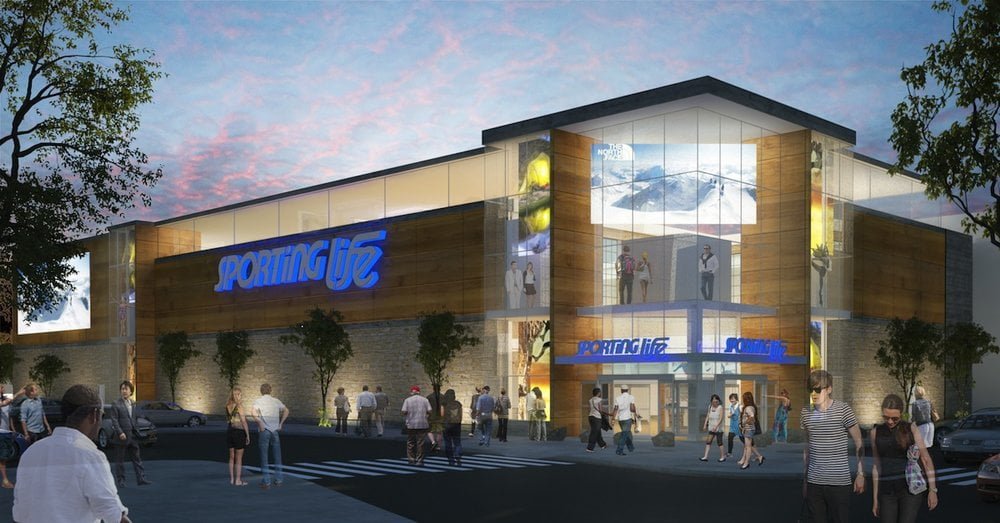
[RENDERING OF THE QUARTIER DIX30 SPORTING LIFE WAS PROVIDED COURTESY OF SPORTING LIFE/OXFORD PROPERTIES]

Toronto-based sport and fashion retailer Sporting Life is expanding into an entirely new market this fall, with plans to open a one-level store at Quartier DIX30 in suburban Montreal. It will be Sporting Life’s 11th store location as the company looks to double its store count over the next several years. 

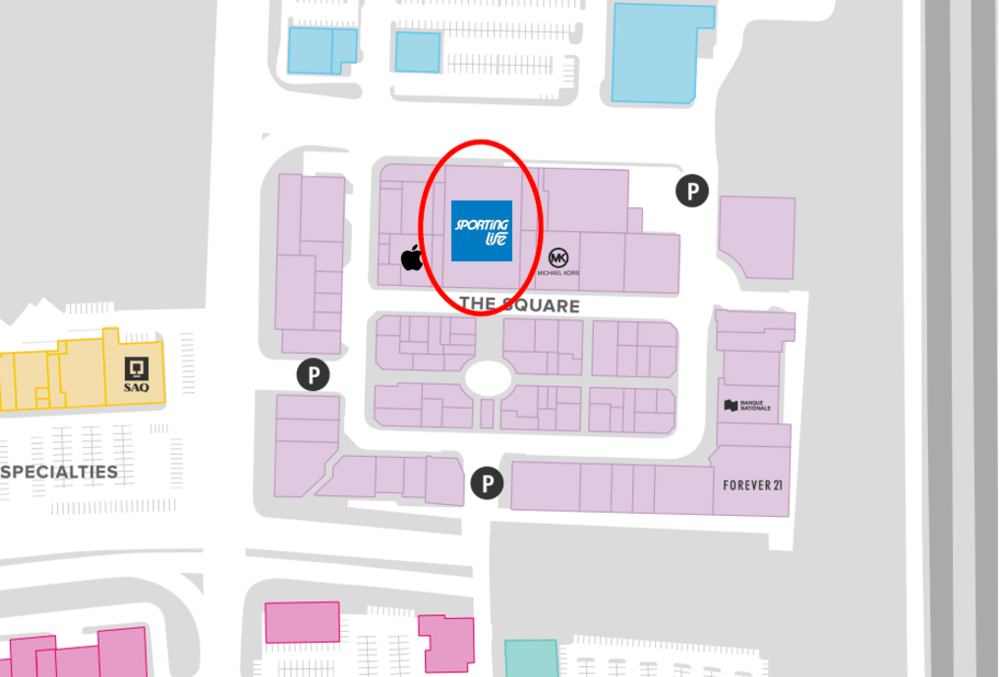
The Quartier DIX30 Sporting Life store will be located in the centre’s ‘Square DIX30’ part of the complex, which features an assortment of popular fashion brands as well as retailers such as Pottery Barn and Apple. Sporting Life’s store will span 29,690 square feet in a vacant space between Apple and Michael Kors

Quartier DIX30 is a unique outdoor ‘lifestyle’ shopping complex that is a combination fashion mall and power-centre — there’s nothing quite like it in Canada. The centre is also gigantic, occupying more than 2.7 million square feet of retail in the suburban community of Brossard. The centre boasts more than nine-million visitors and more than 10,000 parking spaces, and houses approximately 300 retailers and restaurants. Major anchors include Walmart, Canadian Tire, Rona and Cineplex

(CLICK ABOVE FOR INTERACTIVE QUARTIER DIX30 RETAIL FLOOR PLAN)

Oxford Properties owns and manages Quartier DIX30 and Sporting Life’s move into the centre marks the first Oxford Properties centre to feature Sporting Life as a tenant. Other Oxford malls housing Sporting Life stores include Hillcrest Mall in Richmond Hill, Ontario (October of 2016), Southcentre Mall in Calgary (October 2016) and most recently, Sporting Life unveiled an impressive store at Toronto’s Yorkdale Shopping Centre in the fall of 2017. 

‘’We are more than happy that Sporting Life™ has selected Quartier DIX30 as its first location not only in Quebec, but in Eastern Canada. Throughout the years, Quartier DIX30 has become the number one destination for active lifestyle shoppers and we are proud to say that the arrival of Sporting Life this fall will help complement our offer, giving Quebec sports enthusiasts even more choice than ever before!’’said Marilyn Cormier, Director and General Manager at Quartier DIX30.

PHOTO: VILLE DE BROSSARD

‘’We at Sporting Life are very excited to make our debut in the Quebec market with the opening of our Quartier DIX30™ location next fall. Quartier DIX30 was a natural choice for us as it reflects all of our company’s values: modern, active, sophisticated and yet accessible to all. We can’t wait to welcome our customers in Brossard. The Sporting Life is the good life, and soon Quebec customers will be living it!’’ added David Russell, President and CEO at Sporting Life.

Founded in 1979, Sporting Life sells apparel and footwear, as well as equipment geared towards runners, cyclists, skiers, snowboarders and hikers. It has a large selection of outerwear, fleece and coats from popular brands MonclerCanada GooseArc’teryx and The North Face, among others. It also carries a mix of high-end and casual clothing brands such as BarbourBognerHugo BossMackageJohn Varvatos and others. Fairfax Financial Holdings Ltd. bought 75% of Sporting Life in December of 2011.

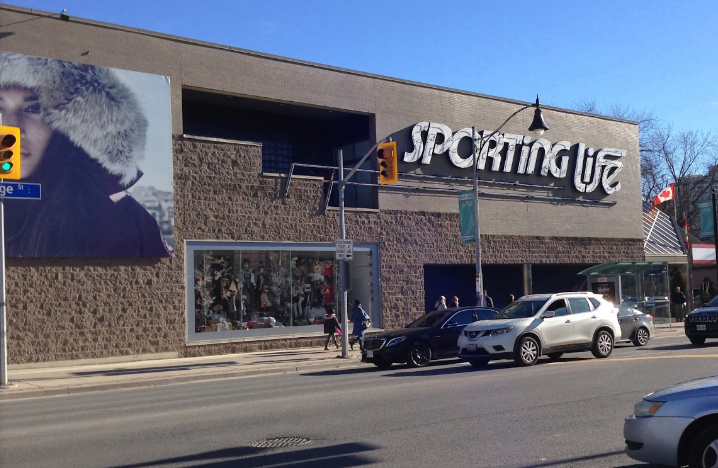
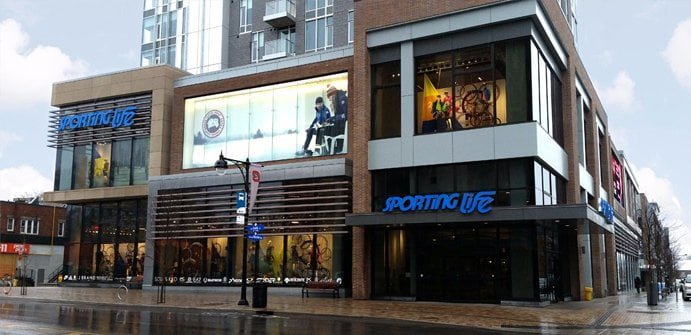
Besides the three locations currently operating in Oxford malls that were discussed above, Sporting Life operates stores on Toronto’s Yonge Street (2665 Yonge Street and ‘Bikes & Boards’ at 2454 Yonge Street) as well as at Toronto’s CF Sherway Gardens (which relocated to a new space in September of 2015), Collingwood ON (222 Hurontario Street), Markham ON (CF Markville), Vaughan ON (Vaughan Mills), Ottawa (Lansdowne) and at CF Market Mall in Calgary, which opened in the fall of 2017. 

YONGE STREET (TORONTO) STORE. PHOTO: NEGIN BALAGHI
LANDSDOWN (OTTAWA) STORE. PHOTO: SPORTING LIFE
SOUTHCENTRE MALL (CALGARY) STORE. PHOTO: CSGA

In a previous interview with President/CEO/co-founder, David Russell, it was revealed that Sporting Life will look to eventually operate about 20 stores Canada-wide. He explained that the Sporting Life brand will become truly national as it expands into the Vancouver/British Columbia market in 2019, with plans for three store locations in the Lower Mainland. While the Calgary market will be adequately served with two stores, an Edmonton location was a goal for the company, he said at the time. The Greater Toronto Area has room for between two and three more Sporting Life locations, according to Mr. Russell, and the Montreal region could eventually see as many as three stores as well. Store locations will ideally be in the 44,000 square foot range, he said. 

In a recent interview with Marina Strauss of the Globe & Mail [Paywall], Mr. Russell revealed that Sporting Life’s current annual revenue is about $160 million annually, and that the company intends to eventually see sales numbers of about $400 million from its 20 or so stores. The company is profitable and store sales are increasing at low-single-digit rates. E-commerce currently makes up about 15% of sales and Mr. Russell told Ms. Strauss that he expects that number to reach about 20%. 

Sporting life is working with brokerage Northwest Atlantic for its Canadian expansion plans, with Chris Wood handling Western Canada and Sam Windberg handling Sporting Life’s eastward real estate expansion. 

Japanese Variety Retailer Oomomo Looks to Expand in Western Canada

exc-5abef0d103ce648731829df0

“Authentic Japanese variety store” concept ‘Oomomo’ plans to expand its operations into various markets in Western Canada, after opening at West Edmonton Mall in the summer of 2017. More locations in Alberta are planned, and a Manitoba and Saskatchewan expansion is expected to follow. 

While such Japanese-inspired variety stores are available in larger markets such as Vancouver and Toronto, Oomomo was the first of its kind for Alberta when it unveiled its 6,675 square foot store near the mall’s busy Entrance 48. The company refers to itself as being the equivalent of a ‘100-Yen’ store that one might find in Japan. 

The bright and friendly West Edmonton Mall store sells a wide range of products such as ceramics, beauty products, stationery, small electronics, cleaning supplies, kitchenware, organizers, gift wrapping and even snacks. The majority of products are imported from Japan and are of a high quality, according to company representative Diana Cheung.  

More than 90% of all products carried at Oomomo are made in Japan, which further speaks to the store’s quality. Ms. Cheung said that most items in the store are priced at about $3, noting that the store’s value proposition is exceptional.

Oomomo’s product selection is also expanding in anticipation of a broader national rollout. Later this spring, the store is expected to carry about 20,000 SKUs, up from about 8-10,000 items that the store has in stock now. 

A second Edmonton location is already confirmed for Oomomo, which is expected to open towards the end of the summer at the recently overhauled Londonderry Shopping Centre on the city’s north side. That Oomomo location will span about 10,000 square feet and will have entrances both from within the mall as well as from outside. Londonderry is re-gaining its popularity after having renovated its property to become the most attractive major mall in the city, which also saw the opening of a second La Maison Simons location for the Edmonton market. Oomomo will be located next to Simons. 

While its expansion plans are still in their infancy, Oomomo could eventually see between 20 and 30 locations open in Canada. The concept is already proving to be very popular in Edmonton and given Oomomo’s quality and overall value proposition, it could gain brand loyalty and take market share from traditional value-priced variety retailers. Oomomo’s product offerings are differentiated from that of the dollar store chains that operate in Canada, according to Oomomo, and therefore they don’t consider them as competitors. 

Why the Price-Fixing Scandal Might Not be All Bad for Loblaws

THE LOBLAWS BREAD PRICE-FIXING SCANDAL MAY HAVE ERODED PUBLIC TRUST IN THE COMPANY, BUT WILL IT TRULY HURT THE GROCERY GIANT IN THE LONG RUN? GALEN G. WESTON, EXECUTIVE PRESIDENT AND CHAIRMAN OF LOBLAW LTD., IS SEEN IN THIS 2016 PHOTO. (THE CANADIAN PRESS/FRED THORNHILL)

By Michael von Massow, Associate Professor, Food Economics, University of Guelph

The bread price-fixing scandal has garnered Canada’s biggest grocery chain a lot of negative media attention.

A recent survey from Dalhousie University suggested that consumer trust in Loblaws has fallen by 10 per cent since the announcement of the bread price-fixing issue.

But will the scandal have a sustained negative impact on Loblaws?

While the company may face civil suits at some point, there is no risk of prosecution under the whistle-blower provisions of Canada’s competition regulations. And so the outstanding question is whether the decline in consumer trust results in significant losses in sales and market share to Loblaws.

Several factors suggest perhaps not.

All retailers painted with same brush

It’s clear that consumers are becoming increasingly distrustful of business generally. They feel in many cases that bad behaviour is the norm, and aren’t surprised when stories like the Loblaws price-fixing emerge.

This is particularly true in this case because Loblaws has claimed (and preliminary findings from the Competition Bureau suggest) that many, but not all, Canadian retailers were involved in the bread scheme.

The Dalhousie study suggested that on average, trust went down for all Canadian retailers following the scandal, although trust in Loblaws declined the most. And so if consumers believe everyone cheats, there’s little motivation to switch stores. Food is a staple. We can’t choose to forego groceries.

It’s worth noting the case of Volkswagen. The emissions scandal that engulfed the German company in 2015 was a significant challenge. Volkswagen paid huge fines and had to retrofit millions of cars. Despite that, the company has seen unit sales growth of 3.8 per cent in 2016 and 4.3 per cent in 2017.

There were financial challenges, and Volkswagen performed in some markets better than others, but customers aren’t staying away in droves despite the negative media attention and bad corporate behaviour.

VOLKSWAGEN CARS ARE LIFTED INSIDE A DELIVERY TOWER OF THE COMPANY IN WOLFSBURG, GERMANY IN MARCH 2017. THE CEO OF VOLKSWAGEN SAID THE UNITED STATES REMAINS A CORE MARKET FOR THE COMPANY DESPITE ITS DIESEL EMISSIONS SCANDAL. (AP PHOTO/MICHAEL SOHN)

Who is Loblaws anyway?

Another factor that will likely buffer the Loblaws parent company is that many customers likely shop at Loblaws without knowing it.

Loblaws sells food under many different banners including Real Canadian Superstore, Zehrs, Provigo, Fortino’s, No Frills and Shoppers Drug Mart. Many customers likely shop at a favourite store without making an explicit connection to the Loblaws name.

That means even those customers who are inclined to punish Loblaws might not even know they are shopping there.

Free groceries

Loblaws has reportedly distributed as much as $150 million in gift cards (in $25 increments) as part of the campaign to win back public trust in the wake of the price-fixing revelations. These gift cards need to be spent in Loblaws stores. It will bring customers back into the store and they will likely spend more than the $25 they’re entitled to via the gift cards.

There will also be people who have never shopped at a Loblaws store who applied for gift cards. Rival grocery chain Sobeys has said it expects to feel an impact from the distribution of the gift cards.

Once again, we would expect customers who may have never set foot in a Loblaws store before to spend more than the gift card. It’s even possible that they’ll enjoy shopping at Loblaws so much that they’ll switch stores after spending the card.

A $25 LOBLAWS GIFT CARD IS SHOWN IN OAKVILLE, ONT., IN MARCH 2018. (THE CANADIAN PRESS/RICHARD BUCHAN)

Short-term pain

That’s not to say Loblaws won’t feel an impact from the price-fixing scandal. They distributed millions of dollars in gift cards. Some of them will not be redeemed — that’s always true of gift cards.

Those that are redeemed will not cost Loblaws the full $150 million as they must be spent in Loblaws stores. That means that, although Loblaws will lose the margin they would have made on the sales, the actual out-of-pocket cost of the card is less than the face value of the card. There also remains the real threat of class-action lawsuits.

In the long run, however, it doesn’t seem likely that Loblaws will suffer significant losses in food market share. The price-fixing announcement came very late in the year, so fourth-quarter results will not provide much insight.

It’s worth noting that same-store food sales were up 0.5 per cent over the previous year in the fourth quarter. While third-quarter results showed a 1.5 per cent increase over the previous year, it does not appear that there was a dramatic flight from shopping at Loblaws in the immediate aftermath of the announcement.

Loblaws’ first-quarter 2018 results will be telling. But the market also seems to believe Loblaws will weather the price-fixing storm. Share price did not decline significantly after the announcement, and a late January drop was attributed to generic drug-pricing reform and the cost of minimum wage increases.

There are still challenges in the market. Stiff competition in the grocery sector still exists and will increase if and when online sales grow. Other factors will continue to keep Loblaws on its toes, but the price-fixing scandal might not be among them.

Michael von Massow

Michael von Massow is an Associate Professor in the Food, Agriculture & Resource Economics (FARE) department at the University of Guelph in 2010 after completing his PhD. Michael’s specialty is the Structure and Performance of Food Value Chains, Economics of food demand – both restaurant and retail, Management Science/Operations, Pricing Strategy. Follow him on Twitter at @mikevonmassow.

This article was originally published on The Conversation. Read the original article.

5 Reasons Why Job Boards Aren’t Working for Retailers in Canada

exc-5acbf0b503ce649b2a7e3391

The current talent crisis in the retail industry makes it imperative that retailers, and their Human Resource departments, use the world of job boards more effectively.

Suzanne Sears of Best Retail Careers International Inc., is retained primarily by retailers for private searches to fill roles from the Executive to Sales Clerk level, says those departments have no real idea how job boards work.

Knowing how to navigate has become increasingly more important in this day and age.

“For companies posting on job boards, one of the big problems is that the response rate is very poor. Job boards are becoming less and less relevant to younger generations. They don’t have the time to spend to do all this uploading and all these complicated procedures to apply for the job” said Sears.

“The problem for the Human Resources hiring people is they’re not getting the quantity and the calibre of candidates that they need quickly enough to fill their roles. So the issue is what are they doing wrong and what can they do better?”

She said the number one mistake companies make is underfunding the job postings. They don’t spend enough money on their ads. They don’t spend enough money on external recruiters. They don’t spend enough on ads to make sure they don’t get buried in the sea of competitor ads on job boards.

“The problem for retailers (when they spend only a small amount on job postings) is that your ad is only going to be prominent or dominant on the first page for one or two clicks and then it falls back in-line with all the other free postings,” said Sears.

“There are over 16,000 people a day in Toronto alone searching for retail jobs. That’s a lot. A job is being posted every few minutes because the talent shortage is so great. So the biggest mistake retailers are making is not spending enough on the pay per click ad campaigns. They need to cut bigger budgets. A reasonable budget – and this will astound HR Departments – is $750 to $1000 (a month) for a single Sales Clerk job.

“If you post jobs for free, with 16,000 people looking and people posting every few minutes, it doesn’t take long – it only takes a day or two – and your ad is somewhere on page 10 or farther back. So no one is going to see it.”

Sears said retailers looking for people have to spend the money so their ad continues to appear on the front page of job boards long enough to attract the number of candidates needed to apply for one single job. And that’s 50, she said.

“Free ads do not work. You need a budget and you need a healthy budget so that your ad stays at the front,” said Sears.

The second biggest mistake retailers make is the job title in postings. Standardized job titles are a must.

“Don’t get fancy with job titles. A mechanic is a mechanic. An Assistant Manager is an Assistant Manager,” she said.

A third mistake retailers make in job postings is not personalizing the ad.

“You need to create ads that reflect the personality of the company and people can read them as if they are one on one conversations and not job duties and requirements,” explained Sears. “It has to express some of the culture of the company.”

The fourth biggest mistake that employers make is not including testimonials from employees on their website and being more informative about the company culture as a place to work.

The fifth mistake they make is not listing the compensation for a position in the job posting.

“Job ads that list the compensation get at least 25 per cent more qualified applications,” said Sears.

Winnipeg’s Munroe Shopping Centre Seeks Tenants

MUNROE SHOPPING CENTRE - 517 LONDON STREET WINNIPEG, MANITOBA. PHOTO: GOOGLE MAPS

Retail Insider has partnered with leasing newsletter Locations! and we’ll provide periodic updates on retailers’ expansions and available retail space. See the latest listings in Locations! here.

By Peter Morris, founder of Locations!

Munroe Shopping Centre is a redeveloped retail plaza anchored by the popular Giant Tiger and the property currently has several leasing opportunities ranging from 1,050 to 4,650 SF, as well as a prominent pad site on the property.

The shopping centre is nestled in the densely populated and well-established community of East Kildonan at the southeast corner of London Street and Munroe Avenue in Winnipeg.

MUNROE SHOPPING CENTRE – 517 LONDON STREET WINNIPEG, MANITOBA. PHOTO: GOOGLE MAPS
MUNROE SHOPPING CENTRE – 517 LONDON STREET WINNIPEG, MANITOBA

According to Sandy Shindleman, President and CEO of Shindico, Munroe Shopping Centre provides an exceptional location with great corner exposure and ample parking.  Mr. Shindleman feels the property provides easy access to Regent Avenue and Henderson Highway with excellent transit service. The tenants who would be most interested in this property would be those who can take advantage of the location being in close proximity to Concordia Hospital, Rossmere Golf & Country Club and over 15 public schools.

Contact:

Sandy Shindleman, Shindico

204-474-2000

sshindleman@shindico.com

[Subscribe to Locations. It’s Free]

Sleep Country Launches Mall Expansion Following Sears Canada Closure

Photo: Sleep Country

Sleep Country recently celebrated a milestone with the grand opening of the company’s 250th location in Canada with more expansion to come, particularly in shopping centres across the country.

“The reality in this day and age when people say brick and mortar it always hasn’t been a happy story but in our case it continues to be a happy story,” said Stewart Schaefer, Chief Business Development Officer at Sleep Country. “We’ve been opening on average about 10 stores every year for the last 10 years. That hasn’t slowed down. Last year, we opened up 12 stores. This year we’ll probably end up opening closer to 12 to 15 stores because the opportunities have presented themselves.

“As we continue to expand and find opportunity within the Canadian landscape and as we continue to grow our business we have not yet seen any signs of a slowing down on the brick and mortar. In fact, we just celebrated our 18th consecutive quarter of same store sales growth. And in the retail world, nobody’s saying that anymore or very far and few between obviously.”

Photo: Sleep Country Canada

The company began operations in 1994 in Vancouver with its first four stores followed by expansion to the Toronto market and then the Calgary market.

Sleep Country is Canada’s leading mattress retailer and the only specialty mattress retailer with a national footprint in Canada.  Sleep Country operates under two mattress retail banners: Dormez-vous, the largest retailer of mattresses in Quebec and Sleep Country Canada, the largest mattress retailer in the rest of Canada.  As of April 2, Sleep Country had 250 stores and 16 distribution centres across Canada. All of the company’s stores are corporate-owned.

The 250th store is in North York.

Of the 250 stores, said Schaefer, 247 of them are stores in main strip malls and power centres.

“We always choose high, visible locations. Easy and convenient for our customers. They could be core of the downtown or they could be on your corner next to your Starbucks, your neighbourhood,” he said.

But in recent years the brand has expanded into main shopping centres with the first in Calgary’s CF Chinook Centre in 2015.

“This was around the time when there was talk about Sears having trouble. I did an experiment because mall stores first of all were never part of our bailiwick for two reasons. One, our focus was to be in everyone’s neighbourhood and make it just convenient for you. And two it was cost prohibitive,” said Schaefer.

“Over the last few years, the landscape of retail is changing. Ecommerce definitely has an impact and the mix of tenants has dramatically changed over the years especially with the malls. In the past we weren’t cool enough to be in a mall to be honest. A lot of the mall operators would turn their nose to us because it wasn’t such a cool thing. But lo and behold over the last few years health and wellness has become a much greater focus. And we also revamped the look and feel of our stores as the consumers’ tastes have changed. We expanded our business in accessories which is a big part of our business now . . . We did an experiment in the Chinook mall. Not only was it the first mall store that we opened in Canada but it was the first store that we tested our new concept which was the same thing that everyone knows us for – Sleep Country and mattresses. But we expanded on a Pottery Barn kind of look in the front of the store.”

When Sears closed recently, Schaefer said many people didn’t realize that it was Sleep Country’s top competitor.

SLEEP COUNTRY – CF CHINOOK CENTRE. PHOTO: GH+A DESIGN STUDIOS

“With them exiting the market, it then said to me maybe there was more of an opportunity for this captive audience that were going to all these malls. We should be there and we should be there at a more aggressive level,” he said.

Three new stores in shopping centres will open this year and potentially eight, including one in the West Edmonton Mall.

“You’re witnessing early days for us in what we believe potentially could be an interesting expansion in the mall stores,” added Schaefer.

He said Sleep Country is contemplating launching a very high end luxury mattress product in its stores which is now in the testing phase.

“In our 250 store base, we are testing higher end as well as lower end. Right now the breadth of our mattresses in our stores go from approximately $150 starting for a good quality mattress all going up to $5,000,” said Schaefer. “We are now testing a couple above the $5,000 to see how the consumer feels about it and that could potentially lead to some higher end merchandising.”

McGill University Officially Launches Bensadoun Retail School

RENDERING OF THE RENOVATED SCHOOL BUILDING ON THE CORNER OF SHERBROOKE STREET WEST AND MCTAVISH, WHICH WILL INCLUDE A STREET-FACING RETAIL 'LAB'

The Bensadoun School of Retail Management at McGill University is aiming to be the destination for tomorrow’s retail leaders.

The school, which last year received a $25-million donation from Aldo Bensadoun, who built a global shoe empire which is named after him, has a goal to be the world’s premier school dedicated to the future of retail and its mission is to educate and empower a global network of interdisciplinary thinkers and practitioners who research, envision and prototype a successful world of retail.

Charles de Brabant, executive director of the Bensadoun Retail Initiative, said the school, in Montreal, will be taking in its first students in September of 2018. The school will be co-run by Dr. Saibal Ray, Academic Director of the Bensadoun Retail Initiative.

“This was a gift that has been in discussion for probably about eight years,” he said. “Retail has been in a transformative moment and as a result our vision is sort of inline with that. We’re always going to be looking to the future in terms of what we want to do . . . We see ourselves as having a unique opportunity to do something on a global level that can differentiate us. The vision is quite ambitious which is to be the leading educational institution dedicated to the future of retail.”

The school was officially approved at the end of March by McGill University.

The first program for students will start in the fall with a retail management concentration within the undergrad Bachelor of Commerce degree.

The school is aiming to initially have at least 30 students per year taking the retail management concentration.

“I’m excited about the vision of the Bensadoun School of Retail Management to become a global centre of excellence,” said Aldo Bensadoun in a brochure about the school. “We will be able to provide the next generation of retailers with innovative solutions for the industry’s transformation.

“As the consumer’s behaviour evolves, success in retail will depend largely on the integration of connected disciplines such as big data, artificial intelligence and neuroscience, and that’s what we’ll provide for our students.”

The school will offer comprehensive education and training for retail at every level: BCom, Master’s, PhD and Executive.

It says it will offer multi-disciplinary, integrative research related to the present and future of retailing, including: Brain & Behaviour; Health and Wellness; Retail Operations; Retail Technology and Data Analytics; Machine Learning and Artificial Intelligence; Fintech; Entrepreneurship; Circular Design and Sustainability.

There will be internship opportunities with Canadian and international retailers, integrated with the academic program.

A retail experience lab will offer a select number of the school’s partner retailers the opportunity to test new processes, products or technology in a digital-rich, omni-channel retail environment.

A digital observatory will track consumer trends and behaviour across multiple markets and sectors of the retail industry, providing opportunities for data collection, collation, analysis and research.

On April 27-28, the school will host its first Fashion Retailing Conference.

The conference will provide a forum for exchange —for both professionals and academics— about the latest research, industry practices and approaches, trends  and challenges in retail, it says. The School will welcome professors from prestigious schools such as Cambridge University, Duke University, Harvard Business School, London Business School, MIT, New York University, and Wharton Business School, as well as practitioners from companies such as Accenture, Stylitics, and Stitch Fix.