
Advertisement
Home Blog Page 1098

Canadian Retailers Will Embrace Augmented Reality in 2018: Expert

exc-5a7100f3419202e3cc00d591


AR.jpegAR.jpeg

By Jean-Francois Tremblay, AR/VR Practice Lead, Valtech Canada

A trend that we’re seeing from the big retailers, i.e. Apple, Google, Microsoft, Alibaba, eBay, Amazon, is that they’re looking to deliver augmented reality and virtual reality experiences to customers in a huge way in 2018.

In a recent interview, Apple CEO Tim Cook said he believes retailers will find augmented reality as key as having a website, and that the technology will transform everything from fashion runway shows to shopping. The world that Cook envisions one day is a world where customers will essentially be able to “point and buy” products. Additionally, at a European conference, Google Director of VR and AR Greg Jones argued that the role of AR is set to be transformative and that’s particularly the case when it’s applied to retail.

But for now, we have frontrunners that are already in full swing and it’s important to understand you don’t need to be as big as these guys to start somewhere. It’s time for smaller retail brands to pay attention. Here’s why.


A.pngA.png

AR is Immersive and Engaging

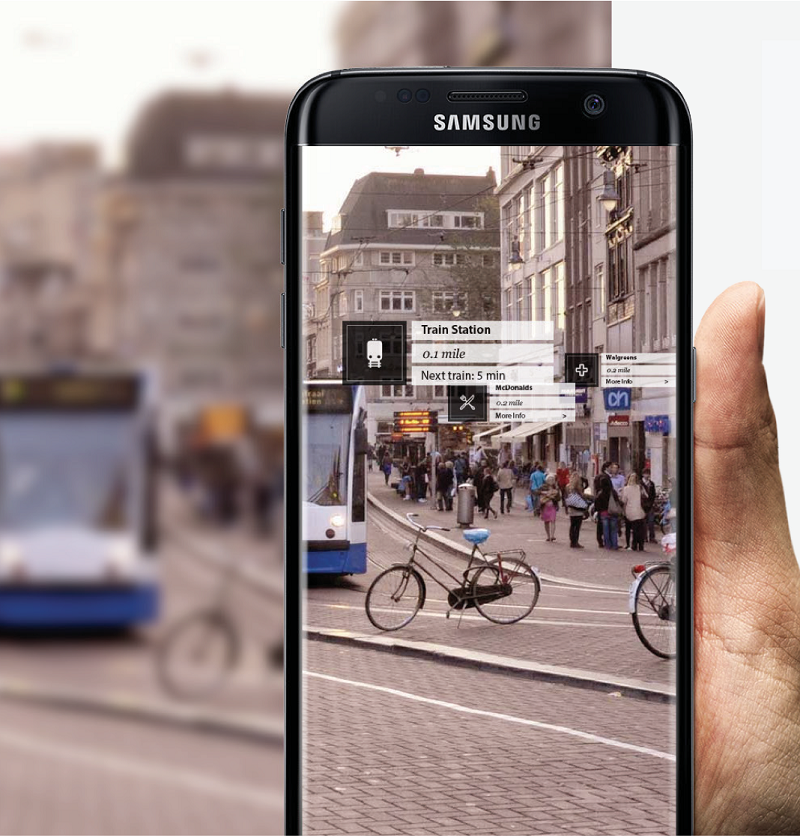
AR can instantly provide consumers with an immersive and engaging experience. AR can fill in the gap that leaves customers hanging for more information, standing in a store reaching for their mobile phones.

As we enter the age of the experience economy, many retailers are searching for ways to reinvent the physical store, using lights, video screens, and audio. They’re constantly challenged to find ways to deliver more personalized service. AR can complement this. Augmented reality has the potential to become a trusted sales associate.  And since AR is your trusted sales associate, it will have handled the first level questions consumers have on products, allowing “real” associates to focus on what they do best, upsell, cross-sell and closing the deal.

AR is in your Customer’s Pocket

Given that approximately 87% of shoppers do comparative shopping on-site with their mobile device, it’s really about leveraging the tools they already have in-hand. With AR, you can keep customers in your ecosystem both in-store and at home.

AR Dramatically Speeds Product Discovery

For all types of products from technology and electronics, to clothing and consumer goods, customers are constantly looking for more information. They want to know, what’s behind this?

CPG is ripe for this opportunity. Take the example of a grocery store. Do you want to know the nutritional values of various foods? Where does that vegetable come from? What can I cook this ingredient with to surprise my guests? Is there a simple recipe I could try?

Using the phone, customers can point at any product and get this type of augmented information, making them more knowledgeable consumers. And, as we now realize, anything can be augmented! With AR information on products in-store and in-shelf, customers are more likely to say, okay, let me grab one of those, even if they’ve never tried it before.


b.pngb.png

Customers aren’t the only ones using it

From logistics companies and high-end to mid-level retailers, it’s not only customers that are impacted with the advantages of AR.  Take DHL for example, one of the largest shipping companies in the world. They’re implementing AR in their logistics chain. In a pilot study they demonstrated a minimal 15% increase in productivity as well as an important decrease in mistakes by using AR.

The technology guides their work, so that instead of scanning bins in the aisles, they use their AR glasses, and the technology ensures the package goes to the right place. The reduction of human error is amazing.

Anyone that has online ordering can do the same on their back end. This can be a benefit to any and all retailers.

AR can also be used as a training tool. New associates who need to learn about the products in store can do so using AR and VR, eliminating the knowledge gap for new employees. It could standardize training and take away the element of subjectivity in training as well as having proven better impregnation of information. 

C.pngC.png

Who will benefit the most from AR?

 he real winners are the customers. They’re gaining access to a much more engaging experience, by getting answer to fundamental questions about products while perusing the shelves and aisles of their favorite store.

Any brand that offers an augmented experience is going to be preferred by customers. Think about the home decoration market. Ikea is a good example of that. Their AR app, developed with Apple ARKit, already has hundreds of thousands of downloads – yet they only have about 500 out of hundreds of thousands of products available in the app but still, consumers love it. It’s just a starting point. They started small, but they’re going to iterate.

I’ve been an advocate for iteration for a long time. I’m the first to tell you: don’t wait for the killer app! It won’t be tailored to you. Create an experience that’s in sync with your business issues and objectives. Release at 70-80% and iterate following the learnings you gather from user feedback. It doesn’t matter how big or small you are – AR not only provides information to your customer, but it also provides the retailer information about what a customer is looking for—their behavior. There’s no business size that’s too big or small not to gather customer behavior information.

The bottom line is that Augmented Reality is here. There are more than 600 million mobile devices out there that are AR capable. Consumers are eager to have these experiences. It’s up to you to give them some.


D.jpgD.jpg

Jean-Francois Tremblay is AR/VR Practice Lead at Valtech, where he focuses on high level strategy and the integration of VR and AR solutions across Valtech Group’s broader product and service offering.

SUBSCRIBE to Retail Insider’s Daily E-News for Free:

* indicates required

Aritzia to Open Massive Mink Mile Flagship

THE CURRENT ARITZIA STORE AT 50 BLOOR ST. W. WILL SEE ITS FACADE TRIPLE IN LENGTH, TAKING OVER THE FORMER ENTRANCE TO THE HOLT RENFREW CENTRE/HMV, AS WELL AS A RETAIL SPACE FORMERLY OCCUPIED BY BCBG. PHOTO: CRAIG PATTERSON

Vancouver-Based multi-brand women’s retailer Aritzia will significantly expand its store on Toronto’s Bloor Street West next year by annexing space formerly occupied by BCBG, as well as a former entrance to the Holt Renfrew Centre. When it opens in the spring of 2019, Bloor Street’s Aritzia will be one of the company’s largest stores.

The current Aritzia space at 50 Bloor Street West spans just over 4,900 square feet on one level. Holt Renfrew Centre’s former 5,050 square foot BCBG space, adjacent to Aritzia, will be merged with the existing Aritzia store that will coincide with a full renovation to reflect the brand’s updated aesthetic. As well, a street-level entrance to the Holt Renfrew Centre, located between Aritzia and the former BCBG space, has been shuttered to be integrated into the new Aritzia store, which will span almost 11,440 square feet on one level. That street level entrance was formerly used as an entrance point to music retailer HMV which had a store upstairs, as well as escalators downstairs into the Holt Renfrew Centre.

The downstairs escalators will be kept, according to Aritzia, providing direct access from Aritzia to the Holt Renfrew Centre concourse level below. A new illuminated marquee entrance will welcome visitors from the street level to the expanded Aritzia flagship.

CHICAGO RUSH STREET FLAGSHIP. PHOTO: ARITZIA

The store’s interior will be renovated to reflect Aritzia’s updated aesthetic seen in newer stores such as the Chicago Gold Coast flagship that opened last year. The expanded Toronto store will feature plenty of natural light from the south-facing windows on its facade. The store’s interior will also feature “marble merchandising tables and cash desk, wire-wheeled oak tables and architectural wall panels, custom built-in millwork, custom graphic wall murals, steel and glass interior partitions, custom raked stucco walls, and polished concrete and herringbone marble floors,” according to Aritzia.

As well, the store will feature a lounge area, an eclectic selection of new and vintage floor fixtures, and curated works of art, sculptures and books. The design is described as being both “feminine and spacious”, with plants throughout.

Aritzia has been upsizing many of its existing locations by annexing space to create flagships, as it continues to see success with its retail model that includes in-house as well as a selection of designer brands. The company’s in-house brands TNA, Wilfred and Babaton have all been expanded to include their own standalone stores in selected markets — in markets where Aritzia store real estate is constrained, the company has unveiled locations for these brands.

CHICAGO RUSH STREET FLAGSHIP. PHOTO: ARITZIA

Aritzia’s Bloor Street store will be part of an impressive redevelopment of the area. Across the street, a soaring tower called ‘The ONE’ is now under construction, with a multi-level retail podium that many speculate will include a 19,000 square foot Apple flagship store. This spring at 1 Bloor Street East, Nordstrom Rack will open its third Canadian store in a space encompassing close to 40,000 square feet. The retail podium of the Manulife Centre at 55 Bloor Street West is undergoing a transformation that will see new and renovated store locations, as well as Canada’s first Eataly, that will span three levels and about 50,000 square feet. Holt Renfrew, located in the same complex as Aritzia, is also undergoing a piecemeal renovation that also includes adding more space, including recently leasing about 8,500 square feet of mezzanine space formerly housing the HMV music store. We’ll also soon discuss a significant development that will take place just steps away from the newly expanded Aritzia.

The Holt Renfrew Centre is a 247,000 square foot retail centre at 50 Bloor Street West housing a 190,000 square foot Holt Renfrew store, as well as several retailers that are located primarily on its lower-level, accessed from the city’s underground PATH pedestrian network that connects to adjacent commercial properties. According to the Retail Council of Canada 2017 Shopping Centre Study, the Holt Renfrew Centre saw annual sales in excess of $1,000/square foot last year.

Editor’s Note: Aritzia is represented in Canada by Principal/Broker Dianne Lemm of Northwest Atlantic.

Showcase Pianos Relocates into Expanded Flagship Space

(PHOTO: SHOWCASE PIANOS)

Showcase Pianos had a dilemma and CBRE broker/Associate VP Martin Moriarty had a solution. The 10-year-old piano store had outgrown its location and with the lease expiring at the end of 2017, the search was on for a suitable space. It was a solution that would not only house a sizeable piano showroom, but a performance hall, multiple classrooms, and sales offices. A suitable space was found literally right down the street and Showcase Pianos moved one block west into the retail space previously occupied by the Sony Store at 1128 W. Broadway under the infamous Toys R Us/Bowmac Sign

Showcase Pianos grew from 1,500-square-feet to over 4,300-square-feet and even at three times larger, every inch of the space is maximized. While Showcase Pianos is known as the official representative for high-quality instruments, such as C. Bechstein, W. Hoffmann, Seiler, Wm. Knabe, and Wm. Steinberg, it is the relationship of this relatively new business with Italy’s Fazioli Pianoforte that draws the most attention — Showcase Pianos sells more of them than any place in the world. 

Owners, Manuel and Judy Bernaschek, cultivated the relationship with the Fazioli family in the early 2000’s after noticing that many of the world’s greatest pianists were leaving their chosen brands to play on Fazioli. A trip to Italy solidified a new ‘partnership’ and the Bernascheks and Showcase became the exclusive distributor of the brand in British Columbia.

(PHOTO: SHOWCASE PIANOS) 
PHOTO: SHOWCASE PIANOS
Fazioli played by Paolo Fazioli.

“We have sold over 100 Fazioli pianos in the Vancouver area in the last decade – which is not easy since they are the most costly pianos in the world!” says Bernaschek. Another sales hurdle is the production time with the standard black finish F156 (5’2”) to the F308 (10’3”) requiring 40 workers almost 2,000 man hours to produce and a delivery time of approximately three to four months. Change the finish and production time can stretch to a year.

Canadian real estate developer Westbank Corporation is also a client, having ordered a series of customized pianos to augment the allure of their buildings. Canadian real estate developer Westbank Corporation is also a client, having ordered a series of customized pianos to augment the allure of their buildings. Working in conjunction Design Principal, Venelin Kokalov of Revery Architecture, the Butterfly piano was designed and created specifically for The Butterfly building which is under construction in downtown Vancouver near the corner of Burrard Street and Nelson Street.

The price-tags of customized Fazioli have pushed pricing upwards of $900,000 and there is no evidence that the cost is a stumbling block to purchasers as Vancouver real estate development continues to cater to affluent buyers internationally.

Manuel Bernaschek with Paolo Fazioli. 

Bernaschek credits the businesses positioning in Vancouver as being a key part of Showcase’s success. “Vancouver is a place that is home to many well-heeled Asian families who place a strong emphasis on education, which includes the study of music…many Asian families choose to give their children the advantage of having a better instrument from the beginning, allowing their children to develop their creativity and expression to a greater degree. Right now, the Fazioli is the finest piano available on the market; so many families will choose to have one in their home.”

Currently, in Vancouver, Fazioli Pianoforte founder Paolo Fazioli smiles as he explains why the west coast is home to so many of his beautiful pianos: “It is Manuel. Manuel has charm but he is also a great multi-tasker with a great knowledge of his market.”

With the new location and over 370 students, Bernaschek has a goal to see the study-body surpass 500 in 2018, a figure that will positively impact Fazioli sales if Vancouver’s affluent parents continue investing in their children’s musical futures.

Inside Travel Centre’s Impressive New Space [Photos]

exc-5a67fa6a652dea23e82dd54a

The Travel Centre, at the intersection of King and Spadina in Toronto, represents a rethinking of the corporate workplace, merging a storefront retail area and an event space with united offices for Flight Centre’s four brands.

George Foussias, Design Director, with Quadrangle, which was the architectural/design team for the project, said the goal was to establish a location where working, selling and socializing seamlessly collide.

“A key challenge of this project was to design a workplace that easily accommodates and unifies the multi-use spaces from day to night, while bringing together all the entities within the Flight Centre brand,” said Foussias. “We started by locating an anchor, vintage building, into which we fit a boutique retail store, a signature event space, and a state-of-the-art work environment that speaks of travel, wonder, and adventure.”

The aim was to create an environment that would inspire people to travel and so the interior was influenced by 19th century explorers’ clubs and movies about fantasy travel including The Life Aquatic with Steve Zissou.

The building was originally built as a 19th Century garment factory. The scale and heritage quality of the facade was kept intact while eye-catching interiors capture the attention of people walking by.

The Travel Centre occupies about 10,000 square feet in the six-storey building. Previously, a retail store occupied the space.

“The building itself is a fantastic heritage, signature building,” said Foussias. “There’s a beautiful, beautiful old industrial look to it with exposed brick, exposed wood and wood beams because it used to be an industrial building. So when the retail store went in they covered a lot of it and hid a lot of pieces. We gutted it out to clean it up. We just opened it up as much as possible.”

The Travel Centre’s motto is “to open up the world for those who want to see” and the building’s space reflects that.

“The vision was to create a hub to showcase all of Flight Centre’s brands in a very strong key location in Toronto,” said Foussias. “They wanted a space that was strong as an anchor in Toronto. We came up with a strategy and a vision on how to do that. Our approach was to create sort of a fish bowl – a space that’s visible from everywhere where all these brands are within but they’re all visible to everyone.

“We defined different areas within an open floor plan where these brands are blocked by colour blocking and by signature words and mantras that they have.”

Foussias said Flight Centre also wanted the ability to have a space within the site that would allow them to host events. So the upper floor is a flex space within the warehouse where furniture can be removed to create one big venue that can hold more than 300 people.

He said the ideals of adventure, travel, not taking things way too seriously, wonder, and the mystery of travelling were important elements of coming up with the design for the space.

When someone enters the double-height lobby and retail space they immediately notice the contrast between the historic post and beam interior and an angled black box boardroom.

“The entry invites curiosity, casting views in multiple directions, while inviting the live beat of the busy street to infuse the interior. Comfortable tables, casual chairs and banquette window benches invite guests to linger, leaf through the displayed brochures and discuss their travel plans,” says Quadrangle about the unique design. “Monitors display the days’ best travel deals. The floors, decorated with a pattern of oversized passport stamps, immerse visitors in their own travel fantasy.

“On the upper level, a spacious Explorers Club serves as an event space, a drop-in workspace for visiting executives, and a backdrop for social media broadcasts. An open-concept serving kitchen and bar sets the atmosphere for hospitality and entertainment. Informal gatherings can take place in the Map & Charts Room or the Travel Library, and desks concealed in oversized travel trunks on casters can be opened to provide personal workspaces.”

The lower level workplace area brings the various Flight Centre brands together in a single location.

Quadrangle, which is based in Toronto, has about 172 people.

Editor’s Note: Jeri Brodie of Aurora Realty Consultants negotiated the deal on behalf of the tenant (she handles Flight Centre’s real estate) and Steven Alikakos of RKF acted on behalf of the landlord. 

Photos provided by Adrien Williams.

Cadillac Fairview Partners with Landmark Cinemas: Announces Premium CF Market Mall Theatre

Image: CF market Mall

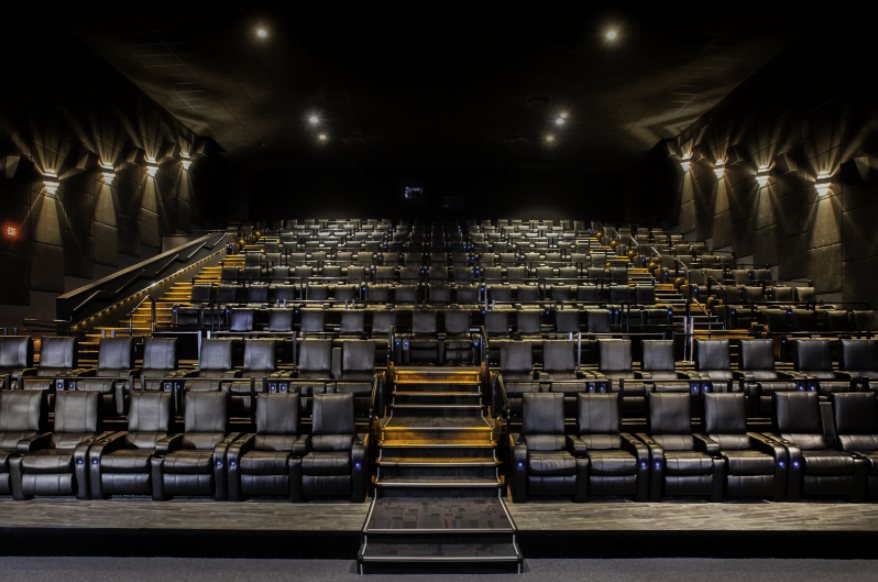
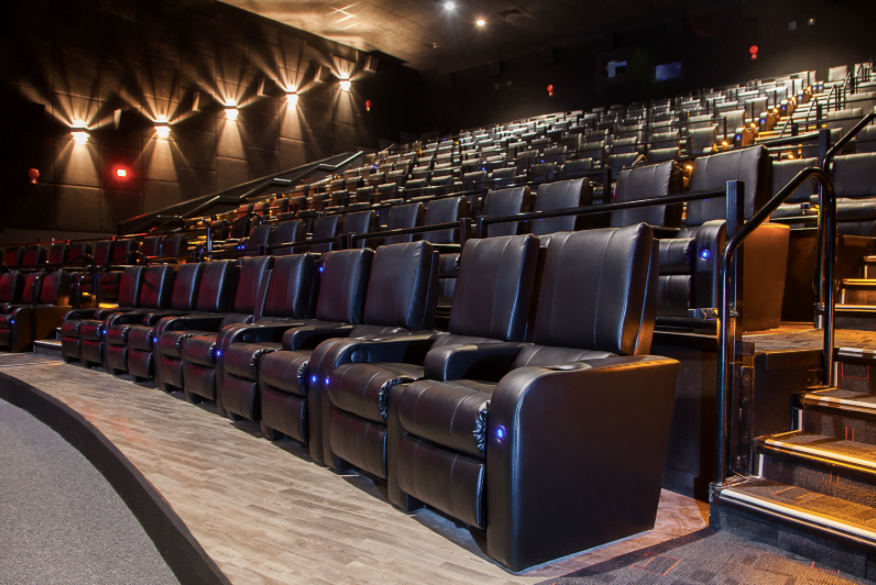
Calgary-based Landmark Cinemas plans to open a premium movie theatre at CF Market Mall in Calgary by the Spring  of 2019.

The new five-screen theatre, in the southwest corner of the shopping centre in the space formerly occupied by Staples, will be outfitted in luxury recliner power seating in 25,000 square feet of space.

Market Mall, which opened in 1971 and has about 200 stores and 900,000 square feet of retail space, is co-owned by Cadillac Fairview and Ivanhoé Cambridge.

Darren Milne, Market Mall’s general manager, said the shopping centre’s customers are eager to have a theatre there.

“A few years ago, Cadillac Fairview sat down corporately with the property and the leasing team and we really talked about what does Market Mall look like in the future and who are the kinds of tenants that we need to bring to Market Mall and particularly the tenants that would not only increase our competitive advantage in the city but also be tenants that our shoppers want to have,” said Milne.

(PHOTO: LANDMARK CINEMAS)

“Part of that first opportunity came to us when Target obviously went bankrupt and we were able to add Sporting Life and Zara and re-position HomeSense and with the re-positioning of HomeSense we were able to add Saks OFF 5TH next year. The one piece we knew we really wanted to add to Market Mall was a theatre. This deal has been in the works for probably 18 months.”

Milne said the theatre deal satisfies the need where the mall is bringing in another tenant that it knows shoppers want to have.

“But theatres also help drive evening traffic and when you drive evening traffic you also have a better opportunity to bring new restaurants to the site,” he said. “This is all part of a re-imagination that we started for Market Mall a few years ago and these deals have been coming to fruition for a little while.”

Bill Walker, CEO of Landmark Cinemas, said recliner seating, combined with complimentary reserved seating at Market Mall will provide “an unsurpassed movie-going experience while maintaining a value proposition that allows customers to enjoy the movies more often.”

“What’s interesting is the way we’ve scaled it for size acknowledging that there’s a different way to operate movie theatres that don’t need to all be large and maintaining a premium experience in a much smaller footprint than traditionally theatres were built in,” said Walker. “Because of the way we can program that theatre with digital projection and because we have the recliner seats that allow for higher occupancy rates, we’re able to build a different type of box.”

(PHOTO: LANDMARK CINEMAS)

“And so I think just as we sort of adapt to a changing marketplace you’re going to see more of that where operators in the movie theatre business are going to move to adopt their footprint to something smaller where they know they can operate more efficiently.”

Walker said every mall these days is keen on entertainment uses and uses that drive traffic in the evenings.

“Within the North American context, the movie theatre business is a mature business. We’re not growing in the days of building 24-screen theatres anymore,” he said. “We’re looking at pockets of population where there’s a good retail draw and we want to infill with entertainment use. Certainly at Landmark we’re keen to sort of adapt our footprint to suit the specific market conditions that we think are there.”

(PHOTO: CADILLAC FAIRVIEW)

The Landmark Cinemas’ presence at Market Mall will feature:

  • 619 Premium Powered Recliner seats;

  • All auditoriums will have Landmark’s new Premium Powered Recliner seating in a full-stadium configuration. This new, motorized, fully reclining seat with extended footrest, will provide every guest with a significant increase in personal space and a relaxing, disruption-free movie-going experience;

  • All seating, at every performance, will be available on a complimentary reserved seating basis and tickets will be available in advance through Landmark’s website, landmarkcinemas.com, or through ATOM Tickets, the first-of-its-kind cinema mobile ticketing and concession purchase platform and app that enables guests to skip lineups at the box office and concession;

  • Giant, wall-to-wall screens over 25 feet tall and the latest in digital projection and sound, and;

  • An expanded concession offering, including traditional cinema fare complemented by additional choices in hot foods.

CF Market Mall has become a hotbed of activity lately with many new developments in the popular shopping centre located in the northwest part of the city.

Zara opened its largest store in Calgary in 30,000 square feet of space and Sporting Life made its debut at the centre with a 40,000-square-foot store last Fall. Premium off-price retailer Saks OFF 5TH announced it will be opening a 30,000-square-foot store this Fall and Sport Chek’s expansion of its 60,000-square-foot, two-storey flagship store is scheduled to open this Spring.

Landmark Cinemas Canada was acquired last December by Kinepolis Group NV, Belgium. Landmark is Canada’s second largest motion picture, theatre exhibition company. From a single screen in 1965, today Landmark Cinemas has 43 cinemas and 302 screens throughout Western Canada, Ontario and the Yukon Territory

Company Helps Canadian Ecommerce Retailers Navigate Changing Industry

Image: Diff

A Montreal-based retail expert says the e-commerce space is evolving rapidly in Canada but the level of adoption by many retailers is still at a slow pace.

Ben Crudo, CEO of Diff, a full-service, e-commerce agency, said the company’s American clients are oftentimes a little more progressive in the way that they think when it comes to this latest trend in the retail industry.

“Canadian retailers feel like they’re playing catch-up a little bit and not necessarily taking advantage of all of the latest tooling and whatnot,” said Crudo, whose company is headquartered in Montreal with an office in Toronto and a couple of staff members based in New York City. It was formed in 2011 and today has about 50 people.

“We’re an e-commerce agency. E-commerce is the only type of work that we do in the digital space. Our focus is primarily on the Shopify platform. We essentially help retailers and merchants of different types get e-commerce up, optimized, profitable and also do a lot of the integration throughout their supply chain. We do the e-commerce from top to bottom in a fully integrated way,” said Crudo.

“We’re one of the largest agencies that focuses on Shopify and we’re also one of their longest standing partners.”

Diff’s clients are a wide range and include Yellow Shoes, a Quebec-based retailer, and YM Inc., based out of Toronto that operates Urban Planet stores, Bluenotes, Suzy Shier and other brands.

Crudo said some of Canada’s biggest retailers, who have been operating for many years, have only adopted e-commerce fairly recently.

“I’m not sure if it’s a hesitation as much as it is just market conditions perhaps,” said Crudo. “The Canadian landscape is a little less competitive perhaps than that which exists in the U.S. and because of that our better established brands are able to kind of coast a little bit longer. I can’t really point to one thing exactly but it feels like those things are just a little bit less desperate here for growth.”

“Although the retailers here aren’t necessarily the first to adopt new technology, I see that as kind of a benefit because the early adopters are the ones that have to fight the hardest in order to really craft old technology to suit them. But when you kind of take a pause for a minute, or you’re a little bit of a laggard, technology is increasing at such a rapid rate and the solutions that you looked at two years ago for a million dollars now cost $50,000 let’s say three years down the road. So there’s a tremendous amount of new tooling and technology that retailers can avail themselves of now for much less cost than ever before. So I definitely see the need for convergence and greater adoption and for awareness that even these tools exist and you don’t have to make your web developer a partner in your business anymore to create a successful digital presence.”

Image: Diff

So in that retail landscape where is the future for bricks and mortar locations in Canada?

“I’m kind of optimistic. If we study brick and mortar retail over the decades, we’ll see that it’s kind of constantly been in a state of flux and maybe previously a lot of the problems were felt similar and were related to the nature of supply chain and merchandising and activities that retailers were already doing to some degree but there has to be a little bit more of a convergence between the presence that exists online and those that exist on the brick and mortar space,” said Crudo.

“And the retailers that don’t feel as though they’re two separate channels that exist within their organization but really treat them as complementing channels are the ones that are going to be speaking their customers’ language and appealing to them most.”

He said bricks and mortar retailers have inherent advantages that can be easy to overlook, such as a storefront presence, the instant gratification of product availability, and the expertise of human staff which can’t be replicated online.

Crudo said bricks and mortar retailers can embrace the changing landscape of retail and incorporate a mix of tech, employee incentives and personalization to up their game in 2018. Some of examples of how to do that include:

  • Learn to love online sales – For bricks and mortar stores, online isn’t your enemy, it’s your ally. Having an omnichannel strategy is critical as it allows store fronts to avoid the pitfalls of traditional retail such as stock-outs/walk-outs. Companies don’t need to re-invent the wheel as tools like Shopify offer a full-stack fix. At the least, customers should be able to see inventory and reserve for pickup in store;
  • Start embracing low-hanging tech – This can be as easy as getting customers’ email addresses, having iPads or a kiosk to connect in-store customers with online offerings, or screens for product demos;
  • Find ways to incentivize your in-store staff to make online sales – Commissions are traditionally based on in-store sales only, but does it have to be that way?;
  • Better personalize your customers’ in-store experience – The online shopping experience and a sophisticated knowledge of purchase history has created higher expectations for personalization. How can retailers increase personalization in-store? Companies need to be collecting data in-store, ensure that their online and offline systems are talking to one another, and be hiring top notch staff to help.

Amazon.ca Retailers Embrace WorldFirst Technology

One of the most challenging aspects of online retail operations is international money transfers. When funds are being delivered from one country to another, they are typically diverted through banks and payment processors like PayPal. Unfortunately, these are the least cost-effective ways to transfer money from one country to the next. The spreads offered by banks are designed to maximize profits for banks, and to minimize the take-home pay of retailers, merchants and everyday folks transferring money. The problem is the traditional money transfer mechanisms; the structural framework that has existed for decades. It is inefficient, costly, and not designed for the end-user.

The e-commerce boom led by companies like Amazon has dramatically changed traditional sales methods. Customers across international borders can now transact seamlessly with retailers. For the most part, these two-way interactions are facilitated by banks, credit cards, and other payment processing options. Fortunately, WorldFirst has made dramatic inroads into this realm by making it possible for overseas sellers on e-commerce platforms like Amazon to have multi-currency bank accounts. The benefit of a multi-currency bank account is that currencies do not need to be bought and sold and heavy commissions don’t need to be taken off the sale price of each item. This facilitates improved ROI (return on investment) for online retailers.

What Is WorldFirst Doing That Others Are Not Doing?

WorldFirst is a UK-based, disruptive financial services operator. It is geared towards facilitating Forex transactions. It serves corporate clients and private clients all over the world, and has been doing so with aplomb since 2004. To date, this company is operational across 4 continents, and employs hundreds of people. An estimated 75,000 customers use WorldFirst’s services annually, and it is fully licensed and regulated by the Financial Conduct Authority (FCA) of the UK. Back in 2016, it won the Queen’s Award for International Trade – a prestigious honour from Buckingham Palace. Among customers, the consensus is overwhelmingly positive – websites like Feefo, TrustPilot, ReviewCentre and others attest to the efficiency, low cost of operations, and expediency of WorldFirst’s international money transfer services.

WorldFirst’s diverse FX offering speaks volumes for the company’s services for Amazon sellers. If you are trading internationally, it’s important to have a cost-effective way to convert payments back into your own currency. However, with WorldFirst, it’s possible to have multicurrency bank accounts. There are many reasons for this, notably paying overseas suppliers, accepting funds from overseas clients, and managing all business activity. The exchange rates offered by this international money transfer company are among the best in the business, and they offer flexible account systems to make it easier to send your money back to your home country at your leisure.

Amazon, eBay or Rakuten Sales No Match for WorldFirst

Online marketplaces such as Amazon, eBay and Rakuten are the world’s most popular e-commerce platforms. However, one of the issues that continually plagues freelancers, and businesses across the board is how funds are repatriated from abroad. With WorldFirst, e-commerce traders will have access to domestic bank accounts in the countries where they offer their products and services. For example, if you are based in the UK, and you’re selling to a USA client base, you can have a WorldFirst bank account in the US, and accept payments in the US.

Much the same is true for the Eurozone, Australia, and beyond. This allows businesses to easily expand across the globe, without any geographical constraints limiting money transfers. This leads to significant cost savings on money transfers around the world. Traditional transactions can cost up to 4% for cross-border transactions, but with this international money transfer company, that’s not the case. WorldFirst does this at no charge to you. You can then transfer the funds to your home bank account at a fair exchange rate.

Strategies and Successes From Canadian E-commerce Marketers: White Paper

By Susan Wall

Canadian commerce marketers know their audiences – and the challenges and opportunities they present. Dispersed over a vast landscape, marked by small pockets of urbanization, the Canadian population requires a unique approach to e-commerce marketing. Canadian commerce marketers are up to the challenge, and they are increasingly meeting consumers where they are shopping: at home. Digital and mobile connections are highways that don’t need to be traveled overland. Every person with a connection is a possible customer – and Canadian retailers are eager to convert them.

We surveyed Canadian commerce marketers to learn more about their strategies, goals and what they’re excited about for the future. The key takeaways were that they want to improve the website experience, understand the importance of mobile commerce and explore, one-click buying and social selling. 

Working with research firm Demand ROI, we surveyed commerce managers, directors and vice presidents at companies in Canada, the US, the UK and Australia with a minimum headcount of 200 employees. The survey was conducted via email in the spring of 2017, and we received a total of 409 responses, with 109 respondents from Canada. Of the Canadian respondents, 80% reported having both brick-and-mortar and online operations. 

Connecting With Consumers

According to the Canadian Internet Registration Authority, the average Canadian spends 36.7 hours online recreationally each month – more than anywhere else in the world. So it makes sense, given this online landscape, that one of the top business priorities for Canadian retailers in 2017 is to improve the website experience. The Canadian government considers access to high-speed internet a fundamental right, and 100% of the population will be connected in the future. It’s clear that retailers should focus on creating opportunities to connect with consumers online and utilize strategies that will build relationships and ultimately, establish brand loyalty. 

The Critical Role of Mobile

Canadian retailers know that the mobile highway can generate more customers – and more sales. Many retailers we surveyed said mobile commerce is critical (49%) or important (41%) for the future of their brand. How are retailers bringing mobile into the picture, based on this information? Retailers are beginning to blend offline and online retail experiences with options like in-store Wi-Fi for online shopping and price comparisons and personalized in-store offers on mobile devices as they see an increase in mobile usage by consumers, two options they think will have the greatest impact on in-store sales.

Canadian retailers are also working hard to optimize mobile strategy: Fifty-four percent of the retailers we surveyed have a dedicated mobile strategy and make investments in the mobile experience. But, when asked, only 47% are optimizing by phone vs. tablet. The Canadian retailers who aren’t optimizing their mobile strategy should take note: 46% of those surveyed say that customers use their phones before, during and after a purchase. This could mean a missed opportunity for those who haven’t optimized their mobile strategy.

Future Considerations

We asked Canadian retailers where they would focus if time or money weren’t issues. Their response: one-click buying and selling on emerging social channels. We know Canadian retailers are already focused on improving the digital experience, and 76% responded that social media is the marketing channel with the greatest impact on sales, since it creates opportunities for them to reach their customers – no matter where they are.

Reluctant Data Investors

When adopting new marketing channels, or enhancing existing ones, it’s helpful to use data to measure business outcomes and determine which techniques and tools to invest in next. But when we asked Canadian retailers how they felt about their ability to leverage data for business decisions, only 53% percent feel that they are very effective. 

So, what is holding them back from making better data-driven decisions? The overwhelming concern for Canadian retailers was the cost and complexity of data analysis tools: 50% named this as their No. 1 concern. It may be that Canadian retailers perceive the cost of the tools as greater than their worth, or they may be waiting to see what happens for retailers in other markets. Is the investment worth it for them? Canadian retailers should bear in mind that investing in data analysis can pay off many times over by providing more information about consumer behaviors and helping them make better decisions about their businesses – which, in turn, can help drive sales. 

Moving Toward E-commerce Success

While the to-do list might seem long (improve the website experience, explore mobile commerce, consider using data to drive decision-making), Canadian retailers are meeting the challenges of their unique market. In many parts of the country, stores aren’t easy to get to, so exploring ways to bring the store to the shoppers is well worth the effort. Taking the time to figure out what works is a solid investment, and advice that will serve Canadian retailers well as they continue to forge their path to e-commerce success.

To learn more read Bronto’s white paper, Inside the Minds of E-commerce Execs.

About Susan Wall

As Vice President of Marketing for Oracle + Bronto, Susan Wall is responsible for all marketing strategy and leading all lead generation, branding and positioning initiatives. She brings an extensive background in brand marketing, product marketing, marketing research, media and advertising to her role. 

*Partner Content. To work with Retail Insider, contact: craig@retail-insider.com.

Canadian Whole Foods Stores Examined Under Amazon Ownership

exc-5a68f74941920235edde55c5

Is the same issue popping up in Canada?

Field Agent Canada embarked on a consumer survey one recent weekend to find out what is happening in Canada’s Whole Foods stores. 

Quite simply, the survey discovered that Canadian stores are generally well-stocked – a huge contrast to what was found south of the border.

Jeff Doucette, general manager of Field Agent Canada, a retail audit and market research firm whose platform is powered by a smartphone app, said there are 85,000 users across Canada.

“We use those users to complete in-store audits or respond to surveys and that sort of thing. It’s a research panel driven through a smartphone platform versus traditional research which is online or in-person,” said Doucette. 

Doucette was responding recently to research in the United States that found the produce sections of some Whole Foods stores were having supply problems stocking their shelves.

“So we covered the 13 stores in Canada and we found that the results were really opposite of what was happening in the U.S. The Canadian stores were well-stocked, well-merchandised, neat and tidy. There weren’t the problems that were being noted in the U.S. stores which probably speaks to a unique management approach of the 13 locations that are here in Canada,” said Doucette.

BC Whole Foods Locations

There are four stores in Vancouver, three in Toronto and one each in Ottawa, Burnaby, Oakville, Mississauga, Markham and Victoria.

“Our users are everyday shoppers. The people who have downloaded our app we pay them to go and complete audits or surveys in-store while they’re shopping so basically (that one morning) there would have been a pop-up on people’s phones saying ‘if you’re going to Whole Foods today complete this task’ . . . and when they’re in the store we ask them to go to the produce aisle and rate the in-stock of produce on a scale of one to five and all the answers were either fours or fives,” said Doucette.

Shoppers were also asked to take two pictures of the produce department to verify what that looked like.

“Compare that with what we saw in the U.S. study where they were clear out of stock, empty bins. If you can imagine a section where onions normally are and all that’s left are the skins that have fallen off the onions,” added Doucette.  

How Data-Driven Pop-Ups Provide Retailers with Consumer Insights

exc-5a6bc46bc83025337b654060

By Linda Farha, Founder and Chief Connector, pop-up go

Pop-ups are among the most compelling initiatives marketers are integrating into their retail strategies. The goal? To deepen consumer relationships through interactivity.

Most pop-ups incite a healthy dose of word-of-mouth, garner media coverage and boost the brand’s social media presence, not to mention sales. The difficulty lies in finding trackable and tangible metrics that allow you to assess your audience and return-on-investment.

With innovative tech solutions cropping up across the industry, marketers are adding another dimension to what was once the humble pop-up shop. These short-term activations are becoming the perfect way to gain consumer insights and business intelligence.

The most successful pop-ups of the future will be those who can leverage a physical presence and cultivate engagement, but more importantly, can digitize experiences. By integrating technology into the pop-up structure and design, marketers can draw new insights into how consumers are shopping in the physical retail environment.

Tech innovators, like Samsung, can now provide brands with solutions that extend beyond point-of-sale systems or digital signage and delve deeply into movement tracking, heat mapping, and demographic assessment. In combination with the high foot traffic and experimental nature of pop-ups, brands can collect some seriously valuable insights and make adjustments in real-time.

Samsung’s new tech solution, called Connected Spaces, is a turnkey service that simplifies the logistics of digitizing your activation. Created specifically for pop-ups, Samsung provides set service packages comprised of the transactional and engagement technology needed to capture rich consumer data.

The first of its kind, it addresses the obstacles retailers face during the complicated and costly process of setting up your own integrated digital solutions. With simplicity comes accessibility, and services like these make analytics and reporting more attainable within the quick turnaround time of pop-ups.

Through this type of data collection, pop-ups can bridge the gap between online and physical retail. E-commerce brands have always had a leading edge because of their ability to track and understand the shopping habits of their consumers. With pop-ups, brands can explore strategies for gleaning the same insights in the physical realm.

The next generation of pop-ups will be data-driven. They have capitalized on the benefits of brick and mortar, now they are taking a page out of the e-commerce book too.