
Canadian Retailers Will Embrace Augmented Reality in 2018: Expert

Date:

Share post:


AR.jpegAR.jpeg

By Jean-Francois Tremblay, AR/VR Practice Lead, Valtech Canada

A trend that we’re seeing from the big retailers, i.e. Apple, Google, Microsoft, Alibaba, eBay, Amazon, is that they’re looking to deliver augmented reality and virtual reality experiences to customers in a huge way in 2018.

In a recent interview, Apple CEO Tim Cook said he believes retailers will find augmented reality as key as having a website, and that the technology will transform everything from fashion runway shows to shopping. The world that Cook envisions one day is a world where customers will essentially be able to “point and buy” products. Additionally, at a European conference, Google Director of VR and AR Greg Jones argued that the role of AR is set to be transformative and that’s particularly the case when it’s applied to retail.

But for now, we have frontrunners that are already in full swing and it’s important to understand you don’t need to be as big as these guys to start somewhere. It’s time for smaller retail brands to pay attention. Here’s why.


A.pngA.png

AR is Immersive and Engaging

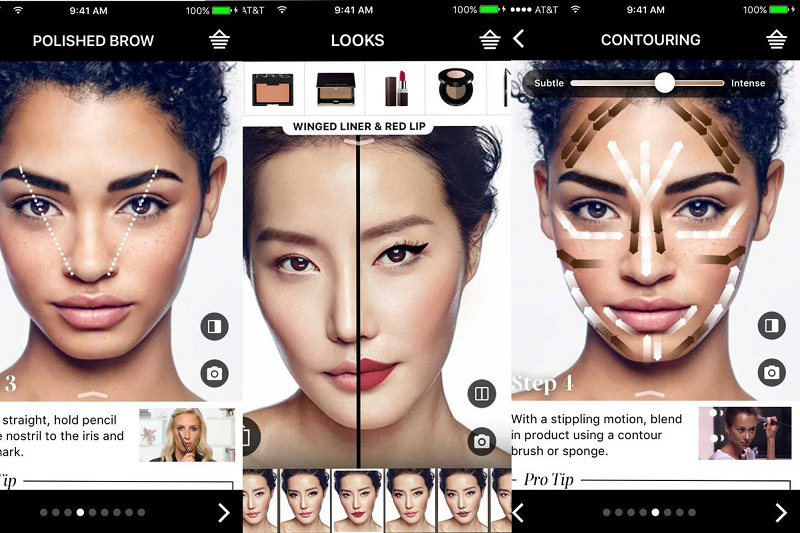
AR can instantly provide consumers with an immersive and engaging experience. AR can fill in the gap that leaves customers hanging for more information, standing in a store reaching for their mobile phones.

As we enter the age of the experience economy, many retailers are searching for ways to reinvent the physical store, using lights, video screens, and audio. They’re constantly challenged to find ways to deliver more personalized service. AR can complement this. Augmented reality has the potential to become a trusted sales associate.  And since AR is your trusted sales associate, it will have handled the first level questions consumers have on products, allowing “real” associates to focus on what they do best, upsell, cross-sell and closing the deal.

AR is in your Customer’s Pocket

Given that approximately 87% of shoppers do comparative shopping on-site with their mobile device, it’s really about leveraging the tools they already have in-hand. With AR, you can keep customers in your ecosystem both in-store and at home.

AR Dramatically Speeds Product Discovery

For all types of products from technology and electronics, to clothing and consumer goods, customers are constantly looking for more information. They want to know, what’s behind this?

CPG is ripe for this opportunity. Take the example of a grocery store. Do you want to know the nutritional values of various foods? Where does that vegetable come from? What can I cook this ingredient with to surprise my guests? Is there a simple recipe I could try?

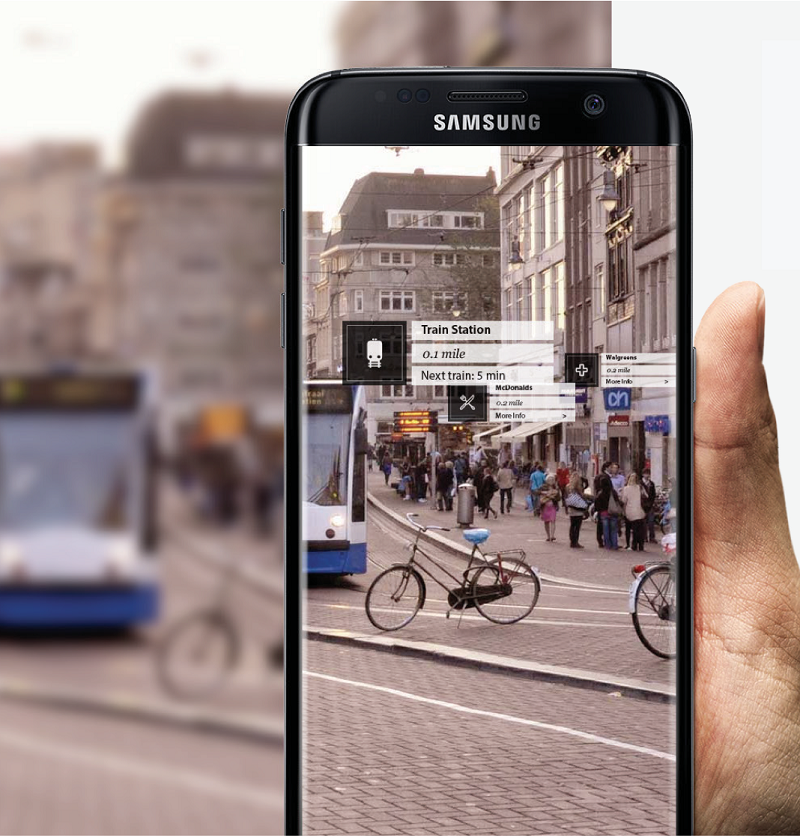
Using the phone, customers can point at any product and get this type of augmented information, making them more knowledgeable consumers. And, as we now realize, anything can be augmented! With AR information on products in-store and in-shelf, customers are more likely to say, okay, let me grab one of those, even if they’ve never tried it before.

b.pngb.png

Customers aren’t the only ones using it

From logistics companies and high-end to mid-level retailers, it’s not only customers that are impacted with the advantages of AR.  Take DHL for example, one of the largest shipping companies in the world. They’re implementing AR in their logistics chain. In a pilot study they demonstrated a minimal 15% increase in productivity as well as an important decrease in mistakes by using AR.

The technology guides their work, so that instead of scanning bins in the aisles, they use their AR glasses, and the technology ensures the package goes to the right place. The reduction of human error is amazing.

Anyone that has online ordering can do the same on their back end. This can be a benefit to any and all retailers.

AR can also be used as a training tool. New associates who need to learn about the products in store can do so using AR and VR, eliminating the knowledge gap for new employees. It could standardize training and take away the element of subjectivity in training as well as having proven better impregnation of information. 

C.pngC.png

Who will benefit the most from AR?

 he real winners are the customers. They’re gaining access to a much more engaging experience, by getting answer to fundamental questions about products while perusing the shelves and aisles of their favorite store.

Any brand that offers an augmented experience is going to be preferred by customers. Think about the home decoration market. Ikea is a good example of that. Their AR app, developed with Apple ARKit, already has hundreds of thousands of downloads – yet they only have about 500 out of hundreds of thousands of products available in the app but still, consumers love it. It’s just a starting point. They started small, but they’re going to iterate.

I’ve been an advocate for iteration for a long time. I’m the first to tell you: don’t wait for the killer app! It won’t be tailored to you. Create an experience that’s in sync with your business issues and objectives. Release at 70-80% and iterate following the learnings you gather from user feedback. It doesn’t matter how big or small you are – AR not only provides information to your customer, but it also provides the retailer information about what a customer is looking for—their behavior. There’s no business size that’s too big or small not to gather customer behavior information.

The bottom line is that Augmented Reality is here. There are more than 600 million mobile devices out there that are AR capable. Consumers are eager to have these experiences. It’s up to you to give them some.


D.jpgD.jpg

Jean-Francois Tremblay is AR/VR Practice Lead at Valtech, where he focuses on high level strategy and the integration of VR and AR solutions across Valtech Group’s broader product and service offering.

SUBSCRIBE to Retail Insider’s Daily E-News for Free:

* indicates required

RELATED ARTICLES

Subscribe to the Newsletter

Subscribe

* indicates required

RECENT articles

From The Desk: Social Media Growth, Store Modernization and AI’s Impact on Retail Marketing

Canadian retailers focus on digital-driven growth, store upgrades and authentic brand experiences amid rising AI-produced marketing content and property shifts.

Retail Insider’s Canadian Retail Monitor: October 2026 — Retail Spending Rebounds, but Growth Remains Uneven

Canadian retail sales rose 1.2% in August 2026 to $74.6 billion, with gains across all nine major subsectors. Retail Insider's October Canadian Retail Monitor examines category performance, regional differences, wholesale activity, e-commerce growth and persistent affordability pressures heading into the holiday season.

RETHINK Retail Expands Executive Communities Under Canadian Leadership

RETHINK Retail is expanding its executive communities under Canadian CEO Marie Chevrier Schwartz, with Chris Parsons appointed VP of Audience. The company is developing Canadian programming focused on AI, retail media and industry collaboration.

Retail sales climb to nearly $75 billion in August: Statistics Canada

Core retail sales, which exclude gasoline stations and fuel vendors and motor vehicle and parts dealers, were up 1.1% in August.

Retail Insider “Q3 2026 Apparel & Fashion Report”: Stores Have to Earn Their Investment

Canadian fashion retailers are expanding, relocating and closing stores within the same market. The Q3 report examines why location productivity and network contribution matter more than headline store counts.

Canadian Franchise Sector Supports Nearly 2 Million Jobs: CFA

Canadian Franchise Association CEO Sherry McNeil discusses franchise ownership, opportunities for entrepreneurs, industry growth and the importance of due diligence.

OpenTable report highlights restaurants’ economic impact on Canadian communities

OpenTable survey finds half of Canadian diners spend an average of $133 at nearby businesses before or after restaurant visits, while no-shows remain a cost for operators.

Tahini’s targets 30 new restaurants as social media drives franchise growth

The Canadian Mediterranean fusion chain has 76 restaurants and plans further expansion in Canada and the U.S., with some franchisees discovering the brand online.

Toronto-Based Panda Hub Raises $4 Million to Expand Mobile Car Care Marketplace

Panda Hub plans to launch its Panda 2.0 platform, enter new markets and add premium automotive services as it prepares for Series A funding.

Canadian Small Businesses Emphasize Local Identity as Holiday Costs Rise: VistaPrint Survey

VistaPrint research finds 51% of Canadian small businesses cite financial pressures as a key holiday challenge, while 32% prioritize attracting new customers.

Daily Synopsis: October 22, 2026

Canada Post starting weekend parcel delivery in Toronto Montreal and Ottawa, Walmart Supercentre opens in Fort McMurray, Stony Plain Costco under construction, adults drive Halloween candy sales, and other news.

Kith Opens Second Canadian Storefront at Vancouver’s Oakridge Park

Kith has opened its second Canadian store at Oakridge Park in Vancouver. The approximately 9,000-square-foot store features men's, women's and children's fashion, footwear, Kith Treats and a distinctive street-facing design within the shopping centre's expanding international retail mix.

NAPA Canada Sales Rise 9% as Acquisitions Drive Expansion Amid Soft Market

NAPA Canada reported 9% sales growth in the third quarter of 2026, supported by its acquisition of Benson Auto Parts. Comparable sales rose just 1%, highlighting subdued demand as parent UAP expands its Canadian automotive distribution and repair network.

MUJI opening first Vancouver Island store as Canadian expansion continues

The Japanese retailer is introducing a community partnership program in Victoria, with plans to extend the initiative to future Canadian store openings.

WitchSchool Canada Tests ‘Reciprocal Retail’ Model in Ottawa’s ByWard Market

WitchSchool Canada is testing a collaborative retail model in a 160-square-foot storefront in Ottawa’s ByWard Market. Founder Kiki Keskinen says the grant-supported residency connects independent entrepreneurs through shared programming, customer referrals and promotional opportunities, while raising questions about long-term operating costs.

Cozey doubles size of Toronto flagship showroom (Photos)

The furniture retailer is expanding its Queen Street West location as it adds products and prepares for new store openings in Edmonton and New York City.

CouchHaus Expands Toronto Presence With New King East Pop-Up Showroom

The Canadian furniture brand is returning to Toronto after its 2024 Stackt Market test, using an in-person showroom to support customer experience and national growth.

Retail Insider “Q3 2026 Grocery Report”: More Capacity, a Harder Fight for the Basket

Canadian grocers are adding stores, converting banners and reworking online fulfilment. The Q3 report examines whether more capacity can capture additional household spending at an acceptable cost.

Two-thirds of small business owners plan to exit within decade, CFIB says

A CFIB report says limited succession planning could put Canadian business assets, jobs and community services at risk as owners prepare to retire or sell.

One in four Canadian small business owners required to guarantee financing personally: Equifax

Equifax Canada survey finds younger entrepreneurs are more likely to use personal credit and assets to support their businesses as owners face customer, cost and cash-flow pressures.