Advertisement
Home Blog Page 1104

Cadillac Fairview Partners with Landmark Cinemas: Announces Premium CF Market Mall Theatre

Image: CF market Mall

Calgary-based Landmark Cinemas plans to open a premium movie theatre at CF Market Mall in Calgary by the Spring  of 2019.

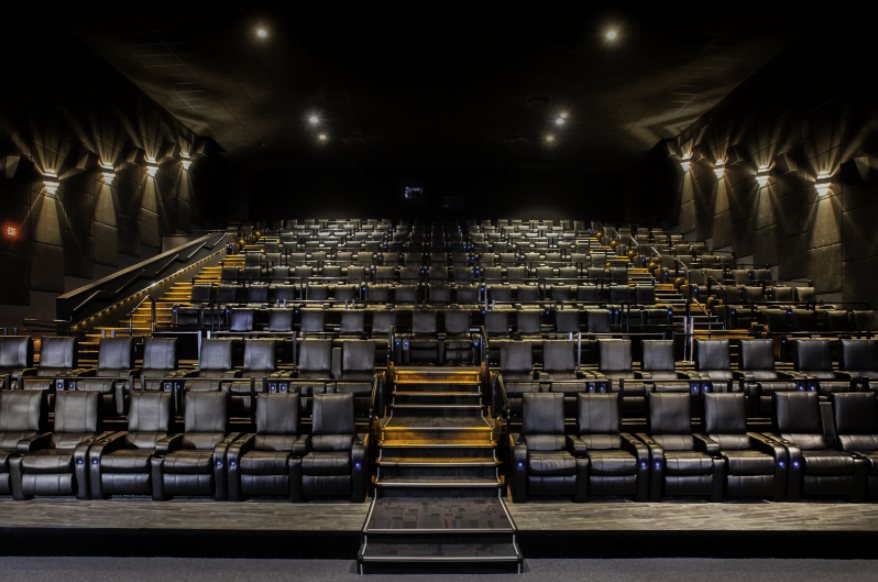
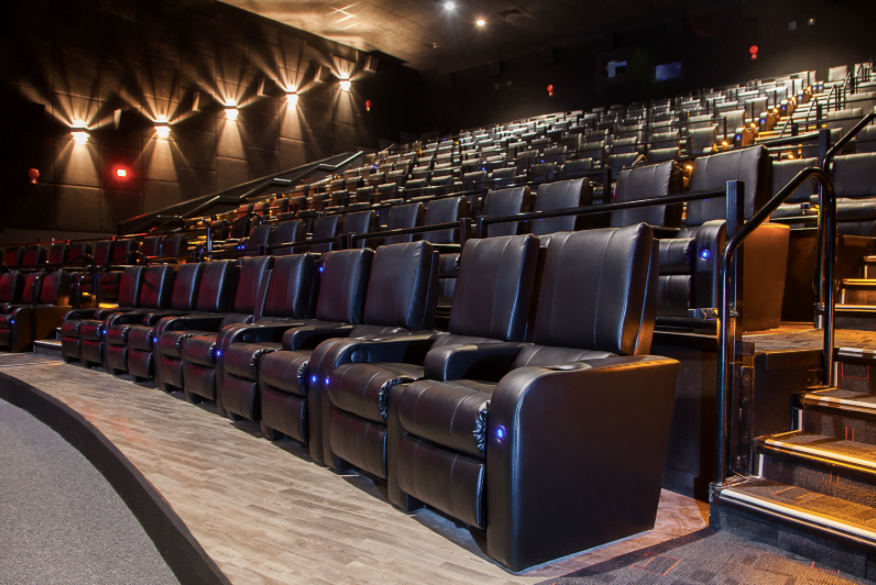
The new five-screen theatre, in the southwest corner of the shopping centre in the space formerly occupied by Staples, will be outfitted in luxury recliner power seating in 25,000 square feet of space.

Market Mall, which opened in 1971 and has about 200 stores and 900,000 square feet of retail space, is co-owned by Cadillac Fairview and Ivanhoé Cambridge.

Darren Milne, Market Mall’s general manager, said the shopping centre’s customers are eager to have a theatre there.

“A few years ago, Cadillac Fairview sat down corporately with the property and the leasing team and we really talked about what does Market Mall look like in the future and who are the kinds of tenants that we need to bring to Market Mall and particularly the tenants that would not only increase our competitive advantage in the city but also be tenants that our shoppers want to have,” said Milne.

(PHOTO: LANDMARK CINEMAS)

“Part of that first opportunity came to us when Target obviously went bankrupt and we were able to add Sporting Life and Zara and re-position HomeSense and with the re-positioning of HomeSense we were able to add Saks OFF 5TH next year. The one piece we knew we really wanted to add to Market Mall was a theatre. This deal has been in the works for probably 18 months.”

Milne said the theatre deal satisfies the need where the mall is bringing in another tenant that it knows shoppers want to have.

“But theatres also help drive evening traffic and when you drive evening traffic you also have a better opportunity to bring new restaurants to the site,” he said. “This is all part of a re-imagination that we started for Market Mall a few years ago and these deals have been coming to fruition for a little while.”

Bill Walker, CEO of Landmark Cinemas, said recliner seating, combined with complimentary reserved seating at Market Mall will provide “an unsurpassed movie-going experience while maintaining a value proposition that allows customers to enjoy the movies more often.”

“What’s interesting is the way we’ve scaled it for size acknowledging that there’s a different way to operate movie theatres that don’t need to all be large and maintaining a premium experience in a much smaller footprint than traditionally theatres were built in,” said Walker. “Because of the way we can program that theatre with digital projection and because we have the recliner seats that allow for higher occupancy rates, we’re able to build a different type of box.”

(PHOTO: LANDMARK CINEMAS)

“And so I think just as we sort of adapt to a changing marketplace you’re going to see more of that where operators in the movie theatre business are going to move to adopt their footprint to something smaller where they know they can operate more efficiently.”

Walker said every mall these days is keen on entertainment uses and uses that drive traffic in the evenings.

“Within the North American context, the movie theatre business is a mature business. We’re not growing in the days of building 24-screen theatres anymore,” he said. “We’re looking at pockets of population where there’s a good retail draw and we want to infill with entertainment use. Certainly at Landmark we’re keen to sort of adapt our footprint to suit the specific market conditions that we think are there.”

(PHOTO: CADILLAC FAIRVIEW)

The Landmark Cinemas’ presence at Market Mall will feature:

  • 619 Premium Powered Recliner seats;

  • All auditoriums will have Landmark’s new Premium Powered Recliner seating in a full-stadium configuration. This new, motorized, fully reclining seat with extended footrest, will provide every guest with a significant increase in personal space and a relaxing, disruption-free movie-going experience;

  • All seating, at every performance, will be available on a complimentary reserved seating basis and tickets will be available in advance through Landmark’s website, landmarkcinemas.com, or through ATOM Tickets, the first-of-its-kind cinema mobile ticketing and concession purchase platform and app that enables guests to skip lineups at the box office and concession;

  • Giant, wall-to-wall screens over 25 feet tall and the latest in digital projection and sound, and;

  • An expanded concession offering, including traditional cinema fare complemented by additional choices in hot foods.

CF Market Mall has become a hotbed of activity lately with many new developments in the popular shopping centre located in the northwest part of the city.

Zara opened its largest store in Calgary in 30,000 square feet of space and Sporting Life made its debut at the centre with a 40,000-square-foot store last Fall. Premium off-price retailer Saks OFF 5TH announced it will be opening a 30,000-square-foot store this Fall and Sport Chek’s expansion of its 60,000-square-foot, two-storey flagship store is scheduled to open this Spring.

Landmark Cinemas Canada was acquired last December by Kinepolis Group NV, Belgium. Landmark is Canada’s second largest motion picture, theatre exhibition company. From a single screen in 1965, today Landmark Cinemas has 43 cinemas and 302 screens throughout Western Canada, Ontario and the Yukon Territory

Company Helps Canadian Ecommerce Retailers Navigate Changing Industry

Image: Diff

A Montreal-based retail expert says the e-commerce space is evolving rapidly in Canada but the level of adoption by many retailers is still at a slow pace.

Ben Crudo, CEO of Diff, a full-service, e-commerce agency, said the company’s American clients are oftentimes a little more progressive in the way that they think when it comes to this latest trend in the retail industry.

“Canadian retailers feel like they’re playing catch-up a little bit and not necessarily taking advantage of all of the latest tooling and whatnot,” said Crudo, whose company is headquartered in Montreal with an office in Toronto and a couple of staff members based in New York City. It was formed in 2011 and today has about 50 people.

“We’re an e-commerce agency. E-commerce is the only type of work that we do in the digital space. Our focus is primarily on the Shopify platform. We essentially help retailers and merchants of different types get e-commerce up, optimized, profitable and also do a lot of the integration throughout their supply chain. We do the e-commerce from top to bottom in a fully integrated way,” said Crudo.

“We’re one of the largest agencies that focuses on Shopify and we’re also one of their longest standing partners.”

Diff’s clients are a wide range and include Yellow Shoes, a Quebec-based retailer, and YM Inc., based out of Toronto that operates Urban Planet stores, Bluenotes, Suzy Shier and other brands.

Crudo said some of Canada’s biggest retailers, who have been operating for many years, have only adopted e-commerce fairly recently.

“I’m not sure if it’s a hesitation as much as it is just market conditions perhaps,” said Crudo. “The Canadian landscape is a little less competitive perhaps than that which exists in the U.S. and because of that our better established brands are able to kind of coast a little bit longer. I can’t really point to one thing exactly but it feels like those things are just a little bit less desperate here for growth.”

“Although the retailers here aren’t necessarily the first to adopt new technology, I see that as kind of a benefit because the early adopters are the ones that have to fight the hardest in order to really craft old technology to suit them. But when you kind of take a pause for a minute, or you’re a little bit of a laggard, technology is increasing at such a rapid rate and the solutions that you looked at two years ago for a million dollars now cost $50,000 let’s say three years down the road. So there’s a tremendous amount of new tooling and technology that retailers can avail themselves of now for much less cost than ever before. So I definitely see the need for convergence and greater adoption and for awareness that even these tools exist and you don’t have to make your web developer a partner in your business anymore to create a successful digital presence.”

Image: Diff

So in that retail landscape where is the future for bricks and mortar locations in Canada?

“I’m kind of optimistic. If we study brick and mortar retail over the decades, we’ll see that it’s kind of constantly been in a state of flux and maybe previously a lot of the problems were felt similar and were related to the nature of supply chain and merchandising and activities that retailers were already doing to some degree but there has to be a little bit more of a convergence between the presence that exists online and those that exist on the brick and mortar space,” said Crudo.

“And the retailers that don’t feel as though they’re two separate channels that exist within their organization but really treat them as complementing channels are the ones that are going to be speaking their customers’ language and appealing to them most.”

He said bricks and mortar retailers have inherent advantages that can be easy to overlook, such as a storefront presence, the instant gratification of product availability, and the expertise of human staff which can’t be replicated online.

Crudo said bricks and mortar retailers can embrace the changing landscape of retail and incorporate a mix of tech, employee incentives and personalization to up their game in 2018. Some of examples of how to do that include:

  • Learn to love online sales – For bricks and mortar stores, online isn’t your enemy, it’s your ally. Having an omnichannel strategy is critical as it allows store fronts to avoid the pitfalls of traditional retail such as stock-outs/walk-outs. Companies don’t need to re-invent the wheel as tools like Shopify offer a full-stack fix. At the least, customers should be able to see inventory and reserve for pickup in store;
  • Start embracing low-hanging tech – This can be as easy as getting customers’ email addresses, having iPads or a kiosk to connect in-store customers with online offerings, or screens for product demos;
  • Find ways to incentivize your in-store staff to make online sales – Commissions are traditionally based on in-store sales only, but does it have to be that way?;
  • Better personalize your customers’ in-store experience – The online shopping experience and a sophisticated knowledge of purchase history has created higher expectations for personalization. How can retailers increase personalization in-store? Companies need to be collecting data in-store, ensure that their online and offline systems are talking to one another, and be hiring top notch staff to help.

Amazon.ca Retailers Embrace WorldFirst Technology

One of the most challenging aspects of online retail operations is international money transfers. When funds are being delivered from one country to another, they are typically diverted through banks and payment processors like PayPal. Unfortunately, these are the least cost-effective ways to transfer money from one country to the next. The spreads offered by banks are designed to maximize profits for banks, and to minimize the take-home pay of retailers, merchants and everyday folks transferring money. The problem is the traditional money transfer mechanisms; the structural framework that has existed for decades. It is inefficient, costly, and not designed for the end-user.

The e-commerce boom led by companies like Amazon has dramatically changed traditional sales methods. Customers across international borders can now transact seamlessly with retailers. For the most part, these two-way interactions are facilitated by banks, credit cards, and other payment processing options. Fortunately, WorldFirst has made dramatic inroads into this realm by making it possible for overseas sellers on e-commerce platforms like Amazon to have multi-currency bank accounts. The benefit of a multi-currency bank account is that currencies do not need to be bought and sold and heavy commissions don’t need to be taken off the sale price of each item. This facilitates improved ROI (return on investment) for online retailers.

What Is WorldFirst Doing That Others Are Not Doing?

WorldFirst is a UK-based, disruptive financial services operator. It is geared towards facilitating Forex transactions. It serves corporate clients and private clients all over the world, and has been doing so with aplomb since 2004. To date, this company is operational across 4 continents, and employs hundreds of people. An estimated 75,000 customers use WorldFirst’s services annually, and it is fully licensed and regulated by the Financial Conduct Authority (FCA) of the UK. Back in 2016, it won the Queen’s Award for International Trade – a prestigious honour from Buckingham Palace. Among customers, the consensus is overwhelmingly positive – websites like Feefo, TrustPilot, ReviewCentre and others attest to the efficiency, low cost of operations, and expediency of WorldFirst’s international money transfer services.

WorldFirst’s diverse FX offering speaks volumes for the company’s services for Amazon sellers. If you are trading internationally, it’s important to have a cost-effective way to convert payments back into your own currency. However, with WorldFirst, it’s possible to have multicurrency bank accounts. There are many reasons for this, notably paying overseas suppliers, accepting funds from overseas clients, and managing all business activity. The exchange rates offered by this international money transfer company are among the best in the business, and they offer flexible account systems to make it easier to send your money back to your home country at your leisure.

Amazon, eBay or Rakuten Sales No Match for WorldFirst

Online marketplaces such as Amazon, eBay and Rakuten are the world’s most popular e-commerce platforms. However, one of the issues that continually plagues freelancers, and businesses across the board is how funds are repatriated from abroad. With WorldFirst, e-commerce traders will have access to domestic bank accounts in the countries where they offer their products and services. For example, if you are based in the UK, and you’re selling to a USA client base, you can have a WorldFirst bank account in the US, and accept payments in the US.

Much the same is true for the Eurozone, Australia, and beyond. This allows businesses to easily expand across the globe, without any geographical constraints limiting money transfers. This leads to significant cost savings on money transfers around the world. Traditional transactions can cost up to 4% for cross-border transactions, but with this international money transfer company, that’s not the case. WorldFirst does this at no charge to you. You can then transfer the funds to your home bank account at a fair exchange rate.

Strategies and Successes From Canadian E-commerce Marketers: White Paper

By Susan Wall

Canadian commerce marketers know their audiences – and the challenges and opportunities they present. Dispersed over a vast landscape, marked by small pockets of urbanization, the Canadian population requires a unique approach to e-commerce marketing. Canadian commerce marketers are up to the challenge, and they are increasingly meeting consumers where they are shopping: at home. Digital and mobile connections are highways that don’t need to be traveled overland. Every person with a connection is a possible customer – and Canadian retailers are eager to convert them.

We surveyed Canadian commerce marketers to learn more about their strategies, goals and what they’re excited about for the future. The key takeaways were that they want to improve the website experience, understand the importance of mobile commerce and explore, one-click buying and social selling. 

Working with research firm Demand ROI, we surveyed commerce managers, directors and vice presidents at companies in Canada, the US, the UK and Australia with a minimum headcount of 200 employees. The survey was conducted via email in the spring of 2017, and we received a total of 409 responses, with 109 respondents from Canada. Of the Canadian respondents, 80% reported having both brick-and-mortar and online operations. 

Connecting With Consumers

According to the Canadian Internet Registration Authority, the average Canadian spends 36.7 hours online recreationally each month – more than anywhere else in the world. So it makes sense, given this online landscape, that one of the top business priorities for Canadian retailers in 2017 is to improve the website experience. The Canadian government considers access to high-speed internet a fundamental right, and 100% of the population will be connected in the future. It’s clear that retailers should focus on creating opportunities to connect with consumers online and utilize strategies that will build relationships and ultimately, establish brand loyalty. 

The Critical Role of Mobile

Canadian retailers know that the mobile highway can generate more customers – and more sales. Many retailers we surveyed said mobile commerce is critical (49%) or important (41%) for the future of their brand. How are retailers bringing mobile into the picture, based on this information? Retailers are beginning to blend offline and online retail experiences with options like in-store Wi-Fi for online shopping and price comparisons and personalized in-store offers on mobile devices as they see an increase in mobile usage by consumers, two options they think will have the greatest impact on in-store sales.

Canadian retailers are also working hard to optimize mobile strategy: Fifty-four percent of the retailers we surveyed have a dedicated mobile strategy and make investments in the mobile experience. But, when asked, only 47% are optimizing by phone vs. tablet. The Canadian retailers who aren’t optimizing their mobile strategy should take note: 46% of those surveyed say that customers use their phones before, during and after a purchase. This could mean a missed opportunity for those who haven’t optimized their mobile strategy.

Future Considerations

We asked Canadian retailers where they would focus if time or money weren’t issues. Their response: one-click buying and selling on emerging social channels. We know Canadian retailers are already focused on improving the digital experience, and 76% responded that social media is the marketing channel with the greatest impact on sales, since it creates opportunities for them to reach their customers – no matter where they are.

Reluctant Data Investors

When adopting new marketing channels, or enhancing existing ones, it’s helpful to use data to measure business outcomes and determine which techniques and tools to invest in next. But when we asked Canadian retailers how they felt about their ability to leverage data for business decisions, only 53% percent feel that they are very effective. 

So, what is holding them back from making better data-driven decisions? The overwhelming concern for Canadian retailers was the cost and complexity of data analysis tools: 50% named this as their No. 1 concern. It may be that Canadian retailers perceive the cost of the tools as greater than their worth, or they may be waiting to see what happens for retailers in other markets. Is the investment worth it for them? Canadian retailers should bear in mind that investing in data analysis can pay off many times over by providing more information about consumer behaviors and helping them make better decisions about their businesses – which, in turn, can help drive sales. 

Moving Toward E-commerce Success

While the to-do list might seem long (improve the website experience, explore mobile commerce, consider using data to drive decision-making), Canadian retailers are meeting the challenges of their unique market. In many parts of the country, stores aren’t easy to get to, so exploring ways to bring the store to the shoppers is well worth the effort. Taking the time to figure out what works is a solid investment, and advice that will serve Canadian retailers well as they continue to forge their path to e-commerce success.

To learn more read Bronto’s white paper, Inside the Minds of E-commerce Execs.

About Susan Wall

As Vice President of Marketing for Oracle + Bronto, Susan Wall is responsible for all marketing strategy and leading all lead generation, branding and positioning initiatives. She brings an extensive background in brand marketing, product marketing, marketing research, media and advertising to her role. 

*Partner Content. To work with Retail Insider, contact: craig@retail-insider.com.

Canadian Whole Foods Stores Examined Under Amazon Ownership

exc-5a68f74941920235edde55c5

Is the same issue popping up in Canada?

Field Agent Canada embarked on a consumer survey one recent weekend to find out what is happening in Canada’s Whole Foods stores. 

Quite simply, the survey discovered that Canadian stores are generally well-stocked – a huge contrast to what was found south of the border.

Jeff Doucette, general manager of Field Agent Canada, a retail audit and market research firm whose platform is powered by a smartphone app, said there are 85,000 users across Canada.

“We use those users to complete in-store audits or respond to surveys and that sort of thing. It’s a research panel driven through a smartphone platform versus traditional research which is online or in-person,” said Doucette. 

Doucette was responding recently to research in the United States that found the produce sections of some Whole Foods stores were having supply problems stocking their shelves.

“So we covered the 13 stores in Canada and we found that the results were really opposite of what was happening in the U.S. The Canadian stores were well-stocked, well-merchandised, neat and tidy. There weren’t the problems that were being noted in the U.S. stores which probably speaks to a unique management approach of the 13 locations that are here in Canada,” said Doucette.

BC Whole Foods Locations

There are four stores in Vancouver, three in Toronto and one each in Ottawa, Burnaby, Oakville, Mississauga, Markham and Victoria.

“Our users are everyday shoppers. The people who have downloaded our app we pay them to go and complete audits or surveys in-store while they’re shopping so basically (that one morning) there would have been a pop-up on people’s phones saying ‘if you’re going to Whole Foods today complete this task’ . . . and when they’re in the store we ask them to go to the produce aisle and rate the in-stock of produce on a scale of one to five and all the answers were either fours or fives,” said Doucette.

Shoppers were also asked to take two pictures of the produce department to verify what that looked like.

“Compare that with what we saw in the U.S. study where they were clear out of stock, empty bins. If you can imagine a section where onions normally are and all that’s left are the skins that have fallen off the onions,” added Doucette.  

How Data-Driven Pop-Ups Provide Retailers with Consumer Insights

exc-5a6bc46bc83025337b654060

By Linda Farha, Founder and Chief Connector, pop-up go

Pop-ups are among the most compelling initiatives marketers are integrating into their retail strategies. The goal? To deepen consumer relationships through interactivity.

Most pop-ups incite a healthy dose of word-of-mouth, garner media coverage and boost the brand’s social media presence, not to mention sales. The difficulty lies in finding trackable and tangible metrics that allow you to assess your audience and return-on-investment.

With innovative tech solutions cropping up across the industry, marketers are adding another dimension to what was once the humble pop-up shop. These short-term activations are becoming the perfect way to gain consumer insights and business intelligence.

The most successful pop-ups of the future will be those who can leverage a physical presence and cultivate engagement, but more importantly, can digitize experiences. By integrating technology into the pop-up structure and design, marketers can draw new insights into how consumers are shopping in the physical retail environment.

Tech innovators, like Samsung, can now provide brands with solutions that extend beyond point-of-sale systems or digital signage and delve deeply into movement tracking, heat mapping, and demographic assessment. In combination with the high foot traffic and experimental nature of pop-ups, brands can collect some seriously valuable insights and make adjustments in real-time.

Samsung’s new tech solution, called Connected Spaces, is a turnkey service that simplifies the logistics of digitizing your activation. Created specifically for pop-ups, Samsung provides set service packages comprised of the transactional and engagement technology needed to capture rich consumer data.

The first of its kind, it addresses the obstacles retailers face during the complicated and costly process of setting up your own integrated digital solutions. With simplicity comes accessibility, and services like these make analytics and reporting more attainable within the quick turnaround time of pop-ups.

Through this type of data collection, pop-ups can bridge the gap between online and physical retail. E-commerce brands have always had a leading edge because of their ability to track and understand the shopping habits of their consumers. With pop-ups, brands can explore strategies for gleaning the same insights in the physical realm.

The next generation of pop-ups will be data-driven. They have capitalized on the benefits of brick and mortar, now they are taking a page out of the e-commerce book too.

Canadian Retail Sales Growth on Track for 20 Year High: Report

exc-5a6bec6de4966b35d9c55652

The following is an analysis by Toronto-based retail consultant Ed Strapagiel, who publishes a monthly report with his perspective on the state of the Canadian retail industry. Mr. Strapagiel’s discussion appears to be a good news story as retail sales numbers come in for the remainder of 2017, and we look forward into the new year ahead. 

By Ed Strapagiel

According to the latest Statistics Canada unadjusted data, total year-to-date Canadian retail sales were up 7.0% by November 2017. This leaves just one month to go to fill out the year, and retail sales growth is on track to come in at a 20 year high. Current momentum indicates that December is unlikely to disappoint. 

As the chart above shows, the underlying 12 month growth trend (green line) improved considerably during much of 2017. The 3 month trend (orange line) has weakened slightly in the last few months but is still running at a historically high pace. 

The Automotive & Related sector has boosted total retail sales throughout the year. On the other hand, Food & Drug sales have been a drag on the market, and sales growth has further softened in recent months. The Store Merchandise sector, on yet another hand, has been particularly strong in 2017. 

Food & Drug: Retail sales growth in the Food & Drug sector weakened at the start of the year, recovered somewhat in mid 2017, but has fallen off again in recent months. The underlying 12 month trend (green line in the above chart) now stands at 3.3% and will likely end the year even slightly lower, at less than half of the overall retail average. 

The main issue in this sector is supermarkets and other grocery stores, where retail sales are up a scant 1.0% year-to-date thus far in 2017. The one bright spot is the small specialty food stores segment, with year-to-date sales up 8.0%. 

Health & personal care stores are faring better than supermarkets and grocery stores, with year-to-date retail sales up 6.0%. Nevertheless, the gain for health & personal care retailers is less than half of their 13.8% annual increase recorded in 2016. 

Store Merchandise: The Store Merchandise sector continues to post high retail sales growth levels. After 11 months of 2017, year-to-date sales are running 7.0% ahead compared to 2016. Retail sales are also up 7.6% year-over-year for the 3 months ending November 2017, indicating that there’s more upward potential left. The underlying 12 month trend (green line in the chart) has improved significantly since about Q1 2016. 

Building material & garden equipment/supplies dealers and electronics & appliance stores are leading the way, with double digit year-to-date retail sales growth of 13.0% and 12.5% respectively. 

All retail store types in this sector are posting positive sales increases. Home furnishings stores are up just 1.6% year-to-date after 11 months of 2017, but even this is ahead of what grocery stores are producing. 

Note that Statistics Canada is now suppressing the breakdown of general merchandise stores for confidentiality reasons. The figures in the table below are estimates based on previous trends.  

Automotive & Related: The Automotive & Related sector continues to post strong retail sales gains. The underlying 12 month trend has relentlessly increased for the last 2 years. But it has now caught up to the 3 month trend so that retail sales increases going forward may not be quite as robust. 

New car dealers hit a bit of a speed bump in November 2017, but this was not necessarily unusual. They are likely to have an all-time high in sales 2017. Year-to-date retail sales are up 9.7% after 11 months of the year. 

Gasoline station retail sales are up 13.2% year-to-date. This is very high compared to any other retail segment, but still represents some steadying off compared to the 22.5% year-over-year gain recorded for Q1 2016. Gasoline prices appear to be stabilizing. 

By The Numbers: 

Canadian E-Commerce Stats: StatsCan started providing ecommerce retail sales data in January 2016. While the amount of data is limited, some trends appear to be emerging. Here are some results. 

Overall, e-commerce represents about 2.6% of Canadian retail sales for the 12 months ending November 2017, including both pure play operators as well as the online operations of brick & mortar stores. Canadian consumers however also buy online from foreign websites, spending which is not captured in these numbers. 

Year-to-date results for 2017 (11 months) show that Canadian e-commerce sales are up 36.6% from a year ago, a much higher gain than for retail in general. 

Note that location based retail is the same as that in the preceding large “By The Numbers” table. It’s what’s normally reported as Canadian retail sales. Except that it isn’t. Location based retail excludes another section called Non-Store Retailers (NAICS code 454), which covers electronic shopping and mail-order houses, which in turn is where (mostly) pure play e-commerce businesses are. For the 12 months ending November, electronic shopping and mail-order houses had an estimated $8.7 billion in e-commerce sales. 

But that’s not the only source of e-commerce, as (mostly) bricks & mortar location-based retailers also sell online. For the 12 months ending November, this group had an estimated $6.8 billion in e-commerce sales. With electronic shopping and mail-order houses, there’s a grand total of $15.5 billion in e-commerce sales by Canadian operators over a 12 month period. Note that this does not include foreign e-commerce purchases made by Canadian consumers, but it does include purchases made by foreigners at Canadian e-commerce businesses. 

For electronic shopping and mail-order houses, an estimated 82.7% of their sales are allocated to e-commerce. For the (mostly) bricks & mortar crowd, it can be estimated that just 1.2% of their total sales come from e-commerce. 

In the final section of the above table, (mostly) pure play operators (namely, under electronic shopping and mail-order houses) generate an estimated 56.1% of all e-commerce sales in Canada, while (mostly) bricks & mortar location-based retailers’ share of e-commerce is 43.9%. 

For more explanation on the e-commerce numbers, see Statistics Canada: Retail E-commerce in Canada

This analysis is updated monthly as new numbers are published by Statistics Canada.  [Connect with Ed Strapagiel on LinkedIn]

Medical Marijuana Use in the Retail Workplace — What You Need to Know

exc-5a13733953450a2d678b84f8

By Derek Bumstead – VP, HASCO Health & Safety Canada Corp.

When does an employer’s right to know, and their legal obligation to take every precaution reasonable to protect the worker, overshadow a worker’s rights to privacy, confidentiality?  Or does it?

Recent medical developments are potentially putting workers and employers at risk…and sorting through the complications will require a great deal of time and effort on the part of Canadian retailers and all organizations.

The legalization of medical marijuana, and the sharp increase in prescriptions over the past few years, will have a profound effect on workplace health and safety policies and procedures for all companies in the future. 

According to many sources, over 400,000 Canadians will be taking medical marijuana within a decade. This issue will eventually affect almost every workplace in the country.

Prescribing for Medicinal Uses

Medical marijuana is currently being prescribed in Canada to treat the following:

This list is growing on a regular basis, as more is learned of the beneficial effects of marijuana treatment on a variety of illnesses and symptoms.

This is NOT a New Situation

The drug in question may be different, but most of the concerns and risks we are discussing are actually old news.

An employer can insist that a worker not smoke medical marijuana at work. – Financial Post [1]

Many workers show up to their jobs every day, while taking prescription drugs that can affect their performance and mental acuity.  The list of “psychoactive” (or “psychotropic“) medicines is very long.  Some of the most common are Percocet, OxyContin, Dilaudid, Valium, Xanax, Ativan, Vicodin, Zoloft and Wellbutrin. 

One in 5 people in the United States (about 70 million) take psychoactive medicine.  The percentage in Canada is slightly lower than that. The effects of various psychoactive medications on users differ, depending on the category and dosage. 

The Five Main Categories of psychoactive drugs are:

  1. Anxiolytics (anti-anxiety medication) and Sedatives
  2. Hypnotics and Sleeping Pills
  3. Antidepressants
  4. Antipsychotics
  5. Mood Stabilizers

Companies must include health and safety policies for the use of these types of drugs, in addition to effectively covering policies and procedures for using medical marijuana.

The arrival of medical marijuana is going to force Canadian retailers and other organizations to review the use of ALL psychoactive medicines that can affect performance and judgement…and treat them all equally.  In the modern context, medical marijuana is just as legitimate a treatment as any of the other drugs, listed above.

Human Rights & Workplace Safety Laws

The sanctity of doctor-patient confidentiality is a cornerstone in medical care.  It is one of our basic rights that this information is protected and any disclosure about a person’s medical condition must be done only with their consent. 

Under the Ontario Human Rights Code, Section 5.1, we are also guaranteed the right to equal treatment without discrimination, with respect to employment, on the grounds of disability. Under the OHRC, the definition of “disability” extends to illness and other medical conditions.

Conversely, under the Occupational Health & Safety Act, workers have a legal obligation to report all hazards they identify in the workplace.  This would include reporting their own inability to perform their duties safely, due to mental and/or physical impairment from medication. In short, employees are expected to arrive to work fit for duty.

The OHRC also states that an employee has “the onus to cooperate with the employer” regarding their need for an accommodation, due to disability.  This would include the worker’s responsibility to declare their use of a psychoactive drug that potentially impairs their ability to perform their work safely.

A worker cannot be asked to divulge their medical condition, but it is prudent for them to report the use of any medication that might affect their judgement and performance…especially if they work in a safety-sensitive position.

Accommodating workers who have legal prescriptions to take marijuana or other psychoactive drugs, while still maintaining an employer’s and supervisors due diligence to ensure the safety of all workers, is an issue that will require time, effort, trust and a thorough review of current workplace safety policies and procedures.

The Business Type Will Drive Decisions

For relatively benign workspaces, such as an office atmosphere, solving this dilemma may require only a few new changes in policy and procedure – many of which will probably not affect daily operations noticeably.

Business within safety sensitive jobs, such as many in the Retail, Construction, Manufacturing, Industrial and Transportation sectors, must be prepared to devote serious time and effort toward refining policies, programs and procedures. 

The specter of having equipment and machinery operators, or company drivers, performing their duties at less than optimal mental and physical capacity, is one that should be given great thought… for very good reasons. 

A failure on an organization’s part to identify these scenarios and deal with them promptly and correctly, not only puts worker’s safety at risk, it also exposes the company to the possibility of expensive human rights tribunals and lawsuits from wronged parties, injured personnel or the relatives of a workplace fatality.

Points to Consider

  • Employers have a legal obligation to allow workers to use medically prescribed marijuana (and other psychoactive drugs) on the job, if it is necessary for their treatment. 
  • Workers have a legal obligation to arrive for work fit for duty, and perform their duties safely
  • Employers and supervisors have to do their due diligence in protecting all workers from injury.  This applies not only to the person who takes medical marijuana, but to the co-workers, customers, etc., who may be impacted by the actions of an impaired worker.
  • A worker has the onus to disclose their need for a medical accommodation to their employer
  • Allowing marijuana to be smoked is not a legal requirement.  Some places of business have provided a designated smoking area, while others may ask that employees take their medical marijuana in another form, if possible (for example, using a vapourizer, or ingesting it in their food or drink).

Questions to Ask

  • If a person is unable to perform their “regular” job, due to impairment, what accommodations can/should the employer make with regard to a reassignment of duties and responsibilities?
  • Will the accommodation cause the employer “undue hardship?”
  • When recruiting for new hires, employers are severely restricted regarding a number of questions they cannot ask a potential worker – age, marital status, ethnic origin, sexual orientation, religion, etc.  Given the implications to safety in the workplace, should an employer be allowed to ask about use of medications, like marijuana, which may cause impairment?
  • Can/should an employer ask potential new hires for a drug test as a condition of employment?  At what point in the recruiting and hiring process would this be appropriate?
  • How long should an employer reasonably be expected to make accommodations?

These considerations are just the tip of the iceberg…and the solutions will vary from company to company, depending on the nature of their operation and the risk levels that exist in each place of business. 

Impaired Versus Medicated

While it is true that medical labs have developed some strains of medical marijuana and synthetic marijuana that do not cause impairment, a key question that must be asked is “how could anyone know, with certainty, that an employee is using one of those strains, rather than a variant that does cause impairment?”

And, to complicate matters further, some people have started growing their own marijuana for medicinal purposes.  If they were to simply put their own “home-grown” blend into a prescription container, it would likely be difficult to identify one type of marijuana from the other. 

How Impaired is Too Impaired?

One of the more complex issues in this situation is determining the level of impairment caused by the use of medical marijuana and other psychotropic drugs.

Tests can detect the presence of marijuana, but so far nothing has been developed that can accurately measure the level of impairment of the subject. 

Since residual amounts stay in the liver for quite some time, tests also fail to measure, with any degree of accuracy, how recently the person being tested used marijuana.  Did they take it this morning before work, or last week while they were on holidays?

The equivalent of a breathalyzer, which can accurately send back a blood-alcohol reading (like .08%), and determine the degree of impairment, simply does not exist for marijuana…yet.

For that reason, and several others, random drug testing by employers in Canada is considered a violation of a person’s rights under the human rights code.  There is also no case law in Canada that holds that an employee can be terminated for refusing to take a drug test.

Canada is not alone in the regard – drug testing is not used to any significant degree in any country in the world, other than the United States.

The “Zero Tolerance Policy” – Up in Smoke!

Many organizations with working environments that are hazardous and/or with security concerns have adopted a “zero tolerance” policy toward the use of illegal drugs. 

The legalization of Medical Marijuana effectively shoots part of any zero tolerance policy, down in flames. 

Simply put, employers cannot declare zero tolerance for a legally prescribed medication. 

Shedding the Stigma

One factor that makes the use of medical marijuana so touchy is the stigma that the drug carries with it among so many people.

For any medical marijuana policy to be truly effective, those stigmas must be put to rest.  The development and implementation of a working medical marijuana policy must be created within an atmosphere of cooperation, comfortable disclosure, and, above all – trust.

No one will openly declare himself or herself to be a medical marijuana user, if they know they are going to be judged negatively or subjected to ridicule by superiors and/or peers because of their treatment. 

The same is true regarding the use of many other psychoactive drugs, which are often prescribed to treat illnesses that can carry stigmas of their own (like depression, bipolar disorder and other mental health problems). 

What Can Be Done Right Away

This is not an area many are likely capable of handling independently. 

Since there are a myriad of laws involved, many of which seem to be in conflict, HR and safety professionals would be wise to bring in expert legal help, for guidance through the pitfalls of each policy revision, and action that may be consider.

Company Health & Safety policies and programs need to be thoroughly reviewed and revised to include the use of all legal drugs that can cause impairment, in addition to the current protocols in place for handling the use of illegal drugs and alcohol abuse. 

Supervisors and Managers must be on the lookout for signs of impairment, so the proper steps can be taken to identify any safety hazards and to accommodate the worker, if appropriate. Supervisors and managers need training in identifying impairment, and provided guidance and coaching.

To help out, some of the most common tell-tales are:

What SHOULDN’T Be Done May Be Even More Important

Oddly enough, the best preparation might be to put together a list of “Don’t Dos” to provide some guidance for managers, supervisors, etc.

While each case of medicinal impairment may be unique, the way they should be handled, at the onset, should be thoroughly considered and communicated to all those in a position of authority.  At the very least, an action plan should be prepared for the team to follow the moment they suspect that a worker may be performing their duties while impaired in some way.

Employers are encouraged to work with the employee and their physician to see if the use of alternative forms of cannabis, other than smoking, would be appropriate. – Canadian Centre for Occupational Health & Safety[1]

Conclusion

In this new era of medically-approved impairment (for lack of a better phrase), the responsibilities of the employer, managers and supervisors become much more complex – balancing a person’s rights to confidentiality and approved medical treatment, with their legal obligation to provide competent supervision and take every precaution reasonable to protect the safety of the worker.

Given the numbers already discussed, it is extremely likely that more than one of your workers is taking some form of psychoactive drug, right now.  The addition of marijuana to the list of accepted medical treatments, just adds one more item to the list of prescribed drugs to be prepared to deal with.

The best approach is to be proactive and prepare for that time now

Waiting until actually being faced with this situation runs the risk of having managers and supervisors making things up on the fly, which will almost inevitably lead to some very costly mistakes.

How successfully organizations handle this very delicate issue is a matter of being well prepared, well in advance.

Getting Started – Here is How

Need help getting started?

HASCO Health & Safety Canada offers two online Marijuana in the Workplace courses, which are the most comprehensive training programs that Canadians can receive on the subject. 

One course is for owners, managers, supervisors and HR departments, while the other is for workers.

Please click one of the links below, for more information on our online training courses.

Managing Medical Marijuana in the Workplace (for Supervisors)

Cannabis Awareness for Employees        

The information presented in this article is not legal advice.  This information is provided solely for the purposes of furnishing readers with an overview of this issue. Readers are cautioned not to make any decisions based on the information in this article alone.  Legal advice should be sought out.

[1] Financial Post April 13, 2016 What to Do if Your Employee Asks to Use Medicinal Marijuana at Work

[2] Canadian Centre for Occupational Health and Safety (CCOHS); http://www.ccohs.ca/products/publications/cannabis_whitepaper.pdf

Derek Bumstead is Vice President / National Account Manager at HASCO Health & Safety Canada. 

Willowbrook Shopping Centre Plans Significant Expansion and Renovation

Some exciting developments are taking place at the Willowbrook Shopping Centre, in Langley, B.C., where the mall is planning to expand by about 190,000 square feet of open-air space.

The expansion is expected to be completed by 2020.

Part of the overall plan included the expansion and relocation of Toys R Us and Sport Chek to the former Target space and both are now open. H&M has also chosen Willowbrook to locate its 20,030 square foot newest store which  will open in September of this year in the existing mall. 

One of the anchors of the lifestyle expansion space will be a grocery store in about 38,000 square feet – the grocery operator will be announced in the near future.

“By renovating and expanding this property, we are looking to create a very unique, experiential and best-in-class shopping destination with an offering that’s compelling to our customers,” says Chrystal Burns, Senior Vice President, Retail for QuadReal Property Group.  “In short, we are trying to build something that gives our community what they’re looking for . . . a place to shop, eat, socialize and connect.  Fortuitously, with the benefit of Sears’ departure from one of the highest visibility areas on the site, we have the opportunity to actively pursue some of the uses — including entertainment, food, fashion and fitness — that these younger, affluent families are clamouring for.”

“The Township of Langley is in full support of the development and have designated Willowbrook’s site as the Township’s new ‘Town Centre’. We are now full steam ahead on pre-leasing, and are talking to many exciting groups. What we are creating here will be a very unique experiential shopping destination, and we are diligently working on our merchandise mix. 

The shopping centre currently has about 150 stores and that is expected to rise to at least 200 with the expansion. Willowbrook will be adding a cluster of local and national quick service food offerings, large scale restaurants and the mix of national brands that it has not been able to accommodate to this point due to lack of space.

QuadReal has taken inspiration from best in class lifestyle developments across North America.  It’s a very cool open concept and we’re really working to make sure that the existing mall is upgraded first and that the entrances are very well connected so the mall is contemporary and inviting before the expansion opens.”

Langley has been the fastest growing community in British Columbia for the last six years and it’s only anticipated to continue on that path.

Willowbrook opened its doors in 1979. The shopping centre says the expansion project will be a vibrant, sustainable lifestyle-oriented retail development that will be seamlessly linked to the newly-renovated and expanded centre, “embracing the true west coast lifestyle.

“Accented by an abundance of natural beauty, modern west coast architecture, wood details, outdoor gathering spaces and contemporary landscaping, Willowbrook will leave visitors with an organic meeting place in the community,” it says.

Willowbrook is easily accessible from a number of major traffic arteries. It anchors one of the largest, most dynamic, retail nodes in the province, comprising over 2.5 million square feet in every possible format. Most major retailers are represented and for many, it was their first to market store.

It has about six million annual shopper visits and 68,000 daily drive by traffic.

Its current gross leasing area is about 650,000 square feet.

Willowbrook’s trade area also has average annual household income of $100,070, which is 30.6 per cent higher than the national average.

For more information, contact Larissa Jacobson, Senior Director, Leasing, Retail Services: larissa.jacobson@quadreal.com or: 604.975.9086. 

MUJI Announces 5th GTA Store

exc-5a67d9fb53450ae49938f781

Minimalist Japanese retailer MUJI has just announced that it will open a store in March of this year at Toronto’s Scarborough Town Centre. It will be the fifth store in the Greater Toronto Area for MUJI, and the seventh in Canada. 

The Scarborough Town Centre store is expected to be about 6,800 square feet on the mall’s second level (according to the mall’s guest services), which will make it the largest in Toronto when it opens. MUJI has been active in Toronto in 2018 — it temporarily relocated its downtown Toronto store last week within the Atrium commercial complex, while its original store is expanded by annexing an adjacent retail space. The downtown Toronto flagship is expected to reopen in about a year.   

That downtown Toronto store was MUJI’s first in Canada when it opened in November 2014. Its second Canadian location, spanning 5,225 square feet, opened at Mississauga’s Square One in November of 2015, followed by the October 2016 opening at Toronto’s Yorkdale Shopping Centre (6,375 square feet) and the Summer 2017 debut of a 6,000 square foot space at CF Markville, north of Toronto. 

MUJI entered Vancouver for the first time last year when it unveiled a 7,770 square foot space to massive crowds in August of 2017 at Metropolis at Metrotown in Burnaby. An impressive 14,507 square foot store opened on Robson Street in Vancouver in December of 2017, making the store MUJI’s largest outside of Asia. A third Vancouver location has been secured an announcement is expected soon. 

In an interview last year, MUJI’s Canadian President, Toru Akita, said that he expected MUJI to operate between 15 and 20 stores in Canada by the year 2020. 

MUJI works with brokerage CBRE for its Canadian site negotiations, overseen by Arlin Markowitz

Scarborough Town Centre is one of Canada’s most productive malls in terms of sales per square foot, according to the latest Retail Council of Canada Shopping Centre Study