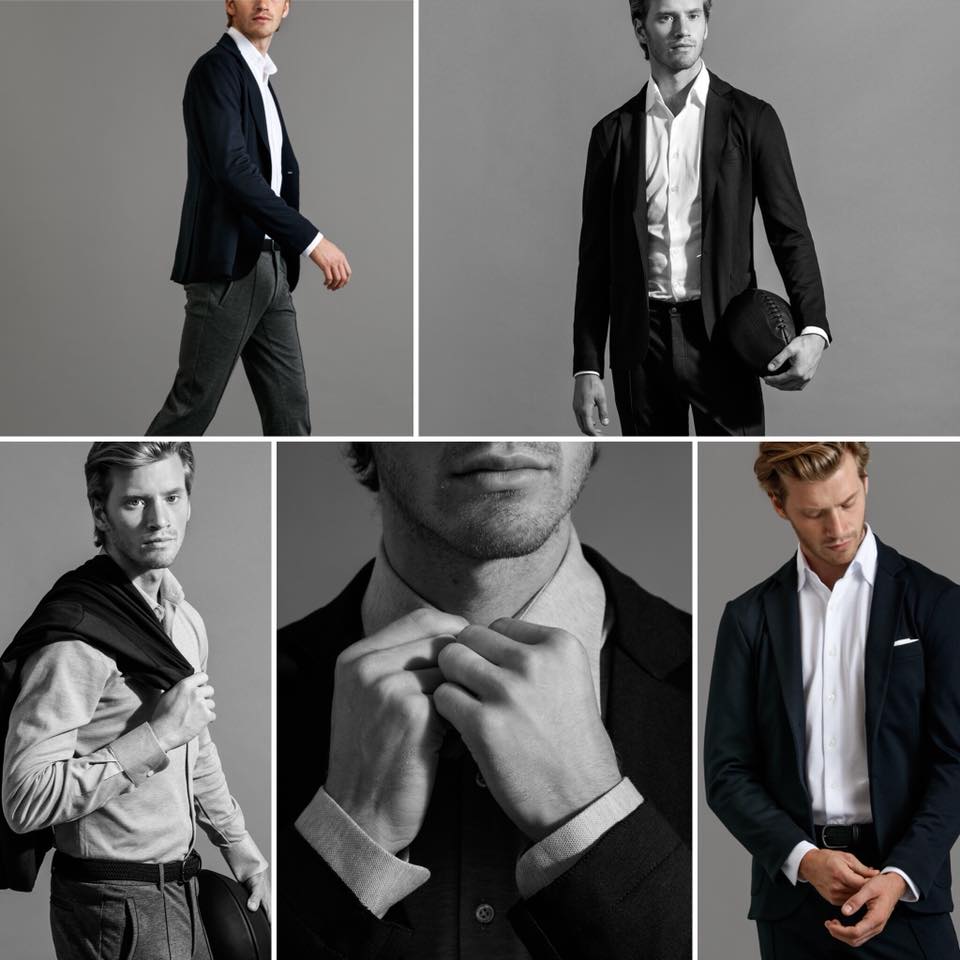
A new technical apparel men’s brand has launched in Canada that could revolutionize the menswear industry. Called Ædelhard, the brand is a partnership with former Lululemon/Kit and Ace exec Darrell Kopke and Michael Nguyen, the renowned bespoke tailor behind Toronto’s Garrison Bespoke.
Michael Nguyen – Founder at Garrison Bespoke
Darrell Kopke – Founder and CEO at Ædelhard Sport Culture Inc. Darrell Kopke – Founder and CEO
The Ædelhard brand is headquartered in Vancouver, and it’s seeking out selected retailers in Canada to carry the line. Mr. Kopke revealed that he’s in discussions with several prominent multi-brand retailers doing business in Canada to carry the line, which has a refreshing simplicity as well as a messaging of respect, rooted in the sport of rugby.
Ædelhard says that it aims to solve the problem of ill-fitting, uncomfortable business attire, and it appears to have solved it well. The brand currently features a selection of separates that can be mixed-and-matched with ease — Mr. Kopke wore a suit that he explained felt like a sweatsuit, and has been tested in the gym. Aedelhard applied bespoke tailoring to technical stretch fabrics to make the “world’s most comfortable suit”.
The line includes suit jackets, trousers, shirts and accessories, at a contemporary price point that makes it accessible to many. On its website, prices are in US dollars, with its performance blazer priced at $399, performance trousers at $149, oxford shirts at $119, and toques, priced at $39. Ædelhard also sells rugby kits including high quality duffle bags, water bottles, umbrellas, and even first aid kits.
The Ædelhard brand is rooted in rugby culture, which is known to embody civility, respect, and inclusivity. ‘The world needs more rugby”, said Mr. Kopke, who’s line even includes high-quality, attractive branded leather rugby balls that can be used for sport, or for display purposes (priced at USD $199 each).
Mr. Kopke partnered with Michael Nguyen of Toronto’s Garrison Bespoke, and for good reason — Garrison Bespoke is known for creating custom suits for some of the world’s best-known athletes and celebrities — NBA star LeBron James, actor Ryan Gosling and rapper Drake are known to wear Nguyen’s suiting.
Rugby culture and athletics transcend into the brand’s design — Mr. Nguyen, who is Ædelhard’s head designer, uses body mapping to ensure the Ædelhard silhouette fits perfectly on a more athletic build, while offering exceptional movement and comfort. It packs well and doesn’t wrinkle much, meaning it’s also great to pack for traveling.
The line even has a charitable component, and a goal — Ædelhard supports youth rugby by donating 2% of its sales through programs to promote the sport, with a goal of making rugby one of America’s top five sports by the year 2022.
Mr. Kopke says that Ædelhard could operate its own standalone stores some day, though the company is starting out with wholesaling in other retailers. He noted that Ædelhard would only open stores in selected markets if at all, in order to keep the line exclusive as well as to be respectful to its wholesale partners.
Ædelhard could be the next big thing in menswear, and it’s Canadian. The collection can be viewed at Ædelhard’s new website: aedelhard.com.
When retailers are looking to establish a unique store experience for their customers, it’s no coincidence that they contact Burdifilek.
Recognized as one of the leading interior design firms, Burdifilek is the mastermind behind some of the most beautiful retail concepts. The Toronto-based studio leads at the forefront of design, bringing an unwavering point of view to creative projects for brands around the world.
“It’s nostalgic to look back on 25 years. In our early days, we spent our meetings educating clients on design and how its impact could change a brand’s trajectory. Design awareness is now ingrained into every aspect of our lives,” says Paul Filek, Managing Partner, who founded the company with Diego Burdi, the studio’s Creative Partner.
Filek and Burdi first connected during their studies at the Ryerson School of Interior Design, yet the decision to launch a studio came during the most unlikely time – during the height of a recession in 1993. Today, the studio of 35 employees has garnered over 150 notable industry awards along the way for their portfolio of work.
(HOLT RENFREW, 50 BLOOR ST. W., TORONTO. PHOTO: BEN RAHN, A-FRAME STUDIO)(JEWELLERY HALL AT HOLT RENFREW, 50 BLOOR ST. W. IN TORONTO. PHOTO: BEN RAHN, A-FRAME STUDIO)
“Retail is exciting because it is never complacent. The speed of change has kept us on our toes since day one,” says Burdi, having worked with clients that range from specialty brands like Mackage, Indigo, Hopson Grace, and Club Monaco, to department stores like Holt Renfrew, Neiman Marcus, and The Galleria in Seoul, South Korea.
“We have partnered with a diverse range of brands over the years, but one brand conversation that remains constant is a brand’s desire to be memorable. It’s our job to design a space that stands out above all the other noise and leaves a lasting impact on the consumer. Our projects celebrate the individuality and uniqueness of each brand story,” says Filek.
The physical stores, he says, now become a natural progression of the brand’s platform – whether it’s online or offline.
“A strong, consistent point of view is what will set a brand apart,” advises Filek, as retailers navigate an increasingly competitive landscape.
(DAVID’S SHOES AT 66 BLOOR ST. W. IN TORONTO. PHOTO: BEN RAHN, A-FRAME STUDIO) (MACKAGE STORE: BURDIFILEK WON A SIGNIFICANT AWARD FOR ITS DESIGN LAST YEAR. PHOTO: BEN RAHN, A-FRAME STUDIO) (THE GALLERIA DEPARTMENT STORE SEOUL: LUXURY HALL WEST.PHOTO: BEN RAHN, A-FRAME STUDIO)
“We’ve all become very accustomed and well-seasoned with discovering new brands through a digital screen, but the digital experience is very one-dimensional. In a physical space, the emotional connection a consumer can develop with the brand is that much deeper – consumers appreciate the thoughtfulness of a beautifully appointed, well-considered experience.”
It comes as no surprise to both Burdi and Filek when they witness firsthand how effectively consumers connect to a brand’s values through a physical space: “Physical stores have always been the most engaging platform to romance consumers. This was true 25 years ago, and it remains true today. 25 years from now, stores will still be relevant.”
Toronto-based market research firm BrandSpark International has announced its 2017 ‘Most Trusted Awards‘ winners for Canadian Online Retail. The results were ranked based on the greatest volume of mentions from survey participants.
Survey participants named the online retailers that they consider their Most Trusted in 12 household and personal shopping categories. Listed below are the national winners:
Below is an expanded list that includes the top 3 winners in each category:
The BrandSpark Most Trusted Awards recently announced results for 150 consumer packaged goods product categories and 16 retail store categories. Last year, we profiled BrandSpark’s retail store category study which ranked Canada’s most trusted retailers.
Robert Levy, President and CEO of BrandSpark International, said: “Seven in 10 Canadians identify themselves as online shoppers. They want to find great prices on the brands they trust, discover exciting new products, and demand an intuitive shopping experience and lightning fast service. Now shoppers can find out which online retailers were voted most trusted by other shoppers in a national survey.” He went on to say, “The annual BrandSpark Most Trusted Awards honours the retail and product brands that Canadians trust most, those they would recommend to friends and neighbours.”
The study also discusses how brands build and maintain trust, by consistently strong value (often driven by low prices or high-value promotions), a strong selection of quality products, and a consistent and convenient shopping experience. This is at least as true for online retailers as for brick-and-mortar, though online price competition can be even fiercer, and out-of-stock issues can be even more damaging, according to the study.
Consumer reviews play a key role online, with six in 10 shoppers saying they regularly look at reviews to support their purchasing decisions. Mr. Levy said: “When real problems arise with products or the shopping experience, it is important that retail and other brands react transparently and quickly to take responsibility and address the issue. The best e-commerce retailers have greatly overcome the limitations of a lack of physical stores by providing no-hassle returns and other service”.
Overall, the big winner across several categories is Amazon, which may be of concern to some homegrown retailers. The study recognized Amazon as being trusted by the most shoppers for books, toys & games, and housewares/kitchenware. Amazon also tied with other major national retailers in diverse categories including electronics and personal care. “Amazon has created its own eco-system for shoppers, who can purchase electronics alongside household items or even food products, receive personalized recommendations backed up by extensive consumer reviews, and receive their products quickly with free shipping,” said Mr. Levy. “They have set the tone for e-commerce retail, but major retailers like Walmart and Best Buy have also created sophisticated e-commerce platforms, and other online-only retailers like Well.ca are carving out their own spaces.”
Statista reports that, in 2016, retail ecommerce sales in Canada brought approximately 18.3 billion dollars into the economy. However, by the year 2021, that amount is expected to grow to around 29 billion, making many retailers across the country happy about the prospect of taking their companies to higher levels over the next three years.
Though many factors are undoubtedly driving this seemingly effortless drive in online retail sales, such as the convenience of online shopping and consumer access to a greater number of businesses, there are a few actions you can take in regard to your own retail store to potentially capture a larger piece of this growing revenue pie. One option is dropshipping.
Dropshipping Explained
More and more companies are finding that this type of product delivery process offers a lot of advantages to businesses and consumers alike. In fact, according to The Wall Street Journal, one survey found that one out of two logistics firms anticipate that dropshipping will be responsible for more than 25 percent of total sales by the year 2020.
If you’ve never heard of it, dropshipping involves purchasing items from a wholesaler and having them shipped directly to your customer. This reduces your operating expenses because you don’t make the buy until your customer orders the item, eliminating upfront inventory costs and storage of goods. The best dropshipping products are those which are quick, efficient and easy to navigate.
Dropshipping also lowers your risk as you’re not purchasing your products beforehand, potentially getting stuck with a huge inventory if you overestimate which ones will sell best. Additionally, by not having to store the items, you don’t have to worry about purchasing or leasing storage space, potentially entering into a contract that limits your options should you decide to take your retail business in a different direction at a later point in time. But how can this method of product delivery be used to increase your retail sales?
Dropshipping and Increased Sales
First and foremost, by having the items delivered directly to your customers, you reduce any delays that could be created if you have them shipped to your business first. This improves your level of customer service, keeping your customers coming back to you because they know they’ll get their products within a reasonable amount of time. This is critical in this age where many people expect almost-immediate access to the items they purchase.
Another way to increase your retail sales via dropshipping is to educate your consumer so they know that you chose this method of delivery in order to provide faster shipping services at a lower operating cost, ultimately passing on the savings to them. Let them know that you’re a business owner who is concerned about your customer base and willing to go the extra mile to ensure that they’re happy with your company.
Consumers today like to know more about the companies they interact with so they feel good about the buying process. Case in point: one Morgan Stanley consumer survey found that 32.4 of consumers feel that a company’s “ethical credentials” are somewhat important and 18.6 percent feel that they’re very important. Therefore, providing this information up front helps your customer understand why you should be their retail provider of choice.
You can do this by sharing that you dropship on your website, adding this information under the shipping section during the purchase process. You could also post about dropshipping on your social media pages, helping your customers understand what it is and how it benefits them.
Additional Sales-Increasing Options
Other ways to get more sales with dropshipping include holding webinars to better explain your products and services and more effectively utilizing the various social media platforms to maximize your exposure. You can also incorporate push notifications into your marketing strategy, enabling you to send your customers important messages, such as issuing them a reminder when they’ve abandoned their online shopping cart before completing the sale.
Search engine optimization (SEO) is also huge for increasing your online sales as you can’t service customers who don’t know you exist. Some retailers are also pursing non-traditional forms of advertising, which includes creating podcasts and writing ebooks, giving them even more avenues for reaching their target markets.
Another sales-increasing option that many business owners tend to forget involves marketing to the customers that have already purchased from them in the past. This is called follow up marketing and requires reaching out to those who’ve spent their hard-earned money with your company to ensure that they’re happy with their purchase. This shows them that you care about them and that you’re not just after their cash.
Between using dropshipping as your delivery method and implementing these additional actions designed to increase sales, you can position your business to collect a larger portion of the growing revenue pie. And that’s one of the only pies that most everyone likes.
As Canadian e-commerce retailer Well.ca settles in under new ownership at McKesson Canada Corp., the brand is exploring growth opportunities that could see it develop a more prominent physical retail presence.
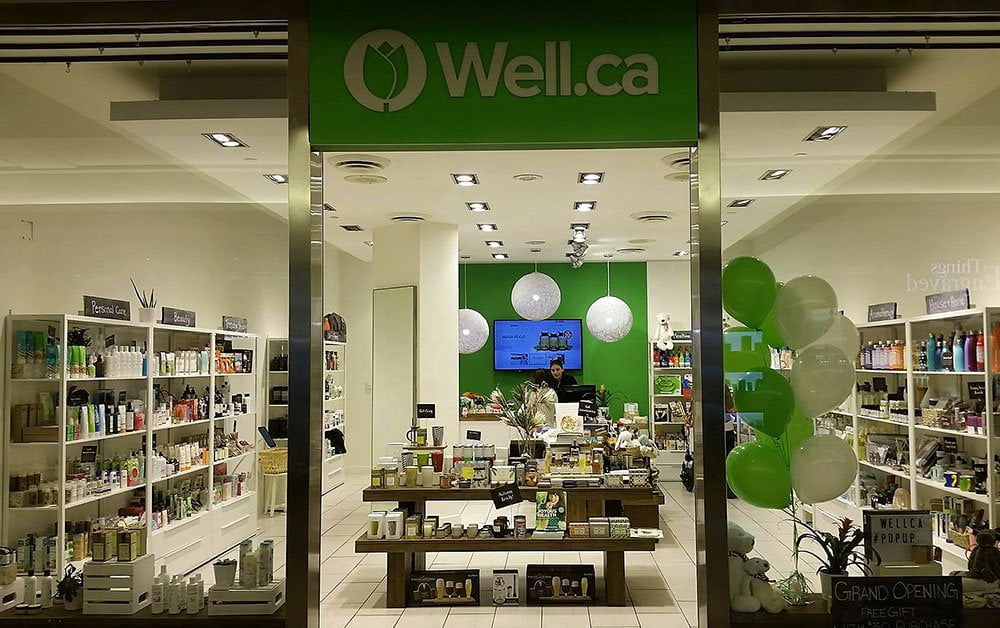
Well.ca, which celebrates its 10th anniversary this year, sells beauty products, baby products and a variety of health and wellness items. In particular, the retailer specializes in green and natural products, which comprise more than half of its annual sales.
“Our mission is to help our customers live healthier and happier lives,” says Erin Young, Chief Marketing and Merchandising Officer at Well.ca. “We’re seeing a lot of growth and excitement among our customers around more natural products and also craft brands, so things that are harder to find, things that people are discovering on social media.”
PHOTO: WELL.CA TWITTER
The brand’s business model revolves around providing “unique products, unique content curation and an exceptional customer experience,” Young adds. Beyond simply selling products, Well.ca has strived to create a community revolving around wellness, featuring articles, videos and advice on topics related to health and wellness, along with opportunities for shoppers to interact with their peers and with experts such as nutritionists, naturopaths and skin care specialists.
“Our view is that people want to make better choices,” Young says, “but often they don’t know where to start or how to do it.”
The company has grown significantly since it was founded in Guelph, Ont. in 2008 by Ali Asaria, a former software engineer at Research In Motion Ltd.
In December 2017, Well.ca was acquired by health care services and pharmaceutical distribution company McKesson Canada, which operates more than 2,000 retail pharmacies across Canada, including the Rexall Pharmacy Group.
Under the new ownership, Well.ca will continue to operate as an independent brand, however the acquisition could lead to some collaboration with McKesson’s other business units. For example, the Well.ca e-commerce platform could provide a new distribution channel for some of McKesson’s other properties, while McKesson’s physical retail footprint could present an opportunity for Well.ca to expand distribution through that channel.
“McKesson obviously brings a lot to the table – they have a great distribution business and supply chain – things we’ll be able to leverage,” Young says. “There are also great opportunities for us to explore partnerships.”
In addition to its e-commerce site, Well.ca currently operates a baby store in Guelph and a pop-up shop at CF Sherway Gardens, which opened in October 2016 and just closed at the end of January. In the past, the company also operated pop up shops at locations including Shops at Don Mills and Toronto’s Union Station.
“We find with physical retail, it’s a great way to introduce new people to the brand, and it’s also great for existing customers to come in and discover new things,” Young says.
Although Well.ca has more than 40,000 products available through its website, physical stores provide an opportunity for the company to showcase a curated selection of items that customers might prefer to buy in person rather than online.
“There are certain things that people want to touch and feel,” Young says.
The brand is now on the lookout for other potential pop-up store locations, she says, as well as opportunities to sell Well.ca products within other retailers’ stores. The new relationship with Rexall, for instance, could result in distribution of Well.ca products through that retail chain.
“We are exploring partnerships with other retailers, and ways of putting a Well.ca store within a store,” Young says.
GREAT HALL AT UNION STATION IN TORONTO (PHOTO: WIKIPEDIA)
Toronto’s historic Union Station is transforming into a world-class commuter and retail destination. It’s already the busiest transit centre in the country, even surpassing Toronto’s Pearson International Airport, in terms of annual visitors. Union Station’s retail component is seeing an overhaul with plans for more than 100 retail spaces contained within a significant heritage structure that in many ways is the heart of the city.
Osmington is creating a retail mix at Union Station that will not only be compelling to visitors and commuters, but also to the immediate area which is seeing an incredible population explosion in new residential towers. Some new towers east of Yonge will be nearly 100 storeys tall, in an area that will only get busier as everything comes together.
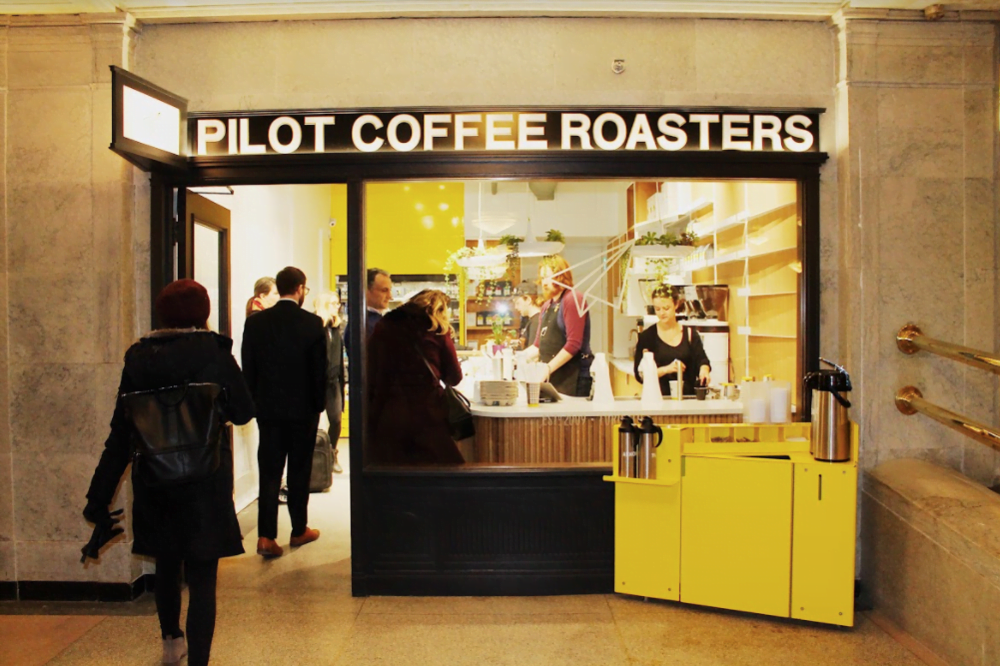
Over the past several years, Union Station has been under construction — the heritage complex is being restored, and retail is being added in order to serve the busy area. This will be a big year for Union Station, as retailers begin to open their doors. “Front Street Promenade” is considered to be Union Station’s ‘main street’ as tenants will be skewed towards local retailers, bringing a local vibe and street flair. The goal is to convey to visitors to the station a ‘sense of Toronto’ at Union, reflecting unique offerings throughout the city. Several retail spaces in the Front Street Promenade were recently unveiled, housing an innovative grouping of local retailers and restaurants. Included are new tenants such as Danish Pastry House, Naked Beauty Bar, Peace Collective, Pilot Coffee, and CXBO Chocolate, all of which opened retail spaces at Union Station in December. Being a busy commuter hub, restaurants are also being added — Amano and Union Chicken both opened in December in the “York Street Promenade”, as well, and both are already packed daily, particularly for lunch time.
(PHOTO: CRAIG PATTERSON)
More tenants will be opening over the next few months in Union Station’s Front Street Promenade, including Forno Cultura, Greenhouse Juice, Calii Love, and The Detox Market. Beer hall/sausage concept WVRST will open this summer, in the York Street Promenade. Retailers will continue to open in various phases and neighbourhoods of Union Station in the coming months and into next year.
Union Station is a remarkable transit hub, serving more than 250,000 weekday passengers via commuter Metrolinx’s GO Trains, GO busses, and UP Express to Pearson Airport, as well as a busy TTC subway station, VIA Rail, and the PATH (indoor walkway system connecting buildings). The Air Canada Centre sports facility is connected to Union Station to the south, serving fans of hockey, basketball, and various musical and entertainment-related performances and events.
Union Station already gets more than 63 million annual visitors — that’s 13 million more than CF Toronto Eaton Centre, which is considered to be North America’s busiest shopping centre, by far. With a significantly projected increase in employment and residents in the area, Union Station’s visitor numbers are expected to spike even more.
Lower Level Retail Street Level Retail Plan
(All renderings above, of the new food hall, are courtesy of GH+A Design)
Office towers employing thousands surround Union Station and during rush hour, the area is densely packed (as is the case for game nights, as well). The Toronto Convention Centre is nearby as is the CN Tower, Ripley’s Aquarium and various other attractions — in many respects, Union Station is a significant city destination and it will be getting considerably busier as more office buildings are built nearby, more people utilize public transit, and thousands more people move into the area, which has gone from being sleepy to vibrant in less than a decade.
Thousands more people will be moving into the area over the next several years, with a forest of skyscrapers set to begin construction south of Union Station, and east of Yonge Street. Many of the new neighbourhoods will be connected directly to Union Station via the city’s indoor pedestrian PATH system, and Union Station anticipates becoming something of a neighbourhood retail and social hub for those living nearby. Already, thousands have moved into new condominium towers in the adjacent South Core area, with thousands more workers housed in new office towers that have been sprouting up in the area.
CXBO CHOCOLATES AT UNION STATION
One significant project that is expected to bring between 15,000 and 20,000 more employees into Toronto’s downtown core is the new CIBC Square, being developed by Ivanhoé Cambridge. There will be two towers: a tower at 81 Bay Street will be completed in 2020 along with a new park, and a second tower is set to be completed by 2023.
Some are even saying that, given all of the office construction happening adjacent to Union Station, that the area is replacing the King Street and Bay Street intersection as being the heart of Canada’s crossroads. While that might be up for debate, numbers indicate that office rents near Union Station are now just as high as those a few blocks north at the heart of the prestigious King and Bay financial crossroads.
A new food court is set to be unveiled towards the end of the first quarter of 2018, housing 11 vendors that will be a mix of local as well as national and international concepts. Popular big brands such as Tim Hortons, McDonalds and Pizza Pizza will join some leading local vendors such as Paramount Fine Foods, Loaded Pierogi, Scaccia, Roywoods, Bangkok Buri and others.
Union Station’s updated ‘Bay Street Promenade’ will eventually house more national retailers. Given its positioning on Bay Street, this part of Union Station will feature ‘more popular’ brands — the reasoning is that more commuters will be time pressed passing through this area, giving them less time to explore and discover the local brands housed elsewhere in Union Station.
The area around Union Station is seeing an incredible amount of development — and some proposed towers will be even taller than as represented in this scale model.
The Great Hall, considered to be one of Canada’s most iconic ‘urban rooms’, will act as an anchor to the centre — at the corner of Front Street and Bay Streets will be a signature restaurant, boasting a contemporary interior and a heritage facade.
Being next to sporting and entertainment facilities such as the Air Canada Centre, Union Station’s tenant mix will also target those attending events by offering an expansive food and beverage offering.
The multi-phase, multi-year Union Station transformation will ultimately end up anchoring one of the most vibrant urban areas in North America, as Toronto’s Central Business District solidifies its position as a world-class centre. More phases are planned at Union Station, and we’ll be following up and reporting on new developments periodically.
A trend that we’re seeing from the big retailers, i.e. Apple, Google, Microsoft, Alibaba, eBay, Amazon, is that they’re looking to deliver augmented reality and virtual reality experiences to customers in a huge way in 2018.
In a recent interview, Apple CEO Tim Cook said he believes retailers will find augmented reality as key as having a website, and that the technology will transform everything from fashion runway shows to shopping. The world that Cook envisions one day is a world where customers will essentially be able to “point and buy” products. Additionally, at a European conference, Google Director of VR and AR Greg Jones argued that the role of AR is set to be transformative and that’s particularly the case when it’s applied to retail.
But for now, we have frontrunners that are already in full swing and it’s important to understand you don’t need to be as big as these guys to start somewhere. It’s time for smaller retail brands to pay attention. Here’s why.
AR is Immersive and Engaging
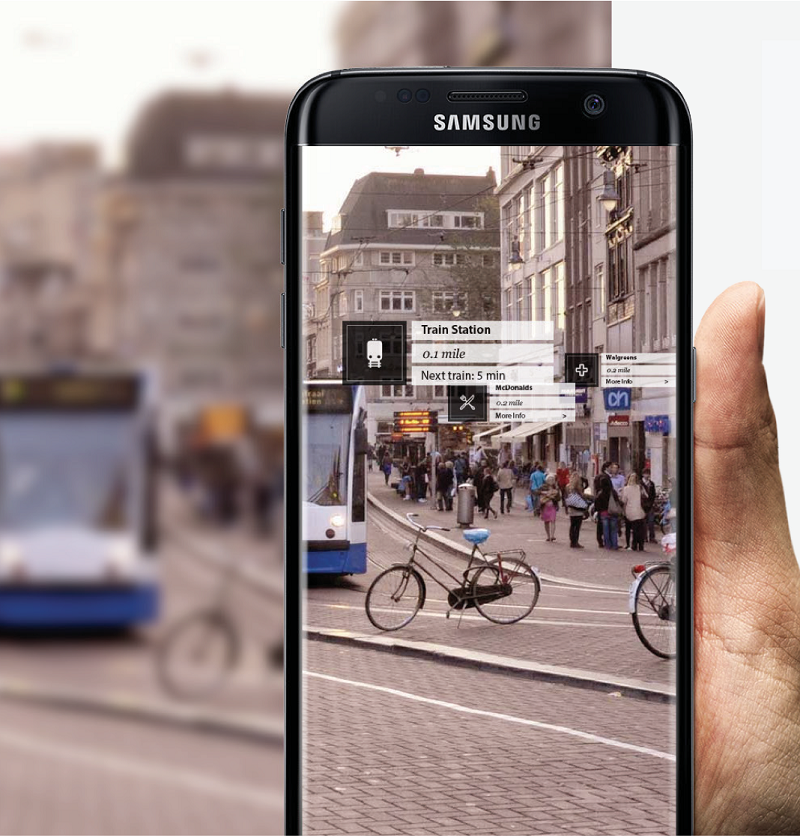
AR can instantly provide consumers with an immersive and engaging experience. AR can fill in the gap that leaves customers hanging for more information, standing in a store reaching for their mobile phones.
As we enter the age of the experience economy, many retailers are searching for ways to reinvent the physical store, using lights, video screens, and audio. They’re constantly challenged to find ways to deliver more personalized service. AR can complement this. Augmented reality has the potential to become a trusted sales associate. And since AR is your trusted sales associate, it will have handled the first level questions consumers have on products, allowing “real” associates to focus on what they do best, upsell, cross-sell and closing the deal.
AR is in your Customer’s Pocket
Given that approximately 87% of shoppers do comparative shopping on-site with their mobile device, it’s really about leveraging the tools they already have in-hand. With AR, you can keep customers in your ecosystem both in-store and at home.
AR Dramatically Speeds Product Discovery
For all types of products from technology and electronics, to clothing and consumer goods, customers are constantly looking for more information. They want to know, what’s behind this?
CPG is ripe for this opportunity. Take the example of a grocery store. Do you want to know the nutritional values of various foods? Where does that vegetable come from? What can I cook this ingredient with to surprise my guests? Is there a simple recipe I could try?
Using the phone, customers can point at any product and get this type of augmented information, making them more knowledgeable consumers. And, as we now realize, anything can be augmented! With AR information on products in-store and in-shelf, customers are more likely to say, okay, let me grab one of those, even if they’ve never tried it before.
Customers aren’t the only ones using it
From logistics companies and high-end to mid-level retailers, it’s not only customers that are impacted with the advantages of AR. Take DHL for example, one of the largest shipping companies in the world. They’re implementing AR in their logistics chain. In a pilot study they demonstrated a minimal 15% increase in productivity as well as an important decrease in mistakes by using AR.
The technology guides their work, so that instead of scanning bins in the aisles, they use their AR glasses, and the technology ensures the package goes to the right place. The reduction of human error is amazing.
Anyone that has online ordering can do the same on their back end. This can be a benefit to any and all retailers.
AR can also be used as a training tool. New associates who need to learn about the products in store can do so using AR and VR, eliminating the knowledge gap for new employees. It could standardize training and take away the element of subjectivity in training as well as having proven better impregnation of information.
Who will benefit the most from AR?
he real winners are the customers. They’re gaining access to a much more engaging experience, by getting answer to fundamental questions about products while perusing the shelves and aisles of their favorite store.
Any brand that offers an augmented experience is going to be preferred by customers. Think about the home decoration market. Ikea is a good example of that. Their AR app, developed with Apple ARKit, already has hundreds of thousands of downloads – yet they only have about 500 out of hundreds of thousands of products available in the app but still, consumers love it. It’s just a starting point. They started small, but they’re going to iterate.
I’ve been an advocate for iteration for a long time. I’m the first to tell you: don’t wait for the killer app! It won’t be tailored to you. Create an experience that’s in sync with your business issues and objectives. Release at 70-80% and iterate following the learnings you gather from user feedback. It doesn’t matter how big or small you are – AR not only provides information to your customer, but it also provides the retailer information about what a customer is looking for—their behavior. There’s no business size that’s too big or small not to gather customer behavior information.
The bottom line is that Augmented Reality is here. There are more than 600 million mobile devices out there that are AR capable. Consumers are eager to have these experiences. It’s up to you to give them some.
Jean-Francois Tremblay is AR/VR Practice Lead at Valtech, where he focuses on high level strategy and the integration of VR and AR solutions across Valtech Group’s broader product and service offering.
THE CURRENT ARITZIA STORE AT 50 BLOOR ST. W. WILL SEE ITS FACADE TRIPLE IN LENGTH, TAKING OVER THE FORMER ENTRANCE TO THE HOLT RENFREW CENTRE/HMV, AS WELL AS A RETAIL SPACE FORMERLY OCCUPIED BY BCBG. PHOTO: CRAIG PATTERSON
Vancouver-Based multi-brand women’s retailer Aritzia will significantly expand its store on Toronto’s Bloor Street West next year by annexing space formerly occupied by BCBG, as well as a former entrance to the Holt Renfrew Centre. When it opens in the spring of 2019, Bloor Street’s Aritzia will be one of the company’s largest stores.
The current Aritzia space at 50 Bloor Street West spans just over 4,900 square feet on one level. Holt Renfrew Centre’s former 5,050 square foot BCBG space, adjacent to Aritzia, will be merged with the existing Aritzia store that will coincide with a full renovation to reflect the brand’s updated aesthetic. As well, a street-level entrance to the Holt Renfrew Centre, located between Aritzia and the former BCBG space, has been shuttered to be integrated into the new Aritzia store, which will span almost 11,440 square feet on one level. That street level entrance was formerly used as an entrance point to music retailer HMV which had a store upstairs, as well as escalators downstairs into the Holt Renfrew Centre.
The downstairs escalators will be kept, according to Aritzia, providing direct access from Aritzia to the Holt Renfrew Centre concourse level below. A new illuminated marquee entrance will welcome visitors from the street level to the expanded Aritzia flagship.
CHICAGO RUSH STREET FLAGSHIP. PHOTO: ARITZIA
The store’s interior will be renovated to reflect Aritzia’s updated aesthetic seen in newer stores such as the Chicago Gold Coast flagship that opened last year. The expanded Toronto store will feature plenty of natural light from the south-facing windows on its facade. The store’s interior will also feature “marble merchandising tables and cash desk, wire-wheeled oak tables and architectural wall panels, custom built-in millwork, custom graphic wall murals, steel and glass interior partitions, custom raked stucco walls, and polished concrete and herringbone marble floors,” according to Aritzia.
As well, the store will feature a lounge area, an eclectic selection of new and vintage floor fixtures, and curated works of art, sculptures and books. The design is described as being both “feminine and spacious”, with plants throughout.
Aritzia has been upsizing many of its existing locations by annexing space to create flagships, as it continues to see success with its retail model that includes in-house as well as a selection of designer brands. The company’s in-house brands TNA, Wilfred and Babaton have all been expanded to include their own standalone stores in selected markets — in markets where Aritzia store real estate is constrained, the company has unveiled locations for these brands.
CHICAGO RUSH STREET FLAGSHIP. PHOTO: ARITZIA
Aritzia’s Bloor Street store will be part of an impressive redevelopment of the area. Across the street, a soaring tower called ‘The ONE’ is now under construction, with a multi-level retail podium that many speculate will include a 19,000 square foot Apple flagship store. This spring at 1 Bloor Street East, Nordstrom Rack will open its third Canadian store in a space encompassing close to 40,000 square feet. The retail podium of the Manulife Centre at 55 Bloor Street West is undergoing a transformation that will see new and renovated store locations, as well as Canada’s first Eataly, that will span three levels and about 50,000 square feet. Holt Renfrew, located in the same complex as Aritzia, is also undergoing a piecemeal renovation that also includes adding more space, including recently leasing about 8,500 square feet of mezzanine space formerly housing the HMV music store. We’ll also soon discuss a significant development that will take place just steps away from the newly expanded Aritzia.
The Holt Renfrew Centre is a 247,000 square foot retail centre at 50 Bloor Street West housing a 190,000 square foot Holt Renfrew store, as well as several retailers that are located primarily on its lower-level, accessed from the city’s underground PATH pedestrian network that connects to adjacent commercial properties. According to the Retail Council of Canada 2017 Shopping Centre Study, the Holt Renfrew Centre saw annual sales in excess of $1,000/square foot last year.
Showcase Pianos had a dilemma and CBRE broker/Associate VP Martin Moriarty had a solution. The 10-year-old piano store had outgrown its location and with the lease expiring at the end of 2017, the search was on for a suitable space. It was a solution that would not only house a sizeable piano showroom, but a performance hall, multiple classrooms, and sales offices. A suitable space was found literally right down the street and Showcase Pianos moved one block west into the retail space previously occupied by the Sony Store at 1128 W. Broadway under the infamous Toys R Us/Bowmac Sign.
Showcase Pianos grew from 1,500-square-feet to over 4,300-square-feet and even at three times larger, every inch of the space is maximized. While Showcase Pianos is known as the official representative for high-quality instruments, such as C. Bechstein, W. Hoffmann, Seiler, Wm. Knabe, and Wm. Steinberg, it is the relationship of this relatively new business with Italy’s Fazioli Pianoforte that draws the most attention — Showcase Pianos sells more of them than any place in the world.
Owners, Manuel and Judy Bernaschek, cultivated the relationship with the Fazioli family in the early 2000’s after noticing that many of the world’s greatest pianists were leaving their chosen brands to play on Fazioli. A trip to Italy solidified a new ‘partnership’ and the Bernascheks and Showcase became the exclusive distributor of the brand in British Columbia.
(PHOTO: SHOWCASE PIANOS)
PHOTO: SHOWCASE PIANOS
Fazioli played by Paolo Fazioli.
“We have sold over 100 Fazioli pianos in the Vancouver area in the last decade – which is not easy since they are the most costly pianos in the world!” says Bernaschek. Another sales hurdle is the production time with the standard black finish F156 (5’2”) to the F308 (10’3”) requiring 40 workers almost 2,000 man hours to produce and a delivery time of approximately three to four months. Change the finish and production time can stretch to a year.
Canadian real estate developer Westbank Corporation is also a client, having ordered a series of customized pianos to augment the allure of their buildings. Canadian real estate developer Westbank Corporation is also a client, having ordered a series of customized pianos to augment the allure of their buildings. Working in conjunction Design Principal, Venelin Kokalov of Revery Architecture, the Butterfly piano was designed and created specifically for The Butterfly building which is under construction in downtown Vancouver near the corner of Burrard Street and Nelson Street.
The price-tags of customized Fazioli have pushed pricing upwards of $900,000 and there is no evidence that the cost is a stumbling block to purchasers as Vancouver real estate development continues to cater to affluent buyers internationally.
Manuel Bernaschek with Paolo Fazioli.
Bernaschek credits the businesses positioning in Vancouver as being a key part of Showcase’s success. “Vancouver is a place that is home to many well-heeled Asian families who place a strong emphasis on education, which includes the study of music…many Asian families choose to give their children the advantage of having a better instrument from the beginning, allowing their children to develop their creativity and expression to a greater degree. Right now, the Fazioli is the finest piano available on the market; so many families will choose to have one in their home.”
Currently, in Vancouver, Fazioli Pianoforte founder Paolo Fazioli smiles as he explains why the west coast is home to so many of his beautiful pianos: “It is Manuel. Manuel has charm but he is also a great multi-tasker with a great knowledge of his market.”
With the new location and over 370 students, Bernaschek has a goal to see the study-body surpass 500 in 2018, a figure that will positively impact Fazioli sales if Vancouver’s affluent parents continue investing in their children’s musical futures.
The Travel Centre, at the intersection of King and Spadina in Toronto, represents a rethinking of the corporate workplace, merging a storefront retail area and an event space with united offices for Flight Centre’s four brands.
George Foussias, Design Director, with Quadrangle, which was the architectural/design team for the project, said the goal was to establish a location where working, selling and socializing seamlessly collide.
“A key challenge of this project was to design a workplace that easily accommodates and unifies the multi-use spaces from day to night, while bringing together all the entities within the Flight Centre brand,” said Foussias. “We started by locating an anchor, vintage building, into which we fit a boutique retail store, a signature event space, and a state-of-the-art work environment that speaks of travel, wonder, and adventure.”
The aim was to create an environment that would inspire people to travel and so the interior was influenced by 19th century explorers’ clubs and movies about fantasy travel including The Life Aquatic with Steve Zissou.
The building was originally built as a 19th Century garment factory. The scale and heritage quality of the facade was kept intact while eye-catching interiors capture the attention of people walking by.
The Travel Centre occupies about 10,000 square feet in the six-storey building. Previously, a retail store occupied the space.
“The building itself is a fantastic heritage, signature building,” said Foussias. “There’s a beautiful, beautiful old industrial look to it with exposed brick, exposed wood and wood beams because it used to be an industrial building. So when the retail store went in they covered a lot of it and hid a lot of pieces. We gutted it out to clean it up. We just opened it up as much as possible.”
The Travel Centre’s motto is “to open up the world for those who want to see” and the building’s space reflects that.
“The vision was to create a hub to showcase all of Flight Centre’s brands in a very strong key location in Toronto,” said Foussias. “They wanted a space that was strong as an anchor in Toronto. We came up with a strategy and a vision on how to do that. Our approach was to create sort of a fish bowl – a space that’s visible from everywhere where all these brands are within but they’re all visible to everyone.
“We defined different areas within an open floor plan where these brands are blocked by colour blocking and by signature words and mantras that they have.”
Foussias said Flight Centre also wanted the ability to have a space within the site that would allow them to host events. So the upper floor is a flex space within the warehouse where furniture can be removed to create one big venue that can hold more than 300 people.
He said the ideals of adventure, travel, not taking things way too seriously, wonder, and the mystery of travelling were important elements of coming up with the design for the space.
When someone enters the double-height lobby and retail space they immediately notice the contrast between the historic post and beam interior and an angled black box boardroom.
“The entry invites curiosity, casting views in multiple directions, while inviting the live beat of the busy street to infuse the interior. Comfortable tables, casual chairs and banquette window benches invite guests to linger, leaf through the displayed brochures and discuss their travel plans,” says Quadrangle about the unique design. “Monitors display the days’ best travel deals. The floors, decorated with a pattern of oversized passport stamps, immerse visitors in their own travel fantasy.
“On the upper level, a spacious Explorers Club serves as an event space, a drop-in workspace for visiting executives, and a backdrop for social media broadcasts. An open-concept serving kitchen and bar sets the atmosphere for hospitality and entertainment. Informal gatherings can take place in the Map & Charts Room or the Travel Library, and desks concealed in oversized travel trunks on casters can be opened to provide personal workspaces.”
The lower level workplace area brings the various Flight Centre brands together in a single location.
Quadrangle, which is based in Toronto, has about 172 people.