Advertisement
Home Blog Page 1113

New App Launches to Help Students Find Jobs

Image: SWOB

A new app is helping to make it easier for students to find jobs and for companies to reach potential new staff.

Swob Inc., is the Tinder for jobs. It’s a free app designed to make job searching easy and convenient. Through the use of technology, students can now search for a job with the simple use of their phone.

Swob is the first-of-its kind service to target students in high turnover industries such as retail, and food services for part-time, seasonal and full-time employment.

The idea was the brainchild of brother and sister co-founders Stephanie Florio and Alexander Florio. Both studied at York University and then both went to Seneca and studied marketing. After graduating, both Alexander and Stephanie worked in advertising and public relations for four years.

“I was working in a marketing agency and for the first few months loved it but fast forward I didn’t enjoy it at all,” says Alexander, who then ended up spending a lot of time looking for another job.

He became frustrated but that’s when the idea for Swob was born and the duo has never looked back.

They met with students and got their feedback – not much was tailored for this demographic in terms of the job hunt process.

“We made it very easy for them . . . We basically eliminated the step of them having to go into the malls with a stack of resumes. We’re making that initial introduction for them,” says Alexander.

Since the app went live on November 1, 670 students have used it.

It’s free for students and Swob generates its revenue from companies who post jobs on the app. To date, its clients include McDonald’s, Tim Hortons, Pizzaville, The Keg, Kelsey’s, Paramount Fine Foods, and M&M Food Markets.

“Students that are looking for jobs when they download the app they answer a few simple questions and create a profile and from there they select how far they want to travel depending on their location and then they can select what industry they would want to be in and what they’re looking for,” says Alexander. “So whether it be full-time, part-time. And they can select the industry – retail, restaurant, customer service. From there, jobs will start to appear.

“It’s the Tinder (dating app) for jobs. If a job appears and they don’t like it, they swipe left and never see the job again. Swipe right if do like the job and then they can apply.”

For employers, they are able to experience the benefits of securely filtering through the best possible candidates, safely and efficiently.

For students, it’s a way to look for part-time, full-time and seasonal positions.

“As of right now, we’re only available in Toronto in the GTA area but that’s just because we’re a startup right now. But slowly, slowly we want to expand nationally all across Canada for sure,” says Stephanie.

She says the service is only live now on the App Store but early next year it will get the app for Google Play for androids.

Mark’s Rebrands to Attract New Customers

(PHOTO: MARK'S)

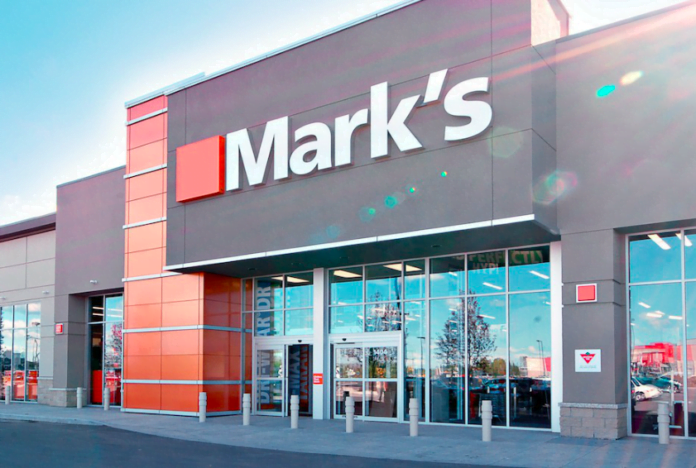
Mark’s, a Canadian clothing and footwear retailer specializing in casual and industrial wear, has embarked on an ambitious new branding campaign to attract new customers.

Well Worn is an expression of the company’s new brand platform with the goal of getting back to the retailer’s heritage which began in 1977 as Mark’s Work Wearhouse with its first store in Calgary.

“It’s about being authentic and real,” says PJ Czank, president of Mark’s, which today has 384 stores across the country. The retailer falls under the umbrella of Canadian Tire.

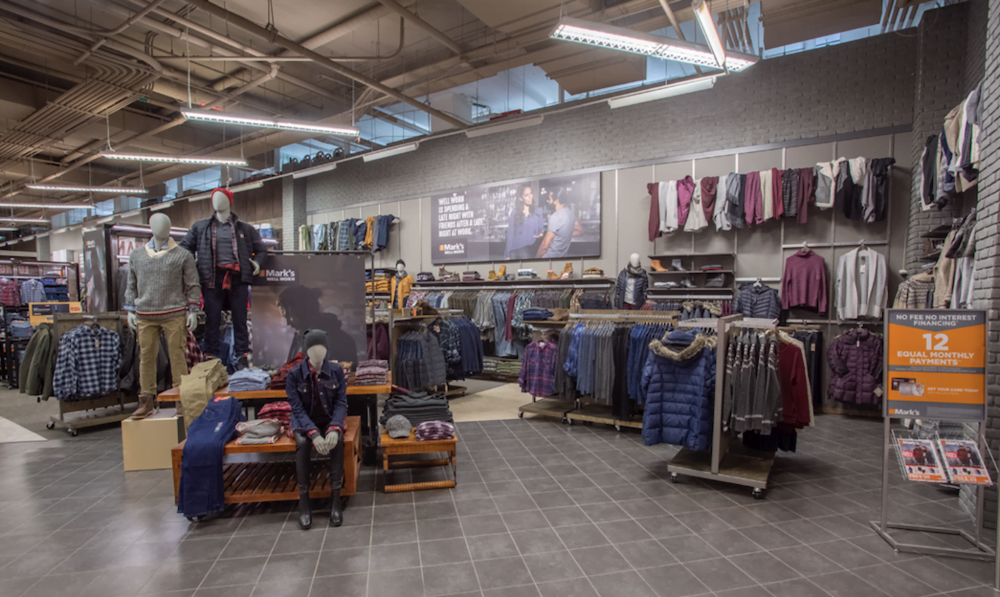
(UPDATED STORE INTERIOR. PHOTO: MARK’S)

“Mark’s has been around for 40 years and it’s a brand that people know and trust. We built the company on quality and durability. So for us Well Worn is really a positioning that celebrates the Canadians like us who persevere with grit and determination.”

Canadians who work hard and play hard.

“Mark’s is still the same Mark’s that customers have known for 40 years but our goal is to expand and to introduce the brand to a new consumer as well,” adds Czank.

To that end, Mark’s is opening three pop-up stores November 30 on Spring Garden Road in Halifax, Queen Street in Toronto and CF Market Mall in Calgary.

(WELL WORN IS BEING A JACK OF ALL TRADES, AND MASTER OF A FEW. – MARKS CANADA INSTAGRAM)

“We were looking for spaces in places that would reach a customer who traditionally wouldn’t consider Mark’s. It’s a bit of a first for Mark’s. It’s a different approach. It’s allowing us to bring the brand platform – the Well Worn platform – to a new consumer,” says Czank.

“The goal of this is to have fun with the concept. We want to introduce a new concept and we’re putting these stores up very quickly. And this shows the new approach that Mark’s is going to have. We want to be nimble and we want to react to consumers. We want to be able to understand what it is that’s going to resonate with a Well Worn customer.”

The pop-up locations will be operating for six months.

Recently, Mark’s turned its store at the CF Toronto Eaton Centre into a new concept. The assortment was edited and re-merchandized as the company focused on its hero categories which include outerwear, jeans, casual shoes and industrial – its leading categories of clothing.

(WELL WORN IS SEEING YOUR 7-DAY WEEK TURN INTO 8. – MARKS CANADA INSTAGRAM)

“The appeal of the store is already attracting a different customer into the store. It’s created an easier shopping experience. We’re showing people how to wear clothes versus  traditionally commodity merchandising,” says Czank, adding that the concept has found its way into 85 stores across the country.

“Anybody that has shopped at Mark’s will still feel comfortable but anybody new walking into Mark’s is going to look at Mark’s in a whole new way.”

The overall goal is to change perceptions and introduce new customers to Mark’s thereby expanding its target audience.

“I think there’s a lot of very exciting things that are going to happen for Mark’s in the future,” says Czank.

The first Mark’s Work Wearhouse store opened August 14, 1977 in Calgary as an industrial accessories retailer. With early success, the company expanded rapidly going public in 1981. Mark’s Work Wearhouse was purchased by Canadian Tire Corporation for $116 million in 2002.

Hermès Unveils Impressive Mink Mile Flagship

(PHOTO: HERMÈS/EVAN DION)

Iconic French luxury brand Hermès has reopened its Toronto flagship, in a retail space that is considerably larger than its former location up the street. The expanded Hermès marks a milestone in the transformation of Bloor Street West, as it continues to attract global flagships. 

Now located at 100 Bloor Street West, Hermès’ new Toronto flagship includes about 5,800 square feet of retail space. In total, the store occupies almost 12,000 square feet with about 4,000 square feet on the ground-floor, as well as an additional 8,000 square feet on the second level. 

Arlin Markowitz of brokerage CBRE’s Toronto Urban Retail Team negotiated the 100 Bloor Street West Hermès deal. 

Hermès’ previous location at 130 Bloor Street West, which closed last week, had about 2,300 square feet of retail space in a leased premises spanning 3,965 square feet (Now downsized to 2,520 square feet, the former Hermès space is being offered for lease by CBRE’s Mr. Markowitz). 

(CLICK IMAGE FOR INTERACTIVE GOOGLE MAP)
Hermès Toronto at 100 Bloor Street West (CNW Group/Hermes Canada inc.)
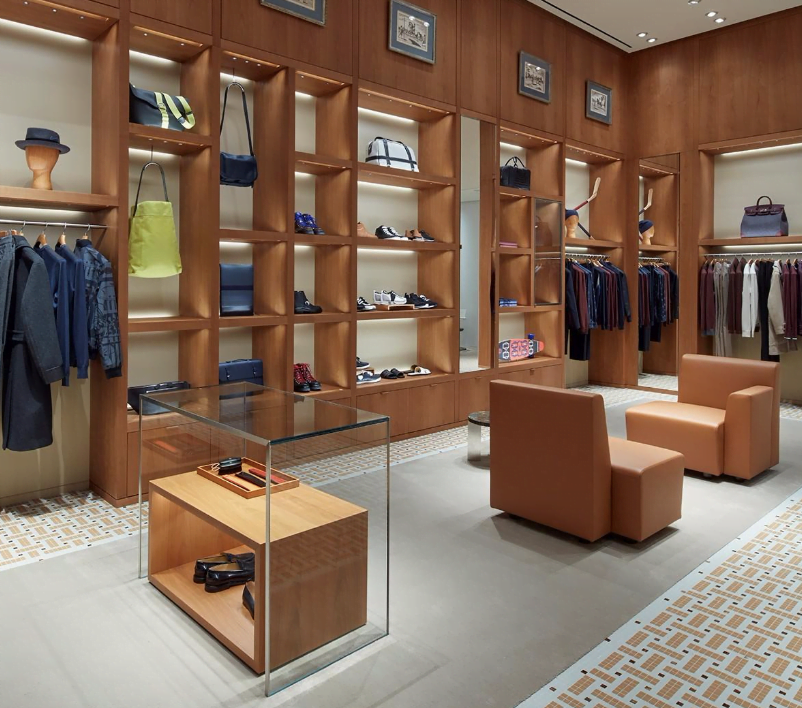
(MEN’S AREA ON THE MAIN FLOOR. PHOTO: HERMÈS/EVAN DION)

The new Hermès is about 10 times the size of the brand’s first Toronto boutique, which opened at Hazelton Lanes (now Yorkville Village) in 1976 with just 600 square feet of accessories (it expanded in 1981 to carry ready-to-wear). York Hannover, Hazelton Lanes’ developer, sold the licensed boutique to Jennifer Carter in 1989 and in the spring of 1992, she relocated the boutique to The Colonnade at 131 Bloor Street West (in the 2,240 square foot retail space now occupied by Mulberry). In the summer of 2008, Hermès relocated to 130 Bloor Street West, and Ms. Carter remains President of Hermès Canada to this day. 

Hermès new 100 Bloor Street West store is located in a retail space formerly occupied by Williams Sonoma, which exited Bloor Street in January of 2017. A Holt Renfrew Men’s store is located next to Hermès to the east, and a luxury brand will open a boutique next year on the other side of Hermès. 

The new Hermès’ exterior includes a simple beige rose brickwork facade with beveled windows and large, recessed windows. The original Williams Sonoma store interior was stripped to the studs and rebuilt — the complicated and disruptive process took months. Parisian architecture agency RDAI designed the space. 

(STONE FRAGRANCE TABLE IN A DEDICATED FRAGRANCES AREA ON THE GROUND FLOOR)
(MAIN FLOOR SILK AREA)

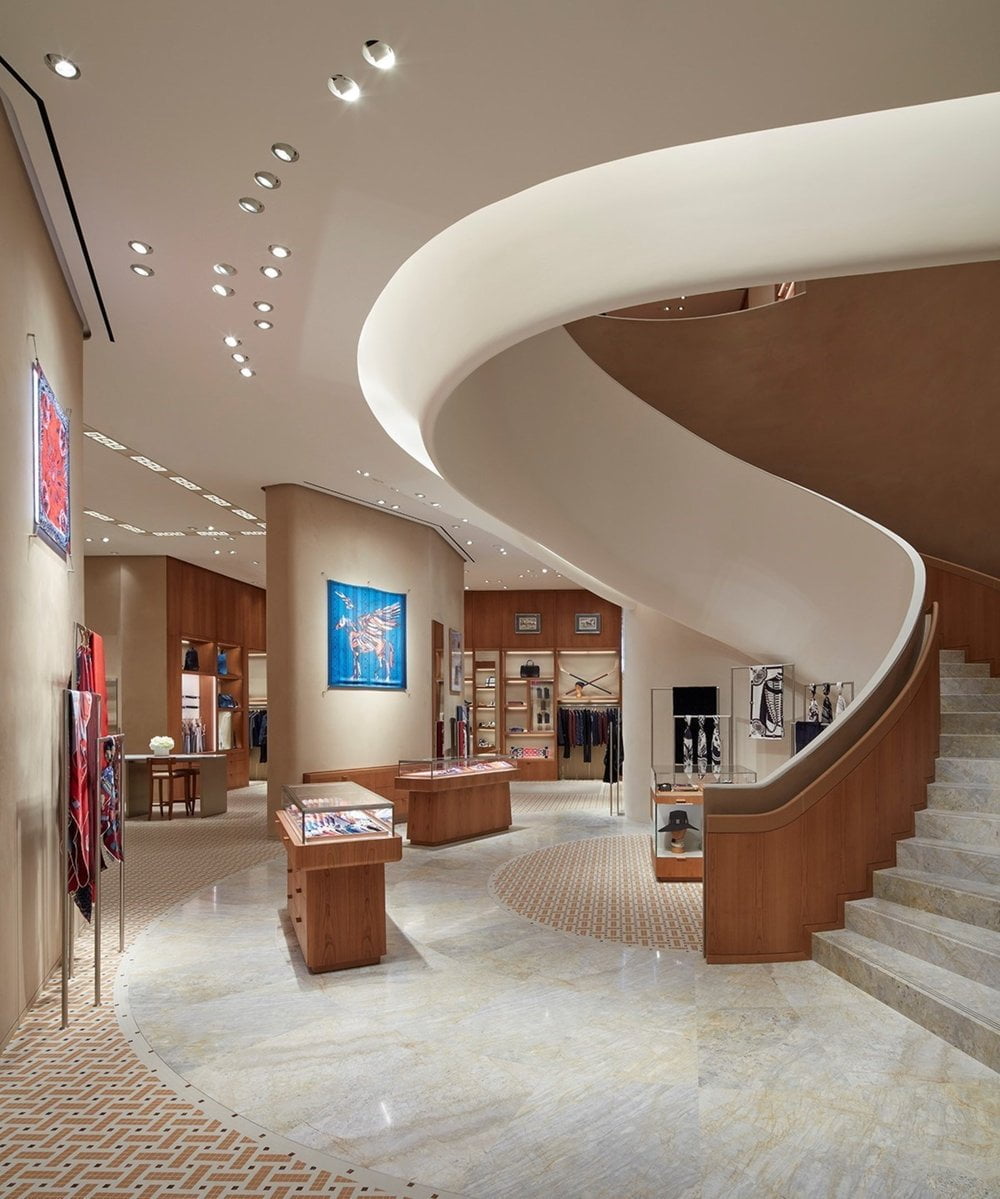
At the centre of the store is an oval staircase with marble steps and cherry wood topped with a leather handrail. It’s immediately visible as one enters from the ground floor, which also houses scarves, jewellery, fragrances, and men’s ready-to-wear. The fragrance area includes a dedicated table, and the men’s area includes custom-made hockey sticks created specifically for the new store. 

The second floor includes an expansive offering of women’s ready-to-wear, as well as Canada’s first Hermès home department. Included in the home section are wallpapers and textiles as well as tableware, plaids, and objects for the home. The second floor also includes a personalized space that can be closed off for privacy. 

Because of the configuration of the space, which includes ample second-level back-of-house operations, the store’s retail 5,800 square foot area is smaller than some of Hermès’ North American flagships. In New York City, Hermès occupies more than 30,000 square feet on Madison Avenue in two stores (Hermès operates a standalone men’s store as well as a grand space for women/home, as well as atelier) and other large stores include Beverly Hills (12,000 square feet), Las Vegas (Wynn, 13,000 square feet), Houston (10,117 square feet), Dallas (8,400 square feet), Miami Design District (12,000 square feet), Boston (8,700 square feet) and at The Bravern in suburban Seattle (9,300 square feet). A substantially expanded San Francisco flagship is also due to open soon. 

(GROUND FLOOR SILK)
(PRIVATE SHOPPING AREA ON THE 2ND FLOOR)
(CLOSEUP OF THE STORE’S BRICKWORK FACADE — THOUSANDS OF BRICKS WERE BROUGHT IN FROM DENMARK)

Hermès will continue to expand its presence in Canada over the next couple of years. In a press release, Holt Renfrew confirmed that Hermès will expand its Montreal presence with a new 3,000 square foot boutique in an overhauled ‘Holt Renfrew Ogilvy’, which will result in the closure of a nearby Holt Renfrew as the retailers merge (Hermes operates a small street-front boutique at Montreal’s Holt’s). Vancouver will also see an Hermès flagship open in about 18 months, with about the same amount of retail space as the new Toronto flagship. Hermes also has a small boutique at Holt Renfrew in Calgary, which it opened in 2009. 

Toronto’s Bloor Street West is undergoing a luxury transformation that includes the addition of several new retailers. Moncler, MCM and APM Monaco recently opened on the street, and Prada is almost finished with an overhaul that has substantially expanded its Colonnade space into a massive global flagship. Luxury brand Christian Dior is another significant movement for Bloor Street West — towards the end of 2018, Dior will open a store spanning in excess of 13,000 square feet, making it Dior’s largest single retail space in all of North America. 

On the other side of Bay Street, Holt Renfrew is beginning the process of renovating its 50 Bloor Street West flagship and across the street at the Manulife Centre, Eataly will anchor a $100 million commercial podium redevelopment. At the corner of Yonge and Bloor will be One Bloor Street East and One Bloor Street West are substantial developments that will add exciting new retail and food and beverage offerings to the area — Retail Insider will profile Toronto’s Mink Mile extensively in an updated article next month. 

Organic Garage Continues Grocery Expansion

Rendering: Organic Garage Leaside

Organic Garage, a unique independent grocery store, will be opening two more locations in the Toronto area next year.

Matt Lurie, the company’s president, says a new location will open late in the third quarter or early in the fourth quarter of next year in the Liberty Village neighbourhood followed by another location in the Leaside area.

Organic Garage’s first store opened in Oakville just over 12 years ago and today there are other stores in Thornhill and one in Toronto on Junction Road.

“We cover basically every category of grocery. It’s a one-stop shop. It’s an A to Z gamut,” says Lurie of the company’s popularity.

Image: Organic Garage Leaside

The new location in Liberty Village is part of an historic building at 42 Hanna Ave. The store will have more than 13,000 square feet on the bottom floor.

“We are very excited to bring Organic Garage to this incredible neighbourhood and provide a shopping experience unlike any other in the area. The Liberty Village location enhances our expansion into the Toronto market,” says Lurie.

Lurie says the independent grocer’s success over the years is due to a package of four things it works hard on to differentiate itself from its competitors.

“The first thing is our brand. It starts with our name being very unique. Organic Garage. It’s two things that kind of don’t go well together but it seems to be memorable to people,” says Lurie. “The way we communicate to our customers is very transparent. It’s very blunt. Very honest approach. No corporate speak or anything like that.”

The second thing is the environment that it creates for its shoppers.

Image: Organic Garage

“It’s a very intimate shopping experience. It’s a market feel. It has a very cozy kind of experience that you don’t want to leave. You want to explore. That also sets us apart because most grocery stores you basically want to leave as soon as you get in. It’s not a very fun experience,” adds Lurie.

“The third thing is the product we carry. Our produce departments are 100 per cent certified organic. We don’t carry any conventional produce. It’s unique. There’s very few grocery companies that are that dedicated to organic. All our grocery items are vetted through a listing criteria that is very stringent. We want our customers to be able to shop in our stores and not have to read labels and not worry.”

Image: Organic Garage

Lurie says the fourth factor in the company’s success is its value proposition.

“We have tried to apply the discount principles that all the major chains apply to their conventional models . . . We’ve applied those same principles which is smaller store footprints . . . and passing those savings down to the customer in everyday price,” he says.

“It’s a store for everyone. It’s not for an elitist class. It’s not for the rich. It’s for anybody who wants to eat healthy and we have stuff that fits in anybody’s budget. The value proposition is very compelling.”

*Editor’s note: Organic Garage is represented by brokerage Savills [under the direction of Jordan Karp, Ryan Morein and Jay Katzeff]

JYSK Unveils New Canadian Flagship

exc-5a0fa623e2c4833a1eed2926

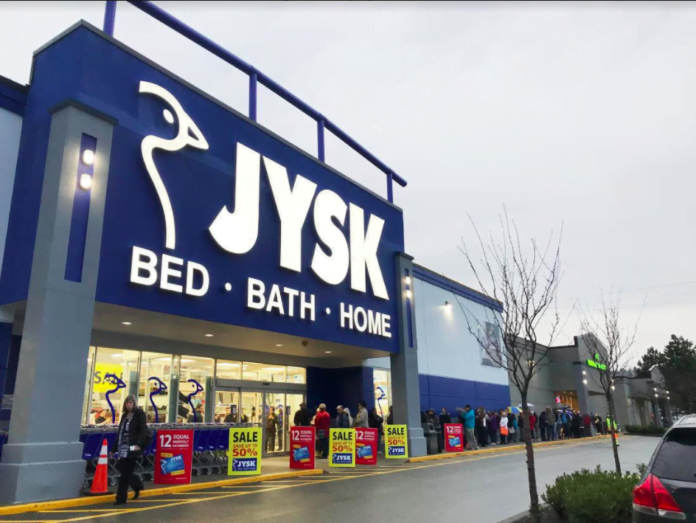
Danish home furnishings retailer JYSK opened its 2nd location in Coquitlam, BC, last week. It’s not just any store, however — the 40,000 square foot retail space is the chain’s Canadian flagship, with the company’s Canadian headquarters also being in British Columbia. 

The new store is located at 15 King Edward Street at United Boulevard, and employs 40 staff. It’s also JYSK’s 62nd Canadian store location, as the retailer continues to rapidly expand across Canada. 

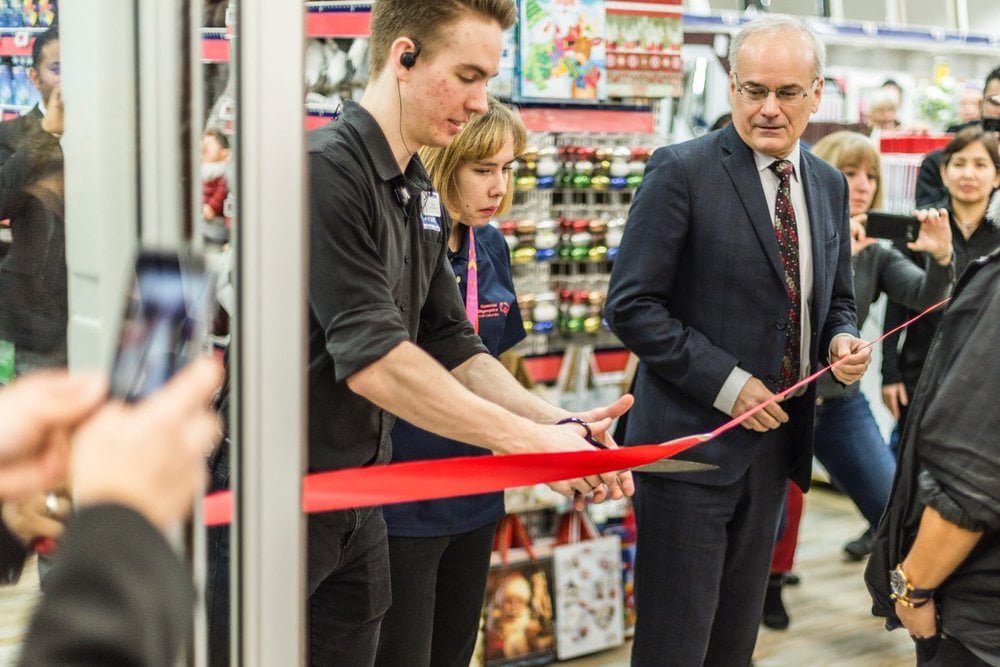
Special Olympics Athlete Ariel Taylor and Coquitlam Mayor Richard Stewart at Grand Opening

Special guests at the opening included Coquitlam Mayor Richard Stewart, Special Olympics Athlete Ariel Taylor, and JYSK CEO Ludvik Kristjansson. 

JYSK will open its 63rd Canadian store at Shoppers World in Brampton, Ontario, on December 2. In a recent interview, JYSK’s Director of Marketing, Lynne Williams, said that the retailer will continue with plans to open between five and 10 Canadian stores annually. 

JYSK has also been renovating selected Canadian stores in order to highlight its new store concept. JYSK’s primary store format is 30,000 square feet+, though some locations can be smaller or larger. Larger stores are able to accommodate an expanded Scandinavian furniture selection.

JYSK celebrated 20 years in Canada last year, and it will continue to grow in various markets. Terry Addington (416) 809-7844), Director of Real Estate JYSK Canada, is a real estate contact. 

JYSK was founded in Aarhaus, Denmark in April of 1979, and is now the largest Danish retailer operating internationally. The company operates 2,547 store locations in 48 countries. It sells household goods such as mattresses, furniture and interior decor, duvets and pillows, and also features seasonal furniture offerings.

Loblaw on the Defensive as the Amazon Bogeyman Lurks

Loblaw is the latest grocer to commit to offering home delivery.

Starting in December, the No. 1 food retailer in Canada is offering home delivery in Toronto and Vancouver with the aim of rolling the service out across the country throughout 2018.

It’s an ambitious plan indeed. After spending millions of dollars to transform many of its stores into veritable grocery cathedrals where food is adulated — like the cavernous Maple Leaf Gardens store in Toronto — delivering President’s Choice products right to people’s doorsteps is a new frontier for Loblaw.

(THE LOBLAW’S STORE IN THE FORMER MAPLE LEAF GARDENS IN TORONTO IS A VERITABLE GROCERY CATHEDRAL. CREATIVE COMMONS)

Basically, the socioeconomic fundamentals that have supported large big-box stores are weakening rapidly. Real estate is not cheap, growing same-store sales is difficult and finding good labour to cover large spaces is challenging.

In fact, as higher minimum wages in Canada are adding more pressure, grocers need to think of ways to make their equity and human capital work more efficiently.

What’s more, a good portion of the Canadian population will become less mobile to some degree in the near future.

Convenience is king

By 2025, more than eight million Canadians will be 65 or older. And if you add Canada’s unpredictable — and sometimes downright horrid — weather, these indicators point to one thing: The bricks-and-mortar model is becoming less appealing to a growing number of Canadians.

Our modern lifestyle is also a factor. Quite simply, time-strapped consumers are looking for convenience. Those who can’t or don’t want to cook are also looking for quick fixes, and that is exactly what the food retail industry is trying to offer.

Grocers are increasingly attempting to chase down the money that isn’t showing up in their stores anymore. Based on recent financial results published by Canadian grocers, bricks-and-mortar sales in food retailing are barely moving. As a result, we are continuing to witness the slow death of the traditional grocery store.

How so?

We’re dining out more often

For one thing, an increasing portion of our budget is dedicated to eating outside the home. At almost 30 per cent of all of money spent on food, Canadians are on track to breaking a new record this year. They’re simply not cooking or eating at home as much anymore.

Secondly, many of us are online, shopping for anything and everything. And yes, food is now part of that portfolio. About five years ago, barely one per cent of our food purchases were made online. Today, some unofficial estimates suggest that number is now close to four per cent (an approximation, based on trade reports).

(THE CHEESECAKE FACTORY OPENED ITS 1ST CANADIAN LOCATION LAST WEEK AT TORONTO’S YORKDALE SHOPPING CENTRE. PHOTO: CHEESECAKE FACTORY)

We are quickly catching up to the Americans, who are at seven per cent.

And given Walmart’s recent results, online grocery shopping is expanding. Walmart’s online sales in the U.S. grew by almost 50 per cent last quarter, much of which was food sales. Canada is seeing similar trends.

Amazon annihilates entire sectors

Even though grocers’ balance sheets in Canada are in fairly good shape, Amazon — the bogeyman of retailing — has become a legitimate threat since it took over organic grocer Whole Foods this summer.

Amazon Storefront

Amazon is not just a business-killer; it destroys entire sectors. The bookstore was its first victim, and since its acquisition of Whole Foods, we can assume that the grocery store is now in Amazon’s sights.

It’s all about digital transformation for Amazon. The company is redefining how the food industry and consumers make transactions in a digitalized, borderless world.

Among scaleable home delivery businesses, the Toronto area’s Grocery Gateway was one of Canada’s true pioneers.

For years, a fleet of trucks owned by Longo Brothers delivered groceries in the Greater Toronto Area while barely making a profit. In fact, Longo’s acquired Grocery Gateway back in 2004 from a failed dot-com project, a victim of the bubble bursting in that industry.

(PHOTO: GROCERY GATEWAY)

Grocery Gateway grows

For 13 years, the competition stood back and did nothing on the home delivery front, for fear of cannibalizing their own businesses by shifting sales away from stores. Several questioned the sustainability of operating a full fleet of trucks while at the same time charging a hefty premium of 15 to 20 per cent delivery on an order of $50.

But Torontonians used Grocery Gateway, it kept chugging along, and now it’s expanding. For Longo’s, it was about running a good business. But for Loblaw, it’s about fighting the Amazon behemoth, which is why we are about to see an evolution in home food delivery.

When leveraged by data, connecting food retailing with homes can be powerful. In some U.S. cities, Walmart is currently delivering food directly to the consumer’s fridge. Imagine coming home and finding everything is already done for you. But 10 or 15 years from now, as artificial intelligence dramatically changes how we live and work, there’s no limit to where home food delivery might be headed.

(PHOTO: LOBLAW)

Leftovers credited?

Perhaps we’ll see companies owning the food we receive, and we’ll only pay for the food we use and consume. Food waste? No problem. Leftovers might be credited, resold on our behalf and used for something else. Zero waste.

Similar gains could be achieved on the nutritional front. Consumers could wear a portable device that automatically tells the fridge when it’s time to get replenished to satisfy a specific diet. The “fitbitization” of our food could allow companies to deliver to our fridges and cupboards the food we need for optimal health.

At the moment, however, home delivery makes grocers face up to a more informed consumer.

All the data consumers need is readily available online, where they can also shop at their own pace. It makes consumers more rational given they are not confronted with aisle upon aisle of products in those aforementioned grocery cathedrals, so impulse buying is diminished — a scary thought for many grocery chains.

In return, grocers need to embrace what are known as precision retailing practices, anticipating the needs and wants of consumers in real time, in order to match higher expectations.

All of this becomes more conceivable with home food delivery. And it’s just the beginning. Grocery Gateway has been more of a Toronto-centric experiment. Loblaw, on the other hand — and likely soon others — is playing defence for its long-term survival, but the opportunities are endless if Canada’s grocery chains opt to go on offence.

The Amazon effect is real, it’s here to stay and it’s keeping most grocers up at night, including Loblaw. But Loblaw, at least, had the foresight of acting now before it’s too late.

This article was originally published on The Conversation. Read the original article.

Metropolis at Metrotown Dominates in Securing First-to-Market Retailers

exc-5a186c2d9140b7c306d869db

In real estate, they say location means everything.

Location, location, location.

It’s an adage that resonates in the real estate market and in the retail sector as well.

Metropolis at Metrotown in Burnaby, B.C. is proving to be a shining example of that and that reality has turned into a very attractive proposition for retailers, particularly those entering the Vancouver area market for the first time.

“We’re becoming more and more of a sure thing for retailers who are looking to enter the Lower Mainland and to Canada,” says Franco Custodinho, senior vice-president, leasing, retail, for Ivanhoe Cambridge, which owns the shopping centre.

The 400-store, 1.8 million-square-foot mall on three levels is at the geographic centre of the Lower Mainland, making it easy to get to from just about anywhere in the area and northern Washington. It’s also close to Highway 1 and has a direct connection to Skytrain as well as the TransLink Bus Loop.

Metropolis at Metrotown, which opened in 1986, has been on a roll recently in getting many of the region’s first-to-market retailers such as Uniqlo, Muji, Urban Decay, Uncle Tetsu’s Japanese Cheesecake and Deciem.

Custodinho has some impressive numbers to highlight the success of Metropolis.

Its sales per square foot measure is ranked among the top 10 in Canada at about $1,050 per square foot.

“That’s a very impressive statistic . . . Anything over $1,000 a foot will put you in the top 10 ranking in the country,” he says.

Another impressive number is gross sales which is in the billion-dollar range.

The foot traffic is also enormous with more than 28 million visits per year.

“There’s a million square feet of Class A office building directly adjacent to the shopping centre and actually ties directly into the shopping centre. That has a bearing. Not every shopping centre has that built-in, mixed-used component. So you have a steady flow of a captive audience through those business days,” says Custodinho.

“That steady flow during the course of the week is great and it actually adds a tremendous amount of value.”

In the immediate vicinity there are also a large number of households, a number of high-rise residential buildings and a number of additional towers being planned.

“It’s a dynamic site,” says Custodinho. “We’re very fortunate.”

Metropolis at Metrotown is British Columbia’s largest shopping centre. The shopping centre prides itself in being a destination with must-see attractions like one-of-a-kind events, world-class restaurants and theatres, and great shopping.

Hundreds of shops, including clothing boutiques for men and women, electronics, jewellery, home furnishings, and specialty foods, are located on three sprawling levels. A Famous Players SilverCity also offers the latest box office hits on the big screen.

Ivanhoé Cambridge, founded in Quebec in 1953, is a global real estate industry leader. Through subsidiaries and partnerships, Ivanhoé Cambridge holds interests in nearly 800 buildings, primarily in the residential, office, retail and logistics real estate sectors. Ivanhoé Cambridge held approximately C$56 billion in assets as at December 31, 2016. The Company is a real estate subsidiary of the Caisse de dépôt et placement du Québec, one of Canada’s leading institutional fund managers.

*All photos except for the map and MUJI are via Ivanhoé Cambridge.

Ecommerce Retailer La Petite Écolière Launches Girlswear For a Cause

exc-5a1630c5f9619afa6abbc3a4

A new Toronto-based e-commerce company is striving to send a message that girls’ education is important, both through the merchandise it sells and the causes it supports.

La Petite Écolière is a line of girlswear that boasts positive messages celebrating education, such as ‘Brains are Beautiful’ and ‘Love to Learn’.

The company’s goal is to inspire girls to pursue education, and to support charities that are working to advance education for girls and women, says Roberta Lindal, founder and CEO of La Petite Écolière.

“I hope to inspire girls to have a dedication to their education, and to know that no professional fields are off limits to them,” Lindal says. “I hope to inspire parents to have these conversations with their daughters, not only about their education and future goals, but about not taking it for granted. Because many girls worldwide do not have the resources we do.”

Lindal has spent much of her career working for charities dedicated to children’s education, and in those roles, she observed benefits that can result when girls become educated.

“For girls and women in developing countries, an education can prevent child marriage, [increase] child survival rates, and increase wealth for both the girl and her country’s GDP,” Lindal says.

In Canada, Lindal says that although statistics show that more women are graduating from high school and post-secondary school, there is still progress to be made. Specifically, she notes that there is a lack of women pursuing education in fields such as science, technology, engineering and math (a.k.a. STEM), and when it comes to leadership and board level positions in many fields, women are vastly outnumbered by men.

“Systemic and sustained efforts from schools and universities need to prepare women to get into leadership roles, and STEM programs and careers,” Lindal says.

La Petite Écolière offers T-shirts for girls between the ages of 2 and 8 years old, and with growing demand from an older demographic, the company is now expanding its production to include certain designs in women’s sizes.

The company also plans to roll out additional products and school supplies in the near future, such as notebooks, lunch bags, and pencil cases.

“We are always releasing new products and designs tied to our mission,” Lindal says.

Lindal comes up with the concepts for the products, and works with graphic designer Derek Sharpe to bring her visions to life. All of the merchandise is designed, produced and printed in Canada, and is made with organic cotton and bamboo materials.

In addition to selling merchandise through its website, the company is currently in the process of launching a wholesale program in order to sell items through retailers.

Proceeds from every purchase at La Petite Écolière are invested into charities working to advance education for girls and women. One of those charities is Plan International Canada, which works in Canada to improve the status of women, as well as working to improve the quality of life of children, families and communities in developing countries.

**Images provided by La Petite Écolière (via their website and Instagram)

Canadian Retail News From Around The Web: November 28, 2017

What’s Next After the Failure of Sears Canada?

exc-5a15e39b24a694106df630c7

Now that Sears has joined the storied list of Canadian retailers who have failed, including Eaton’s, Simpson’s, and Woodward’s, there are two remaining questions:

  • Which apparel retailers will benefit from Sears Canada’s demise?
  • Which apparel suppliers were affected by Sears Canada’s closure?

It would seem that everyone has their own list of ideas as to why Sears Canada failed. However, it’s important to understand that at least two of the reasons often given by industry savants contributed only minimally to Sears Canada’s demise. The first is that the retailer was positioned in the middle of the market. As Trendex has previously pointed out, many retailers positioned in the middle of the Canadian apparel market (e.g. Mark’s) continue to survive and in some notable cases prosper. 

(Continued after the advertisement) 

The second reason often given is that e-commerce’s growth adversely affected Sears Canada. Ironically, Sears Canada was one of the first Canadian retailers to launch an e-commerce site. Although the facts that Sears Canada has struggled with e-commerce and its e-commerce program was underdeveloped are undeniable, but so is the fact that e-commerce accounts for only 2% of Canadian retail sales versus 10% in the United States. 

As such, even if Sears Canada had an e-commerce offering as good as its direct competitors, it still would not have saved the retailer. From this publication’s perspective, Sears Canada’s future was preordained when Eddie Lambert, in 2004, acquired 51% of Sears Canada. At that point, Sears Canada unfortunately became nothing more than a “piggy bank” for “Fast Eddie” and a parade of Sears Canada CEO’s followed who operated the retailer without the authority or vision to make the necessary changes to keep the retailer competitive.

Prior to understanding the specific implications of Sears Canada’s failure for the Canadian apparel industry, its historical position in the market requires examination. Going back to 2012, Sears’ apparel division’s sales were almost C$1.3 billion. In that year it was Canada’s second largest apparel retailer. Five years later, in 2016, the retailer’s apparel sales were C$845 million and it had become the country’s fifth largest apparel retailer.

Assessing which apparel retailers will benefit from Sears Canada’s demise is relatively straight forward, given the profile of the Sears Canada’s customer, along with the retailer’s historic commodity strengths.

Ten years ago, Sears Canada’s strength was disproportionately among younger mothers, the middle class in general, and specifically among middle class immigrants, and seniors. During the past decade, Sears Canada increasingly lost their young-mother customer base to children’s specialty chains, along with others who offered a more obvious value proposition including Old Navy, Walmart Canada, and Winners. Going forward, while its not certain whose Sears Canada’s two core segments will specifically gravitate to, it is a certainty that the winning retailers will be those in the middle/older segment of the market including Reitmans, Costco, Winners and Walmart Canada. Marks should benefit from Sears’ historic strength in men’s workwear, while retailers including Northern Reflections should benefit from Sears Canada’s historic strength in older women’s casual apparel.

How will Sears’ failure affect the base of Canadian apparel suppliers as historically Sears Canada was the largest customer of Canadian apparel suppliers? Although Sears Canada’s dependence on its domestic supplier base had lessen over the past decade, it was still enormously important to a handful of suppliers including NTD Apparel, Jeno Neuman, Stanfield, and Orientex. According to Sears Canada’s, filing for protection in excess of 68 U.S./Canadian apparel suppliers were owed a total of C$21.8 million. At the end of this article is a list of Sears Canada’s apparel suppliers/creditors, not counting those headquartered in Asia. Note, all monies owed are expressed in Canadian dollars

In the case of the majority of the international apparel suppliers, the amounts owed to them by Sears Canada represents a small portion of their sales. 

On the other hand, the monies owed to Canadian headquartered apparel suppliers including Stanfield, etc. represent a large portion of their annual sales. Worse still is the prospects of these companies replacing Sears’ lost sales.

Since at least the beginning of this decade it would be safe to say that watching Sears Canada’s performance was akin to watching a train heading for a wreck. It was obvious in the case of Sears Canada that the wreck was certain to occur, what was not known was when it would happen and how bad the wreck would be.

At least now we finially have the answers to both questions.

BRIEF: Oxford Expands Temporary Retail Initiative, YSL Pops up at Square One, Mark’s Pop Up on Queen

exc-5a164f1e652dea2e1ad8456a

Oxford Properties Expands Mall Pop-Up Initiative

Landlord Oxford Properties is expanding pop-up retail in its malls in a big way. It began in the spring of 2017 when Yorkdale Shopping Centre launched a permanent pop-up space called CONCEPT, and now other malls are seeing dedicated pop-up areas. 

Edmonton’s Kingsway Mall is the latest in the portfolio to include dedicated pop-up areas — spaces were created in a renovated part of the mall that formerly housed a Target store (which has seen a $50 million overhaul). Called ‘Community’, the 2,700 square foot space is described as being “a revolving showcase of remarkable retailers… connecting you to passionate people, new products, and authentic experiences.” 

Vendors include: CACAO 70 Dippery (popular ice cream), Cookie Dough Stand, Milk Milk Lemonade (various delicious beverages), and Whisk Dessert Co. (previously “Over the Top Cakes”) which features locally made desserts such as macarons, pies, cheesecakes, eclairs, cookies, and assorted seasonal desserts are available for pre-order & ready made for pickup. 

Kingsway is also leasing to temporary tenants in the immediate area — Lindsay Botha, Manager of Specialty Leasing and Partnerships, explained how the mall’s pop-ups are a way for brands to test out the mall.   

“Malls are a community of retail,” she explained, and having the diversity of temporary tenants that might not otherwise locate in the mall is adding diversity to the already successful retail centre. 

Other Oxford malls are adding pop-up spaces — Scarborough Town Centre in Toronto recently introduced its ‘Sweet Market’, which includes three popular sweets retailers in one retail space. Calgary’s Southcentre is another property getting in on the temporary retail game, which has the potential to add “local flavour” to malls, which often overwhelmingly feature national and international chain retailers. 

Edmonton-based jewellery retailer The Makers Keep tested out Kingsway last year, and decided to make the move to become a permanent tenant. Owner Katrina Petryshyn was initially hesitant to move into the centre for two reasons — malls are notoriously expensive, not to mention considered to be “mainstream” by some. But the math made sense, and the Maker’s Keep found a community at Kingsway that led to the signing of a long-term lease. 

Retail analysis and futurist David Ian Gray predicts that 2018 will be ‘The Year of the Pop-Up’ — though given the momentum we’ve seen in 2017, it might already be temporary retail’s year for the making. 

Demand for pop-up retail space is already unprecedented, says Linda Farha, Founder and Chief Connector at pop-up go, an online platform that helps pair retailers with available temporary retail spaces, which also features a curated pop-up match service that provides access to the ever-growing pipeline of pop-up seekers looking for space. Pop-up retail wasn’t on the radar for the most part, she noted, and now business is booming. 

Yorkdale Unveils ‘CONCEPT 4.0’

Toronto’s Yorkdale Shopping Centre’s permanent pop-up space CONCEPT has launched another rotation of tenants — until a couple of weeks ago it was Sunwing Vacations, and now CONCEPT is featuring several terrific food vendors. 

The latest round of tenants will be in the space until February 28, 2018. The most popular and exclusive dishes from Cheesecake (on a stick) by Heirloom, French Toasted by Fidel Gastro’s, Buster’s Sea Cove, Me.n.u and Chatime are featured. 

Yorkdale also has a separate pop-up area in the centre of the mall called ‘Indulge’, featuring Uncle Tetsu’s Japanese Cheesecake, Pie Squared, and Eva’s Original Chimneys. All three vendors also popped-up at CONCEPT when it launched in the spring of 2017

HiO Pops-Up at CF Malls

European designer retail concept HiO has opened on Level 2 (former Gerry Webber space) at the CF Toronto Eaton Centre, and a second location will open mid-December at Toronto’s CF Sherway Gardens. HiO features a selection of hard-to-find European designers, with a focus on fashion accessories. 

It was explained that HiO is set up to test brands before they expand out into either their own retail stores, or otherwise wider distribution in Canada. Brands include Campo Marzio, Agatha Ruis de la Prada, and Moleskine — the latter which is reported to be on the hunt for retail spaces for its own stores with the help of The Behar Group for sites in Toronto, and Think Retail for Montreal.  

Nordstrom Launches MoMA Pop-Ups

Seattle-based Nordstrom is bringing New York City’s Museum of Modern Art to Canada. Nordstrom’s Vancouver and Toronto flagships both feature MoMA shop-in-stores that feature collections ranging from inexpensive greeting cards and coasters to a gigantic clock priced in the thousands. 

Only eight of Nordstrom stores (including two in Canada) feature pop-ups, called ‘Pop-In by Nordstrom’. It’s the brainchild of Olivia Kim, vice president of creative projects at Nordstrom, and her buying team. “I’ve always been a huge fan of MoMA Design Store and their ability to thoughtfully consider the most interesting, exclusive and enticing products from around the world,” said Ms. Kim.

YSL Beauty Opens 1st-Ever Pop-Up at Square One

Now until December 31, Yves Saint Laurent Beauty is operating an innovative pop-up at Mississauga’s Square One. The modern 1,100 square foot space features more than 400 products for women and men and includes complimentary engraving on lipstick, fragrance or the iconic Touche Éclat, makeup classes, events and more. For more information, visit www.yslbeauty.ca.

The pop-up includes YSL’s best-selling collections for lips and fragrances, including the recently launched Tagouage Couture and Tient Encre de Peau All Hours. 

Hillcrest Mall Launches ‘Choose Your Experience’ VR Pop-up

Richmond Hill’s Hillcrest Mall will be adding a virtual reality pop-up experience opening this December. For a limited time, guests of all ages will be able to experience a variety of VR through tech simulations.

“With the surge of new upcoming retailers at Hillcrest, shoppers are eager to see what we have in the works. This holiday season, Hillcrest is focusing on important updates in advance of its interior renovation, including a new Santa Set and revamped website.” says Lisa Resnic, Marketing Director and Specialty Leasing Director, Hillcrest Mall. “This year will also be the first time we are introducing Black Thursday to offer shoppers even more value.”

Landlord Oxford Properties is adding new experiences to the mall, which has seen almost $100 million in investment over the past several years — it just announced that it is tenanting its former Target space, while it also renovates common areas and adds new retailers. 

As well, Hillcrest has added the innovative ZaZaZoo concept to the mall — shoppers to rent and ride large plush animals throughout the shopping centre, and guests of all ages are encouraged to take part. We profiled ZaZaZoo about 18 months ago on Retail Insider, when it was still a relatively new concept. 

*****

For retailers seeking to do pop-ups, or for landlords looking to get into the game, online platform pop-up go helps pair retailers with available temporary retail spaces — pop-up go also features a curated pop-up match service that provides access to the ever-growing pipeline of pop-up seekers looking for space. Fore more information, contact Linda Farha at: linda@zenergycom.com.

*****

Jeweller Myles Mindham pops-up at Toronto’s Yorkville Village

Local luxury jeweller Myles Mindham has opened a pop-up inside of Toronto’s recently overhauled Yorkville Village shopping centre. The space is called Hazelton by Mindham Fine Jewellery, and it’s in the mall until the end of December on the second level between Judith & Charles and Sarah Pacini

The roughly 650 square foot boutique carries various Mindham designs, priced between $300 and $5,000, in a space that looks almost too good to be a pop-up. 

Minhdam also has a permanent store on nearby Hazelton Avenue, in a lovely area featuring a mix with commercial and residential along a tree lined street. 

Yo Sox also pops-up at Yorkville Village

Colourful Toronto-based sock brand Yo Sox has a pop-up on the ground level temporary retail space at Yorkville Village, facing ‘The Oval’. Various sock designs are available. 

Yo Sox was founded in 1993 and it also has a store at 607 Queen Street West, in the city’s hip ‘West Queen West’ area. 

New Scotland Clothing Co. pops-up in Halifax

As first reported in Halifax ReTales, the New Scotland Clothing Co. has opened a seasonable pop-up in a retail space near the Apple Store at Halifax Shopping Centre. The casual Nova Scotia-based fashion brand’s designs are manufactured in Canada. 

The company also has a permanent retail space in Dartmouth, just across from Halifax. Remarkably, it has a 4.9 star rating with 53 votes on Facebook. 

Loewe Pops-Up at Holt Renfrew Square One

Spanish luxury brand Loewe has a pop-up space at Holt Renfrew’s Square One for the holidays. The LVMH-owned brand, known for its leatherwoods, has amplified its presence significantly in Canada over the past two years. The collection is now carried at Holt Renfrew and Nordstrom, including selections of ready-to-wear as well as accessories. 

Holt Renfrew is also hosting other pop-ups for the holidays — Tiffany & Co. has opened temporary spaces to hawk expanded collections, and Holt’s itself is selling gift items including seasonal toy bears, with proceeds from sales going to charity. 

Mark’s to Open Queen Street West Pop-Up as it Rebrands

Formerly ‘Mark’s Work Warehouse’ and now known as ‘Mark’s Well Worn’, the Calgary-based retailer (under the Canadian Tire umbrella) is opening a pop-up for several months at 336 Queen Street West in Toronto. The space has hosted several pop-ups and over the summer Ikea decked out in an impressive retail space that was also highly interactive with games and food. 

We’re told that 336 Queen St. W. will be demolished next spring for a new mixed-use building. 

POP-UP PLANNING POINTS, brought to you by the experts at pop-up go

Pop-ups are becoming increasingly diverse with more organizations turning to creative experiential marketing strategies for fresh and innovative ways to enhance their brands. Pop-ups can range from the tried and true, to the wild and wonderful but there are a few common elements that make up the backbone of every successful activation. Here are three key components to consider when planning your pop-up debut: 

Lists: Make one – and check it twice

Don’t rush in to start your pop-up, make sure you have taken some time to think about all the different elements that will be involved in your activation. Think about what you want your finished experience to look and feel like – work backwards from this and create a plan that will help to make sure your brilliant ideas become an equally brilliant reality.

Think about all the possible aspects and logistical information to ensure your pop-up runs smoothly. For example, if you plan to have merchandise at your pop-up – What merchandise will you have? How will you transport it there? And, once it’s in the space, how will it be displayed? If you have on-site sales, don’t forget to determine how you are going to accept payment. Think about all the materials that will be needed to set-up and sustain your activation.

Staff: The faces of your business

The people you hire to staff your pop-up are the people who will be representing your business throughout the duration of your activation – think of them as brand ambassadors and make sure you select the right people to create the right impression. Leave enough time for staff training to ensure your new hires know your brand inside and out. It’s important for your pop-up to have a strong and engaging staff capable of supporting you in your efforts to create compelling experiences.

It’s hard to predict how many people your pop-up will attract, so make sure to think positively and hire more staff than you need. This will also allow for attrition and any other issues that may occur if someone is not able to show-up.

Social Media: Create a buzz before, during and after your pop-up

Social media will be vital for marketing your pop-up and encouraging word-of-mouth promotion from your visitors. Make sure to create a strategic social media plan and execute it ahead of your launch. You can use helpful tools to pre-schedule your posts, such as Sprout Social. Develop social content that demonstrates why your pop-up is unique and worth visiting.

You may also want to consider what external trends relate to your activation and participate in those online conversations to capitalize on their buzz. Try to plan or gather as much visual content as you can ahead of time, but remember to post “in the moment” content too including photos and live videos of your pop-up in action to increase FOMO effect.

Fail to prepare and prepare to fail. When your pop-up is well-planned, it’s a breeze to execute and will therefore be more successful. First impressions are important – you only get one so make the most of it by defining a clear strategy which includes these core elements.

*****

*Retail Insider will periodically feature pop-up concepts in its Briefs. For more information, contact Editor-in-Chief Craig Patterson at: craig@retail-insider.com