Advertisement
Home Blog Page 1112

How to Turn Your Subscribers Into Loyal Customers

exc-5a1c6466c83025aa869d84f5

By Greg Zakowicz, Senior Commerce Marketing Analyst, Bronto

Consumers are checking their email more often, and on more devices, than ever before. It’s not hard to see that email remains one of the most effective ways to reach customers. For savvy marketers, meeting consumers at this vital touchpoint is an opportunity that can’t be ignored.

But when it comes to consistently growing subscriber databases and maintaining subscriber engagement, the struggle – as they say – is real. Marketers often make the mistake of focusing on acquiring the sign-up, and then reverting to a generic batch-and–blast messaging strategy. But this causes your subscribers to disengage earlier. They expect you to send them relevant, personalized experiences. And if you don’t deliver, you can wave goodbye to those subscribers you worked so hard to acquire.

So, how do you grow your list size in a way that will help you collect the right customers and keep them engaged?

Be Consistent – and Creative

When looking to steadily grow your contact database, you need to take a consistent, multi-pronged approach. There are a few ways you can do this. First, include a sign-up above the fold of your homepage, or even better, on all pages of your site. This gives consumers an easy way to sign up while browsing on your site. This is especially important if they link directly to a product page from the web. Limiting the signup to only the homepage decreases your ability to secure a new subscriber.

You’ll also want to consider popups, dropdowns, and ribbons. These strategies are front and center to new visitors and are routinely the most effective list-growth tactics. Of course, don’t ignore other areas of growth: Include social pages, co-registration partnerships, and brick-and-mortar stores.

Now to address the elephant in the room: Should you offer an incentive for singing up? The answer is – it depends. Be wary of training your customers to wait for discounts to make purchases. You can always get creative when it comes to what to offer: A free gift with their next purchase, a weekly or monthly raffle for a gift card or other prize for new signups, or even partner with a cause that is meaningful to your subscribers – which is another great way to personalize.

For example, if your brand sells men’s underwear, consider supporting a testicular cancer foundation. Promote and communicate this cause on your website, and ask them to sign-up to receive more information on how they can help get involved. You can even provide a “coupon code” to use at checkout that will allow that discount to be donated, rather than taken off the purchase price. This way the consumer becomes emotionally connected, and the brand can track the effectiveness of the campaign.

Get Personal

You’ve acquired new subscribers. Now it’s time to personalize their experience. Regardless of the products you sell – men’s underwear, cookies or car parts – personalization (even on a small scale) can have a deep and lasting effect. It can be the difference between keeping subscribers engaged – or having them hit “unsubscribe.”

The good news is that difference is entirely up to you. Even if you are using a batch-and-blast email strategy, look for areas where you can maximize personalization and create a bond with your customer. This could be acquisition source (on-site), email or purchase behavior. If you know your subscriber signed up to receive emails while viewing men’s shoes, your welcome message or series should have a high focus on men’s shoes. Include intuitive product recommendations in your batch-and-blast messages – making them immediately more relevant. If users click on a maternity link inside of your emails, they should be sent emails focused on maternity items. If they are a recent purchaser, helpful tips on how to care for a newly purchased product is a great way to build trust and provide value to a customer.

The best part of all of this is that this can all be automated, taking a large burden off your team.

Make Them Believers

Commerce marketing isn’t about acquisition versus retention – it’s a combined strategy. You want to acquire the right customer and then engage them effectively along the way by showing that your brand understands them.

Focusing on your overall strategy will help get the right message, to the right customer, at the right time. This is where using segmentation, automation, send frequency and personalization can help.  

Remember: One-size-fits-all might work for concert t-shirts, but it rarely – if ever – works for email.

Oracle + Bronto arms high-growth retailers with sophisticated marketing automation to maximize revenue opportunities. The Bronto Marketing Platform powers personalized multichannel content that generates the higher engagement needed for retail success. Keenly focused on the commerce marketer, Bronto continues its longstanding tradition as a leading email marketing provider to the global Internet Retailer Top 1000 and boasts a client roster of leading brands, including Rebecca Minkoff, Timex, Lucky Brand, Theory, Brooks Sports, Ashley Homestore and Christopher & Banks. For more information, visit bronto.com.

*****

*Partner content. To work with Retail Insider, contact Craig Patterson at: craig@retail-insider.com.

BRIEF: Holts Renos Near Completion, Children’s Retailer Files for Creditor Protection

BRIEF: Holts Renos Near Completion, Children's Retailer Files for Creditor Protection

Holt Renfrew Continues CF Pacific Centre Store Overhaul

Luxury retailer Holt Renfrew continues to renovate its CF Pacific Centre store in Vancouver — millions have been poured into the multi-level space over the past couple of years, including an interior renovation as well as the addition of 40,000 square feet of retail space, bringing the store to almost 188,000 square feet. 

The store’s ground floor recently added new leather goods boutiques for brands such as Bottega Veneta, Loro Piana and Azzedine Alaia, in an area adjacent to the store’s 5,000 square foot Chanel concession. On the same floor, Bulgari and Hermes watch boutiques will be opening soon. 

On the second level in the women’s designer area, boutiques for Céline and Moncler were recently unveiled — Holt Renfrew has a partnership with both brands for shop-in-store rollouts across Canada. Moncler boutiques can be found in many of Holt’s stores and Céline will be amplifying its presence further in 2018. 

The new men’s department at Holt’s in Vancouver will soon see Louis Vuitton open a men’s concession, next to Holt’s Howe Street entrance, and next to the Tom Ford shop-in-store. More is on the way, according to staff in the store. 

New York City-based design firm Janson Goldstein is overseeing the massive project, which is expected to be completed in early 2018. 

*All photos were taken by Retail Insider’s Lee Rivett at Holt Renfrew in Vancouver on December 4, 2017. 

Structube Opens 50,000 square foot superstore

Montreal-based, affordably-priced contemporary/modern home furnishings/accessory retailer Structube is opening its first flagship megastore, today and the idea could be rolled out in other Canadian markets if it proves to be successful. 

The new Montreal store is located at 5620 Boul Métropolitain E, towards the northern end of the Island of Montreal. Loda Design designed the space.  

The new megastore features Structube’s entire product offering on display, and includes a large customer pick-up area, self-serve kiosks and digital signage. “The new store concept will epitomize our recent pivot to low, low prices by creating a new, large and inviting store experience for modern, contemporary furniture at the lowest possible prices,” said Tony Trew, Structube’s Marketing Director, in an earlier interview.

Currently, most Structube locations measure in the 3,000 to 10,000 square foot range — considerably smaller than the new megastore concept. 

Family-owned Structube was founded in 1974. The company originally specialized in tubular retail clothing racks, hence its name ‘Structube’, being derived from an abbreviation of the French term “structures tubulaires”. Its first home furnishings store location opened in Montreal in 1980, expanding into multiple Quebec locations before entering the Ontario market, followed by Alberta, Manitoba and Nova Scotia.

Structube’s contemporary style furniture ranges from rustic wood and mid-century to sleek lacquer and glass, with both pre-assembled and easy-to-assemble products. The company caters to young professionals, condominium dwellers and even small businesses. 

Marc Cain Opens Ottawa Store

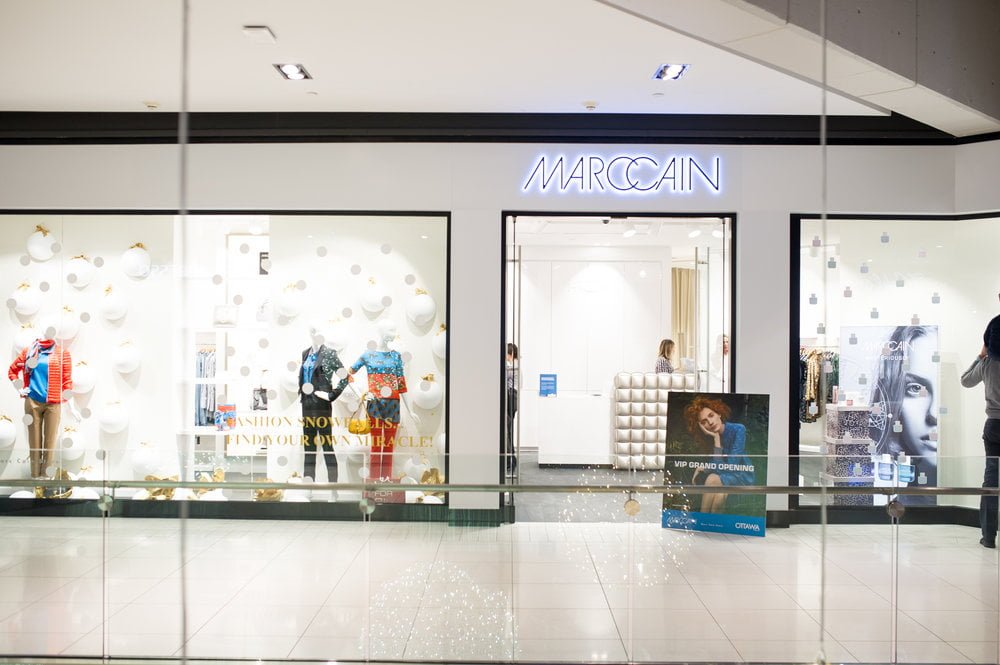
Image: Marc Cain at CF Rideau Centre

Upscale German women’s fashion brand Marc Cain has opened a store at Ottawa’s CF Rideau Centre. The 1,184 square foot boutique is located on the mall’s third level, near Nordstrom

Marc Cain entered Canada in 2015 and it now has stores coast-to-coast. The Canadian operations are seeing considerable success, according to Marc Cain’s Canadian managing director Stephen Belfer in an interview earlier this year, prompting the company to further expand its base of stores in this country.

Marc Cain works with brokerage Oberfeld Snowcap for its Canadian real estate deals. 

Founded in Bodelshausen, Germany in 1973, Marc Cain operates 210 stores in 34 countries, as well as almost 300 shop-in-shops and 387 franchised units. It also sells in over 1,000 specialty stores in 61 countries. 

Veuve Clicquot Opens Retail Pop-Up Shop in Montreal

Veuve Clicquot Pop-up in Montreal (Photo: Republik)

Veuve Clicquot has opened a pop-up shop, their only store in Canada, inside the beautiful Alton Gray retail space at CF Carrefour Laval. The store offers a wide variety of Veuve Clicquot items ranging from $15 – $390. Items include; champagne flutes, champagne buckets, weekend bags, but also winter boots, rain boots and even umbrellas. The store will remain open until December 31st, 2017. 

Cambridge Mall Fills Target Space

Image: Kingpin Bowlounge

Cambridge Mall in Cambridge, Ontario, will have another reason to visit in the fall of 2018. Kingpin Bowlounge will open in the mall’s former Target space, which has been vacant since early 2015 (coinciding with Target’s dramatic Canadian exit). 

The new facility will include a state-of-the-art laser tag arena, multi-level play structure, expansive Playdium Gaming Centre with prize offerings and cutting edge Virtual Reality experiences. There will also be food as well as craft beer and cocktails.  

Waterloo-based entertainment and hospitality company, Bingemans, owns Kingpin Bowlounge, and Cambridge Mall will be the company’s second. 

Adding entertainment to malls is a trend being seen, as mall landlords look to create experiences to address competition both from other physical retail, as well as e-commerce. 

Swimco Launches Innovative Body-Positive Ad Campaign

Calgary-based swimwear retailer Swimco, which now has stores across Canada, has launched a new omni channel marketing campaign using real people as models. Swimco has selected seven inspiring men and women to represent the brand in this season’s advertising, social media, ecommerce and in-store collateral that redefines “what it means be a swimsuit model”. 

“Our core values have not changed since the brand’s inception in 1975. We are committed to making our customers feel confident in swimwear, so they can be free to enjoy some of the best experiences of their lives. That’s what we are really trying to express with this new campaign.” Says Lori Bacon, Owner & President of Swimco. “A beautiful body doesn’t just mean thin, curvy, or sporty. What makes a body beautiful is that it’s yours, because it allows you to live the life you love. What makes a body beautiful isn’t how it looks, but how it lives. We want to inspire our customers to live their best lives while feeling good half naked.”

“These real people were chosen for this campaign because we feel they embody the qualities of our new brand vision.” Says Krista Kerth, Marketing Director for Swimco. “These men and women have inspiring stories to tell — from career and body changes to finding light in dark times — each have an uplifting message to share. The campaign isn’t about an aspirational image per se but the aspirational lives of the people within the image. All seven of our models are relatable to real people because… they are real people.”

Souris Mini Files for Creditor Protection

Montreal-based children’s clothing retailer Souris Mini has obtained creditor protection under the CCAA, according to publication Insolvency Insider. The company owes almost $18 million to various creditors, according to filed documents (some only in French).

The retailer was founded in 1989 and has 29 stores across Canada. Richter was appointed monitor, and law firm Gowlings is counsel for the company.

According to its website, all 29 stores locations are in Quebec, including some stores in some prominent shopping centres. 

*Update: La Presse also just reported on Souris Mini, in a French language article revealing considerably more details about the situation. 

Best Buy Unveils Overhauled Montreal ‘Experience Store’ [Photos]

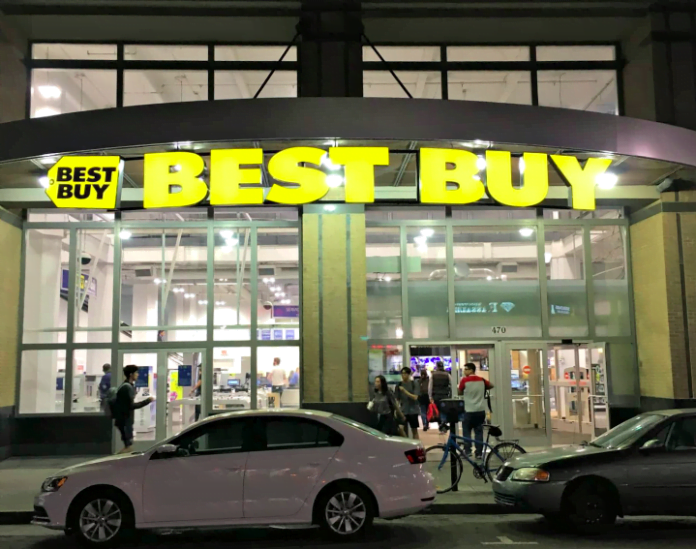
Best Buy Storefront

Best Buy Canada has launched its latest new concept store in Montreal as part of a nation-wide strategy to revitalize the way Canadians purchase electronics and appliances.

The two-floor Best Buy ‘Experience Store,’ located at 470 Sainte-Catherine Street West, has been completely renovated to provide consumers with a more immersive and interactive experience, says the company.

It is one of 30 stores that have been renovated recently over the past two years or so.

The store is hosting a grand opening weekend for the public on Dec. 8-10.

“Our unique new store concept is based on feedback from our customers, employees and vendors,” says Ron Wilson, the company’s president and chief operating officer.

“The layout can change and evolve to follow new product or category innovations. This means the new stores can easily keep up with the technology they are designed to showcase.”

Tony Sandhu, senior vice-president of merchandising and in-store design for Best Buy, says there are three generations of stores that have already been renovated. The first involved seven stores which underwent renovations almost two-and-a-half years ago. The company rolled out another eight stores about a year ago. This year it will complete 15 more stores.

“The way consumers shop for product has changed significantly versus when these stores were first put together,” says Sandhu. “We needed to give customers a reason to get out from behind their keyboard and come to the store. We needed to make it interactive and immersive. And quite frankly some of the legacy stores weren’t creating that experience or that motivation for customers to come down to the stores.

“Our ability in legacy stores to really keep up with the rate of innovation was somewhat compromised. And the way we designed the stores we can literally re-purpose space overnight cost-effectively. As this technology continues to evolve we can bring the latest and greatest to our customers very quickly.”

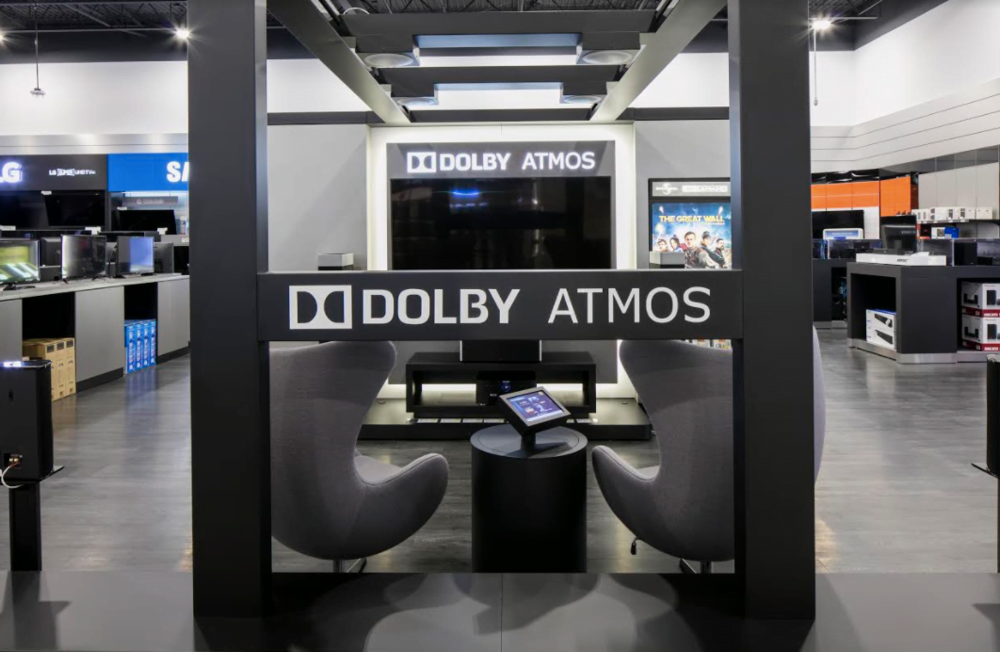
At the new stores, Best Buy says, customers can expect an inspiring, immersive and interactive shopping experience. Cutting-edge tech from leading brands is displayed using live demos and high-impact vendor displays. The energetic modern design is complemented by flexibility-focused features such as raised access flooring.

Interested in smart home technology? Customers will now be able to interact with products via the fully functioning smart home wall. Need new appliances? A visit to the new major appliances showroom allows consumers to get inspiration for their dream kitchens while choosing the functionality that’s best for them.

Sandhu says there are 134 big box Best Buy stores in the country and 51 Best Buy Mobile stores.

He says Best Buy does have plans to do more store renovations in the future. It’s in the process right now of identifying what stores will next face some renovations.

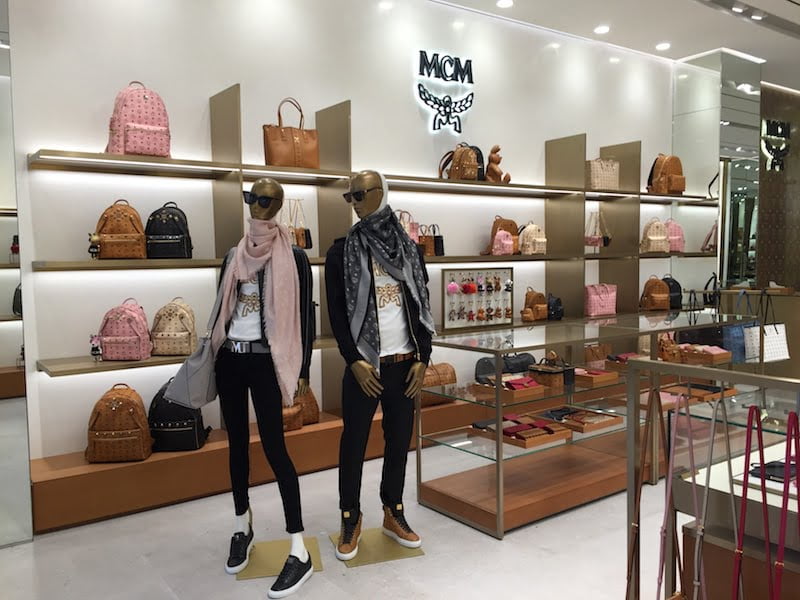
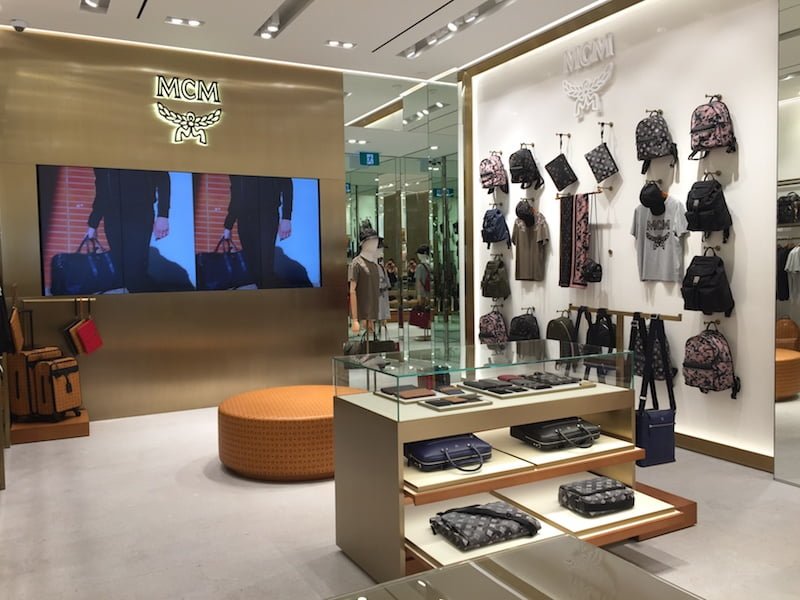
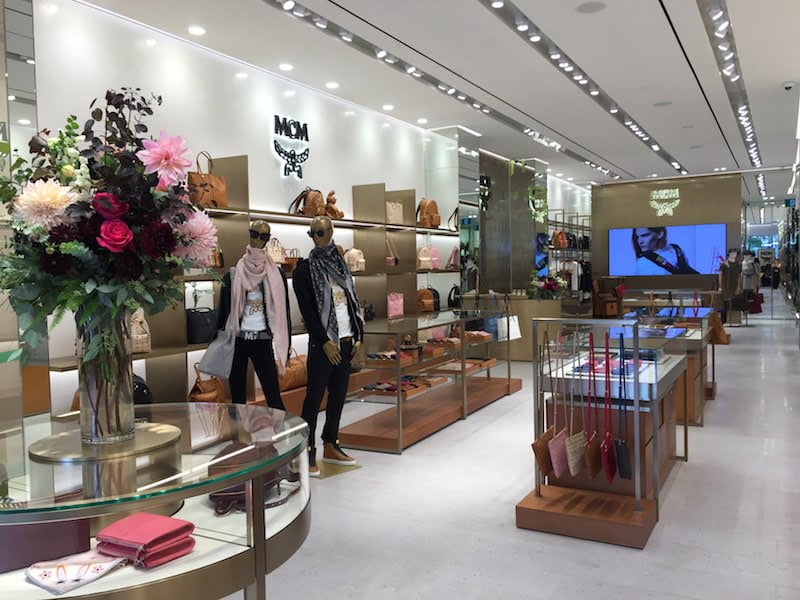
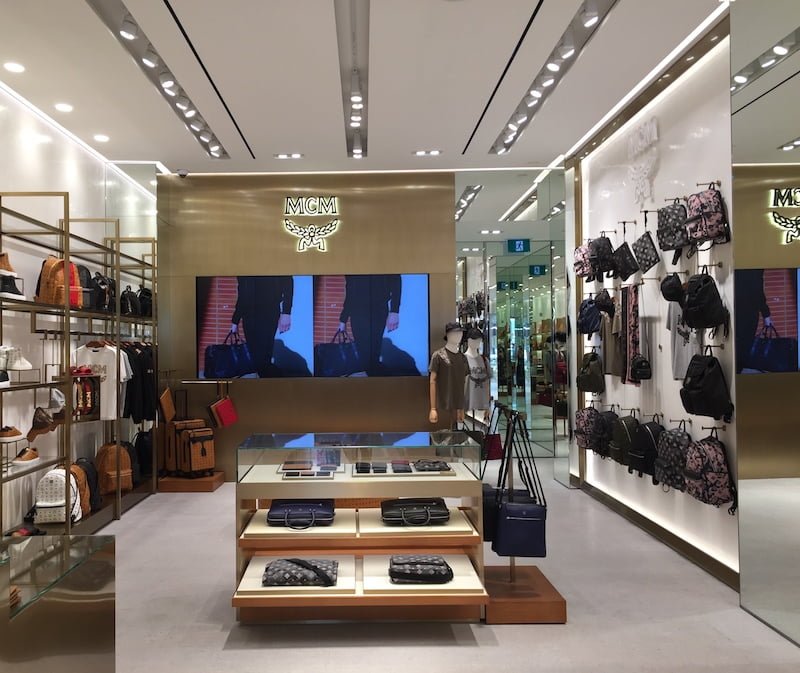
MCM Launches Canadian Expansion with Standalone Canadian Flagship [Photos]

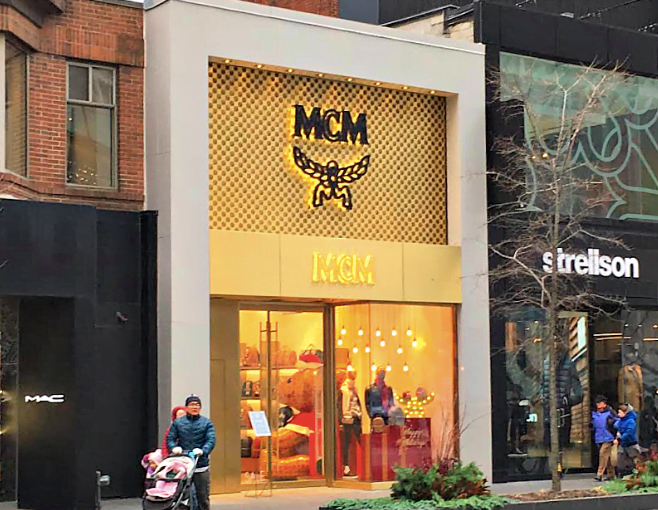
MCM on Bloor Street (Image: MCM)

German-founded luxury brand MCM has opened its standalone Canadian flagship on Toronto’s Mink Mile this fall, and more Canadian stores will follow. 

Located at 93 Bloor Street West, the new 2,150 square foot MCM flagship’s interiors feature trademark gold accent fixtures and bright lighting, housing the country’s most extensive collection of MCM fashions, including accessories, leather goods, ready-to-wear and even footwear. MCM says that the Bloor Street store is at its ‘Diamond Level’, which means it carries a full assortment with a focus on its highest quality product offerings. 

The CBRE Toronto Urban Retail Team negotiated on behalf of the landlord in the deal, under the direction of Arlin Markowitz, Alex Edmison and Jackson Turner. Montreal-based Axxys Construction built-out the new space. 

MCM Confirms that the Bloor Street store will remain its Canadian flagship, though the company intends on opening at least two more stores — one in Vancouver, as well as a second store in Toronto. The Vancouver location would be a street-front store like the Bloor Street West location in Toronto, according to the company — likely in the city’s burgeoning ‘Luxury Zone’ that is located between the Fairmont Hotel Vancouver and the Shangri-La Hotel along Alberni Street as well as adjacent addresses. 

And unsurprisingly, MCM’s second targeted Toronto location is Yorkdale Shopping Centre — Yorkdale boasts an extensive roster of luxury brand boutiques, and is also Canada’s most productive mall in terms of annual sales per square foot. 

MCM was founded in Munich in 1976, and it’s known for accessories and other products in its signature logo-printed material (called Cognac Visetos) — similar to Louis Vuitton’s monogram canvas. MCM (which originally stood for Michael Cromer München) was especially popular in the 1980’s for its flashy, logo-printed accessories. South Korean fashion conglomerate Sungjoo Group acquired the brand in 1995, and the brand is having a major resurgence. 

In the United States, MCM has ten stores: in New York City (x2) Garden City NY, Atlanta, Houston, Dallas, King of Prussia, Los Angeles, San Jose CA, and Las Vegas. It also has an outlet in Orlando FL. In Canada, MCM also wholesales at retailers such as Holt Renfrew, Saks Fifth Avenue and Nordstrom

*All photos are by photographer Ryan Emberley, except for the top photo.

Brick-and-Mortar Retailers Innovating with Technology in the Face of Retail Headwinds

DIGITAL SIGNAGE TO DIRECT CONSUMERS. (PHOTO: SCALA)

Not everything in retail these days centers around the proverbial ‘retail apocalypse’. It’s refreshing to also hear positive news, including that from global digital signage provider Scala, which is working with brick-and-mortar retailers to digitize their spaces to create the ‘Store of the Now’.  

Scala helps customers increase sales and create powerful communication solutions with customized digital signage. Last year they were acquired by STRATACACHE, whose group of complementary, scalable digital solution companies power networks for the world’s largest brands.  

“What we’re seeing is the most significant drivers of growth in retail come from online – particularly Amazon – but it isn’t as bleak for brick and mortar as it may seem. This is because the retailers who are learning how to turn the store into the digital equivalent of Amazon in real time is sort of the holy grail – delivering the idea of digitizing physical,” says Jonathan Rosen, senior vice president, content, strategy and creative services at PRN, a sister company of Scala in the STRATACACHE family.

He says the idea of taking digital and bringing it to physical spaces is really coming of age right now.

(DIGITAL SCREENS IN A FLIGHT CENTRE LOCATION. PHOTO: SCALA) 

“I think it’s kind of ironic in a way that while physical is transforming and stores are becoming smaller and the economics are changing, digital has really opened up a way for us to learn how to better tailor physical experiences. And if we use those learnings properly, we’re incredibly bullish on retail and all of its outlets,” says Rosen. 

Over the last few years they’ve been able to develop a suite of differentiated technologies that are designed to integrate digital right into the store and connect people across multiple channels in real-time, allowing for the kind of personalization and targeting that occurs regularly online.

“The successful retailers that are deploying technology in their stores are seeing a significant return on their investment,” adds Rosen. 

Another trend that is developing is the number of digital-first retailers who are now going into bricks and mortar. 

“We’re seeing a lot of that trend because when you start digitally, you learn so much about your consumer that you’re really able to easily build the brick-and-mortar outpost, tailoring it to what you know because you learned all of it through your digital practice,” says Rosen.

“Where we see a lot of growth as well is bringing those ideas into other kinds of venues where you’re seeing real-time newsworthy product promotions that are dynamically triggered based on real-time selling opportunities uncovered by data,” says Rosen. “We’re also seeing a lot in terms of product selection tools that are digital.”

(DIGITAL SIGNAGE USED IN THE HUNKEMÖLLER EXPERIENCE FITTING ROOM DEVELOPED BY SCALA PARTNER DOBIT)

Michael Arnett, managing director for Canada with Scala, adds that technology such as Scala’s can be embraced in the retail environment for the better.

“We provide bespoke solutions and those solutions are technology-driven, but really we’re an enabler of providing something bigger and better. Our solutions deliver customer experiences, changing behavior and making shopping more seamless – saving precious time for shoppers,” says Arnett. 

“Optimizing Customer X at the place of physical engagement enhances the kind of connection that brands strive for,” Arnett added.

“The fact is that people since the beginning of time have wanted to head to the market – to the public space,” says Rosen. “Physical spaces are really important for the human psyche. It’s really just about how do you take and transform all of that information that we’re swimming in right now, and convert that into a meaningful experience for today’s shopper.”

For more information, visit: www.scala.com  

Harry Rosen Mink Mile Flagship Renovation Reaches Milestone [Photos]

exc-5a236449c83025304292e350

Upscale Toronto-based menswear retailer Harry Rosen is renovating its 82 Bloor Street West flagship store in Toronto. So far, much of the second floor has been upgraded with new designer boutiques, and other floors have also seen modifications. Harry Rosen will continue renovating the store into 2018. 

The 55,000 square foot, five level men’s store, which opened in 1987, is the largest of its kind in North America with escalators joining four of the store’s retail floors, it appears to be something of a “luxe men’s department store”, with areas for suits, tailoring, grooming, footwear, accessories and other categories. 

The flagship is in the midst of a $5 million renovation, with much of the initial renovations happening on the store’s second level where a handful of the world’s top menswear brands have seen renovated hard-shop boutiques profiling the latest collections. Newly built boutiques for brands Ermenegildo Zegna, Moncler, Giorgio Armani, Brunello Cucinelli and Loro Piana reflect each of the brand’s latest designs, with some not existing anywhere else in the world, as of yet. 

The Zegna boutique, for example, was designed by New York City-based architect Peter Marino. Mr. Marino is considered to be one of the world’s leading interior designers and has worked with some of the world’s top brands, including the likes of Chanel, Louis Vuitton, Dior and Fendi

The Giorgio Armani boutique is very luxe, featuring silk walls, attractive lighting, and the highest quality materials. The Armani boutique carries the brand’s ‘Black Label’ collection — Harry Rosen carries the men’s collection exclusively in Canada. 

The new Moncler boutique includes ample use of marble and wood, and the bright, beautiful Brunello Cucinelli boutique features the brand’s trademark white walls and wood accents. The Tom Ford boutique on the second floor is also expected to see upgrades in the new year, as well. 

“It’s such an honour that the biggest brands in the world are telling us that they want to be a significant part of the Harry Rosen experience. They’re making huge investments with us to bring these first-to-market design ideas to our stores,” says Larry Rosen, CEO.

The store’s third floor is also seeing some changes — men’s furnishings were relocated from the ground floor (making room for more shoes downstairs) to an area anchored by an Eton shop, as well as bespoke tailoring. Harry Rosen’s Bloor Street flagship is the only one in the company to feature a permanent bespoke department, which artfully creates custom-designs with the highest quality of finishes, with prices to match. 

Next year, as well, the third floor will see renovated hard-shops for premium luxury brands Kiton, Isaia and Corneliani

The expansive ground floor footwear department has grown to carry many of the world’s top shoe brands, and men’s accessories has also seen new lines in an upgraded area. The store’s lower level, which carries a range of designer sportswear including Diesel and John Varvatos, will also be seeing some renovations as things progress into 2018. 

Renovations to the Bloor Street Harry Rosen flagship are part of a multi-year, $100 million+ renovation/expansion program for the chain, which has seen most of Harry Rosen’s Canadian stores being renovated and expanded over the past five years. With stores spanning from Vancouver to Montreal, Harry Rosen is considered to be the country’s top upscale multi-brand menswear retailer, with considerable market share. It is also considered to be world-class with its exceptional customer service and extensive product and brand offerings — it’s come a long way from the year 1954, when a young Harry Rosen opened a 500 square foot men’s store on Toronto’s Parliament Street. The Harry Rosen chain now boasts 15 full-line stores in Canada as well as three outlet locations. 

*All photos are courtesy of Harry Rosen.

Stock Yards Village Adds Unique Hybrid Grocery Store/Entertainment Complex [Photos]

(PHOTO: NATIONS FRESH FOOD)

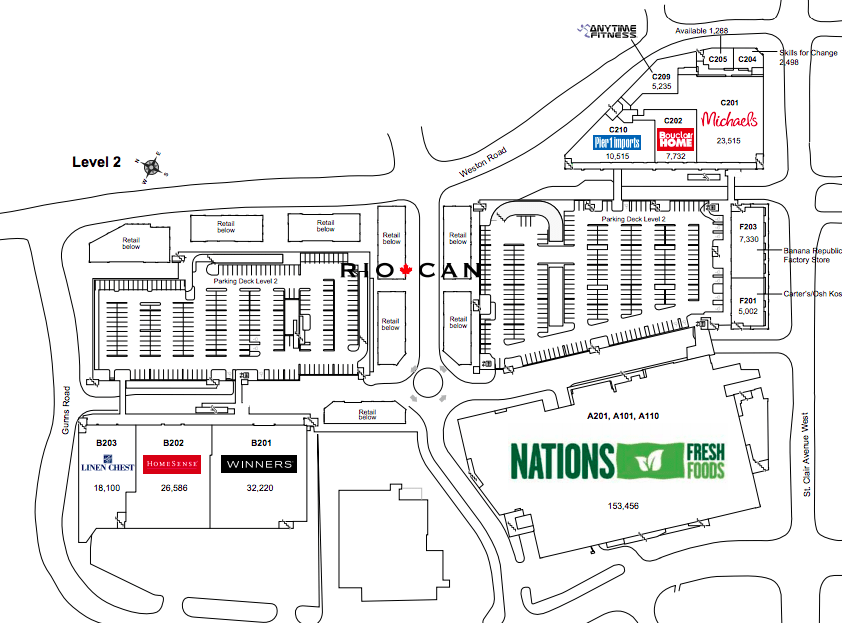
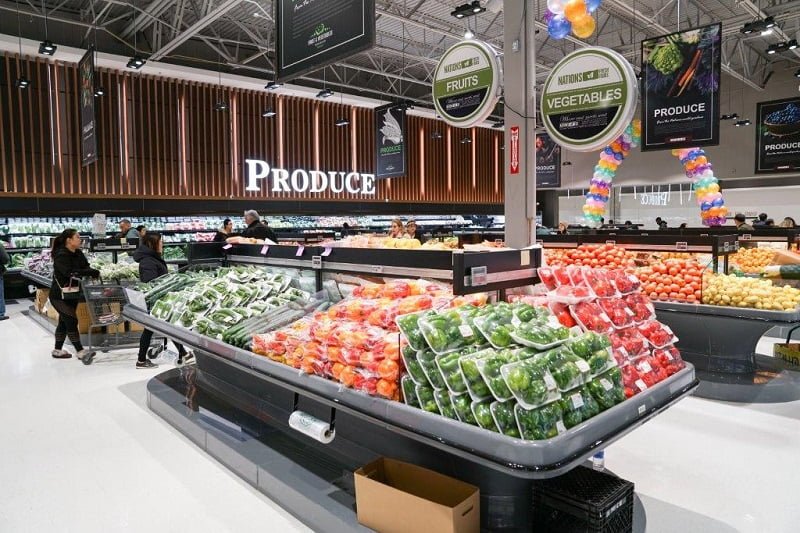
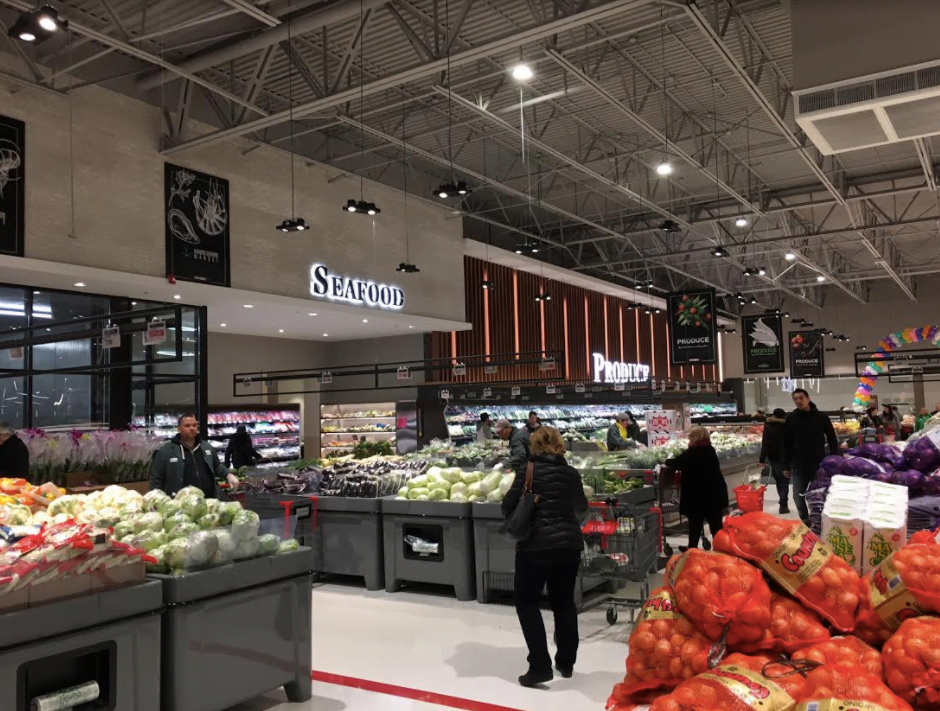
The Stock Yards Village development in Toronto has forged a unique partnership with Nations Fresh Food to bring an innovative grocery, dining and entertainment option to the shopping centre.

Nations, which is an Ontario grocery chain, took over the old Target department store space of about 150,000 square feet and opened last month.

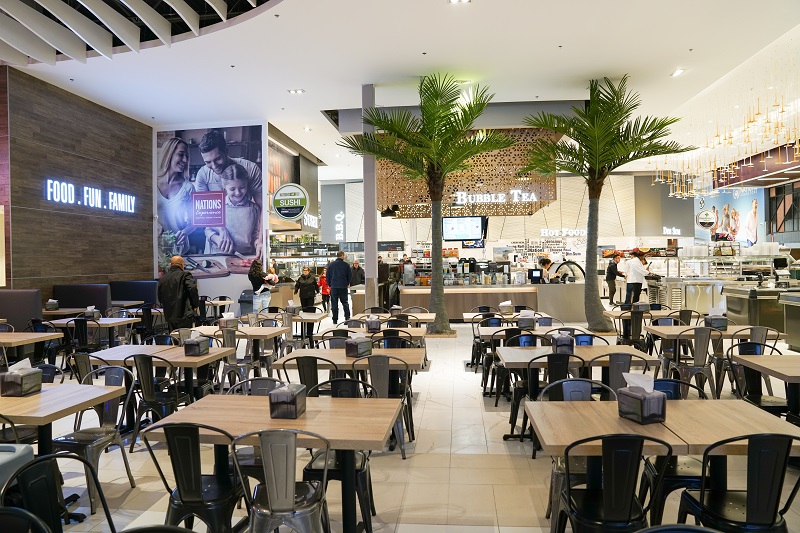
“It really is a new concept shopping experience because it’s not just grocery,” says Meredith Vlitas, director of corporate marketing for RioCan, which operates the Village. “The way that the store is set up there’s a large-format grocery component and a large-format, sit-down food court.

“There’s about 4,000 square feet of playground, 8,000 square feet of entertainment areas and then they have five themed party rooms. So when you go into the property there’s a large entertainment area, a really great arcade.”

Stock Yards (PHOTO: CRAIG PATTERSON)

Nations Fresh Foods is a multi-cultural grocery store chain which was founded August 28, 2012 in Woodbridge, Ontario. Besides the location at Stock Yards Village, the company has stores in downtown Hamilton and in Mississauga.   

When the Stock Yards Village opened in 2014 on St. Clair Avenue West at Weston Road, it was a unique urban development, intended to become a go-to destination for a wide variety of retail, dining and commercial uses in a vibrant, evolving community.

The property is owned by RioCan and the Canada Pension Plan Investment Board.

The open-air lifestyle shopping centre is about 550,000 square feet with 76 units.

Some of the bigger anchor tenants at the Village include Sport Chek, HomeSense, Winners, Roots and Banana Republic.

PHOTO: NATIONS FRESH FOOD
PALM TREES AND SOARING CEILINGS — IT’S NOT OFTEN THAT A GROCERY STORE HAS SUCH A SENSE OF DRAMA. (PHOTO: CRAIG PATTERSON)

“In the local trade area, there was a void quite frankly in terms of our offering from a retail perspective at the property. We really feel that Nations is a great fix. We’re really thrilled to have forged a partnership with them to bring a really innovative grocery, dining, and entertainment option to the shopping centre,” says Vlitas.

“Nations with its new concept really helps to diversify our offering and works to deliver on our vision of making Stock Yards Village a go-to destination for the community shopping needs.”

For RioCan, this provides a great example of how it is looking ahead to integrate new format options into the retail mix at its properties, giving customers new reasons to visit the mall.

FOOD COURT (PHOTO: NATIONS FRESH FOOD)

Jeremy Hurwitz, a leasing representative for RioCan, says the unique property required a unique retailer like Nations to cater to the diverse demographic in the community.

He says there’s still about 20,000 square feet of vacancy scattered throughout the property.

Leasing at the shopping centre has been very active over the past year with many new stores opening up – Snuggle Bugz, Healthy Planet, Unwired. A new Tim Hortons is also opening soon.

(STOCK YARDS VILLAGE. PHOTO: RIOCAN)

The Kids & Company, a 5,000-square-foot daycare, will be opening soon as well.

Prominent Mountain Climber Launches E-Commerce Retail Company

(SCREEN SHOT FROM THE 'LIVE OUT THERE' WEBSITE)

Mountain climber Jamie Clarke has never let obstacles and challenges get in the way of reaching a goal.

Twice he has scaled Mount Everest.

Now, the Calgary-based adventurer, author and public speaker, is taking on the challenge of the retail industry, promising to disrupt the outdoor gear and wear sector with the mission to get the world outside.

Clarke and business partner George Achilleos have launched their own brand featuring high-quality product at affordable prices available at outdoor apparel e-commerce company, Live Out There.

(JAMIE CLARKE)
(“CLIMB WITH US”: 2010 HANESBRANDS MOUNT EVEREST EXPEDITION – JAMIE CLARKE – LINKEDIN)

Clarke says the innovative direct-to-consumer strategy is aimed at revolutionizing the traditional retail model.

“I’ve summited Everest twice, and climbed the Seven Summits where one’s life depends on good gear,” says Clarke. “There can be no compromise on quality and everything we’re making at Live Out There will be more than good enough to use on another Everest climb.

“Our company mission is to get the world outside and the reason being is that people who spend time outside are happier, healthier and more creative. And if we’re really going to live up to our mission then we have to be able to focus on how we can tackle those problems of making high-quality gear less expensive for people.”

Clarke says Live Out There is the only outdoor gear brand in North America that embraces the four key elements of a retail revolution: high-quality product; radical transparency including manufactured cost disclosure; fair pricing from sourcing to consumer; and direct-to-consumer delivery which eliminates middlemen and the elevated cost associated with that.

(SCREEN SHOT FROM THE ‘LIVE OUT THERE’ WEBSITE)

Clarke and Achilleos opened a bricks and mortar store, Out There Adventure Centre, in 2003 in the heart of downtown Calgary. They then opened the e-commerce business in 2009. The physical store closed operations in June of this year, partly due to the faltering economy in Alberta which suffered through two years of a brutal recession caused by a collapse in oil prices.

“The systemic problem was sort of a global and certainly North American revolution occurring in retail which is exciting and painful,” says Clarke. “It was a realization for us that the distribution channel is broken, antiquated and needs to change.”

“And instead of being part of the problem. We wanted to be part of the solution. I think that’s a cautionary tale for many businesses in our digital economy and retail in particular. You better either be part of the solution because if you remain part of the problem you’re going to get wiped out.”

In November, Live Out There launched its own product which is made in two factories in China. The company has offices in Calgary and Montreal. Distribution centres are located just outside of Los Angeles and in Kamloops, B.C.

“Transparency and price disruption have come to other verticals, but the outdoor industry has been stuck in the same wholesale-retail model for half a century and this does not provide a fair price to consumers,” explains Clarke. “Outdoor gear is too expensive because of this, but it doesn’t have to be. Consumers are paying too much.”

Live Out There’s direct-to-consumer model cuts out the middlemen – and the corresponding markup that comes with it – enabling the brand to sell a higher quality product for significantly less than what’s on the market today, adds Clarke.

On the company website, https://liveoutthere.com, there is clear information of how much it costs to make the product, the margin and the retail markup comparing Live Out There prices to those in the traditional retail model.

MUJI Opens Massive Vancouver Flagship to Huge Crowds [Video/Photos]

MUJI Opening Robson Street (PHOTO: MUJI)

Minimalist Japanese retailer MUJI has opened its largest store outside of Asia on Vancouver’s Robson Street. Thousands lined up for the store’s opening on Saturday, and the lineups are expected to continue well into 2018. 

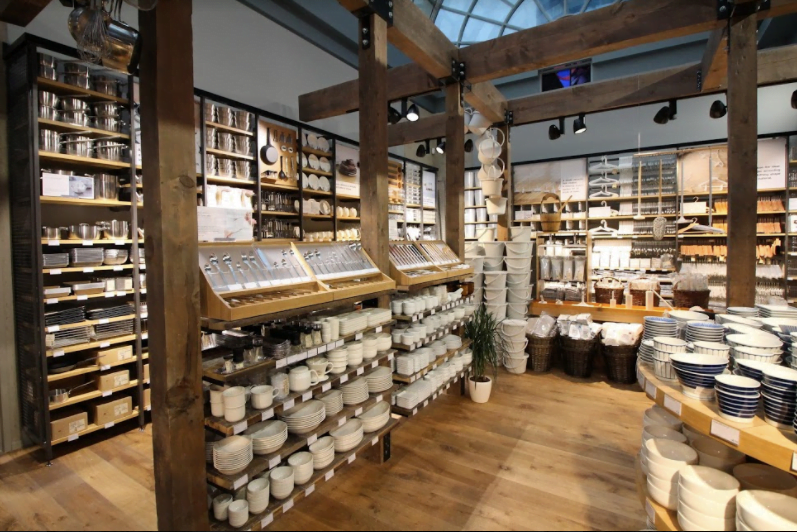
The 14,507 square foot store is unlike any MUJI location in North America, offering a host of products and services not available at its other Canadian locations. MUJI says that the store has more than 4,500 products including household goods, apparel and food, in a remarkable retail space that includes a massive skylight above part of the store. 

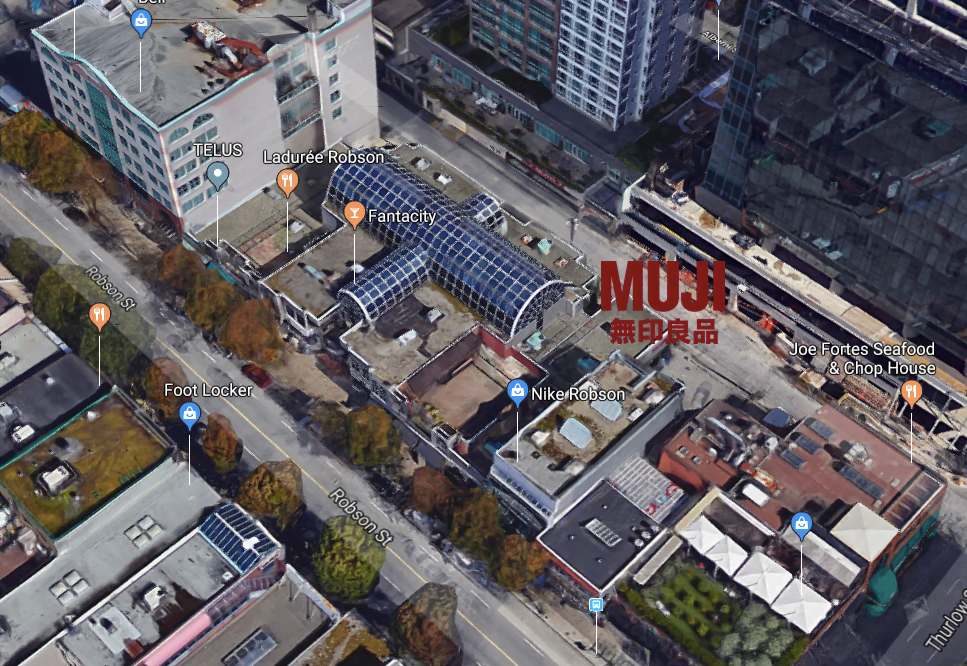
The rounded skylight is a relic from the Robson Galleria, which once occupied the 1125 Robson Street address and housed retailers such as Polo Ralph Lauren, Pegabo Shoes and Alfred Sung. The atrium eventually became a retail space and The Gap replaced the Ralph Lauren store — MUJI occupies the former Gap space as well as the adjacent atrium, in what is now one of MUJI’s largest stores globally. 

(CLICK FOR INTERACTIVE GOOGLE MAP)
(LOOKING FROM ABOVE: MUJI’S VANCOUVER FLAGSHIP INCLUDES THE GLASS ATRIUM FORMERLY HOUSING THE ‘ROBSON GALLERIA’ MINI-MALL THAT ONCE OCCUPIED THE SITE. THE 10,000 SQUARE FOOT POLO RALPH LAUREN STORE WAS EVENTUALLY REPLACED BY THE GAP, PRIOR TO BEING LEASED TO MUJI. IMAGE: GOOGLE STREET VIEW)
(RENDERING: MUJI)

MUJI opened its first store in British Columbia in August of 2017 at Metropolis at Metrotown and at the time, it was the largest in Canada at 7,770 square feet. Both the Metrotown and Robson Street lease deals were coordinated/negotiated by Martin Moriarty and Mario Negris of CBRE Vancouver, as well as Arlin Markowitz from CBRE Toronto.

Retail Insider’s Susanne Milner attended the pre-opening on Friday evening — Satoru Matsuzaki, President of parent company Ryohin Keikaku Co. Ltd. was in attendance, as was MUJI Canada president Toru Akita as well as other officials. The opening kicked off with a traditional sake toast and Japanese drumming. 

(OPENING CELEBRATIONS. PHOTO: SUSANNE MILNER)

(Video above is by Susanne Milner) 

A few of the store’s unique components include: 

(PHOTO: MUJI)

MUJI Coffee Counter: MUJI Canada partnered with Vancouver-based Ethical Bean Coffee (known for its 100% fairtrade certified, organic coffee, not to mention social responsibility, global awareness, and environmental accountability). 

Book section: MUJI’s Robson Street location includes books for adults and children in a relaxing space surrounded by natural wood and plants. Books are carefully selected and displayed with related living goods, allowing customers to experience a lifestyle with books. Visitors can sit in this area to browse through the book selection while enjoying a cup of coffee. (Books are from Vancouver-based Raincoast Books)

Aroma Bar: Customers can create a customized fragrance blend by choosing from more than 40 essential oils and related unique scents. A customized bottle of essential oil costs $22. 

(COFFEE BAR. PHOTO: MUJI)
(BOOK SECTION. PHOTO: MUJI)
(AROMA BAR. PHOTO: MUJI)

As well, the store offers the following services: 

Style Advisor: The complimentary service can be booked ahead for those seeking an updated wardrobe. 

Interior Advisor: The consultation service can recommend MUJI furniture and storage solutions, not to mention how to create a relaxing living environment with the aesthetics of simplicity — something MUJI is big on. The complimentary service is for almost any room in the home, and may include a 3D simulation by the designer. 

‘MUJI YOURSELF’: A customization service including embroidery, stamps, gift wrapping and label printing. Customers can personalize various MUJI products such as shirts, handkerchiefs, bags, towels, etc. Each design costs from $3 to $5, according to the size. Stamps can be used to personalize stationery and gift bags, and label printing can be used to customize various MUJI products such as stationery, storage and  furniture, costing between $0.20 to $0.80 each, depending on size. 

Plants: For the first time in North America, MUJI is offering live plants for shoppers. various potted plants are available for sale (from Surrey’s Burnaby Lake Greenhouses), as well as a small selection of gardening accessories. 

MUJI Labo: The elevated apparel line, available at selected MUJI flagships globally, was founded in 2005 and is known to “experiment with new styles, materials and manufacturing processes”. 

(PHOTO: DAVID IAN GRAY)
MUJI Vancouver
(PHOTO: MUJI)

Susanne Milner interviewed MUJI Canada president Toru Akita, and he provided some insight into the new Robson Street flagship. Interestingly, MUJI chose Robson Street after surveying guests at its January 2017 pop-up at the Fairmont Pacific Rim Hotel, where 60% of respondents surveyed said that Robson Street would be the best location for a flagship. The store was originally planned to be about 10,000 square feet (taking over the Gap space) but Mr. Akita decided that an even larger space was required for the retailer to test out new concepts. 

Mr. Akita explained that the company has plans to open as many as 25 stores in Canada, and that details are being finalized for more stores in the Lower Mainland (one lease is already signed). The Metrotown store is already doing so well, in fact, that MUJI is accelerating its expansion plans for more stores in the Vancouver area — and other markets are in line for MUJI stores as well. 

Alberta and Quebec are on the company’s radar for stores as is the Greater Toronto Area, which already has four MUJI stores. MUJI entered Canada through Toronto in November 2014 when it opened a 4,400 square foot store on Dundas Street West, followed by a November 2015 opening at the Square One shopping centre in Mississauga (5,225 square feet), an October 2016 opening at Toronto’s Yorkdale Shopping Centre (6,375 square feet), and the summer 2017 opening of a 6,000 square foot store at CF Markville in Markham. 

Overall, feedback from those who attended the store opening (including Susanne Milner and David Ian Gray of consultancy DIG360) is that the store is impressive with its minimalist design, ample use of reclaimed wood, and overall product and service selection. Mr. Gray said that he expects the store to do “exceptionally well” and that MUJI “did a great job in taking a hard-to-design legacy space and making it warm and inviting”. 

For those wishing to see the store, however, there might be a wait — long lineups are expected to continue into 2018 to see the new space, a phenomenon also witnessed with the opening of Canada’s first Ladurée last year a few doors west of MUJI on Robson Street, both contributing to the continued revival of Vancouver’s best-known retail strip. 

See below for more photos of MUJI’s Vancouver Robson Street flagship. 

Companies Embrace Technology to Manage Surge in Online Sales

exc-5a1e2e3c0d92971bbc7e87fe

As e-commerce sales grow, retailers and logistics companies are facing significant challenges in facilitating the shipment and delivery of a high volume of goods – particularly during the busy holiday season. Many companies are embracing mobile technology to help manage these challenges.

“E-commerce is continuing to gain traction in Canada and the rest of the world,” says Suneil Sastri, director of product marketing at software company SOTI Inc. “Online sales are going to continue to grow somewhere between 8-10% year-over-year over the next three years, until it hits about 10% of total retail sales in Canada by 2020.”

A significant proportion of those online sales occur between the end of November and the beginning of January. That means huge volumes of goods are being shipped around the world in a relatively short period of time.

Canadian courier Purolator Inc., for instance, recently reported that it anticipates it will move approximately 20 million packages this peak season. And U.S. multinational courier company FedEx Corp. expects to ship 380-400 million packages worldwide during the busy holiday shopping season.

“Ultimately, this has been a boon for transportation companies and parcel delivery companies, including postal services,” Sastri says.

However, the surge in business is also creating challenges for these companies. With e-commerce companies such as Amazon offering same-day and one-day shipping, logistics companies must find ways of operating more efficiently than ever before, Sastri says.

“Because there are higher volumes of deliveries and there is pressure for fast and reliable deliveries, they need to be able to be better coordinated across their entire supply chain,” he says. Companies also need to find ways of minimizing costs in order to remain competitive, he adds.

Mobile technology is one tool that logistics and transportation companies are embracing to navigate these challenges. For example, Sastri says many companies are using RFID scanners in their warehouses to track goods. In addition, many transportation companies are equipping their truck drivers with tablets, which can help provide drivers with relevant pick-up and delivery information, as well as traffic information to optimize routes.

“Mobile technology is one of the keys to helping companies overcome the challenges across their entire supply chain,” Sastri says.

Embracing mobile technology can help companies deliver items faster, Sastri says, but more importantly, it improves reliability. By being able to track the location of an item, logistics companies can more efficiently coordinate the pick up and delivery of items, and track the process from end to end.

“If you can’t meet your delivery windows, it will cause angst among your customers,” he says. “Mobile technology really guarantees the reliability and confidence in regards to that same-day, one-day or even two-day delivery.”

A growing number of retailers are also embracing mobile technology into their businesses, Sastri adds, as consumers increasingly demand a seamless experience when shopping both online and in stores.

“As you look at these new digital consumer behaviours, it extends beyond [online sales],” he says. “Consumers are looking for this better omni-channel experience.”

For example, Sastri says many retailers are equipping their sales associates in stores with mobile devices. That enables store employees to help customers search for products and conduct transactions on the spot, rather than forcing customers to wait in line for a cashier.

“It makes that shopping experience better,” he says.