Advertisement
Home Blog Page 1117

Sears Canada Tarnishes the Gold Standard of Pensions

exc-5a03551bec212d8783138a46

Michael J. Armstrong, Brock University

Like many department stores, Sears Canada has struggled with competition from specialty stores and online retailers. Its bankruptcy will eliminate some 12,000 jobs and leave 16,000 retirees worried about their pensions.

It’s just the latest signal that employees and regulators should rethink their approaches to defined-benefit pensions.

Pensions are promises

Pensions represent deferred wages, money promised to employees in the future. With defined-contribution plans, employers make short-term promises to invest each year in their pension accounts. The eventual pension cheques depend on how the investments perform.

With defined-benefit plans, employers also promise to invest more if investment returns are poor. That reassurance makes those plans the “gold standard.”

However, such top-ups may be needed decades after the promises were made. If you start work at 25 and retire at 65, your first pension cheque arrives 40 years after your first paycheque. That very long-term promise presents two risks for employees.

Funding shortfalls

First, the money might not be there when needed. Defined-benefit plans should pay better than defined-contribution plans during recessions. But that’s when employers are least able to invest.

For the private sector, 40 years is roughly six economic cycles of boom and bust. Will your employer survive that?

Consider Sears. Its retirement funds are short $308 million, forcing a 19 per cent pension cut. That may be partly replaced if liquidation sales go well.

(Incidentally, consulting firm Morneau Shepell now administers the impoverished plan. That indirectly connects federal Finance Minister Bill Morneau’s name to another pension controversy.)

Or look at ex-telecom Nortel. Its 2009 bankruptcy cut pensions 30 per cent. Twenty thousand pensioners waited eight years to see how much might be restored. That’s not very “defined.”

Unfortunately, pension underfunding is common. In Ontario, single-employer defined-benefit plans are short $37 billion in total. Only 18 per cent are fully funded. Those numbers exclude plans serving multiple employers, like the Ontario Municipal Employees Retirement System.
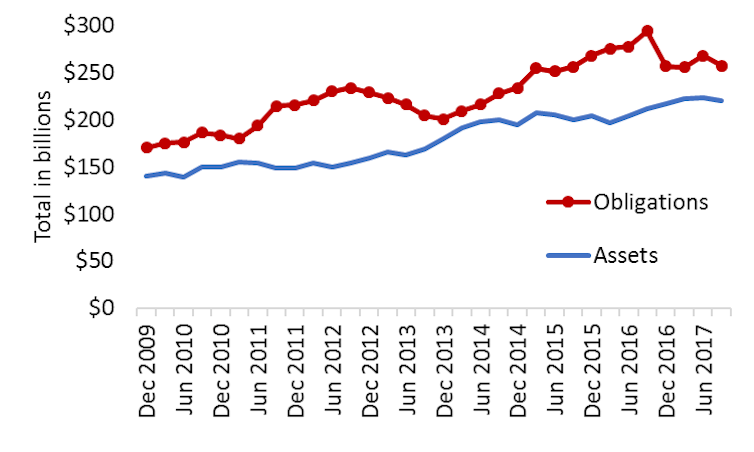
Total obligations and assets for single-employer defined-benefit pension funds in Ontario. The gap between the lines represents the overall funding shortfall. Data is from https://www.fsco.gov.on.ca/en/pensions/actuarial/Pages/solvency-funded-estimate-reports.aspx.


Public sector plans face other risks. Forty years is about 10 election cycles. Will all those politicians keep their predecessors’ promises?

They didn’t in Detroit. To escape bankruptcy in 2014, the city cut pensions by 4.5 per cent. Some cuts were retroactive – retirees had to give money back.

And they didn’t in Rhode Island. In 2011, that state had only 56 per cent of the pension money needed. To avoid disaster, it reduced retirees “defined” benefits.

Transient employees

The second risk with defined-benefit pensions is employee turnover. Plans typically calculate payments based on age and years of service. If you work there longer, you’ll receive more.

But quitting sooner gets you less. Depending on where you work and how long, you may get only your contributions back, plus interest. In effect, the defined-benefit plan becomes a defined-contribution one.

Or you’ll receive a deferred pension based on your salary when you quit, say at age 35. That’s likely much lower than your final salary 30 years later at age 65. So, it’s “defined” smaller.

Defined-benefit pensions are nicknamed “golden handcuffs.” They penalize people who switch employers.

But people do switch. Professionals change companies for career advancement. Temporary workers struggle from contract to contract.

Half of U.S. workers have been with their current employer less than 4.2 years. For those aged 55 to 64, 14 per cent have been there less than two years. That jumps to 38 per cent for those 25 to 34. For them, defined benefits are no better than defined contributions.

I’m not suggesting employees should abandon defined-benefit plans. They’re great if employers and employees are stable. But they aren’t risk-free, so some unions might consider bargaining for other benefits instead.

Government action needed

Meanwhile, governments should increase pension protections. For example, Ontario’s Pension Benefits Guarantee Fund will soon protect up to $1,500 of monthly pension payments. Other provinces should follow suit.

Unfortunately, Ontario is also letting pension funds become 15 per cent underfunded before requiring employer top-ups. Currently, 58 per cent of plans fit that category. That allows employers to ignore temporary investment downturns. But it also risks greater shortfalls during bankruptcies.

Sears pensions are 19 per cent underfunded, despite the company making top-ups. Imagine a future company bankruptcy with 19 per cent underfunding below the 15 per cent allowance. Retirees would lose 34 per cent of their pensions.

The federal government should also act. It could ban dividend payments whenever pensions are underfunded. Some corporate loan agreements already contain similar restrictions. That could have helped Sears workers.

Bankruptcy laws need updating too. Current rules first pay off secured debts, like mortgages. Underfunded pensions are considered unsecured debts. They get paid last with whatever money is left.

A Bloc Québécois proposal would put pensions before secured debts. As an employee, I find that tempting. But as a business professor, I think it’s extreme. Instead, I prefer the NDP proposal to make pensions equal to secured debts. That would improve pensioners’ prospects while respecting mortgagees’ rights.

The ConversationThe Liberals advocated for similar changes while in opposition, and federal Innovation Minister Navdeep Bains says he’s open to discussions now. Is he open to action?

Michael J. Armstrong, Associate professor of operations research, Brock University

This article was originally published on The Conversation. Read the original article.

BeaverTails Turns To Outlet Malls For Growth

Photo by BeaverTails via Instagram

Iconic Canadian pastry brand BeaverTails is setting out to grow its presence in Canada and abroad, and the brand is targeting outlet malls as a key new avenue of growth.

BeaverTails specializes in quick-serve pastries and other desserts, as well as hot and cold beverages.

The chain of 136 locations has traditionally focused on positioning its locations in touristy areas such as ski resorts, amusement parks, beach towns and waterfront areas. Having already established a presence in most major tourist destinations in Canada, however, the company is now exploring other types of locations, such as outlet centres.

Photo: BeaverTails

“We are opening up a new avenue to development in Canada, which is outlet shopping malls,” says Kristina Zappavigna, development director at BeaverTails. “It’s not necessarily something that we were looking to develop, but we happened to open one and it did very well, and have continued to do so in a few other malls since then.”

Although traditional shopping malls haven’t provided a successful venue for BeaverTails in the past, outlet malls tend to attract a different type of shopper, Zappavigna notes.

“The outlet mall provides that impulse-driven customer, so that works well and speaks to our brand, because we’re such a treat,” she says. “So that works beautifully for us.”

So far, BeaverTails has locations at Toronto Premium Outlets, Tanger Outlets in Ottawa, Outlet Collection at Niagara and Philadelphia Premium Outlets in Pennsylvania.

The company also has plans to open a location at Premium Outlets Montreal in the near future, and is exploring more potential outlet mall locations in the U.S., including Pittsburgh and Florida.

Location is key for the company, according to Pino Di Ioia, CEO of BeaverTails.

“We are so impulse-driven that we need to be not just near the activity, but in the activity,” he says. Some of the brand’s most successful locations, Di Ioia says, include the store in the ByWard Market in Ottawa, the location on Queens Quay in Toronto, and the Banff store.

Saskatchewan is the only Canadian province in which BeaverTails does not have a location, and the brand is actively exploring opportunities for shops in Saskatoon and Regina, according to Di Ioia. In addition, the company is looking to expand its presence in Vancouver.

Photo: BeaverTails

BeaverTails is also looking internationally for growth. The brand currently has locations in Japan, the United Arab Emirates and South Korea, and is working on expanding to other markets, including France and Mexico.

“North American brands are coveted elsewhere,” says Zappavigna. “We happen to be one of those quintessentially Canadian brands that stick out.”

BeaverTails’ namesake product is a fried dough pastry that is stretched to resemble a beaver’s tail, and is available in nine different flavours. In recent years, the company has expanded its menu to include a variety of other items, including poutine, ‘BeaverDogs’ (a hotdog wrapped in a BeaverTail pastry), and ice cream.

“We offer all of the indulgence snacks that you could hope to eat,” Zappavigna says.

*Photos by BeaverTails via Instagram

France’s Optical Center Enters Canada with 3 Locations

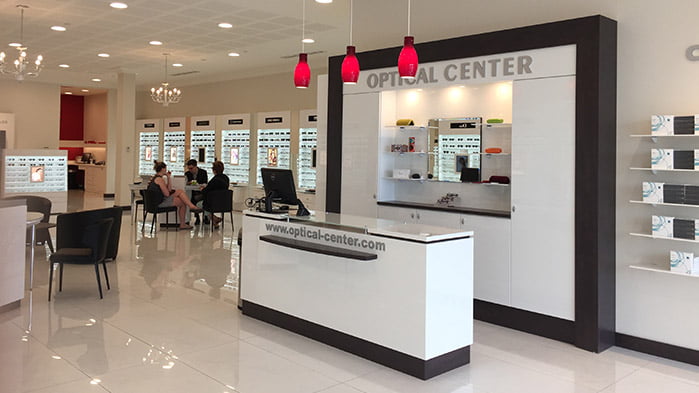
Optical Center (Image: Optical Center)

Optical Center, an eye and hearing care store, is geared for big future expansion after opening three locations in the past year in the Montreal area.

Benjamin Blaise, director of development for the company in Quebec, says Optical Center is a company based in France with the first store opening in 1991. The company currently has 522 stores in seven countries – 90 per cent of them in France. The others are in Spain, Turkey, Switzerland, Belgium, Israel and now Canada.

The company plans to grow more locations in Quebec.

“We want to open a lot of stores – to franchise the concept of Optical Center,” says Blaise. “Right now we don’t have a good number to know how many stores will open. We want to make good on these three stores and after that probably open a lot of stores. In Quebec, we will have probably 40 or 50 stores (in the future).”

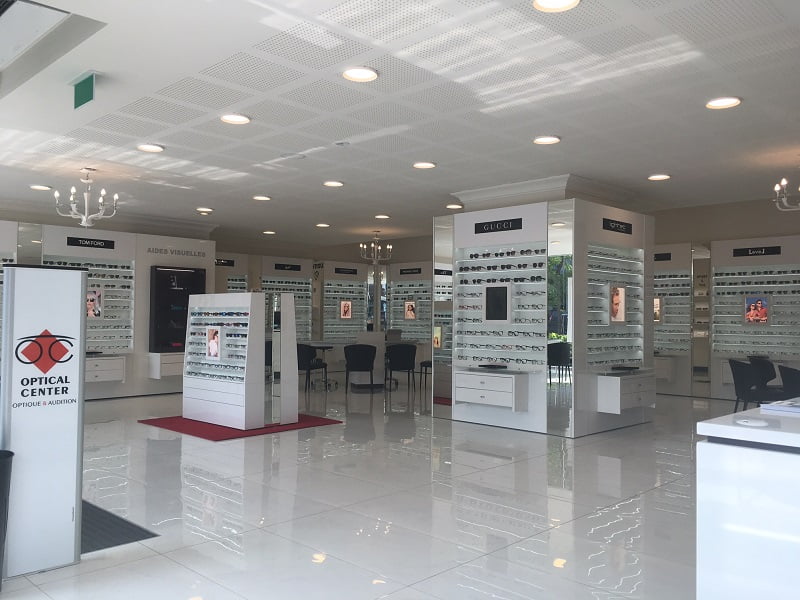
Optical Center

The next step after that could even include expansion outside of the province’s boundaries.

“The last store in Pointe-Claire is in the English part in West Island. We are trying a new concept with the English part. If this one works very well, maybe we think of moving West or maybe even south,” says Blaise.

The first Canadian store opened in LaSalle, Quebec followed by one in Montreal and then another in Pointe-Claire.

“All of them opened this year,” says Blaise.

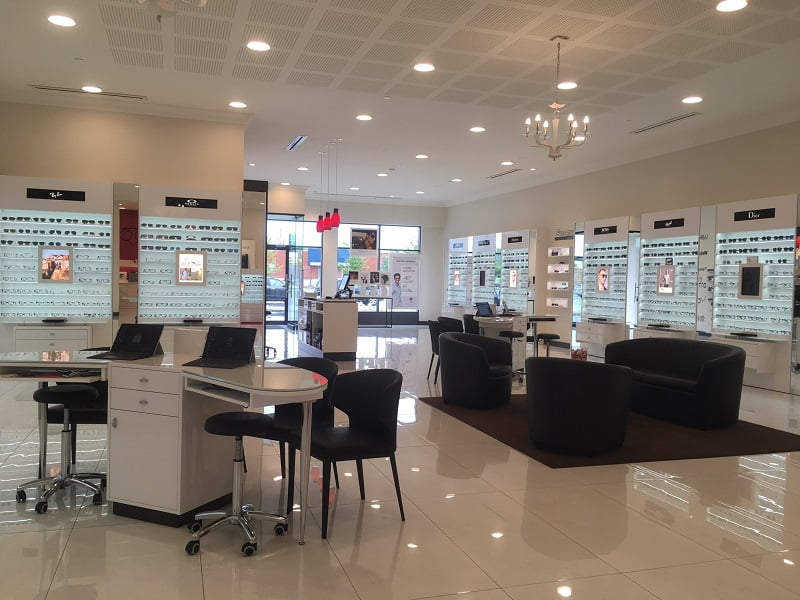
Optical Center

Optical Center has opticians and optometrists as well as audiologists. It sells eye frames, lenses and contact lenses. About 12 years ago the company began to offer audiology services.

“Now we are probably one of the first stores in Canada with both parts hearing and eye care,” says Blaise.

Each of the three Quebec stores has opticians and optometrists based there. There is one audiologist for the three stores.

Blaise says the company has a great partnership with Construction Vergo – Mylène Hardy, Paul Belanger and Yves Ducharme – which allowed the concept to come to fruition.

“Paul went to Europe to see what exactly an Optical Center store is and what we exactly wanted for Quebec,” he says. “Mylène was my eyes and my ears during construction. It was so nice to have somebody who understood exactly what we wanted and being self-motivated.”

“It’s our first stores in North America and we wanted to share this adventure with someone who truly understands our concept store. Working with them was one of our best decisions.”

Optical Center
Optical Center

Hardy, Account Manager, Commercial Interiors Division with Construction Vergo, says the company was tasked with finding the right architects and engineers that would respect the concept and design of the stores which were already created in France.

“We needed to understand their concept and apply it to Canada,” says Hardy. “For example with the lights. We had to find an equivalent here in Canada to make sure that it was as per their spec and as per their needs. They have special needs for lighting . . .  We applied their design to our Canadian stores.”

Italian Luxury Brand Mr. and Mrs. Italy to Open 1st Standalone Canadian Boutique

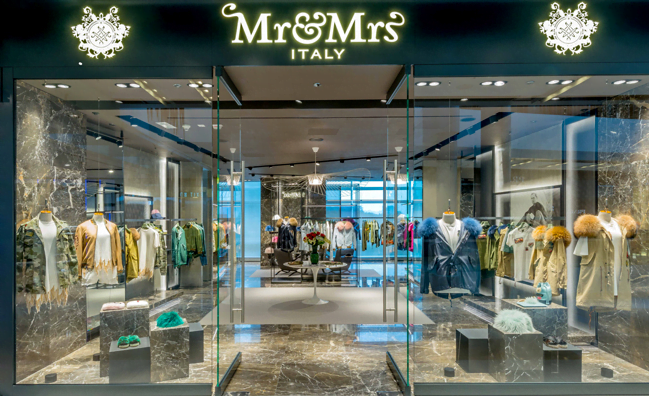
Mr and Mrs Italy Storefront

Pricey Italian luxury brand Mr. and Mrs. Italy will open its first Canadian store at Toronto’s Yorkdale Shopping Centre in December of this year, according to construction signage in the mall. Toronto joins a handful of cities globally to boast having a Mr. and Mrs. Italy store location. 

Mr. and Mrs. Italy was founded in 2007 in Milan and is known particularly for its parkas lined with fur detailing. Prices aren’t cheap — parkas are generally priced between about $2,000 and $6,000 each, with some approaching $10,000. The brand also features men’s and women’s ready-to-wear clothing and accessories, including collections of unique and expensive footwear that often features fur accents. 

The company initially gained awareness for its army green cotton parkas that are lined with rabbit, fox, beaver and mink. The vintage inspired shells and luxury fur design became a hit with celebrities, propelling the brand. The company says on its website that everything is made in Italy. 

(CLICK FOR INTERACTIVE YORKDALE MALL MAP)
(CONSTRUCTION SIGNAGE AT YORKDALE. PHOTO: CRAIG PATTERSON)

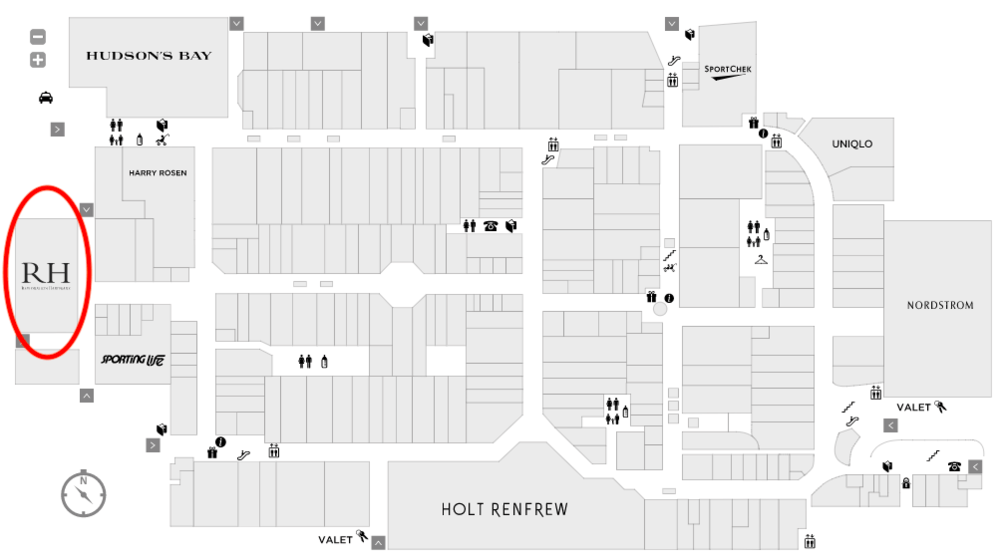
The Yorkdale boutique will be located in half of the 2,930 square foot retail space formerly occupied by Birks (which relocated), across from a soon-to-open Ladurée boutique (Toronto’s first) and next to luxury brand Saint Laurent, as per the floor plan below. The former Birks space had originally been earmarked to become Canada’s first standalone Marc Jacobs store, though that’s since changed. 

According to its website, there are only eight standalone Mr. and Mrs. Italy stores in the world, in seven cities. There’s one store location in Milan — its flagship, as well as locations in New York City, Bal Harbour Florida (Bal Harbour Shops), Paris, Shanghai, Beijing, and Hong Kong, which has two stores. 

Yorkdale could now be considered to be Canada’s ‘parka central’ — Moose Knuckles opened its very first concept store last week in the mall’s Nordstrom-anchored expansion wing, across from the world’s first Canada Goose retail store that opened last year. Montreal-based Mackage is also located nearby, and Woolrich is about to open its first Canadian store across from Mackage. Moncler and Rudsak are known for their warm jackets as well, and there are plenty of other stores in the mall that carry outerwear including Holt Renfrew, Harry Rosen, Hudson’s Bay, Nordstrom, Sport Chek, Sporting Life, The North Face and others. 

*Top Photo: Mr. and Mrs. Italy at Hong Kong’s IFC Mall.

RONA Unveils New Store Prototype

exc-5a00bae59140b7f434edd94a

Lowe’s Canada has launched its first new RONA store prototype in Longueil, Quebec as it embarks on a plan to roll out the new building centre model in 15 stores by the end of 2018.

Serge Éthier, Executive Vice-President of RONA Proximity, says the new RONA store concept was developed with three goals in mind: to better meet current needs and trends in renovation; to establish the store as its customers’ go-to destination for projects; and to enhance its offering for contractors and pros, who account for a larger portion of building centres’ client base than is the case for big box stores.

Lowe’s says its goal is to make RONA the No. 1 banner in the building centre market in the country – a segment of retail that accounts for close to half of Canada’s home improvement market.

Éthier says the stores that will be transformed are located across the country. They’re basically building centres ranging in size between 20,000 to 45,000 square feet. They usually include a drive-thru and a yard.

“So in the future, RONA is going to be dedicated to the building centre segment which accounts for more than 50 per cent of the overall renovation market in Canada,” says Éthier.

“We have a strategy for full remodel or minor remodel and we do have a strategy for greenfield. So new stores across the country . . . We already started this year with three new stores in Quebec and we’re in the market analysis throughout the country to where would be the best locations for us.”

RONA’s Longueuil store is located on Roland-Therrien Boulevard and the transformation to the new concept involves an investment of more than $2.6 million.

“Overall, the new RONA store model is designed to better reflect new trends in the residential housing market — open floor plans, brighter rooms, and outside spaces designed to become natural extensions of the interior. These trends are reflected both in the store layout and strategic placement of some departments, as well as in the product selection,” says the company. “

“The result is a brighter, less compartmentalized store, with racking entirely redesigned and not as tall, except on the perimeter of the store, which allows customers to have a 360-degree view of the store and thereby find the section they are looking for at a glance. In addition, seasonal products have been moved up near the entrance so the shopping experience is renewed on a regular basis, and household appliances now have a prime location near the kitchen project section.”

The company also says the new building centre model is designed to make RONA the go-to destination for turnkey renovation projects. Services will include design consulting, 3D renderings, as well as installation services.

For contractors and other home improvement professionals, there is a reserved parking area, a dedicated entrance and service counter, extended business hours to fit contractors’ schedules, a special fleet of trucks for construction-site deliveries, a minimum 15,000-square-foot drive-through lumberyard, and charge-account services to speed up and simplify purchasing.

“A big chunk of our overall spend from our customer is attached to projects. That’s why you go to a building centre because you have more associates, more knowledge inside the store. So we’re definitely trying to position ourselves more as a project destination in the future,” says Éthier.

“That remodel is also positioning us better to answer the pro in the future in that contractor segment.”

The RONA banner, created in 1939, falls under Lowe’s Canada with more than 430 stores across the country. Many of the big box RONA stores are being transformed in the country to the Lowe’s brand.

Lowe’s Companies Inc., based in the United States, serves more than 17 million customers a week in the United States, Canada and Mexico. It had $65 billion in sales in its fiscal year 2016.

Based in Boucherville, Quebec, Lowe’s Canadian business, together with its wholly-owned subsidiary, RONA inc., operates or services more than 600 corporate and independent affiliate dealer stores in a number of complementary formats under different banners. These include Lowe’s, RONA, Réno-Dépôt, Marcil, Dick’s Lumber and Ace. In Canada, the companies have more than 25,000 employees, in addition to nearly 5,000 employees in the stores of RONA’s independent affiliate dealers.

**Photos provided by RONA

The Grocerant: How Smart Grocery Stores are Becoming Hybrids

exc-5a03543ee2c48332b156e5ba

Sylvain Charlebois, Dalhousie University

Food trends are difficult to follow these days. Just like hip sectors like tech, the food industry is coming up with its own peculiar lingo when describing market shifts.

One of the latest examples is “grocerant,” a word combining “grocer” and “restaurant.” The term has been around for a few years, but it seems to have gone mainstream in recent months. Or at least it’s a term most of us will be hearing more often.

But as trendy as it is, the term “grocerant” is also in fact quite relevant and accurately captures what is happening in the food industry these days. In short, a grocerant is a grocery store that sells prepared meals, to either eat on site or take home.

The numbers are staggering. According to NPD Group, a research outfit in the U.S., grocerants generated 2.4 billion new visits and over US$10 billion in sales in 2016 — a massive shift.

Efforts to offer more convenience are resulting in numbers not seen since the drive-through phenomenon several decades ago.

In Canada, while the numbers are little more obscure, we are seeing similar trends. Many retailers are on the move.

Given that convenience seems to have more currency than ever before, two worlds are currently colliding in the ready-to-eat space at grocery stores, which caters to people seeking portable solutions to accommodate their hectic daily lives.

Grocerants offer a one-stop-shopping solution for consumers driven by either curiosity or a lack of time. An increasing number of grocery stores now allow customers to buy and eat on the spot. Some stores in Canada and the U.S., including several independents such as Longo’s and even larger outfits like Loblaw, Sobeys and Metro, deftly merge both food retailing and food service under one roof.

Grocery stores challenging restaurants

Research suggests many consumers generally perceive grab-and-go food products to be healthier than meals you can get at a restaurant. This works well for grocers.

Price wars constitute the other driving issue for grocers. Over the last 15 months in Canada, food retail prices have barely moved. But the price of food purchased at restaurants has increased significantly, more than double the general inflation rate.

This would suggest that menu prices are much more immune to market cycles than retail food prices. Demand in food service is inherently more inelastic, so margins can be kept up and defended in most cases, no matter what the economy is doing.

But restaurants aren’t staying quiet in the face of this new trend. Restaurant operators are fighting back by using technology to their advantage. Many are responding by using UberEats and other food delivery services, even expanding their market by offering meal kits and developing new ways to reach consumers.

In other words, they are trying to go where the money is instead of just waiting for the consumers to come to them.

Some say it’s all about millennials. It is indeed about offering fresh, healthy, reasonably priced products for the largest generation that is slowly taking over the economy.

Aging baby boomers have an impact too

But the changes are more deep-rooted, beyond just millennials. Millennials certainly have the economic influence to trigger the changes we’re seeing, but many demographics are behaving differently around food.

Families with older children like the enhanced grocerant experience, while aging baby boomers need the convenience. The appeal is across the board. Millennials were the first generation not willing to settle for what was being offered to them by grocery stores. The rise of the grocerant represents the awakening of an industry that’s been complacent for quite some time.

In the realm of the convenience factor that’s a critical part of the grocerant movement, the ready-to-cook market is also emerging as an interesting opportunity, but not without some headaches.

In the U.S., Blue Apron, the largest and best-known meal-kit provider in the world, is waging an uphill battle. The company has just laid off six per cent of its staff and its stock has gone nowhere since going public in June.

On the other hand, we’re seeing evidence that grocers like what they see from meal-kit outlets. Plated, the five-year-old American meal-kit company, was acquired last month by the grocery giant Albertsons, for approximately US$200 million.

Grocers do have the capacity to cover a broader market with their product offerings, but have not yet made much of a play on meal delivery and quality.

Grocery chains, in fact, are often not hardwired to successfully meet new challenges. But that’s slowly changing. Metro made a significant move this year by acquiring Miss Fresh, and many expect other grocers to follow suit.

In processing as well, Campbell’s Soup, Unilever and many others are investing in meal kits to explore what could become a US$10 billion industry by the end of next year.

It’s all a growth opportunity that cannot be overlooked by grocers. They’ll need to hire the right people, with the right mindset, in order to capitalize on these new opportunities. And because of changing consumer expectations and behaviours, survival seems unlikely for stand-alone meal-kit outlets.

The ConversationSo the convenience food battle is alive and well. Grocers were losing for a while, but the emergence of grocerants across the country is a sign that the industry is listening to what the modern consumer is telling them.

Sylvain Charlebois, Professor in Food Distribution and Policy, Dalhousie University

This article was originally published on The Conversation. Read the original article.

The Puzzling Probe into Canada’s Alleged Bread Cartel

Loaves of fresh-baked bread line the shelves at a bakery. THE CANADIAN PRESS/AP-Douglas C. Pizac

A bread cartel is alive and well in Canada. Or is it?

Canada’s Competition Bureau is investigating major grocery chains for evidence of retail price fixing.

Loblaws, Sobeys, Metro, Wal-Mart and other companies have acknowledged the ongoing investigation. The outcome of the inquiry will likely not amount to much, but it does raise the question: Why is bread is being targeted by the bureau?

Demonstrating beyond a reasonable doubt that grocers are colluding to keep retail prices artificially high is almost impossible. Several attempts have been made in the past, with mixed results.

The average grocery store carries well over 30,000 different products, and prices can be affected by an array of factors: Commodity prices, energy and labour costs, new food safety and packaging regulations among them. These and others factors can all influence price points in many categories more or less simultaneously. An intentional collusion to falsely inflate profit margins would be hard to prove.

Historically, bread prices have been quite stable, with the exemption of 2008 and 2009, when prices jumped almost 50 per cent in a single year for all bakery products.

On the whole — unlike prices for fruits, vegetables and even meat products — bread has been immune to fluctuating prices for some time. In fact, Canadians have access to the most affordable food basket in the world.

Canadian food prices are relatively low

After the United States, Ireland and a few other countries like Singapore, Canadians spend less on food relative to their income than most countries in the world.

Nonetheless, since we live so close to the United States, where food quality is generally questionable but amazingly cheap, we often believe our own food prices are unfairly high. Prices are indeed higher here than in the United States, but much lower than in many places around the world.

In the last month alone, food retail prices have dropped in Canada, including bakery products. So, to suggest that food prices are inflated in Canada is somewhat far-fetched. And if Canadian consumers are paying too much for bread due to price-fixing schemes, the evidence isn’t readily apparent.

At the centre of this investigation, however, is a much deeper problem that lies in the food supply chain.

For years now, grocers have engaged in an open war with food processors, with grocers trying to position themselves as protectors of the public interest by pushing vendors to lower prices in order to remain competitive.

For the past few years, tensions between grocers and vendors have been at an all-time high. Major grocers have demanded price cuts from suppliers, causing a domino effect on the entire industry.

Small grocers complain

So, it’s not surprising to learn that independent grocers, through an industry association, passed along their concerns to the Competition Bureau. Consumers have barely noticed the conflict. Until now, that is.

Almost by design, the Competition Bureau may be trying to communicate to the market that grocers are on watch for squeezing processors.

As a food staple, bread is an appealing target. The bureau could have selected any food product, but bread’s status as a staple makes it an obvious choice — a clear majority of Canadians eat bakery products almost daily and, as a result, its price is an ongoing concern.

Everyone loves bread. That’s why Canada’s Competition Bureau might have chosen it to make a point to big grocers about their treatment of food processors.
(Shutterstock)

It was chosen for a reason: To make an otherwise dreary, obscure, supply-side issue more imperative to the daily lives of consumers.

Publicly traded companies extorting each other is less of a political or PR concern than allegations that grocers are allegedly gouging consumers. The investigation will likely not yield material results, but bread is clearly the best medium through which the bureau can send its message.

It’s not likely any grocer will be accused or arrested any time soon, but the Competition Bureau investigation could potentially restore peace within the food industry family.

Probe could bolster the food sector

A vibrant food sector is not possible without a strong food-processing sector, and making sure all make a decent profit within the food industry is difficult.

Nonetheless, consumers can only benefit if all sectors, from farm to table, succeed over time: we end up with a greater variety of decently priced, high-quality, innovative food products. Ultimately, and without sending anyone to prison, this investigation could strengthen the food sector.

Grocers know better than to engage in a doomed strategy of quotas and illegal price-setting activities. The mere spectre of a grocery cartel would not only be bad business, it threatens to tear up the social contract with the Canadian public that they adhere to every single day.

Consumers can expect to see deals being made within the industry in the days ahead.

The ConversationFood shoppers will almost certainly experience rebates in the bakery section as grocers rush to reassure their customers that a bread cartel in Canada is nothing more than a myth.

Sylvain Charlebois, Professor in Food Distribution and Policy, Dalhousie University

This article was originally published on The Conversation. Read the original article.
Inside Yorkdale’s Impressive 70,000 Square Foot RH Restoration Hardware Gallery [Photos]

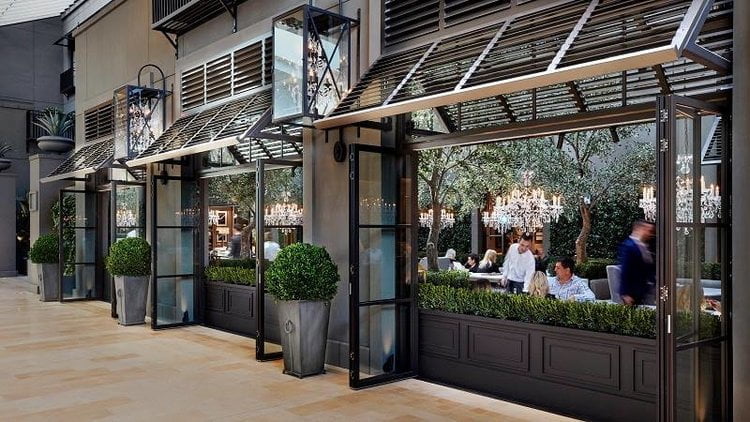
Restoration Hardware Exterior at Yorkdale Shopping Centre

RH, aka Restoration Hardware, opened its massive four-level Toronto Yorkdale Shopping Centre flagship last week, and the space is impressive. The store looks like a spectacular mansion, with indoor and outdoor retail spaces, a courtyard café, Interactive design atelier, and rooftop conservatory/park. 

The flagship spans a total of almost 70,000 square feet of interior and exterior space, including entire floors dedicated to RH Interiors, RH Modern and RH Outdoor. This store also includes an interactive Design Atelier, offering professional interior design services in a studio environment.

“The vision for our new design galleries has been to blur the lines between residential and retail, and create spaces that are more home than store. The next logical step was to further blur the lines between home and hospitality, with an integrated restaurant, wine and coffee bar,” says RH Chairman & CEO Gary Friedman.”What we are doing goes far beyond attaching a restaurant onto a store – that’s been done before. What’s unique is we’ve created a completely integrated hospitality experience, led by famed Chicago restaurateur Brendan Sodikoff, that reflects our taste, style and point of view. We’re proud to bring this first-of-its-kind concept to Toronto, one of the most metropolitan cities in the world,” he said. 

Mr. Sodikoff is the founder, CEO and creative director of rapidly growing Chicago-based restaurant group Hogsalt Hospitality, which now boasts 14 concepts and 15 locations. 

RH Yorkdale’s initial design was by architect James Gillam of Backen, Gillam & Kroeger, and Toronto-based architectural firm Quadrangle completed the drawings, coordinated final design details, obtained city approvals, oversaw construction and ensured that the RH brand goals and design concept was faithfully executed in the final building.

The following is a brief description of the store, floor-by-floor:

Ground Floor: Glass-and-steel French doors open onto a streetscape with Boston ivy, geometric topiaries and towering trees rising out of a continuous boxwood hedge. The gallery’s eastern entrance, accessed from within the mall, features a terraced façade of Venetian plaster and a lush interior courtyard flanked by open-air loggias that act as the central location for the gallery’s Courtyard Café. The restaurant includes banquette seating layered with green velvet boxwood hedging, cascading English ivy, trickling fountains, glimmering lanterns and 19th C. Rococo crystal chandeliers. 

The store’s central hall, with impressive 14-foot ceilings, leads to the RH Barista Bar – a focal point that features a Tuscan colonnade and facet-edged limestone slabs. Fresh house-made doughnuts and pastries are among the offerings. 

Barrel-vaulted passageways lead customers to a classical arrangement of rooms featuring RH Interiors collections from internationally renowned artisans and designers — it’s like walking from room-to-room in an impeccably decorated residence. 

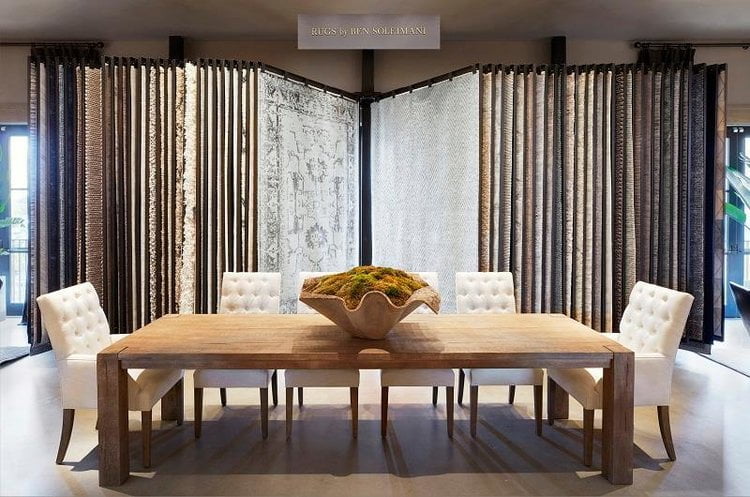
Second Floor: The RH Design Atelier is a 5,000-square-foot studio anchored by four, 15-foot custom tables that offer a fully integrated workspace for customers, designers and architects to design spaces both  inside and out. A trained team of staff has access to RH’s vast library of fabrics, leathers and furniture and lighting finishes. The Design Atelier also includes a Ben Soleimani rug showroom displaying the designer’s hand-knotted and hand-woven rugs, as well as various other specialized galleries for window treatments. Bed and bath linens and bath hardware can also be found on the second floor. 

Third Floor: A 12,000-square-foot exhibition space, called RH Modern, is one of the world’s largest curated and fully integrated assortments of modern furnishings, lighting and décor under one brand. The aesthetic is minimalist, with glass and steel French doors paired with Juliet balconies that line the perimeter of the floor.

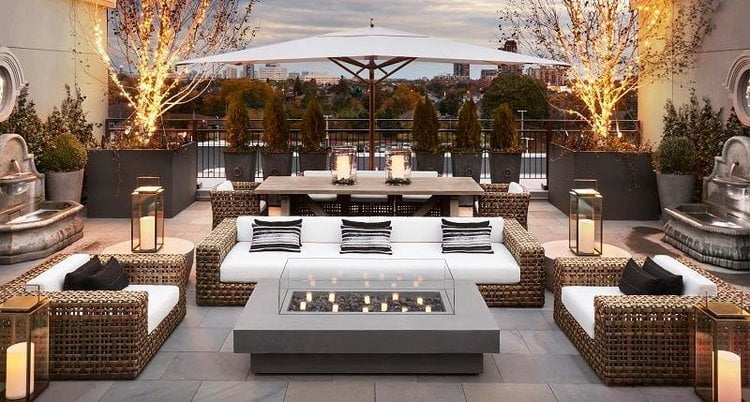
Fourth Floor: At the top of the grand stairway is the ‘Conservatory and Rooftop Park’ — an impressive 12,000-square-foot garden space with towering banana palms, heritage olive trees, exotic succulents, and 20-foot ceilings. The indoor space opens onto a rooftop patio featuring mature Himalayan birch trees set within colossal steel planters accented with cascading English ivy. Open-air pavilions, chandeliers and trickling fountains can be found among vignettes of RH Outdoor collections, and there’s even a view of the CN Tower and Toronto skyline when looking southward on a clear day. 

(FOURTH FLOOR) 
(FOURTH FLOOR EXTERIOR TERRACE, WITH VIEWS OF DOWNTOWN TORONTO) 

Overall, the space is very impressive and Yorkdale’s RH Gallery is worth a visit for anyone living or visiting the Toronto area. There’s nothing quite like it, and Yorkdale’s new Sporting Life store, which also opened a couple of weeks ago, is another beautiful new retail space in Canada’s most productive shopping centre. 

Innovative Grocery Chain Freson Bros. Discusses Growth Plans

Freson Bros.

Freson Bros. isn’t just a normal grocery store chain in Alberta.

“We actually don’t want to call ourselves a grocery store,” says Doug Lovsin, president of Freson Bros., which is based in Stony Plain, Alberta.

“Our promise is to deliver a unique Alberta food experience. That’s our promise . . . . We’re a food market. We’re actually trying to create a space that we feel fits what it is that we do.”

“The most successful businesses solve people’s problems and we’re trying to solve time-starved families’ problems by delivering high-quality Alberta meals as quickly and as efficiently as possible,” adds Lovsin.

The company has 15 stores – all in Alberta – and is currently building its 16th in Fort Saskatchewan. It has identified its 17th store which will be its first one in Edmonton.

The Fort Saskatchewan store is expected to open in the spring of 2018 and the Edmonton store will open in the spring of 2020.

“The plan is to grow to 20 stores by 2026. We feel if we can continue to meet the needs of the consumer we will grow and expand in Alberta into larger markets outside of Edmonton metro and of course we will keep an eye on expansion even beyond major Edmonton markets,” says Lovsin.

Perhaps even outside the province.

Lovsin’s brother Mike is the chairman of the company and his other brother Ken is the vice-president of IT.

Freson Market Ltd. began on October 20, 1955 when Frank Lovsin opened a butcher shop with his two partners, Frank Resek and Frank’s father, Leo Resek from Edson, Alberta.

The company says the name Freson was derived from a combination of the letters in the respective partner’s names. The letter “F” in Frank, the letters “RES” in Resek and the “IN” in Lovsin were put together to form the name “FRESIN”.

“The bank manager at the time however, misspelled the name on the company documents, nobody argued the proper spelling, hence the name Freson Market Ltd. was born,” says the company’s website.

“The first butcher shop was in Hinton, Alberta and the cost of the building was $2700. The original building was built on skids and was on a thirty day ground rent policy. It was 24 feet wide and 30 feet long with a power plant in the back.”

Lovsin says Freson Bros. was born in 2008 and over the years it’s re-branded and re-modelled of all its stores.

Freson Bros

“My dad started in the meat business. He saw right away in the first year if he didn’t get into the grocery world he was vulnerable. Within two years he started selling groceries and he partnered with IGA. The growth of our company has been with IGA up until really we opened our first Freson Bros. store in 2009. We recognized that the future of our company depended on us creating some distinction in the market and being different. So we really embarked on looking at what people are looking for. What problems can we solve?,” says Lovsin.

“And people today are time starved. We knew that bringing high-quality, restaurant quality food into our store was what was going to solve a lot of problems. We’ve been working on this for a number of years.”

With that in mind, the company opened its first Freson Bros. Fresh Market store in Stony Plain in March 2013.

The concept has several unique features:

  • A root cellar where root vegetables are kept in a refrigerated room;

  • Banj’s Smokehouse makes a variety of products right in the meat department. Butchers cut all the meat in-house and the store only sells Alberta beef, pork and chicken;

  • Fresh fish is available Thursday, Friday, Saturday and Sunday;

  • The bakery is what is called a “scratch bakery” anchored by a cold fermentation program – the old way of baking. It uses only Alberta flour;

  • The deli and the hot food area serves restaurant quality food cooked in the kitchen. Nothing is ever frozen and just heated up. All the meat is slow cooked;

  • The deli area has a hot buffet with the menu changing daily;

  • Every Friday is all you can eat fish and chips. Every Wednesday there is all you can eat pasta. There’s a 20-foot salad bar with a 75-seat restaurant with a fireplace.

“That makes us different. That’s our brand new Freson Bros. store in Stony Plain and that is to address the changing needs of today’s consumers,” says Lovsin.

The next store in Fort Saskatchewan will be a sister store to the Fresh Market concept.

“We call it version 1.5. Actually our Rabbit Hill (Road) location in Edmonton will be 2.5. It will be advanced from Stony Plain and Fort Saskatchewan,” says Lovsin.

Brief: Miu Miu at Holts, McArthurGlen Outlets to Expand, Structube Building Massive Warehouse

exc-59f62737ec212d295bc8c47b

Miu Miu Installs Gigantic Handbag at Yorkdale’s Holts

Luxury brand Miu Miu (under Prada ownership) has just unveiled a playful installation in front of Holt Renfrew at Toronto’s Yorkdale Shopping Centre. It’s part of a promotion for the Miu Lady Bag, which is carried in the recently relocated Miu Miu shop-in-store concession at Holt’s. 

The ‘handbag’ is so large that you can walk right through it — inside are video screens playing a series of short films to promote the story of the Miu Lady bag. More photos can be found here on Yorkdale’s website, and the installation runs until November 15th. 

Miu Miu recently unveiled a new boutique on the ground floor of Holt Renfrew at Yorkdale, sporting a blue interior similar to the Miu Miu boutique at Nordstrom at CF Toronto Eaton Centre that opened last year. Holt Renfrew continues to renovate parts of its Yorkdale store and is adding new boutiques and expanding others, with some big announcements to be made in the the coming weeks. 

Innovative Downtown Oakville Pop-Up Initiative Secures 1st Pop-up

Downtown Oakville has 8 dedicated retail spaces that are being animated with temporary tenants, in an effort to build further buzz in the community’s beautiful downtown core. The partnership between landlord Bentall Kennedy and innovative facilitator pop-up go (spelled lowercase) has announced that two fashion designers will be doing a month-long pop-up. 

Designers Angela Huntington (of brand HUNTINGTON) and Andrew Majtenyi (of brand By Andrew) are known for their Canadian-made brands with British flair. British-born designer, Angela Huntington, aims to create bold yet sophisticated wardrobe essentials in her HUNTINGTON collection. Andrew Majtenyi, as seen in British Vogue, and his collection By Andrew, bring a runway quality to the retail scene of Downtown Oakville. 

With the help of pop-up go, both designers have launched their pop-up to strategically access one of the most affluent locations in the Greater Toronto Area — an impressive 47% of households earning an annual income of over $100,000. The four-week-long activation will help both designers test consumer demand and expand into a new market.

“Brands are turning to pop-ups to create a unique experience for their consumers – and the right location is vital to their success,” said Linda Farha, pop-up go’s Founder and Chief Connector. “We look at the brand holistically, and match our clients with a space that will help achieve their business goals.”

MINISO Opens at Park Royal

Value-priced Chinese retailer MINISO, which positions itself as a Japanese lifestyle brand, has opened its newest Canadian store at West Vancouver’s Park Royal. MINISO is already a hit with consumers in the Vancouver area, after having opened several locations this year. The company has also just opened its first Ontario store at Pickering Town Centre, and MINISO has said that it plans to eventually operate as many as 500 stores across Canada

MINISO could potentially take market share away from homegrown retailers like Dollarama and others. There’s an excellent article in Maclean’s discussing MINISO and how it could impact Canadian retail, where Retail Insider’s Craig Patterson is also quoted. 

(Photos below are of the newly opened Park Royal store) 

Bayview Village to Host November Pop-Ups

Toronto’s Bayview Village centre will see the Detox Market and MoRoCo Chocolat open individual pop-up locations in early November. Both will open in the mall’s ‘East Lobby’ adjacent to Pusateri’s Fine Foods, and be open for several months. 

The Detox Market is a Toronto-based retailer that specializes in eco-friendly brands in beauty, wellness and health. MoRoCo Chocolat is a popular Toronto-based artisan chocolate maker, known for its unique designs (its chocolate stilettos have been a hit with shoppers). 

Toronto’s Bayview Village is one of Canada’s most productive malls in terms of sales per square foot, which shouldn’t be a surprise — it’s also located in one of the wealthiest areas in the country, and benefits from convenient highway and transit access. 

NYC designer SAM. Launches TNT Shop-in-Store

Last week, Suzanne Schwartz, Head Designer and Chief Creative Director of SAM. was in Toronto to showcase her line of fashion-forward outerwear for men, women and children. Innovative multi-brand retailer TNT The New Trend has provided SAM. NYC with a dedicated retail space in its Yorkville Village store, with visibility from the centre’s ‘Oval’. 

The SAM brand launched in 2011 by the original creators of the Andrew Marc Brand, Andrew and Suzanne Schwartz, and its name is derived from the initials of two, Suzanne and Andrew Marc.

Jackets in a variety of colours feature multi-functionality, as well as ample use of fur in some styles. 

Galerie de Bellefeuille Opens at Yorkville Village

On Wednesday night, there was a grand opening for the stunning new Galerie de Bellefeuille at Toronto’s Yorkville Village. It’s the first Toronto location for the Montreal-based gallery, and a fourth for founders Helen and Jacques Bellefeuille, who have over 40 years of experience in the art industry. 

The owners strive to highlight internationally acclaimed artists and the Toronto gallery offers works by artists like Damien Hirst, David Drebin, Jonathan Siliger and more in the 5,000-square foot space. 

Jeff Berkowitz of Aurora Realty Consultants negotiated the deal on behalf of Galerie de Bellefeuille. 

The gallery is sure to be a hit — Yorkville is a high density, affluent area and Yorkville Village and the adjacent area continues to add luxury boutiques. Next week we’ll be announcing a 6,500 square foot flagship location for a luxury brand opening on Yorkville Avenue. 

Structube to Build Massive Warehouse

Montreal-based value-priced furniture retailer Structube is going to be building a massive 650,000 square foot warehouse in Laval, near Montreal, at a cost of $80 million, according to a report in La Presse. When completed, it will be the largest warehouse in all of Laval. 

The La Presse article notes that the building will include a 40,000 square foot retail space as well as offices for administrative employees. The company is growing and ran out of room at its current headquarters. 

Structube is planning to enter the United States in 2018 and as well, it recently launched a new store format that will be 50,000 square feet — considerably larger than its current stores. 

Nespresso gets with the times and installs wi-fi

Some patrons of Canadian Nespresso locations have complained that they lack in-store wi-fi — that’s about to change, with a partnership with Orange Business Services, which will be providing Nespresso with internet and wi-fi in more than 35 countries. 

Nespresso has launched an app that can be downloaded as well, providing immediate connection to Nespresso retail location wi-fi. 

This will provide patrons of Nespresso cafes convenient wi-fi — staff in the massive Toronto  Nespresso flagship on Cumberland Street had said that the cafe’s lack of wi-fi was intentional and ‘European’, though it appears opinions have since changed. 

McArthurGlen Vancouver Outlets to Expand

Vancouver’s McArthurGlen Designer Outlets is going to be growing in size — the popular 243,000 square foot outlet shopping centre opened in the summer of 2015, and it’s planning to add a second phase with 78,000 square feet of retail space that is expected to open in the spring of 2019. 

The centre features a range of upscale retailers, including first-to-market retailer Lipault Paris, which opened its first Canadian location at McArthurGlen in July of 2017. 

The landlord is working with Teresa Spataro of brokerage RKF to fill the space. 

Retail Insider will now be regularly including these briefs as part of our expanding reporting mandate. For more information, contact Editor-in-Chief Craig Patterson at: craig@retail-insider.com

For more of today’s retail news, visit: Canadian Retail News From Around The Web: November 3, 2017