Advertisement
Advertisement
Home Blog Page 112

Moose Knuckles Refines Retail Strategy With Eaton Centre Move

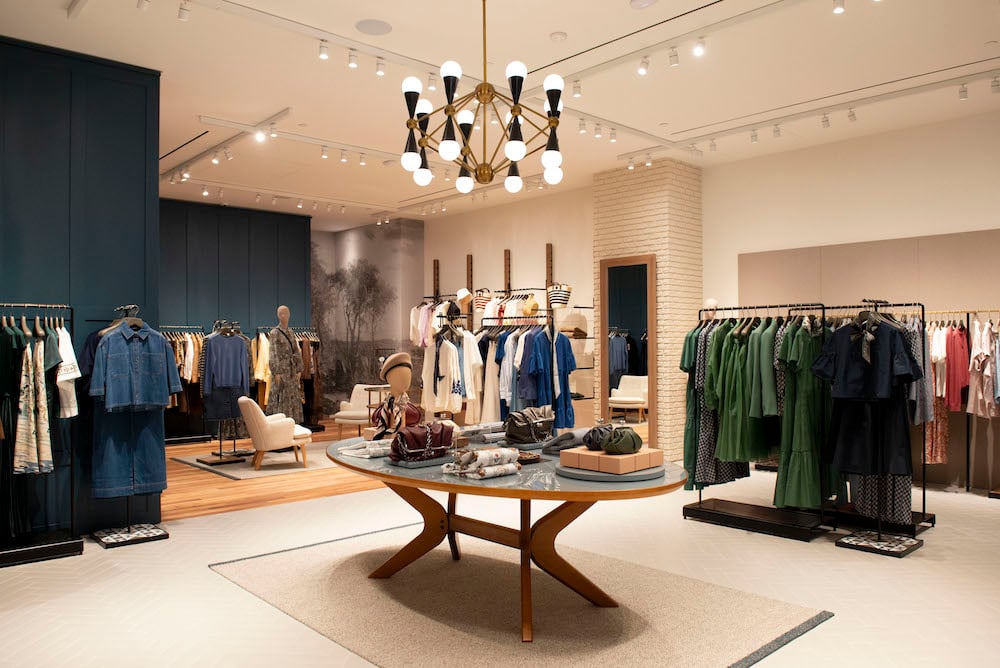
Moose Knuckles at CF Toronto Eaton Centre. Photo: Moose Knuckles

Moose Knuckles is entering 2026 with a sharper sense of focus across its retail network, beginning with the recent relocation of its store at CF Toronto Eaton Centre. The move, which saw the Canadian outerwear brand shift next door into a smaller, more productive space, reflects a broader recalibration underway as Moose Knuckles aligns physical retail with brand evolution, product diversification, and disciplined global expansion.

The relocation was not driven by retreat, but by refinement. According to Andrea Elliott, Executive Vice President, Retail and Wholesale, Americas, the original Eaton Centre lease was secured during the height of the pandemic, when real estate availability was limited and long-term planning was clouded by uncertainty.

“We secured that space during COVID because it was important for us to be in the CF Toronto Eaton Centre, right in the downtown core and a major tourism hub,” Elliott said. “At the time, there weren’t many options available. While we had strong brand fans, the space itself ended up being larger than what ultimately made sense for us.”

As the business matured and performance benchmarks became clearer, Moose Knuckles revisited the lease with Cadillac Fairview and took the opportunity to right-size the store.

“We now have a very clear understanding of what our ideal footprint looks like from a productivity standpoint,” Elliott said. “The timing worked perfectly for us to relocate into the right space, at the right size, using our updated brand design, and the results have been excellent.”

Moose Knuckles at CF Toronto Eaton Centre. Photo: Moose Knuckles

Applying the Same Discipline in Ottawa

Toronto is not the only Canadian market where Moose Knuckles has refined its physical presence. In Ottawa, a long-running pop-up at Rideau Centre has now transitioned into a permanent store, again moving only a few doors but into a space better suited for long-term performance.

“Ottawa started as a pop-up in a small location,” Elliott said. “We were really waiting for the right long-term opportunity. When that space became available, we moved just a few doors down, built it out using the same design language as Royalmount, and the performance has been exceptional.”

The Ottawa move highlights a consistent theme within the Moose Knuckles retail strategy, patience paired with discipline. Rather than rushing into permanent commitments, the brand has used pop-ups as a proving ground to better understand customer demand and financial viability.

Pop-Ups as a Strategic Growth Engine

As of early 2026, Moose Knuckles operates 19 permanent stores across North America and Europe, with 21 total locations including two seasonal pop-ups. What began as a defensive tactic during the pandemic has since evolved into a deliberate and data-driven expansion tool.

“We initially leaned into pop-ups during COVID as a way to manage uncertainty,” Elliott said. “But very quickly, it became an offensive strategy. Pop-ups allow us to enter a market, operate during peak season, and truly understand its potential.”

By evaluating seasonal performance and extrapolating full-year profitability, Moose Knuckles can determine whether a market is ready for permanent investment. Even when a pop-up does not convert, the brand still captures long-term value.

“If we decide not to go permanent, we’ve still gained new customers, strengthened our e-commerce presence in that market, and built brand awareness,” Elliott said. “It’s a win on multiple levels.”

Current pop-ups include King of Prussia near Philadelphia in the United States and a high-profile Amsterdam location operated in partnership with fintech company Adyen, inside a former Hudson’s Bay building in the heart of the city.

“It’s a prime downtown location with strong tourist traffic and a very engaged local audience,” Elliott said. “It’s been a fantastic way to introduce the brand to that market.”

Moose Knuckles at CF Toronto Eaton Centre. Photo: Moose Knuckles

A Multi-Format Footprint Across Key Markets

Moose Knuckles’ physical presence spans a carefully curated mix of full-price and outlet locations across Canada, the United States, and Europe, reflecting a disciplined approach to market coverage and long-term brand positioning. Rather than pursuing aggressive saturation, the company has focused on securing locations that balance visibility, tourism exposure, and commercial performance.

In Canada, the brand operates in major urban and regional centres including CF Toronto Eaton Centre, Yorkdale Mall, Royalmount in Montreal, CF Chinook Centre in Calgary, Rideau Centre in Ottawa, CF Pacific Centre in Vancouver, West Edmonton Mall, and CF Polo Park in Winnipeg, while also maintaining outlet locations at Toronto Premium Outlets, Niagara Premium Outlet, and Premium Outlets Montréal. In the United States, Moose Knuckles has established a presence in high-traffic environments such as SoHo in New York City, Roosevelt Field, King of Prussia, Woodbury, Somerset, and Chicago Fashion Outlets, while its European footprint includes Roermond, Bicester Village, and Amsterdam, blending outlet destinations with select urban markets.

Canada Feels Well Covered as Focus Shifts Abroad

While Moose Knuckles continues to evaluate opportunities domestically, Elliott said the brand feels confident in its current Canadian footprint.

“We feel very good about our coverage in Canada, both from a full-price and outlet perspective,” she said. “Our penetration across the country is strong, and we’re in the right locations.”

Looking ahead, the emphasis is shifting toward international growth, particularly in the United States and Europe.

“That’s really where we see the greatest opportunity for expansion,” Elliott said.

For 2026, Moose Knuckles is forecasting between three and five new stores, primarily full-price locations in major global markets.

“Real estate decisions are critical,” Elliott said. “When you go permanent, you need to be absolutely certain you’re choosing the right location.”

Moose Knuckles at CF Toronto Eaton Centre. Photo: Moose Knuckles

Wholesale, Retail, and E-Commerce in Alignment

Unlike many brands that experience channel tension, Moose Knuckles has found that its wholesale, retail, and e-commerce businesses reinforce one another. Elliott oversees both wholesale and retail in North America, allowing for a fully integrated approach.

“Our wholesale partners are incredibly important to us,” she said. “When we open stores near those partners and invest in brand-building, we’ve seen that all channels benefit.”

In Canada, Moose Knuckles is carried by Holt Renfrew, Sporting Life, and Simons, while U.S. partners include Saks Fifth Avenue, Bloomingdale’s, Neiman Marcus, and Nordstrom.

“We haven’t experienced the conflict some people expect,” Elliott said. “Instead, we’ve seen success across the entire ecosystem.”

Digital Growth and Platform Investment

E-commerce continues to play a growing role in the business, supported by a recent migration to Shopify.

“We’ve seen strong year-over-year growth online,” Elliott said. “The platform upgrade has given us more flexibility, and it’s an area we’ll continue to invest in.”

Digital performance also informs physical expansion decisions, alongside wholesale distribution, competitive dynamics, weather patterns, and tourism.

Moose Knuckles at CF Toronto Eaton Centre. Photo: Moose Knuckles

Product Evolution Beyond Cold Weather

While Moose Knuckles remains best known for its premium outerwear, the brand has expanded its assortment into lighter-weight categories, sportswear, and logo-driven essentials.

“We are very intentional about balancing fashion and function,” Elliott said. “Our products need to perform, but they also need to feel relevant for city and street wear.”

Core jackets remain foundational, alongside evolving styles such as the brand’s signature “bunny” designs, sportswear, hoodies, polos, joggers, and the expanding Gold Series. Store teams play a direct role in shaping future product development.

“Our managers provide direct feedback to our design and merchandising teams every season,” Elliott said. “That level of collaboration is incredibly powerful.”

Experience as a Retail Differentiator

Inside Moose Knuckles stores, the emphasis is on experience rather than speed. Fit sessions often last 20 to 40 minutes, with teams trained to deliver what Elliott describes as a concierge-level approach.

“We want customers to feel welcomed and cared for,” she said. “It’s not about rushing a transaction. It’s about helping them make the right choice.”

That approach includes services such as guided fit sessions, careful handling of customers’ existing outerwear, and even assistance with zippers to demonstrate construction quality.

“We think about the entire experience from start to finish,” Elliott said.

Occasionally, customer feedback underscores the functional integrity of Moose Knuckles products in unexpected ways. Elliott recalled hearing from customers whose jackets helped reduce injuries during serious accidents.

“We don’t position ourselves around that,” she said. “But hearing those stories reinforces how much care goes into our construction and materials, and it means a great deal to our teams.”

More from Retail Insider:

Artificial Flowers Capture Growing Share of UK Market as Import Costs and Environmental Concerns Reshape Industry

New analysis by The Faux Flower Company reveals that artificial flowers now command a 14.3% share of the UK’s £2.2 billion retail flower market, with growth rates outpacing fresh flowers by a significant margin as consumers reconsider both cost and environmental impact.

Cross-referenced market data from Grand View Research, IBISWorld, and UK government statistics shows that the UK artificial flower market reached £314.7 million in 2023, representing the first comprehensive assessment of synthetic blooms’ market penetration against the broader fresh flower industry.

“The numbers tell a compelling story about changing consumer priorities,” said Rachel Dunn, Head of Product at The Faux Flower Company. “When you factor in the carbon footprint of imported flowers alongside their limited lifespan, the economic and environmental case for high-quality faux alternatives becomes increasingly clear.”

Import Dependency Creates Vulnerability

The analysis reveals the UK’s reliance on imported fresh flowers, with £761.8 million worth flowing into the country annually according to DEFRA statistics. When combined with domestic production of £150.2 million (UK production minus exports), imports account for 83.5% of total flower supply.

The Netherlands remains the dominant supplier, providing approximately 80% of UK flower imports based on British Florist Association figures. This concentration creates vulnerability to supply chain disruptions and currency fluctuations.

Post-Brexit border controls implemented in April 2024 added new phytosanitary certificate requirements for medium-risk plants including five major cut-flower varieties: orchids, chrysanthemums, carnations, Gypsophila, and Goldenrods. Dutch exporters warned these measures would increase costs by 5%.

Growth Trajectories Diverge

Comparing growth rates highlights a dramatic shift in market dynamics:

  • Fresh flowers (retail florists): declining at 0.6% CAGR (2020-2025)
  • Artificial flowers: growing at 4.8% CAGR in the UK market (2024-2030 projection)

At current rates, the artificial flower market would reach £429.3 million by 2030, expanding its market share to approximately 17.5% if fresh flower demand continues its contraction.

Environmental Calculations Shift Consumer Thinking

Life cycle analysis data compiled by researchers at Lancaster University and other institutions provides stark comparisons. Cross-referencing multiple studies reveals:

Per-stem environmental impact:

  • Dutch greenhouse roses: 1.8-2.4 kg CO2e per stem
  • Kenyan field-grown roses: approximately 0.3-0.4 kg CO2e per stem (6x lower than Dutch)
  • Water requirement: 7-13 litres per rose stem

For a standard bouquet of 12 roses, this translates to 21.6-28.8 kg CO2e when sourced from Dutch greenhouses – equivalent to driving 62-82 miles in a standard vehicle.

Artificial flowers present a different environmental equation. Manufacturing an average faux bouquet generates approximately 29.1 kg CO2e according to research by Silk Stem Collective. The break-even point occurs after 2.5 uses when compared to fresh Dutch flowers, or approximately 6-7 uses when compared to Kenyan imports.

Price Stability Versus Volatility

The fresh flower market faces inherent price volatility. Flowers lose 15% of their value for each additional day in transit, according to industry logistics data. Seasonal fluctuations, weather disruptions, and currency movements create unpredictable pricing.

Artificial flowers offer price stability and eliminate the waste associated with short lifespans. Fresh cut flowers typically last 7-12 days, meaning consumers replacing arrangements monthly would purchase approximately 30-50 bouquets annually.

Outlook

With UK household budgets under pressure and environmental consciousness rising, the artificial flower market appears positioned for continued growth. The 4.8% CAGR projection through 2030 may prove conservative if fresh flower import costs continue rising and quality improvements in artificial products accelerate.

VIDEO: Canadian restaurants struggling, Sylvain Charlebois

Canada’s restaurant sector is facing another difficult year, with thousands of establishments expected to close as rising costs and shifting consumer behaviour continue to squeeze margins, according to Sylvain Charlebois, senior director of the AgriFood Analytics Lab at Dalhousie University.

Charlebois said his team’s analysis suggests Canada experienced a net loss of roughly 7,000 restaurant establishments in 2025 and is on track to lose about another 4,000 in 2026, as closures continue to outpace openings. He noted that these estimates differ from official figures because they focus on active, viable restaurants rather than simply registered businesses. The lab cross-references establishment data with broader economic indicators such as employment trends and consumer spending patterns to identify longer-term shifts in the sector.

He attributed the pressure on restaurants to a combination of factors, including persistently high input costs, labour shortages, and changes to the temporary foreign worker program that have made staffing more difficult. Charlebois also pointed to declining alcohol consumption as a major challenge, explaining that alcohol sales have traditionally helped restaurants offset their thin food margins. As customers order fewer drinks, appetizers, and desserts, profitability becomes harder to achieve.

Sylvain Charlebois
Sylvain Charlebois

The growth of delivery and takeout since the pandemic has further complicated the picture. Charlebois said off-premise dining reduces opportunities for high-margin beverage sales, putting additional strain on operators, particularly independent restaurants that lack the purchasing power and marketing support of large franchise systems.

Despite the wave of closures, Charlebois does not see the industry as being in crisis. Instead, he described the current period as a “right-sizing” following the pandemic, emphasizing the sector’s long-term resilience. However, he warned that the loss of independent restaurants could slow food innovation, which has historically influenced both dining culture and grocery retail in Canada.

Still, Charlebois said entrepreneurial optimism continues to drive new restaurant openings, underscoring the role of risk-taking in a healthy economy.

More from Retail Insider:

Edmonton hospitality group O & O eyes international expansion as it approaches 10-year milestone

An Edmonton-based hospitality group operating more than 20 restaurants across multiple franchise brands is preparing its next phase of expansion, including plans to enter international markets, as it approaches its 10th year in business.

Ravi Prakash, chairman of O & O Group of Companies, said the company is in discussions with several brands and expects to announce plans to expand beyond Canada, targeting markets in the Middle East and the United States. The move would mark a significant step for a business that has grown steadily through franchising in Alberta’s highly competitive quick-service restaurant sector.

Ravi Prakash Singh and his wife Khushbu

“We are in talks with multiple brands right now, and very soon we are going to announce that we are going global,” Prakash said in an interview. “Once everything is concrete, we are going to disclose that.”

Founded nearly a decade ago and based in Edmonton, O & O Group operates primarily in hospitality, with additional interests in real estate. His wife Khushbu Singh is company President. The company, named after Prakash’s daughters, currently runs approximately 23 restaurants under several well-known franchise banners, including Second Cup, Pita Pit, Marble Slab and Jimmy John’s.

The company is in the midst of expanding its Jimmy John’s footprint, with its first location in Sherwood Park expected to open in mid-January. Prakash said O & O Group plans to open between 12 and 14 additional Jimmy John’s restaurants in the Edmonton area over the next two years as an area developer.

Hospitality central to Prakash’s career

Hospitality has been central to Prakash’s career for nearly two decades. He trained at the Institute of Hotel Management in Bangalore, India, and worked in hotels before moving to Canada. The group’s first restaurant, a Pita Pit on Whyte Avenue in Edmonton, remains in operation.

“When I came to Canada, my wife had just come out of maternity leave, and we wanted to buy kind of a job for her,” Prakash said. “From there, we opened the second, third, and we never stopped afterwards.”

Today, O & O Group’s business model is firmly rooted in franchising, a strategy Prakash says allows the company to focus on execution and operational discipline rather than brand creation. He and his wife divide responsibilities within the company, with Prakash overseeing development and new openings, while his wife manages operations and human resources across the portfolio.

“That division allows us to focus and scale without interfering in each other’s work,” he said.

Ravi Prakash Singh and his wife Khushbu

Prakash described hospitality as both a personal passion and a resilient business sector, particularly in the quick-service restaurant segment. He said time constraints and convenience continue to drive consumer demand, even amid broader economic pressures.

“Quick service, like the name itself—you get in, get out,” he said. “Everyone is running out of time nowadays. Everyone is so busy, so quick service is the way to go, especially in the corporate world and in a downturn market.”

Affordability a key factor in restaurant industry

He added that affordability plays a role, noting that quick-service meals remain comparatively economical. “Even if you stretch yourself, you are still between the $12 to $15 range,” he said, arguing that eating out can be competitive with cooking at home when time and effort are factored in.

Despite the sector’s scale, Prakash said hospitality does not always receive the recognition it deserves. “No matter how big you become, you have to depend on hospitality people,” he said. “But it didn’t get the respect what it deserves.”

Operating restaurants, however, comes with persistent challenges. Prakash said labour demands, thin margins and shifting financial conditions have made the business more difficult in recent years, particularly following the COVID-19 pandemic.

“Post-COVID, the nature of work has changed,” he said. “Bankers trust the restaurant industry less now.”

He said financing decisions often fail to distinguish between experienced operators and newcomers, creating knock-on effects when poorly run restaurants close. “They see the overall picture, and people like us suffer,” he said.

Prakash also pointed to rising costs and trade-related pressures as growing concerns for food-service operators. He said tariffs and global uncertainty have added strain to an industry already operating on tight margins.

“Your margin was already thin, and now it is even getting thinner,” he said.

Despite those headwinds, Prakash remains focused on disciplined growth and long-term planning. He said success in hospitality requires persistence, self-motivation and a clear understanding of one’s strengths.

“Do whatever you know you can do,” he said. “Not because someone else is successful in a field, you jump into it.”

That philosophy extends to his advice for aspiring entrepreneurs, whom he urges to commit to a single path rather than constantly shifting focus. “If I am the restaurant guy, I should stick to it and believe in it,” he said.

Hospitality a key driver of economic growth

Hospitality is far more than service—it is a key driver of economic growth, job creation, tourism, and cultural exchange, contributing significantly to communities across the globe.

“I also believe it is important for Government of Canada, Government of Alberta to recognize and appreciate the hospitality sector’s substantial contribution to economic growth and to continue supporting its development,” he said.

Ravi Prakash Singh and his wife Khushbu

As the company grows, Prakash said maintaining balance remains important. He and his family travel regularly to recharge, taking shorter trips every couple of months and two longer vacations each year when possible.

Looking ahead, Prakash said O & O Group’s next chapter will depend on executing its expansion carefully while staying grounded in operational fundamentals. “If you keep doing the right things and repeat yourself every morning with the same energy, you can achieve success,” he said.

For now, the company is preparing to mark its 10-year milestone in March 2026, while laying the groundwork for what Prakash describes as its most ambitious phase yet.

More from Retail Insider:

EMERGE founder outlines past missteps and future strategy in shareholder letter

PHOTO: TRULOCAL VIA FACEBOOK

EMERGE Commerce Ltd. says its founder and chief executive has released a shareholder letter that reviews the company’s development as a public company, acknowledges earlier strategic missteps and sets out a plan for what it describes as its next phase of growth.

The Toronto-based e-commerce company said that founder and CEO Ghassan Halazon has issued a letter titled Re-EMERGE: Reflections and the Road Ahead, which is available on the company’s website. EMERGE trades on the TSX Venture Exchange under the symbol ECOM.

The letter frames EMERGE’s history in three phases, according to the company, and is intended to provide shareholders with a candid assessment of how the business has evolved and where it intends to focus going forward.

Ghassan Halazon
Ghassan Halazon

Shareholder letter reviews company evolution

EMERGE said the letter looks back at its early growth strategy following its move into the public markets, a period the company refers to as ECOM 1.0. According to the company, that phase included missteps as EMERGE pursued an initial growth plan.

The letter also addresses what the company describes as a multi-year turnaround effort, labelled ECOM 2.0. EMERGE said this period involved restructuring and repositioning the business after the earlier strategy did not produce the intended results.

In releasing the letter, EMERGE positioned the document as a retrospective on decisions made over several years, as well as an outline of how those experiences have shaped the company’s current approach.

The company did not disclose specific operational or financial details from the letter in its announcement, but characterized the review as candid in tone and reflective of lessons learned during EMERGE’s time as a public company.

Focus shifts to disciplined growth

Looking ahead, EMERGE said the shareholder letter sets out what it calls its ECOM 3.0 strategy. The company described this next phase as being centred on disciplined and strategic growth.

According to the announcement, the go-forward strategy emphasizes a more measured approach than in earlier periods, informed by the company’s experience building and restructuring its portfolio of e-commerce businesses.

The company said the letter is intended to help investors understand how management is thinking about the future of the business following the turnaround phase.

While the announcement does not outline specific initiatives or timelines associated with the ECOM 3.0 strategy, EMERGE said the letter explains how the company plans to apply a more focused growth framework going forward.

Lessons drawn from past experience

In addition to outlining the company’s strategic phases, EMERGE said Halazon shares 10 lessons in the shareholder letter.

Those lessons are drawn from his experience building, acquiring and restructuring e-commerce businesses, according to the company. The announcement did not enumerate or summarize the lessons, but positioned them as part of the broader reflection on EMERGE’s corporate journey.

The inclusion of the lessons suggests the letter is meant not only as an update on strategy but also as a personal account of the challenges and learning curves associated with scaling and repositioning digital commerce businesses.

EMERGE did not indicate whether the lessons are intended to guide future decision-making publicly or internally, but described them as valuable insights developed over the course of the company’s evolution.

Letter available to shareholders online

The company said the full shareholder letter is available on EMERGE’s website. It directed readers to access the document online, where it is presented in full.

EMERGE did not indicate whether the letter will be filed on the System for Electronic Document Analysis and Retrieval (SEDAR+) or discussed further in upcoming financial disclosures, but positioned the release as a communication directly addressed to shareholders.

The announcement was issued through CNW and dated Jan. 5, 2026.

Company overview

EMERGE describes itself as an e-commerce and omni-channel portfolio of premium brands, with operations spanning subscription, marketplace and retail models.

According to the company, its businesses provide members with access to offerings across grocery and golf verticals.

EMERGE’s flagship brand is truLOCAL, which it describes as a Canadian meat and seafood subscription service that connects local farmers with consumers focused on health and food sourcing.

The company’s golf vertical includes UnderPar, which offers discounted tee times and experiences, as well as JustGolfStuff and Tee 2 Green, brands focused on discounted golf apparel and equipment.

EMERGE did not announce any changes to its portfolio, leadership team or capital structure in connection with the shareholder letter. The company’s release focused solely on the publication of the letter and its high-level themes.

By issuing the shareholder communication, EMERGE signalled that it is seeking to frame its past decisions and future direction for investors as it moves into what it defines as its next strategic phase.

More from Retail Insider:

Canada Could Lose 4,000 Restaurants in 2026

Photo- Restaurants Canada

According to official figures, Canada’s restaurant sector appears remarkably resilient. The number of food service establishments has climbed steadily since the pandemic, surpassing pre-2020 levels and suggesting a sector that has not only recovered, but expanded. On paper, the industry looks stable.

On the ground, it does not.

Based on current cost trajectories, balance-sheet conditions, and consumer behaviour, we expect Canada to lose roughly 4,000 restaurants on a net basis in 2026. This adjustment is already underway, even if it is not yet visible in headline statistics.


The lived reality of Canada’s restaurant economy tells a very different story—one defined by margin compression, rising fixed costs, softening demand, and mounting financial fatigue. Speak with operators, suppliers, landlords, insurers, or lenders and a consistent picture emerges: closures are accelerating, balance sheets are deteriorating, and survival increasingly depends on short-term coping strategies rather than long-term viability.

The problem is not that restaurants are failing suddenly. It is that the sector has been operating in a prolonged state of economic stress since 2021, masked temporarily by extraordinary policy interventions. Pandemic-era supports—wage subsidies, rent relief, loan deferrals, tax postponements—kept thousands of establishments afloat long after their underlying cost structures had become misaligned with market conditions. These measures were effective at preventing an immediate collapse, but they also delayed the necessary adjustment.

That adjustment is now unavoidable.

The restaurant business model has fundamentally shifted. Labour costs are structurally higher and unlikely to reverse. Commercial rents are resetting upward just as consumer traffic weakens. Insurance, utilities, compliance, and financing costs continue to rise. At the same time, Canadians are eating out less frequently and spending more cautiously when they do. Restaurants remain price takers in this environment, squeezed between rising input costs and demand that is increasingly price-sensitive.

Critically, one of the industry’s most reliable margin levers is also eroding: alcohol sales. Canadians are drinking less alcohol overall, driven by higher prices, health considerations, and changing social norms. For restaurants, this shift is consequential. Alcohol—particularly beer, wine, and spirits—has historically subsidized food margins. As alcohol volumes decline, operators lose one of the few high-margin categories capable of offsetting rising kitchen and labour costs. Replacing those margins through food alone is economically difficult in a consumer environment already resistant to further price increases.

Menu price inflation, often misinterpreted as a sign of pricing power, is in fact a symptom of distress. Operators are raising prices to slow losses, not to expand margins. Many are surviving by drawing down savings, refinancing debt, renegotiating leases, or delaying reinvestment. These are not indicators of health; they are indicators of exhaustion.

Business closures do not occur when conditions deteriorate; they occur when resilience is depleted. Owners exhaust personal capital, restructure debt, and postpone difficult decisions in the hope that conditions improve. For many restaurants, that hope carried them through 2023 and 2024. By 2026, the arithmetic becomes unavoidable. Pandemic-era loans mature, deferred liabilities crystallize, and margins that were already thin turn negative.

The losses will not be evenly distributed. Independent restaurants—those without scale, brand leverage, or balance-sheet flexibility—are likely to absorb the majority of the contraction. These businesses are also among the sector’s most important contributors to food innovation and culinary artistry. They are often the first to experiment, the first to take risks, and the first to introduce Canadians to new cuisines, flavours, and dining concepts that later become mainstream.

Their disappearance would represent more than an economic correction. It would narrow Canada’s culinary landscape, reduce experimentation, and weaken the ecosystem that allows food culture to evolve at the neighbourhood level.


Official statistics will eventually reflect this contraction, but only after the fact. Establishment counts are inherently backward-looking, particularly in sectors dominated by small and independently owned businesses. By the time the decline becomes visible in aggregate data, thousands of operators will already have exited the market.

The greater risk is not statistical lag, but policy misinterpretation. Headline growth figures can create a false sense of stability, leading policymakers to underestimate the urgency of reform—whether in labour policy, commercial leasing, taxation, or regulatory burden. Confusing administrative survival with economic viability risks leaving the sector without the tools it needs to adapt.

The restaurant sector is not collapsing overnight. It is contracting quietly, unevenly, and structurally. The warning signs are already visible for those willing to look beyond topline counts and focus on fundamentals.

By 2026, the data will catch up to the economics. Unfortunately, many of Canada’s most creative and culturally important restaurants will not.

More from Retail Insider:

Randstad Canada outlines top 15 most in-demand jobs for 2026 amid accelerating workplace change

Getty Images
Getty Images

Randstad Canada has released its annual ranking of the Top 15 Most In-Demand Jobs for 2026, pointing to sustained demand across healthcare, sales, administration and logistics as employers adapt to rapid technological change and shifting labour market dynamics.

The ranking, published as artificial intelligence, new technologies and workforce pressures continue to reshape hiring needs, is intended to help job seekers understand emerging employment trends while supporting organizations in workforce planning, the company said.

“This ranking confirms an underlying trend: technology does not replace humans, it enhances relational and strategic roles,” said Patrick Poulin, president and CEO of Randstad Canada. “Whether in healthcare, administration, or retail, employers are primarily looking for talent capable of navigating both technological efficiency and emotional intelligence.”

Patrick Poulin
Patrick Poulin

According to the report, the Top 15 most in-demand jobs in Canada for 2026 are sales associate or sales representative, administrative assistant, customer service representative, accounting clerk and technician, receptionist, bookkeeper, retail sales associate, store manager, pharmacy assistant, registered practical nurse, dental assistant, registered nurse, licensed practical nurse, office administrator or clerk, and forklift operator.

Randstad said demand for these roles is being shaped by a combination of economic and demographic forces that are influencing how organizations operate and where they invest in talent. The company’s analysis highlights several areas where hiring pressure is expected to remain strong despite ongoing uncertainty in the broader economy.

Frontline healthcare roles continue to emerge as a key employment engine, driven by population aging and the lingering effects of the post-pandemic period. Randstad said demand remains strong for registered nurses, licensed and registered practical nurses, dental assistants and pharmacy assistants. These roles are described as resilient to economic cycles and are evolving toward more specialized care and expanded scopes of practice as healthcare systems face ongoing pressures.

Retail and sales positions are also being reshaped, according to the report, as the experience economy changes the nature of customer-facing work. Randstad said retail and sales roles are no longer purely transactional, with store managers, sales associates and sales representatives increasingly acting as brand ambassadors. These roles now focus more heavily on customer engagement, loyalty and long-term relationship building, with customer experience positioned as a key success factor and a critical growth lever in a competitive environment.

Administrative roles are also being repositioned, Randstad said, as automation continues to absorb repetitive tasks. The company’s analysis notes that the value of administrative assistants, office administrators and receptionists increasingly lies in problem-solving, digital fluency and their role in human coordination and organizational culture. This shift is particularly evident in healthcare and educational institutions, where these roles support complex operations and interpersonal interactions.

Financial roles remain essential regardless of economic conditions, the report said. Randstad pointed to continued demand for bookkeepers and accounting clerks and technicians as businesses maintain regulatory compliance and manage cash flow. The company said demand is growing for professionals who combine traditional accounting expertise with proficiency in cloud-based tools and data analysis, reflecting changes in how financial oversight is performed.

Randstad Canada: Most in-demand jobs for 2026.

Operational roles are also expected to remain in demand as commerce continues to be driven by efficiency and speed. Randstad said forklift operators play a critical role in keeping supply chains moving efficiently in an economy increasingly shaped by e-commerce. At the same time, customer service representatives remain frontline problem-solvers, ensuring that operational efficiency does not come at the expense of customer satisfaction.

The ranking is positioned as a benchmark report that reflects how employers are prioritizing roles that combine technical capability with human skills. Randstad said the list underscores the importance of adaptability, communication and relationship management across a wide range of occupations, even as technology continues to influence how work is performed.

The company said the report is intended to serve both job seekers and employers as they navigate a labour market shaped by rapid change. For job seekers, the ranking highlights roles where demand is expected to remain strong. For organizations, it offers insight into areas where competition for talent may intensify and where workforce planning will be critical.

Randstad said additional information on these jobs and other predicted market trends shaping 2026 is available on its website.

Randstad is the world’s largest talent company and works with clients across sectors. The company said it is committed to providing equitable opportunities and helping people remain relevant in a rapidly changing world of work. Randstad said it has a deep understanding of the labour market and supports clients in building high-quality, diverse and agile workforces. The company said its 46,000 employees worldwide aim to make a positive impact by helping people realize their potential throughout their working lives.

More from Retail Insider:

Tiffany & Co. Expands Canadian Presence With Royalmount Store

Tiffany & Co. at Royalmount in Montreal. Photo: Supplied

Tiffany & Co. is continuing its long-term expansion across Canada with the opening of a new store at Royalmount in Montreal, a move that further underscores the luxury jeweller’s confidence in the Canadian market. The new store introduces Tiffany & Co.’s latest global design concept to Quebec and adds a significant flagship-style presence within one of the country’s most ambitious new retail developments.

The Royalmount opening builds on Tiffany & Co.’s existing footprint in Montreal, where the brand has operated a boutique at the Ritz-Carlton Hotel on Sherbrooke Street for more than a decade, as well as a concession inside Holt Renfrew Ogilvy on Sainte-Catherine Street. 

The Royalmount boutique brings Tiffany & Co.’s newest architectural and interior design language to the Quebec market, drawing inspiration from the House’s Fifth Avenue flagship in New York, known as The Landmark. The exterior immediately distinguishes itself through a façade that pays tribute to Louis Comfort Tiffany, son of founder Charles Lewis Tiffany, whose early 20th-century mosaic work helped define the brand’s artistic legacy.

The façade reinterprets that heritage using handmade ceramic tiles arranged in varying shades of blue. The result is a contemporary surface that references Tiffany & Co.’s past while positioning the store within a modern luxury context. From the moment visitors arrive, the exterior signals the level of investment and design intent behind the project.

At 5,005 square feet, the store offers the scale required to present the brand’s collections in a flagship-style setting. The size allows for a more immersive retail experience, aligning with Tiffany & Co.’s broader global shift toward experiential, design-forward stores.

Tiffany & Co. at Royalmount in Montreal. Photo: Supplied

An Interior Anchored by Tiffany’s Design Heritage

Inside the boutique, the narrative continues through a carefully curated interior that balances heritage with contemporary luxury. Upon entry, visitors are drawn toward a hand-painted Bird on a Rock feature wall, a direct reference to Jean Schlumberger’s iconic 1965 design. More than half a century later, Bird on a Rock remains one of Tiffany & Co.’s most recognizable motifs, and its prominence at Royalmount reinforces the continuity between past and present.

The store showcases Tiffany & Co.’s diamond jewelry alongside its core collections, including Lock by Tiffany, HardWear by Tiffany, T by Tiffany, Knot by Tiffany, and the newer Bird on a Rock by Tiffany collection. Jewellery is displayed within mother-of-pearl cases set beneath a champagne gold leaf ceiling, creating a warm and elevated environment that encourages browsing while reinforcing the brand’s craftsmanship and attention to detail.

The interior layout supports both discovery and service, reflecting Tiffany & Co.’s emphasis on physical retail as a cornerstone of luxury storytelling, even as digital engagement continues to grow.

General contracting work for the Royalmount store was done by Montreal-based SAJO, a design-build firm with extensive experience delivering luxury retail projects in Canada and internationally. SAJO has also been involved in several other retail spaces within Royalmount, contributing to the development’s cohesive visual language and execution.

Royalmount Takes Shape as a New Luxury Destination

The new Tiffany & Co. store is located within Royalmount, a large-scale luxury-and-lifestyle shopping district in midtown Montreal that is rapidly establishing itself as a new retail node for the city. Positioned near major highways and connected to the De la Savane metro station via a new pedestrian link, Royalmount is designed to attract both local shoppers and visitors from across the region.

Royalmount’s first phase opened to the public in September 2024 and includes approximately 170 stores and 60 restaurants and cafés. Marketed as Montreal’s premier shopping, dining, and entertainment destination, the development is anchored by a dense cluster of global luxury flagships alongside premium and mainstream brands.

Luxury tenants include Louis Vuitton, Gucci, Versace, Saint Laurent, Jimmy Choo, Longchamp, Moncler, and RH, many of which represent first standalone or flagship locations for Quebec or Montreal. Contemporary and premium fashion brands such as Sandro, Maje, Anine Bing, Veronica Beard, and Michael Kors further deepen the upscale mix.

Royalmount has also emerged as Quebec’s largest concentration of luxury watch and jewellery brands. In addition to Tiffany & Co., the lineup includes David Yurman, TAG Heuer, Tudor, IWC, Omega, TimeVallée, Rolex, Montblanc, Swarovski, and Pandora. This clustering strategy supports longer visits and encourages cross-shopping, a key factor in attracting flagship brands to the development.

Tiffany & Co. at Royalmount in Montreal. Photo: Supplied

Major Investments Across the Canadian Market

The Tiffany & Co. Royalmount Montreal store is part of a broader wave of investment by the brand across Canada. In Toronto, Tiffany & Co. recently reopened its Yorkdale Shopping Centre location following a major renovation that included tens of millions of dollars invested in a dramatic crystal façade. The project repositioned the store as a flagship-level destination within Canada’s highest-performing shopping centre.

At the same time, a new Tiffany & Co. store is under construction at the northwest corner of Bloor Street and Bay Street in Toronto, placing the brand at the heart of the Bloor-Yorkville luxury corridor. Together, these projects signal a sustained commitment to physical retail at a time when many brands are reassessing their brick-and-mortar strategies.

Tiffany & Co. will also open a store this spring in Vancouver at Oakridge Park. The shopping centre will feature many of the luxury tenants found at Royalmount in Montreal and Yorkdale in Toronto.

Founded in New York City in 1837 by Charles Lewis Tiffany, Tiffany & Co. operates more than 300 retail stores worldwide and employs over 14,000 people. More than 3,000 skilled artisans cut Tiffany diamonds and craft jewellery in the company’s own workshops, underscoring the brand’s commitment to quality and craftsmanship.

The company also maintains a long-standing focus on responsible business practices, including environmental stewardship, diversity, equity, inclusion, and community engagement. These priorities increasingly resonate with luxury consumers who expect transparency and accountability alongside design excellence.

Tiffany & Co. at Royalmount in Montreal. Photo: Supplied

More from Retail Insider:

Sports Experts to Replace Saks OFF 5TH at Place Ste-Foy

Sports Experts at Royalmount in Montreal. Photo: Sports Experts

Sports Experts is set to expand its footprint in Quebec City after securing the former Saks OFF 5TH location at Place Ste-Foy, one of the city’s most prominent fashion-oriented shopping centres. The move will see the Quebec-based sporting goods banner relocate its existing Place Ste-Foy store into the approximately 33,000 square foot former off-price anchor, marking a major investment in both scale and customer experience ahead of a planned April 1, 2026 opening.

The expansion follows the spring 2025 closure of Saks OFF 5TH at Place Ste-Foy, which shuttered as part of Hudson’s Bay Company’s court-supervised liquidation. With the space now committed to Sports Experts, the transition reflects a broader shift in Canadian retail leasing, where experiential and category-dominant operators are increasingly backfilling large-format spaces vacated by struggling department store and fashion banners.

According to a LinkedIn message shared by Groupe Boucher, the largest franchisee of Sports Experts, construction on the new store will begin in the coming weeks. The project involves relocating the existing Sports Experts Place Ste-Foy location into the former Saks OFF 5TH unit, situated near the Metro grocery anchor within the mall.

The new store will be more than 50 percent larger than the current location, allowing for a substantially expanded assortment and a more modernized layout. Groupe Boucher has indicated that the additional space will enable the store to offer all categories of sports equipment, along with a full range of junior apparel, footwear, and gear, strengthening its appeal to families and multi-sport households.

While construction proceeds, Sports Experts will continue operating its current Place Ste-Foy store, with a major closing sale scheduled to run from January 7 through March 29, 2026. This clearance period will precede the official opening of the new Sports Experts and Atmosphere co-branded location on Wednesday, April 1, 2026.

Sports Experts at Royalmount in Montreal. Photo: Sports Experts

Replacing a Departed Fashion Anchor

The former Saks OFF 5TH space represents a significant anchor position within Place Ste-Foy. The store opened on April 6, 2017 as the first Saks OFF 5TH location in Quebec, occupying roughly 33,000 square feet and serving as a key off-price fashion draw alongside anchors such as Simons, Signature Maurice Tanguay, Metro, and Archambault.

At its peak, Saks OFF 5TH operated 18 locations across Canada following its 2016 to 2018 expansion phase. However, performance challenges and network rationalization had already reduced the chain to 13 stores by 2020. In March 2025, Hudson’s Bay Company ULC filed for protection under the Companies’ Creditors Arrangement Act, citing sustained financial pressures, declining traffic, and intensifying competition from e-commerce and value-oriented retailers.

After pursuing a restructuring, Hudson’s Bay pivoted to a full liquidation, resulting in the closure of all Canadian Hudson’s Bay, Saks Fifth Avenue, and Saks OFF 5TH stores. The Place Ste-Foy location closed in the spring of 2025, leaving a prominent vacancy in one of Quebec City’s most tightly held retail centres.

Sports Experts at Royalmount in Montreal. Photo: Sports Experts

Place Ste-Foy’s Strategic Importance

Place Ste-Foy occupies a unique position in the Quebec City retail landscape. Located on Laurier Boulevard in the Sainte-Foy district, adjacent to Université Laval and near Laurier Québec and Place de la Cité, the mall is widely regarded as the city’s premier fashion destination. The enclosed centre spans approximately 590,000 square feet and houses about 135 stores, many of which are not duplicated elsewhere in the market.

Owned by Ivanhoé Cambridge and managed by JLL, Place Ste-Foy has historically attracted high-end and fashion-forward tenants, including La Maison Simons, Birks, Apple, Zara, Lacoste, Lululemon, Michael Kors, Uniqlo, Mango, Arc’teryx, Sephora, and a range of local and European brands. Its tenant mix and ongoing capital investments, including recent infrastructure and parking enhancements, underscore its positioning as a premium suburban shopping environment.

Sports Experts at Royalmount in Montreal. Photo: Sports Experts

Sports Experts and Its Quebec Roots

Founded in 1967 by eight independent Quebec sporting goods merchants, Sports Experts has long been a cornerstone of the province’s retail landscape. The banner was originally created to pool purchasing power under a shared identity, allowing locally owned businesses to compete more effectively at scale while maintaining strong regional relevance.

After being acquired by Provigo in 1981, Sports Experts was sold in 1994 to The Forzani Group, a Calgary-based national sporting goods retailer. In 2011, Canadian Tire Corporation completed the friendly acquisition of Forzani Group, bringing Sports Experts into its FGL Sports division, which also includes banners such as Sport Chek, Atmosphere, and several specialty concepts.

A central driver of the banner’s growth in Quebec has been Groupe Boucher, a leading Quebec-based retailer specializing in sporting goods, apparel, and footwear. Groupe Boucher operates as the largest franchisee of FGL Sports, a division of Canadian Tire, and primarily runs stores under the Sports Experts, Atmosphère, and L’Entrepôt du Hockey banners. Headquartered in Quebec City, the family-owned company has played a pivotal role in scaling and modernizing the Sports Experts network across the province.

Today, Sports Experts operates more than 125 stores under the Sports Experts and Atmosphere umbrella, with the network heavily concentrated in Quebec and complemented by select locations in other provinces. 

Sports Experts at Royalmount in Montreal. Photo: Sports Experts

More from Retail Insider:

Gen Z Is Opting Out and Retail Is Feeling the Impact

Gen Z consumers. Photo: Mintel

A quiet but consequential shift is underway in consumer behaviour, and its effects are rippling across the retail landscape. According to the newly released Trend Report 2026 from Shikatani Lacroix Design, Gen Z consumers are increasingly opting out of traditional life milestones that once shaped predictable retail demand. Choices around marriage, home ownership, parenthood, and even driving are being delayed or abandoned altogether, creating structural changes in how and where spending occurs.

For Canadian retailers, this shift is not a short-term generational phase. It represents a fundamental reordering of priorities that is altering category performance, product design, and long-term planning assumptions. The Gen Z retail trends emerging from this change are already visible across multiple sectors.

For decades, retail growth models were closely tied to life stages. Marriage drove spending on apparel and home goods. Home ownership fueled furniture, appliances, and renovation categories. Parenthood shaped grocery baskets, vehicle purchases, and long-term brand loyalty.

The report highlights how Gen Z is stepping away from these milestones, sometimes by choice and sometimes due to economic constraint. Rising housing costs, financial insecurity, and shifting cultural norms are pushing younger consumers to redefine fulfillment around personal stability and lifestyle flexibility rather than traditional timelines.

As a result, the cadence of large, life event driven purchases is slowing, forcing retailers to rethink how demand is generated and sustained.

Smaller Households Are Reshaping Product Demand

One of the most immediate retail impacts of this shift is the rise of smaller households. With more Gen Z consumers living with parents, roommates, or alone, demand is moving away from family sized formats and toward more compact, personalized offerings.

The report notes growing relevance for smaller appliances, portioned packaging, and subscription based services designed for individual use. This evolution affects grocery, home, beauty, and personal care categories, where oversized formats increasingly feel misaligned with lived reality.

Retailers that continue to design assortments around traditional household assumptions risk losing relevance with a generation that values flexibility and efficiency over accumulation.

While Gen Z may be opting out of certain milestones, the report emphasizes that this does not equate to disengagement from consumption. Instead, discretionary spending is being redirected.

With fewer expenses tied to children, mortgages, and long-term commitments, many younger consumers are allocating more spending toward experiences, dining, pet care, hobbies, and self focused lifestyle categories. These choices reflect a redefinition of value, where enjoyment, mental health, and identity carry more weight than ownership.

For retailers, this creates opportunities in categories that support personalization, convenience, and everyday quality of life, rather than long term accumulation.

Financial Services and Retail Intersect in New Ways

The opting out trend also has implications beyond traditional retail categories. Banks, insurers, and service oriented retailers are under pressure to adapt offerings designed for non traditional life paths.

The report points to growing demand for financial products that address single income households, flexible retirement planning, and coverage models that do not assume marriage or children. Retailers offering extended services, subscriptions, or financing must align with these evolving realities to remain relevant.

Digital Detox and New Definitions of Fulfillment

The report links Gen Z’s opting out behaviour to a broader reassessment of fulfillment. Increased awareness of mental health, skepticism toward social media, and interest in digital detox are influencing how younger consumers engage with brands.

Retail experiences that emphasize authenticity, quality, and meaningful engagement are gaining traction, while those built on constant stimulation or aspirational pressure risk alienation. This shift reinforces the importance of thoughtful brand presence, both online and in store.

What This Means for Canadian Retailers

The Gen Z retail trends outlined in the report challenge long held assumptions about growth and loyalty. Retailers can no longer rely on life stage progression to drive predictable demand. Instead, success depends on understanding a generation that prioritizes autonomy, flexibility, and lived experience over traditional markers of success.

In 2026, retailers that adapt assortments, messaging, and formats to reflect these realities will be better positioned to engage Gen Z consumers on their own terms. Those that cling to outdated models risk mistaking structural change for temporary disruption, and missing the opportunity to align with a generation that is quietly redefining the consumer economy.

More from Retail Insider: