Advertisement
Home Blog Page 1127

MUJI Opens 1st Vancouver Store [Photos]

(IMAGE: MUJI)

Minimalist Japanese retailer MUJI has opened its first location in western Canada, at Metropolis at Metrotown in Burnaby, east of Vancouver. It is currently the largest MUJI location in Canada, though that will change towards the end of the year when it unveils its largest store in North America on Robson Street. 

Press were invited to a preview of the store on Friday, August 25. Susanne Milner, who took photos for this article, described the scene — a tea ceremony to kick-off the opening complimented a poetry reading, and there was even a keg of sake on hand (as has been tradition with other MUJI store openings). Dignitaries were on hand, including executives from MUJI and even the Consulate General of Japan. Metrotown is MUJI’s fifth Canadian location, with four stores already open in the Greater Toronto Area.

Crowds lined up on Saturday, August 26, for the store’s grand opening. The first 500 guests received a customized ‘Metropolis at Metrotown’ MUJI tote bag. 

(UNIQLO WILL JOIN MUJI AS THE TWO NEWEST JAPANESE RETAILERS TO BURNABY’S METROPOLIS AT METROTOWN)

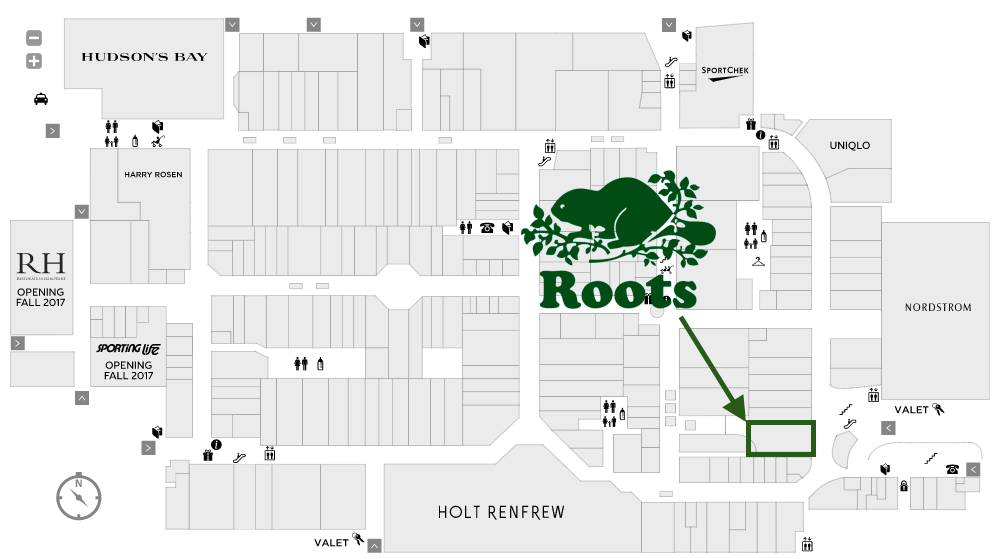
The 7,770 square foot Metrotown MUJI is located on the mall’s ground level, down the hall from anchor Hudson’s Bay. Three separate retail spaces were joined together to create the new store (see interactive mall floor plan below), and Japanese fashion retailer UNIQLO will open up the hall this fall in a 20,630 square foot retail space.

(CROWDS LINE UP FOR THE OPENING OF THE NEW METROTOWN MUJI ON THE MORNING OF SATURDAY, AUGUST 26. PHOTO: MUJI)
(CROWDS LINE UP OUTSIDE FOR THE OPENING OF THE NEW METROTOWN MUJI ON THE MORNING OF SATURDAY, AUGUST 26. NOTICE TO THE RIGHT, MUJI HAS A GLASS EXTERIOR FACADE. PHOTO: MUJI)

Towards the end of this year, MUJI will open a massive Robson Street flagship in Vancouver, which will span an impressive 16,000 square feet. MUJI will replace the recently closed 10,500 square foot Gap store at 1025 Robson Street, as well as the adjacent 5,500 square foot space that once housed denim retailer Below the Belt. Prior to being occupied by Below the Belt, the rounded glass atrium space was the corridor to the upscale ‘Robson Galleria’ shopping complex, which in the 1990’s, housed retailers such as Polo Ralph Lauren, Pegabo and Alfred Sung. The new MUJI flagship, which will be the largest on the continent, will anchor the revitalization of Robson Street’s 1100 Block.  

The Metrotown and Robson Street MUJI lease deals were coordinated/negotiated by Martin Moriarty and Mario Negris of CBRE Vancouver, as well as Arlin Markowitz from CBRE Toronto.

MUJI operates four other Canadian stores, all of which are located in the Greater Toronto Area. MUJI’s first Canadian store opened in November of 2014 at ‘The Atrium’ at 20 Dundas Street West in downtown Toronto, spanning 4,400 square feet on one level. MUJI’s second Canadian store opened in November of 2015 at the Square One shopping centre in Mississauga, measuring 5,225 square feet. In October of this year, MUJI opened a 6,375 square foot unit in Toronto’s Yorkdale Shopping Centre. Last month, the company’s fourth Canadian store debuted at CF Markville in Markham, with more than 6,000 square feet of space as well as the longest storefront of any MUJI store in North America to date, with close to 200 feet of corner frontage. 

(THE OPENING OF THE CF MARKVILLE MUJI IN JULY. PHOTO: MUJI)

In an interview with Retail Insider last year, MUJI’s Canadian President Toru Akita revealed that the company plans to operate between 15 and 20 stores in Canada by the year 2020. At the Vancouver press event, MUJI confirmed that it plans to eventually operate four or five Vancouver stores and while it wasn’t stated at the event, sources confirm that a third Vancouver-area MUJI lease was finalized several months ago. 

MUJI operates 14 American stores, with more to follow as it expands in the US. Of the locations currently open, seven are in the New York City area, three are in the San Francisco Bay area, one is in Boston, and three are in southern California. 

Known for being innovative and its products being affordable and unbranded, MUJI carries various household items, furniture, appliances, stationery and apparel. With hundreds of stores worldwide (with 422 in Japan and about 428 internationally), it saves money by spending little to nothing on market research and advertising. MUJI is short for Mujirushi Ryohin, or no-brand superior items, and was founded in 1980 as the private-label brand of a major supermarket chain. 
La Maison Simons Opens Impressive Londonderry Store [Photos/Video]

exc-599de586d2b85711d92326e0

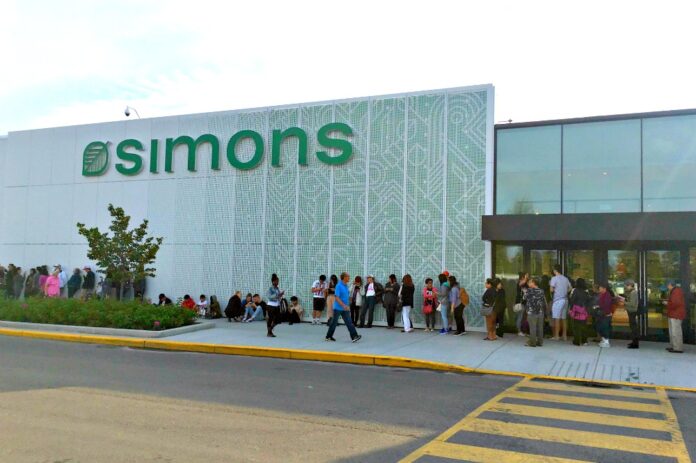
Quebec City-based large format fashion retailer La Maison Simons has unveiled its 15th store location at Edmonton’s Londonderry Shopping Centre. The store is unlike any in the company to date. Hundreds lined up in anticipation of the opening on the morning of August 24. 

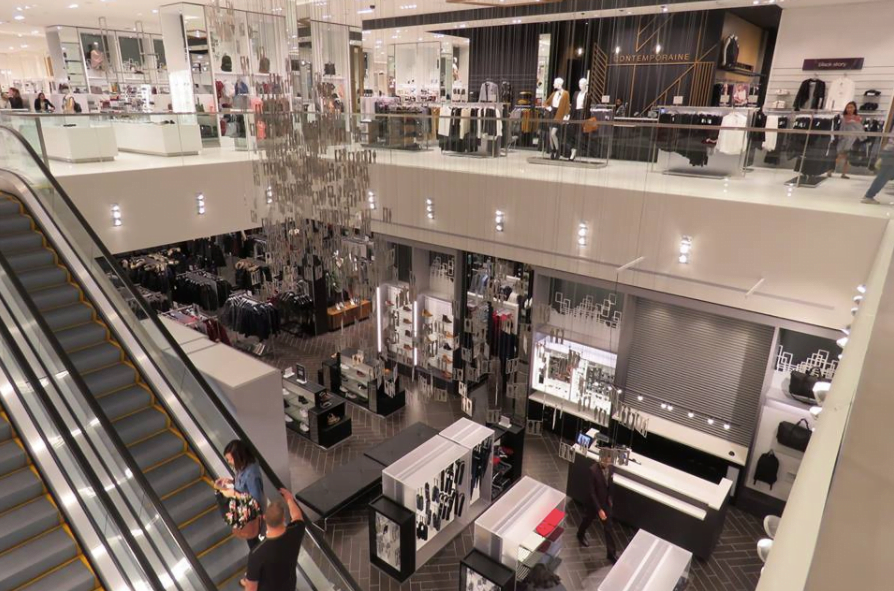
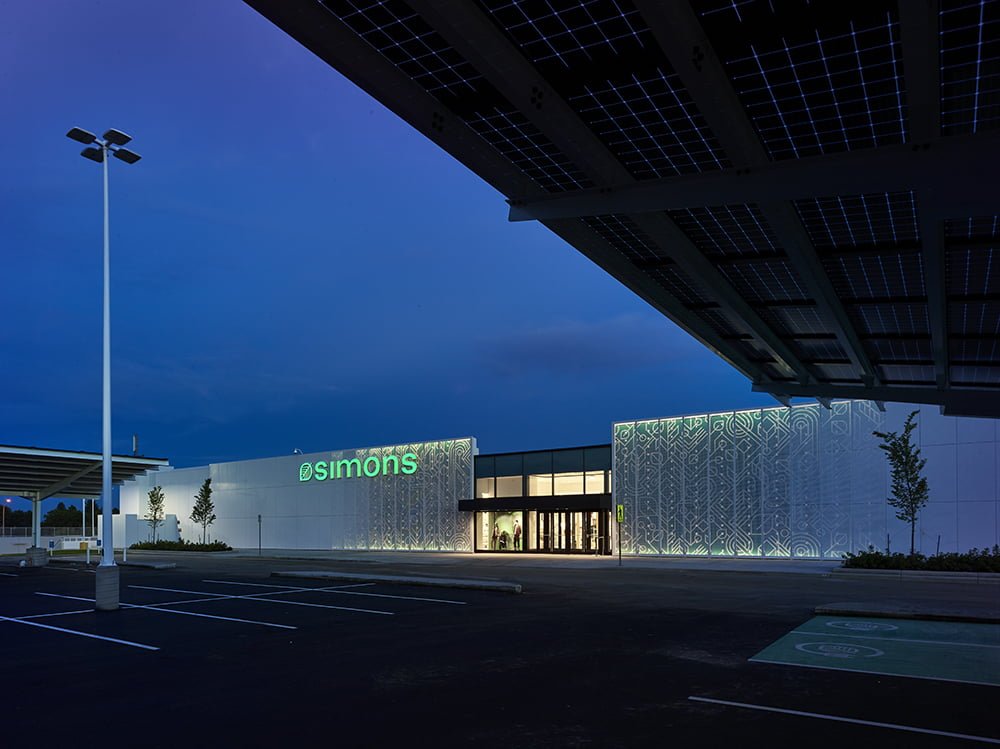
The 90,000 square foot store is the second for Edmonton, making it the only city outside of Quebec to feature two Simons stores. Simons is located at the north end of Londonderry, which has seen an overhaul that has resulted in an essentially new shopping centre that dominates Edmonton’s northeast quadrant. The impressive space was created with Quebec-based Lemay Michaud, leading both the architecture as well as design of the Londonderry location. 
The store is particularly notable for its artwork, first-of-its-kind shoe departments, and environmental sustainability initiatives, as follows:

Art: As with all Simons stores, the new Londonderry location features art installations from local Alberta artists. Alberta-based artist and activist Peter von Tiesenhausen agreed to his first ever corporate commission for the Londonderry store, with a piece called ‘Drawn by Desire’. The 50-foot-long art installation is notable — suspended from the second floor ceiling, it has the appearance of being an abstract grouping of human figures that are cut out of aluminum plates. When viewed directly from Simons’ first level mall entrance, however, the 500 carefully positioned plates come together to form a large, single human silhouette. 
As well, artist Hayley Wright, a former Simons employee from the West Edmonton Mall location, created illustration and skateboard designs in the store’s Twik department (catering to young women) with a large-scale watercolour portrait in the fitting room entrance and a custom set of skate boards mounted in the denim area. 

“Our store concepts are constantly evolving to reflect our commitment to art, fashion and now, more than ever, the environment,” said President Peter Simons. “While the essence of the Simons experience at Londonderry will be the same as it is at our popular West Edmonton Mall store, the expanded shoe department and the local art add new elements for shoppers who visit the new location.” 

Shoes: The Londonderry Simons is the first in the company to feature expanded shoe departments for both men and women. In a recent interview, Peter Simons explained that some of Simons’ vendors, as well as customers had requested that designer footwear offerings be provided to compliment the retailer’s fashion offerings. Both shoe departments at the Londonderry store are about 1,000 square feet in size. ’Shoe zones’ will be rolled out into other Simons locations within their accessory departments in the men’s and women’s areas, and additional back-of-house storage will allow Simons to carry an expanded assortment. 

Environmental Sustainability: Simons is becoming a leader in the trend of environmental sustainability in retail spaces, with over 50% of the Londonderry store’s electricity usage coming from on-site renewable energy sources. In its north parking lot, there are about 80 car parking spots that have canopies covered in 720 bifacial solar modules (the latest in solar technology), which have glass on both surfaces to capture both direct and reflected sunlight. When combined with 950 high efficiency solar modules on Simons’ roof, the entire solar-electric system generates over 550,000 kWh/year (equivalent to 80 homes) and will reduce greenhouse gas emissions by more than 350 tonnes/year. 

The store’s interior also includes LED lamps and fixtures throughout that reduce electricity devoted to lighting by more than 40 per cent when compared to traditional halogen light fixtures. 

Furthermore, electric car charging stations have been installed in the parking lot adjacent to the store, including two level 2 chargers and one level 3 fast-charger, which will charge most electric vehicles to 80 per cent in 30 minutes.   

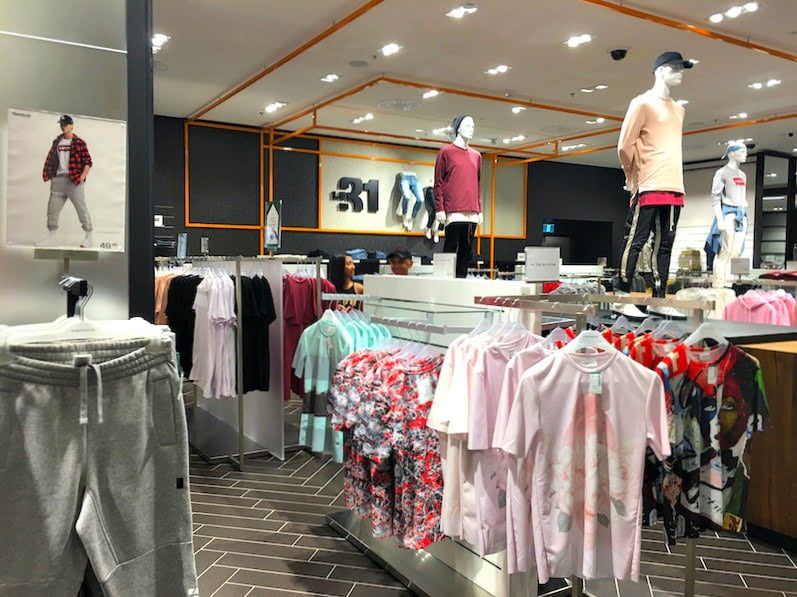
Layout: Design form Lemay Michaud used contrasting colours and materials to define each department, while maintaining a cohesive design that weaves all the sections together. This is a guide to which departments are on each floor: 
 
Level 1  

  • Djab (cutting edge, urban streetwear for young men) 
  • Le31 (classic and avant-garde fashions for men of all ages) 
  • iFive (stylish activewear for men) 
  • Men’s Accessories
  • Men’s Shoes
  • Customer Service

Level 2

  • Twik (dynamic fresh looks for young women) 
  • Icône (cosmopolitan styles for the modern woman)
  • Contemporaine (elegant women’s career and casual wear) 
  • iFive (stylish activewear for women) 
  • Miiyu (feminine lingerie and loungewear for women) 
  • Women’s Accessories
  • Women’s Shoes
  • Maison (modern décor elements for the home)

See below for more photos of the new La Maison Simons store at Edmonton’s refreshed Londonderry Shopping Centre, courtesy of the University of Alberta School of Retailing

African Fashion Week Grows to Include Retail Focus [Photos]

exc-599373eb49fc2b2af1e400a2

African Fashion Week in Toronto has become an important event showcasing the unique talents of Afro-Caribbean designers to the public and the retail industry.

It is also providing those designers a vehicle to eventually sell their creations.

“We did realize there are a lot of creative people in our industry within the Afro-Caribbean industry in Toronto, Canada and around the world but for some reason they didn’t have any mainstream platform to be recognized or to showcase their talent to the world,” says Isaac Ansah, co-founder of the event, who also owns a company called Imagine Management and Marketing, providing branding and marketing services to fashion designers and beauty companies.

“So we decided to create this African Fashion platform to invite local designers and also designers from around the world to come into Toronto to let the world see the talents and skills that they have. Also, the rise in African fashion in general made it easy to really put this event together.”

African Fashion Week was held last week at the Royal Ontario Museum. The event began in 2013 at the Japanese Canadian Cultural Centre in Toronto. 

During the week, about 30 designers were showcased, featuring about 60 models as well. 

The organizers will be introducing retail to its designers in the near future. An online platform will be launched in the fall as a place for designers to sell their creations. 

“The problem with the Afro-Caribbean fashion industry is that it’s not accessible enough yet. We’ve been doing this now for five years marketing it. Now we want to introduce the retail aspect because people are now starting to accept this industry. This is the time. We’re going to introduce online retail. . . and we’re going to have a bricks and mortar store in Toronto that will showcase these designers in 2018,” says Ansah.

The fashion week is usually four days but this year it was held over five days to celebrate its fifth-year anniversary.

It also included a student designer competition which allows student designers in Toronto schools to come out and showcase what they learned in school, their fashion lines and collections. 

“It is a chance for them to get seen before they graduate,” says Ansah.

He says Afro-Caribbean fashion used to be very different from other fashion but the industry is now more diverse. Designs are now created to attract people from different places where in the past it used to be more cultural and traditional in style. But today the African and Western influences have merged. However, the difference between the two tend to be in colour as Afro-Caribbean style is more “bold,” says Ansah.

“It is very important. The purpose of Fashion Week is it’s a marketing platform. It gives these designers a marketing platform to be seen, to be noticed by buyers, retail chains, and that kind of stuff. We do our best to invite as many buyers and retail professionals out to the shows. This is the talent we have to show the world. This platform is pretty much the avenue for these Afro-Caribbean designers now to get its hand to enter the retail market,” he says.

The week usually attracts about 2,500 people.

Ansah, originally from Ghana, in west Africa, moved to Canada at a very young age. He fell in love with fashion during his high school days and entered the retail industry early. He also volunteered for fashion shows.

“My love for the industry kind of grew. That’s what pretty much propelled this African Fashion Week,” he says. 

*Photos are courtesy of Louise Images. 

The Passport to In-Store Omni Channel

By Dave Rodgerson, Retail Industry Solutions Executive, Microsoft Canada

When I studied at business school, one of the things I learned was that the best way to make money is with other people’s money. The banks do this all the time, and they’ve been very successful following this strategy. Reflecting on this I wondered if a similar approach might hold true in technology. Rather than build my own technology for shoppers in a retail context, was there a way to leverage someone else’s technology to achieve the same end?

The research company IDC explains that a new generation of shoppers are defined as the 5I consumer. They are Instrumented, Interconnected, Informed, In-place and Immediate. These consumers demonstrate that they are very comfortable in a world where the line between the physical and digital experience is becoming less well defined each day. They will become the foundation for the success of true Omni channel shopping. Understanding this helped me connect the dots between my idea about “borrowed technology” and the way traditional retailers could embrace Omni channel. Recent surveys show that 83% of shoppers use their Smart Phones while shopping. This is why IDC refers to them as “Instrumented”. By engaging shoppers with their own phones, retailers can create an immediate, in-place engaging experience.

Imagine being able to receive an offer for a new salad dressing while you shop in the produce aisle. Or, tapping a shelf label with your phone to see consumer reviews or a video of someone demonstrating the product before you decide to buy. This takes in-store marketing to a new level. Instead of printing a coupon for a future purchase as you leave the store you’re able to influence the customer at the most critical moment – their point of decision. Tuku Inc. a Microsoft partner, has developed very inexpensive NFC tags that can be attached to displays or signage that can generate rich media content on the shopper’s smart phone. No need to install high priced video displays, (the customer has one in their own pocket). Even better, the interaction generates data that allows the retailer, or a participating supplier to collect and analyze information about their products and the way that shoppers are behaving when they’re making their purchase decision.

Phones aren’t just replacing video displays, they are also becoming a means of exchanging currency. That means the traditional Point of Sale (PoS) is being disrupted as well. Recently a global convenience store chain implemented a digital wallet and asked Plexure to help them leverage innovation to drive shopping frequency and basket size. By analyzing real-time purchase transactions, weather data and current location they created tailored messaging to individual customers and generated a 47% increase in average transaction value.

Most of these ideas are made possible because the shopper uses their own technology (the Smart Phone) to make their experience more engaging. Each of the interactions provide the retailer with valuable information that they can use to have a better understanding of shopping behaviors, manage their operations more efficiently and grow their business.

Physical stores aren’t going away. In fact, pure play eCommerce companies are investing in bricks and mortar locations themselves. Amazon recently purchased Whole Foods along with opening several of their own bookstores. Other eCommerce players like Warby Parker and Birchbox have opened their own locations. From the other direction, traditional retailers like Walmart are acquiring eCommerce businesses, (they recently purchased Jet.com). All of this goes to show that a convergence of the physical and the digital is well underway. With Smart Phones, the passport to this new world of retail is literally in the palm of your hand.

Learn more about transforming your businesses by blending online and digital experiences

Dave Rodgerson Is the Retail Industry Lead at Microsoft Canada and has 25 years of industry experience working with leading Canadian Retailers in sales, marketing, operations, IT and strategic planning roles.

Mr. Rodgerson works closely with both clients and industry associations that share an interest in enhancing the consumer experience. His work has included consulting with such firms as Tesco supermarkets in the UK, Canadian Tire Corporation, Target Department Stores, Imperial Tobacco, Walmart Canada and Rogers Communications. More recently, he has been speaking about the customer of the future, the Omni Channel customer experience and the adoption of new technologies by consumers.

Mr. Rodgerson has been a member of the faculty of Meritus University where he taught Marketing in their School of Business. In addition, from an academic perspective, he is on the Board of Advisors for the Ryerson University School of Retail. He has played an active role with the National Retail Federation, the Retail Council of Canada and the Conseil Québécois du Commerce de Détail.

Mr. Rodgerson holds an MBA from Queen’s University in Kingston Ont.

*Partner content. To work with Retail Insider, contact Craig Patterson at: craig@retail-insider.com. 

Roots Unveils 1st ‘Enhanced Experience’ Concept Store [Photos]

exc-599de6a02994ca3914cd6d90

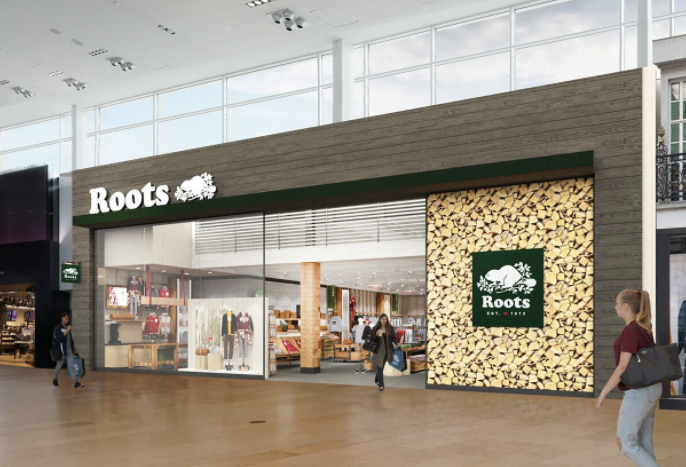
Iconic Canadian retailer Roots has unveiled an innovative ‘enhanced experience’ flagship at Toronto’s Yorkdale Shopping Centre. Featuring a fresh design and ‘customization workshop’, the new design will eventually be rolled out into major markets nationally, as well as into selected global markets as Roots expands its international presence. 

The Yorkdale store is strategically located between NYX Cosmetics and a soon-to-open Hunter Boots store, and is visible from Yorkdale’s mall entrance to the busy Yorkdale TTC subway station. Spanning more than 5,000 square feet on one level, the Yorkdale store is more than 2,000 square feet larger than its most recent location in the mall. The expanded square footage is being used to help enhance the customer experience, with its very first Customization Workshop where people can customize their Roots jacket design.

Roots is on the forefront of retail trends that include customization according to Jim Gabel, Roots President and CEO. “Physical stores will always be a critical asset for Roots because they provide a personal and social shopping experience. The long standing success of our current Yorkdale location motivated the move to the Enhanced Experience format”. He noted that “the ‘cabin’ design offers a wider merchandise selection, a dedicated leather customization space, an enhanced fitting room lounge experience, and in store pick up of online orders. Elevated leather and footwear shop-in-shops will also offer our customers a full range of seasonal footwear, jackets and leather bags– target growth categories for Roots.”

The Yorkdale ‘Roots Cabin’ design is bright and open, featuring clear sight lines that allow the customer to easily see product at the other end of the store. The space is also multi-functional — display tables can be combined to create a runway for fashion presentations, and there are even two DJ booths and a speaker system for in-store events. Dressing rooms feature canoe paddles mounted to the walls that can be used to hang clothing, and visuals in the dressing room area include the history of the brand, as well as rooms differentiated with wallpaper depicting spring, summer, autumn and winter. 

Locally sourced millwork is featured throughout, with reclaimed wood and Ontario cedar contrasting with artifacts from the Roots Canada archives. On one wall is an original ‘R’ sign from an early Roots flagship store, and near the footwear department is the machine that made the first negative heel shoe. On the walls throughout, as well, there is an array of celebrity Award Jacket replicas. “Each design choice in the space was influenced by our heritage: lighting fixtures inspired by our Leather Factory, the sign in our Footwear Department that hung over the door of our first store circa 1973, an oversized skylight that floods the store with natural light and transports our shoppers into the open air,” said Mr. Gabel.  

The in-store Customization Workshop is visible from the front of the store, described as being an “interactive, collaborative creative space that is digitally connected to The Roots Leather Factory (located about five kilometers away). Tactile samples can be examined while digitally designing the jacket on a screen. Roots heritage styles such as The Award Jacket, The Student Pack, The Small Banff Bag and The Downtown Tote can all be customized and personalized on the digital screen. In-store ‘Customization Experts’ guide customers through the process, and monogramming is also available for all Roots leather goods purchases.

There’s also a lounge area where customers can relax on Roots leather furniture while charging their phones and enjoying a refreshment (there are Roots-branded water bottles in a cooler). The lounge area doubles as an intimate spot for live performances and interactive listening sessions. Furthermore, eCommerce converges with the physical store experience in the ‘endless aisle’ area, which is a space that gives customers the opportunity to order online, pick-up and try on their online orders, and browse through inventory on roots.com or any Roots store throughout Canada.

In an interview, Mr. Gabel revealed that, this fall, a second Roots ‘enhanced experience’ flagship will open at Vancouver’s CF Pacific Centre, and more will eventually follow. He explained that the company is looking to roll-out the concept into major markets across the country, be it in existing locations or new stores. Mr. Gabel noted that there are some significant shopping centres that still lack Roots locations, including Vancouver’s Oakridge Centre and Edmonton’s Southgate Centre, and that Roots is also currently in expansion mode (though not confirming stores in these malls, specifically). Roots is also looking to expand further internationally — the brand has been well received in markets like Taiwan where it has 114 stores, and a US rollout is in the works that could also see stores featuring customization areas like that in the new Yorkdale flagship. 

See below for more photos of the new Roots flagship at Toronto’s Yorkdale Shopping Centre. 

Tokyo Smoke Announces National Expansion

Tokyo Smoke (Image: Kayla Rocca)

Canadian cannabis lifestyle brand Tokyo Smoke will aggressively expand across Western Canada this fall with Calgary the first location in the company’s nationwide rollout.

The Toronto-based company will open at lease six new retail locations over the next two years in Alberta, Saskatchewan and Manitoba. 

Alan Gertner, founder and CEO of Tokyo Smoke, said the expansion is a significant step in the company’s quest to help shape the future of Canadian cannabis retail.

“We have this opportunity to help define the modern cannabis retail experience and we’re really in this incredible moment right now where Canada is about to become the first developed country in the world to have nationwide legal, adult-use cannabis,” said Gertner. “And as we continue on our journey, and we continue to see more and more countries around the world entertain that idea and moving towards that idea, we believe that somebody is going to define what modern cannabis is like.

“Somebody is going to be the Starbucks of cannabis and when I think about our rollout strategy and I think about our plans, I think about helping and being part of defining the modern cannabis retail experience.”

Tokyo Smoke (Image: Kayla Rocca)

The western expansion is the first phase in the company’s plans to expand nationally. In late 2017, locations are also expected to open in Toronto near Queen and Broadview and in the city’s downtown core as well as one in downtown Hamilton.

It is also looking at expanding into the U.S. market this year.

Gertner said it was hard for him to give out a specific number of how many stores the company will open in the future.

“We think that there is a lot of potential,” he said.

Tokyo Smoke (Image: Kayla Rocca)

Tokyo Smoke is a specialty coffee shop that sells Canadian-roasted, crafted coffee along with smoking paraphernalia which is high-end, beautifully-designed and often locally built. It also sells some clothing as well and a few books.

The first store was built in April 2015 and is located on Adelaide Street in Toronto. The company has two other stores in Toronto on College Street and a new one on Queen Street which just opened.

The Calgary store will open in November in the Beltline district. 

Tokyo Smoke (Image: Kayla Rocca)

Tokyo Smoke is partnering with Saskatchewan-based Leo’s Hospitality Management Group, in the Prairie expansion.

The new locations will be designed by DesignAgency, sharing a similar aesthetic to Tokyo Smoke’s Queen Street flagship store, but customized with locally-tailored design that features works by local artists, said the company.

“The stores will have a stylish, approachable and modern aesthetic, featuring an interesting mix of materials, a monochromatic colour palette, beautiful lighting, and a few unexpected touches to infuse each space with individuality,” it said.

Matt Pinch, co-founder and president of Leo’s Group, said Tokyo Smoke is helping to shape the future of cannabis in the country.

*Photos by Kayla Rocca. 

Inside Filson’s Newly Opened Toronto Store [Photos]

Filson 694 Queen Street West (Image: Filson)

Seattle-based heritage brand Filson has opened its second Canadian location in Toronto, following the opening of a location in Vancouver’s Gastown area in the spring of this year. 

The 2,300 square foot Toronto store is located at 694 Queen Street West, in the heart of the city’s trendy ‘West Queen West’ retail area. Vogue named West Queen West as the world’s second-hippest district in 2014, and the area has since added a number of unique and remarkable first-to-market international brands. 

“We are very pleased with how our first store in Canada has integrated into the West Coast, and are excited to formalize our presence in Toronto,” said Steve Bock, CEO of Filson. “Filson’s product is built on quality and durability, and the tactile experience is important for us to showcase the craftsmanship of every Filson product.”

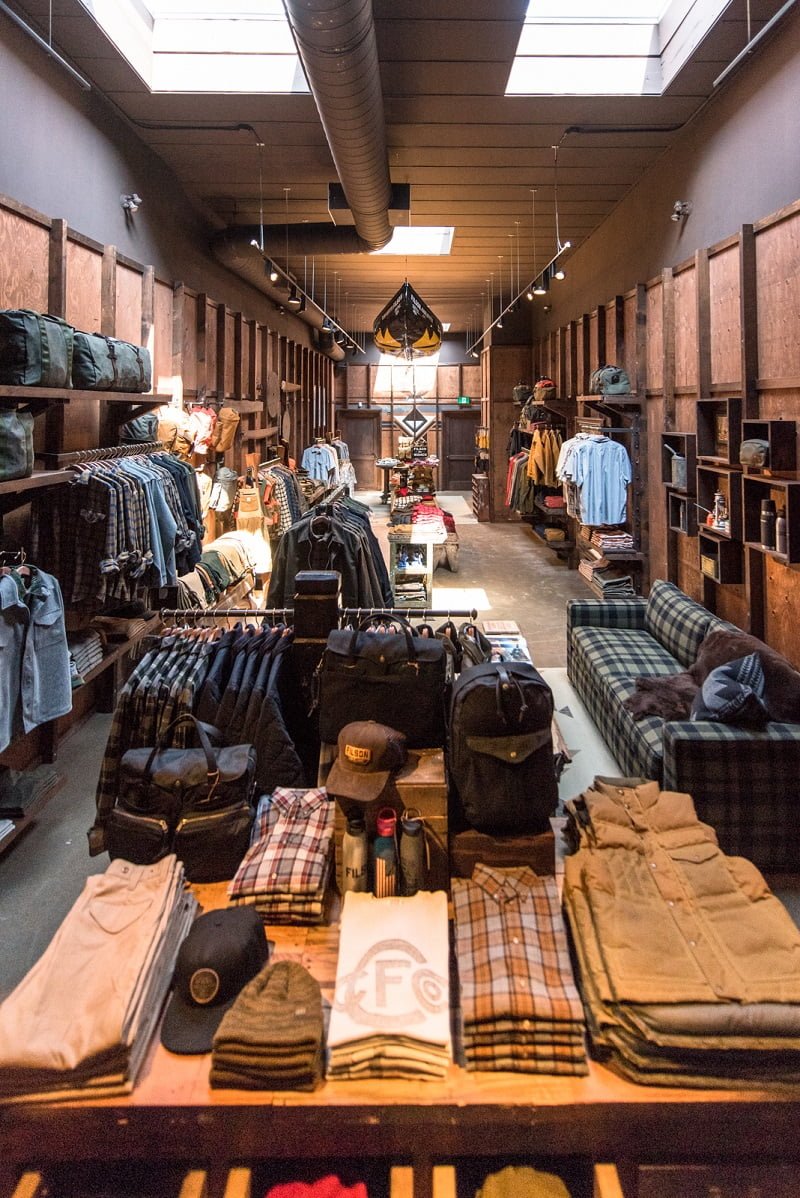
The rustic looking new Toronto store features custom furniture built from local salvaged wood, iron beams, wooden floors and imagery of Filson in the field dating back to the late 1800’s. Street level windows showcase apparel, bags, and accessories for both men and women.

The 2,800 square foot Vancouver Filson opened earlier this summer at 47 Water Street in the city’s historical and trendy Gastown area. Filson partnered with broker Tony Flanz of Think Retail for its initial Canadian expansion. 

Filson operates street-front stores in American cities that include Seattle, New York City, Minneapolis, Portland OR, Dallas, San Francisco, Plano TX, Detroit, Austin and Washington DC, as well as two factory outlets. Canada is the second international market for Filson, which also operates a store in London, UK. 

Filson (originally named ‘C.C. Filson’s Pioneer Alaska Clothing and Blanket Manufacturers’) was founded in Seattle in 1897, and is known particularly for its clothing and luggage, as well as its guarantee. The company designs, manufactures and distributes its products, which feature rugged designs with prices in the mid to upper-end range. Quality is paramount to the brand, and it guarantees the lifetime of each item against failure or damage from its intended usage, according to Filson’s website. The company is owned by Bedrock Manufacturing which is led by Tom Kartsotis, who also owns Detroit-based fashion brand Shinola.

Photos are courtesy of Filson via Brix Media Co.

See below for more photos of the new Toronto Filson store. 

Good Earth Coffee Embarks on National Expansion

Good Earth Coffeehouse (Image: Good Earth)

Calgary-based Good Earth Coffeehouse is setting its sights on further markets in Eastern Canada after opening its first Toronto location earlier this year.

Michael Going, company founder and CEO, told Retail-Insider that it has secured a spot in Montreal and will soon enter the Quebec market as well.

“Earlier this year we opened our first cafe in downtown Toronto and we have our second coming on stream in the early New Year as well,” says Going. The first location is on the corner of Dundas Street East and Jarvis. The second location will be just off Yonge Street and Eglington Avenue.

The first entry into Quebec will be at the CHUM hospital.

“We’re just getting it going quickly. So it will be a scramble to see if we can get it open by the end of this year. If not, it will be very early in 2018,” adds Going.

Good Earth is a network of coffeehouses with 48 locations throughout Alberta, British Columbia, Saskatchewan and Ontario. The first Good Earth Coffeehouse opened in Calgary in 1991. Going and Nan Eskenazi are the founders.

Several locations across the country will be opening in the near future with more stores set to open in Kelowna, Regina and its first location in Winnipeg.

“Once we enter a market we definitely want to expand in it. We never have numbers in mind. It’s really opportunities of real estate but more importantly opportunities with franchise partners,” says Going.

“We’re looking now for both individual operators who will open one cafe but we’re really interested in looking at groups that would be interested in taking multi-unit locations. Four or five at a time in both the GTA and then outside GTA in southwestern Ontario as well.” 

The Good Earth location at the Ottawa airport just over two years ago was the company’s first entry into the Ontario market. The company’s expansion efforts have been aided by Compass Group Canada.

Good Earth has been an extremely successful coffee shop business despite stiff competition from huge brands such as Starbucks and Tim Hortons as well as numerous other smaller coffee establishments springing up everywhere these days.

“We’re very good at what we do and I think consumers are coming around more to who we are and what we have been doing for 26 years,” says Going. “Consumers are becoming more sophisticated and can appreciate very good coffee matched with a better food menu program than most of the international and national chains have.”

Michael Kehoe, a retail real estate specialist with Fairfield Commercial Real Estate based in Calgary and Good Earth’s real estate representative for the Prairie Provinces in Western Canada, says the coffee industry is a very competitive and crowded category but Good Earth has been able to “differentiate its brand from the competition with an earthy, good-time-feel format that seems to appeal to a wide array of consumers in the Canadian market.”

“Customers seem to identify with the Good Earth homegrown concept and the brand’s perception of  goodness and value,” explains Kehoe. “Good Earth has recognized that Canadian urban markets have a firmly established coffee culture as competition in the premium beverage range has reached a fever pitch. The coffee business is a Darwinian struggle driven by the rising costs of labour, rents and ingredients and Good Earth has a winning formula that is fueling their expansion across the country.”

Lush Cosmetics Unveils Expanded Vancouver Flagship [Photos]

LUSH Cosmetics

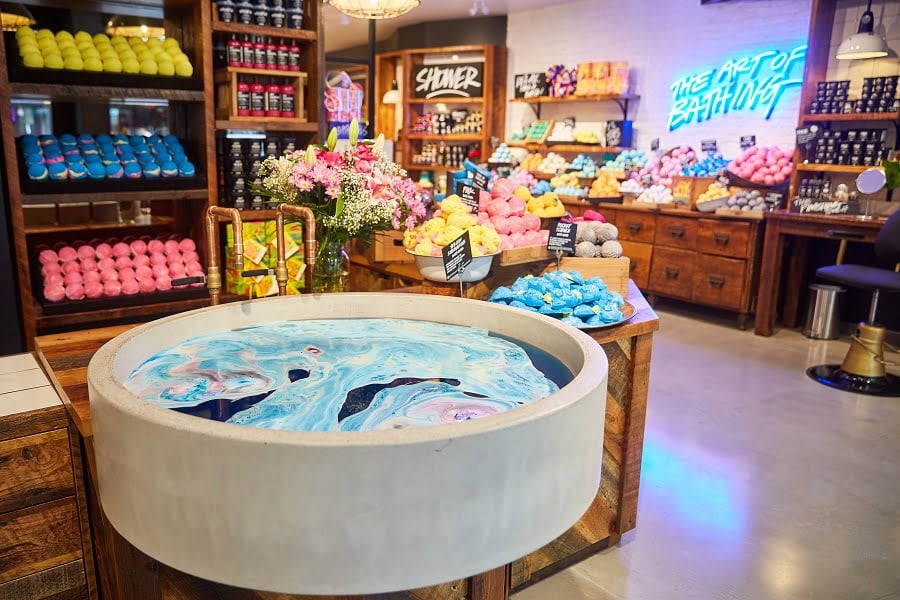
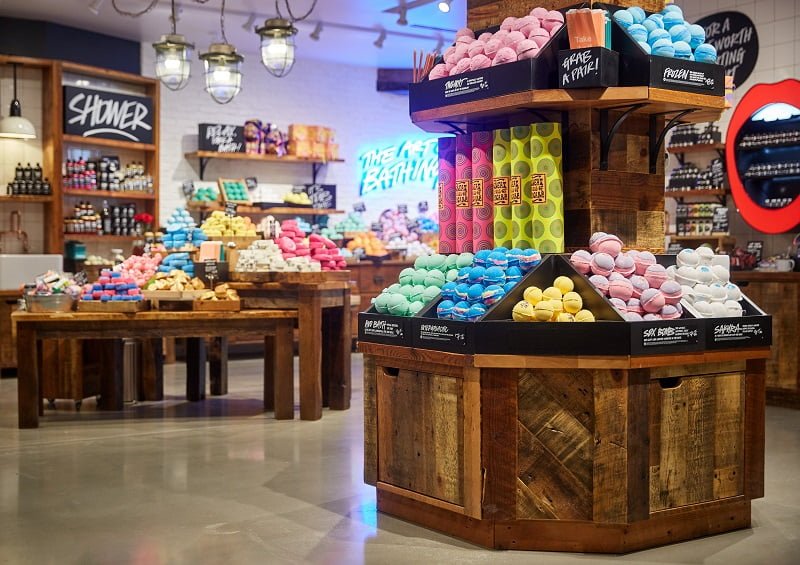
Lush Cosmetics will be re-opening its flagship Vancouver Robson Street location to the public this week. After months of renovations, the newly launched shop will be capitalizing on its prominent location in one of the nation’s pre-eminent retail addresses. 

Originally founded in 1995 in Dorset, England, the brand opened its first North American location on Vancouver’s Denman Street in the West End in 1996, and eventually expanded to over 250 shops on the continent. The Robson flagship is one of the brand’s seven Vancouver locations. Lush sells all-natural beauty products that are friendly to either vegetarians or vegans (as some products do contain trace amounts of honey and dairy), and are never tested on animals.

CEO Mark Wolverton states, “Since opening our doors, Lush has grown in leaps and bounds and we’re very proud to be reinvesting in a community that has given us so much over the last 20 years”. The location will undoubtedly add to the re-vitalization of Robson Street. “Robson helped bring successful business, employment and a whole load of bubbles to B.C. and we can’t wait to see what this next chapter brings”, says Wolverton.

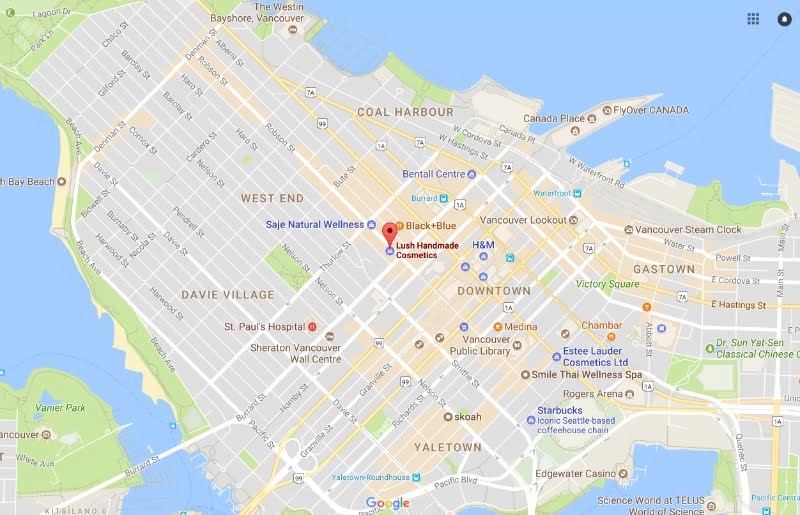
(CLICK FOR INTERACTIVE GOOGLE MAP)
(PHOTO: LUSH)
(PHOTO: LUSH)

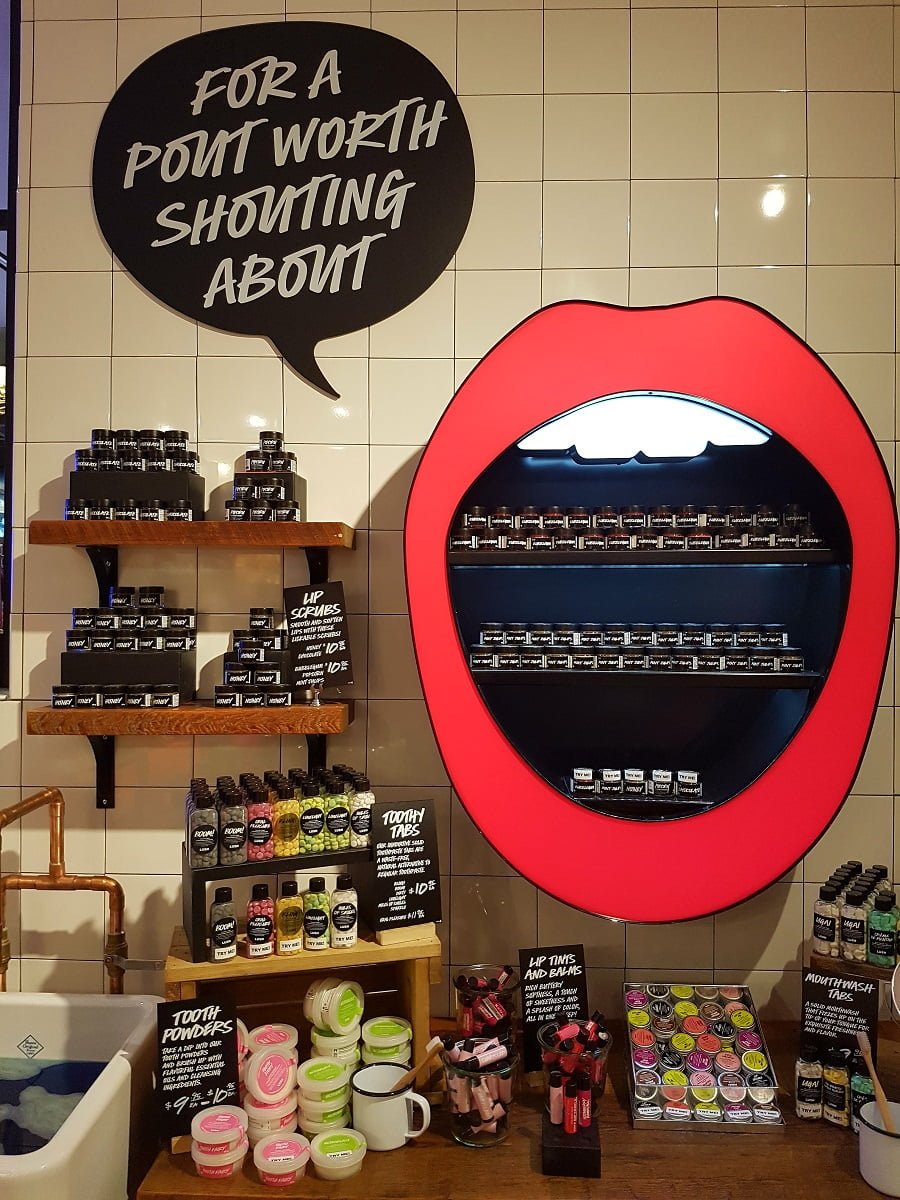
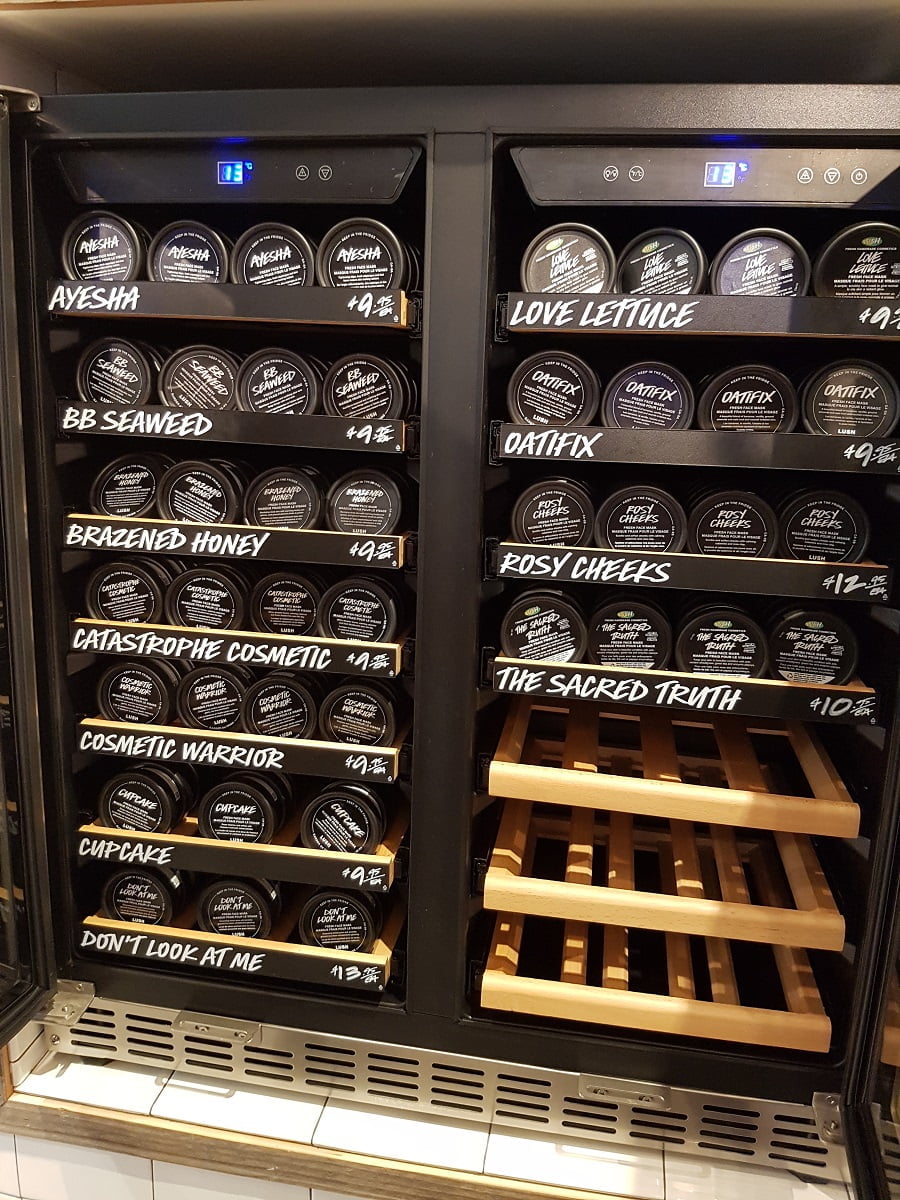
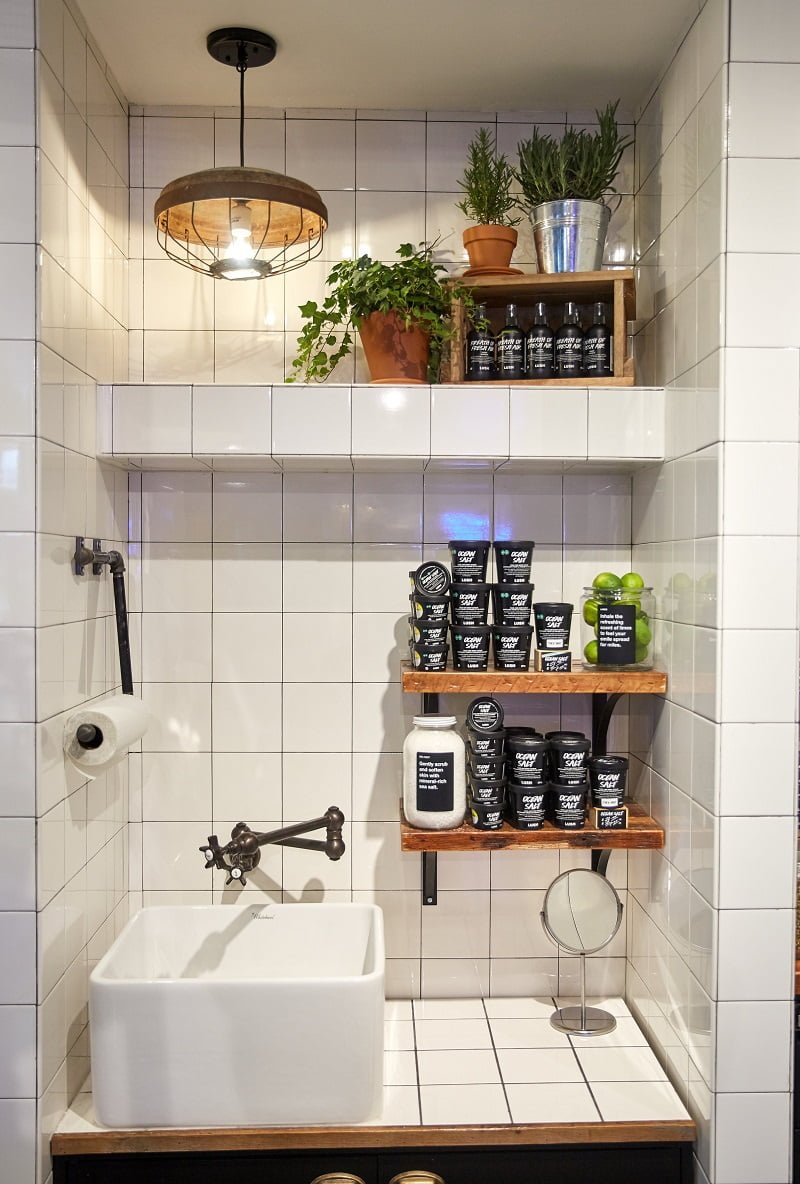
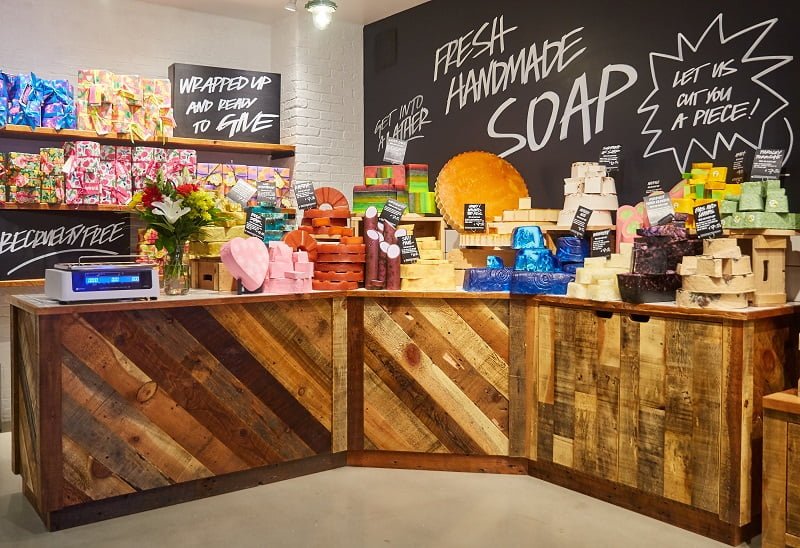
The Robson flagship is one of 30 North American shops Lush has earmarked for renovations over the coming year. The renovated flagship measures 2,340 square feet, expanding from its previous shop by 1,000 square feet. The idea is to provide a tactile customer experience that encourages hands-on interaction with the product. Customer service reps are on-hand to consult at a facial bar, where customers can ask questions about the most ideal product suitable to their skin type.

A vintage barber chair has also been brought in for a consultant to experiment with the best hair product for customers. The experience encourages client participation to foster brand development, in a semi-bespoke fashion.

The Robson location is just one of the first locations earmarked for retro-fitting to expand stores and create an interactive customer experience, a rarity in an age when brands are pouring greater resources into their online businesses.

(PHOTO: LUSH)

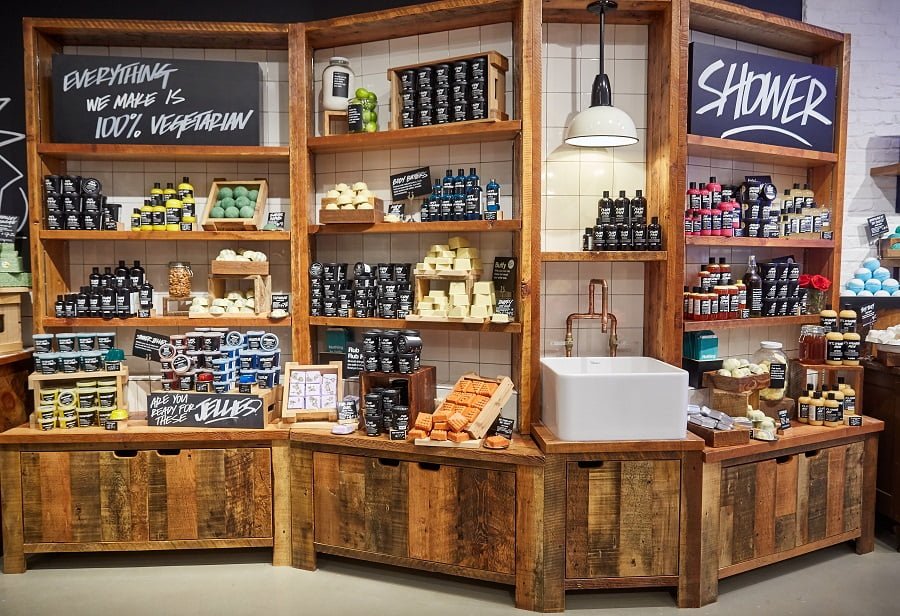
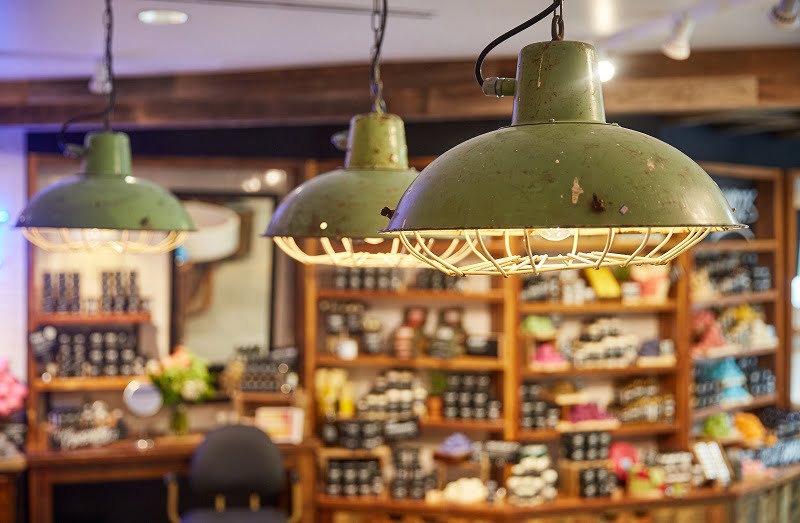
All newly renovated and expanded Lush locations will be adhering to its trademark aesthetic incorporating environmentally conscious furnishings. From consoles and armoires to faucet handles and door handles, Lush works with local artisans to source vintage pieces to furnish the store and showcase product. Virtually all of the wood in any newly-constructed (and some refurbished) furniture will be made from reclaimed wood and other eco-sustainable materials, lending verisimilitude that informs the décor.

Any packaging used is created with 100% post-consumer recycled materials. Liquid products, such as shower gels, shampoos and conditioners are packaged in partnership with Ocean Legacy Foundation, a BC-based zero-waste solution foundation dedicated to collecting discarded plastic and recycling it for further use. Lush’s Marine Drive corporate headquarters in south Vancouver are now also used by Ocean Legacy to sort plastics collected and re-introduce them into manufacturing for Lush products.

Lush has long been known for its dedication to the community, even on a global basis. Examples of its community-building mindset include that testing is done on human volunteers instead of animals, launching initiatives to assist in the refugee crisis, and producing a limited-edition “GayIsOK” soap as a fundraiser for LGBTQI initiatives. In total, the brand has donated $2.8 million to 219 grassroots organizations in British Columbia alone that share its values. On the occasion of the flagship re-launch, Lush is hosting a community bike ride in August from Vancouver’s Kitsilano Beach to the flagship, where customers can observe compounders making products on-site in a catered environment. 

(PHOTO: LUSH)

The privately-owned company sells shares on an invitation-only basis, helping ensure tight control over the company’s philosophy to remain cruelty-free. The brand’s passion to community engagement has helped Lush’s revenue grow from $200 million in fiscal 2013 to over $700 million in fiscal 2017. It is evident that the corporate ethos creates a virtuous cycle through community outreach and advocacy for animal rights and vulnerable groups.

Lush will open its renovated Robson Street flagship location on Thursday, August 24, 2017.

See below for more photos of the newly expanded Robson Street Lush flagship. 

(PHOTO: RITCHIE PO)
(PHOTO: RITCHIE PO)
(PHOTO: LUSH)
(PHOTO: LUSH)

Sugarfina Secures 1st Standalone Canadian Retail Space

Sugarfina (Image: NorthPark Center)

Los Angeles-based luxury ‘grownup’ candy retailer Sugarfina has secured its first freestanding Canadian retail location, with plans for more as the brand expands with the help of a newly announced $35 million growth equity financing from private equity firm Great Hill Partners

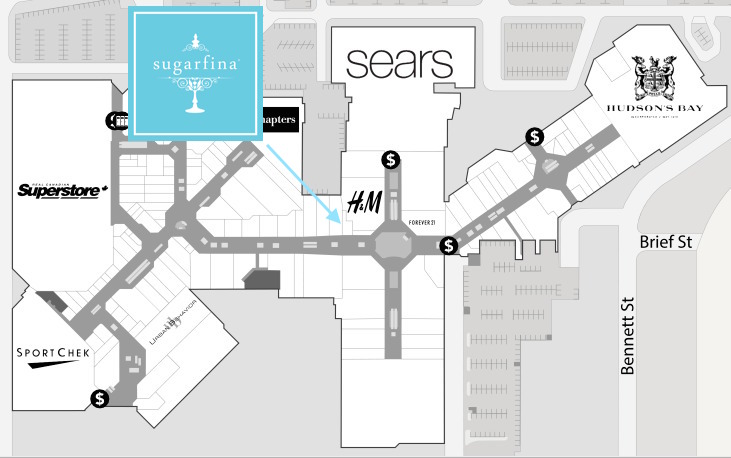
Sugarfina’s first standalone Canadian location will open at Metropolis at Metrotown in Burnaby (east of Vancouver) on November 1 of this year. The 1,098 square foot retail space is located on the mall’s ground floor, across from BC’s first UNIQLO store which will also open this fall. Tony Flanz of Think Retail represented Sugarfina in its deal with Metropolis at Metrotown’s landlord Ivanhoé Cambridge. Sugarfina confirms that the company intends on operating standalone stores in Vancouver as well as in the Toronto market, with as many as 10 locations in Canada in the coming years. 

Metropolis at Metrotown is the largest shopping centre in British Columbia as well as one of the largest and busiest in the country, according to Retail Council of Canada’s Shopping Centre Study. The mall is also one of the country’s most productive, and numbers will be updated this fall when Retail Council of Canada releases its 2017 Canadian Shopping Centre study. 

According to Think Retail’s website, Sugarfina is seeking retail space in major malls, ideally in the 600 square foot to 1,000 square foot range.

Sugarfina (Image: NorthPark Center)

Until now, Sugarfina has been available in a handful of Canadian retailers, including five shop-in-stores inside of Canada’s Nordstrom locations in Vancouver, Calgary, Ottawa, and Toronto. The first Sugarfina shop-in-store opened at Nordstrom’s CF Pacific Centre flagship in Vancouver in September of 2015. 

Sugarfina stores feature premium items made from high-quality ingredients, sourced directly from artisan candy makers around the globe. Products include gourmet chocolates, caramels, gummies, malt balls, licorice and other delicious confections. Champagne-infused gummies and maple bourbon caramels have been popular, with celebrity endorsements helping grow brand awareness. 

Image: Sugarfina
Image: Sugarfina

Small containers of candies are priced starting at under $10, with mix-and-match options including a ‘design your own bento box’ where several smaller candy-filled cubes (between three and eight cubes per ‘bento box’) are assembled into gift packages. 

In the summer of 2016, Sugarfina introduced Rosé rose-shaped gummy bears, which were so popular they sold out within two hours while traffic caused the company’s website to crash. The wait list grew to more than 18,000 people.

Sugarfina was founded by husband-wife couple Josh Resnick and Rosie O’Neill, who came up with the concept after watching the original Willy Wonka and the Chocolate Factory movie together on their third date. Recognizing a niche for grownup candy retail, the couple traveled the world and met with candy makers, eventually opening an online candy shop in August of 2012. 

In November of 2013, Sugarfina’s first boutique opened on Santa Monica Boulevard in Beverly Hills. The 1,400 square foot store was referred to as “the Tiffany & Co.” of candy” by online culinary publication Eater, referencing both the white-and-blue colour scheme as well as the store’s high-end offerings. 

The Sugarfina concept has grown rapidly, now boasting 29 boutiques in the United States with three of those being located in Nordstrom stores.